Doo-wop (That Thing)
1998 · From The Miseducation of Lauryn Hill
Hill wrote and produced it herself, aimed one verse at women and one at men, and debuted at number one.
★ 7.8
 skopia
Hill wrote and produced it herself, aimed one verse at women and one at men, and debuted at number one.
Max Martin built it at Cheiron in Stockholm after TLC and the Backstreet Boys passed, and Spears was sixteen.
Mushroom sent the demo to Madonna, got outvoted, and Elizabeth Fraser sang it over harpsichord and a Les McCann loop.
Timbaland built the beat around a baby coo lifted from a sixties sound-effects record, and Aaliyah glides over it.
Dre and Eminem finished it in an hour, over a Labi Siffre interpolation, and Slim Shady existed.
The 45 King looped an Annie showtune, and Jay-Z cleared it with a letter he admitted was a lie.
Andre 3000's stepfather, Reverend Robert Hodo, plays the harmonica breakdown; the woman in the title sued.
Recorded in 1992, shelved, then remixed after his death over Bruce Hornsby's piano; a posthumous Grammy nomination followed.

Julian Koster's singing saw over double-tracked acoustics, cut in Denver with Robert Schneider, and a chorus that faces death smiling.
Every instrument distorted at Schneider's Denver studio, and Mangum turns an elegy for Anne Frank into pure forward momentum.
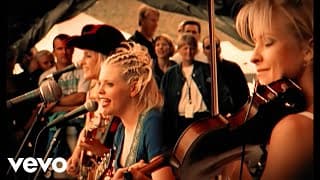
Gibson wrote it on her first trip home from forestry school, and Lloyd Maines knew it belonged to his daughter.
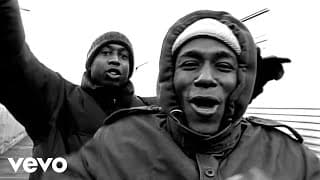
Hi-Tek loops Don Randi's "The Fox" under a Style Wars monologue, and three MCs read the city at night.
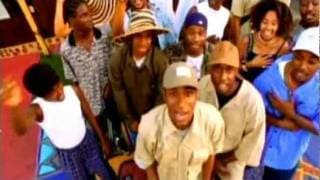
Hi-Tek loops Boogie Down Productions while Mos Def and Kweli revive KRS-One's demand that the violence stop.
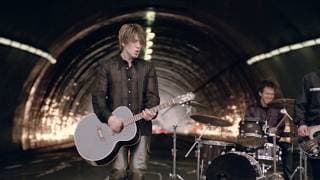
Rzeznik tuned every string but one to D, wrote it for City of Angels, and owned airplay for eighteen weeks.

Twain and Lange built it on three men who fall short, and that hooded leopard print did the rest.
Brandy got the idea from a Jerry Springer love triangle, and Darkchild's clipped beat held number one thirteen weeks.
Alexander buried a celebrity taunt in the last verse to prove the press would ignore the politics; it worked.
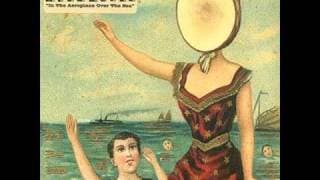
Schneider got the fuzz from tube preamps and compression, not pedals, and Mangum sings childhood into two minutes flat.
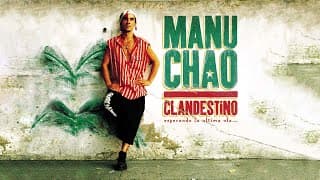
Recorded on portable gear while Chao roamed Latin America, an undocumented migrant's lament carried by the lightest guitar.
Two Frenchmen, an American singer they shared Montmartre with, and the softest thing on Moon Safari.
Written as a reply to everyone who doubted her marriage to Mutt Lange, and it won two country Grammys.
Premier's beat under Guru facing a gun charge, cut at D&D Studios and delivered as a sermon on perseverance.
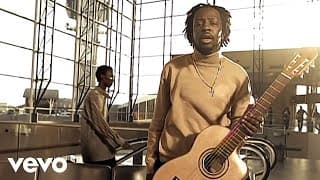
A hustler's goodbye scored by the New York Philharmonic, Sonny Kompanek conducting, with Bob Dylan cameoing in the video.
Bernard Herrmann's Psycho strings on loop, DJ Scratch behind the boards, and Busta rhyming at impossible speed.
A sitar, a slow groove and Pam Bricker's voice, carried to a wide audience by the Garden State soundtrack.
Everlast left House of Pain, picked up an acoustic guitar, and topped both rock charts with three street portraits.
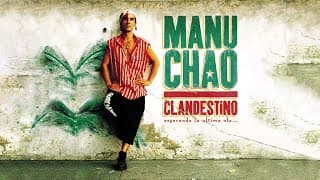
A Mano Negra tune remade over a Black Uhuru groove, and the same melody resurfaces twice more on Clandestino.
Named for a 1920s pole-sitting fad, cut in Seattle in 1996, and now inseparable from Peep Show's opening titles.
Written for Armageddon by Diane Warren after a Barbara Walters interview, it gave Aerosmith their only American number one.
Kravitz stumbled on the riff testing an amplifier, nearly buried it as a B-side, and won a Grammy instead.
Eight minutes on the album, four on the radio, and Tinsley learned his violin solo the day before.
Eternal cut it first in Britain; Rodney Jerkins rebuilt it for Monica, who held number one four weeks.
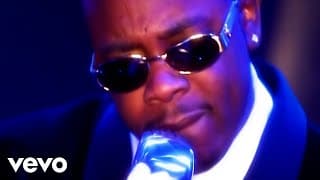
JoJo Hailey wrote it thinking of his daughter, then kept it, and weddings have not let go since.
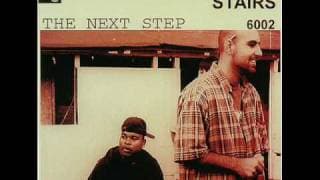
Never a single, it became the duo's live staple: two Los Angeles crate-diggers immortalizing a 1996 visit to the Bay.
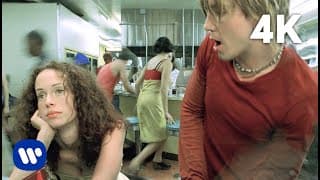
Rzeznik hid a teenage pregnancy story inside the sunniest jangle of 1998; it topped Modern Rock and Adult Top 40.
Scalzo read about an elderly Texas couple who drove off and never came back, then wrote them a happier ending.
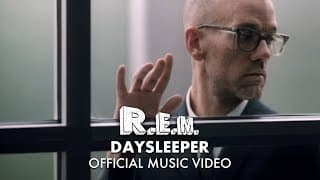
Stipe found the word on a New York apartment door and gave the night shift its lullaby, post-Berry R.E.M.
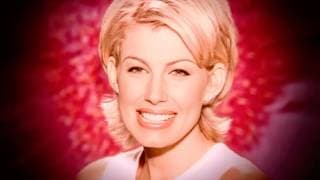
Chapman, Lerner and Roboff built the hook; Hill cut it at Ocean Way and rode it to number seven.
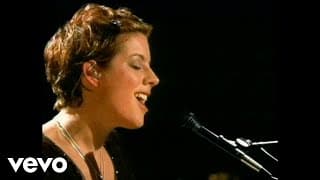
Piano, upright bass, a drum machine, and McLachlan writing about a Smashing Pumpkins keyboardist's overdose with startling tenderness.