London Calling
1979 · From London Calling
Strummer borrowing the BBC's wartime call sign to announce the end of the world, and sounding thrilled about it.
★ 9.2
 skopia
Strummer borrowing the BBC's wartime call sign to announce the end of the world, and sounding thrilled about it.
Big Bank Hank auditioned outside the pizzeria where he worked, rapping lines borrowed from Grandmaster Caz's notebook.
A tranquilizer shot before a 1977 Philadelphia show gave Waters the lyric; Gilmour brought the chords and the solo.
Jackson wrote it himself and steered the session; a whisper, a water-bottle rattle, then Louis Johnson's bass takes over.
Edwards' bassline turned up on Rapper's Delight within months; the settlement put Chic's names on rap's first pop hit.
Mutt Lange took over production, the band cut it in London in 1979, and America finally caught on.
Ezrin sent Gilmour to the discos, and twenty-three Islington schoolchildren got forty minutes to sing themselves onto a number one.
Rod Temperton offered it to Karen Carpenter first; Quincy Jones and Jackson took it to number one.
De Niro called the first theme too weak, so Kander and Ebb wrote this one in anger.
Recorded live at San Francisco's Boarding House in 1978, and Devo's Mothersbaugh handed Young the phrase that titled the album.
Summers' arpeggiated riff, Sting's castaway pleading over it, and the first of the Police's five UK number ones.
By Numan's account a road-rage scare in London started it; a bass riff, a Polymoog, and a UK number one.
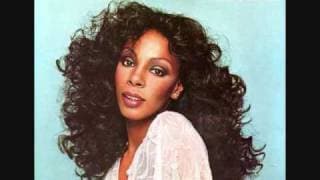
Moroder's four-on-the-floor, Jeff Baxter's rock guitar solo bolted on, and the first female rock vocal Grammy.
Mick Jones wrote it overnight for an NME flexi-disc that fell through, and the printed sleeves never listed it.
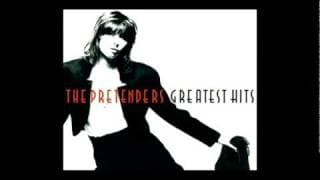
Honeyman-Scott's guitar lick came first, and Hynde told her producer he could release the thing over her dead body.
Sixteen national number ones, then a second life at 12:01 a.m. on 1 August 1981 as MTV's first video.
Harry turned a 1973 stalker into a chase song, and Nigel Harrison's riff supplies the relentless forward motion.
Steve Nieve's piano lifts its shimmer from "Dancing Queen," and Costello's biggest UK hit smuggles Belfast into a singalong.
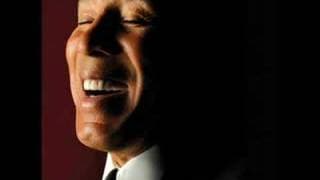
Tarplin handed over the guitar melody, and Robinson spent years finding words sensual enough to deserve it.
Written with Ivan Kral and dedicated to women like Jeanne Hebuterne, Modigliani's mistress; Rundgren produced and played the bass.
Jimmy Marinos sang it from behind the drum kit; the single stalled at 49 and never went away.
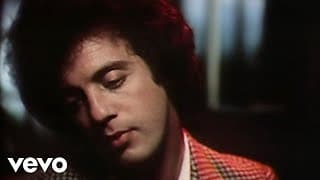
Number twenty-four on the Hot 100, and still a Song of the Year nominee; Ramone cut it at A&R.
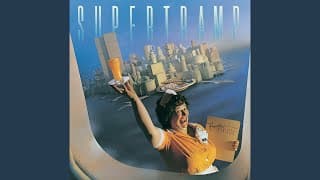
Davies wrote and sang it, Hodgson answered in falsetto, and that Wurlitzer figure runs the whole drifter's farewell.
A 1966 Four Seasons song rebuilt as a medley, John Edwards out front, and two weeks at British number one.
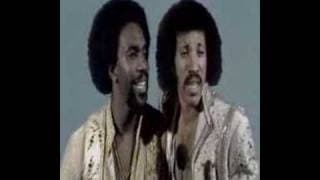
Richie handed a funk band a country ballad, rode it to number four, and re-cut it with Tim McGraw.
Casey and Finch's first ballad after a run of dance hits, and the first American number one of the 1980s.
Barry Manilow produced Warwick's Arista debut, and this Kerr and Jennings ballad won her a 1980 Grammy.
Recorded alone in Sussex in the summer of 1979, every instrument McCartney's own, and a UK number six by January.