JoleneDolly Parton
Jolene
1973 · From Jolene
Dolly pleading with her rival rather than fighting her, written the same day as "I Will Always Love You."
★ 9.3
 skopia
Dolly pleading with her rival rather than fighting her, written the same day as "I Will Always Love You."
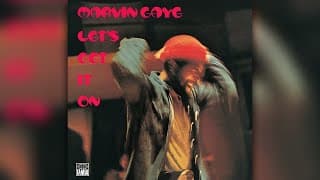
Ed Townsend conceived it as a spiritual; Gaye kept the backing track, rewrote the lyric, and Billboard number one followed.
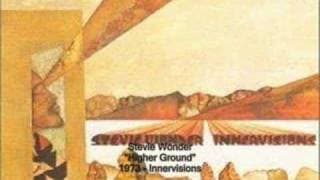
Written and taped in a three-hour burst, Wonder on clavinet and drums, the keyboard snarling through a Mu-Tron filter.
Wonder played most of it himself, then broke it open with a spoken street scene running past seven minutes.
Flack heard Lori Lieberman's version on a plane's in-flight audio, rewrote the chords, and took Record of the Year.
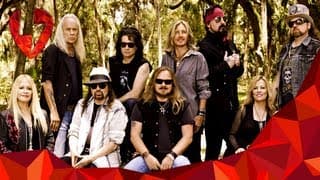
Collins's chords sat unused for two years until Van Zant found the melody; the long outro was his onstage rest.
Written with Tosh after Marley toured Haiti, and the last song he ever sang onstage, Pittsburgh, September 1980.
Seven beats to the bar, a tape loop of coins and cash registers, and Pink Floyd's first American hit.
Sessions collapsed in Kingston, so the band regrouped at a French chateau and Taupin traded Oz for a Lincolnshire farm.
Pop lifted the title from a Time column on Vietnam, and Bowie's mix made Williamson's guitar a threat.
Cissy Houston's version turned Weatherly's midnight plane to Houston into a train to Georgia.
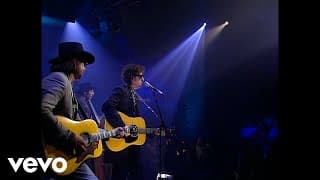
Two short verses written for a dying sheriff in Pat Garrett, with Roger McGuinn on guitar and Jim Keltner drumming.
A lounge gig, a fake name, Bill Martin, and every regular at the Executive Room written into a verse.
Marley swapped police for sheriff to avoid a government fuss, and Clapton's 1974 cover became his only American number one.
Wings lost two members on the eve of Lagos, so McCartney played the drums and built a three-part escape.
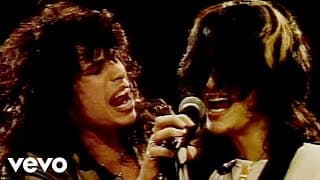
Tyler had the tune on his family's New Hampshire lodge piano years before Aerosmith; a reissue reached number six.
Gus Dudgeon overdubbed crowd noise from old concerts, and the fake live track topped the Hot 100.
McCartney read the Fleming novel in a day and wrote it that afternoon; Martin's orchestra did the rest at AIR.
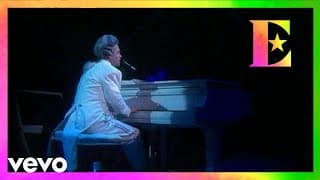
Taupin lifted the phrase from a Janis Joplin tribute and pointed it at Marilyn Monroe; the chorus does the mourning.
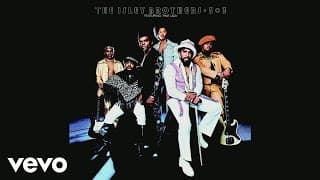
Recorded at the Record Plant in LA, with Ernie Isley's Hendrix-drenched guitar rebuilding a song the brothers cut in 1964.
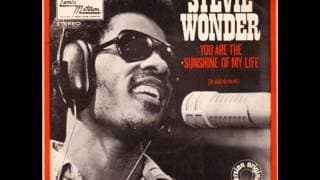
Wonder hands the first four lines to Jim Gilstrap and Lani Groves, then walks in over his own Fender Rhodes.
Michael Viner cut Jerry Lordan's tune in Vancouver, and Kool Herc turned its long percussion break into hip hop's foundation.
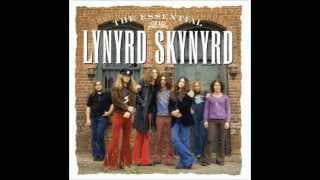
Van Zant and Rossington wrote it in an hour, putting his grandmother's and Rossington's mother's advice into song.
Eight days at the Record Plant with Rundgren, and Johansen's strut arrived years before punk had a name.
Don Boyce, the band's roadie, shouted the vocal and got a writing credit; Pulp Fiction did the rest.
Betts wrote and sang it, borrowing Hank Williams' title; Oakley's bass line was among his last recordings.
A lyric lifted from "Lovey Dovey", a misheard doo-wop coinage, and a Levi's ad that made it Britain's number one.
Number twelve on the Hot 100, the band's last pop top twenty, and a bass line hip hop still raids.
John wrote the instrumental half imagining music for his own funeral; Hentschel's ARP 2500 overdubs did the rest.
A Django Reinhardt tribute written to be playable with two fingers, named for the infant daughter bouncing to it.
Never released as a single; Henley's piano sketch dated to 1968, and Jim Ed Norman's strings turned it monumental.
A Johnny Bush song Nelson borrowed for Shotgun Willie, then used to open nearly every concert since 1974.
A Mellotron faking the strings, producer Al Kooper credited as Roosevelt Gook, and Van Zant's rambling farewell.