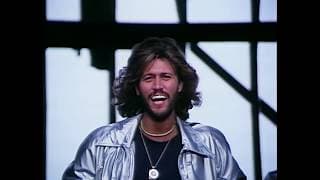
Stayin' Alive
1977 · From Saturday Night Fever Soundtrack
Barry Gibb's falsetto over a drum loop so metronomic that paramedics still use it to time chest compressions.
★ 9.4
 skopia
Barry Gibb's falsetto over a drum loop so metronomic that paramedics still use it to time chest compressions.
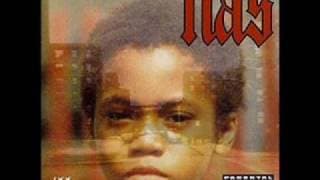
Premier built the beat on the spot; Nas nailed verse one in a take, muttering doubt into the intro.
Johnson was told the Bon Scott tribute could not be morbid, so he wrote a celebration over Angus Young's riff.
Named for the gardener who woke them up, and cut with an acoustic guitar recorded into a Philips cassette recorder.
Buried as a B-side until DJs flipped it, and Gaynor cut the vocal in a back brace after spinal surgery.
Havoc built the beat in his Queensbridge bedroom from a slowed Herbie Hancock piano figure and a Daly-Wilson drum break.
DJ Pooh looped the Isley Brothers' Footsteps in the Dark, and Ice Cube spent four minutes on an uneventful day.
Larry Graham slapping and popping the bass line credited with inventing the technique, and a verse quoting their own hits.
Mercury wrote it with audience participation in mind, and a 2011 study named it the catchiest song in pop.
Over a hundred hours of work, and that cannon-shot snare is Hal Blaine playing beside a Columbia elevator shaft.
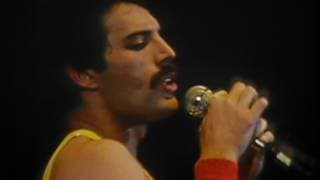
Deacon's bassline owes Chic, Michael Jackson talked them into releasing it, and Queen landed their biggest-selling single.
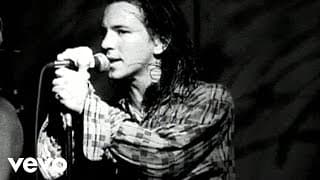
Gossard's demo was called Dollar Short until Vedder set it to learning who his real father was.
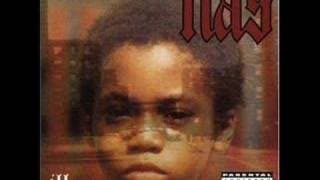
AZ's first appearance on record, the only rapper Nas let onto Illmatic, and his father Olu Dara closing on trumpet.
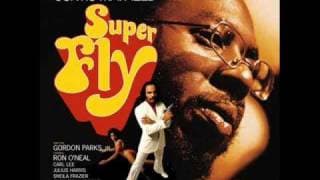
The soundtrack took three days at RCA Chicago; Johnny Pate arranged, Henry Gibson's rototoms set the strut.
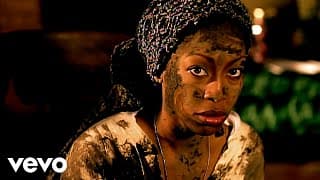
Five-Percenter numerology over a bassline that barely moves, Badu's debut single, and a Grammy at the first attempt.
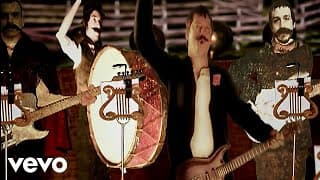
Brock wrote it in the final days of tracking, fed up with darkness, and built indie rock's warmest chorus.
The 45 King looped an Annie showtune, and Jay-Z cleared it with a letter he admitted was a lie.
McCartney read the Fleming novel in a day and wrote it that afternoon; Martin's orchestra did the rest at AIR.
Fifteen minutes on foot to a New York studio was all the writing time, and Blackwell approved it instantly.
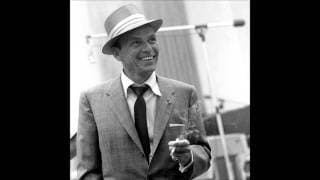
Ernie Freeman's arrangement, and a second take Sinatra resented making; the annoyance is why the vocal snarls.
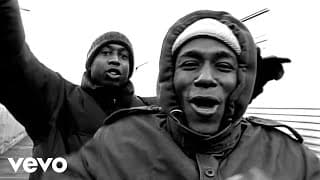
Hi-Tek loops Don Randi's "The Fox" under a Style Wars monologue, and three MCs read the city at night.
Trevor Horn spent about three months producing it; Seal built the chorus from a world visibly changing.
M.I.A.'s second song ever, built on a Roland MC-505 and written for Elastica; dancehall never sounded so homemade.
Kanye West built the beat from Nina Simone's "Sinnerman", and Kweli turned survival into his commercial breakthrough.
Cantrell's song for his father, a Vietnam veteran nicknamed Rooster who appears in Pellington's video; number seven on Mainstream Rock.
A radio host's joke about the lineup changes, flipped into a Grammy winner Beyonce largely wrote on a flight.
Sia cut the vocal as a guide for another singer; Guetta released it anyway, and she got a number one.
Leonard wrote it as a film instrumental that Paramount passed on; Madonna added the words and kept her demo vocal.
Four Alabama day-jobbers paid for their own sessions at a Nashville home studio, and Rolling Stone named it 2012's best.
Premier's beat under Guru facing a gun charge, cut at D&D Studios and delivered as a sermon on perseverance.
Cut live on a darkened Marin auditorium stage with no audience, and somehow the Dead's only Top 10 hit.
Treach turned a fatherless East Orange childhood into verse, with Marley's chorus supplying the only comfort on offer.
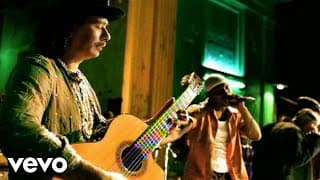
Wyclef built it on a Headhunters drum break, Santana's guitar answering the Product G&B, ten weeks at number one.
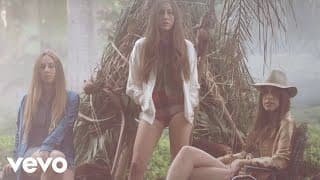
Danielle, Este and Alana wrote it with Morgan Nagler as a stay-strong pep talk, and it moves like one.
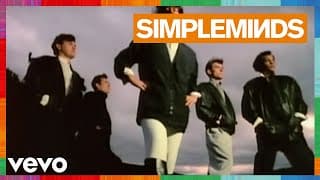
Robin Clark, credited as additional lead singer, answers Kerr line for line while Iovine pushes everything skyward.
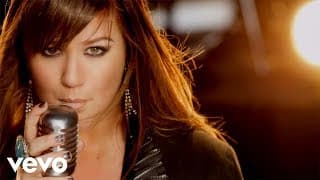
Nietzsche by way of a co-writer's mother, Greg Kurstin's production, and Clarkson's third number one.
Okeh sent an Avalon sharecropper home after modest sales, leaving behind a fingerpicked John Henry that refuses the hammer.
Written out of a breakup and a Shakti Gawain self-help book, then re-released in Britain three times until it stuck.
Trumpet hook lifted from the Yiddish standard Dona Dona, and two and a half years later, number eight.
Chynna Phillips drew the words from AA's one-day-at-a-time, Glen Ballard produced, and it topped Billboard's 1990 year-end chart.