Stan
2000 · From The Marshall Mathers LP
The 45 King looped Dido under four letters, and Eminem's fan character ended up in the Oxford dictionary.
★ 8.7
 skopia
The 45 King looped Dido under four letters, and Eminem's fan character ended up in the Oxford dictionary.

Andre 3000 apologizing to Erykah Badu's mother, who liked it enough to buy a Ms. Jackson license plate.
Romanthony's vocal pushed through auto-tune over a slowed Eddie Johns disco sample, filtered until the chorus explodes.
Bombs Over Baghdad at 155 beats per minute, drum and bass colliding with a gospel choir and a guitar solo.

Radiohead opened Kid A with no guitars at all, just a Prophet-5 and Yorke's voice diced in Pro Tools.
Ken Nelson pointed at the stars outside Rockfield, and Martin sang the melody in his worst Neil Young impression.

Iovine wanted another "My Name Is," so Eminem wrote this hours before the album was due. It hit number four.
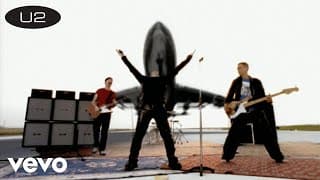
Eno programmed the drum machine, Lanois played the Telecaster, and the Edge won the argument for his old delay-drenched sound.

Moby nearly left it off Play; a reversed string sample from the Exodus score, cut in his Little Italy apartment.

Written for the Charlie's Angels soundtrack, eleven straight weeks at number one, and Michelle Williams's first single with the group.

Printed as "The Good Old Way" in an 1867 collection of slave songs, and Krauss makes it sound weightless.

Three guitar chords, spoken city names saluting Havana's Radio Reloj, and a list of small pleasures that lands on you.

Andreas Carlsson reportedly wrote the lyric during a Stockholm driving test; Cheiron's producers built pop's most decisive exit.
A 1932 hymn Brumley began while picking cotton, carried here by Krauss and Welch over mandolin and guitar.
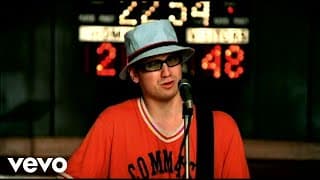
Number one in Australia, number two in Britain, built from Brown's memory of Long Island parents fearing metal records.
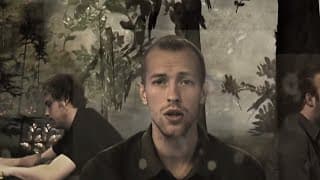
Recorded four times before Ken Nelson kept one, and Martin, by his account, apologizing for behaving badly toward his band.

Fifteen years old and stuck in a math class when Arnold wrote it; he sang it from the drum stool.

Boyd called it a song about fear, and Scott Litt's production pulls the band down to acoustic guitar.

A children's clapping rhyme, "Down Down Baby," rebuilt into a hook by Jay E, and St. Louis had its record.

Rick Rubin's arrangement leaves it bare, and Cash, his voice thinned by illness, turns U2's Berlin song into a reckoning.

Bassist Tobin Esperance wrote that riff on a piano, and Shaddix built a nu-metal standard about despair over it.

Sanders and Sillers wrote it in 1999; five weeks at country number one, and every graduation since has borrowed it.

Max Martin coached Timberlake into pronouncing the last word "may", and 'N Sync got their only Hot 100 number one.
Jack White turned a children's clapping rhyme into a complaint about the phone company, cut in his own living room.

A Hawaiian DJ pulled it off an MP3 site and put it on air; Britain's biggest seller of 2001 followed.
Voice, guitar, and a 1959 Phil Phillips hit slowed to a whisper; Juno carried it to a new audience.

Martin called it a blatant Jeff Buckley attempt, cut at Rockfield with Ken Nelson, and the chorus soars anyway.

Codependency as a love song, Serletic producing, and the only Matchbox Twenty record to reach number one.
Max Martin and Rami built it with Lisa Miskovsky, and the video sat atop TRL for sixty-five days.
Thomas wrote it after meeting his future wife, then it spent thirteen weeks atop the Adult Top 40.
Scott Litt produced it at NRG, and Boyd wrote the lyric amid two deaths and a collapsing relationship.

Kravitz wrote, arranged and produced it alone, cut it from an album, then won a third straight Grammy.

Four weeks atop country radio in May, a Love to Infinity remix, and a pop top ten by December.

Mac McAnally's 1990 original about his Mississippi hometown reached number fourteen; Chesney's cover went gold without ever being a single.
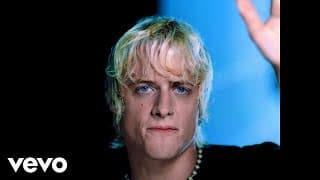
Twelve weeks at number one on Alternative Airplay, with Brett Scallions selling every syllable of Carl Bell's chorus.
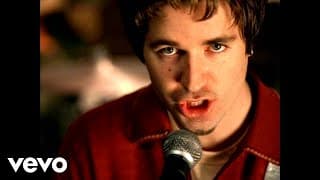
Long Island power pop, written overnight for the girlfriend Hampson later married, cut in Atlanta with Nick DiDia.

Richard Marx wrote it for a girl group, rewrote the harmonies for five men, and topped adult contemporary thirteen weeks.
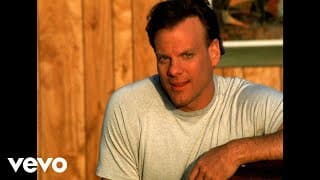
Vassar and Craig Wiseman built it from household mishaps and money worries, and it became his first country number one.