I'm Too SexyRight Said Fred
I'm Too Sexy
1991
A gym joke about mirror preening, built on a riff lifted from Hendrix's Third Stone from the Sun.
★ 0.9
 skopia
A gym joke about mirror preening, built on a riff lifted from Hendrix's Third Stone from the Sun.
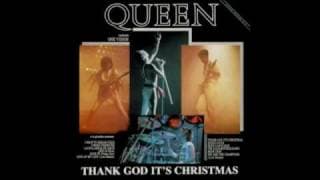
May and Taylor wrote it, Mercury sang it, and Queen waited until 2019 to give it a video.
Eugene Record's Chi-Lites ballad, harmonica and all, remade by Young in 1990 for a number eight American hit.
Track three on The Antidote, cut-and-paste funk from the album Theo Keating built alone after his partner left.
Recorded alone in Sussex in the summer of 1979, every instrument McCartney's own, and a UK number six by January.
Rice-Oxley built it from Yeats's poem about an Irish airman, a pilot too high up to hear the guns below.

Decker's rap began as syncopated nonsense syllables, and she overdubbed herself into a duet nobody could play live.
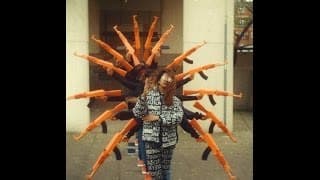
Dub reggae bass and Indian strings under a nod to Shampoo's 1994 hit "Trouble", produced by The Partysquad.
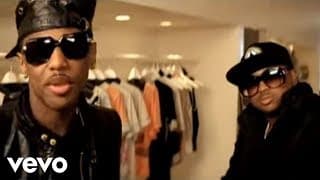
Loso's Way yielded exactly one charting single, produced by The-Dream and Tricky Stewart, peaking at number fourteen.

Jeff Fortgang wrote it fresh out of Yale; the Persuaders cut it first, and Stewart took it to number ten.
Diplo and Switch wrapped a breakup song in dubstep, and a Microsoft browser ad made it a worldwide hit.
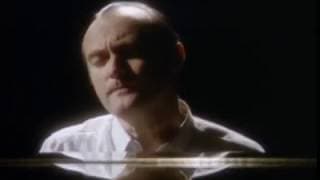
A slow burn, Hugh Padgham at the desk, Stephen Bishop harmonising behind, and Collins's fourteenth and final American top ten.
A glimpse of an ex on the London Underground, her new man beside her, and a transatlantic number one.
A 1966 Ventures instrumental on loop, twice a minor British hit, then a Mitsubishi advert made it inescapable.
Peretti, Creatore and Weiss built the melody on a 1784 French air, and UB40 held number one for seven weeks.

Critics heard the Kinks' Lola in the strum, and a Dancing on Ice slot lifted it to number fourteen.
Written in a garden shed at Farrington's father's house, stalled at fifty-eight in Britain, then Napoleon Dynamite happened.
Rutherford and B.A. Robertson had both just lost their fathers; Carrack, who lost his young, sang it.
An anarchist collective from Leeds, a sample from Brassed Off, and a chorus about ordinary people refusing to stay down.
Toni Wine and Carole Bayer Sager set lyrics to a Clementi sonatina rondo; Eric Stewart sang it to number two.
Nick Rhodes of Duran Duran co-produced it, and Limahl rode the hook to two weeks at UK number one.
A DX7 electric piano, a drum machine, and Don Myrick's saxophone taking a number one out quietly.
Three writers, a Pretty Woman soundtrack slot, and the most cheerful denial ever to reach the American top ten.
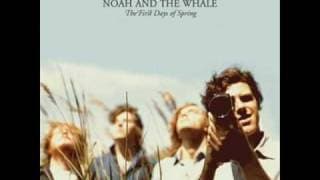
Fink wrote the whole album around his split with Laura Marling; this became its first single, and its way out.
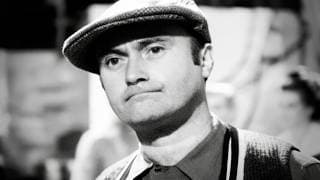
Clapton plays the lead over Padgham's production, the closest Collins had then come to writing a blues song.

Morrison wrote it as a prayer for Avalon Sunset; Stewart's reading turned it into a wedding standard.
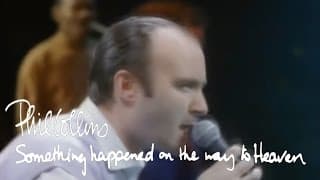
Phenix Horns brass over Nathan East's bass, on a song Collins first wrote for The War of the Roses.
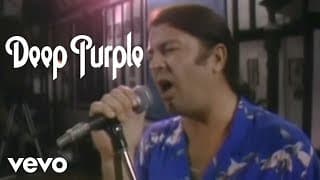
Stowe, Vermont, a mobile studio, the Mark II lineup back after eleven years, and Lord's organ doing the heavy lifting.
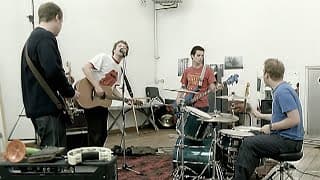
Martin called it a blatant Jeff Buckley attempt, cut at Rockfield with Ken Nelson, and the chorus soars anyway.
Curnin called it an indictment of dishonest politicians, Rupert Hine produced it, and America took it to number four.
Romania in February 1990, weeks of upheaval still fresh, and Edwards came home to write pop's happiest history lesson.
Her brother Rollo co-produced it, and the chorus flatly refuses to concede a relationship everyone knows is over.
A father's blessing written for the kids Stewart missed while touring, and similar enough to Dylan's song that they share royalties.
The last number one of the eighties and the first of the nineties, with David Crosby singing behind Collins.
A riff written on a bike ride, a sample Rick Rubin cleared free, and a surprise American number one.
Coverdale began it as a Tina Turner idea, Geffen told him to keep it, and it climbed to number two.
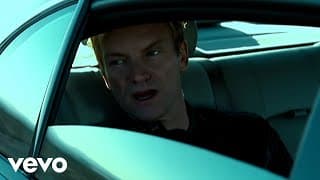
An Arabic descant improvised by Cheb Mami without hearing Sting's lyric, and both halves came out about longing.
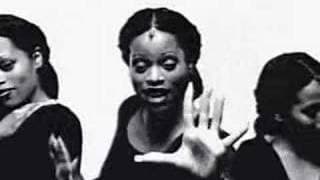
Written out of a breakup and a Shakti Gawain self-help book, then re-released in Britain three times until it stuck.
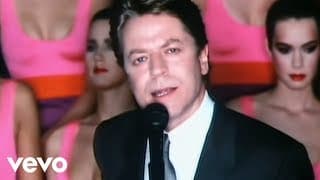
Number two in America, three weeks atop the rock chart, and the video that closed Palmer's mannequin trilogy.