(I Can't Get No) SatisfactionThe Rolling Stones
(I Can't Get No) Satisfaction
1965 · From Out of Our Heads
Keith dreamt the fuzz riff, taped it half-asleep, and woke up holding the sound of teenage frustration.
★ 9.8
 skopia
Keith dreamt the fuzz riff, taped it half-asleep, and woke up holding the sound of teenage frustration.
Merry Clayton's voice cracking on "murder" is the sound of the sixties ending, mid-take, in one syllable.
Faithfull handed Jagger Bulgakov, Richards turned the folk sketch into samba and played both bass and the solo.
Jones's sitar made it the first number one to feature the instrument, and Decca added the comma by mistake.
Named for the gardener who woke them up, and cut with an acoustic guitar recorded into a Philips cassette recorder.
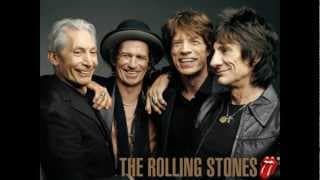
A choral intro from the London Bach Choir, Al Kooper on French horn, and producer Jimmy Miller on drums.
Producer Jimmy Miller opens it on cowbell, and the single arrived in Britain the day after Brian Jones died.
Cut at Muscle Shoals in December 1969, with Jim Dickinson on tack piano after Ian Stewart refused the minor chords.
Cut at Muscle Shoals days before Altamont, Bobby Keys on tenor, and a lyric Jagger later said he would censor.
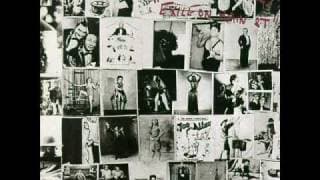
Taylor on bass, Jimmy Miller drumming the coda, and a lyric Jagger got from a housekeeper who played dice.
Richards cut the acoustic into a Philips cassette recorder until it distorted, Watts drumming on a 1930s toy kit.
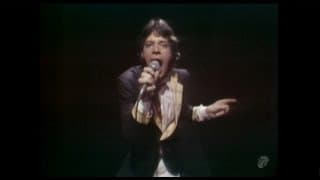
Four-on-the-floor from a Billy Preston jam, harmonica by Sugar Blue, found busking in Paris, and their last American number one.
Two rock takes buried under dozens of abandoned reggae versions, dug out of the vault while assembling Tattoo You.
Brian Jones on recorder, Wyman fingering a double bass while Richards bowed it, and the Stones' most delicate number one.
A thank-you note to Jagger for shouldering the band, by Richards' account, with Wood taking the solo.