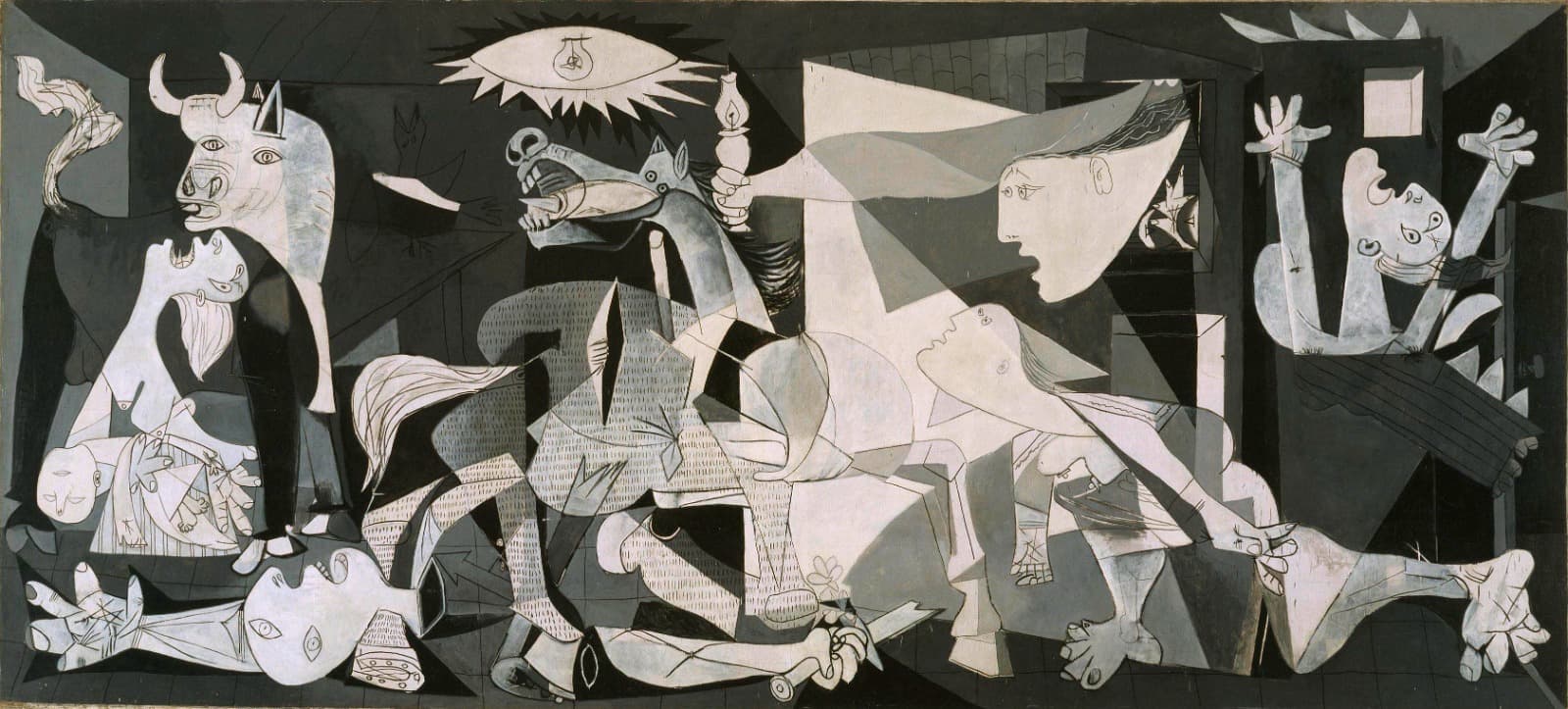
Guernica
1937 · Museo Reina Sofia, Madrid
A screaming horse, a mother with her dead child, all in grey. Picasso painted it in weeks after German bombers leveled a Basque town.
★ 9.9
 skopia
A screaming horse, a mother with her dead child, all in grey. Picasso painted it in weeks after German bombers leveled a Basque town.
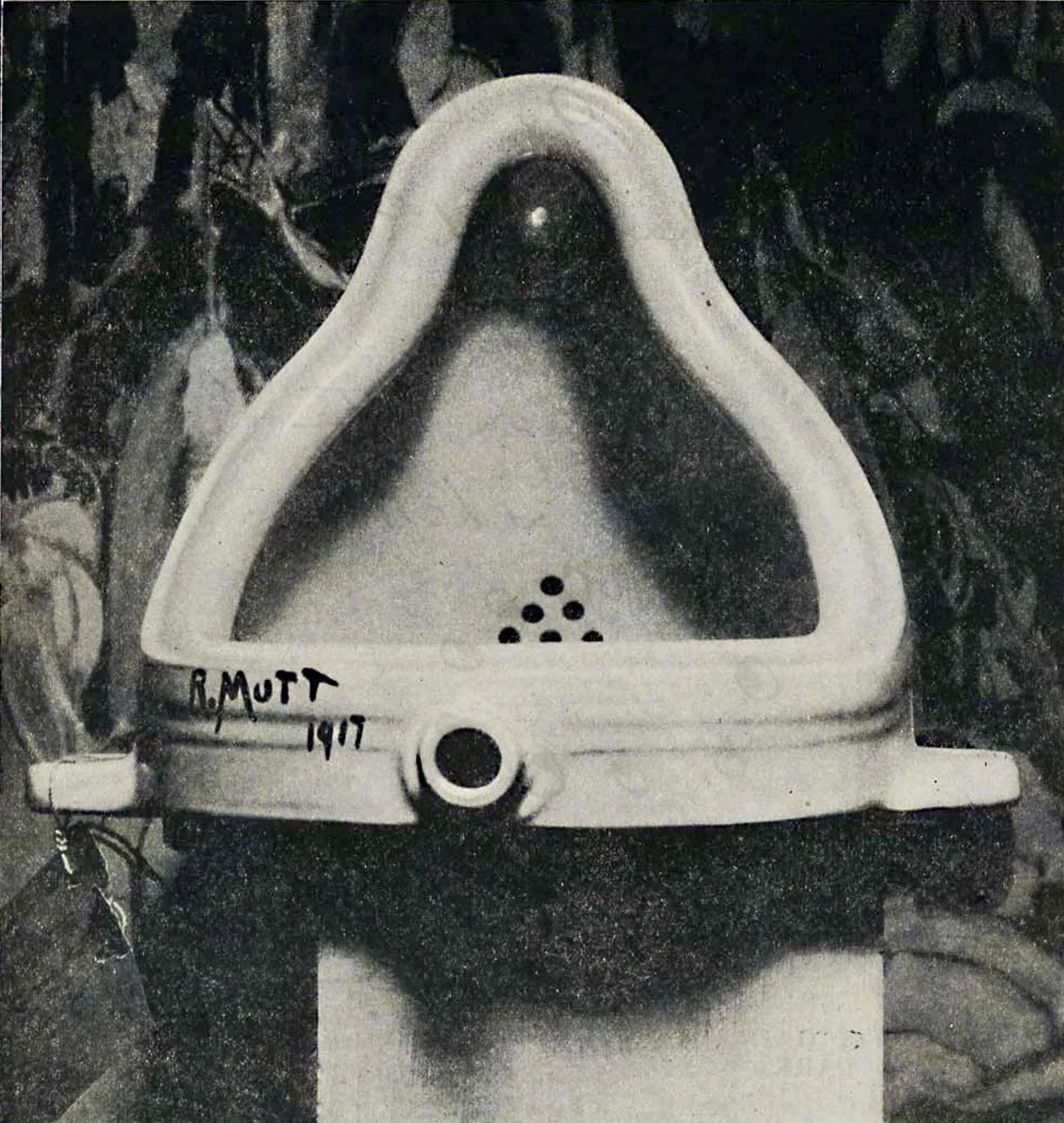
Duchamp submitted a porcelain urinal signed R. Mutt to an exhibition he was helping to judge, and the committee rejected it.

Monet painted these eight murals of his pond for two oval rooms in Paris while his eyesight failed. They opened months after he died.
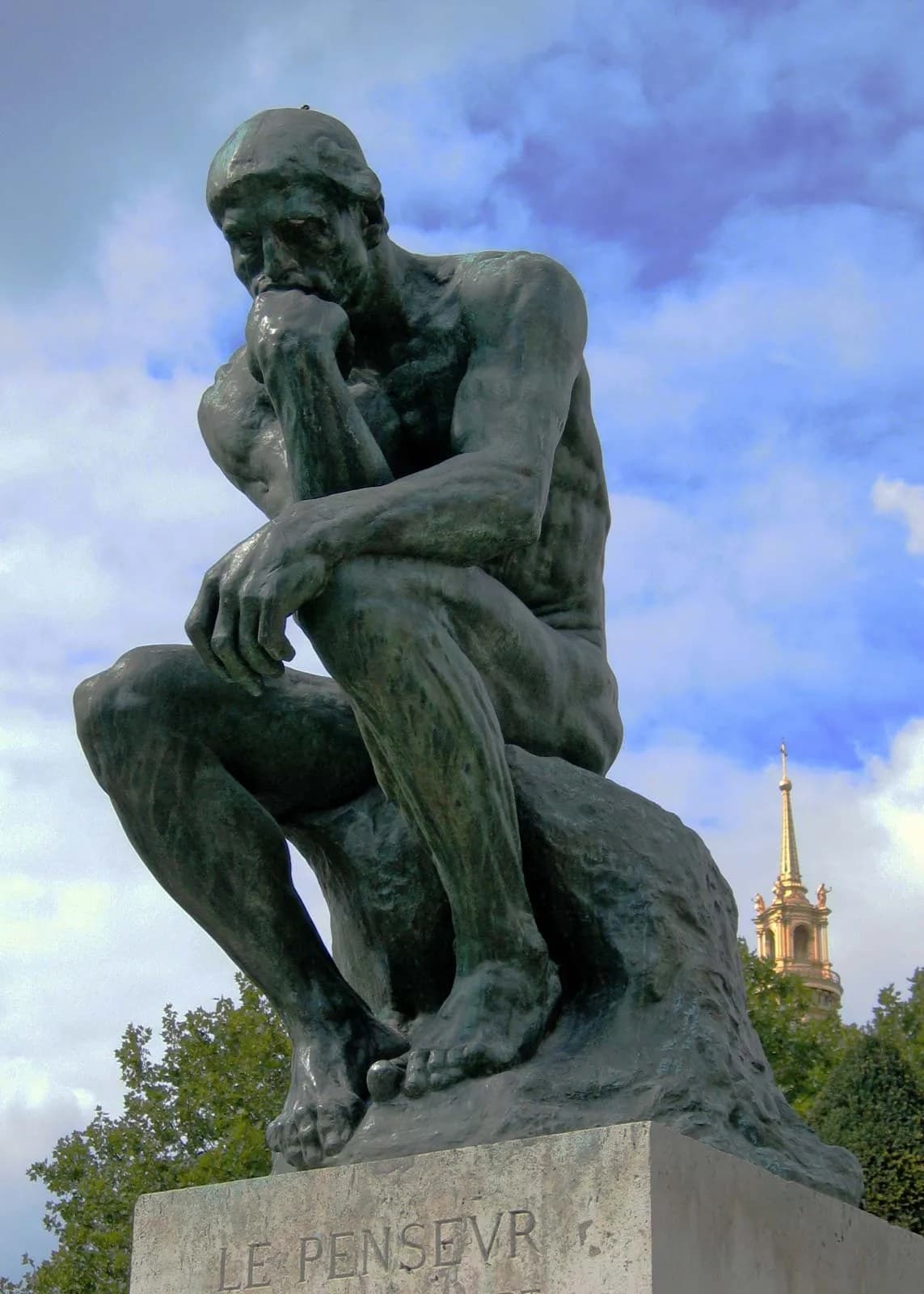
Rodin first made this figure as Dante brooding over the Gates of Hell, then enlarged him and set him thinking alone on a rock.

Five nude women stare out with their faces turned into masks, and Picasso kept the canvas rolled up in his studio for years.
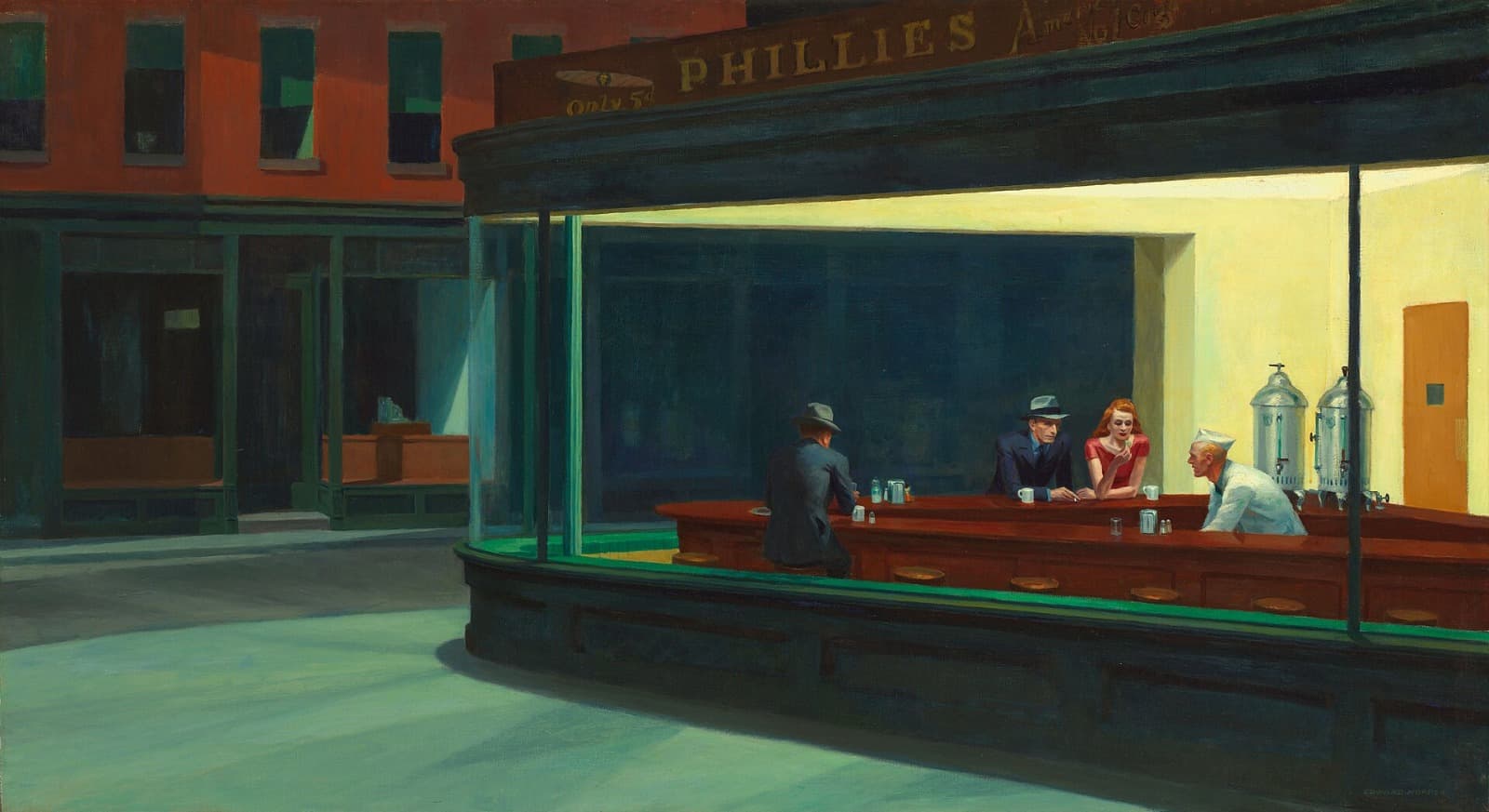
Four people sit under fluorescent light behind a curved sheet of glass, and Hopper gave the diner no door in or out.
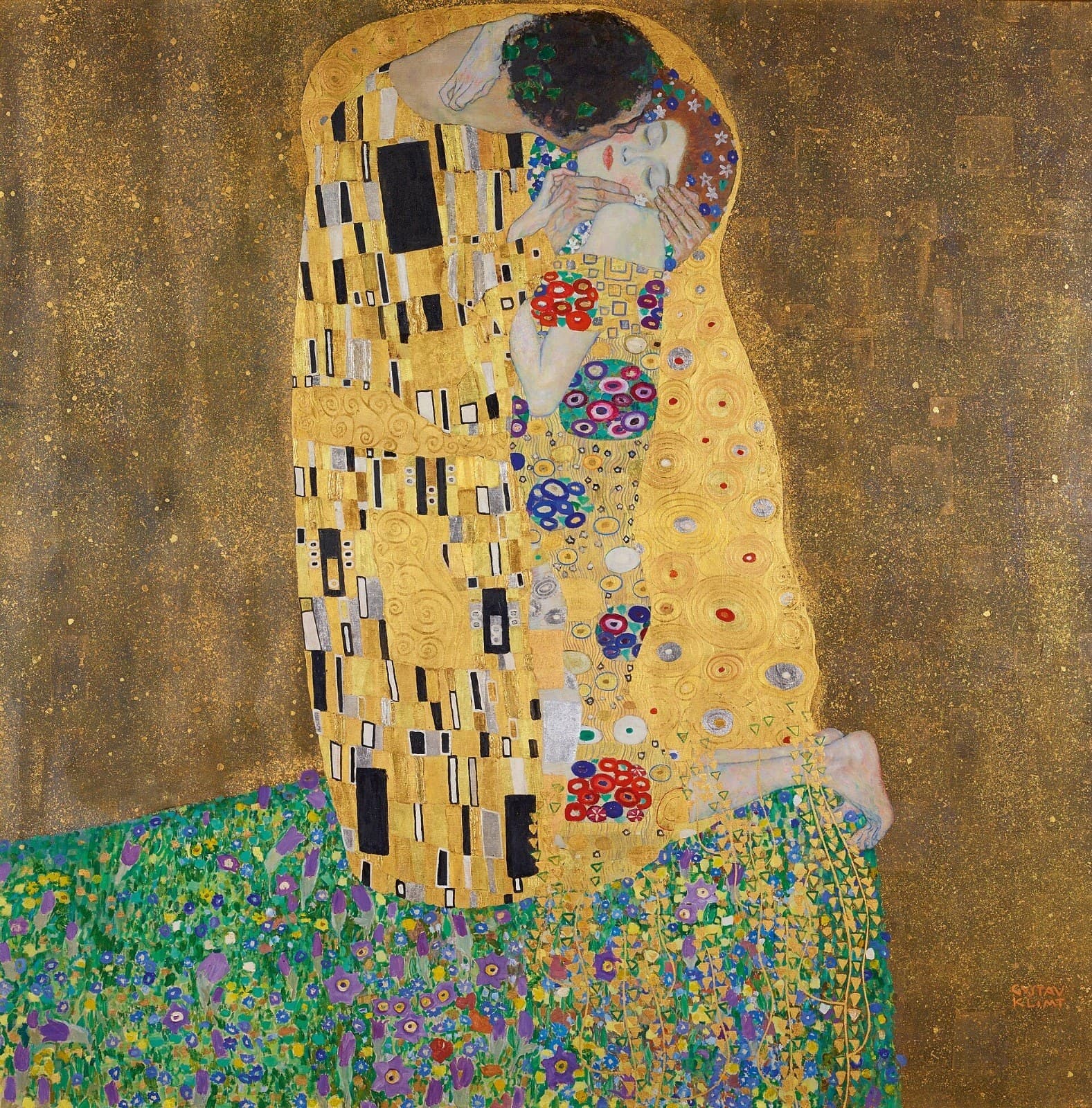
Two lovers kneel wrapped in a single gold robe, rectangles patterning his side of it and circles hers, on a meadow of flowers.

Thirty-two canvases, one for every variety Campbell's then sold, hung in a row like stock on a supermarket shelf.

Dalí said the soft watches came to him from a camembert melting in the sun, and he painted them with hallucinatory precision.
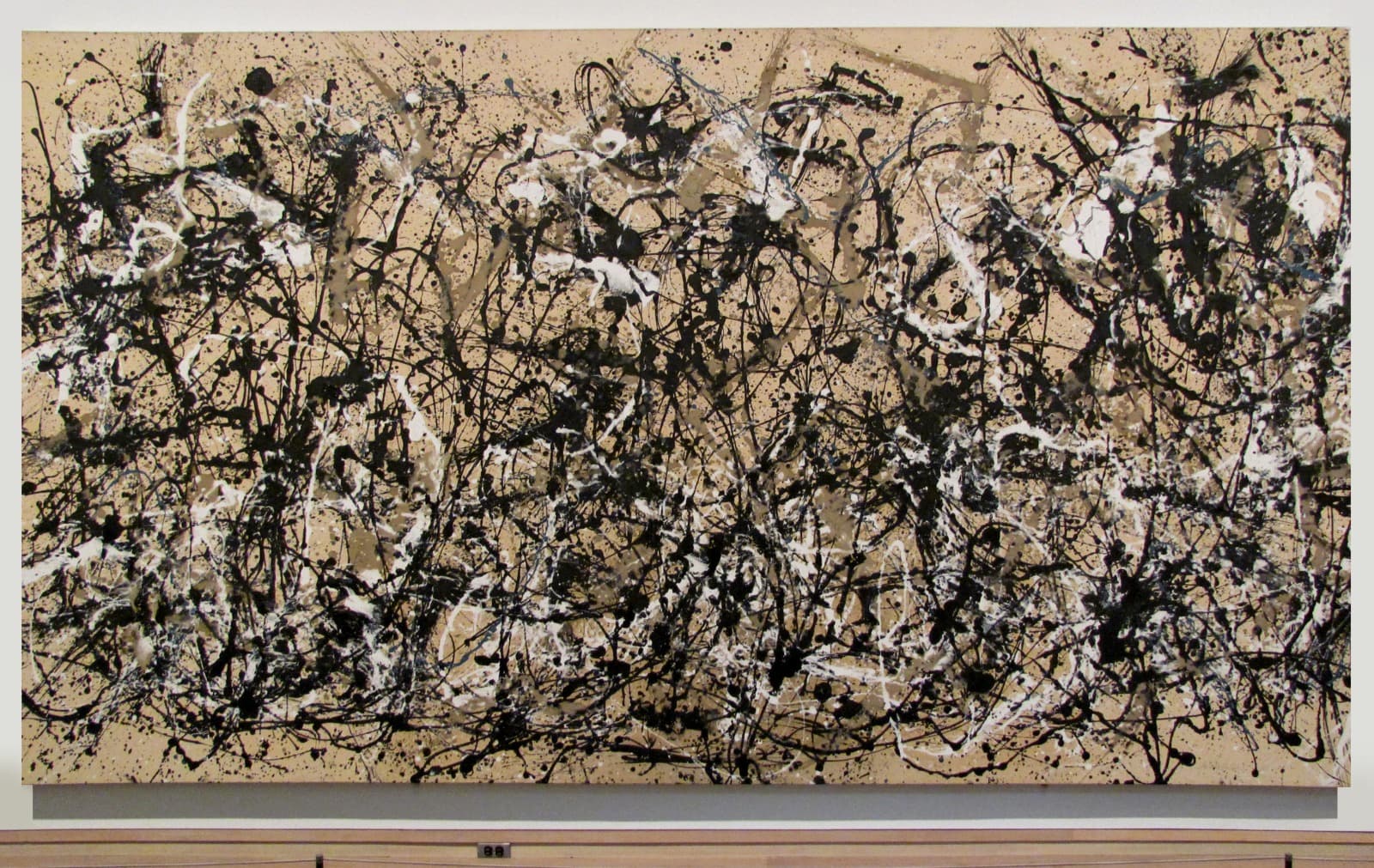
Pollock worked on the floor and moved around the canvas instead of standing at an easel, laying black enamel across raw cotton in 1950.
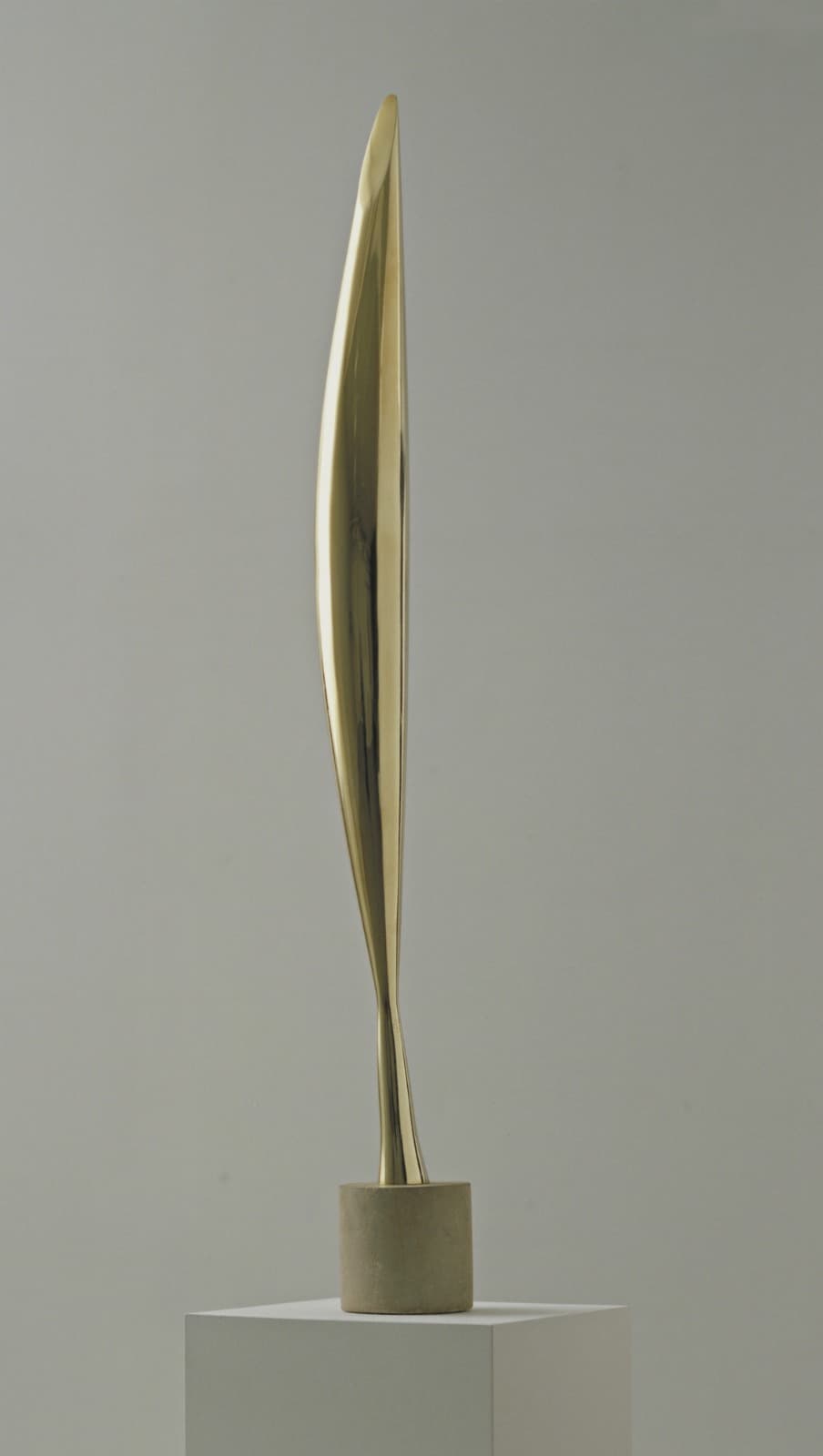
American customs taxed it as industrial metal until Brancusi v. United States in 1928 forced the law to recognize abstract sculpture as art.
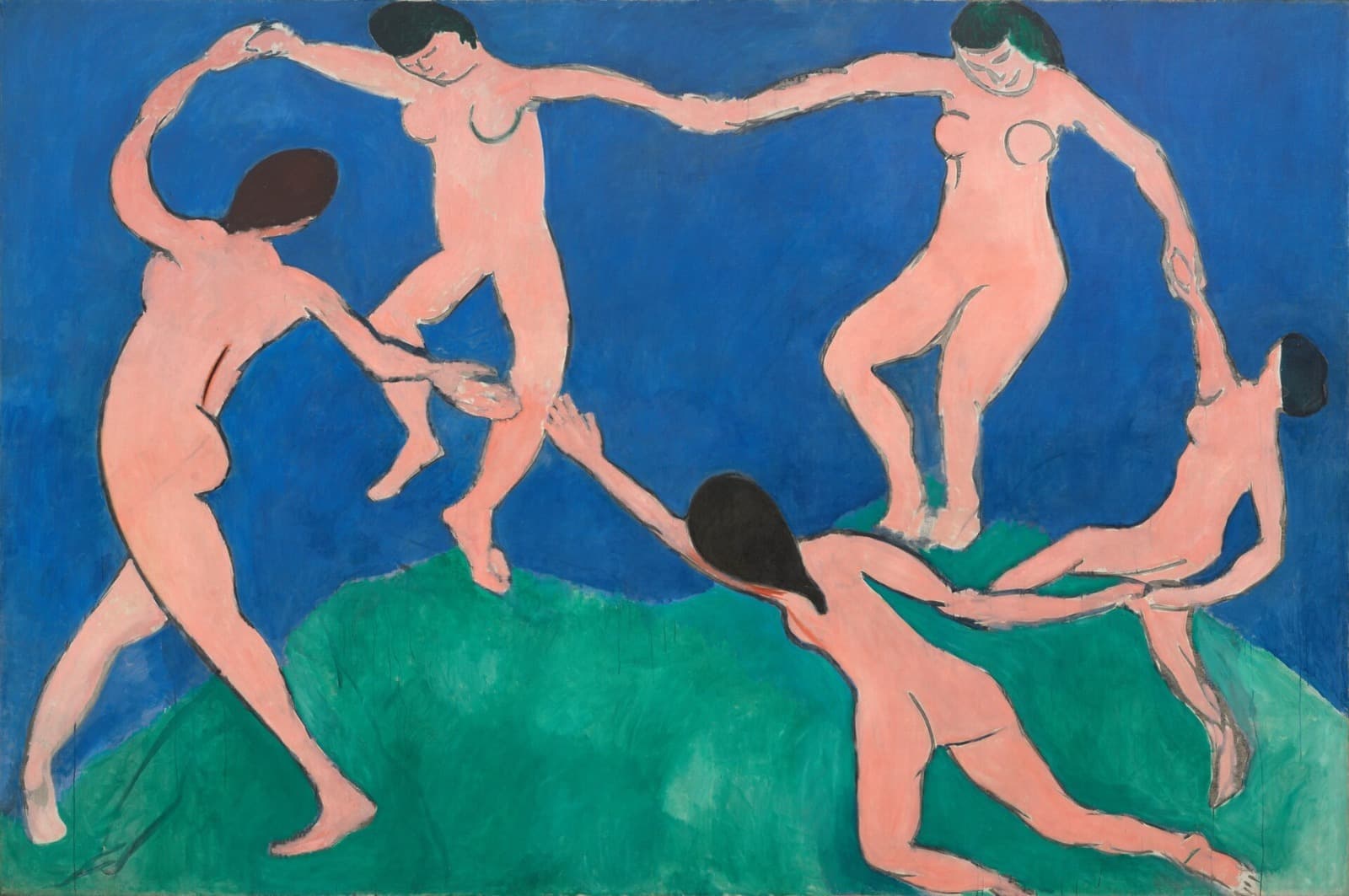
Five figures wheel in a ring against blue and green, reduced to three colors and the strain of holding hands at speed.
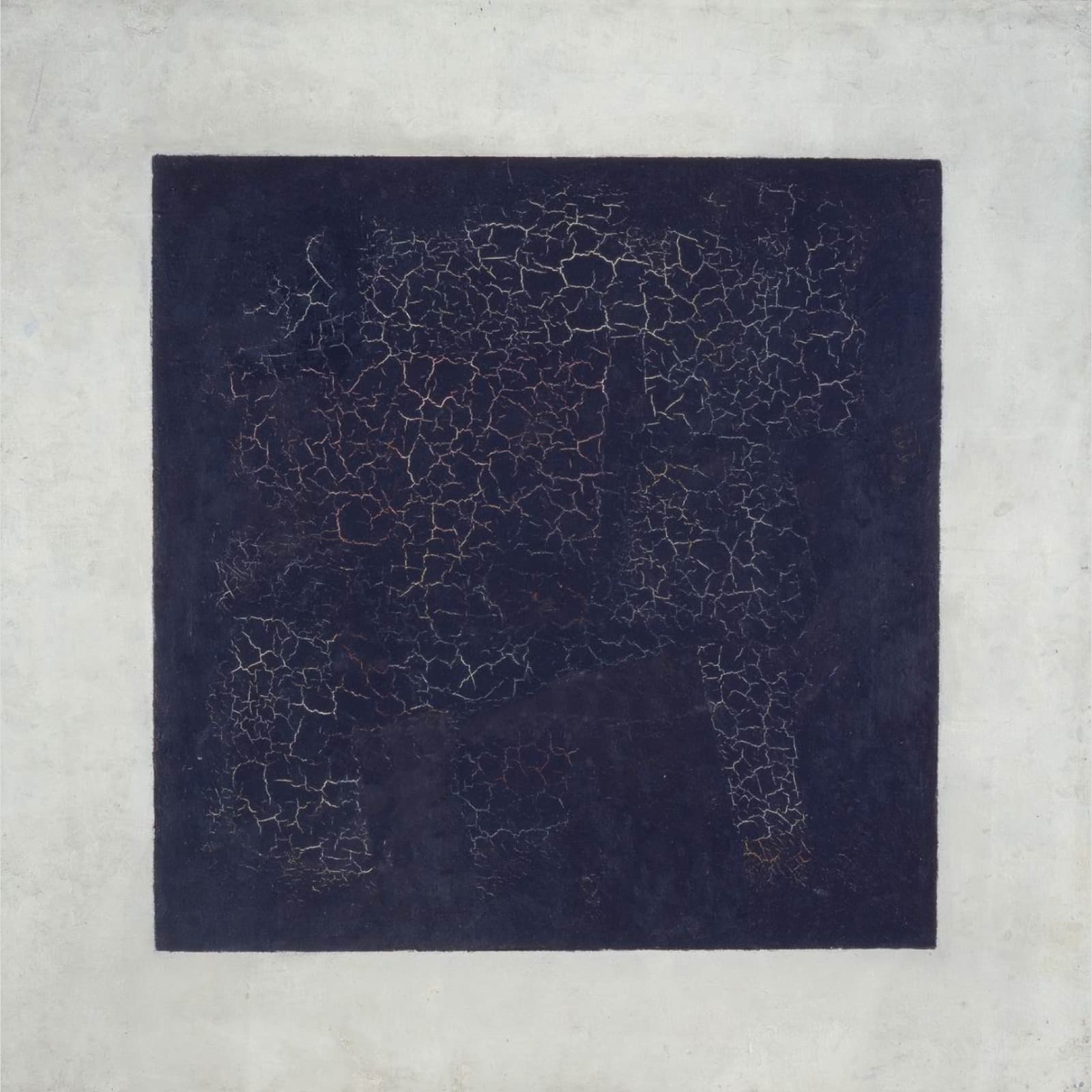
Malevich hung it high in the corner where a Russian house keeps its icons, and called it the zero of form.
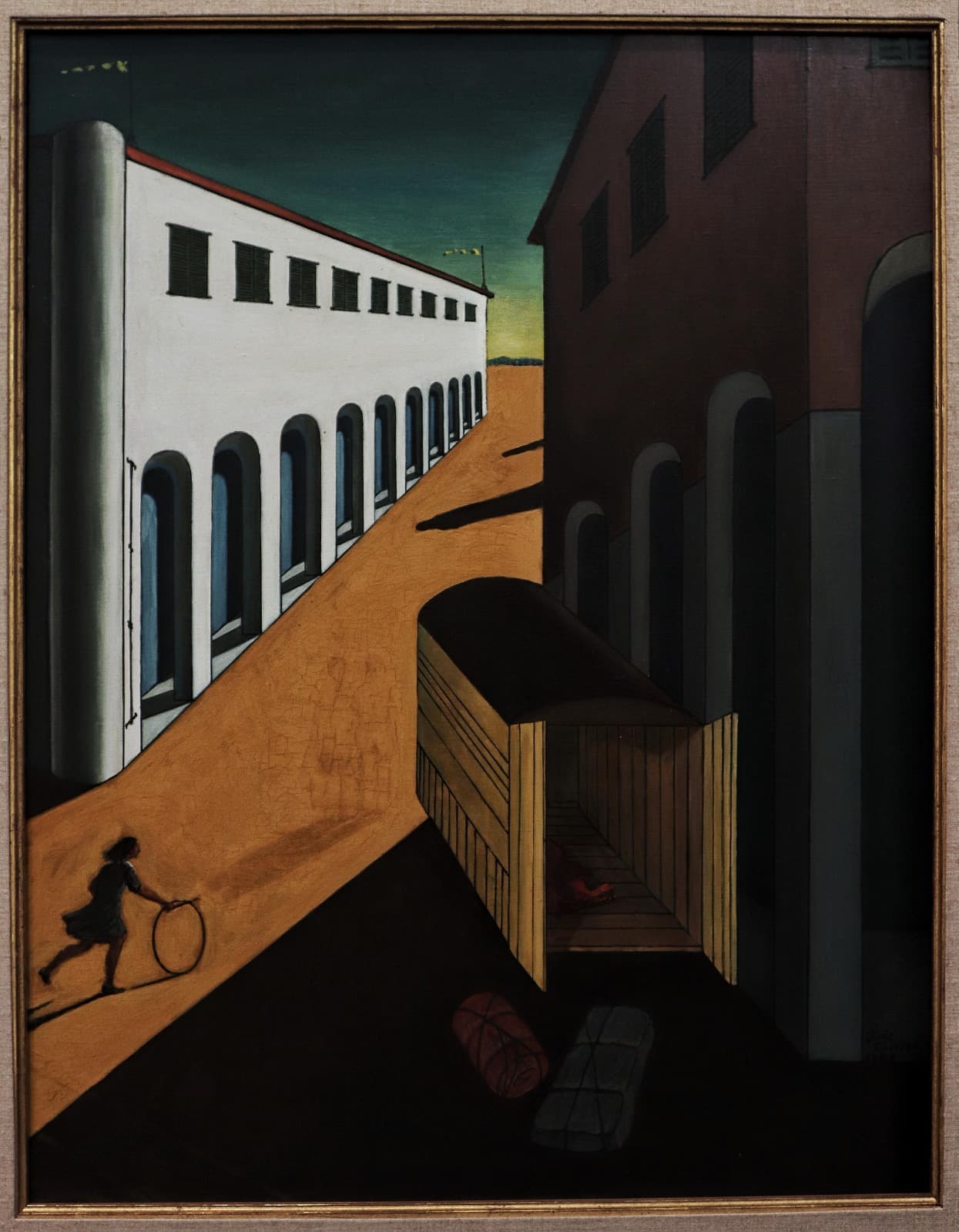
A girl rolls a hoop down an arcaded street toward a shadow coming around the corner, in light that belongs to no hour.
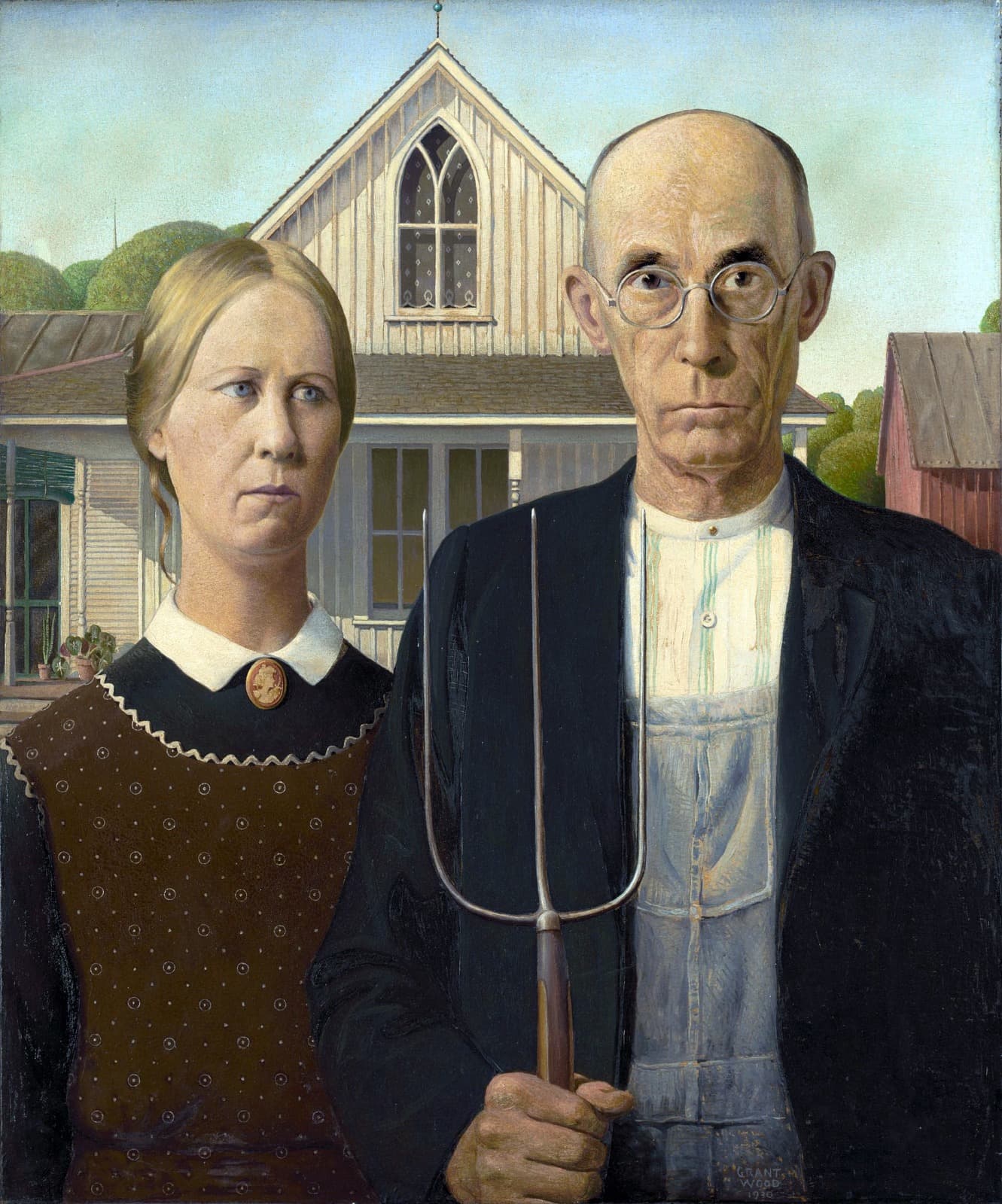
Wood posed his sister and his dentist in front of a farmhouse window, and people have argued ever since whether he meant tribute or mockery.

Nudes lounge and pipe and dance in a ring in a glade of colors nothing in nature has, a Fauve idyll from 1906.
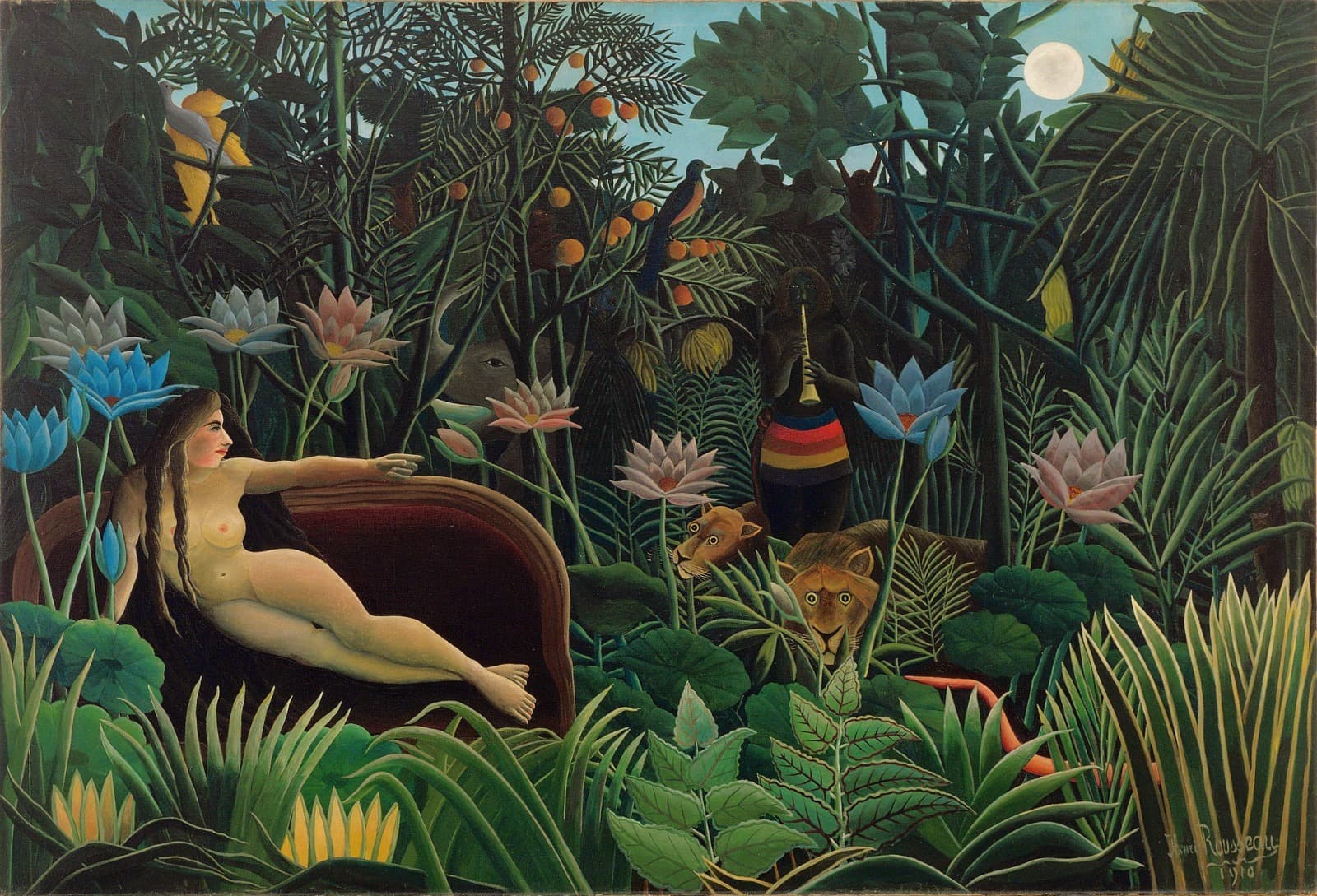
Rousseau painted this in the last year of his life and explained that the woman on the sofa is dreaming herself into the jungle.
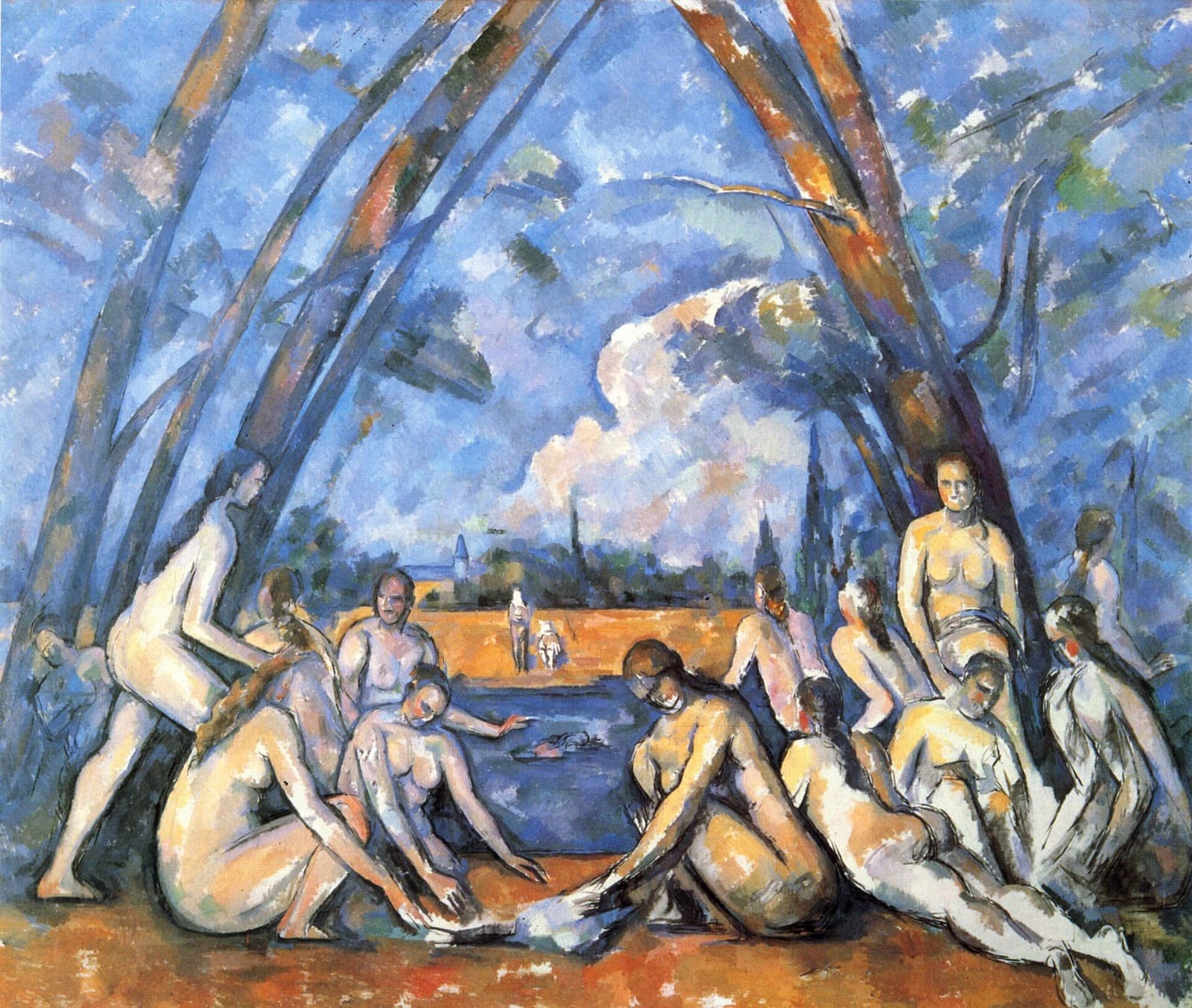
Cézanne worked on it for years and died before he finished, bending the trees inward so they rhyme with the bodies underneath.
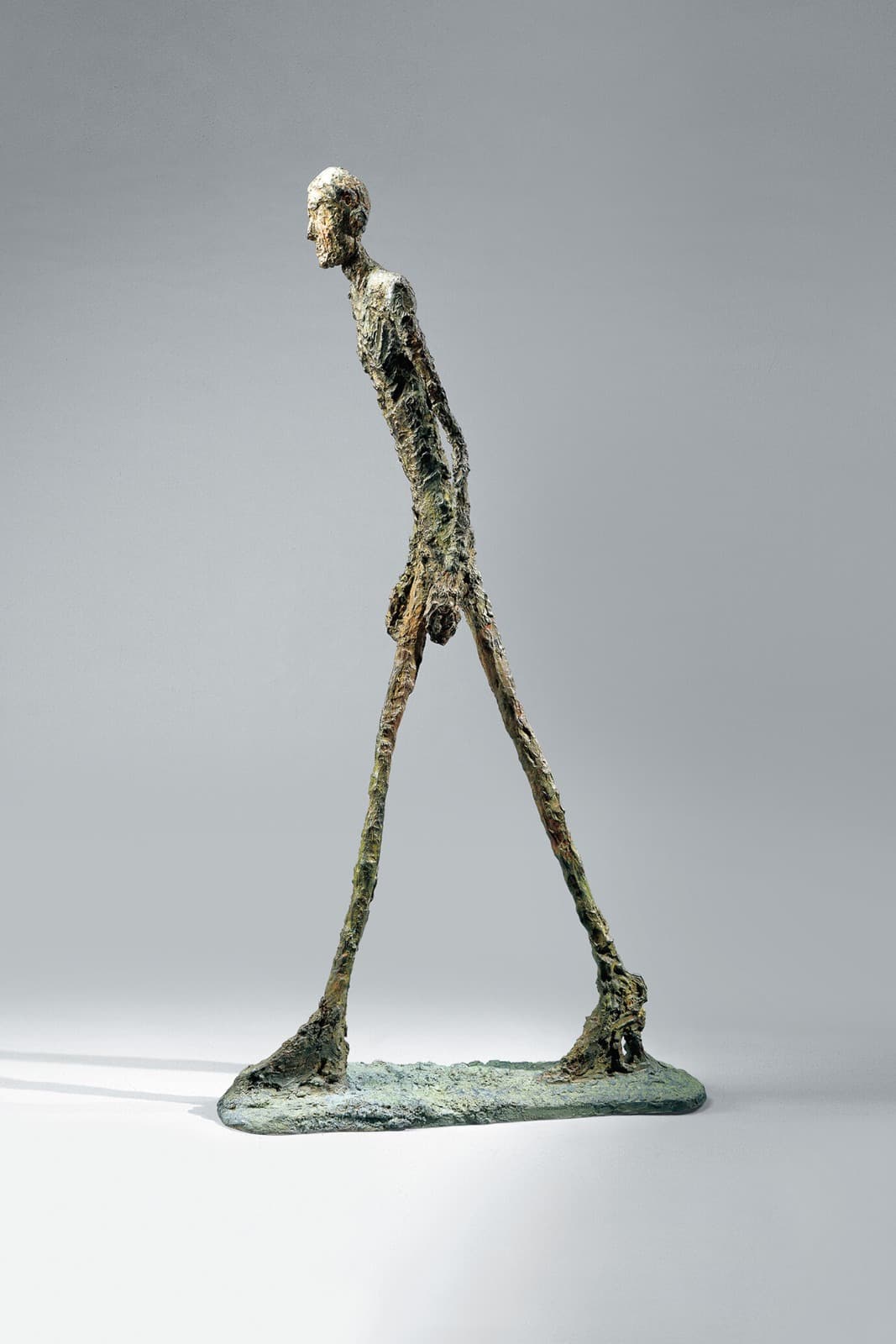
Everything is scraped off the bronze except forward motion. One cast briefly held the record for the most expensive sculpture ever sold.
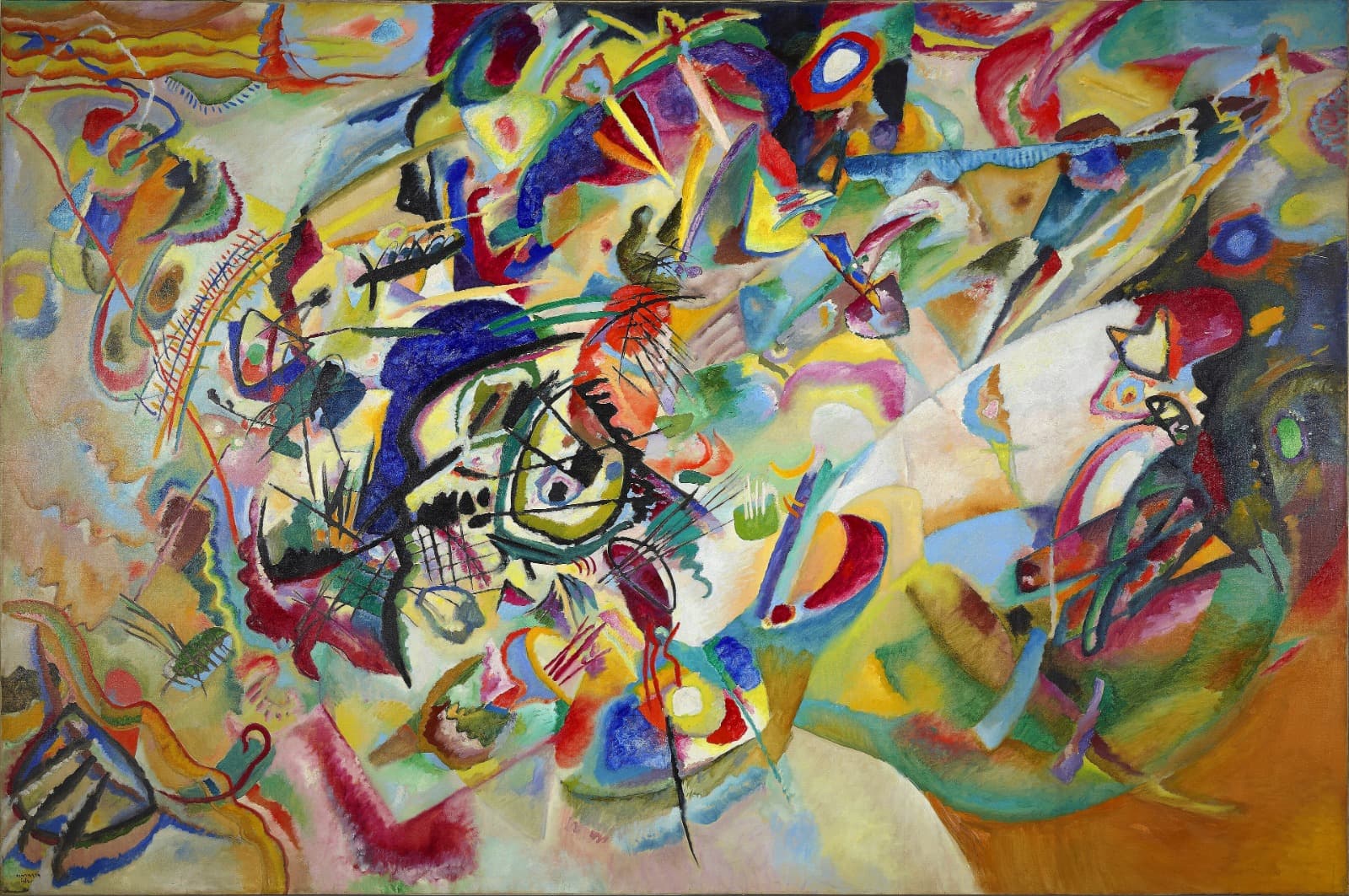
Kandinsky made more than thirty studies for this and then painted the four-meter canvas in three days, apocalypse dissolved past recognition.
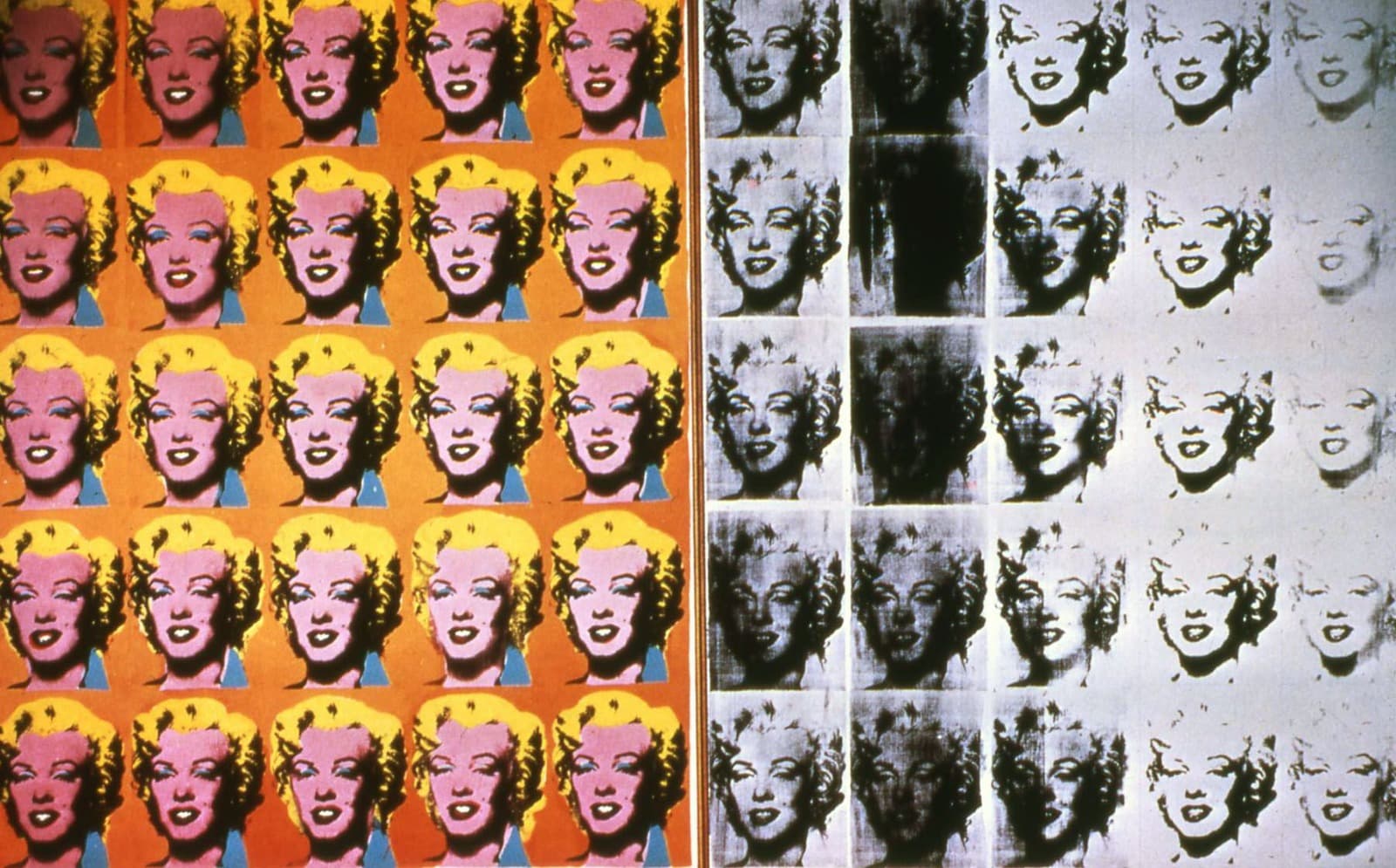
Warhol silkscreened a publicity photo fifty times just after Monroe died, bright on one half and smudging away to nothing on the other.

Only the face and hands are painted naturally and the rest is gold. The Nazis seized it, and a long restitution case eventually got it back.

Three flayed creatures crane and scream on orange grounds. Shown as the war ended in 1945, they made Bacon's reputation overnight.

Eight ragged dark blue poles lean across the poured web and give it a beat. Australia's purchase in 1973 caused a national row.

A critic at the 1913 Armory Show called it an explosion in a shingle factory, and the insult followed the painting around America.

The words under the pipe are correct, since a painting of a pipe is not a pipe, which is the whole and entire joke.
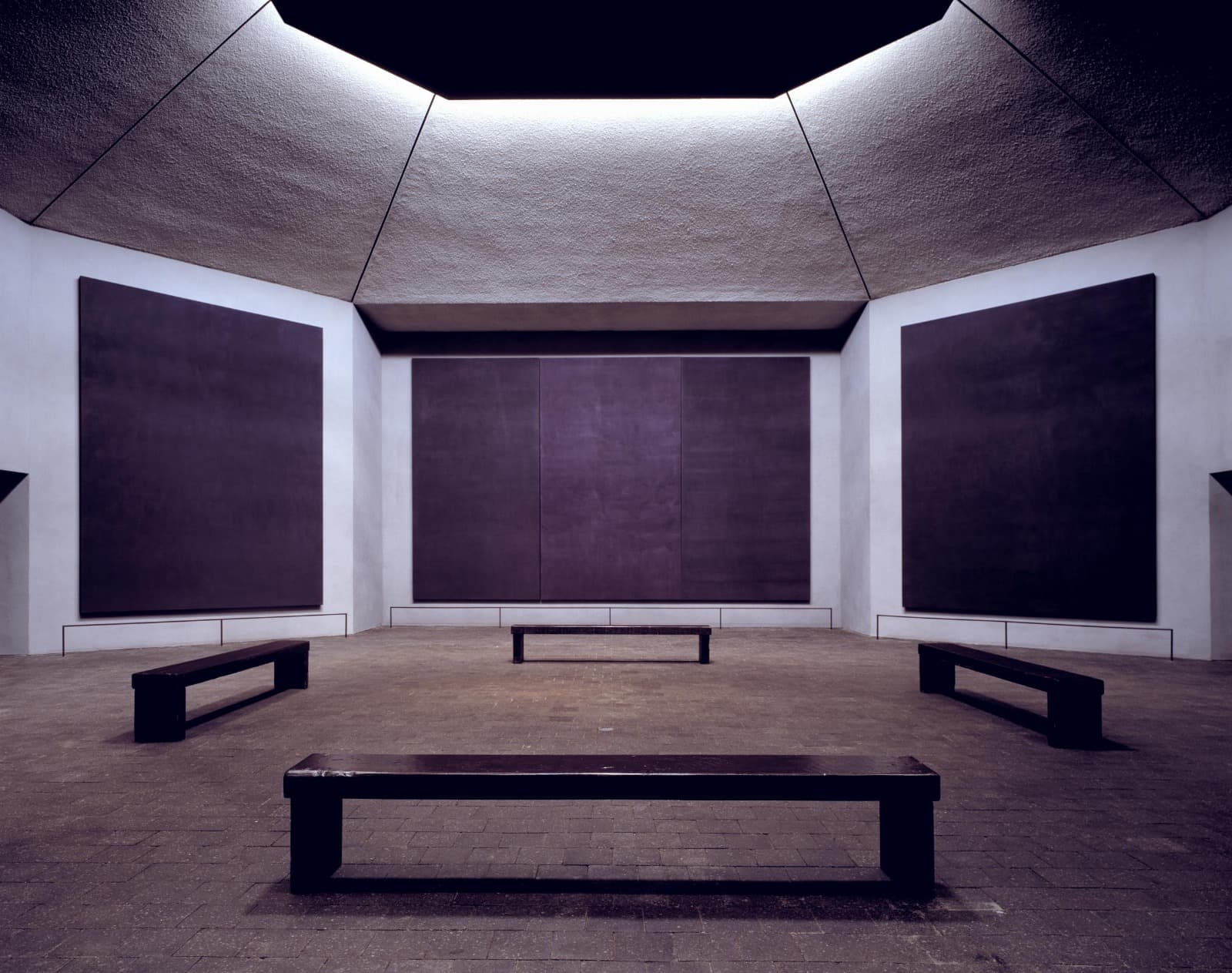
Fourteen near-black panels in an octagonal room, where your eyes adjusting to the dark is the point. Rothko died before it opened.

Bacon took Velázquez's composed pope and set him screaming behind a curtain of falling paint. He never saw the original in person.

A critic looked at this and called Matisse and his friends fauves, wild beasts, which is how the movement got its name.

A marble head, a red rubber glove and a green ball hang together on a wall, and a train goes by in the distance.
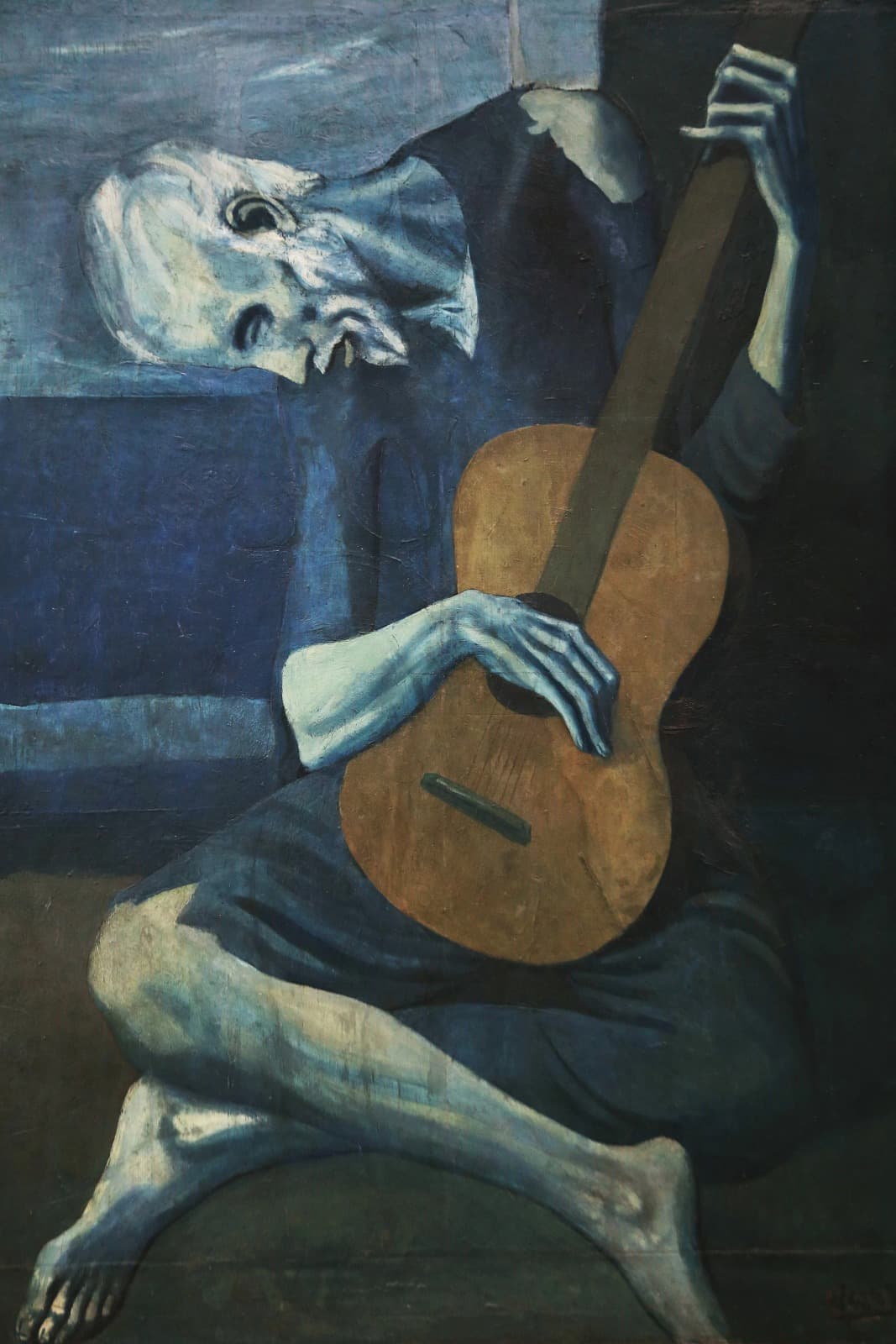
The guitar is the only warm note in the picture. Picasso painted it in his Blue Period, poor himself and living on very little.
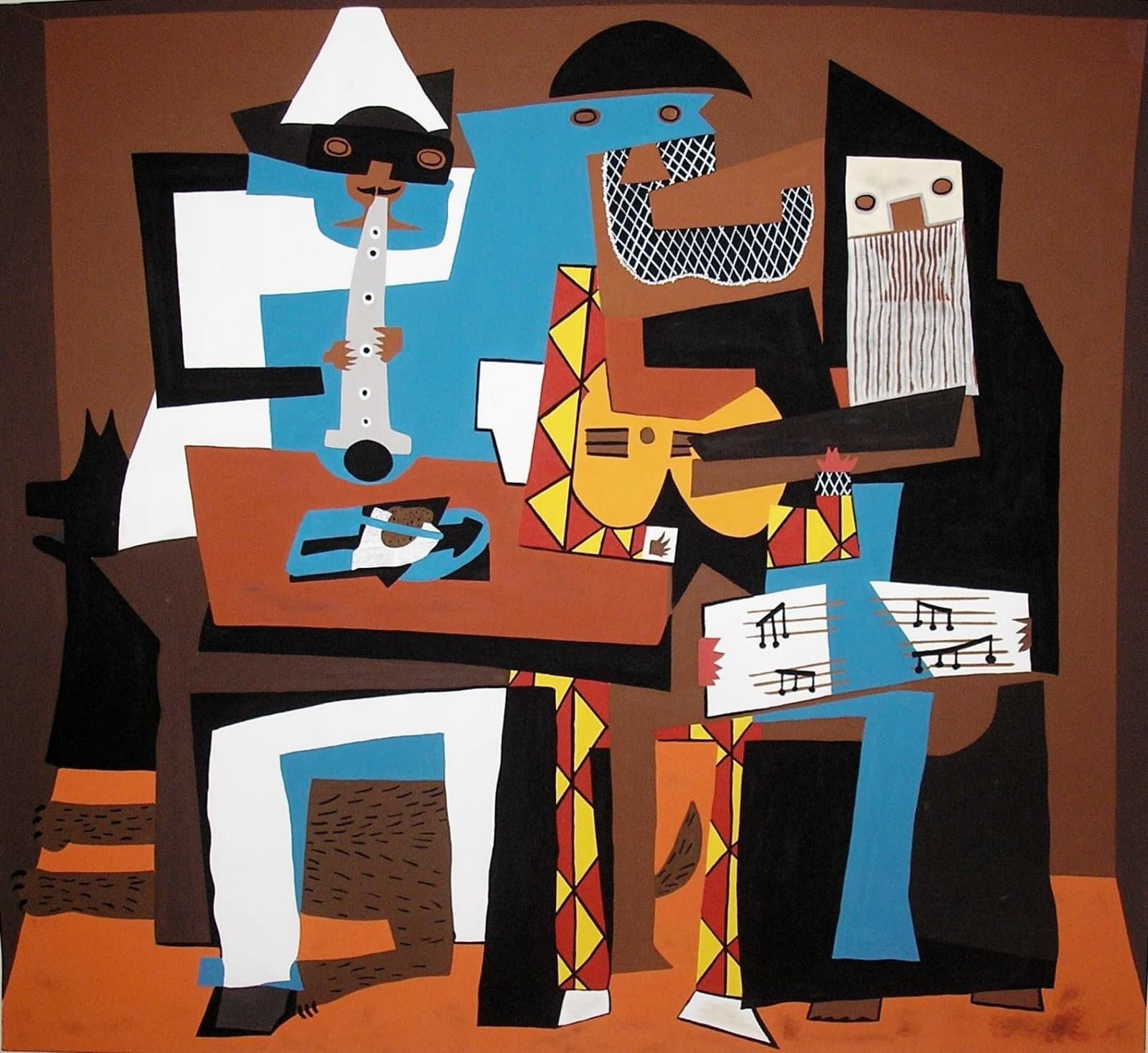
A harlequin, a Pierrot and a monk in flat interlocking shapes that look cut from paper. Synthetic Cubism at its grandest and most deadpan.

Mondrian broke his own grid into blinking squares after moving to New York, where he loved the traffic and the jazz.
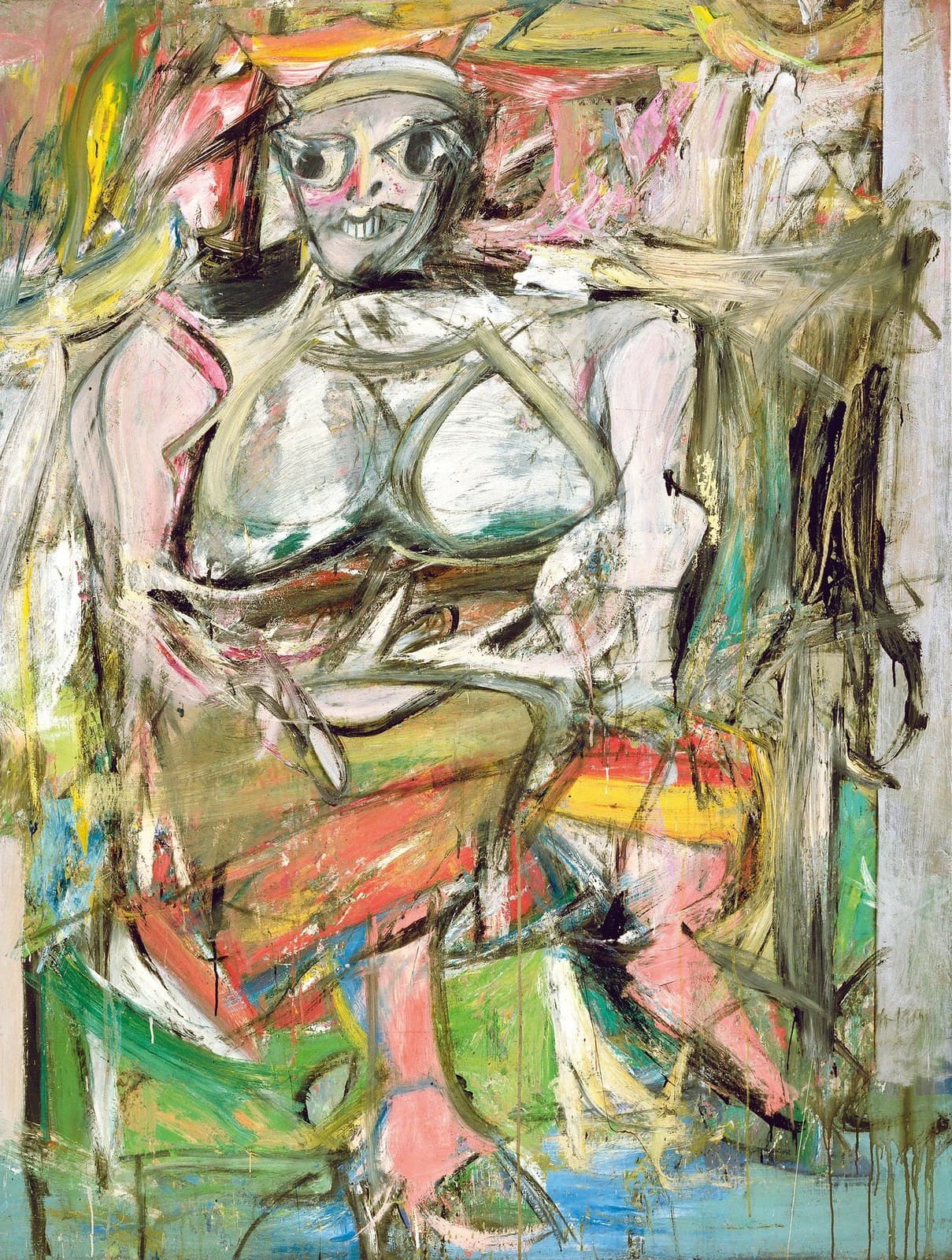
De Kooning dragged the figure back into abstract painting at the moment that was least acceptable, and worked this canvas over for two years.
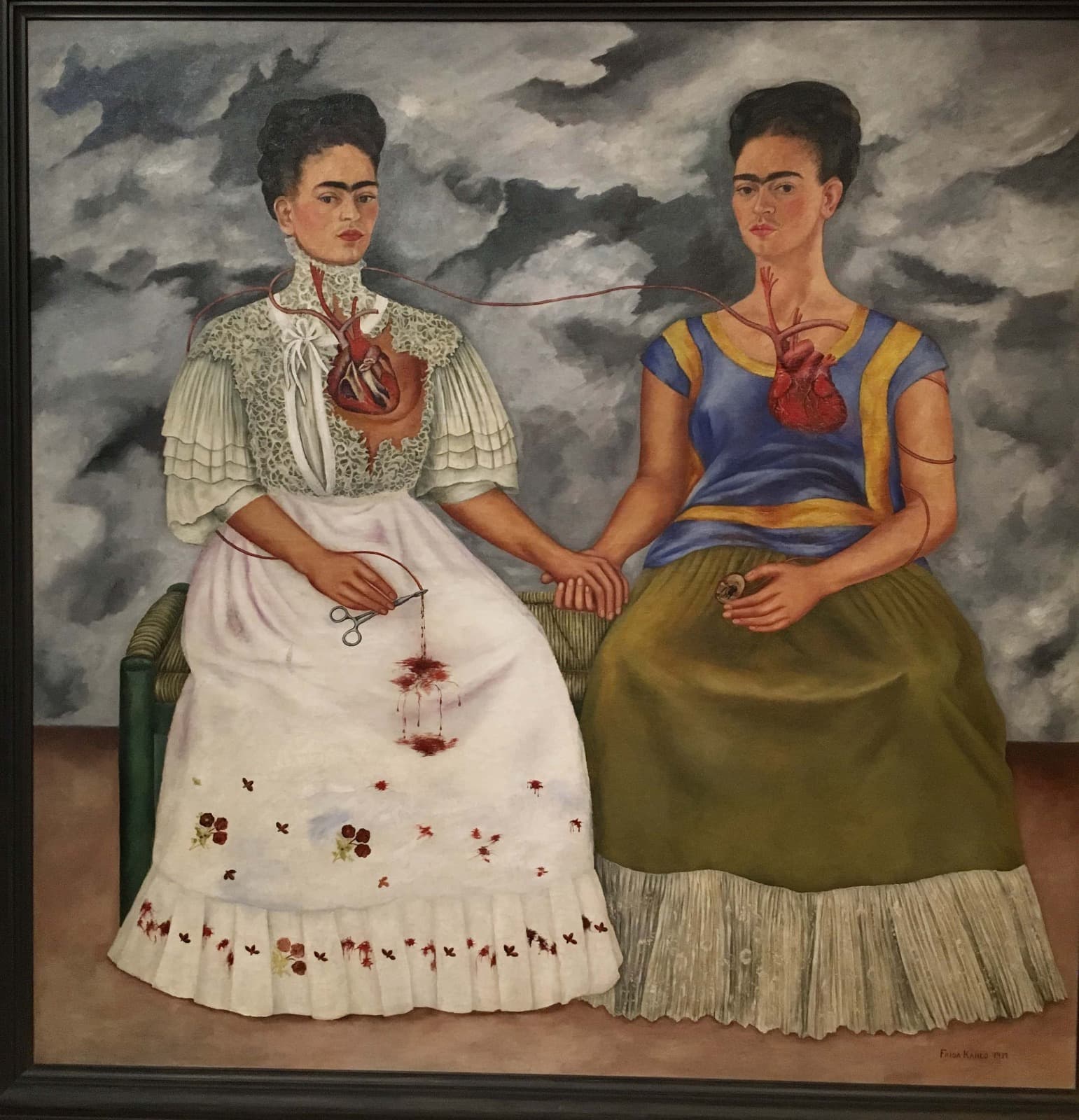
Two versions of herself hold hands with one artery running between them, clamped shut. She painted it as her marriage to Rivera fell apart.
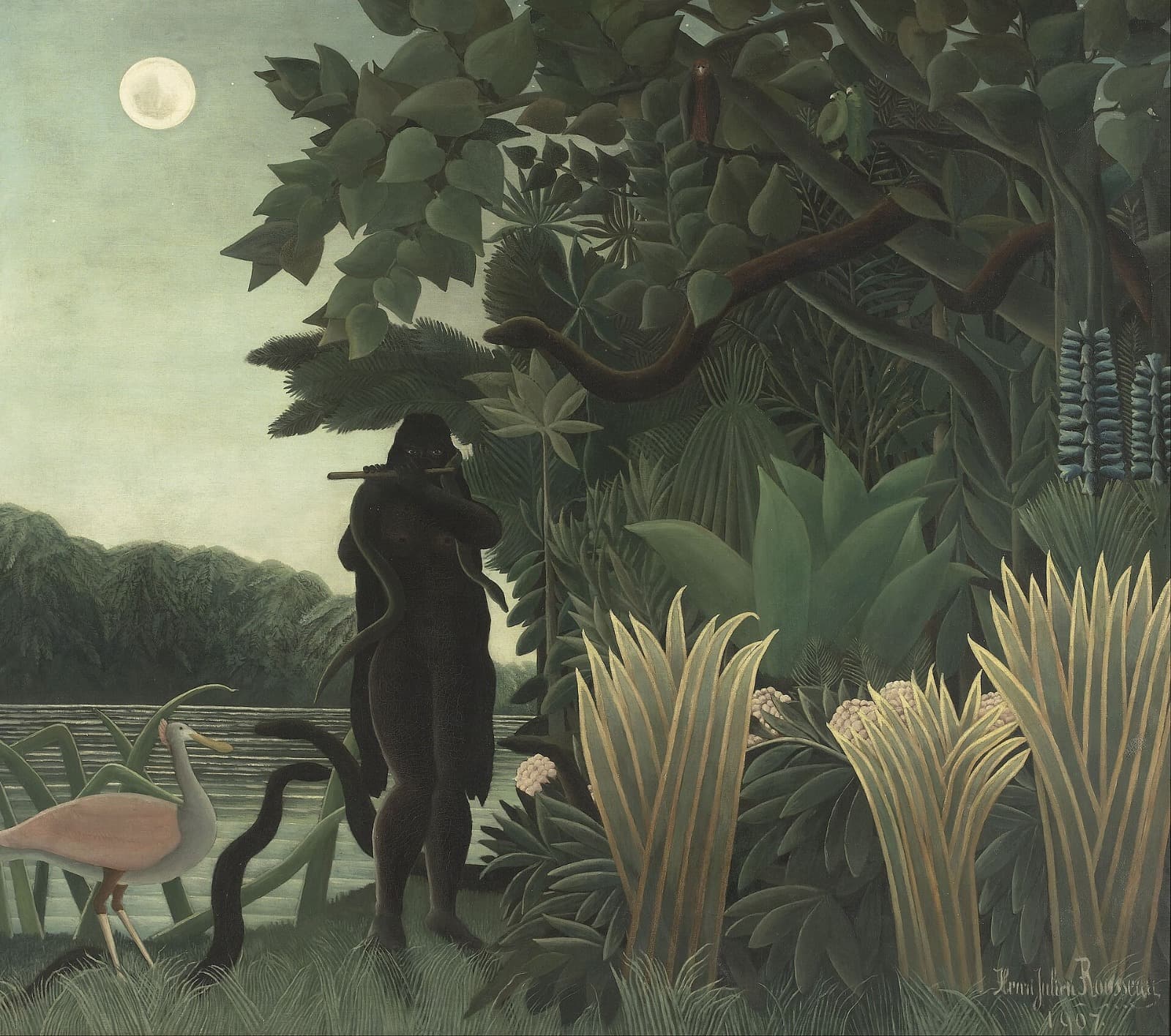
A black silhouette plays a flute and the snakes come out of the leaves toward the music, in moonlight Rousseau invented entirely.

Circus people stand together in an empty landscape without looking at each other. The Rose Period at its largest and most wistful.
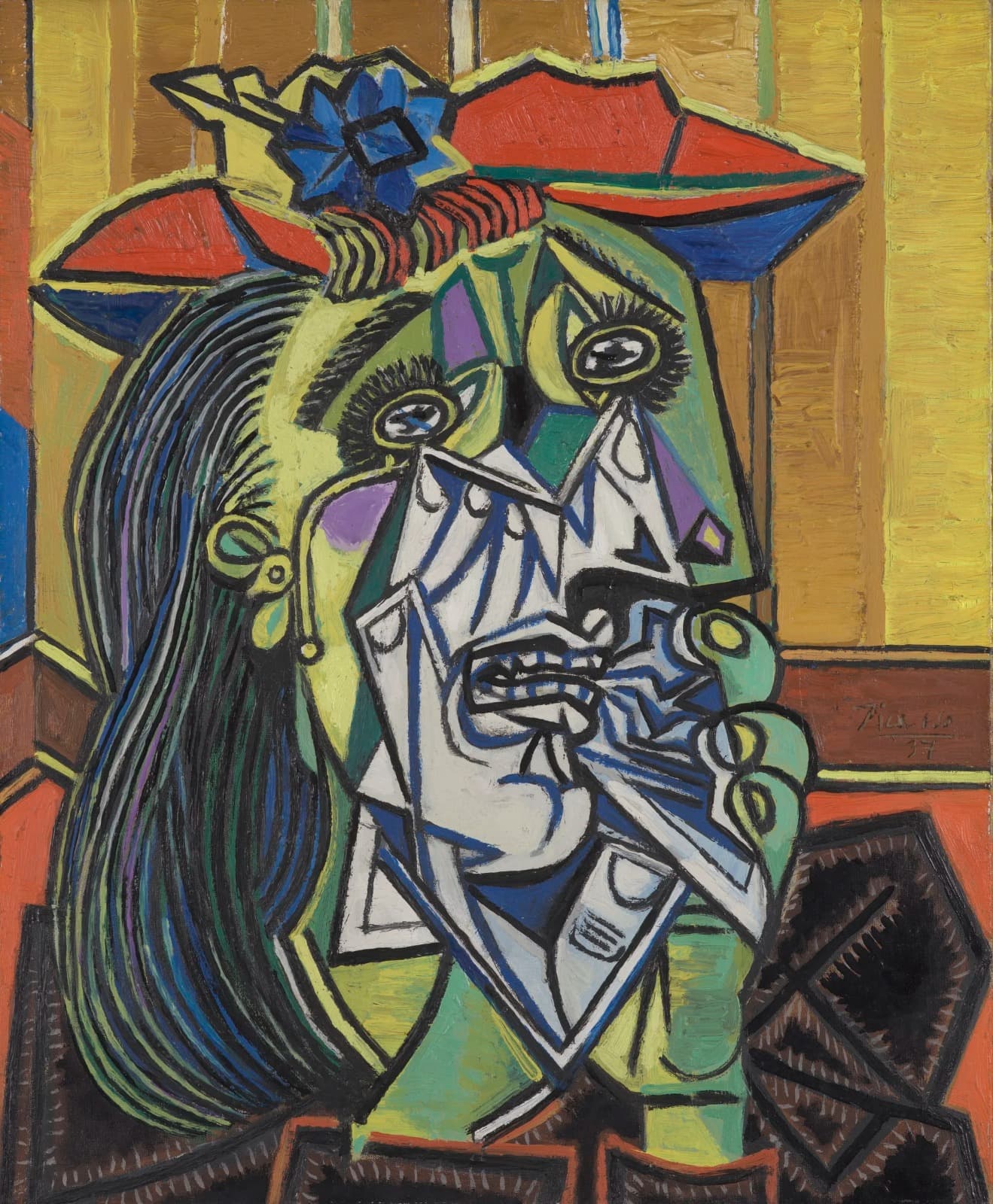
Picasso pulled her out of the screaming mother in Guernica and gave her the face of Dora Maar, his lover and a photographer.

Black lines, white ground, three primary colors and nothing else. Mondrian spent decades taking painting down to this and called it Neo-Plasticism.
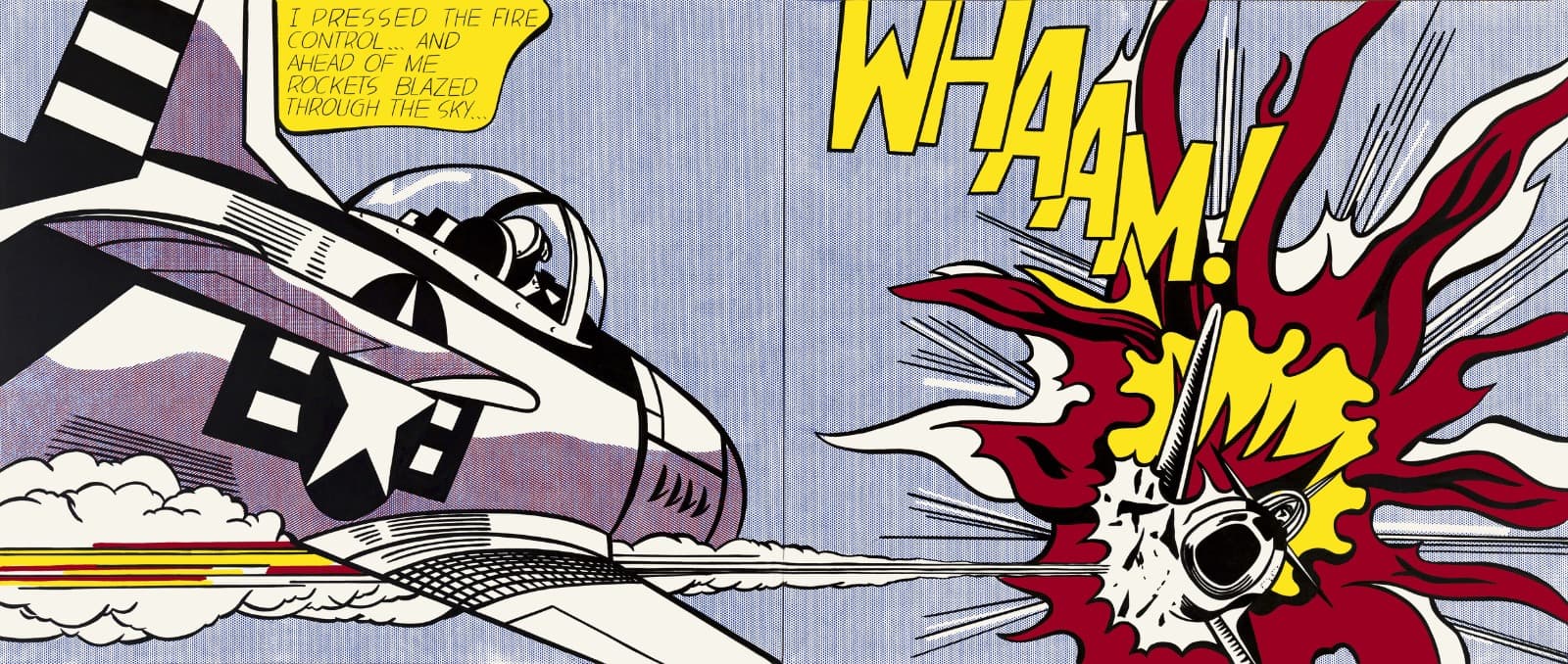
Lichtenstein blew a single war-comic panel up to mural scale across two canvases, Ben-Day dots, caption box and all.