
Campbell's Soup Cans
1962 · Museum of Modern Art, New York City
Thirty-two canvases, one for every variety Campbell's then sold, hung in a row like stock on a supermarket shelf.
★ 8.8
 skopia
Thirty-two canvases, one for every variety Campbell's then sold, hung in a row like stock on a supermarket shelf.
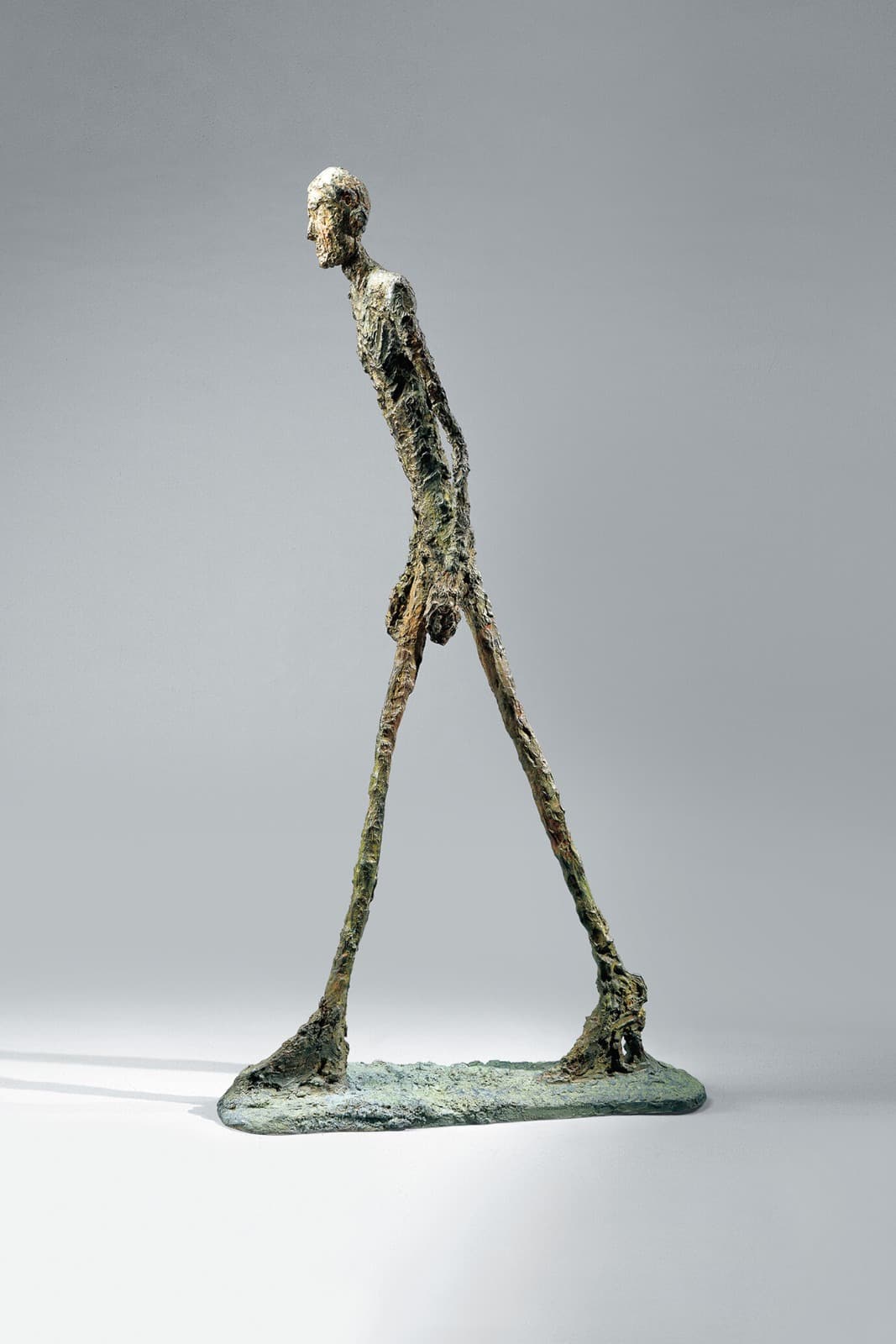
Everything is scraped off the bronze except forward motion. One cast briefly held the record for the most expensive sculpture ever sold.
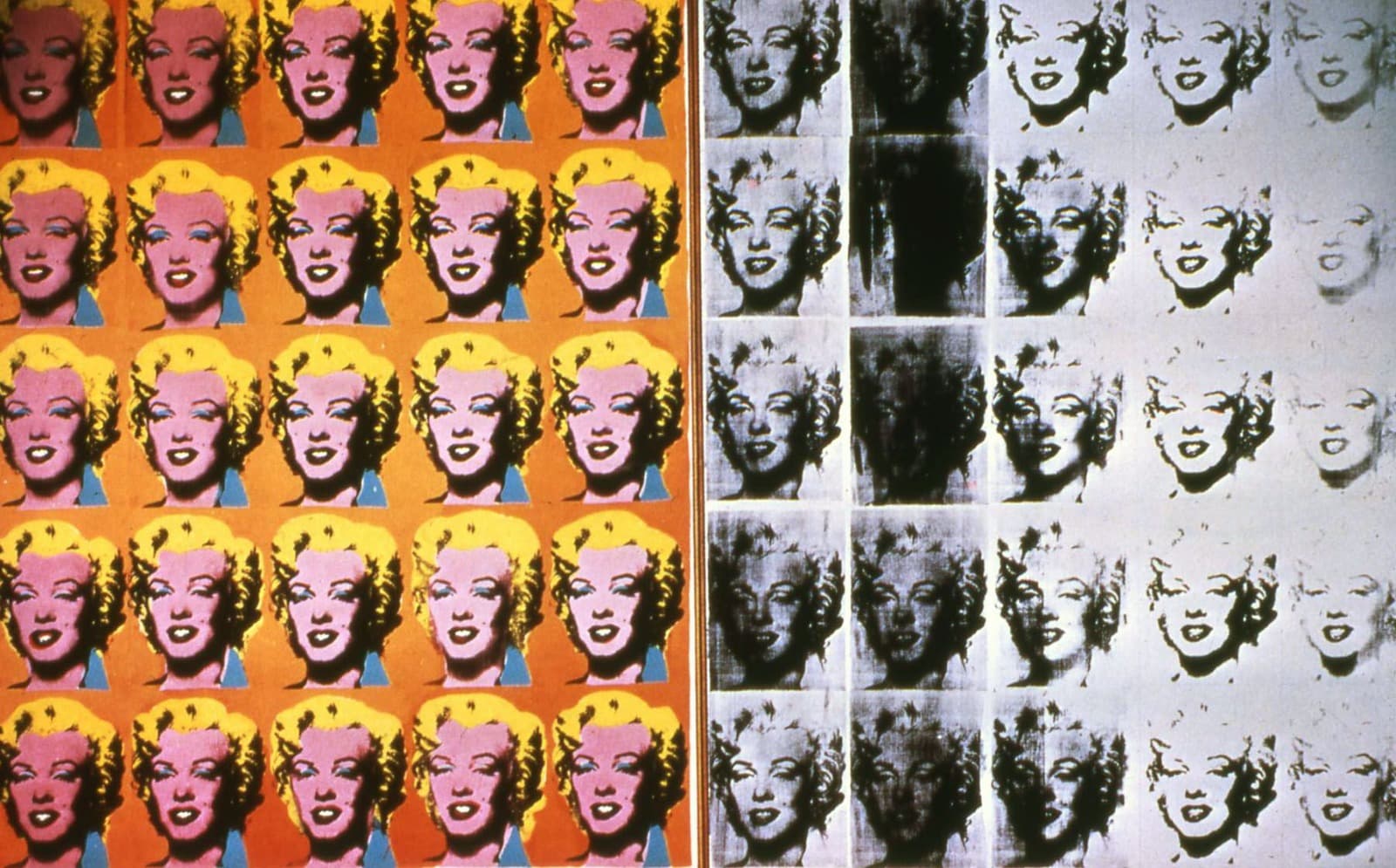
Warhol silkscreened a publicity photo fifty times just after Monroe died, bright on one half and smudging away to nothing on the other.
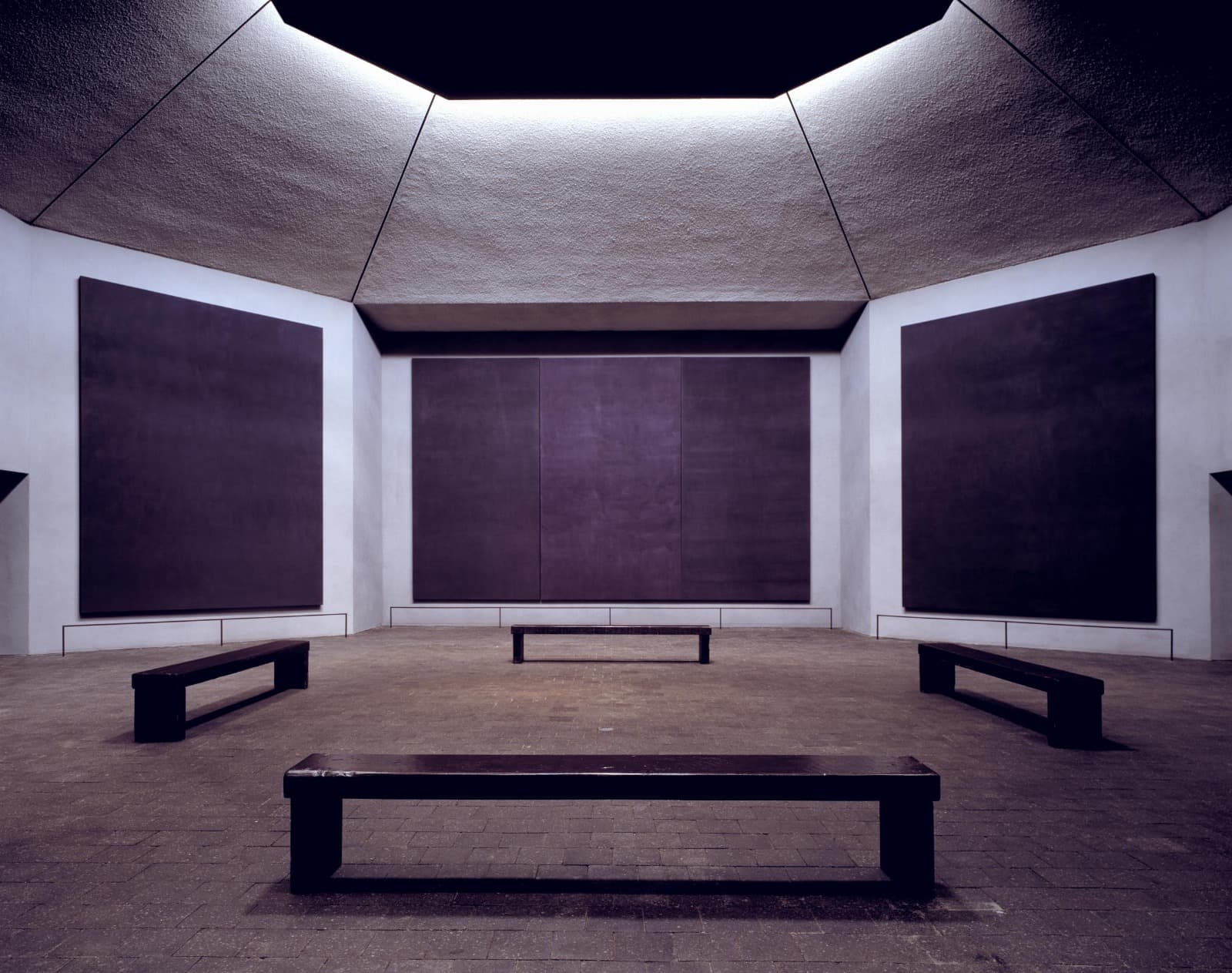
Fourteen near-black panels in an octagonal room, where your eyes adjusting to the dark is the point. Rothko died before it opened.
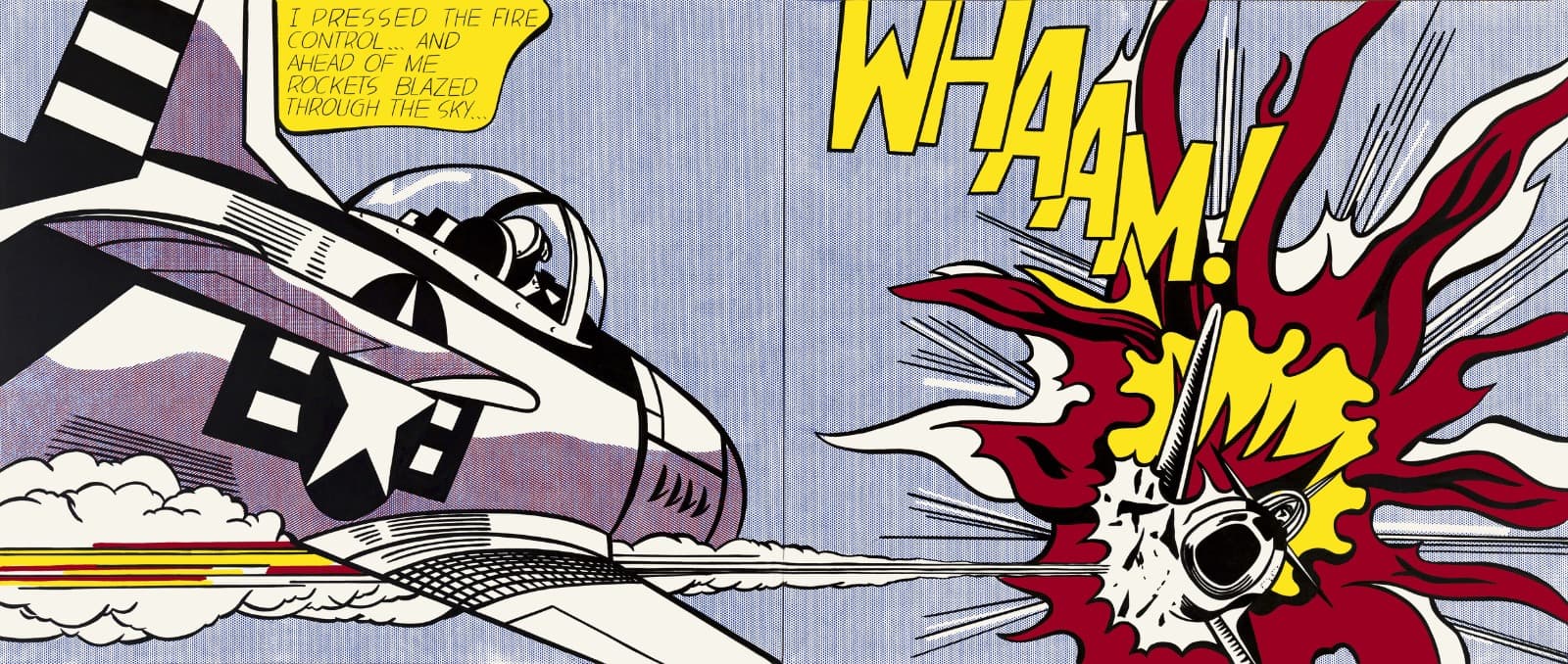
Lichtenstein blew a single war-comic panel up to mural scale across two canvases, Ben-Day dots, caption box and all.

Magritte called the floating apple a kind of self-portrait, about how much we want to see the thing that is being hidden.

Freud sits on a wooden chair in three panels, wrenched out of shape and still unmistakably himself. Bacon painted his friend and rival.

The girl is Ruby Bridges, walking into a New Orleans school in 1960 between four marshals whose faces Rockwell cut off at the shoulders.
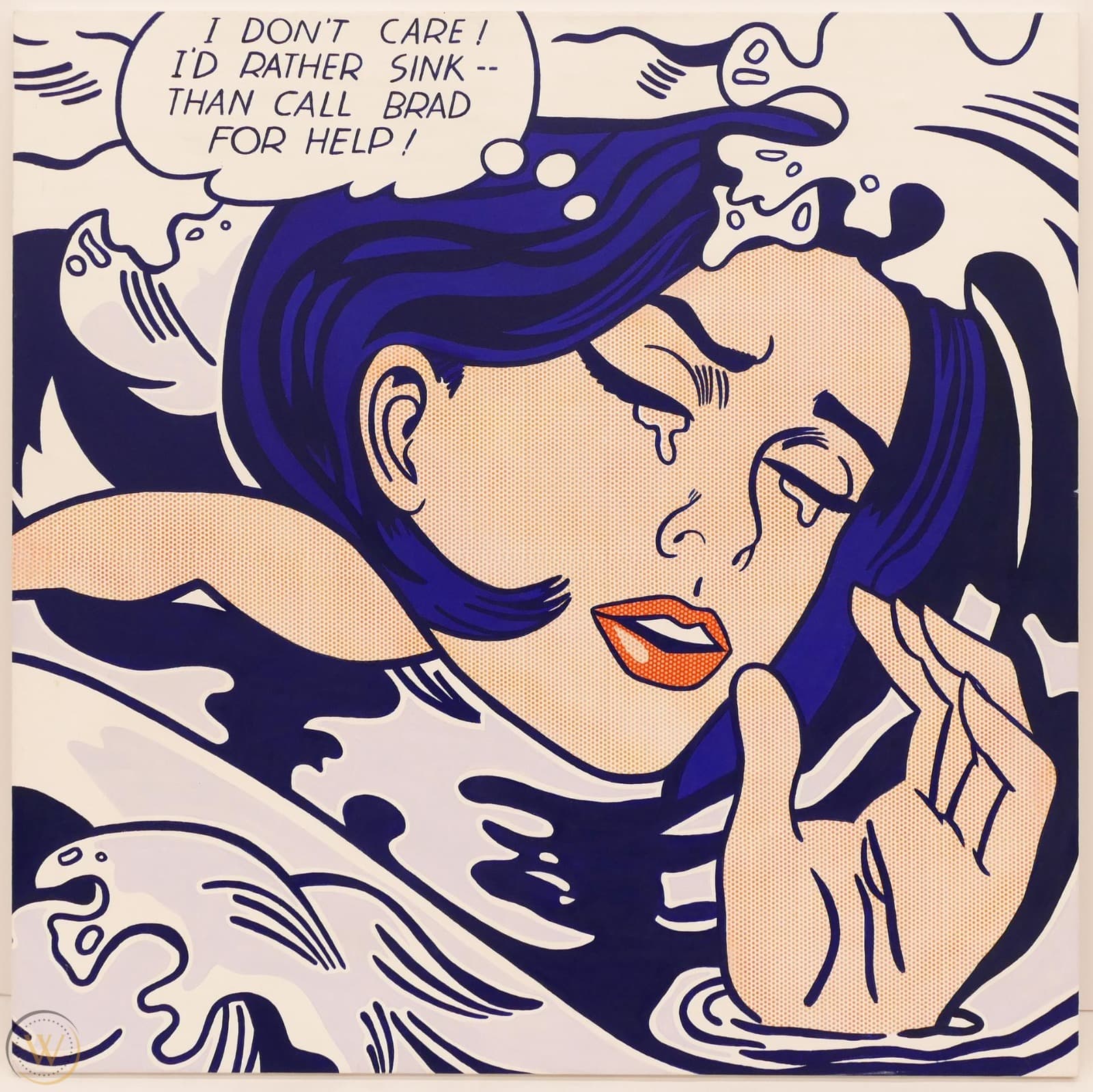
She would rather sink than call Brad. Lichtenstein took one panel of a romance comic and blew it up to the size of a serious painting.
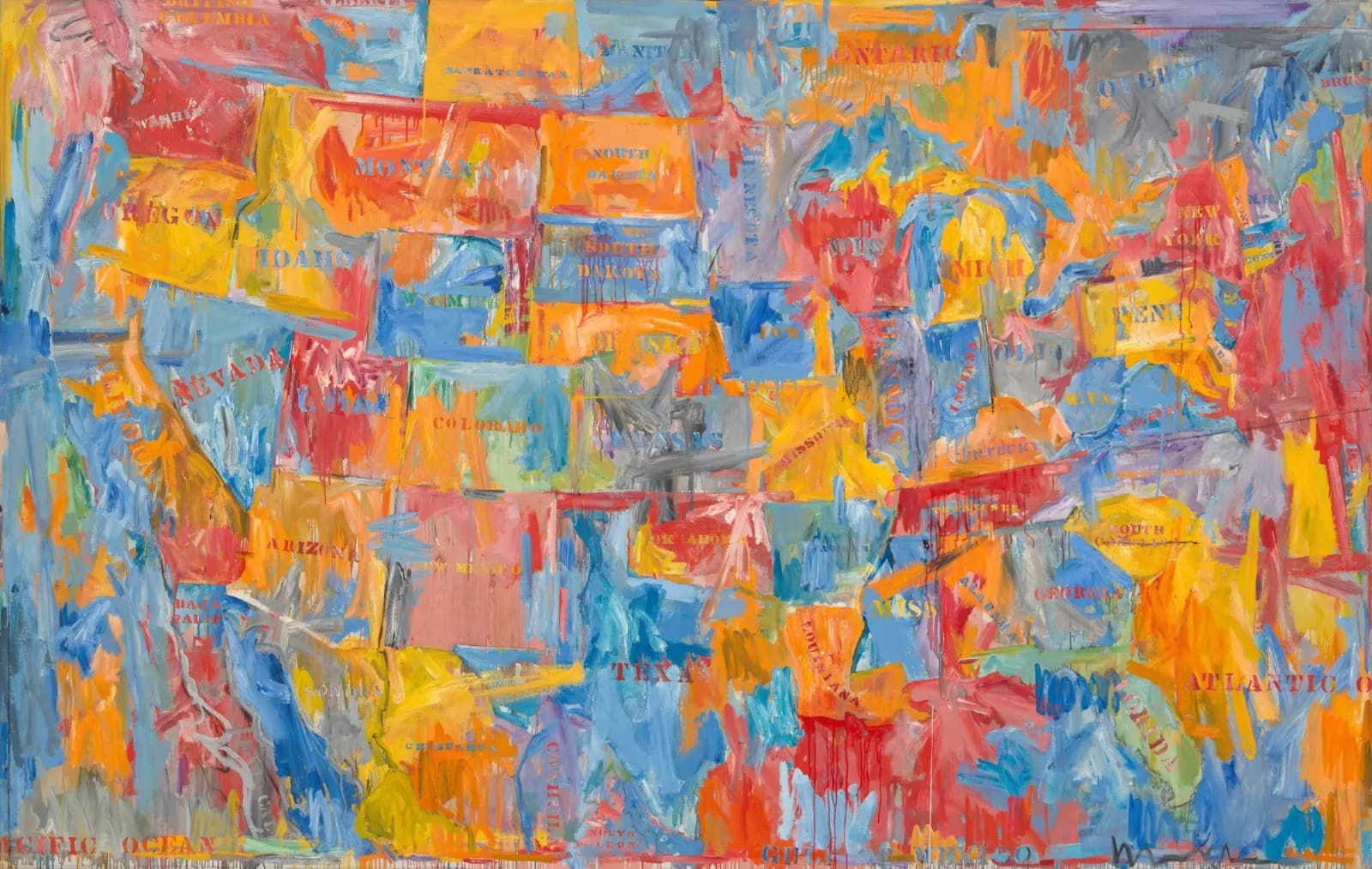
Johns stenciled the state names and then let red, yellow and blue run right over the borders. Another sign everybody already knows.
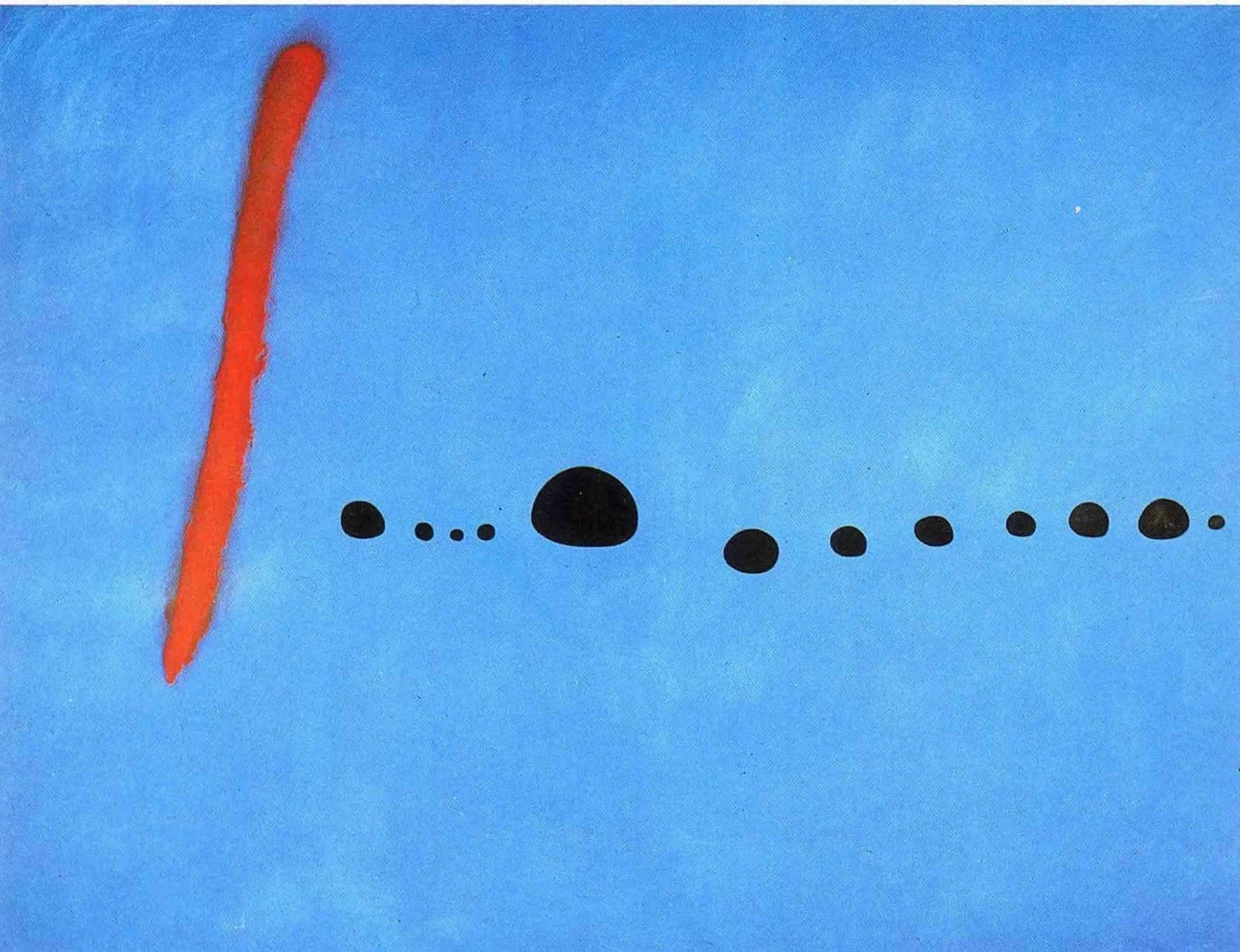
Pure blue interrupted by a line of black dots and one short red bar. Miró late in life, having thrown almost everything out.
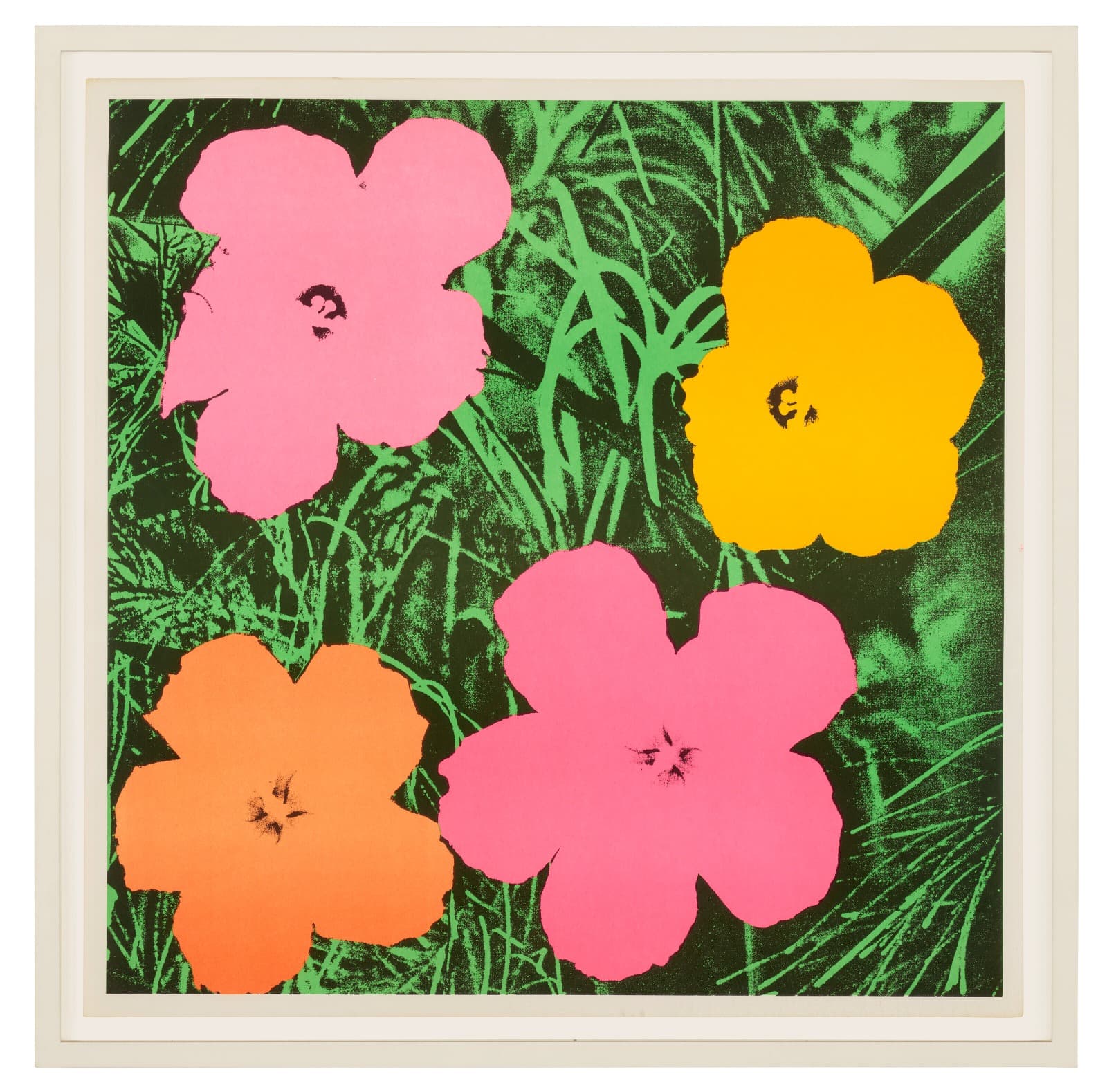
Four flat hibiscus blossoms on green, silkscreened from an ordinary photograph and reproduced in any color, over and over, on demand.
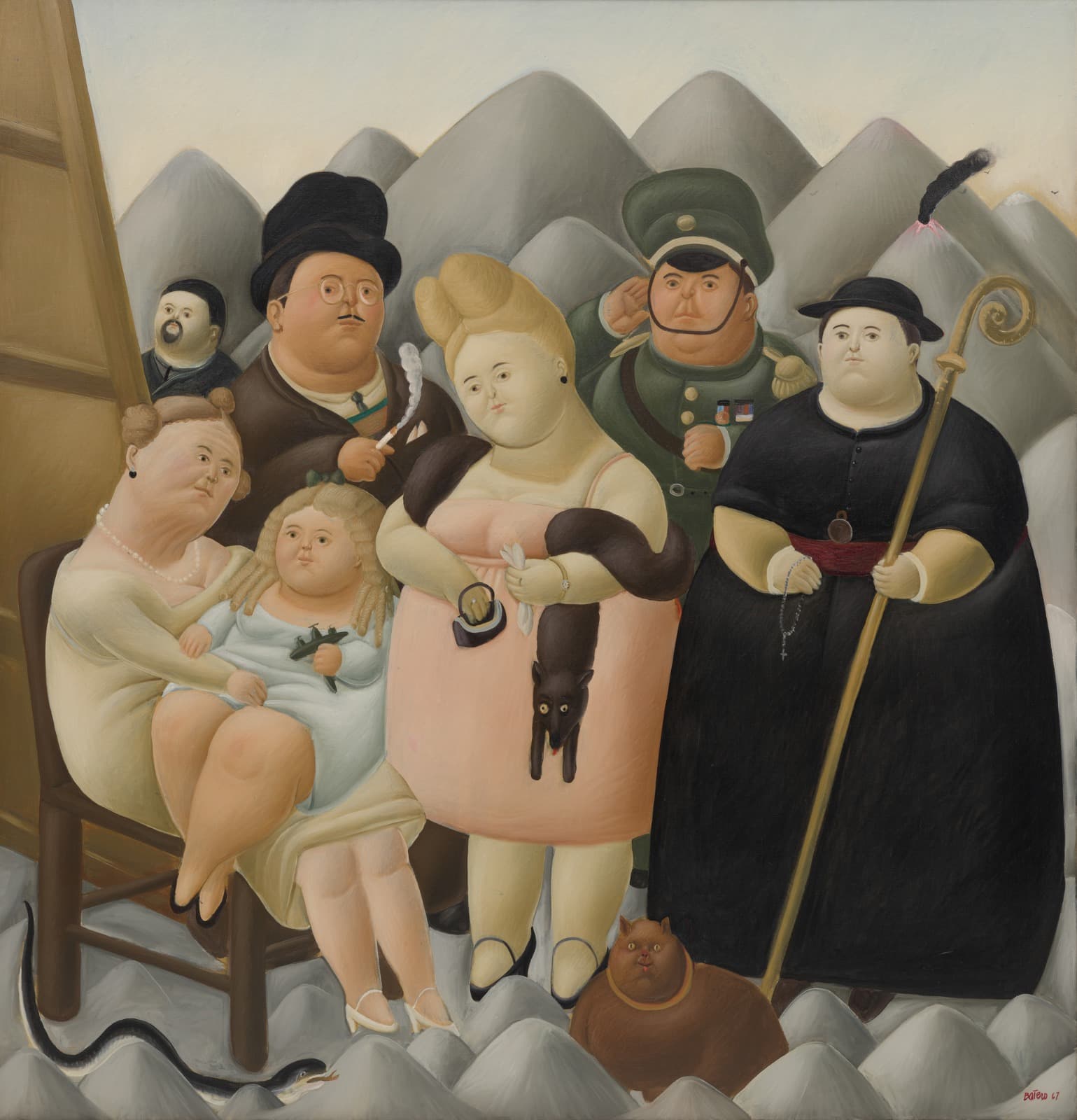
President, wife, child, bishop and general, all inflated into balloons and posed with great solemnity in front of a volcano.

The angel comes down to stop the knife, in the deep reds and blues Chagall used for his late cycle of biblical paintings.