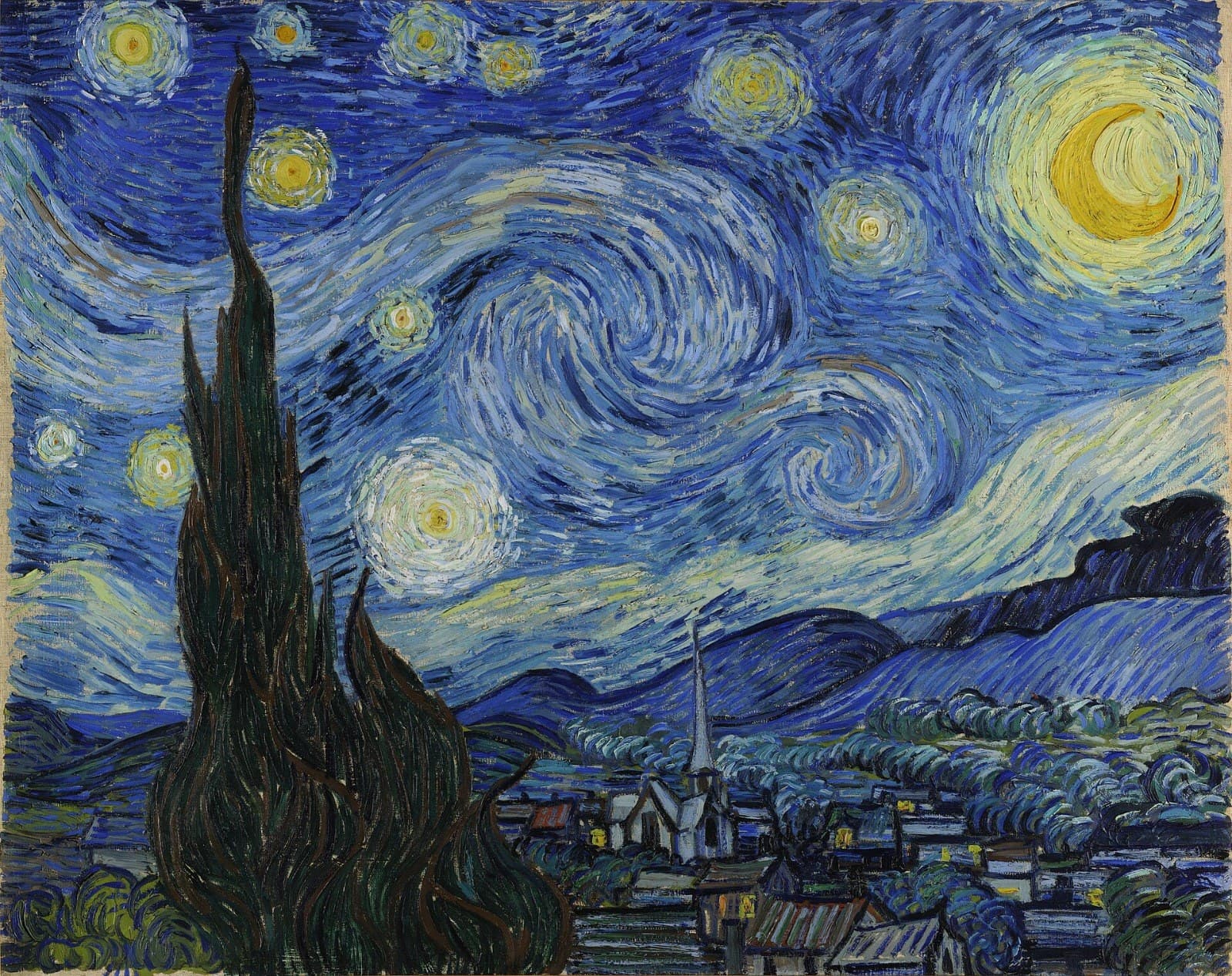
Starry Night
1889 · Museum of Modern Art, New York City
Van Gogh painted the churning sky and its eleven stars from a window of the asylum at Saint-Rémy, partly from memory.
★ 9.6
 skopia
Van Gogh painted the churning sky and its eleven stars from a window of the asylum at Saint-Rémy, partly from memory.
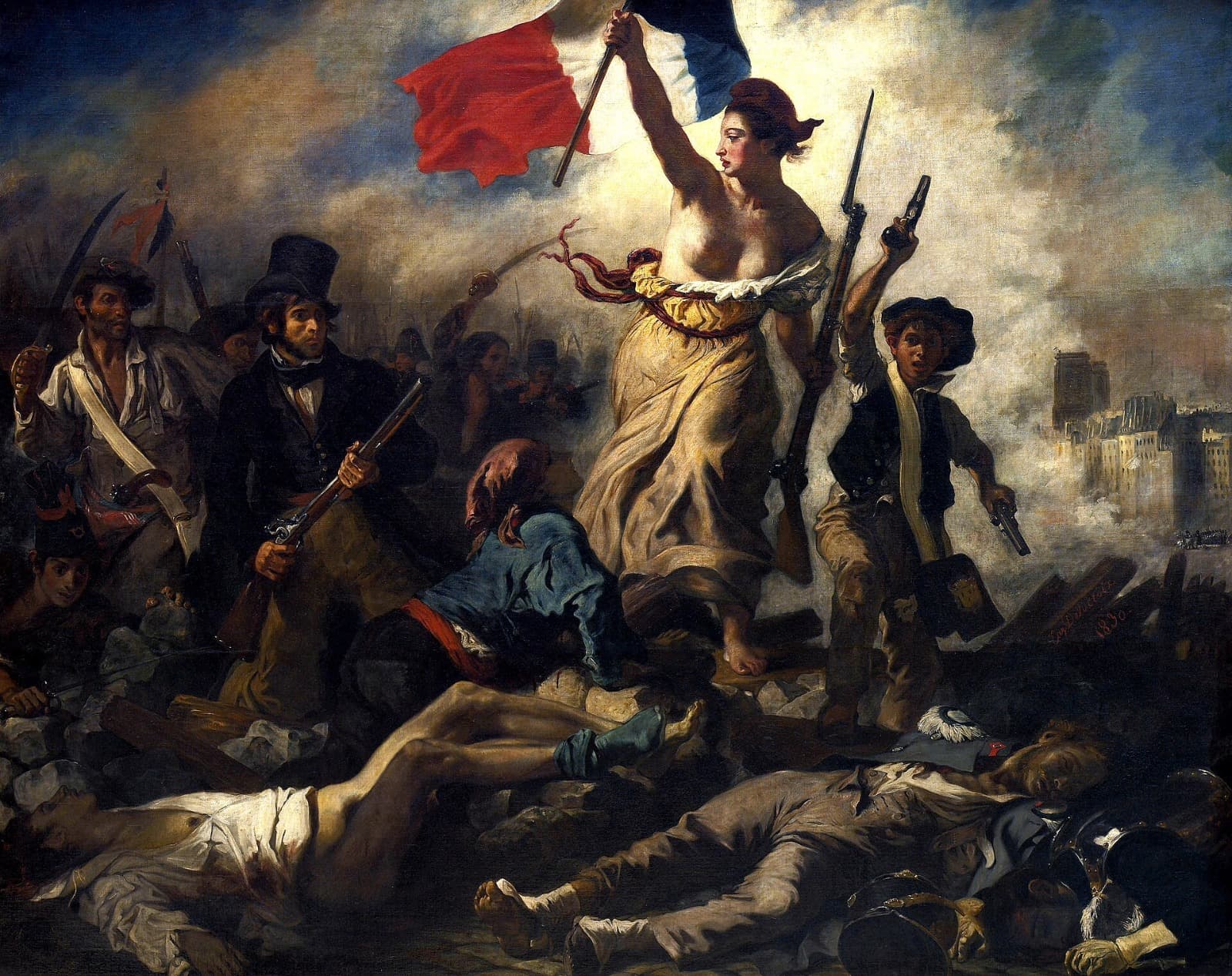
Liberty carries the tricolor over the barricade with a boy waving pistols beside her, painted within months of the revolution it shows.

A lantern lights a man in a white shirt throwing his arms wide before the firing squad. Goya painted it six years later.

Hokusai was in his seventies when he made this, using a Prussian blue newly imported from Europe, with Fuji small and calm in the trough.
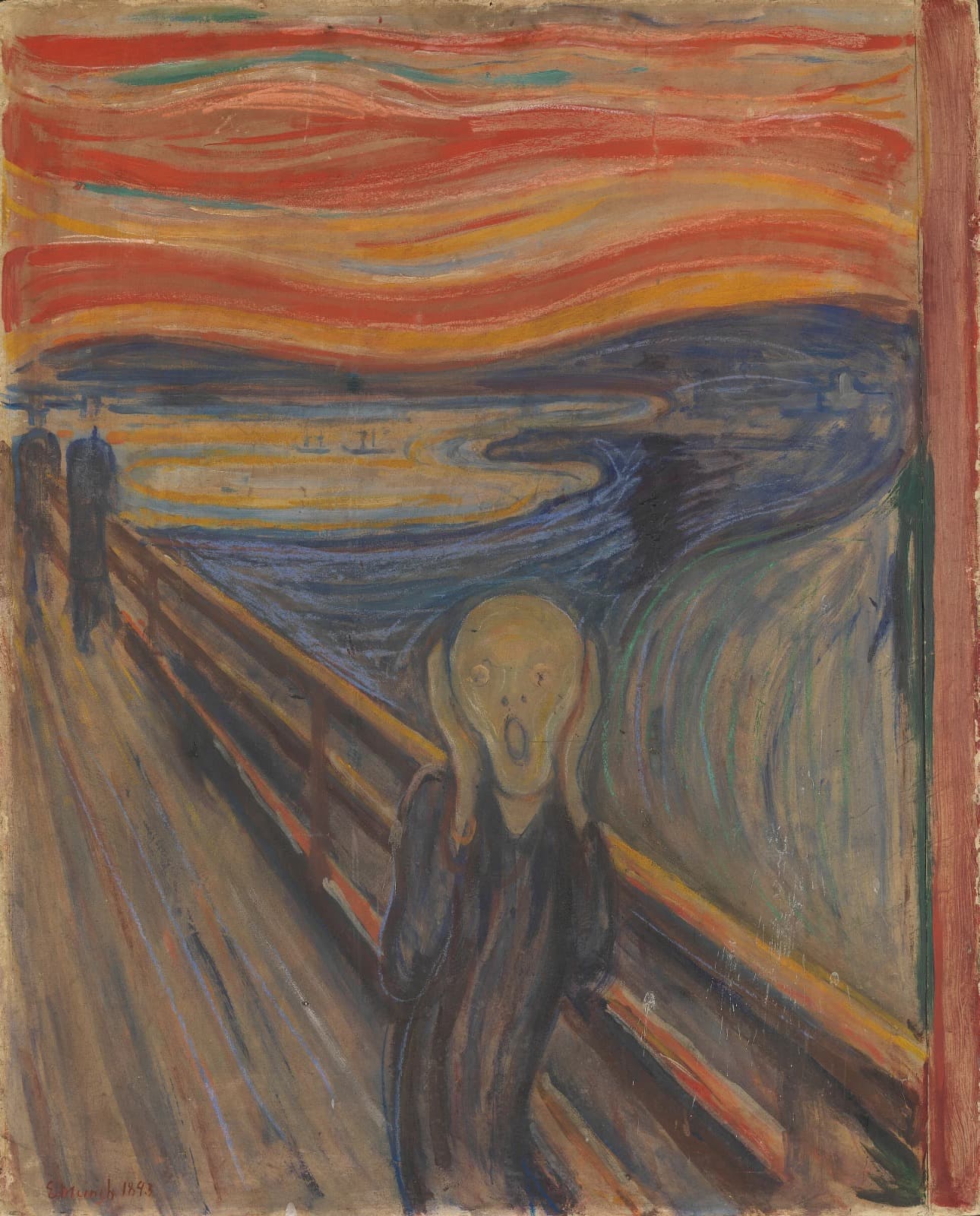
Munch said an infinite scream was passing through nature, and put two figures on the bridge behind who walk on without noticing.
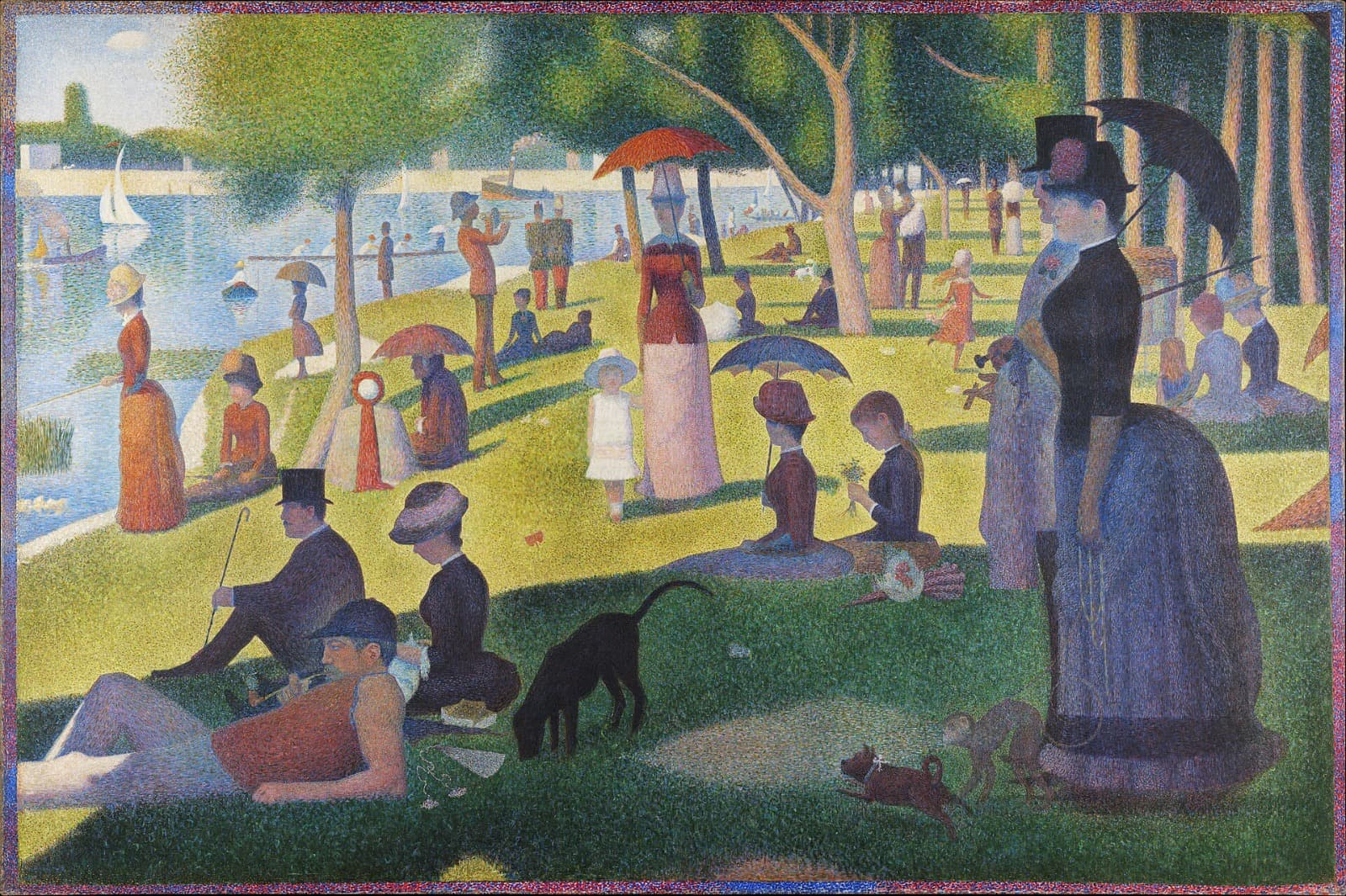
Seurat spent two years building this riverbank out of tiny dots of unmixed color, applying optical theory to a crowd standing oddly still.
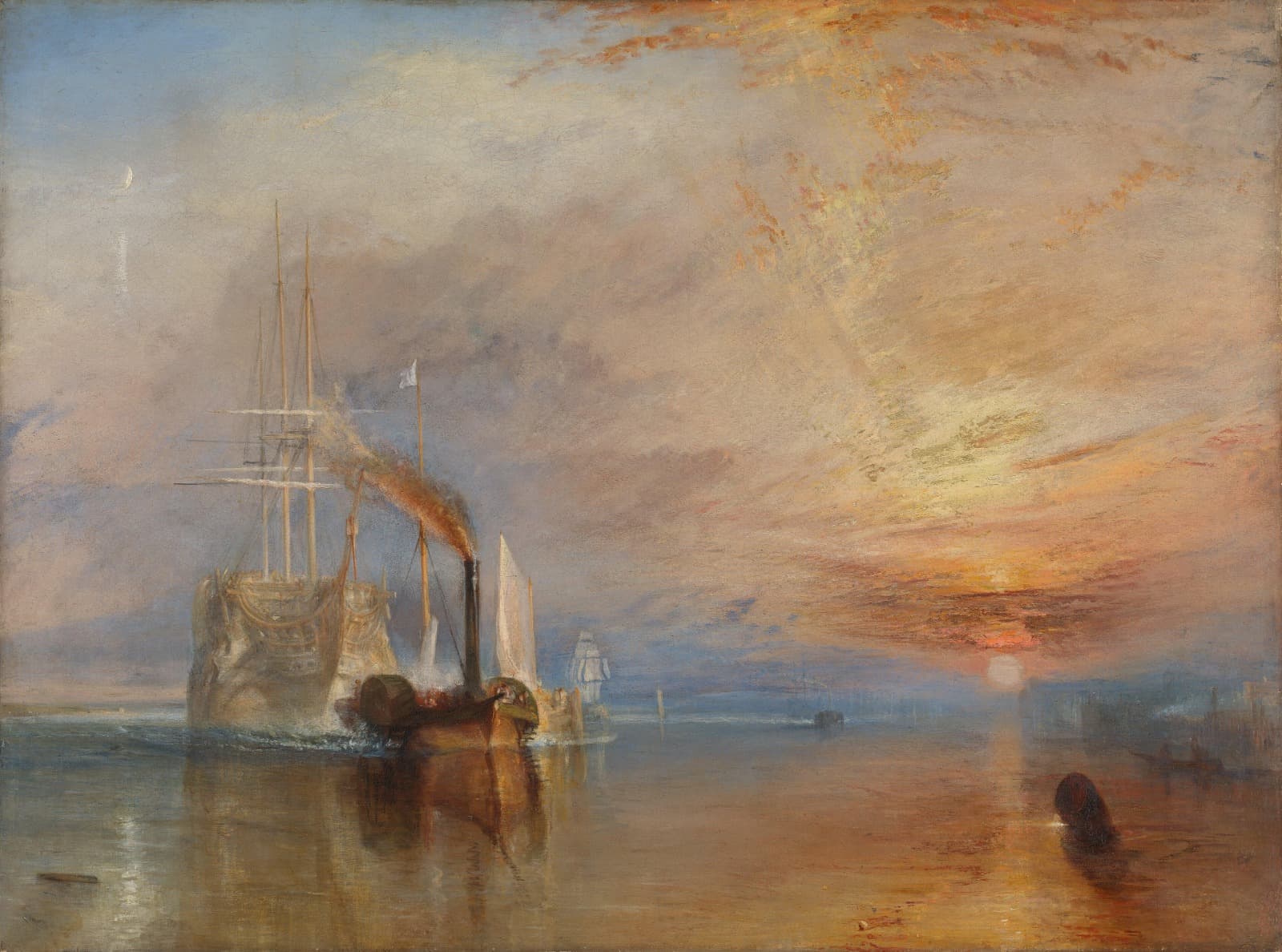
A steam tug hauls a Trafalgar warship off to be broken up. Turner refused to sell the picture and left it to the nation.

Manet worked from a real barmaid named Suzon and put her reflection in the wrong place, which people have been arguing about ever since.

Survivors of a real shipwreck pile toward a speck of sail on the horizon. Géricault studied corpses and asylum patients before he began.
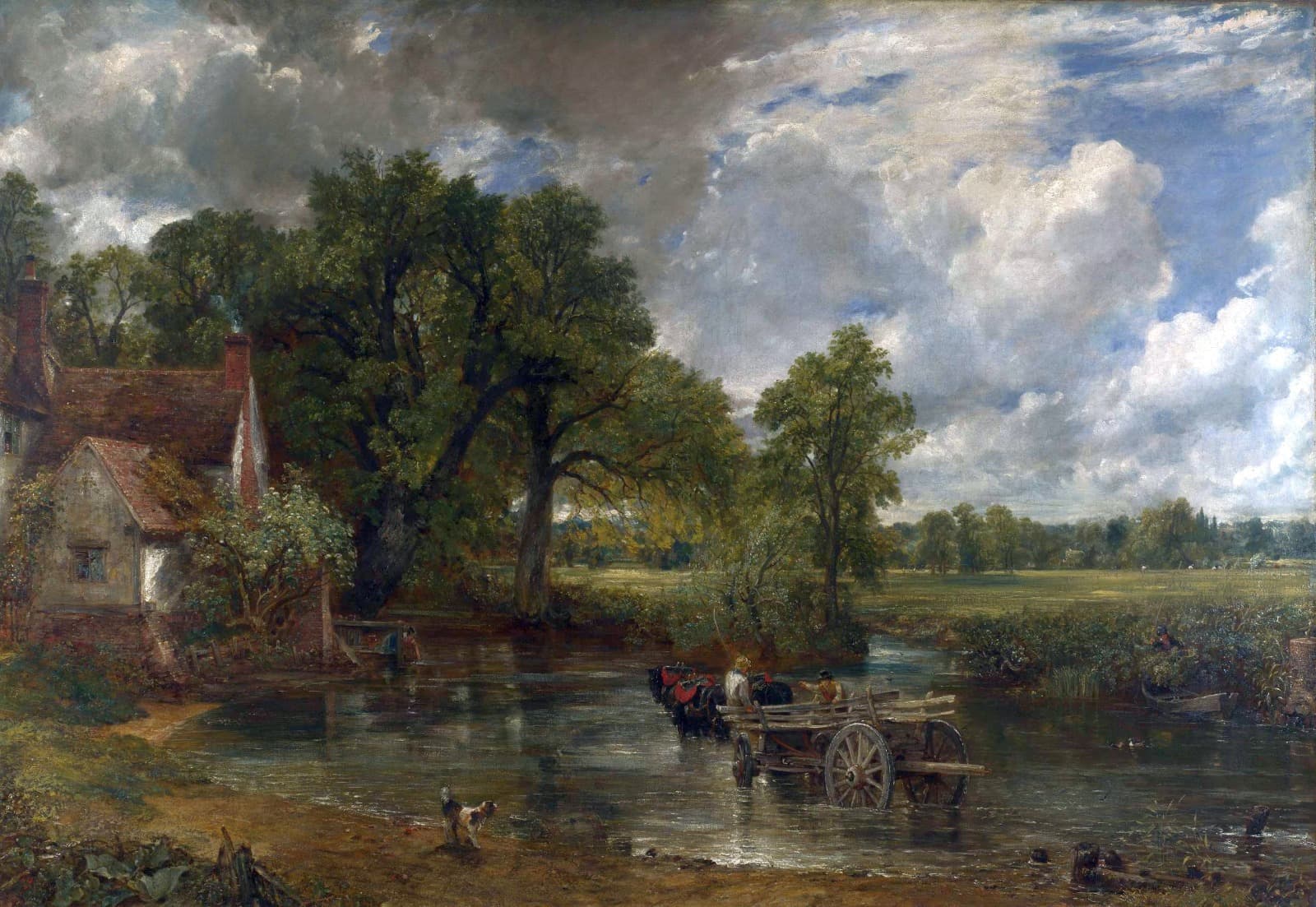
England ignored it, but the Paris Salon awarded it a gold medal in 1824 and sent Delacroix back to rework his own canvases.
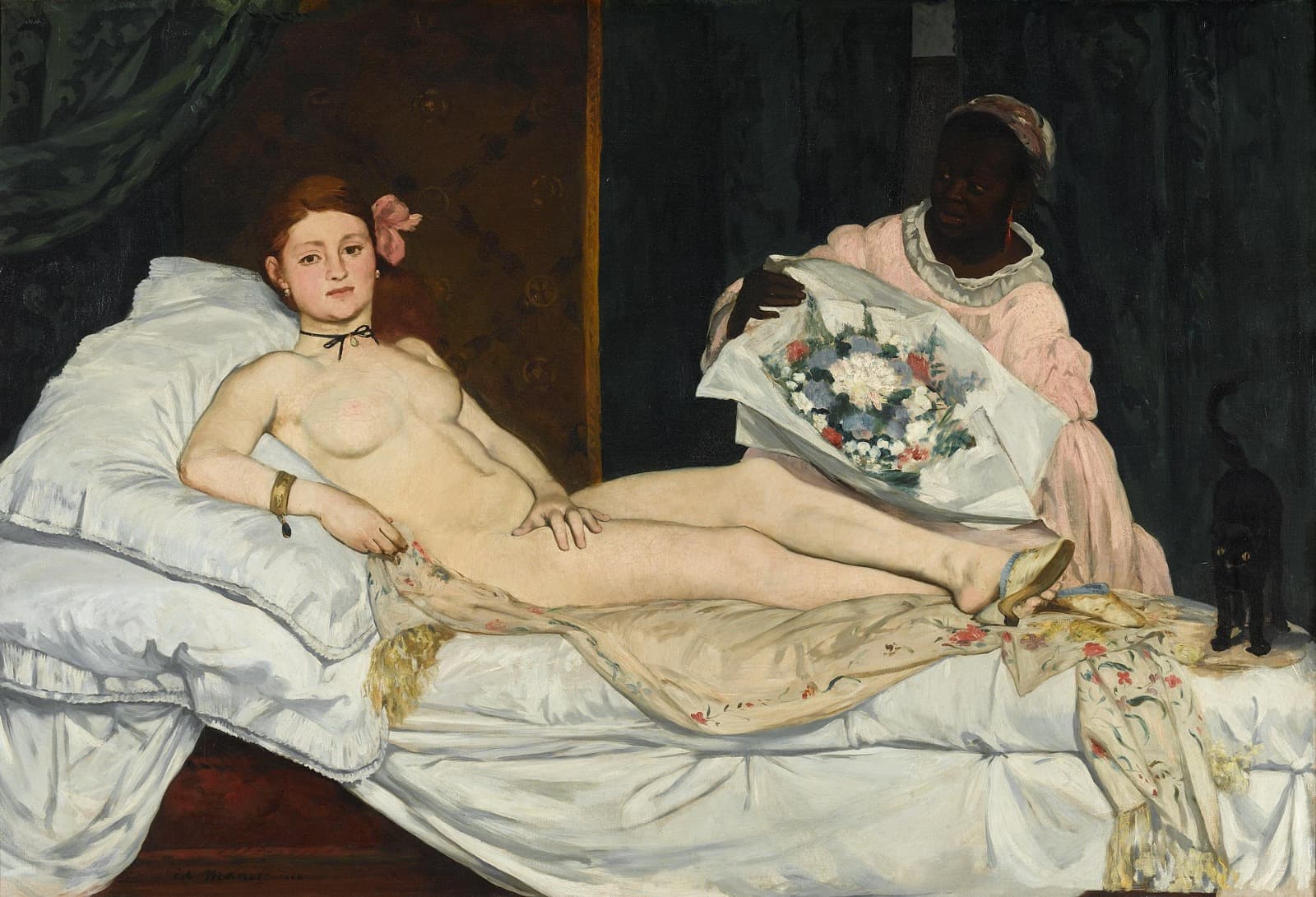
Manet took the pose from Titian's Venus of Urbino and gave it to a prostitute who looks straight back. The 1865 Salon was scandalized.

A naked woman picnics with two clothed men and looks calmly out at us. The Salon refused it, so it hung with the rejects.

Fourteen of Renoir's friends linger over the wreckage of lunch above the Seine, his future wife among them, cooing at a dog on the table.

A man stands on a summit with his back to us, looking out over fog, so that we end up looking at what he sees.
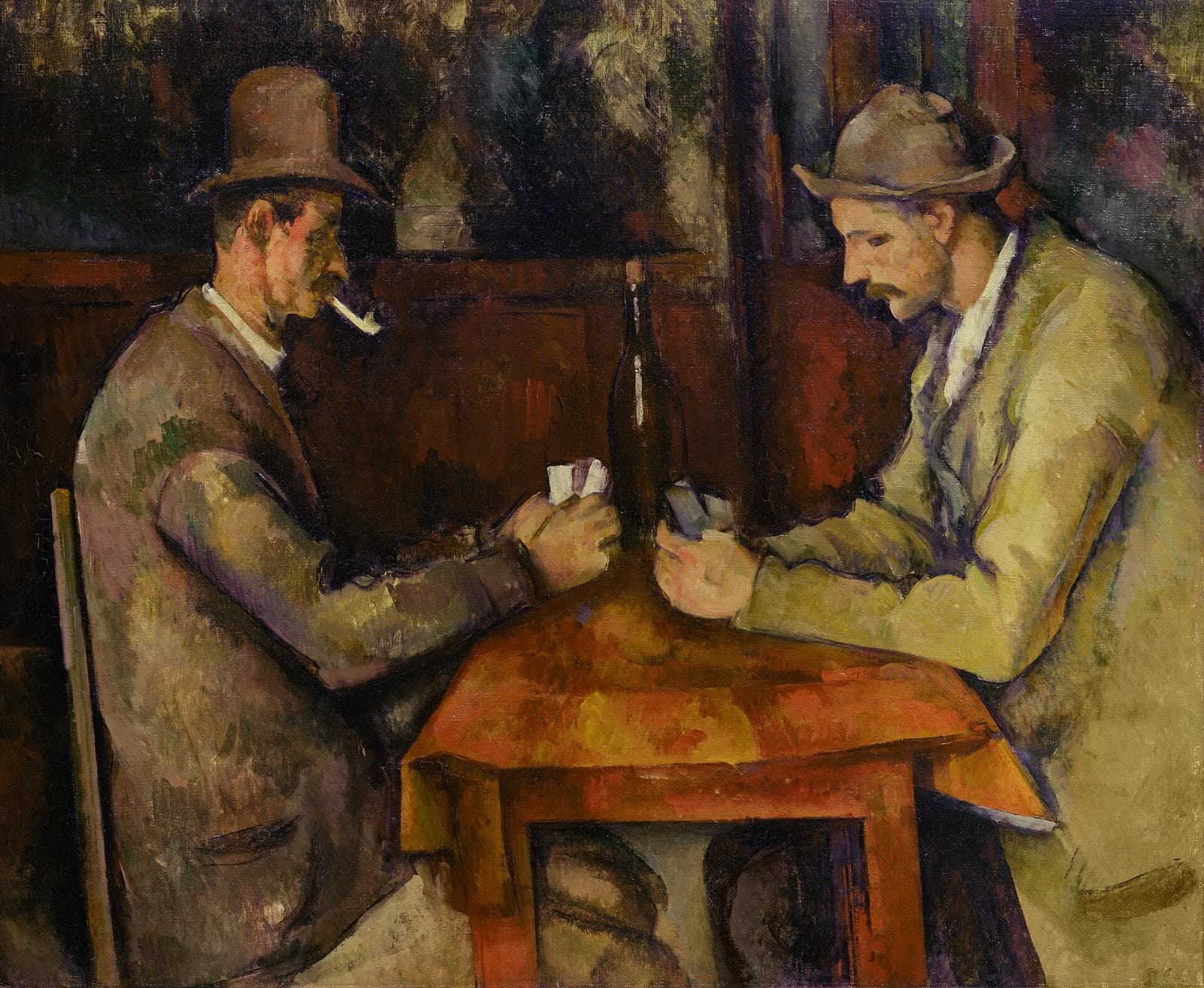
Cézanne used local farmhands as models and painted several versions, stripping the old tavern subject down until only two men and a bottle remain.
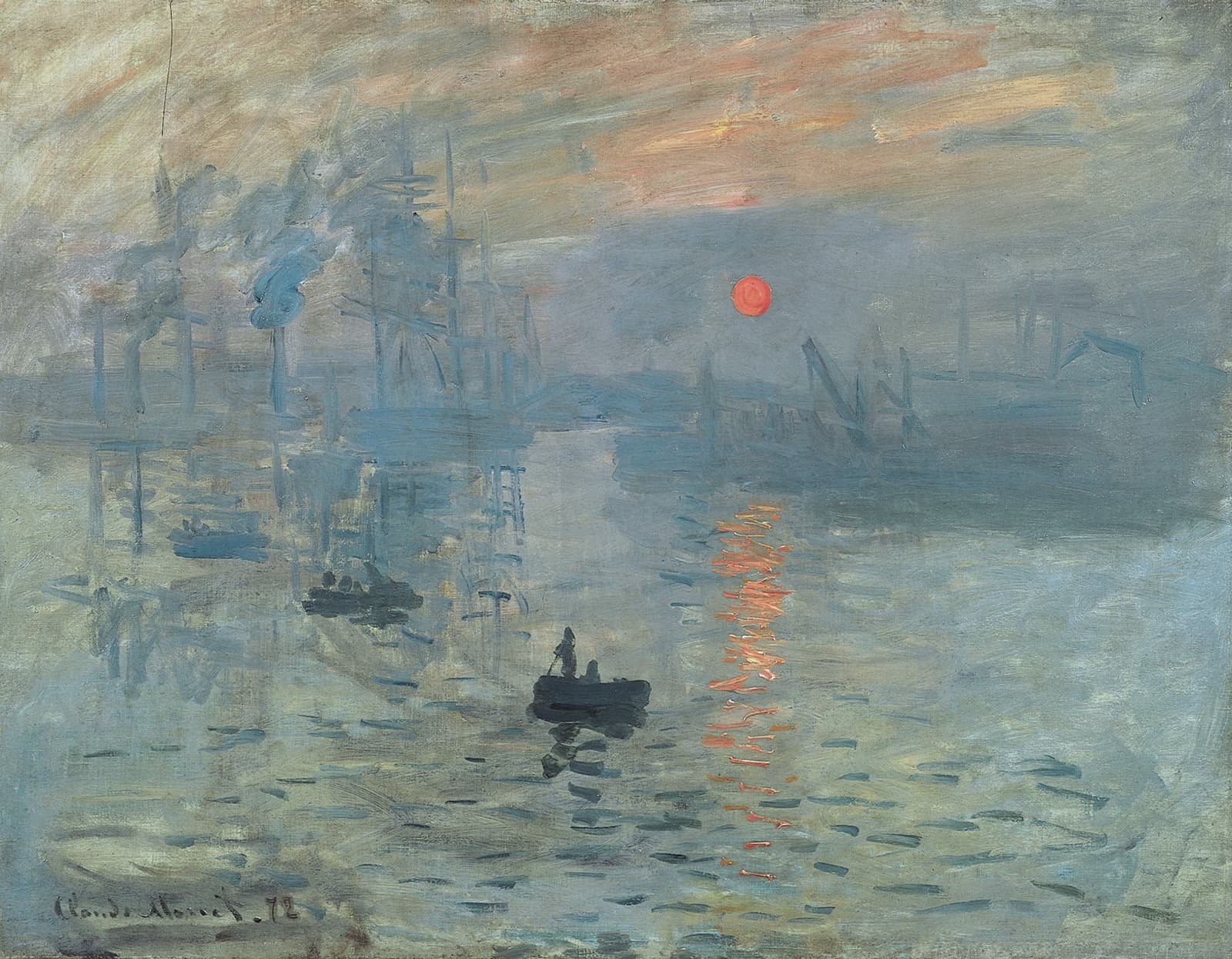
A critic seized on the word in the title to mock the whole group, and the insult ended up naming the movement.

Goya painted this straight onto the wall of his own house in his last bitter years and never meant anyone else to see it.
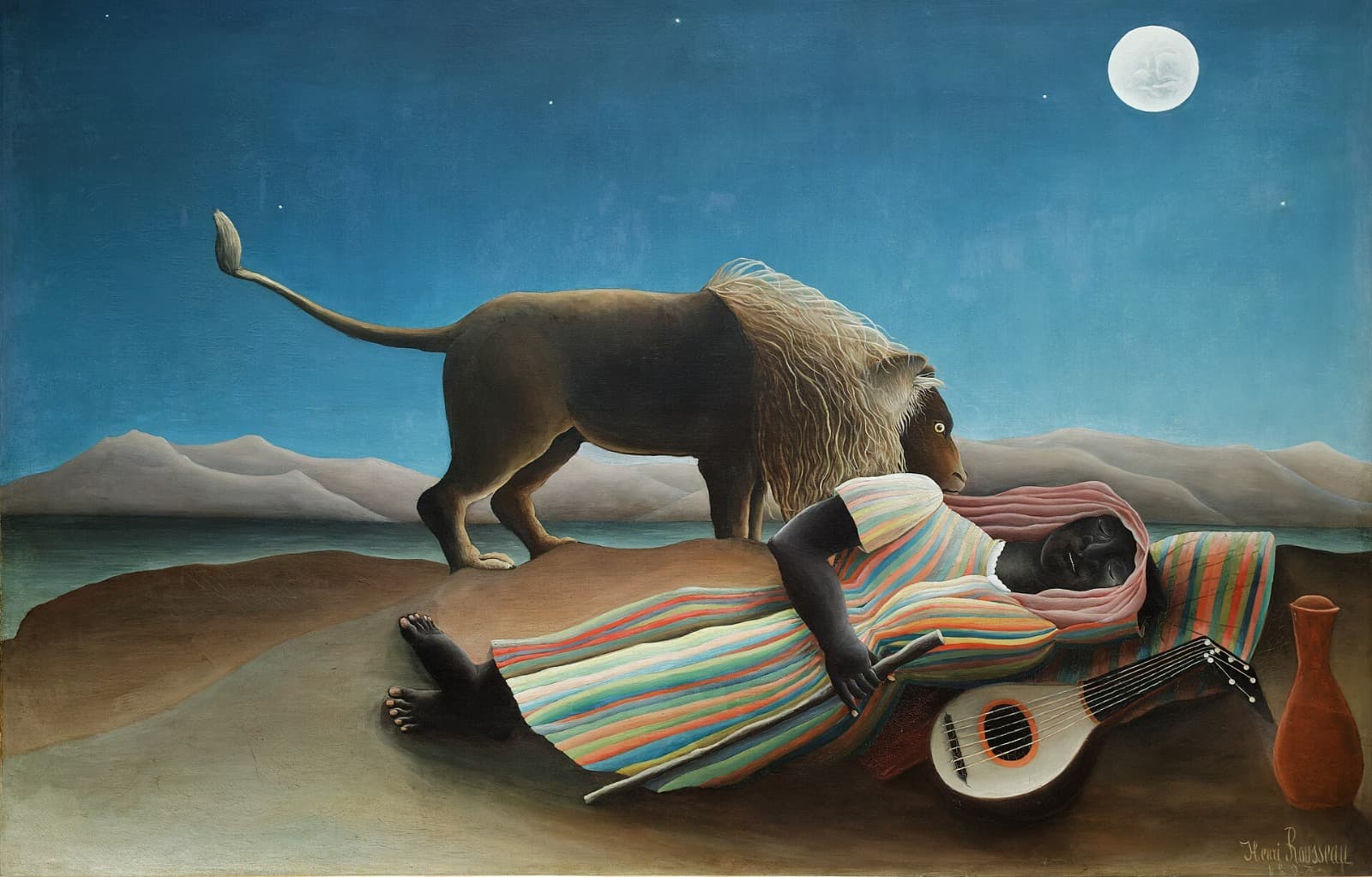
A lion sniffs at a sleeper in the desert without waking her. Rousseau was a customs officer who never took a lesson.

Gauguin thought he was dying and meant this to be his last work, reading right to left from a sleeping infant to an old woman.

Sunlight comes through the trees in patches over a Montmartre dance floor, a big ambitious canvas given over entirely to a Sunday afternoon.