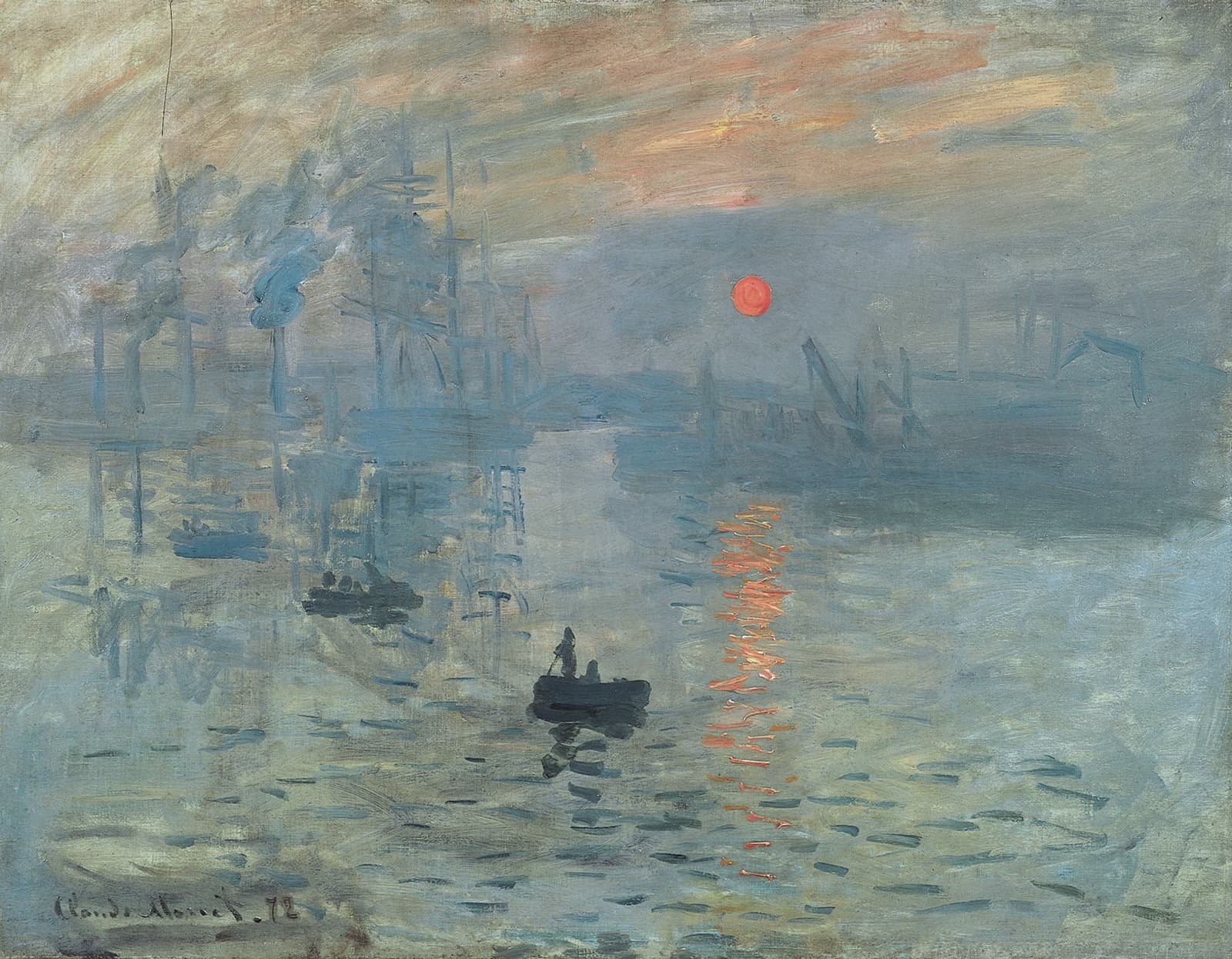
Impression, Sunrise
1872 · Musee Marmottan Monet, Paris
A critic seized on the word in the title to mock the whole group, and the insult ended up naming the movement.
★ 8.6
 skopia
A critic seized on the word in the title to mock the whole group, and the insult ended up naming the movement.

Sunlight comes through the trees in patches over a Montmartre dance floor, a big ambitious canvas given over entirely to a Sunday afternoon.

Whistler called it Arrangement in Grey and Black and insisted it was about tone, not feeling. The sitter was his mother, and nobody was fooled.

Umbrellas cross the wet cobbles of Haussmann's new boulevards, composed with a photographic exactness his Impressionist friends had no use for.
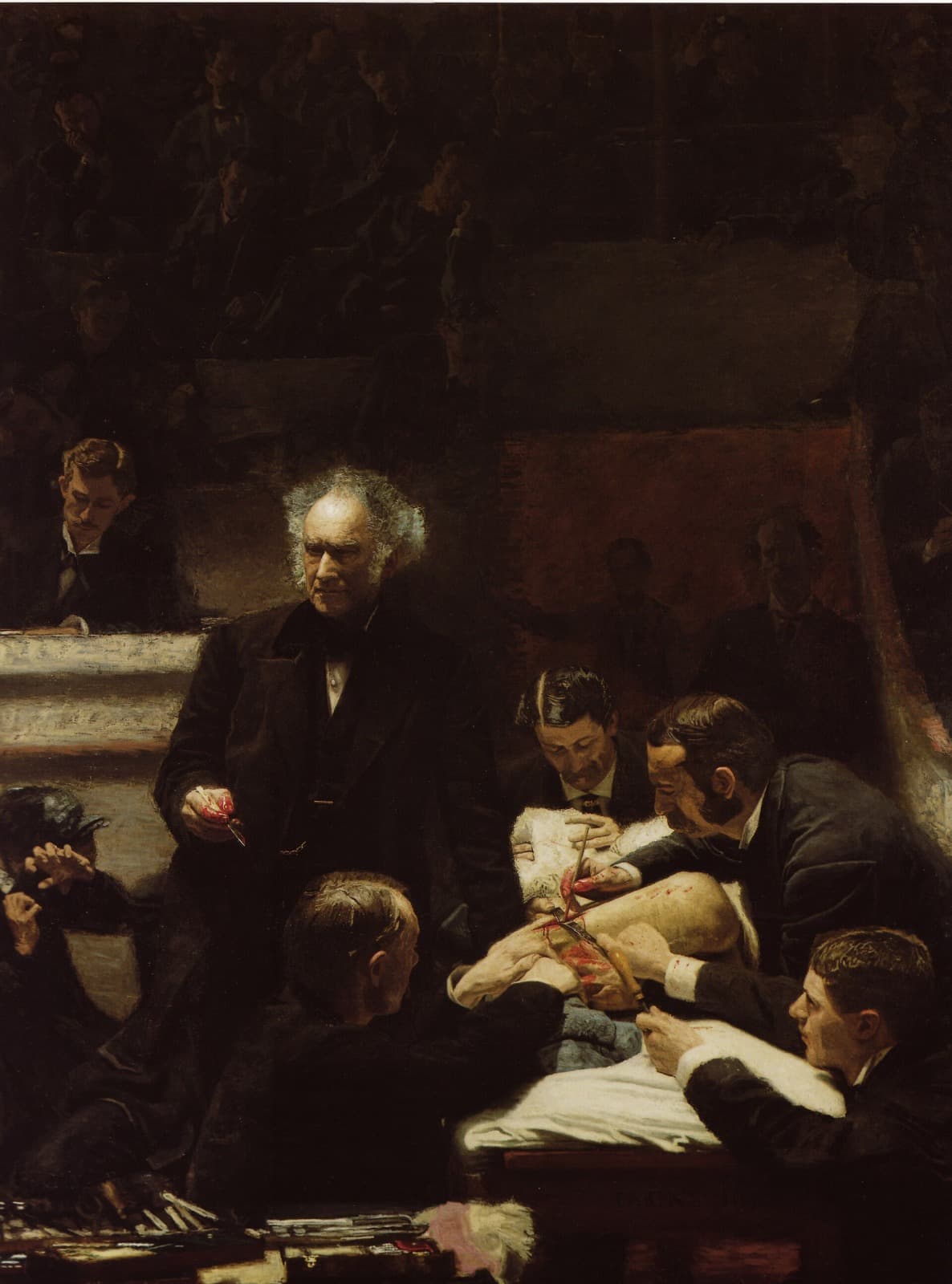
The surgeon turns from the open incision to lecture, scalpel still bloody, while a woman at the side covers her eyes. Philadelphia was appalled.
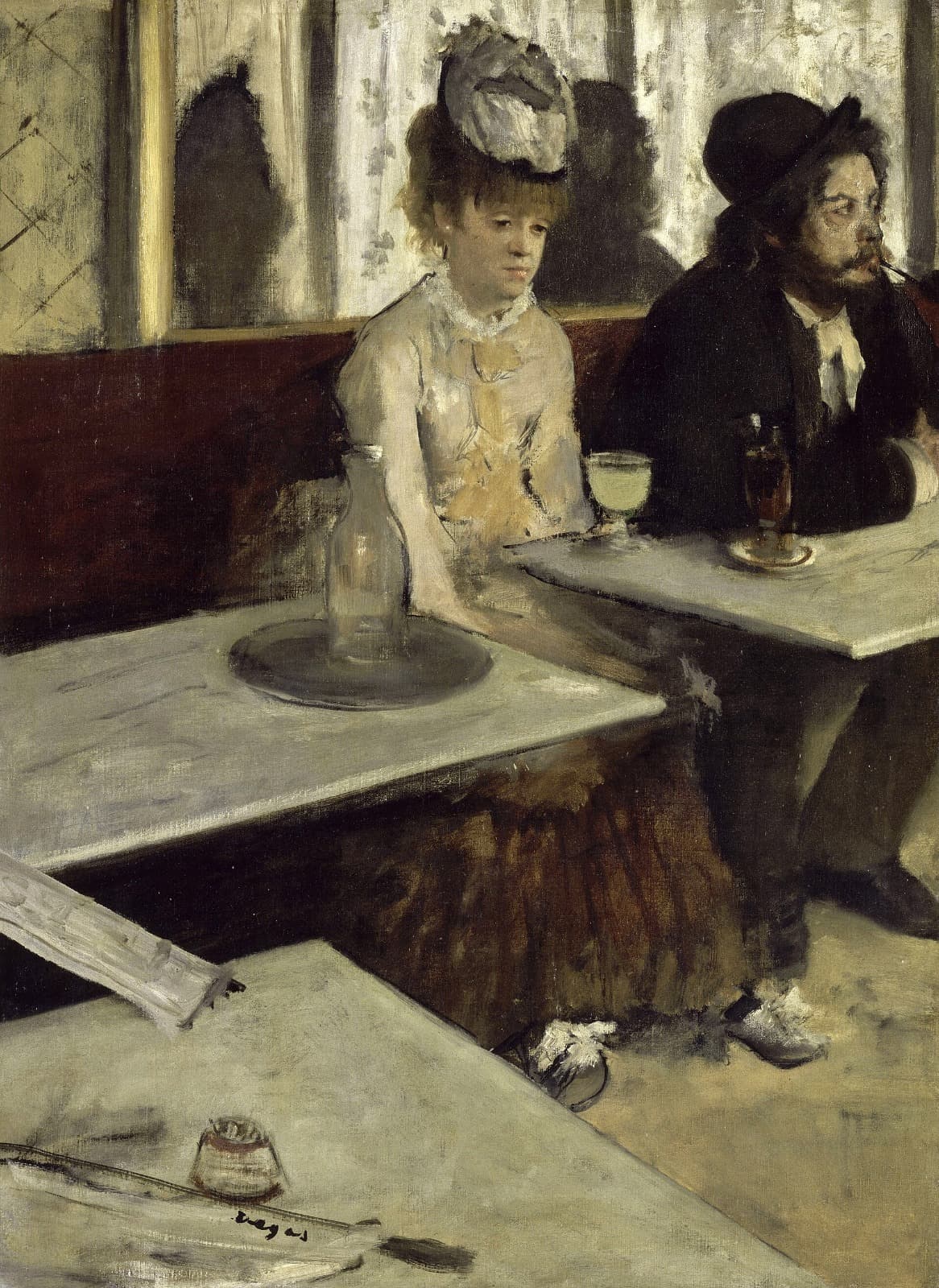
Two people sit shoulder to shoulder at a cafe table staring at nothing, pushed off to one side behind a run of empty tables.

A man and three boys heel a catboat over into open water, painted in the centennial year and read ever since as the country's optimism.
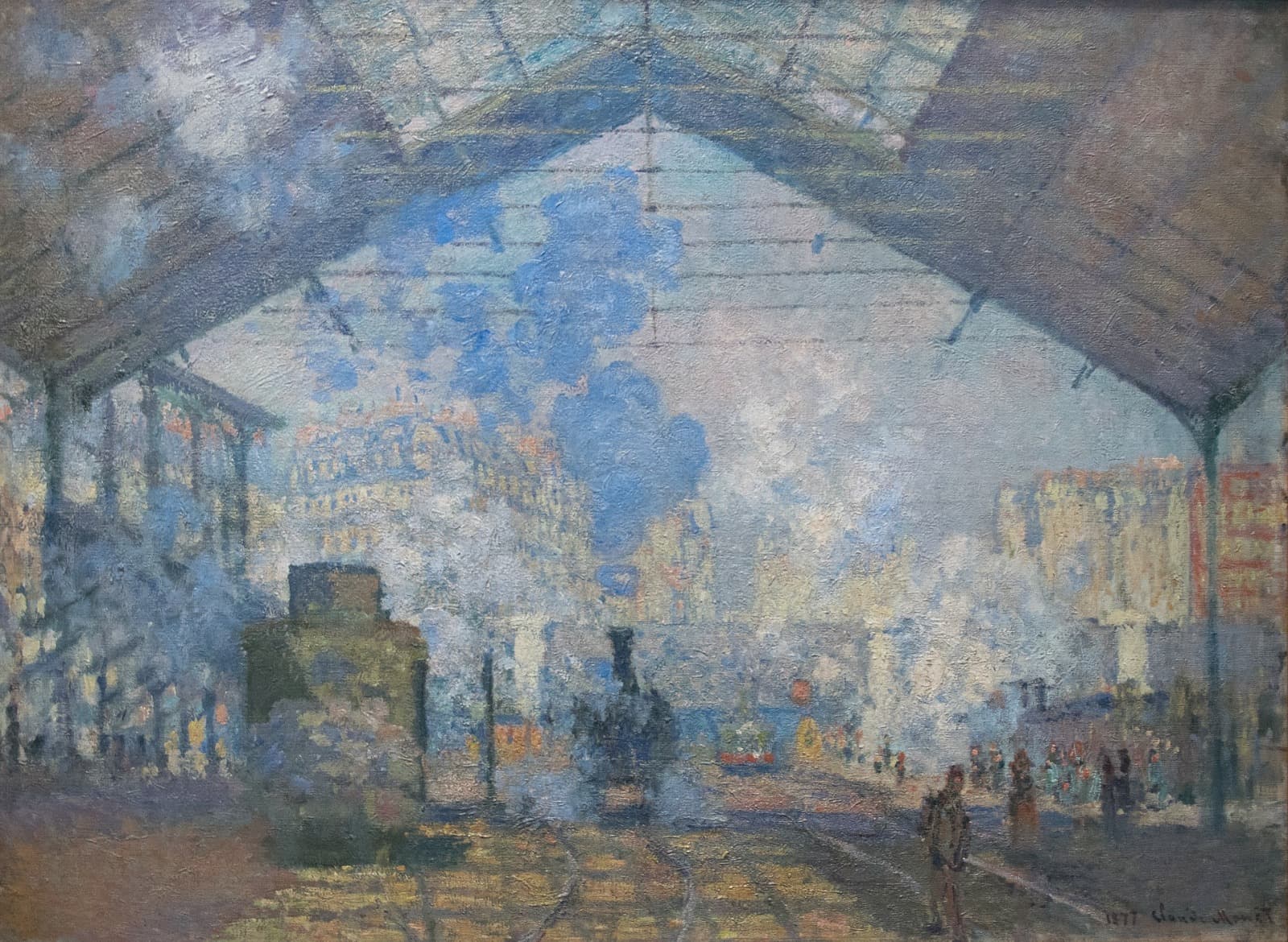
Monet set his easel up inside the station and painted the steam until the roof and the city beyond it had dissolved into it.
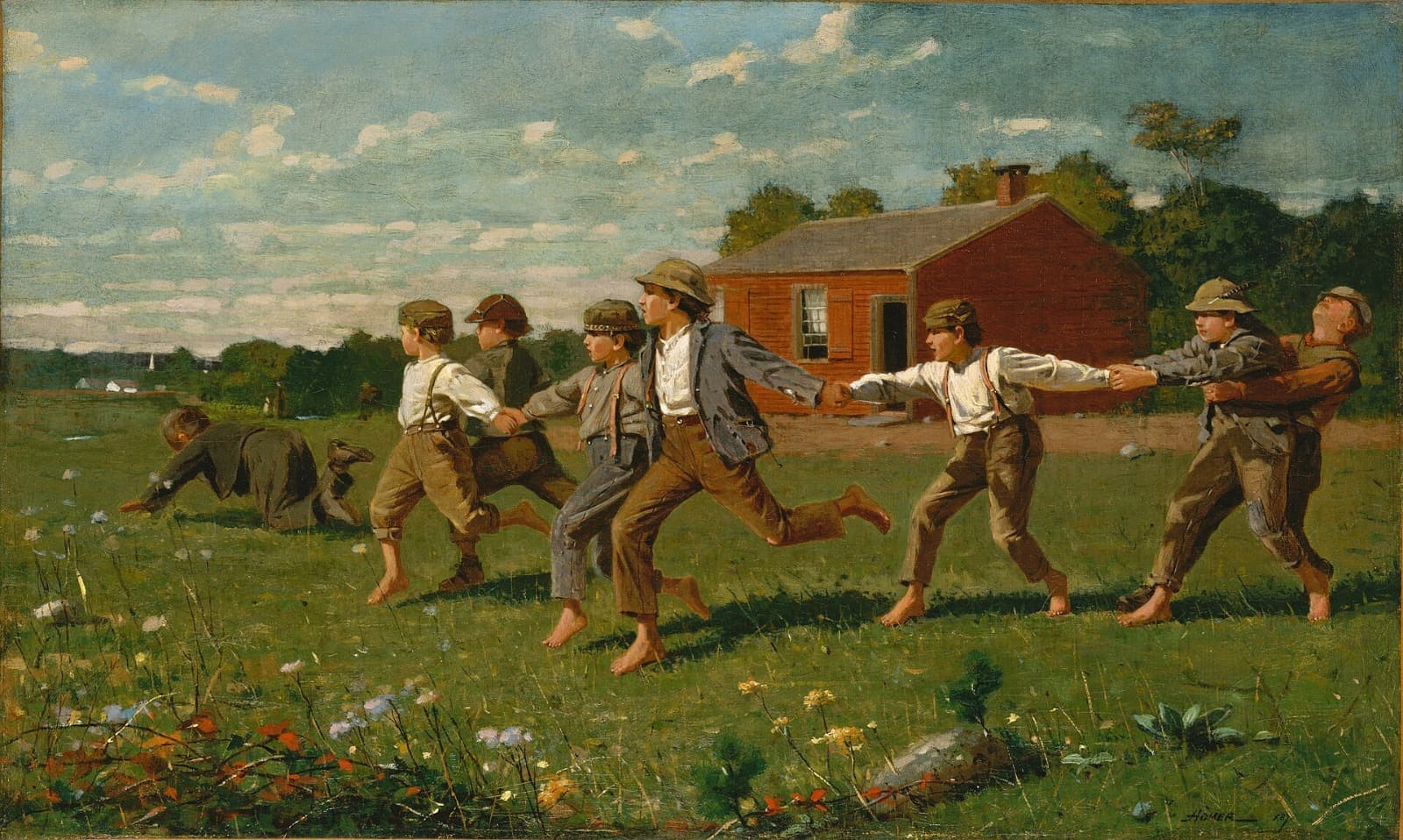
Barefoot boys crack the whip outside a red schoolhouse and the last one is already stumbling. Painted just after the Civil War.
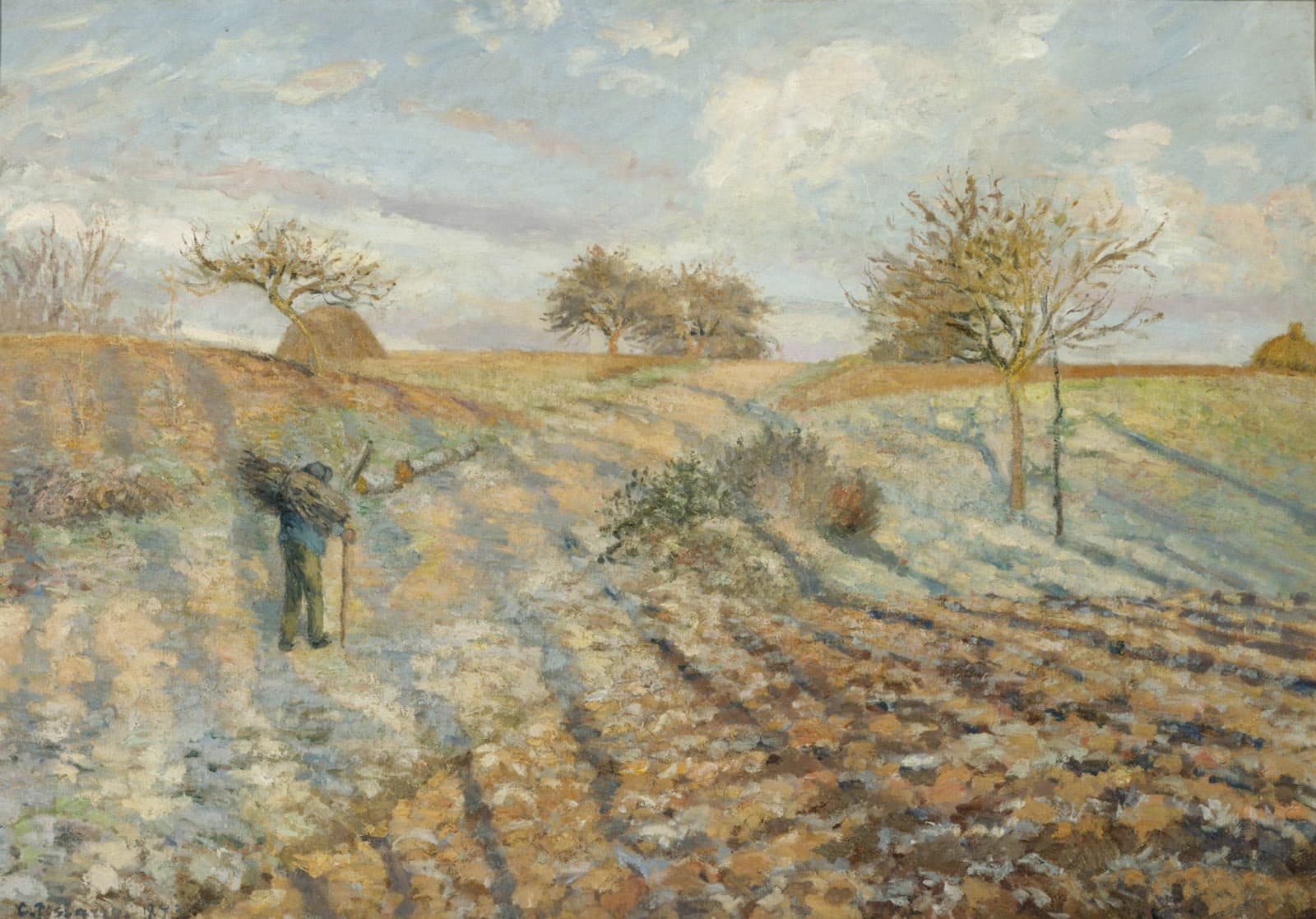
Critics at the first Impressionist show in 1874 said it looked like palette scrapings. The furrows are streaked with blue, violet and gold.
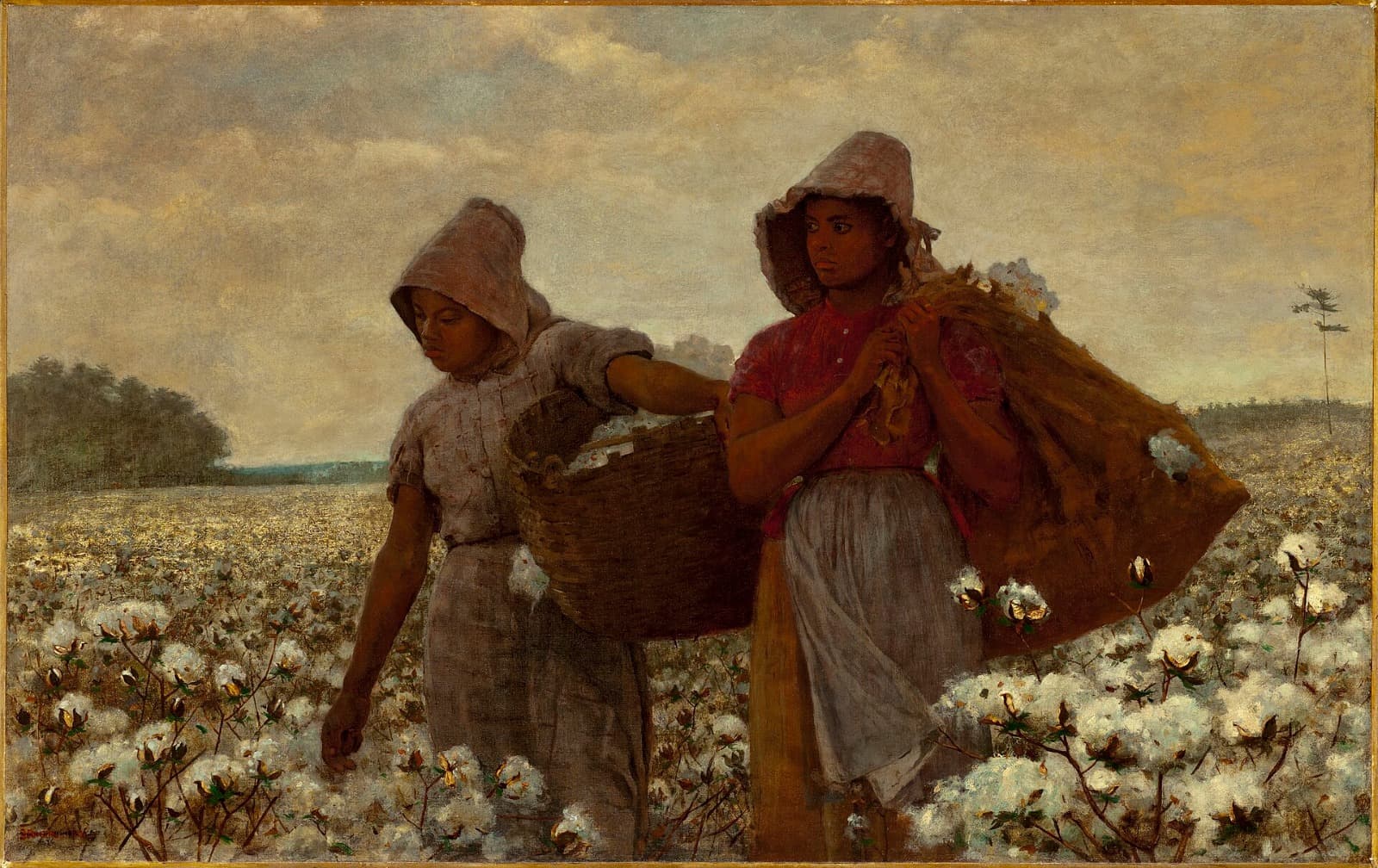
Two young Black women in a cotton field a decade after emancipation, given a gravity American painting had not extended to field labor.
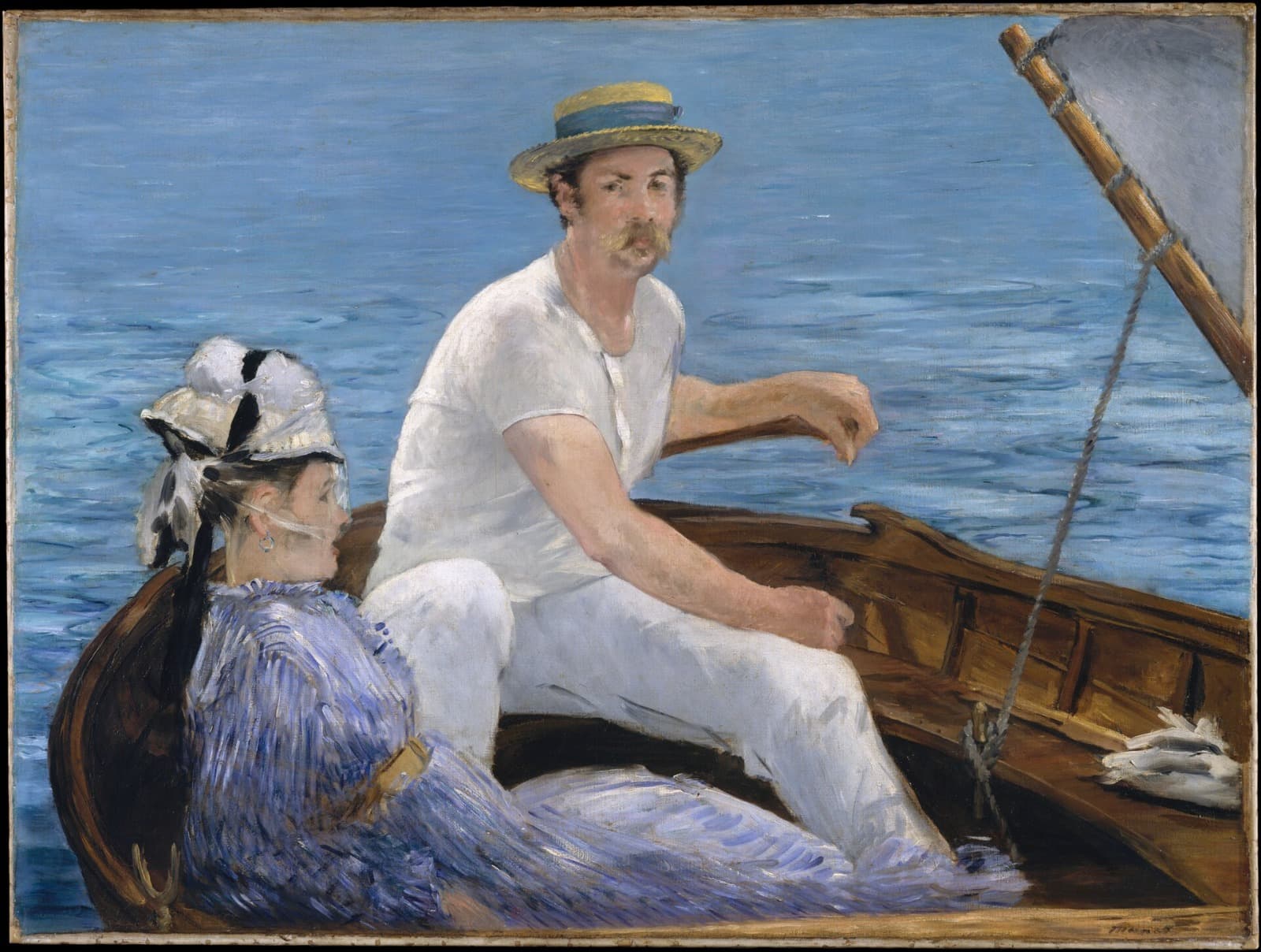
Manet painted this beside Monet at Argenteuil and let the blue water climb all the way to the top edge of the canvas.
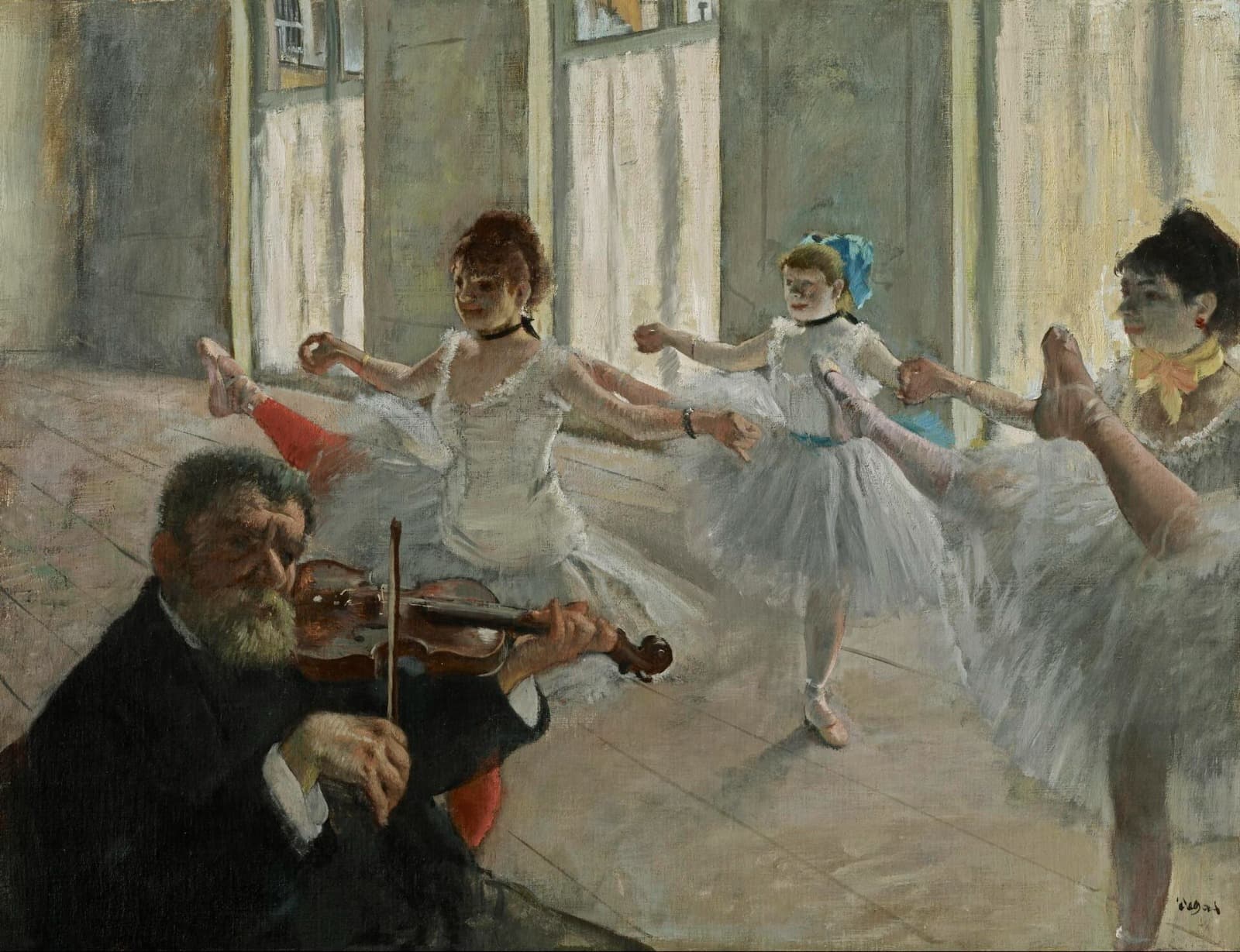
Dancers stretch while a spiral staircase cuts the corner and the frame slices figures off. Degas cared about the practice, not the performance.

She stands in a garden in a blue dress holding a watering can, and Renoir spends the rest of the canvas on light.
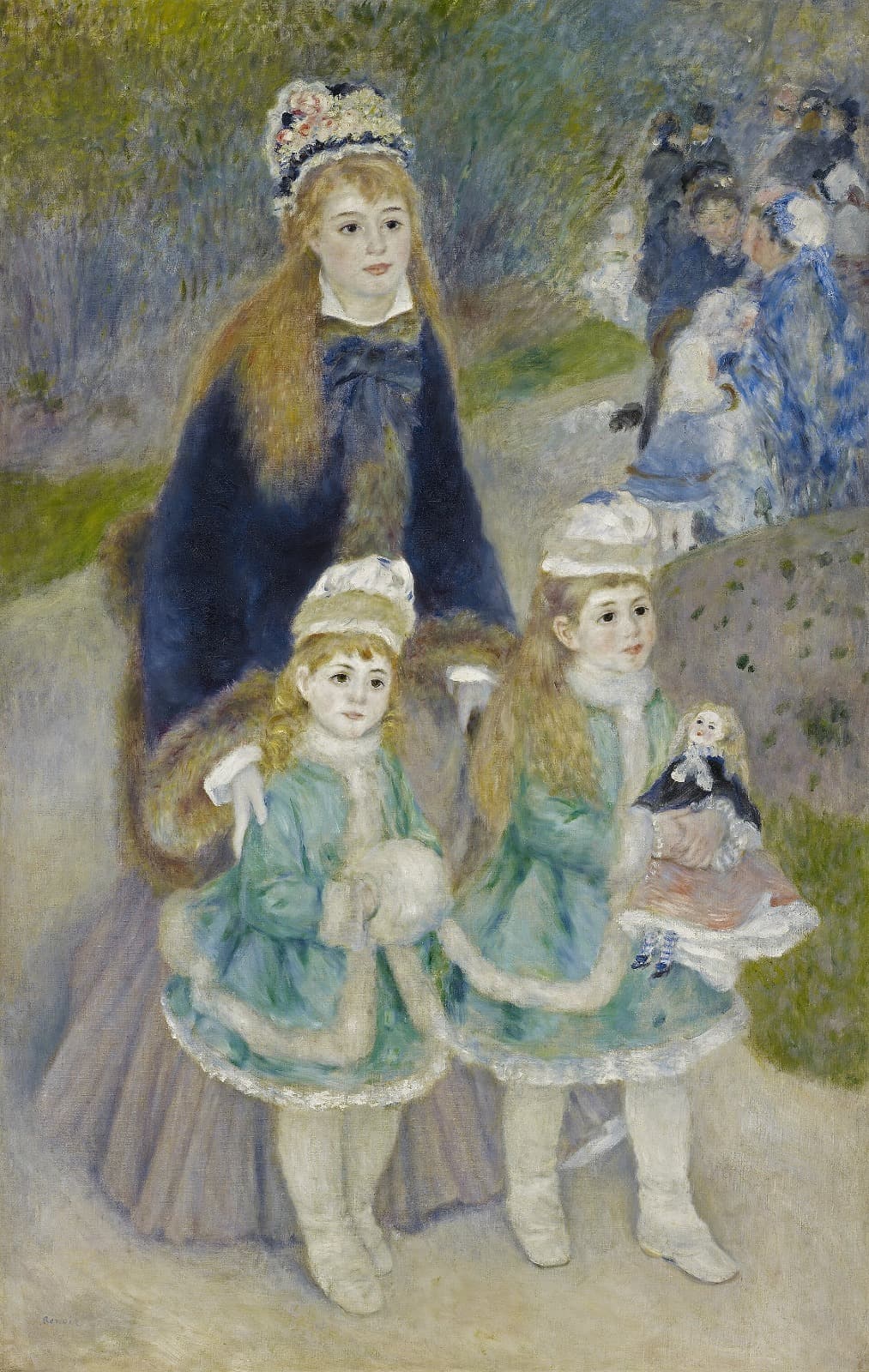
Two girls walking under trees, the elder leading the younger, everything blurred into one shimmer of dappled light and pale dress.

A woman in a white corset seen from behind, painted so loosely the picture seems to stop just before the image settles.

Degas turned from dancers to financiers, catching heads bent close over documents in the crush of the Paris exchange.
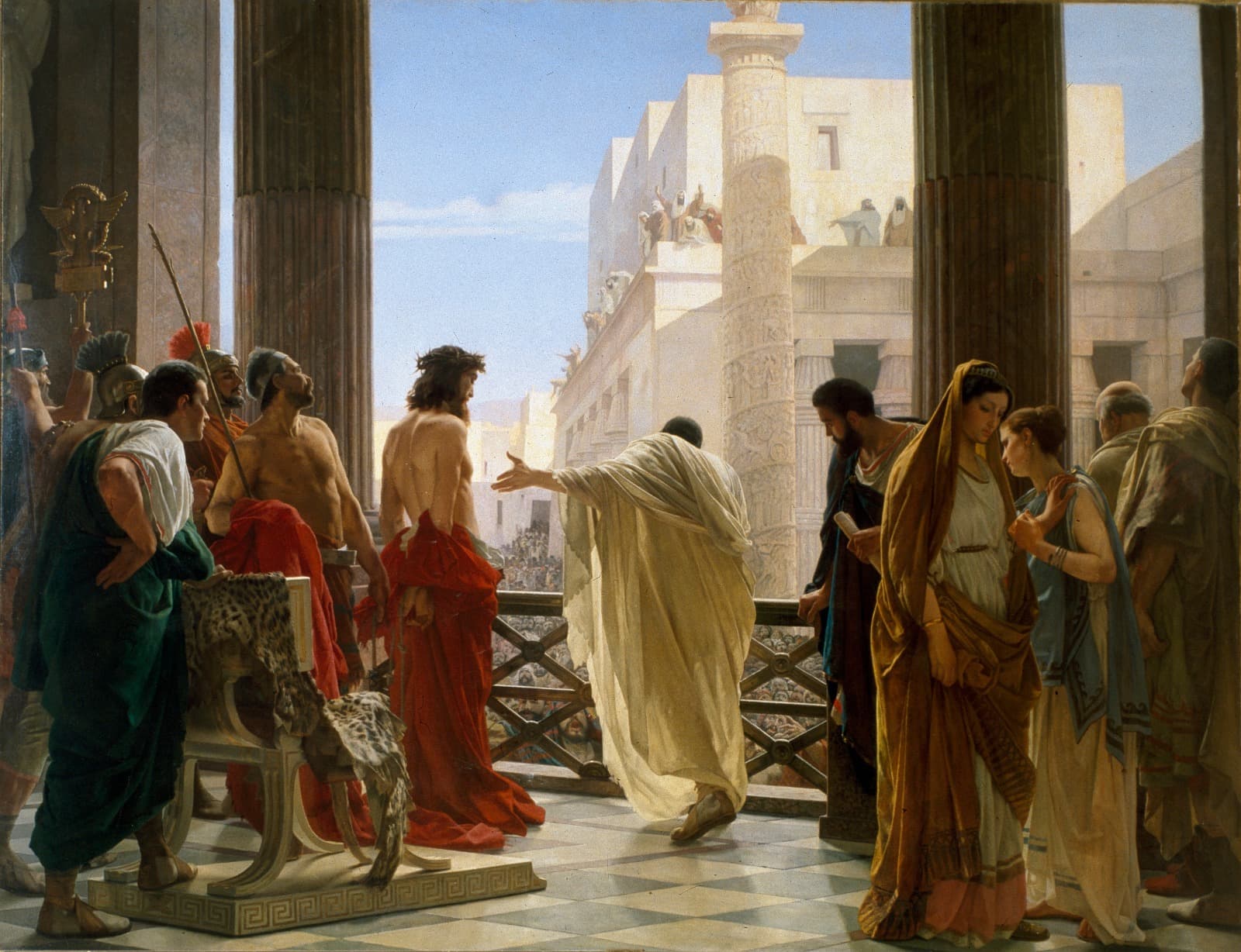
We are standing behind Pilate, looking out over his shoulder at the crowd, which puts us among the officials rather than the mob.
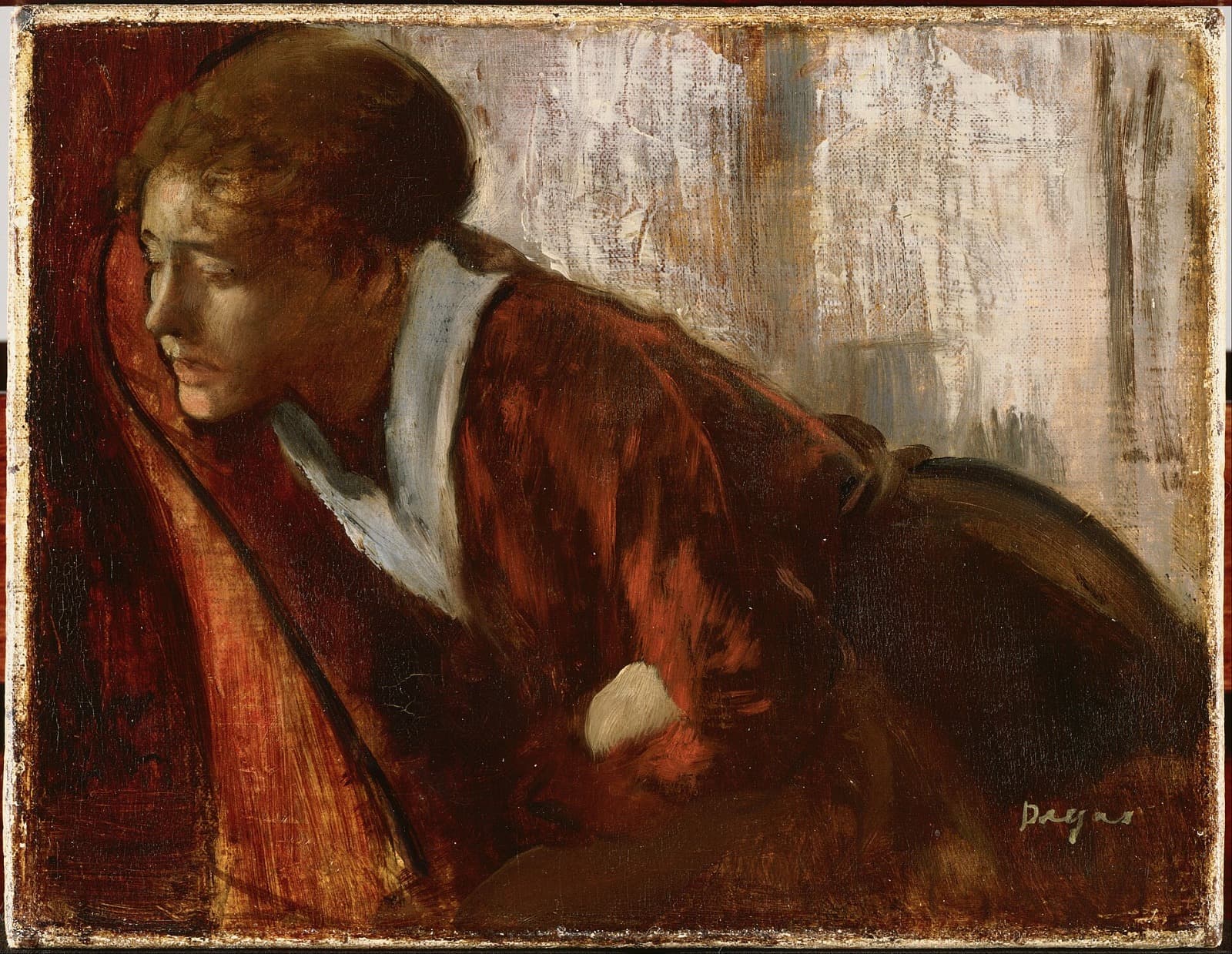
A woman slumped back on a sofa, and Degas reads the whole state of mind off the slope of her shoulders.