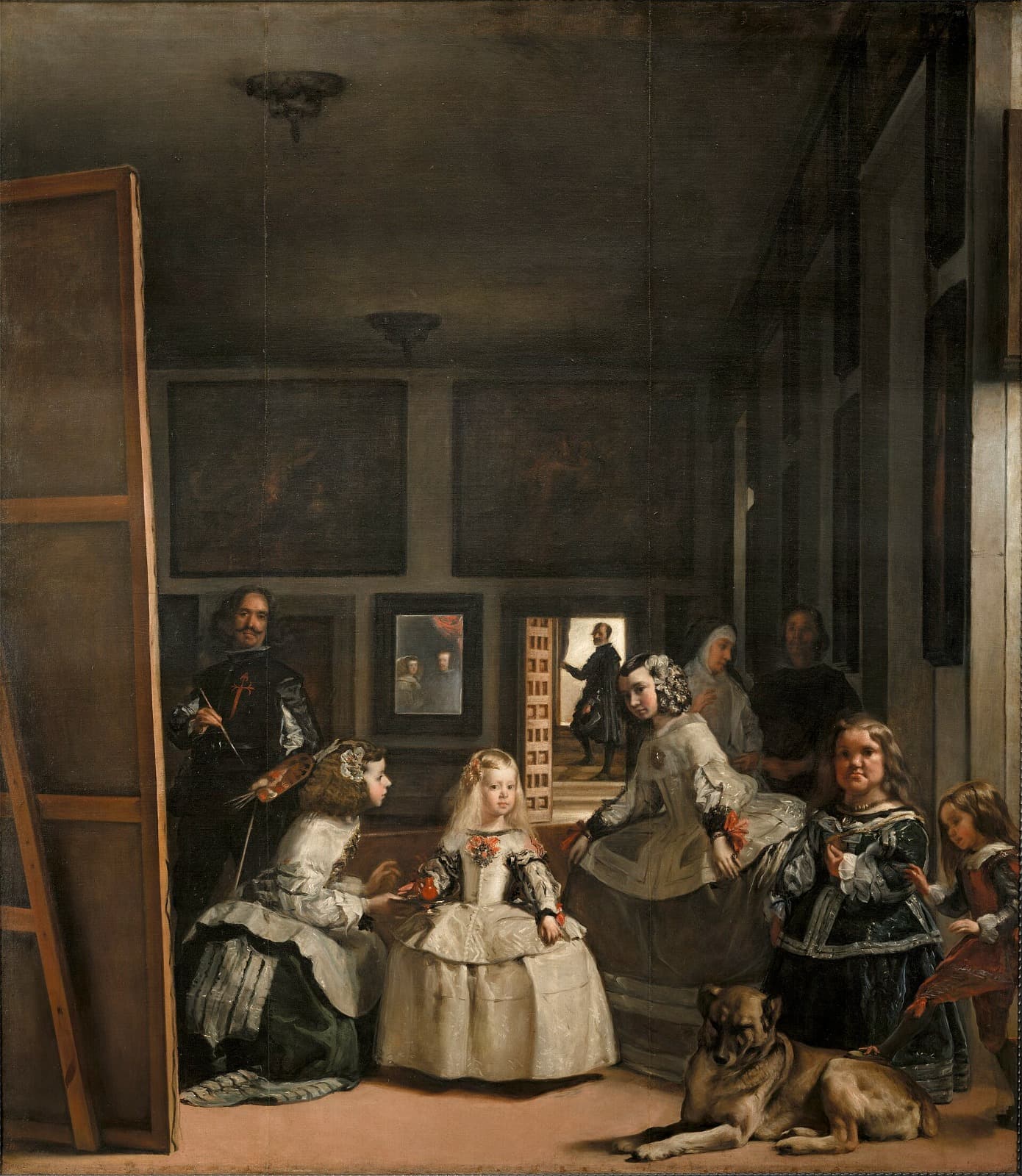
Las Meninas
1656 · El Prado, Madrid
The Infanta and her maids fill the room, but Velázquez has put himself at his easel and the king and queen in a mirror behind.
★ 9.8
 skopia
The Infanta and her maids fill the room, but Velázquez has put himself at his easel and the king and queen in a mirror behind.
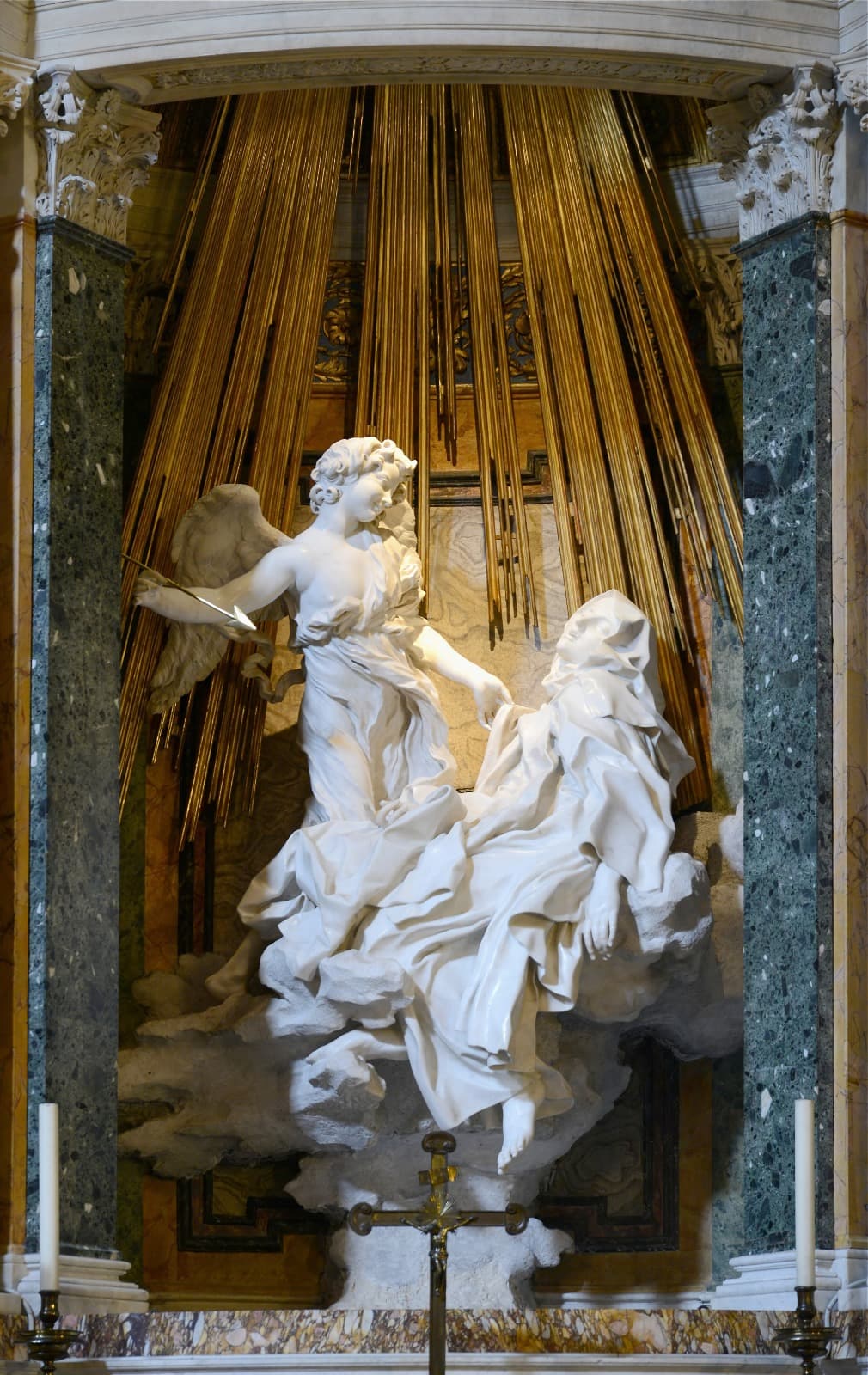
Bernini staged the saint's own account of her vision as theater, lit from a window he hid above and watched by marble spectators in boxes.
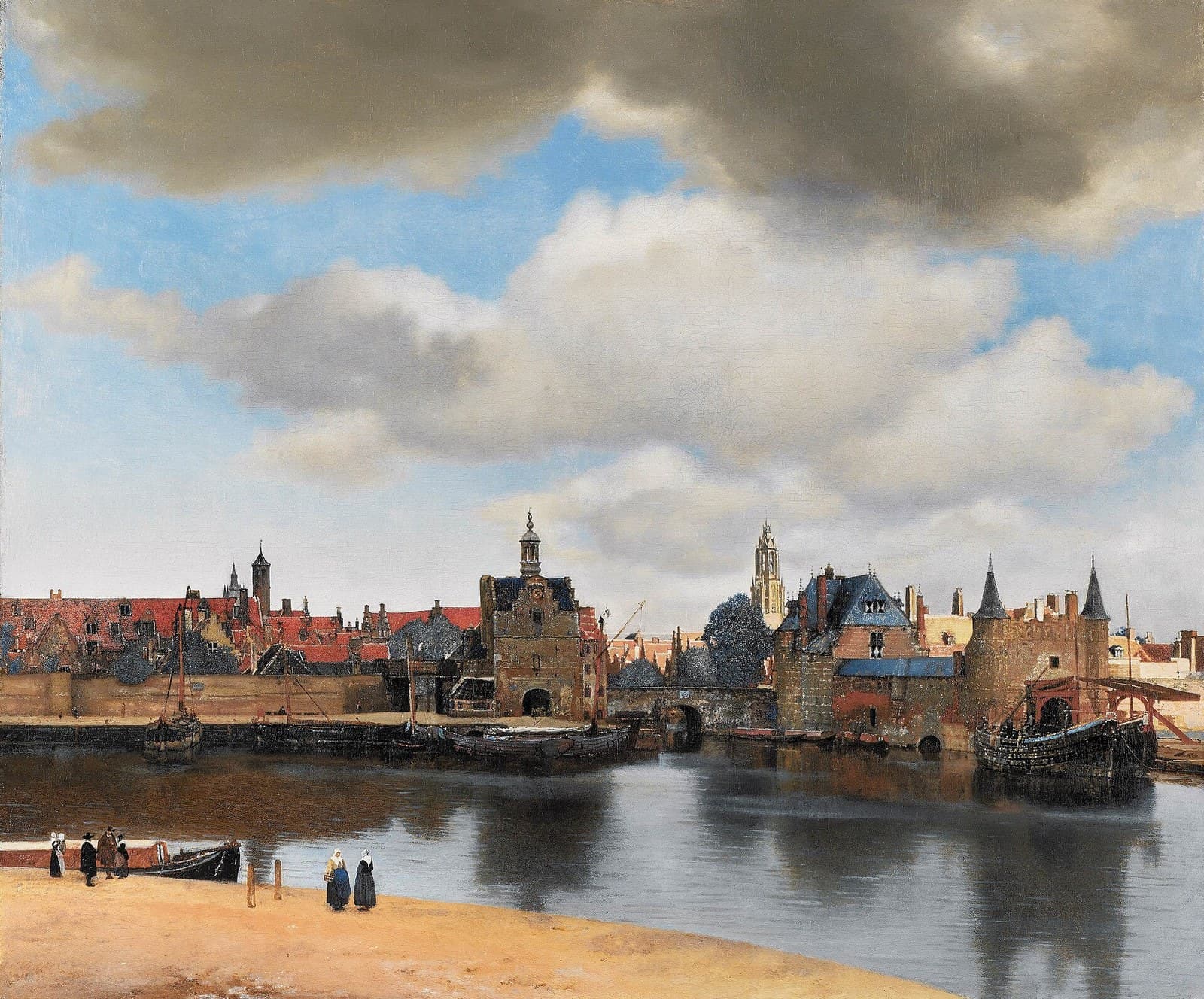
Vermeer painted his own city from across the harbor, almost his only townscape. Proust called it the most beautiful painting in the world.

A militia company surges out of the shadow with a dog barking and a girl glowing among the men. Varnish, not night, made it dark.

Bernini was in his mid-twenties when he cut this, catching Daphne at the moment bark closes over her thigh and leaves push from her fingers.

Judith and her maid hold Holofernes down together and work the blade through his throat. Artemisia painted it a decade after her rape trial.

Rembrandt was twenty-five and new in Amsterdam when the surgeons' guild hired him, and he built every head in the room around one lifted tendon.

The Spanish general stops the defeated Dutchman from kneeling and lays a hand on his shoulder. Spaniards still call the picture The Lances.

Velázquez caught every wary line in the pope's face, and Innocent reportedly said it was troppo vero, too true. Francis Bacon reworked it for years.

The son kneels with his shorn head against his father's chest and the old man's hands come down on his back. Rembrandt painted it near death.

Not a portrait of anyone in particular but a tronie, a study of a type, which somehow made her the most looked-at girl in art.
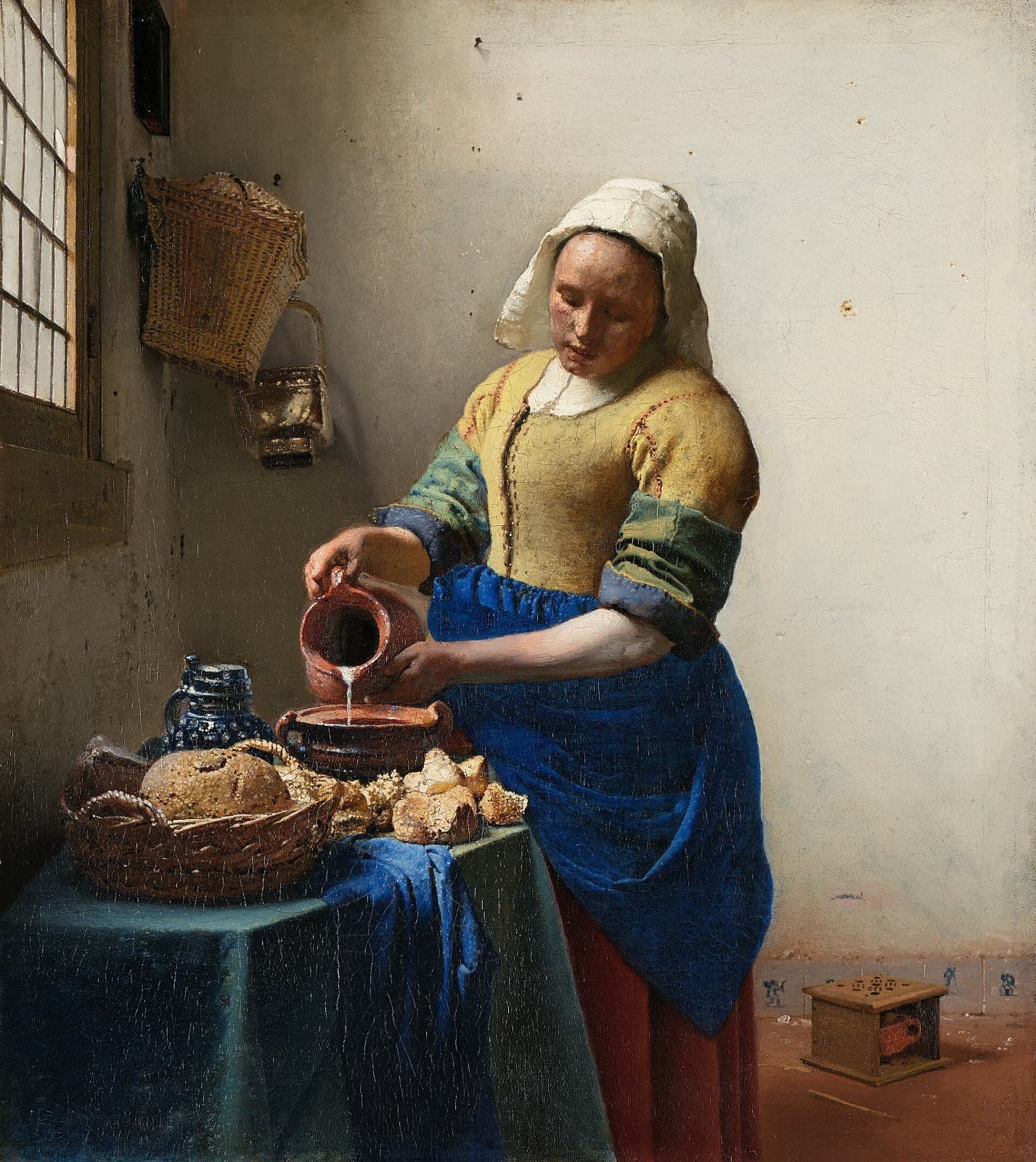
A kitchen maid pours a thin stream of milk in ordinary daylight, given the weight and stillness usually reserved for saints.

Christ's body slides down one long diagonal onto a white shroud. It still stands on the altar in Antwerp Cathedral that Rubens painted it for.

The only canvas Caravaggio ever signed, and he signed it in the blood running from the saint's throat, for the knights of Malta.

Caravaggio's first attempt at the subject, turned down by the patron, before he threw out the angels and left one man, one horse and the light.
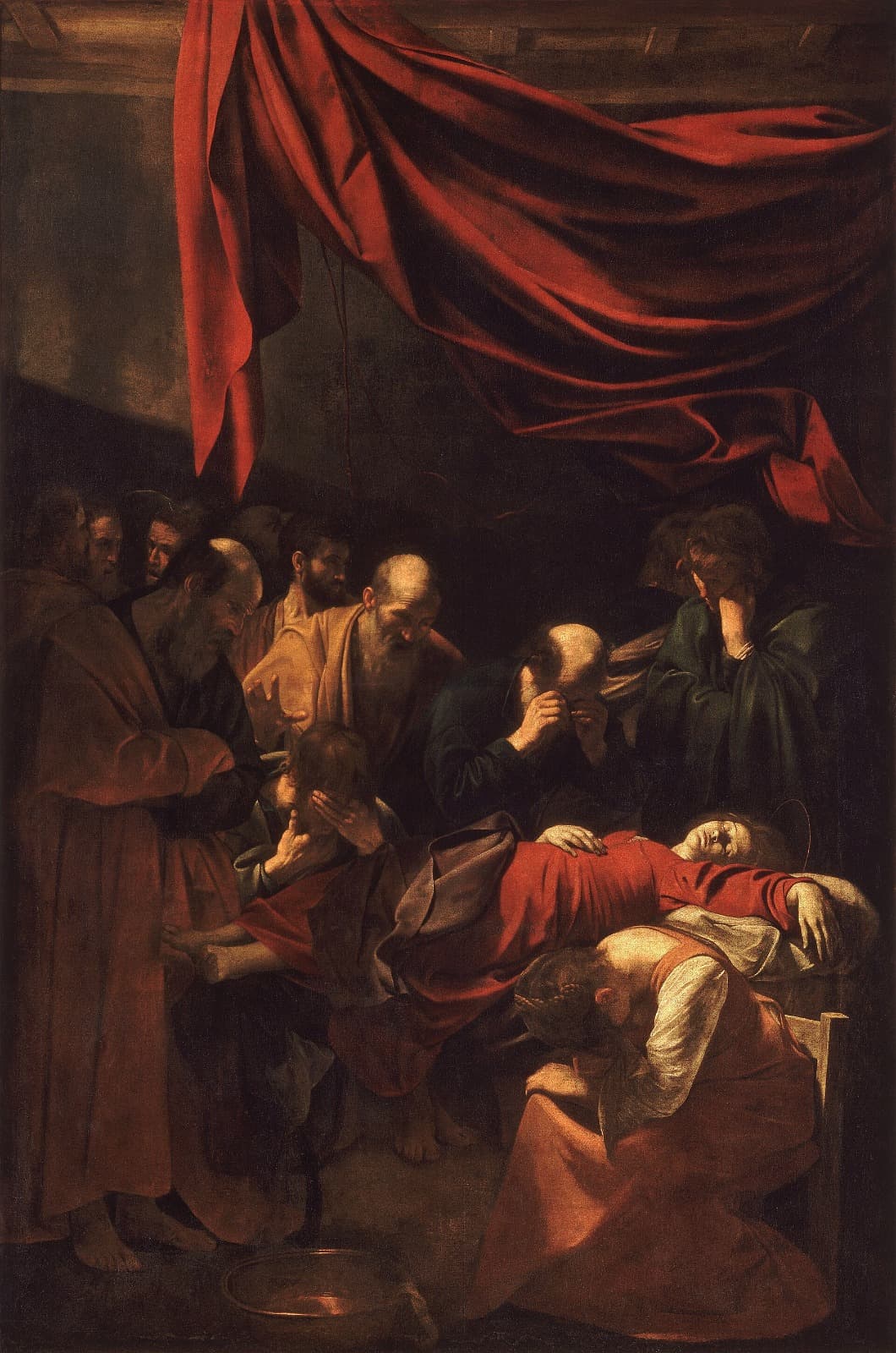
The Virgin lies barefoot and swollen like any corpse. The church that ordered it refused delivery, and Rubens told his duke to buy it.
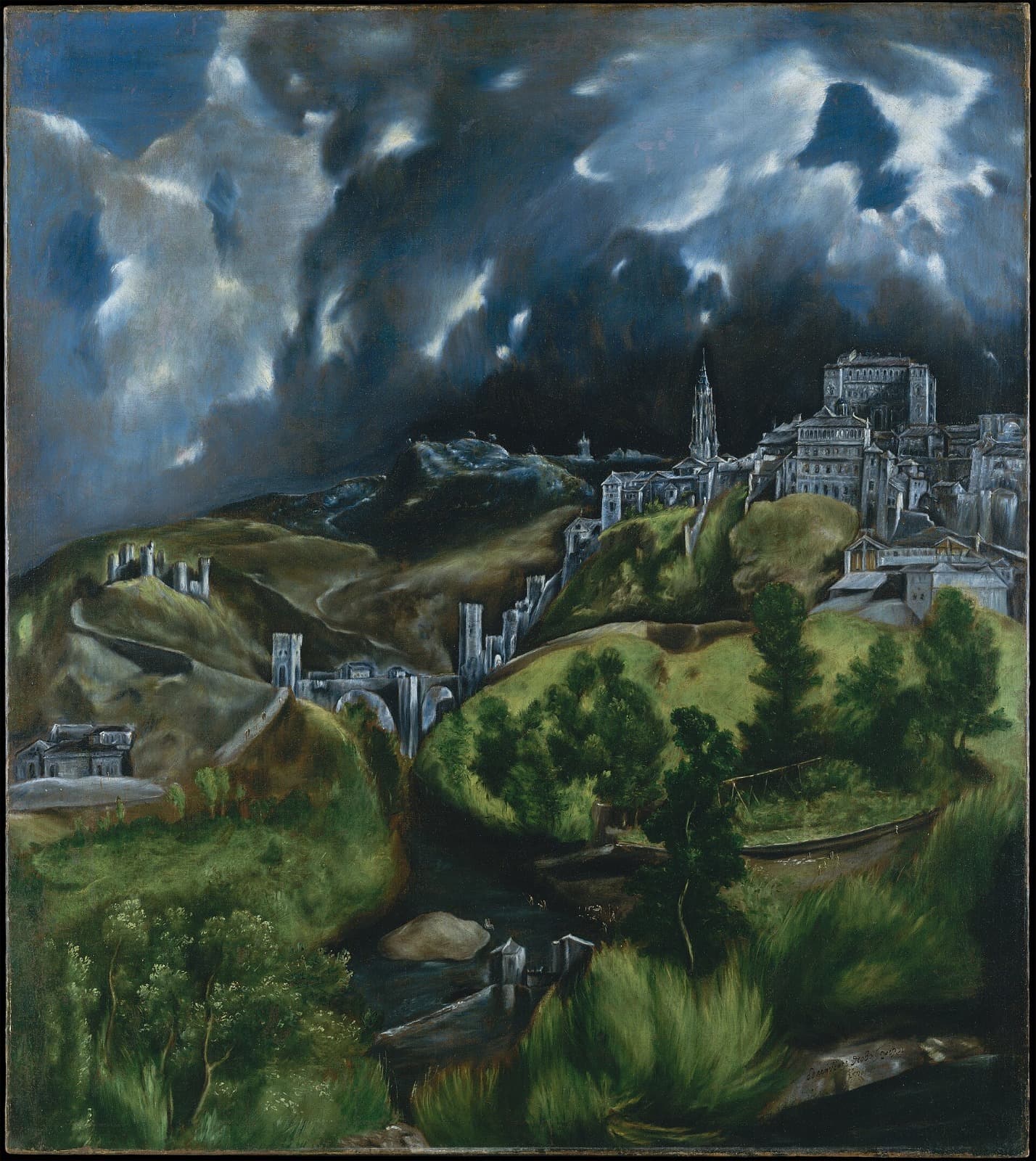
El Greco moved the cathedral tower off its real site for the sake of the composition and lit the whole city with a green storm.
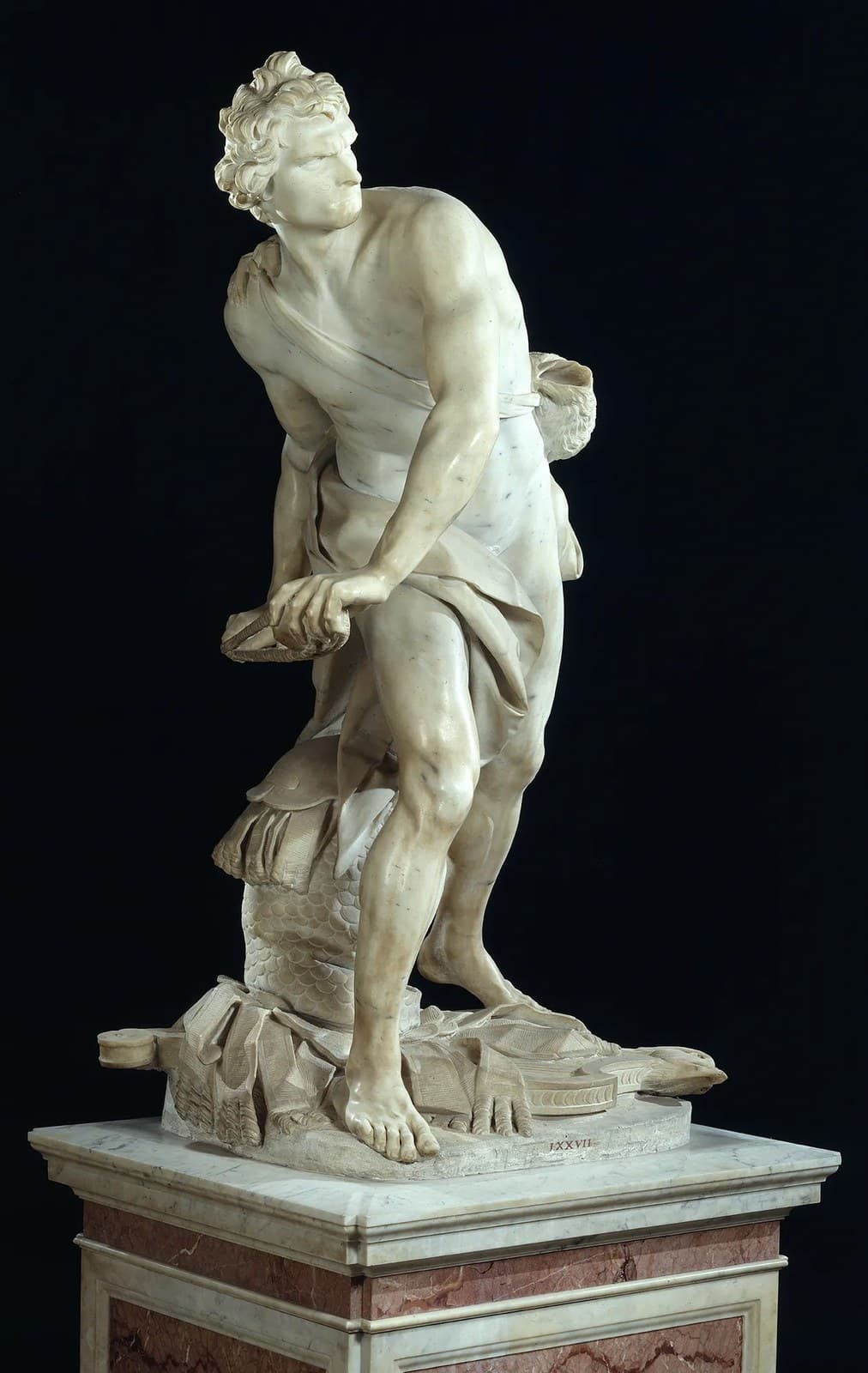
Bernini put the viewer where Goliath must be standing, so the sling is being wound up to throw straight past your head.

Vermeer never sold this one. The model poses as Clio, muse of history, with a great map of the Netherlands filling the wall behind.

The two gods hurtle in from opposite edges and Sotatsu leaves the whole middle empty, so the bare gold reads as sky.
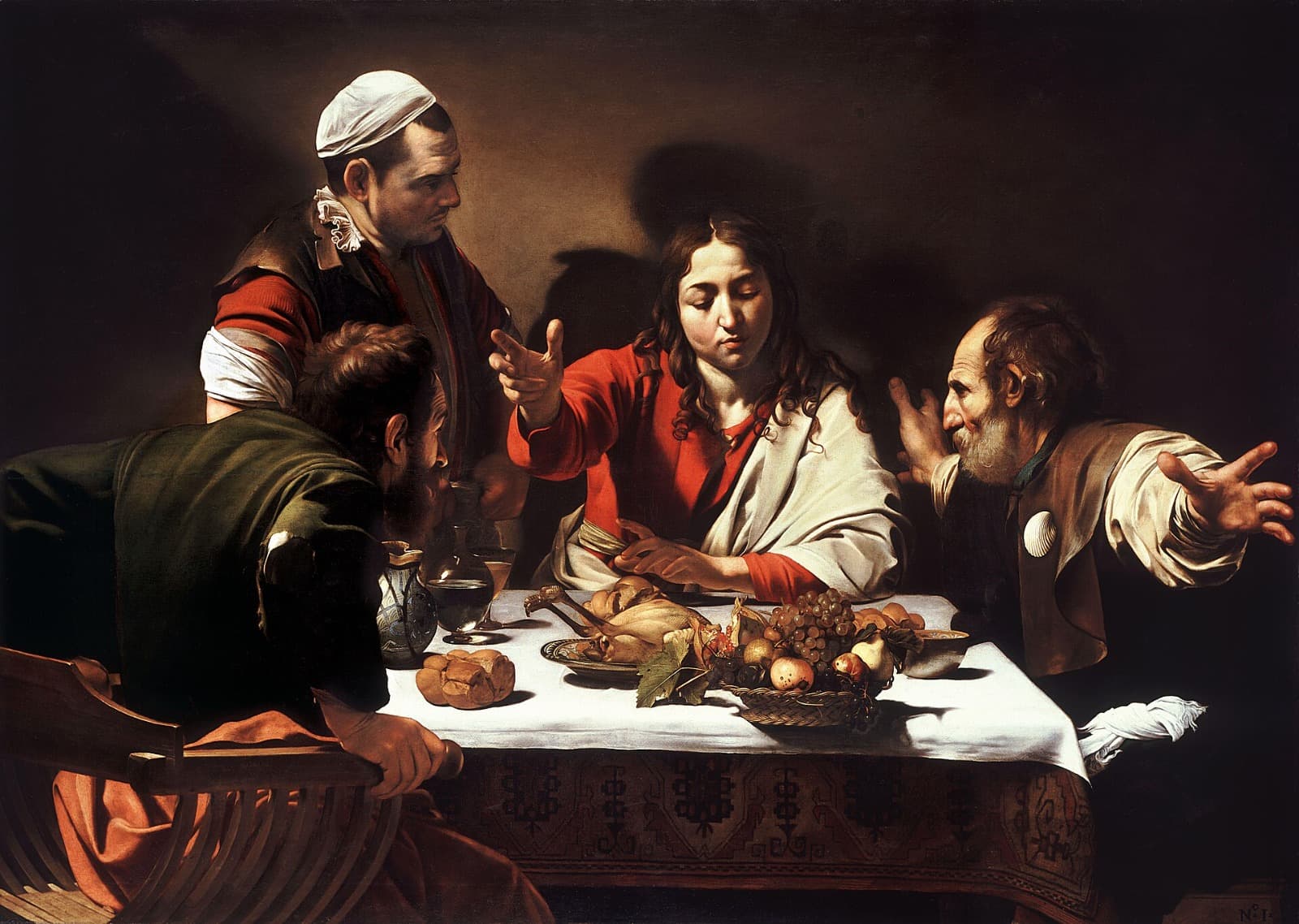
One disciple grips his chair to stand and the other throws his arms wide, while a fruit basket teeters off the edge toward us.

The emperor hands a book to a Sufi and ignores the kings waiting below, one of them James I, copied from an English portrait.
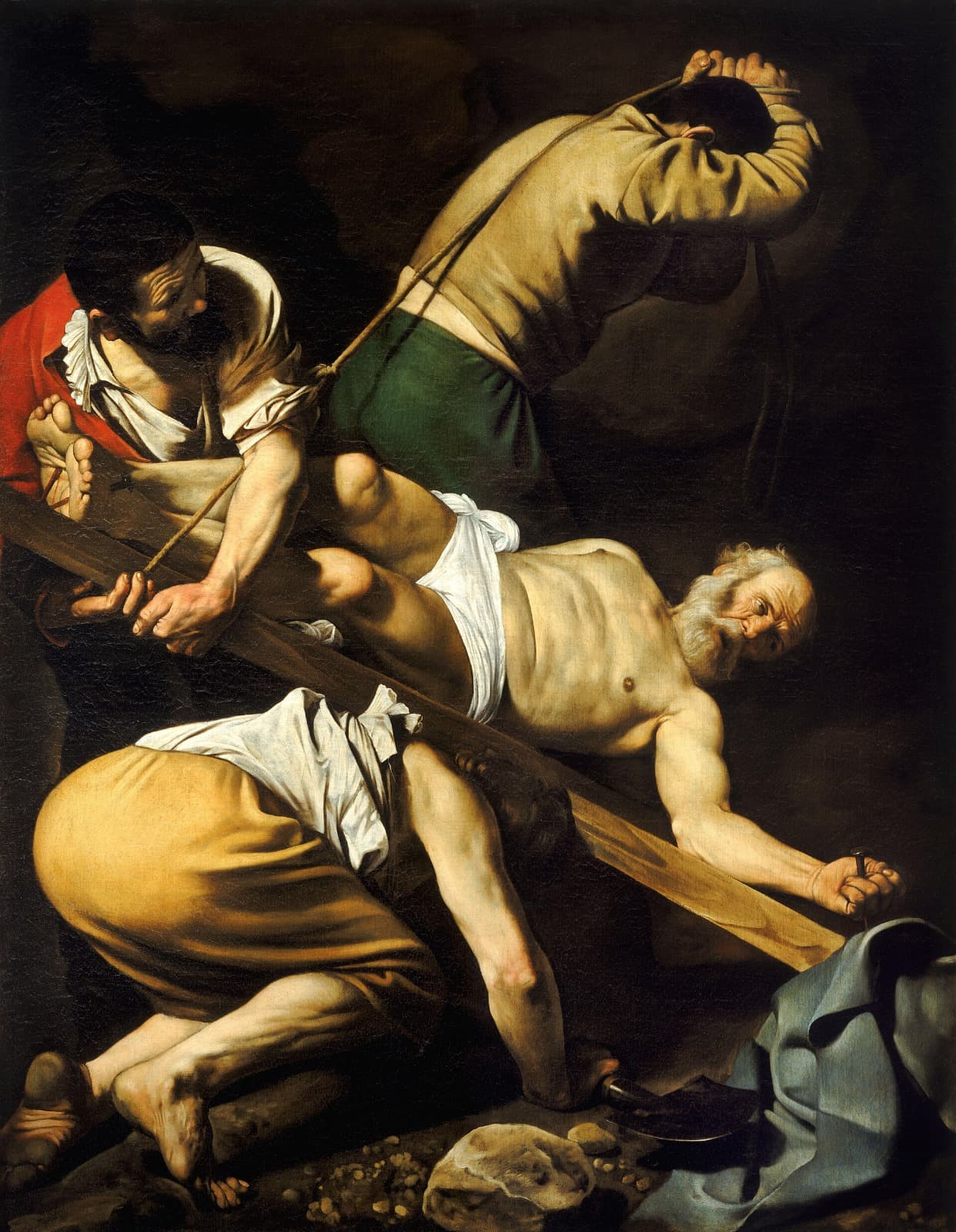
Three laborers strain to lever the cross upright with Peter nailed to it upside down. No crowd, no glory, just heavy work in the dark.

The corner of the stone slab juts out of the picture so the body looks about to be laid down in the room with you.

Pareja was Velázquez's enslaved assistant, freed soon after this was painted in Rome as a warm-up before the pope sat for him.
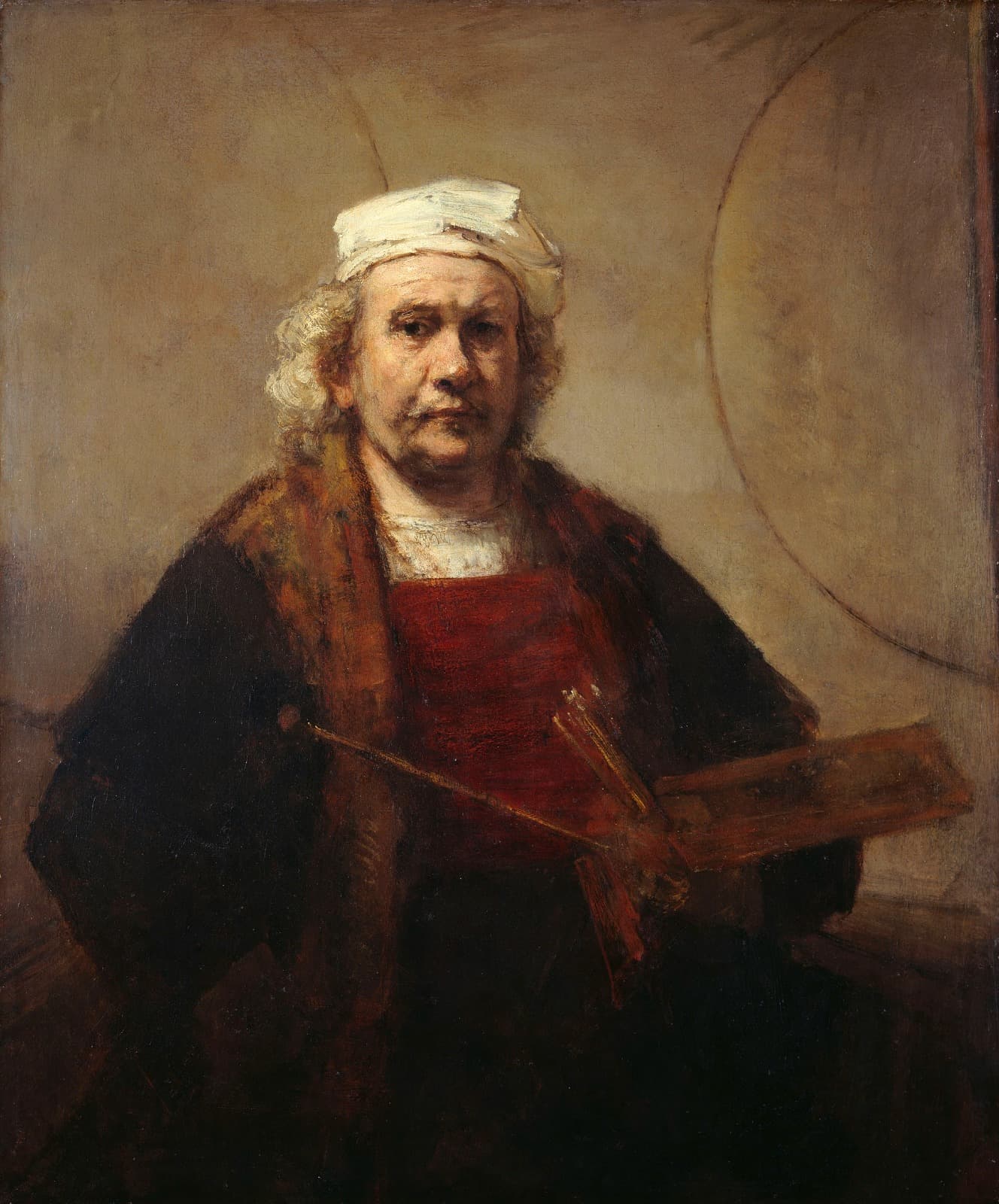
The old painter holds his brushes and palette, and behind him two large arcs are drawn on the wall that nobody has explained.

Thomas pushes his finger into the wound and two apostles lean in to watch, brows knotted, close enough to crowd the frame.

Shepherds trace the carved words on a tomb, Even in Arcadia I am here, and Poussin lets death speak without raising its voice.
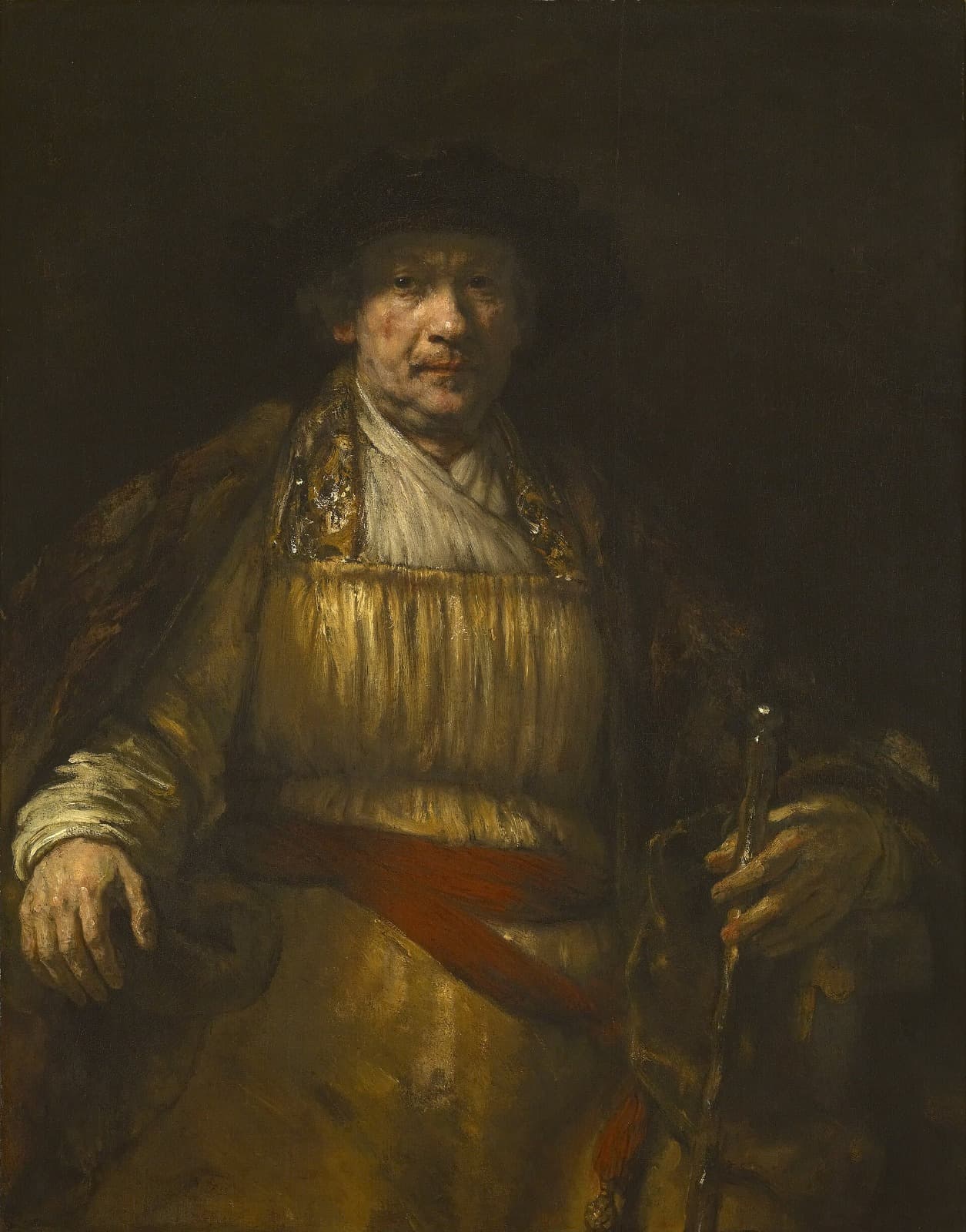
Rembrandt painted himself enthroned like a monarch, staff across his lap, in the same year bankruptcy took his house and everything in it.

A young horseman rides into the dusk armed and alert, and nobody has ever agreed who he is or where he is going.
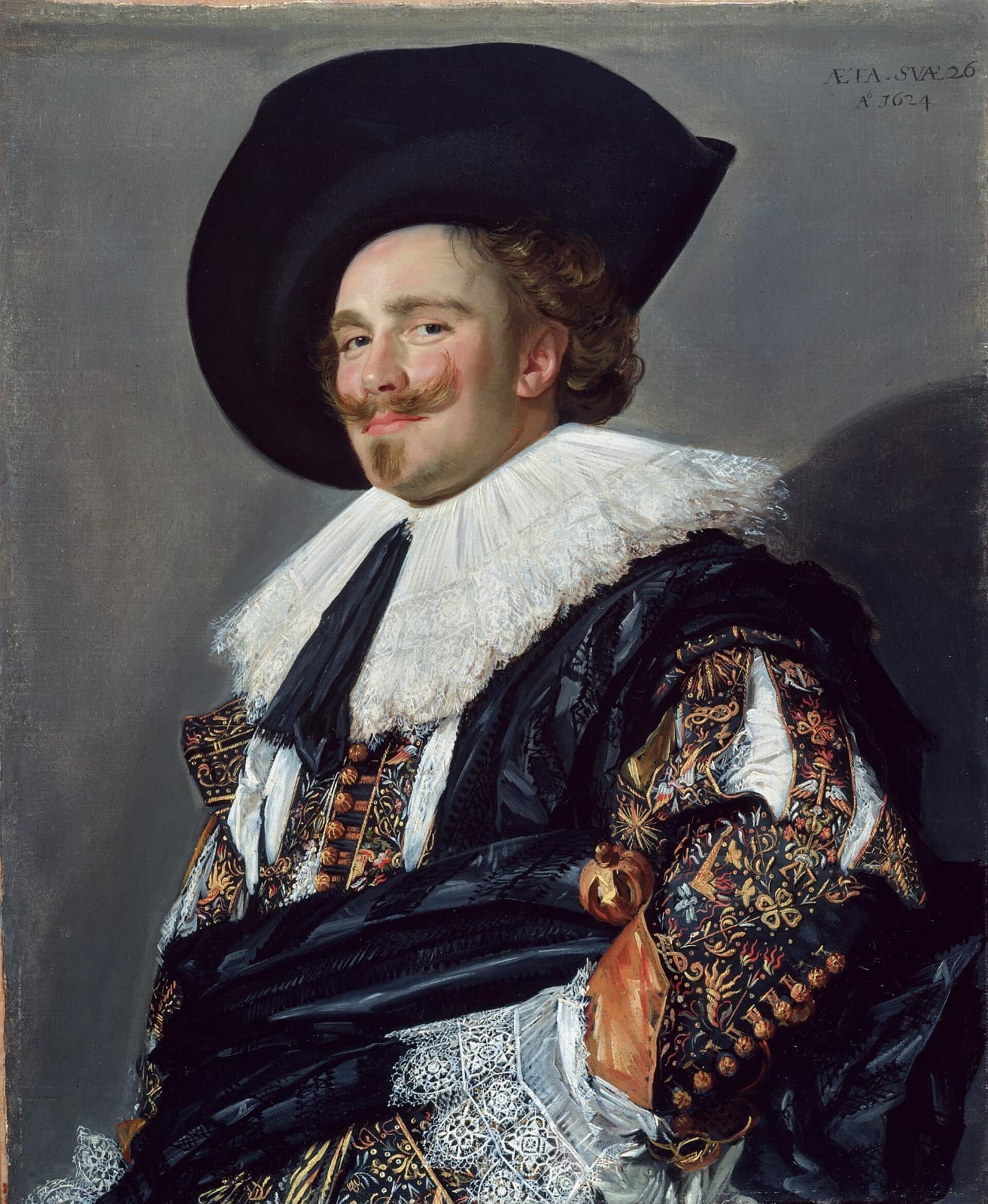
He is neither laughing nor a cavalier. The lace and gold thread on that sleeve were flicked on in a few confident strokes.

No halo, no manger, just a candle shielded by a hand and a swaddled baby, and it still reads as a nativity.

The scales in her hand are empty and perfectly level, and the painting on the wall behind her is a Last Judgment.

Two horsemen haul two women up onto rearing horses, and the whole canvas spins into one great X of limbs and hooves.
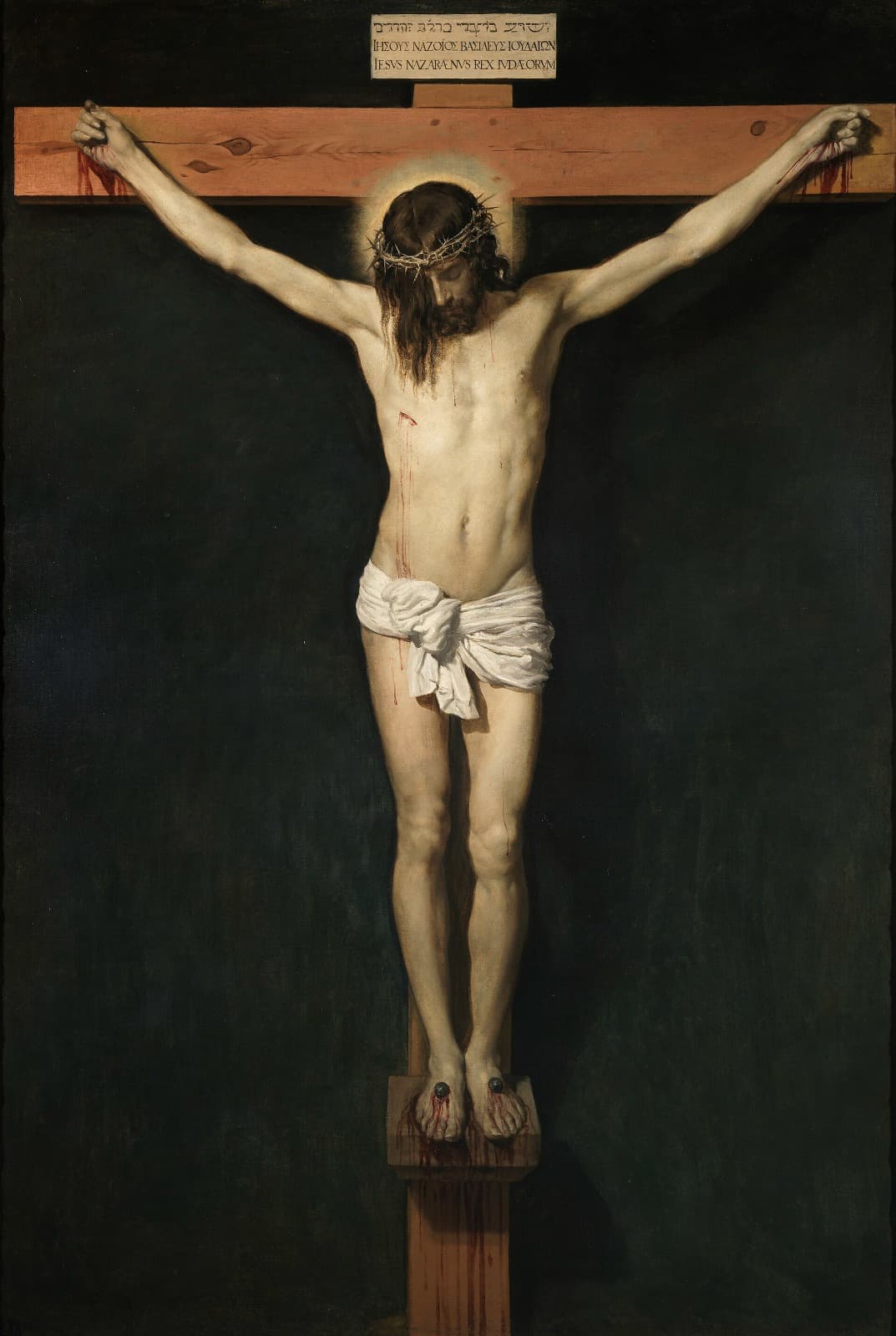
No crowd, no landscape, nothing but the body against black, with the hair fallen forward to half-cover the face. Made for private prayer.

Saint Ursula is on the quay somewhere, but the real subject is the light coming up the water between the palaces at dawn.

The sun sits low over a glassy harbor and floods everything. Turner admired it so much he insisted his own work hang beside it.

One hand on the pitcher, one on the window latch, and morning light coming through onto a white cap. Nothing happens, perfectly.

Rubens had just come back from Italy with Caravaggio's light and Michelangelo's anatomy, and announced himself with this straining diagonal.

Herod's soldiers and the mothers of Bethlehem lock into one knot of muscle. Overlooked for centuries, it sold in 2002 for a record price.

Rembrandt's only seascape, and one disciple is being sick over the side. Stolen from the Gardner Museum in 1990 and never recovered.

The holy family is tiny and the landscape does everything, which is the arrangement Poussin and Claude would build whole careers on.

One oil lamp, one skull in her lap, and a flame she does not take her eyes off. Everything else is dark.

The officer's hat and back loom enormous in the foreground while the girl sits small and bright beyond, which is exactly how the eye works.
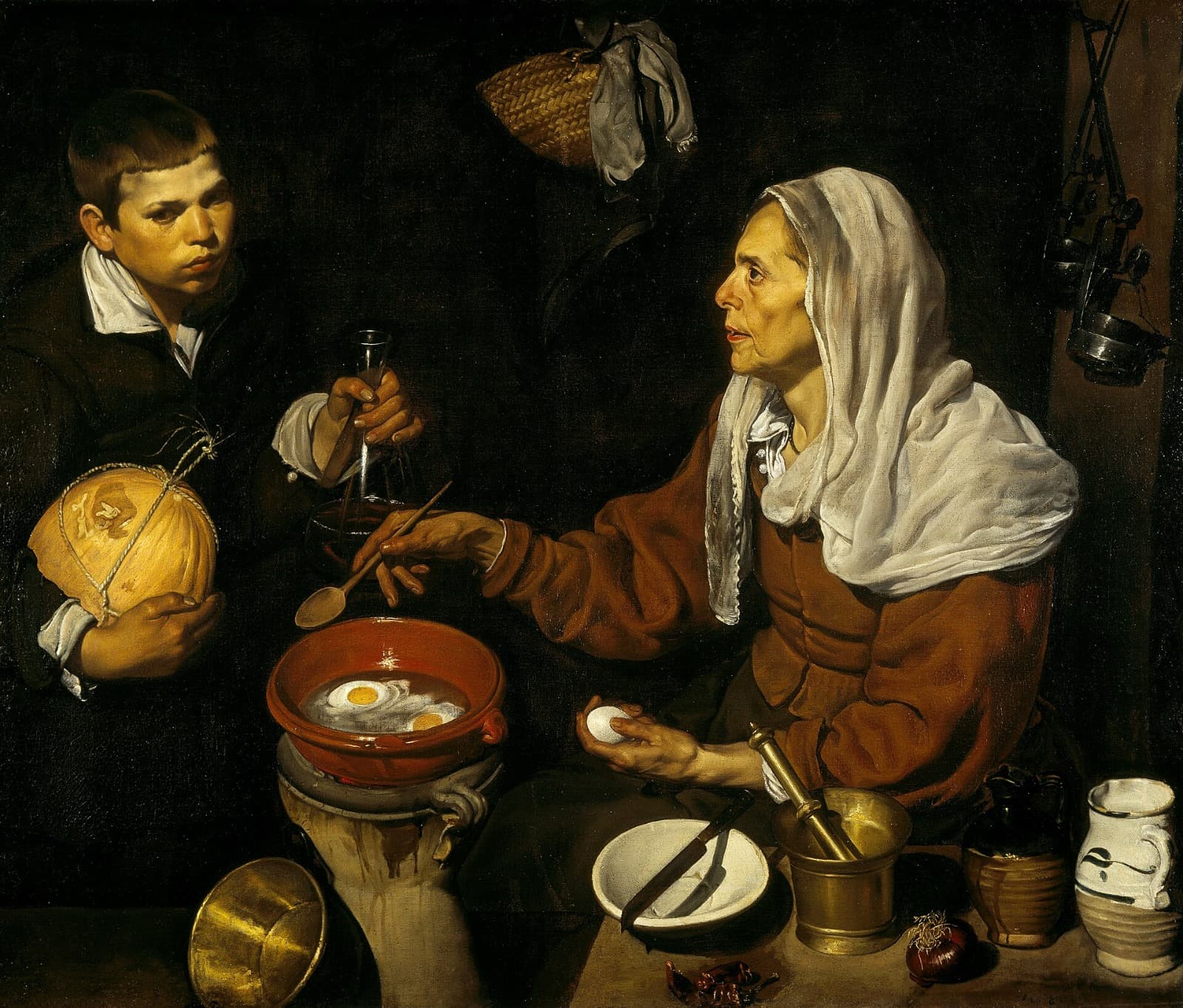
Eggs are visibly cooking in the pan as you watch. Velázquez painted this in Seville when he was barely nineteen years old.
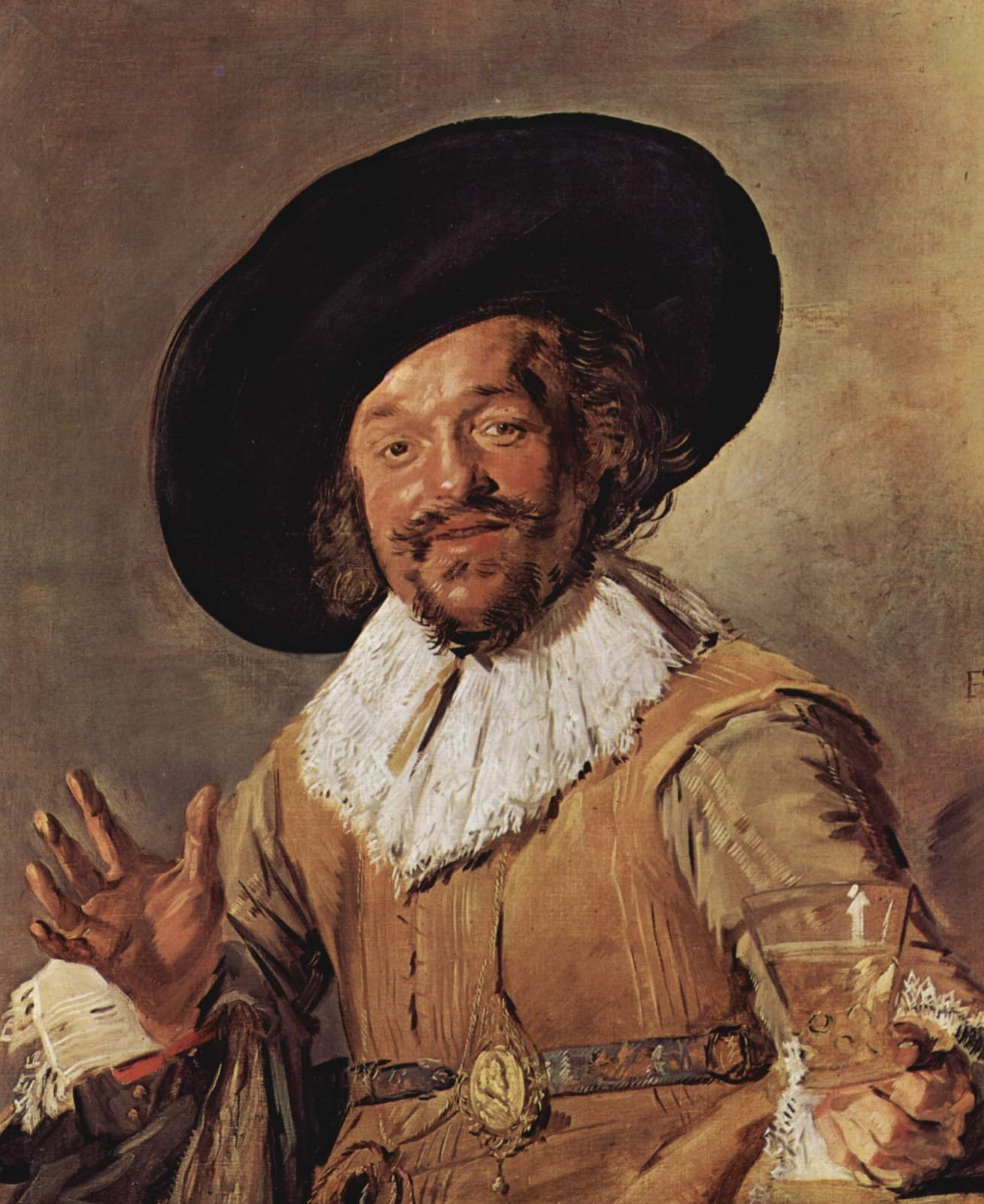
He raises his glass and talks straight at you, painted in slashing strokes laid down about as fast as the moment they catch.

Daylight from a window, firelight from a hearth, and a great spiral staircase winding up into the dark between them.
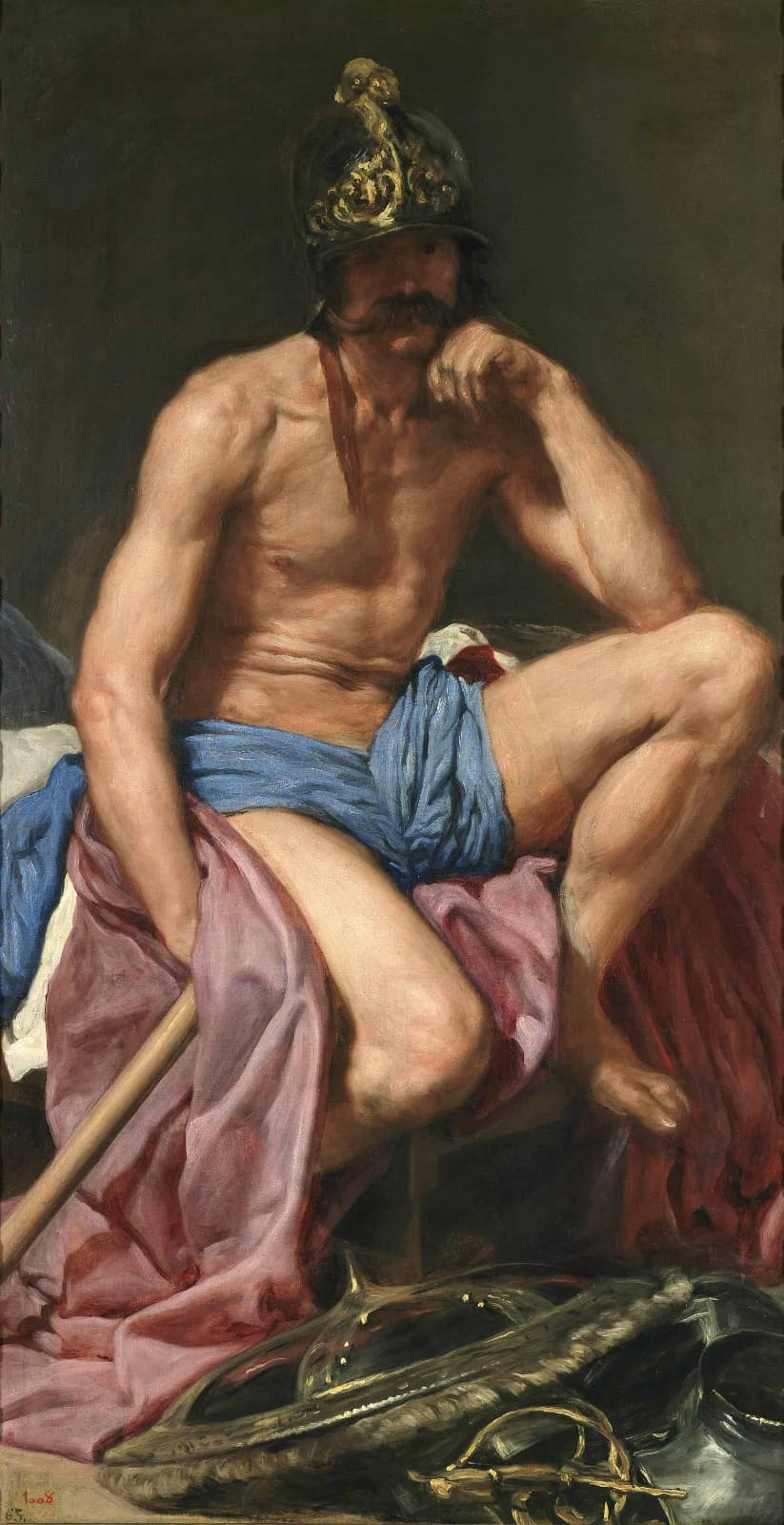
Mars sits naked and deflated in a plumed helmet with his armor on the floor, looking more like a tired old soldier.

A married couple sitting on the grass, leaning into each other and visibly amused, which is not how marriage portraits were done.
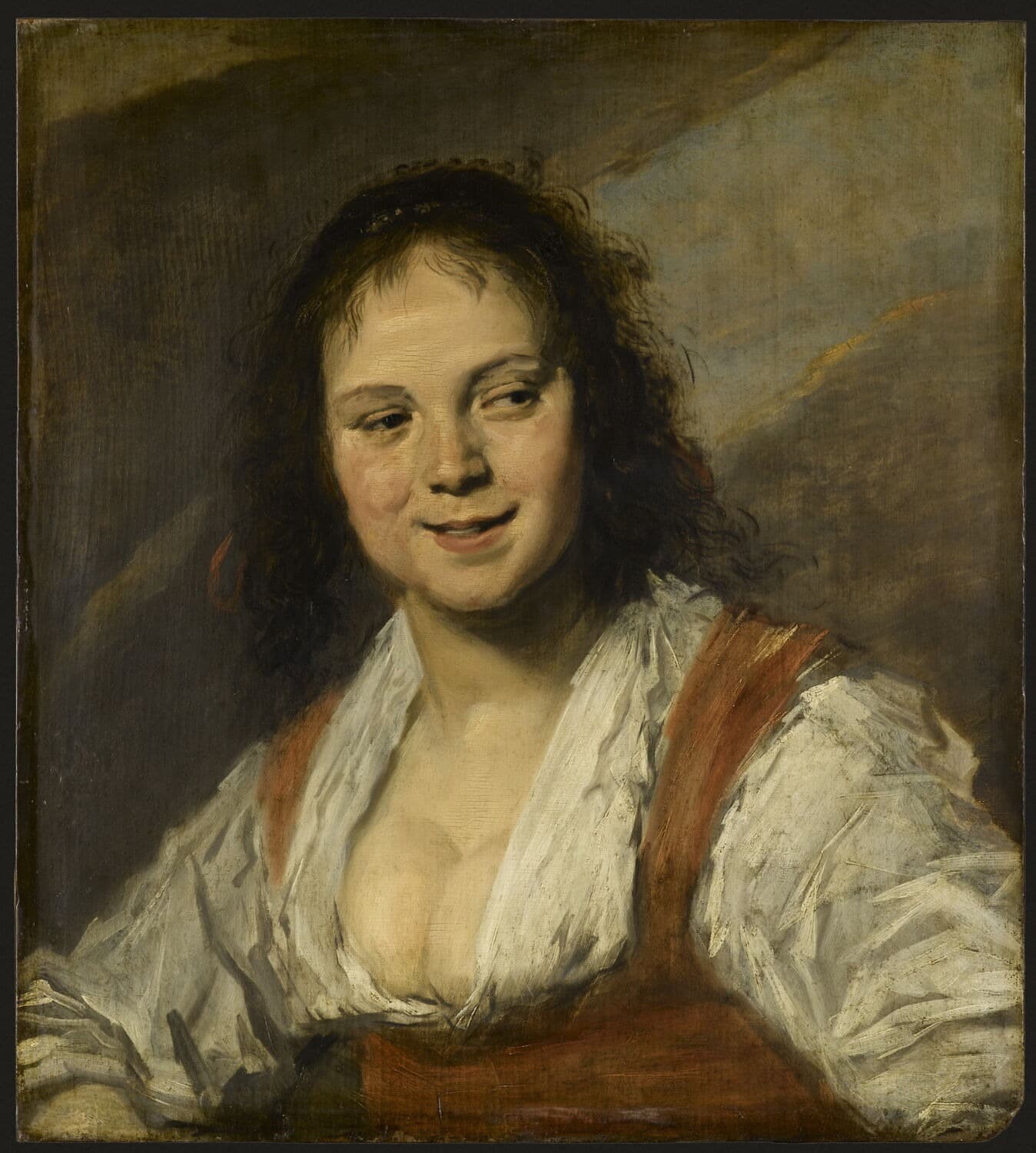
Not a commission but a tronie, a character study made to show off. Hals catches her half-laugh before it has finished.
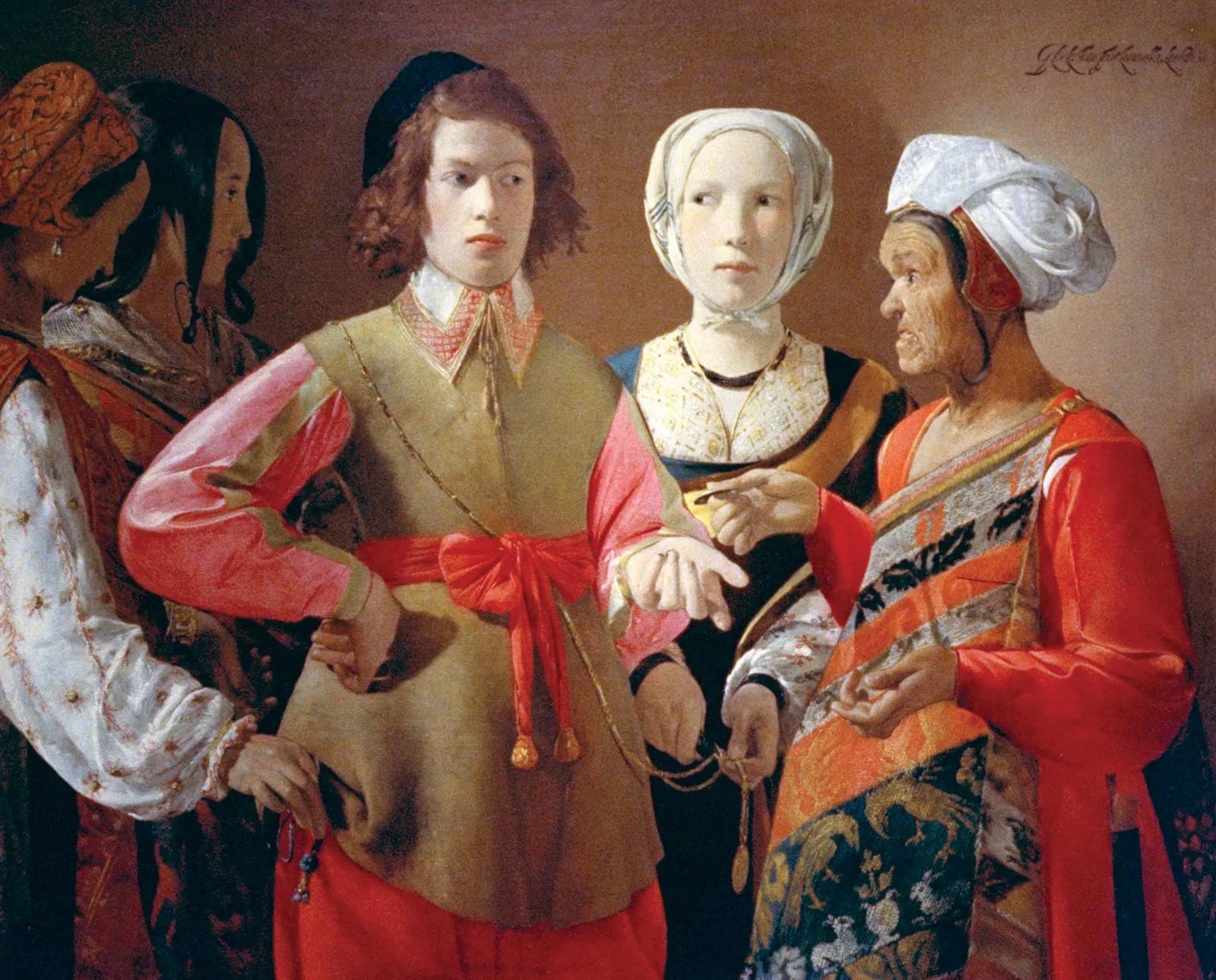
While the old woman reads his palm, three young accomplices are quietly taking his purse and lifting a medal off his neck.

One child hugs her presents while a boy howls because his shoe held nothing but a birch rod, and the grandmother beckons with a secret.

Poussin laid the crowd out like a relief so each gesture reads separately, one woman so hungry she nurses her own mother.

A single unbroken avalanche of bodies falls from a bright heaven at the top into the dark, with demons pulling them down.
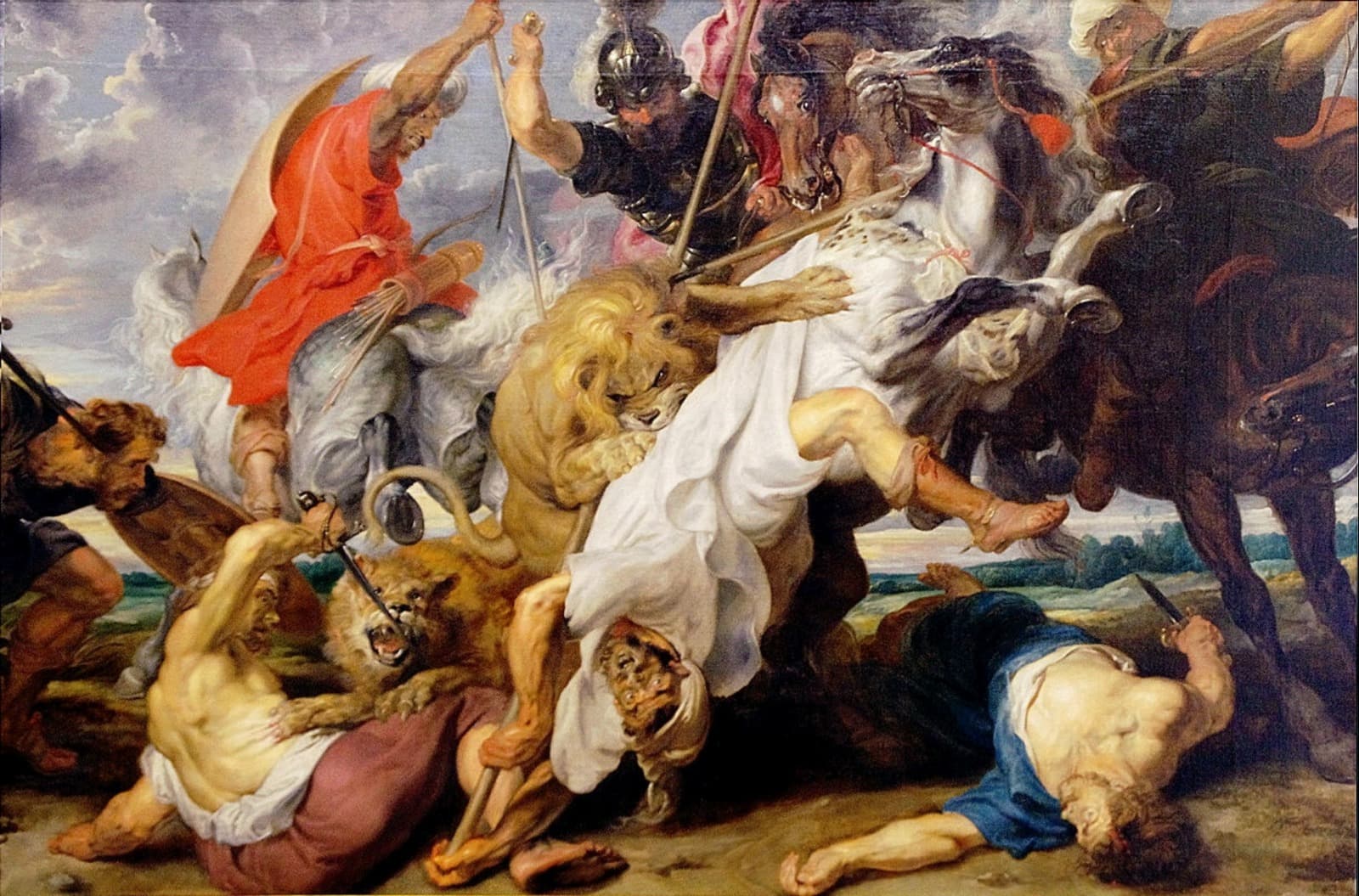
Horses, lions, spears and men knotted into one turning mass, with a rider already thrown and about to be mauled.

An angel grabs Abraham's wrist and the knife is still falling through the air, his hand clamped over the boy's face.

Two shepherds stop at a skull on a plinth and read the words carved there. Guercino used the motto first, decades before Poussin.

Christ as a boy holds a candle for his father and the flame glows red through his fingers, which is the whole subject.
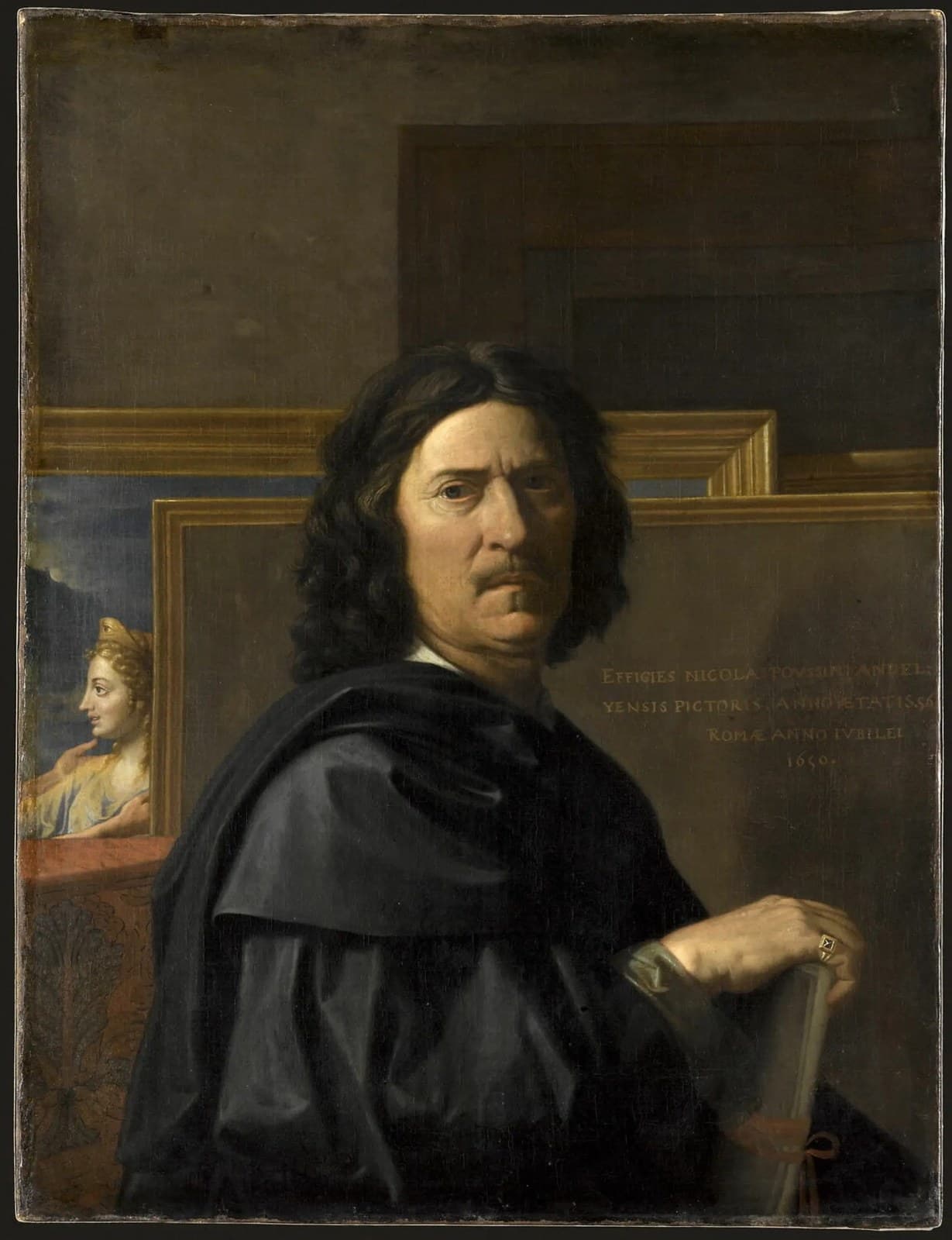
Poussin stands in front of his own blank stretched canvases with a portfolio under his arm, presenting himself as a thinker rather than a craftsman.
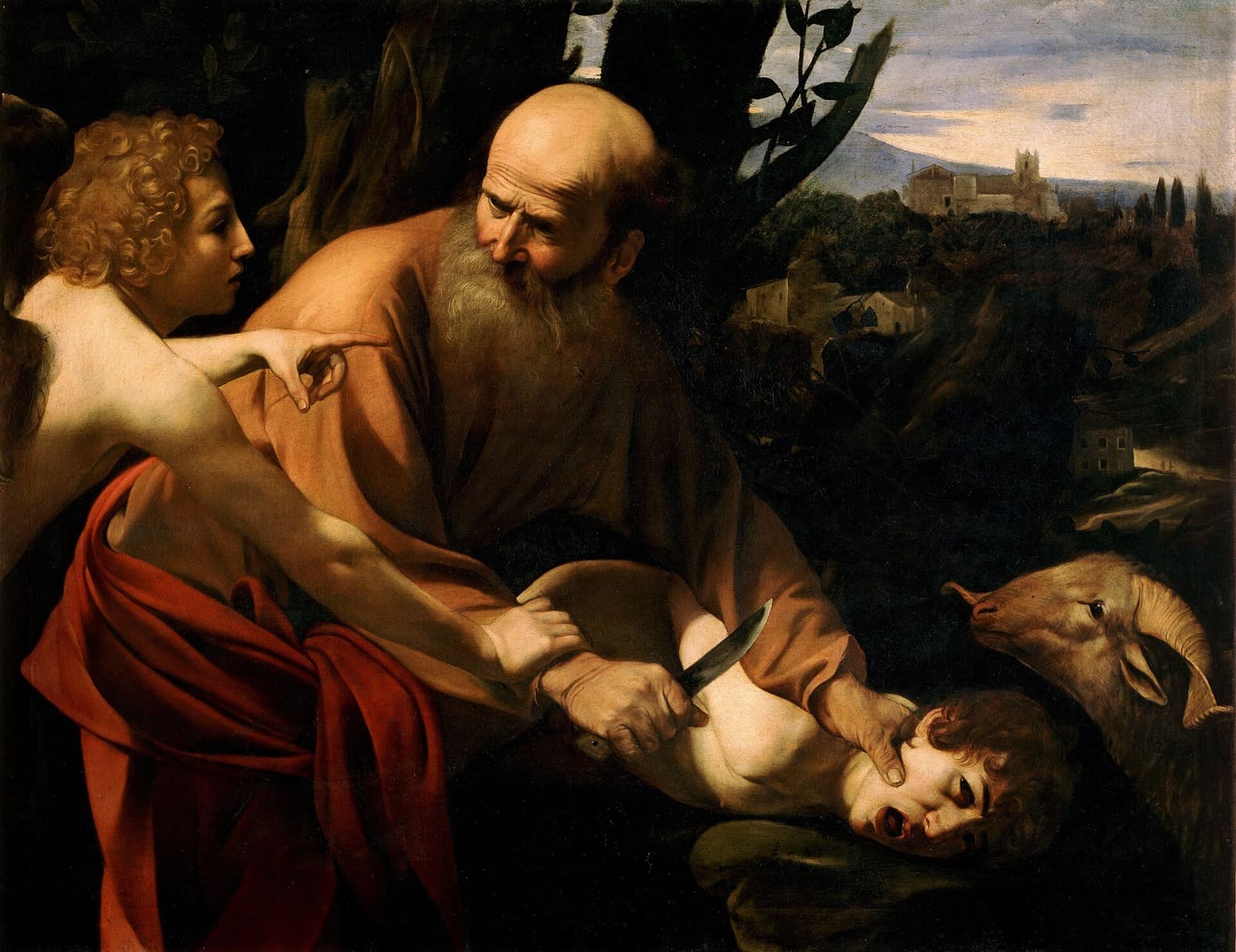
Isaac is shouting under his father's hand and the ram has already arrived at the right. Caravaggio gives the scene no ceremony whatsoever.

Father and Son lower the crown together while the group curves into a soft heart shape. Painted for the Spanish queen's private oratory.

The sleeping apostles are sealed inside a bubble of rock while soldiers wind toward Christ in the distance, all lit by cold moonlight.

No landscape, no story, just a man in patched brown wool holding a skull and one shaft of light finding him in the dark.
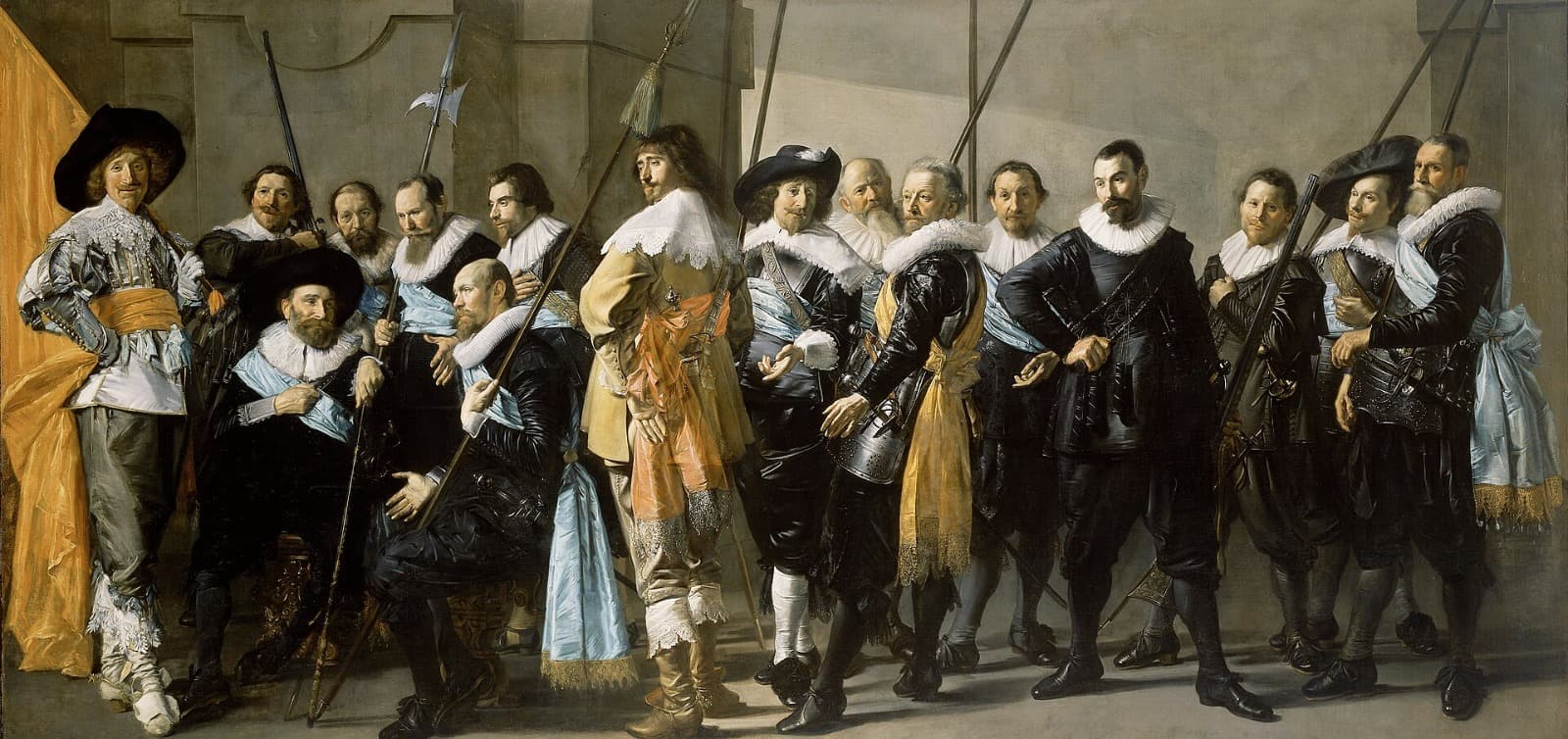
Hals left this militia portrait unfinished and another painter finished the right-hand figures, a join you can still see if you look.
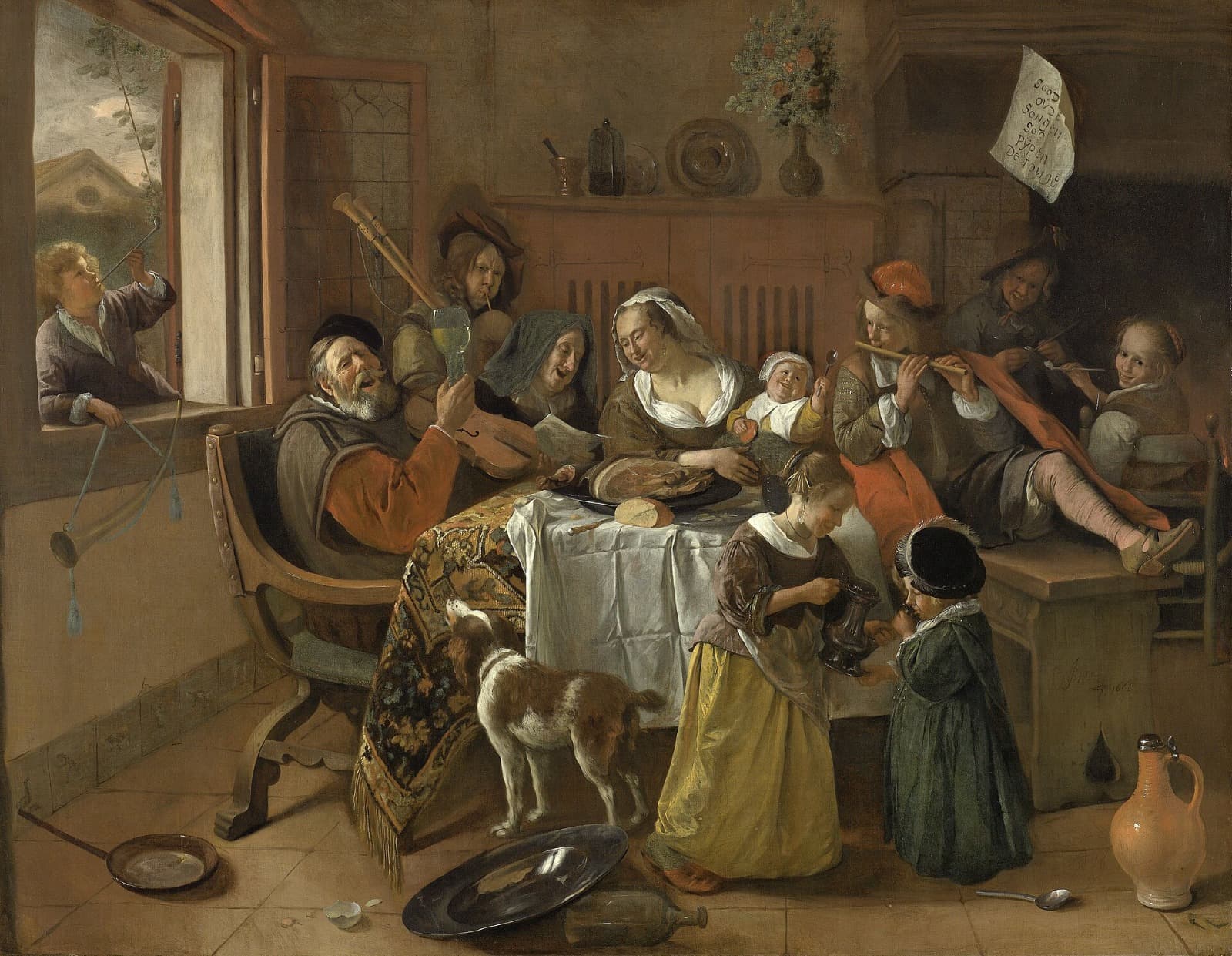
The parents sing and drink and a toddler is handed a pipe. A note in the picture reads: as the old sing, so the young pipe.

Saturn bites into his own infant to stop the prophecy, the star of Saturn overhead. Goya would take the same subject somewhere much worse.

Richelieu appears three times on one canvas so that a sculptor in Rome could carve a bust without ever meeting him.
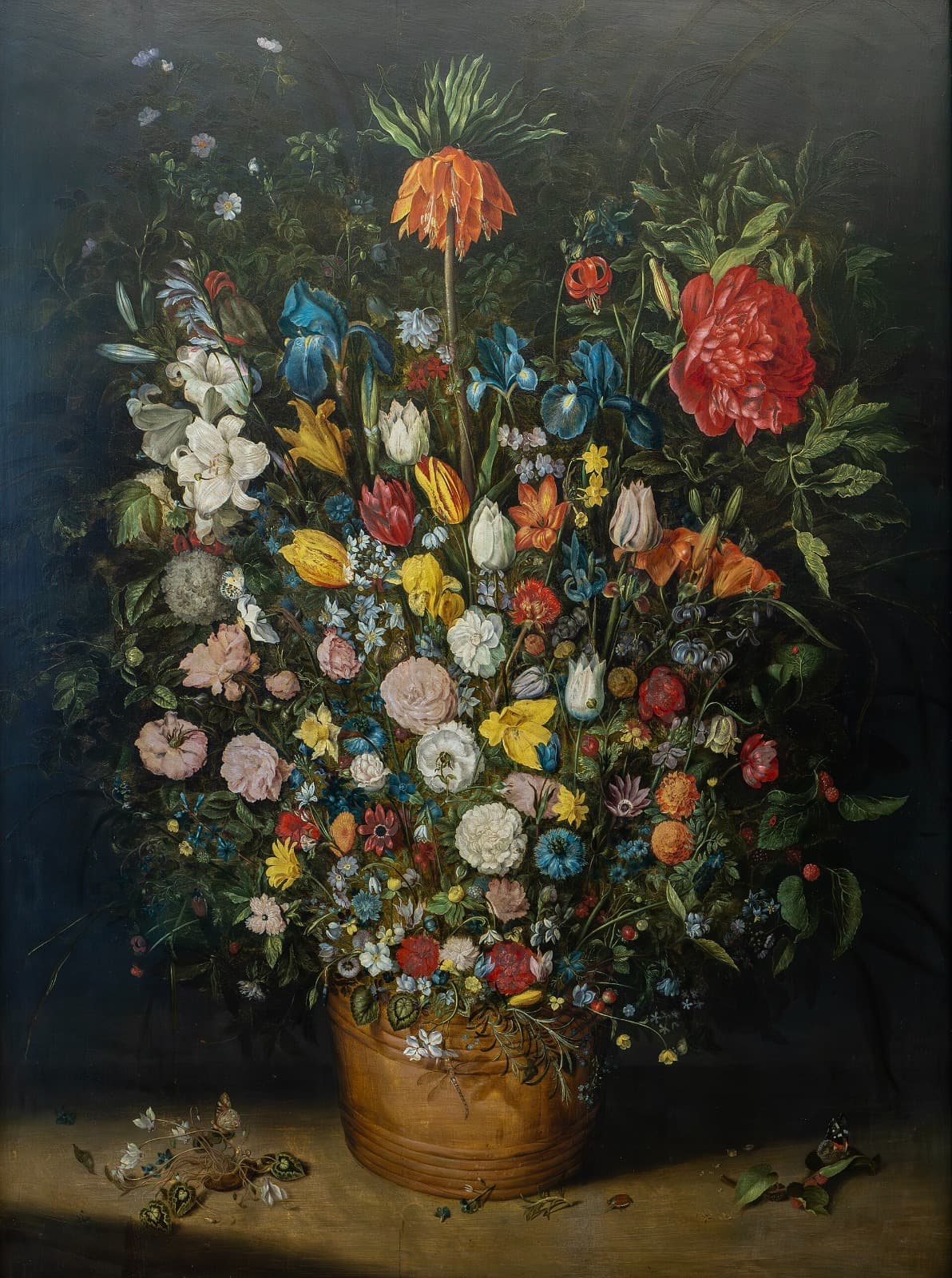
None of these flowers bloom in the same season. Bruegel assembled the bouquet from studies made across the whole year, and let petals droop.

Hundreds of tiny figures skating, sledging and falling over on one frozen river. Avercamp was deaf and mute and known as the mute of Kampen.

Rubens came back to the subject nearly thirty years later with the same fury and a much broader, more fluent hand.
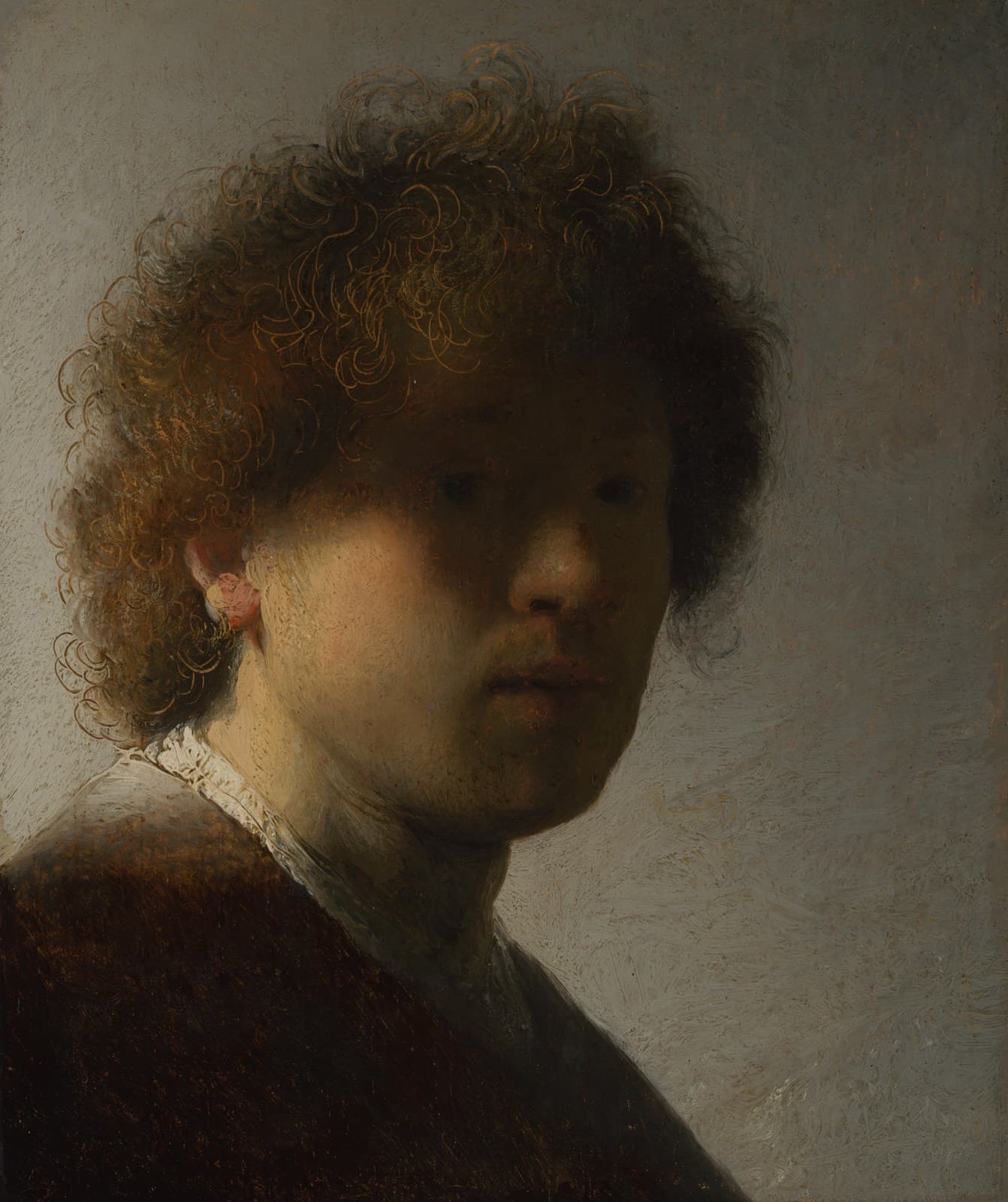
Rembrandt was barely in his twenties and using his own face as a laboratory for light. Dozens more would follow over forty years.
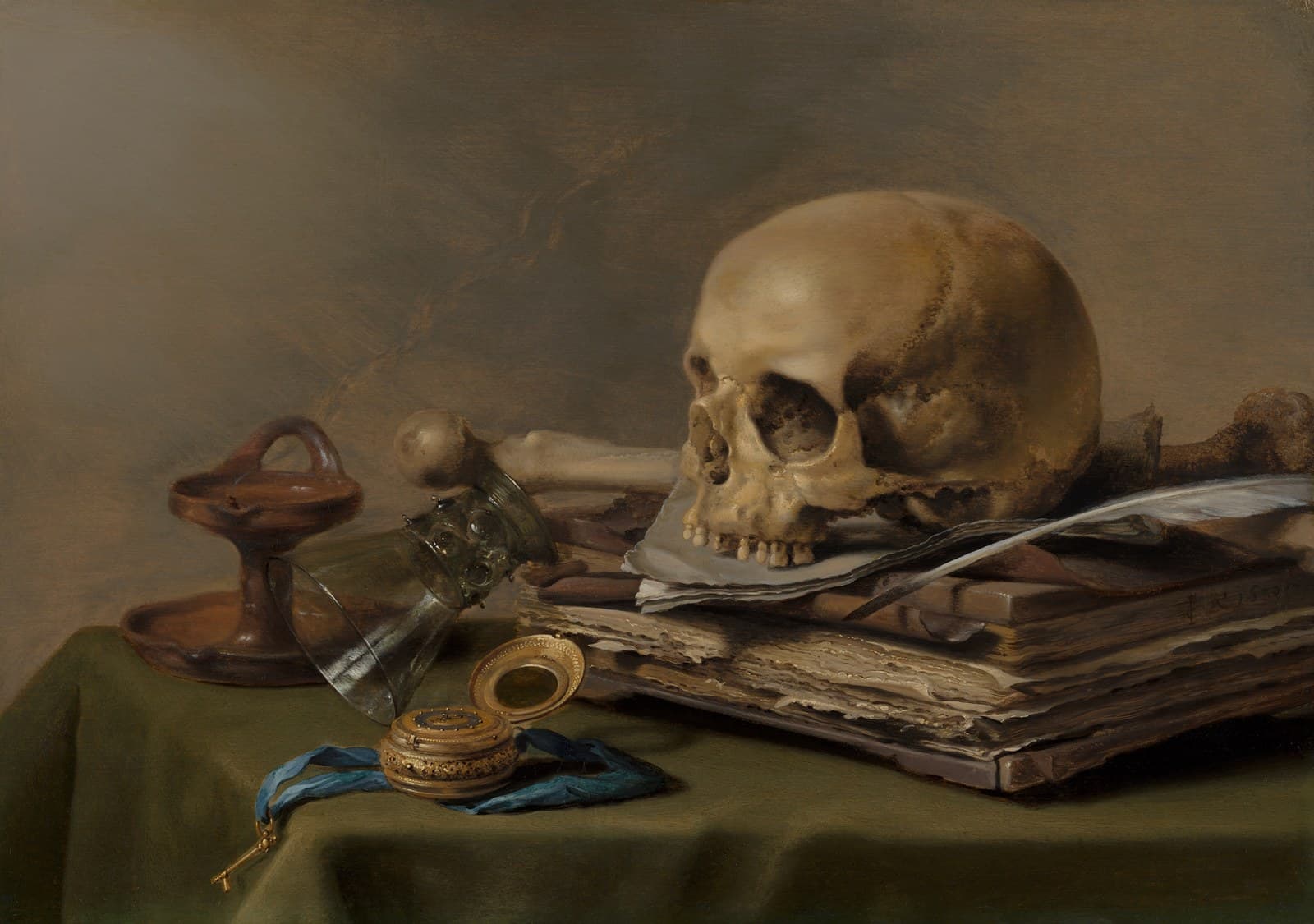
A toppled glass, a lamp still smoking, a watch and a skull, all painted in browns and greys so the light does the work.
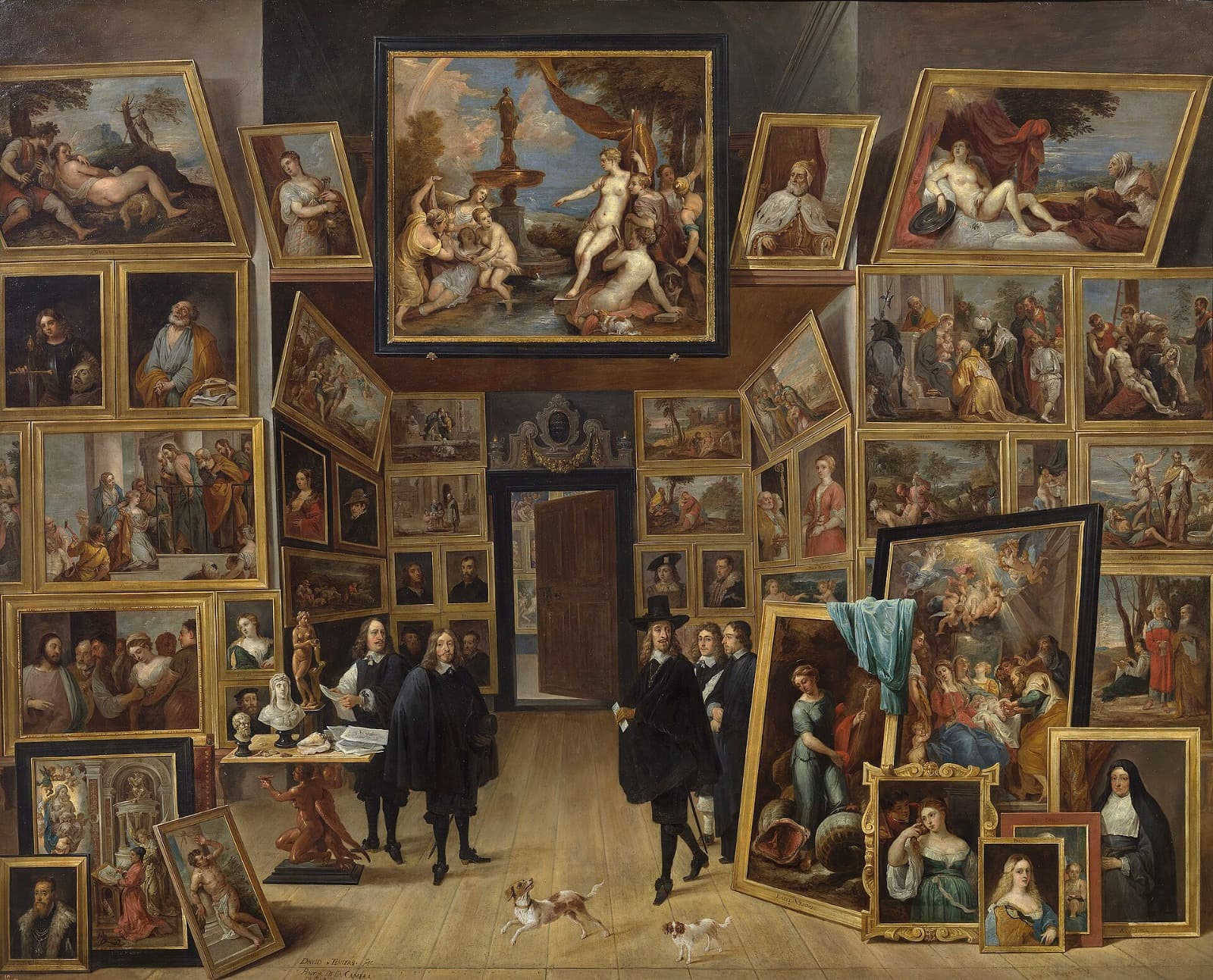
Teniers was the archduke's curator, and he painted the walls tiled with identifiable Titians and Giorgiones as a kind of catalogue.

A child-angel leans toward the sleeping old man, its small fingers glowing translucent where they pass in front of the candle flame.
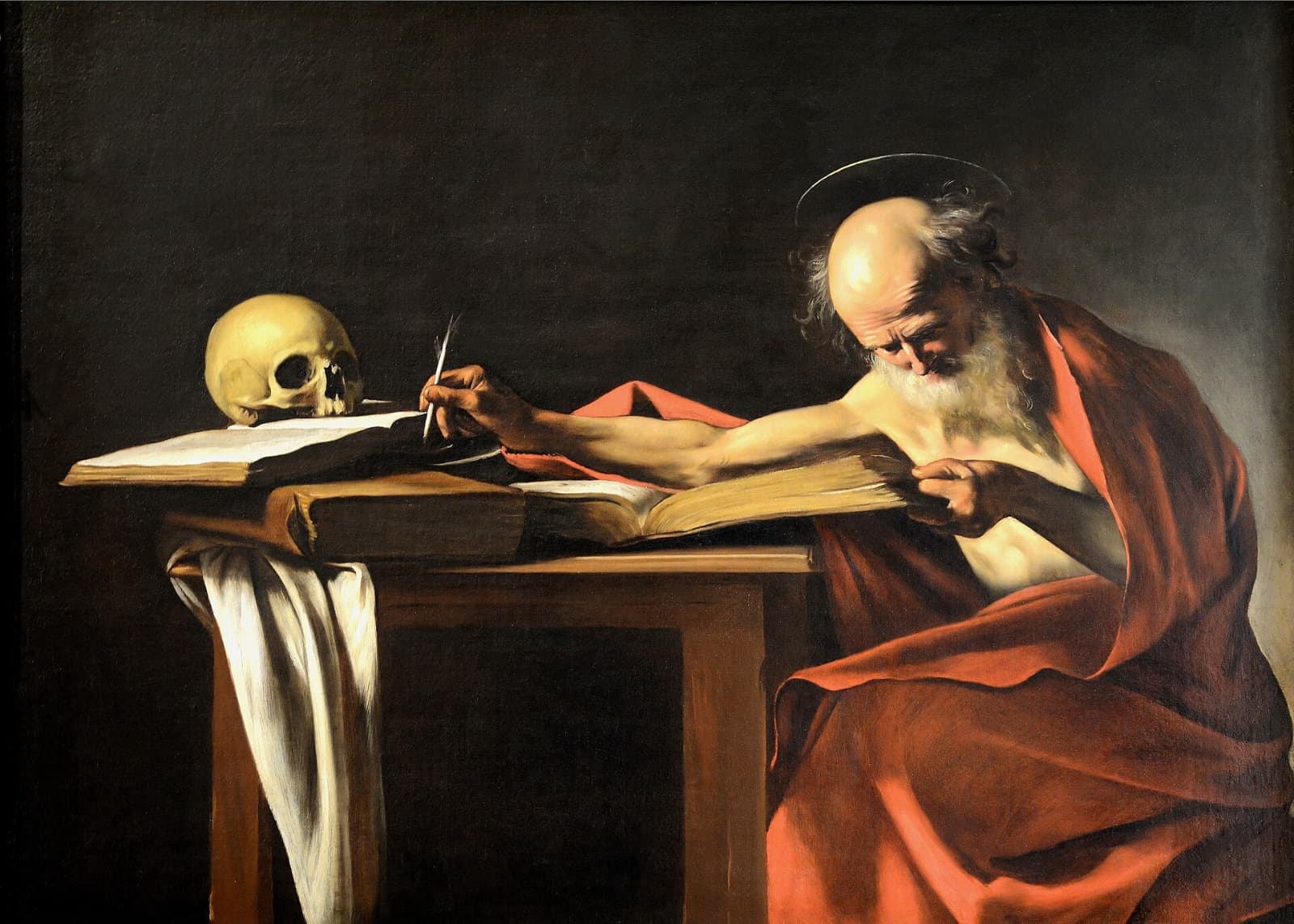
Jerome reaches across the table for the inkpot with a skull holding down his papers. Scholarship as physical labor, in a single hard light.
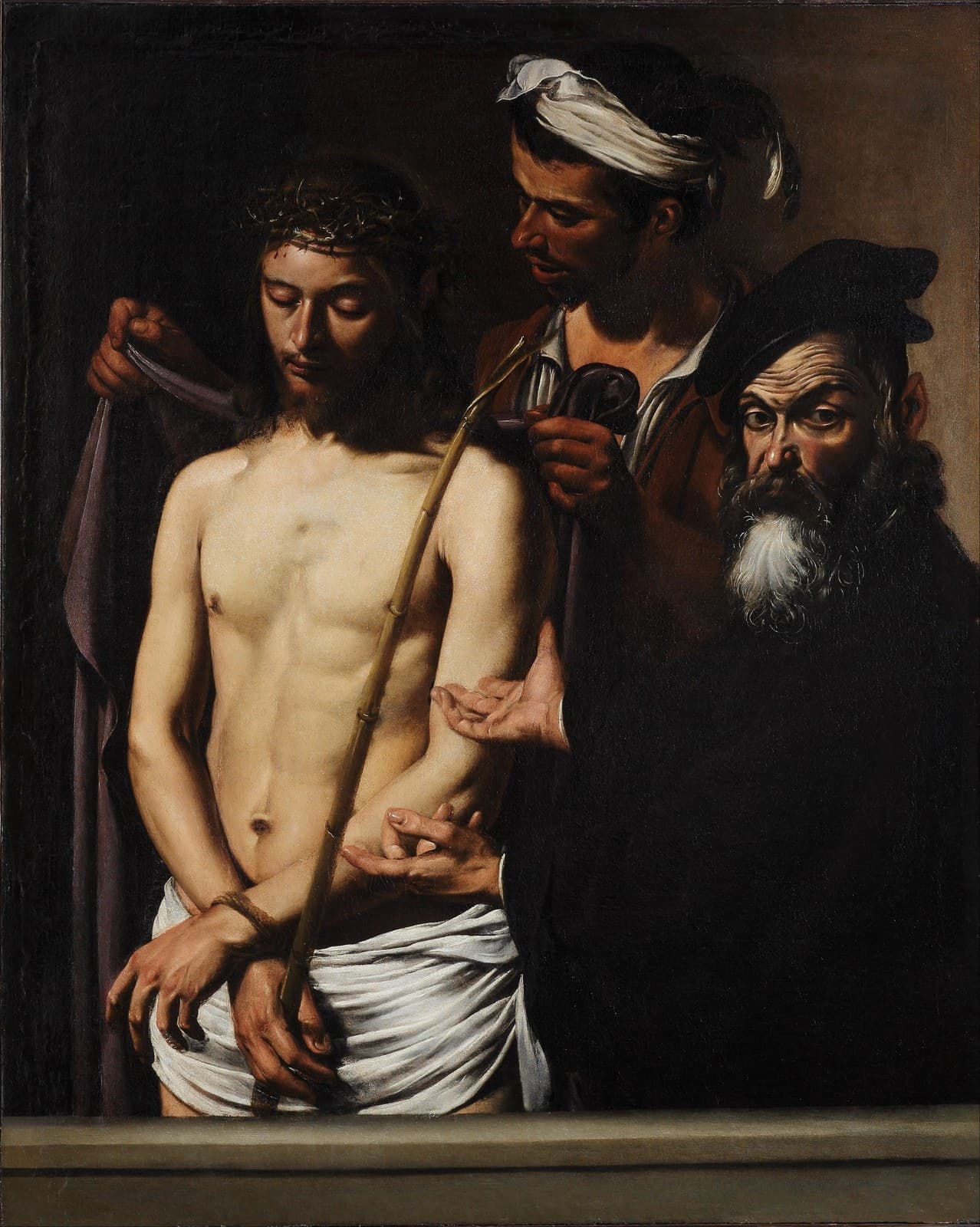
Three figures in a shallow dark box, and Caravaggio puts you where the crowd stood, having to decide what to do with him.

Ascanius draws his bow on a tame stag, the shot that starts a war in the Aeneid, and Claude paints it as a calm golden evening.

Rubens painted this descent years after the Antwerp one, and the two together show him reworking the same falling body across a career.

The horse and the groom take up most of the canvas and neither notices anything. The miracle happens entirely inside the man on the ground.
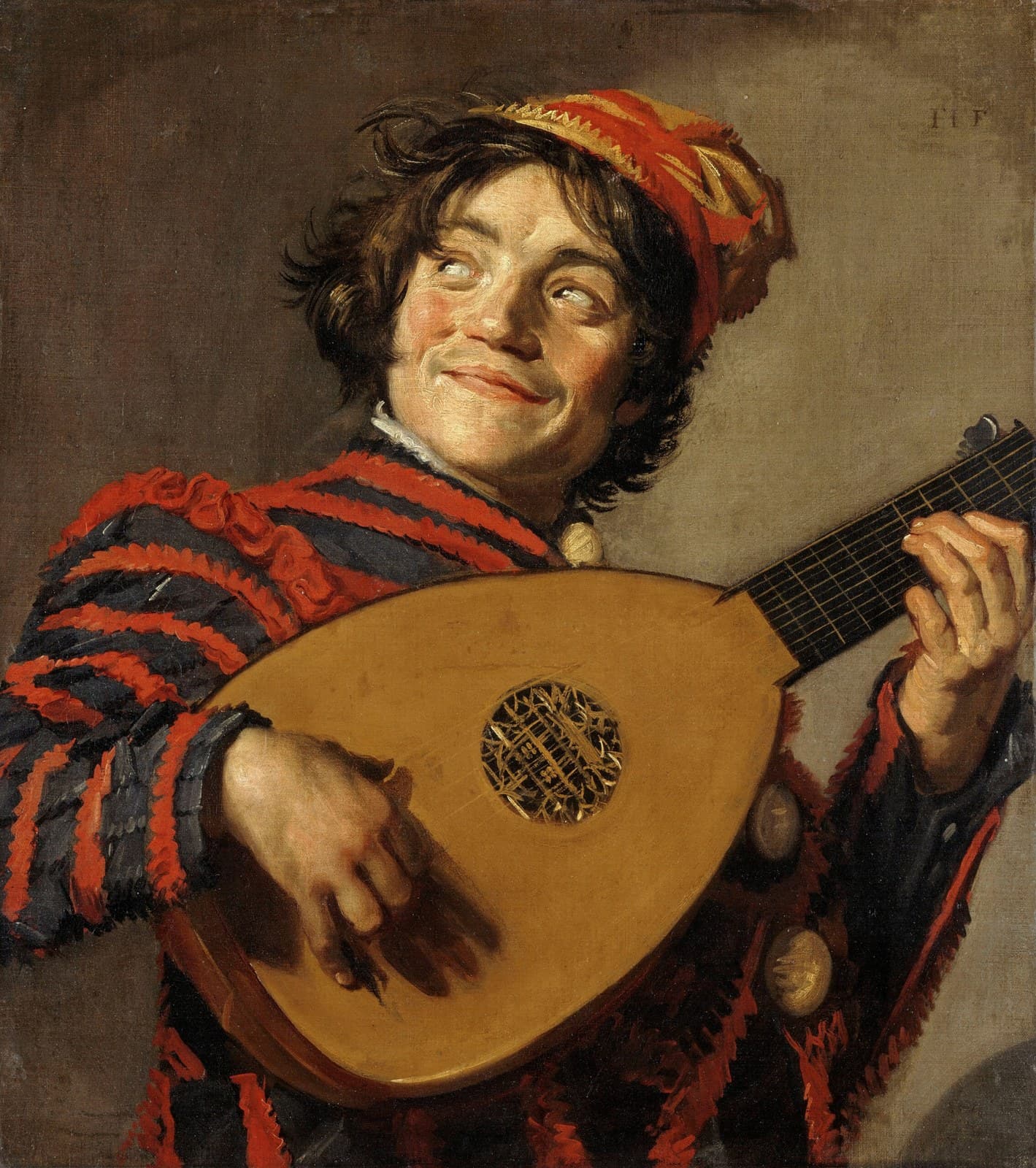
Caught mid-strum with his cap askew and his mouth open, painted so fast the brushstrokes still seem to be moving.