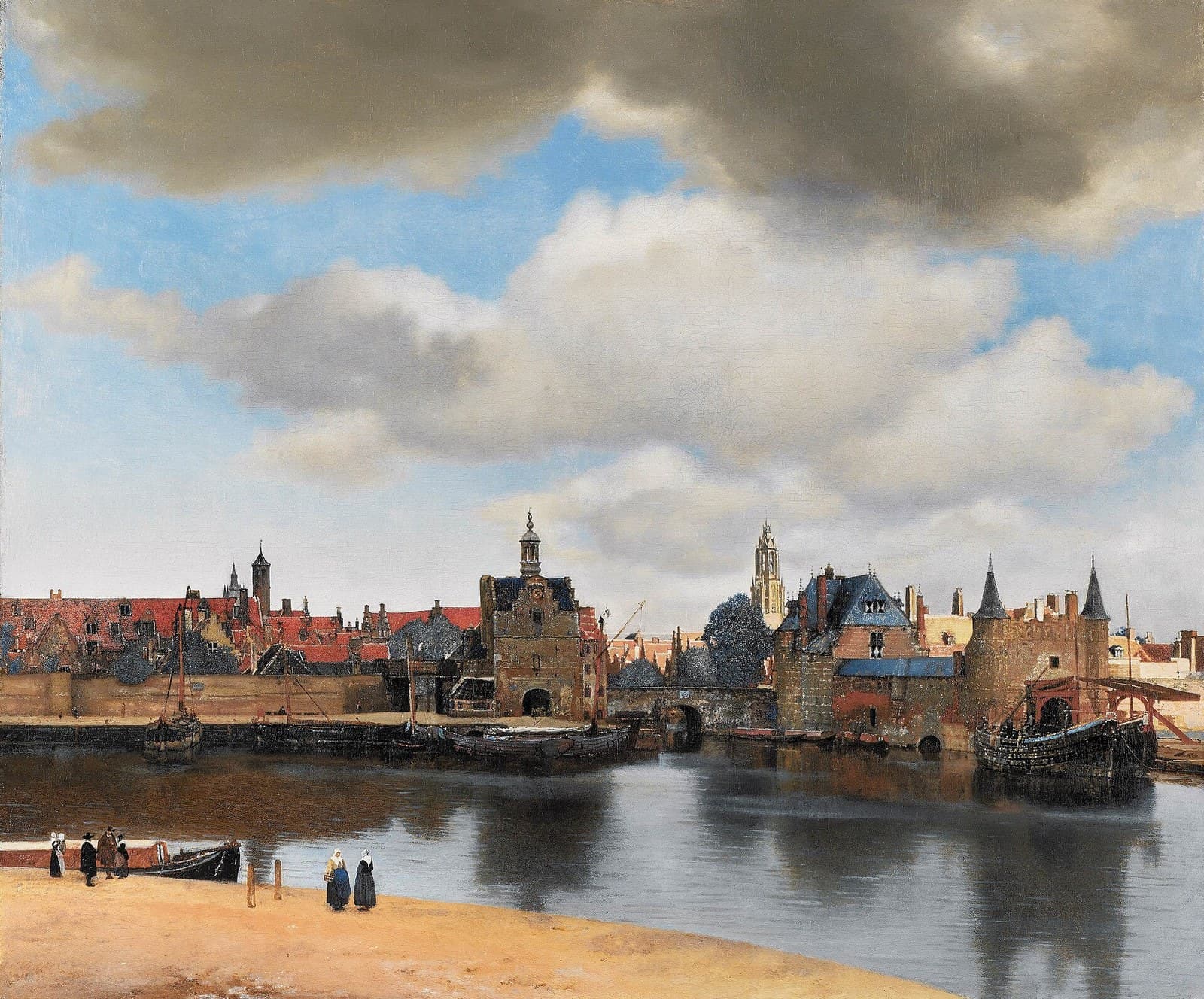
View of Delft
1660 · Mauritshuis, The Hague
Vermeer painted his own city from across the harbor, almost his only townscape. Proust called it the most beautiful painting in the world.
★ 9.3
 skopia
Vermeer painted his own city from across the harbor, almost his only townscape. Proust called it the most beautiful painting in the world.

The son kneels with his shorn head against his father's chest and the old man's hands come down on his back. Rembrandt painted it near death.

Not a portrait of anyone in particular but a tronie, a study of a type, which somehow made her the most looked-at girl in art.
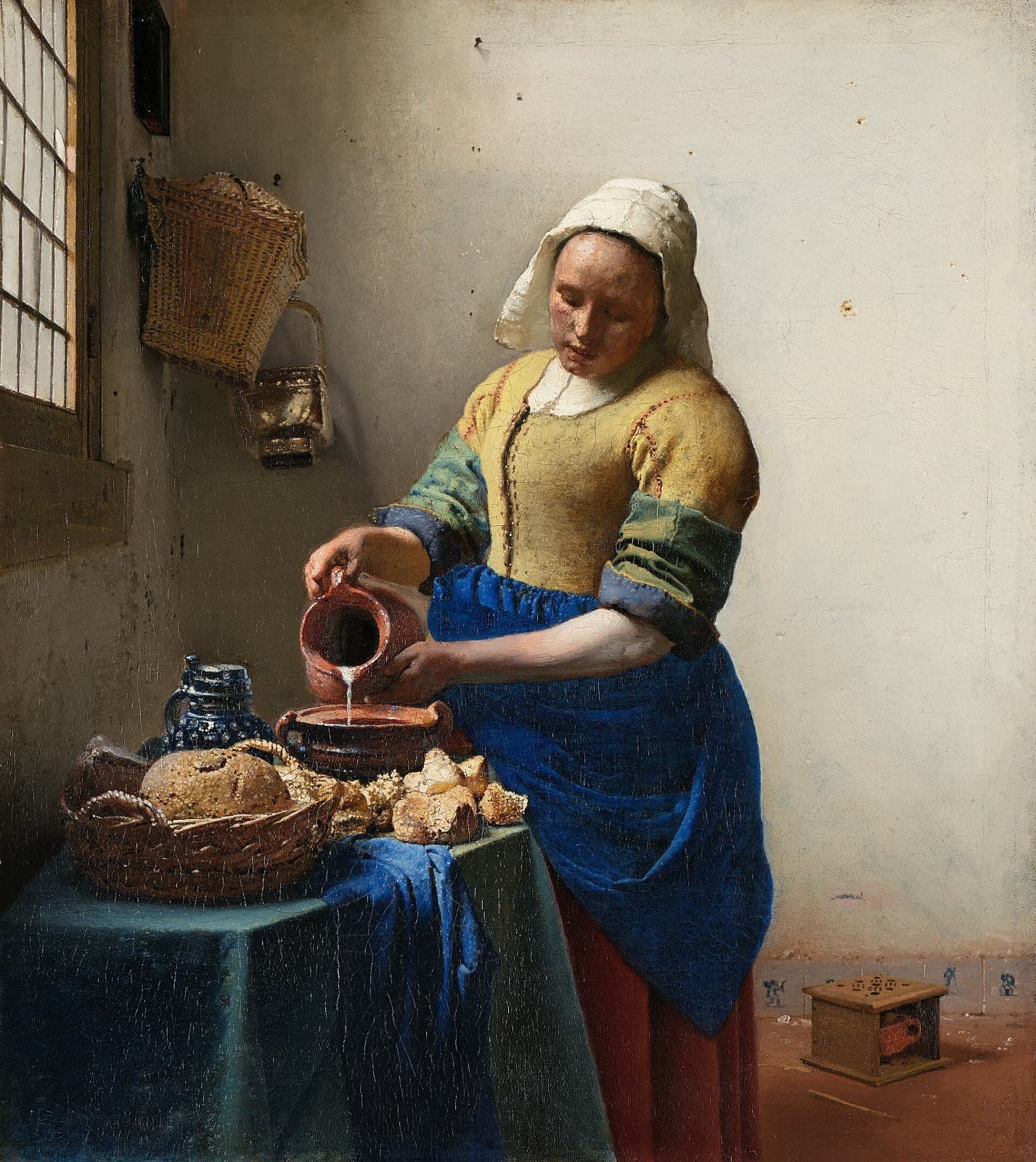
A kitchen maid pours a thin stream of milk in ordinary daylight, given the weight and stillness usually reserved for saints.

Vermeer never sold this one. The model poses as Clio, muse of history, with a great map of the Netherlands filling the wall behind.
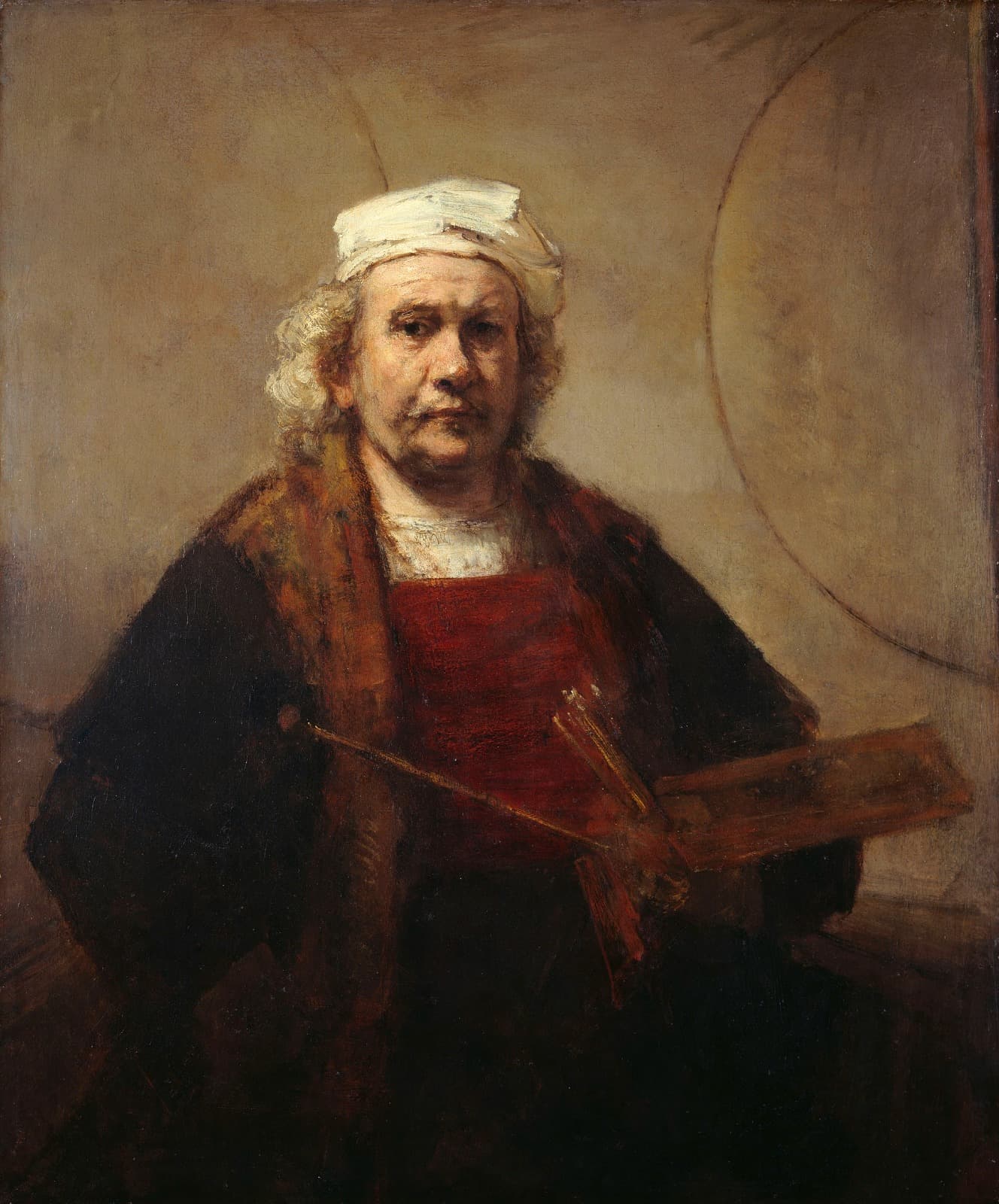
The old painter holds his brushes and palette, and behind him two large arcs are drawn on the wall that nobody has explained.

The scales in her hand are empty and perfectly level, and the painting on the wall behind her is a Last Judgment.

One hand on the pitcher, one on the window latch, and morning light coming through onto a white cap. Nothing happens, perfectly.

The officer's hat and back loom enormous in the foreground while the girl sits small and bright beyond, which is exactly how the eye works.

One child hugs her presents while a boy howls because his shoe held nothing but a birch rod, and the grandmother beckons with a secret.

No landscape, no story, just a man in patched brown wool holding a skull and one shaft of light finding him in the dark.
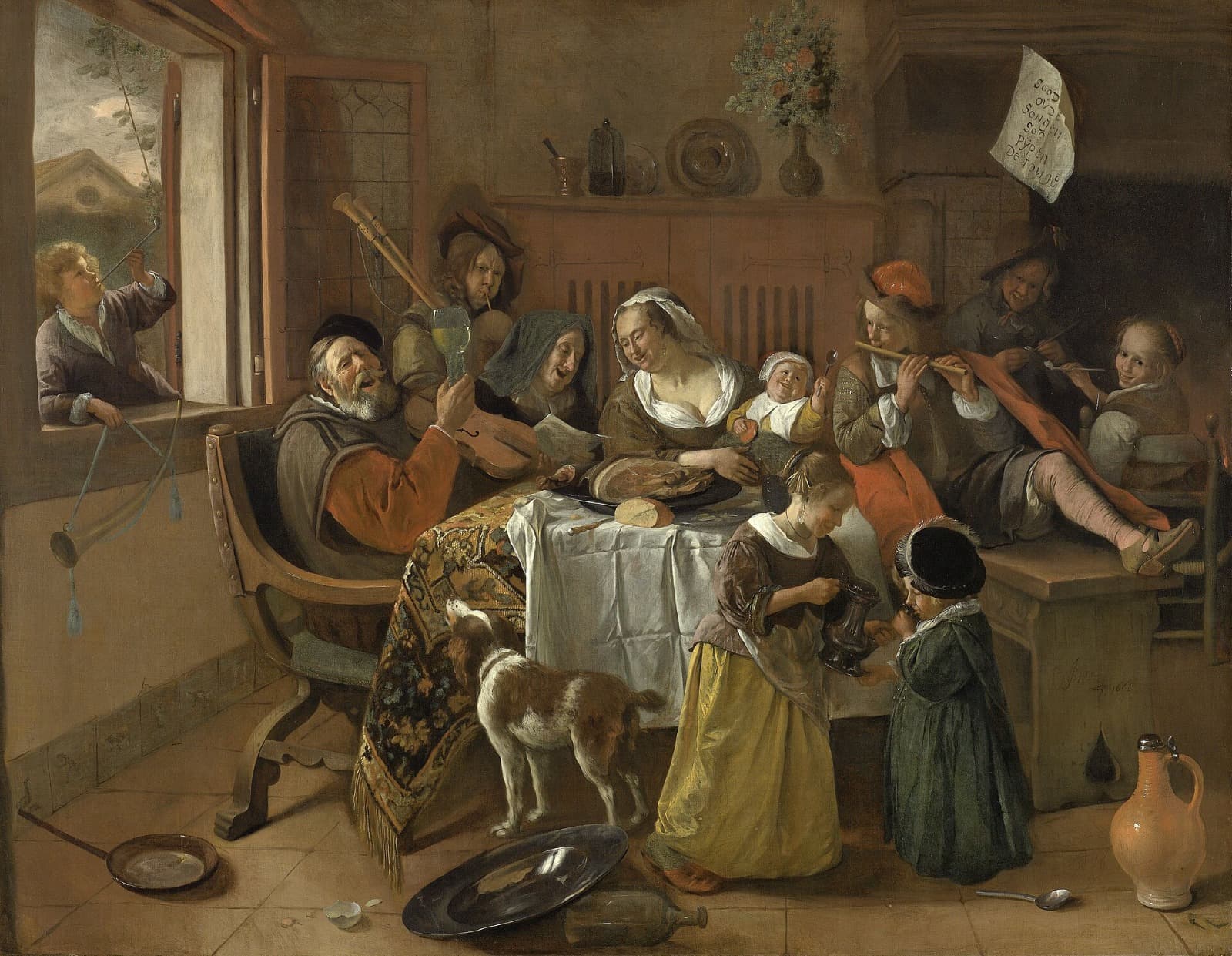
The parents sing and drink and a toddler is handed a pipe. A note in the picture reads: as the old sing, so the young pipe.