
The Calling of St. Matthew
1600 · San Luigi dei Francsei, Rome
Light follows Christ's pointing hand across a dim counting-room to Matthew, who gestures at himself in disbelief. The picture made Caravaggio famous overnight.
★ 9.0
 skopia
Light follows Christ's pointing hand across a dim counting-room to Matthew, who gestures at himself in disbelief. The picture made Caravaggio famous overnight.

The only canvas Caravaggio ever signed, and he signed it in the blood running from the saint's throat, for the knights of Malta.

Caravaggio's first attempt at the subject, turned down by the patron, before he threw out the angels and left one man, one horse and the light.
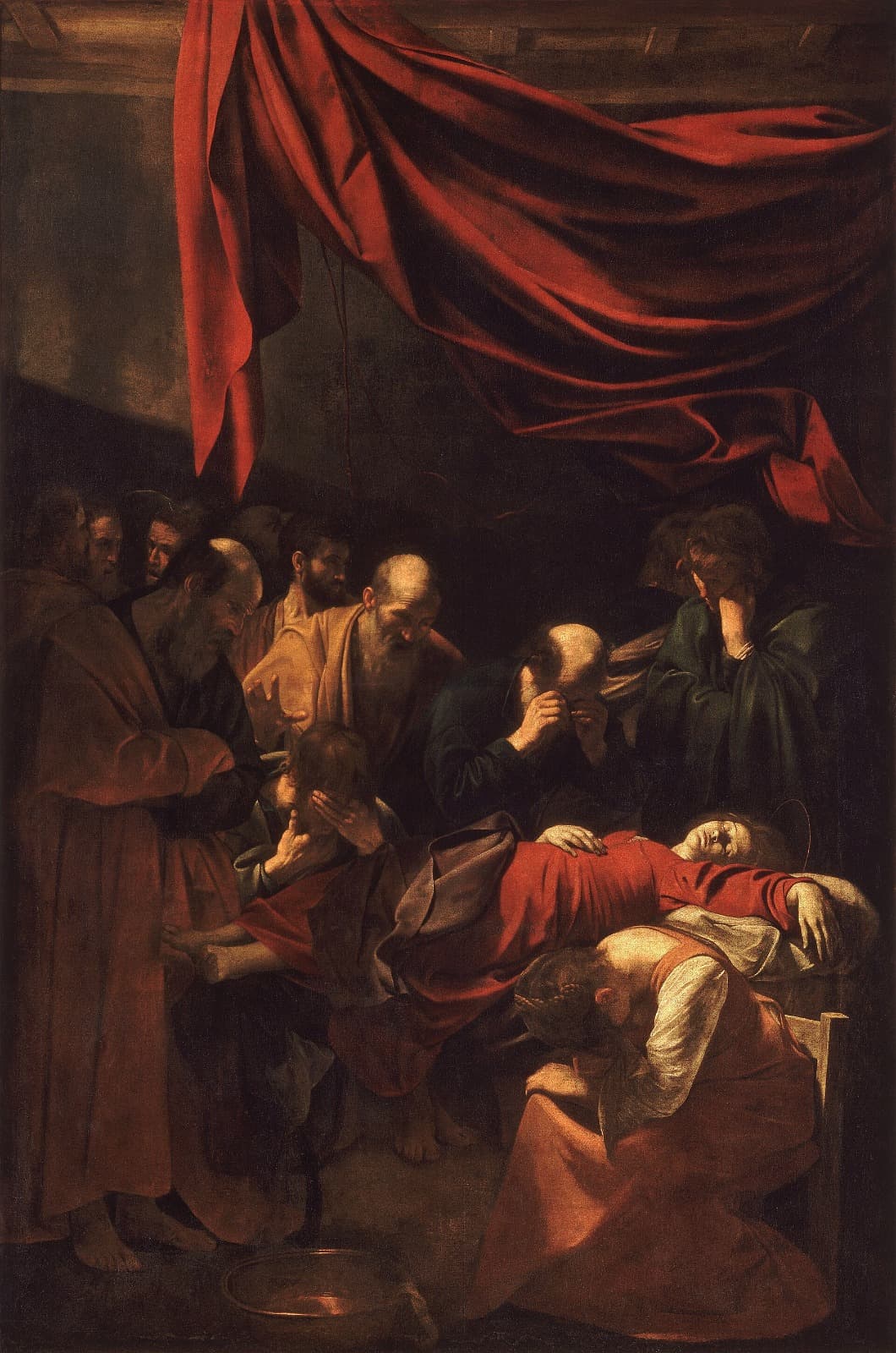
The Virgin lies barefoot and swollen like any corpse. The church that ordered it refused delivery, and Rubens told his duke to buy it.
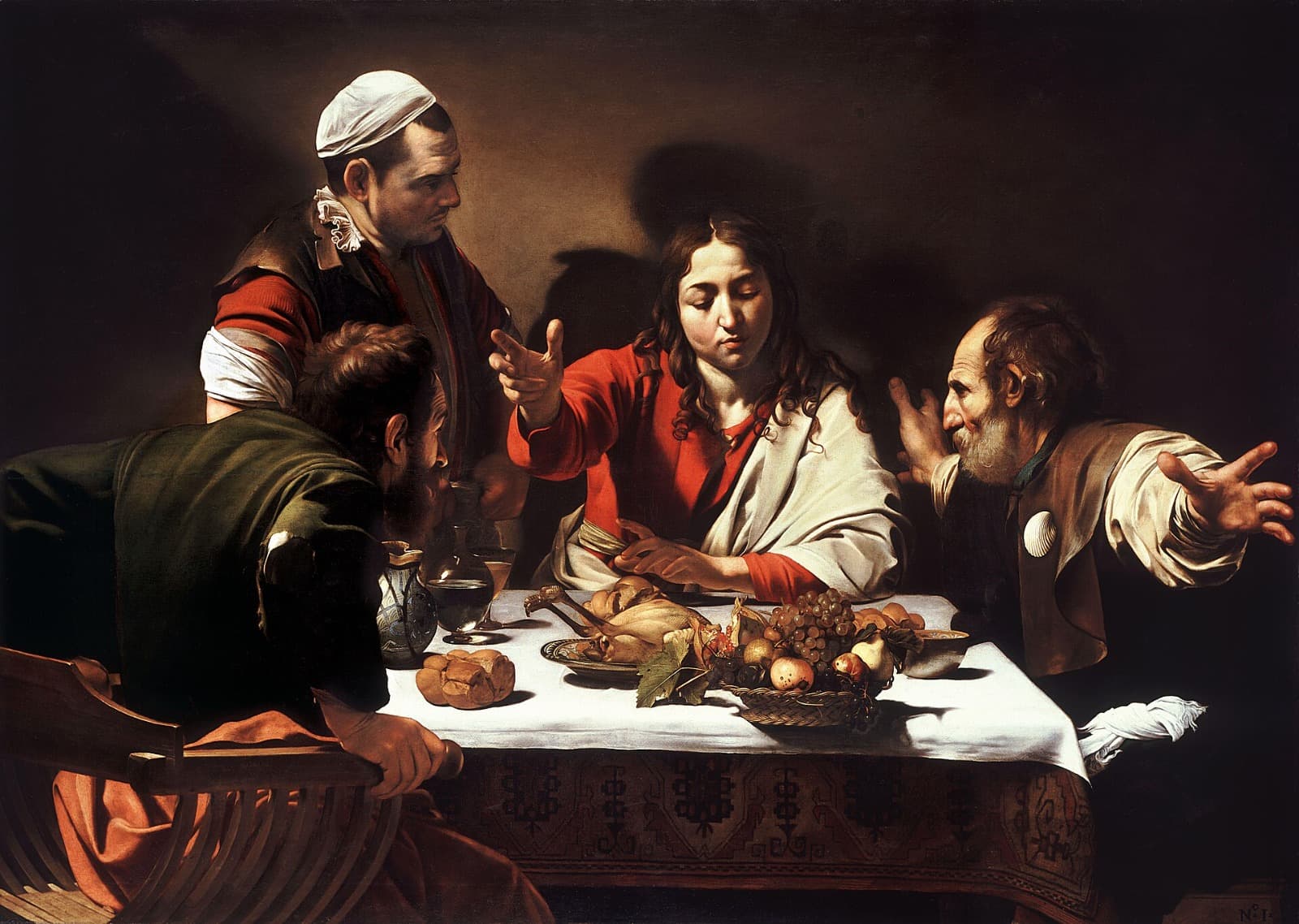
One disciple grips his chair to stand and the other throws his arms wide, while a fruit basket teeters off the edge toward us.
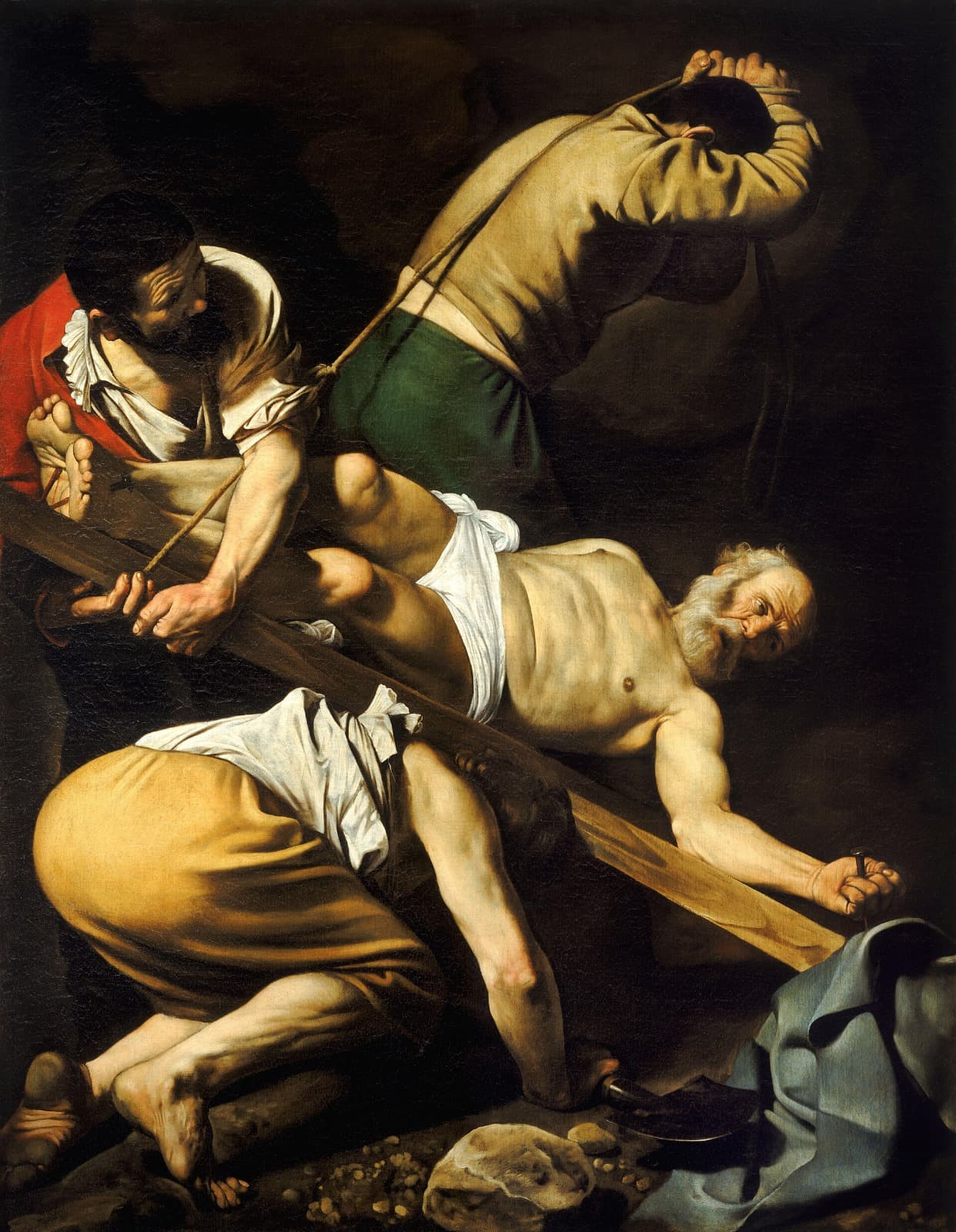
Three laborers strain to lever the cross upright with Peter nailed to it upside down. No crowd, no glory, just heavy work in the dark.

The corner of the stone slab juts out of the picture so the body looks about to be laid down in the room with you.

Thomas pushes his finger into the wound and two apostles lean in to watch, brows knotted, close enough to crowd the frame.

The holy family is tiny and the landscape does everything, which is the arrangement Poussin and Claude would build whole careers on.
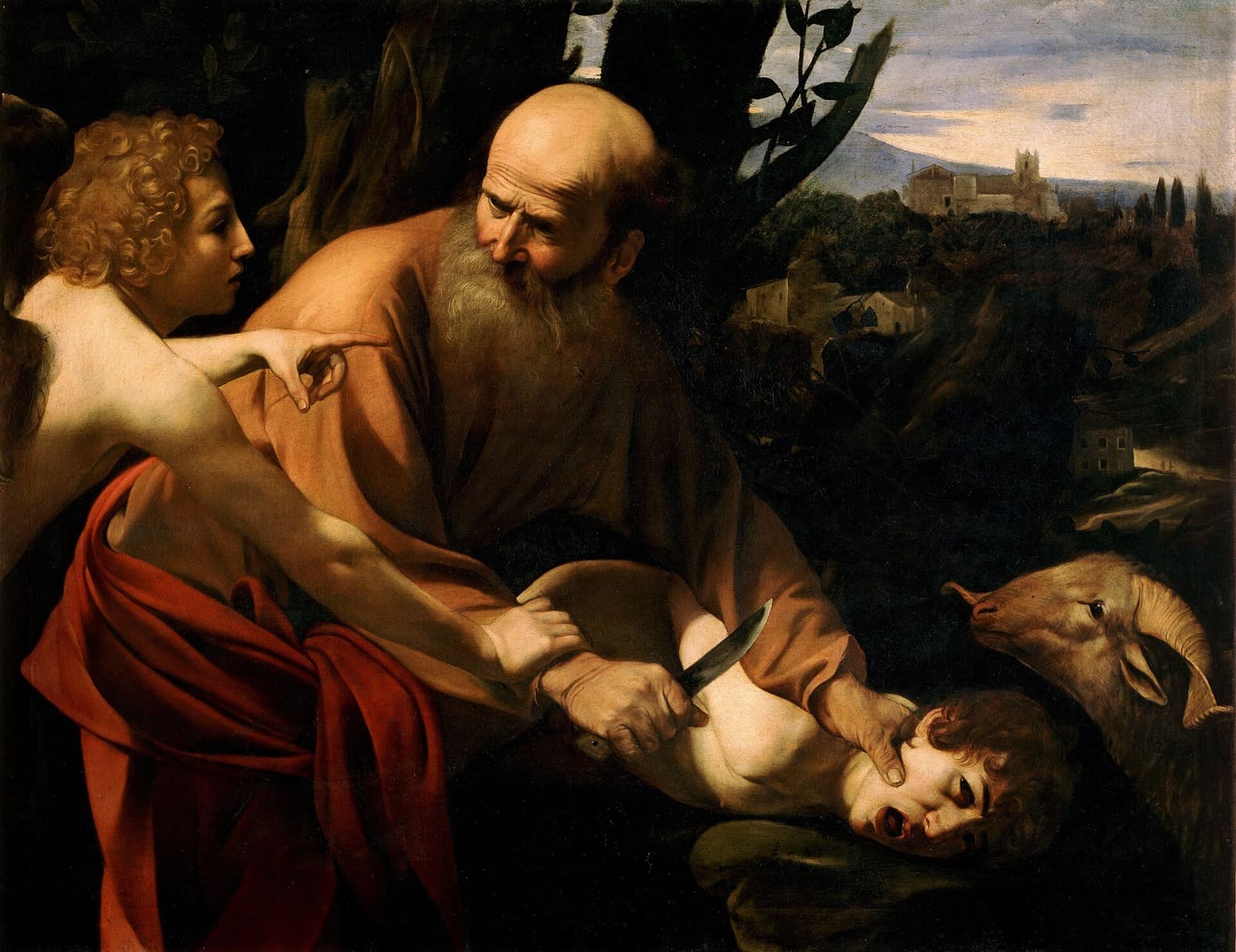
Isaac is shouting under his father's hand and the ram has already arrived at the right. Caravaggio gives the scene no ceremony whatsoever.

The sleeping apostles are sealed inside a bubble of rock while soldiers wind toward Christ in the distance, all lit by cold moonlight.
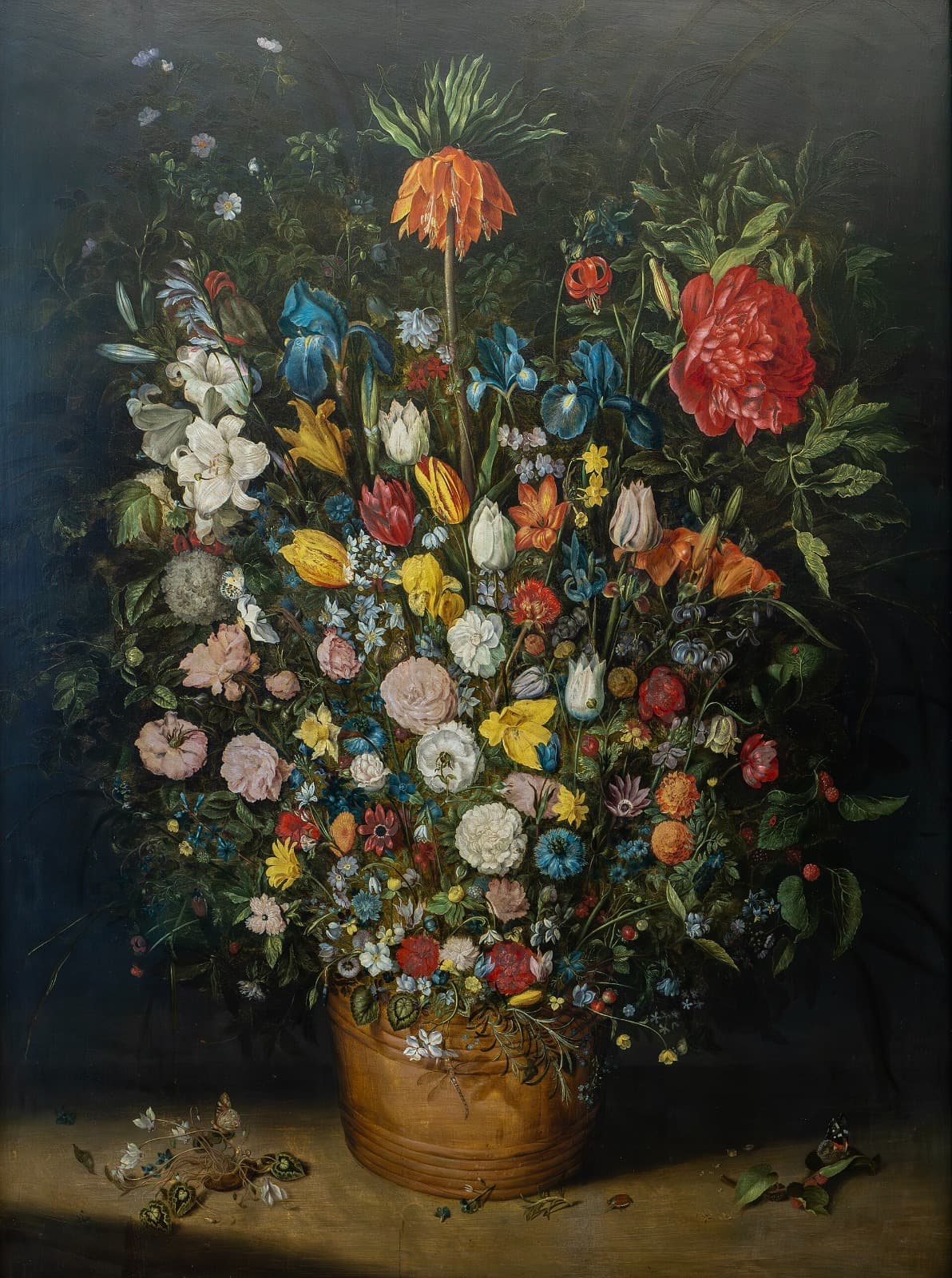
None of these flowers bloom in the same season. Bruegel assembled the bouquet from studies made across the whole year, and let petals droop.

Hundreds of tiny figures skating, sledging and falling over on one frozen river. Avercamp was deaf and mute and known as the mute of Kampen.
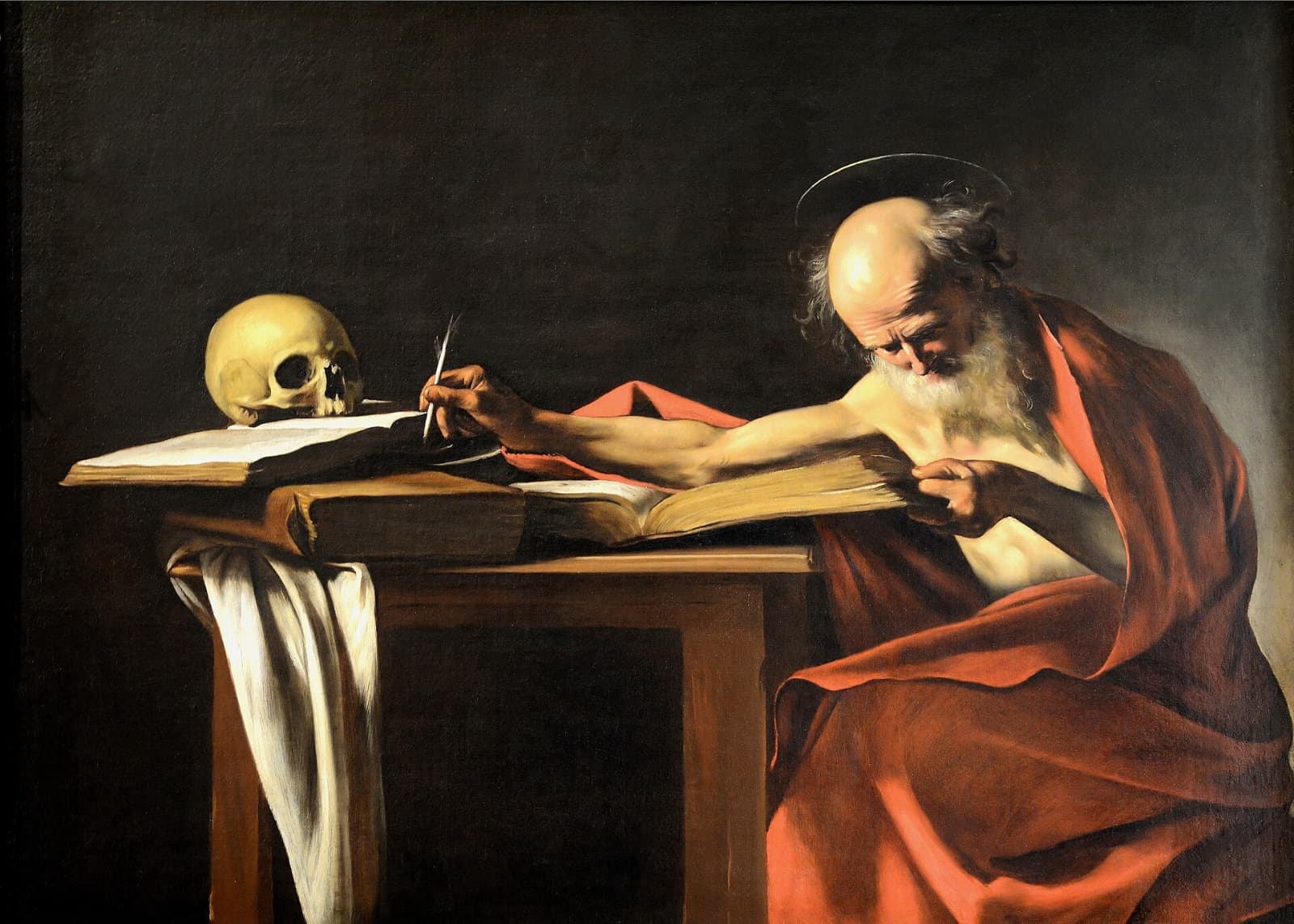
Jerome reaches across the table for the inkpot with a skull holding down his papers. Scholarship as physical labor, in a single hard light.
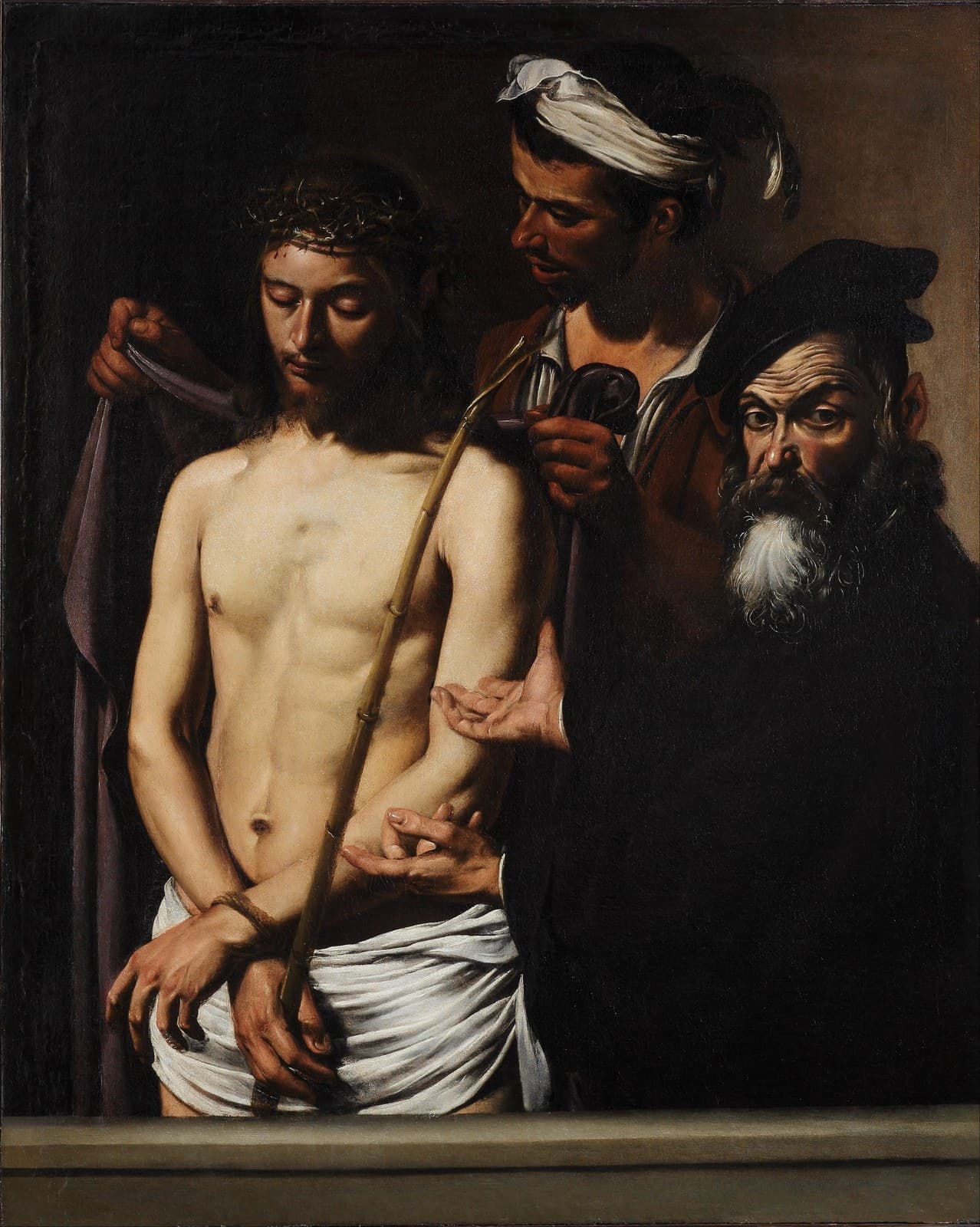
Three figures in a shallow dark box, and Caravaggio puts you where the crowd stood, having to decide what to do with him.
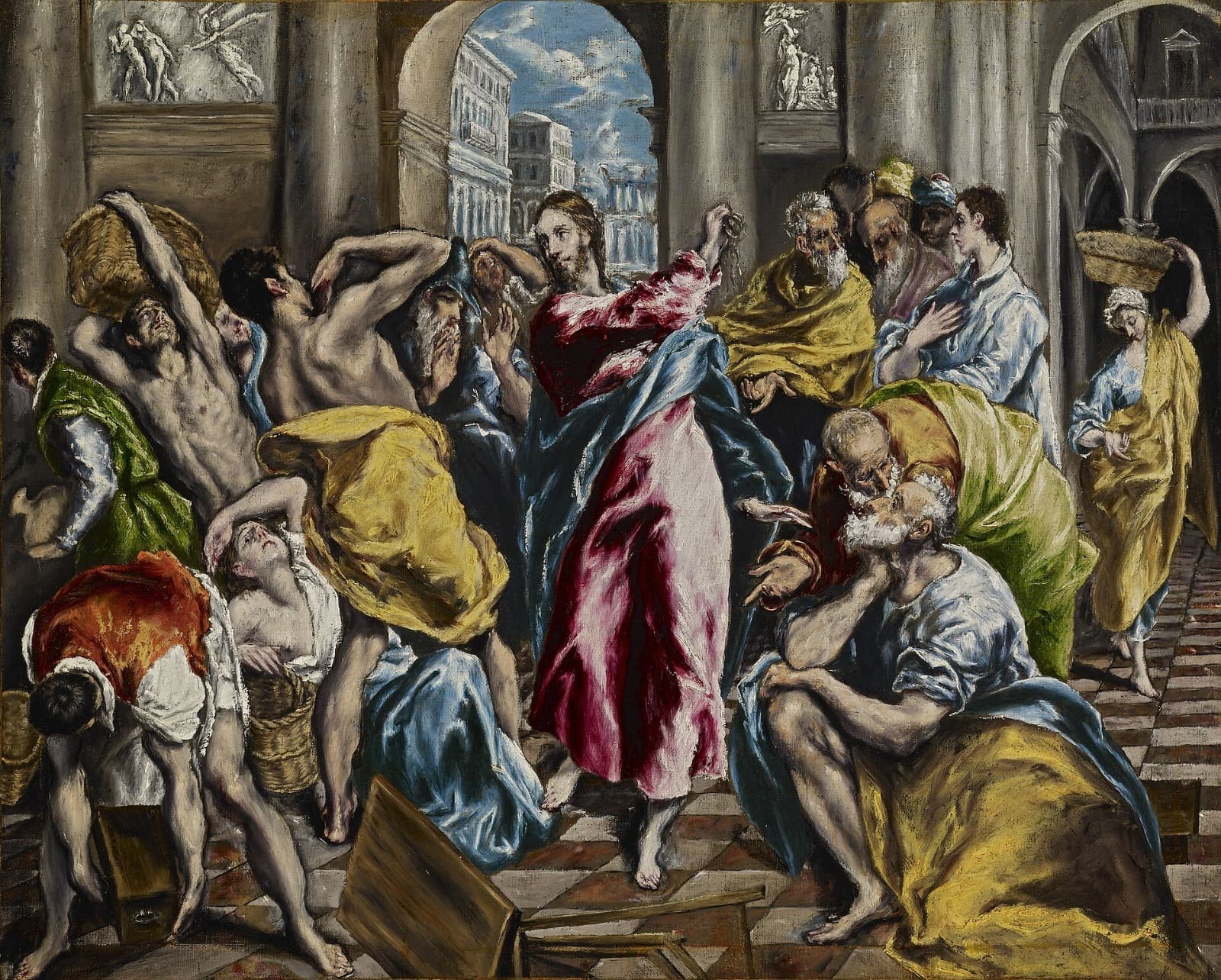
El Greco split the canvas down the middle: the traders tumbling out on the left, the disciples watching calmly on the right.

The horse and the groom take up most of the canvas and neither notices anything. The miracle happens entirely inside the man on the ground.
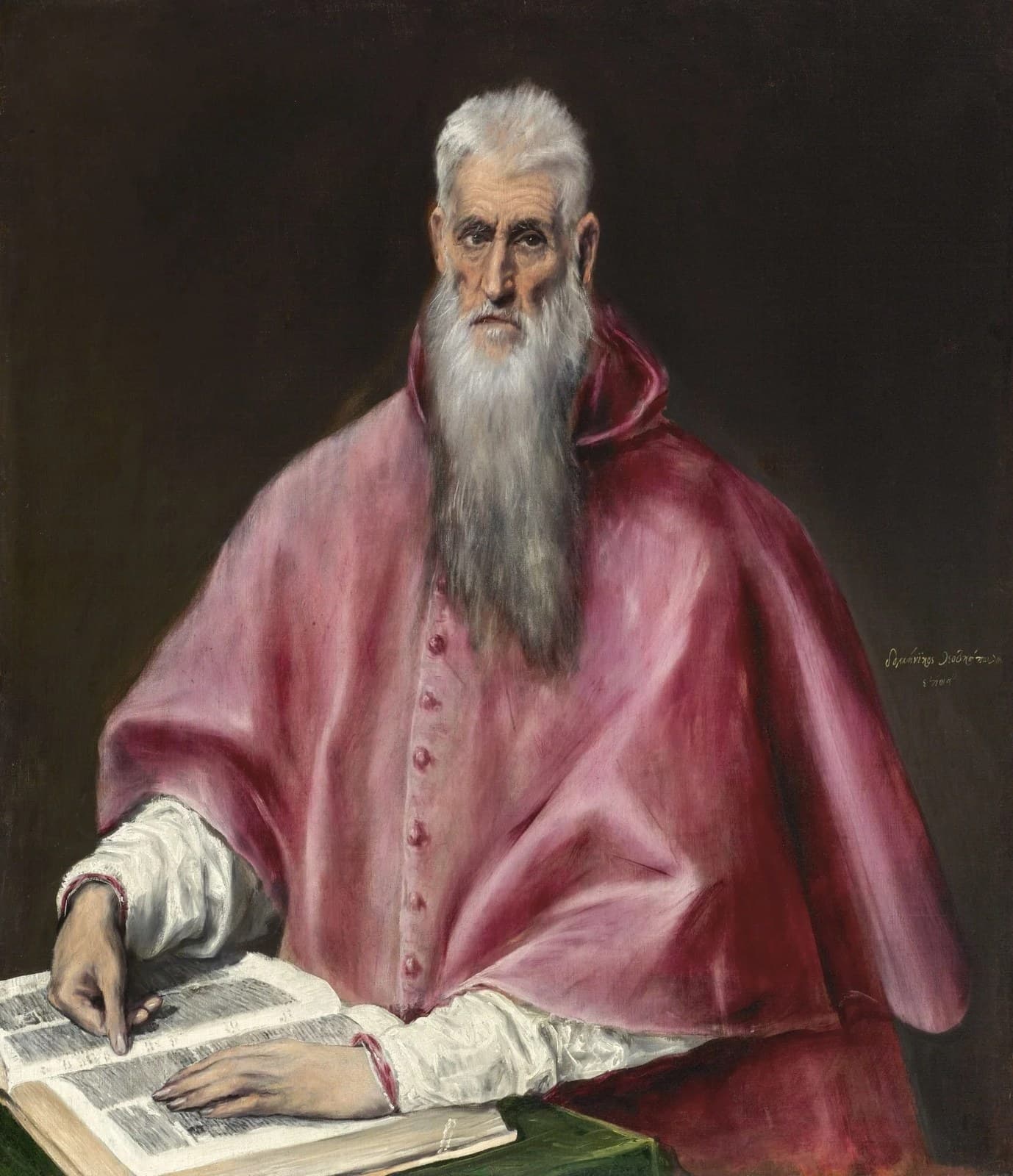
Not the desert hermit but the Doctor of the Church, in cardinal's red with one long hand resting on his own translation of the Bible.
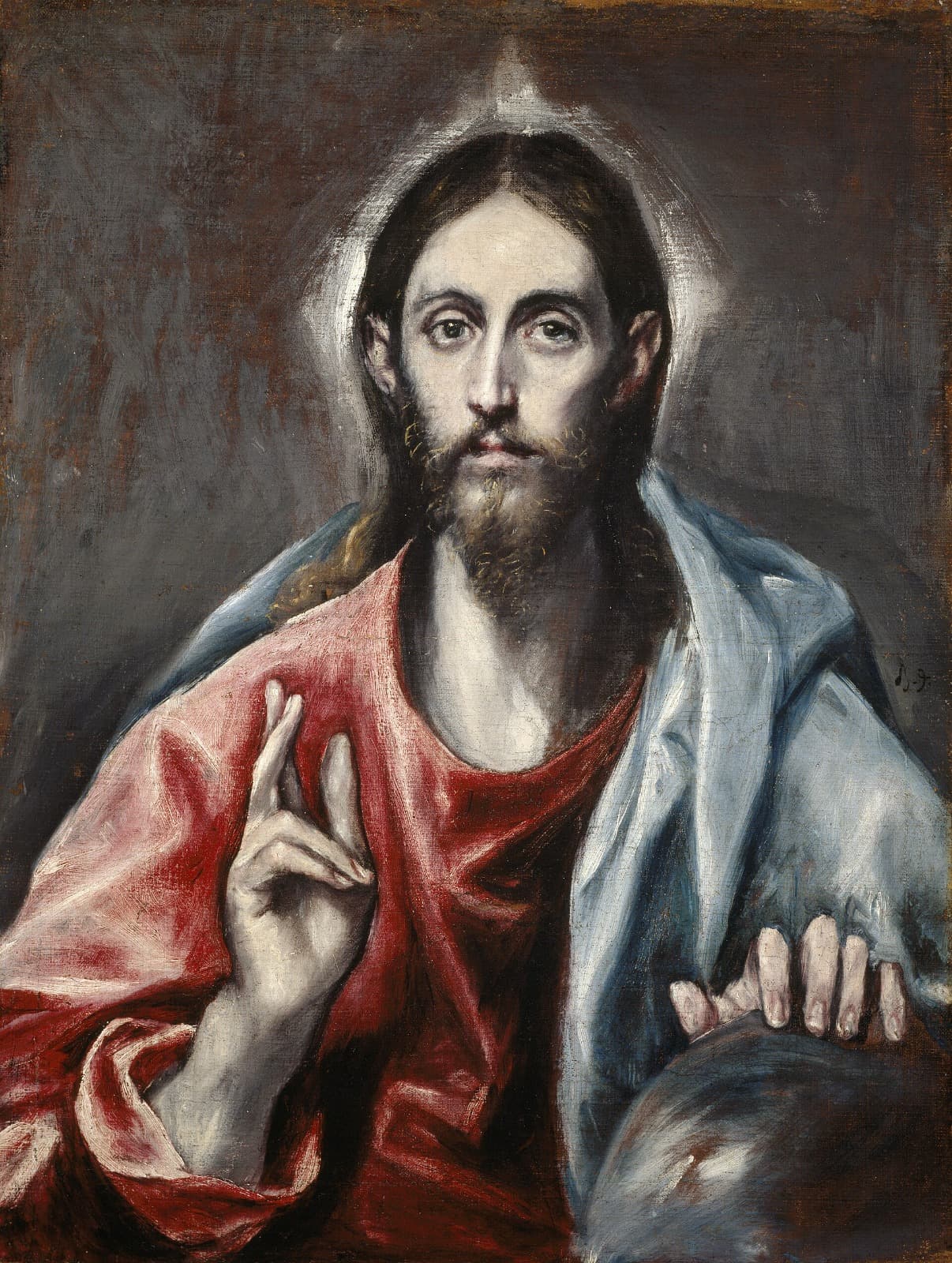
Two fingers raised in a gesture reaching back to Byzantium, one hand on a crystal orb, the face long and sorrowful and unmistakably his.
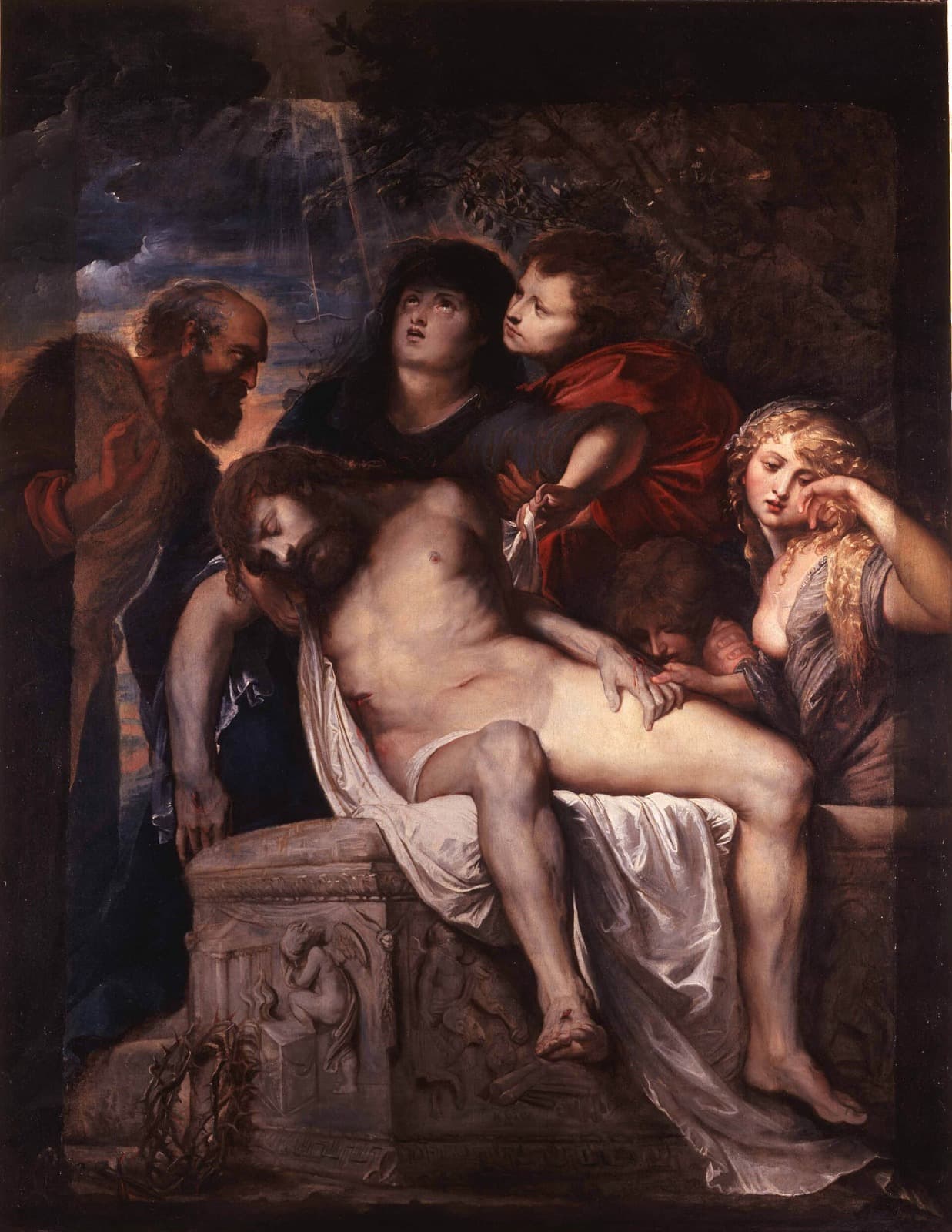
Rubens worked this out in Rome while studying Caravaggio, a rehearsal for the great Descent he would paint back home in Antwerp.