War and Peace
1869 · 1392 pages
Five families carried through Napoleon's invasion of Russia, with battle, marriage, farming, and a theory of history held in one design. You finish it knowing these people better than your own friends.
★ 9.8
 skopia
Five families carried through Napoleon's invasion of Russia, with battle, marriage, farming, and a theory of history held in one design. You finish it knowing these people better than your own friends.
Clarissa Dalloway buys the flowers herself and gives a party, one June day in London, while a veteran wrecked by the war comes apart nearby. Woolf moves between strangers' minds without warning.
Heathcliff, a foundling on a Yorkshire farm, spends his life destroying two families over the girl he loves. The poet Rossetti called it a fiend of a book, its action laid in hell.
English fiction found its first fierce female voice in Jane, plain and poor and conceding nothing. She survives a brutal charity school, becomes a governess, and loves an employer with a secret.

Something happens in the dark of the Marabar Caves, and an Englishwoman accuses the Indian doctor who brought her there. Forster watches a colonial society close ranks and goodwill count for nothing.
Put to work in a warehouse as a boy, David escapes to an aunt he has never met. Dickens gave him his own childhood, and loved this novel above all the others.

Driving across England in 1956 to see the housekeeper he worked beside, a butler remembers the Nazi sympathizer he served with pride. What he cannot bring himself to say is the whole novel.
Workers create more value than their wages return, Marx argues, and that gap is profit. No economic book has reshaped politics more, and the chapter on the working day still burns.

Found as a baby in a squire's bed, Tom grows up generous and reckless, loses his home, and follows Sophia Western to London. Coleridge ranked the plot beside that of Oedipus.

Newland Archer, engaged to the right New York girl, falls for her cousin the Countess Olenska, back from a ruinous European marriage. Old New York moves against them without ever raising its voice.

In a shabby Paris boarding house, an old man sells off everything for two daughters ashamed to be seen with him. Balzac counts every franc and shows what money does to love.
Scrooge hates Christmas until his dead business partner turns up wrapped in chains and three spirits walk him through his own life. The modern Christmas takes its shape from this book.

Eighteen years in the Bastille have left Doctor Manette making shoes in the dark. Dickens carries his daughter's household from London into the Terror, where Madame Defarge knits a death list.

Modern Chinese literature begins here. Ah Q, a village laborer, turns every beating into a spiritual victory, and a madman reads the Confucian classics until the words eat people surface between the lines.

Lily Bart is beautiful, twenty-nine, and unmarried, which in Old New York is a countdown. Wharton tracks her slide from ballroom to boarding house without once softening the arithmetic.
Carrie Meeber leaves Wisconsin for Chicago and rises through two men to the New York stage. Dreiser lets her prosper without remorse or retribution, and American fiction has been freer ever since.

Seventeen-hour shifts in a Paris restaurant kitchen, then the tramps' road between London workhouses. Orwell went into poverty himself and came back able to describe what hunger does to a mind.

Minke, a Javanese student under Dutch rule, loves the daughter of a concubine running the estate its Dutch owner cannot. Indonesia banned it for a generation and now claims it as its greatest.

Bai Liusu, a divorcee her Shanghai family treats as a disgrace, follows a rich bachelor to Hong Kong. Chang writes their courtship as cold accounting until the Japanese bombardment reaches the city.
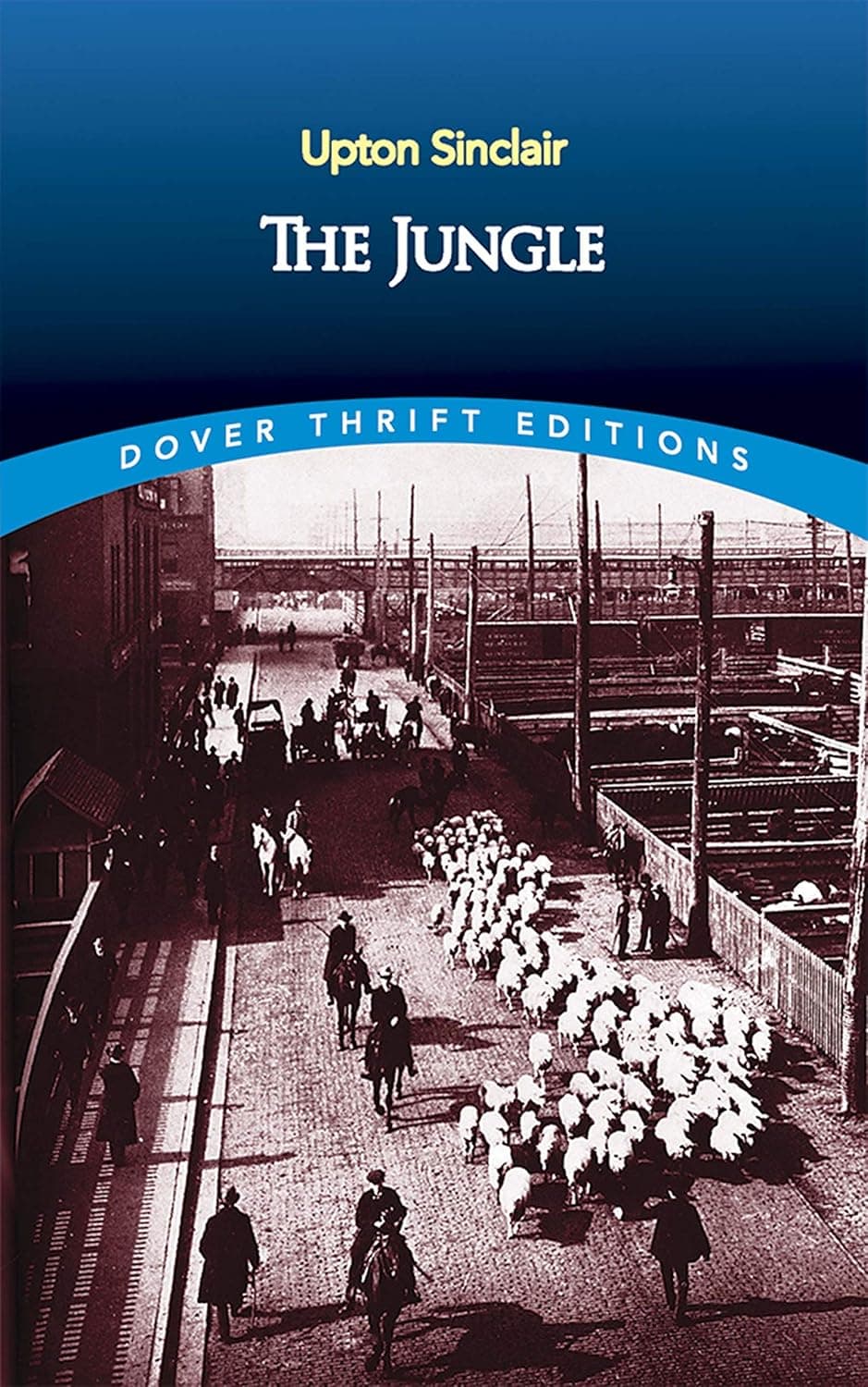
Jurgis Rudkus comes from Lithuania to work Chicago's killing floors, and the packing plants destroy his family while diseased meat ships out. Roosevelt read it and Congress passed federal food inspection within months.