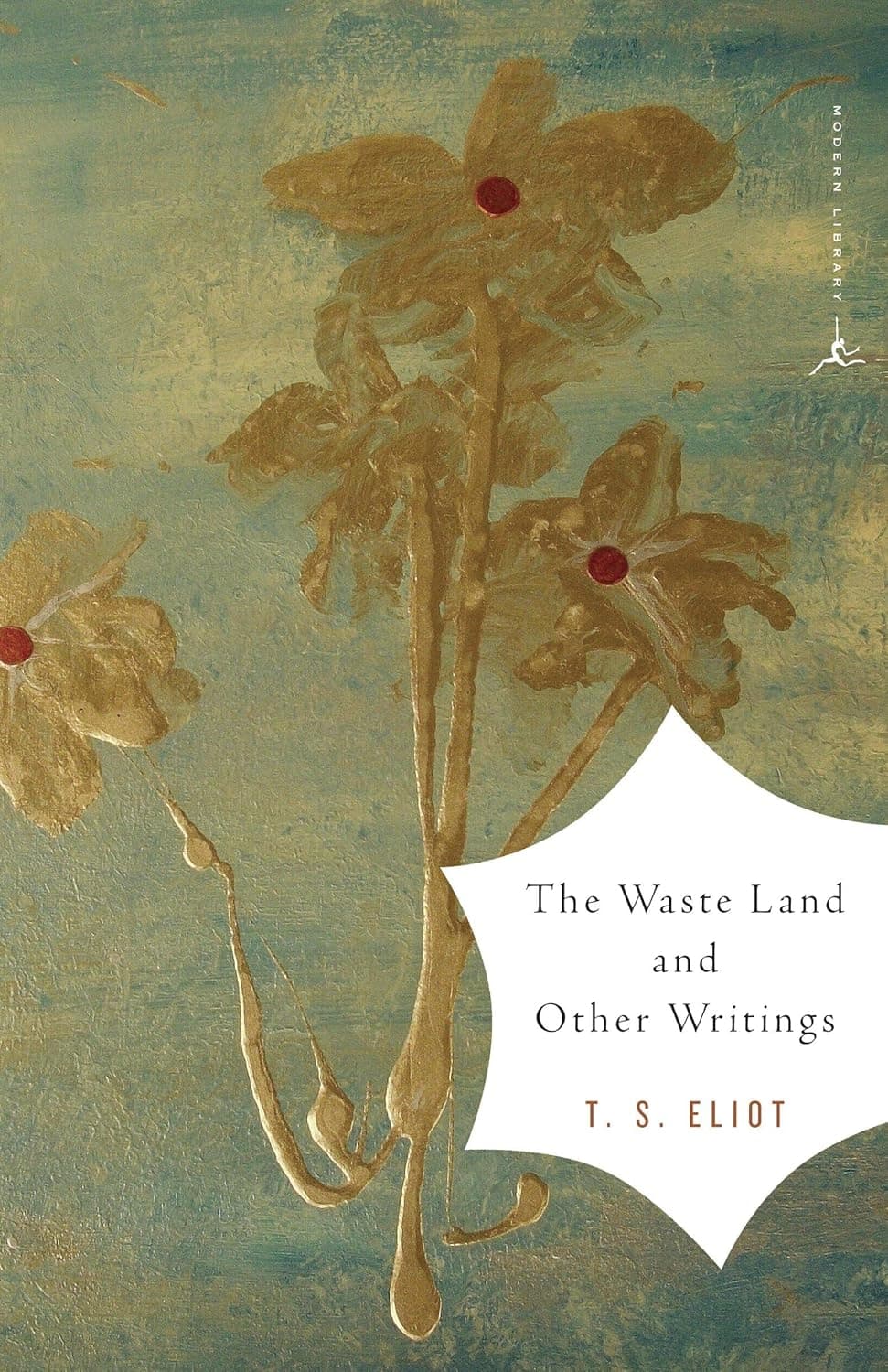
The Waste Land
1922 · 234 pages
April is the cruellest month, and from that line Eliot assembles a ruined Europe out of voices, tarot cards, and pub talk. The fragments lodge in the memory for good.
★ 9.4
 skopia
April is the cruellest month, and from that line Eliot assembles a ruined Europe out of voices, tarot cards, and pub talk. The fragments lodge in the memory for good.
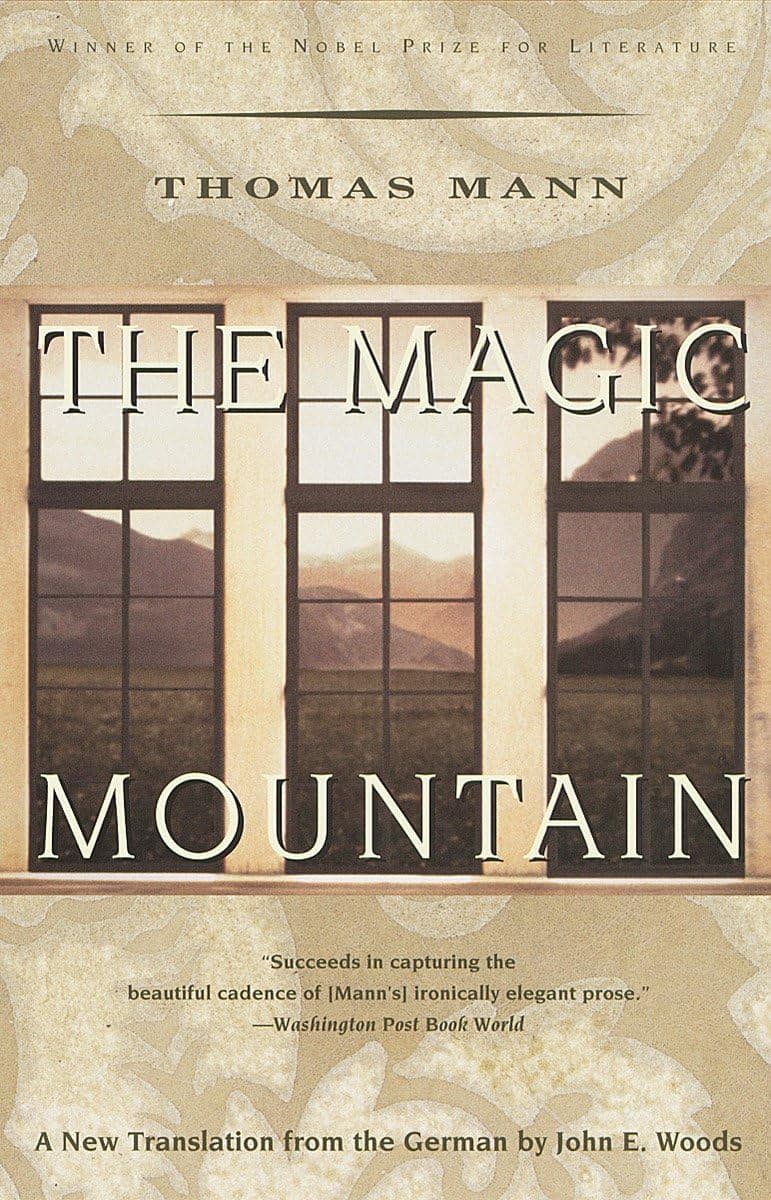
Hans Castorp goes to a Swiss sanatorium to visit his tubercular cousin for three weeks and stays seven years. Time comes loose there while the patients debate everything and Europe drifts into war.

Turned down as a young man, Florentino Ariza waits fifty-one years for the woman he loves to be widowed. García Márquez makes old age more erotic than youth.
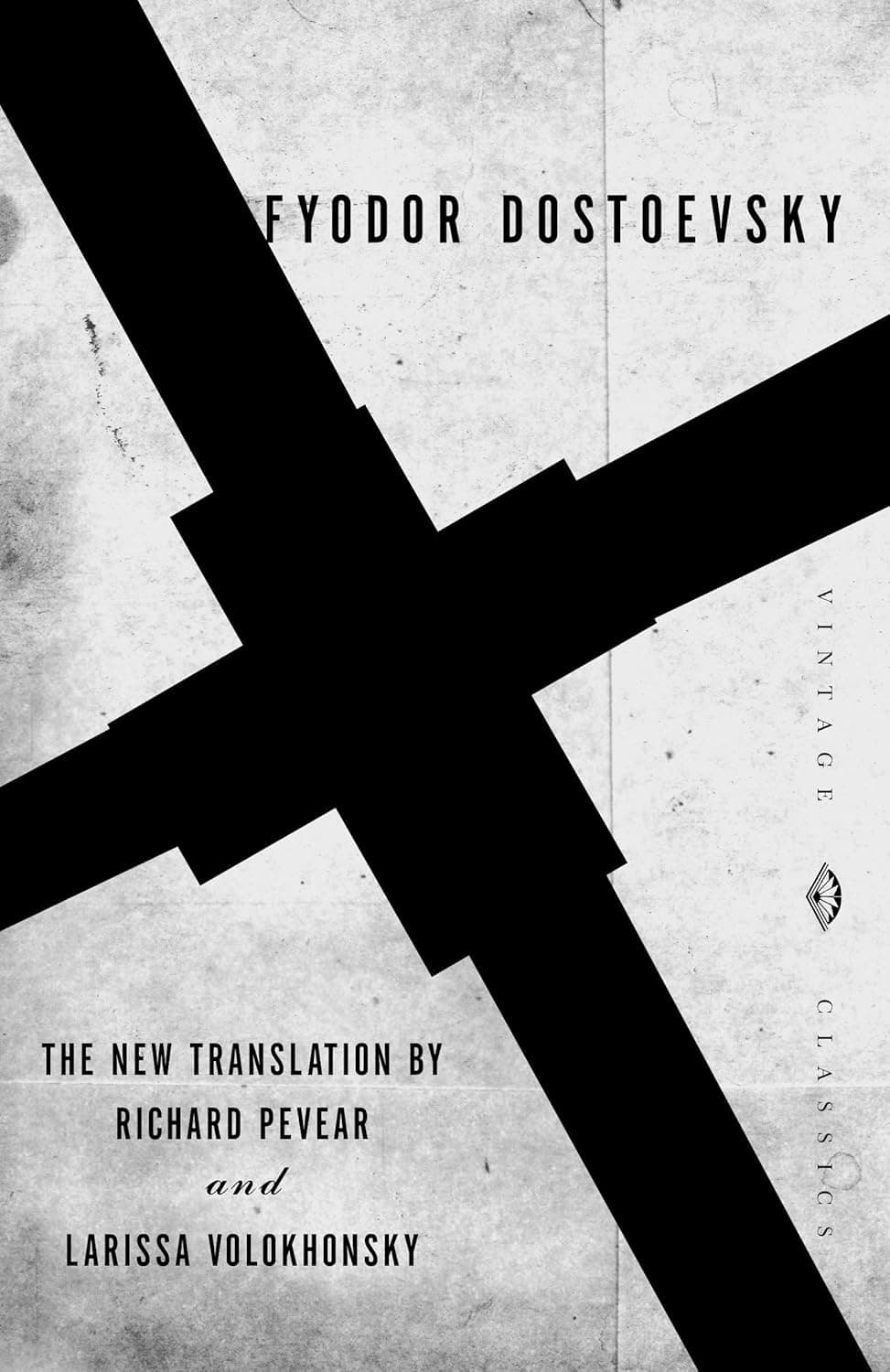
Prince Myshkin returns to Russia from a Swiss clinic, epileptic and incapable of guile, and Petersburg cannot decide whether to adore him or use him. The world takes a genuinely good man apart.

Addie Bundren dies and her family hauls the coffin across Mississippi through flood and fire. Fifteen voices tell it, and you laugh at people whose misery you can feel.
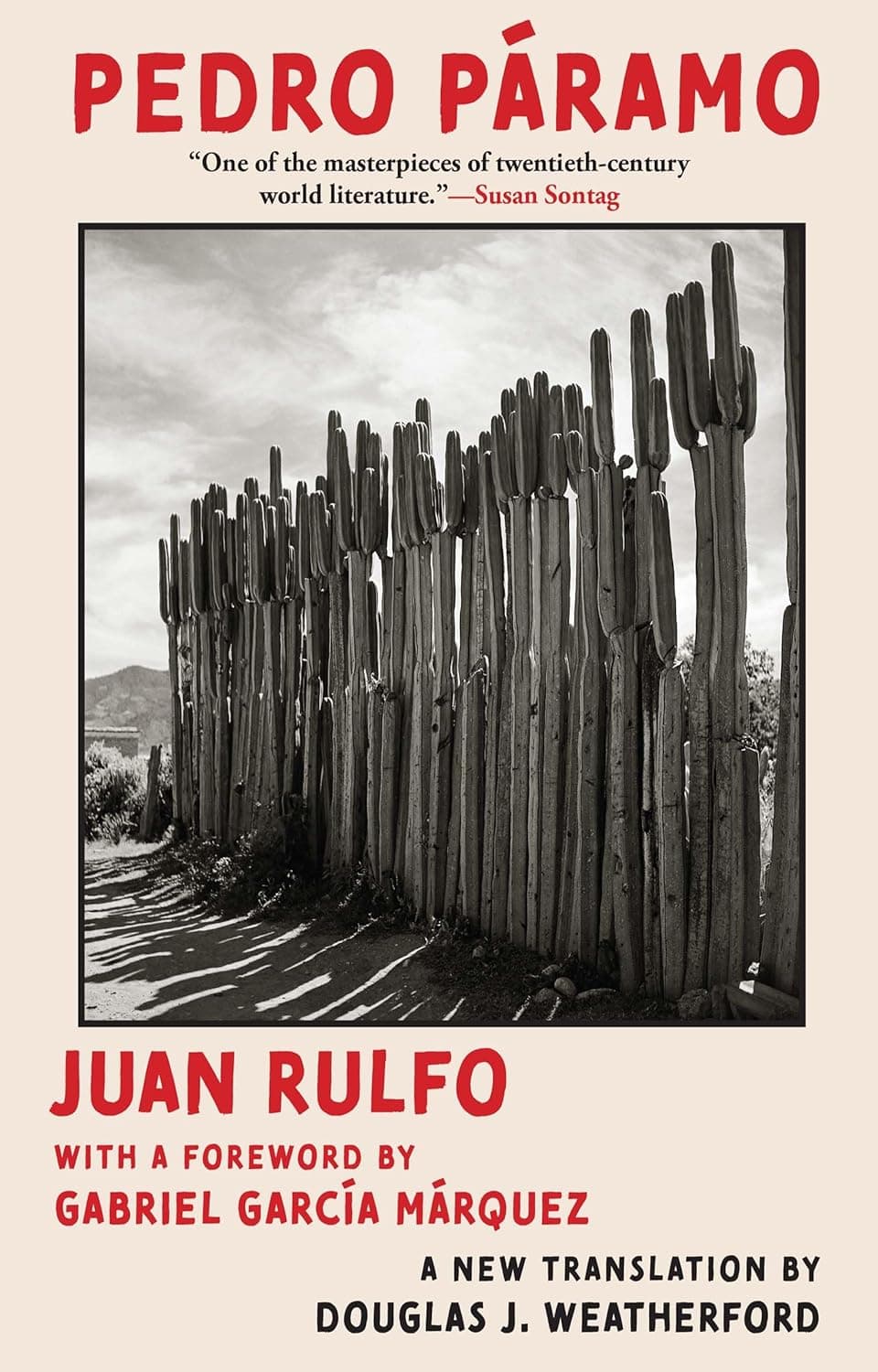
Looking for the father he never met, a man walks into a Mexican town where everyone he speaks to is dead. Voices drift free of their bodies, and magical realism follows.
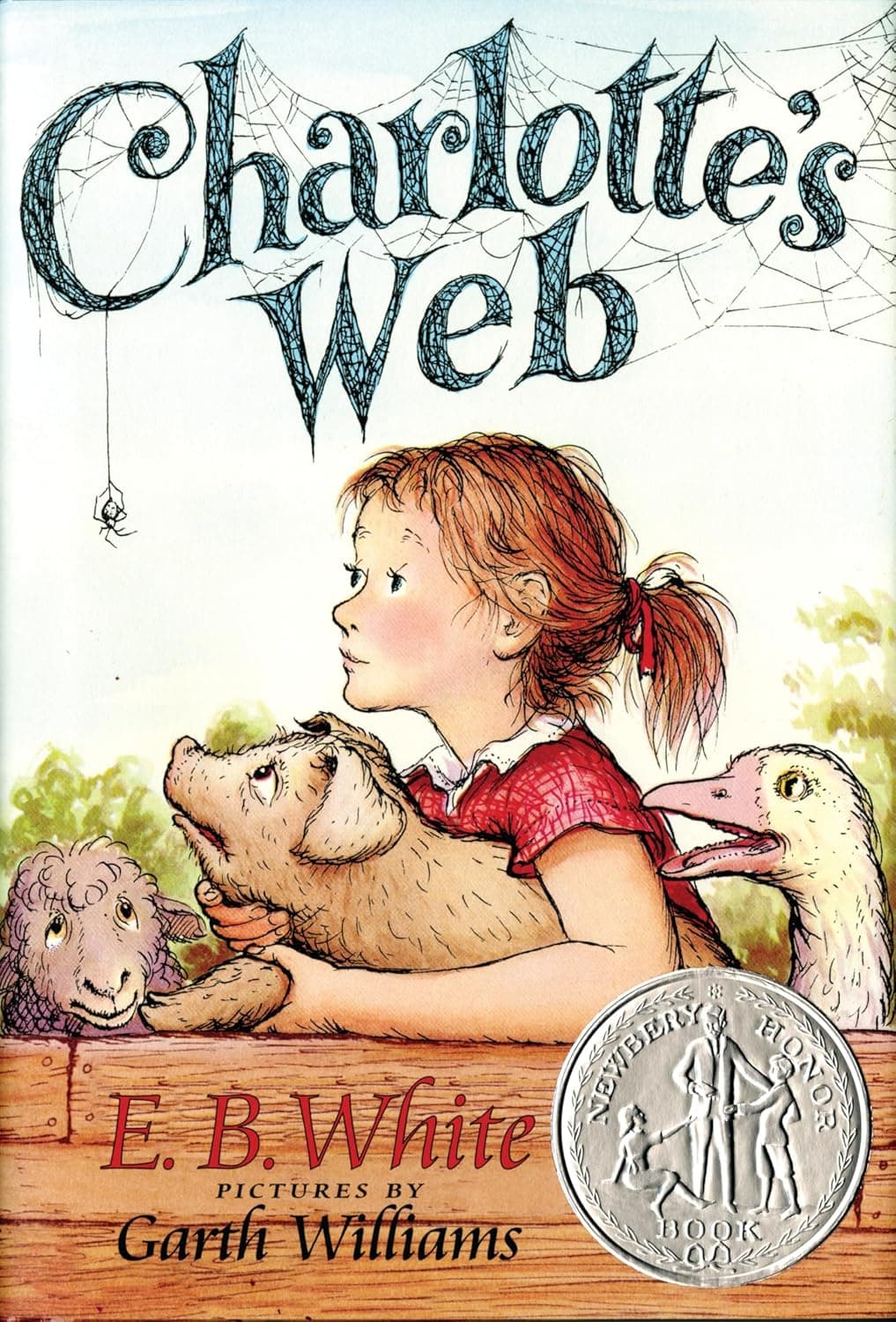
Wilbur is a runt pig bound for slaughter, saved by a barn spider writing words in her web. Eudora Welty called it just about perfect, and it is where children first meet death.
John Ames, an old preacher in Iowa, is dying and sets his life down for the seven-year-old son who will not remember him. Robinson makes an ordinary afternoon feel like grace.

Nothing in fiction gets nearer to dying. Ivan Ilyich knocks his side hanging a curtain, and his family and his doctors keep up the pretense while a peasant servant tells the truth.

Late medieval France and the Netherlands ran on public weeping, elaborate tournaments, and constant awareness of death. Huizinga paints this as no Renaissance dawn but a culture worn out by its own forms.

Poe invented the detective story and perfected the tale of terror. His narrators wall people up alive, hear a heart beating under the floorboards, and watch a house split apart.
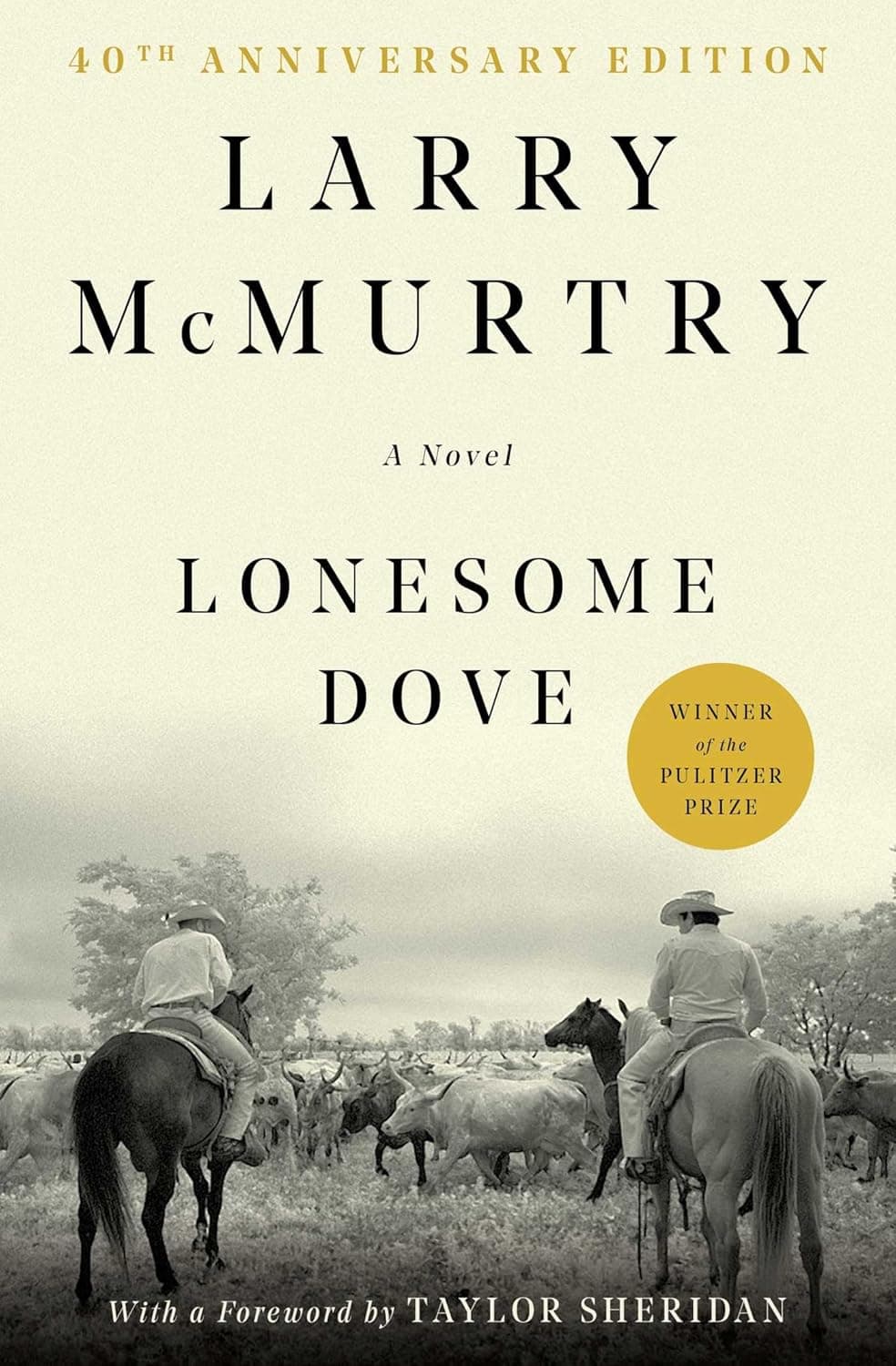
Two aging Texas Rangers drive cattle from the Rio Grande to Montana, one talking constantly and one saying nothing. McMurtry gives the whole crew interior lives, then lets the trail take them.
Chanted to the newly dead across the forty-nine days between one life and the next, Tibetan Buddhism's manual for dying insists that the radiant and monstrous deities arriving are the mind's own projections.

Egypt's instructions for the dead, copied onto papyrus and buried with the body. Your heart is weighed against the feather of truth, and one spell begs it not to testify against you.

Mexicans wear masks, Paz argues, because the Conquest left them sons of a violated mother, heirs to two pasts they refuse to join. Mexico has quarreled with these essays for seventy years.

In 1714 a rope bridge in Peru snaps and five travelers fall to their deaths. A Franciscan who witnessed it spends six years reconstructing their lives to prove God chose them.

At Mann Gulch in 1949 a wildfire turned uphill and killed twelve smokejumpers and a fire guard in minutes. Maclean, past seventy, walked that Montana slope for years to learn what happened.

Two stories alternate: a man who encrypts data inside his mind, and a newcomer to a walled town reading dreams from unicorn skulls. Murakami has been returning to that architecture for forty years.

Knoxville, 1915: a man is called out at night to his sick father and killed on the road home. Agee follows the six-year-old son through the days after, in prose of unbearable precision.

There is little dignity in how we die, the surgeon Nuland writes, and he shows why: what heart failure, stroke, cancer, and Alzheimer's do to a body. Dignity belongs to the life before.
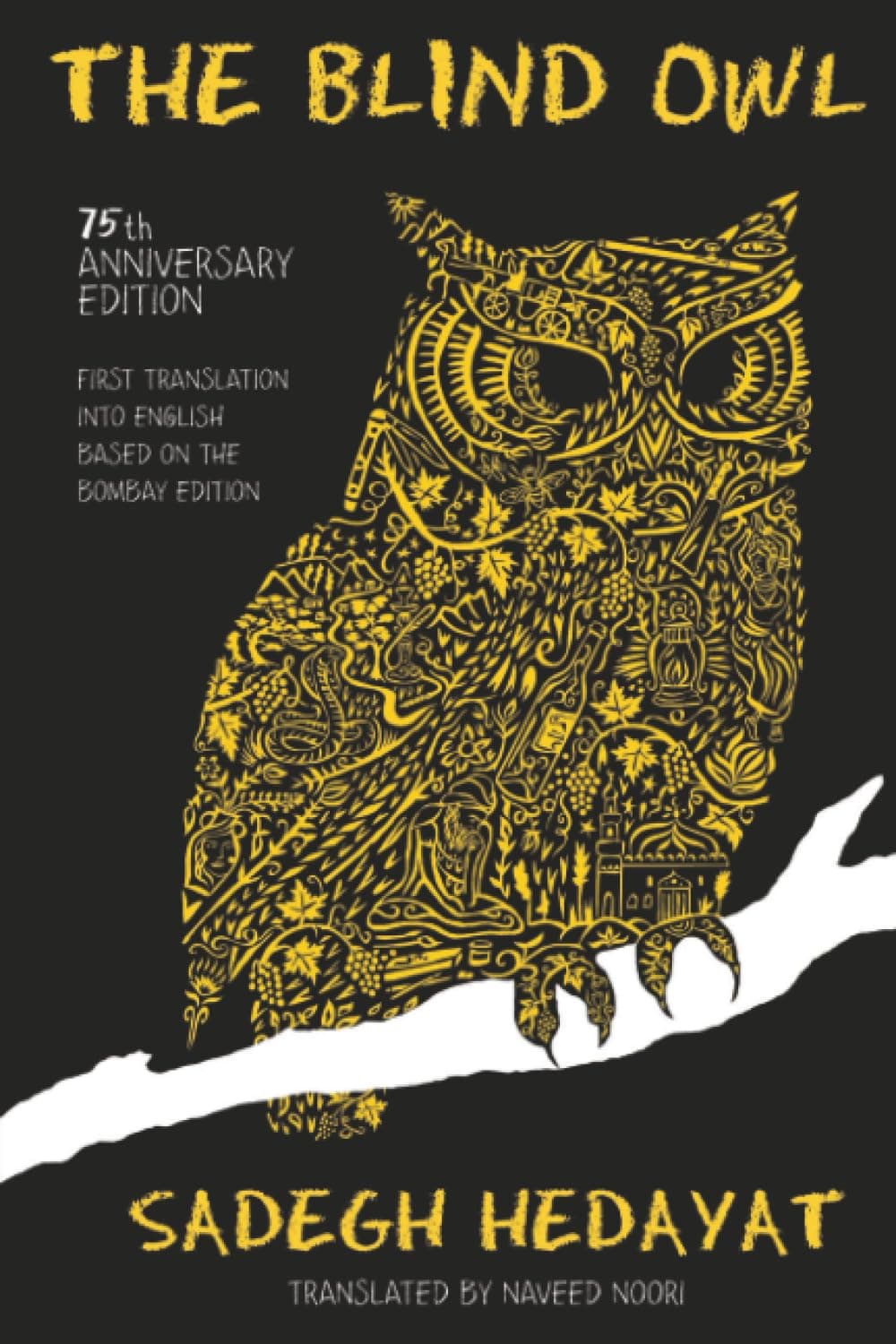
Persian fiction's darkest book: an opium-addicted painter of pen cases draws the same scene, an old man and a girl in black offering a lily, then finds it living behind his wall.
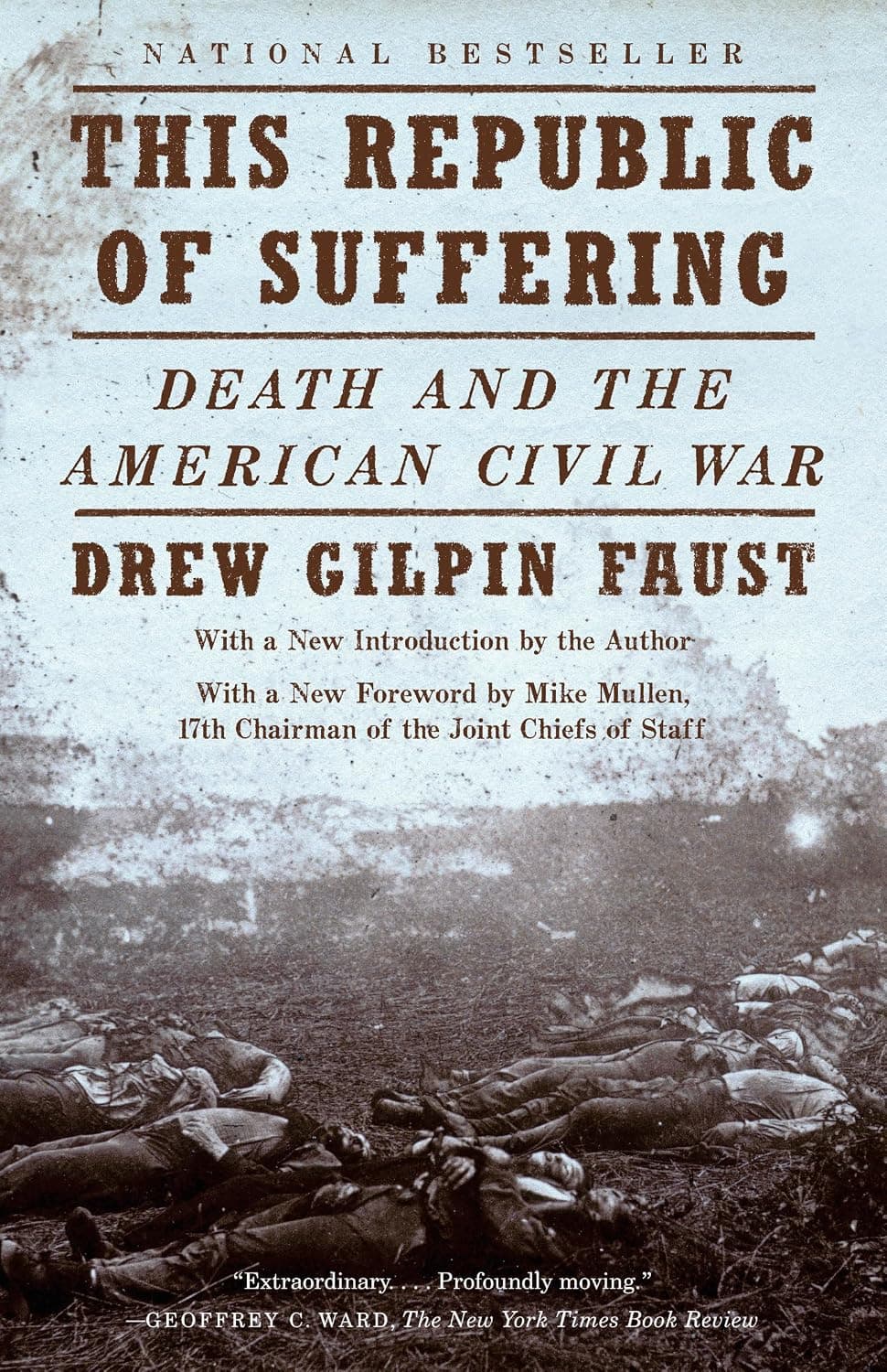
Faust shows a country improvising the machinery of mass death: embalming, identifying bodies, burying the unknown at federal expense. Six hundred twenty thousand men died between 1861 and 1865, most among strangers.
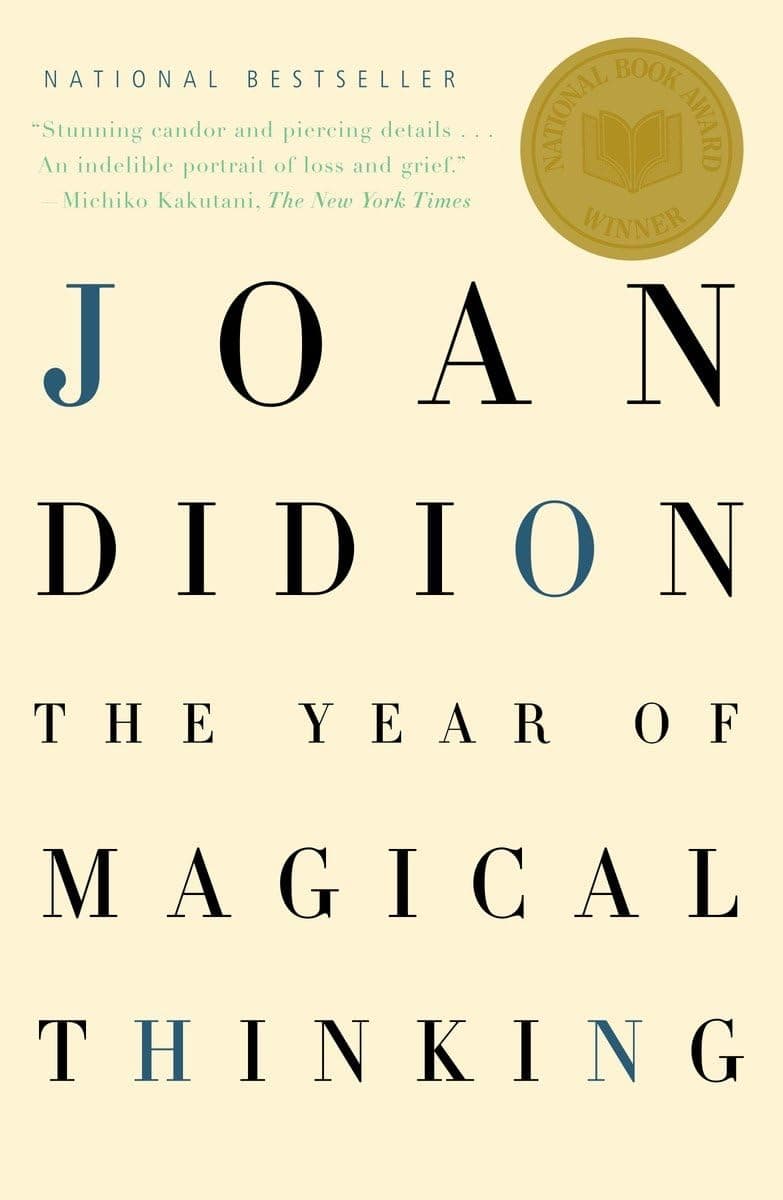
Her husband died at the dinner table while their daughter lay in a coma. Didion turns a reporter's eye on her year of grief and keeps his shoes, because he will need them.
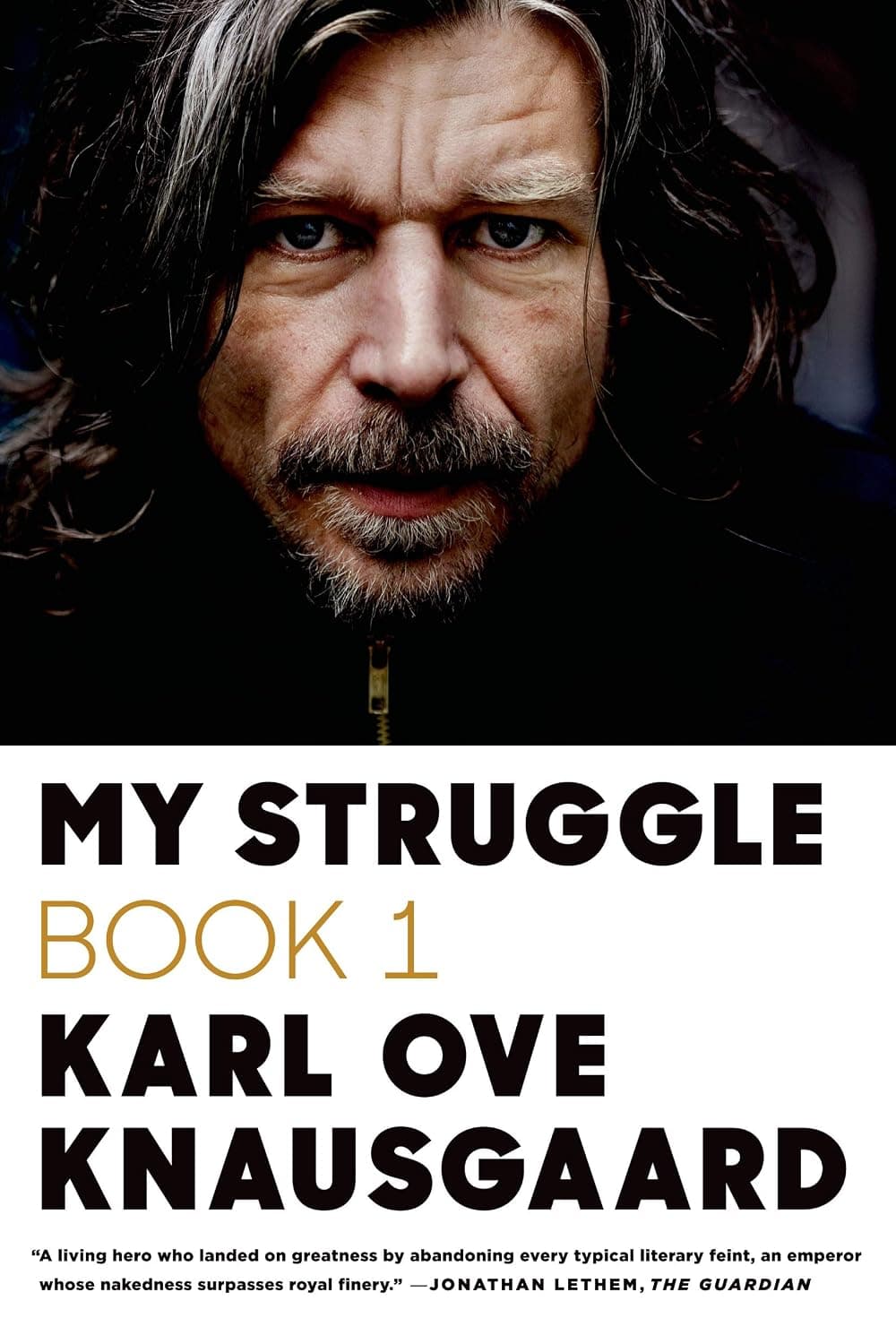
Six volumes of one man's life recorded to the last cornflake and cigarette, and at the center a father who drank himself to death, leaving a house his sons had to scrub clean.

Jess can outrun everyone in fifth grade until Leslie moves in next door. They swing over a creek into Terabithia, the kingdom they rule together, and Paterson refuses to protect them from grief.