Whole Lotta Love
1969 · From Led Zeppelin II
Page's riff, Plant's howl, and a theremin freakout in the middle that still sounds like the roof coming off.
★ 9.7
 skopia
Page's riff, Plant's howl, and a theremin freakout in the middle that still sounds like the roof coming off.
Eight minutes that climb from recorders to Page's solo, never released as a single and never needing to be.
Van Halen dropped in, played the solo for free, and Jackson made rock and pop the same building.
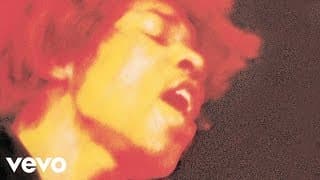
Hendrix took Dylan's parable and lit it, and Dylan has played it Hendrix's way ever since.
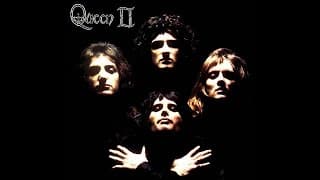
Six minutes with no chorus and so many vocal overdubs the tape wore transparent. Still nothing else like it.
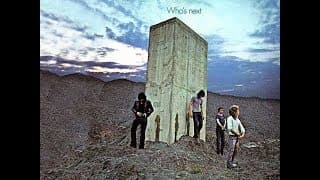
That opening arpeggio is a Lowrey organ's marimba repeat function; Dave Arbus's violin sends the ending careening.
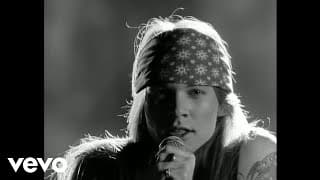
Slash was goofing through a warm-up he called a circus melody; an hour later the band had this.
Lennon started it as a campaign song for Timothy Leary, then Ringo muffled his drums with tea towels.
Entwistle's bass solo needed a Fender after his Danelectro strings snapped, and Daltrey stuttered his way into history.
Page tuned to DADGAD, Plant wrote it driving through southern Morocco, and none of them had seen Kashmir.
Johnson was told the Bon Scott tribute could not be morbid, so he wrote a celebration over Angus Young's riff.
Slash's riff, McKagan's breakdown recycled from his old punk band, and roughly three hours from nothing to finished song.
Dave Davies took a razor blade to his little Elpico amp's speaker cone, and distortion arrived on British radio.
Named for the gardener who woke them up, and cut with an acoustic guitar recorded into a Philips cassette recorder.
Harrison opened a book at random, saw "gently weeps", and Clapton came in uncredited to play the solo.
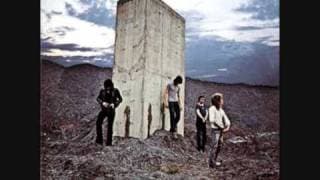
Eight and a half minutes, a Lowrey organ run through a VCS3, and Daltrey's scream tearing into the final verse.
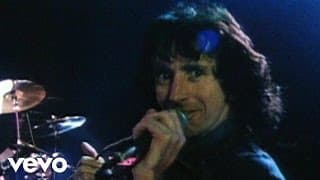
Mutt Lange took over production, the band cut it in London in 1979, and America finally caught on.
Cut May 3, 1968 with an ABC film crew rolling, and it became Hendrix's only British number one, posthumously.
Blackmore's four notes in parallel fourths, written after a flare gun burned the Montreux Casino down during a Zappa show.
Producer Jimmy Miller opens it on cowbell, and the single arrived in Britain the day after Brian Jones died.
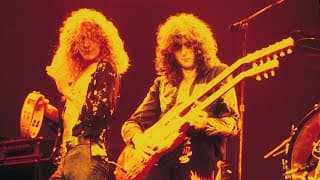
Zeppelin played Reykjavik in 1970, and Plant came back with Vikings, Valhalla, and that double-tracked wail.
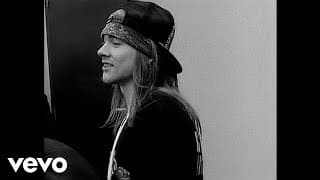
Written in a rental van home from San Francisco, and the final two minutes simply double the tempo.
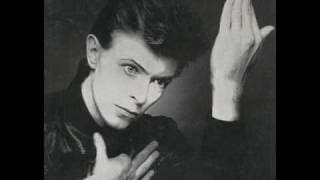
Cut at Trident in November 1971, never a single, and Ronson's riff draws the character as sharply as the words.
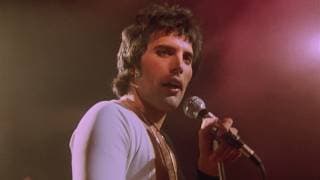
Mercury wrote it with audience participation in mind, and a 2011 study named it the catchiest song in pop.
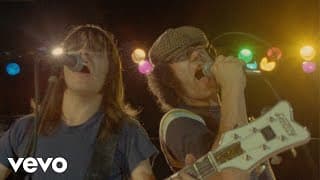
Recorded at Compass Point in Nassau with Mutt Lange, Johnson's first single, and a riff that swings rather than pounds.
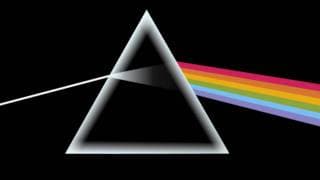
Seven beats to the bar, a tape loop of coins and cash registers, and Pink Floyd's first American hit.
Recorded in Hollywood with Cale on piano, the rhythm pushing like a subway train under Reed's flat delivery.
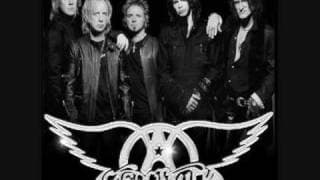
Perry built the riff at a Honolulu soundcheck; Tyler wrote the words on a Record Plant stairwell wall.
Townshend wrote it to flatter a pinball-obsessed critic, then called it the clumsiest thing he ever wrote.
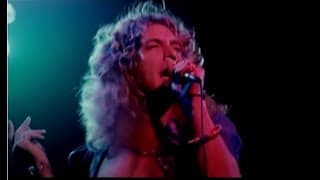
Jones wrote the riff, Page took the stop-start idea from Fleetwood Mac, and a stray labrador supplied the title.
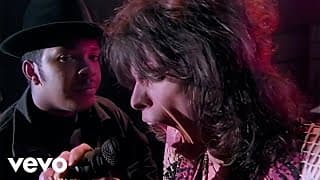
Rubin had to talk Run-DMC into it; Tyler smashed through the video's wall and Aerosmith got a career back.
Cut at Muscle Shoals days before Altamont, Bobby Keys on tenor, and a lyric Jagger later said he would censor.
Bruce came home from a Hendrix show carrying the riff, and Baker answered it by drumming on one and three.
Sampedro joked about the free world after a Soviet tour collapsed, and Young debuted the song in Seattle unrehearsed.
Mars Bonfire's used Ford Falcon inspired it, Steppenwolf sped it up, and Easy Rider made it biker culture's signature.
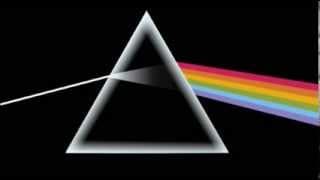
Alan Parsons taped antique-shop clocks as a quadraphonic test; Mason's rototoms follow, and the alarms still land like panic.
Knopfler borrowed a pen in a New York appliance store to copy down a delivery man's complaints about MTV.
Recorded live at San Francisco's Boarding House in 1978, and Devo's Mothersbaugh handed Young the phrase that titled the album.