My Family and Other Animals
1956 · 273 pages
On Corfu in the 1930s a boy hunts scorpions and owls while his mother and three grown siblings supply the chaos. Durrell describes every creature exactly and every relative without mercy.
★ 5.0
 skopia
On Corfu in the 1930s a boy hunts scorpions and owls while his mother and three grown siblings supply the chaos. Durrell describes every creature exactly and every relative without mercy.
Graves retells every Greek myth, cites his ancient sources, then argues underneath that all of it encodes a matriarchal religion the Greeks overthrew. Generations of English readers got their mythology from him.

A bookish young Greek reopens a lignite mine on Crete and hires Alexis Zorba, an aging laborer who dances, plays the santuri, and treats his employer's reading as a substitute for living.

Western love poetry starts with Sappho, and starts at full pitch: the tongue breaks, thin fire runs under the skin. The poet Anne Carson brackets every gap where the papyrus tore.
Athenians take turns praising love at a drinking party. The comic poet Aristophanes says we were once double creatures split in two, still hunting our other half, and romance repeats him still.
Ten books of gossip, wills, deathbed jokes and doctrine, written in the third century and now the main reason we know what Epicurus taught or what Diogenes the Cynic said to Alexander.
Heraclitus said you cannot step into the same river twice. Parmenides said nothing changes at all. Before Socrates, Greek thinkers asked what the world is made of and answered without appeal to gods.
Water is best, the first ode opens, then praises a Sicilian king whose horse won at Olympia. Pindar makes athletic victory an occasion for myth and for warnings about mortal limits.
Twenty years into a war they never voted for, the women of Greece refuse their husbands until the men make peace. Aristophanes also hoists Socrates over the stage in a basket.

Chaos comes first, then gods who overthrow their fathers in turn until Zeus wins and holds. Hesiod then turns to his idle brother to explain when to plow and why work is holy.

Phaedra confesses she wants her stepson, a father is ordered to sacrifice his daughter for a favorable wind, and a hidden boy threatens a usurping queen. Racine packs this into polite rhymed couplets.

Four Athenians run into the woods to escape a forced marriage, a fairy potion lands on the wrong eyelids, and a weaver acquires a donkey's head. Shakespeare makes desire look gloriously stupid.

Charged with corrupting the young and denying the gods, Socrates defends himself, refuses the escape his friends arrange, argues that the soul survives, then drinks the poison. His calm is the hard part.

Callicles tells Socrates that morality is a con the weak run on the strong, who should take whatever they want. Socrates answers that doing wrong harms you more than suffering it ever could.

Exiled after losing a city, Thucydides wrote the war that ruined Athens, explaining it by fear and self-interest, not the gods. At Melos his Athenians say the strong do what they can.
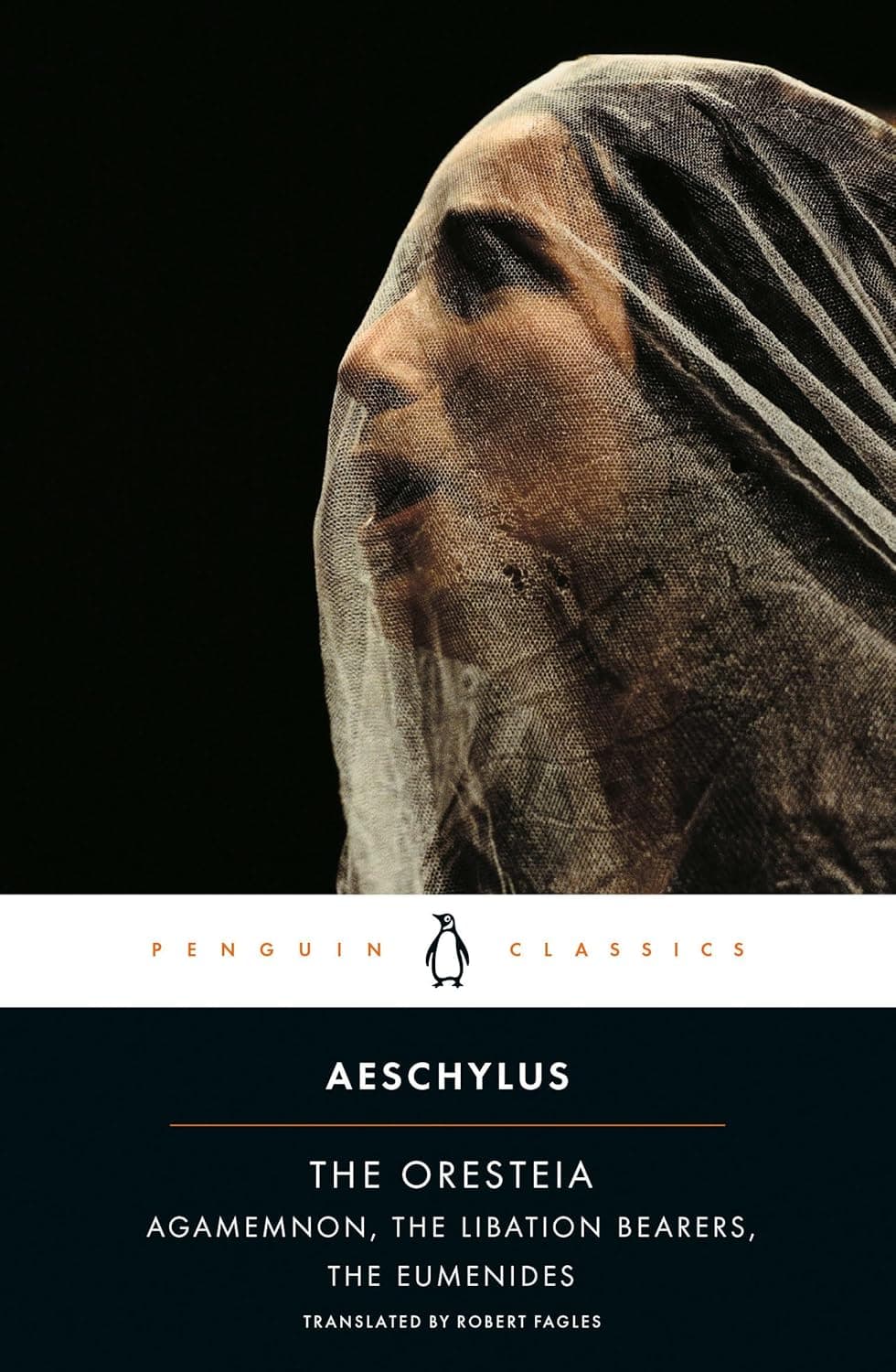
Agamemnon comes home from Troy to a wife who has spent ten years planning her welcome, and the killing runs down the generations until Athena stops it by seating the first jury.
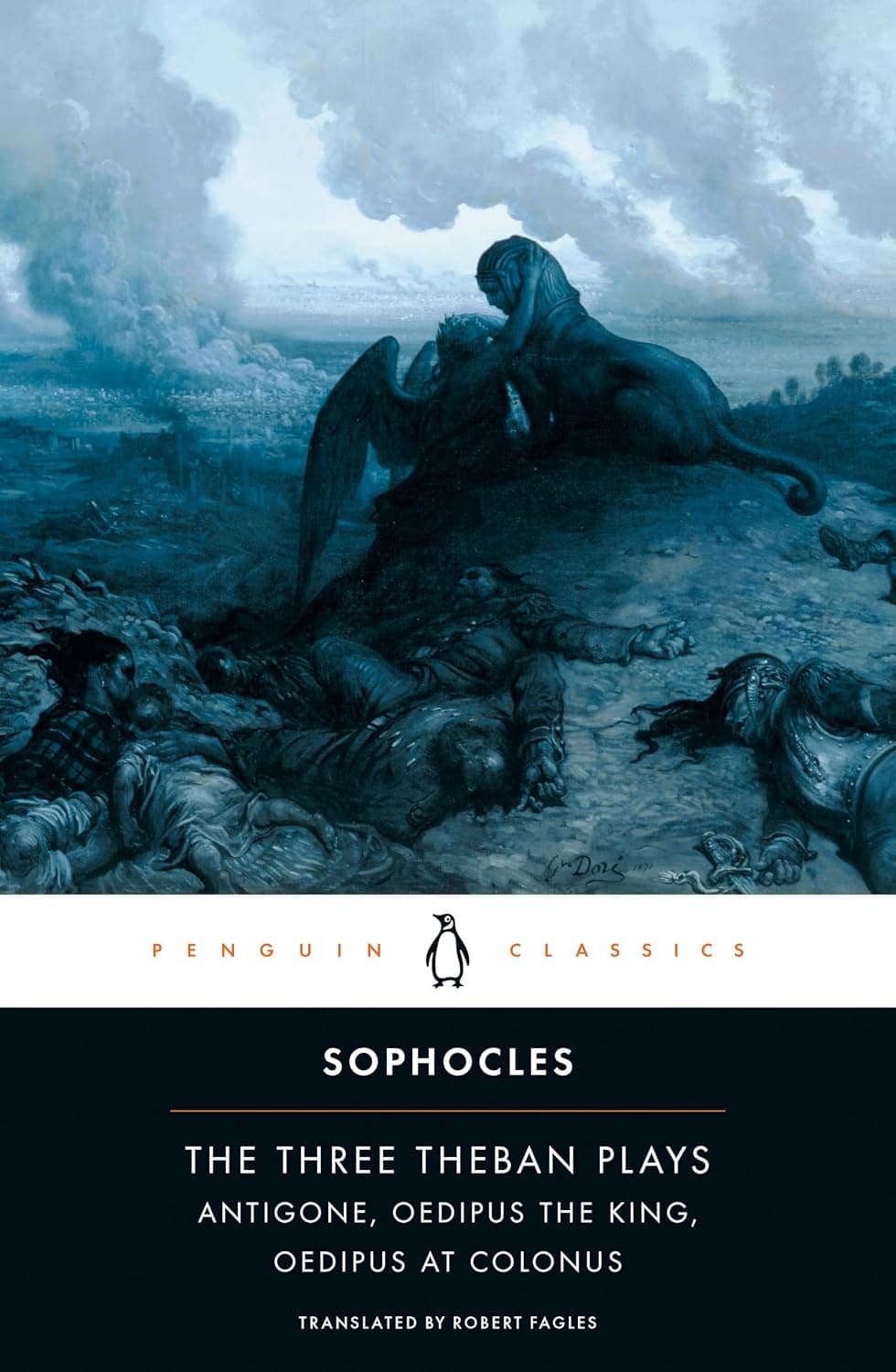
No drama has matched the moment Oedipus understands. He investigates the crime poisoning his city and the trail turns toward him. His daughter later defies the state to bury her brother.
Asked why anyone should be just when nobody is watching, Socrates answers by building an entire city in conversation. The allegory of the cave has never stopped explaining people to themselves.
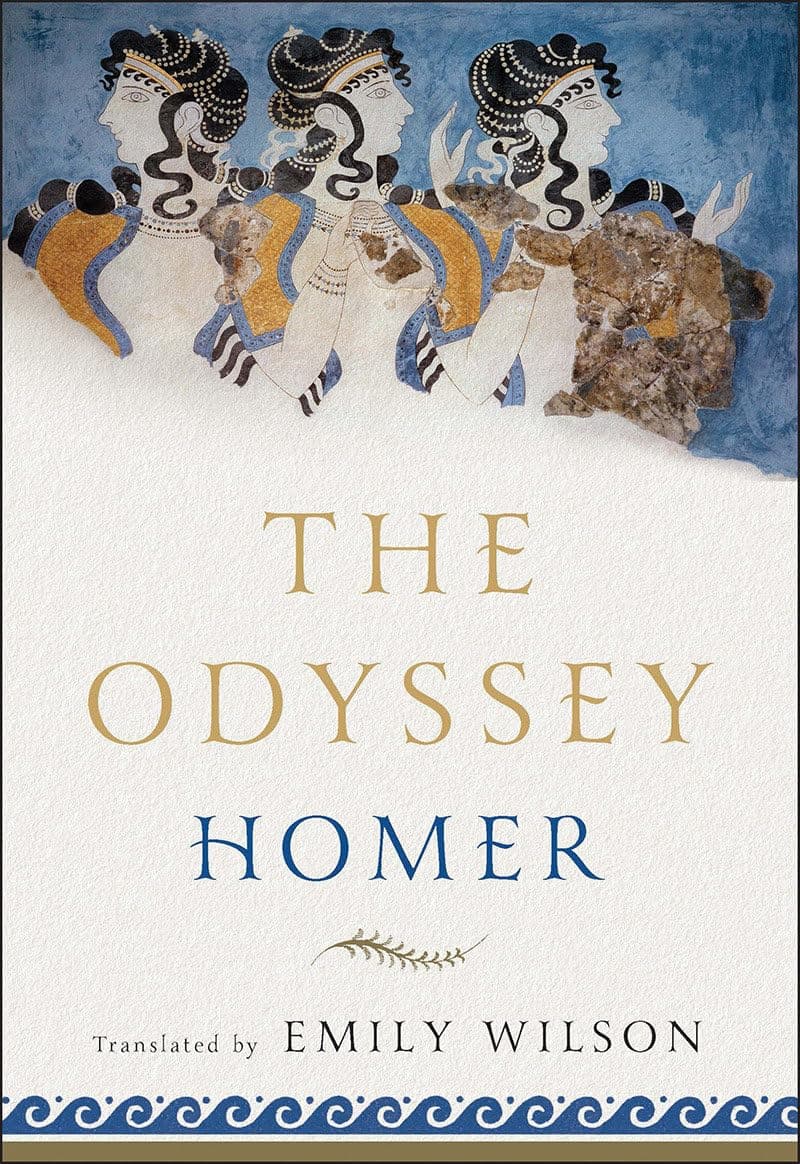
Ten years of storms, monsters, and a goddess who will not let him go stand between a soldier and his own front door. Every adventure story since descends from Odysseus.
Achilles withdraws from the fighting over a stolen prize and his friends die outside Troy for it. Nothing written about war since has matched Homer's fury, or the mercy of the final scene.