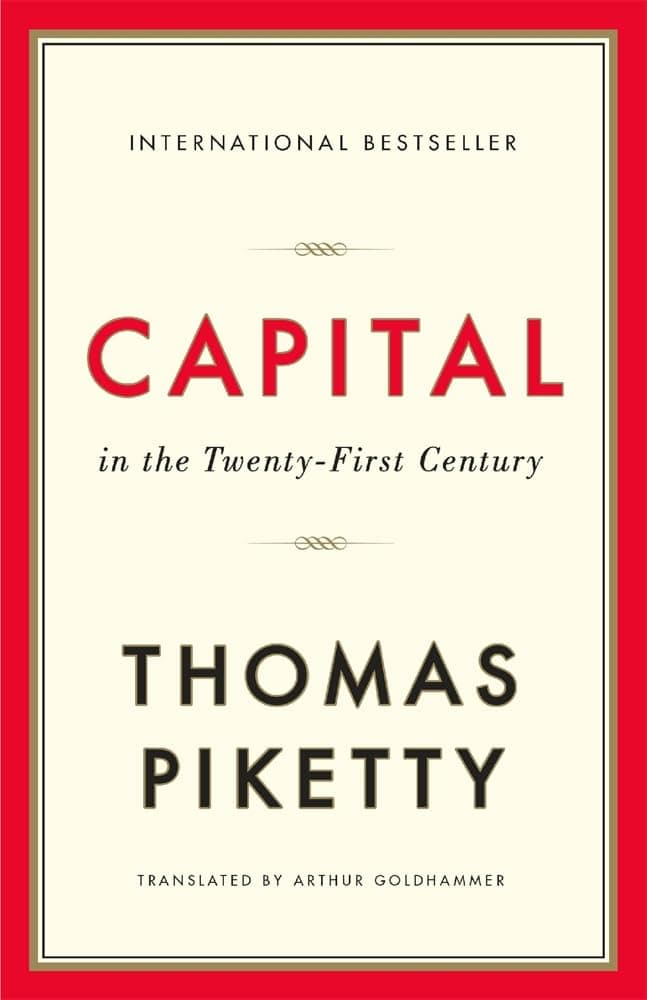
Capital
2013 · 816 pages
Piketty mined two centuries of tax records for the engine of inequality: capital grows faster than the economy, so fortunes pull away from wages. It made inequality the West's central political question.
★ 6.7
 skopia
Piketty mined two centuries of tax records for the engine of inequality: capital grows faster than the economy, so fortunes pull away from wages. It made inequality the West's central political question.

One volume carries the whole human record from the first stone tools to the present, with the causes always in view: why civilizations rose where they did, and why each gave way.

Four amateurs shaped the modern Middle East, Anderson argues, and the strangest was Lawrence, an Oxford archaeologist who led an Arab revolt knowing his government had already promised the land away.

Packer follows a Youngstown factory worker, a North Carolina biodiesel man and a Washington lobbyist from 1978 to 2012, and shows the institutions that once held Americans in place giving way to money.

Kitchen by kitchen, Alexievich recorded Soviet citizens describing what the collapse did to them. They talk about lost savings and lost faith, and a bewildering grief for the country that jailed their parents.

Heaney's late poems turn from politics toward light and air. He writes his parents' deaths and his own stroke, and in "Postscript" an Atlantic wind off the Flaggy Shore blows the heart open.

The defining novel of African immigration to America. Ifemelu leaves Lagos for university, discovers there that she is black, and turns the discovery into a blog that flays the country's racial pieties.