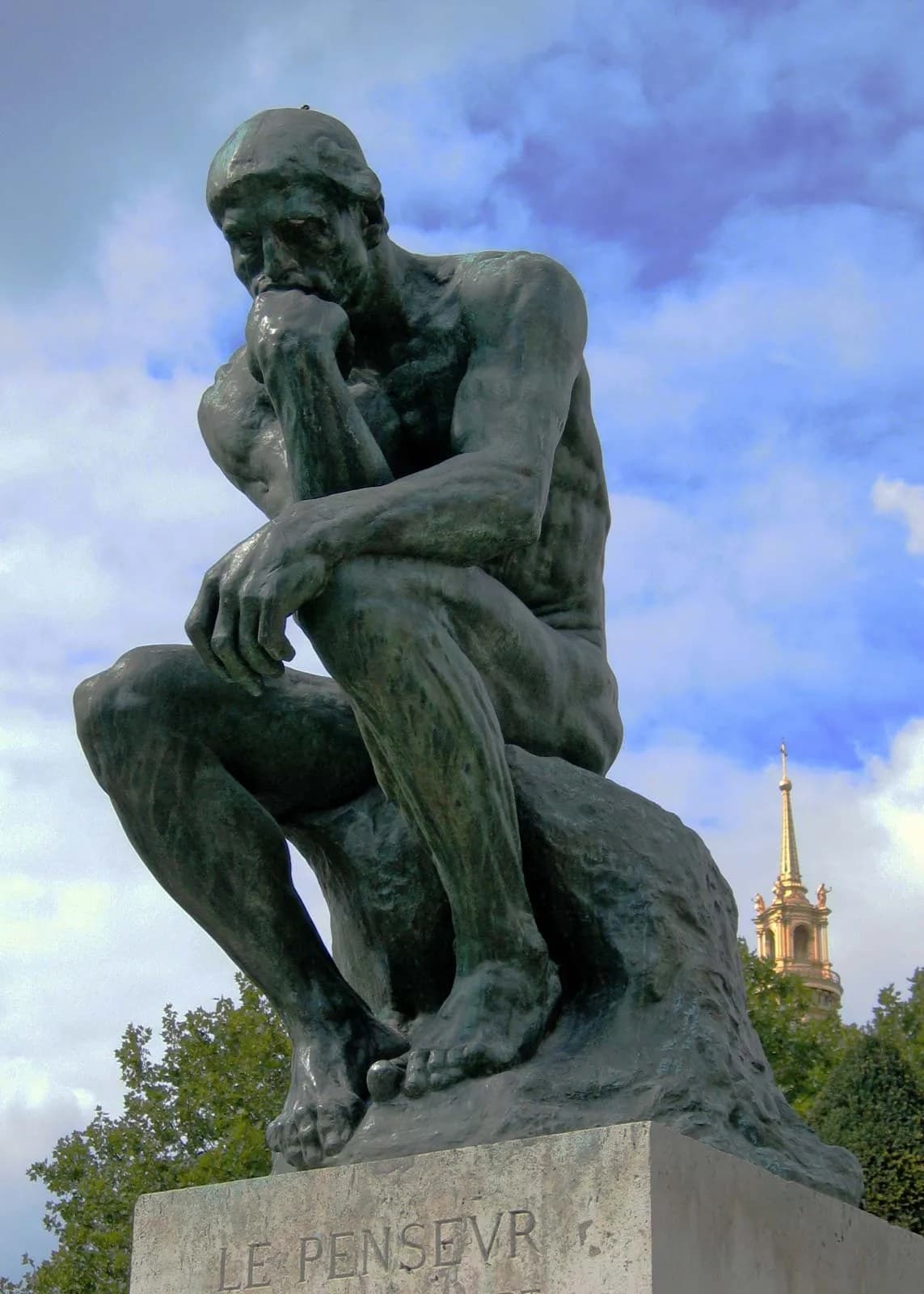
The Thinker
1904 · Musee Rodin, Paris
Rodin first made this figure as Dante brooding over the Gates of Hell, then enlarged him and set him thinking alone on a rock.
★ 9.3
 skopia
Rodin first made this figure as Dante brooding over the Gates of Hell, then enlarged him and set him thinking alone on a rock.

Five nude women stare out with their faces turned into masks, and Picasso kept the canvas rolled up in his studio for years.

Three sisters long for Moscow, a family loses its cherry orchard, and everyone talks around what hurts. Chekhov made the unspoken the real action, and modern theater took its shape from him.
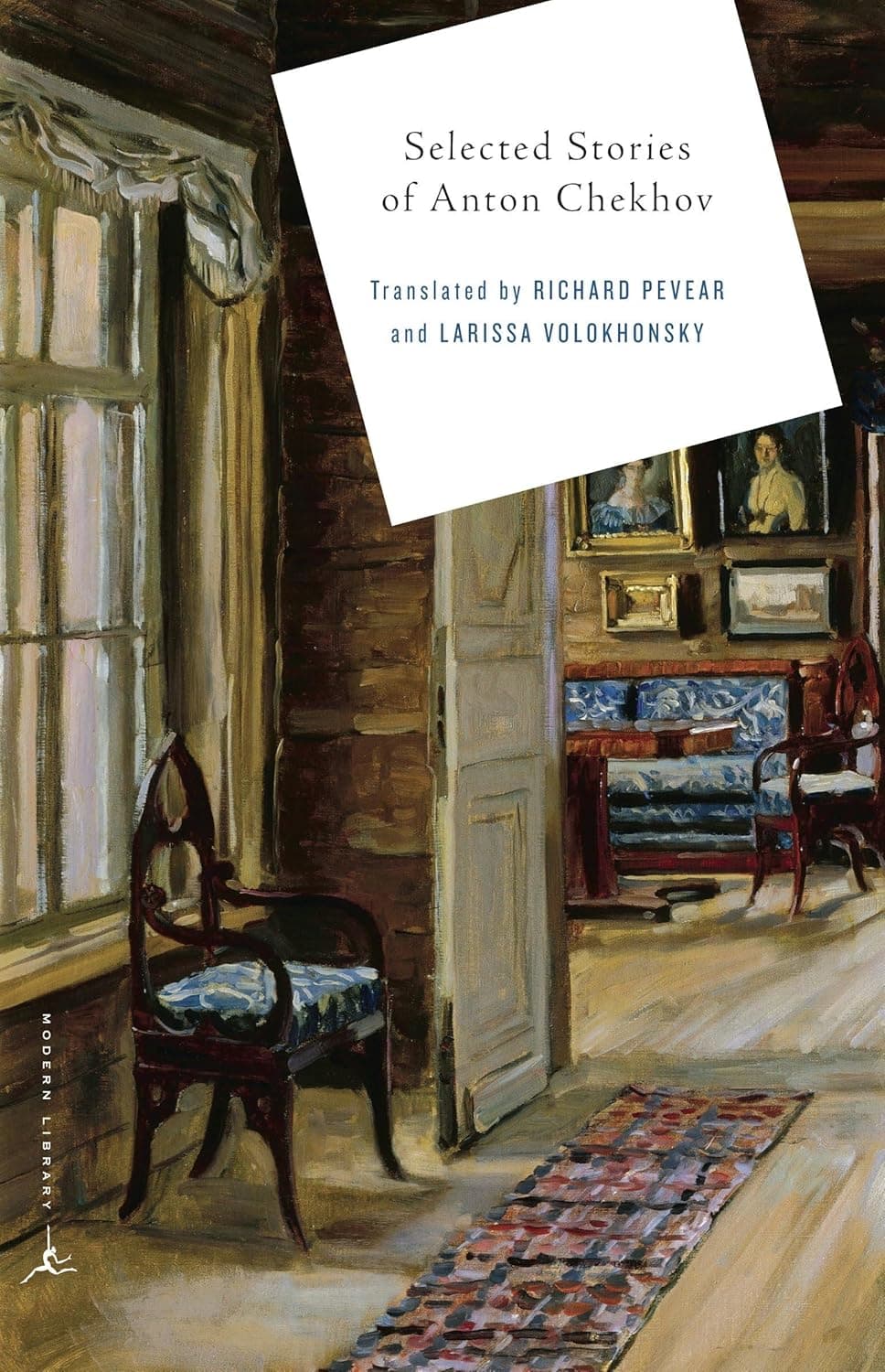
At Yalta a married man meets a woman walking a small dog and cannot shake her. Chekhov judges no one and resolves nothing, and the stories come out quietly devastating.
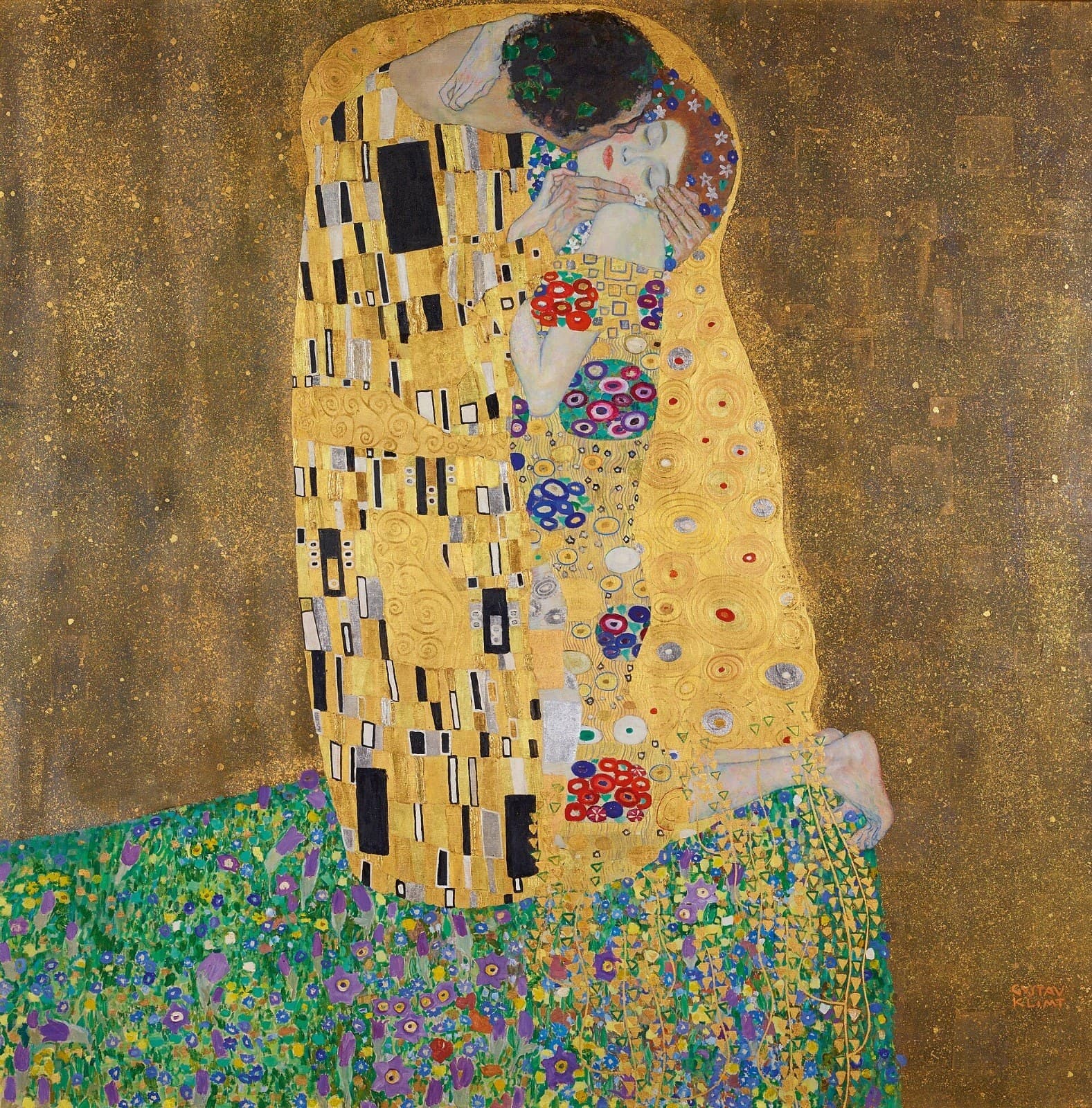
Two lovers kneel wrapped in a single gold robe, rectangles patterning his side of it and circles hers, on a meadow of flowers.
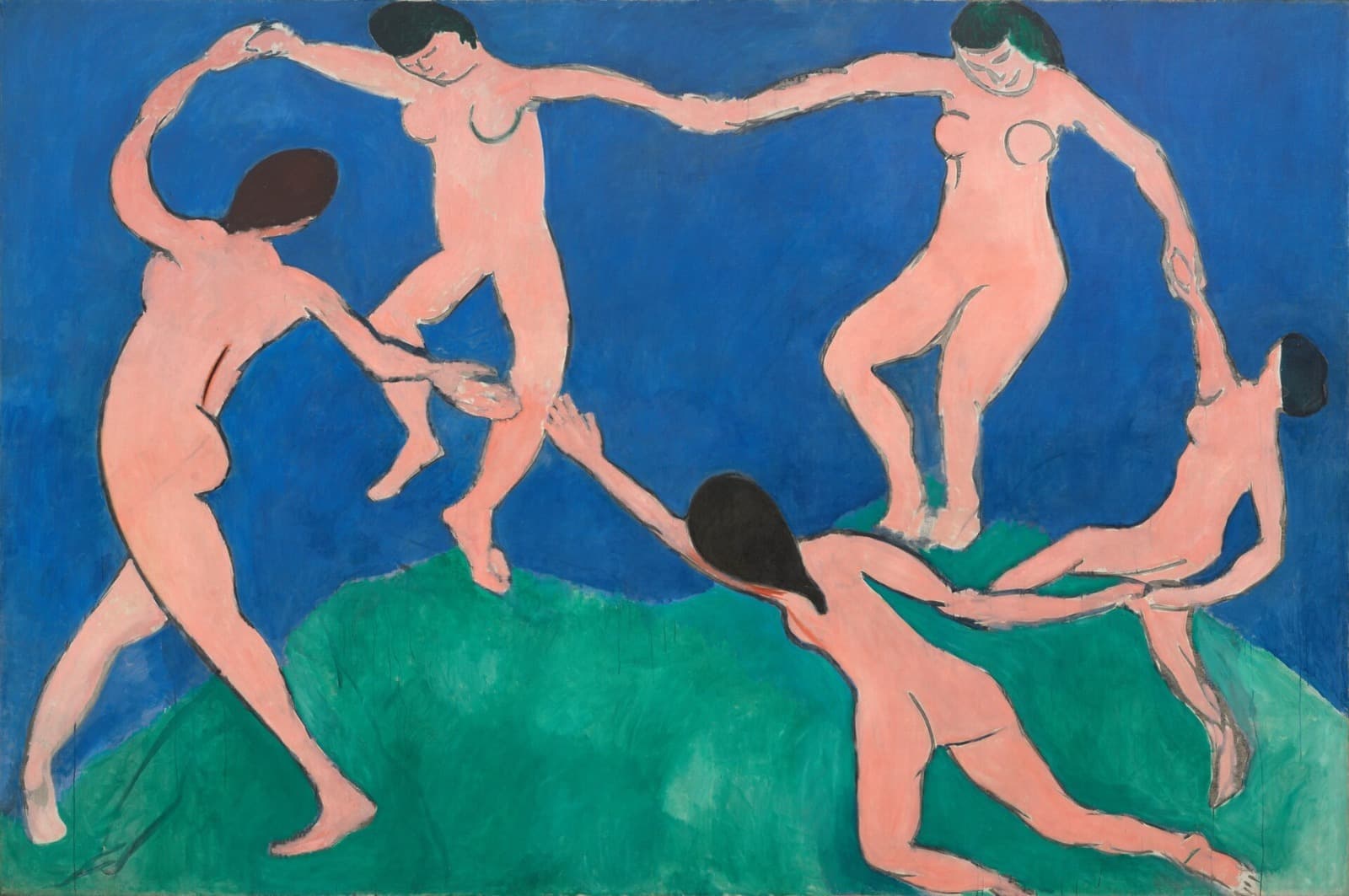
Five figures wheel in a ring against blue and green, reduced to three colors and the strain of holding hands at speed.

Nudes lounge and pipe and dance in a ring in a glade of colors nothing in nature has, a Fauve idyll from 1906.
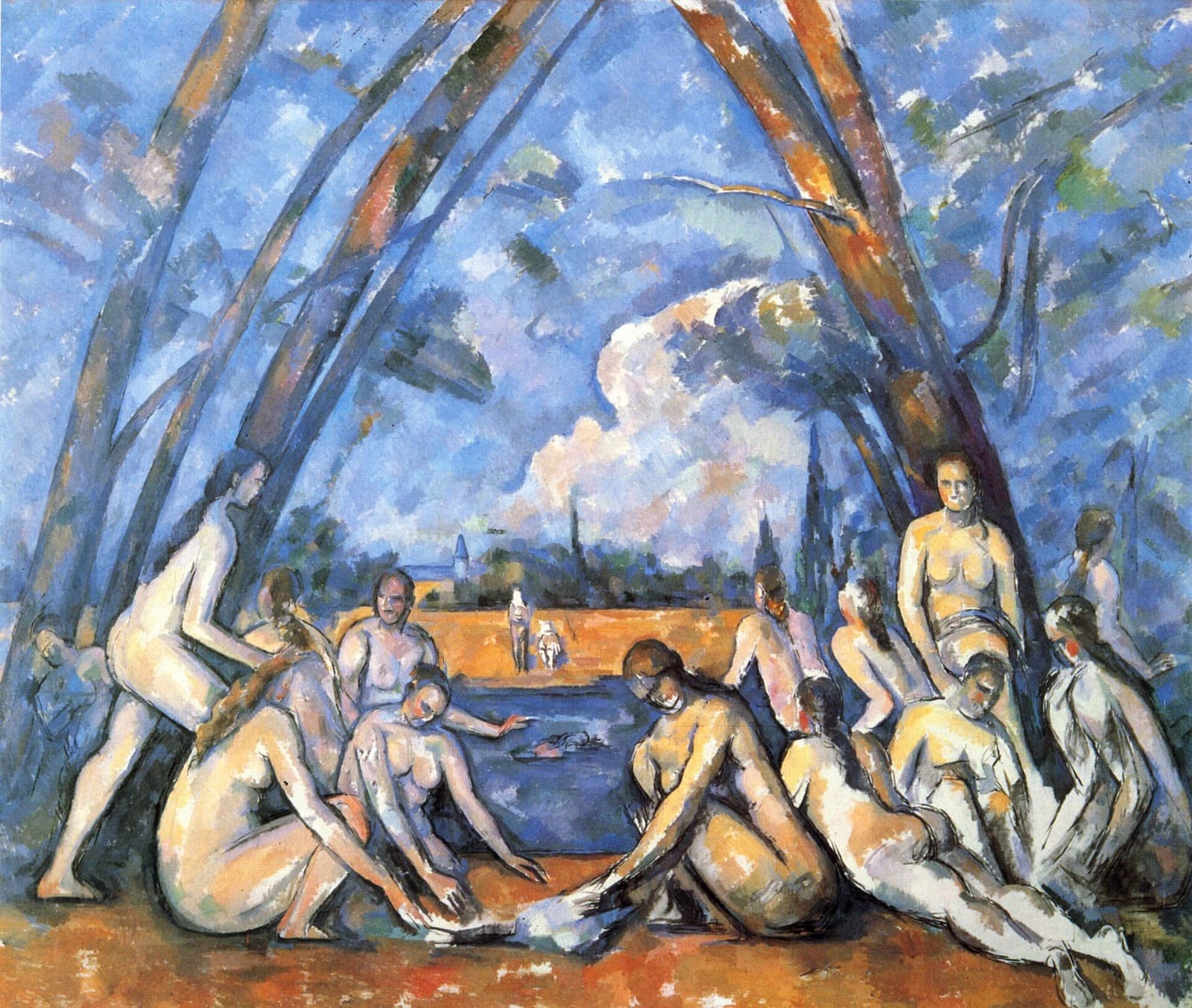
Cézanne worked on it for years and died before he finished, bending the trees inward so they rhyme with the bodies underneath.

Du Bois named the double consciousness of seeing yourself through white eyes and called the color line the problem of the twentieth century. The chapter on his firstborn son's death is unbearable.
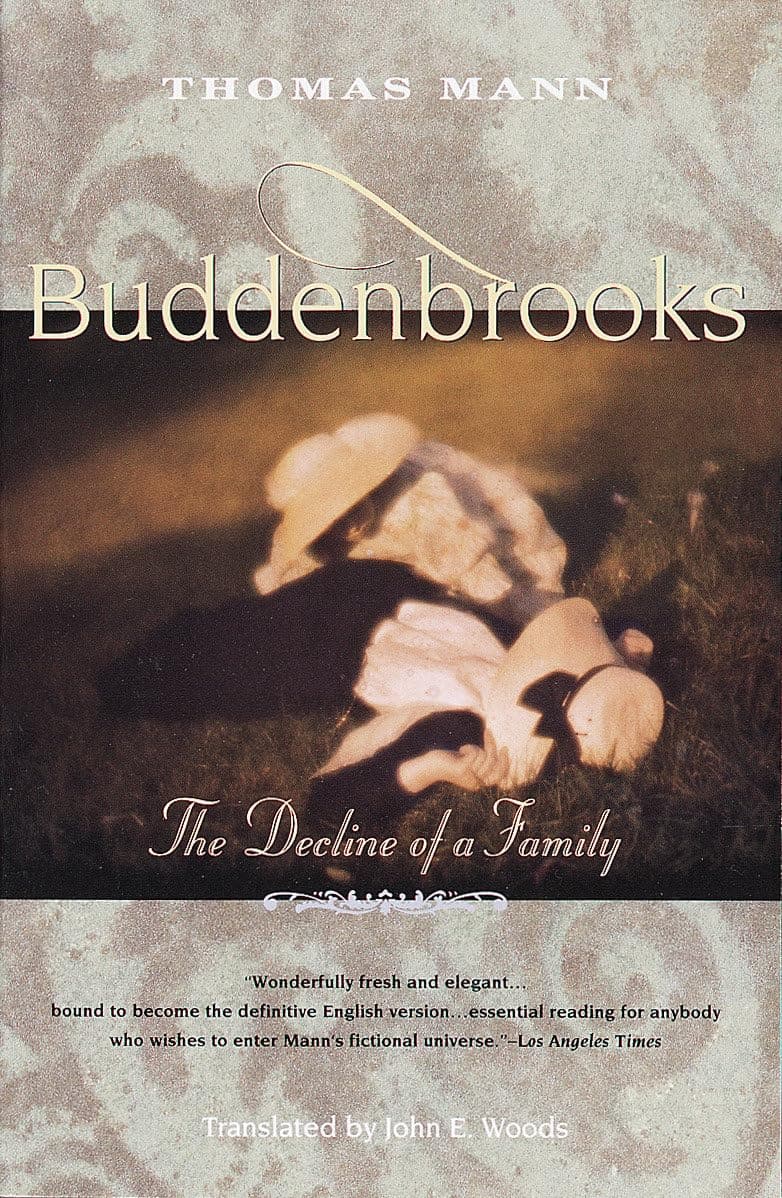
Four generations of a north German grain family run the firm, growing more refined and less fit to survive. Mann counts every dinner and funeral until the decline turns personal.

Only the face and hands are painted naturally and the rest is gold. The Nazis seized it, and a long restitution case eventually got it back.

A critic looked at this and called Matisse and his friends fauves, wild beasts, which is how the movement got its name.
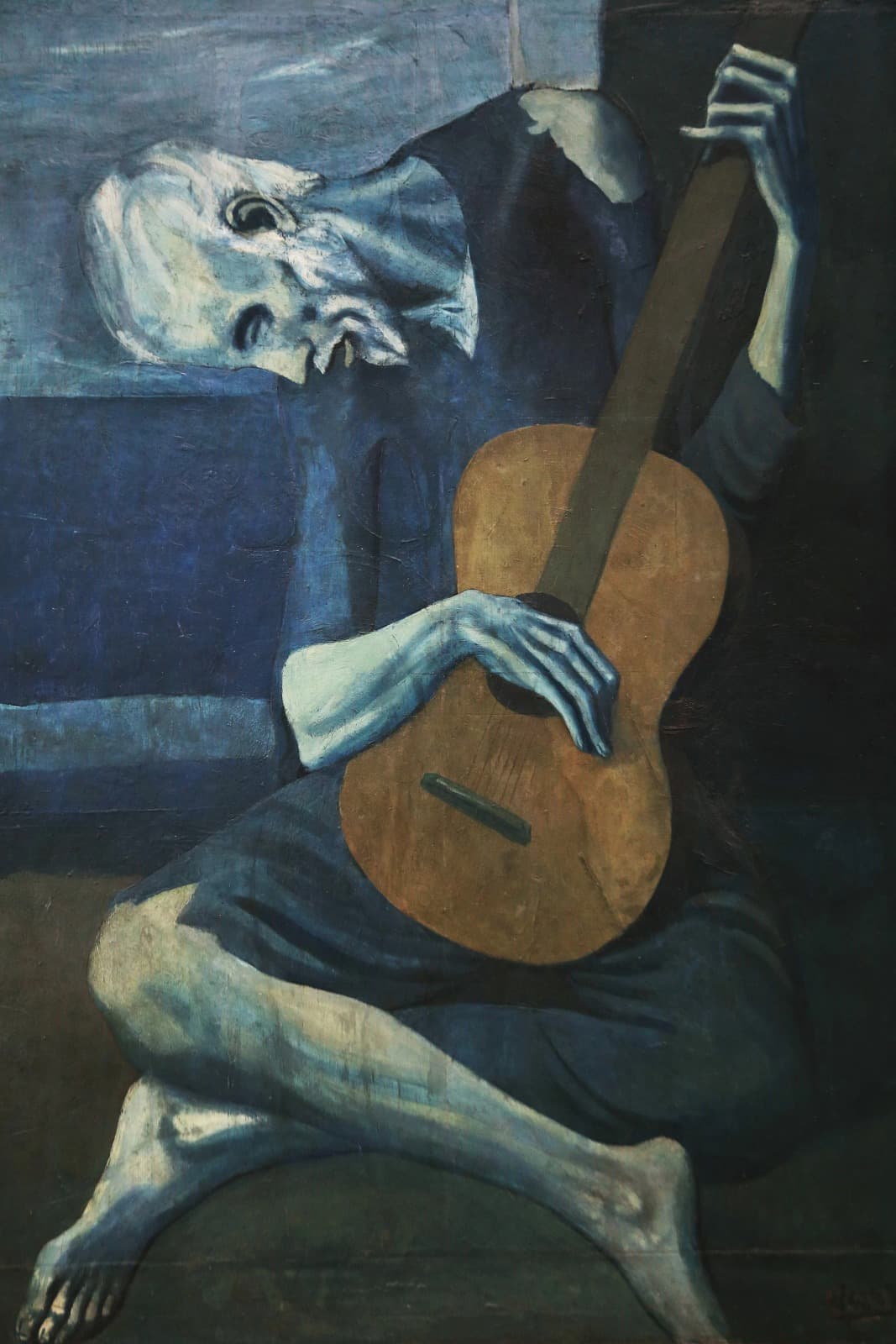
The guitar is the only warm note in the picture. Picasso painted it in his Blue Period, poor himself and living on very little.
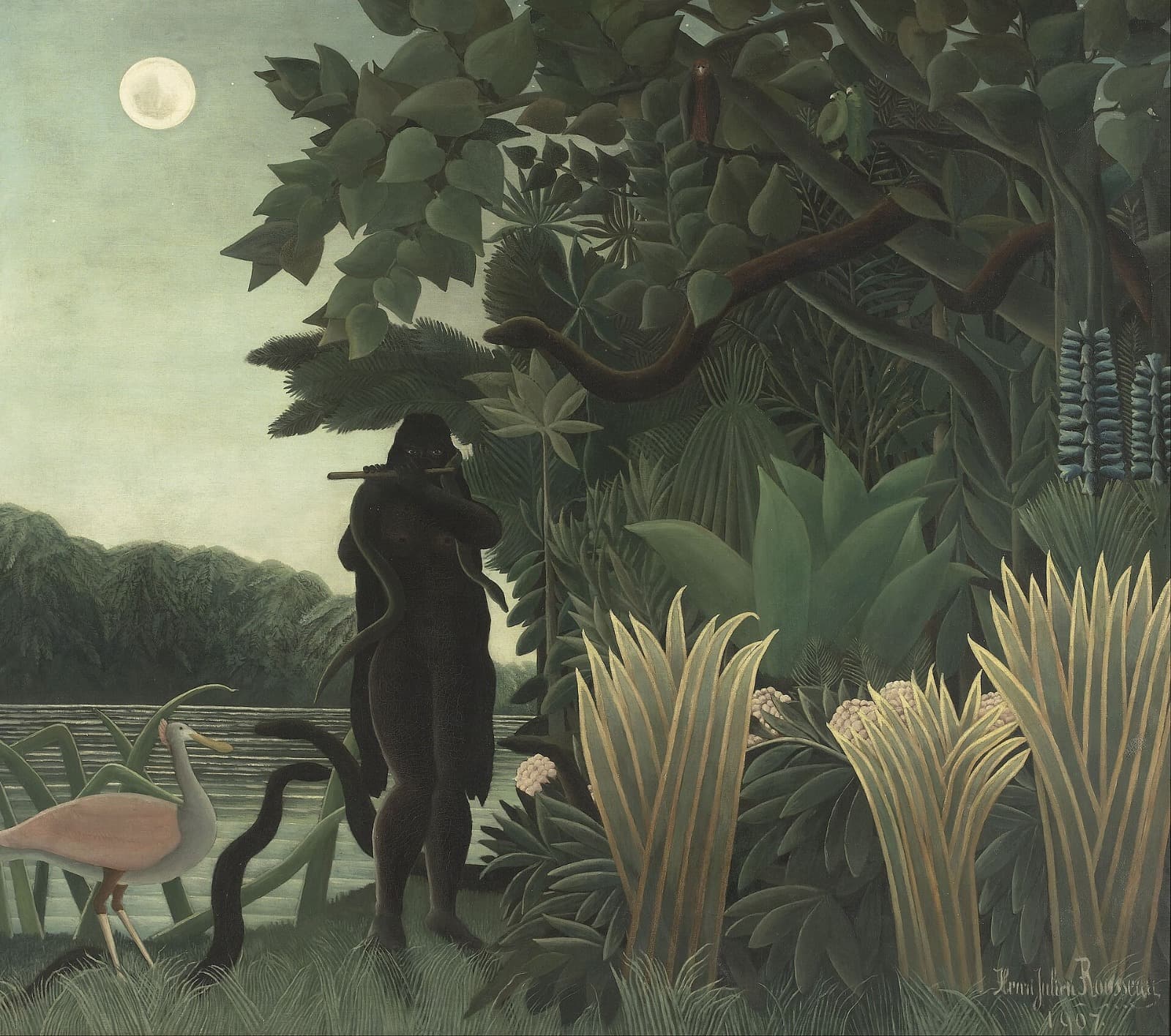
A black silhouette plays a flute and the snakes come out of the leaves toward the music, in moonlight Rousseau invented entirely.

Circus people stand together in an empty landscape without looking at each other. The Rose Period at its largest and most wistful.

Matisse ran a green stripe down his wife's face to divide warm from cool, and used color to do the work of light.
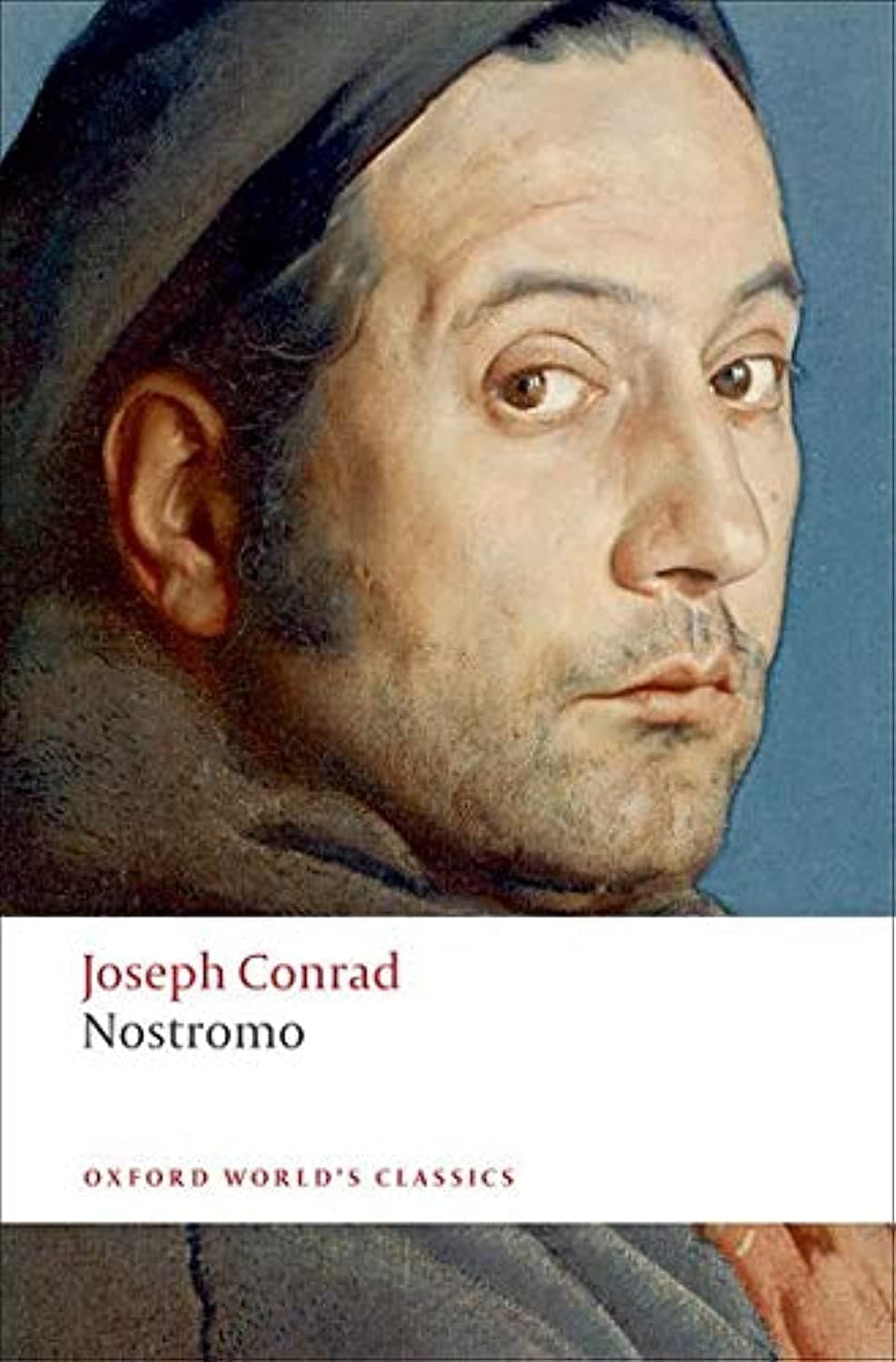
In a South American republic of Conrad's invention, silver from a mine props up a dictator, breaks a marriage, and corrupts the man called incorruptible. Conrad's anatomy of capital has not aged.
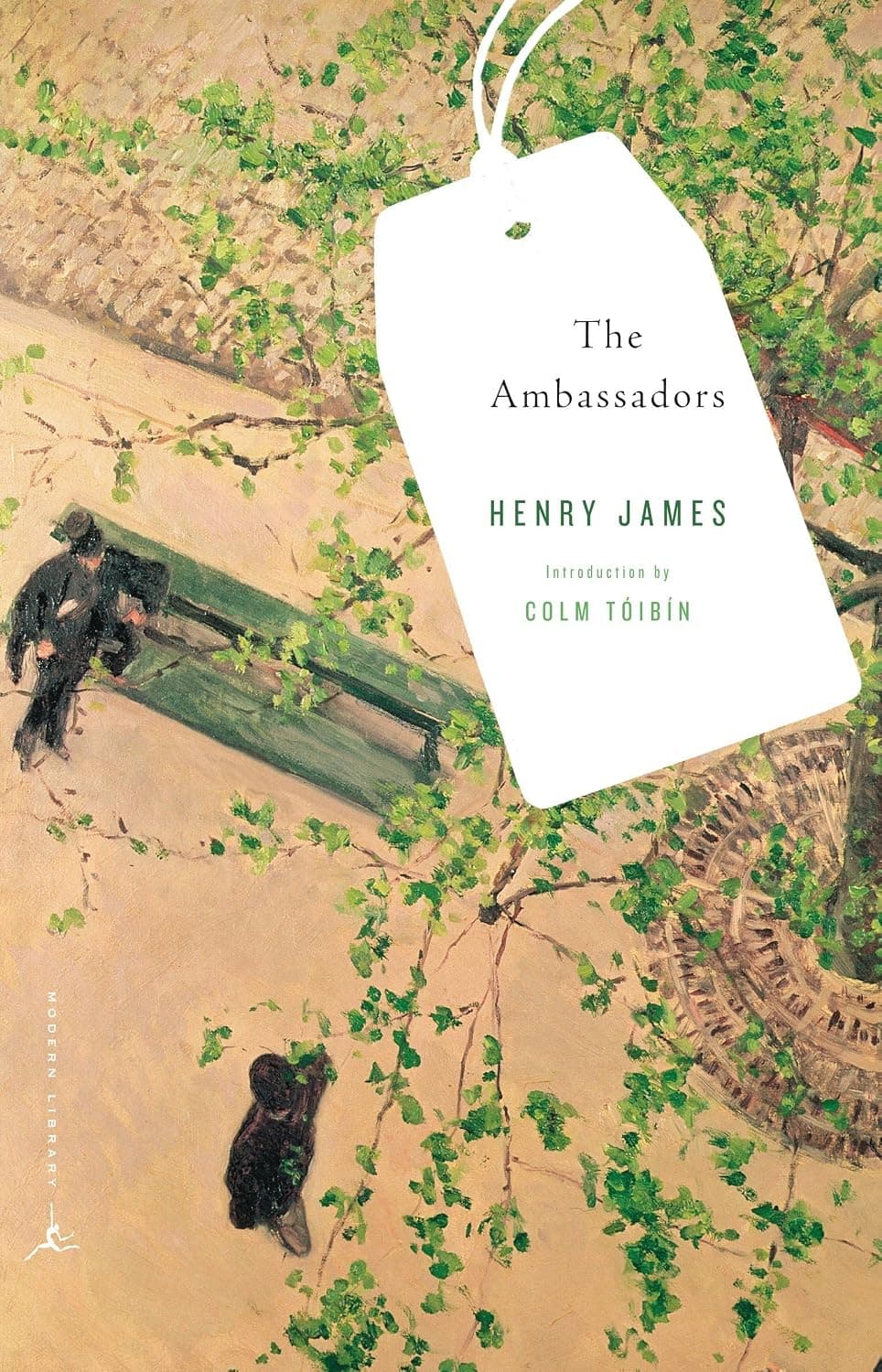
Sent to Paris to pry a young American away from a Frenchwoman, a middle-aged emissary looks around and tells a young painter to live all he can. James called it his best novel.
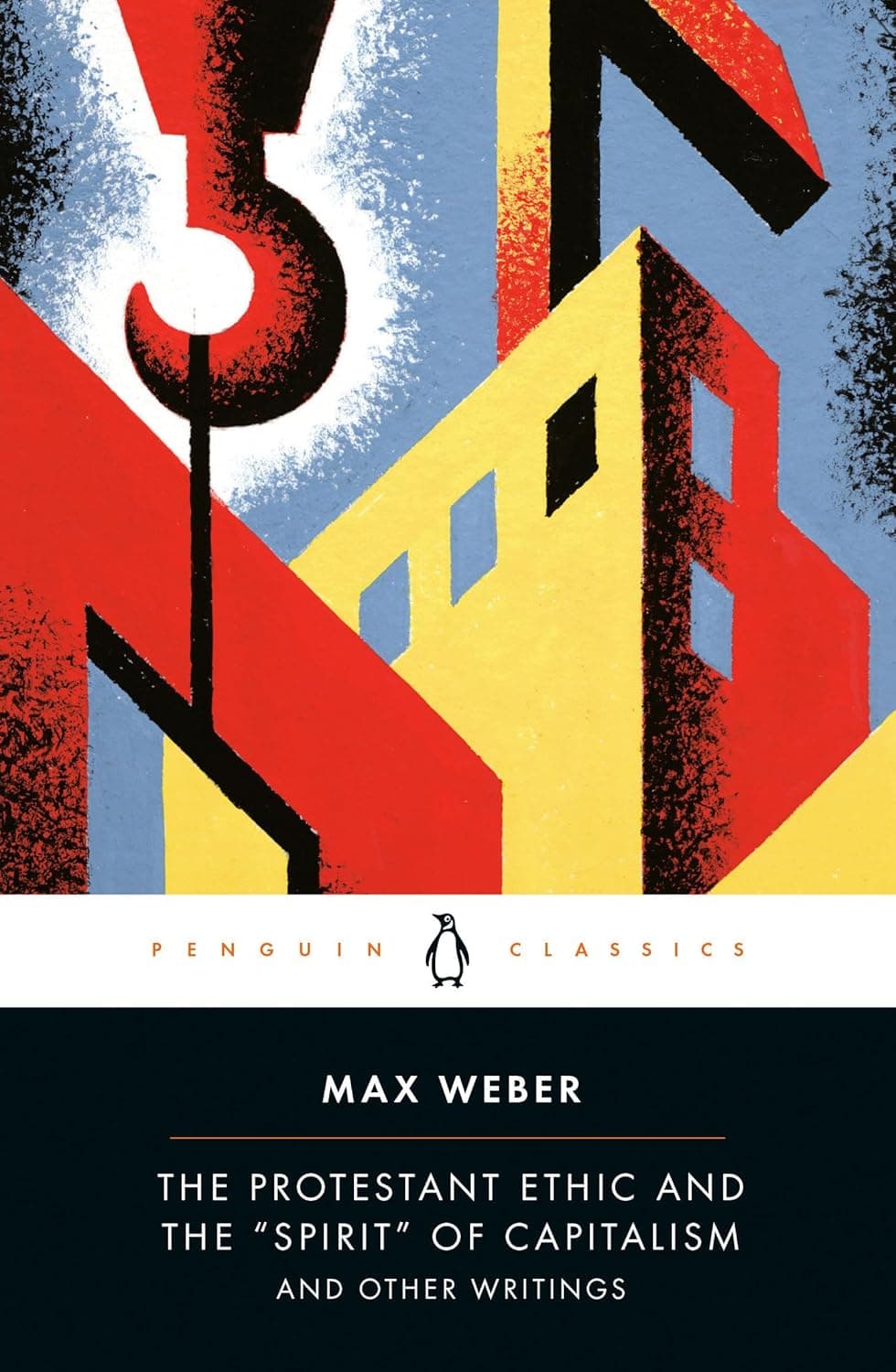
Calvinists could not know whether they were saved, so they worked without rest and spent nothing. Capitalism grew out of that anxiety, Weber argues, then shed the faith and kept the iron cage.
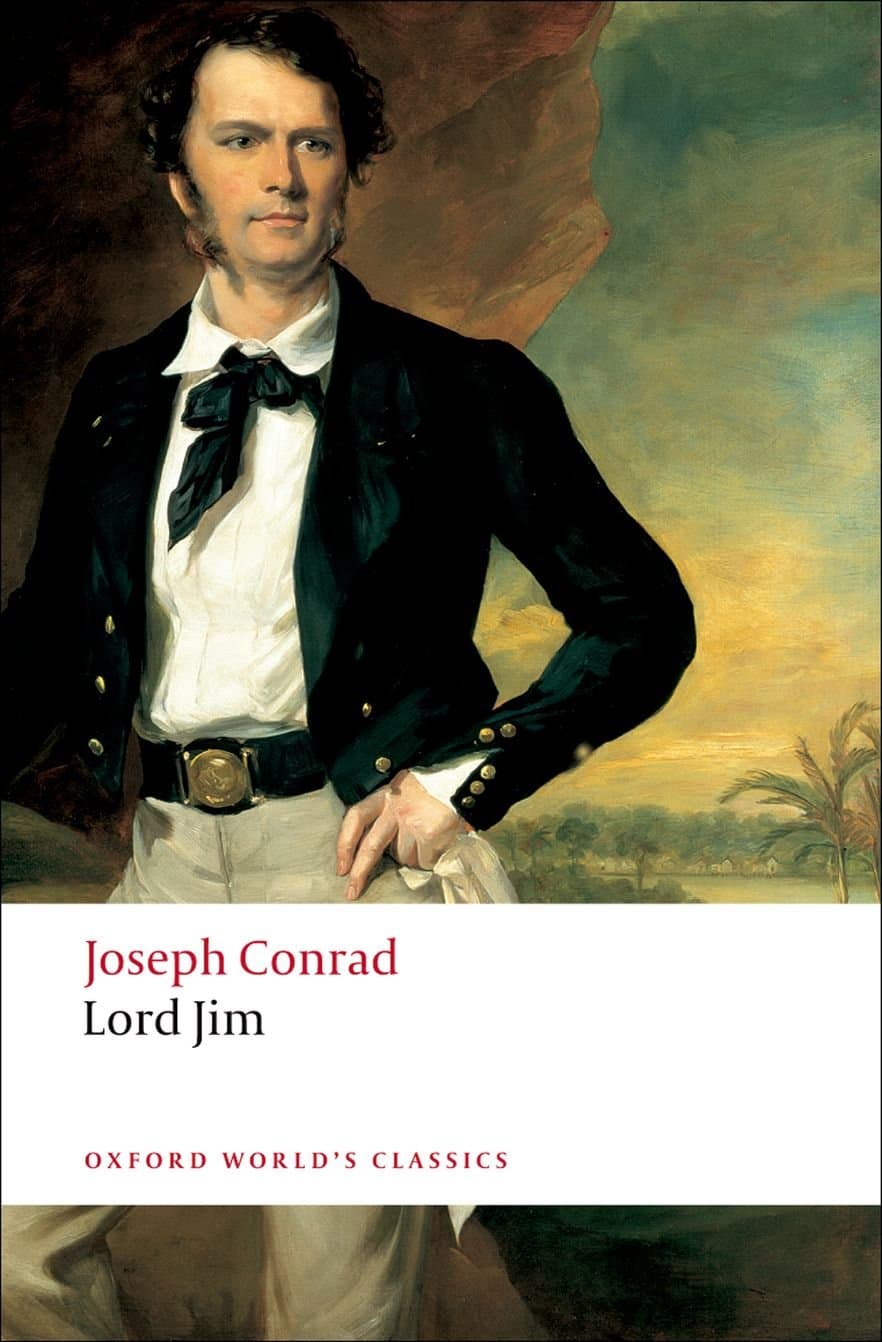
Jim jumps from a sinking pilgrim ship that then does not sink, and never afterward proves to himself the jump was not really him. Conrad makes one second of cowardice bottomless.

A woman in white waits, a woman in red dances, a woman in black stands apart. Three ages of love on a midsummer shore.

The title comes from Baudelaire and the technique from Seurat, but the color is already heading somewhere neither of them went.

James set aside doctrine and asked what religion does to a person. Gathering testimony from converts and mystics, he separates the healthy-minded soul from the sick one and judges belief by its fruits.

Lucy Honeychurch is kissed among violets on a hillside outside Florence, and Forster makes the rest a sunlit comedy about whether English respectability is worth the lie it demands of her.

Lily Bart is beautiful, twenty-nine, and unmarried, which in Old New York is a countdown. Wharton tracks her slide from ballroom to boarding house without once softening the arithmetic.
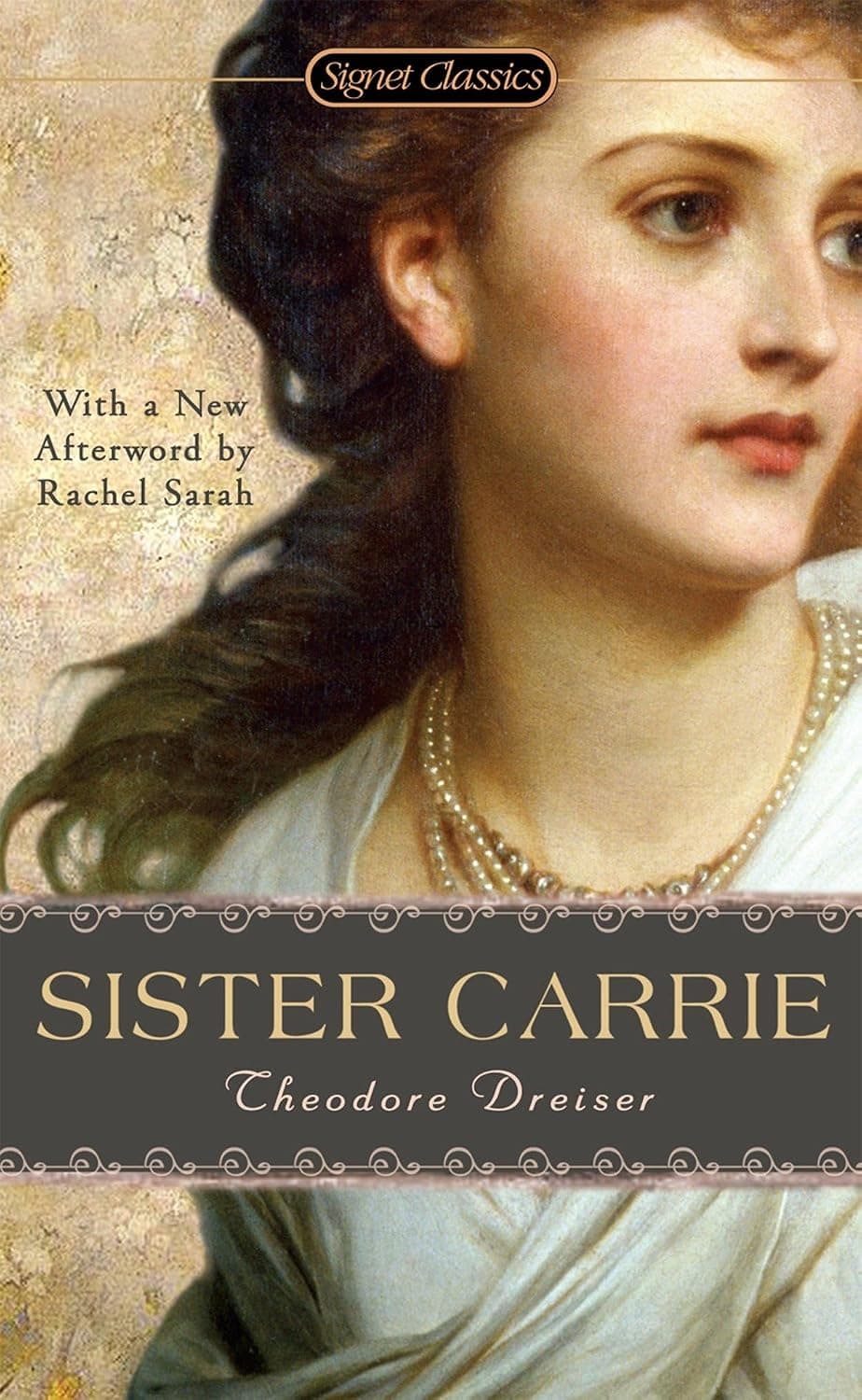
Carrie Meeber leaves Wisconsin for Chicago and rises through two men to the New York stage. Dreiser lets her prosper without remorse or retribution, and American fiction has been freer ever since.

Born wild in the Canadian North, a wolf-dog passes from a Native camp to a dogfighting pit to a man who tames him. The Call of the Wild runs the other way.

Two aging siblings send for an orphan boy to work their Prince Edward Island farm and receive a talkative red-haired girl. Anne Shirley imagines the world into something better and never stops talking.

Rousseau never left France and built his jungles from botanical gardens and prints. This one hung in the room that named the Fauves.
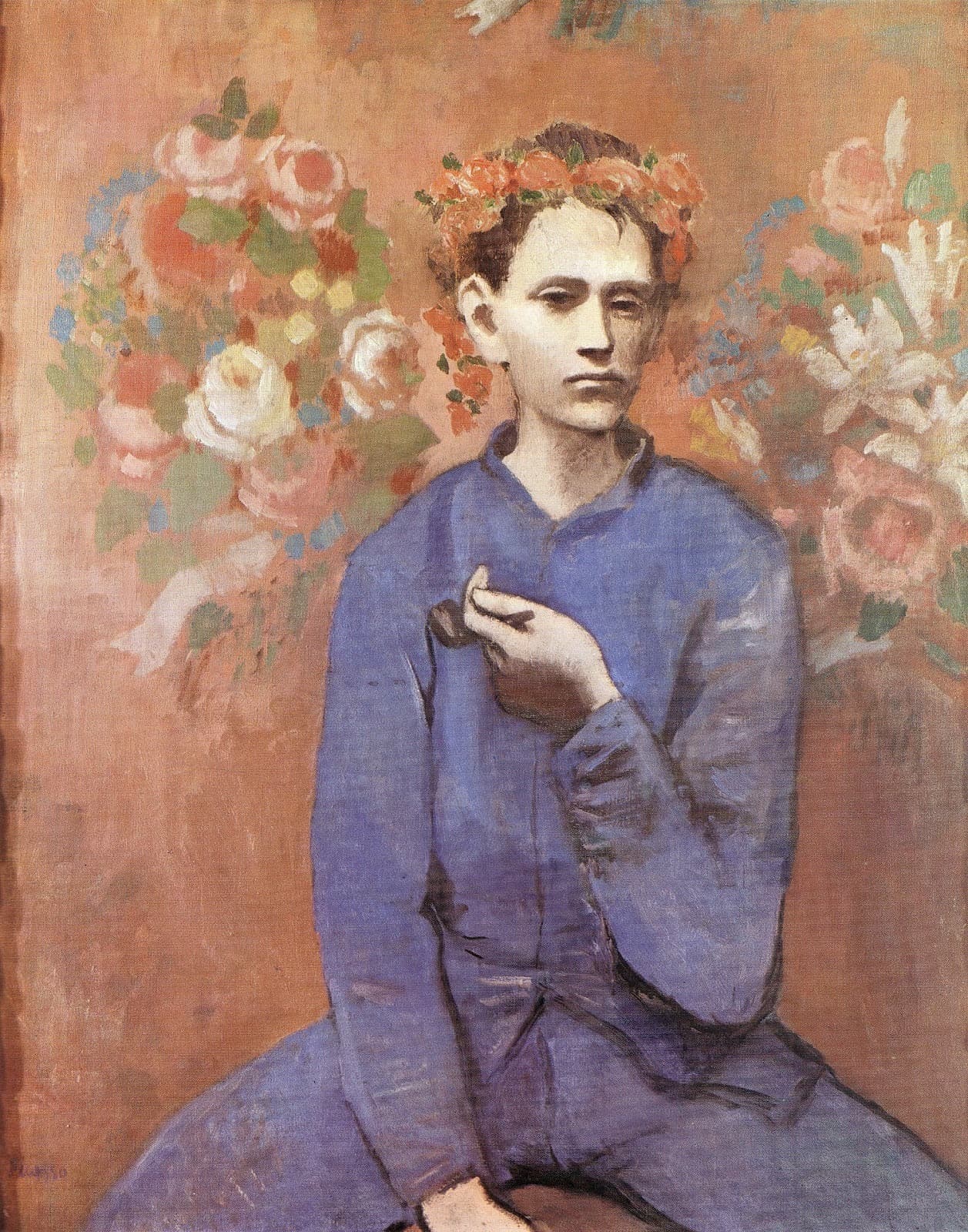
A boy from the street in a crown of roses, painted the year Picasso's blue gloom warmed into rose.
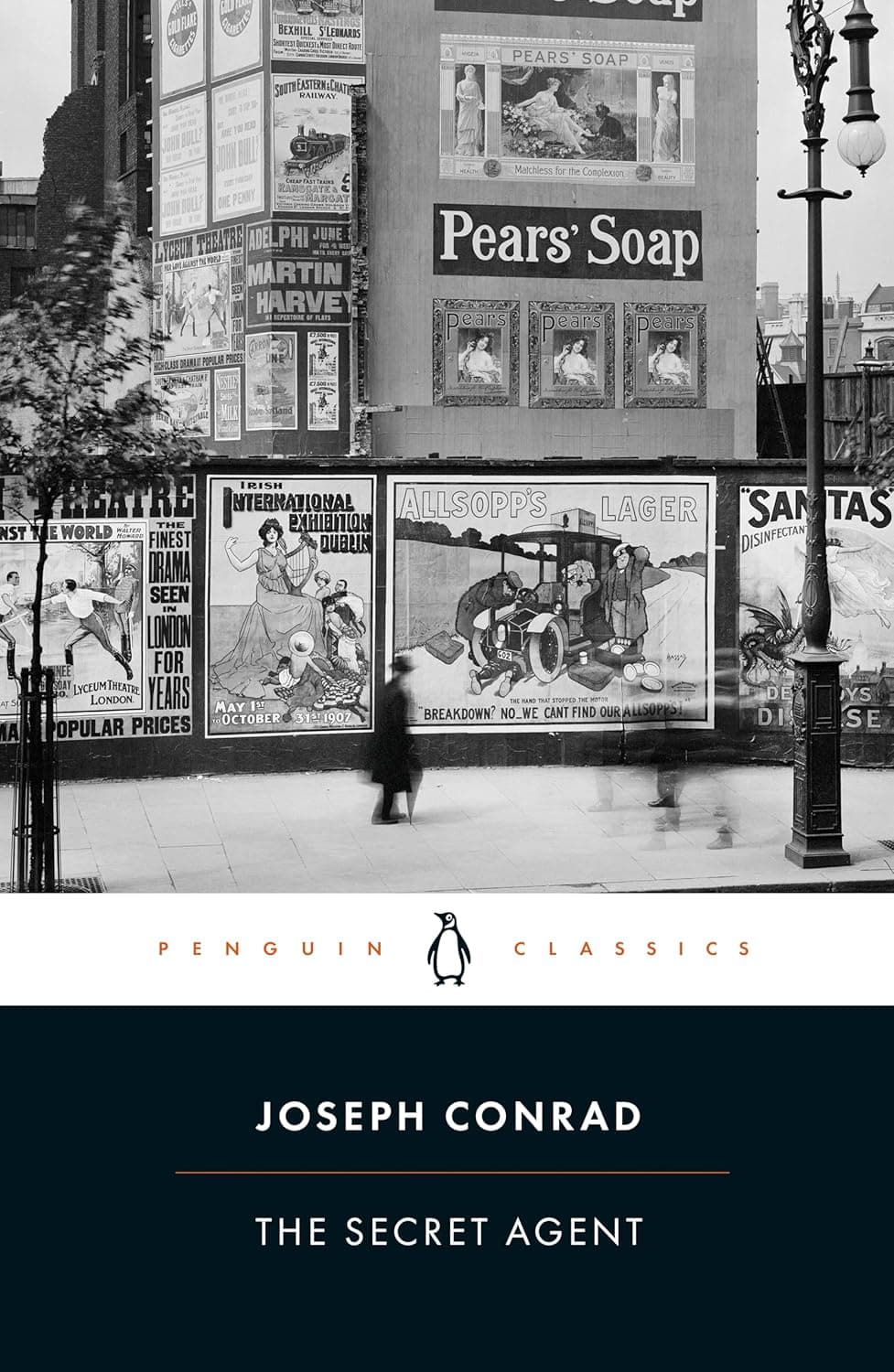
Conrad wrote the first great modern novel of terrorism. Verloc keeps a seedy London shop, informs on anarchists for a foreign embassy, and is ordered to bomb the Greenwich Observatory to frighten England.

Ten letters answer a nineteen-year-old cadet who asked whether his poems were good. Rilke declines to judge them and tells him to go into himself and ask whether he must write.
Willis, a Choctaw freedman, wrote it, and the Fisk quartet's 1909 Victor disc now sits in the National Recording Registry.

The Rose Period cooling off into something graver and more archaic, the boy and horse built like figures off a Greek relief.
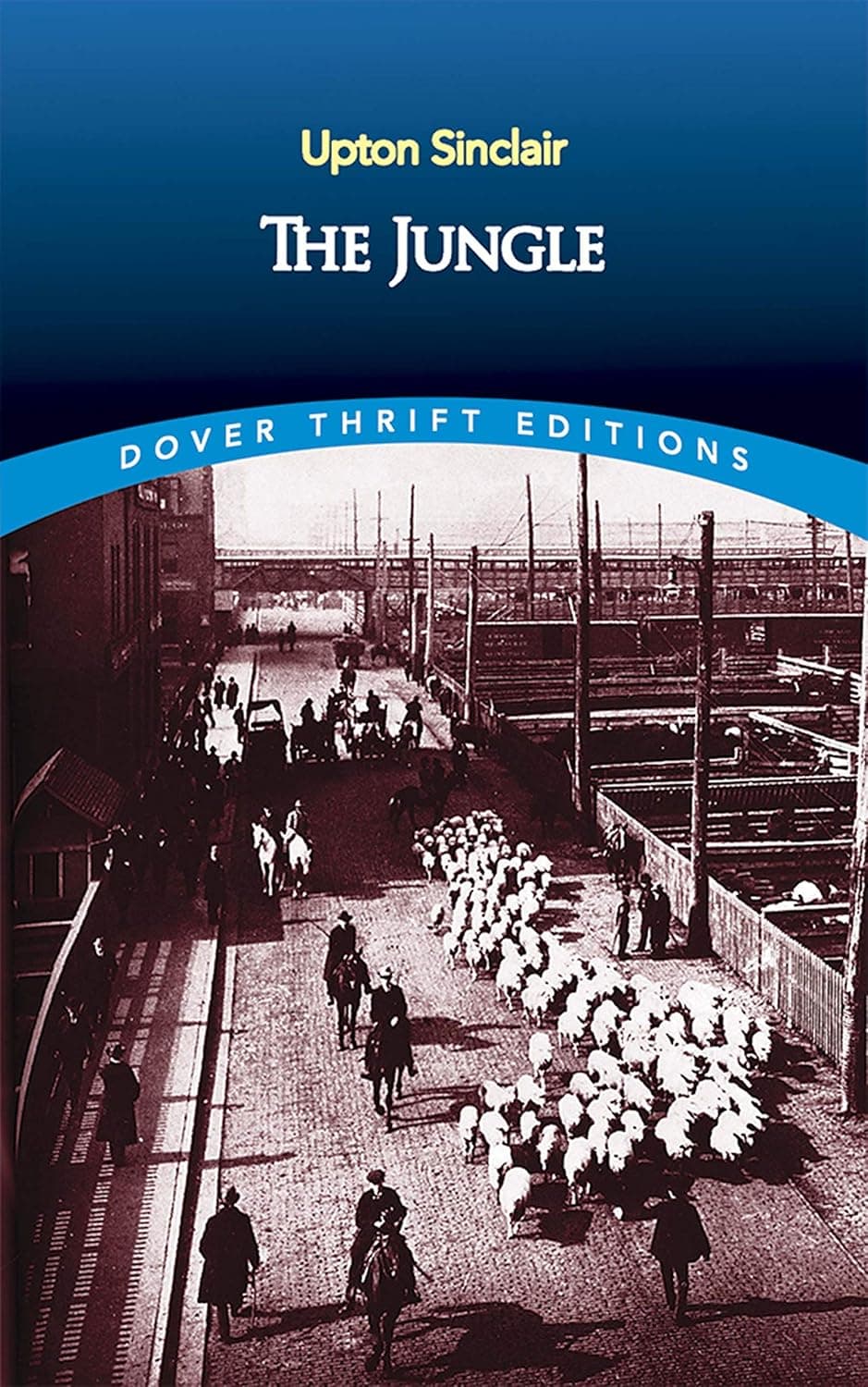
Jurgis Rudkus comes from Lithuania to work Chicago's killing floors, and the packing plants destroy his family while diseased meat ships out. Roosevelt read it and Congress passed federal food inspection within months.

Truth is not something ideas possess but something that happens to them when they work, James argues. He sets friends bickering over a squirrel to show the quarrel is merely verbal.
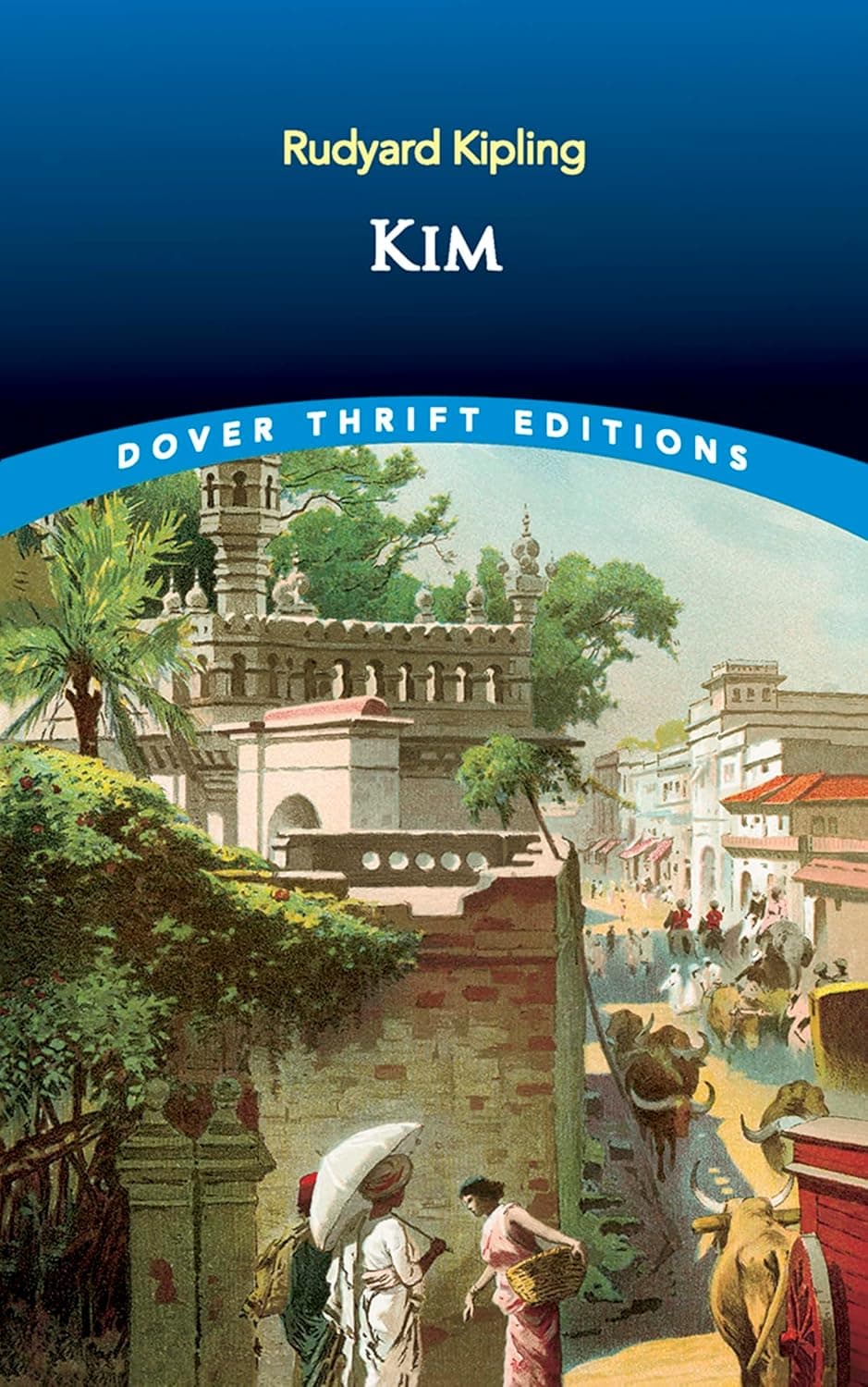
Kim, a white orphan of the Lahore streets, serves two masters: a Tibetan lama searching for a sacred river, and the British officers who train him for the spy war against Russia.

Mole abandons his spring cleaning for the river, and falls in with Rat, Badger, and the reckless Toad, who wrecks motorcar after motorcar. Grahame built the warmest world in English fiction.

Monet painted Westminster across the river again and again because what he actually wanted was the fog, not the building.

Born enslaved in Virginia, Washington built Tuskegee from nothing and wrote it up as a parable of self-help. His bargain with white America, separate as the fingers, split Black politics.

Tea began as a medicine and grew into a beverage, writes Okakura, a Japanese art curator addressing the West, who then draws from one cup an entire aesthetic of imperfection and attention.

On Dartmoor a legend says a demon hound hunts the Baskervilles, and Sir Charles lies dead with paw prints beside him. Doyle sends Watson onto the moor without Holmes.
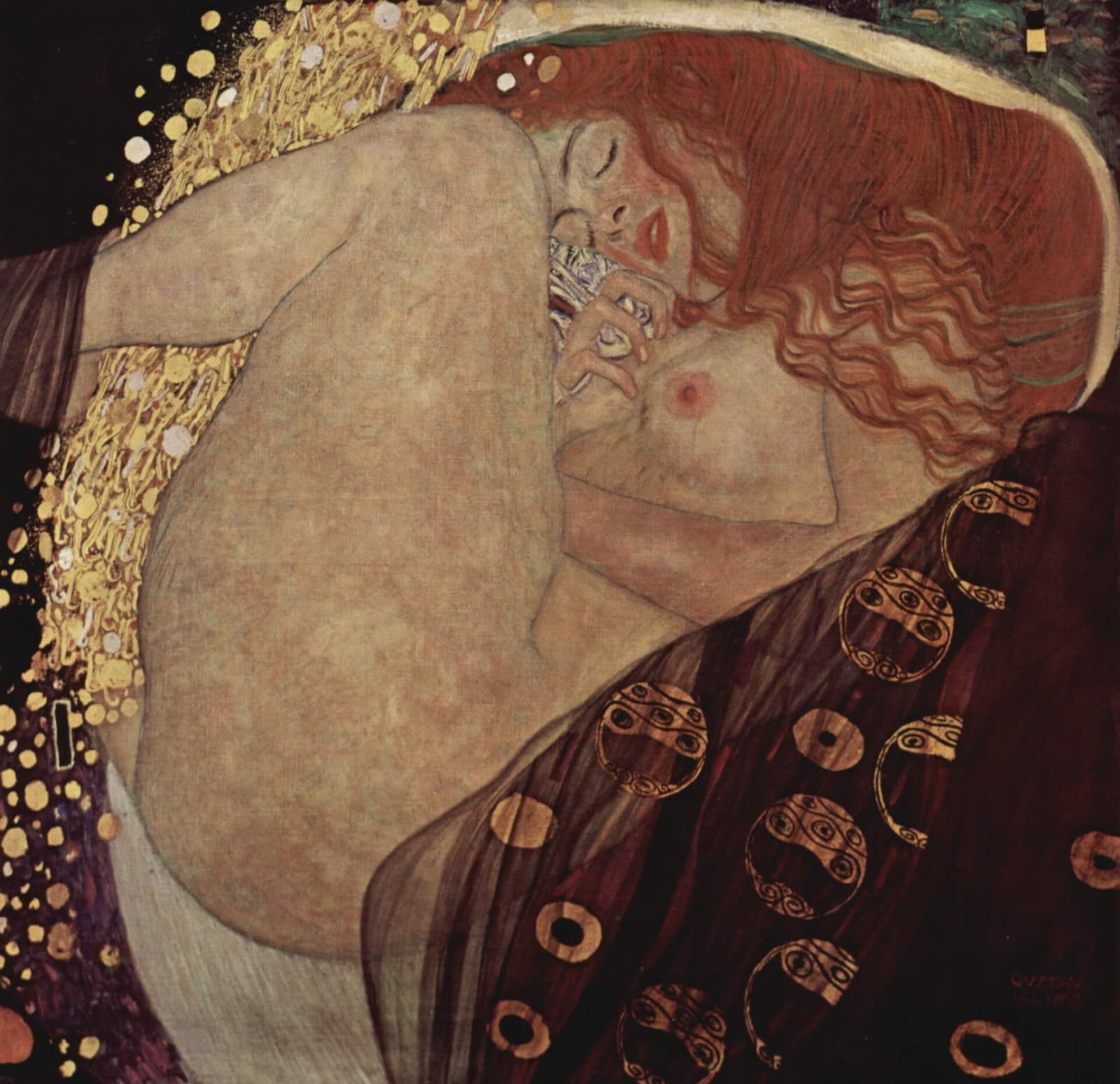
Zeus arrives as a stream of gold coins and ornament between her thighs, and Klimt makes no attempt to be subtle about it.
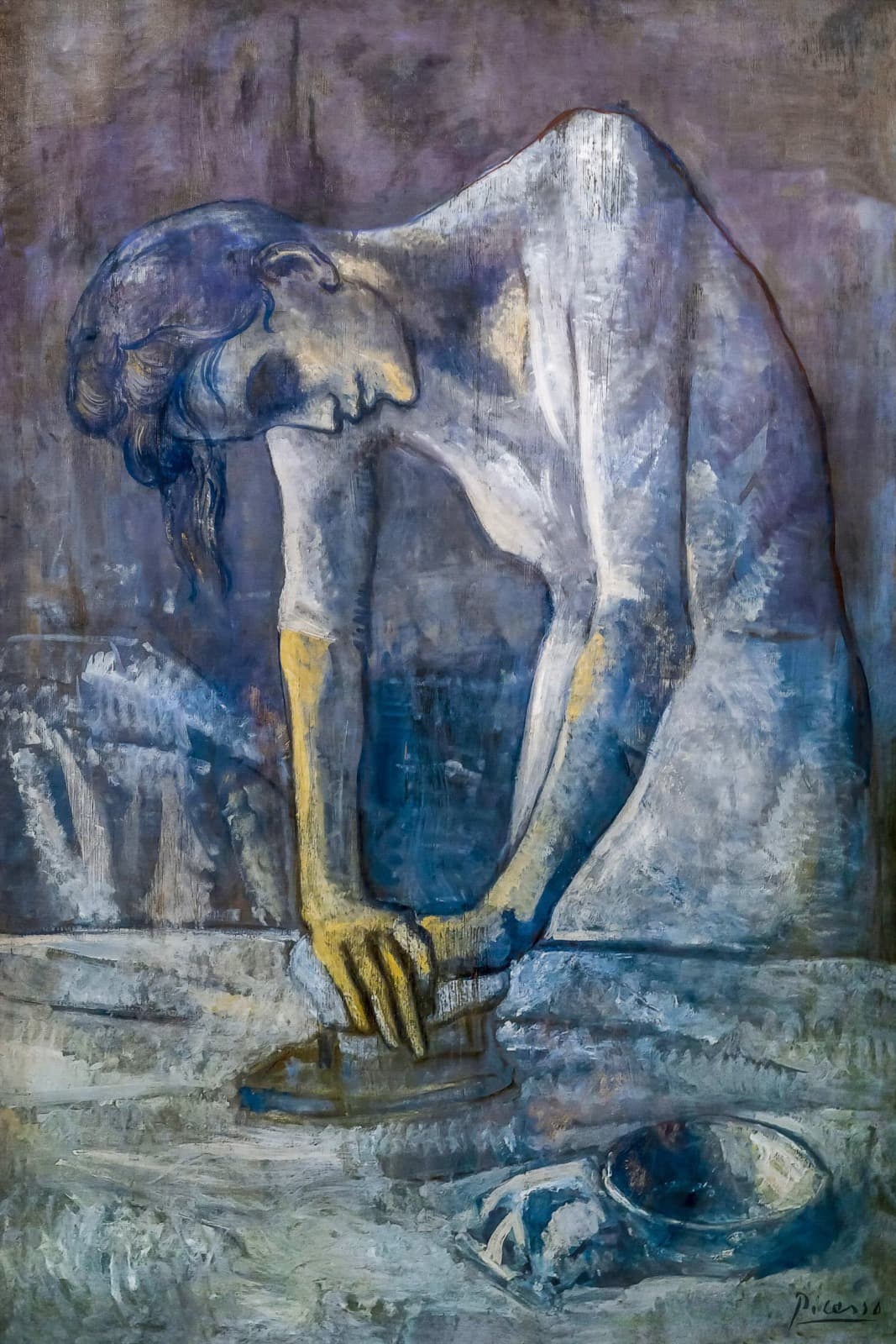
The laundress bears down on her iron with her shoulders up and her head sunk, all in the cold blue of Picasso's poorest years.

Cézanne cared less who the man was than whether the head would hold together as structure, and the slight asymmetries keep it alive.
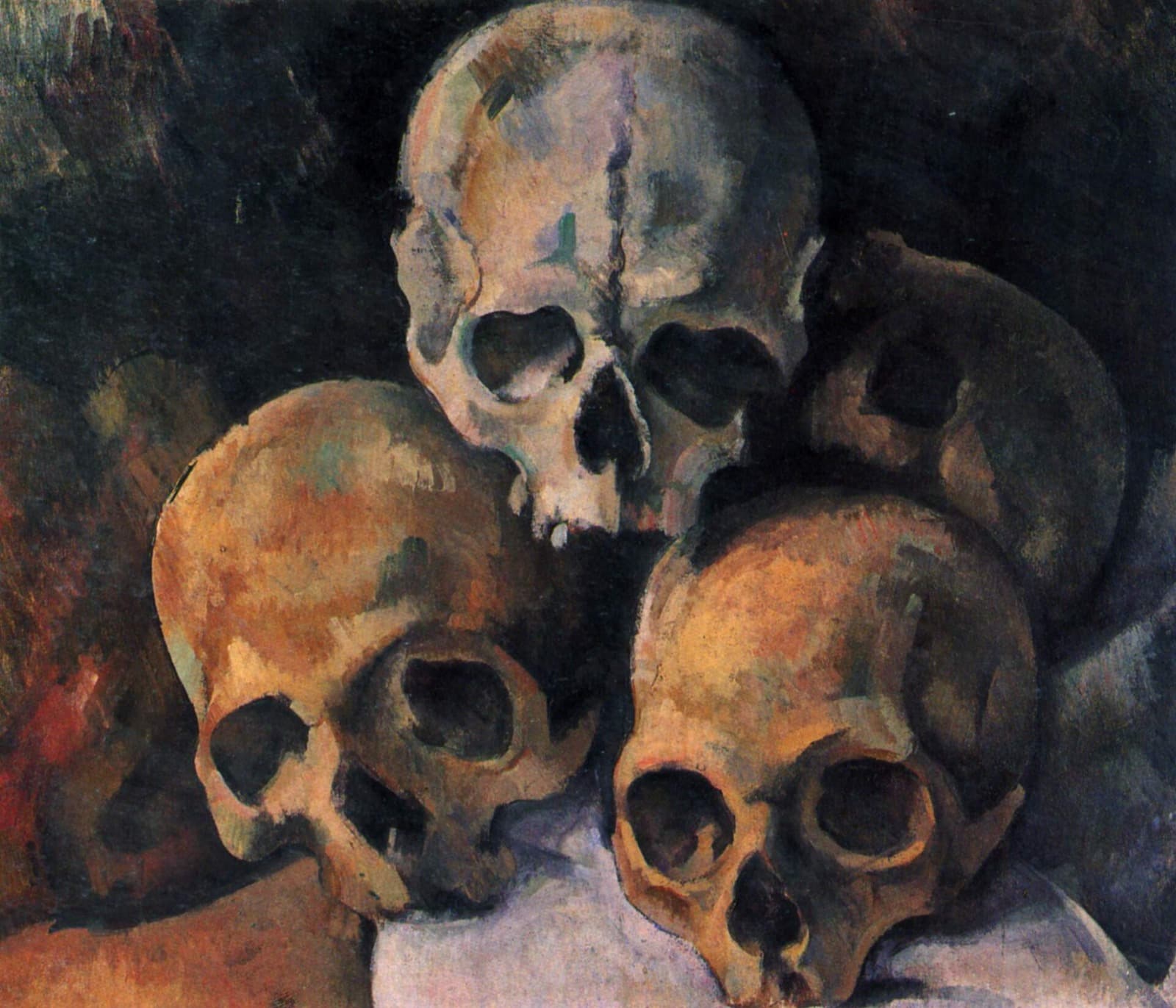
Four skulls stacked on a tabletop and lit straight on. Cézanne kept coming back to the skull in his last years, never this frontally.

Theobald Pontifex beats piety into his son with perfect Christian conviction, and Ernest spends the novel working free of him. Butler handed the revolt against Victorian respectability its sharpest and funniest weapon.

Slocum rebuilt an oyster sloop, left Boston in 1895, came back three years later the first person to circle the earth alone. He recounts it in the practical voice of a working sailor.

Notre-Dame across the Seine in a few dark summary strokes, painted before Matisse's color went off and Fauvism happened.
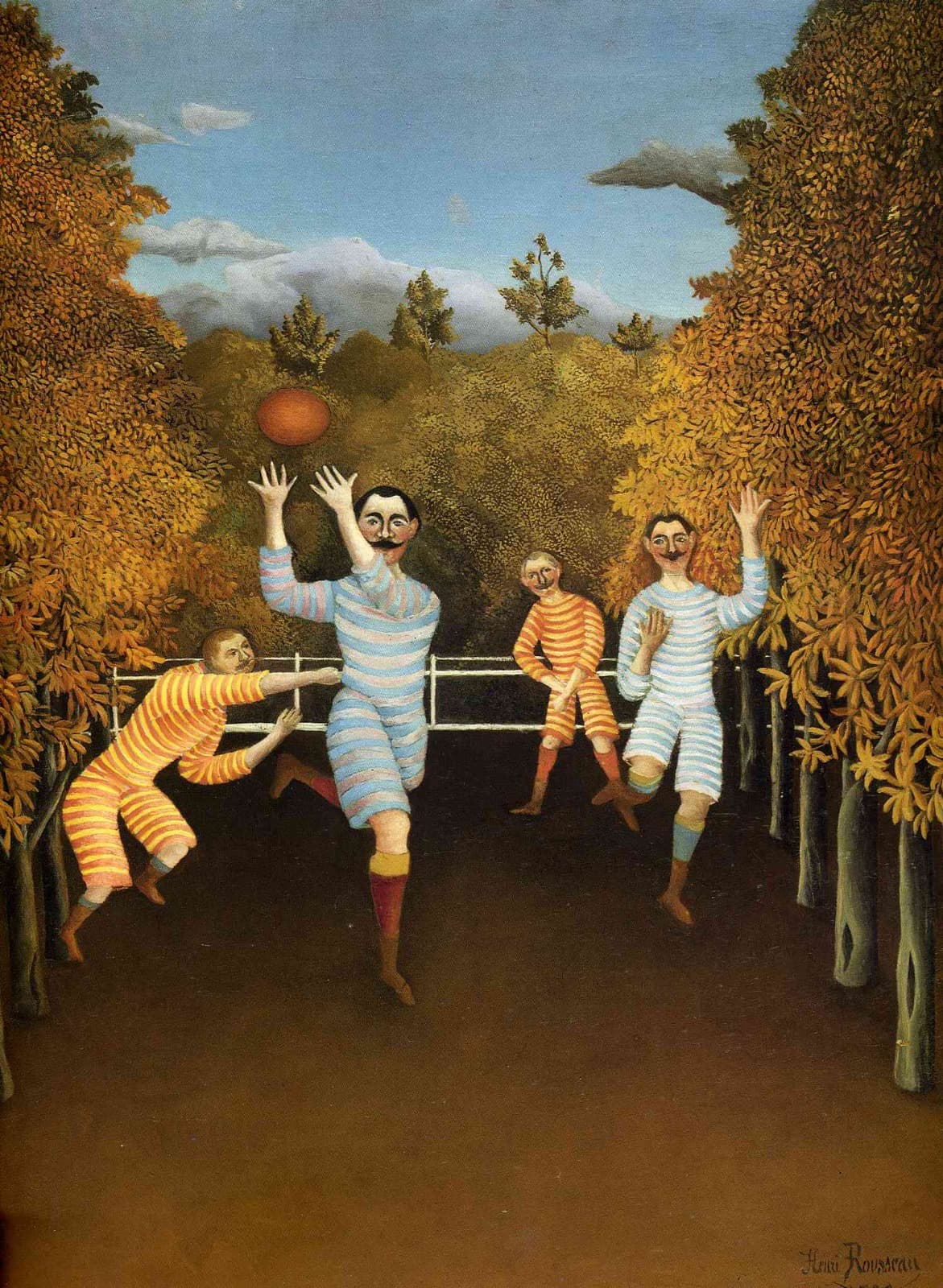
Moustached men in striped jerseys leap for a ball among autumn trees, playing the new game of rugby as though it were slow ritual.
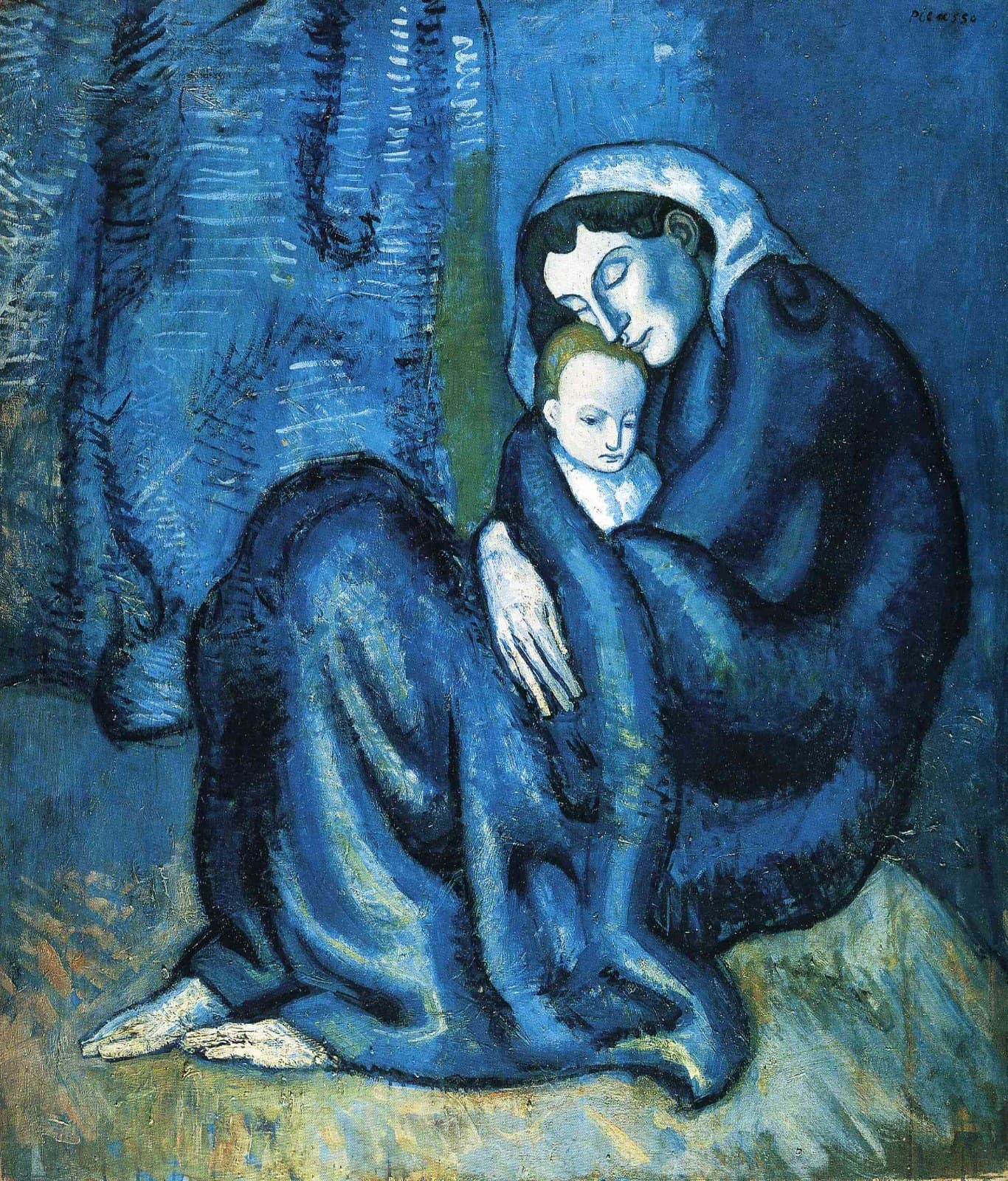
A mother holding her child, in the blue Picasso used for everything during the years he was poor in Paris and Barcelona.
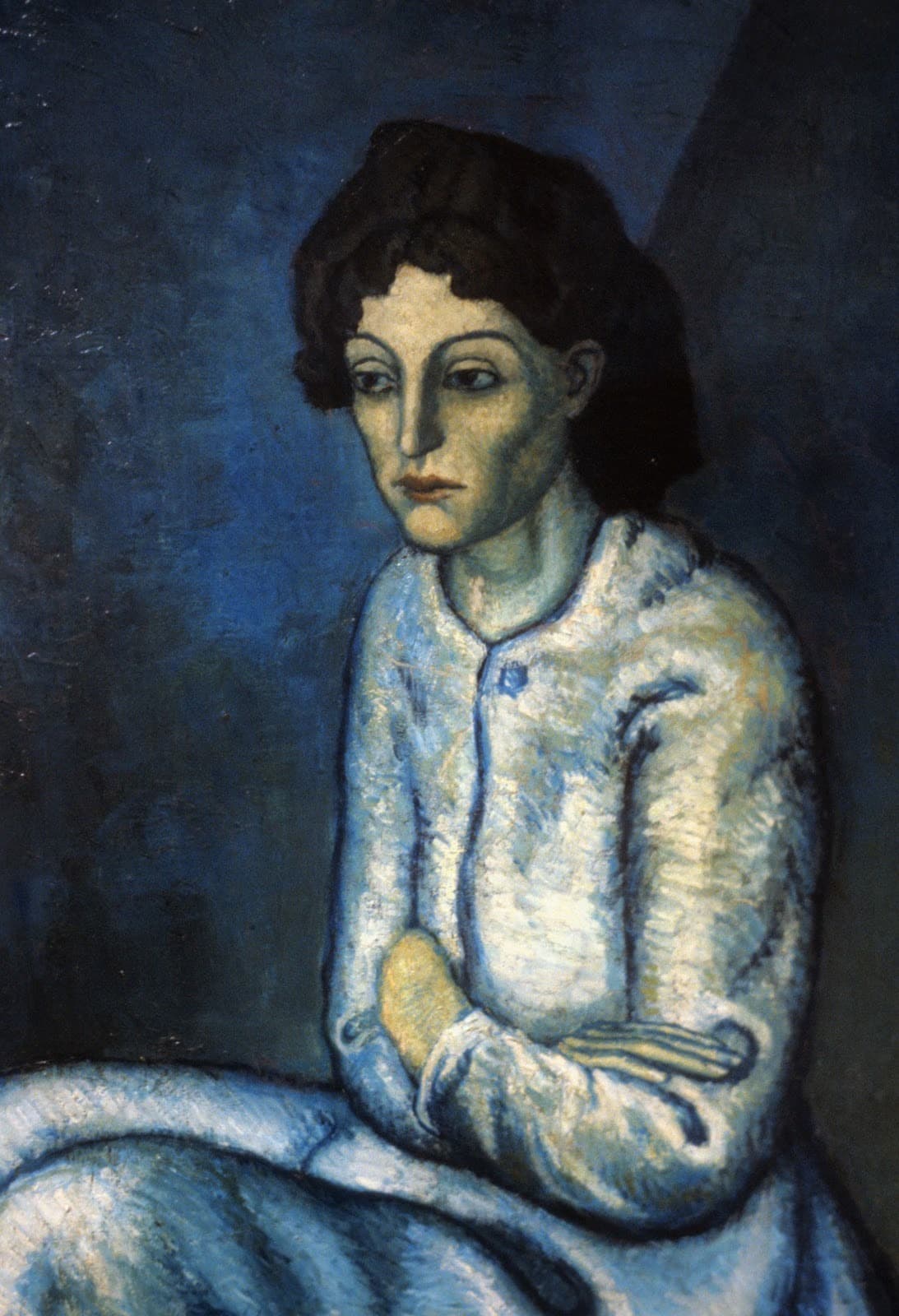
Her crossed arms are a wall against the world, and the blue does the rest. Picasso was painting the outcast and the destitute.

Signac moved to Saint-Tropez and pulled the rest of the Neo-Impressionists south. Seurat's tight dots have loosened into bigger, brighter tiles.
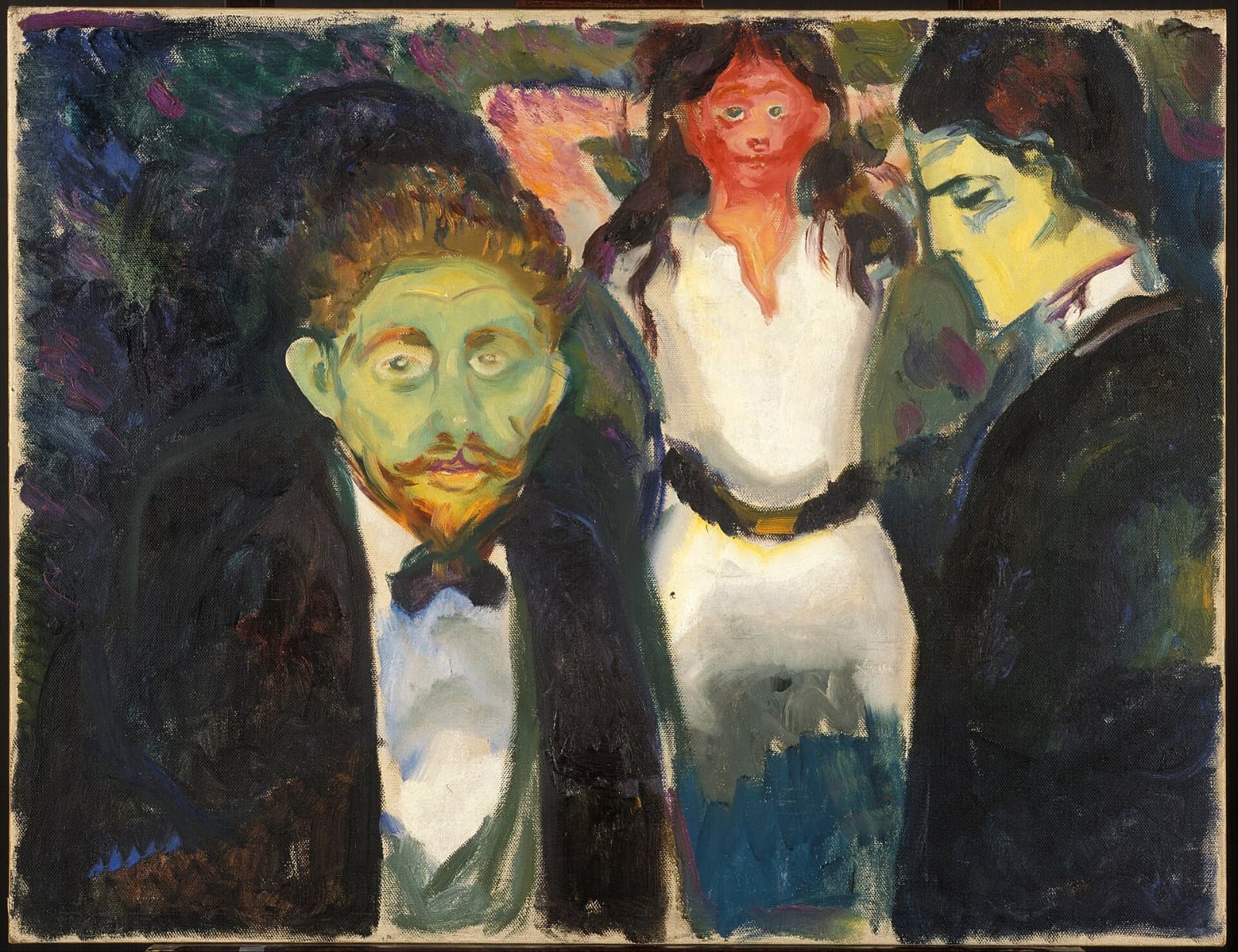
A sallow green face fills the front of the picture while behind him a woman in red picks fruit beside another man. He is imagining it.
Modern politics is, at bottom, a struggle not of men but of forces.
All the steam in the world could not, like the Virgin, build Chartres.
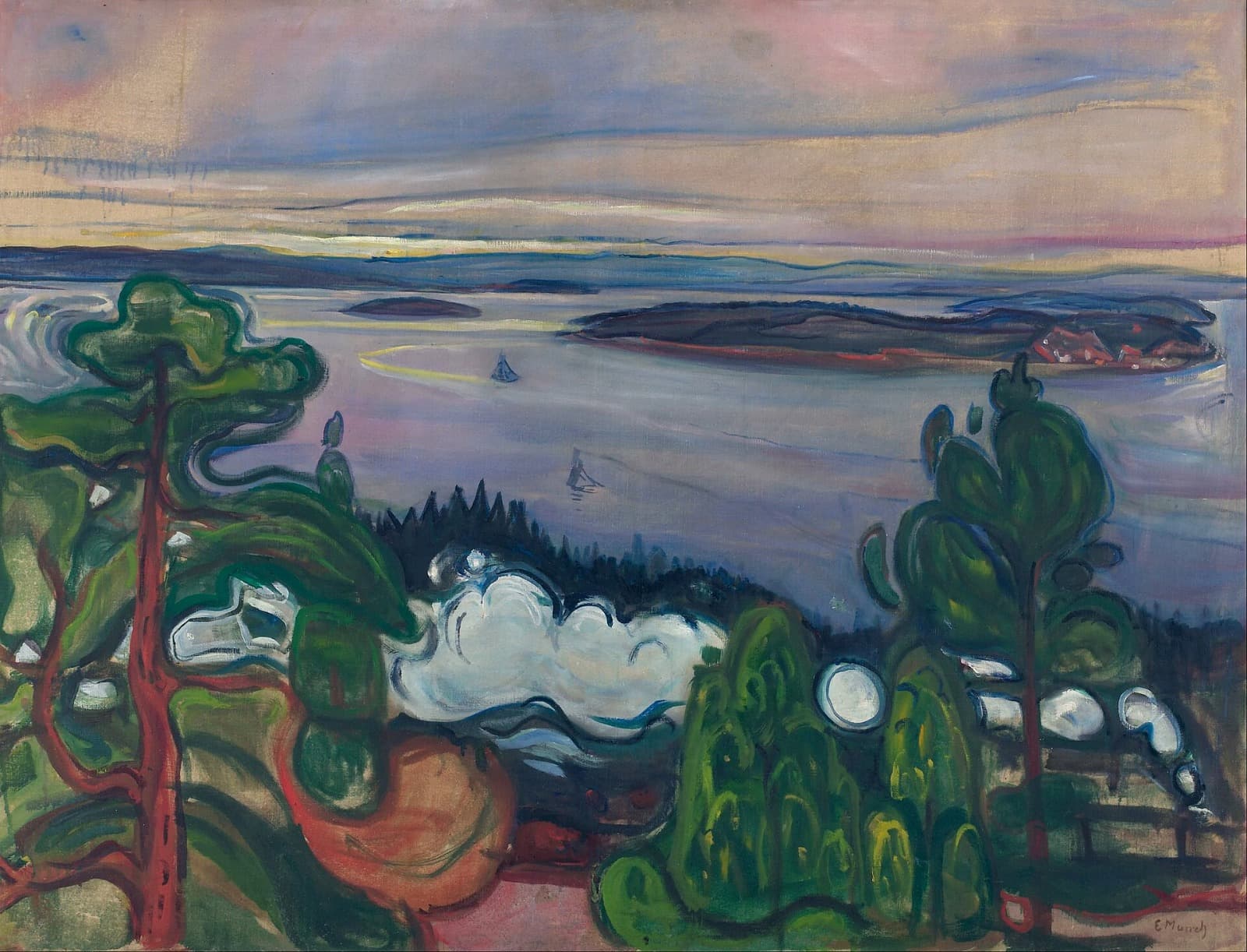
One puff of steam drifts across a curving shoreline, the modern world putting a small mark on a landscape that had none.

A child holding a white dove with a colored ball at its feet, painted just as Picasso's palette was cooling toward blue.

They shared a Barcelona studio, and Soto was known as a hard drinker, but Picasso painted him sober and sad in blue.

Boats and masts broken into tilting green and brown planes, painted while Braque and Picasso were building Cubism out of Cézanne.
Under certain circumstances, one nowhere feels as lonely and lost as in the metropolitan crowd.

Peter's father went into Mr. McGregor's garden and came out as a pie. Peter goes anyway. Potter sized her book to a child's hands and painted every radish and watering can herself.
Jack Norworth scribbled the lyric on a subway ride, years before he saw an actual major league game.
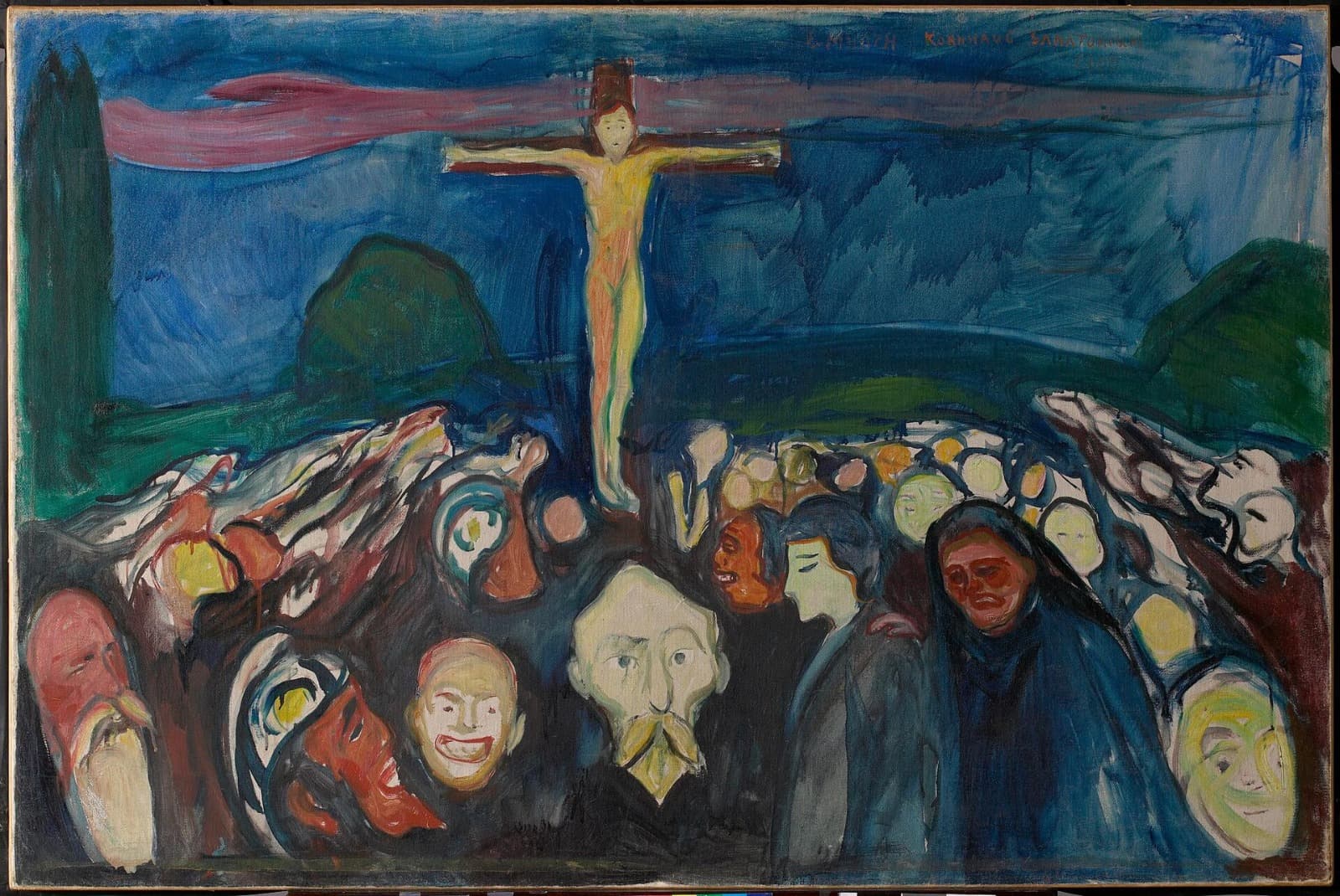
Munch painted this while under treatment in a clinic, and the crucified figure hemmed in by leering faces is not hard to read.
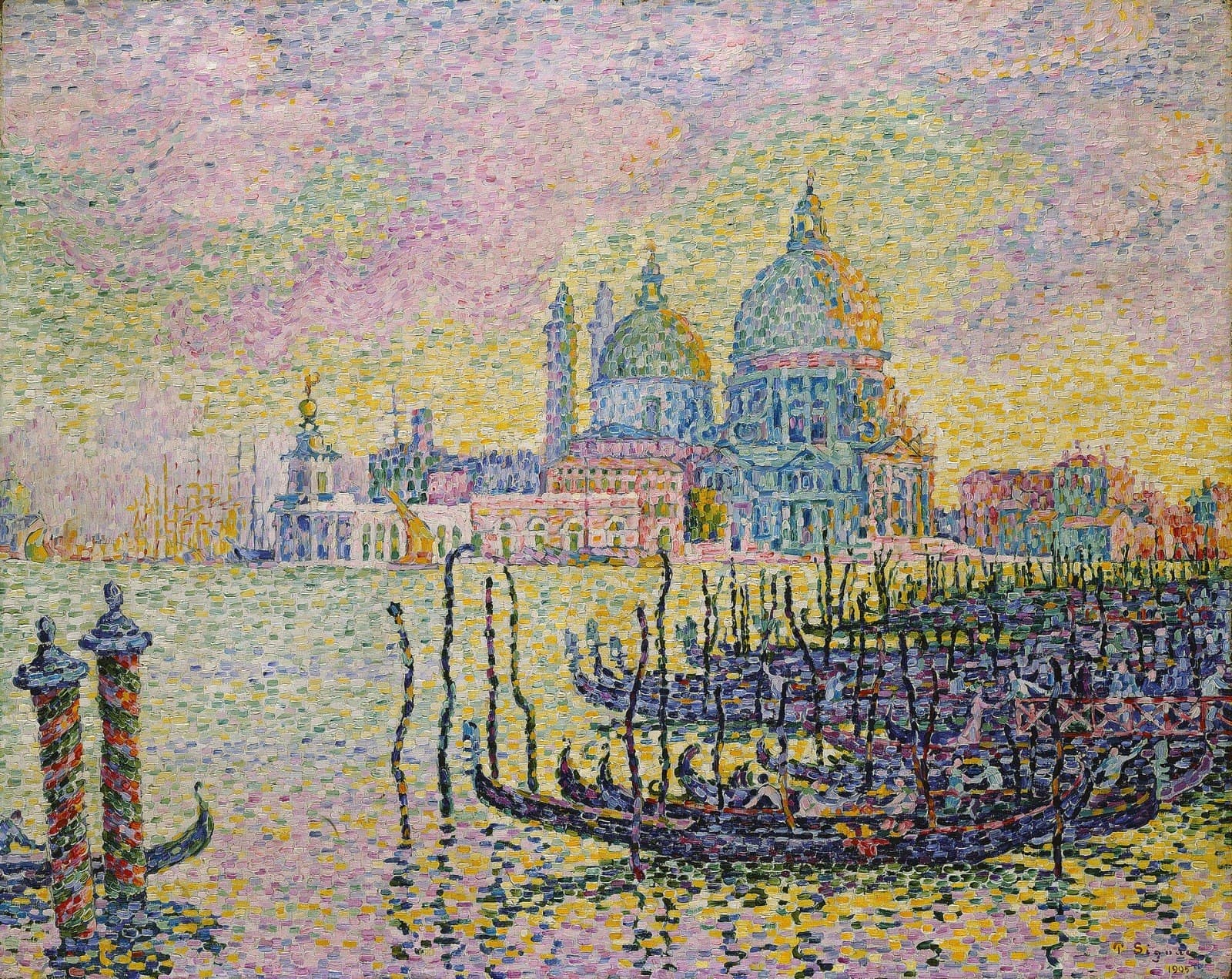
Gondolas on water that has shattered into pink, blue and gold. Signac took the divisionist dot to the most painted view in Europe.

Hot pinks and oranges laid on freely, a year before Cézanne and Picasso's Demoiselles sent Braque off toward Cubism instead.
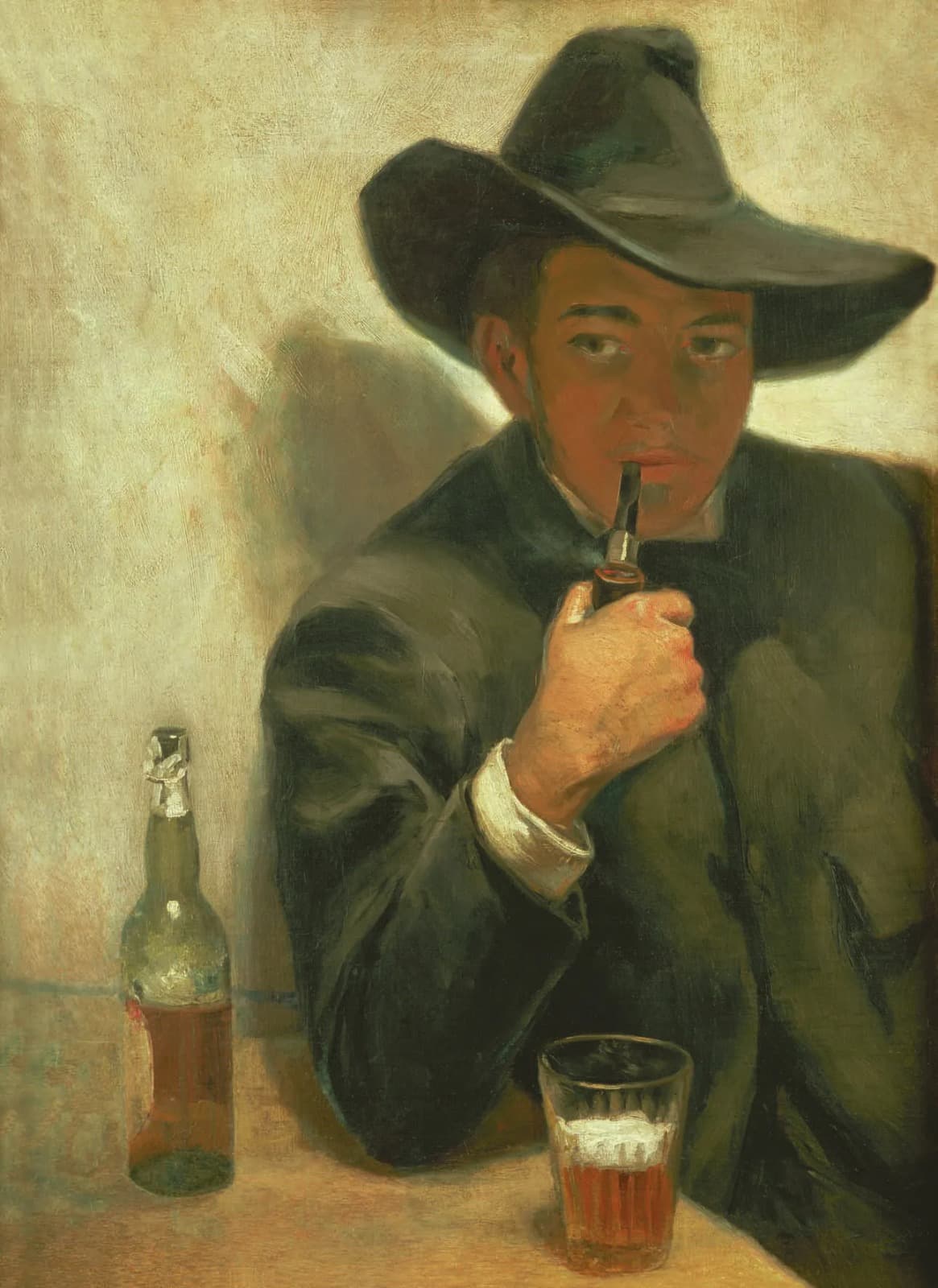
Rivera as a student in Europe, years before the murals, still working inside the academic tradition he would later blow up.