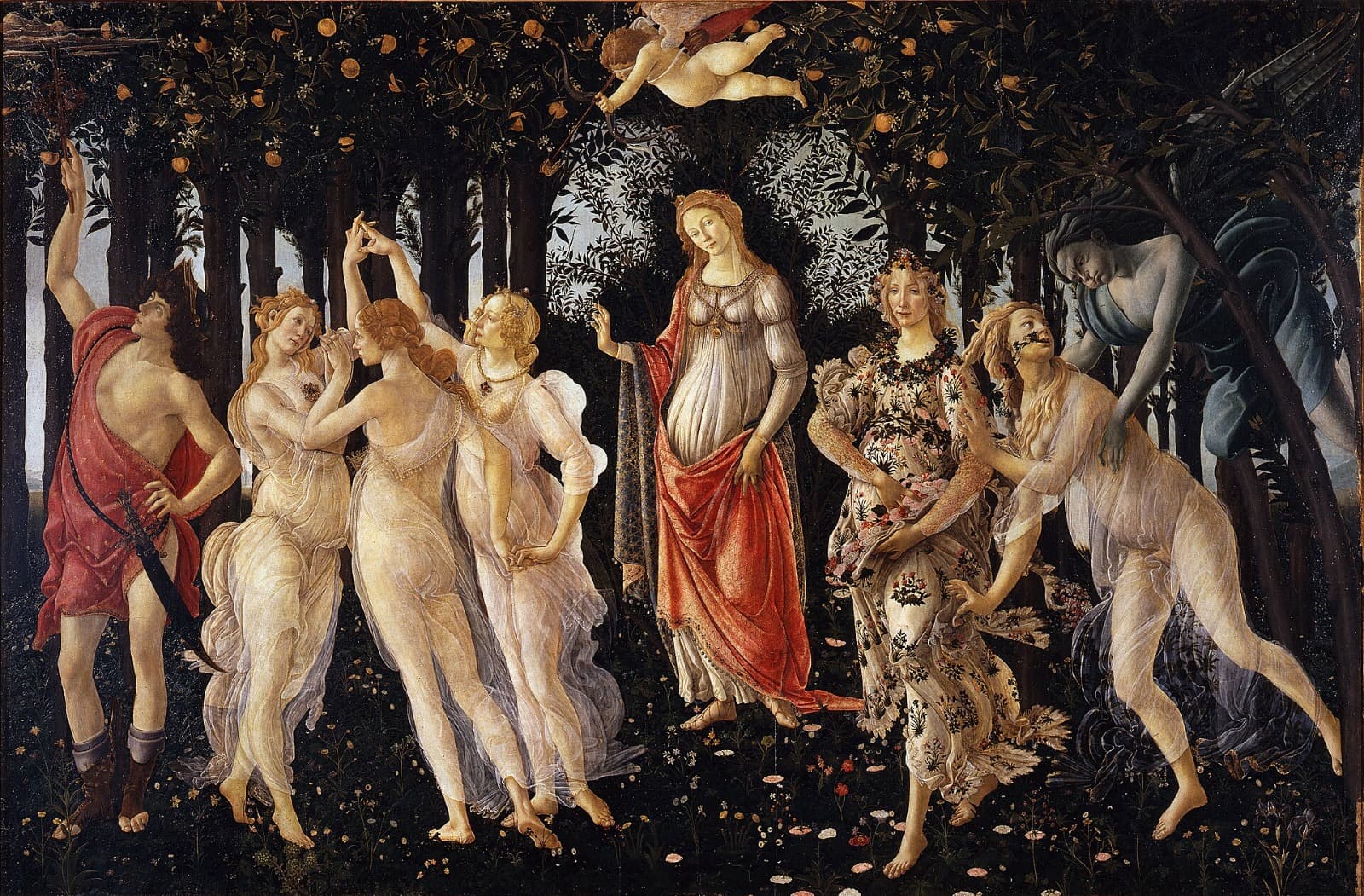
Primavera
1482 · Uffizi Gallery, Florence
Venus stands in an orange grove while the Graces dance and spring arrives at her right. The meadow holds hundreds of identifiable plants.
★ 9.8
 skopia
Venus stands in an orange grove while the Graces dance and spring arrives at her right. The meadow holds hundreds of identifiable plants.

Saints and pilgrims stream toward a bleeding Lamb across a dozen hinged panels. One of them was stolen in 1934 and has never been found.

Christ has just said one of them will betray him, and the shock rolls down the table. Leonardo's experimental paint began flaking in his lifetime.

Venus arrives on a scallop shell in a fall of roses, painted on canvas at a time when almost everyone still worked on panel.
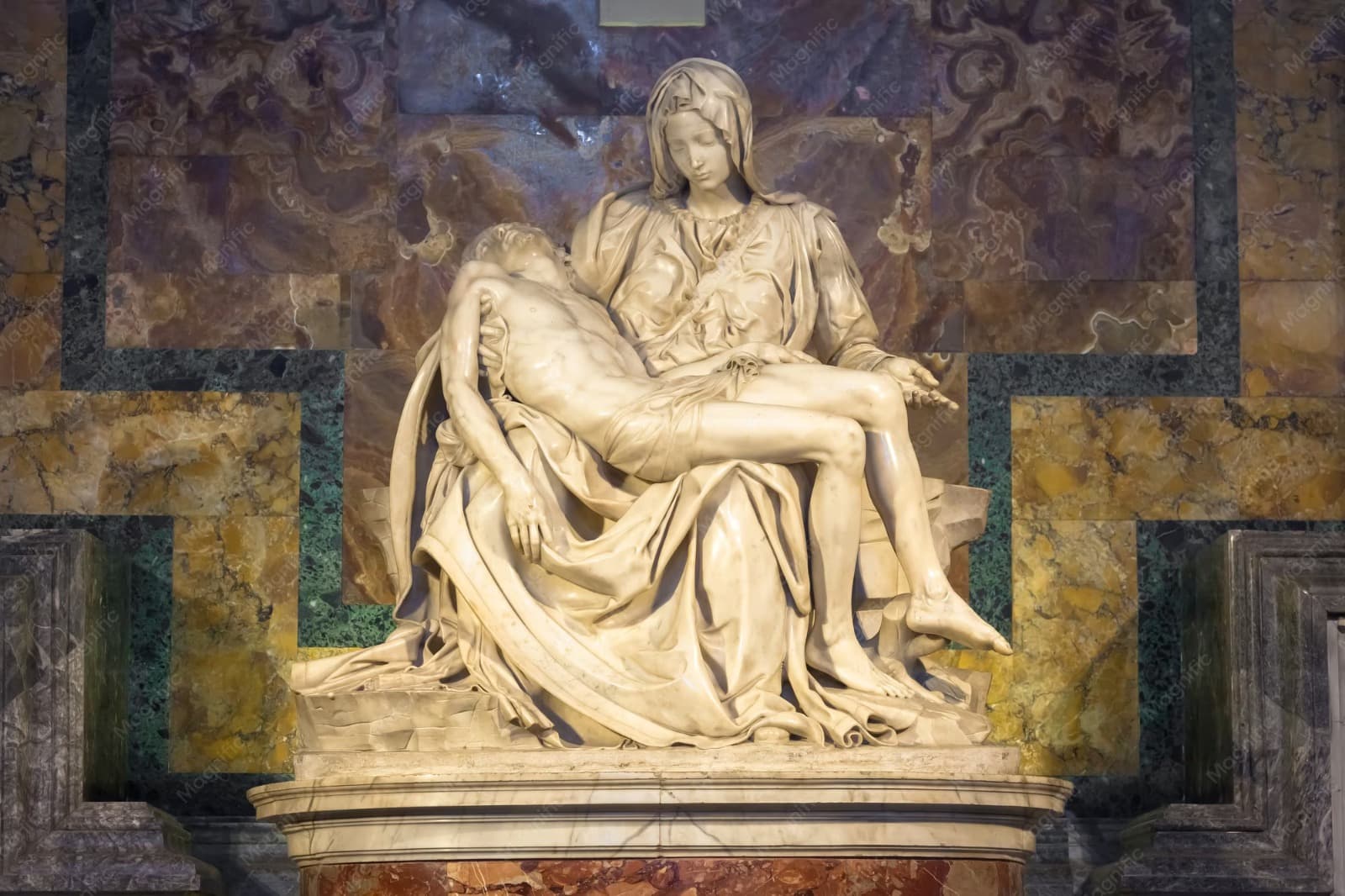
The dead Christ lies across his mother's lap. Michelangelo was twenty-four, and signed the sash after hearing it credited to someone else.
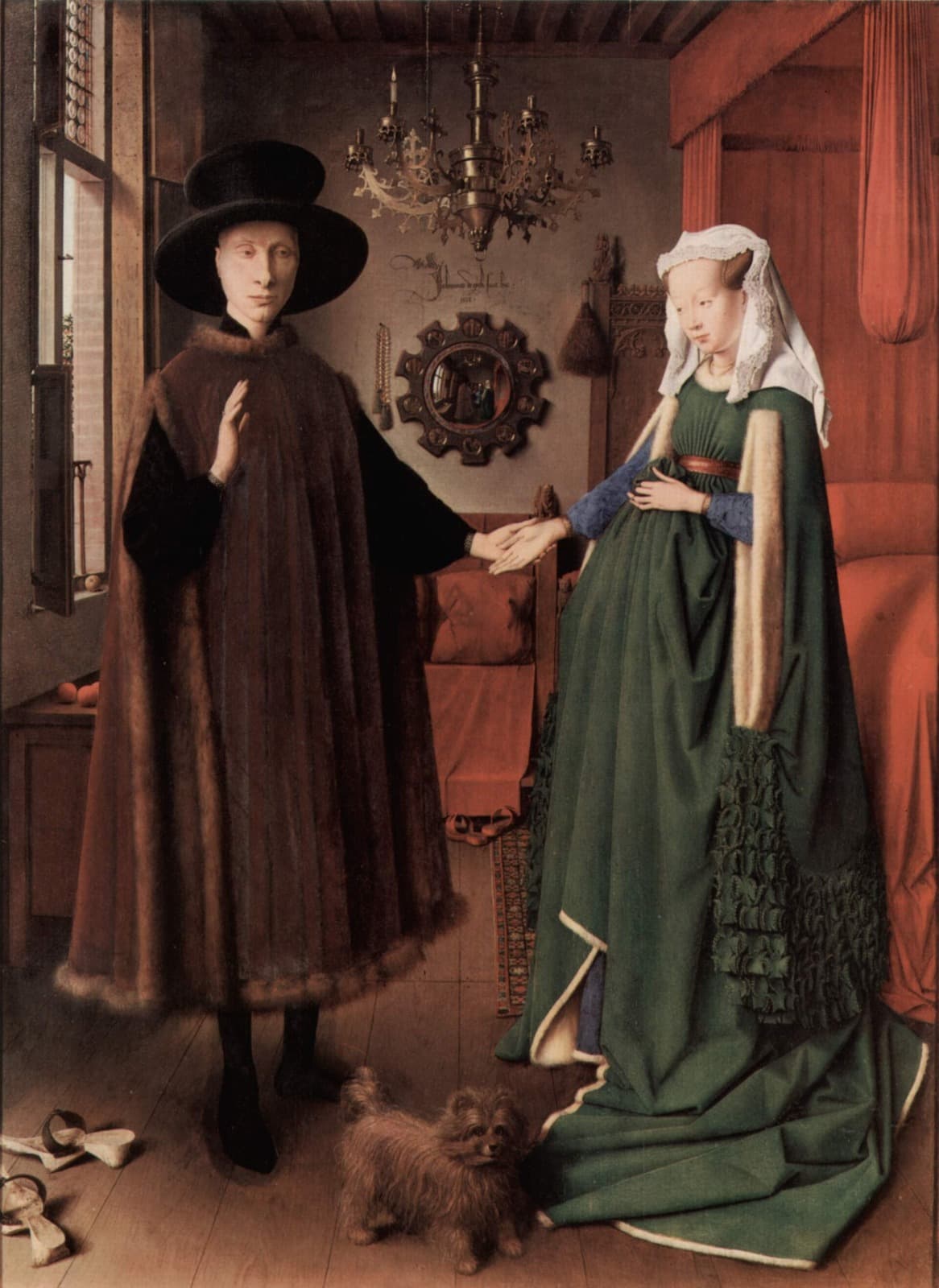
A couple joins hands in a Bruges bedroom, and the mirror behind them catches two visitors at the door. Van Eyck signed the wall above it.

The fainting Virgin curves in an exact echo of her dead son, the stroke that made van der Weyden the most copied painter in the north.
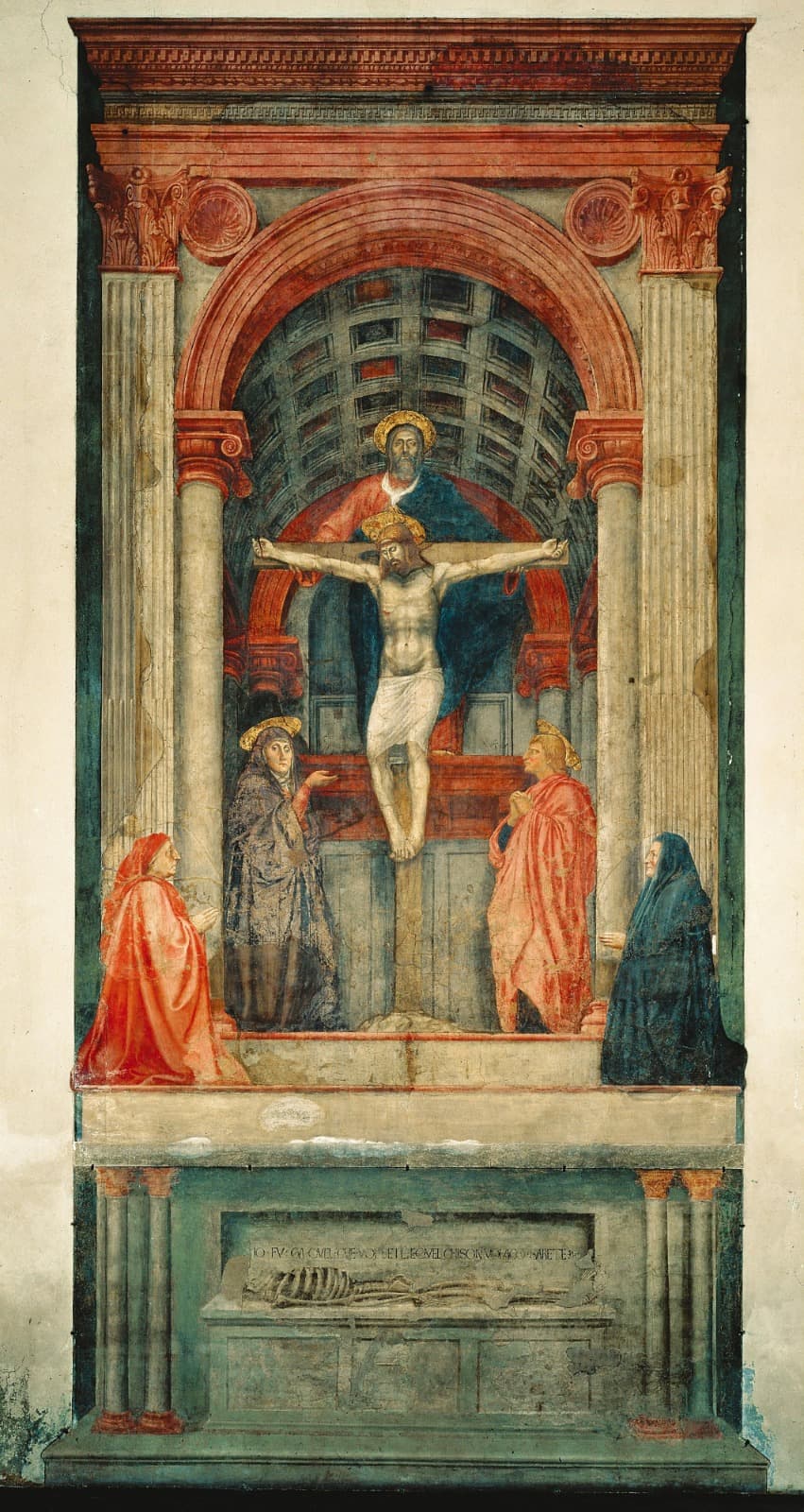
The earliest surviving painting built on a single vanishing point, worked out on a wall of Santa Maria Novella with Brunelleschi's help.
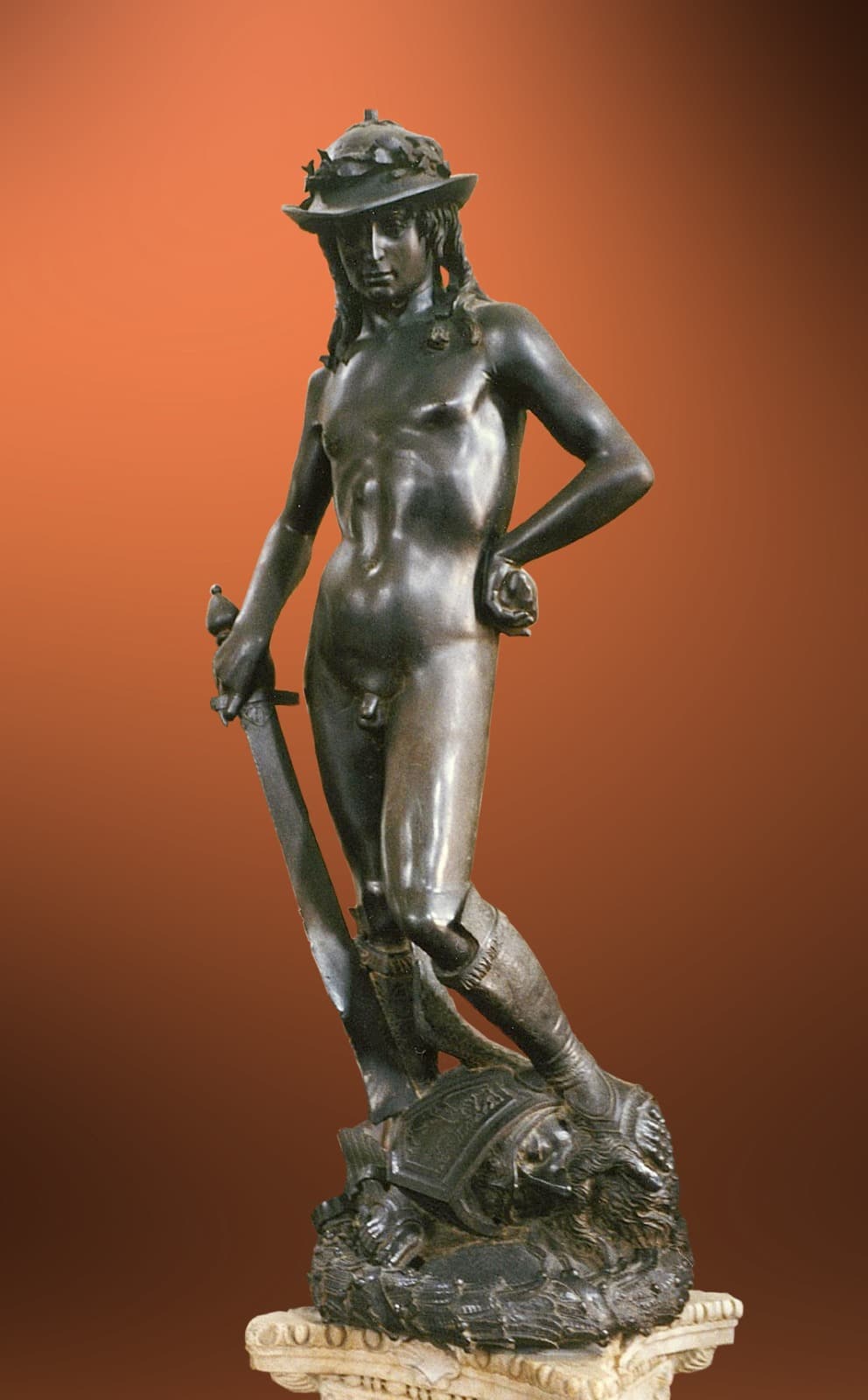
A naked boy in boots and a laurel hat rests one foot on Goliath's head, the first freestanding bronze nude since antiquity.
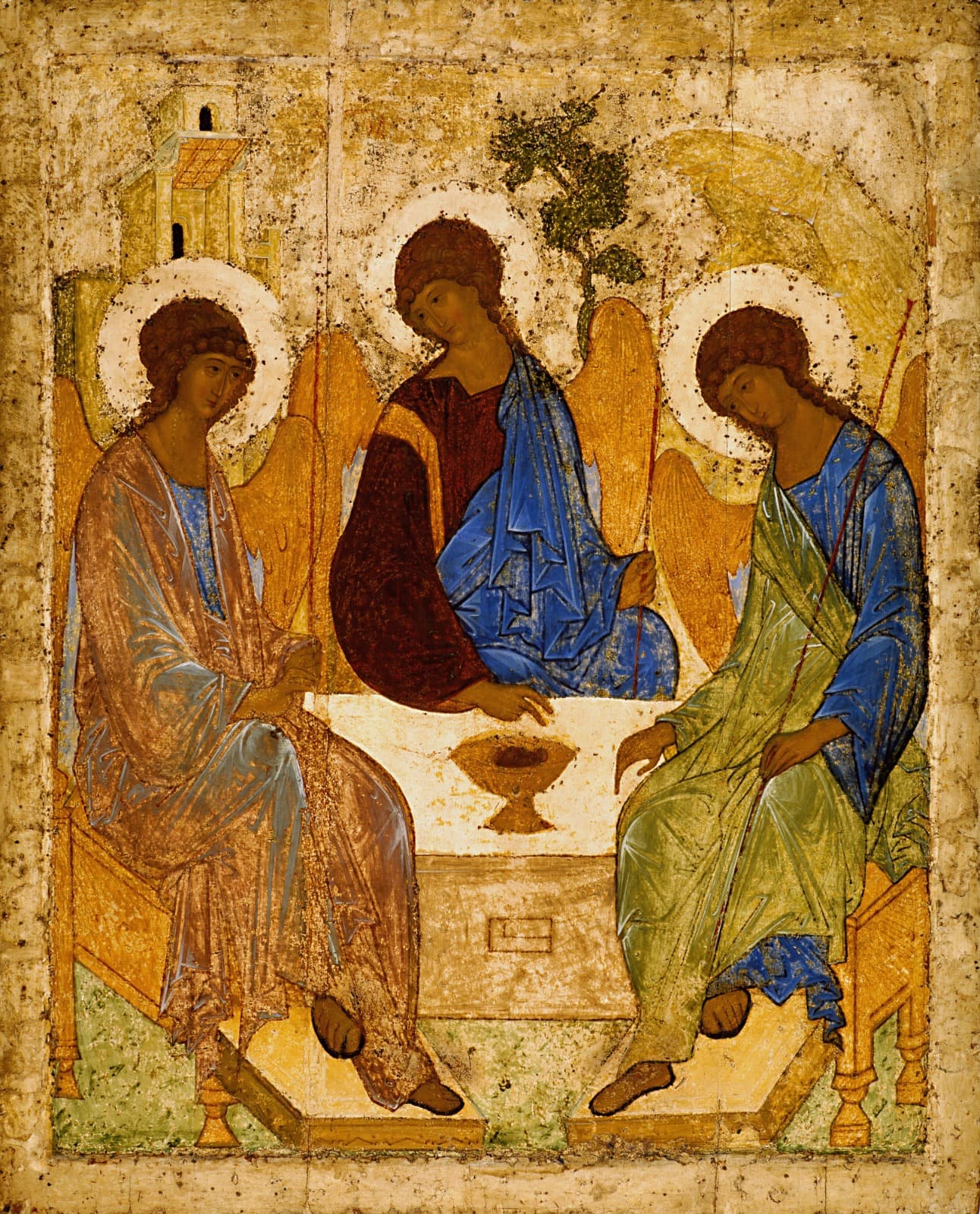
Three angels bend into a closed circle around a single cup. In 2024 the icon left the Tretyakov for a monastery, over conservators' objections.
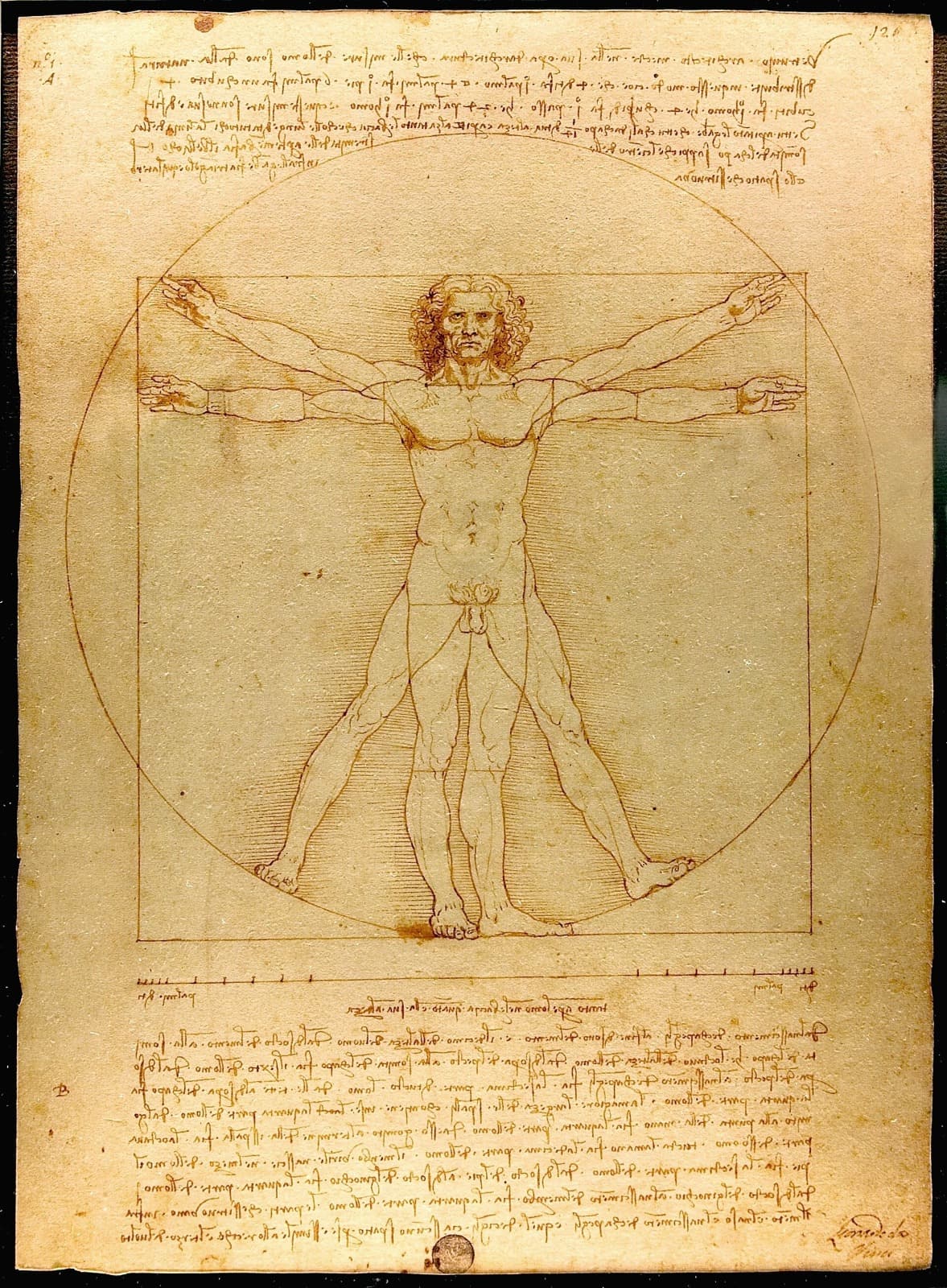
Leonardo fixed Vitruvius's old problem by moving the centers, so that the navel governs the circle and the groin governs the square.
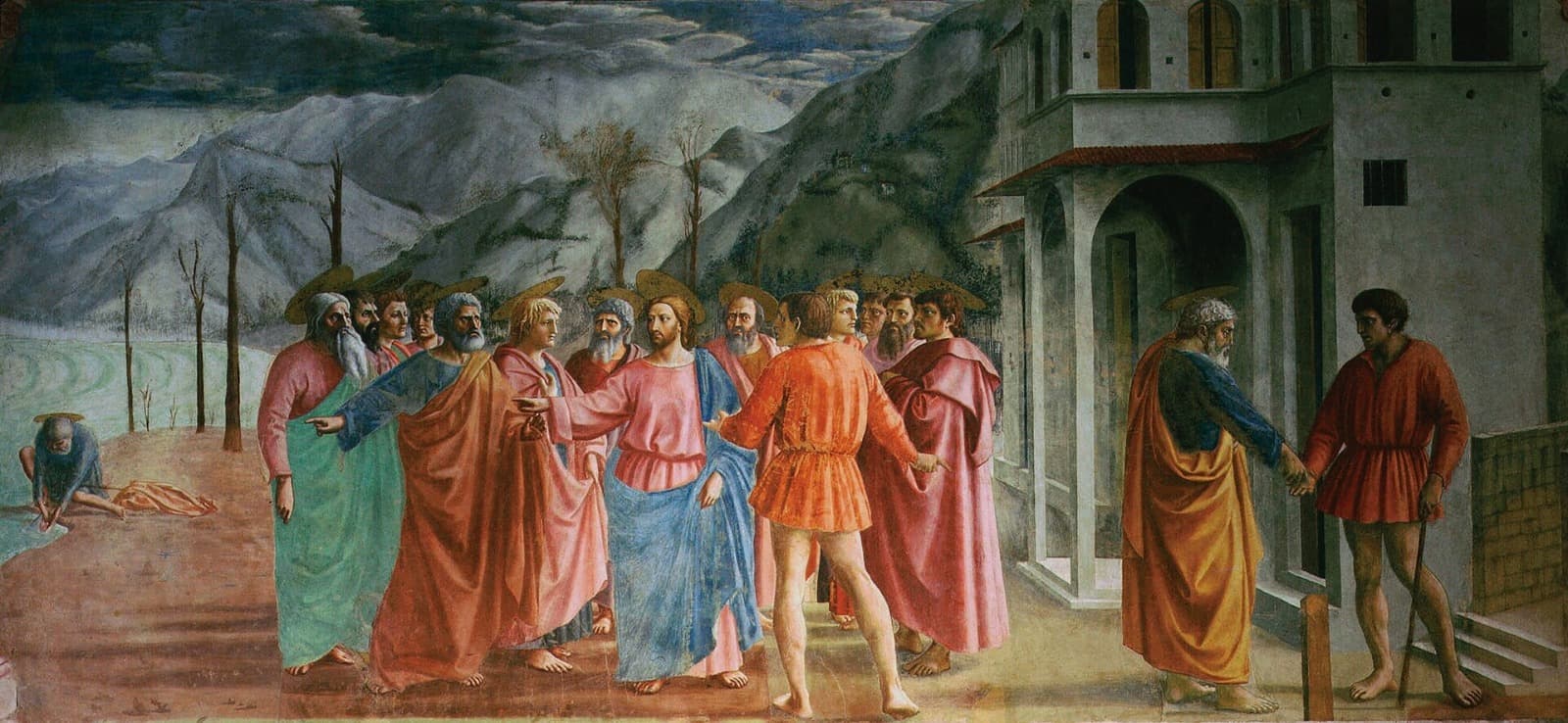
Three moments run in a single frame: the tax demanded, Peter pulling the coin from a fish, and Peter paying up at the right.
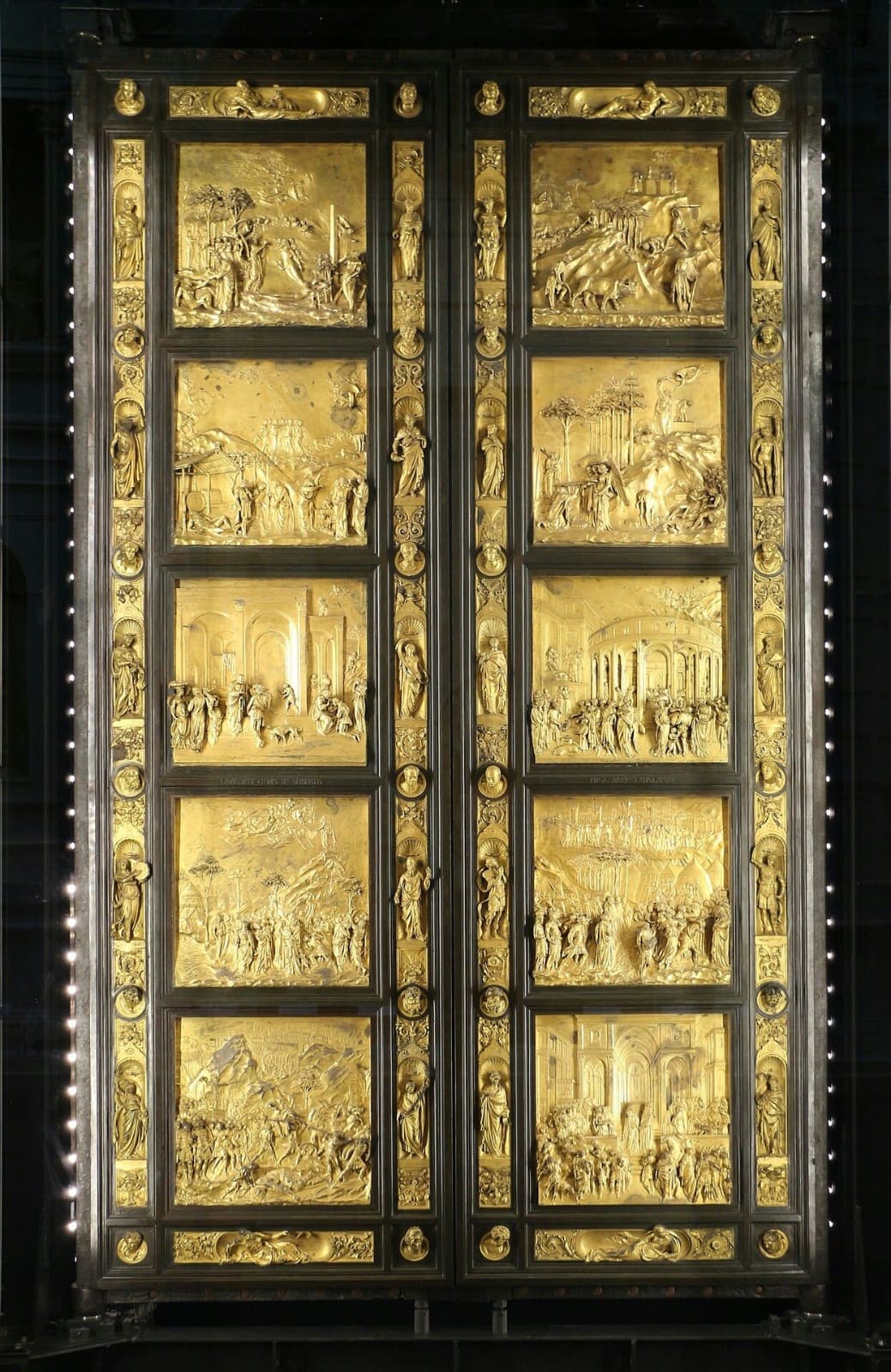
Ghiberti gave twenty-seven years to these doors, and the name comes from Michelangelo, who is supposed to have said they were fit for paradise.

Not a calendar page but Anatomical Man, ringed by zodiac signs governing the body. All three brothers died in 1416, probably of plague.

Eve throws back her head and howls while Adam hides his face, the bodies heavy and casting real shadows. Michelangelo came to study it.
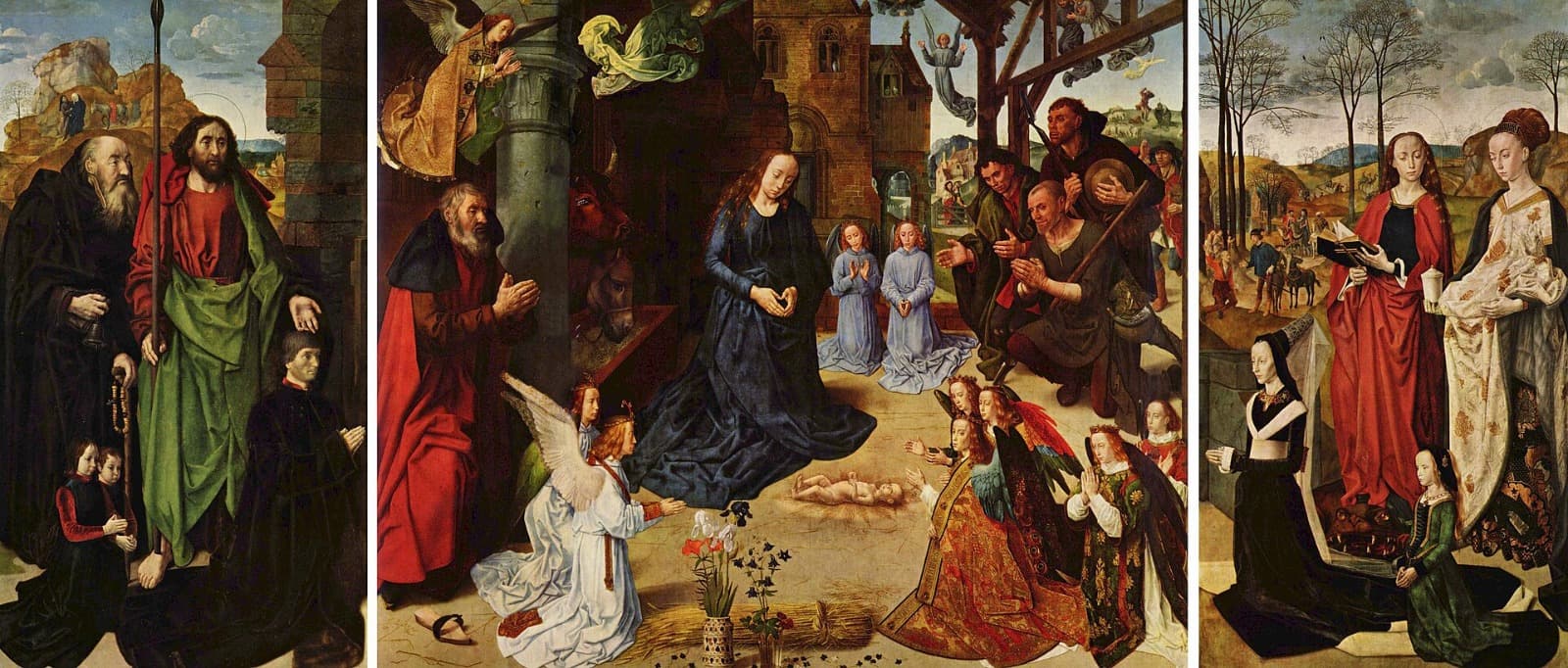
Three weathered shepherds crowd in to look at the newborn, and when the triptych reached Florence from Bruges the local painters took note.

Zulaykha shuts the last door behind Yusuf, and Bihzad turns the palace into a honeycomb of tile and stairs as taut as the story.

Cecilia Gallerani turns as if someone has come in, and the ermine turns with her. It was her patron's emblem and a pun on her name.

Christ is scourged in the middle distance while three men talk in the foreground, indifferent. Nobody has settled who they are or why.

The trees behind Christ turn from bare to leafing across the panel. In 1944 a British officer held his guns rather than shell the town.

A mountain, a wineshop flag and a boatman conjured from a few wet blots. Sesshu made it as a parting gift for a departing pupil.
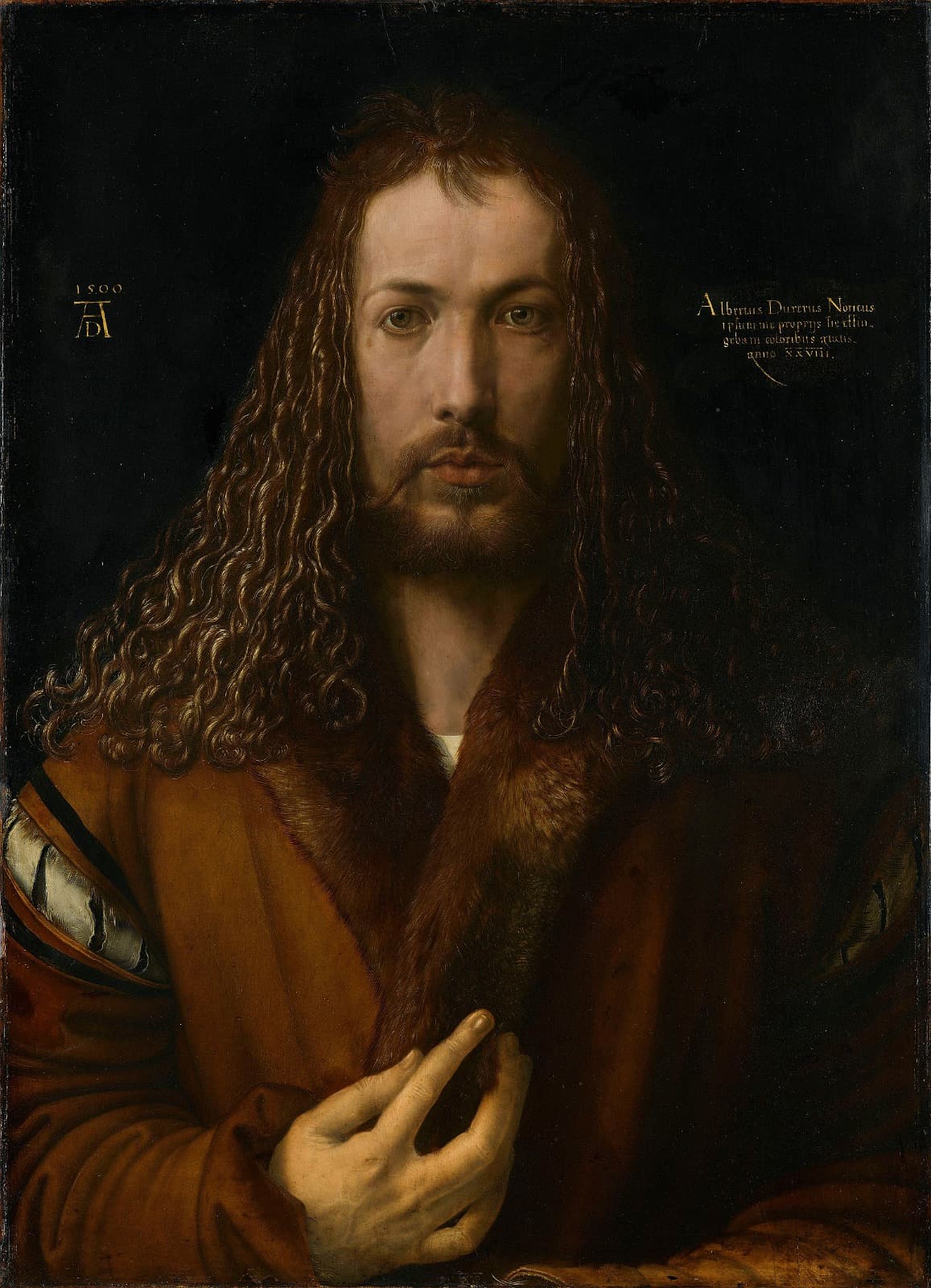
Dürer faced himself head-on in a pose reserved for images of Christ, and wrote across the panel that he had painted it at twenty-eight.

Fra Angelico frescoed it at the top of the dormitory stairs, so the friars met it every time they climbed to their cells.

The kings arrive with a retinue of horses, hounds and a leopard, every surface tooled in gold for one of Florence's richest families.

Francis steps barefoot from his hermitage into a light coming from the left, and Bellini gives him no seraph and barely any wounds.
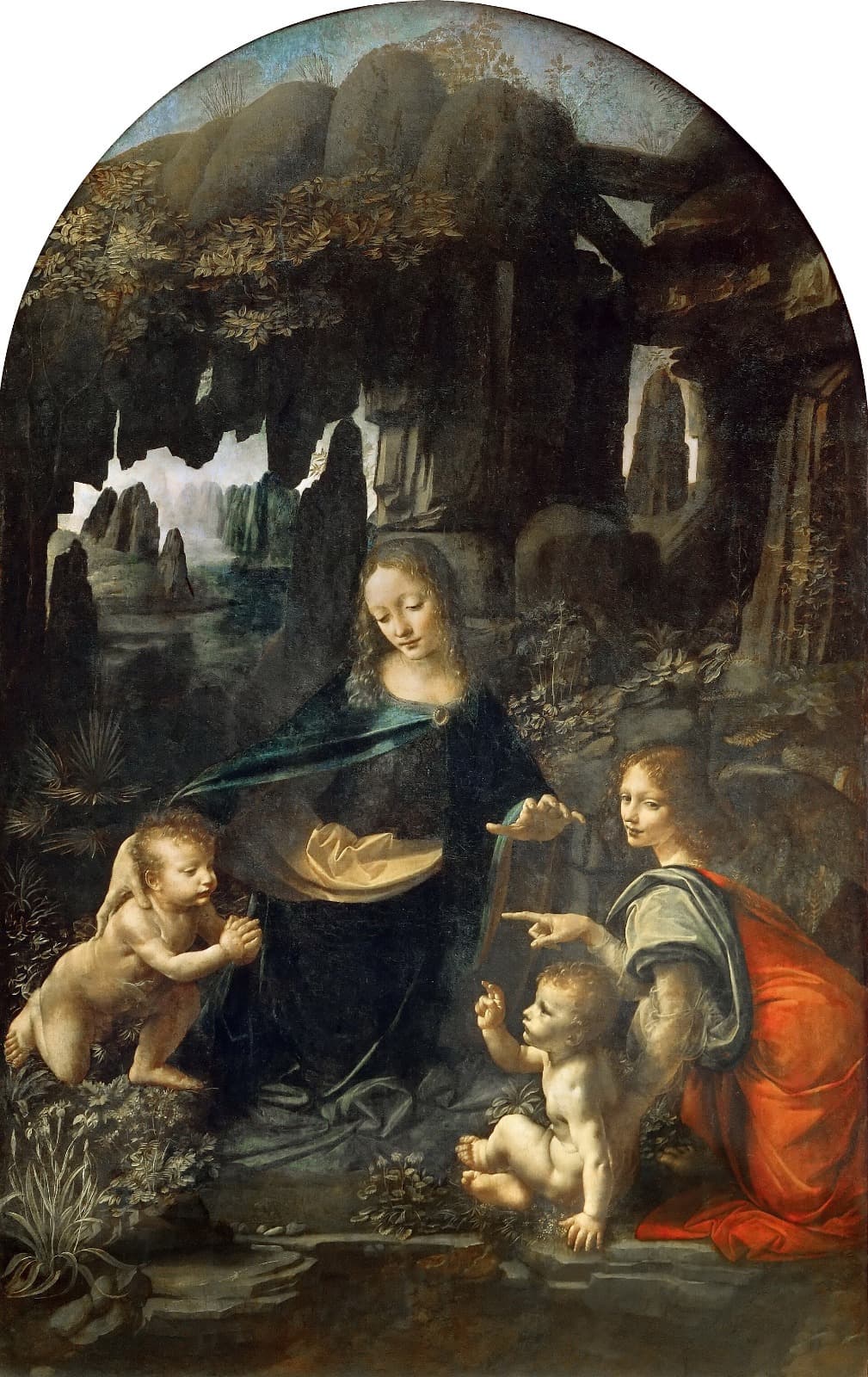
Leonardo painted this cave twice after falling out with the patrons. This is the earlier version, the one that stayed in France.

Van Eyck spared the old canon nothing: the stubble, the swollen hands, the spectacles. His armored saint mirrors the whole room in miniature.

An ostrich egg hangs from the vault and pulls every sightline down. Federico is shown from the left because a tournament took his right eye.

Gabriel bows to Mary under the loggia while Adam and Eve are driven out of the garden at the left, the sin this undoes.

The saints share one continuous space instead of separate compartments, and the two kneeling physicians are the name-saints of the Medici who paid.

The wary, straight-on gaze is what a painter sees in a mirror, which is why this is probably van Eyck looking at himself.
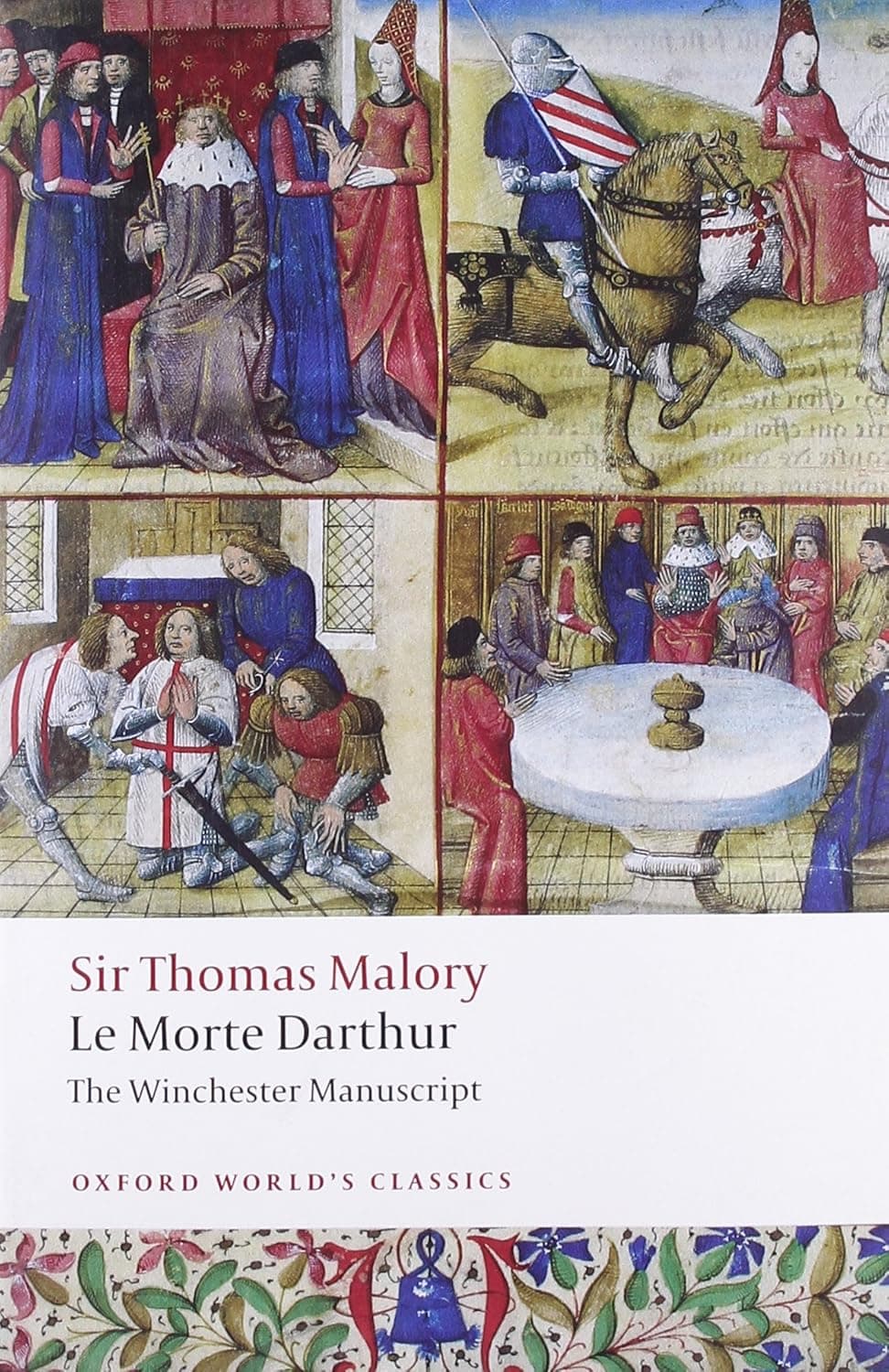
Arthur pulls the sword from the stone and the finest knights come to his table, until his wife's love for Lancelot brings it down. Every Camelot since comes from Malory.

No angel, no dove, no lily. Mary looks up from her book straight at us, because we are standing where Gabriel ought to be.

Not the betrayal but the blessing of the bread, staged in a Flemish hall on one of the earliest correct vanishing points in the north.

The old man's nose is swollen and ruined by disease, and the boy looks up at him without noticing it at all.

The Virgin is far too big for the cathedral because she stands for the Church itself, and real sunlight falls in patches across the floor.
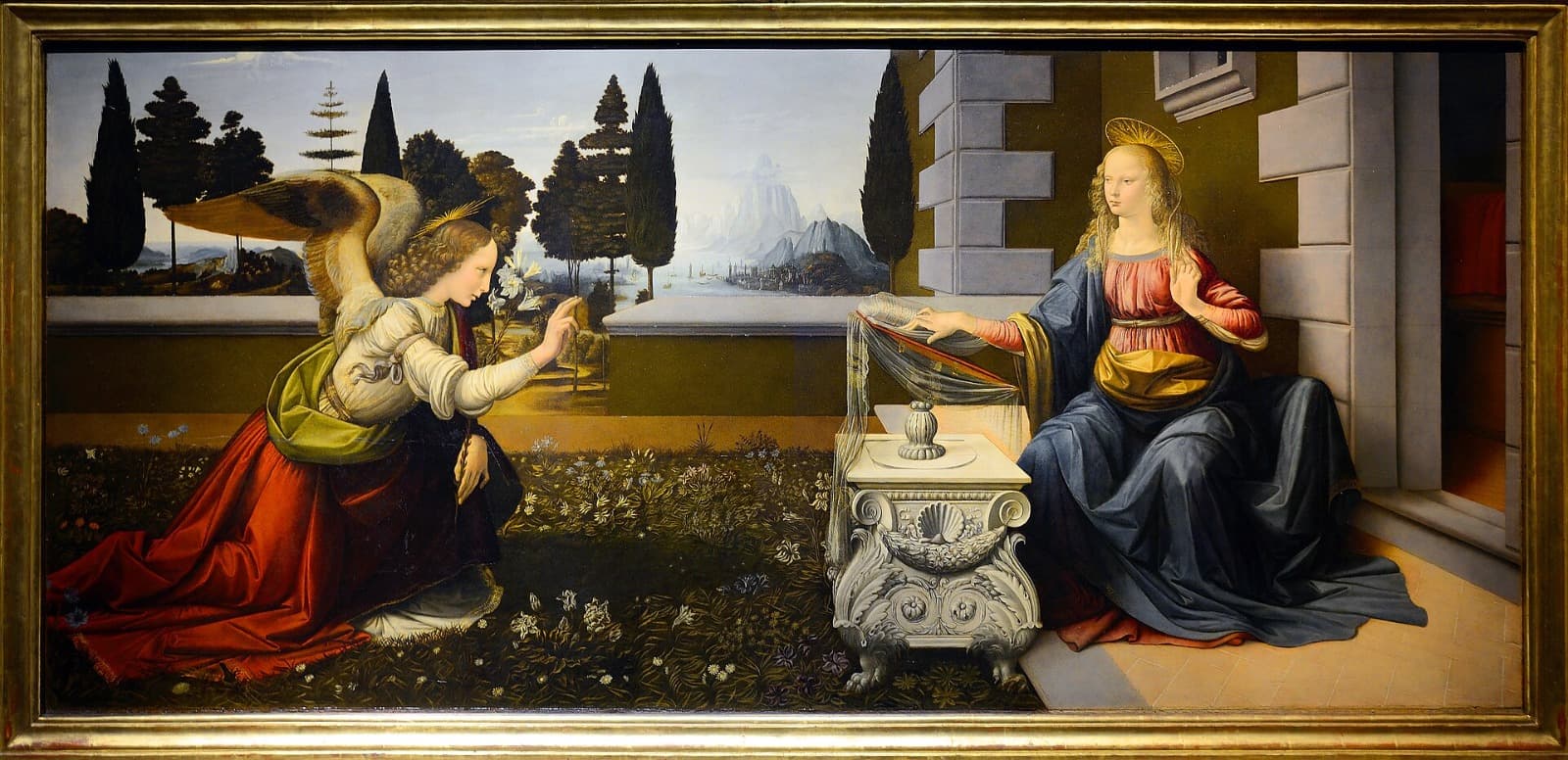
An early work, and Mary's right arm reaches further than an arm can. Gabriel's wings were studied from a real bird.

A juniper bush stands behind her as a pun on her name. The panel was later cut down at the bottom, taking her hands with it.

Broken lances lie along the receding lines of a perspective grid. Vasari said Uccello sat up all night muttering about how sweet it was.

The central panel of three, with the Florentine commander charging in a gold-and-scarlet hat on a horse turned like a carousel figure.