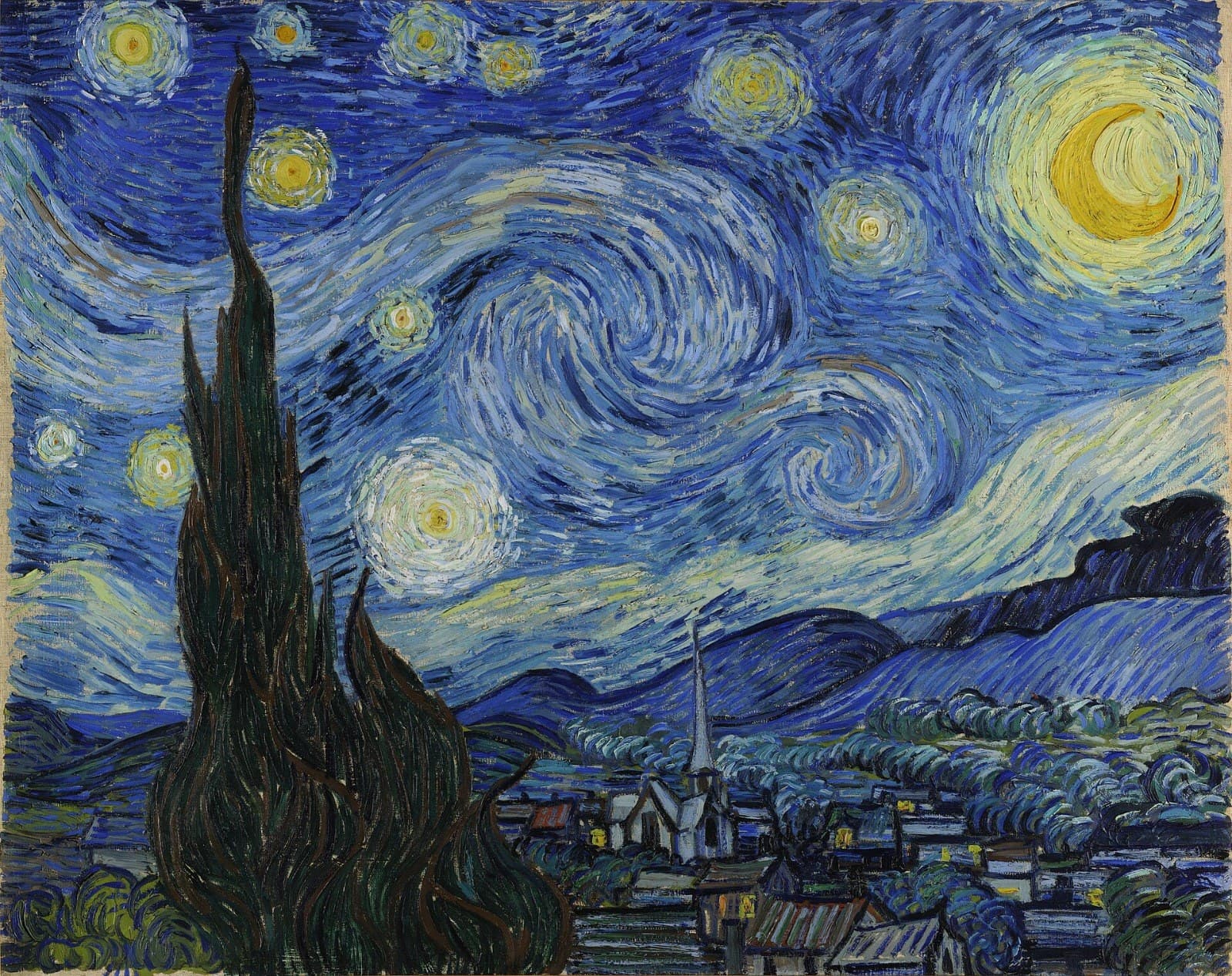
Starry Night
1889 · Museum of Modern Art, New York City
Van Gogh painted the churning sky and its eleven stars from a window of the asylum at Saint-Rémy, partly from memory.
★ 9.6
 skopia
Van Gogh painted the churning sky and its eleven stars from a window of the asylum at Saint-Rémy, partly from memory.

Five nude women stare out with their faces turned into masks, and Picasso kept the canvas rolled up in his studio for years.
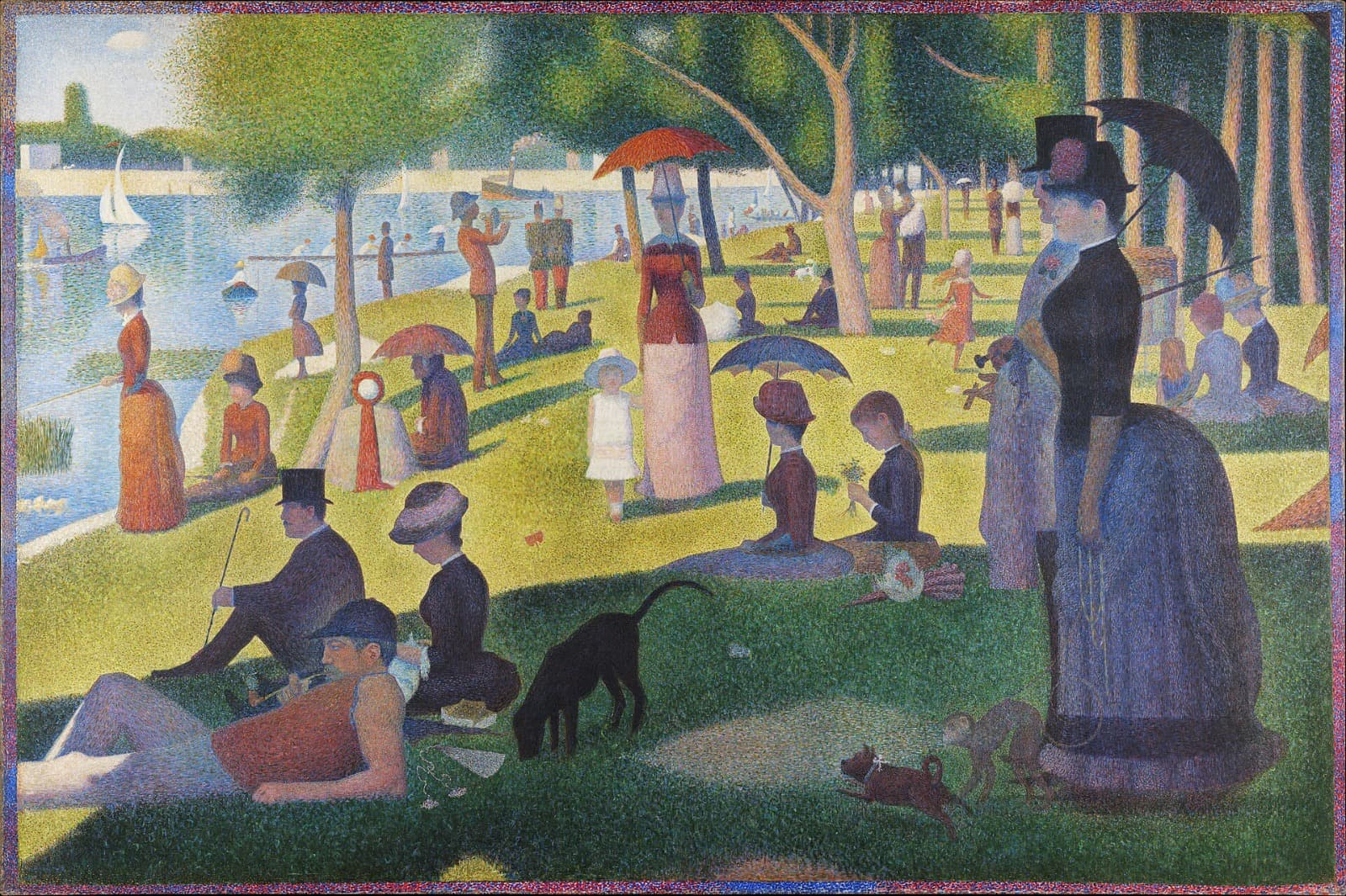
Seurat spent two years building this riverbank out of tiny dots of unmixed color, applying optical theory to a crowd standing oddly still.
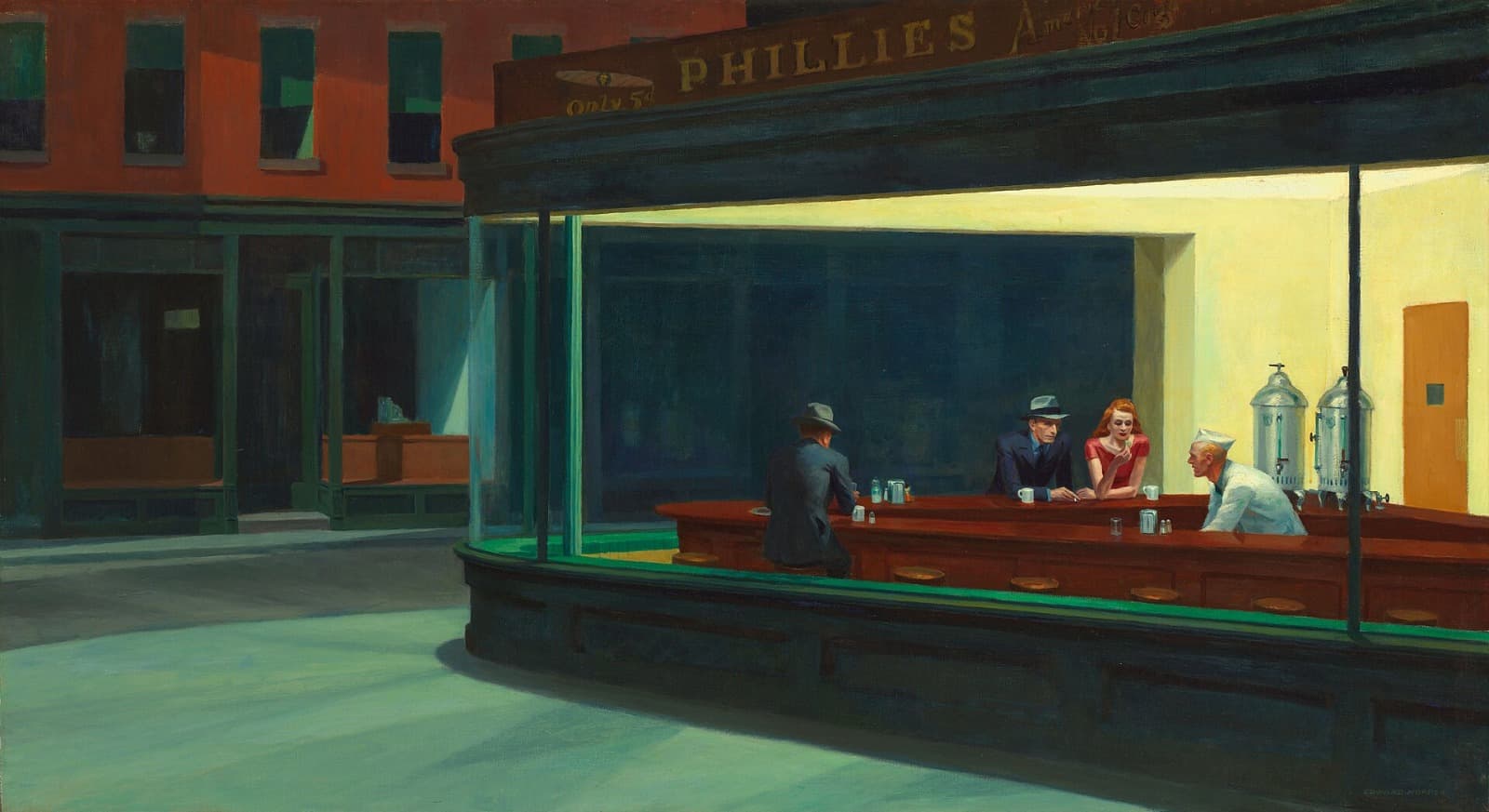
Four people sit under fluorescent light behind a curved sheet of glass, and Hopper gave the diner no door in or out.

Fourteen of Renoir's friends linger over the wreckage of lunch above the Seine, his future wife among them, cooing at a dog on the table.

Thirty-two canvases, one for every variety Campbell's then sold, hung in a row like stock on a supermarket shelf.

Two saints lower a nobleman into his grave while his soul slips through a tear in the sky. The mourners are El Greco's own neighbors.
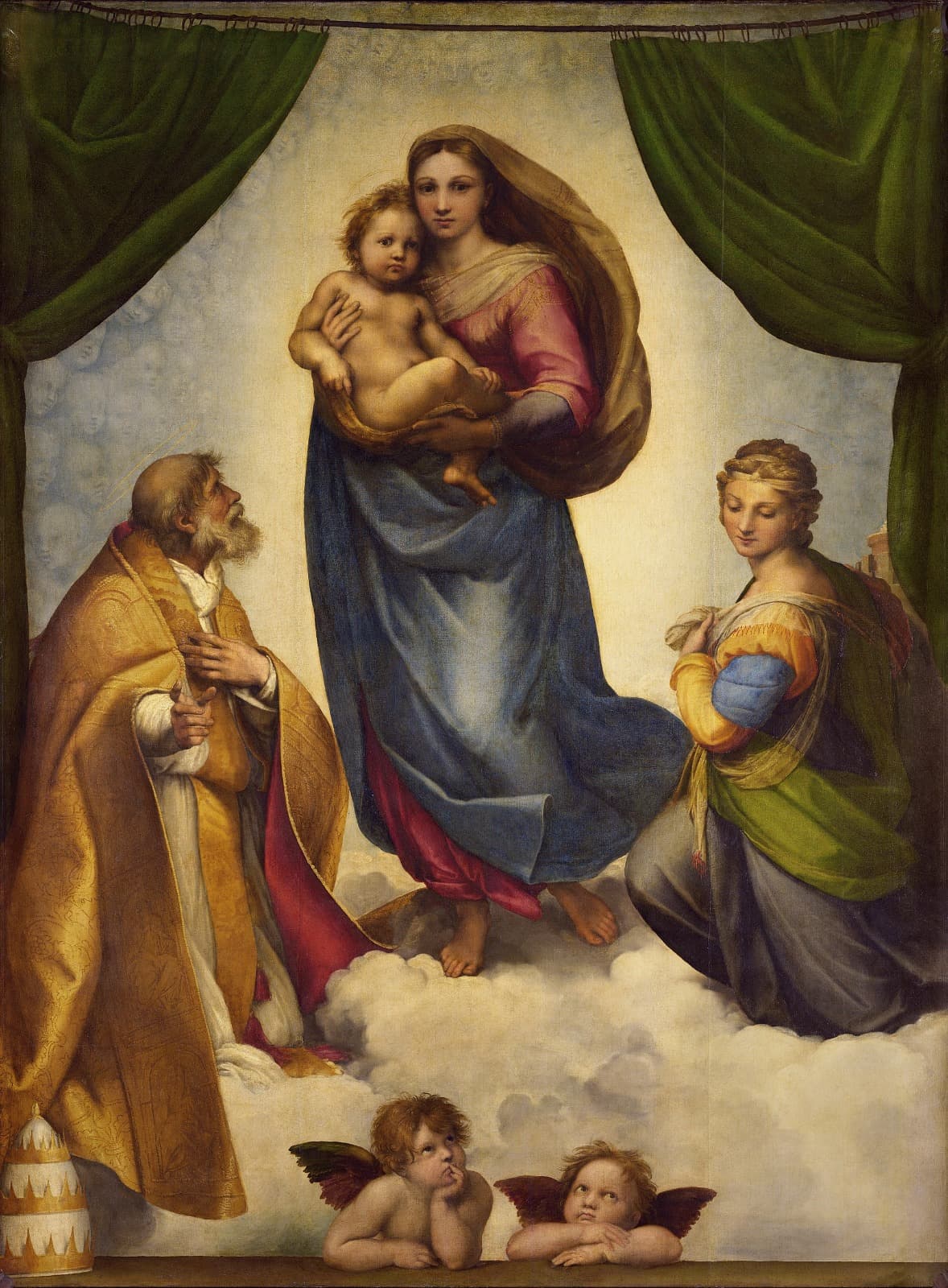
Two bored cherubs lean on the frame at the bottom, and they floated free of the altarpiece long ago onto everything else.

Dalí said the soft watches came to him from a camembert melting in the sun, and he painted them with hallucinatory precision.
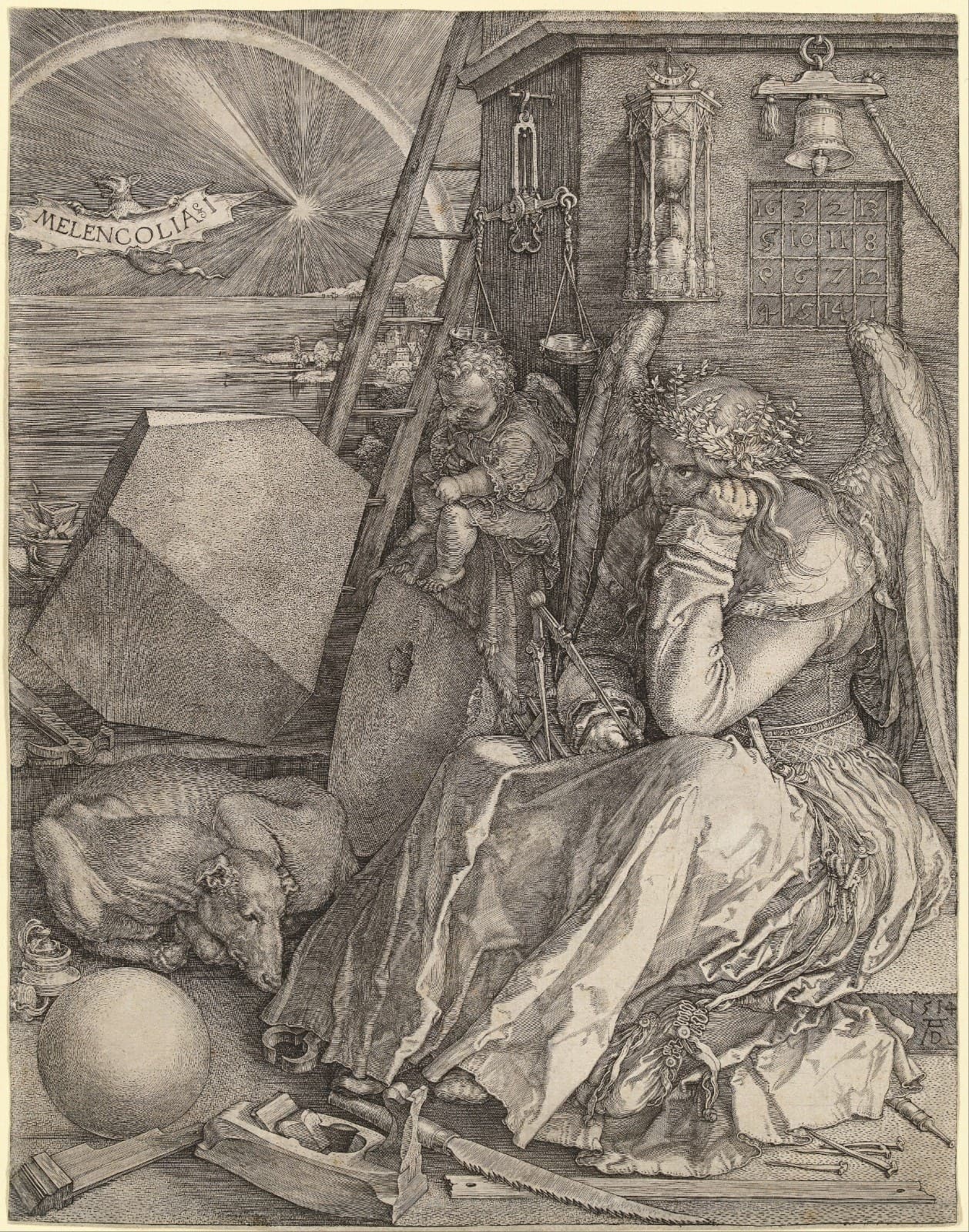
A winged figure sits with her compass idle among abandoned tools, and no print in history has drawn more scholarly argument.
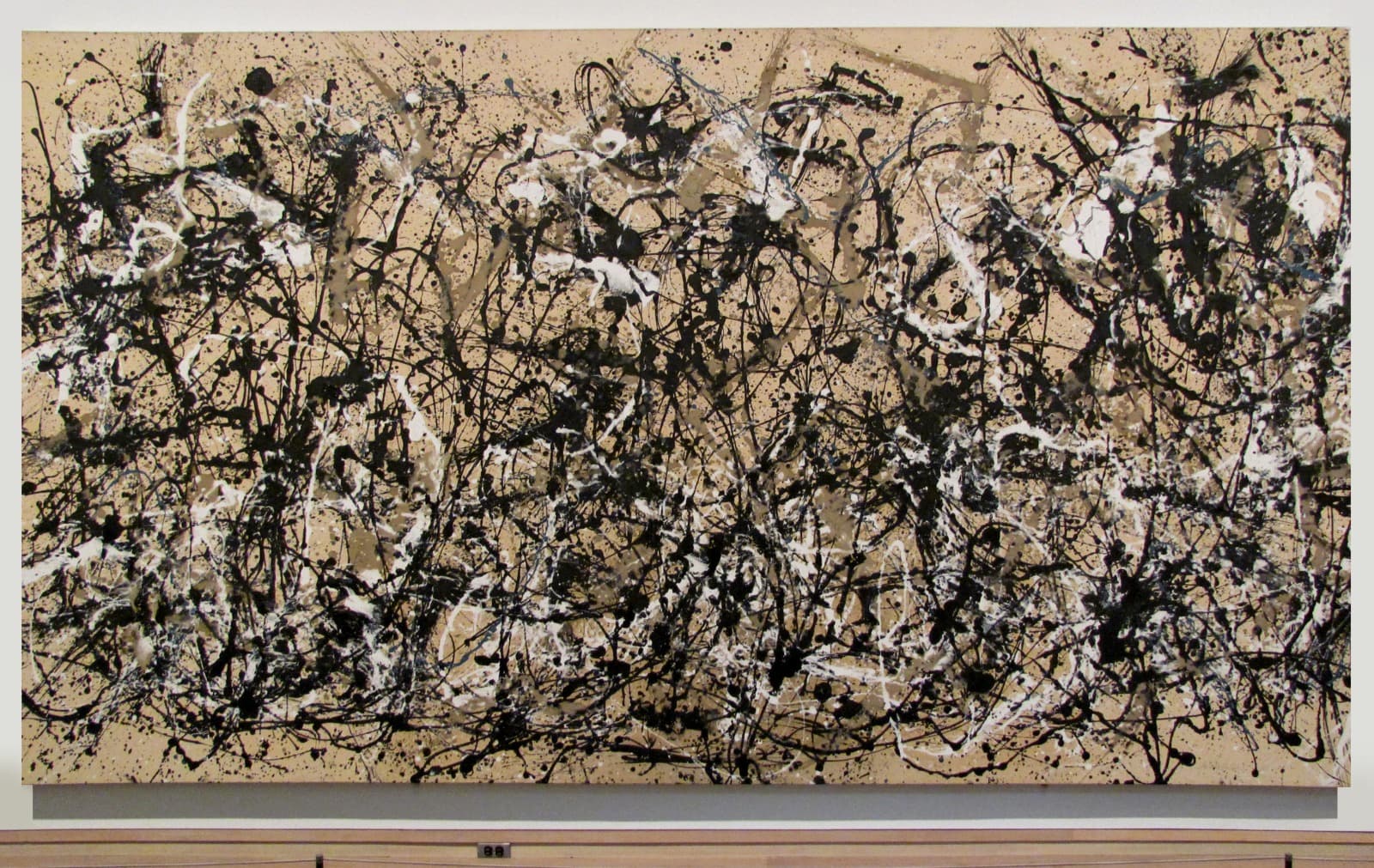
Pollock worked on the floor and moved around the canvas instead of standing at an easel, laying black enamel across raw cotton in 1950.
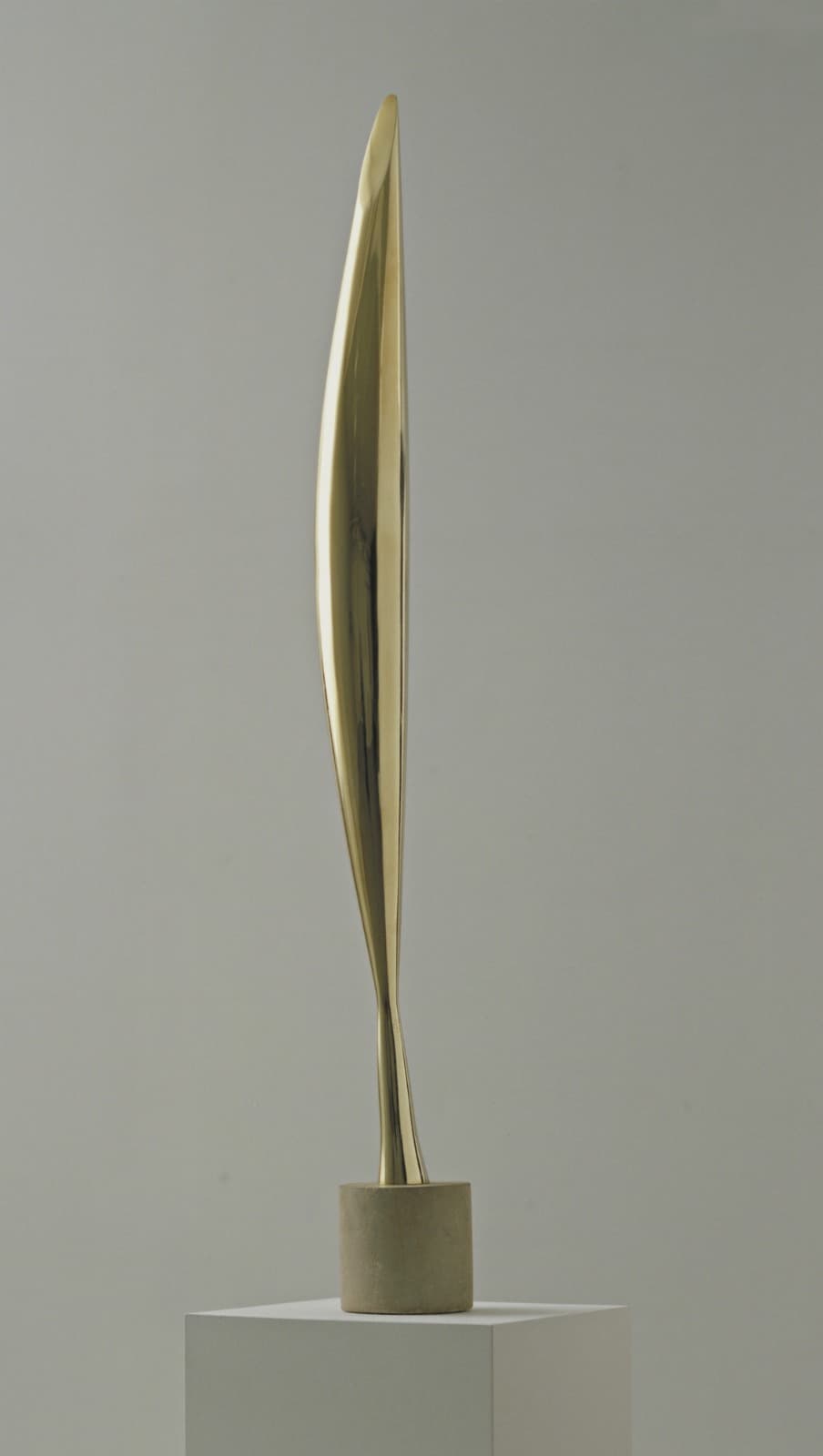
American customs taxed it as industrial metal until Brancusi v. United States in 1928 forced the law to recognize abstract sculpture as art.
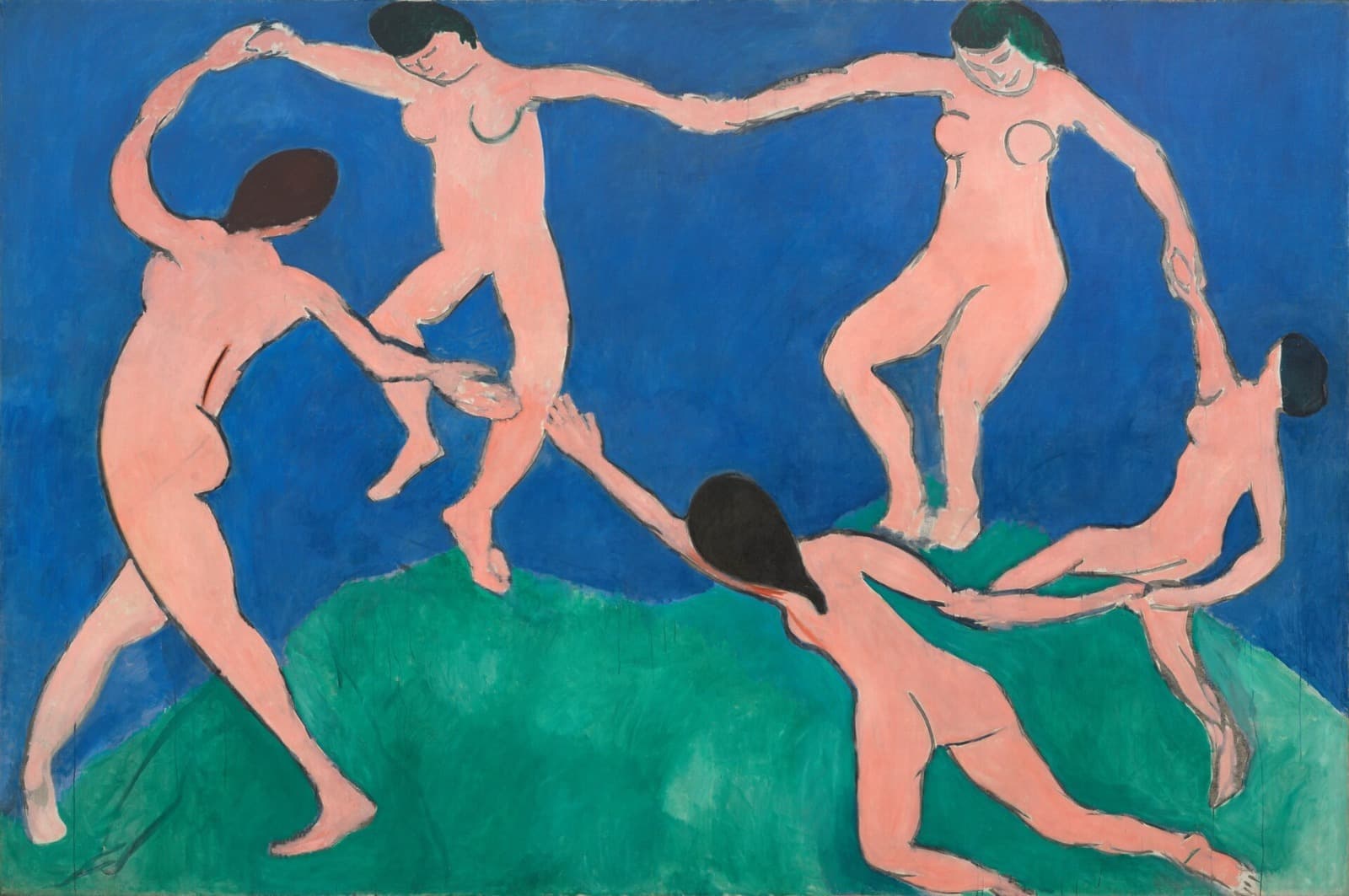
Five figures wheel in a ring against blue and green, reduced to three colors and the strain of holding hands at speed.

Gauguin thought he was dying and meant this to be his last work, reading right to left from a sleeping infant to an old woman.
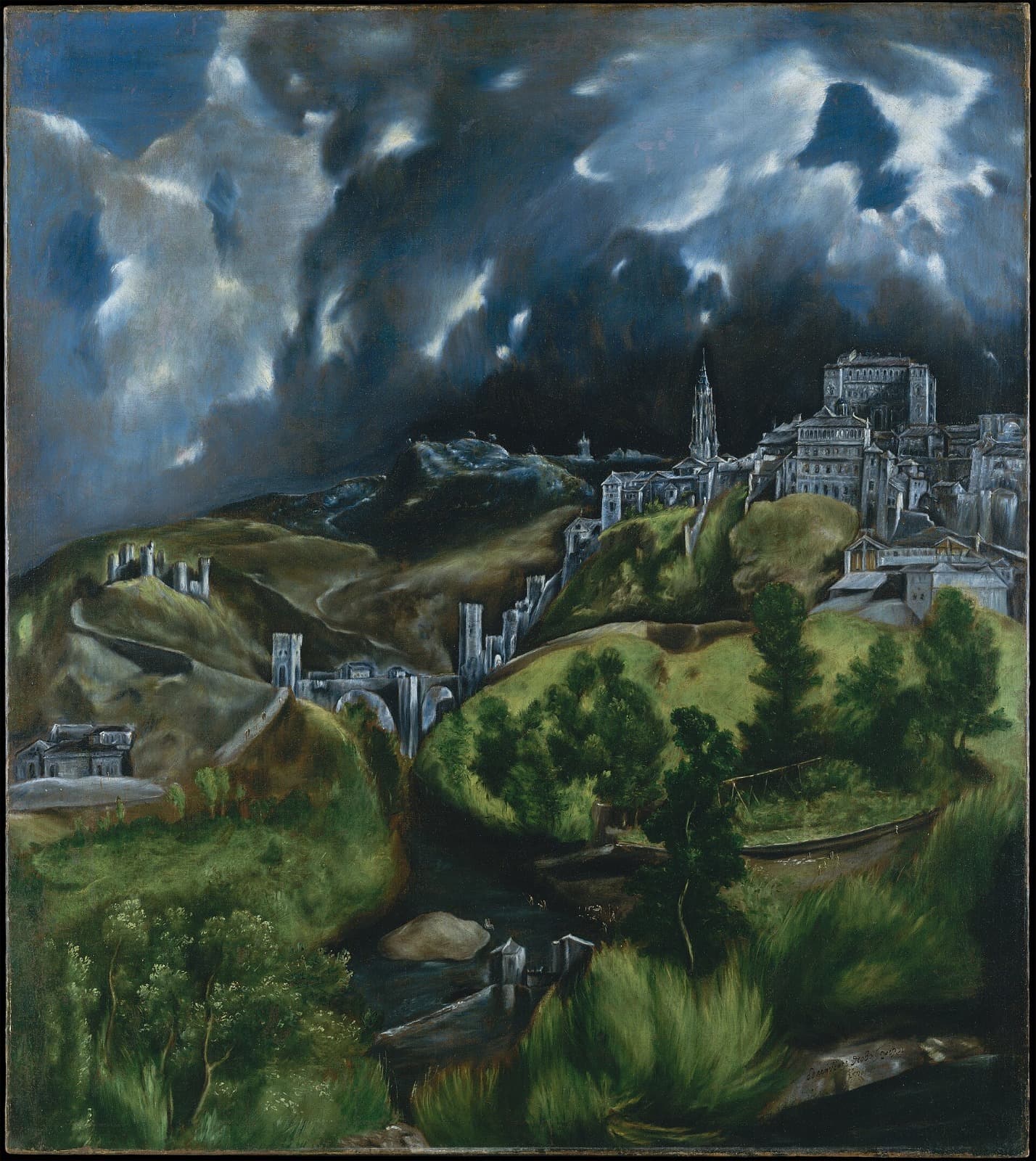
El Greco moved the cathedral tower off its real site for the sake of the composition and lit the whole city with a green storm.
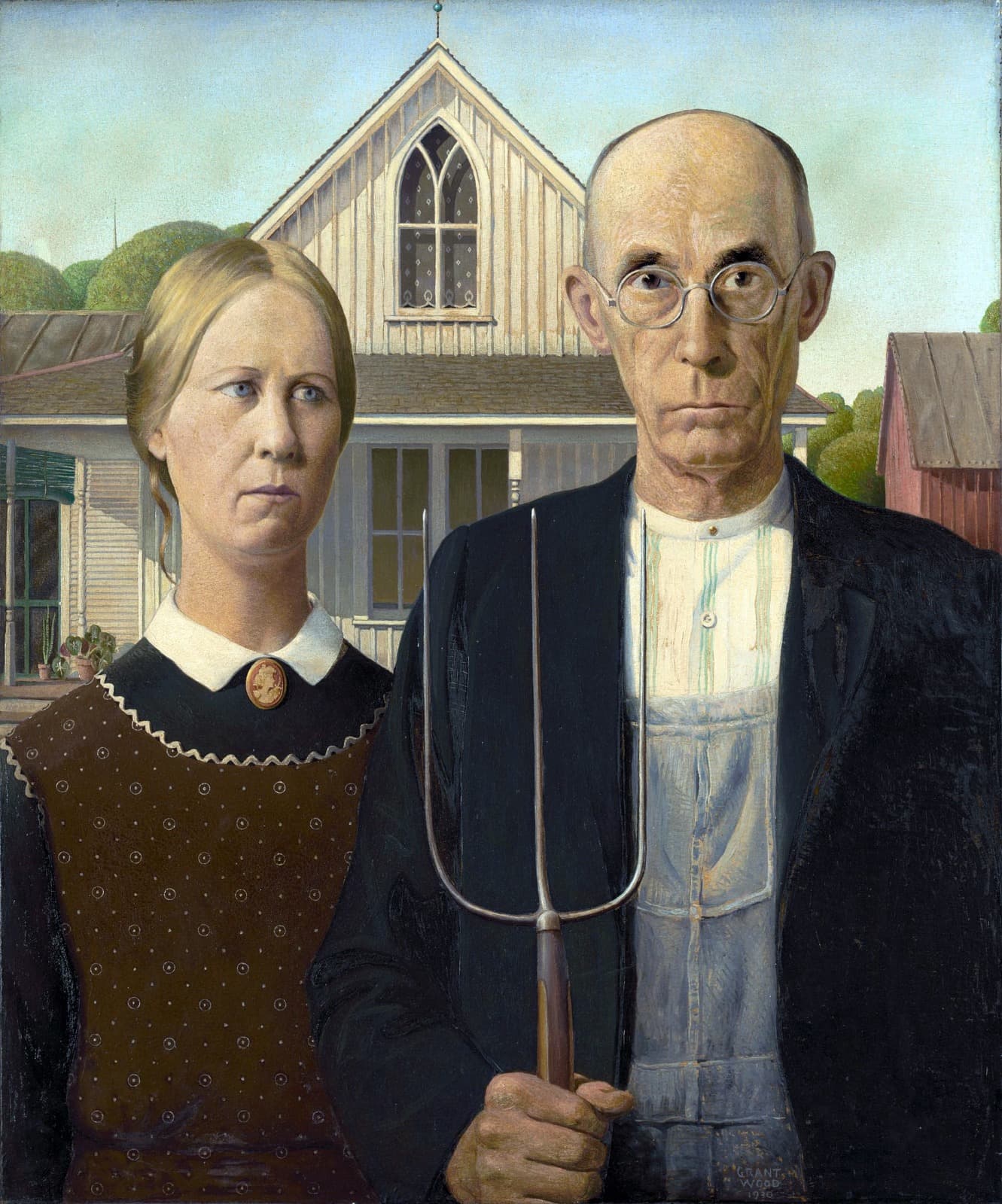
Wood posed his sister and his dentist in front of a farmhouse window, and people have argued ever since whether he meant tribute or mockery.

Nudes lounge and pipe and dance in a ring in a glade of colors nothing in nature has, a Fauve idyll from 1906.
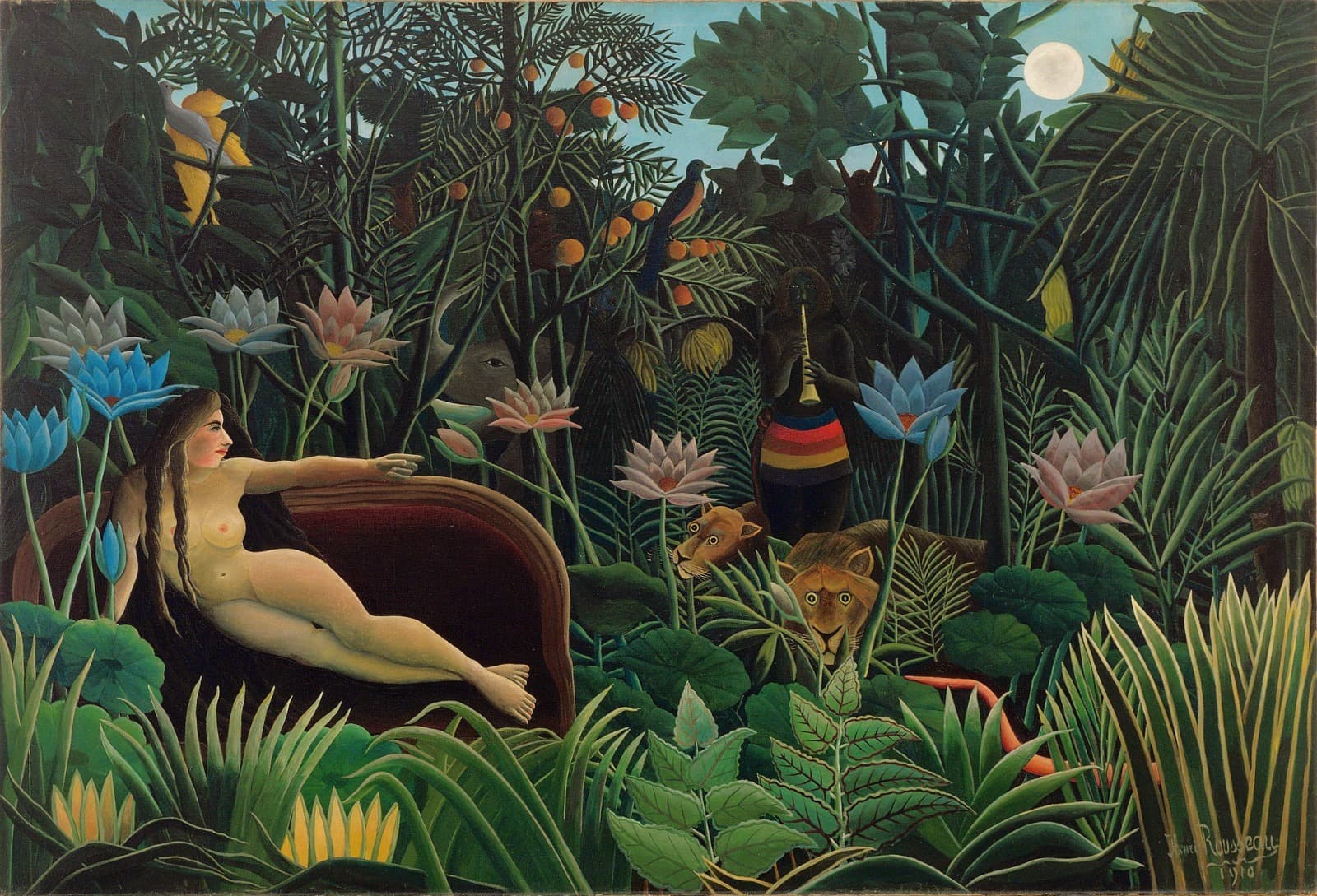
Rousseau painted this in the last year of his life and explained that the woman on the sofa is dreaming herself into the jungle.
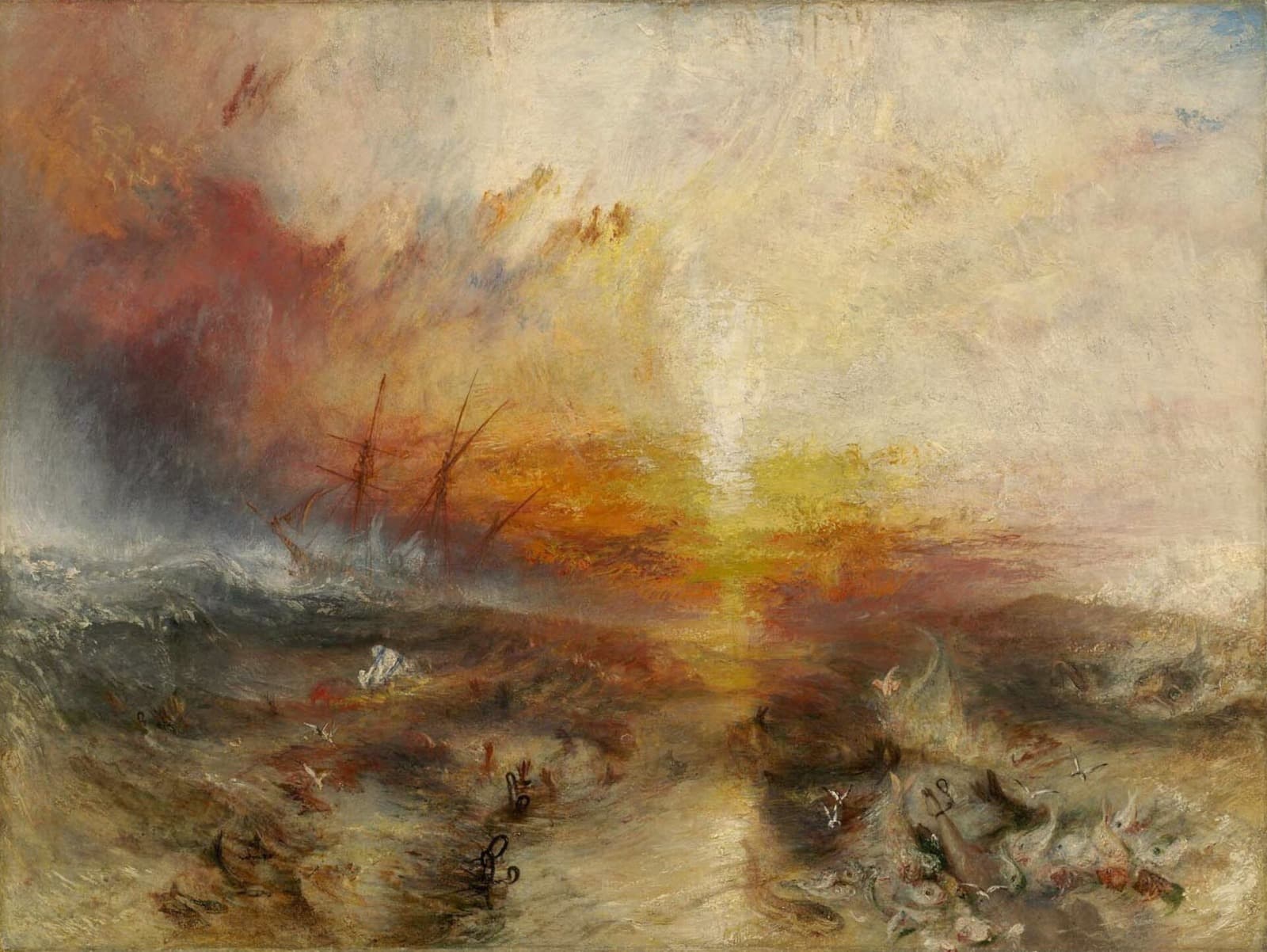
Turner took the Zong case, where a slaver threw its human cargo overboard for the insurance money, and set it under his most beautiful sunset.
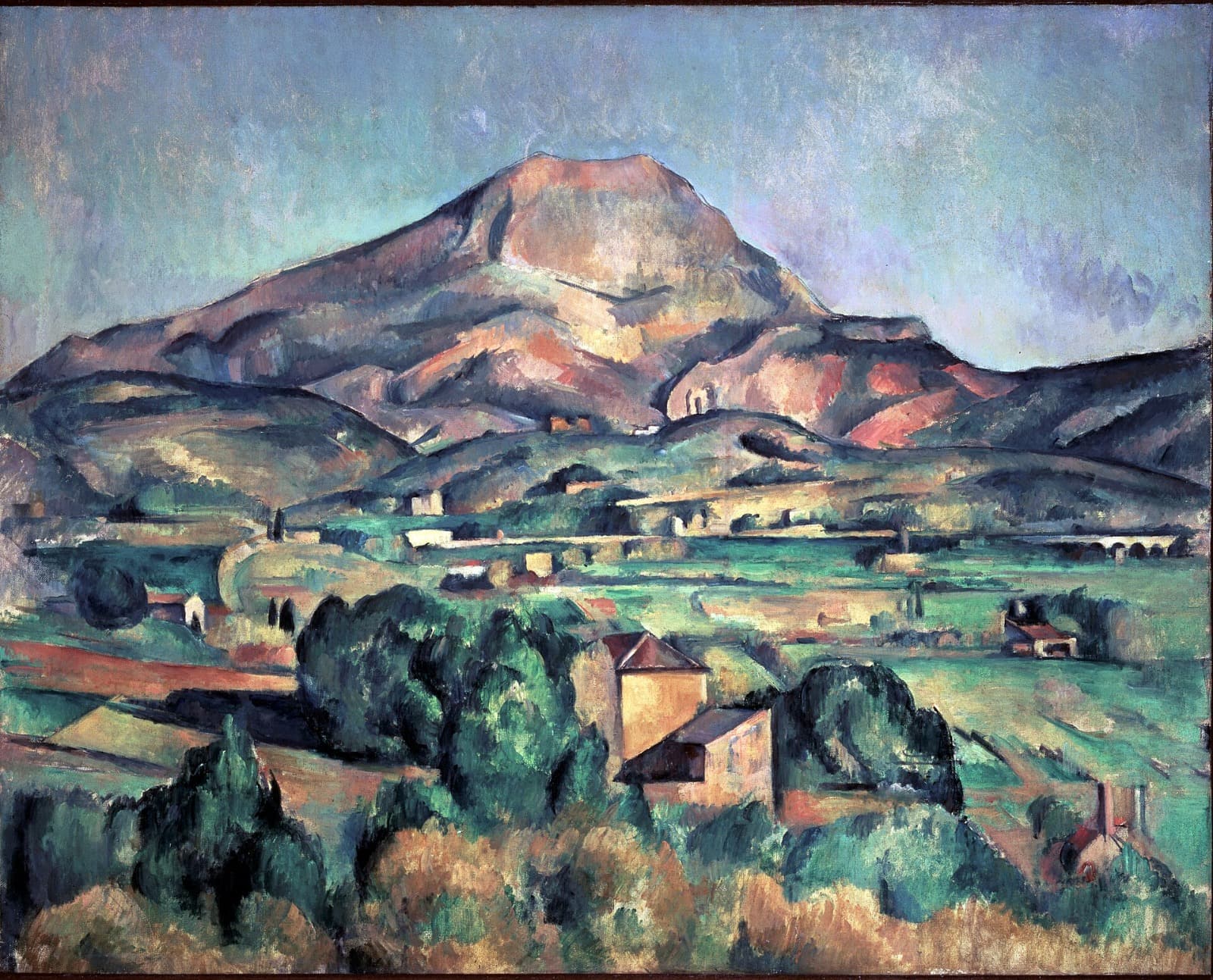
Cézanne painted his local mountain over and over, less to record it than to rebuild it out of flat patches of green, ochre and blue.
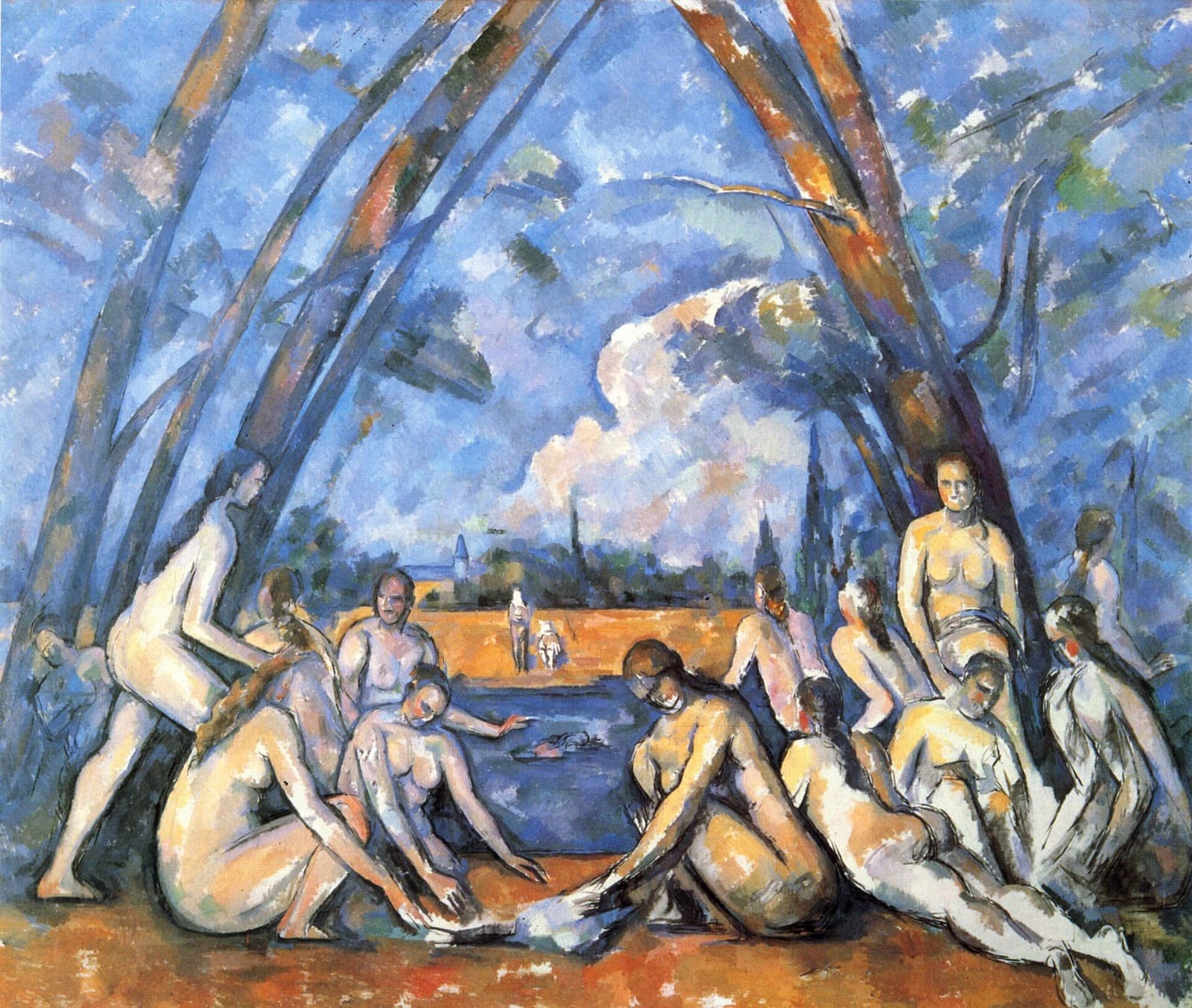
Cézanne worked on it for years and died before he finished, bending the trees inward so they rhyme with the bodies underneath.

Rain falls as fine diagonal scratches over the bridge, a trick Van Gogh admired enough to copy the whole print in oil.

Francis steps barefoot from his hermitage into a light coming from the left, and Bellini gives him no seraph and barely any wounds.

Only the face and hands are painted naturally and the rest is gold. The Nazis seized it, and a long restitution case eventually got it back.
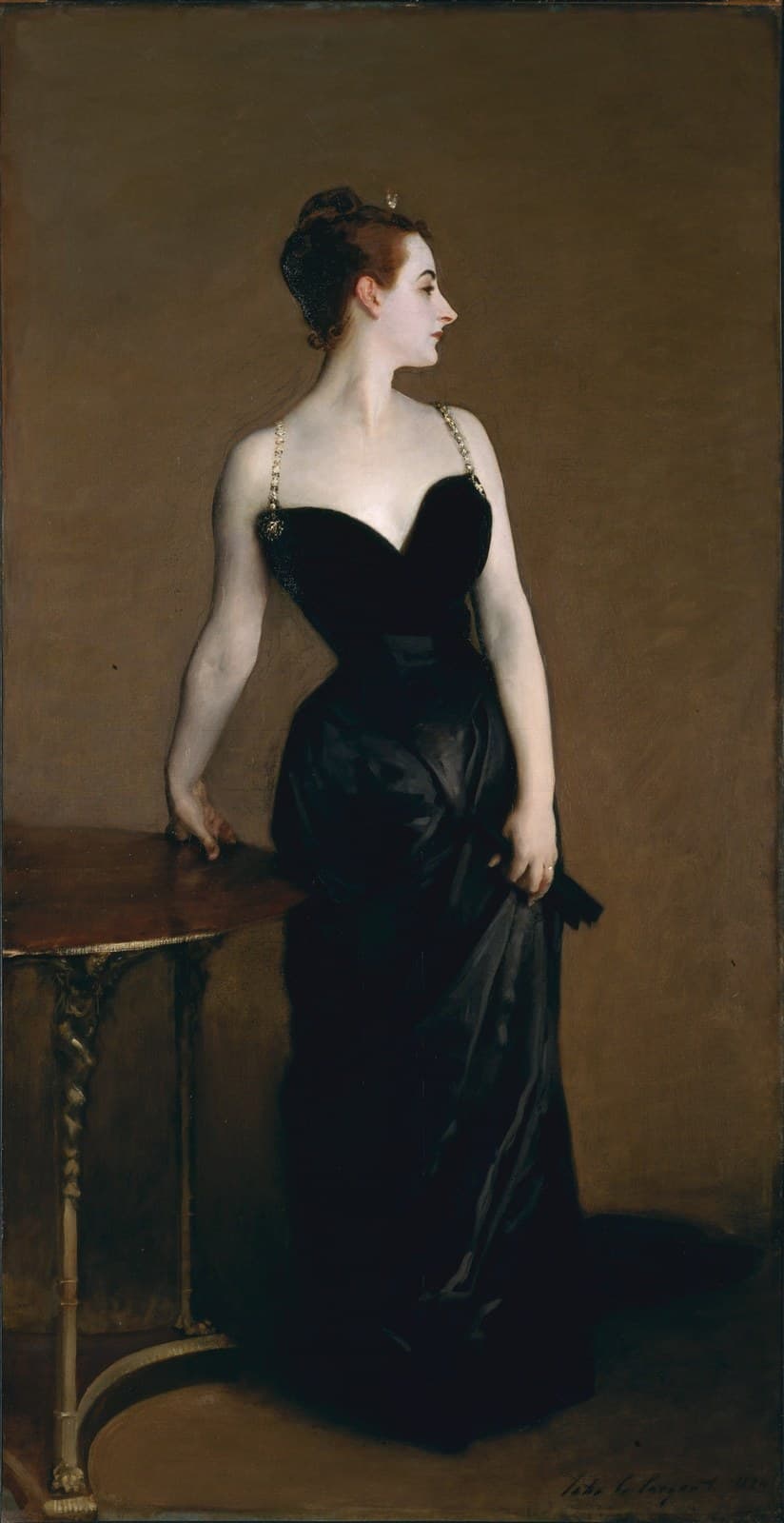
The strap fell off her shoulder in the 1884 version, Paris was scandalized, her family demanded it come down, and Sargent repainted the strap.

A critic at the 1913 Armory Show called it an explosion in a shingle factory, and the insult followed the painting around America.

The words under the pipe are correct, since a painting of a pipe is not a pipe, which is the whole and entire joke.

Sharaku made about 140 actor prints in ten months and then vanished so completely that people still argue about who he was.
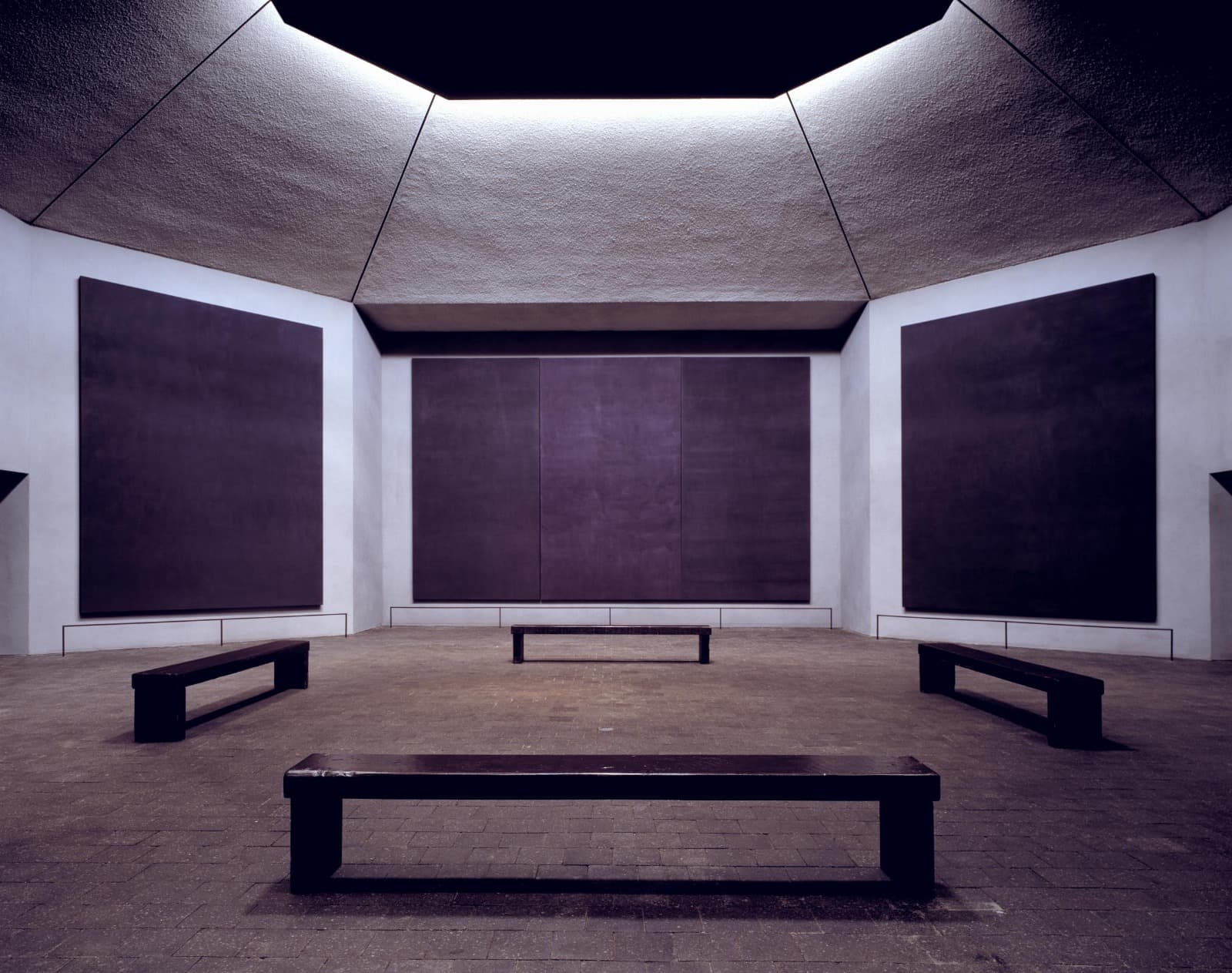
Fourteen near-black panels in an octagonal room, where your eyes adjusting to the dark is the point. Rothko died before it opened.

The emperor hands a book to a Sufi and ignores the kings waiting below, one of them James I, copied from an English portrait.

Pareja was Velázquez's enslaved assistant, freed soon after this was painted in Rome as a warm-up before the pope sat for him.

Bacon took Velázquez's composed pope and set him screaming behind a curtain of falling paint. He never saw the original in person.
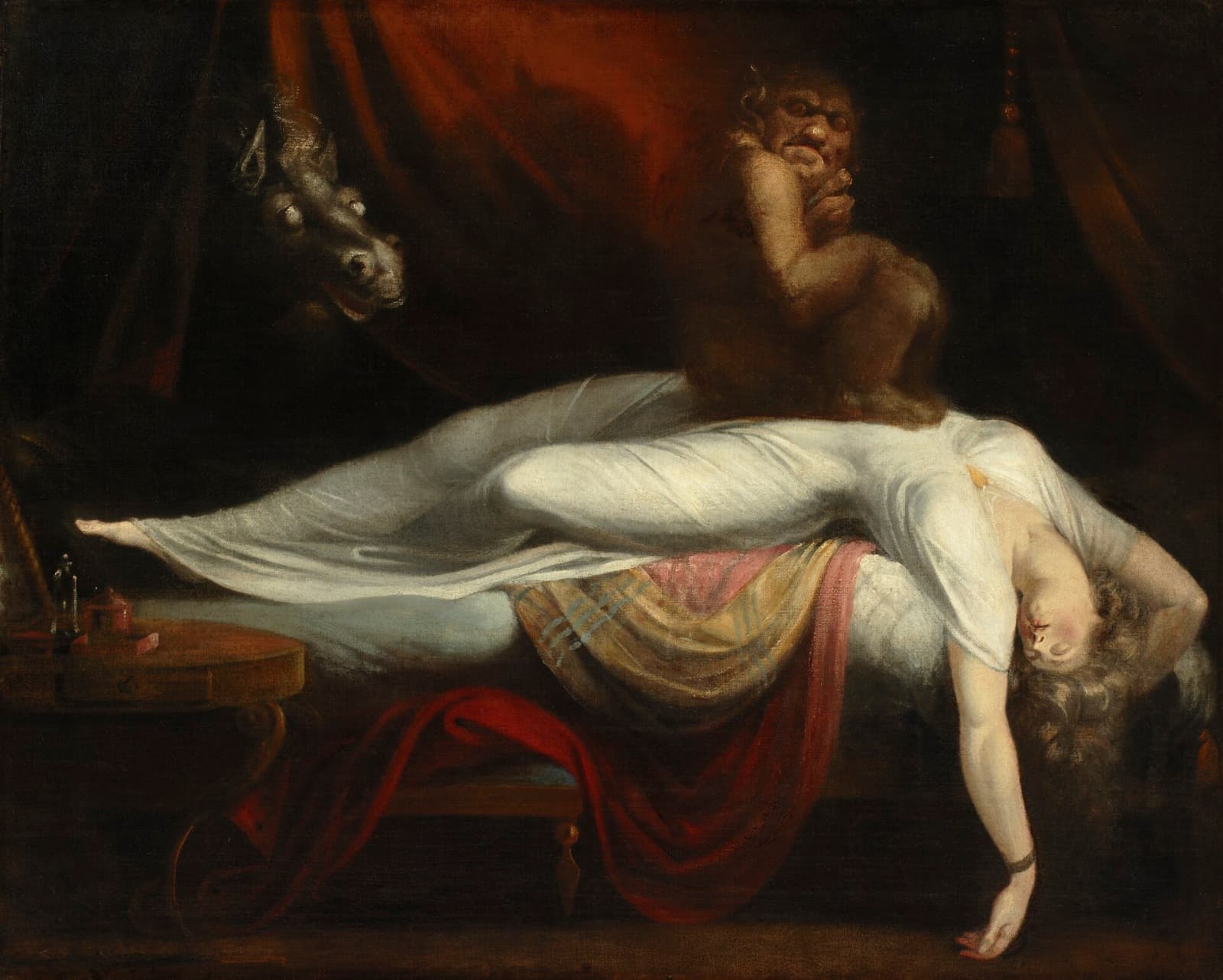
An incubus squats on a sleeping woman's chest while a wild-eyed horse pushes through the curtains. It made Fuseli famous immediately.

Three famous women of 1790s Edo on mica ground, their faces nearly identical, so you have to read them from the tilt of an eye.

A critic looked at this and called Matisse and his friends fauves, wild beasts, which is how the movement got its name.

A marble head, a red rubber glove and a green ball hang together on a wall, and a train goes by in the distance.
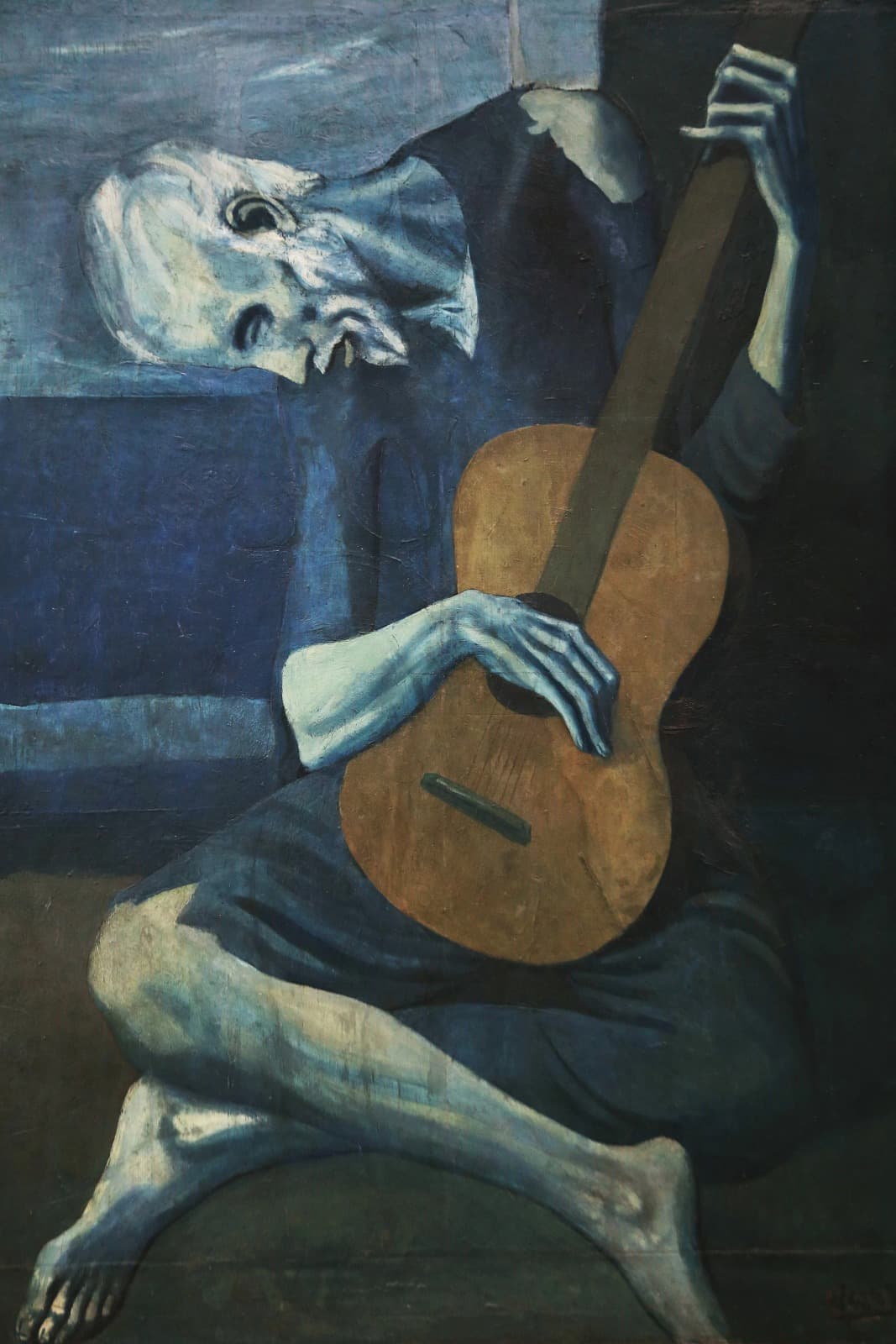
The guitar is the only warm note in the picture. Picasso painted it in his Blue Period, poor himself and living on very little.
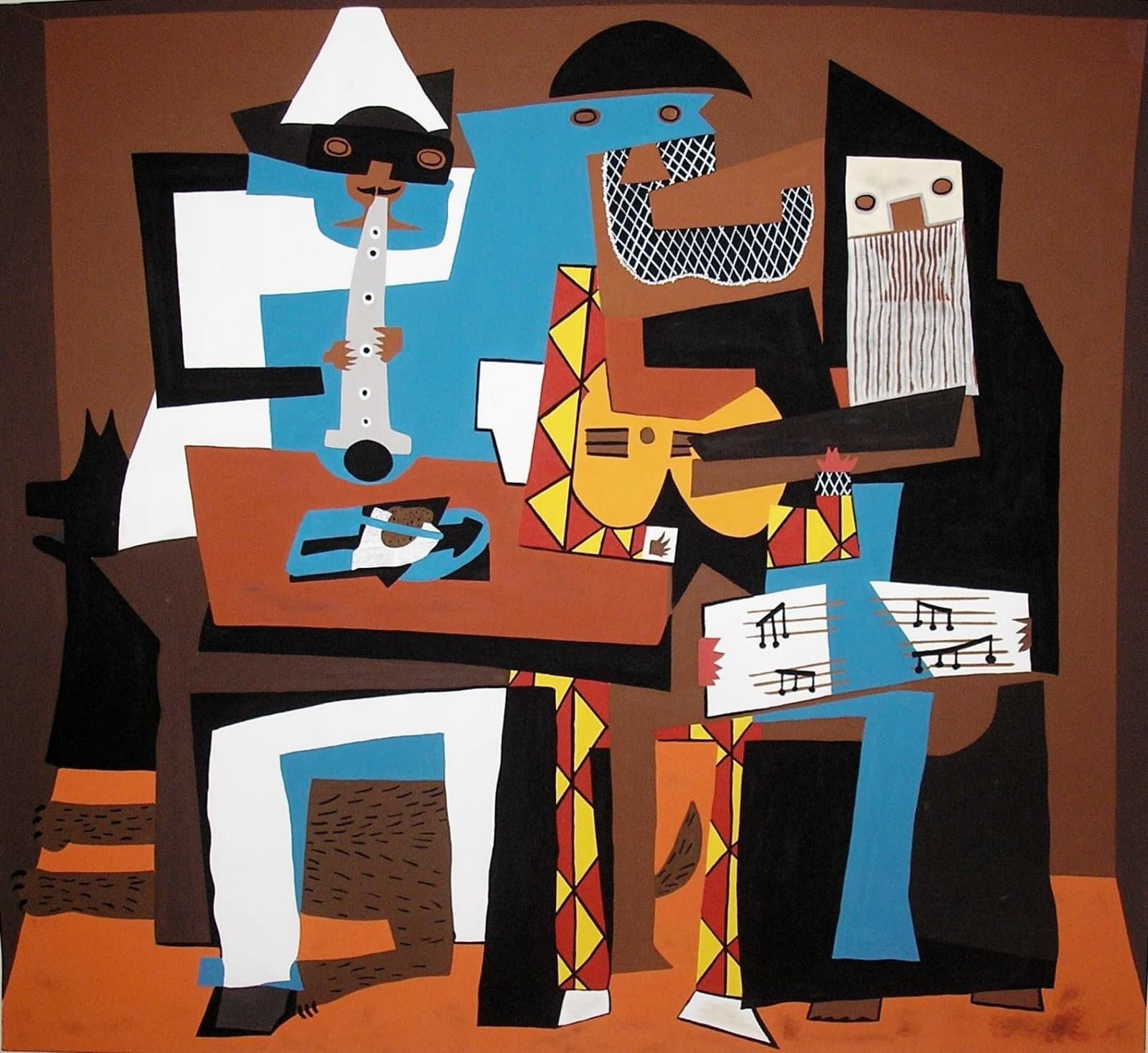
A harlequin, a Pierrot and a monk in flat interlocking shapes that look cut from paper. Synthetic Cubism at its grandest and most deadpan.
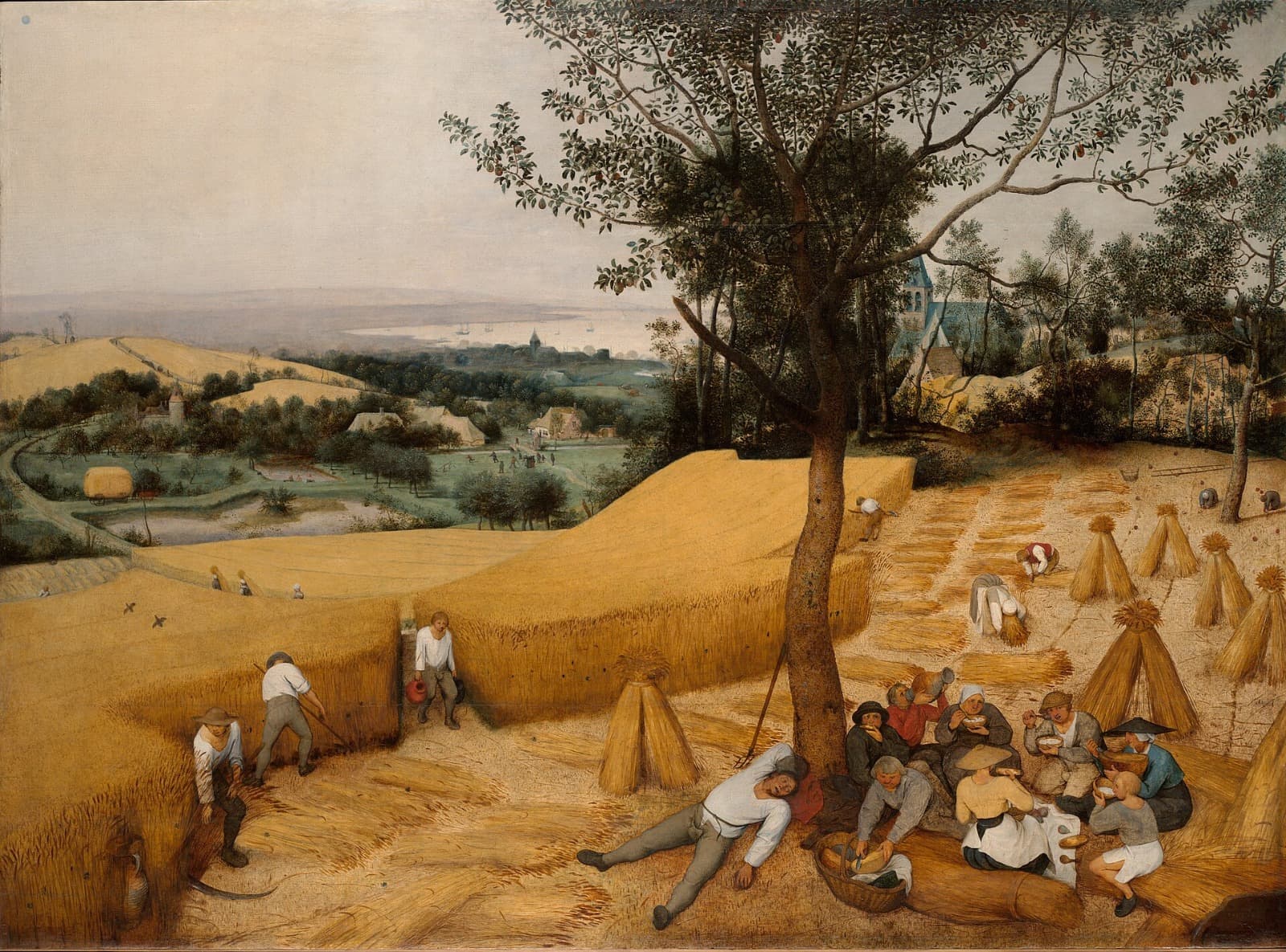
One man lies flat on his back with his mouth open while the others cut wheat. Late summer, from the same series of months.

Mondrian broke his own grid into blinking squares after moving to New York, where he loved the traffic and the jazz.
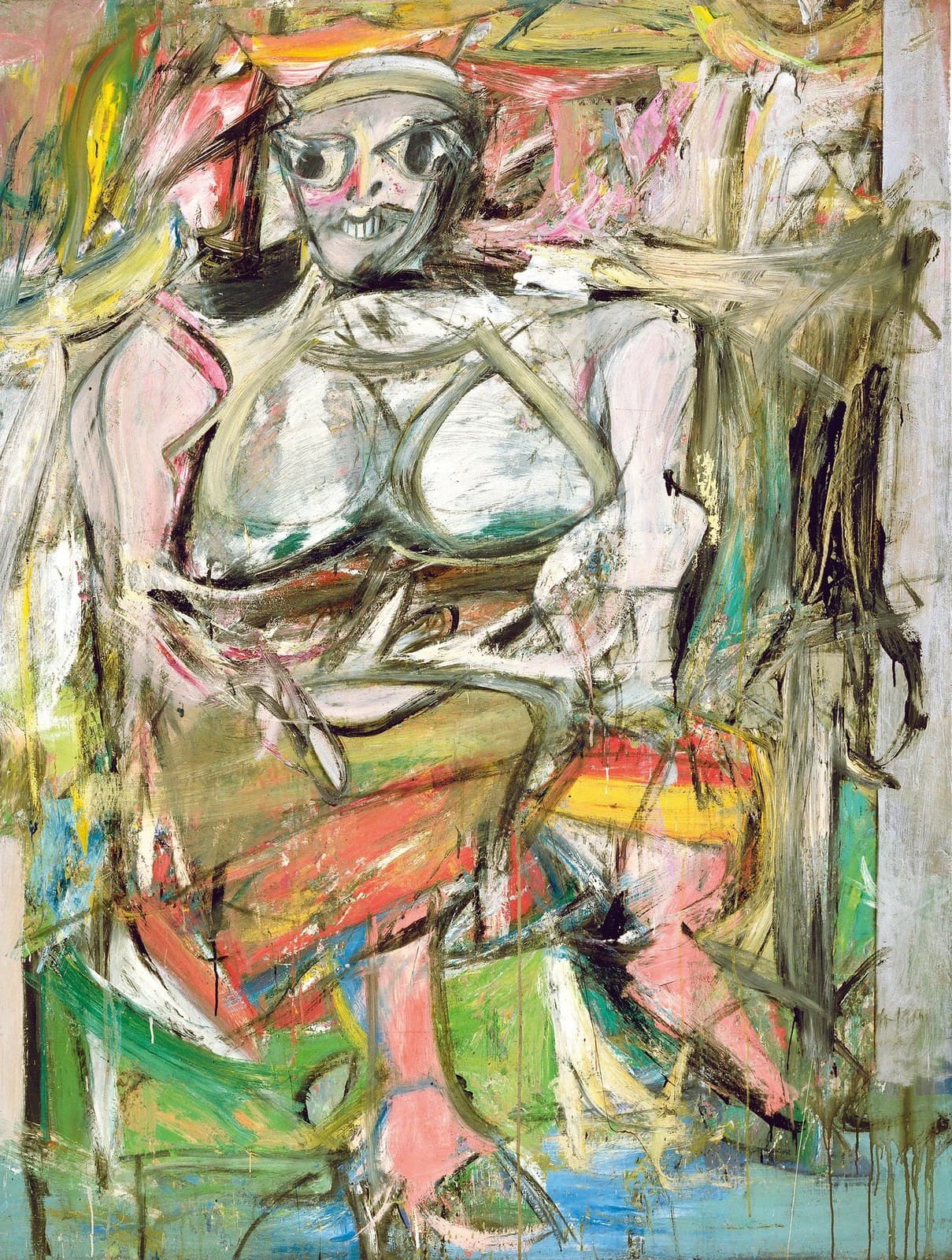
De Kooning dragged the figure back into abstract painting at the moment that was least acceptable, and worked this canvas over for two years.

Umbrellas cross the wet cobbles of Haussmann's new boulevards, composed with a photographic exactness his Impressionist friends had no use for.

Circus people stand together in an empty landscape without looking at each other. The Rose Period at its largest and most wistful.
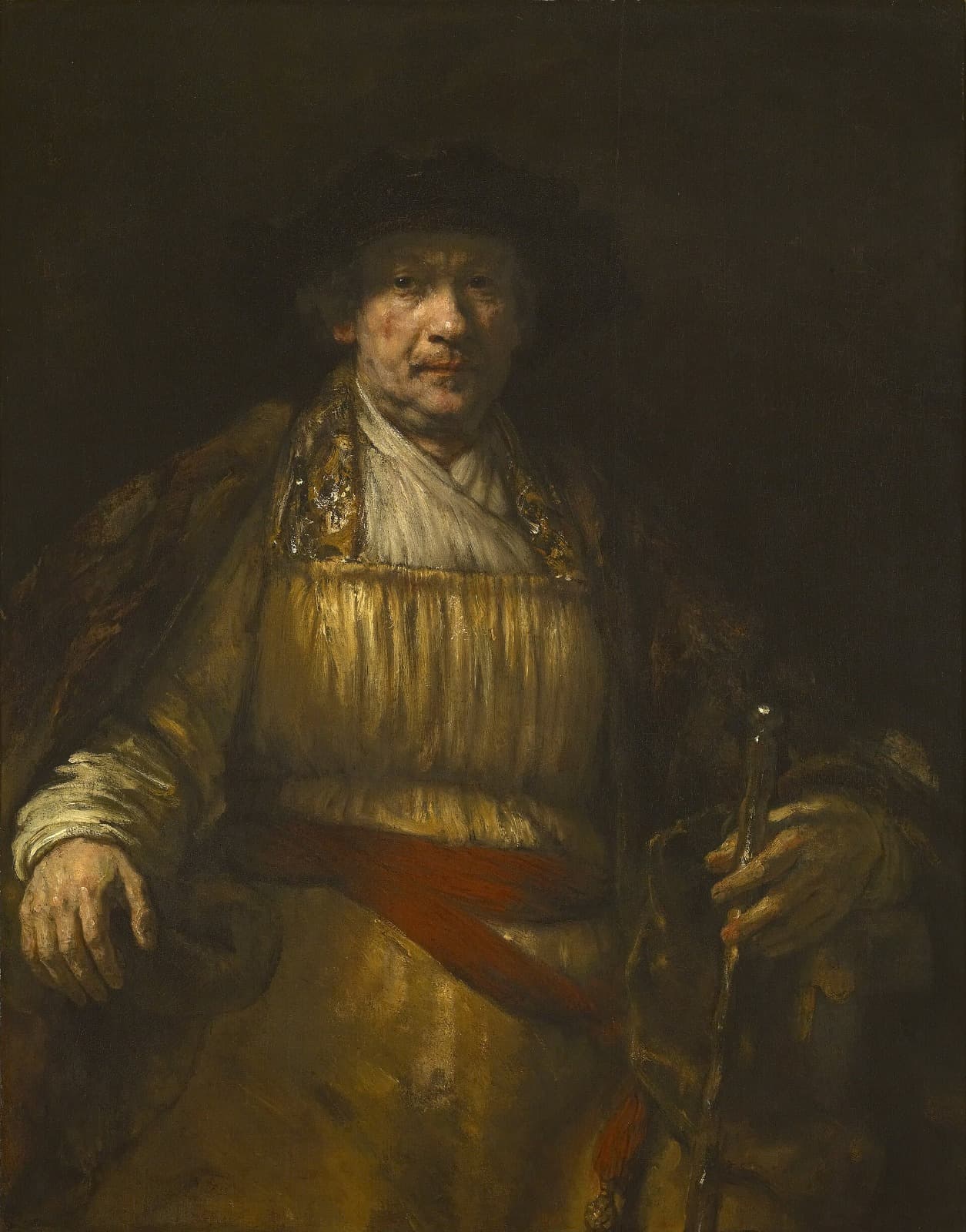
Rembrandt painted himself enthroned like a monarch, staff across his lap, in the same year bankruptcy took his house and everything in it.

A young horseman rides into the dusk armed and alert, and nobody has ever agreed who he is or where he is going.
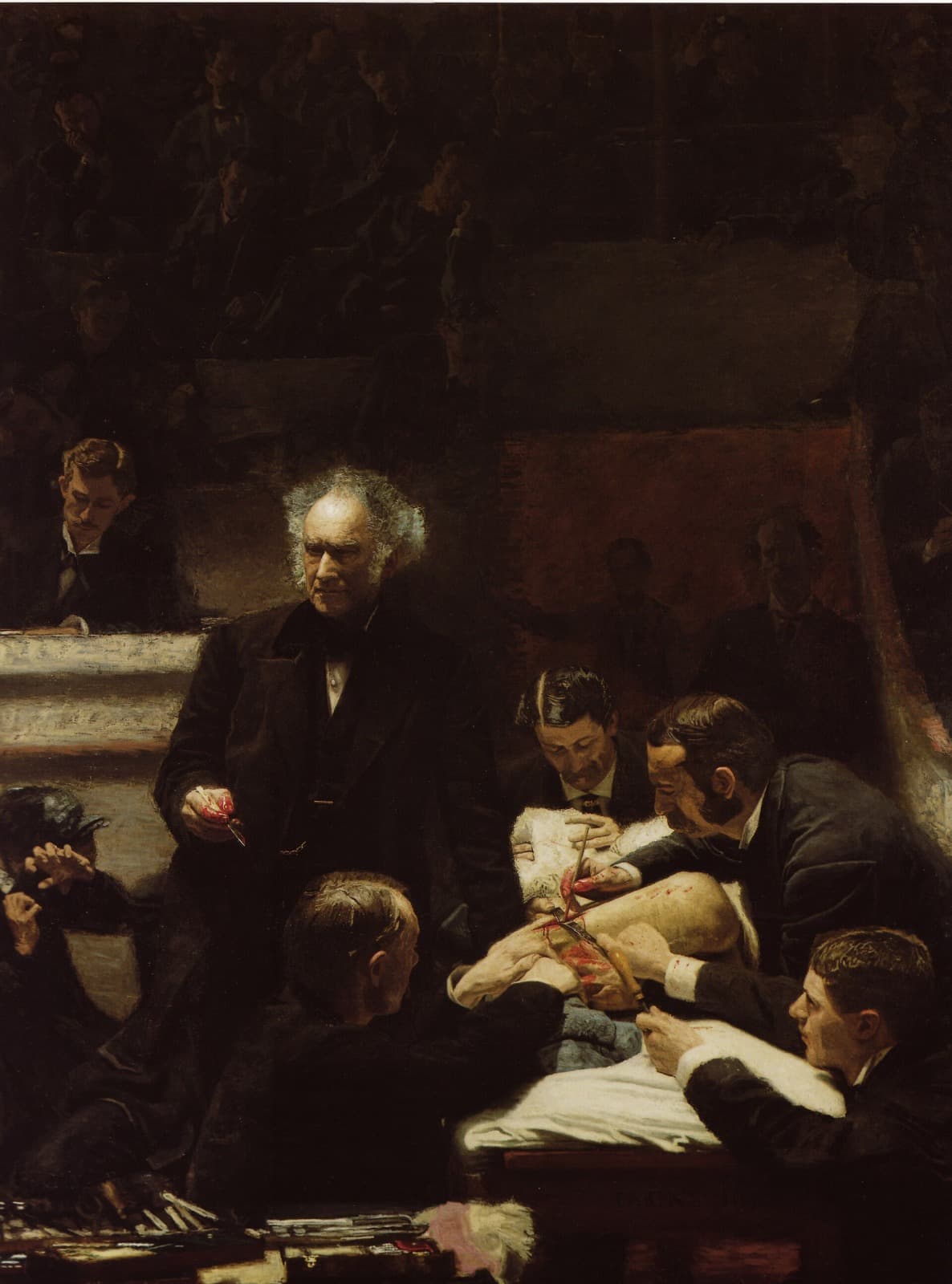
The surgeon turns from the open incision to lecture, scalpel still bloody, while a woman at the side covers her eyes. Philadelphia was appalled.

Van Gogh wanted a room where a man could ruin himself or go mad, and got it with red walls and a green ceiling.

Van Gogh loved the cypress and compared it to an Egyptian obelisk, then set one flaming up the right side of a Provençal field.

The scales in her hand are empty and perfectly level, and the painting on the wall behind her is a Last Judgment.

Socrates reaches for the hemlock without looking at it, still arguing with his other hand while his students fall apart around him.

Monet dug the pond himself at Giverny, built the Japanese bridge over it, and then painted the place for the rest of his life.
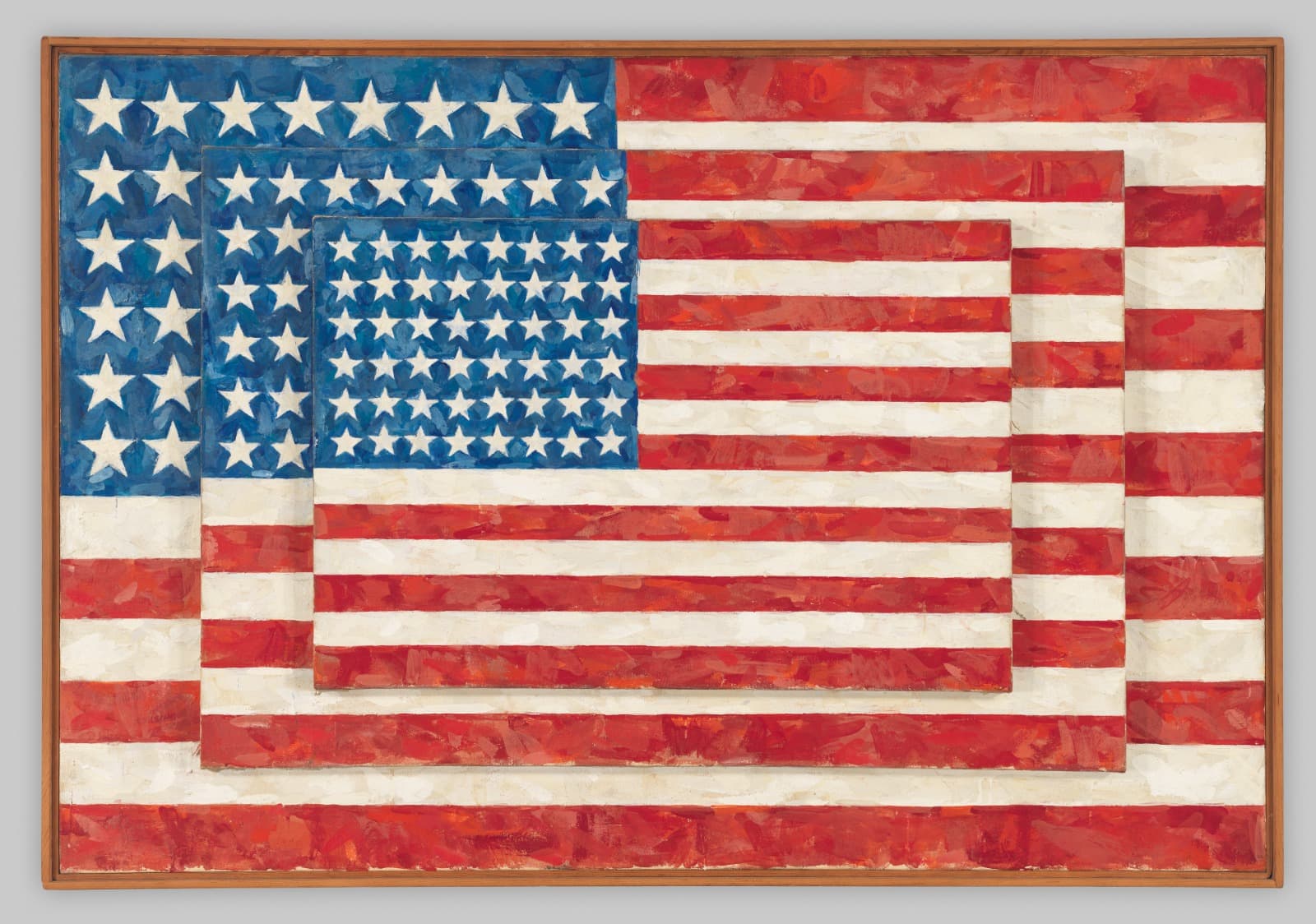
Johns chose things the mind already knows, so that nobody would look past the wax surface. Three flags stacked, each smaller than the last.
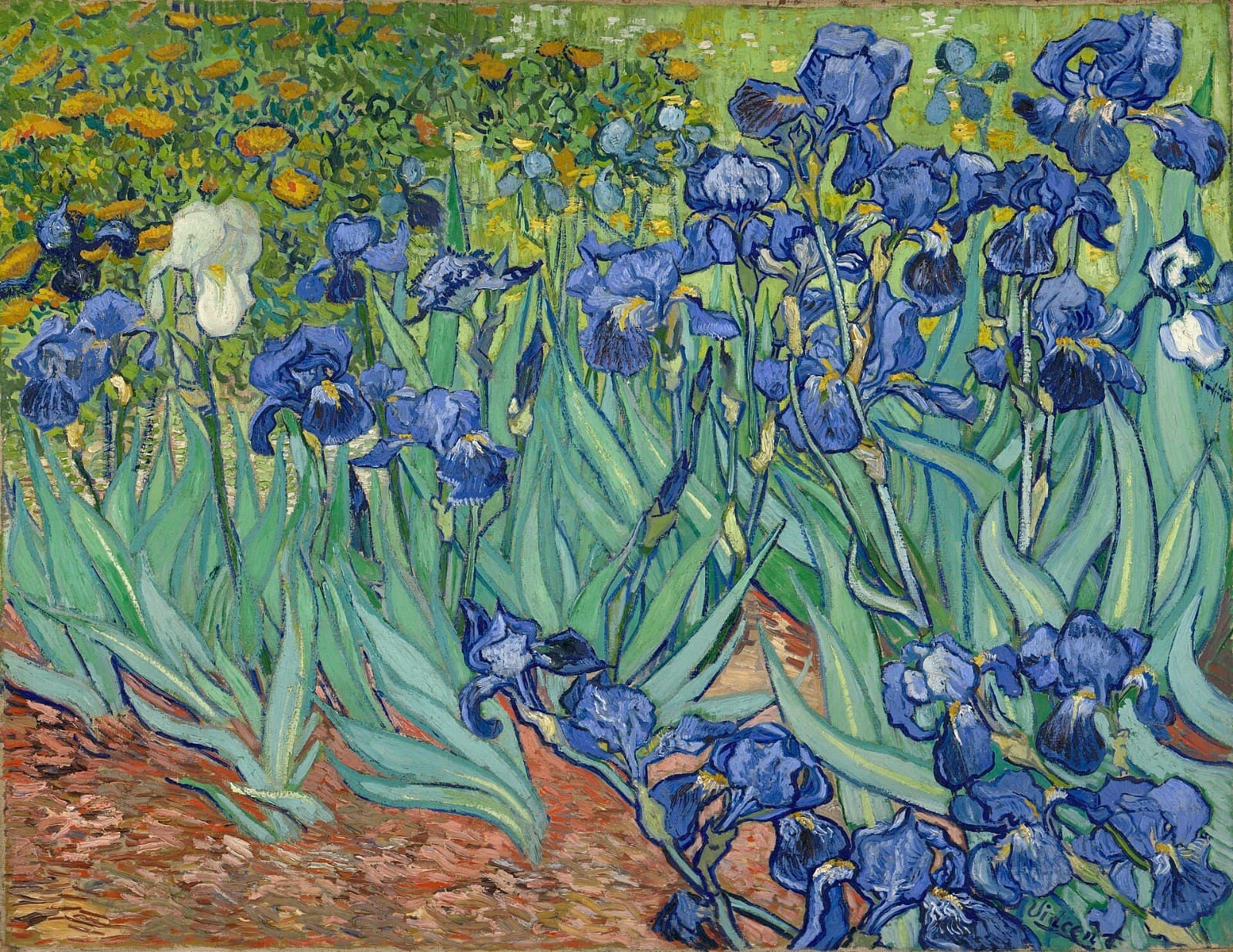
One white iris stands alone among a whole bed of blue-violet ones, the blades twisting and crowding right up to the edge of the canvas.

Monet and Renoir set up side by side at this riverside resort and worked out the quick broken stroke that became Impressionism.

Monet painted the same stacks near his house at every hour and season, so that what changes from canvas to canvas is only the light.

Almost every detail is wrong, including the flag and the boat, and Leutze painted it in Germany seventy-five years after the fact.

A juniper bush stands behind her as a pun on her name. The panel was later cut down at the bottom, taking her hands with it.

One hand on the pitcher, one on the window latch, and morning light coming through onto a white cap. Nothing happens, perfectly.

Brook Watson really did lose a leg to a shark in Havana harbor, and Copley put a Black sailor at the top of the rescue.

A trapper and his son drift downriver at first light with a chained animal at the prow, the water so still it doubles them.

A woman washes a child's feet in a basin, seen from above, the wallpaper and rug pushing everything flat as a Japanese print.

A green-faced peasant and a cow look at each other, and the houses behind them are upside down. Chagall grew up in Vitebsk.
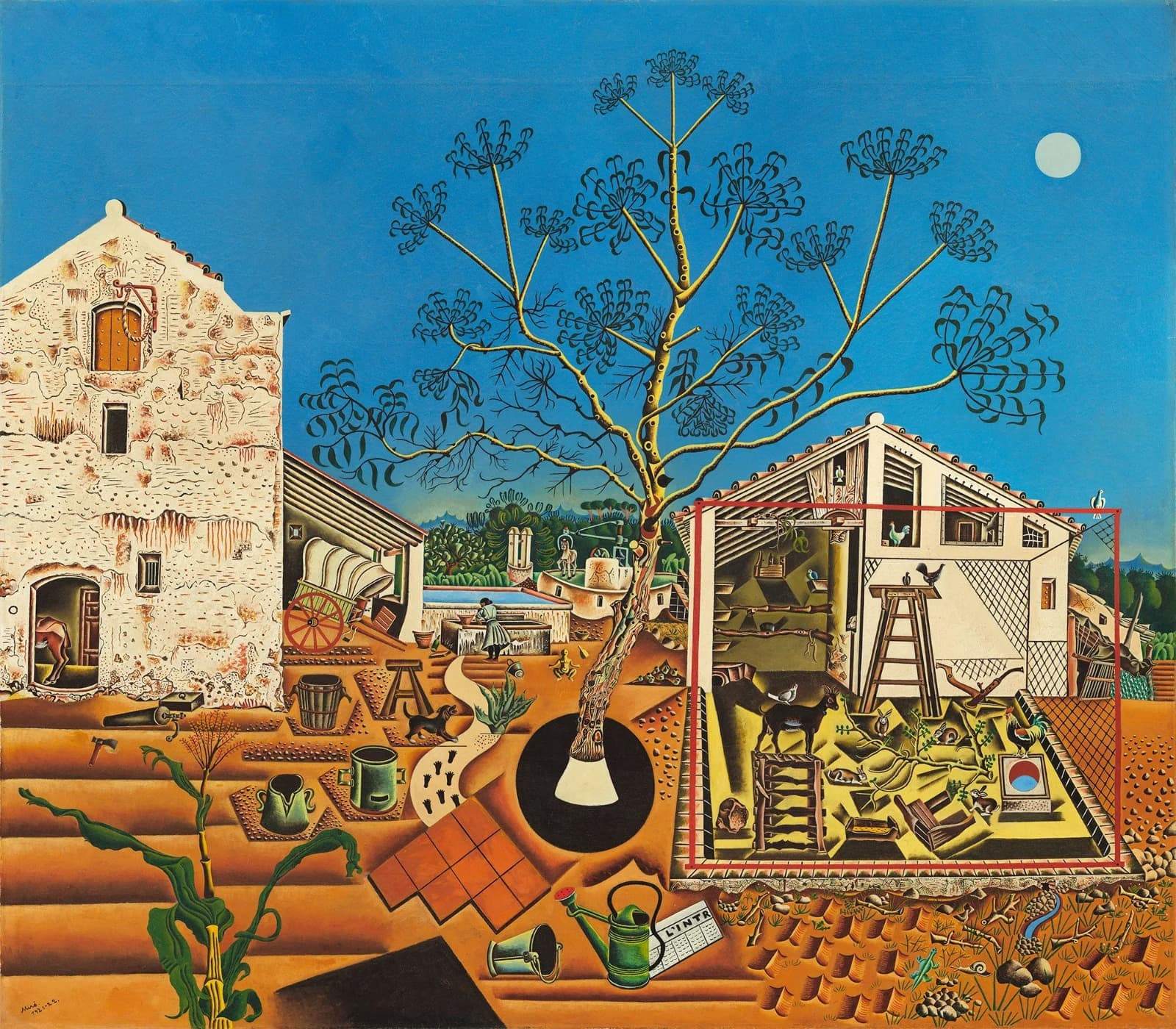

O'Keeffe collected sun-bleached bones off the desert and hung this one in the sky over the hills, with a single white hollyhock beside it.
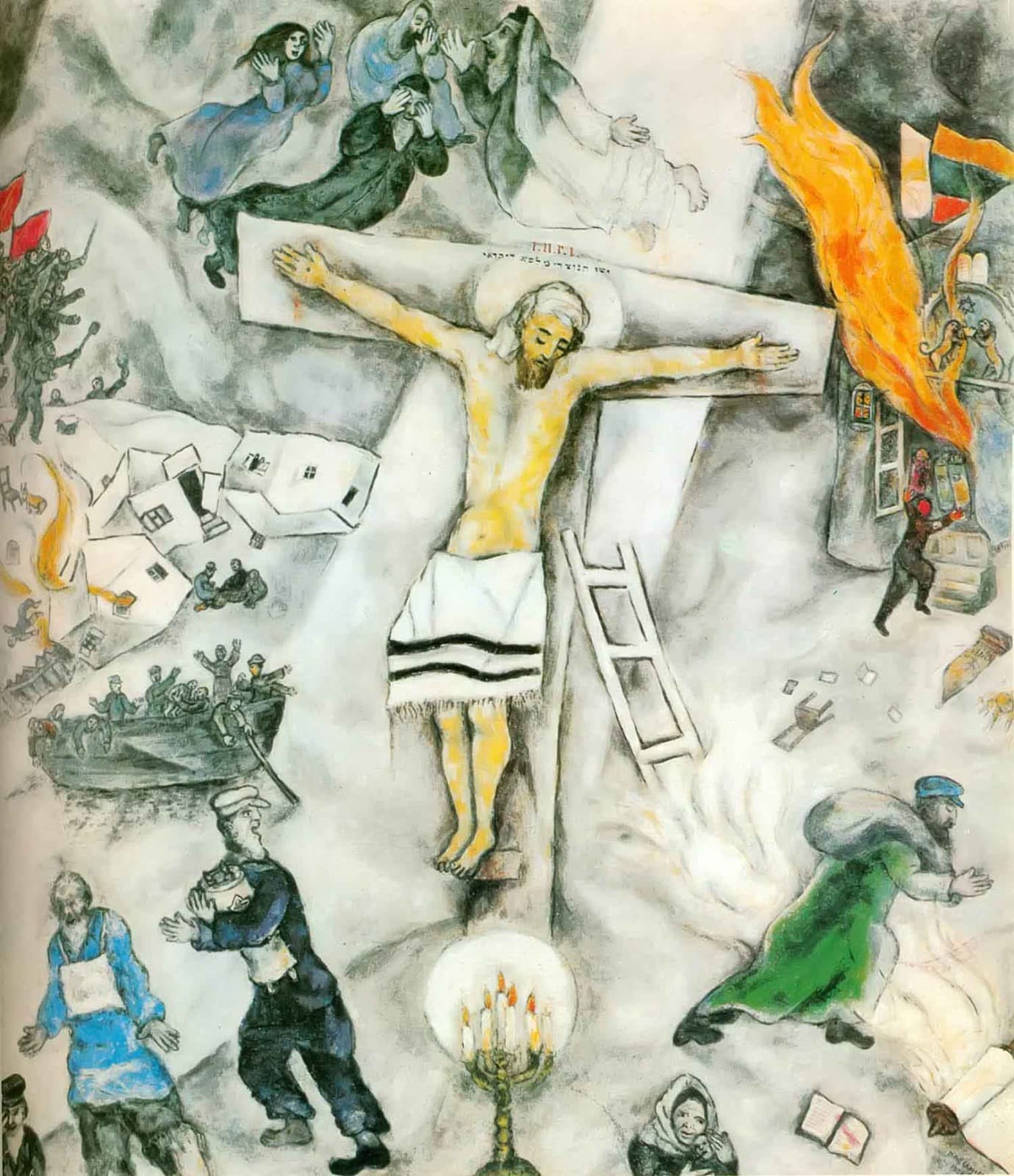
Christ wears a Jewish prayer shawl while a synagogue burns and refugees flee by boat. Chagall painted it in 1938, watching what was coming.

A thorn necklace draws blood at her throat, a dead hummingbird hangs from it, and a monkey and a black cat watch from behind.

A basket of colored wool sits in the front, the Seine glitters behind, and the whole thing is about how good an afternoon can be.
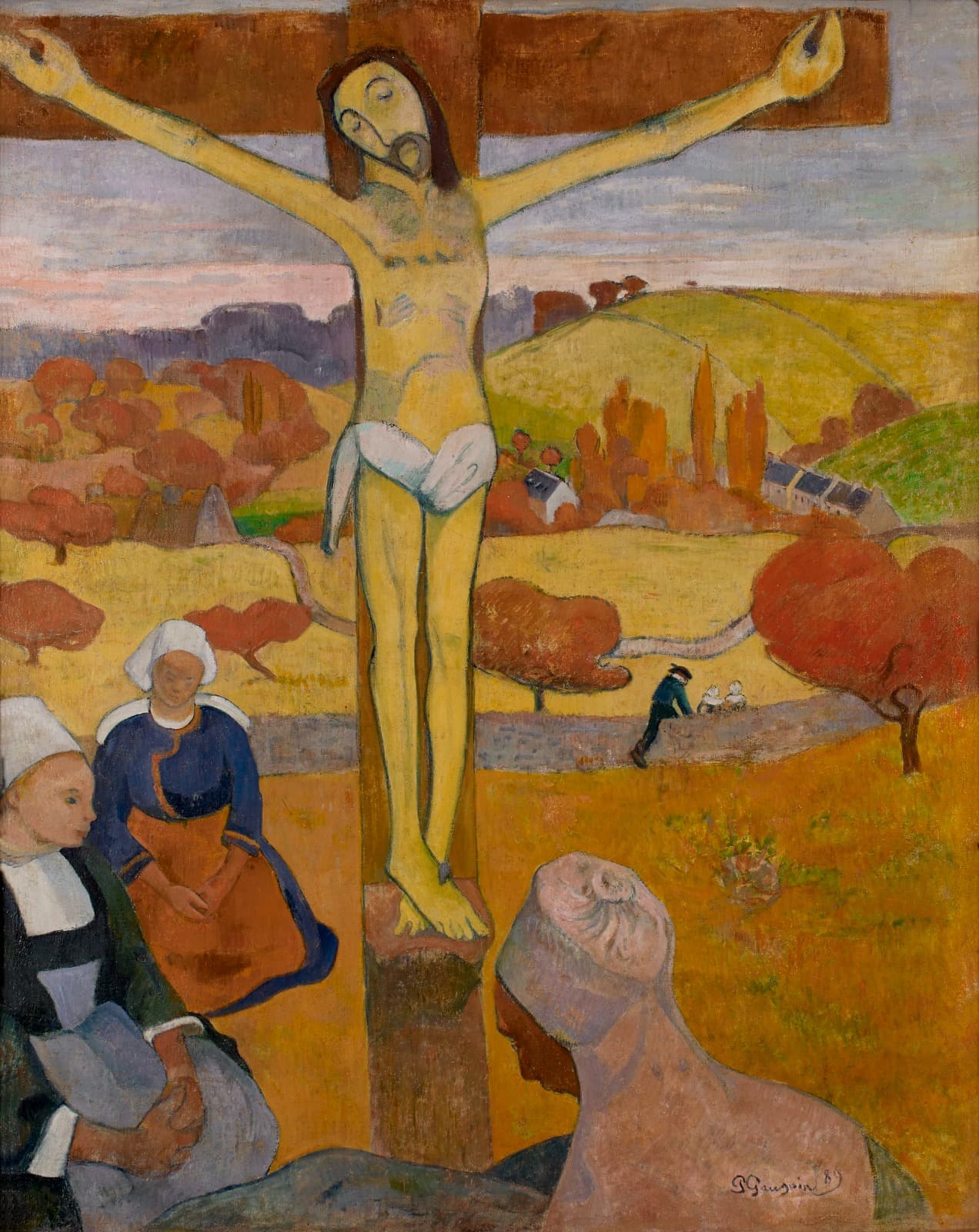
Three Breton women in white caps kneel at a wooden cross in an autumn field, everything flattened into blocks of color like stained glass.
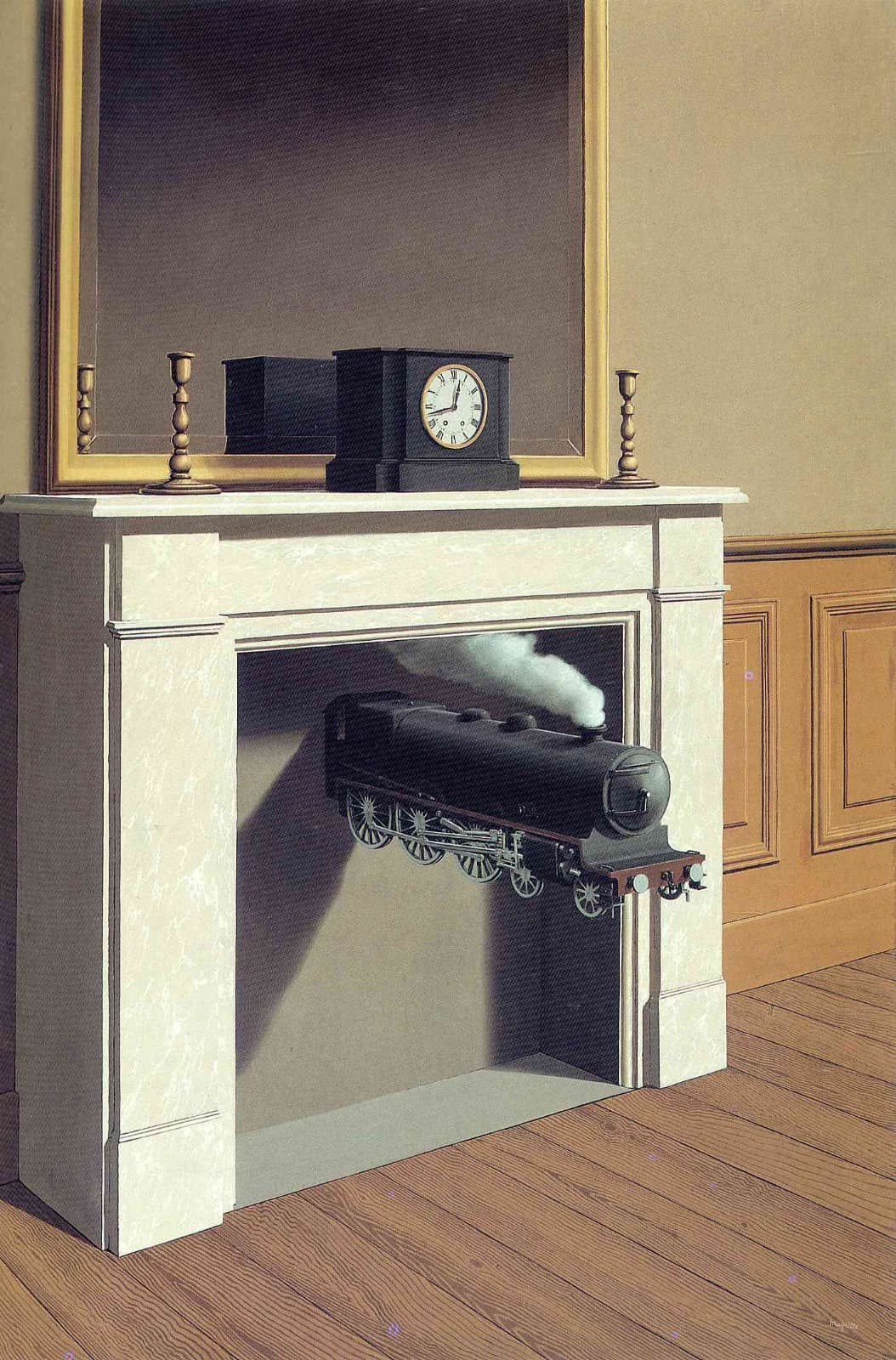
A small steam locomotive comes out of a fireplace under the mantel clock, and the room around it is otherwise entirely ordinary.
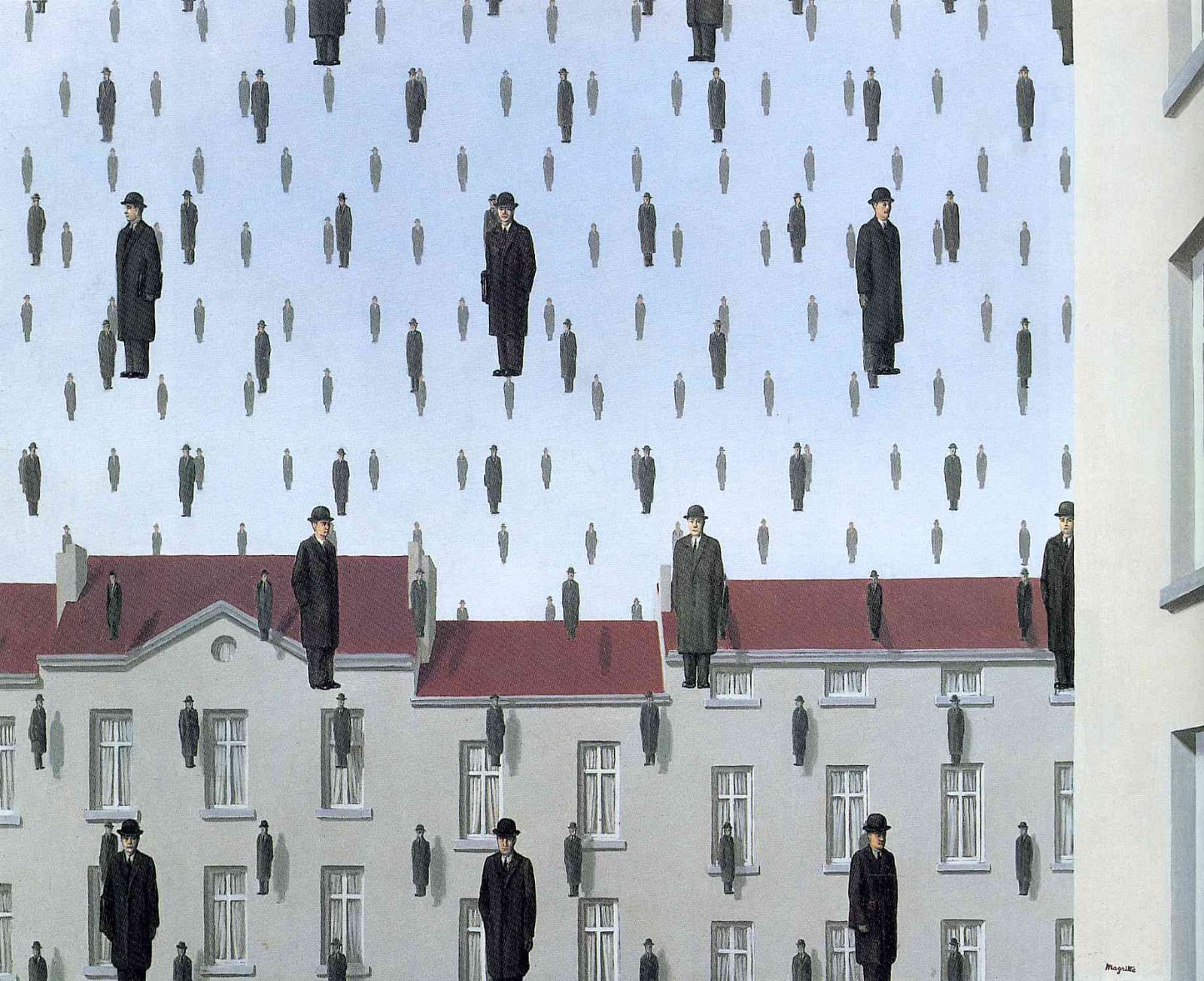
Men in bowler hats hang in the sky over the rooftops at even intervals, neither falling nor floating, which is somehow the unsettling part.
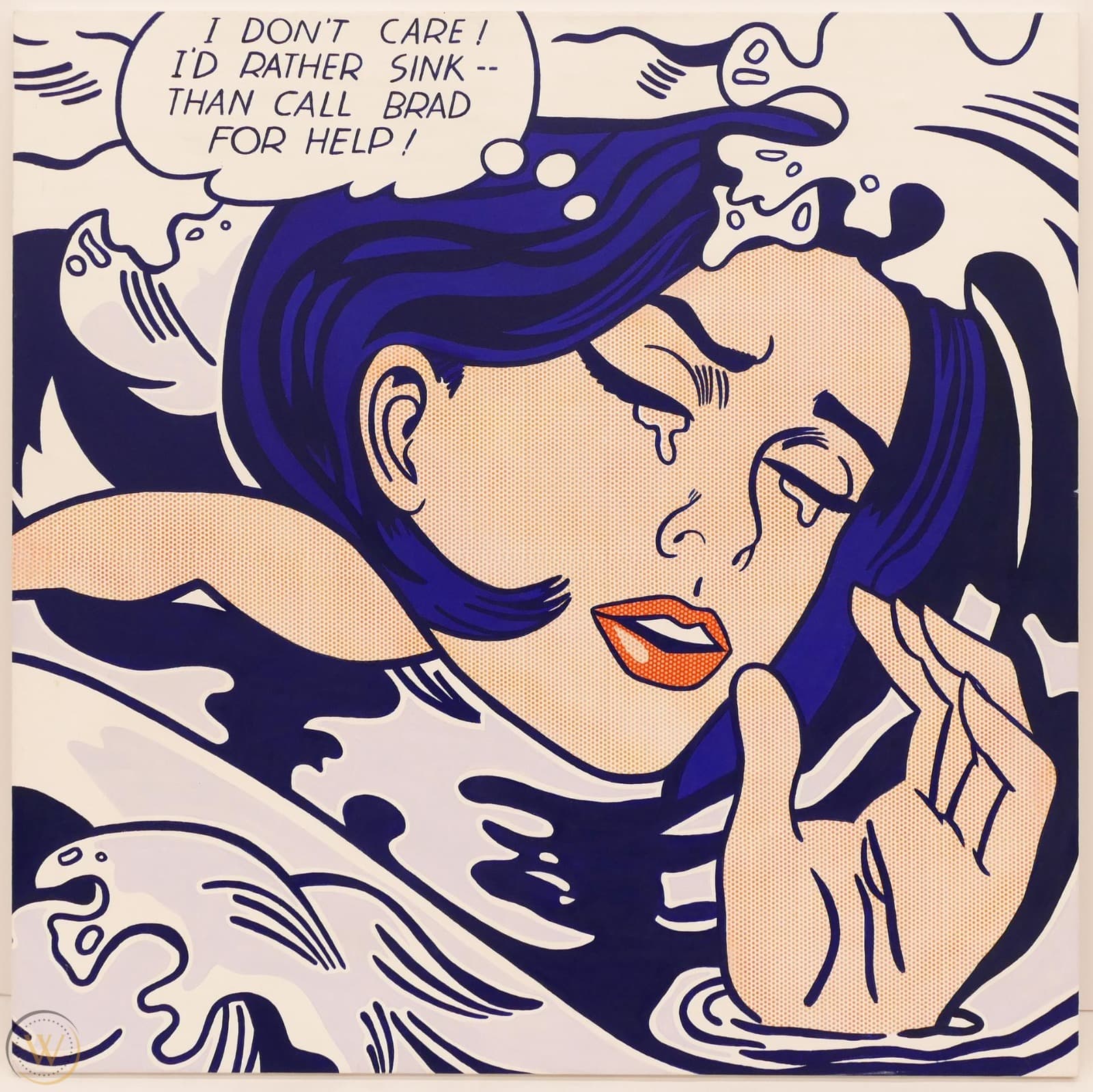
She would rather sink than call Brad. Lichtenstein took one panel of a romance comic and blew it up to the size of a serious painting.
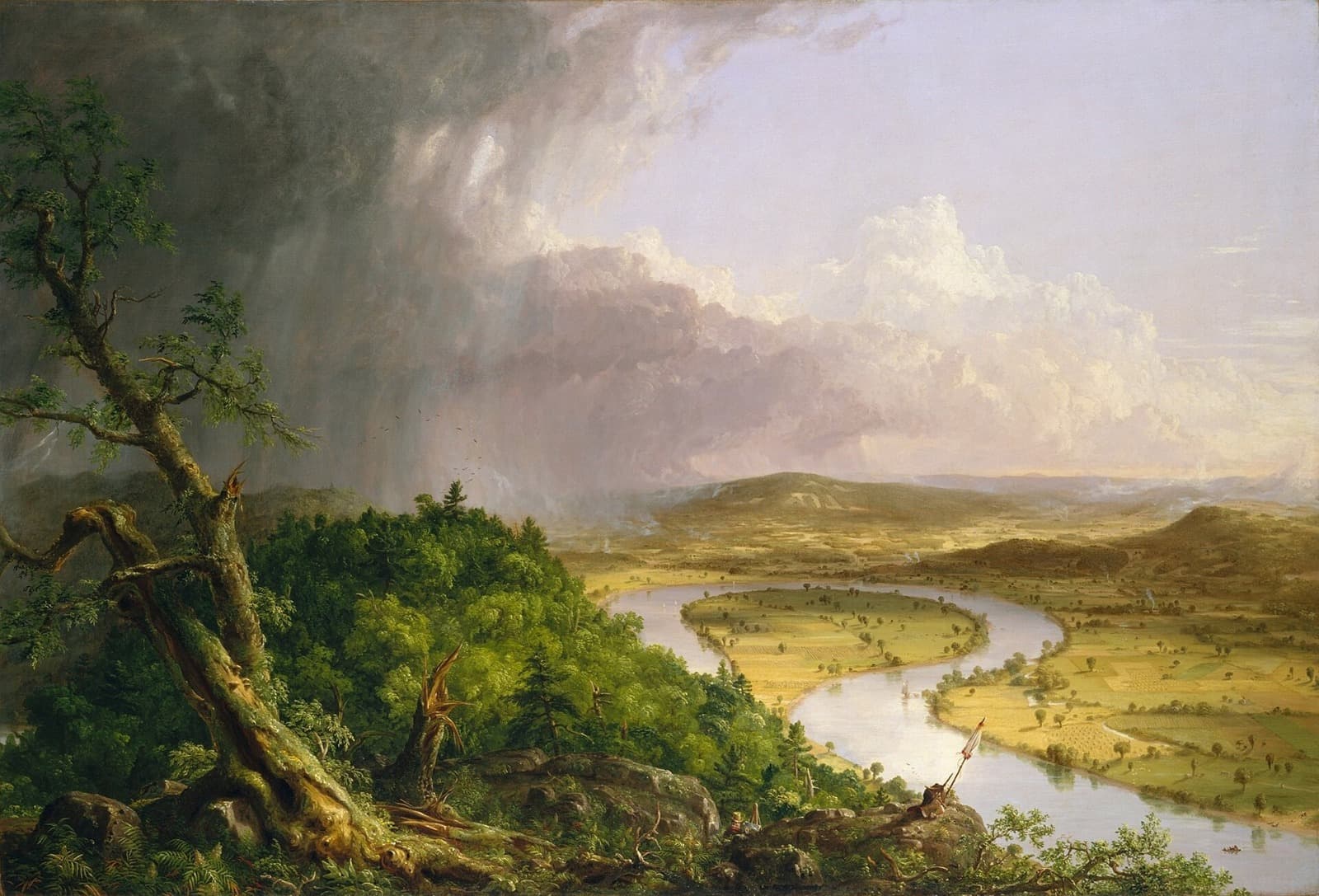
Wilderness under storm on the left, farmland in sunshine on the right, and Cole himself down in the middle, tiny, looking up from his easel.

A man and three boys heel a catboat over into open water, painted in the centennial year and read ever since as the country's optimism.
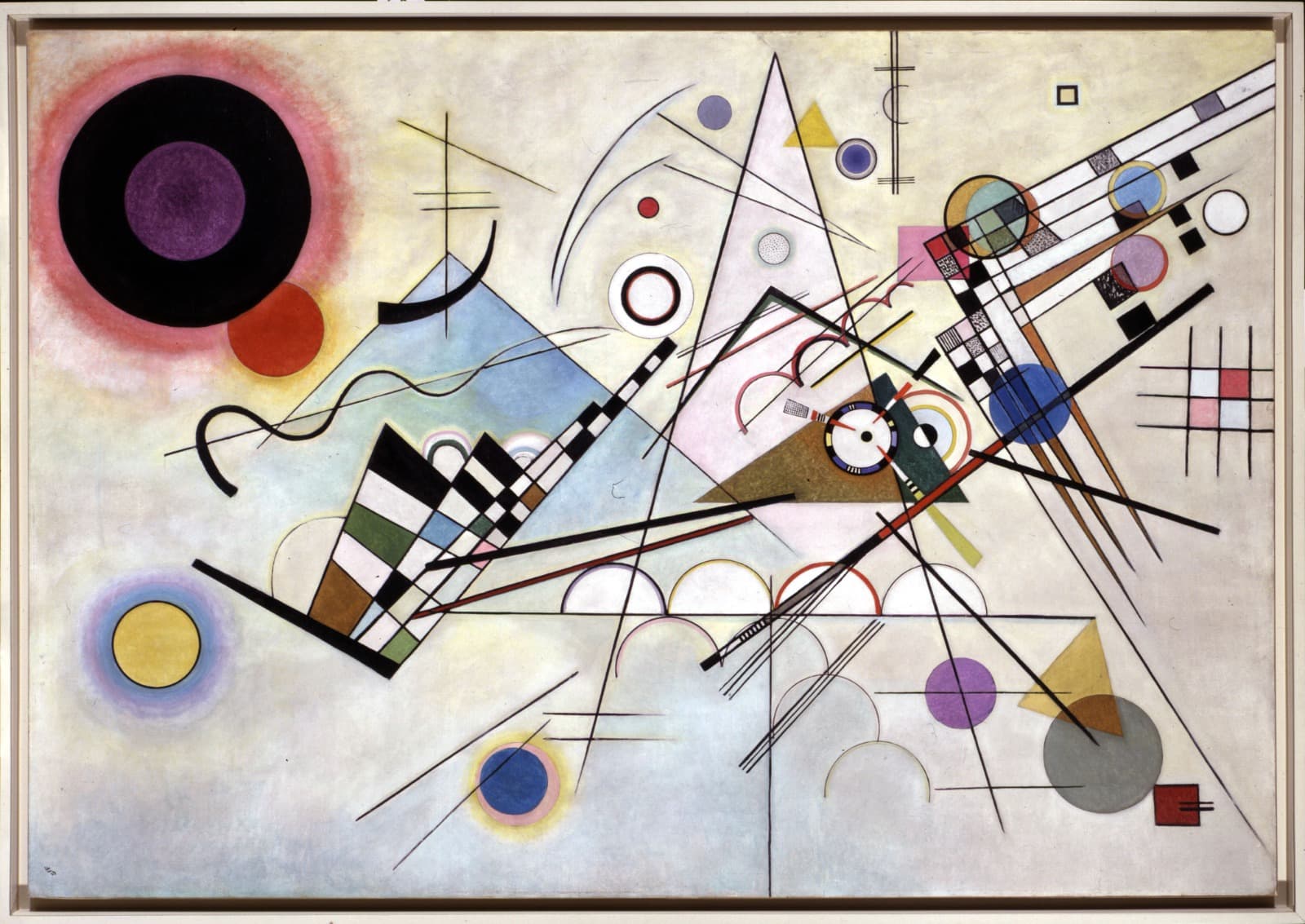
Circles, triangles and floating lines arranged with the precision of a score. Kandinsky painted it while teaching at the Bauhaus, his storms over.
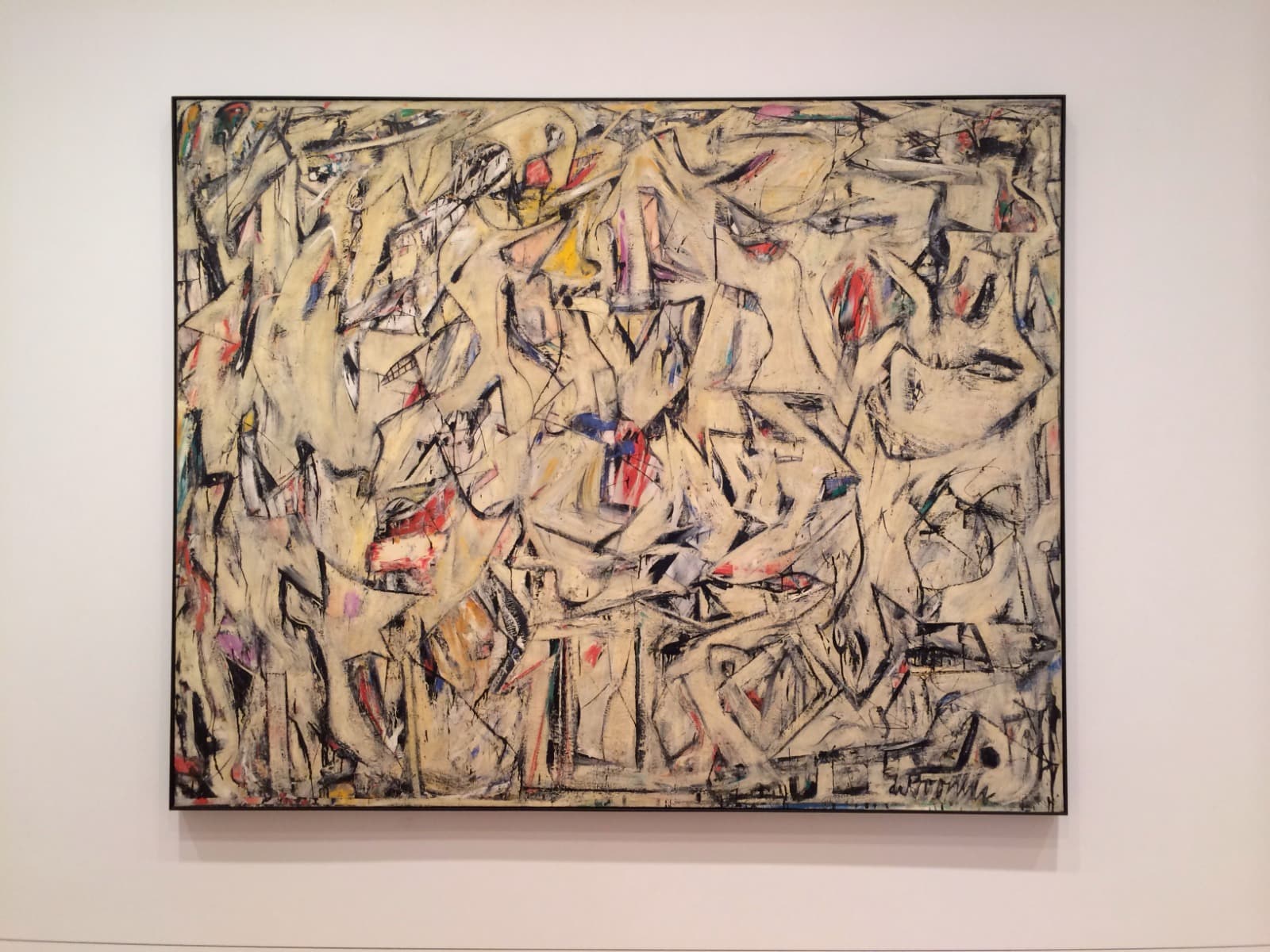
Hooks and curves fill the canvas edge to edge with no center to rest on, and teeth and jaws keep surfacing out of the mass.

Holbein arrived in England on a letter from Erasmus and painted More at the height of his power. Within a few years More was executed.
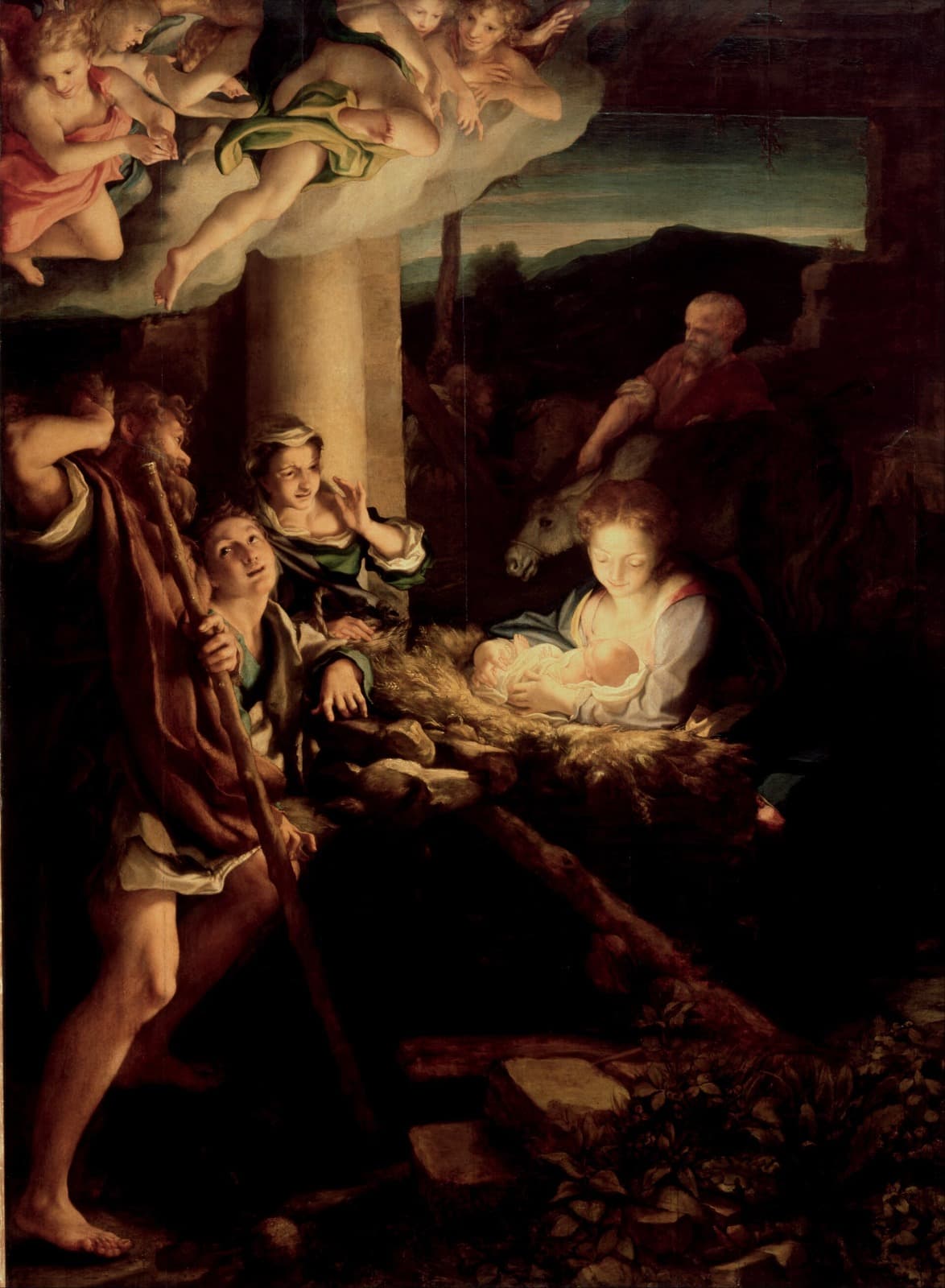
All the light in the picture comes off the newborn child, and one shepherd throws up a hand against the glare.

The officer's hat and back loom enormous in the foreground while the girl sits small and bright beyond, which is exactly how the eye works.
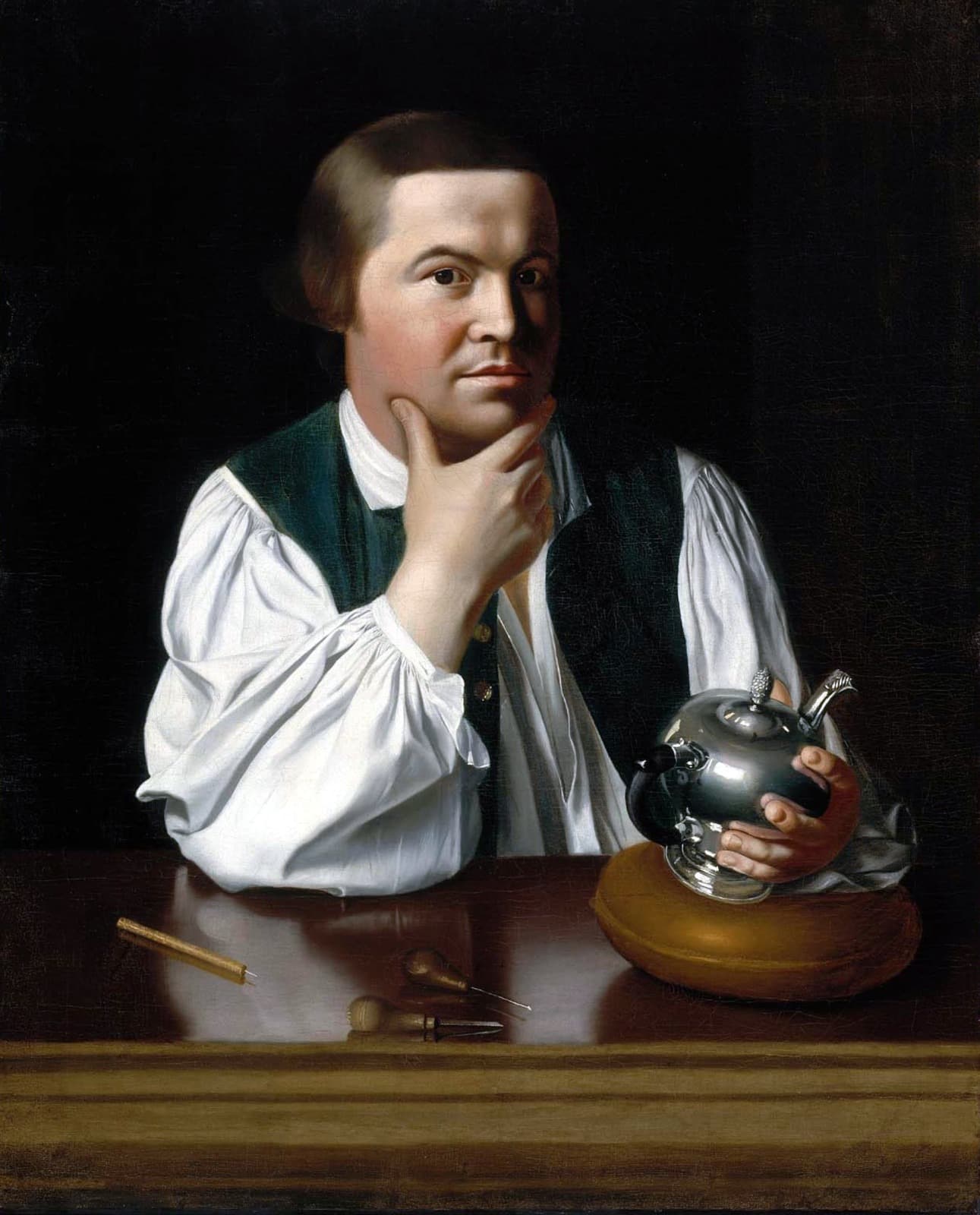
Copley painted the silversmith in his shirtsleeves at the bench with a teapot in his hand, which was not how gentlemen were usually shown.

A girl lies face down and frightened while a hooded figure sits behind her. Gauguin said his Tahitian companion was afraid of the dark.
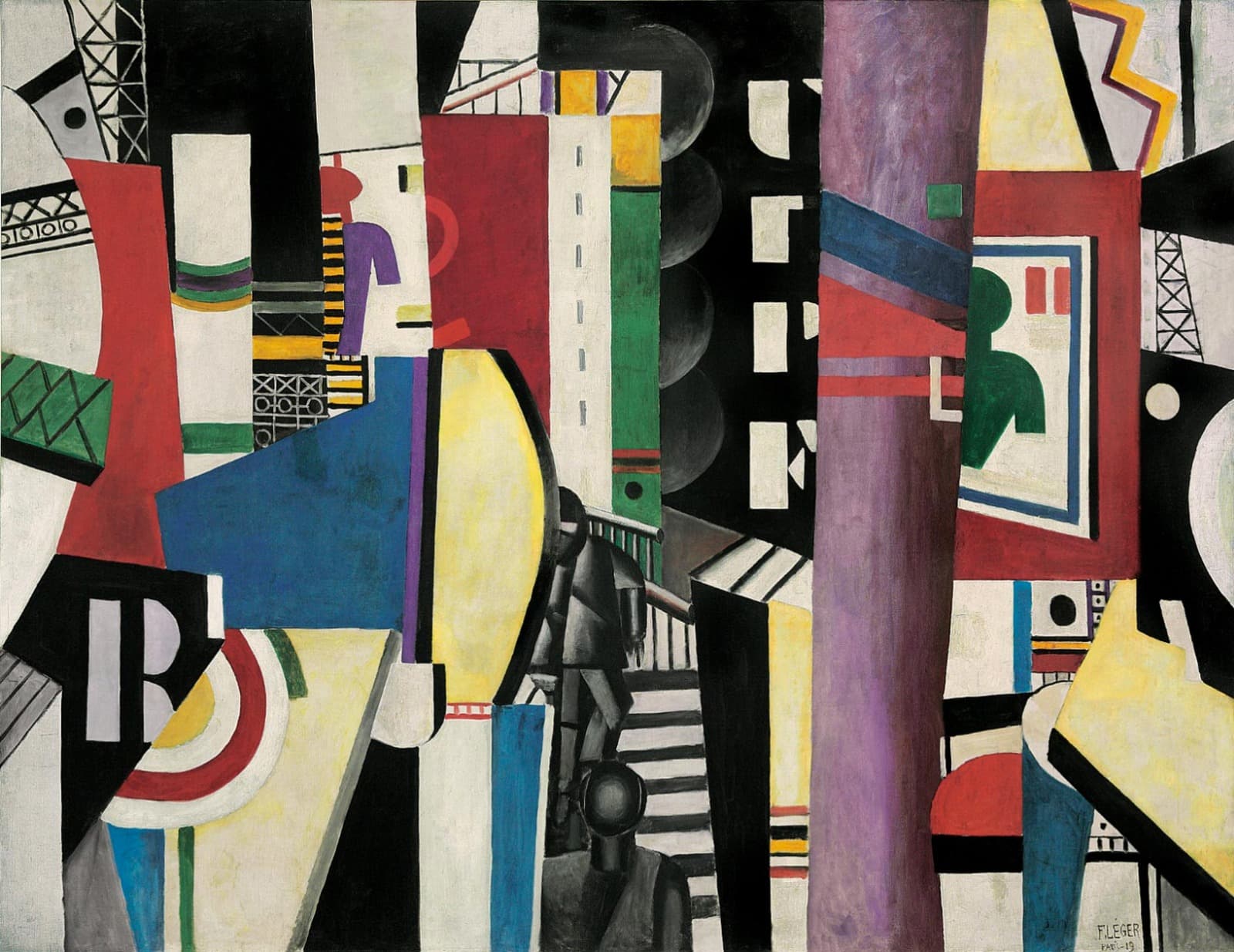
Billboards, scaffolding and stairways in flat primary color, with people reduced to bright interchangeable parts. Léger loved machines and made no secret of it.
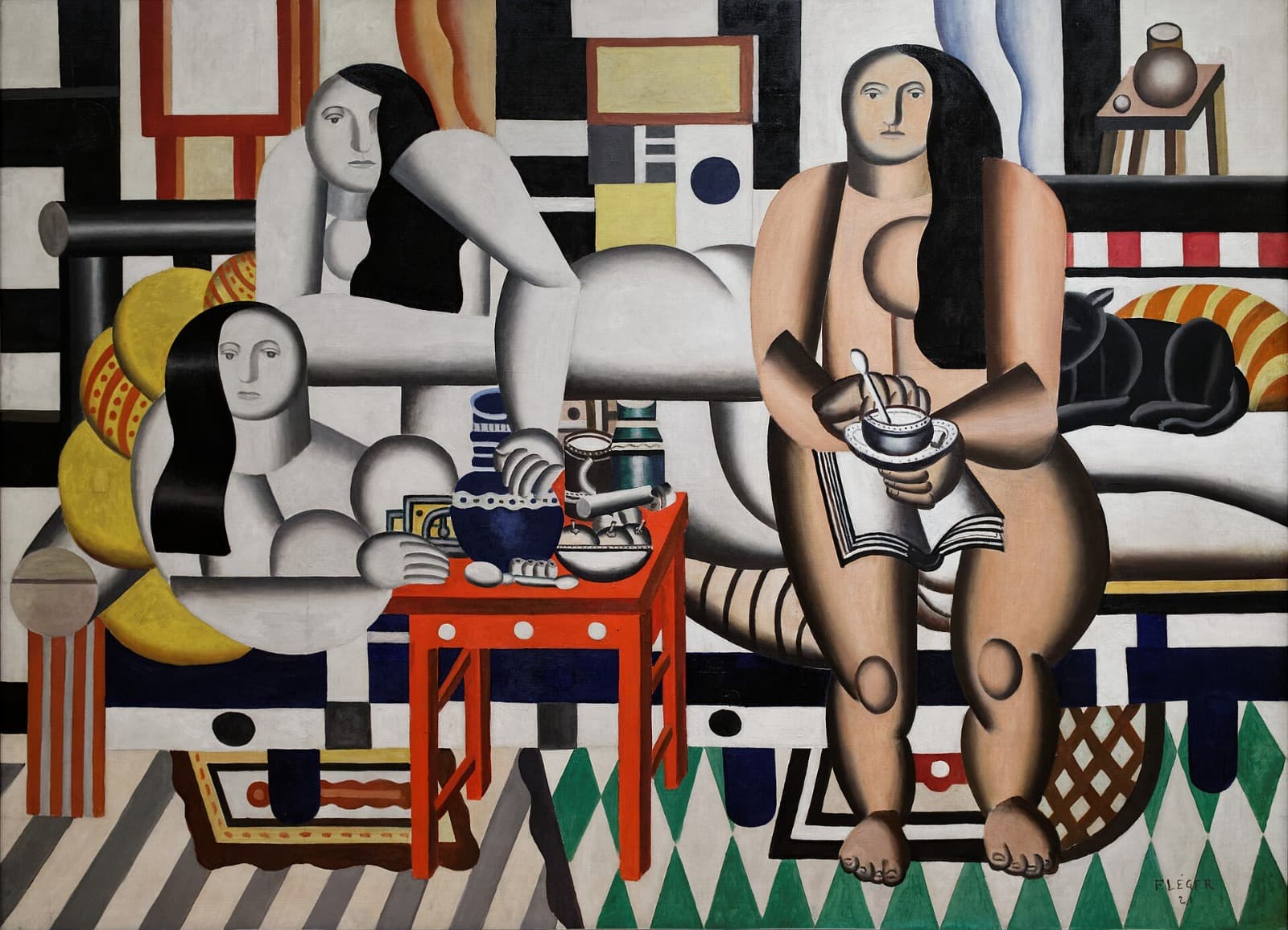
Three nudes turned on a lathe, smooth and tubular, laid out among furniture built to match. The odalisque redone for the age of the factory.
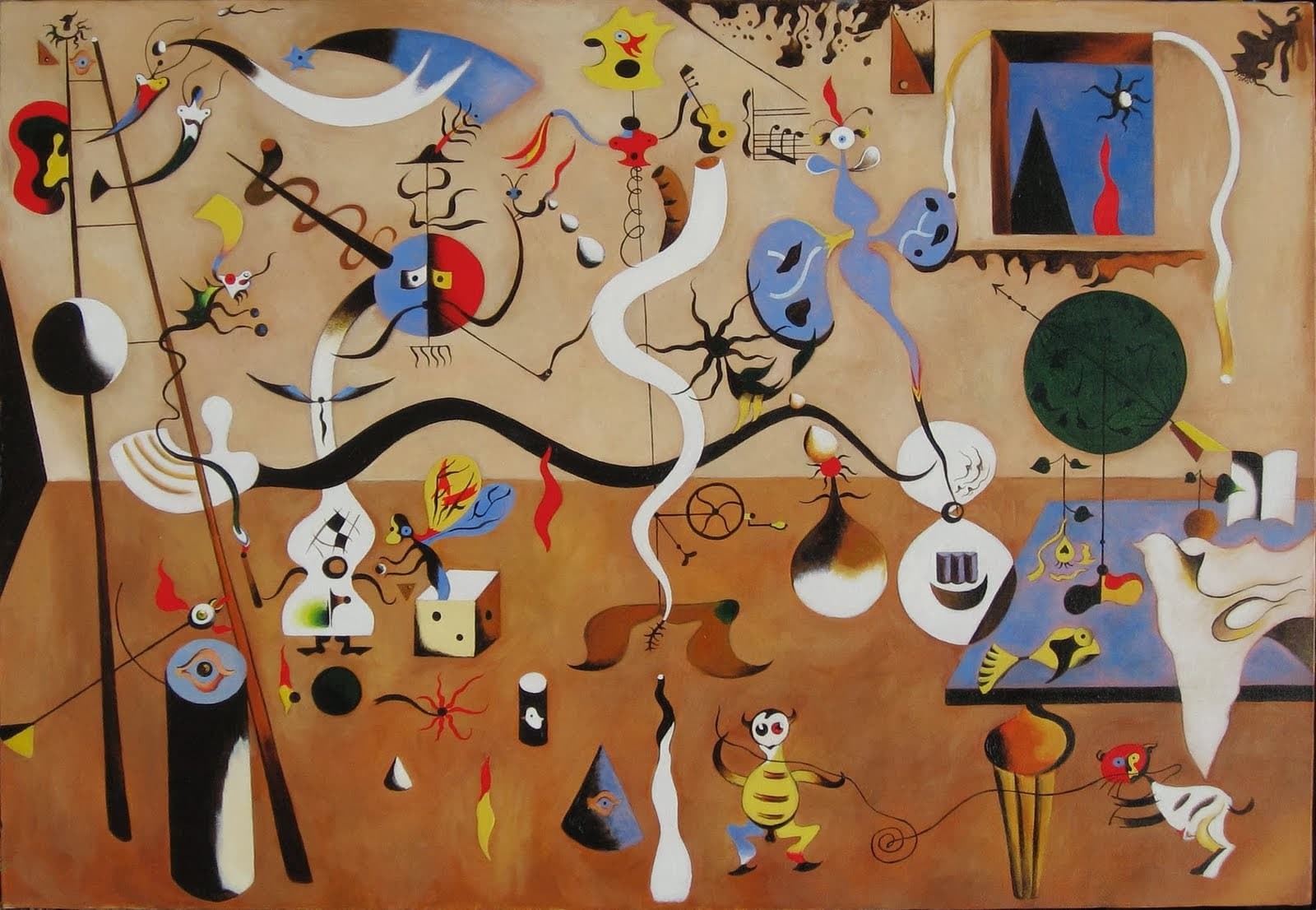
A cat plays a guitar and an eye drifts past on a stalk. Miró said the hallucinations of hunger in his Paris studio fed the picture.

Soft-edged bands of color stacked one above another, hovering slightly off the surface. Rothko wanted you to stand close and stay a while.
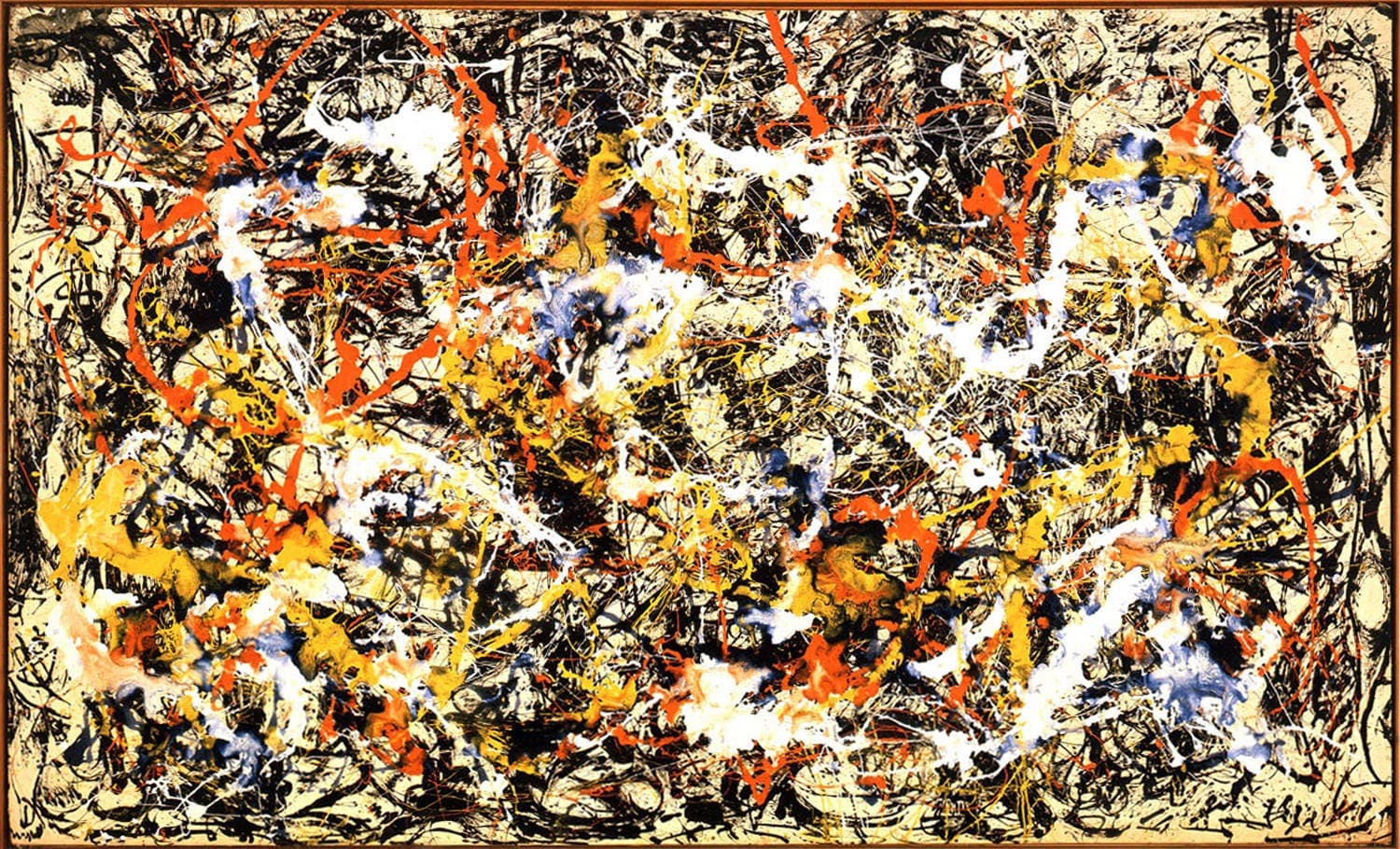
Black, white, red and blue flung edge to edge with nowhere for the eye to settle. The Cold War made it a symbol of American freedom.
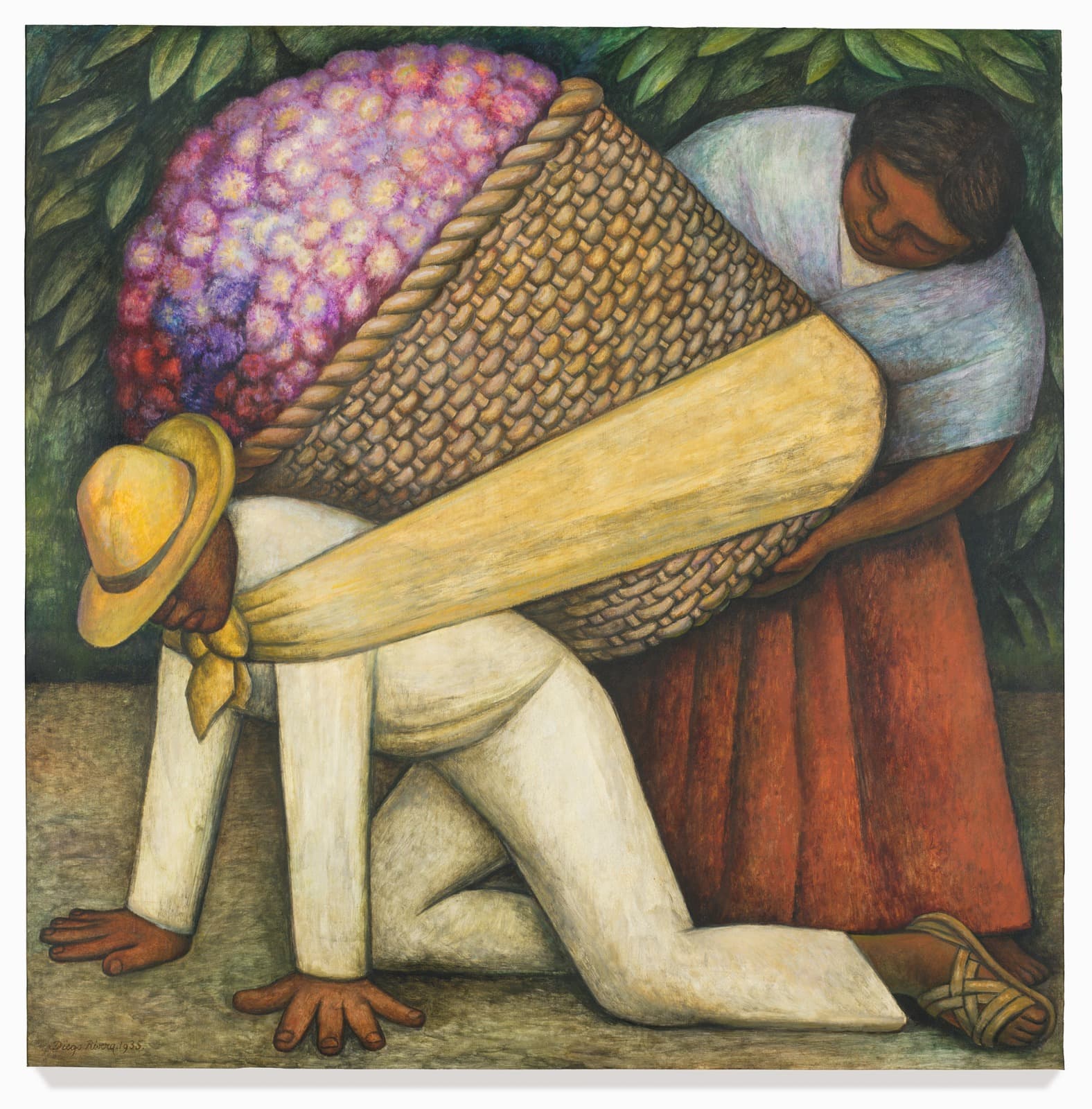
An enormous basket of flowers forces the man down onto his hands and knees, and a woman steadies the load from behind.
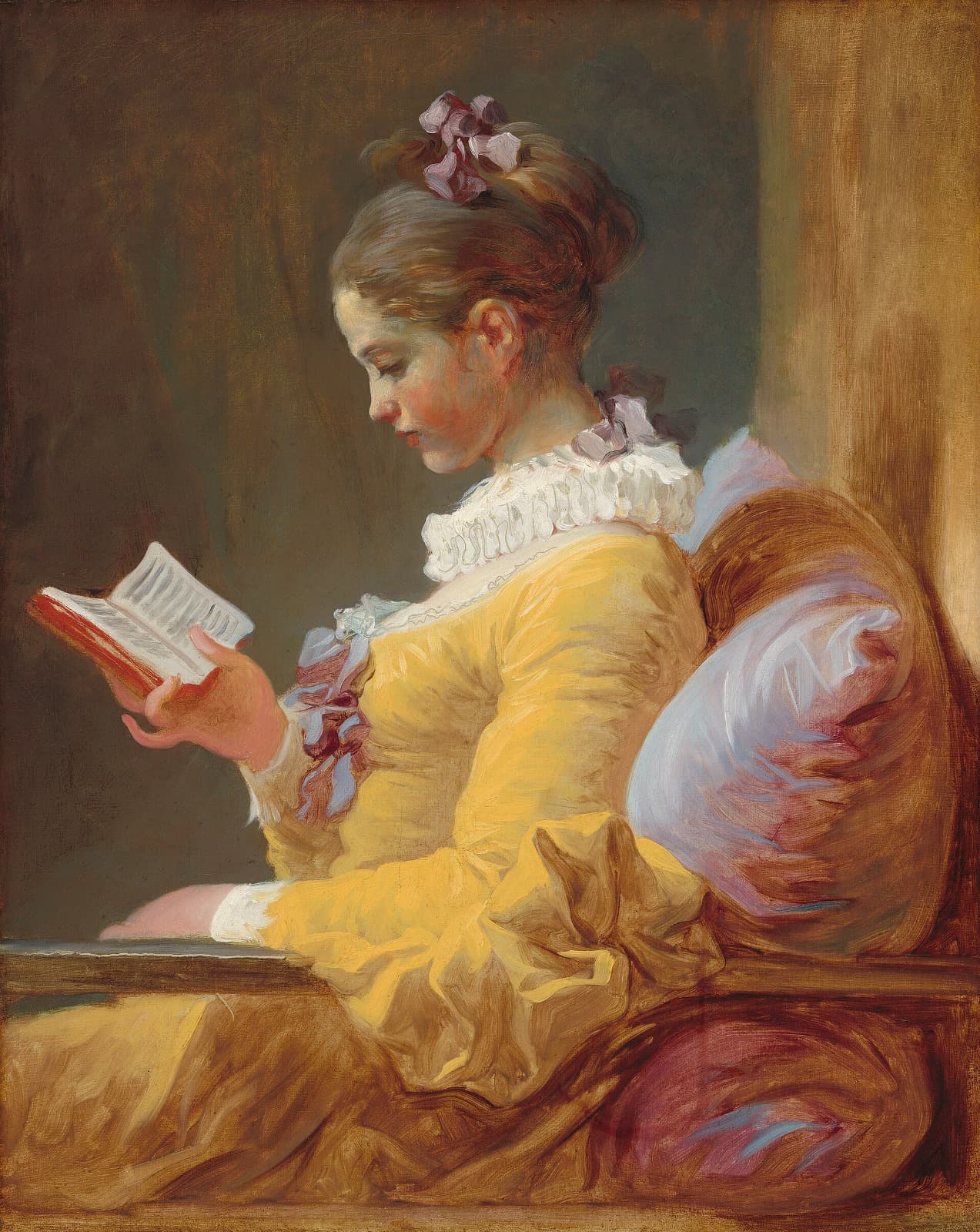
For once Fragonard is not being naughty. A girl in yellow reads, and the ruff at her wrist is a few flicks of impasto.
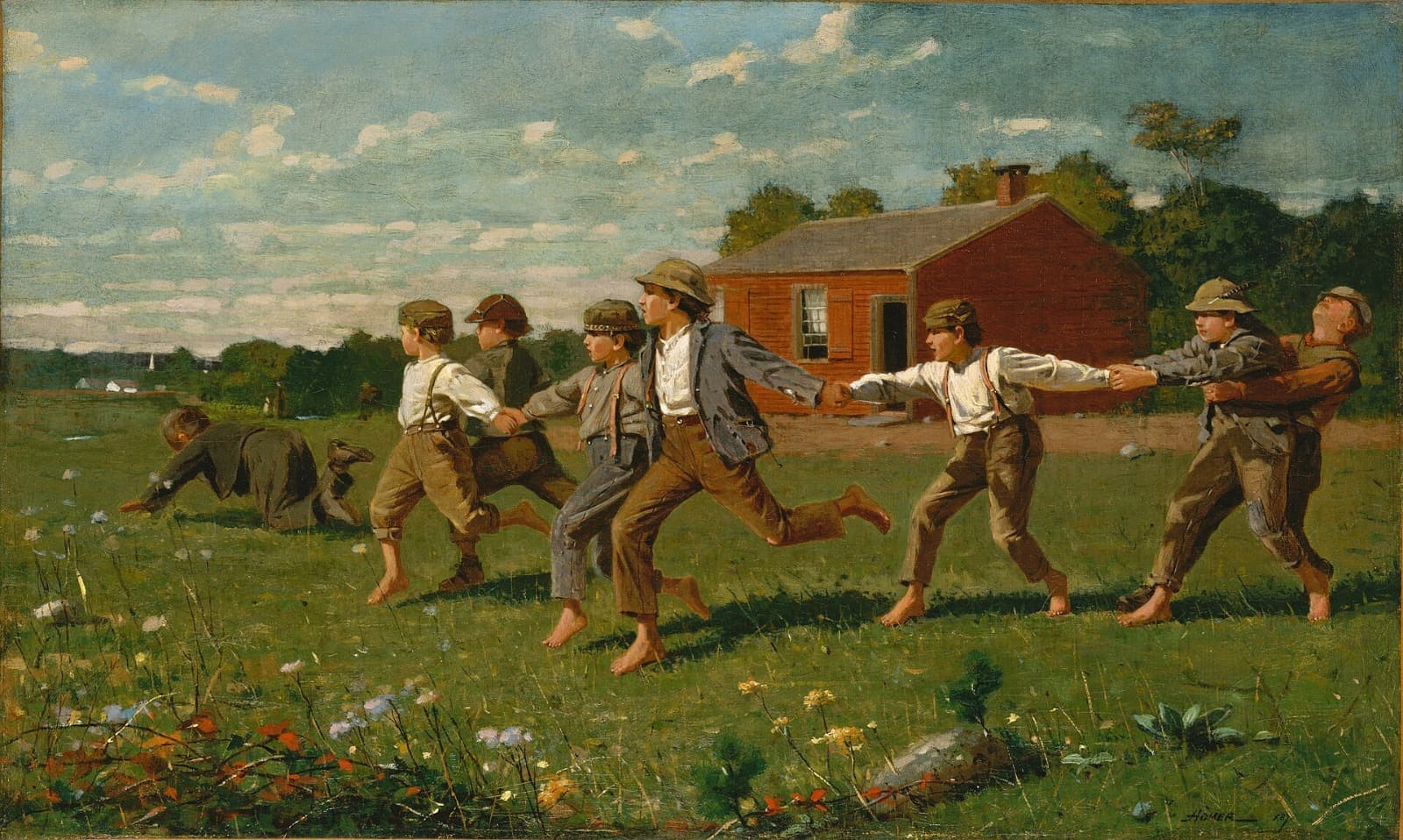
Barefoot boys crack the whip outside a red schoolhouse and the last one is already stumbling. Painted just after the Civil War.
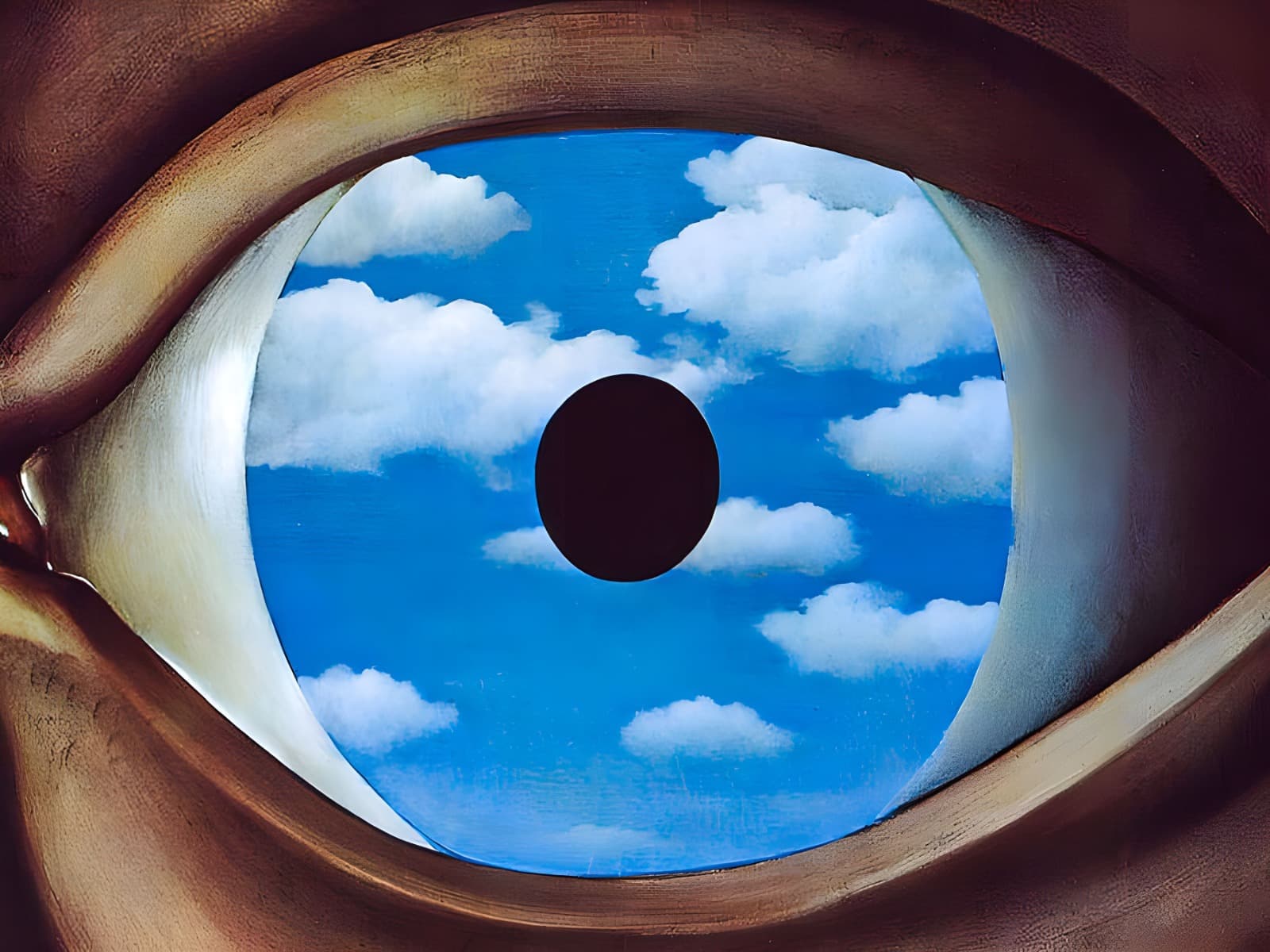
One enormous eye with a cloudy sky for an iris. Whether it is looking out or reflecting back is the question.
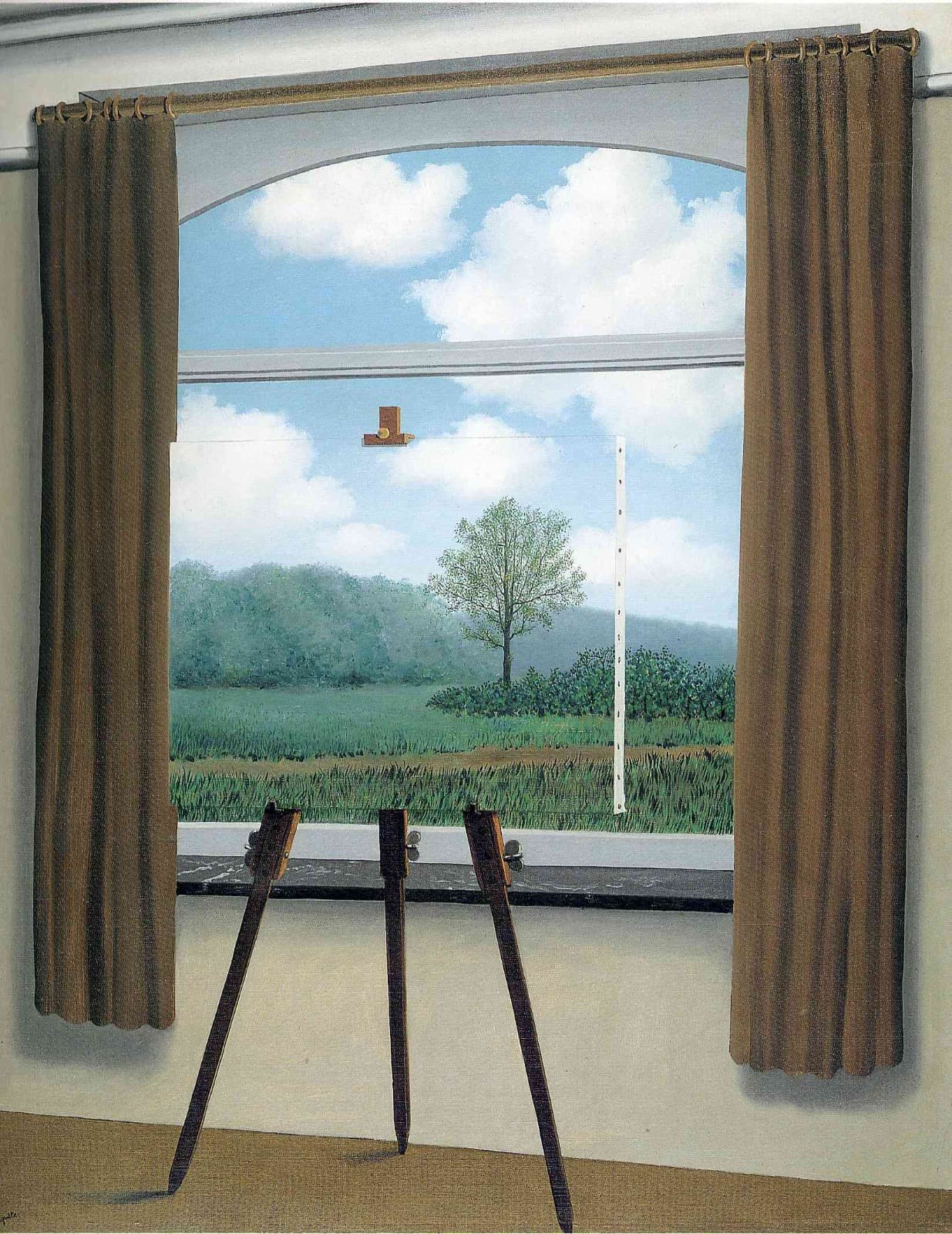
A canvas on an easel shows exactly the landscape it is standing in front of, and therefore hides it completely.
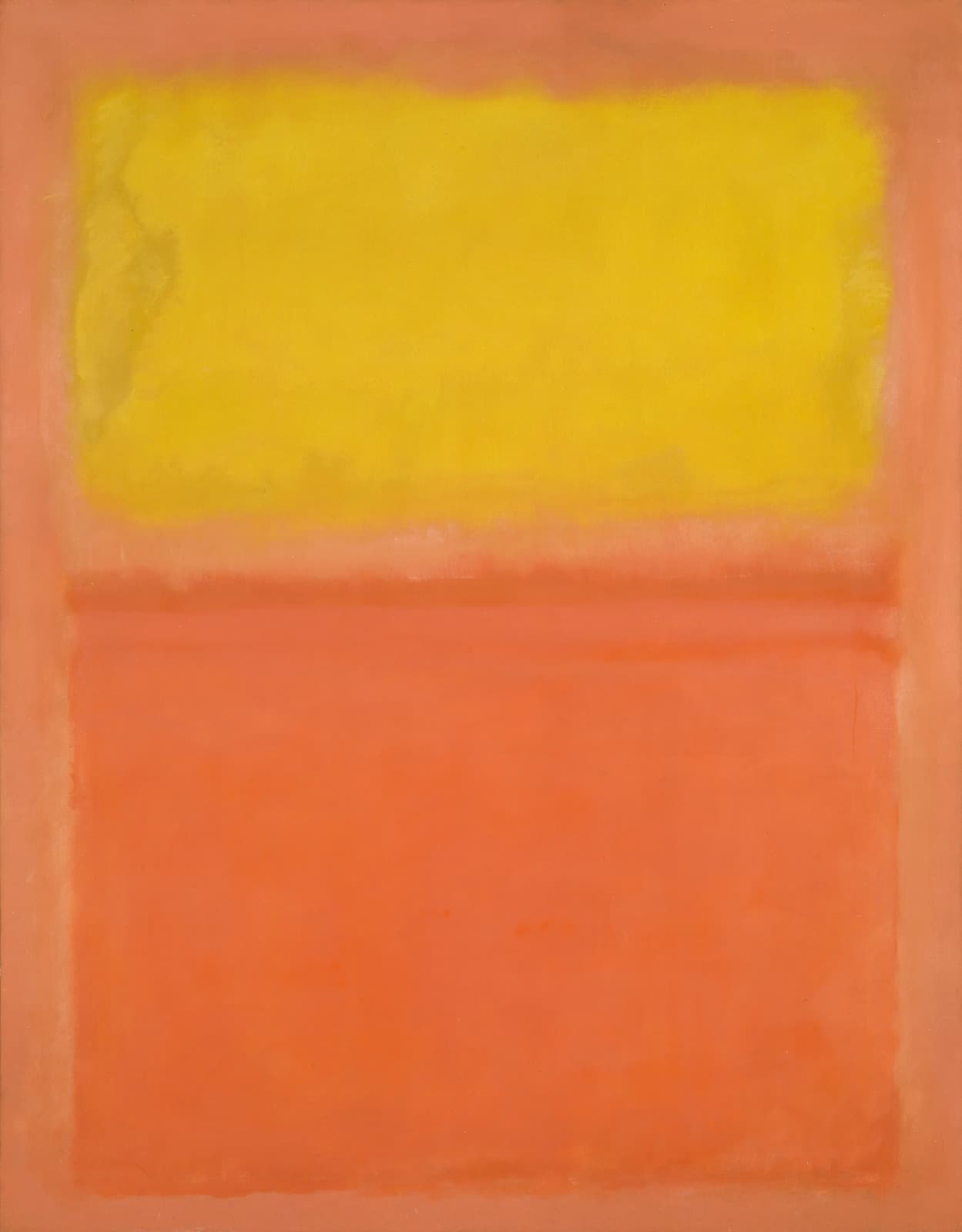
Two rectangles with feathered edges, built from thin washes so the color seems lit from behind rather than laid on.
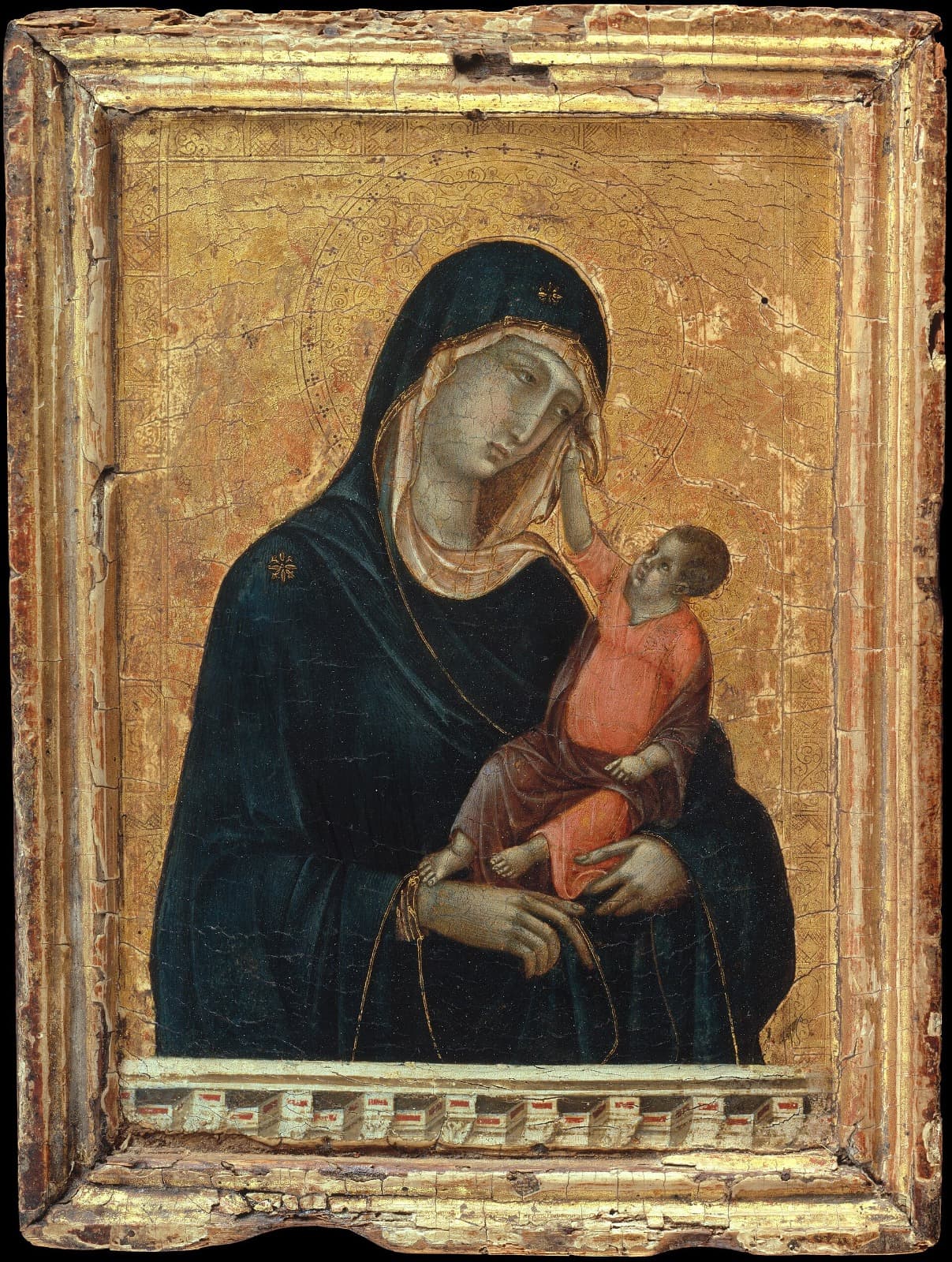
Christ reaches up to push his mother's veil aside. Scorch marks on the original frame record centuries of candles set before it.

Cat, mouse, rabbit, ox and elk stand for the temperaments held in balance, and the cat is about to pounce.
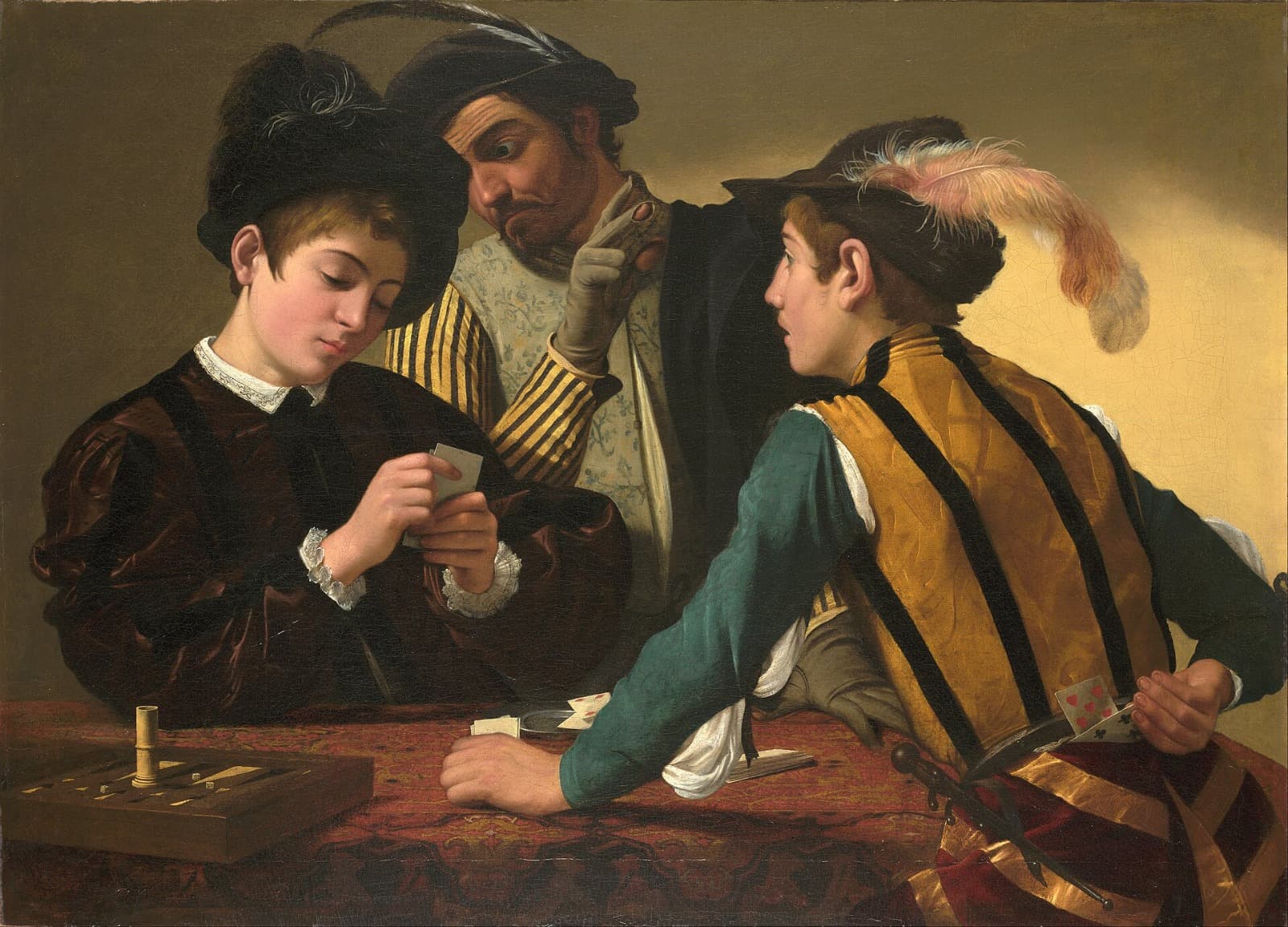
One boy has a card hidden behind his back and his older partner signals the count on his fingers. It got Caravaggio his first patron.
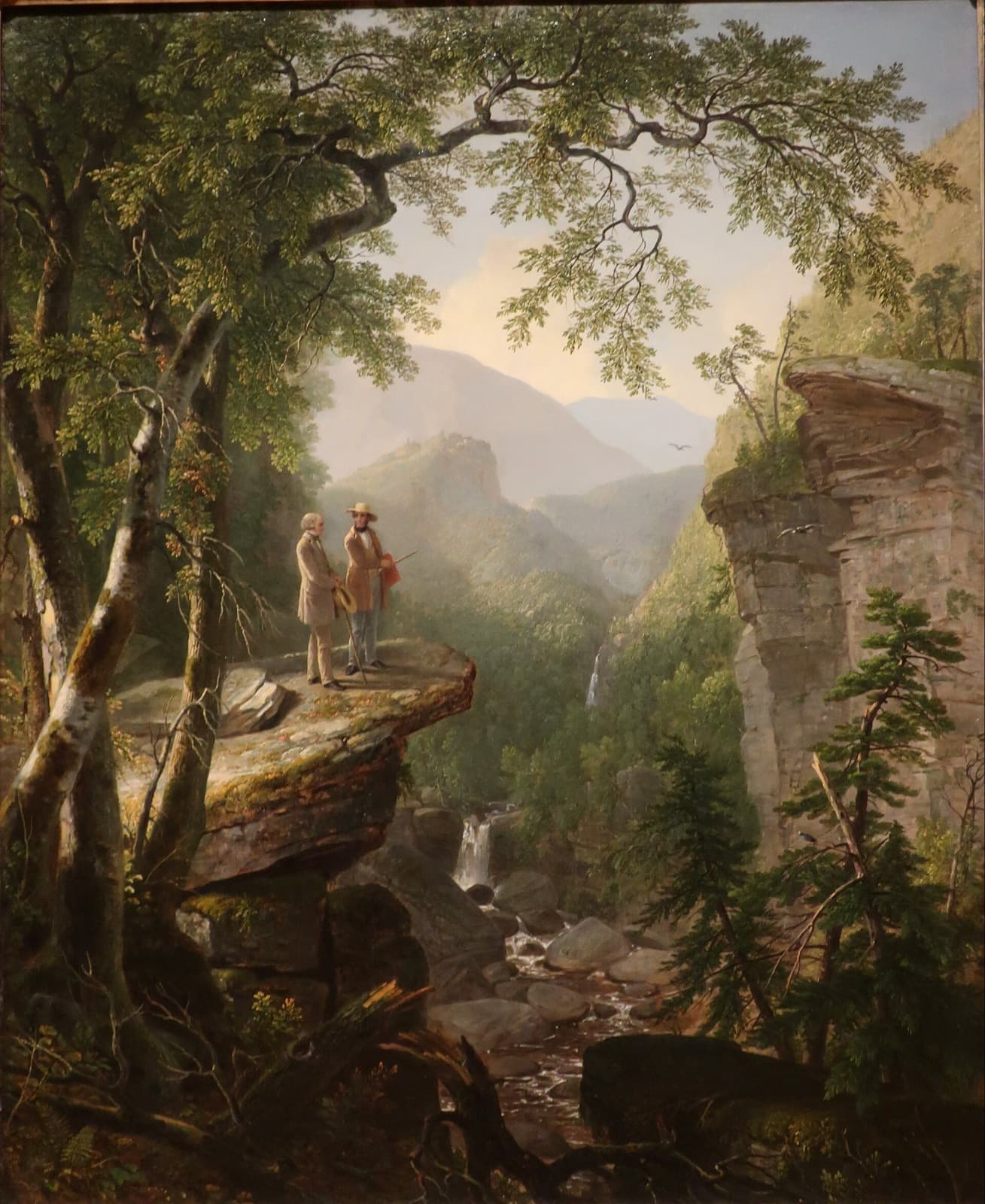
Thomas Cole and the poet Bryant stand on a ledge in the Catskills. Durand painted it as a memorial after Cole died young.

Bierstadt went west with a survey expedition and came home with peaks lit like an opera set, which is what the country wanted.
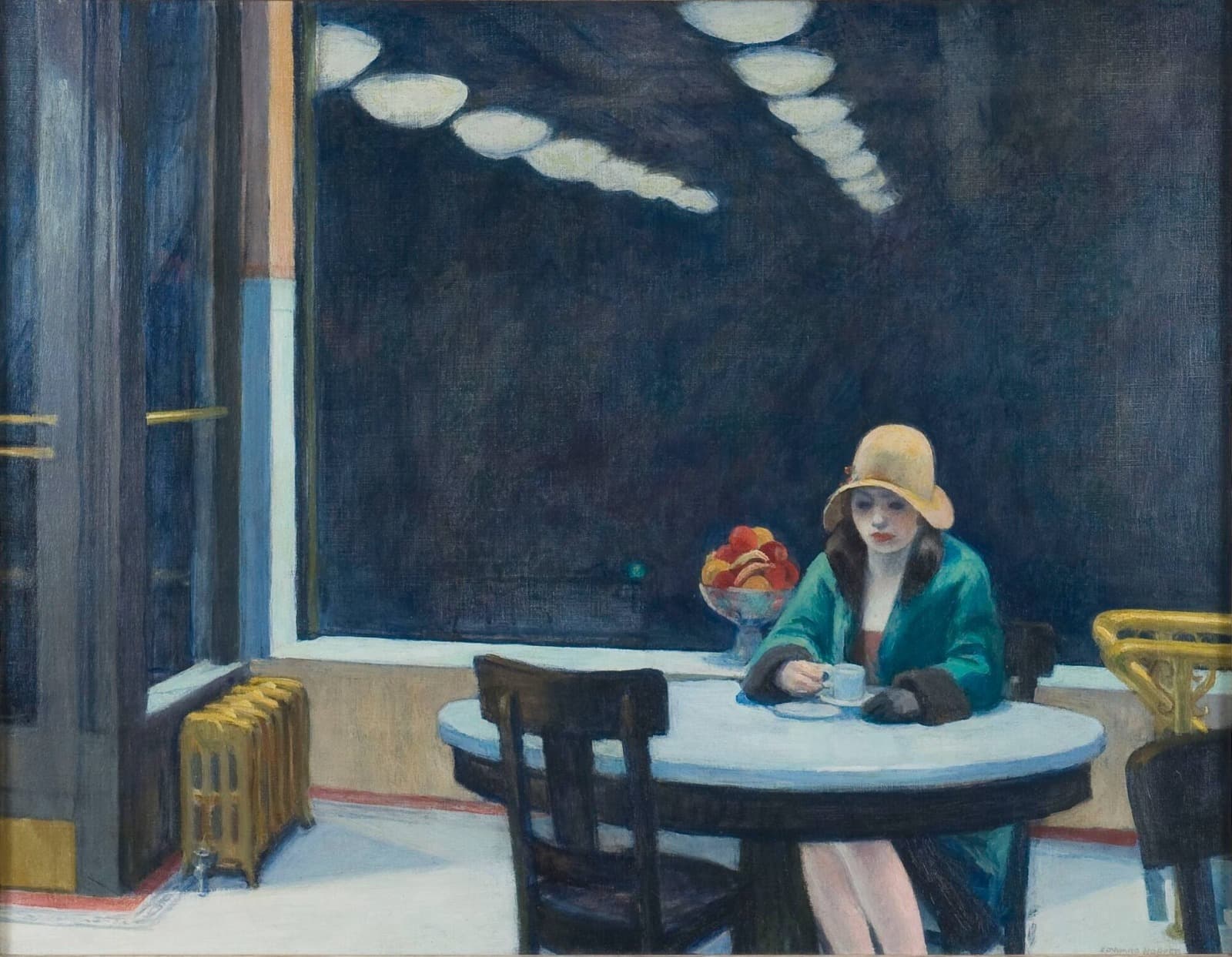
One cup of coffee, one glove still on, and a window behind her that reflects nothing but two rows of ceiling lights.

He reads the paper, she touches one key of the piano, and we are watching from the street through their window.
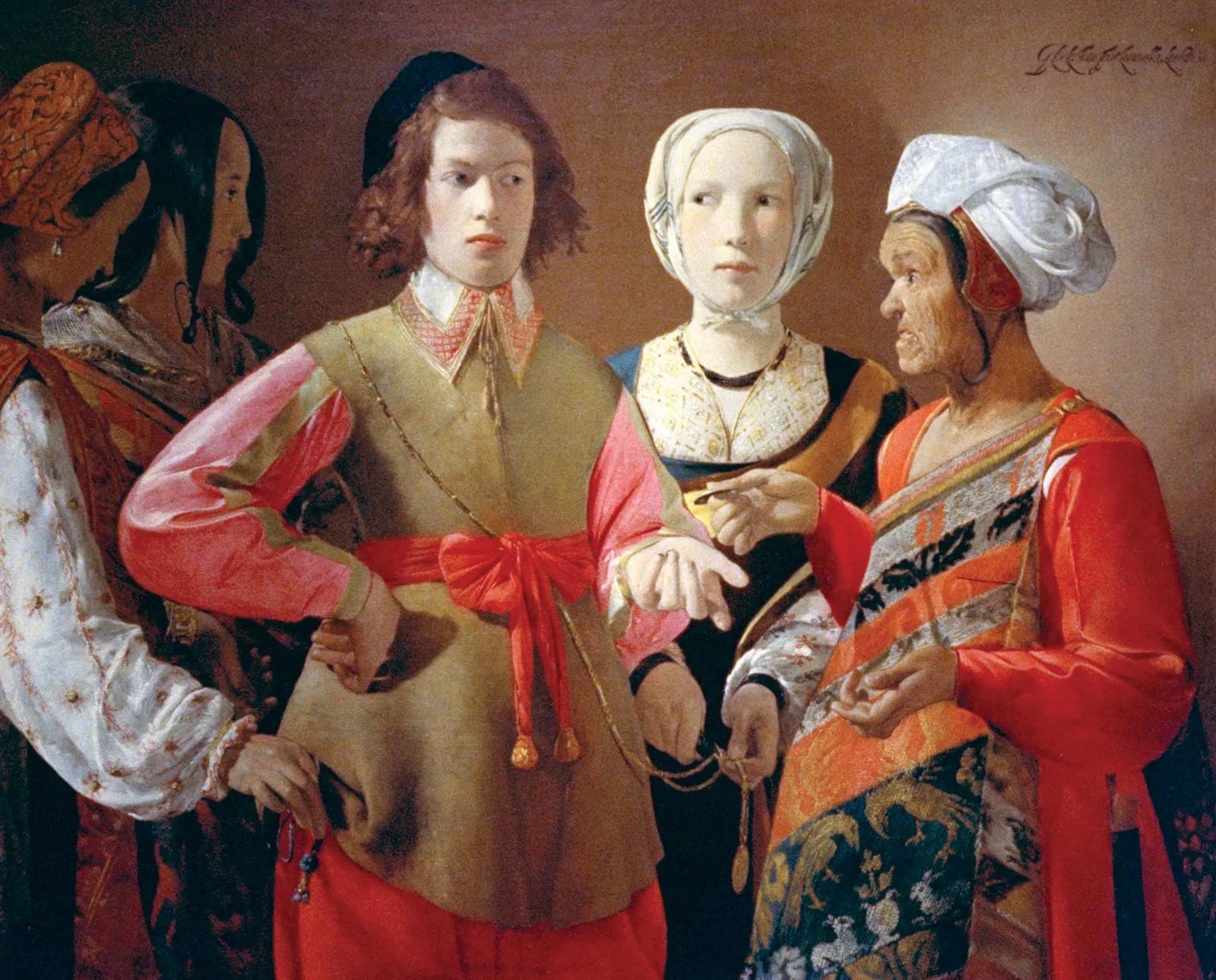
While the old woman reads his palm, three young accomplices are quietly taking his purse and lifting a medal off his neck.
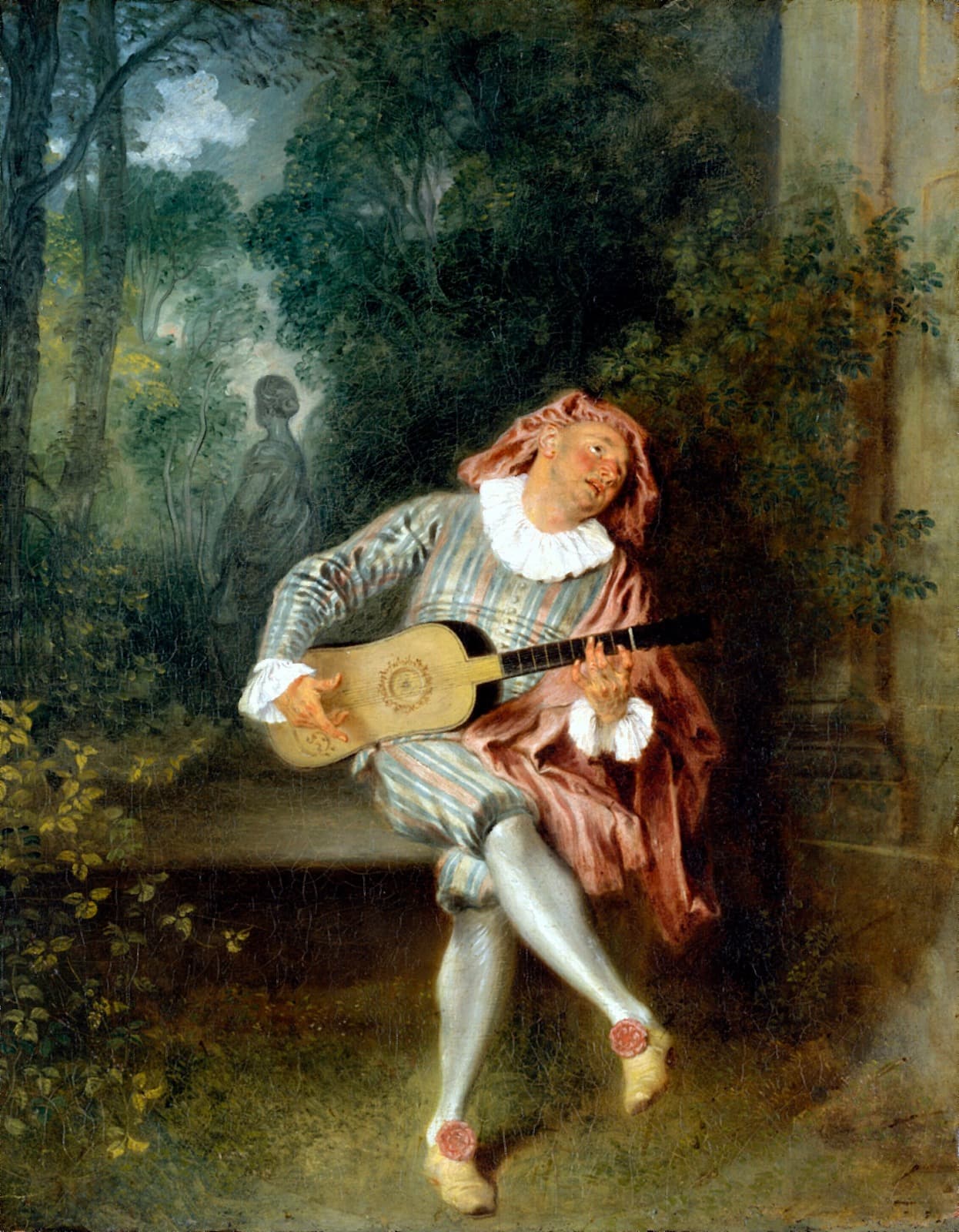
He sings up at a window and nobody comes, while behind him a stone statue has its back turned.