
Christ Bearing the Cross, with a Dominican Friar
1360 · The Frick Collection, New York City
Christ looks back over the cross at a tiny Dominican friar kneeling in the corner, the patron drawn into the road to Calvary.
★ 3.2
 skopia
Christ looks back over the cross at a tiny Dominican friar kneeling in the corner, the patron drawn into the road to Calvary.

No bigger than a page, and one of very few works securely given to Cimabue, whom Dante named the best painter of his day.

John stands lost in his book, wrapped in red cloth massed like masonry. One wing of an altarpiece now scattered across five cities.
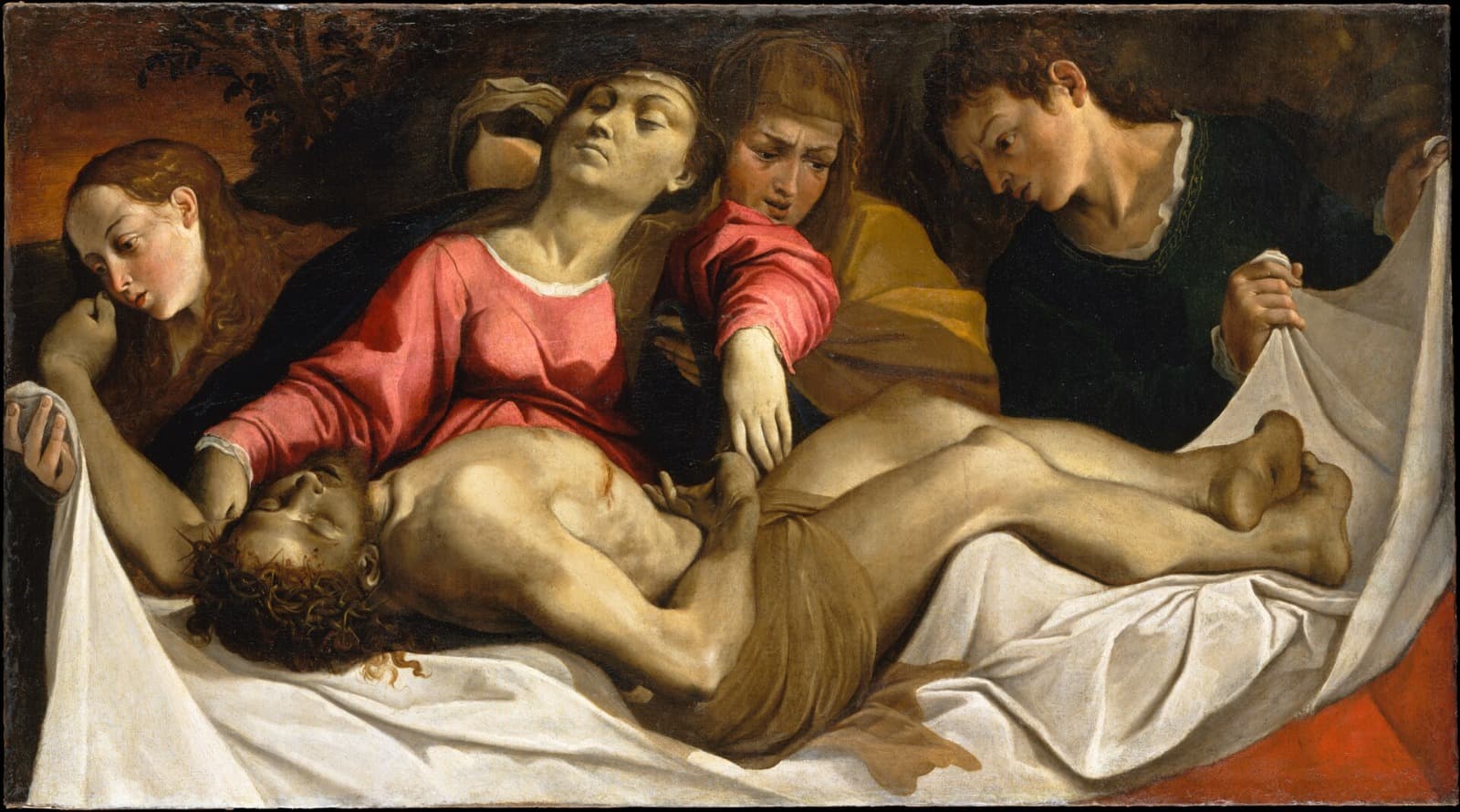
The body pushed close to the viewer and lit in sharp pools. The Carracci taught a generation to weld grandeur to direct feeling.
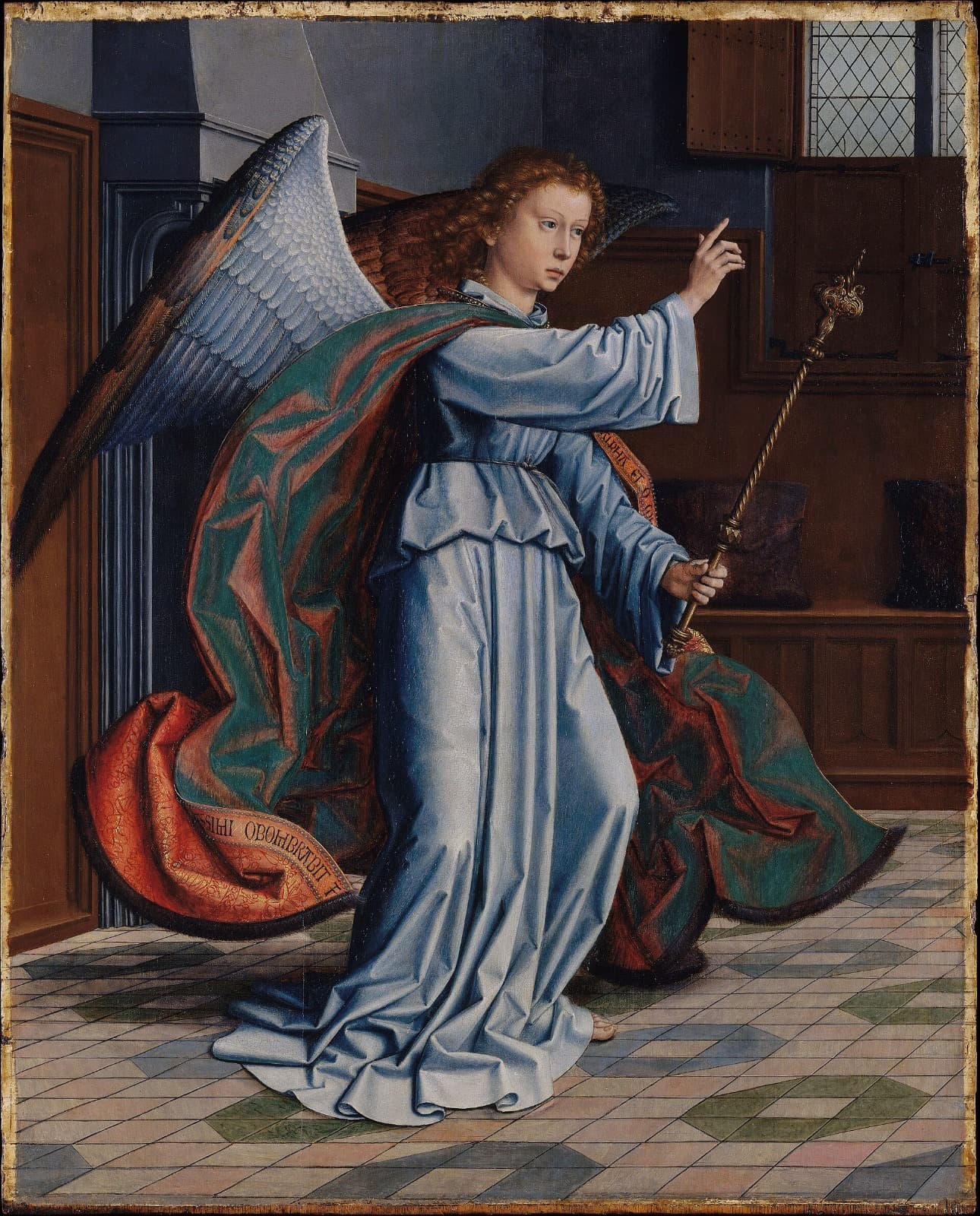
This is only the angel. Mary received the message on a companion panel, and the two now hang together as a pair.
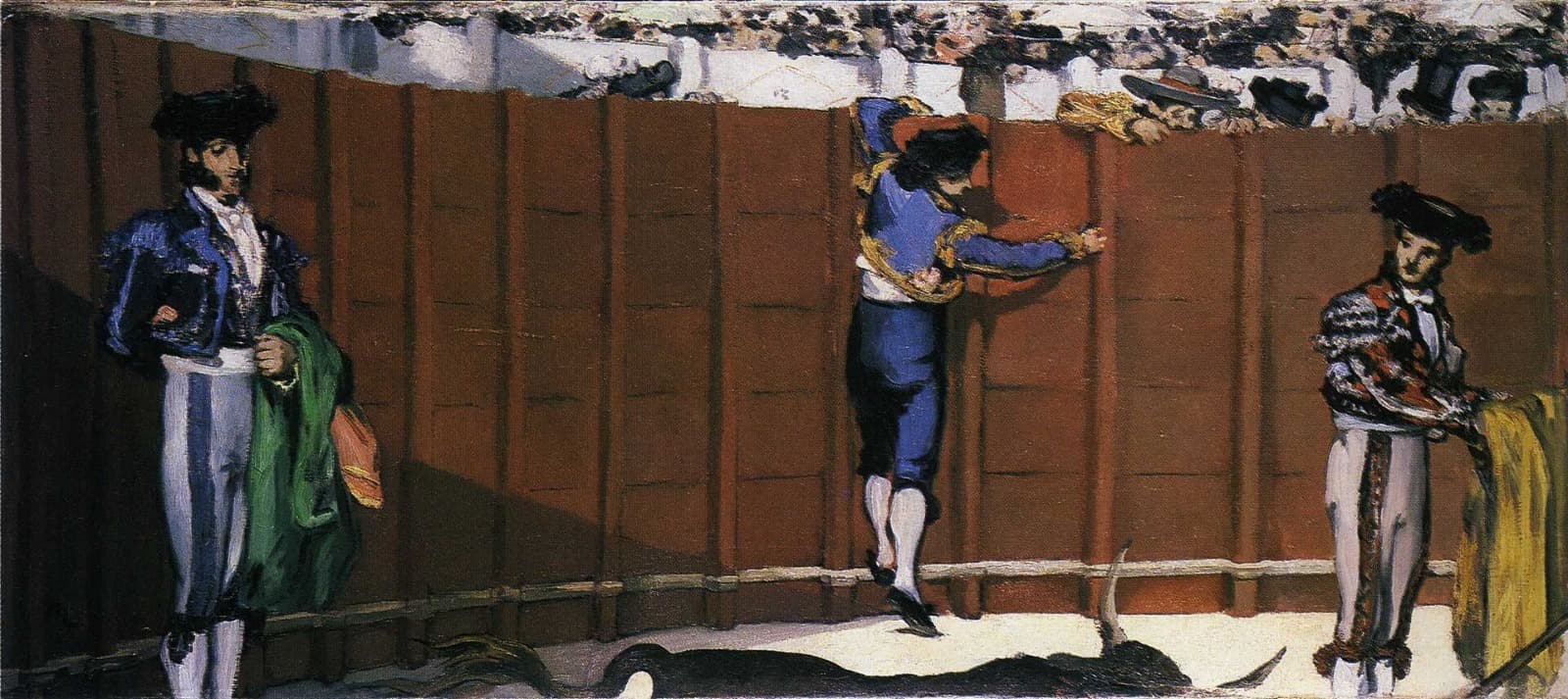
Manet cut up the original canvas because he was unhappy with it, and this is one of the surviving pieces.

A regiment posed around its cannon like a group photograph that has gone charmingly rigid. Rousseau was a customs officer painting in his spare time.

Hot pinks and oranges laid on freely, a year before Cézanne and Picasso's Demoiselles sent Braque off toward Cubism instead.
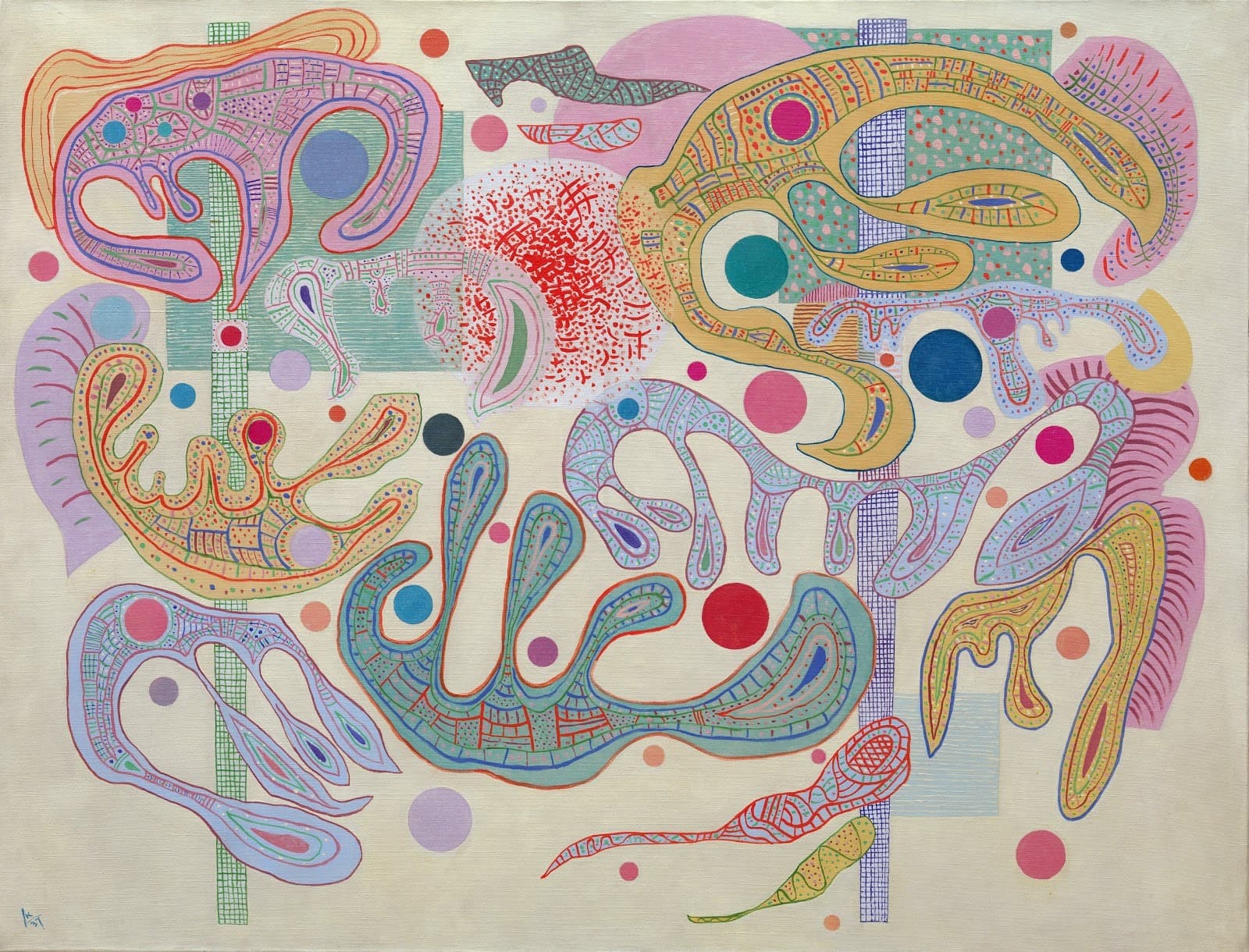
The Bauhaus grids and circles have given way to floating amoebas. Kandinsky in Paris at the end, inventing a biology instead.
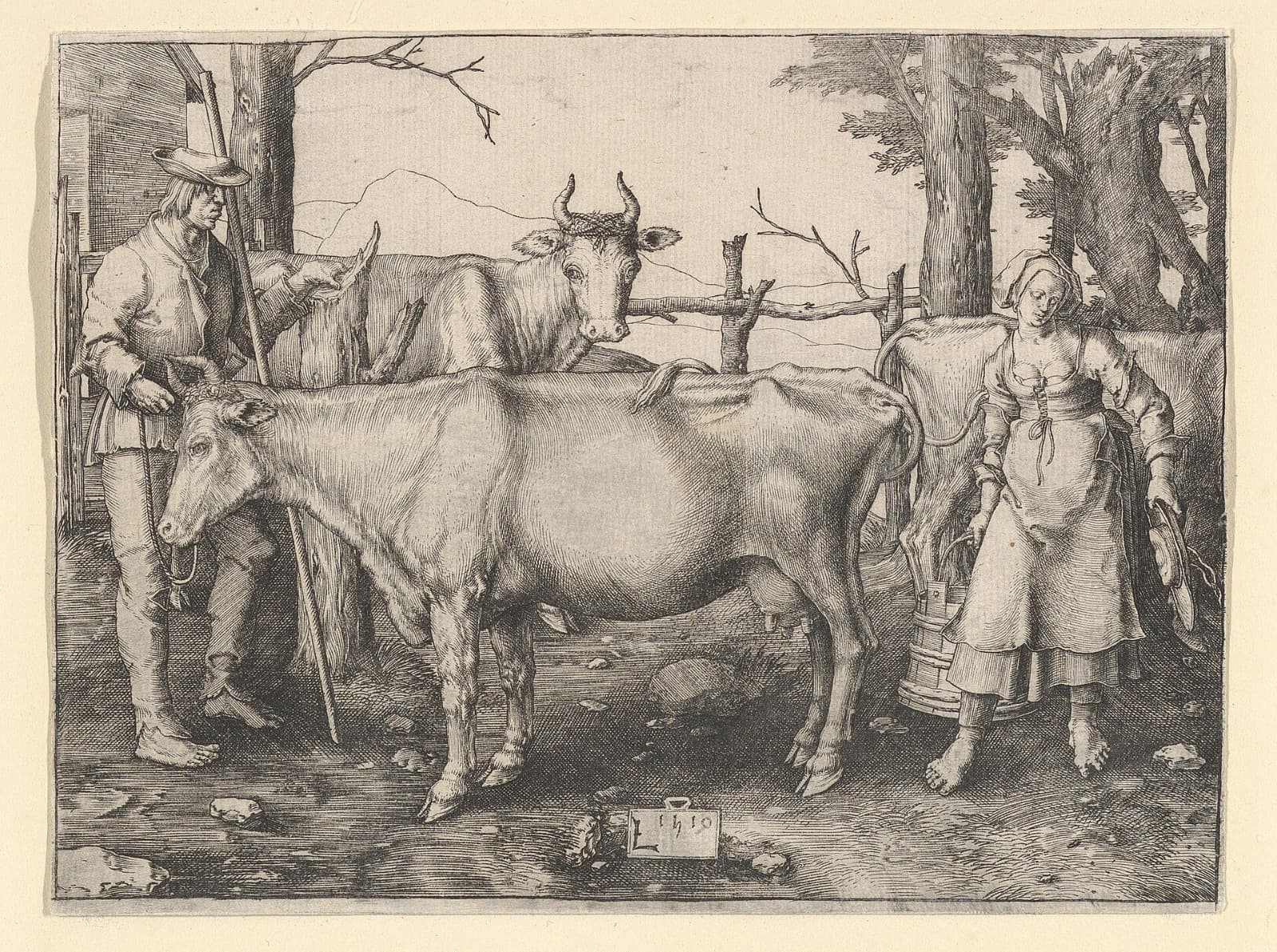
A milkmaid, a herdsman and two cows, and almost nothing happening. One of the first prints to take peasants as a subject worth the burin.

Christ preaches from a hilltop and is almost too small to find. Claude was really painting the hills, the water and the distance.

A woman in a white corset seen from behind, painted so loosely the picture seems to stop just before the image settles.

A man and a white horse in a Tahitian grove, painted on Gauguin's first stay, flat and warm and looking for a paradise.

Beckmann came out of the war traumatized and painted a Christ so emaciated and angular that no consolation survives the picture.
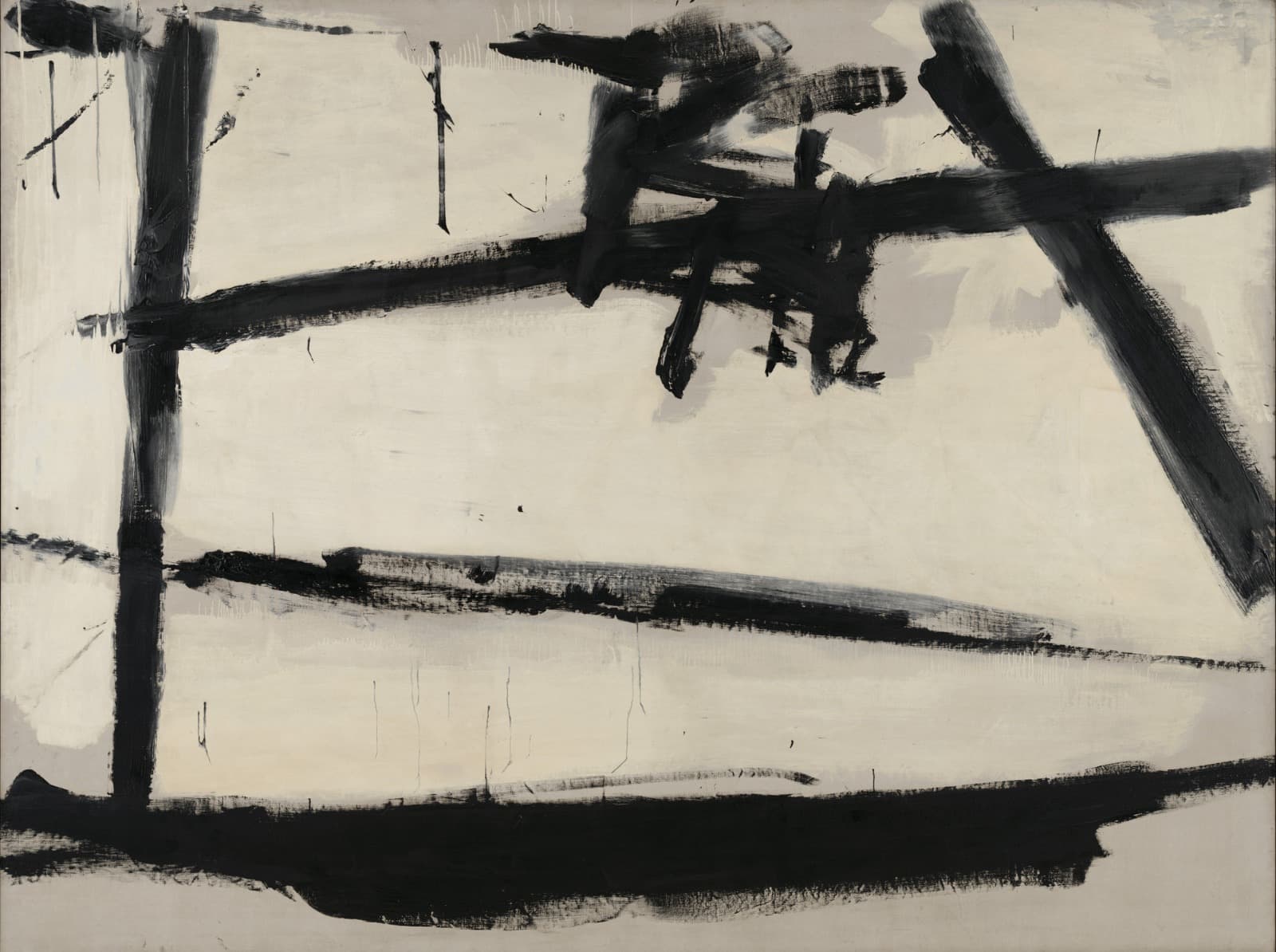
Black bars crossing a white ground, enlarged from small ink sketches so the speed and weight of the arm survive the scaling up.
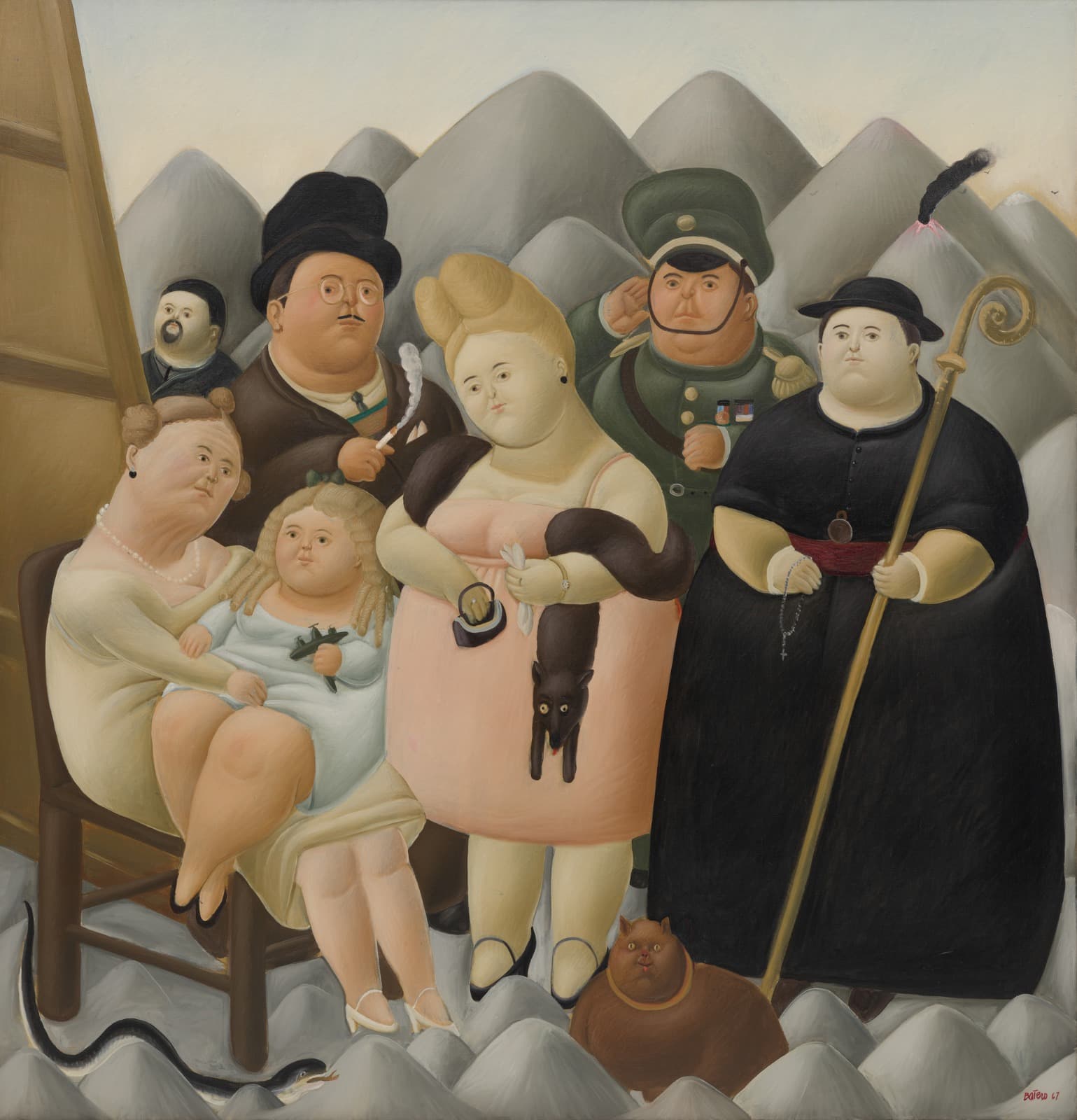
President, wife, child, bishop and general, all inflated into balloons and posed with great solemnity in front of a volcano.

The Devil offers all the kingdoms of the world, rendered as tiny gold-edged walled towns scattered down the slopes, and is refused.
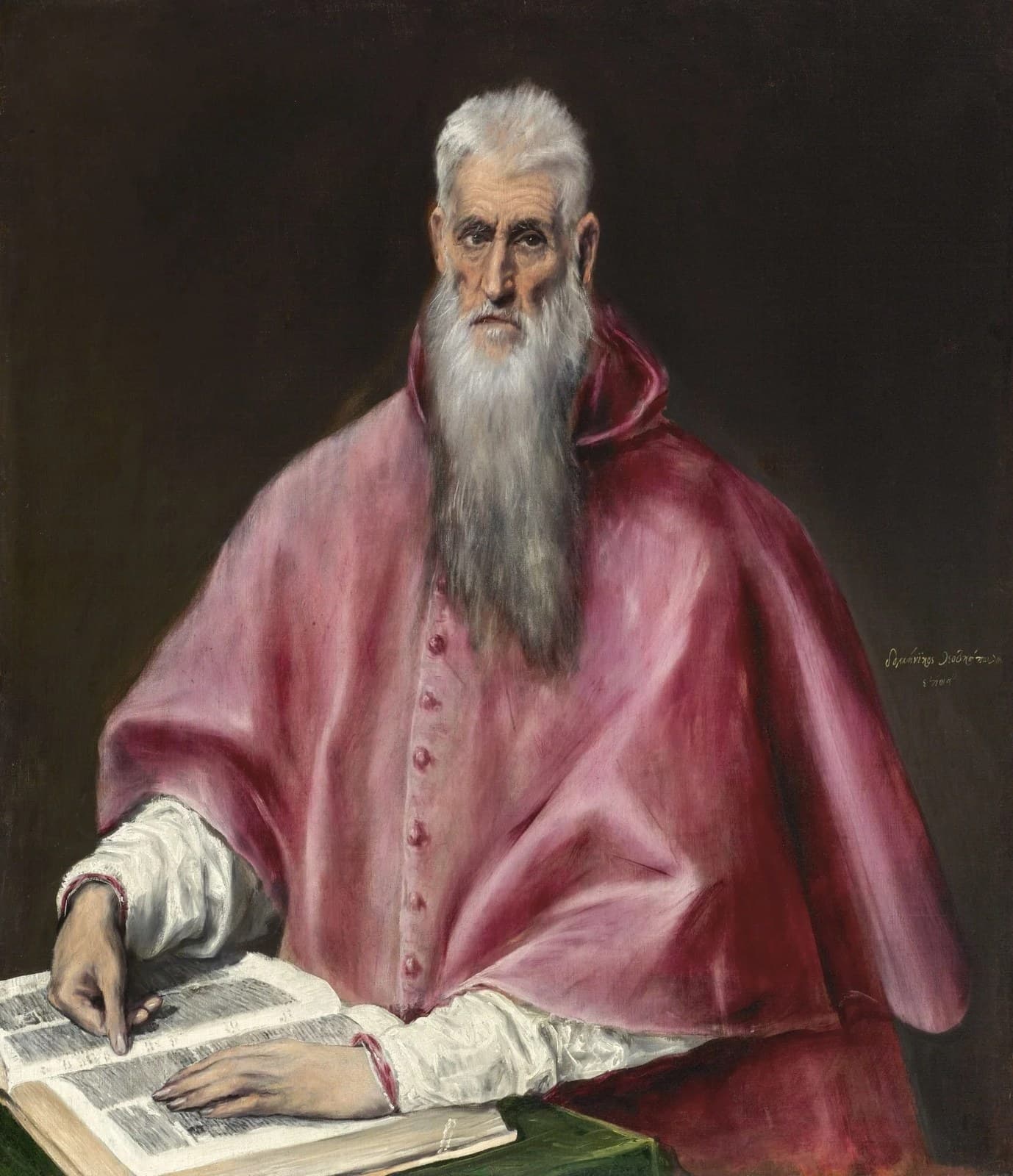
Not the desert hermit but the Doctor of the Church, in cardinal's red with one long hand resting on his own translation of the Bible.

Plain village houses on a hillside, built in solid earthy blocks. Pissarro refused to prettify the countryside and gave it structural weight instead.

Only the mouth and chin survive, in honey-yellow jasper, and the break seems to concentrate the thing rather than diminish it.

A Union officer faces three captured Confederates and the two halves of the country study each other. Homer had covered the war as an illustrator.

Beckmann had spent the war as a medical orderly, and he looks out of the shadows here like a man finished being surprised.

Courbet took the nude to the Salon with her hair loose, her body relaxed, and a parrot on her hand instead of a myth.
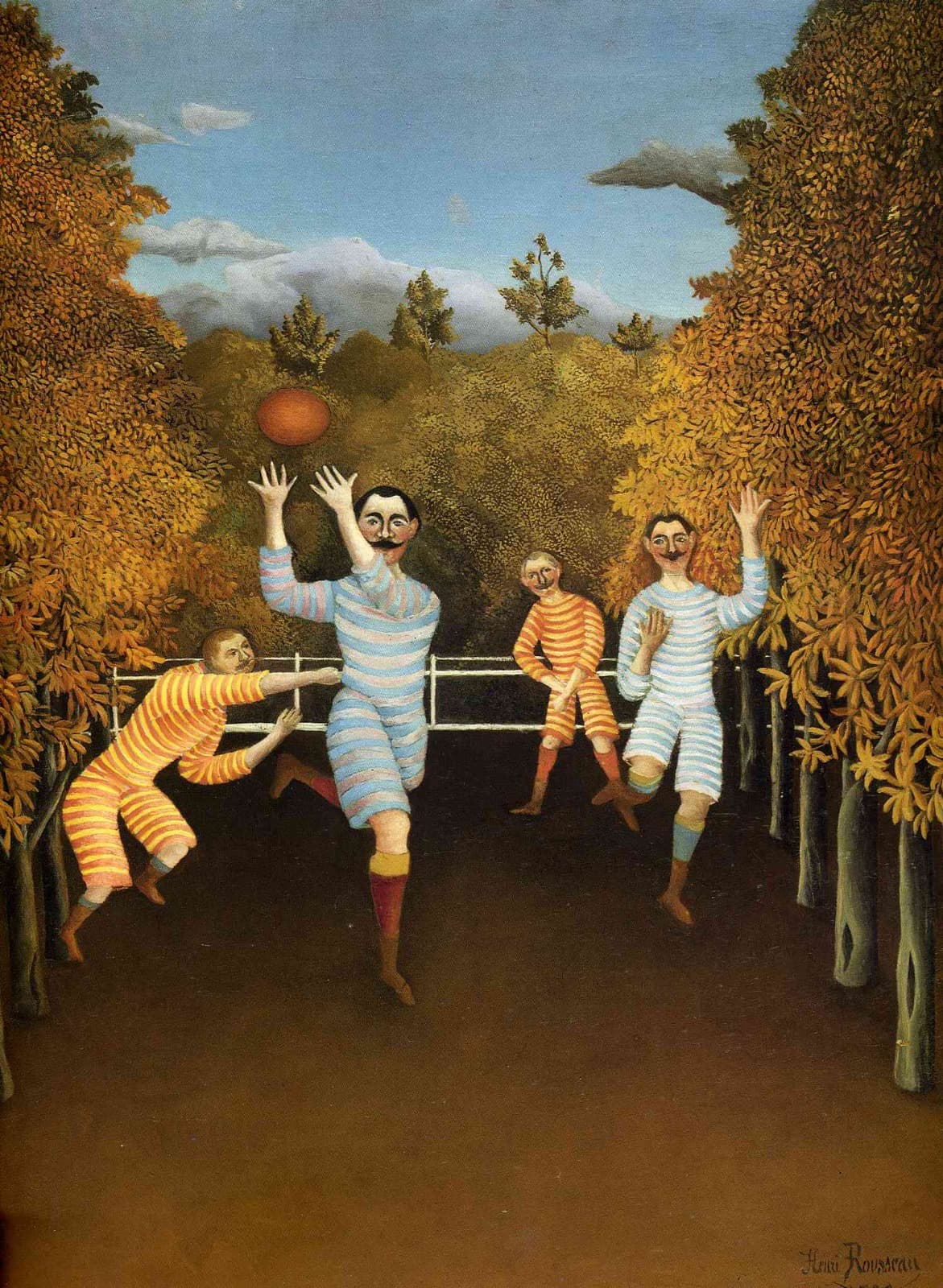
Moustached men in striped jerseys leap for a ball among autumn trees, playing the new game of rugby as though it were slow ritual.
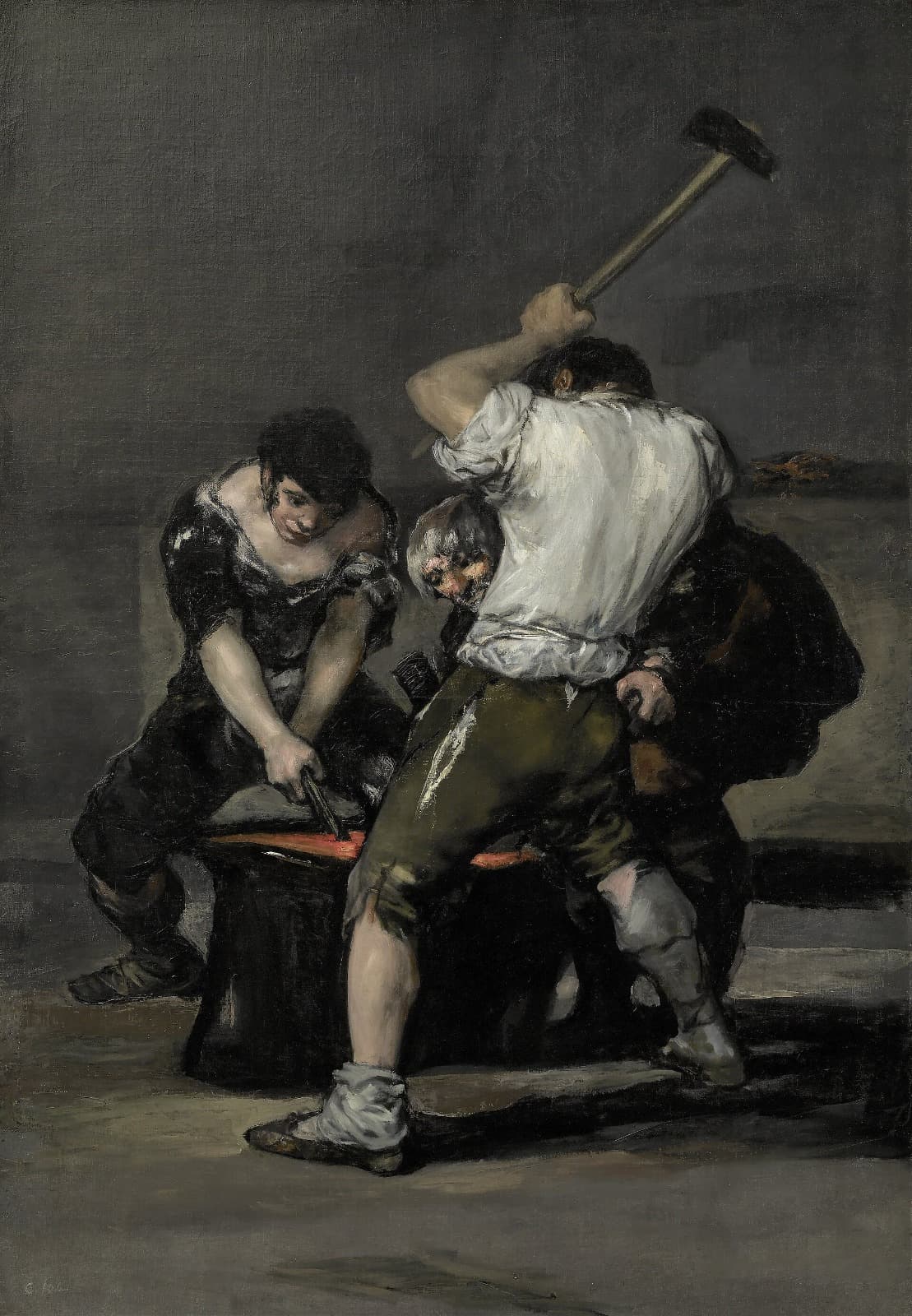
Three smiths at a forge, one hammer at the top of its swing. Goya gave laboring men the scale usually kept for gods and kings.
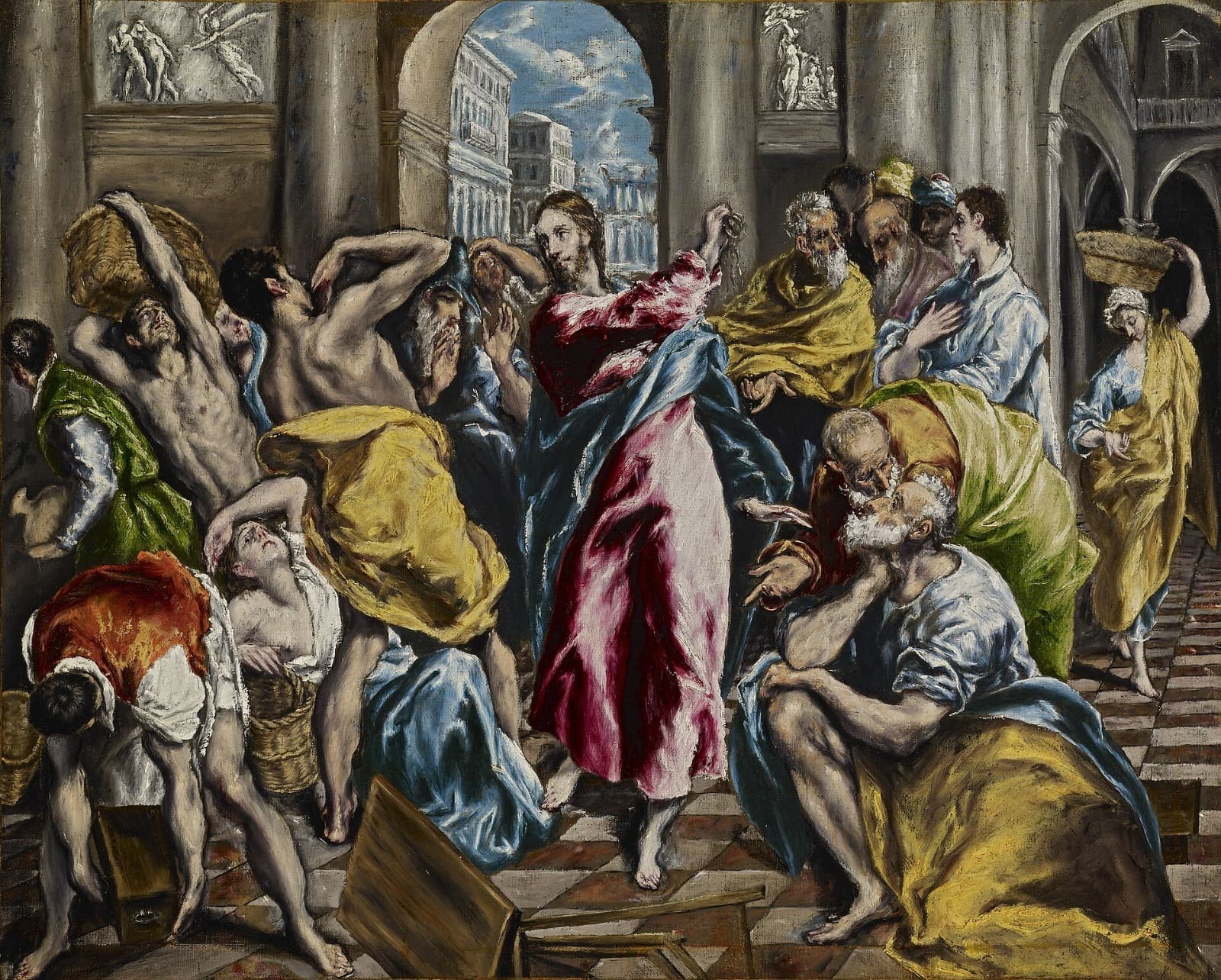
El Greco split the canvas down the middle: the traders tumbling out on the left, the disciples watching calmly on the right.

Naked conscripts showering in a barracks under a mounted officer, painted after the army service that broke Kirchner down.

Bodhidharma meditates before a broken lattice with the moon behind it. Yoshitoshi is reckoned the last great master of the woodblock print.
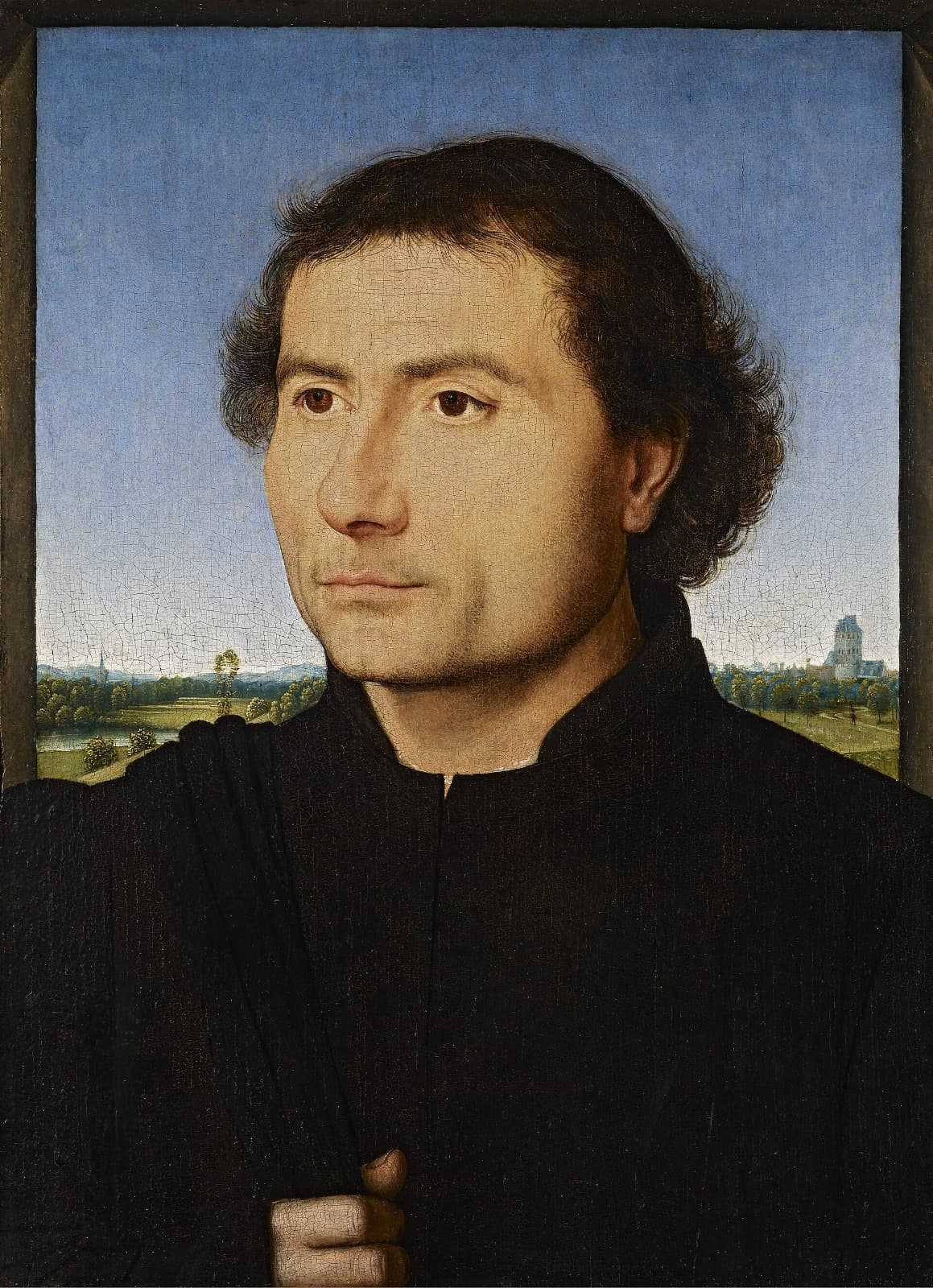
Memling put his sitters in front of open countryside instead of a dark ground, an idea that traveled to Italy and came back changed.

Hercules bolts from Vice toward Virtue and gashes his leg on the thorns of the harder road as he goes.
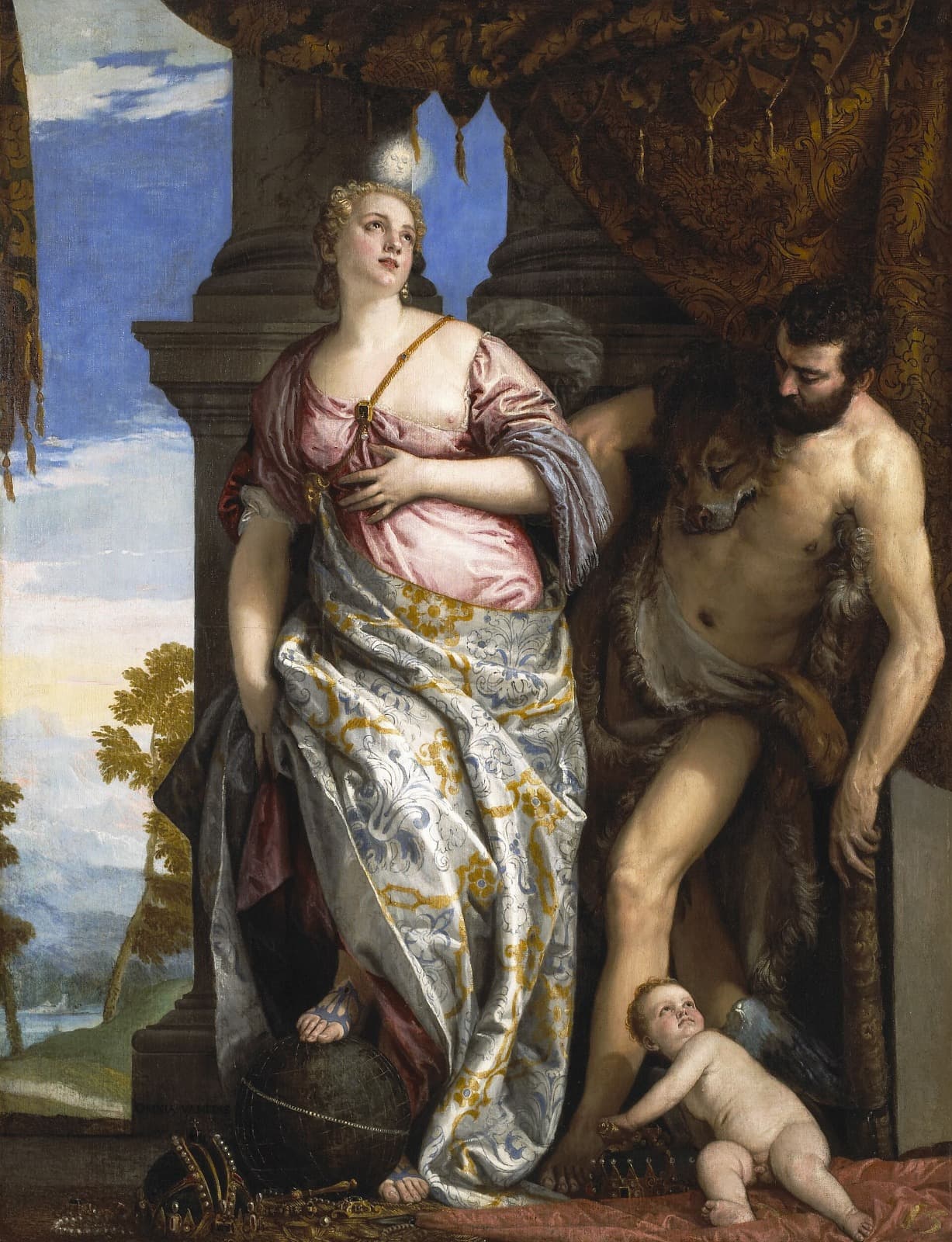
Divine Wisdom looks up and Hercules looks down at a scatter of crowns and jewels, which is the entire argument of the picture.

When Napoleon carried off the Apollo Belvedere, the Vatican put this on the empty pedestal, a modern work judged fit for the company.

Painted in hot colored beeswax and bound over the face of a mummy. The strokes are still visible and the eyes startlingly present.
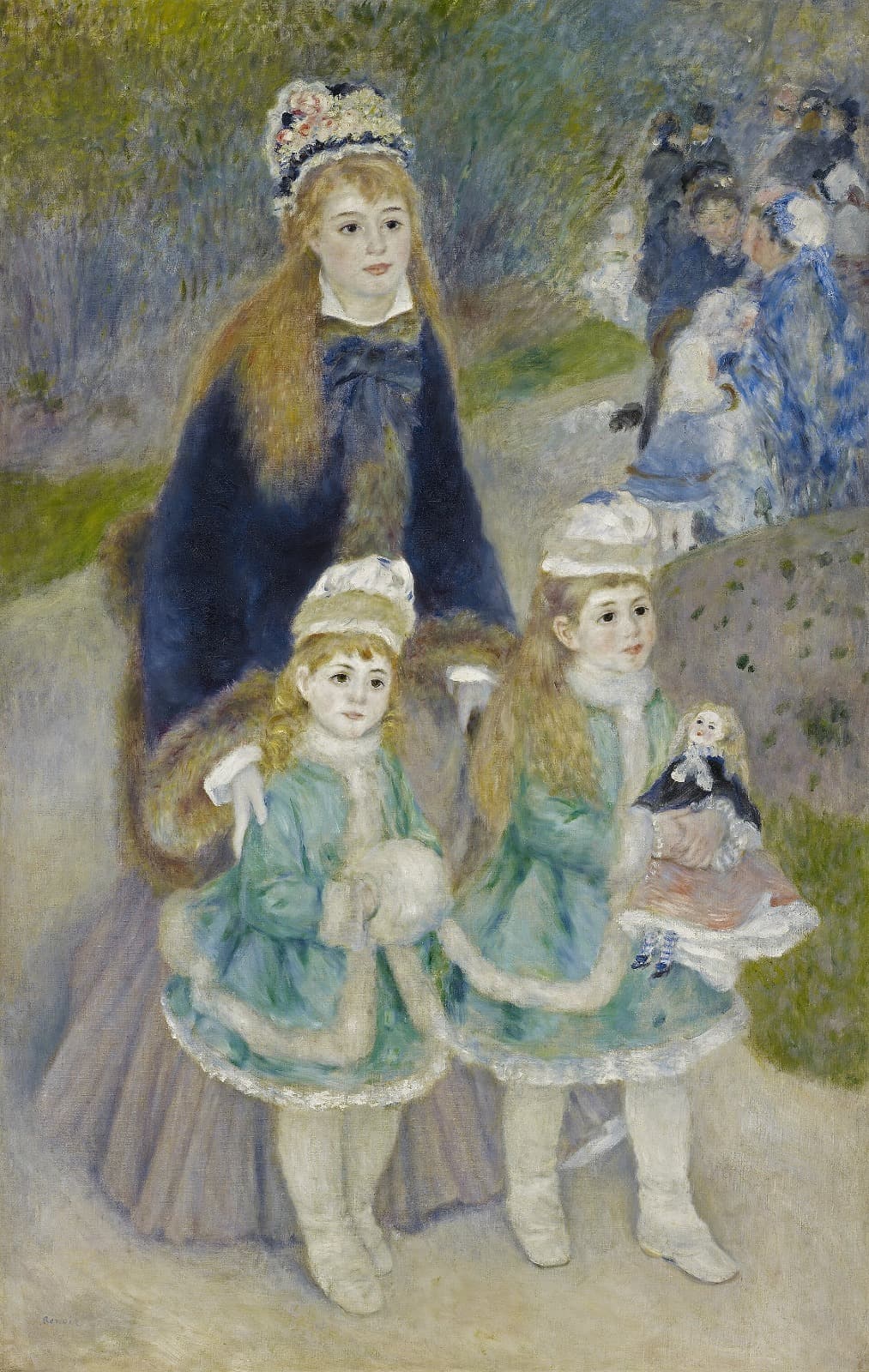
Two girls walking under trees, the elder leading the younger, everything blurred into one shimmer of dappled light and pale dress.

Cézanne cared less who the man was than whether the head would hold together as structure, and the slight asymmetries keep it alive.

Peasants and houses rendered as polished metal cylinders. Malevich was three years away from painting a black square and stopping.

A train crosses the sky upside down, a man drifts past on a parachute, and the cat on the sill has a human face.
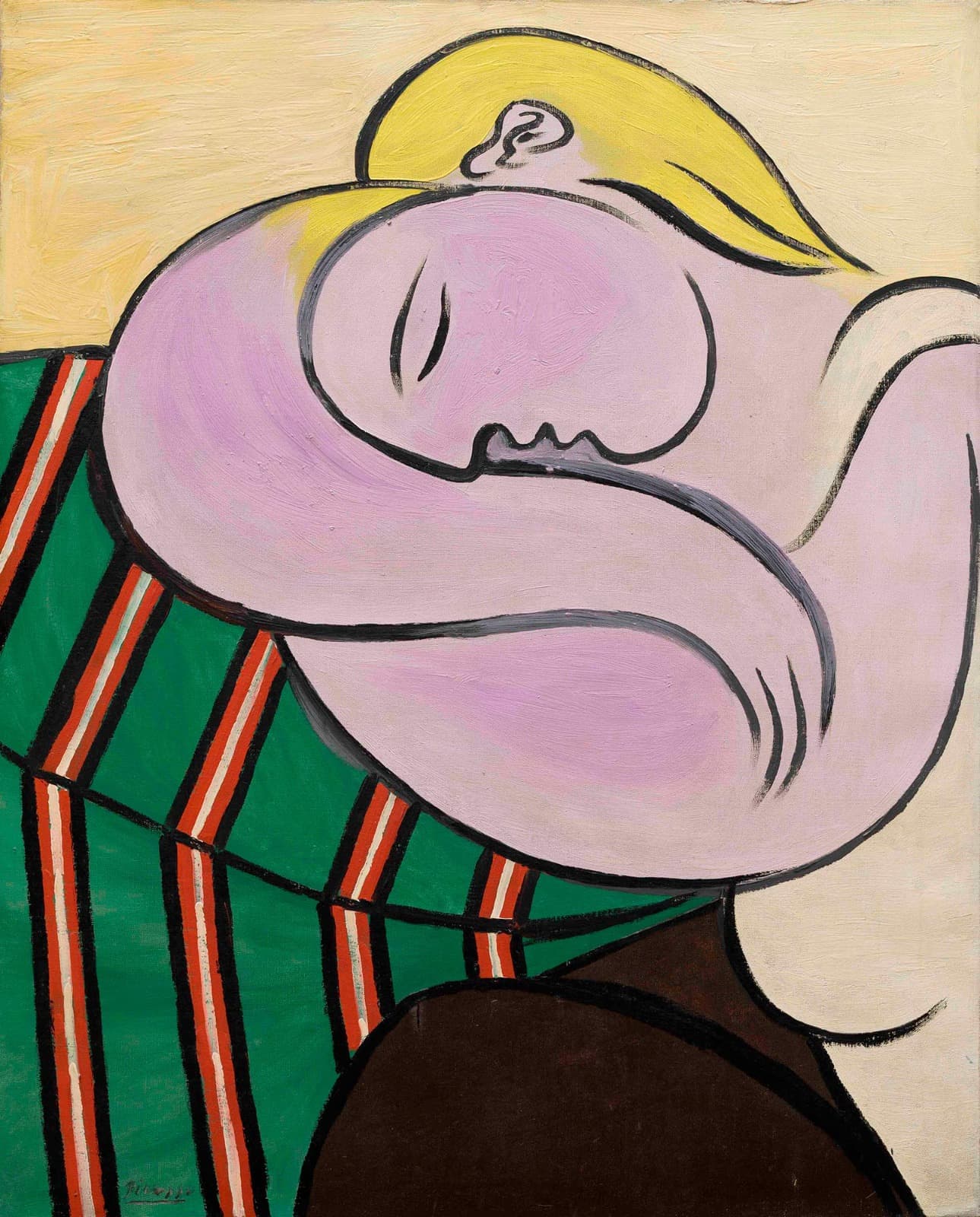
Marie-Thérèse asleep with her head on her arms, the angular violence of Cubism gone soft and curved for a few years.
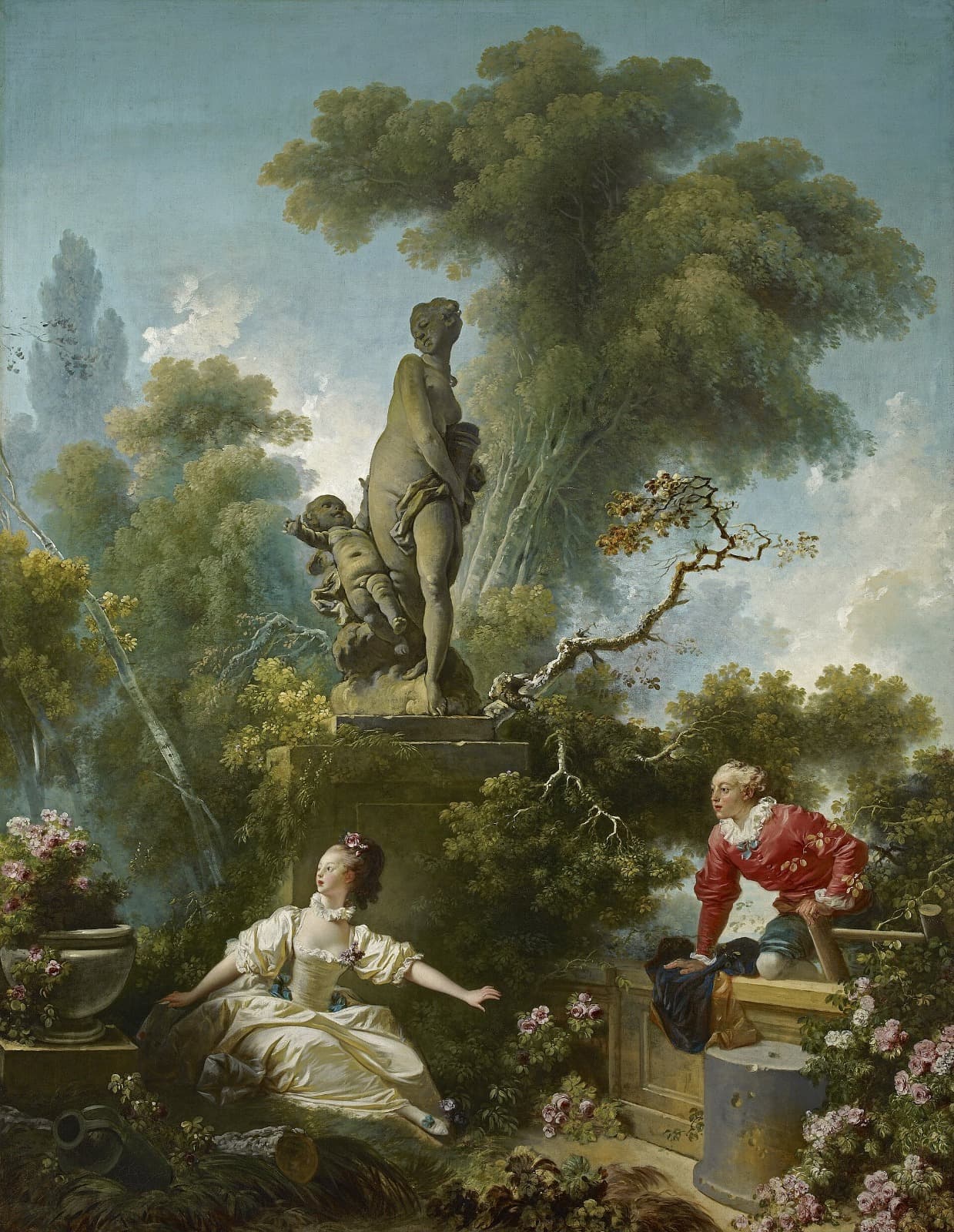
He is coming over the garden wall and she has just seen him, with a statue of Venus watching from above. Painted for Madame du Barry.
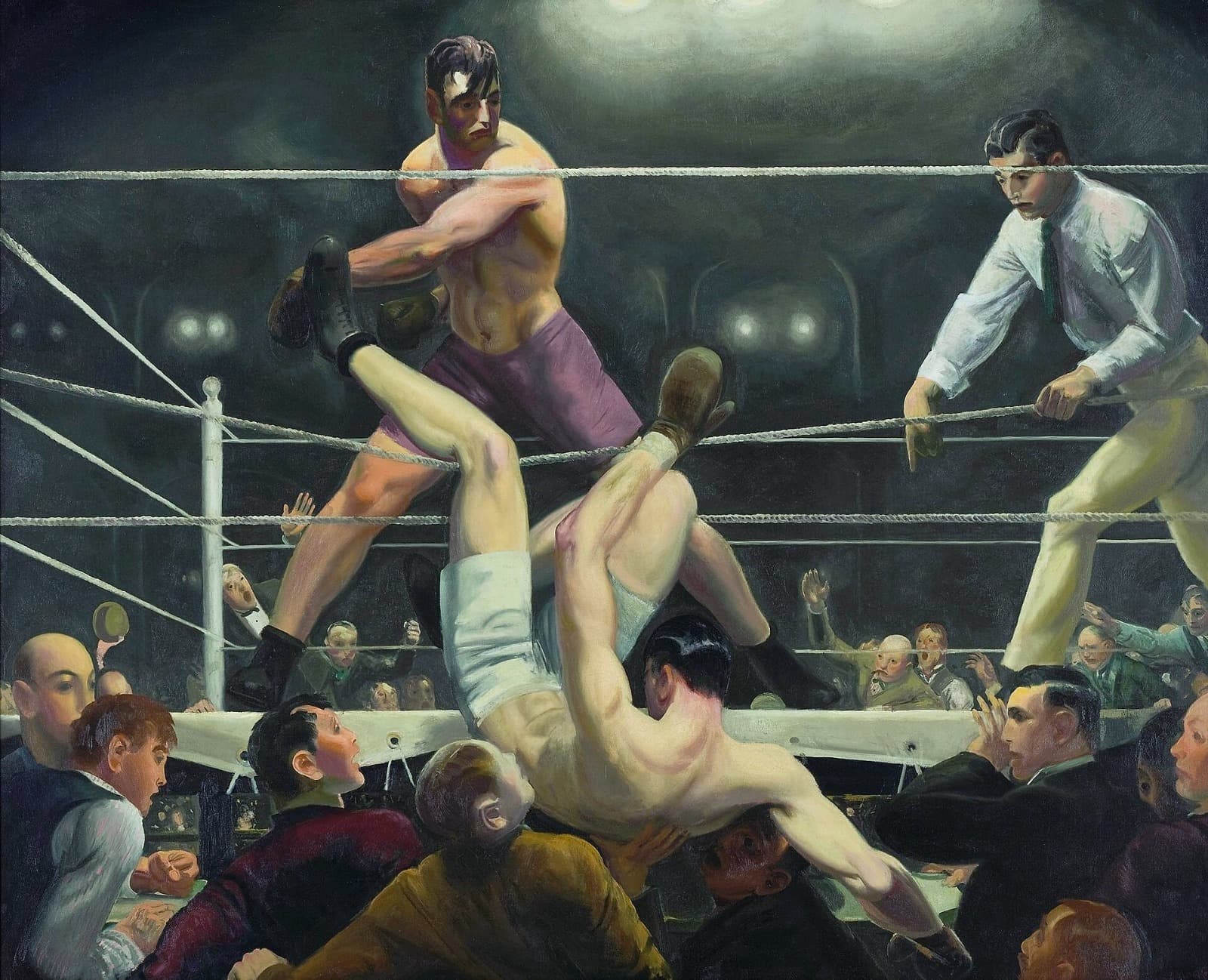
Firpo has just punched Dempsey clean out of the ring and into the laps of the reporters. Bellows painted the exact instant.

El Greco stripped out the crowd and the road and left the face and the embraced wood, a formula he repeated many times for Toledo.
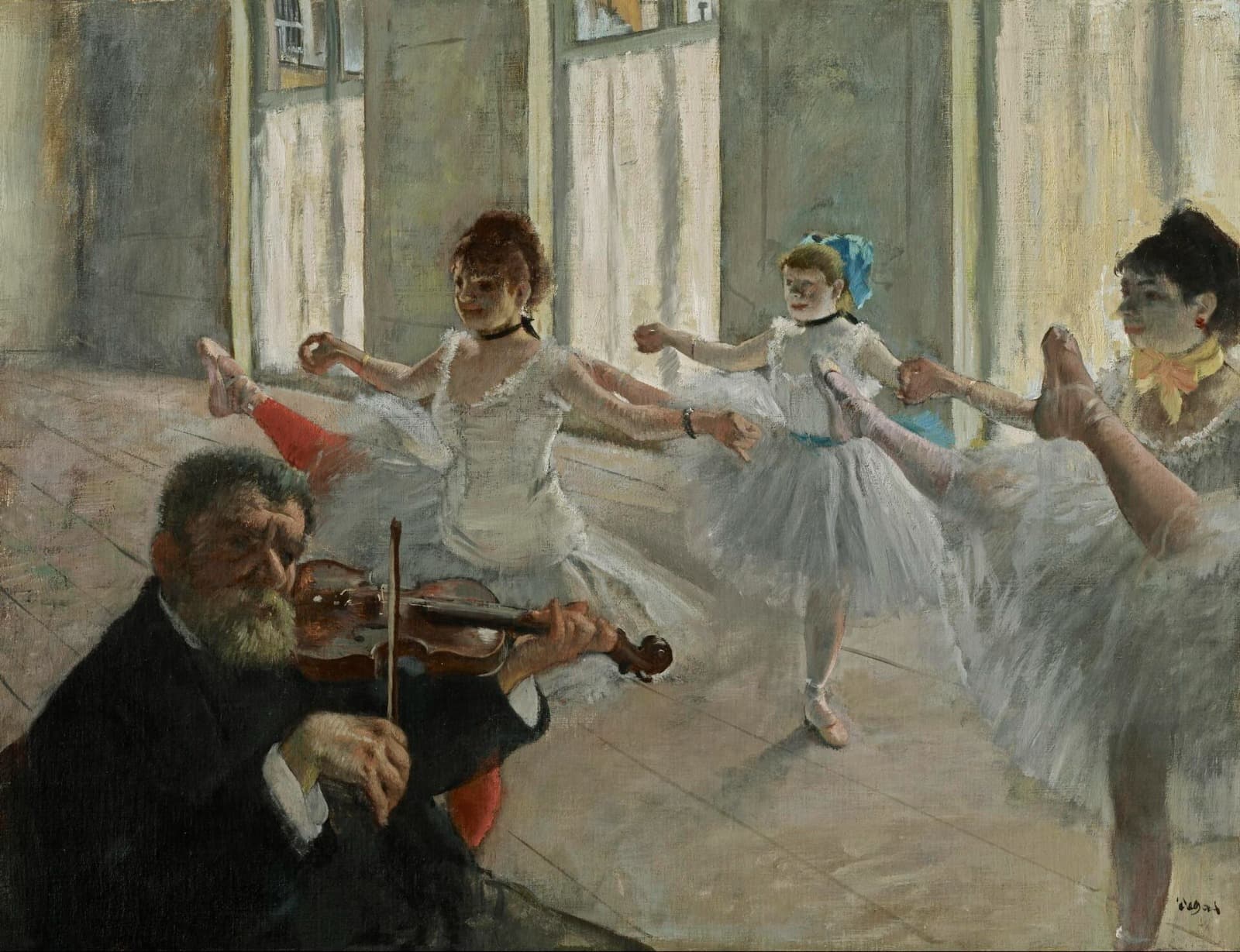
Dancers stretch while a spiral staircase cuts the corner and the frame slices figures off. Degas cared about the practice, not the performance.

The hills buckle and heave in the same thick strokes he gave his skies, so that the rock ends up moving too.
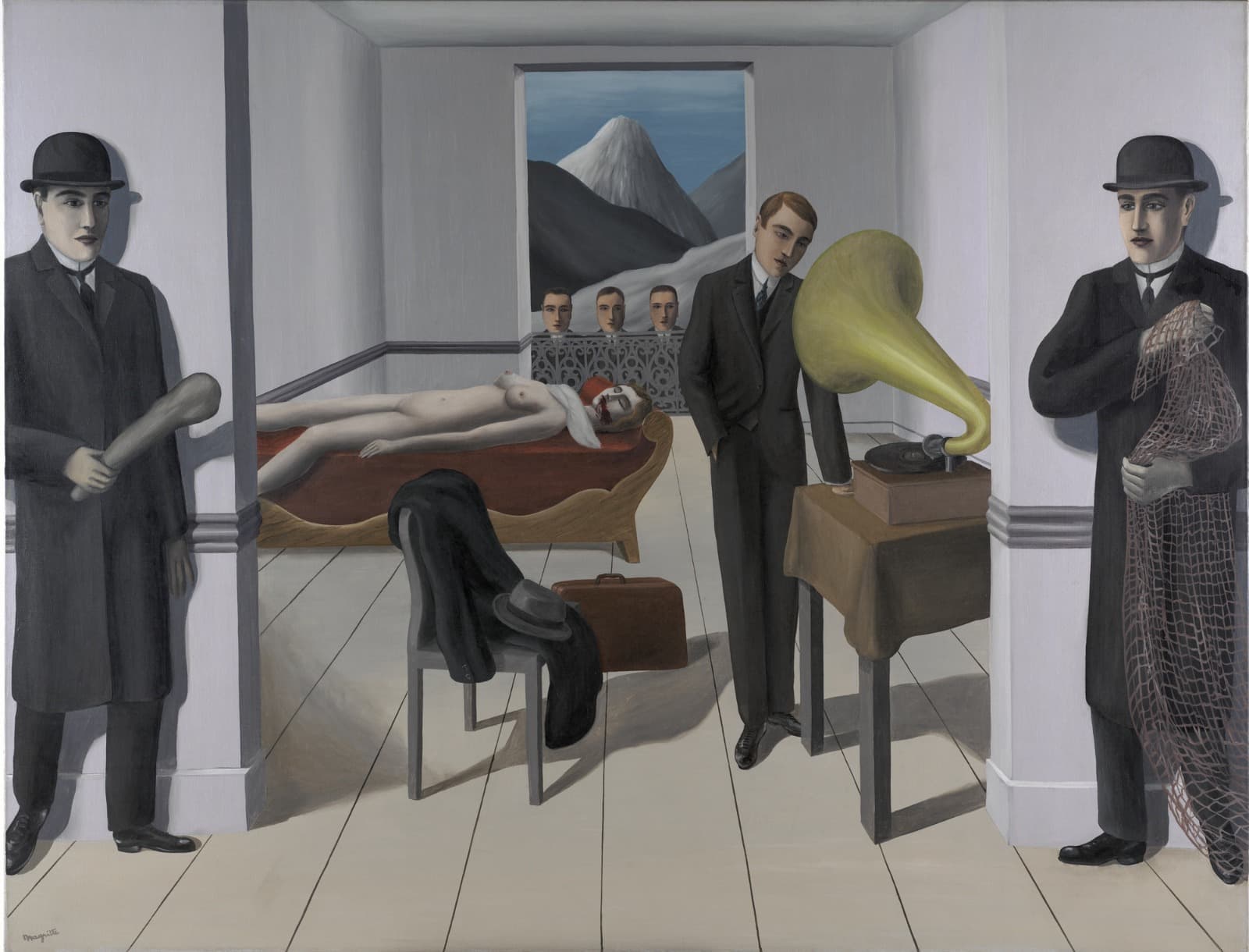
A murdered woman on a divan, a calm man listening to a gramophone, and two men with a club and a net waiting outside the door.

A packet boat comes in at evening and Turner dissolves the city, the passengers and the river into a single sheet of gold.
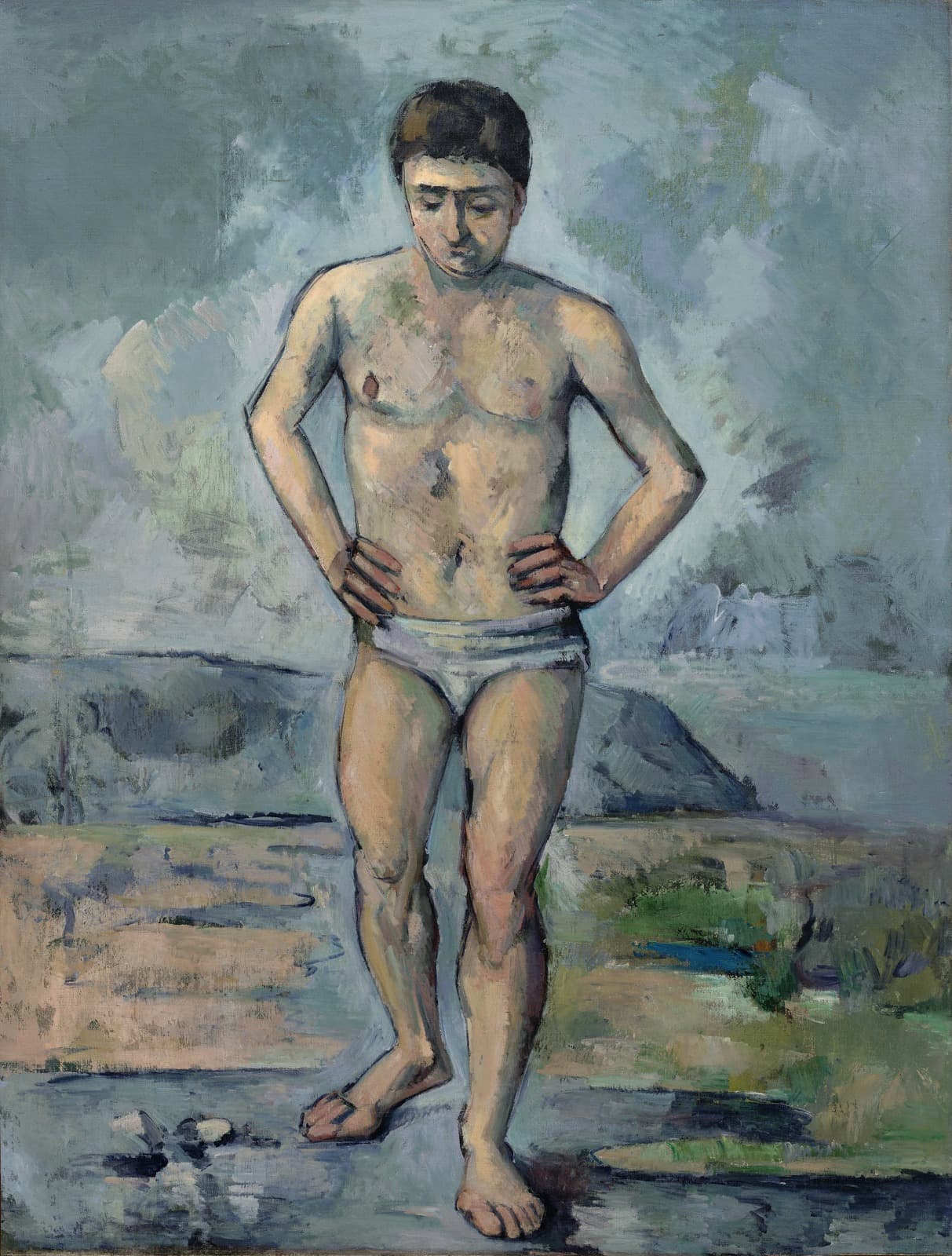
He stands in bathing trunks with his hands on his hips, built out of planes and given the same weight as a mountain.
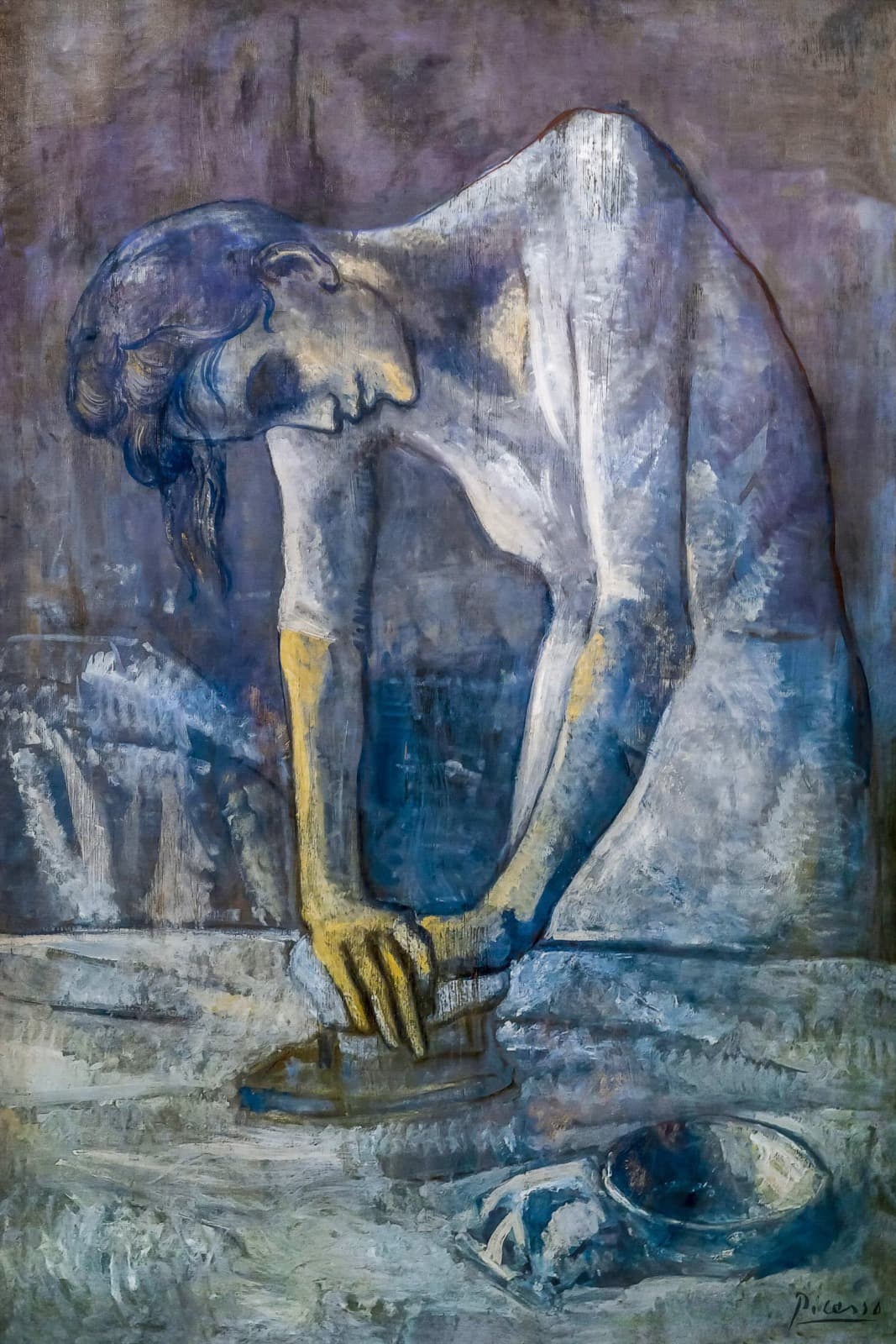
The laundress bears down on her iron with her shoulders up and her head sunk, all in the cold blue of Picasso's poorest years.
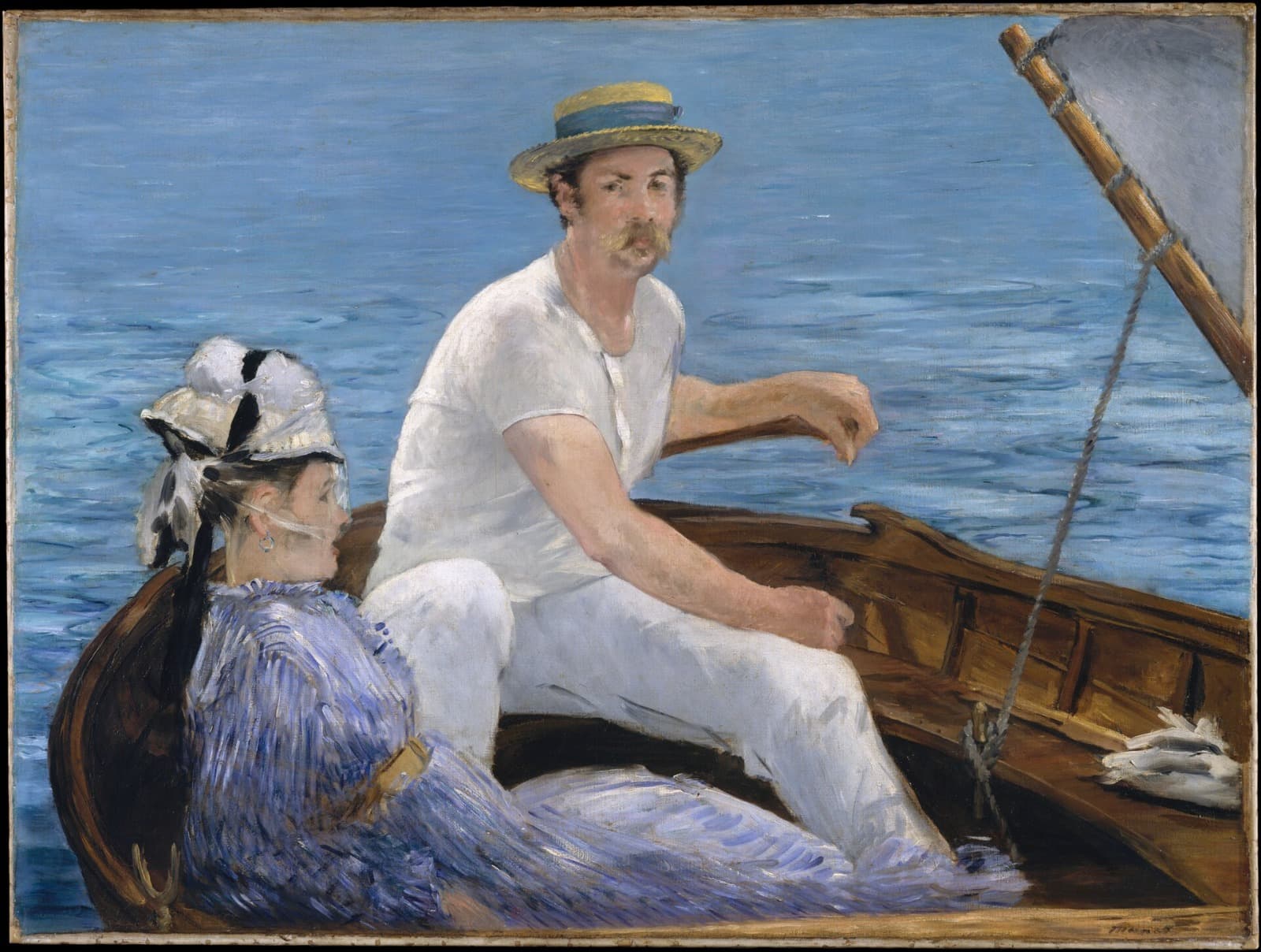
Manet painted this beside Monet at Argenteuil and let the blue water climb all the way to the top edge of the canvas.
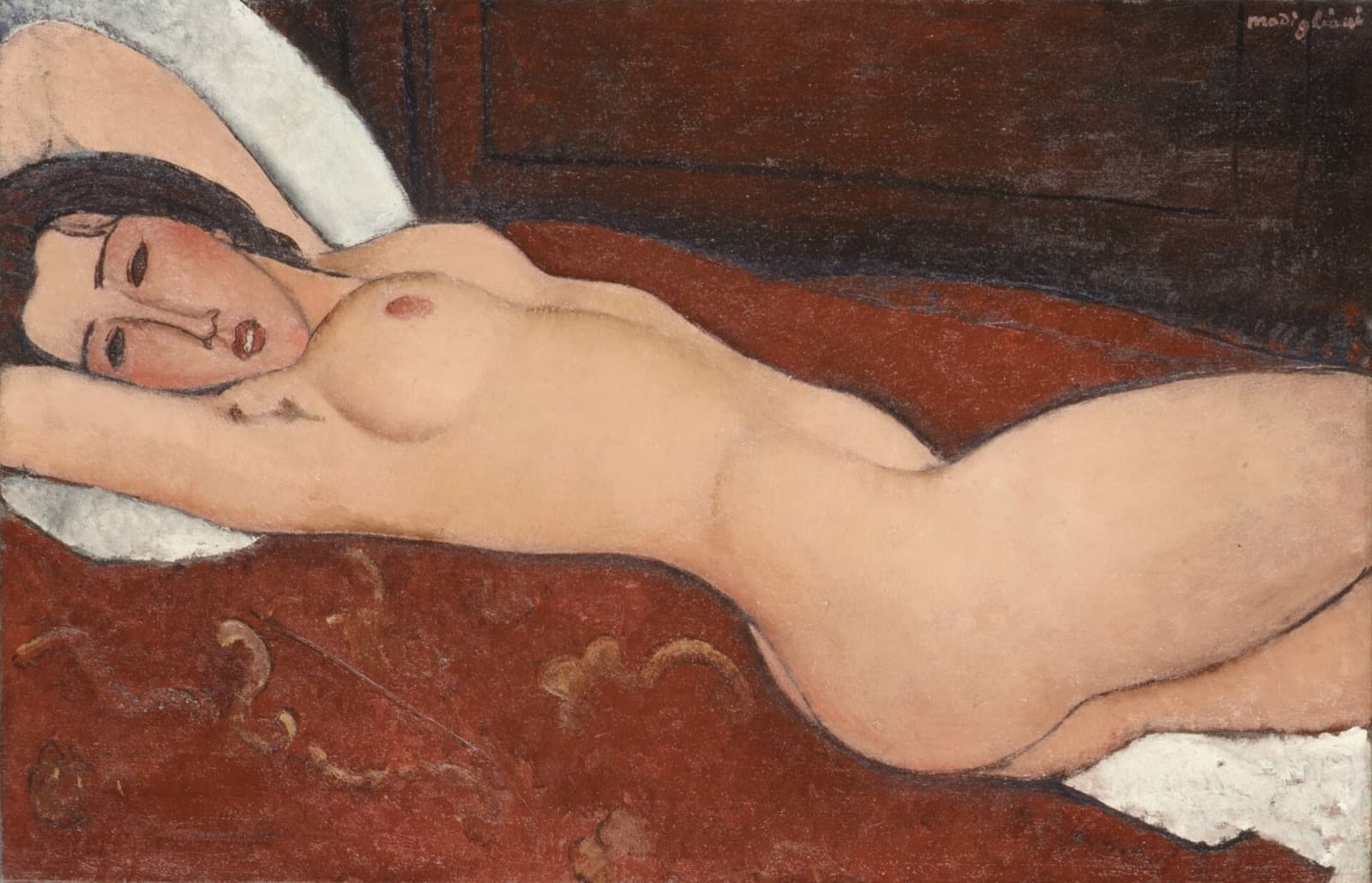
African masks, Cycladic figures and Renaissance Venuses, folded into one long golden diagonal. Among the most expensive paintings ever sold.
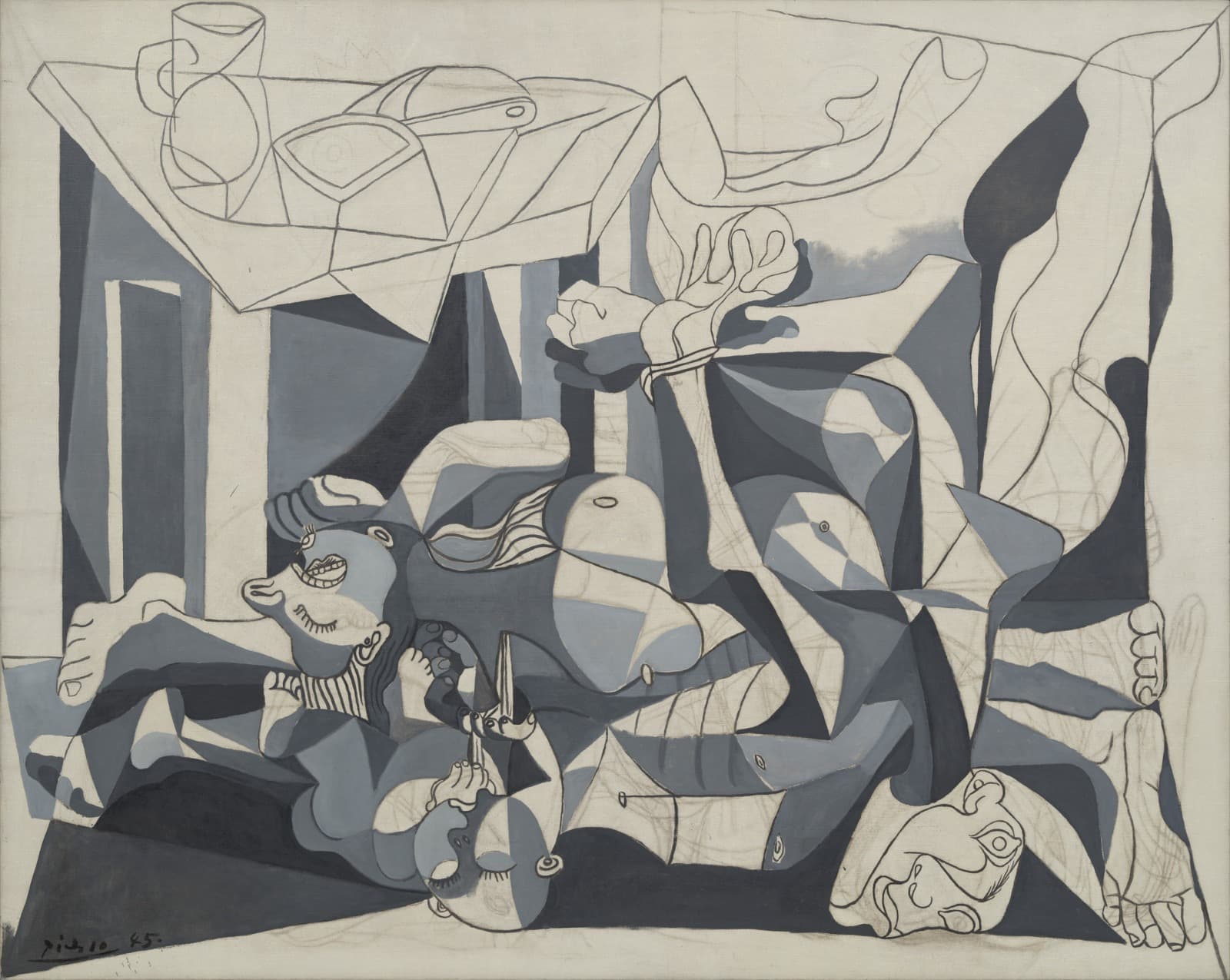
Bodies lie heaped and bound under a kitchen table, in grey. Picasso left it unfinished, painted after the camps were opened.
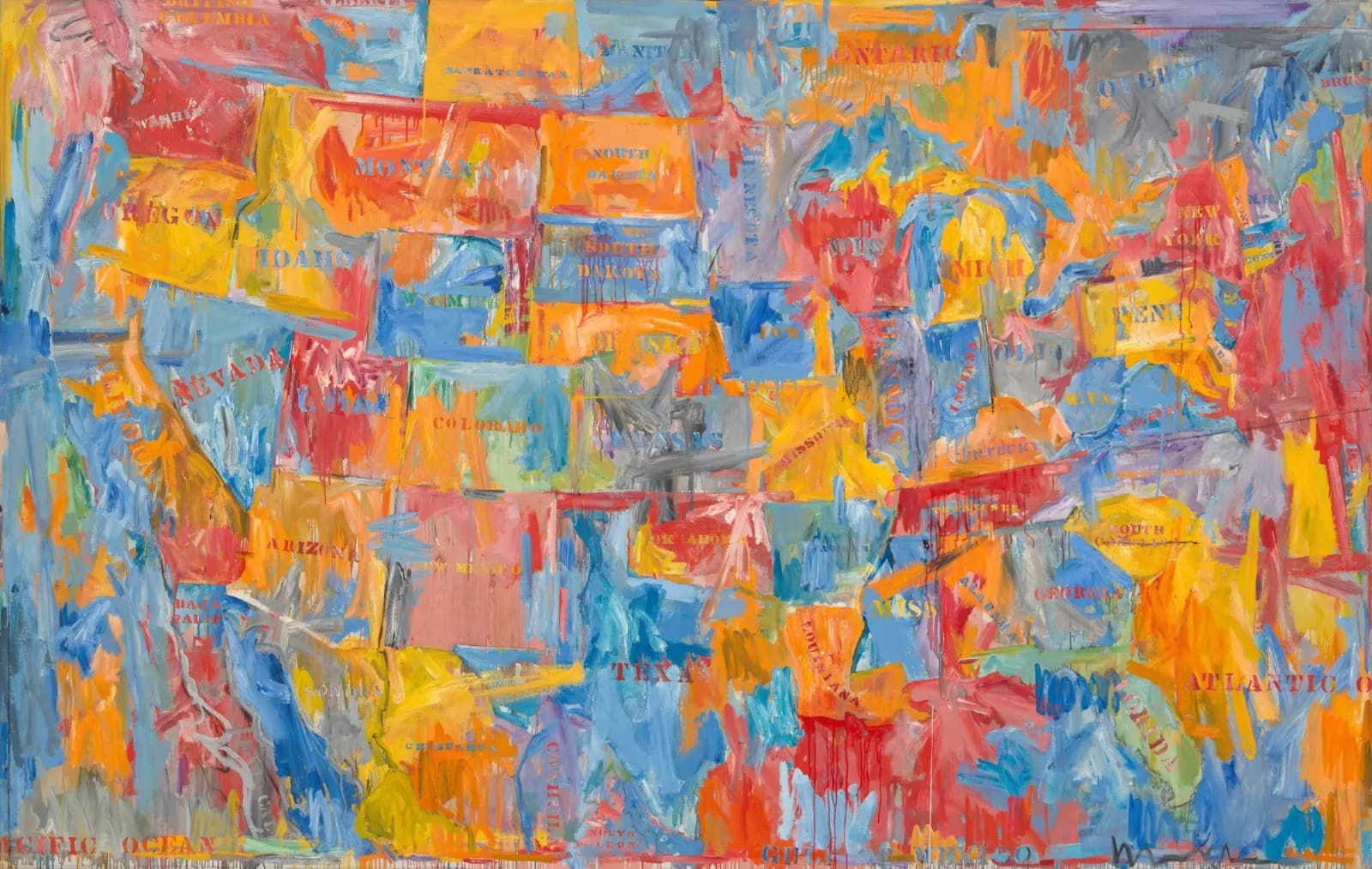
Johns stenciled the state names and then let red, yellow and blue run right over the borders. Another sign everybody already knows.

Cold competence and nothing else. Holbein painted him as a near-pendant to Thomas More, whom Cromwell helped send to the scaffold.

Two women in white smile out from the railing while two men in dark cloaks stand behind them in the shadow, watching.
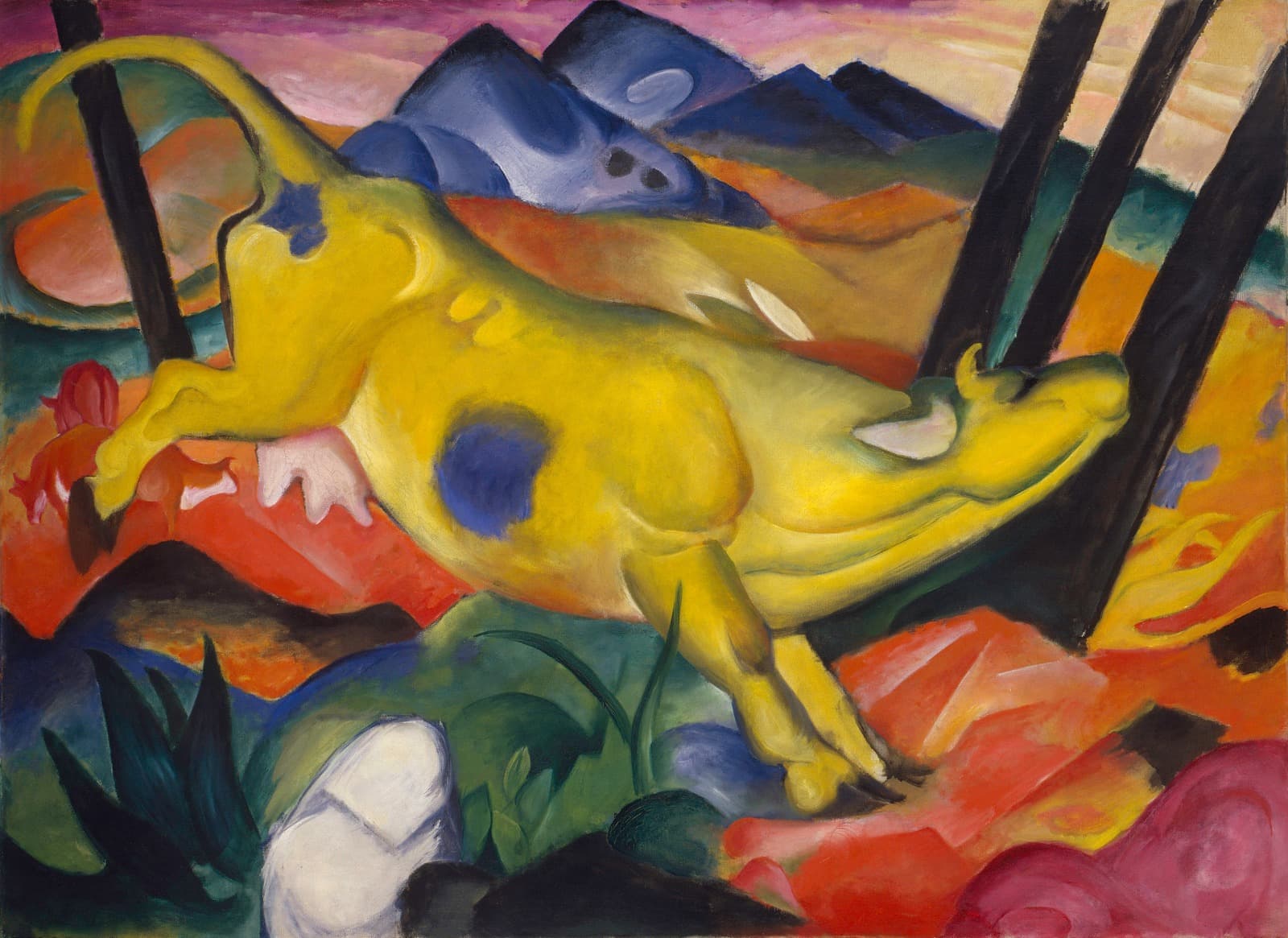
Marc used yellow for whatever was gentle and joyful, and this cow is kicking its legs out across the hills for the pleasure of it.

A curve of the guitar, some stenciled letters, and otherwise a lattice of brown and grey. Braque and Picasso developed this together, canvas by canvas.

Monet's own father sits among the gladioli on a terrace, and the young painter tips the space up in flat bands like a Japanese print.

A Union jacket lies discarded in the corner while the man who wore it swings a scythe through wheat, which is the whole point.
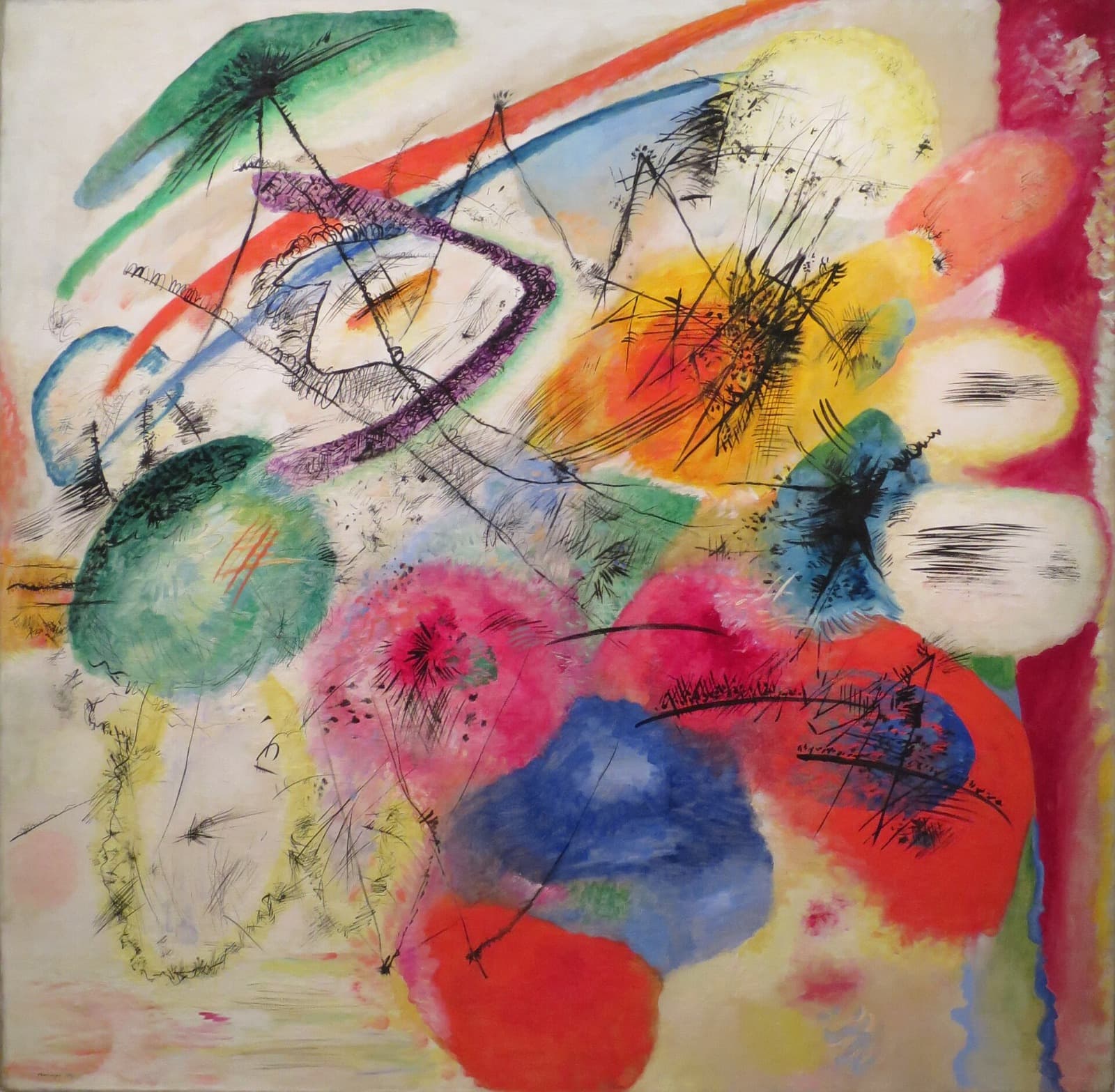
Black skeins and floating patches of color with nothing recognizable in it at all. Kandinsky thought painting could work on you like music.

The Rose Period cooling off into something graver and more archaic, the boy and horse built like figures off a Greek relief.
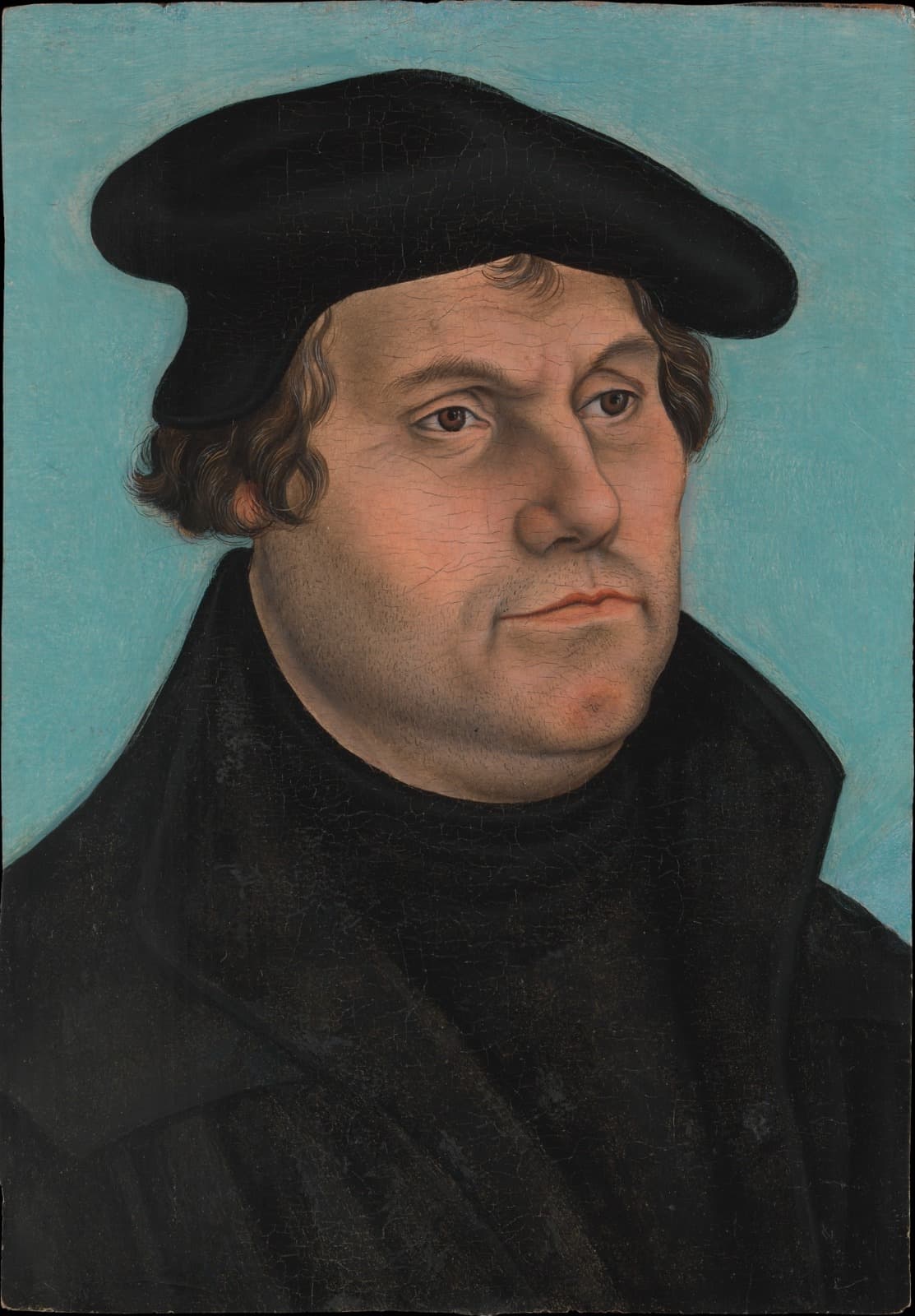
Cranach was Luther's friend and godfather to his children, and his workshop turned out this face by the score for Protestant Germany.