
Christ Bearing the Cross, with a Dominican Friar
1360 · The Frick Collection, New York City
Christ looks back over the cross at a tiny Dominican friar kneeling in the corner, the patron drawn into the road to Calvary.
★ 3.2
 skopia
Christ looks back over the cross at a tiny Dominican friar kneeling in the corner, the patron drawn into the road to Calvary.

No bigger than a page, and one of very few works securely given to Cimabue, whom Dante named the best painter of his day.
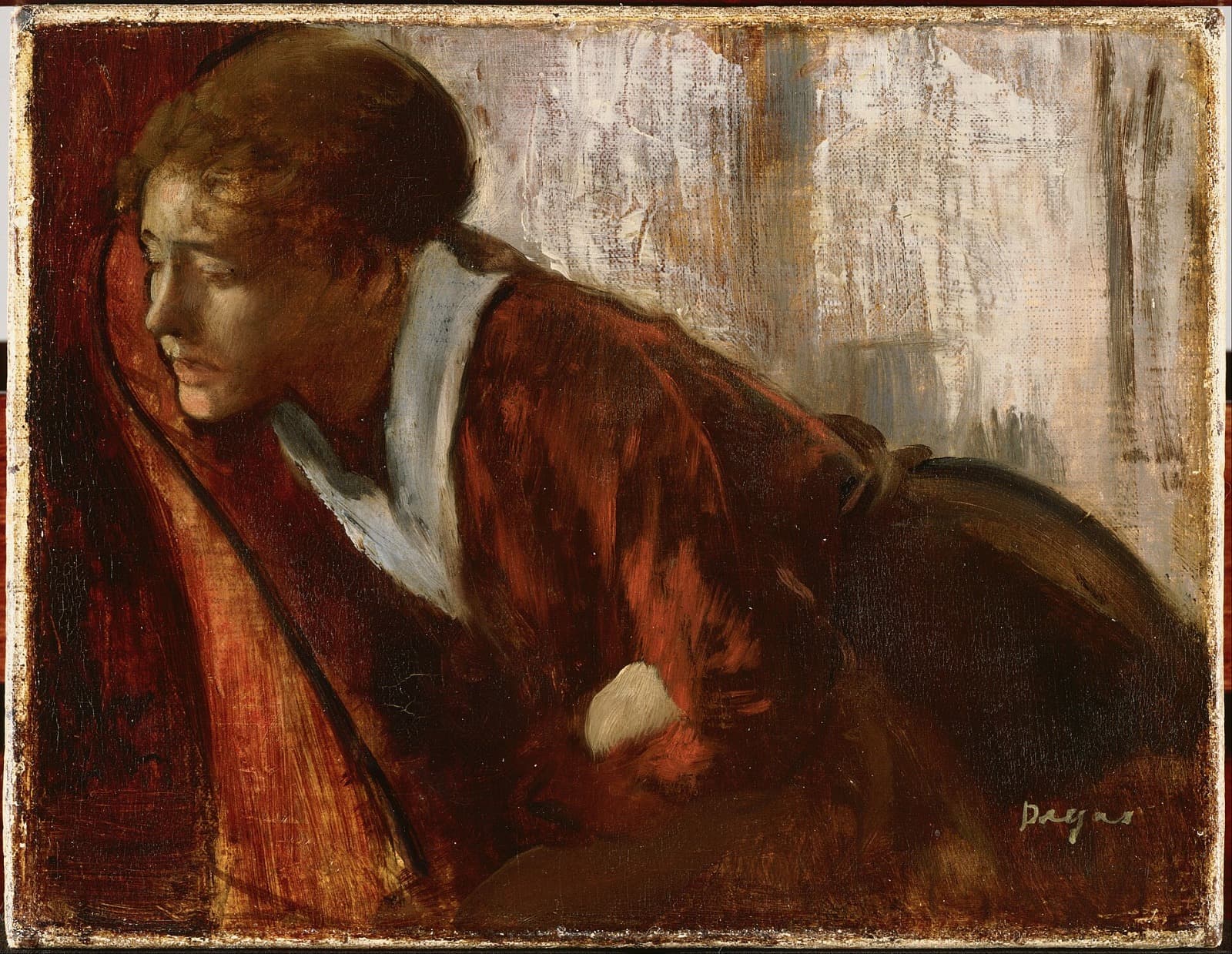
A woman slumped back on a sofa, and Degas reads the whole state of mind off the slope of her shoulders.
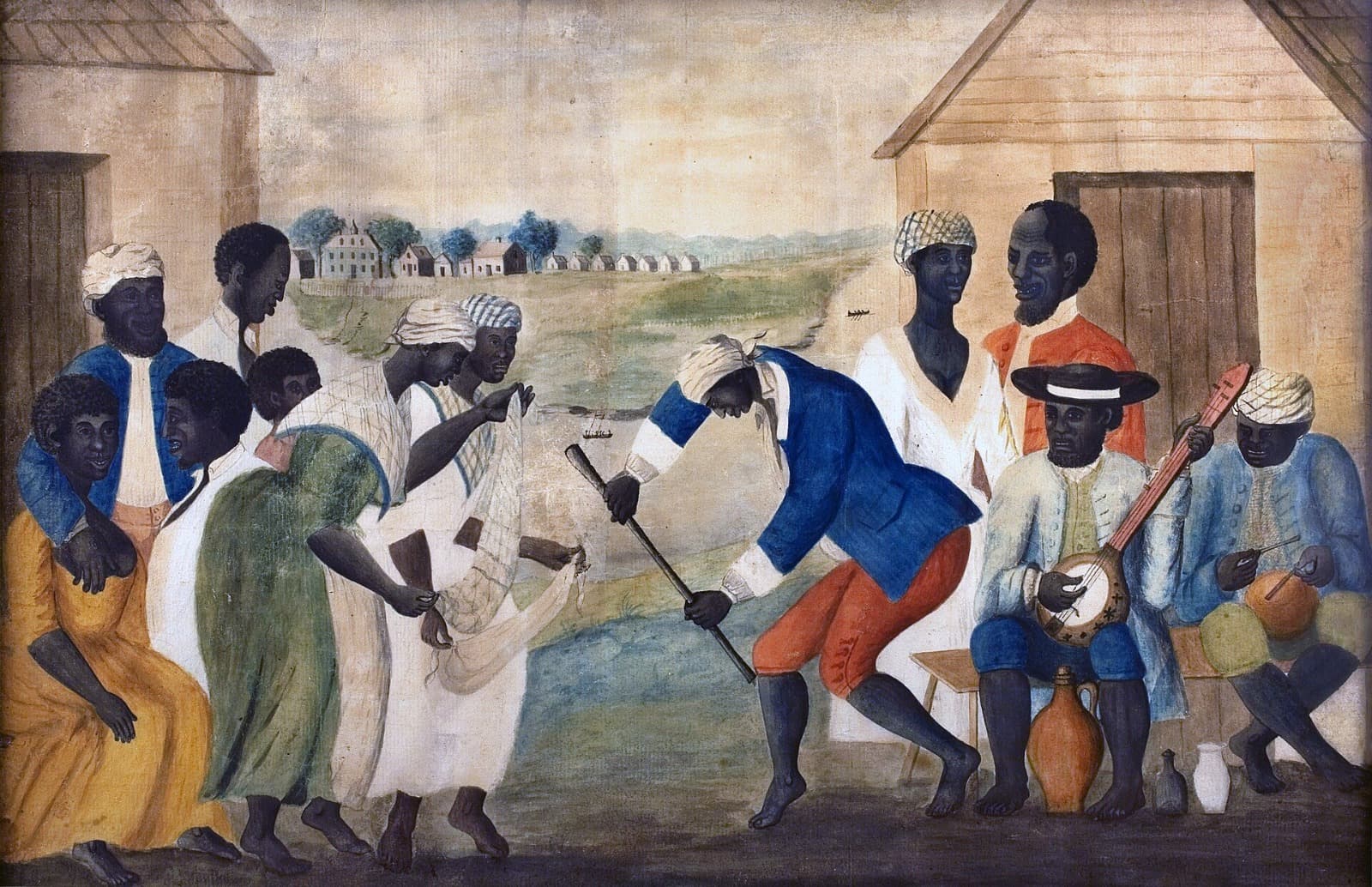
Enslaved people dancing and making music beside their cabins, with African instruments and dress. Attributed to a South Carolina slaveholder.

John stands lost in his book, wrapped in red cloth massed like masonry. One wing of an altarpiece now scattered across five cities.
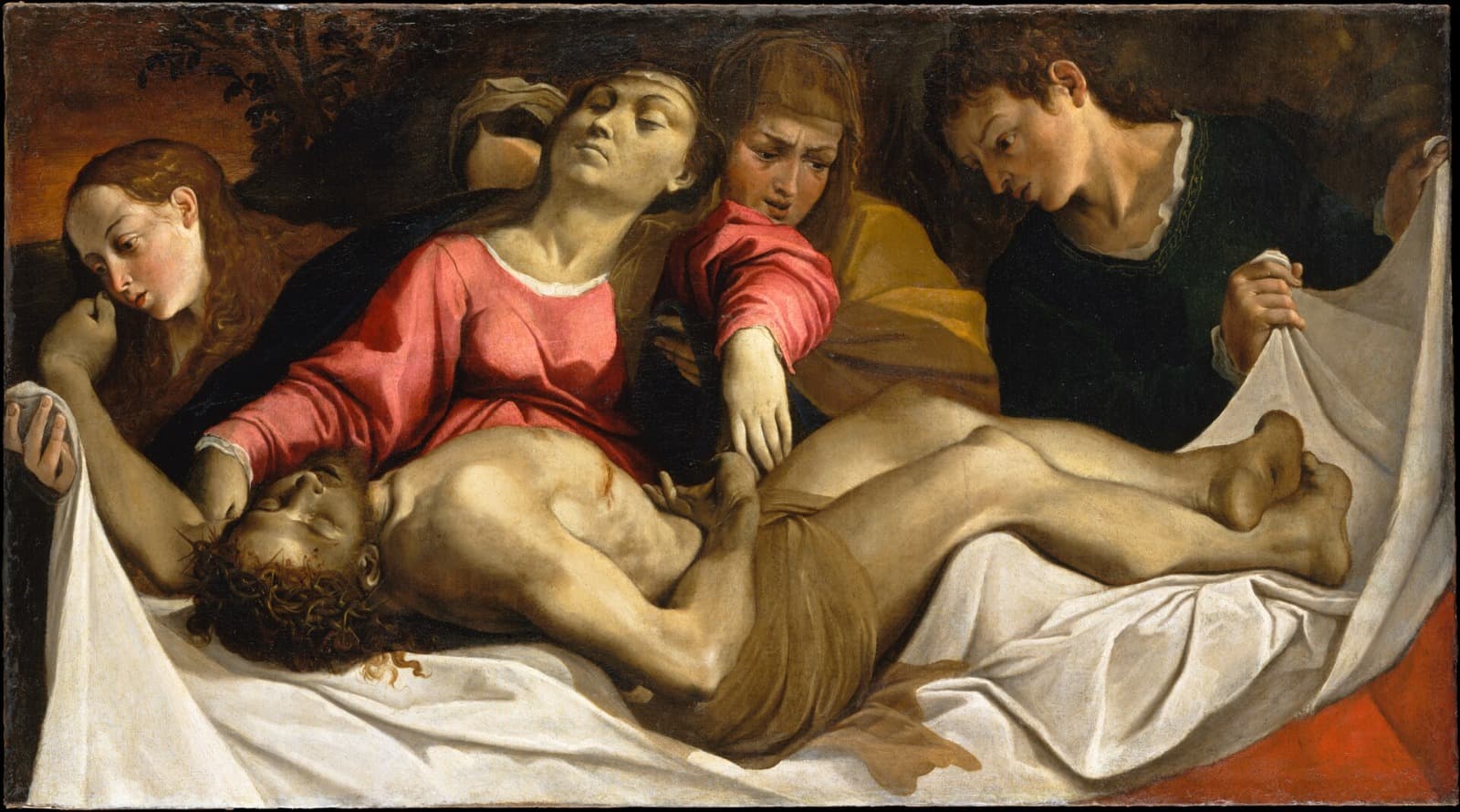
The body pushed close to the viewer and lit in sharp pools. The Carracci taught a generation to weld grandeur to direct feeling.
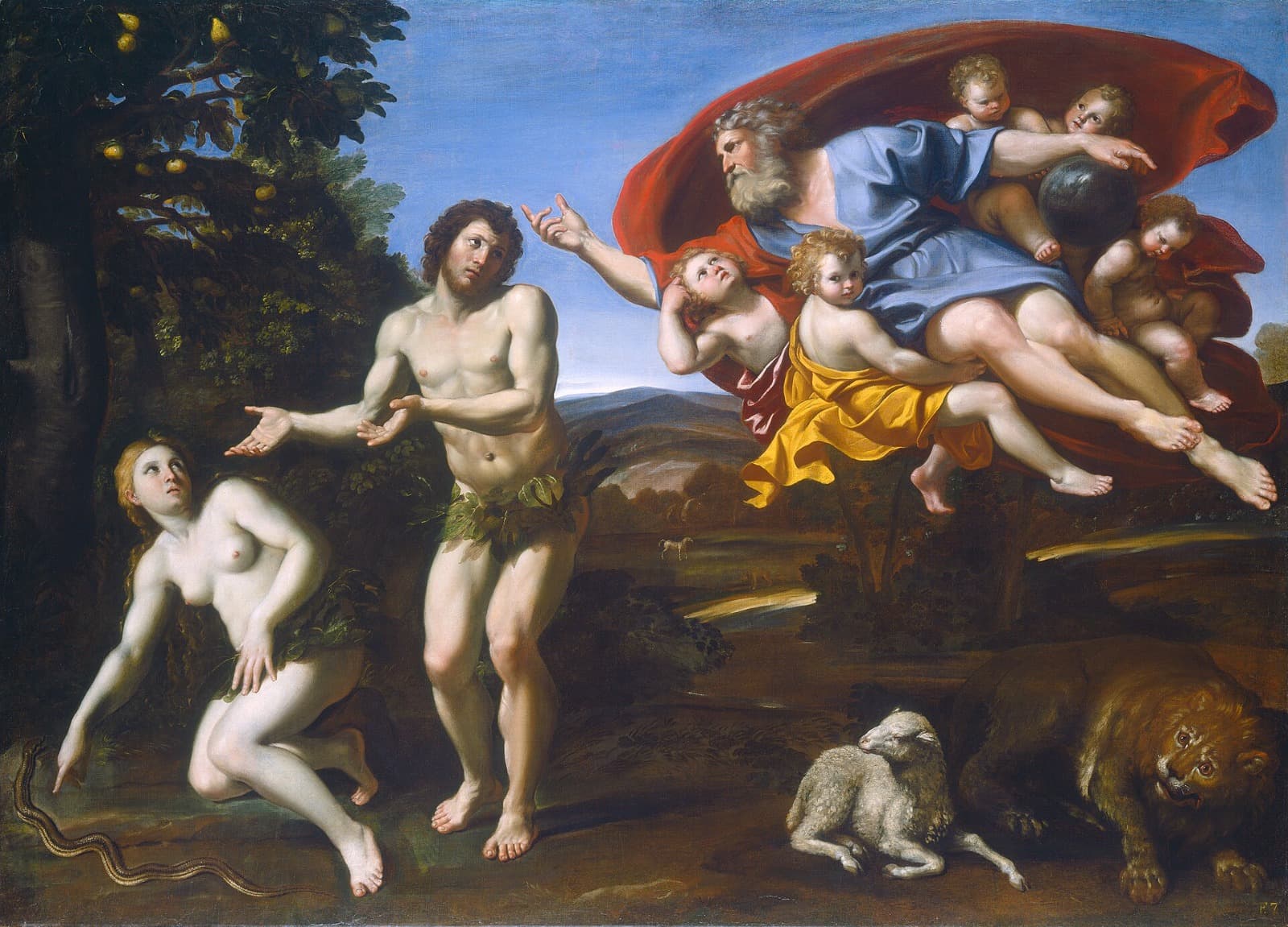
Adam points at Eve, Eve points at the serpent, and the first sin turns into an ordinary comedy of passing the blame.

Five have kept their lamps lit and five have not, and the ones who have not are pleading. An avenging angel waits above.
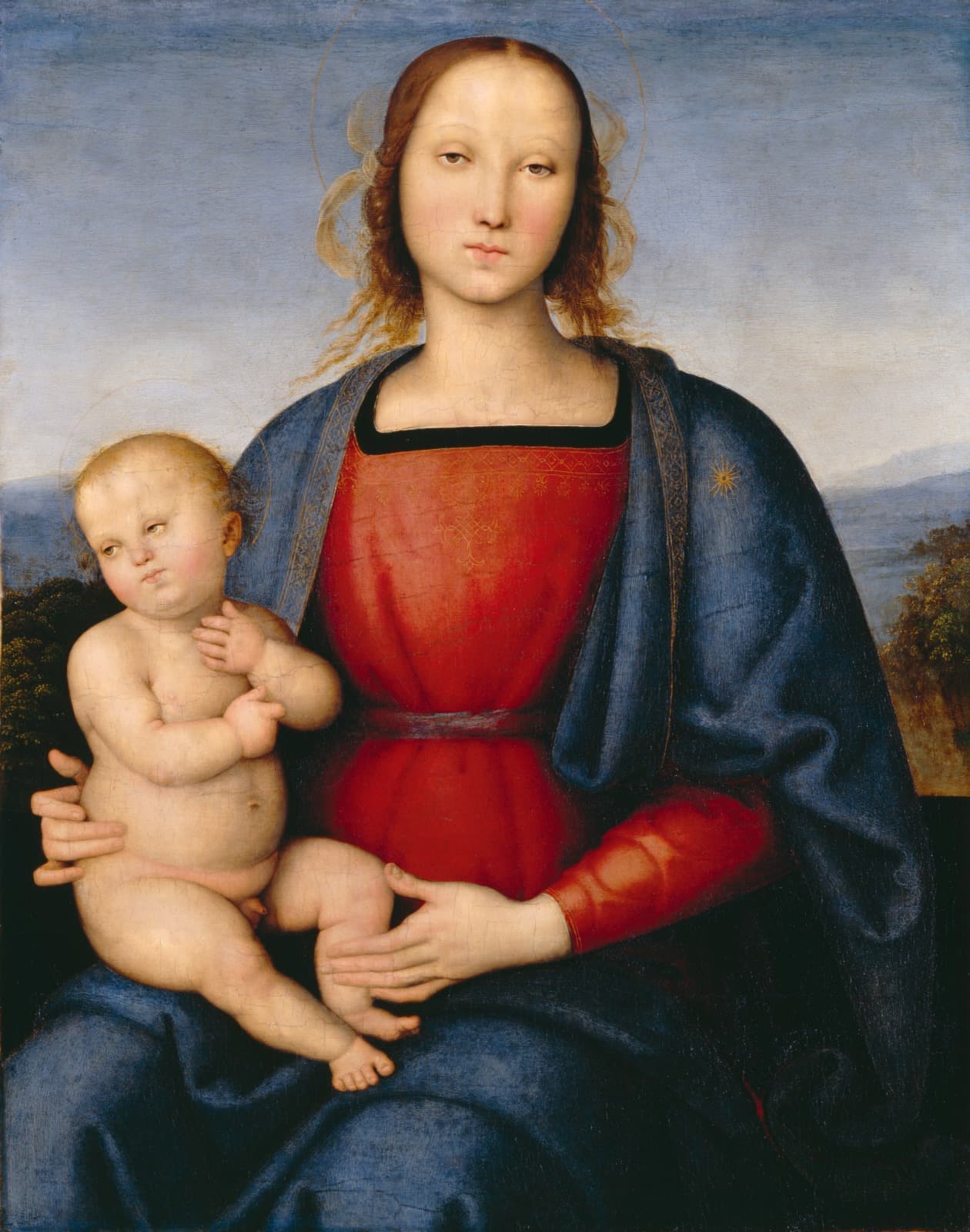
The oval face, the lowered eyes, the Umbrian distance melting into air. Raphael took all of it and then went past it.
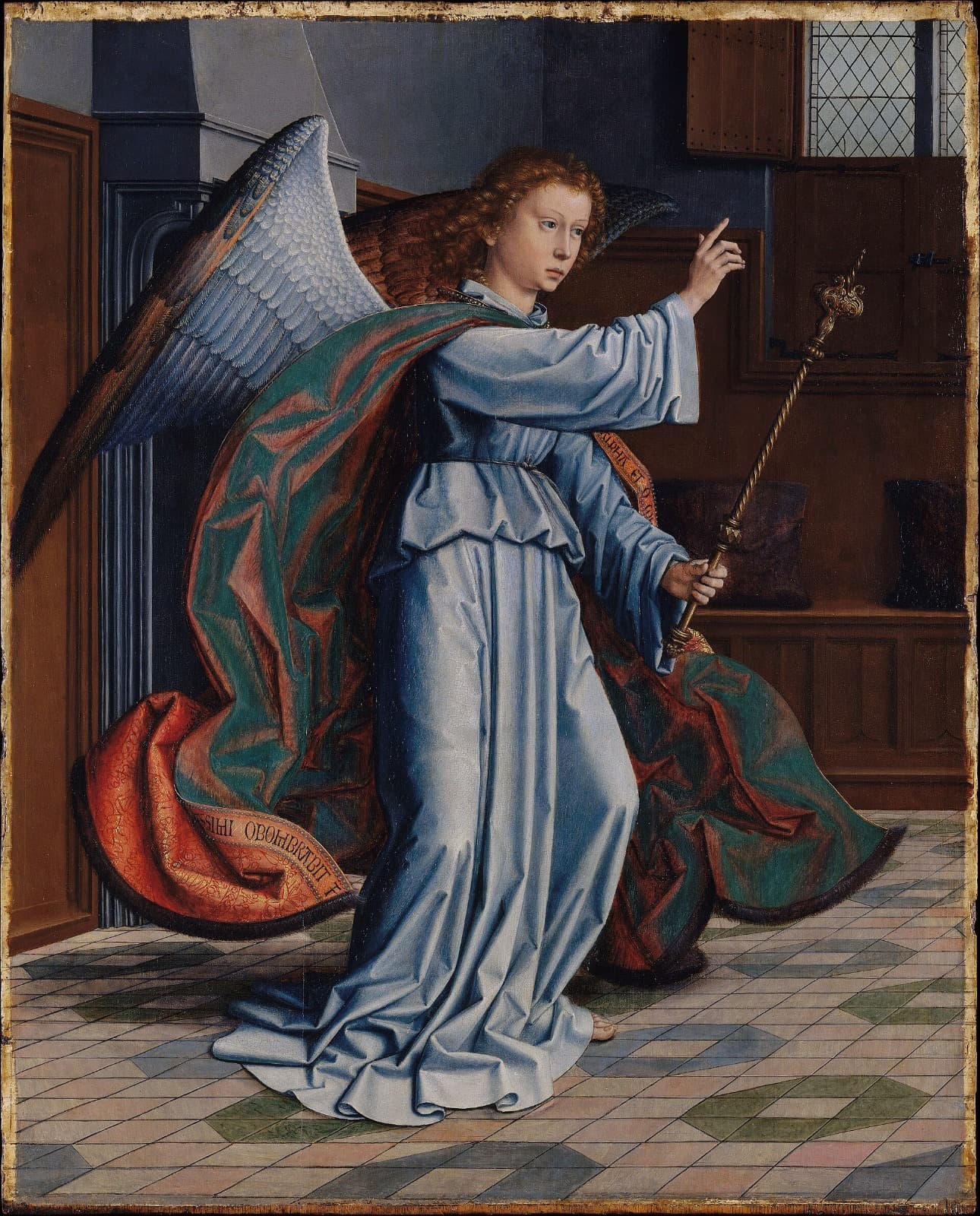
This is only the angel. Mary received the message on a companion panel, and the two now hang together as a pair.
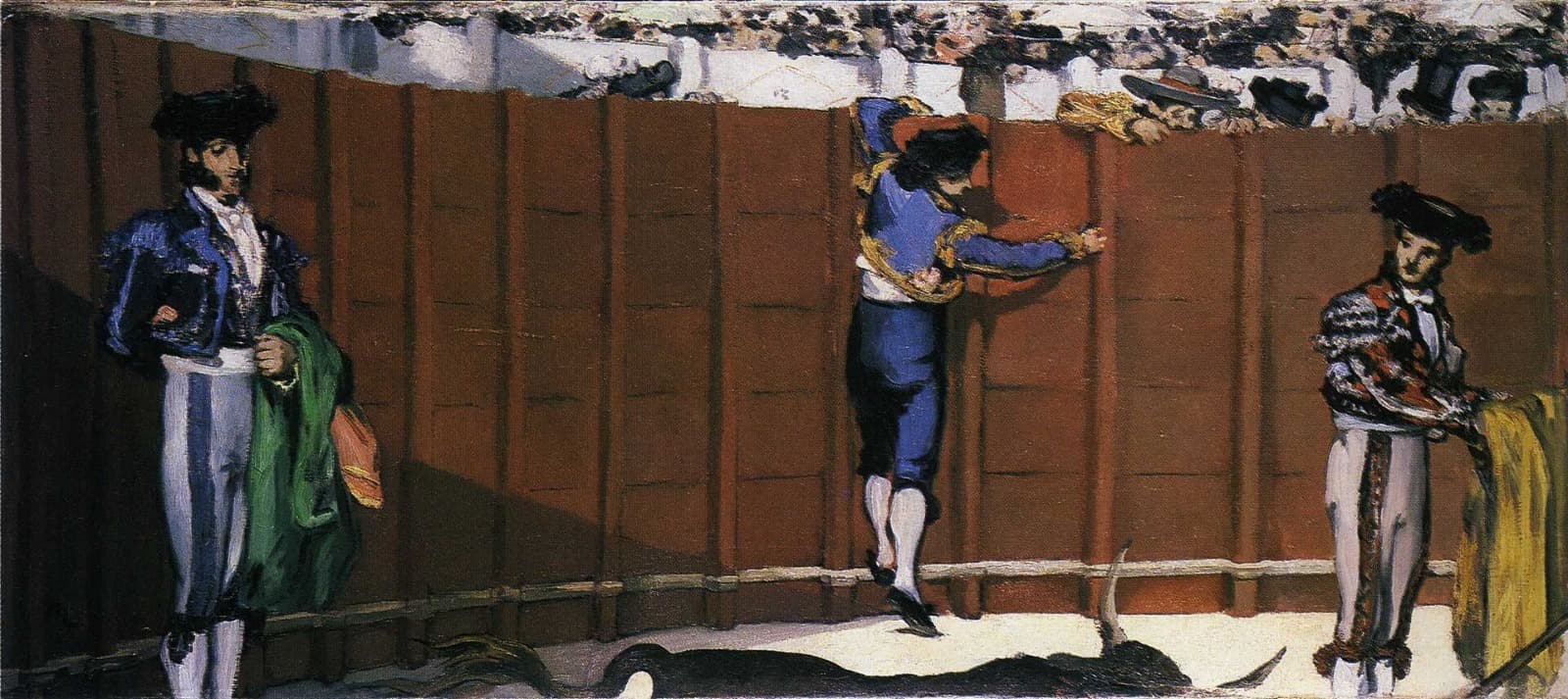
Manet cut up the original canvas because he was unhappy with it, and this is one of the surviving pieces.
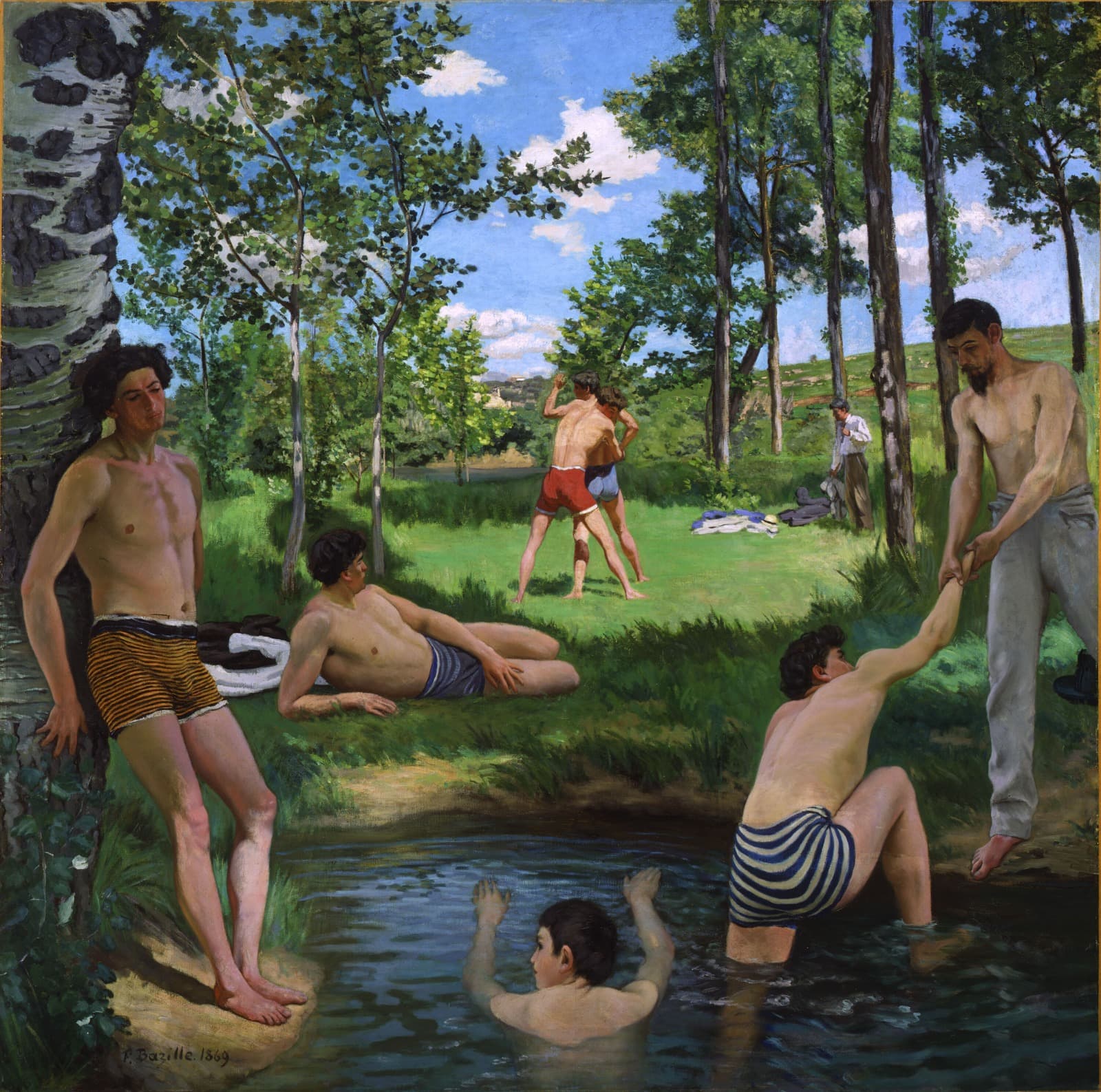
Young men lounging on a riverbank in dappled light, the oldest subject in painting given ordinary modern bodies and modern poses.
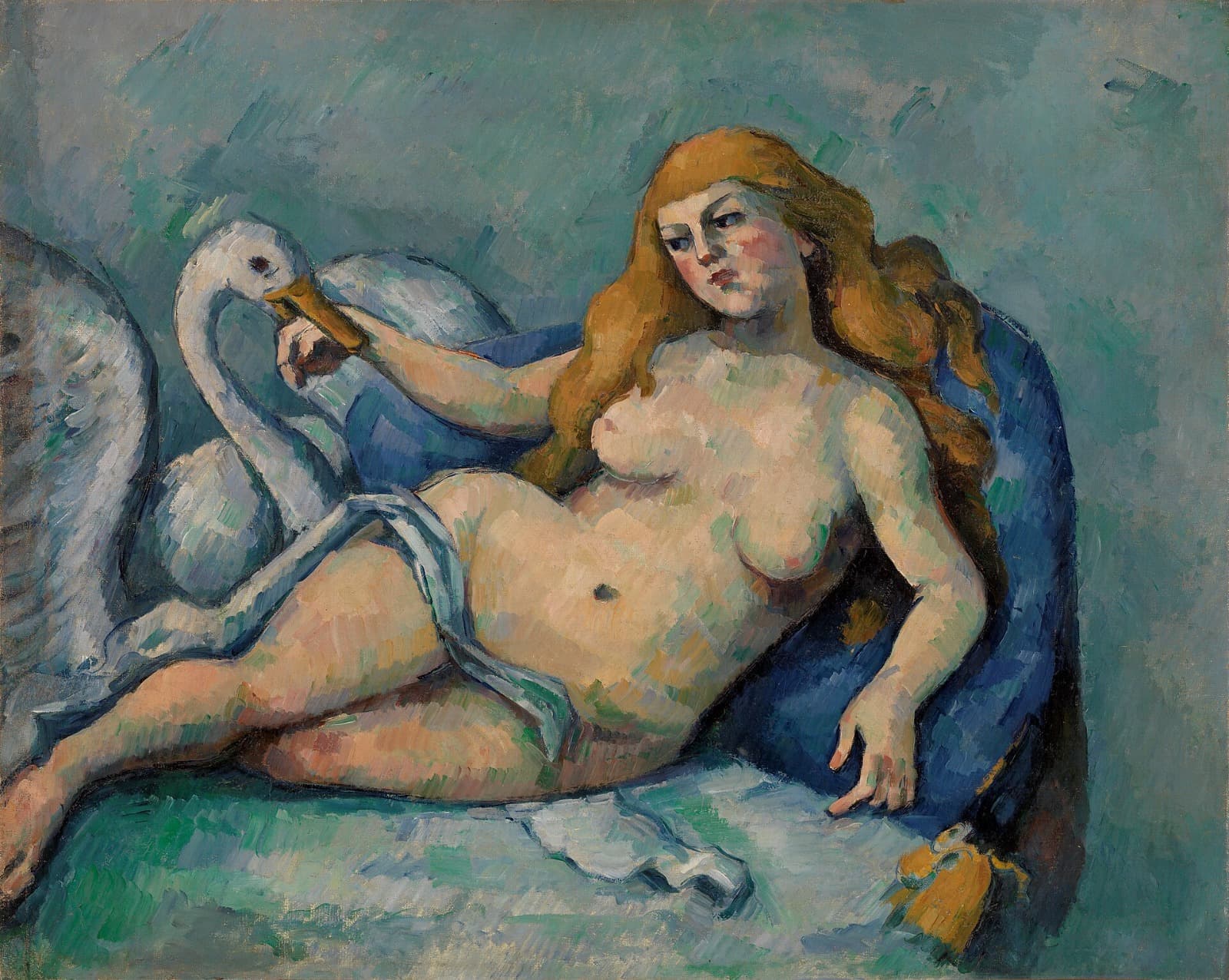
The swan nips her hand and Leda barely reacts. Cézanne cared about the planes of the body, not the story.

A regiment posed around its cannon like a group photograph that has gone charmingly rigid. Rousseau was a customs officer painting in his spare time.
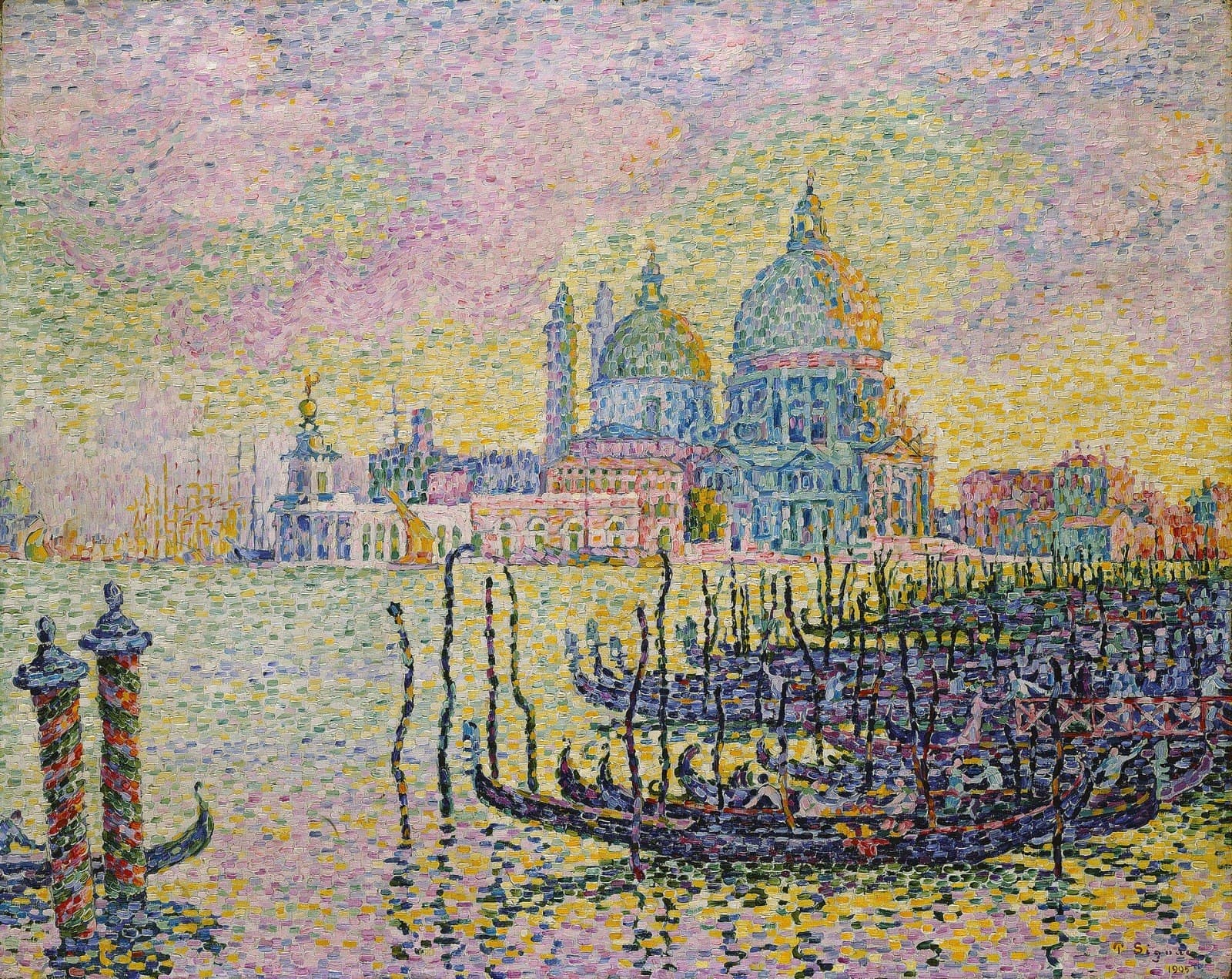
Gondolas on water that has shattered into pink, blue and gold. Signac took the divisionist dot to the most painted view in Europe.

Hot pinks and oranges laid on freely, a year before Cézanne and Picasso's Demoiselles sent Braque off toward Cubism instead.

Beckmann painted the disaster a year after it happened, borrowing Géricault's raft, and it now reads as a rehearsal for the war.
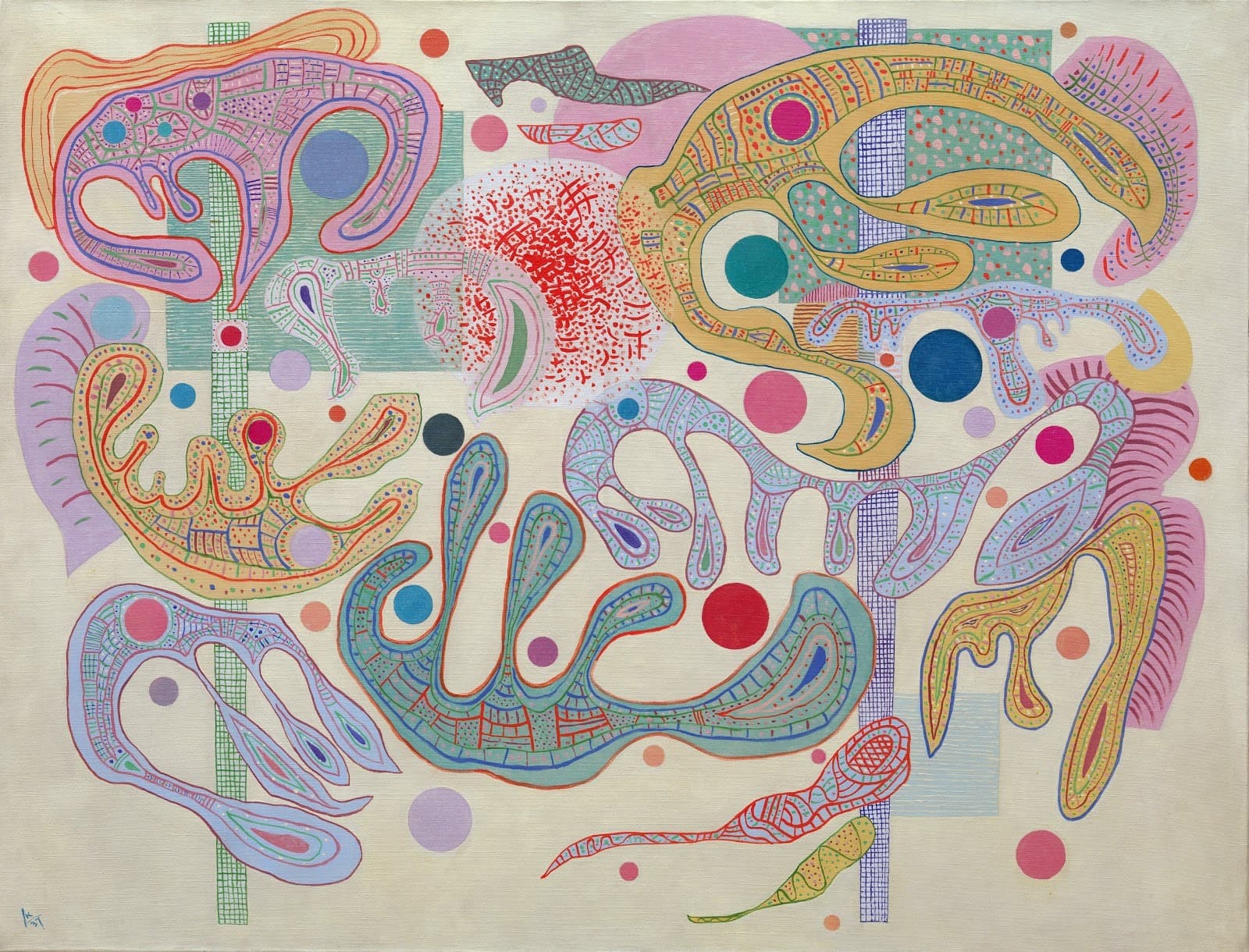
The Bauhaus grids and circles have given way to floating amoebas. Kandinsky in Paris at the end, inventing a biology instead.

The brothers pause with the net still trailing fish through green water, caught between the work and the man on the shore.

A man rides a wine barrel while swimmers chase a floating pie. It was sawn off the bottom of the Ship of Fools.
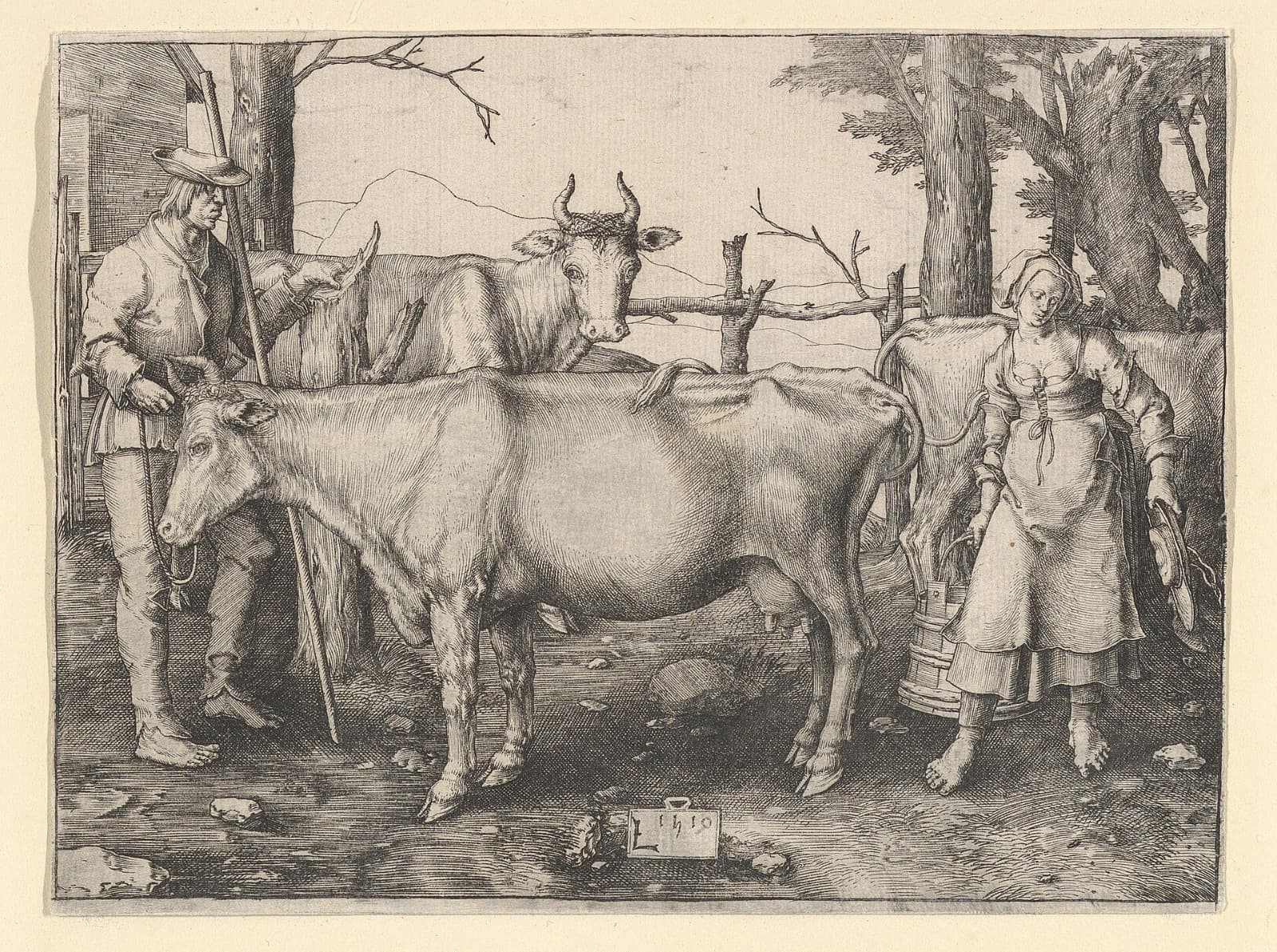
A milkmaid, a herdsman and two cows, and almost nothing happening. One of the first prints to take peasants as a subject worth the burin.

You take in the whole river valley before you notice the sower at the bottom corner, or Christ preaching from a boat behind him.

Christ preaches from a hilltop and is almost too small to find. Claude was really painting the hills, the water and the distance.

Washington leans on a cannon with captured flags at his feet. Peale knew him and served in the war, so this is the man.

A woman in a white corset seen from behind, painted so loosely the picture seems to stop just before the image settles.

A man and a white horse in a Tahitian grove, painted on Gauguin's first stay, flat and warm and looking for a paradise.
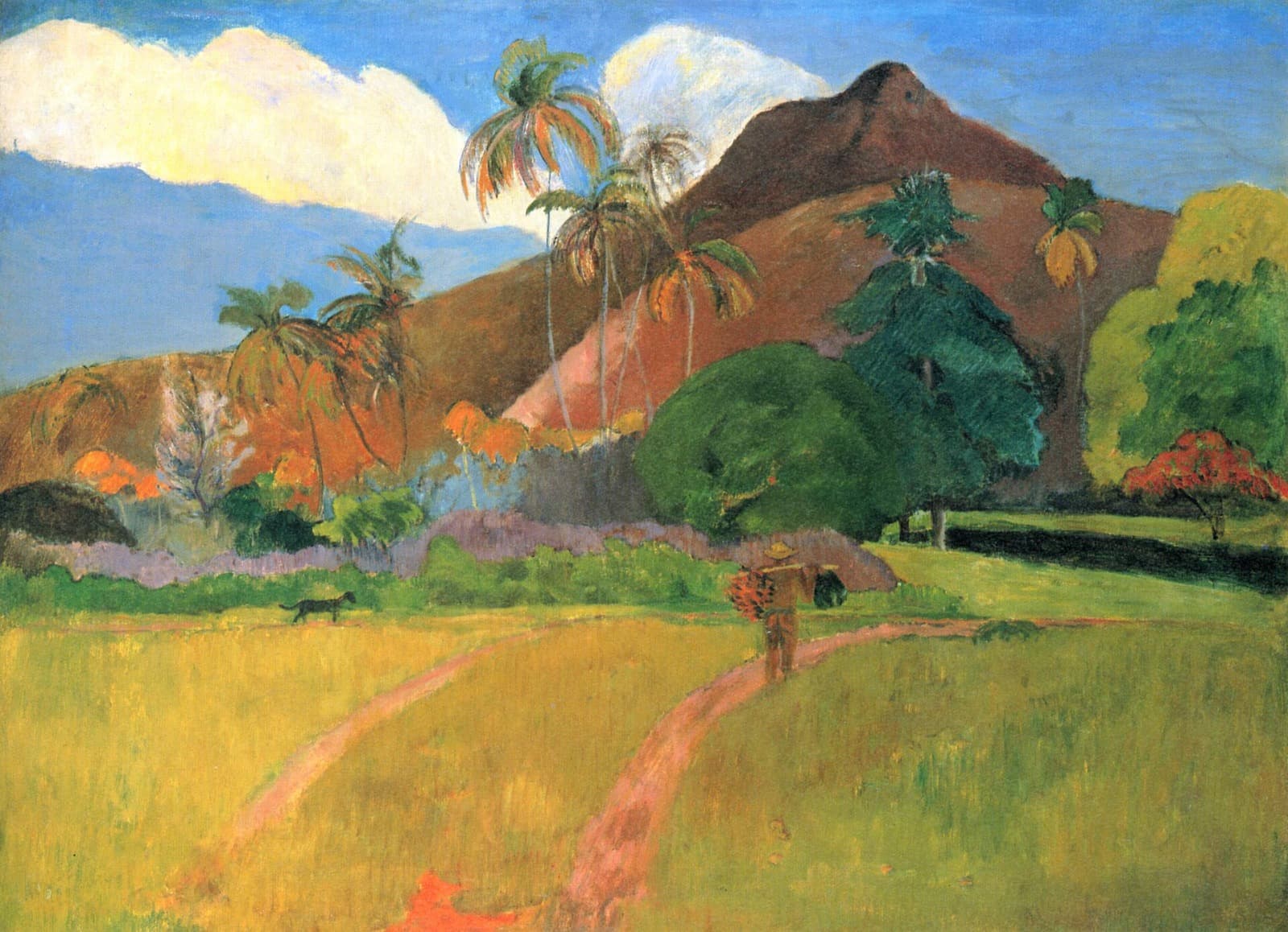
Green and rose slopes flattened into bold shapes, with rather less interest in what the island actually looked like than in the color.

A woman sits on the bank and puts her bare feet in the water, the whole stream broken into flickering touches of color.

Boats and masts broken into tilting green and brown planes, painted while Braque and Picasso were building Cubism out of Cézanne.

The deer have almost dissolved into the crystalline planes of the wood, which is exactly what Marc was after.

Beckmann came out of the war traumatized and painted a Christ so emaciated and angular that no consolation survives the picture.

Red New Mexico hills roll across the canvas with a few flowers brought right up close, the vast and the fragile in one frame.
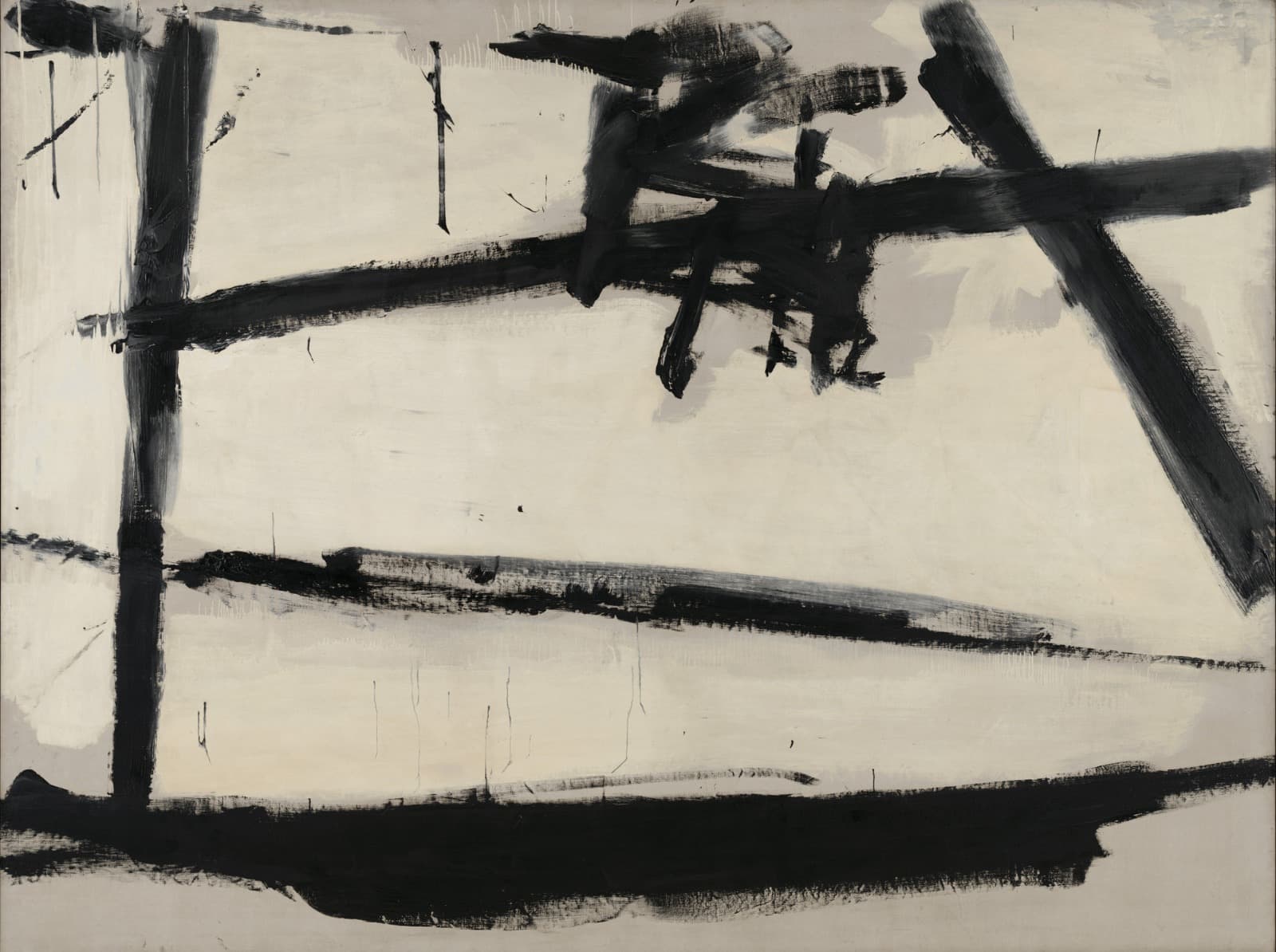
Black bars crossing a white ground, enlarged from small ink sketches so the speed and weight of the arm survive the scaling up.

Dalí went back to his own melting watches and broke the ground beneath them into floating bricks, for the atomic age.
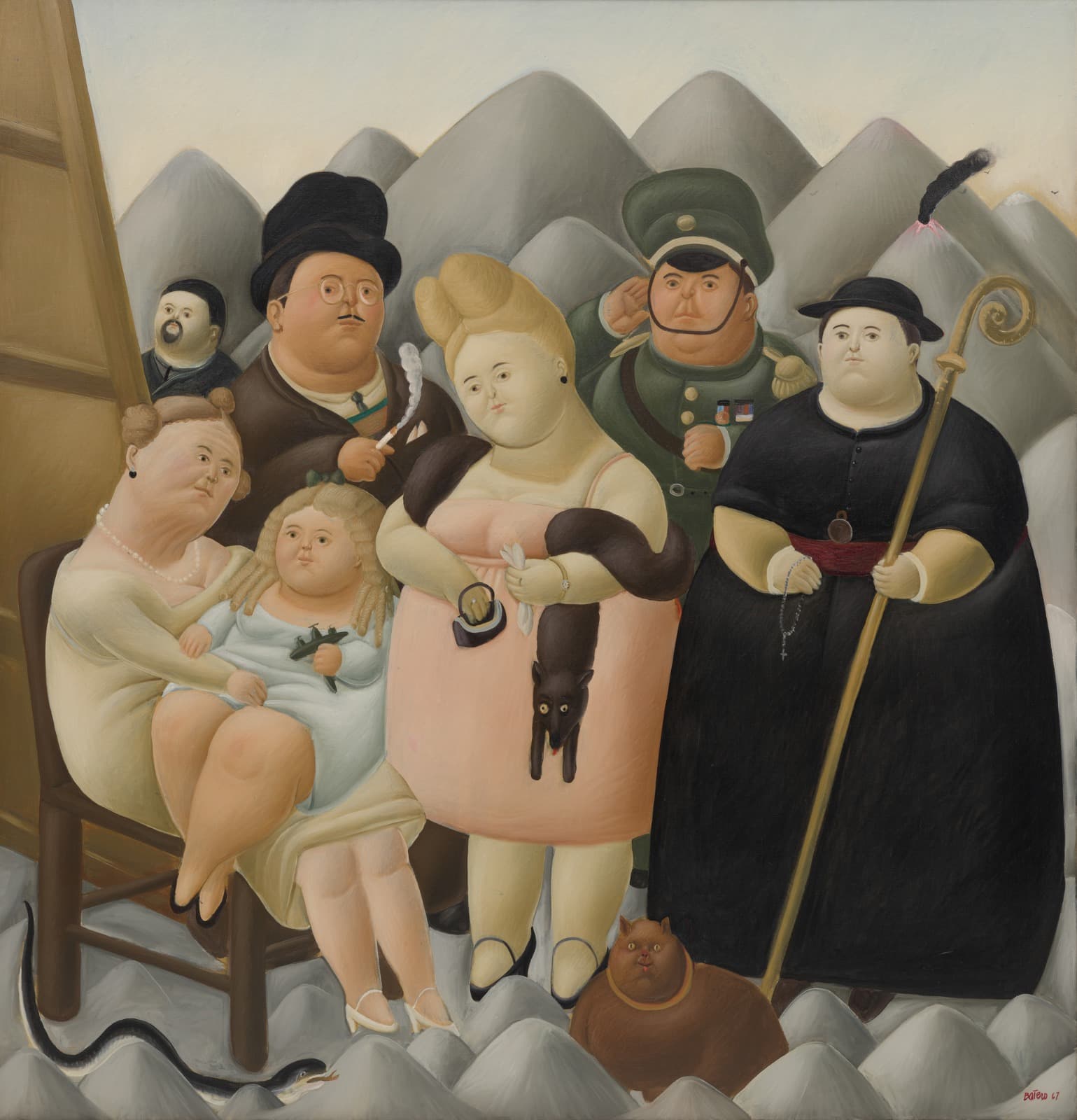
President, wife, child, bishop and general, all inflated into balloons and posed with great solemnity in front of a volcano.

Eden on one side of the rock arch, blasted wilderness on the other, and Cole lets the landscape carry the entire moral argument.

The Devil offers all the kingdoms of the world, rendered as tiny gold-edged walled towns scattered down the slopes, and is refused.
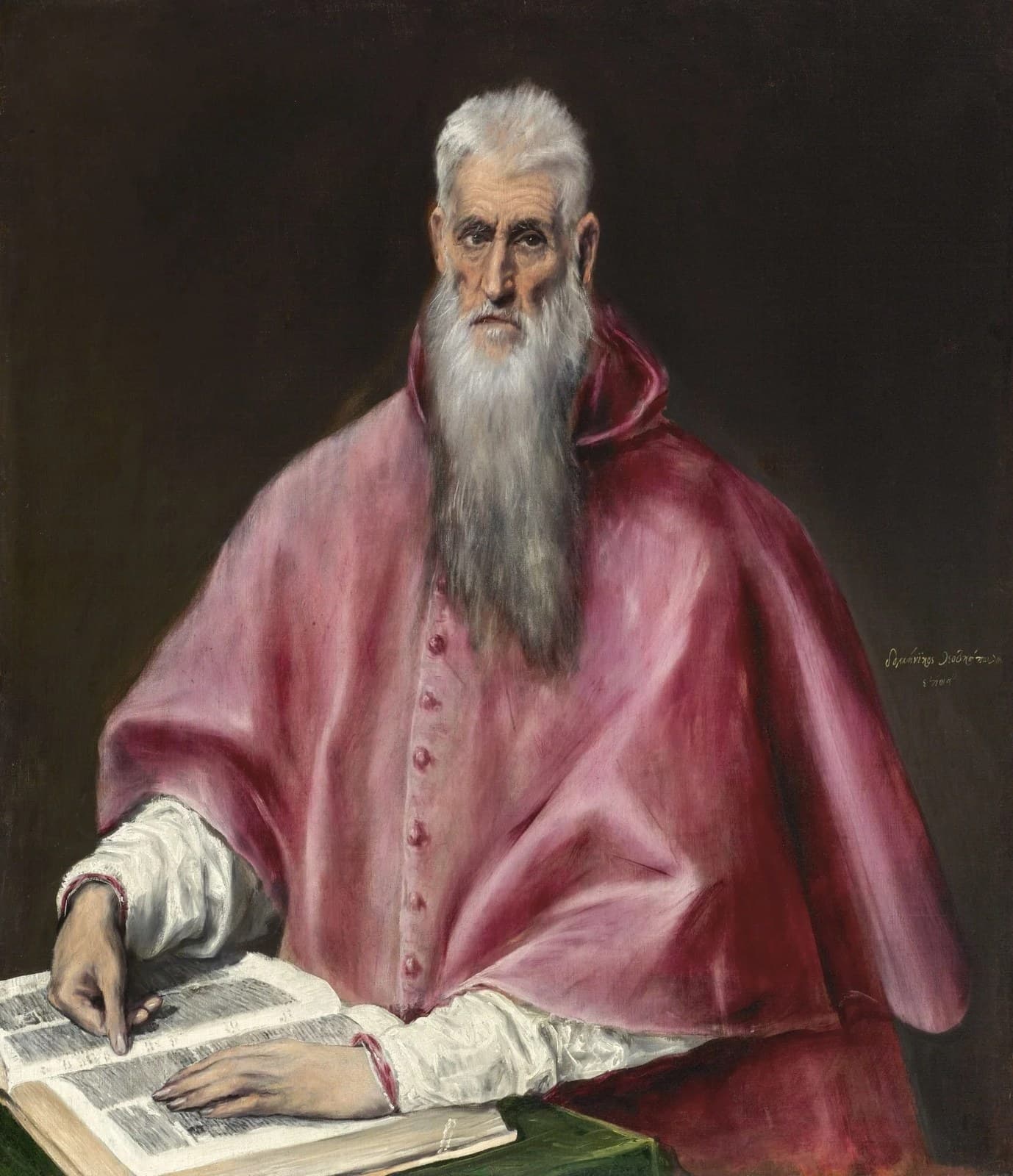
Not the desert hermit but the Doctor of the Church, in cardinal's red with one long hand resting on his own translation of the Bible.

Rivermen break off work for a card game on a flatboat, arranged with a stillness that lifts the scene toward history painting.

Plain village houses on a hillside, built in solid earthy blocks. Pissarro refused to prettify the countryside and gave it structural weight instead.