
Christ Bearing the Cross, with a Dominican Friar
1360 · The Frick Collection, New York City
Christ looks back over the cross at a tiny Dominican friar kneeling in the corner, the patron drawn into the road to Calvary.
★ 3.2
 skopia
Christ looks back over the cross at a tiny Dominican friar kneeling in the corner, the patron drawn into the road to Calvary.

The Child reaches up to grasp the edge of his mother's veil. Ugolino followed Duccio more closely than anyone else did.

No bigger than a page, and one of very few works securely given to Cimabue, whom Dante named the best painter of his day.

The light in the darkened room seems to be coming off Christ himself, painted when religious art had largely gone out of fashion.
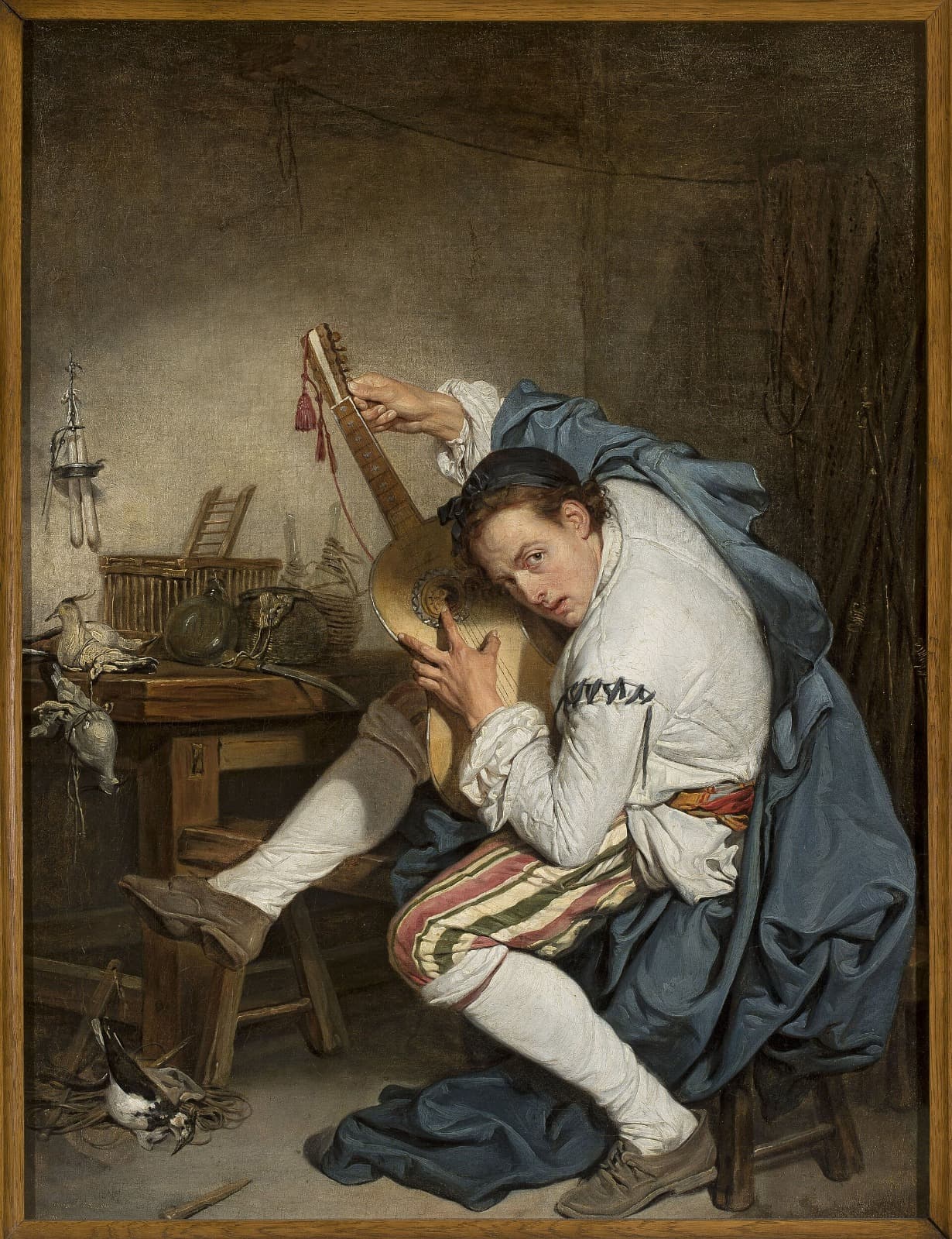
A young man glances up from his guitar mid-song. Greuze usually painted tearful moral lessons, and here he simply does not.

Overbeck and the Nazarenes lived almost as monks in Rome and painted deliberately like the Italians before Raphael. This is the program.
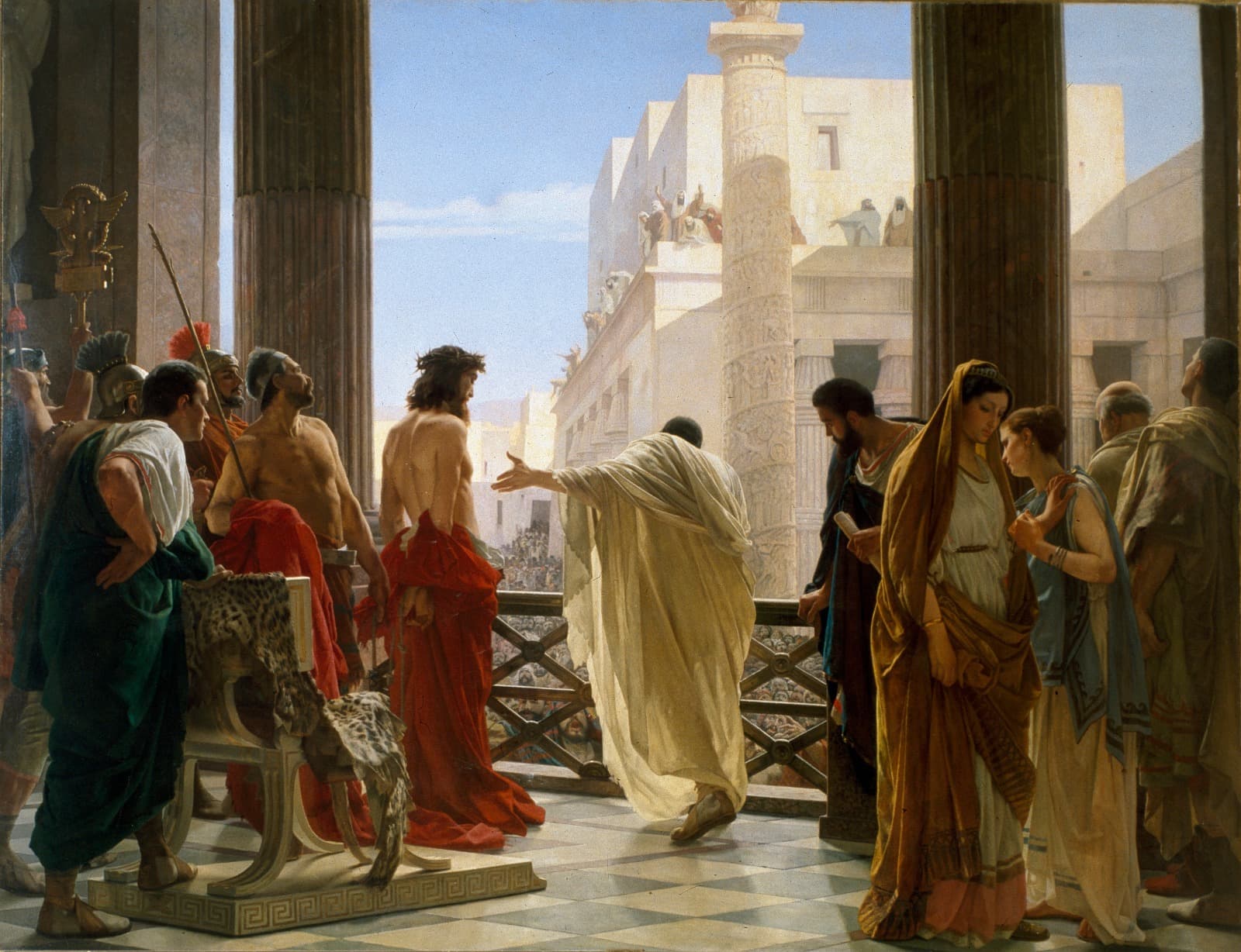
We are standing behind Pilate, looking out over his shoulder at the crowd, which puts us among the officials rather than the mob.
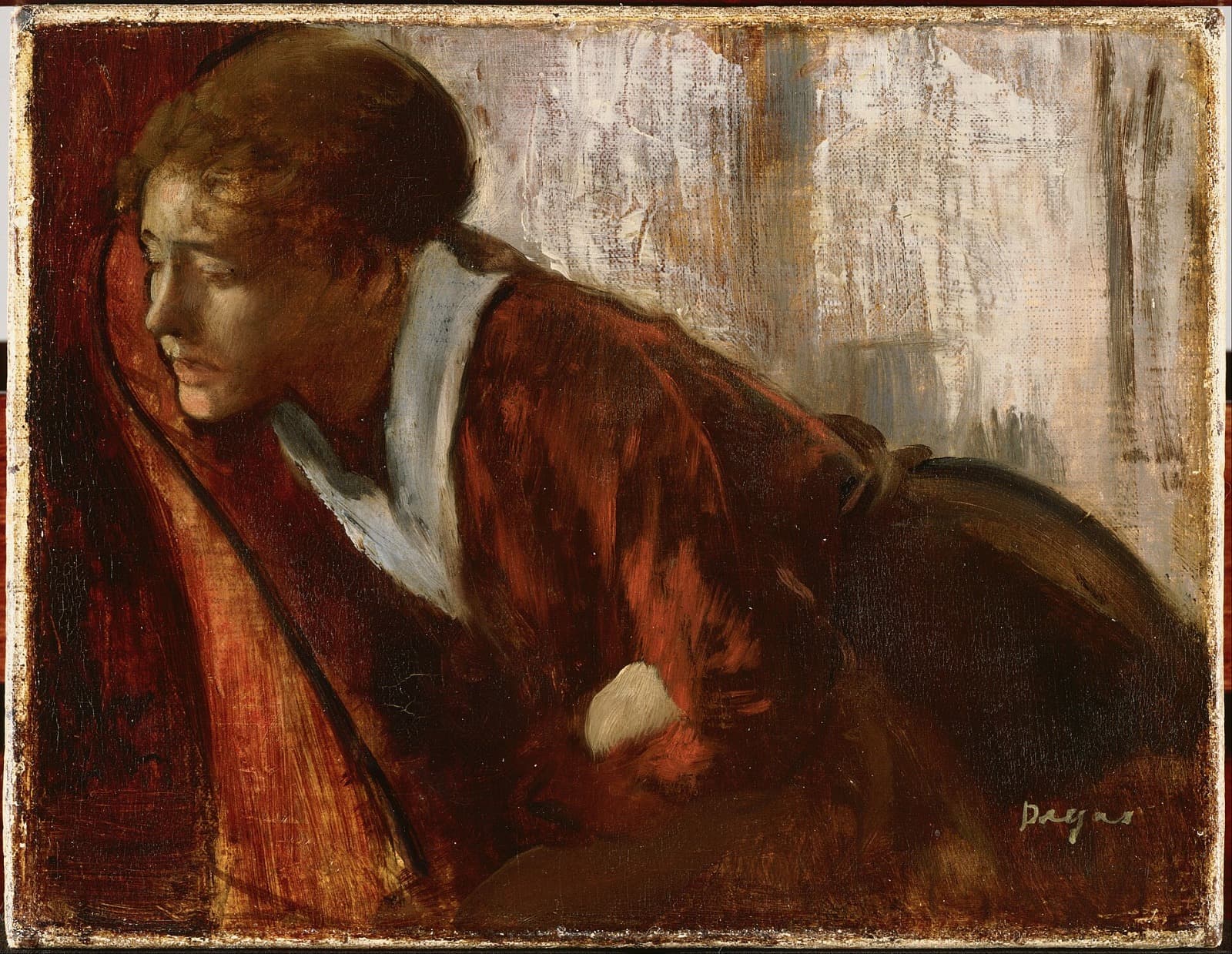
A woman slumped back on a sofa, and Degas reads the whole state of mind off the slope of her shoulders.
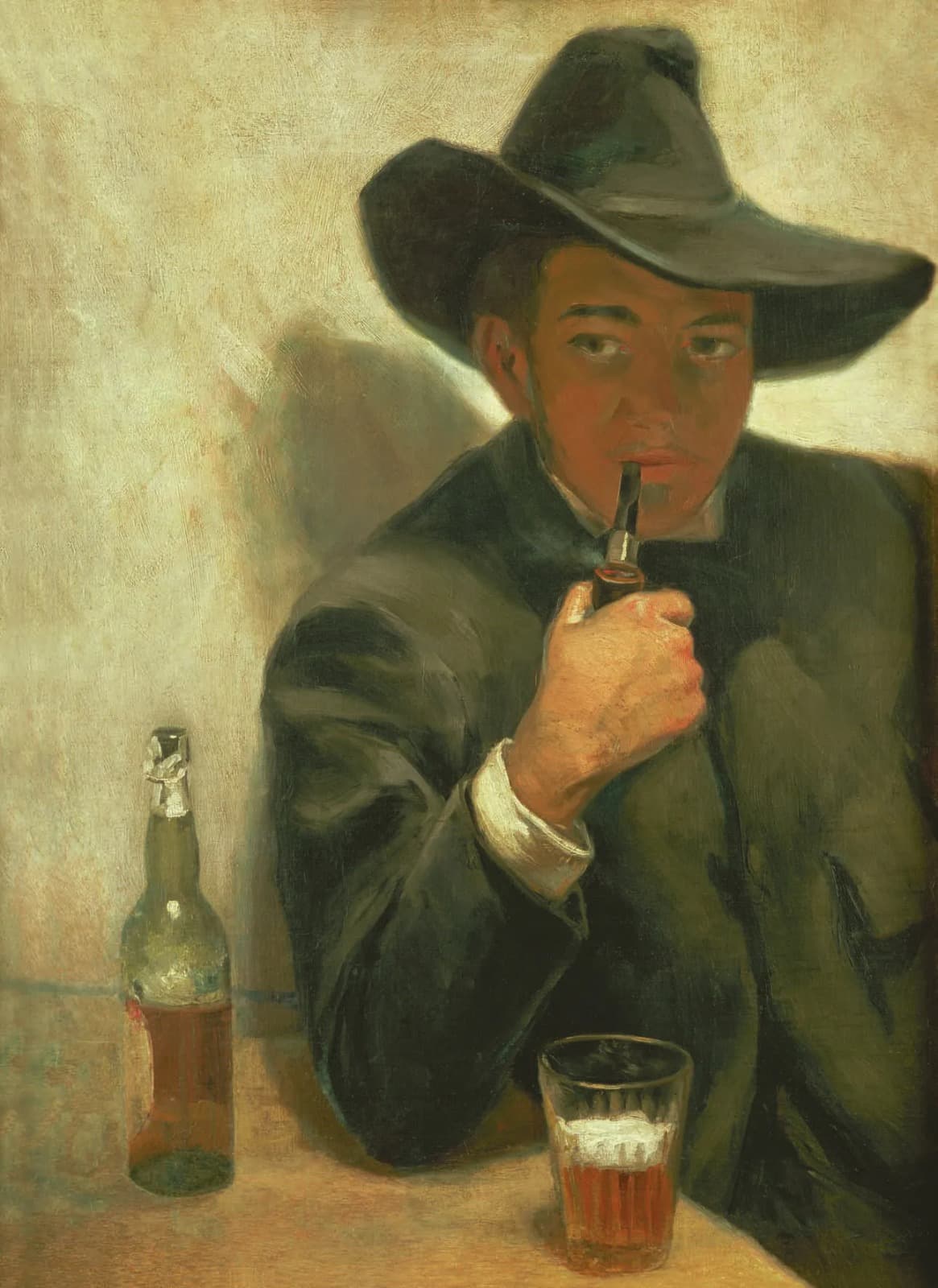
Rivera as a student in Europe, years before the murals, still working inside the academic tradition he would later blow up.
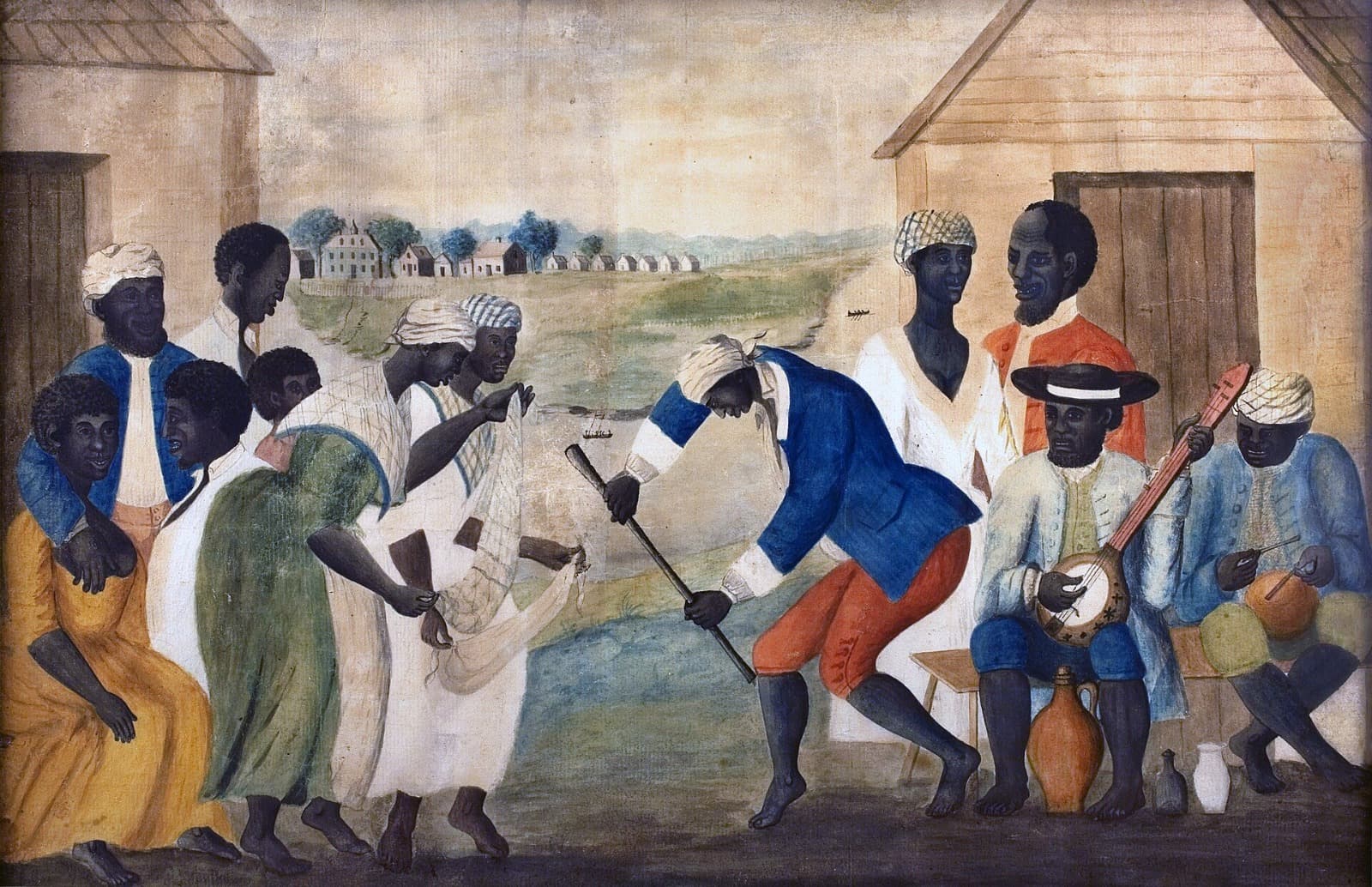
Enslaved people dancing and making music beside their cabins, with African instruments and dress. Attributed to a South Carolina slaveholder.
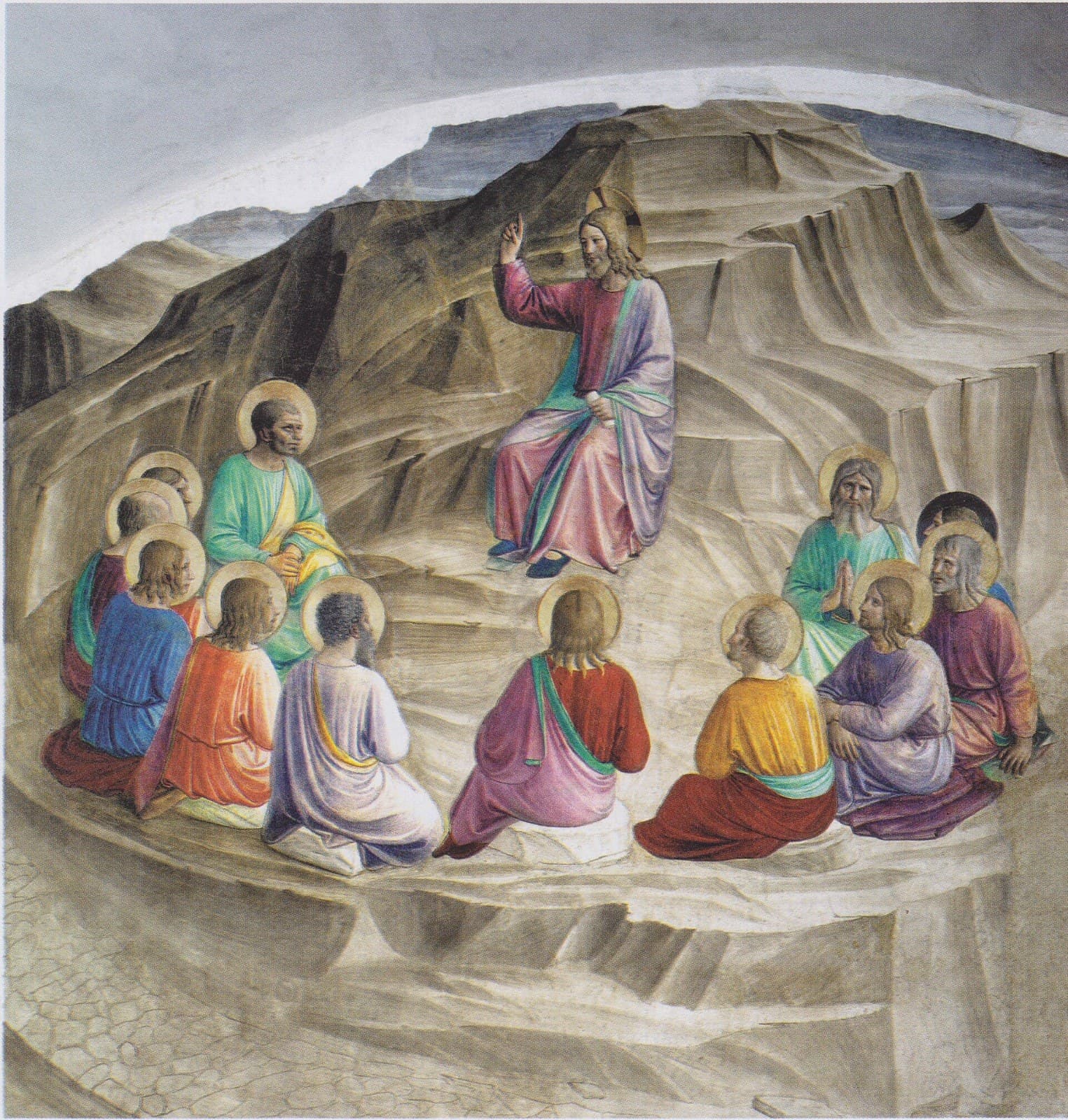
Painted on the wall of a friar's cell at San Marco, stripped of gold and ornament so that it settles the mind rather than dazzles.

John stands lost in his book, wrapped in red cloth massed like masonry. One wing of an altarpiece now scattered across five cities.
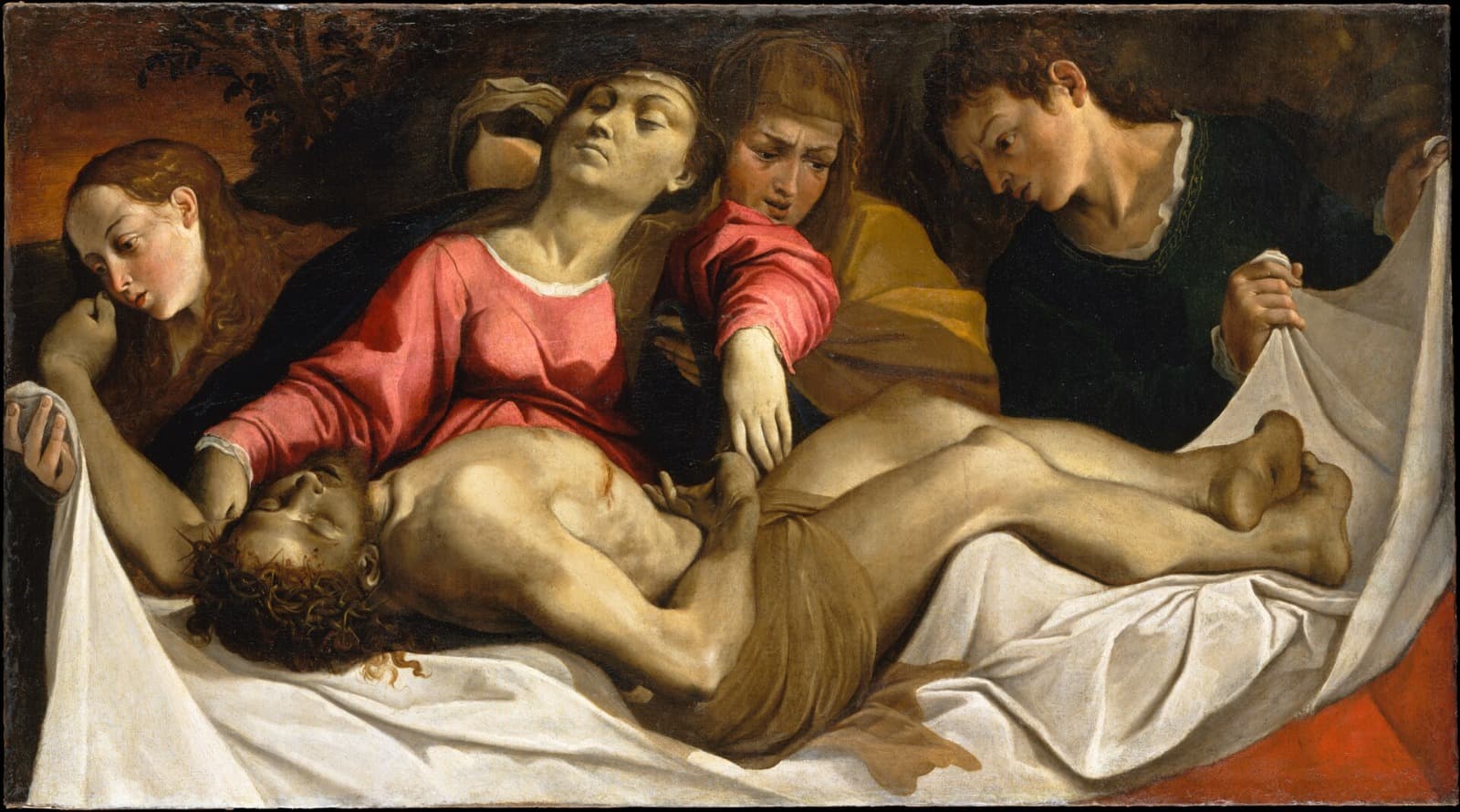
The body pushed close to the viewer and lit in sharp pools. The Carracci taught a generation to weld grandeur to direct feeling.
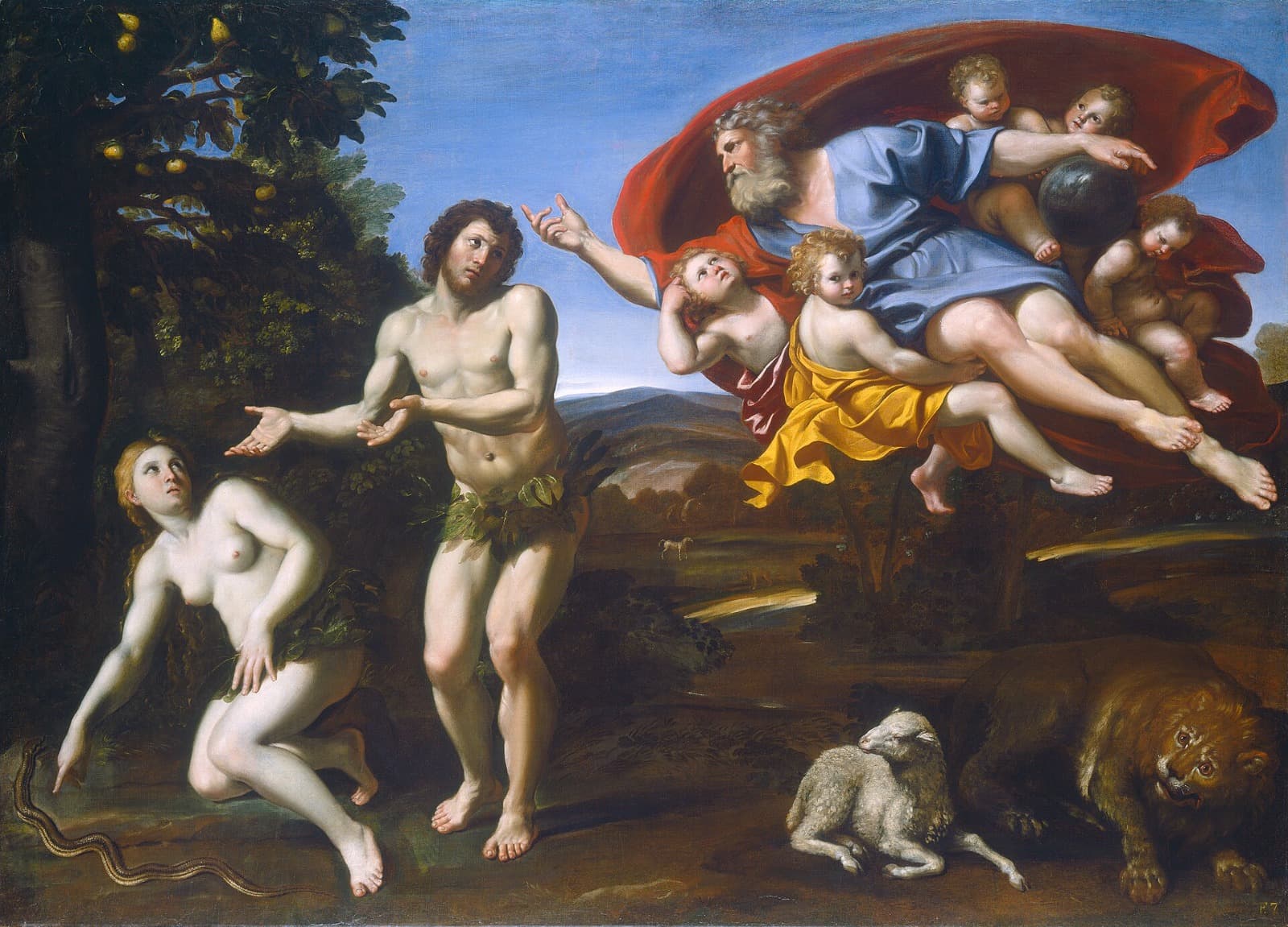
Adam points at Eve, Eve points at the serpent, and the first sin turns into an ordinary comedy of passing the blame.

Five have kept their lamps lit and five have not, and the ones who have not are pleading. An avenging angel waits above.

One of the Impressionist canvases he owned hangs on the wall behind him. Caillebotte's money and his bequest kept the movement alive.
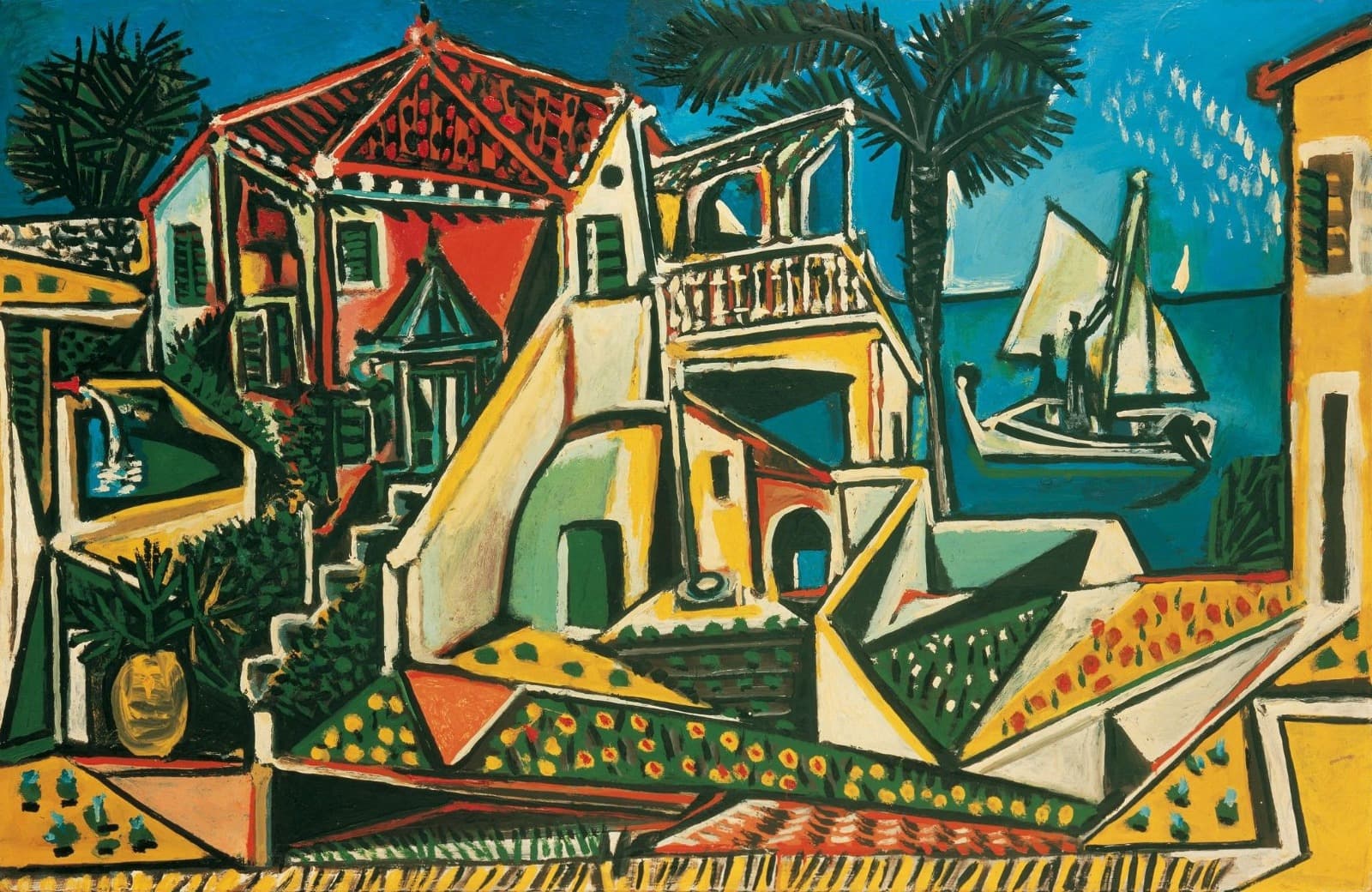
The whole coast reduced to a few flat zones of color and some quick line. Picasso old, settled in the south, and enjoying himself.
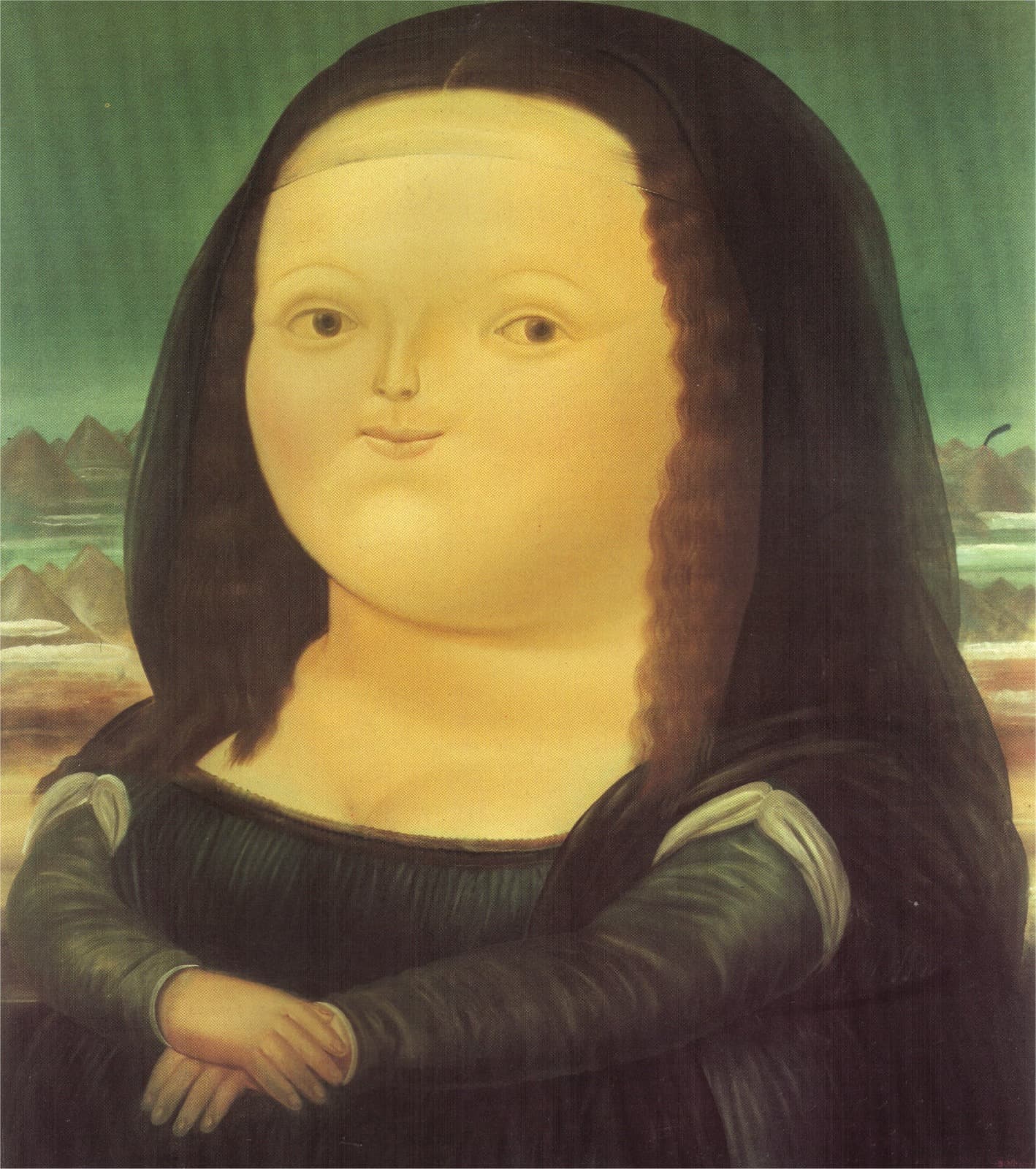
Botero inflated the most famous face in the world until the little mouth vanished into acres of cheek. Affectionate rather than cruel.
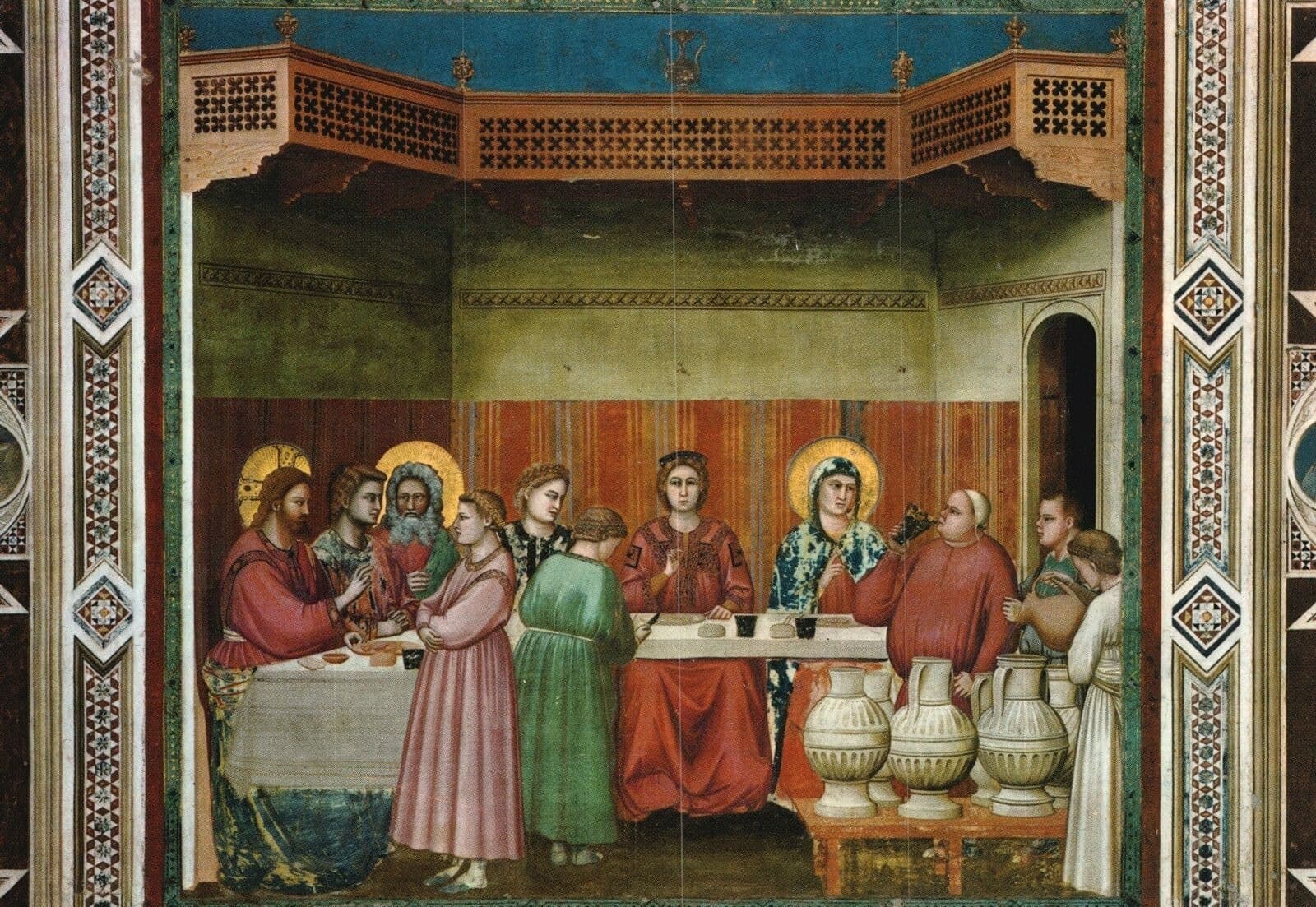
A steward tastes from a bowl and a portly servant tends the jars, and the miracle goes by almost without anyone noticing.
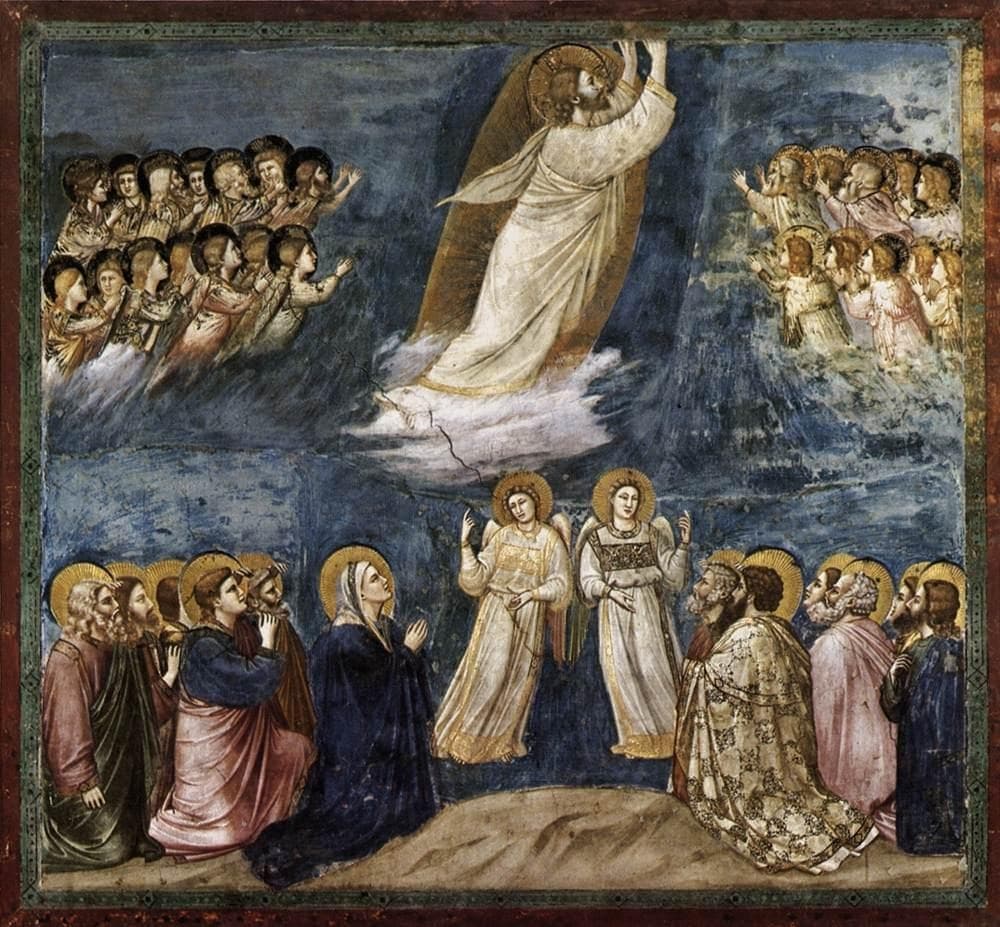
Christ's fingertips cross out of the human part of the picture and blur into light, which is the whole event in one detail.

Christ turns up dressed as a pilgrim with a staff and a traveler's pouch, and the two disciples still have no idea who he is.

Christ stands to place the host on each tongue exactly as a priest does at Mass, in a bare cell-like room with stools.
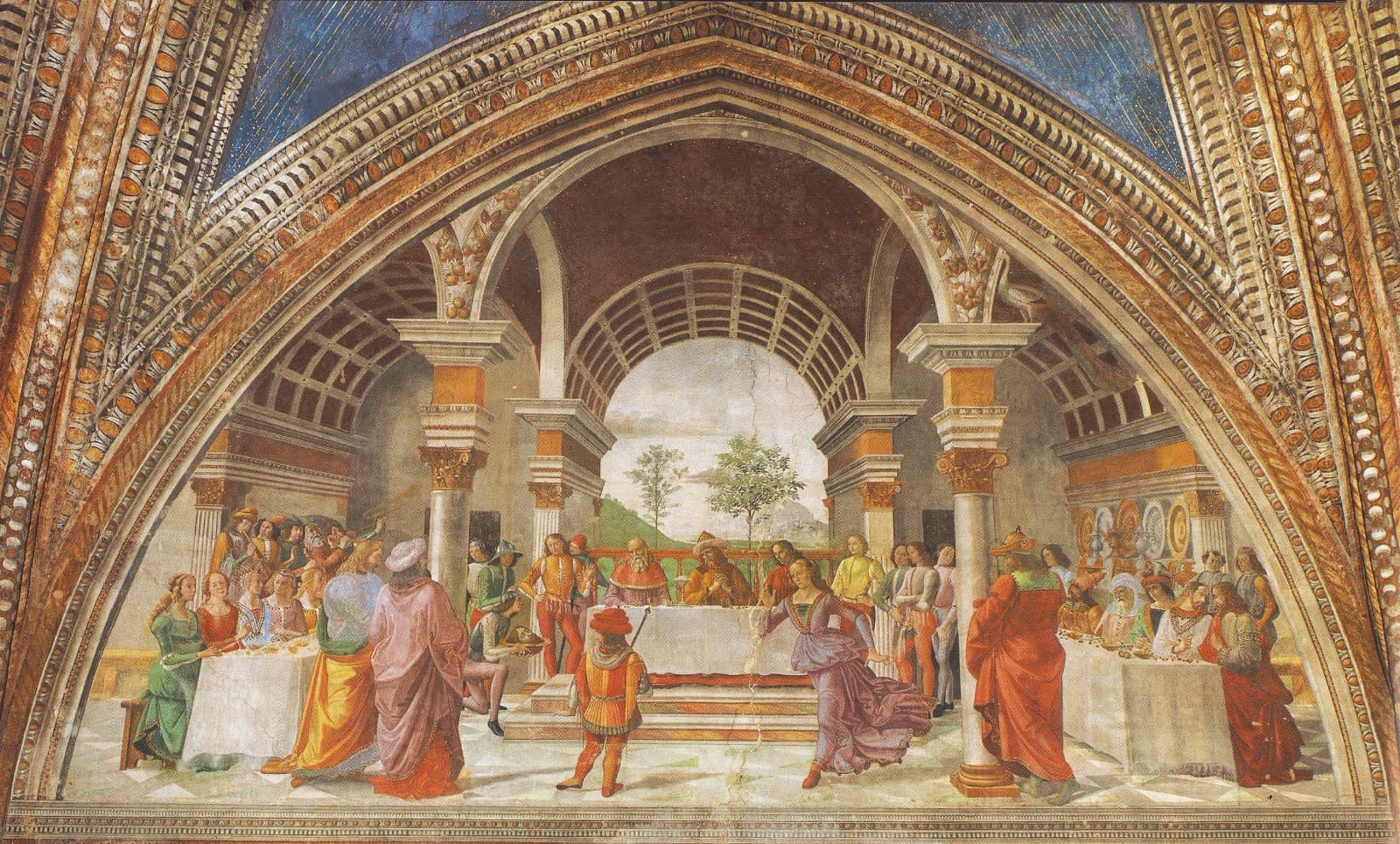
The head arrives on a platter inside a serene sunlit loggia full of well-dressed Florentines, many of them the family who paid.

Late Botticelli, with the early lightness gone tense. He had fallen under Savonarola's spell and his religious pictures never relaxed again.

Gaslight in the windows of a new brick storefront on an empty Tokyo street. Yasuji died at twenty-five and got there before Hopper.
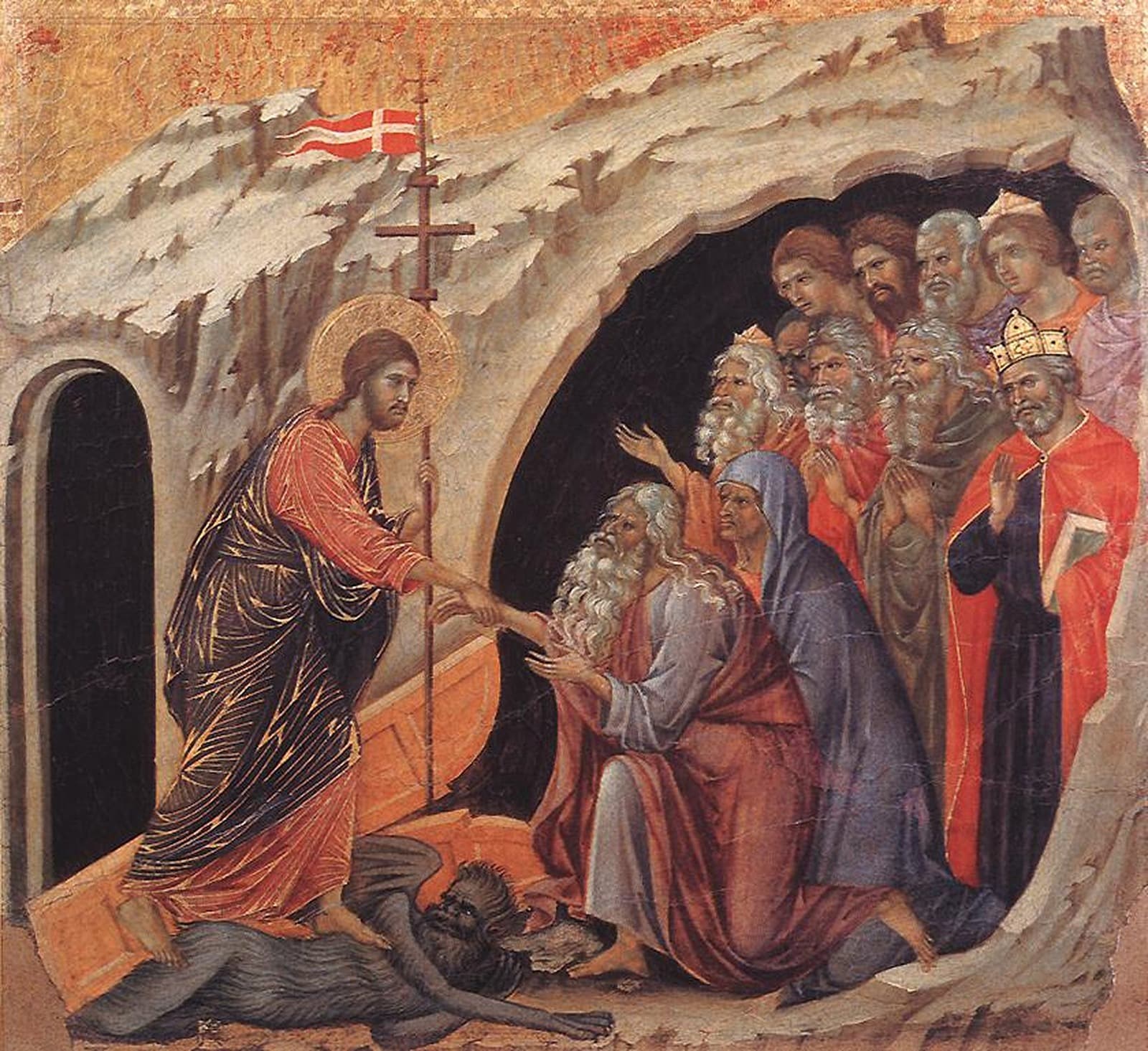
Christ strides into the cave to pull Adam out by the hand, treading on a chained Satan as he goes.
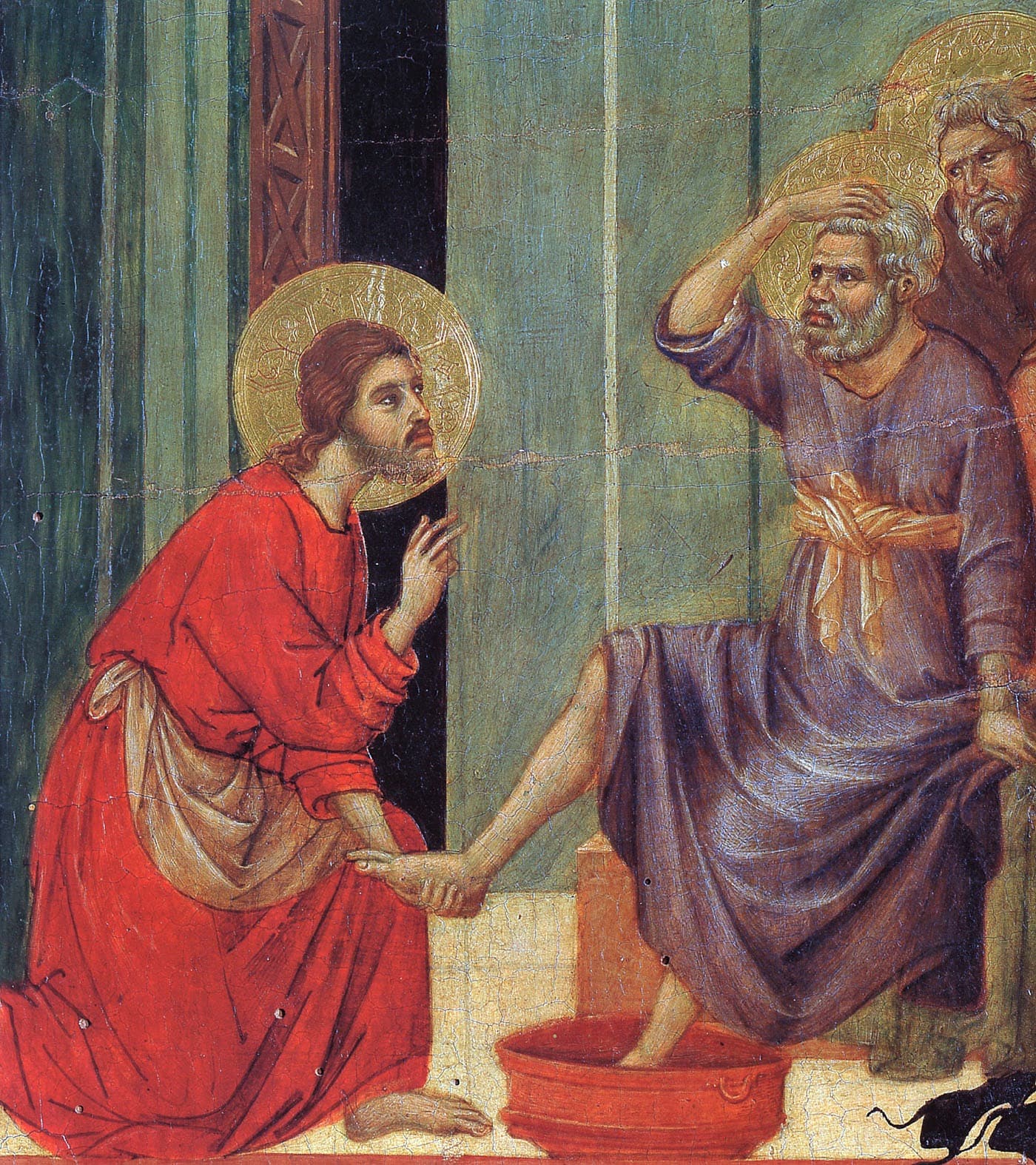
Christ kneels with the basin and Peter, flustered, raises a hand to his own head. Some of the others are already loosening their sandals.
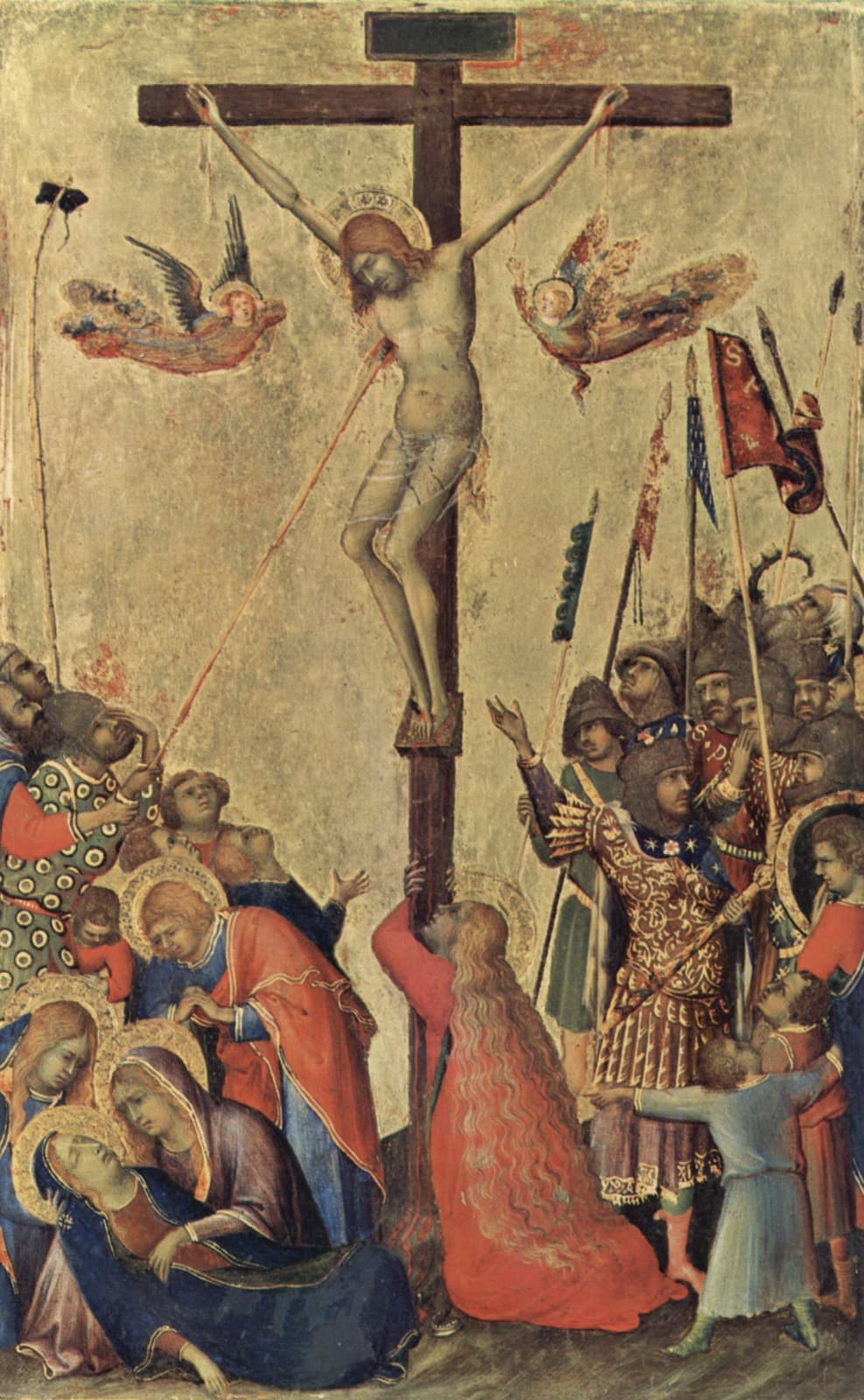
Angels dart and grieve around the cross while the Magdalene, hair loose, kneels to embrace its foot. A leaf from a travelling altarpiece.
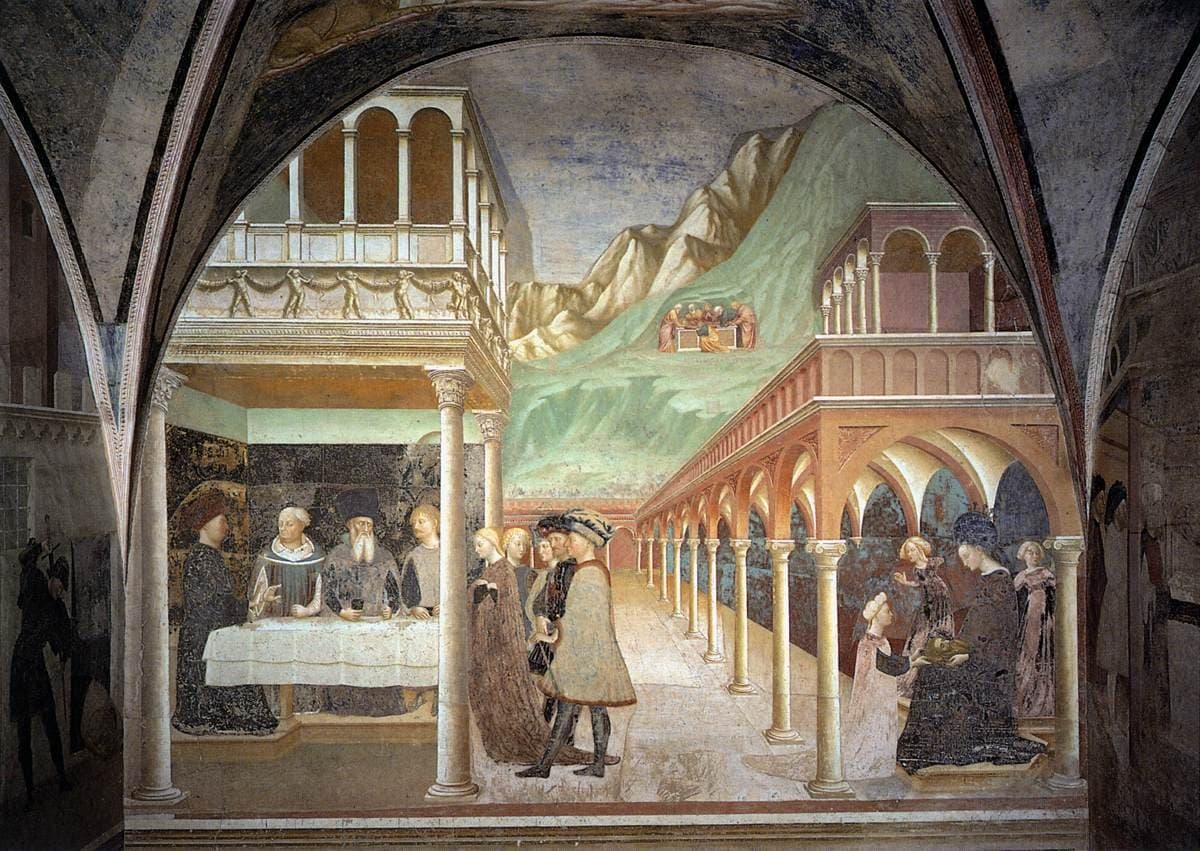
The feast on the left, the severed head delivered on the right, both staged in a colonnade built with Masaccio's new perspective.

Elizabeth sinks down and clasps the pregnant Mary. Ghirlandaio ran the busiest workshop in Florence, and a boy named Michelangelo apprenticed there.
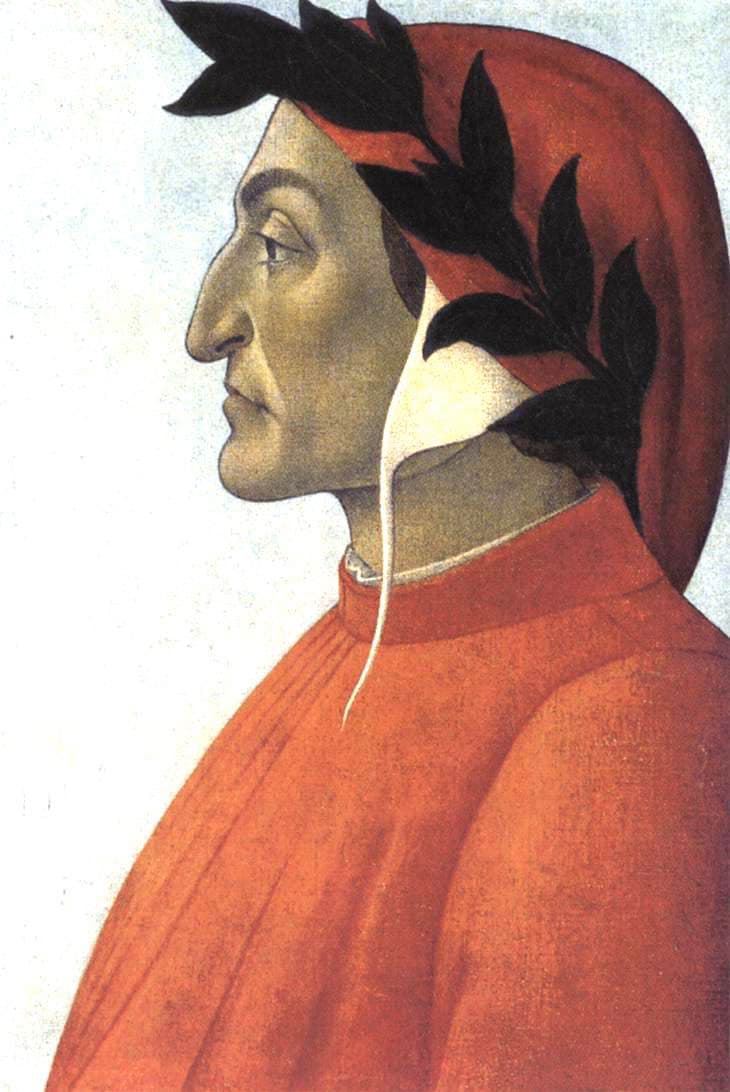
Dante had been dead nearly two centuries, so this is not a likeness but a verdict, struck in profile like a coin.

The tiny kneeling figures in the corners are the Nuremberg family who paid for it, inserted so they could share in the grief.
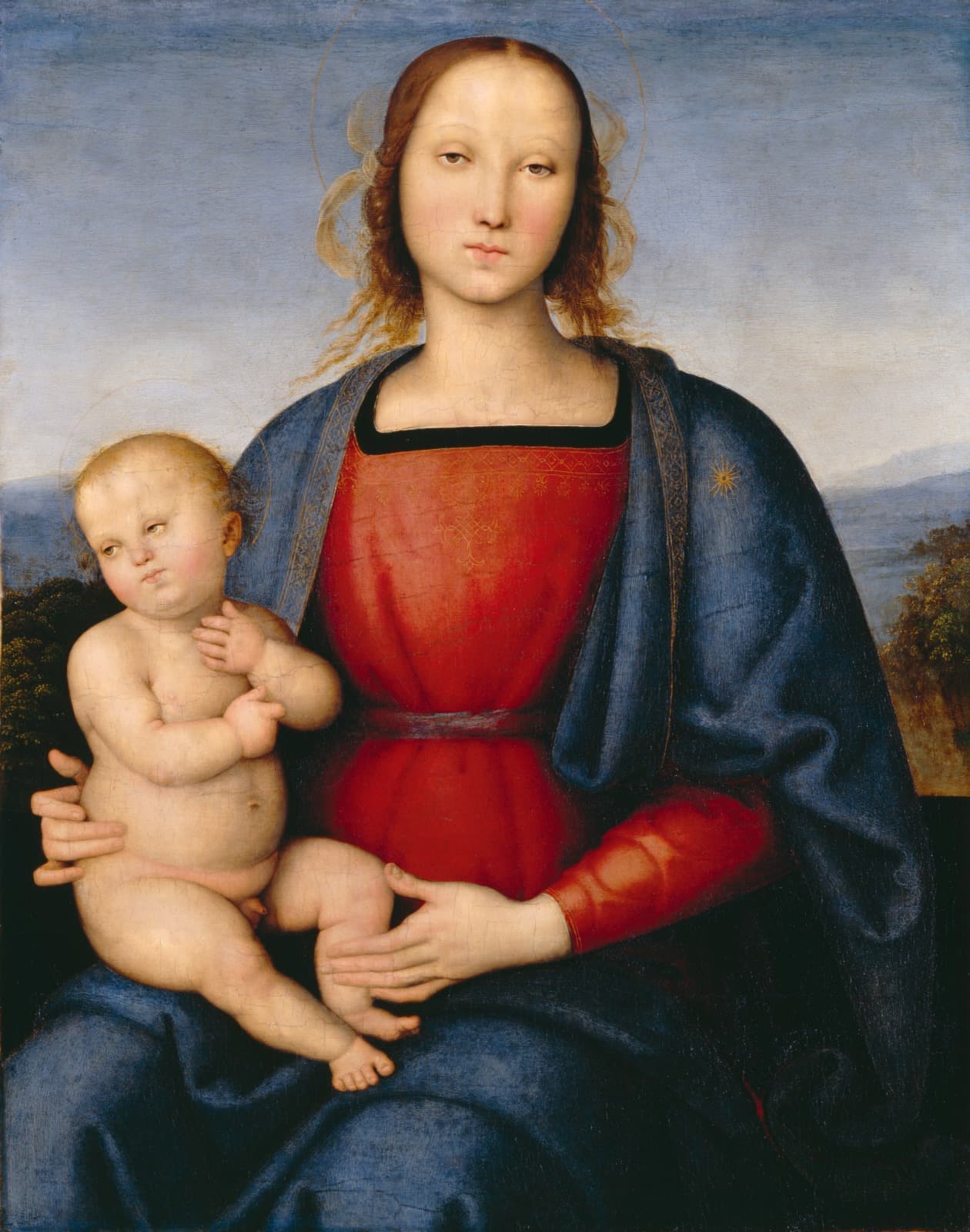
The oval face, the lowered eyes, the Umbrian distance melting into air. Raphael took all of it and then went past it.
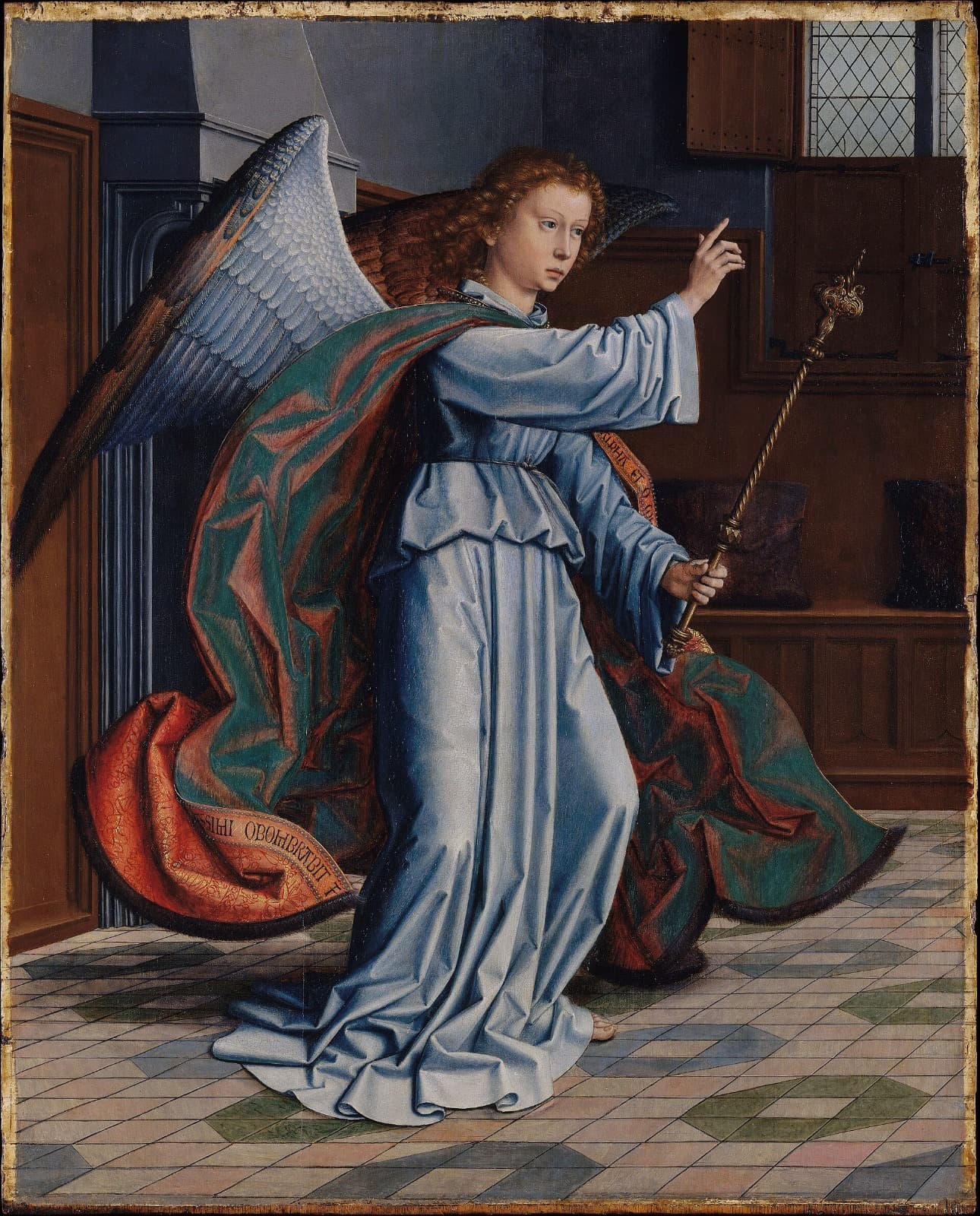
This is only the angel. Mary received the message on a companion panel, and the two now hang together as a pair.

Coins and cards on the table and a great deal of sidelong glancing. Somebody is being cheated, and the intrigue may not be financial.

An inscription gives his age as ninety-three. Dürer drew him in Antwerp and used the head soon after for a Saint Jerome.
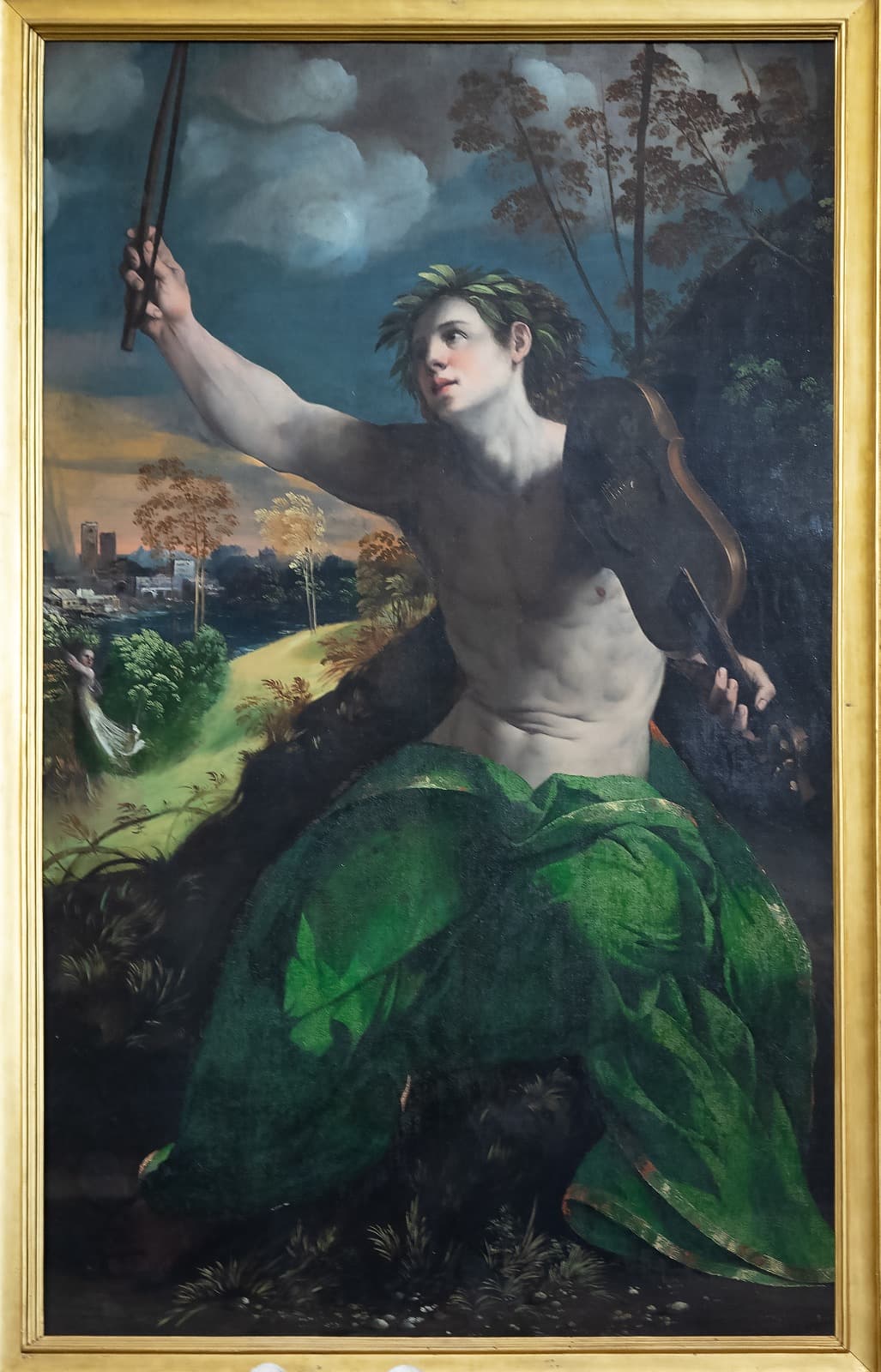
Dossi swapped Apollo's ancient lyre for a modern viol, and Daphne is already sprouting into laurel in the far distance.
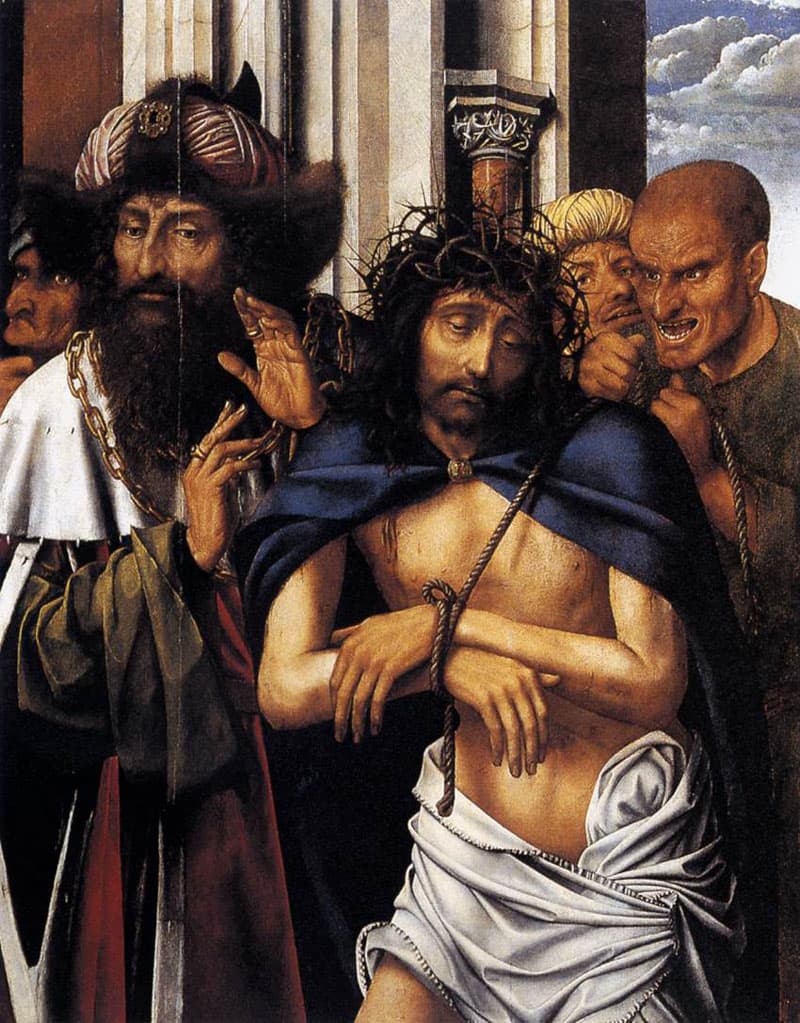
Christ stands with his eyes lowered while the faces around him are twisted into snarls. Matsys made ugliness do the moral work.

Every apostle is named in gold and Judas sits apart with a darkened halo, which makes the panel a teaching aid as much as a picture.
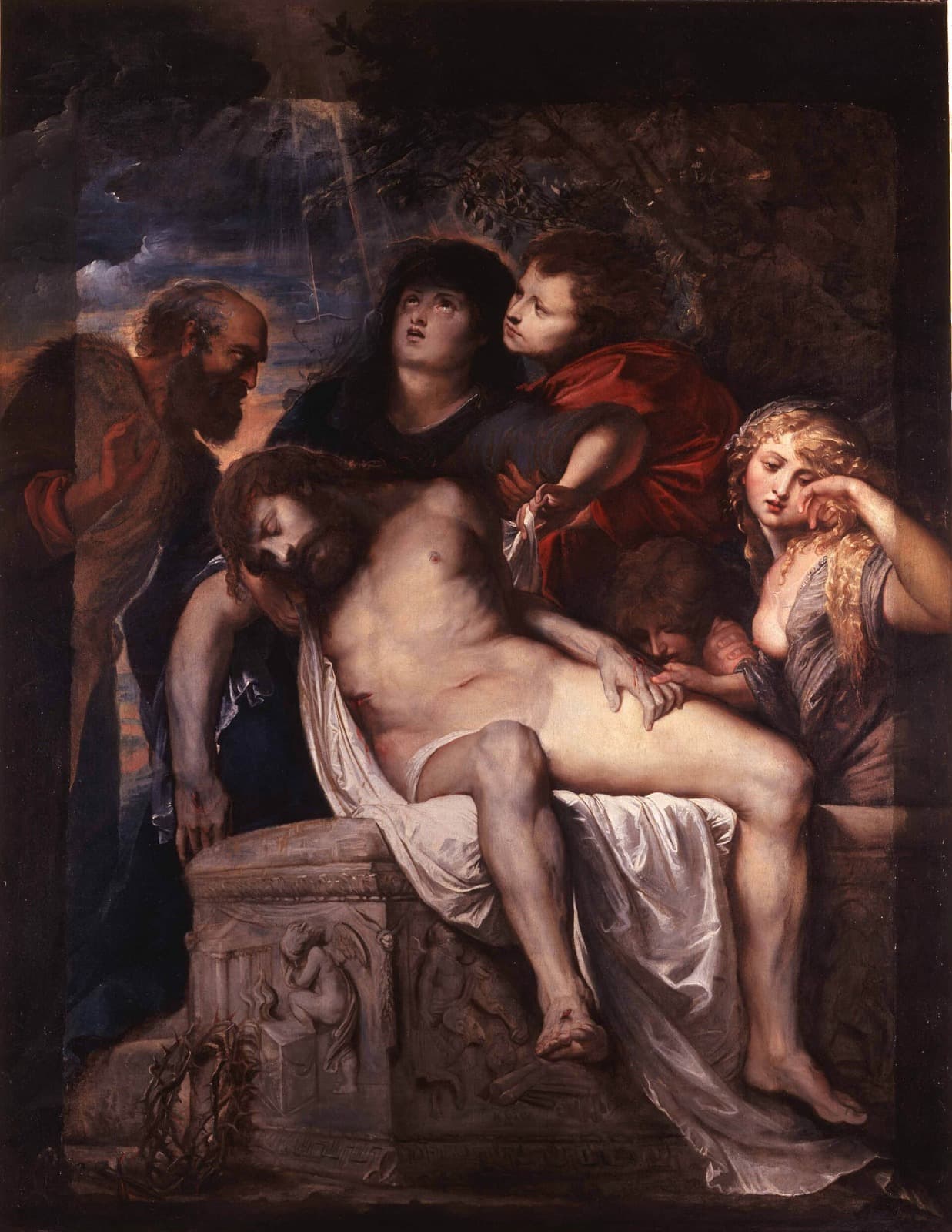
Rubens worked this out in Rome while studying Caravaggio, a rehearsal for the great Descent he would paint back home in Antwerp.

Hundreds of minutely painted fish, baskets and hagglers. They called him Velvet Bruegel for exactly this kind of finish.

The shepherd carries the twins home to his wife with the she-wolf still nearby. Rome's founding myth as a foundling story.
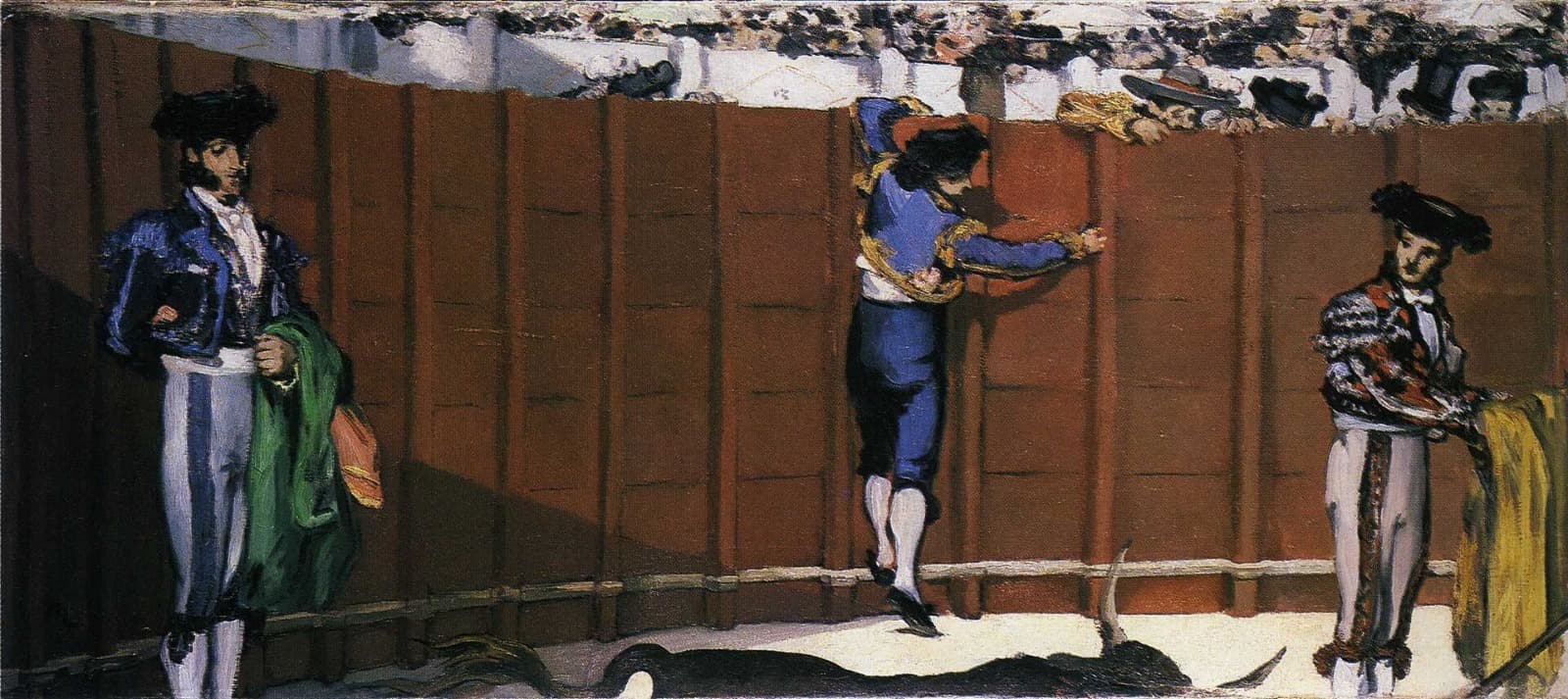
Manet cut up the original canvas because he was unhappy with it, and this is one of the surviving pieces.
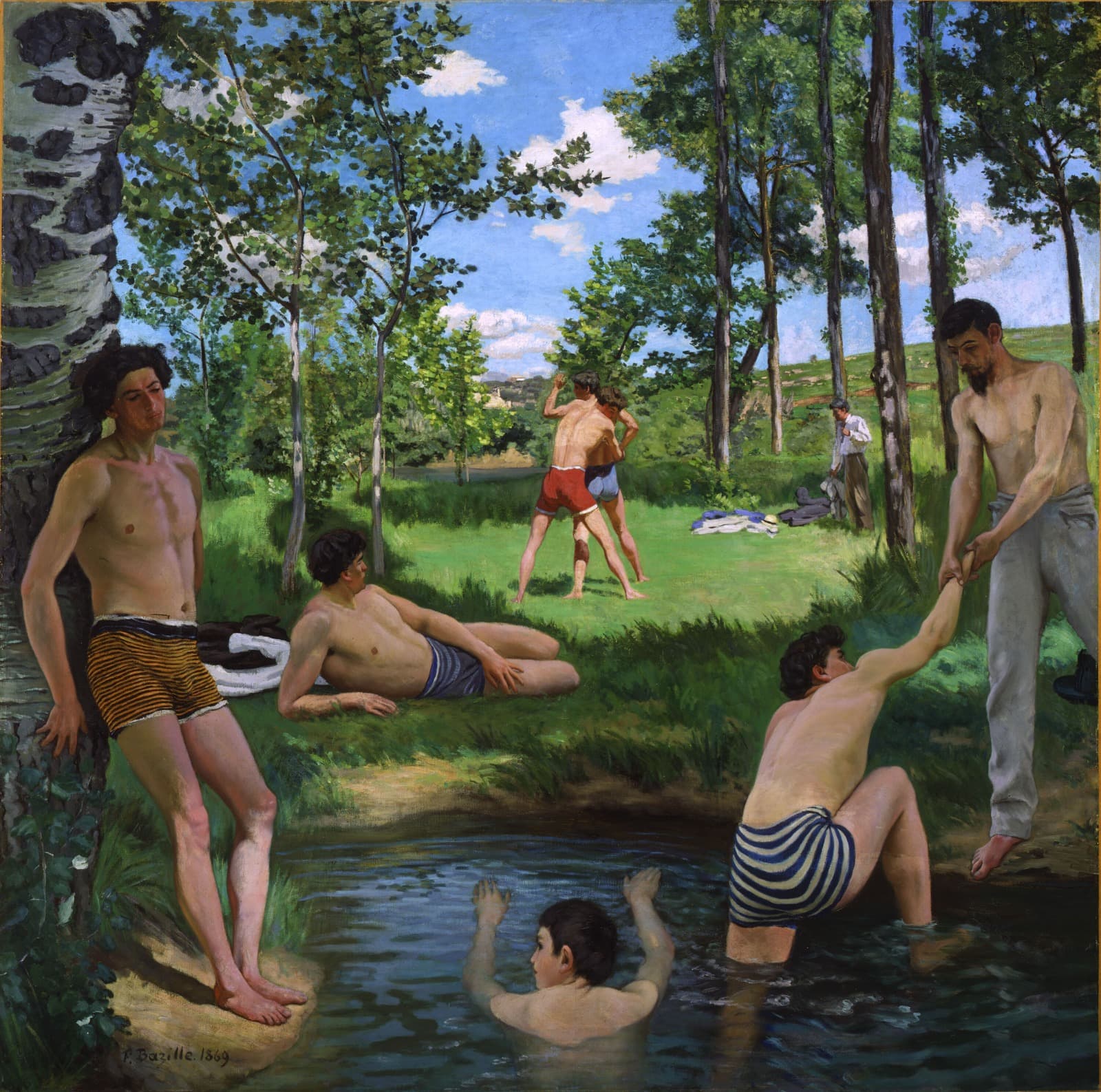
Young men lounging on a riverbank in dappled light, the oldest subject in painting given ordinary modern bodies and modern poses.
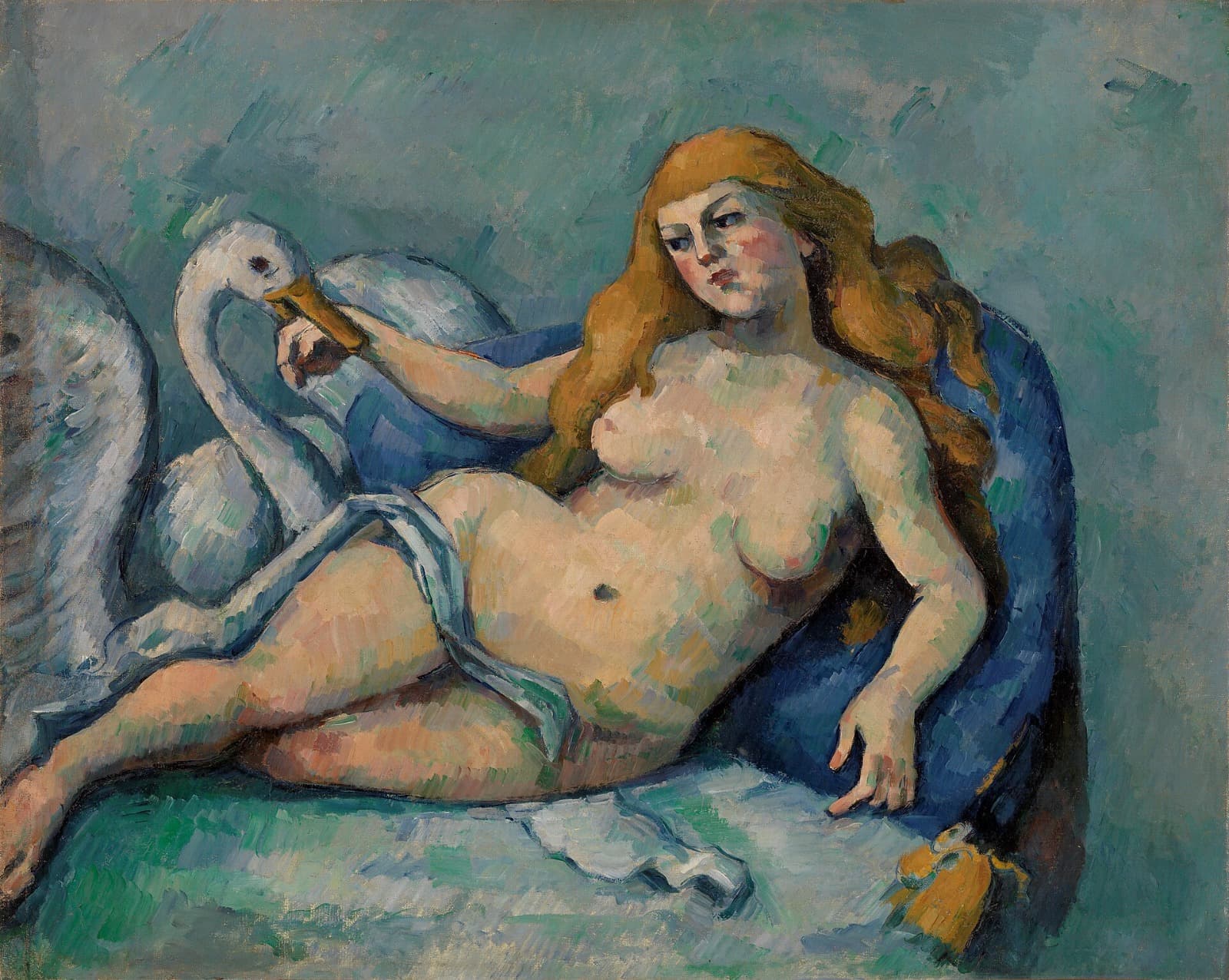
The swan nips her hand and Leda barely reacts. Cézanne cared about the planes of the body, not the story.
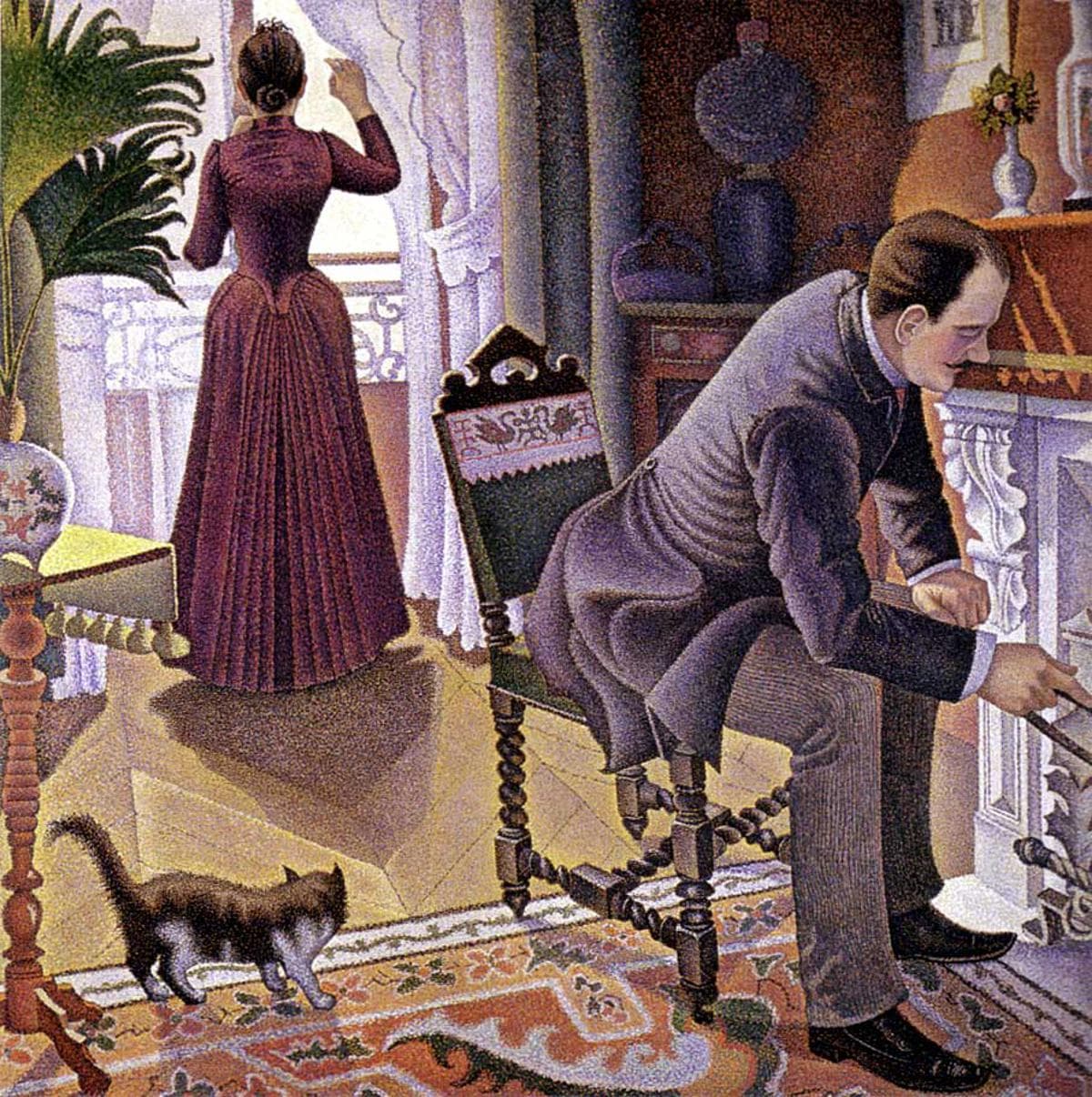
He stares out the window, she pokes the fire, and the dots are used here for boredom rather than sunlight.

A regiment posed around its cannon like a group photograph that has gone charmingly rigid. Rousseau was a customs officer painting in his spare time.
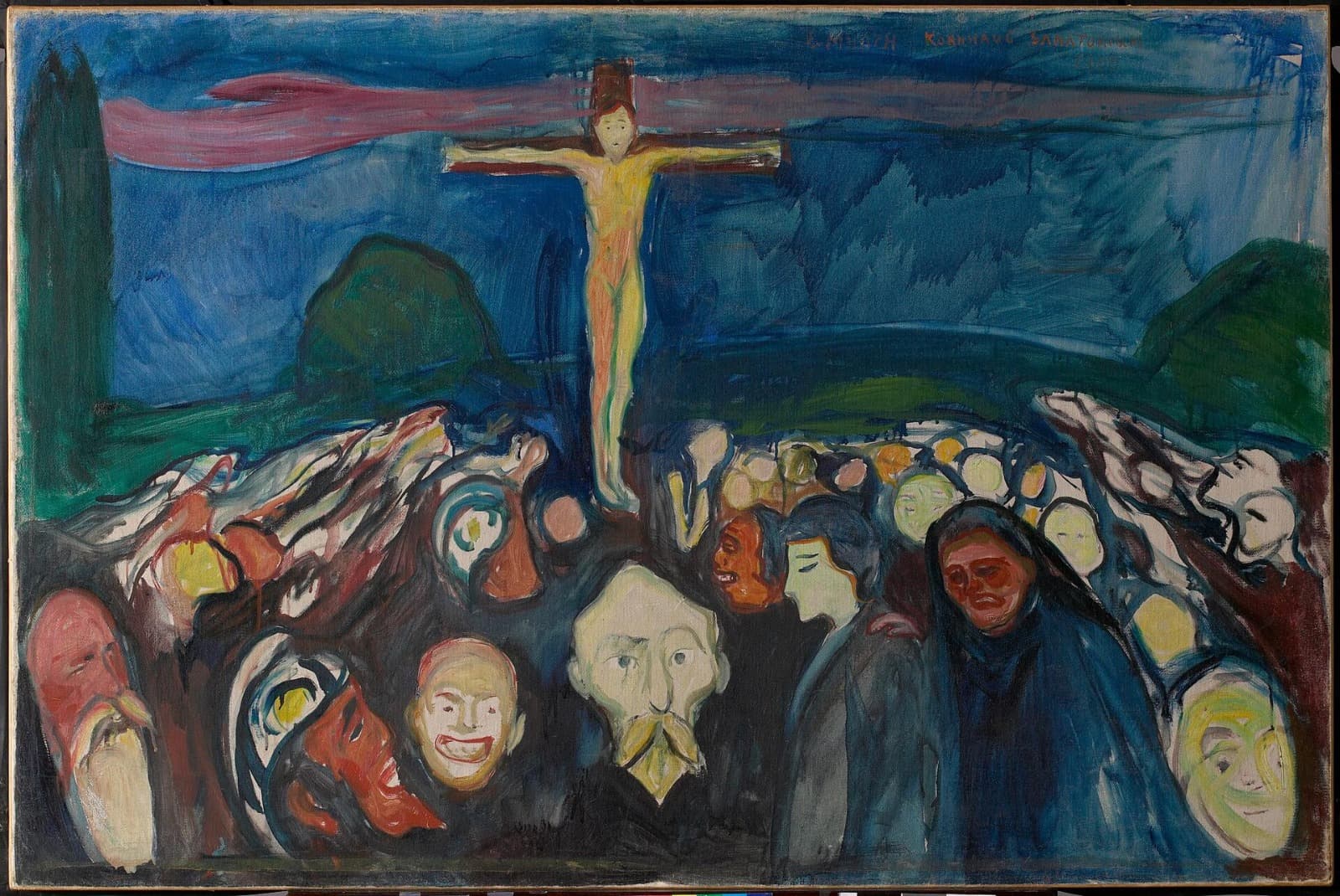
Munch painted this while under treatment in a clinic, and the crucified figure hemmed in by leering faces is not hard to read.
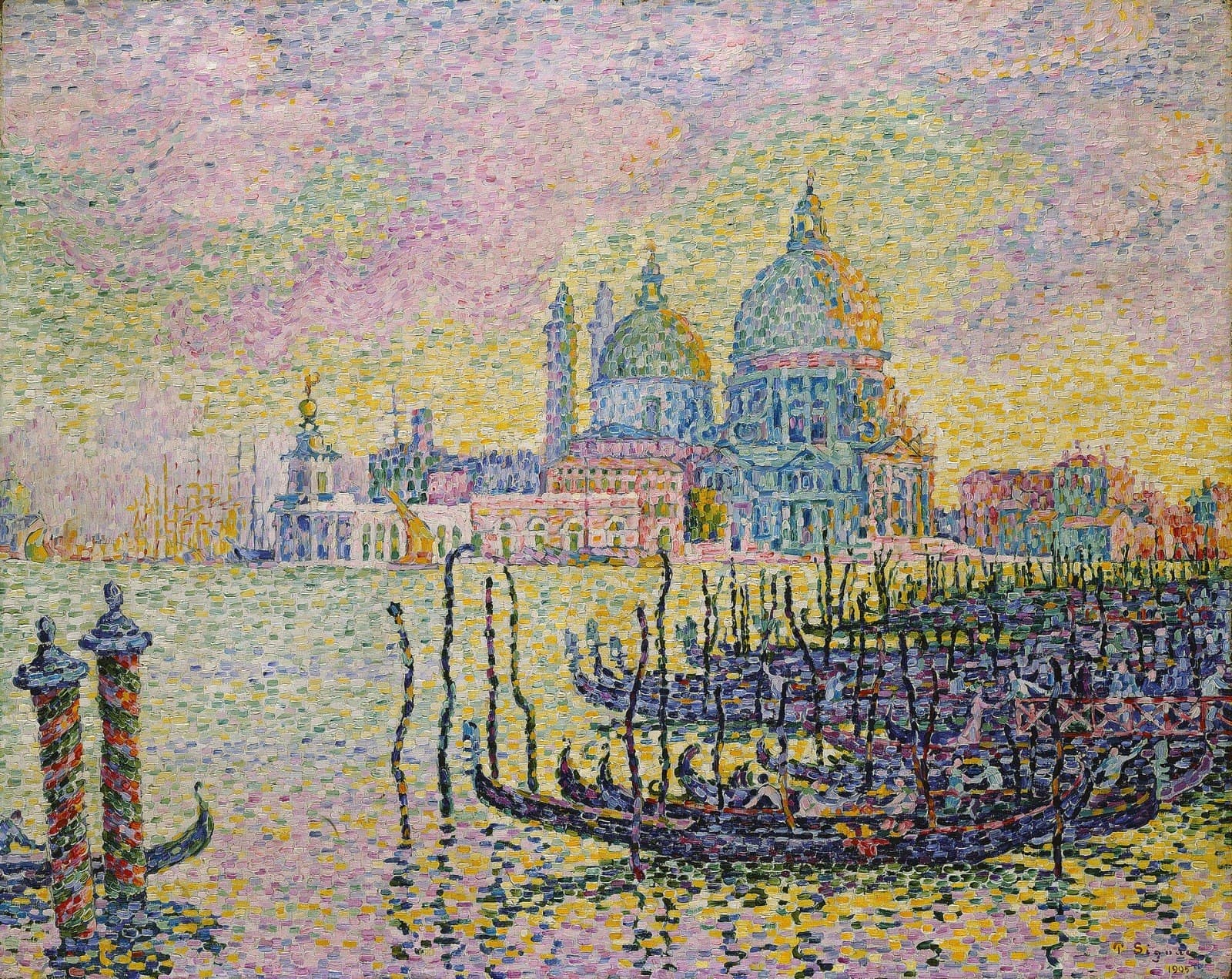
Gondolas on water that has shattered into pink, blue and gold. Signac took the divisionist dot to the most painted view in Europe.

Hot pinks and oranges laid on freely, a year before Cézanne and Picasso's Demoiselles sent Braque off toward Cubism instead.

Beckmann painted the disaster a year after it happened, borrowing Géricault's raft, and it now reads as a rehearsal for the war.
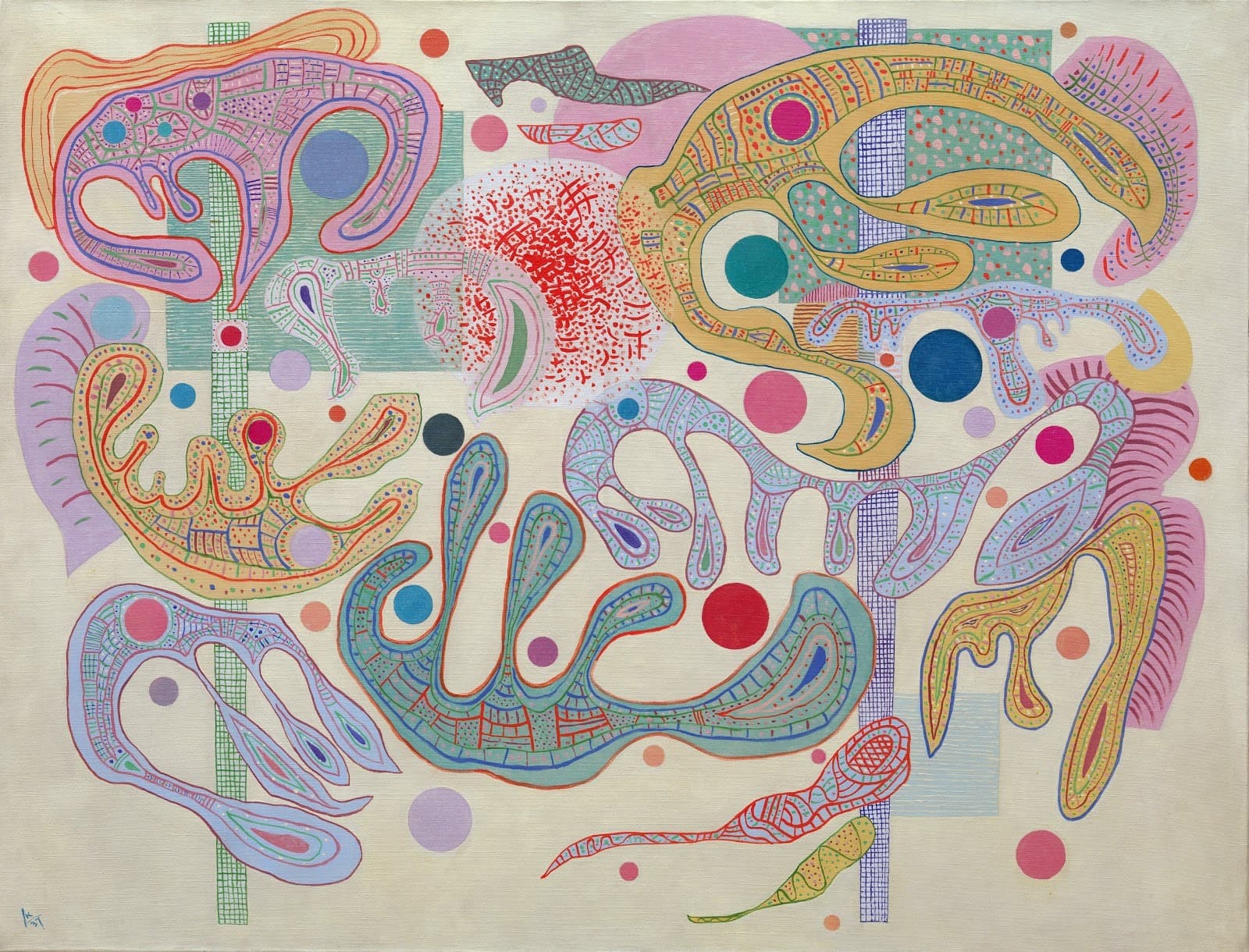
The Bauhaus grids and circles have given way to floating amoebas. Kandinsky in Paris at the end, inventing a biology instead.
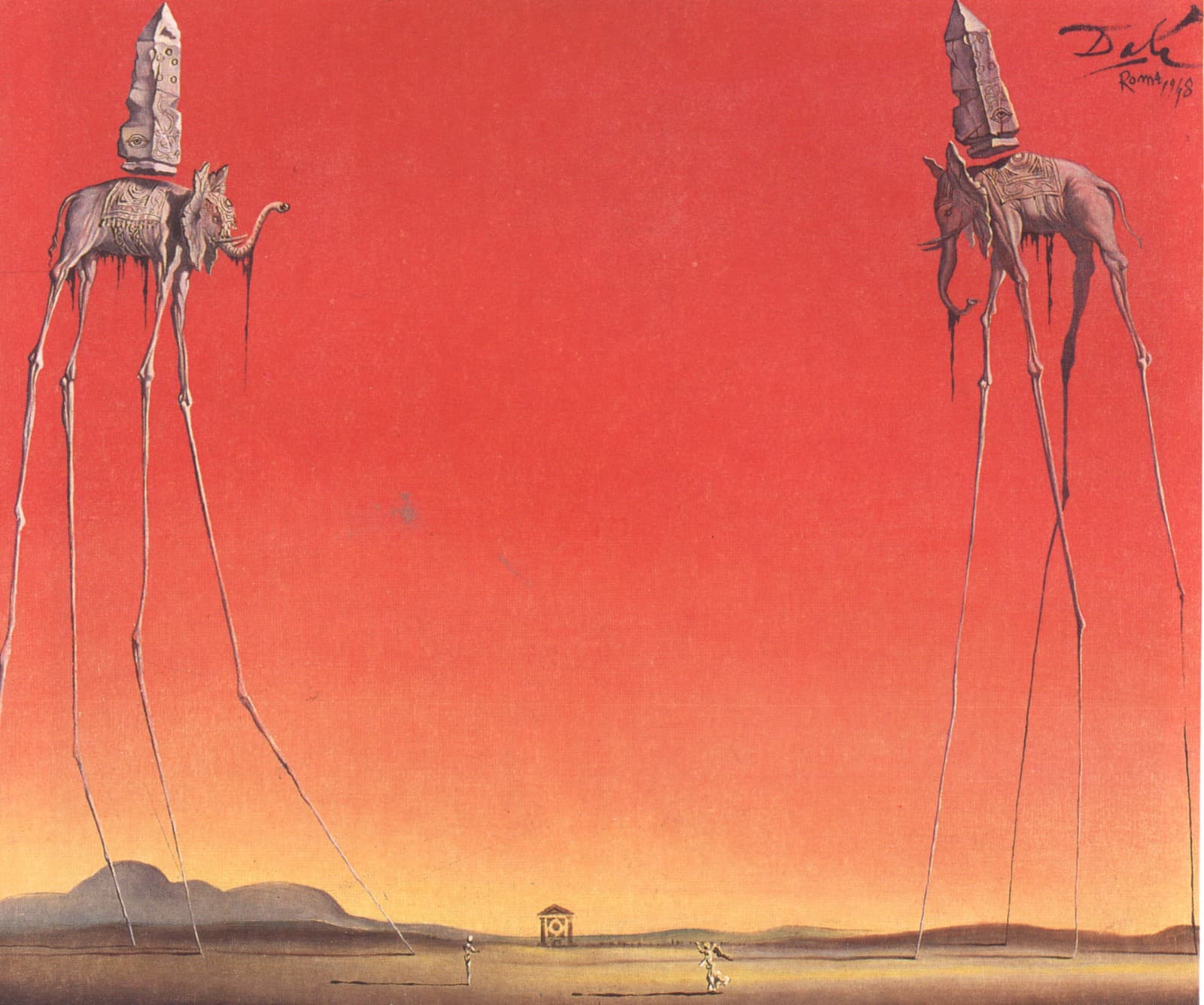
Two elephants carrying obelisks on legs far too spindly to hold them, which is the entire effect and it works.

Bacon used the shape of the cross as an armature for meat rather than religion, with a snarling animal fixed on top.

The angel comes down to stop the knife, in the deep reds and blues Chagall used for his late cycle of biblical paintings.

The brothers pause with the net still trailing fish through green water, caught between the work and the man on the shore.

Christ in vivid red is hauled by a rope through the gate of a white, many-towered Jerusalem while children scamper at the edge.
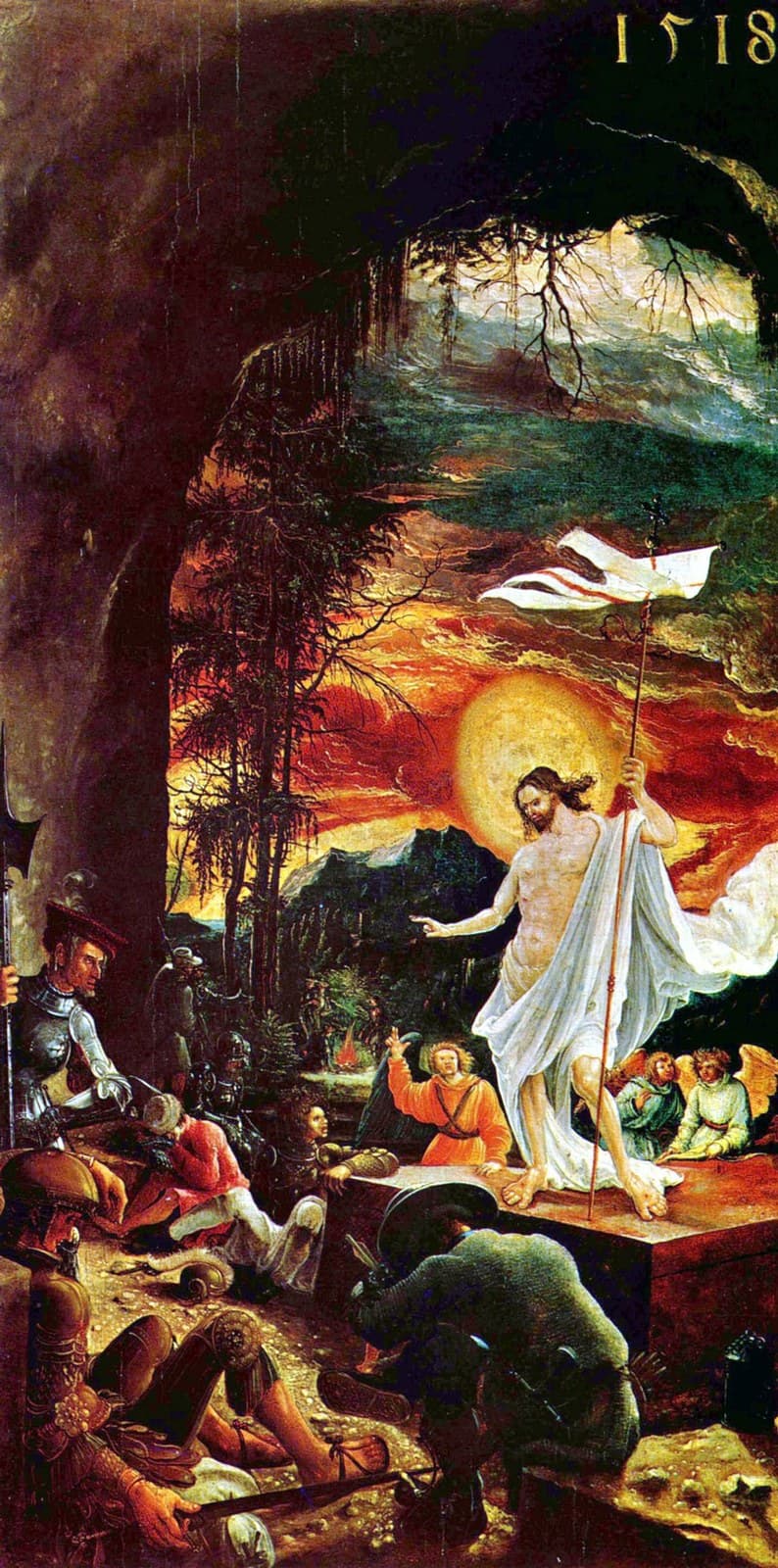
Christ rises with his banner while an unearthly dawn detonates behind him in bands of orange and scarlet over black crags.

Servants stoop over the great stone jars in the foreground to draw out wine that was water a moment ago.

A soldier drags Christ out through the city gate by his robe, the diagonal of the cross cutting against a bristling line of lances.

Six angels lean in along the throne with their heads tilted, which turns a rigid Byzantine formula into something nearly intimate.
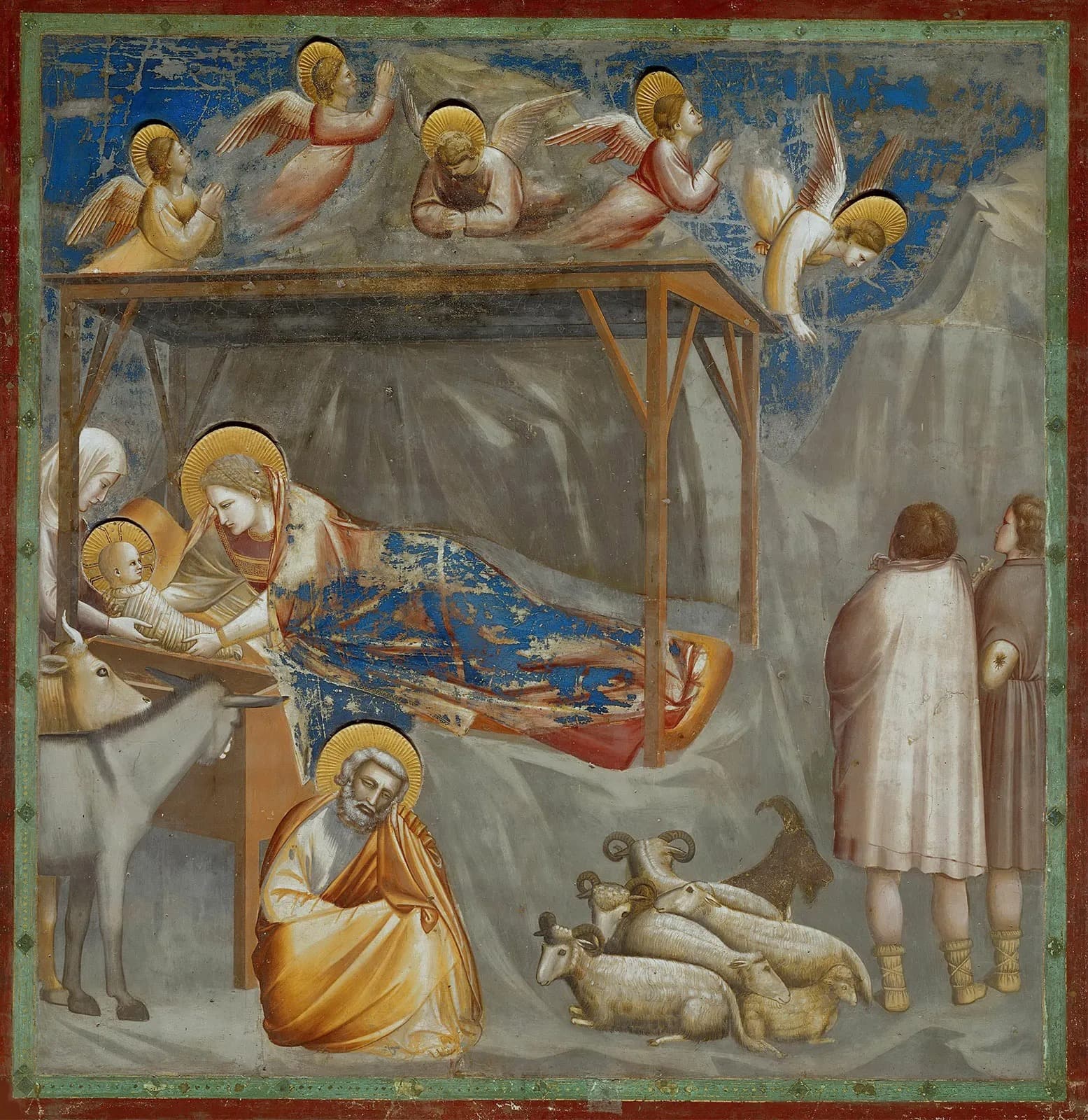
The Virgin lies on the hillside and turns to lay her son in the manger, looking at his face. No gold, just a cold blue sky.

The Child lies on the ground giving off his own light across the straw and his mother's face. One of the first paintings lit from inside.

Serene, elegant nudes about to ruin everything. It faces Masaccio's Expulsion across the same chapel, calm before the Fall against anguish after.

Gilded hems, fluttering wings, a walled garden behind. Lippi was a friar with a worldly streak and it shows in the ornament.
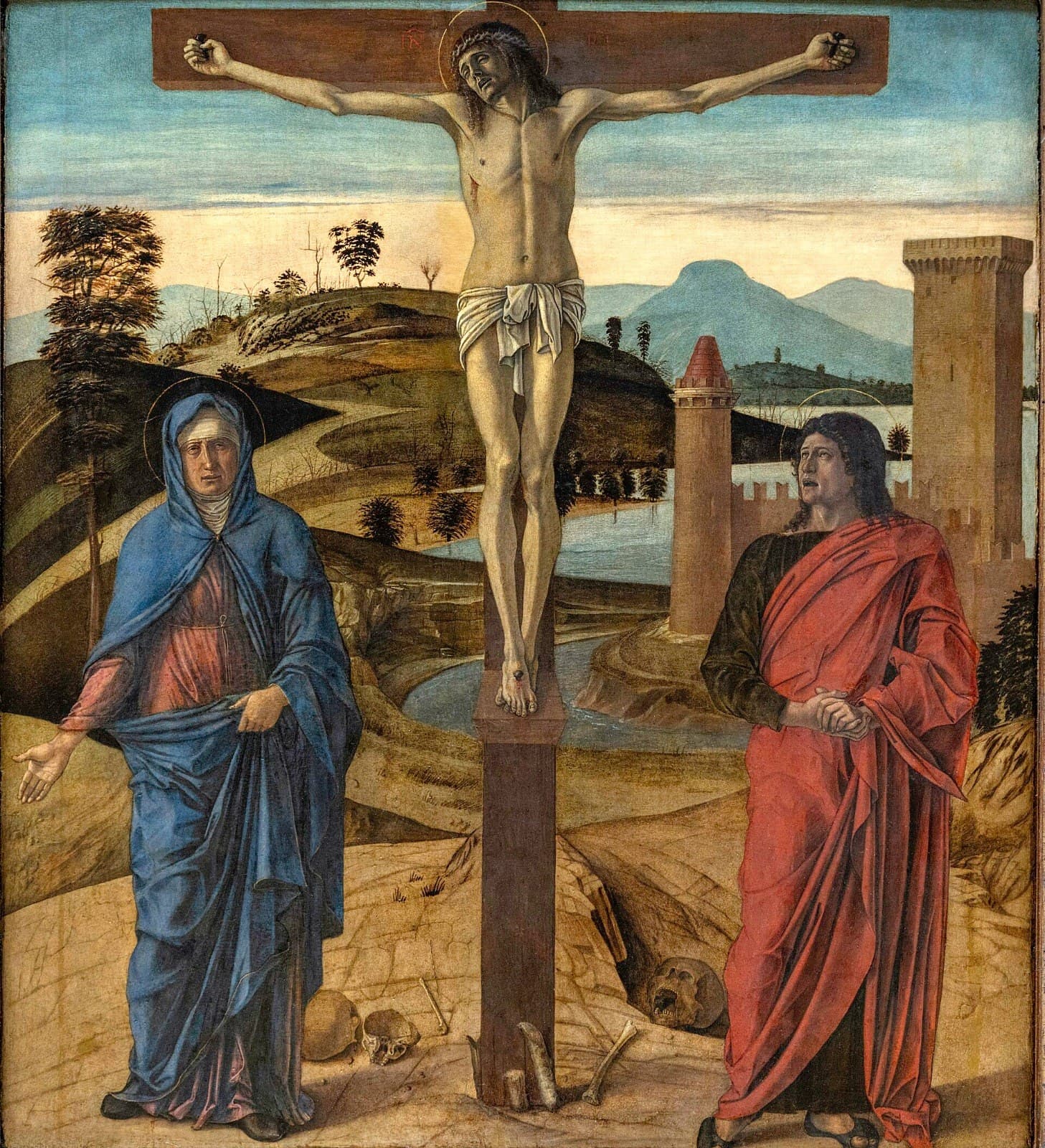
Only the Virgin and Saint John below the cross, and a river winding past a walled town. Early Bellini, carrying feeling in the light.

Painted on a refectory wall so the monks dined at the end of the same table. Leonardo would blow the arrangement apart a few years later.
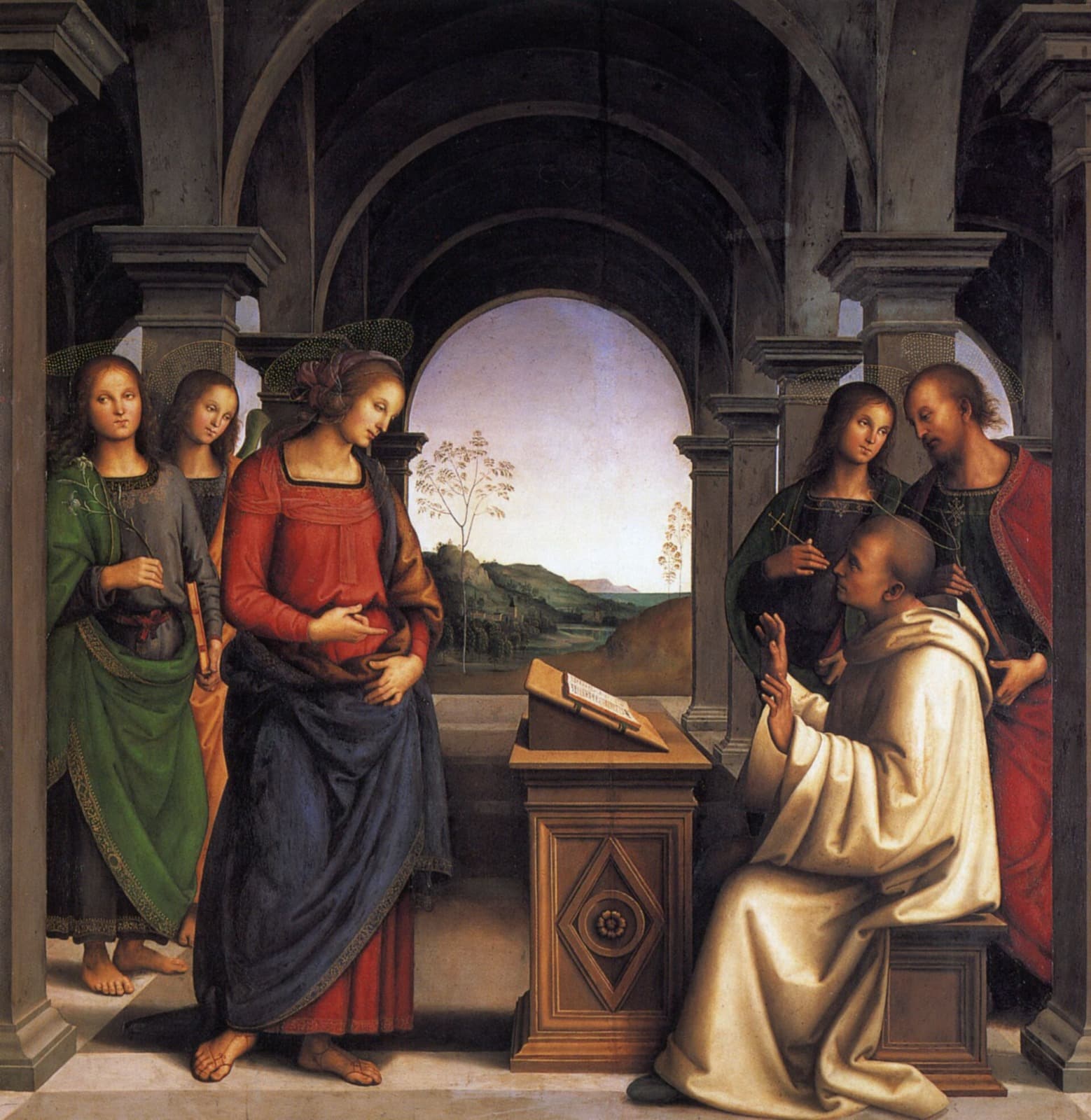
Perugino taught Raphael, and the poise, the airy arcade and the soft Umbrian valley here pass almost unchanged into the pupil's work.

A man rides a wine barrel while swimmers chase a floating pie. It was sawn off the bottom of the Ship of Fools.
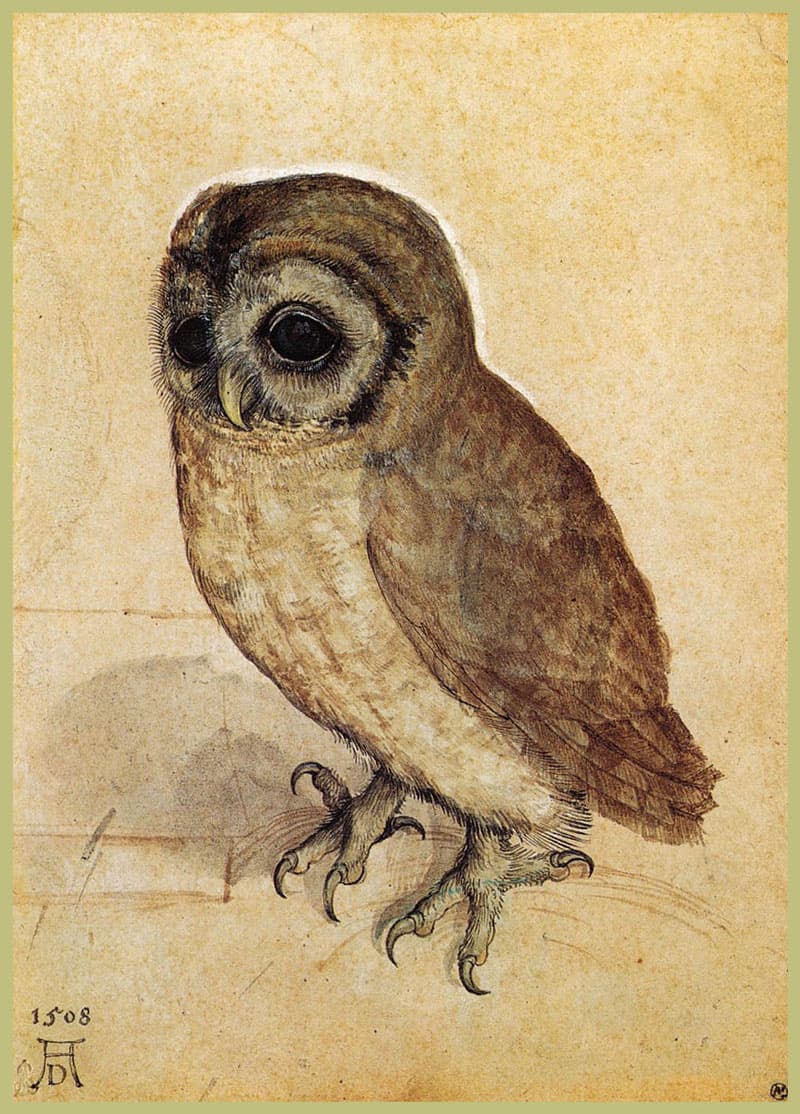
Owls carried centuries of symbolism in the north, but Dürer's is mostly just an owl, looking back at you with its talons over a ledge.

Thousands are clubbed and thrown off cliffs, and Dürer paints himself walking calmly through the middle of it holding a banner with his name.
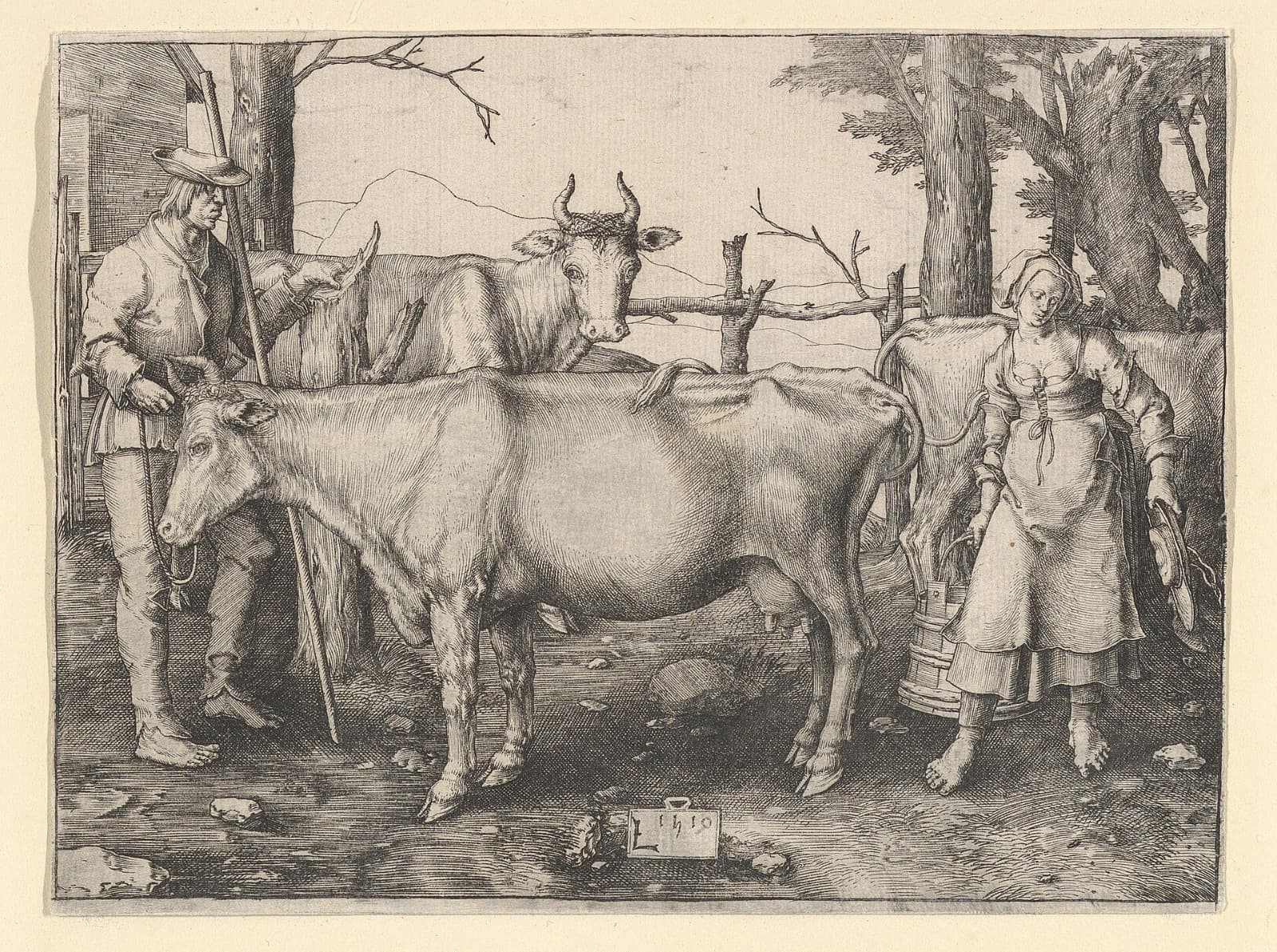
A milkmaid, a herdsman and two cows, and almost nothing happening. One of the first prints to take peasants as a subject worth the burin.

Gabriel kneels at the right and points across at a Virgin drawing back in surprise, with a stretch of classical ruin between them.

Joseph reaches up to pull down dates from a palm while Saint Francis kneels at the side, added for the chapel that ordered it.

You take in the whole river valley before you notice the sower at the bottom corner, or Christ preaching from a boat behind him.
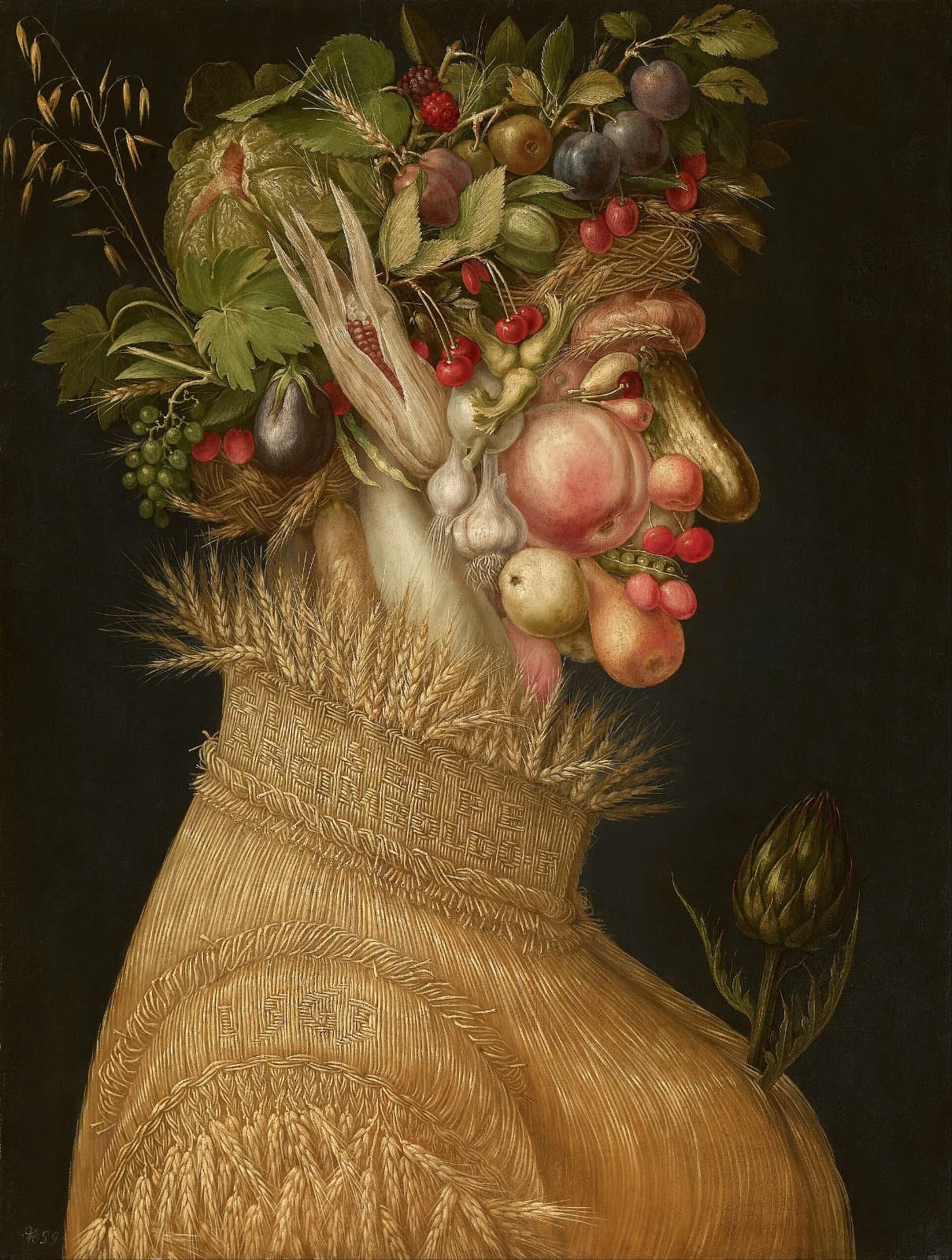
A cucumber nose, a peach cheek, a garlic-clove ear, and Arcimboldo's own name woven into the collar of plaited straw.
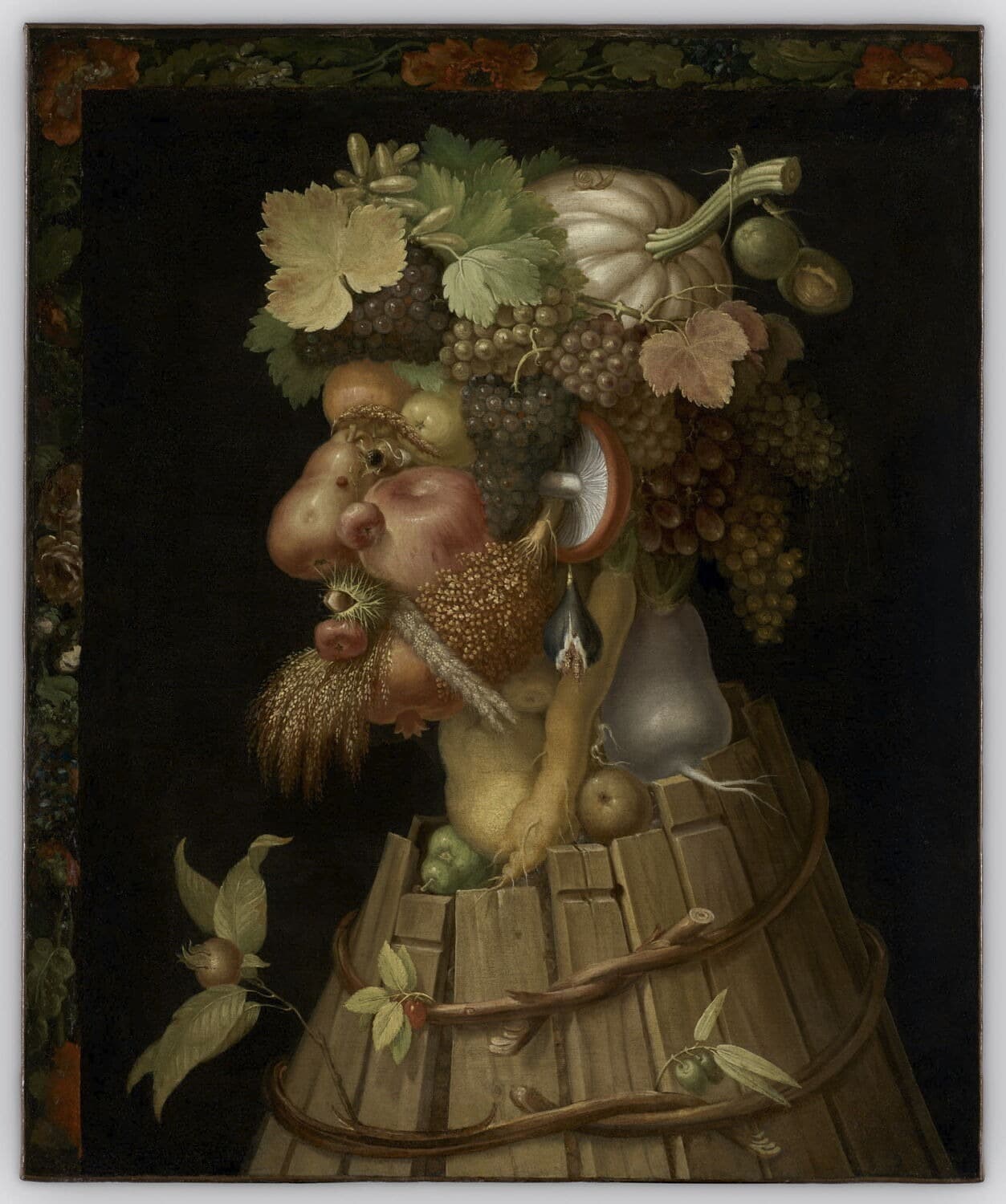
A head of pears and pomegranates crowned with grapes, sitting in a split wooden barrel bound with willow hoops. The season of the wine harvest.
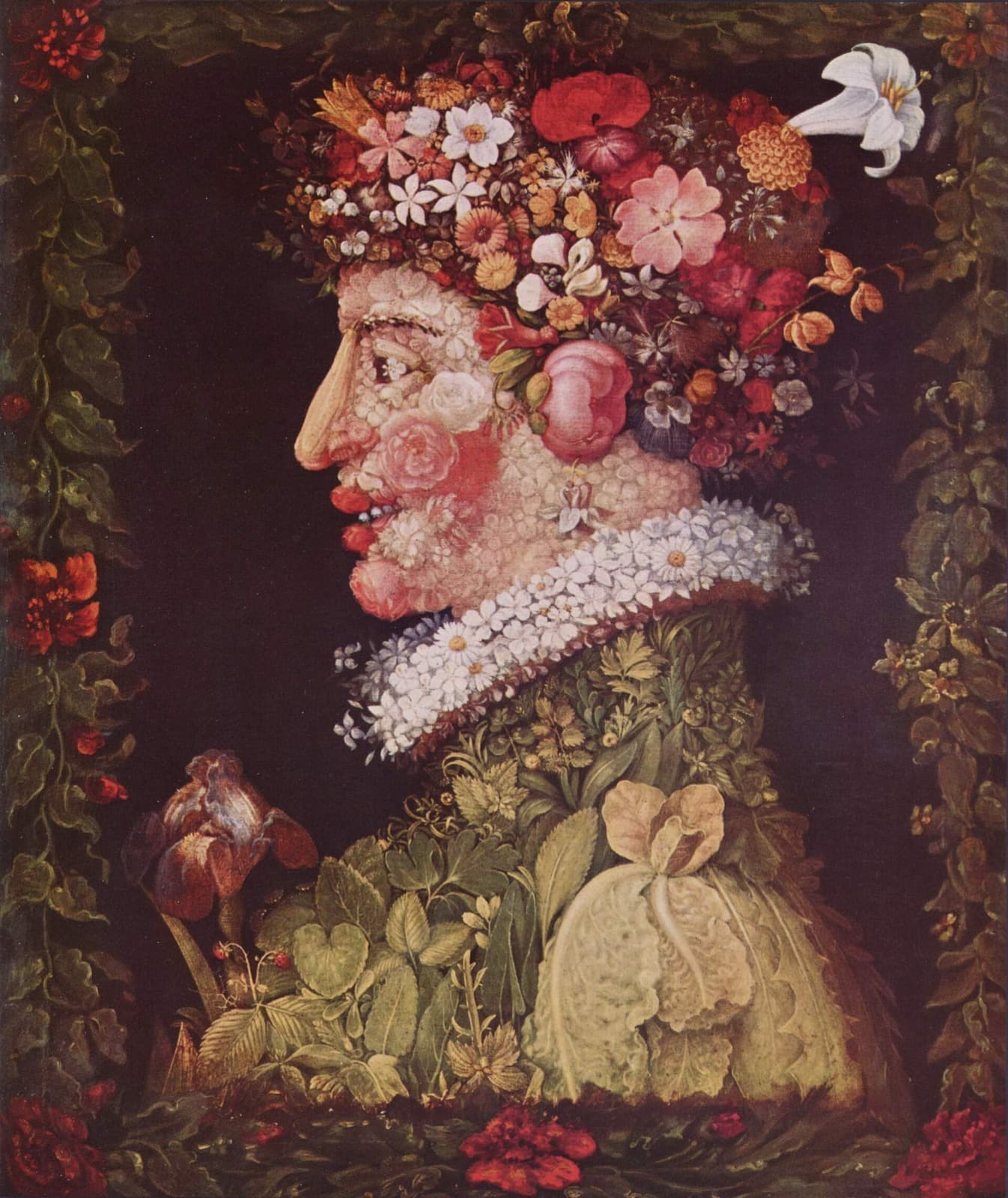
Rosebud lips, a lily for a nose, and hair made of tulips and peonies. The freshest and most delicate of the four seasons.
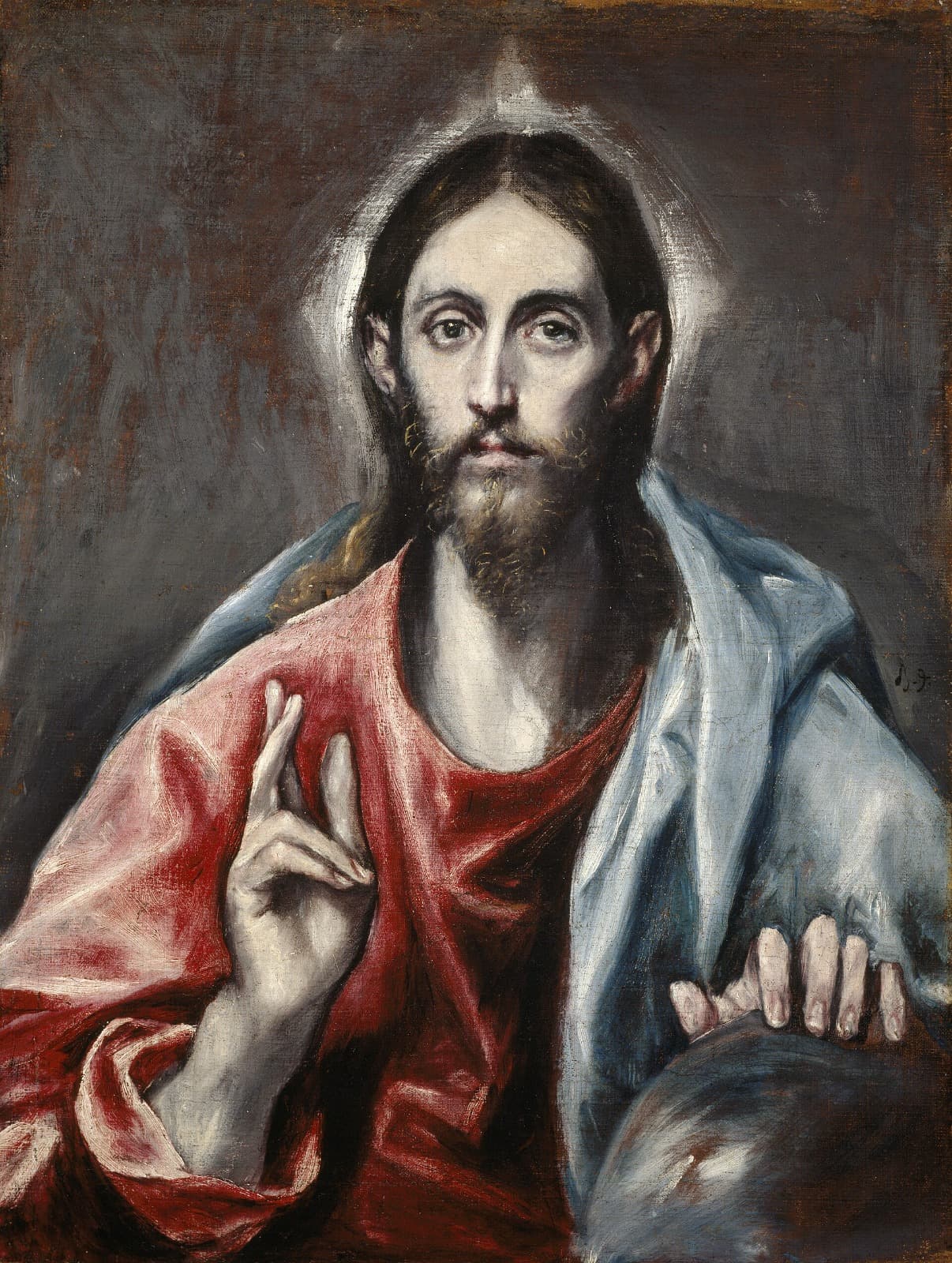
Two fingers raised in a gesture reaching back to Byzantium, one hand on a crystal orb, the face long and sorrowful and unmistakably his.

A few sweeps of brush and brown ink, most of the paper left bare, and the whole weight of a sleeping head is there.

Christ preaches from a hilltop and is almost too small to find. Claude was really painting the hills, the water and the distance.

Venus in a pearly sea with nymphs, tritons and putti all around, made entirely to delight and not at all to instruct.

Washington leans on a cannon with captured flags at his feet. Peale knew him and served in the war, so this is the man.
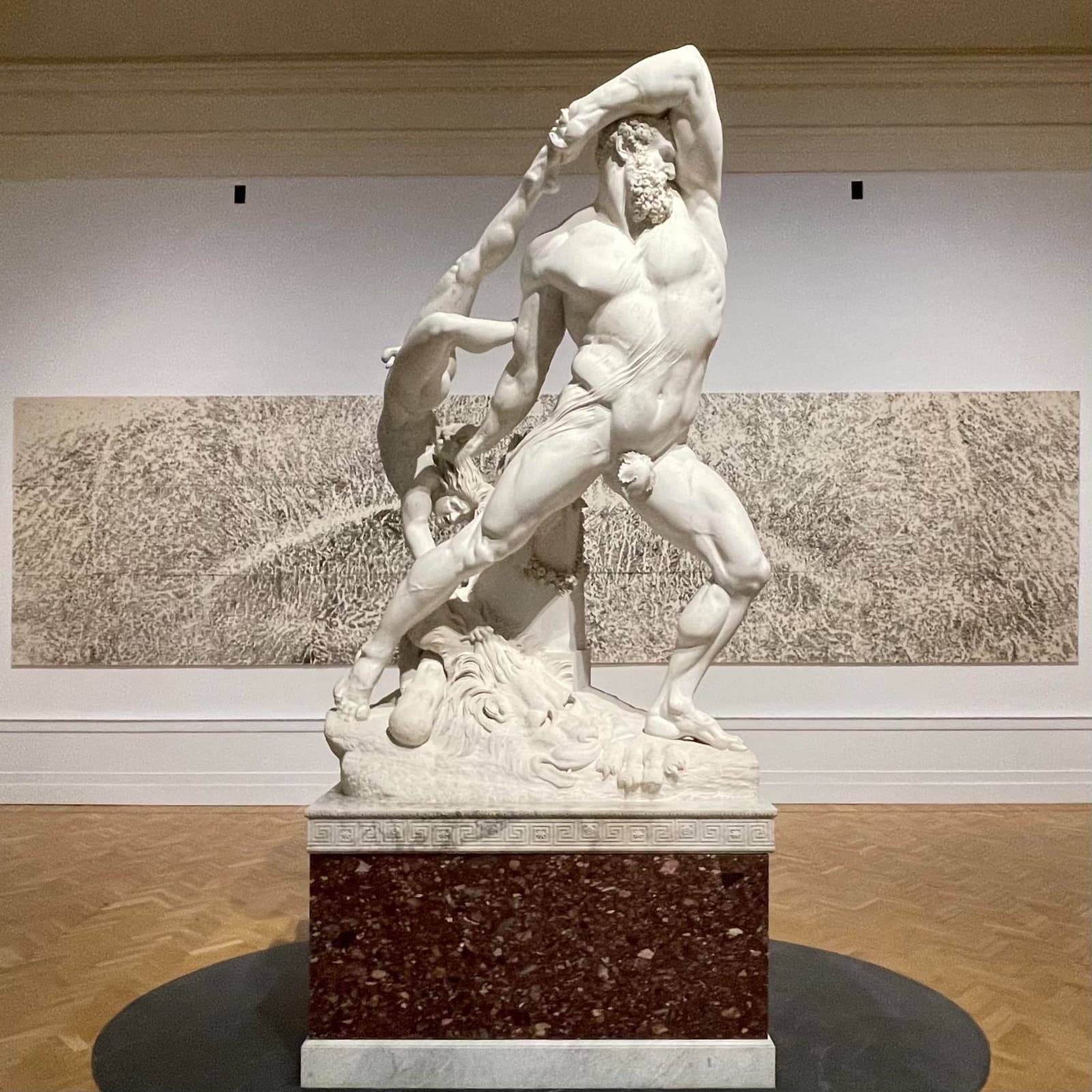
Hercules, poisoned and raving, grabs the boy by the hair and one leg and throws him. Canova almost never carved anything this violent.

An old man on two sticks, with Aun aprendo written underneath. Goya drew it in exile and failing health, near the end.

A woman in a white corset seen from behind, painted so loosely the picture seems to stop just before the image settles.

Degas turned from dancers to financiers, catching heads bent close over documents in the crush of the Paris exchange.
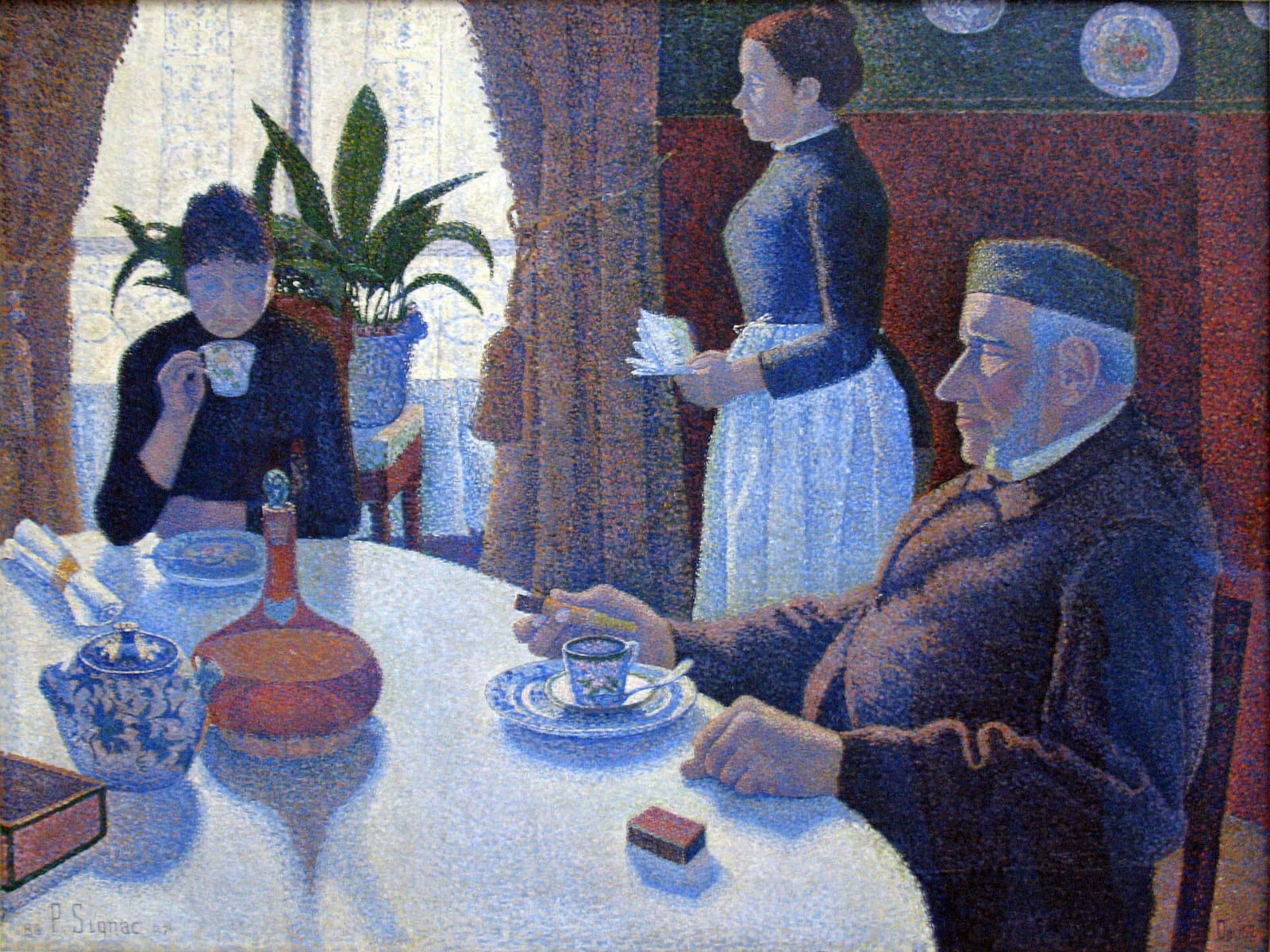
A family at breakfast, posed so stiffly in the glare that the comfortable room turns faintly airless. Every surface is built from dots.

A man and a white horse in a Tahitian grove, painted on Gauguin's first stay, flat and warm and looking for a paradise.

Provençal women at a hilltop well above a blue bay, the dots loosening into curves and the science giving way to pleasure.
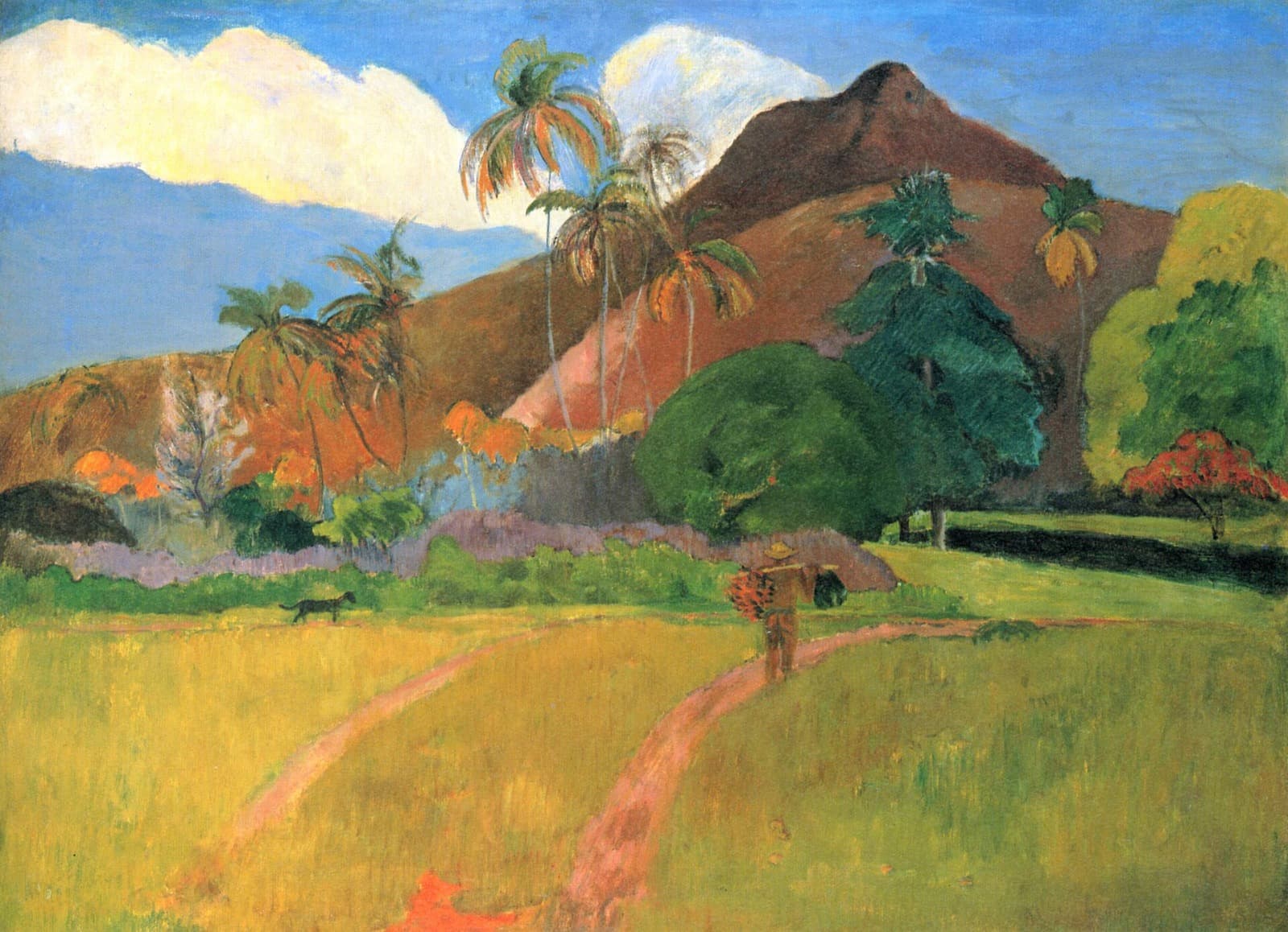
Green and rose slopes flattened into bold shapes, with rather less interest in what the island actually looked like than in the color.

A woman sits on the bank and puts her bare feet in the water, the whole stream broken into flickering touches of color.
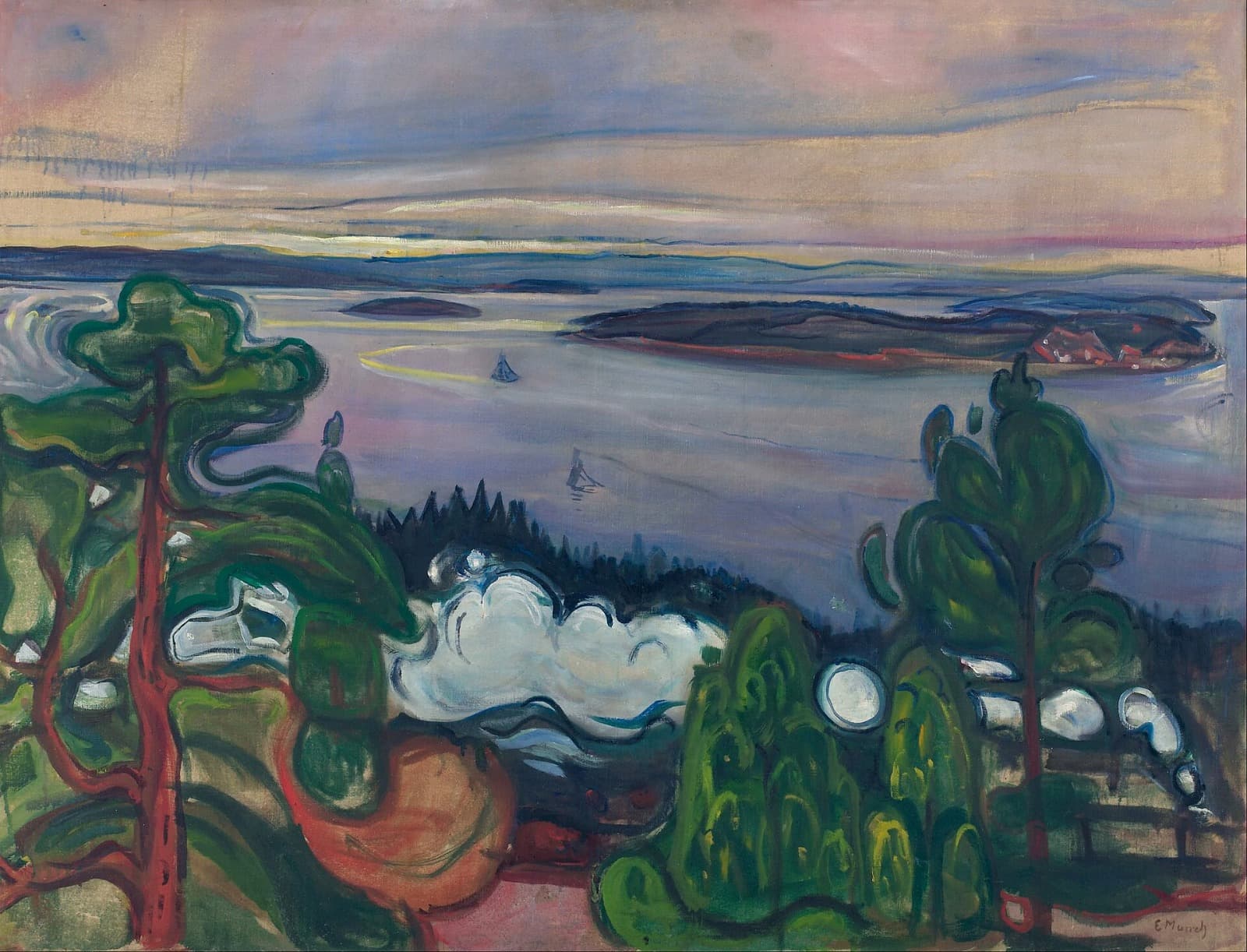
One puff of steam drifts across a curving shoreline, the modern world putting a small mark on a landscape that had none.

A child holding a white dove with a colored ball at its feet, painted just as Picasso's palette was cooling toward blue.

They shared a Barcelona studio, and Soto was known as a hard drinker, but Picasso painted him sober and sad in blue.

Boats and masts broken into tilting green and brown planes, painted while Braque and Picasso were building Cubism out of Cézanne.

The deer have almost dissolved into the crystalline planes of the wood, which is exactly what Marc was after.
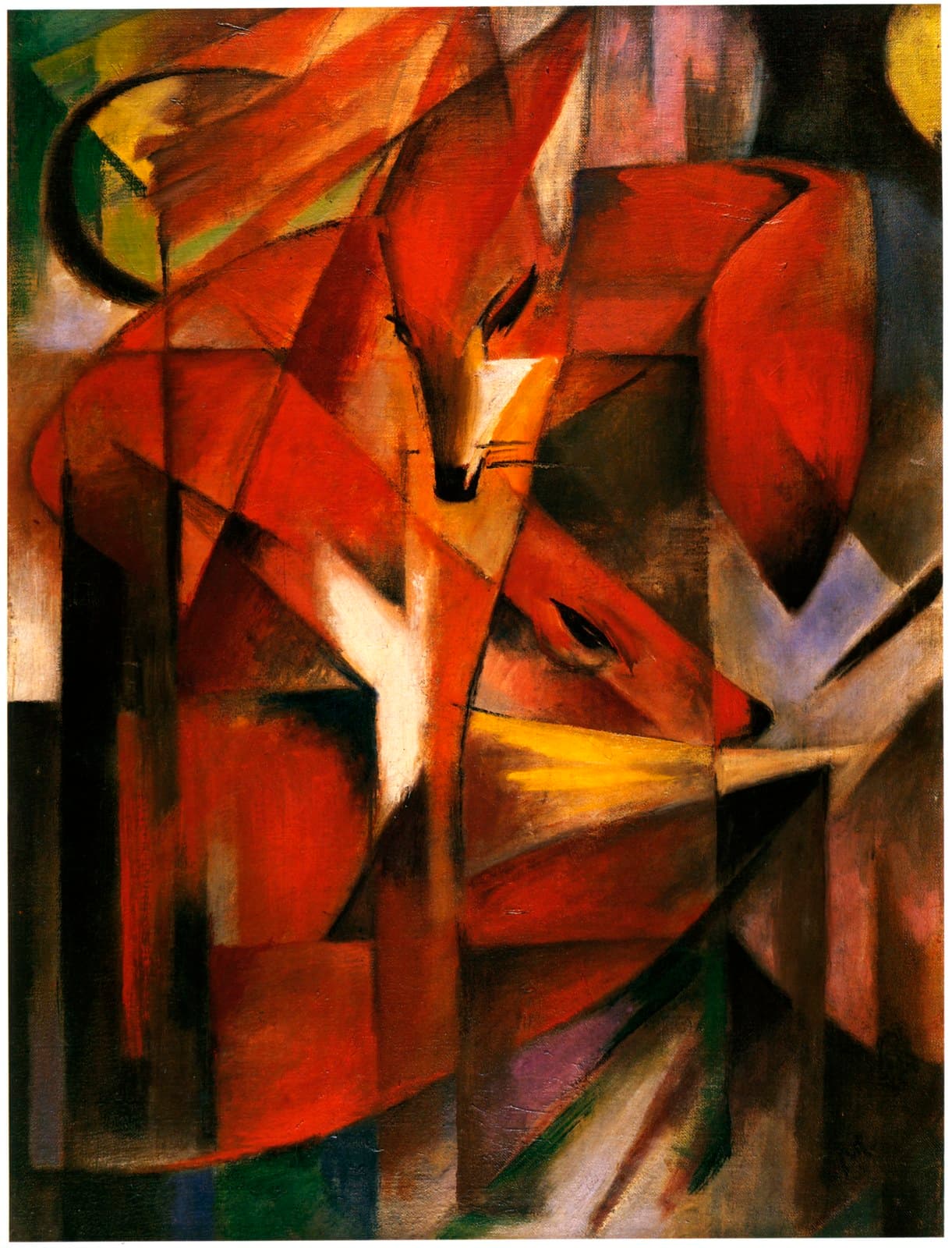
Foxes curled together and assembled out of shards of grey, blue and rust. Marc was killed at Verdun three years after painting it.

Beckmann came out of the war traumatized and painted a Christ so emaciated and angular that no consolation survives the picture.
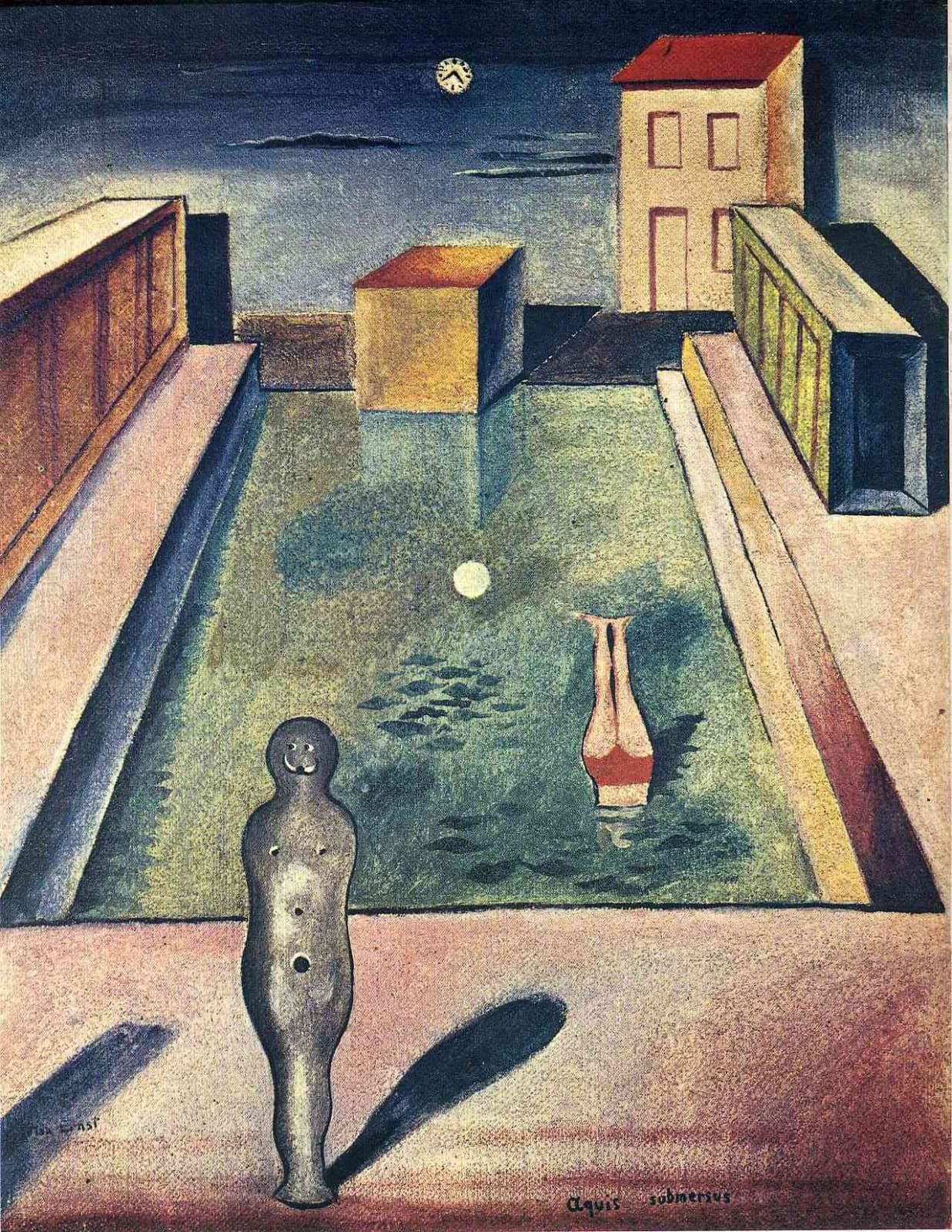
A doll-like figure by a still pool under a tower with a clock face. Ernst had been looking hard at de Chirico's empty squares.
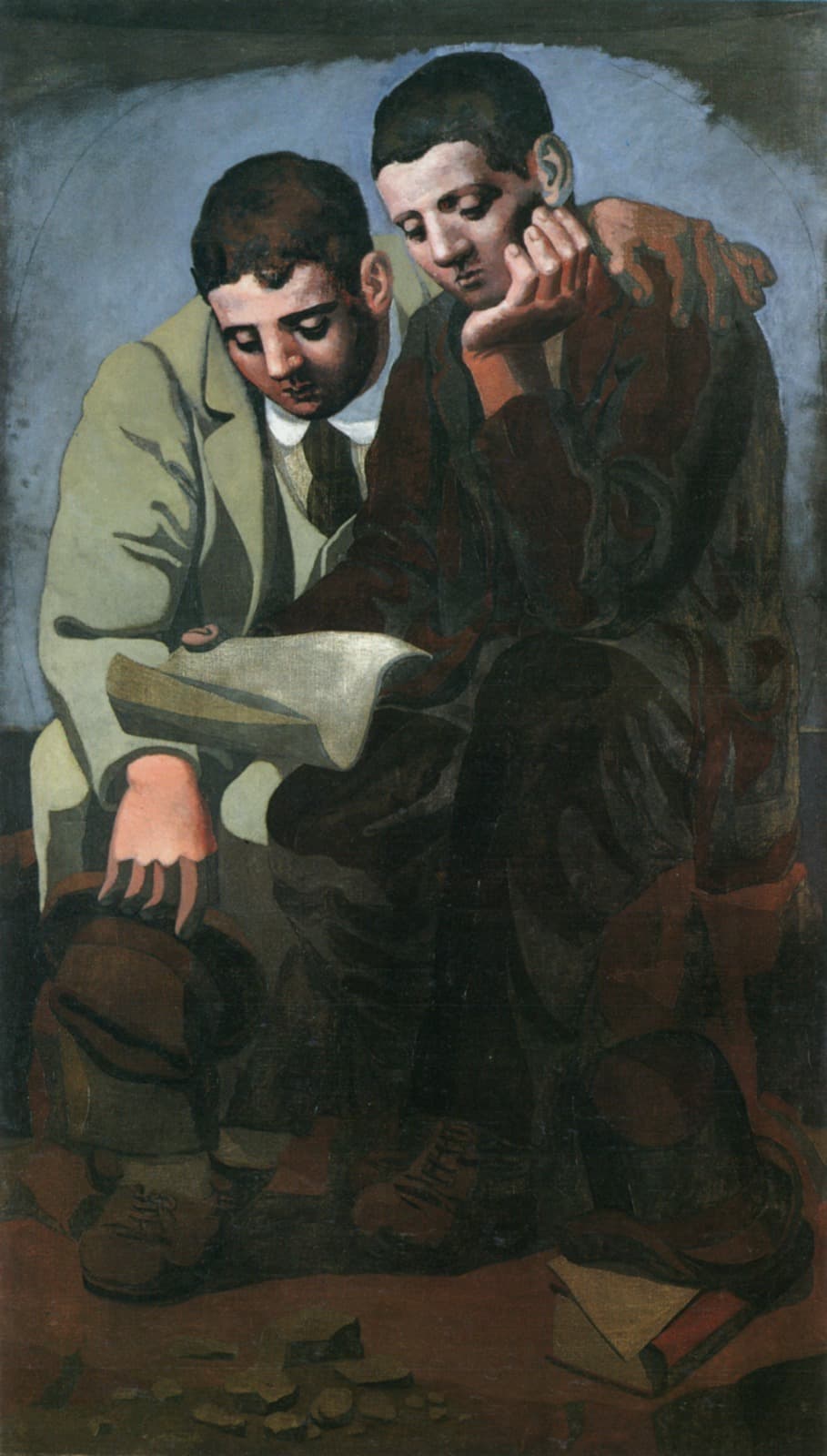
Two heavy young men press close together over a letter, and the intimacy is usually read as a memorial to Apollinaire.

Red New Mexico hills roll across the canvas with a few flowers brought right up close, the vast and the fragile in one frame.
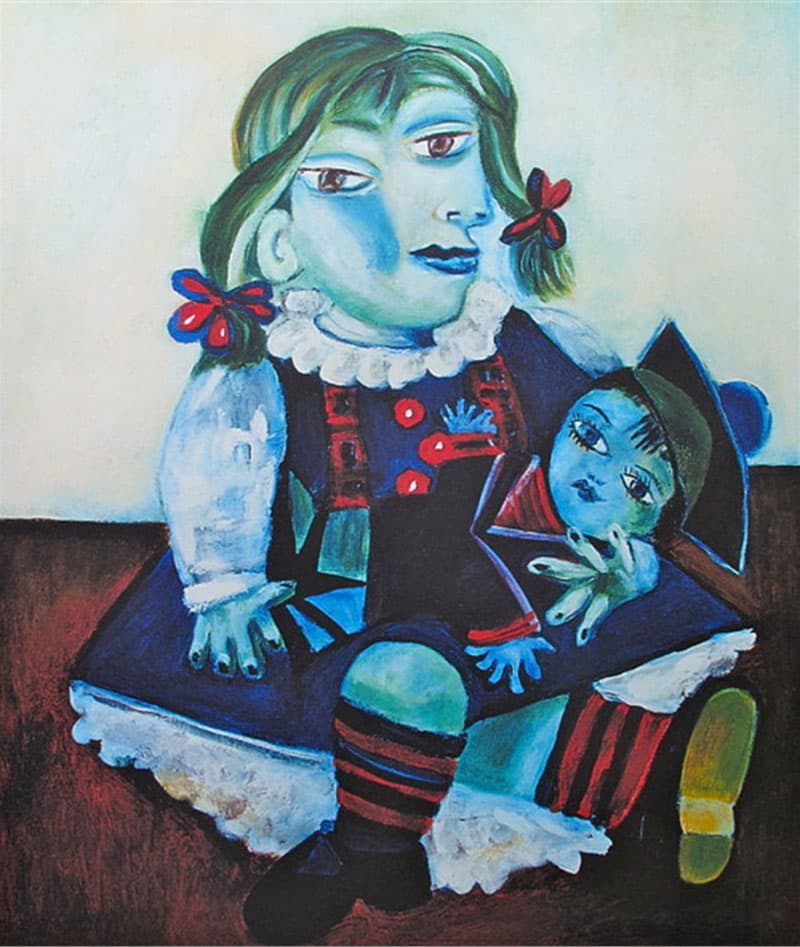
His daughter Maya holding her doll, her face split front and profile at once, the Cubist trick turned warm for once.

Bacon started from a snapshot of a friend dozing in a park and then removed the head, the identity and the ease.
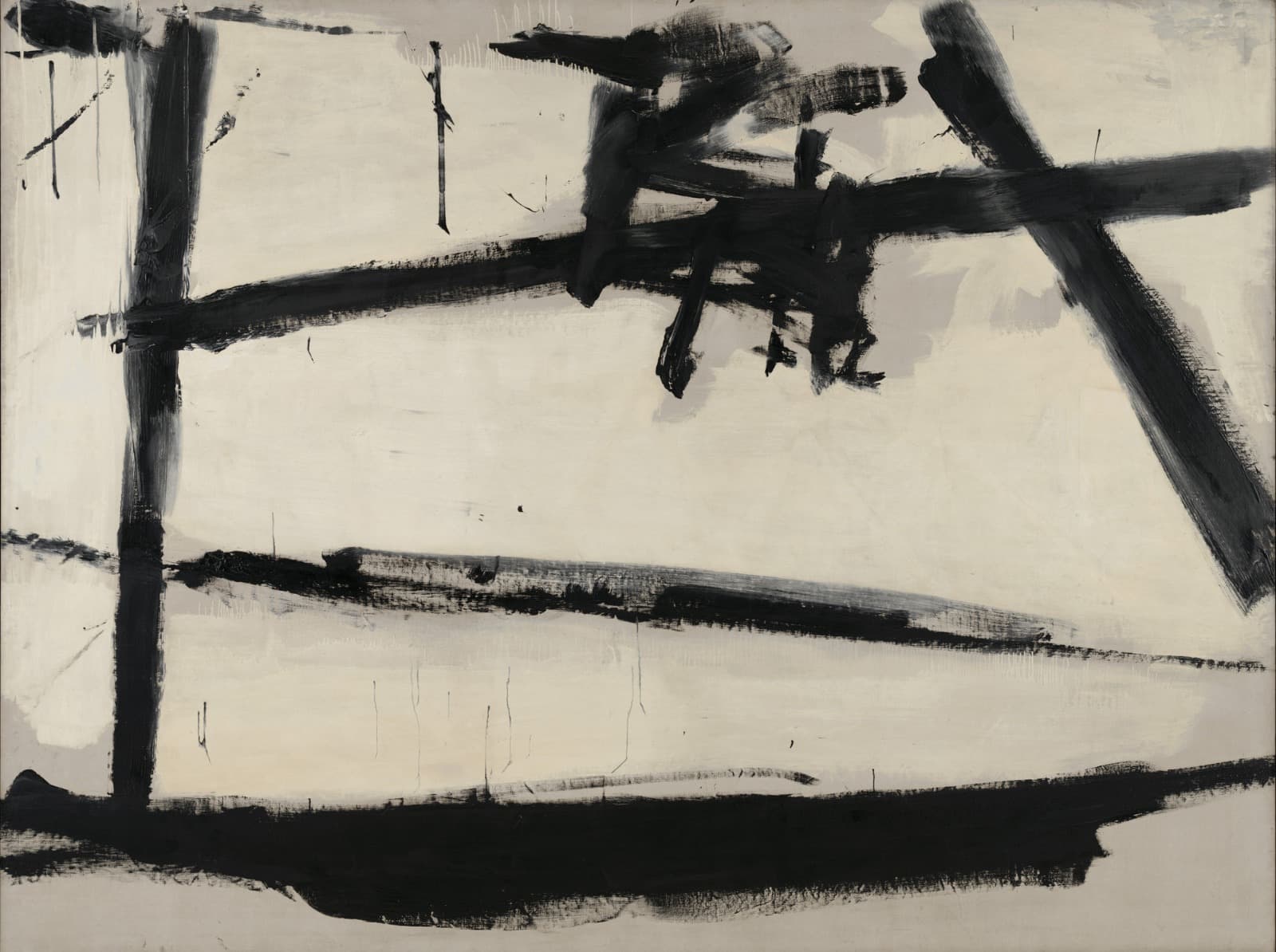
Black bars crossing a white ground, enlarged from small ink sketches so the speed and weight of the arm survive the scaling up.

Dalí went back to his own melting watches and broke the ground beneath them into floating bricks, for the atomic age.
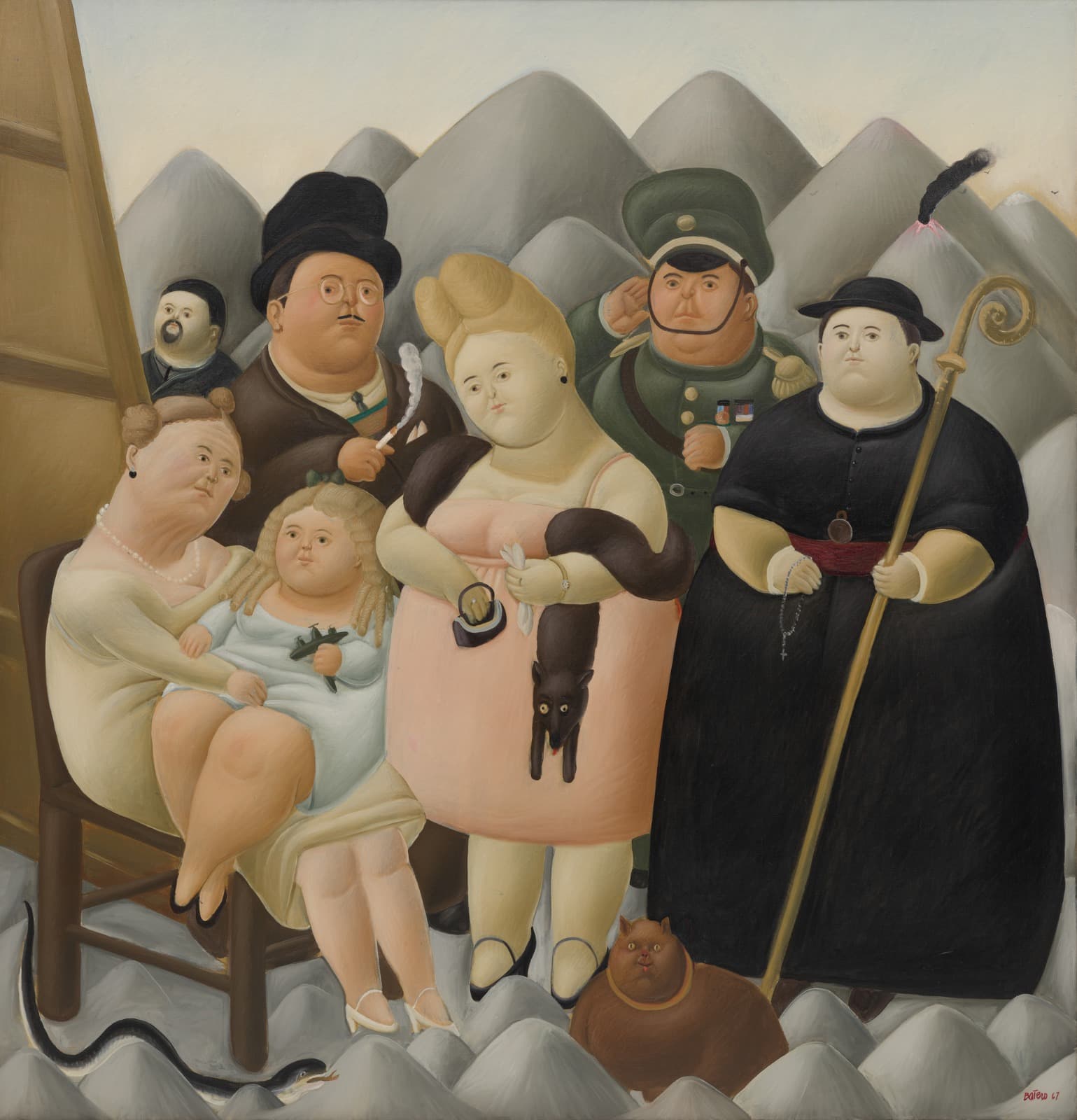
President, wife, child, bishop and general, all inflated into balloons and posed with great solemnity in front of a volcano.

The episode appears in no Gospel at all, and Altdorfer nearly buries the figures under a forest of enormous trees and luminous sky.

Herod gestures from a balcony while soldiers pull babies out of their mothers' arms. Giotto carries the horror on the mothers' faces alone.

The lyrical Bosch, all calm light and wide landscape, except for the small insect-demon with a human face tending a fire in the corner.

Lotto crops the Passion down to one tear-streaked head at the surface, with soldiers' hands coming in from the edges of the frame.

Eden on one side of the rock arch, blasted wilderness on the other, and Cole lets the landscape carry the entire moral argument.
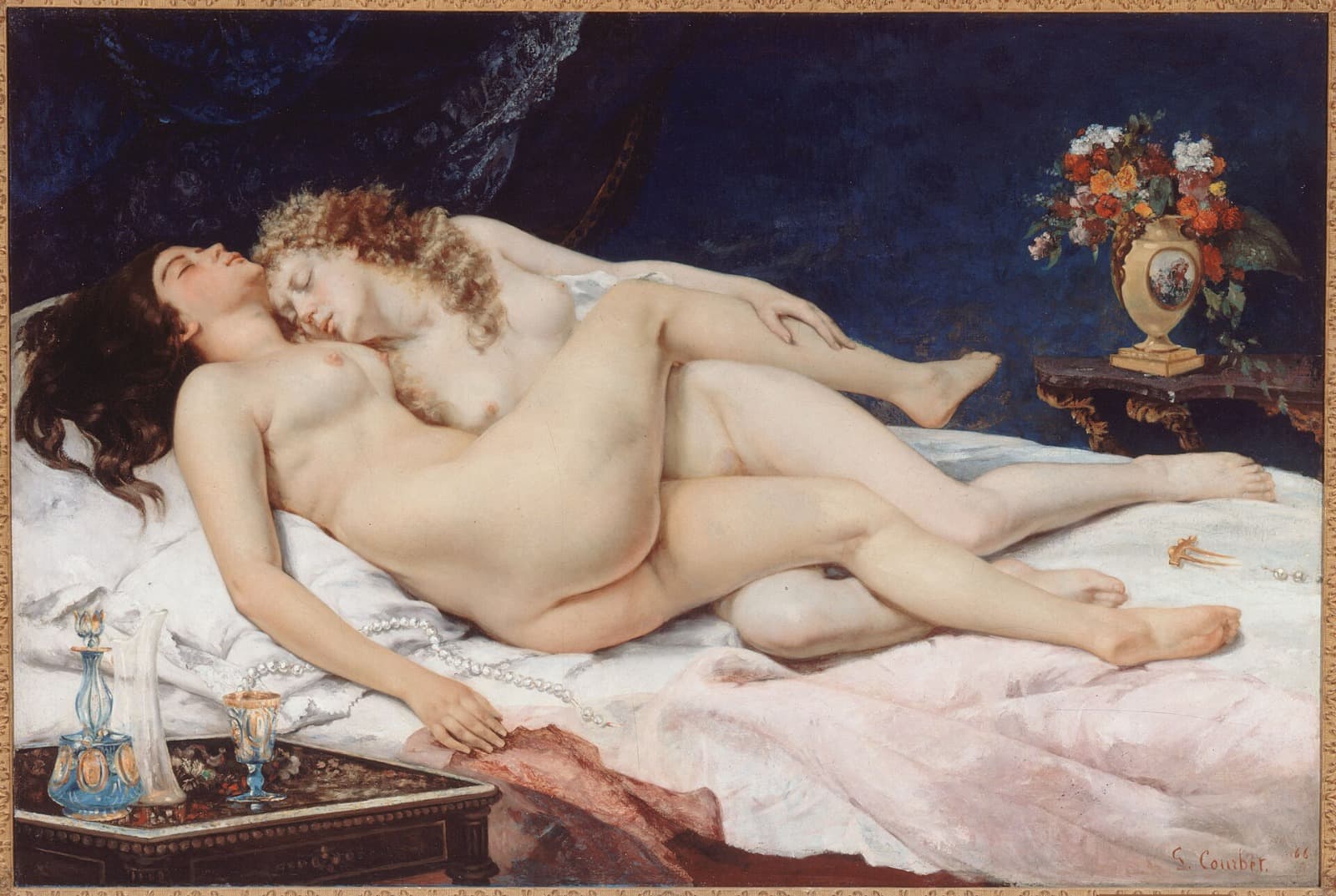
Two women asleep and entwined, painted on private commission and therefore out of reach of the Salon and its proprieties.
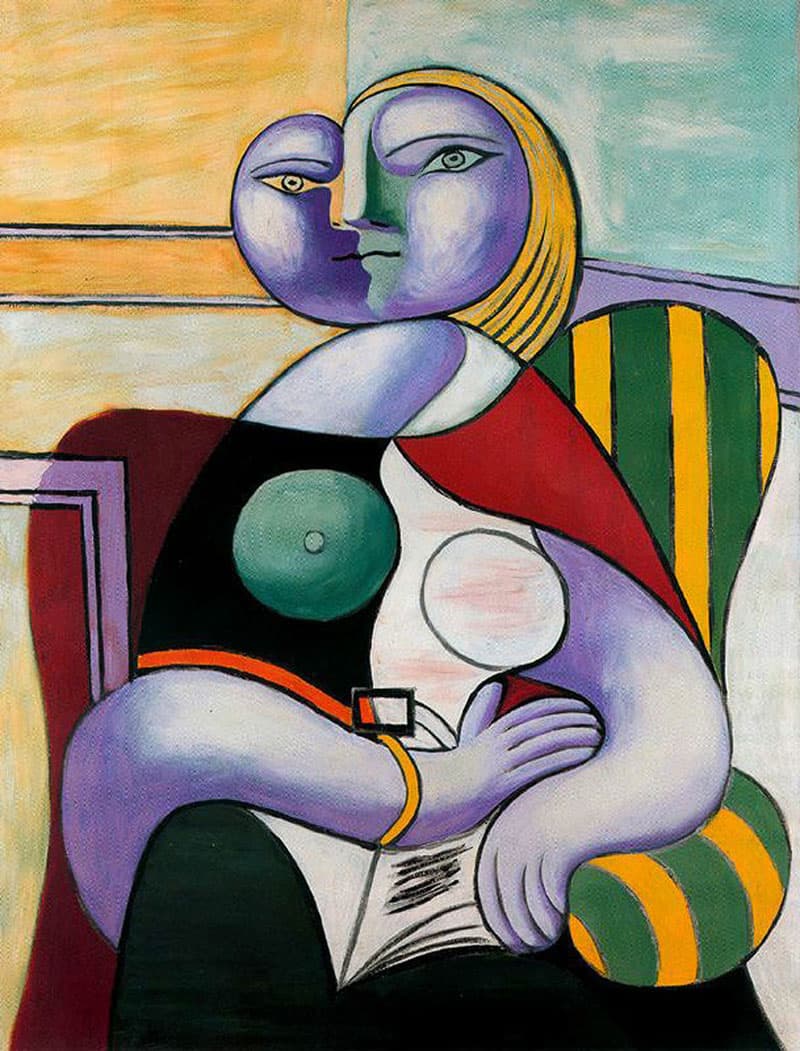
Marie-Thérèse has fallen asleep over her book with her head on her arms, from the year Picasso painted her over and over.

The Devil offers all the kingdoms of the world, rendered as tiny gold-edged walled towns scattered down the slopes, and is refused.
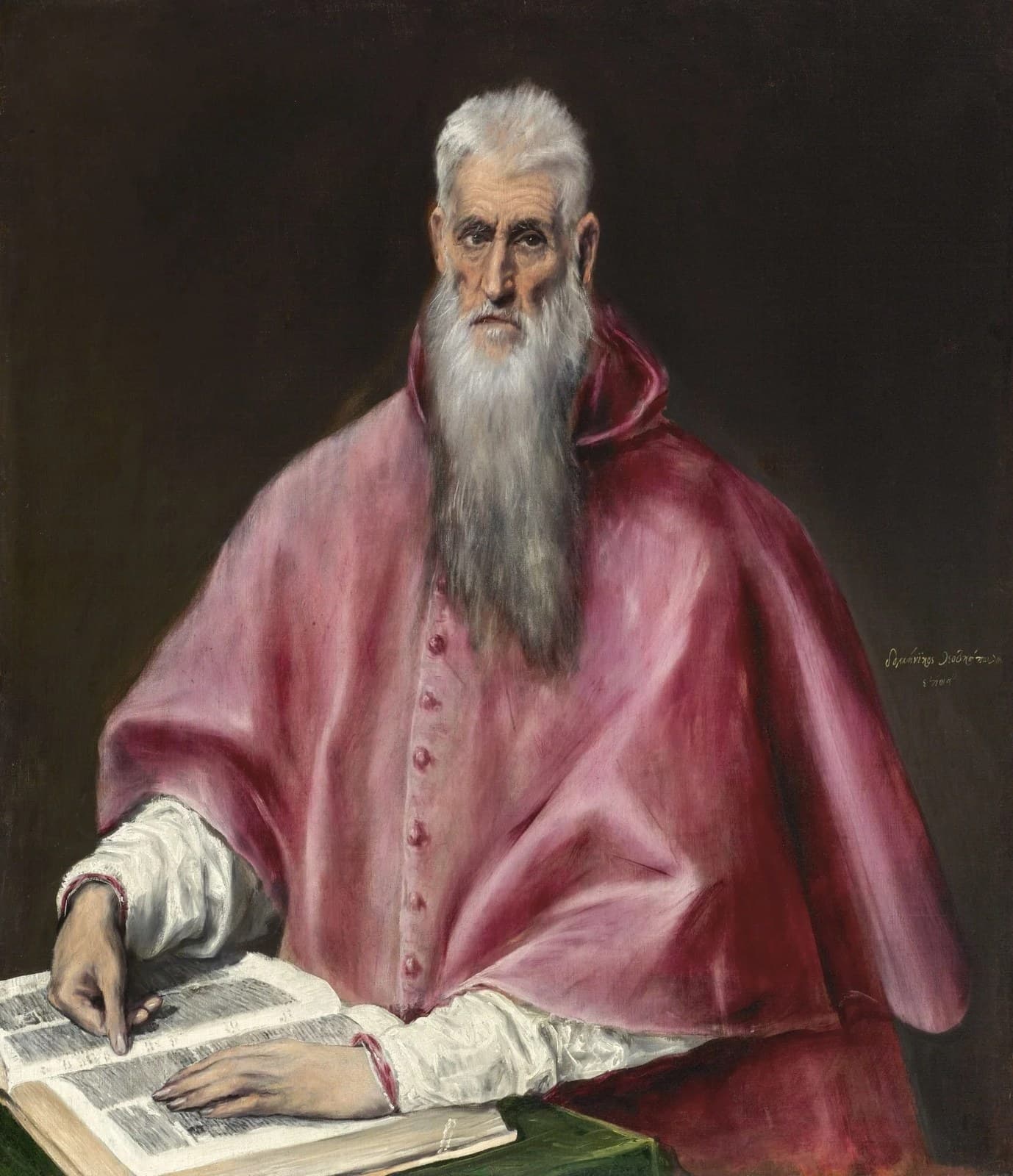
Not the desert hermit but the Doctor of the Church, in cardinal's red with one long hand resting on his own translation of the Bible.
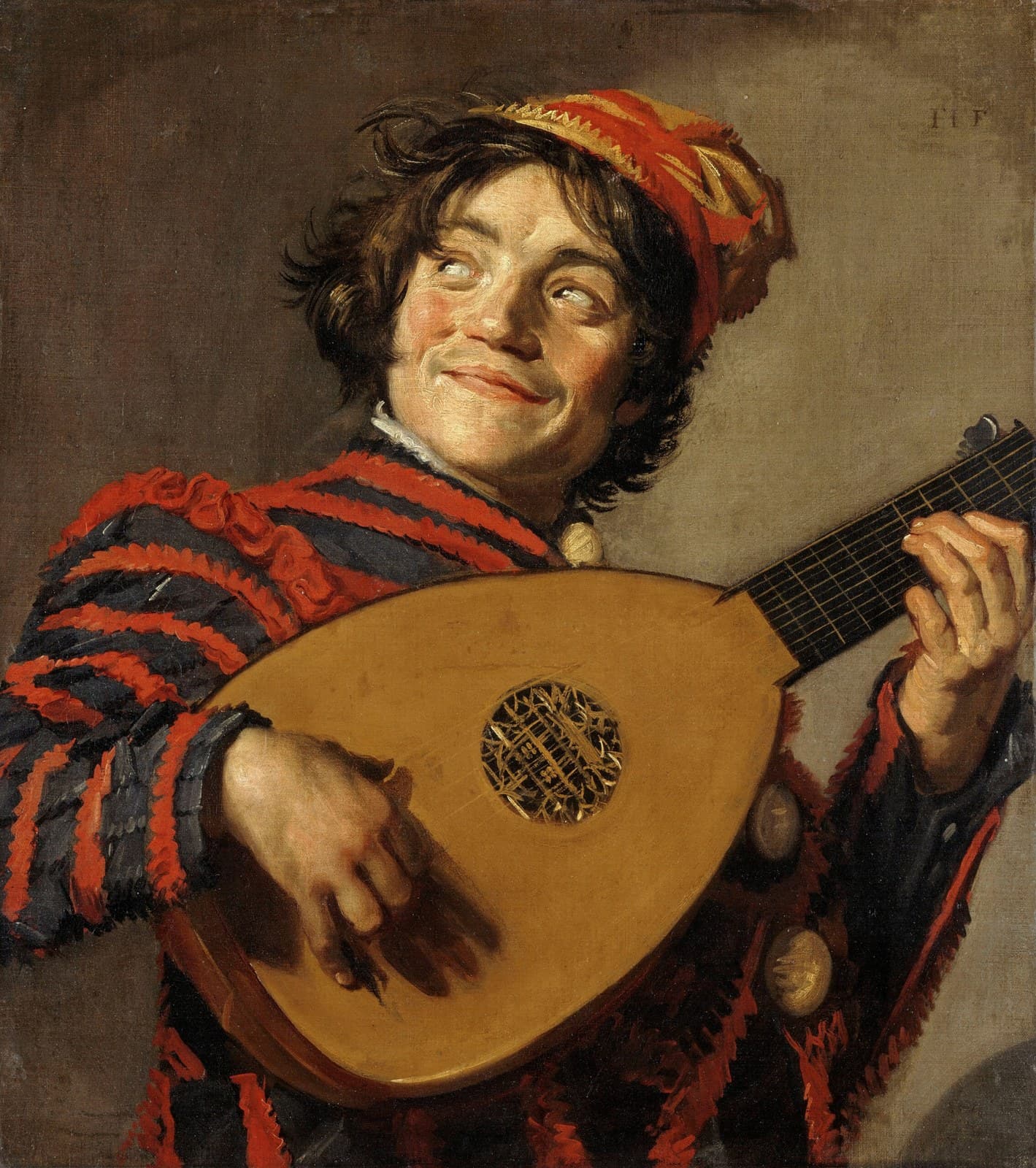
Caught mid-strum with his cap askew and his mouth open, painted so fast the brushstrokes still seem to be moving.

Neptune drives his trident down to still the waters. It was made for a fountain, so real water once finished the sculpture.

Rivermen break off work for a card game on a flatboat, arranged with a stillness that lifts the scene toward history painting.
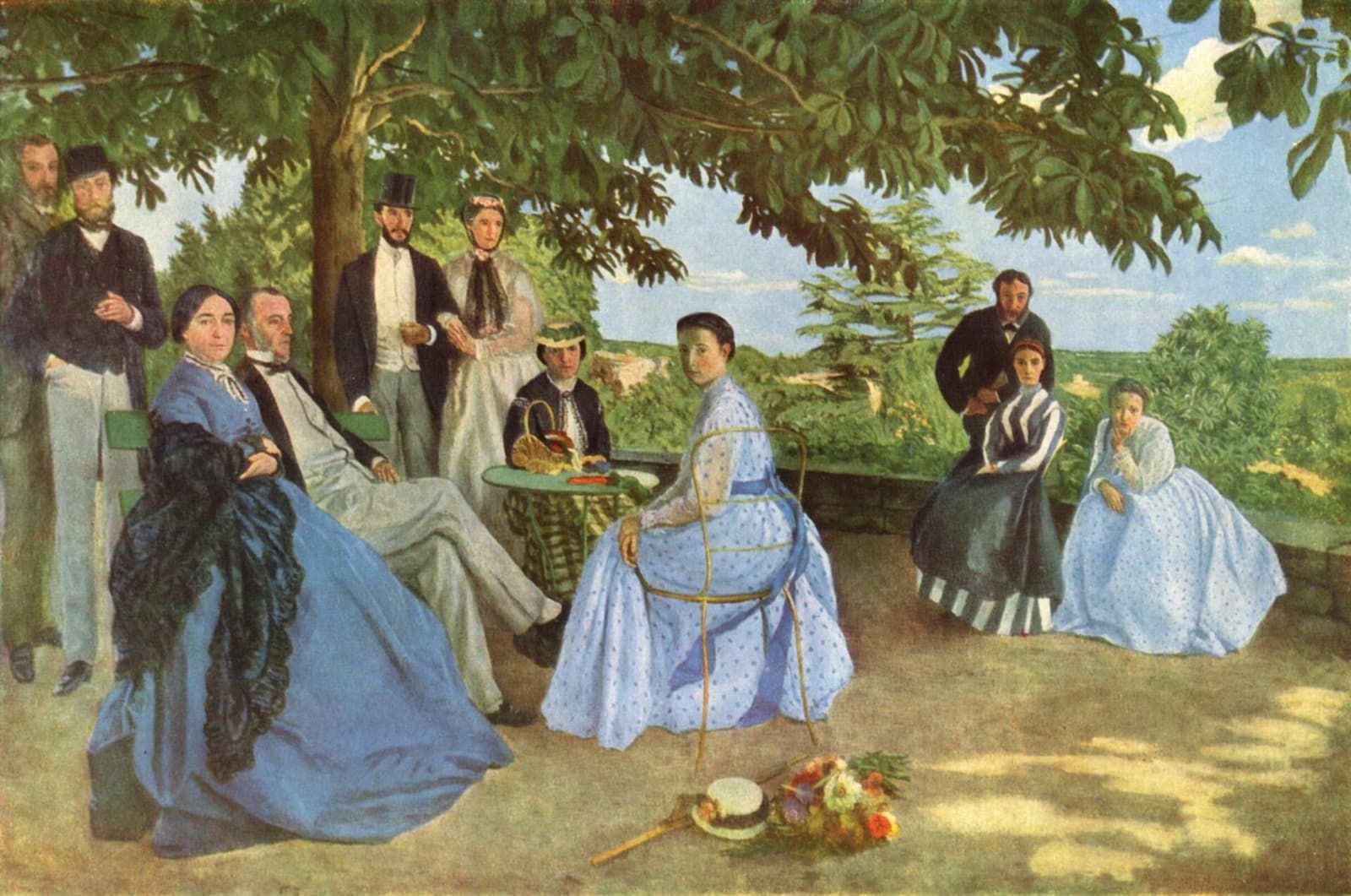
Eleven of the painter's family on a shaded terrace near Montpellier. Bazille was killed in the Franco-Prussian War at twenty-eight.