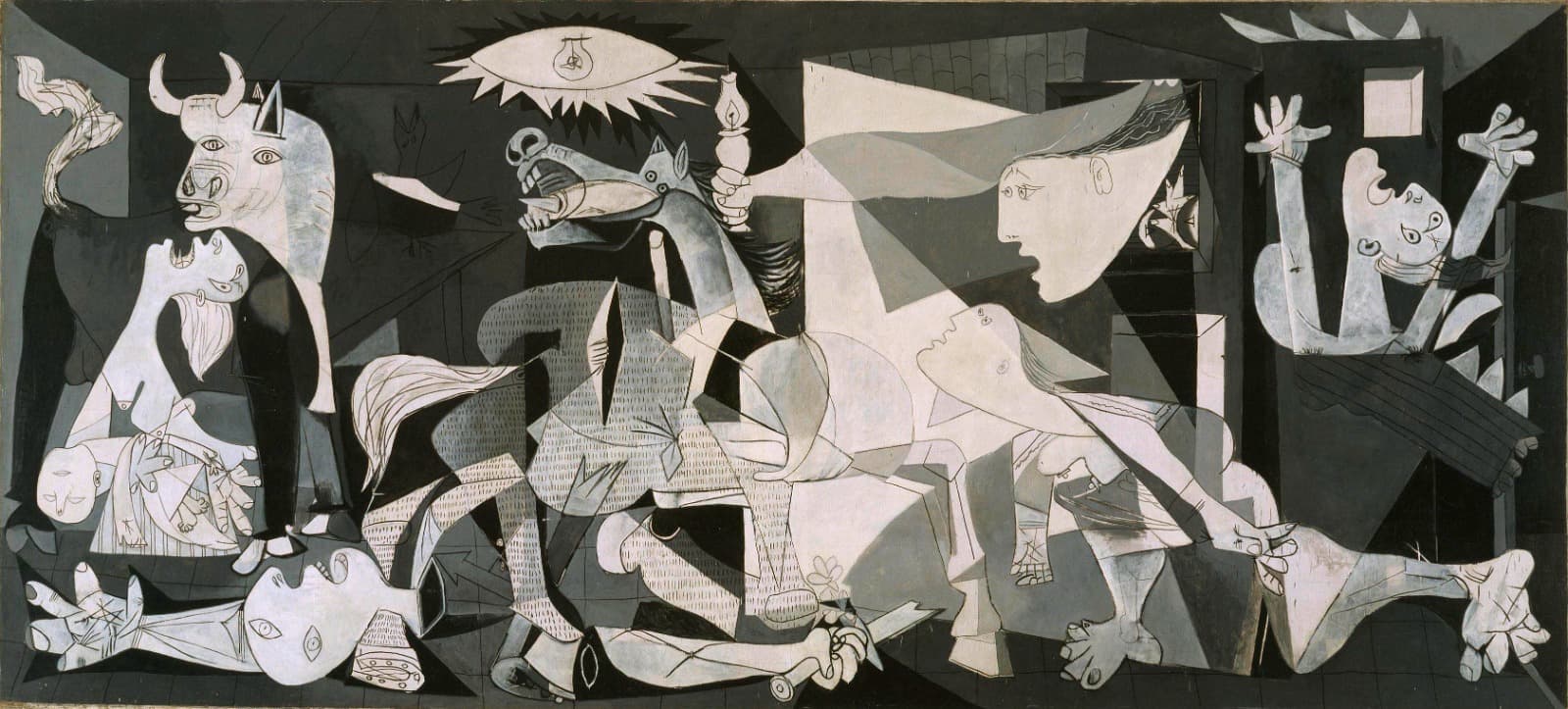
Guernica
1937 · Museo Reina Sofia, Madrid
A screaming horse, a mother with her dead child, all in grey. Picasso painted it in weeks after German bombers leveled a Basque town.
★ 9.9
 skopia
A screaming horse, a mother with her dead child, all in grey. Picasso painted it in weeks after German bombers leveled a Basque town.
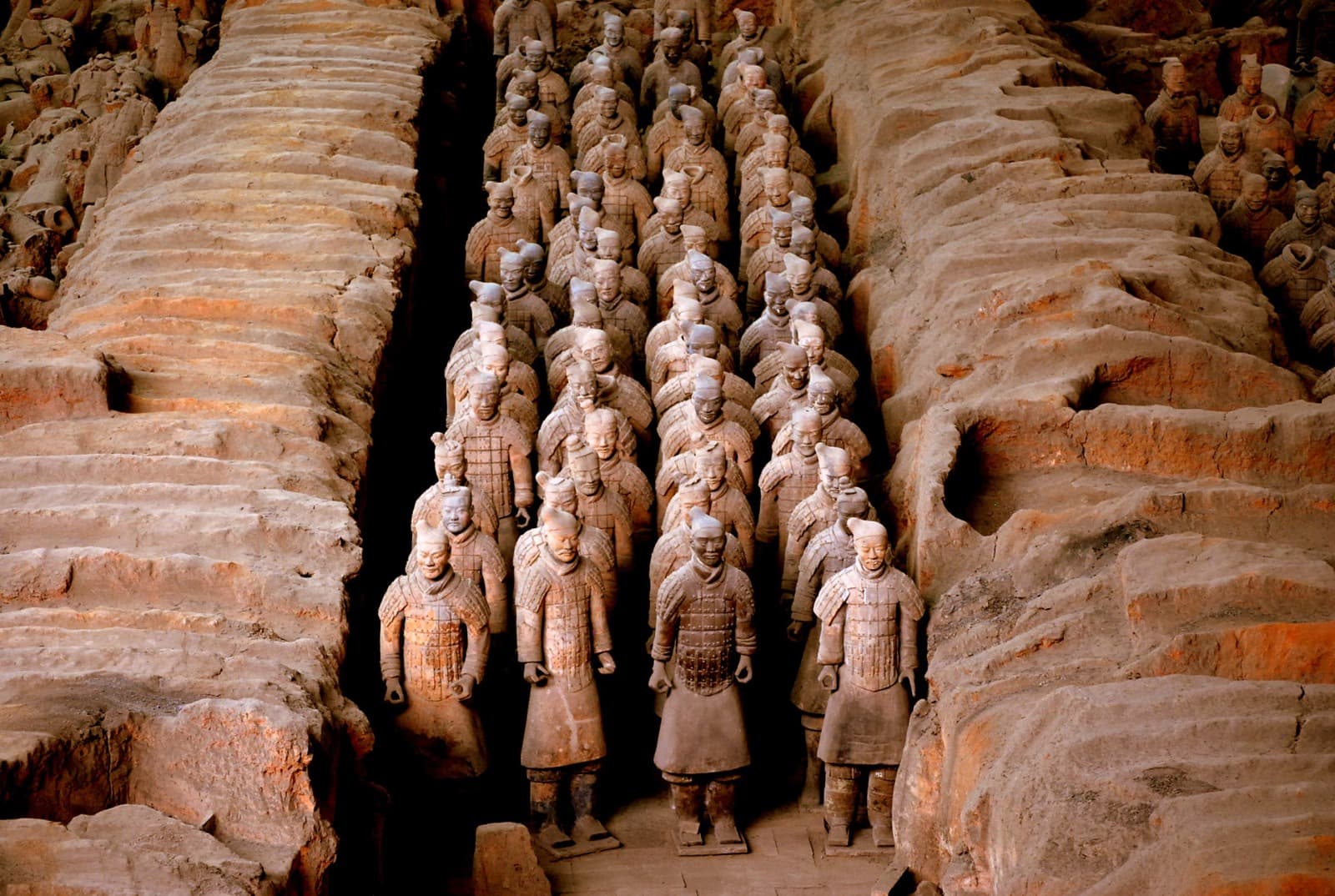
Thousands of life-size clay soldiers in battle formation, no two faces alike, guarding an emperor's tomb since 210 BC.

The Spanish general stops the defeated Dutchman from kneeling and lays a hand on his shoulder. Spaniards still call the picture The Lances.

Tens of thousands of tiny soldiers fight under a sky that curves like the whole earth. Painted while the Ottomans were pressing on Vienna.
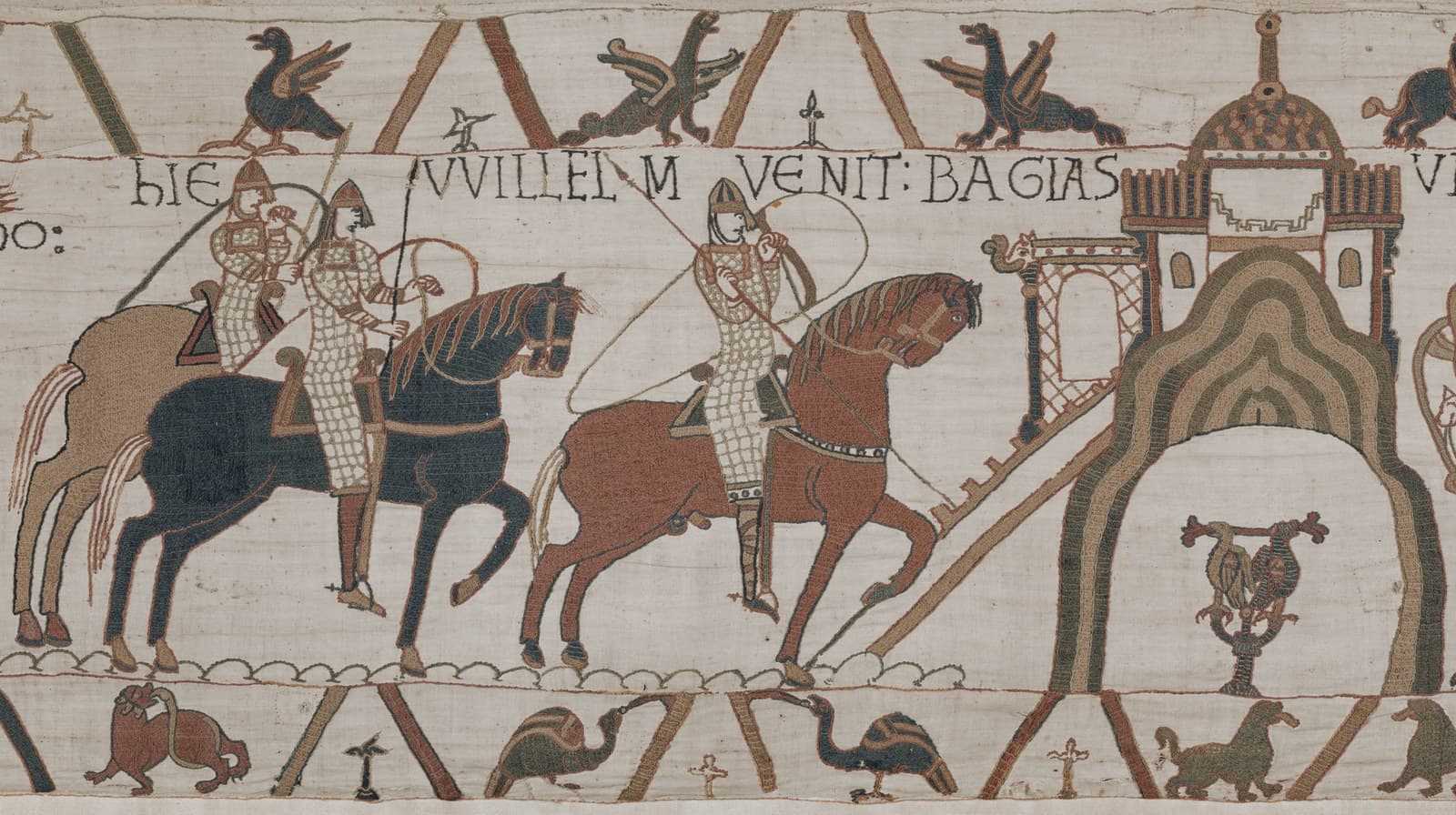
Seventy meters of wool telling the conquest of England like a strip cartoon. Not a tapestry at all, and probably stitched by English hands.
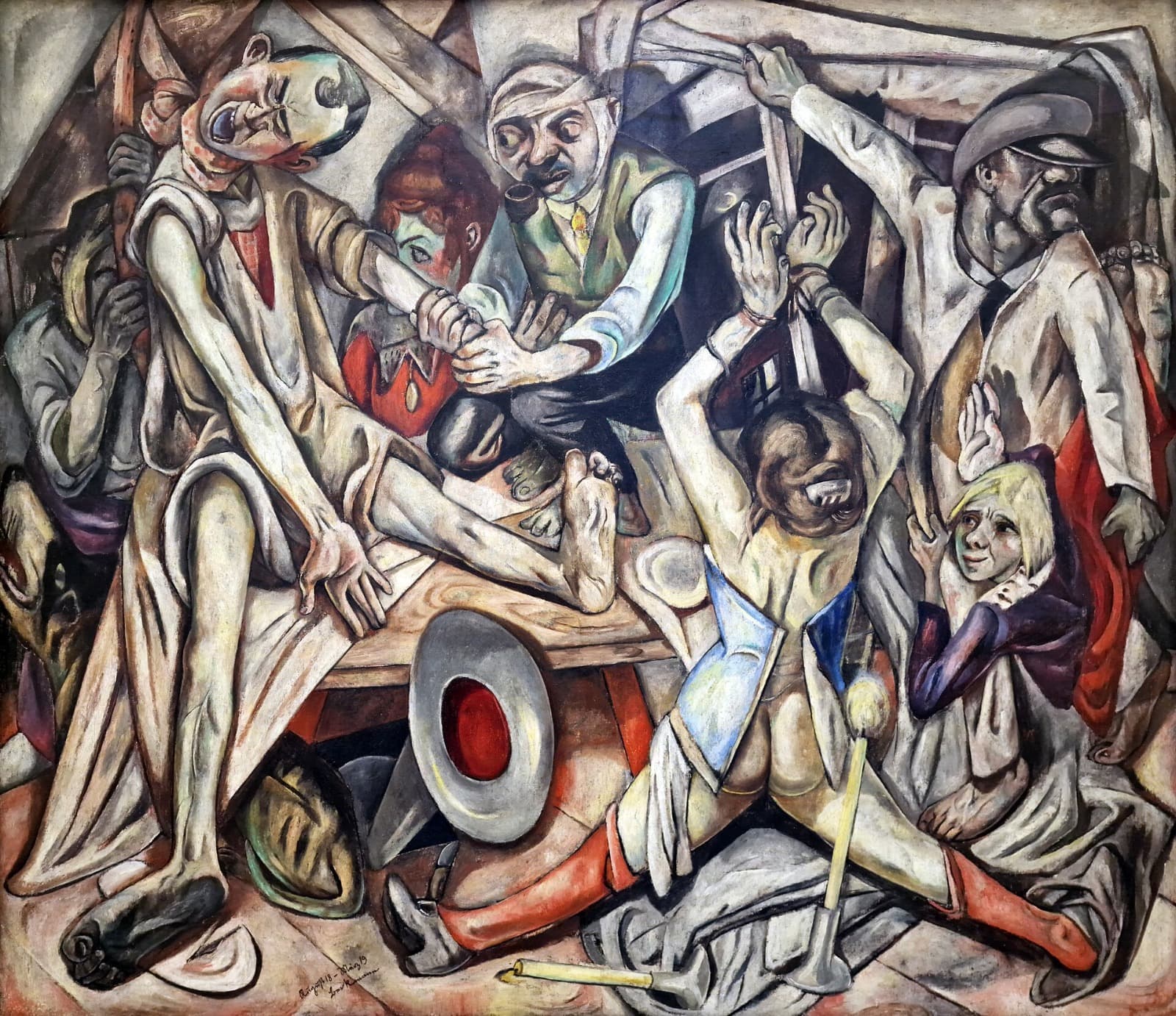
A family is tortured in a room too small for it, painted in Germany in 1919 with the war and the revolution just finished.

Broken lances lie along the receding lines of a perspective grid. Vasari said Uccello sat up all night muttering about how sweet it was.

The central panel of three, with the Florentine commander charging in a gold-and-scarlet hat on a horse turned like a carousel figure.

Hersilia throws herself between the two armies with her arms out. David painted it after the Terror, arguing for reconciliation instead of oaths.

A Union jacket lies discarded in the corner while the man who wore it swings a scythe through wheat, which is the whole point.

Ernst made the eaten-away textures by pressing and lifting paint, working on it while fleeing occupied Europe for America.
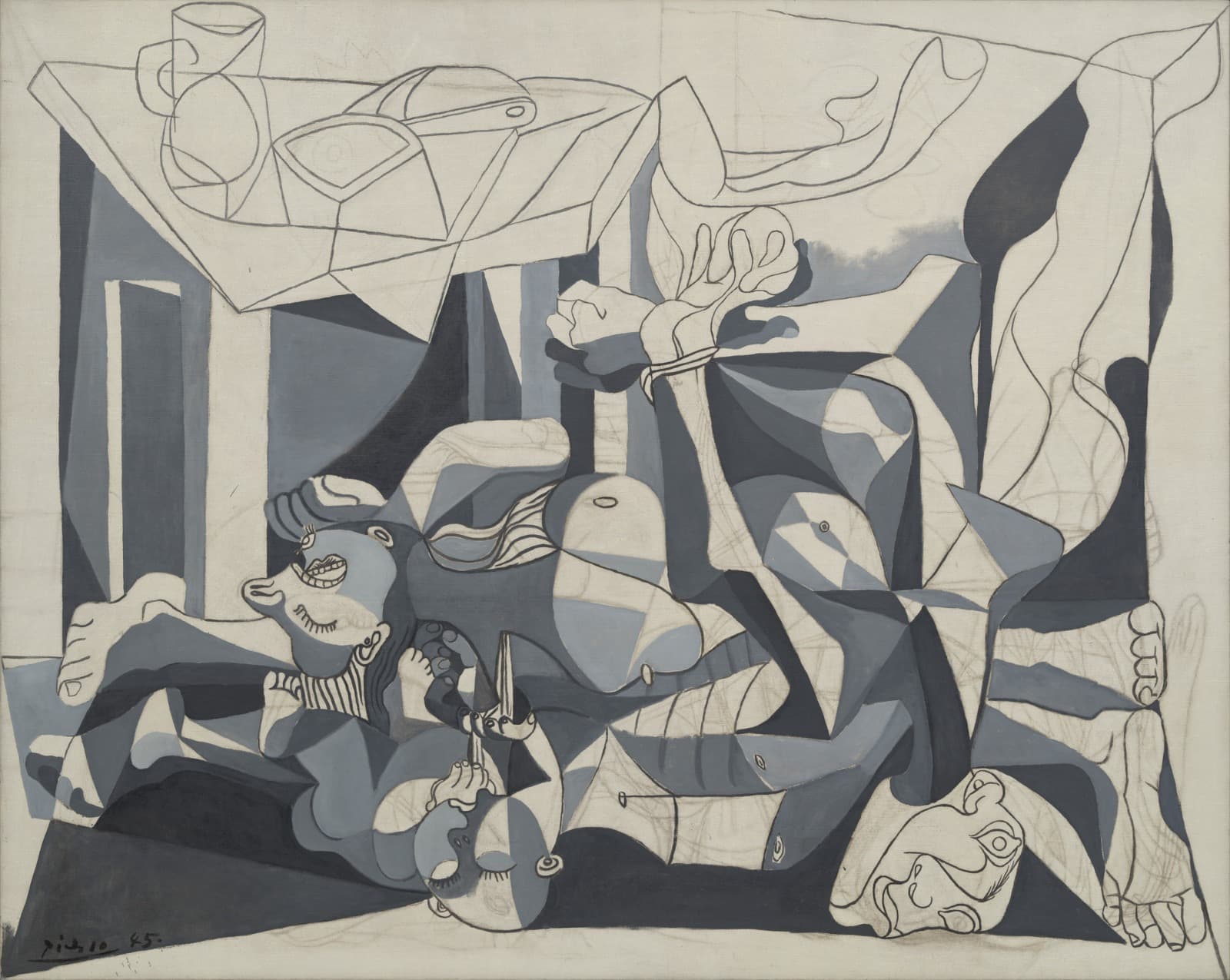
Bodies lie heaped and bound under a kitchen table, in grey. Picasso left it unfinished, painted after the camps were opened.

Splintered stumps and shell craters under a cold sun, and Nash gave it that title on purpose, as an official British war artist.