
The Persistence of Memory
1931 · Museum of Modern Art, New York City
Dalí said the soft watches came to him from a camembert melting in the sun, and he painted them with hallucinatory precision.
★ 8.7
 skopia
Dalí said the soft watches came to him from a camembert melting in the sun, and he painted them with hallucinatory precision.

The kneeling figure on the left is the same shape as the stone hand on the right, holding an egg with a flower coming out.

A bee circles a pomegranate, and in the second before waking it has become two tigers and a bayonet coming at Gala's arm.

The room is a twelve-sided glass chamber and a torso hovers over the table. Dalí called this sort of thing nuclear mysticism.

Elephants on impossibly long insect legs carry obelisks and naked women across the plain while the saint holds up a makeshift cross.

Three swans on a lake, and in the reflection the necks have become trunks and the trees have become legs.
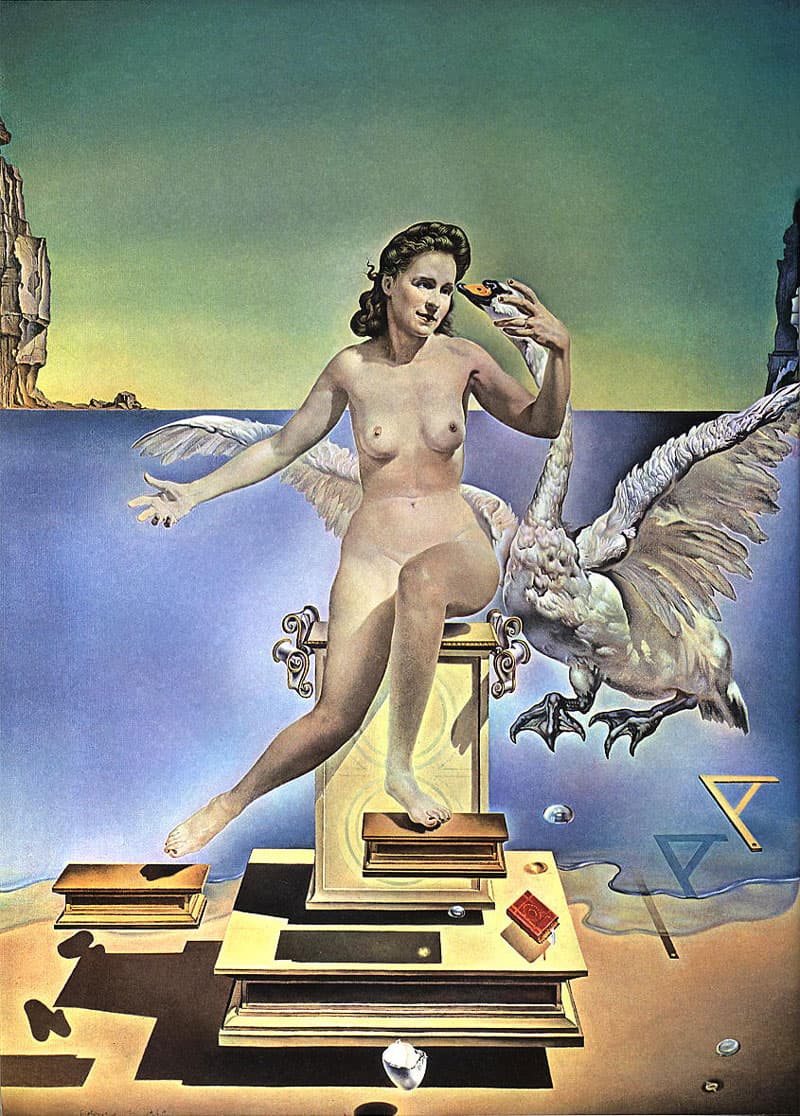
Nothing in the picture touches anything else. Dalí built it on the physics of the atom, where matter is mostly empty space.

Dalí went back to his own melting watches and broke the ground beneath them into floating bricks, for the atomic age.
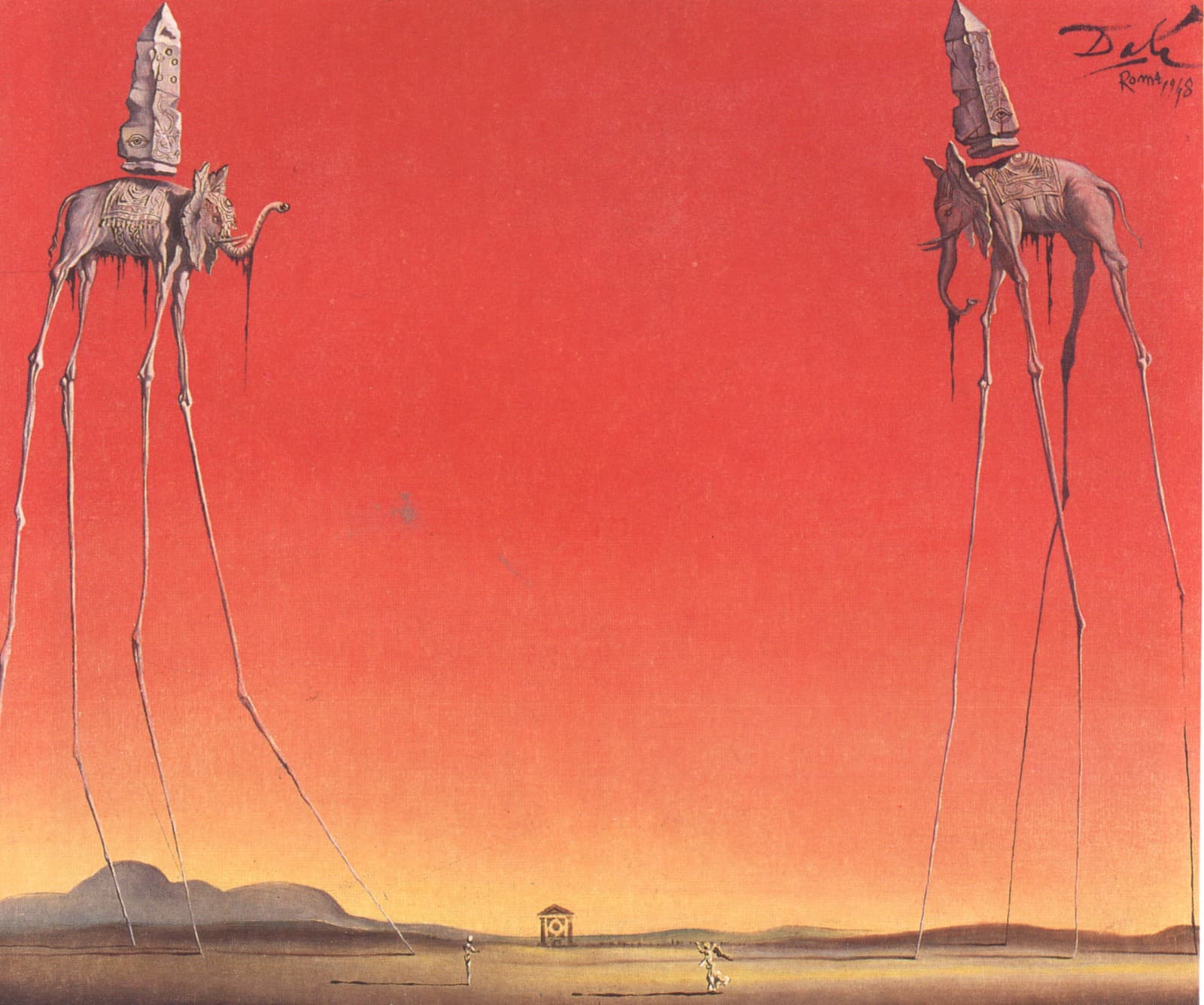
Two elephants carrying obelisks on legs far too spindly to hold them, which is the entire effect and it works.