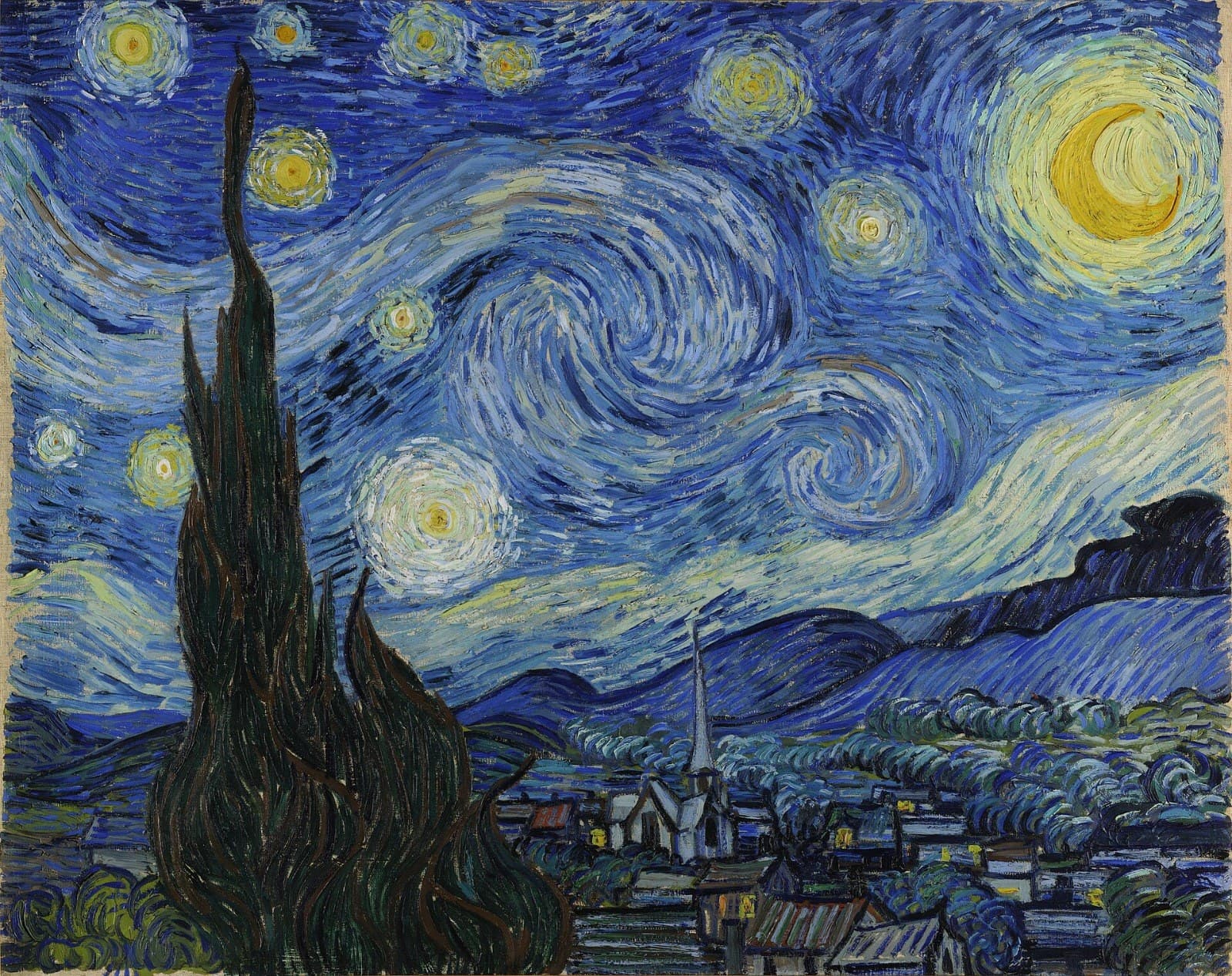
Starry Night
1889 · Museum of Modern Art, New York City
Van Gogh painted the churning sky and its eleven stars from a window of the asylum at Saint-Rémy, partly from memory.
★ 9.6
 skopia
Van Gogh painted the churning sky and its eleven stars from a window of the asylum at Saint-Rémy, partly from memory.

Three hunters come home over the hill with one thin catch while villagers skate below. Bruegel painted it for a series on the months.

Twelve meters of blue and green mountains, ground from azurite and malachite by a court prodigy said to have died before he was twenty.

A man stands on a summit with his back to us, looking out over fog, so that we end up looking at what he sees.

A wall of rock fills two-thirds of the picture and shrinks the mule train below to nothing. Fan Kuan hid his signature in the leaves.

Dalí said the soft watches came to him from a camembert melting in the sun, and he painted them with hallucinatory precision.
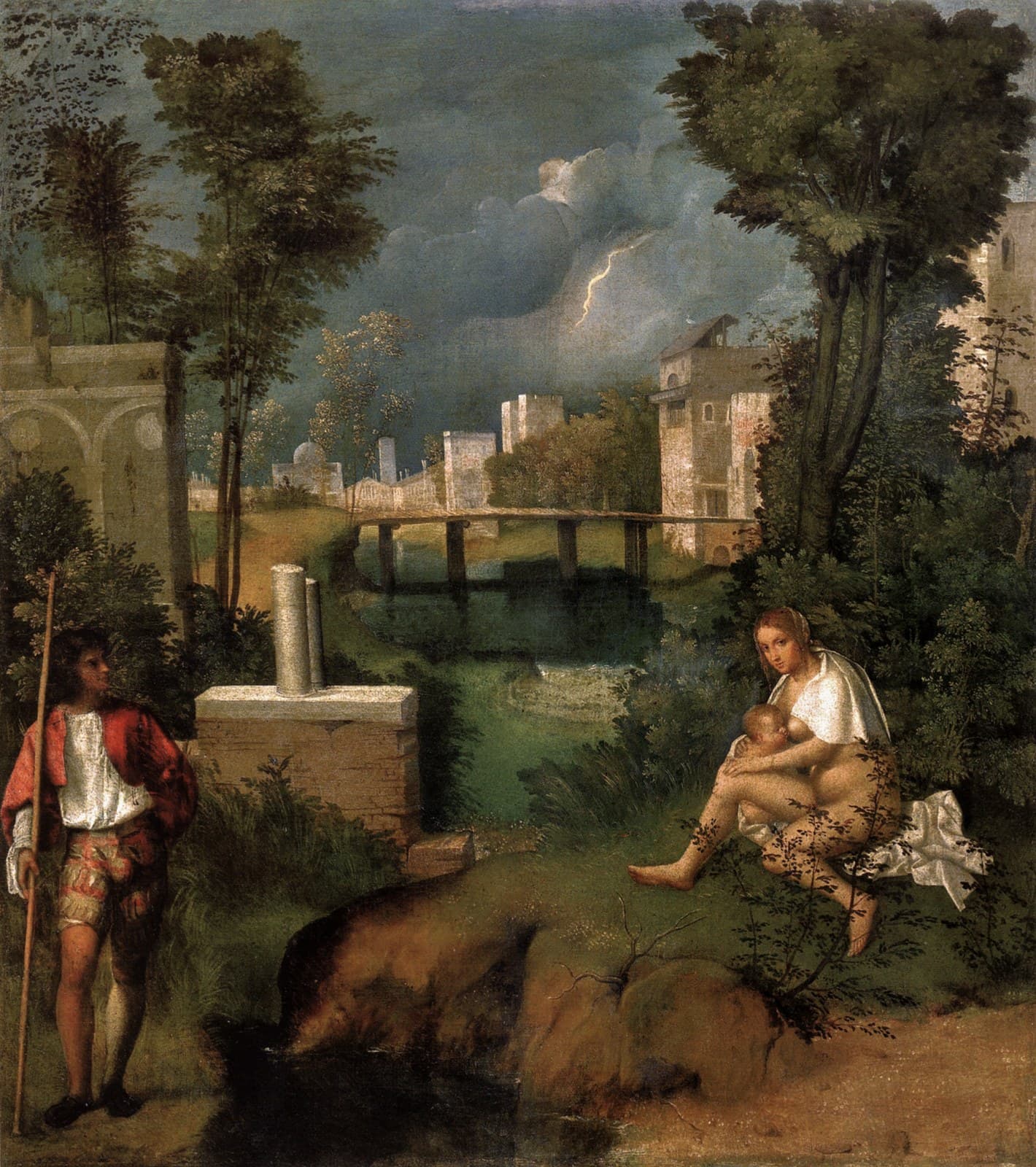
A soldier, a nursing woman, and lightning over the town beyond. Nobody has explained what connects them, and Giorgione died young leaving few certain works.

Not a calendar page but Anatomical Man, ringed by zodiac signs governing the body. All three brothers died in 1416, probably of plague.
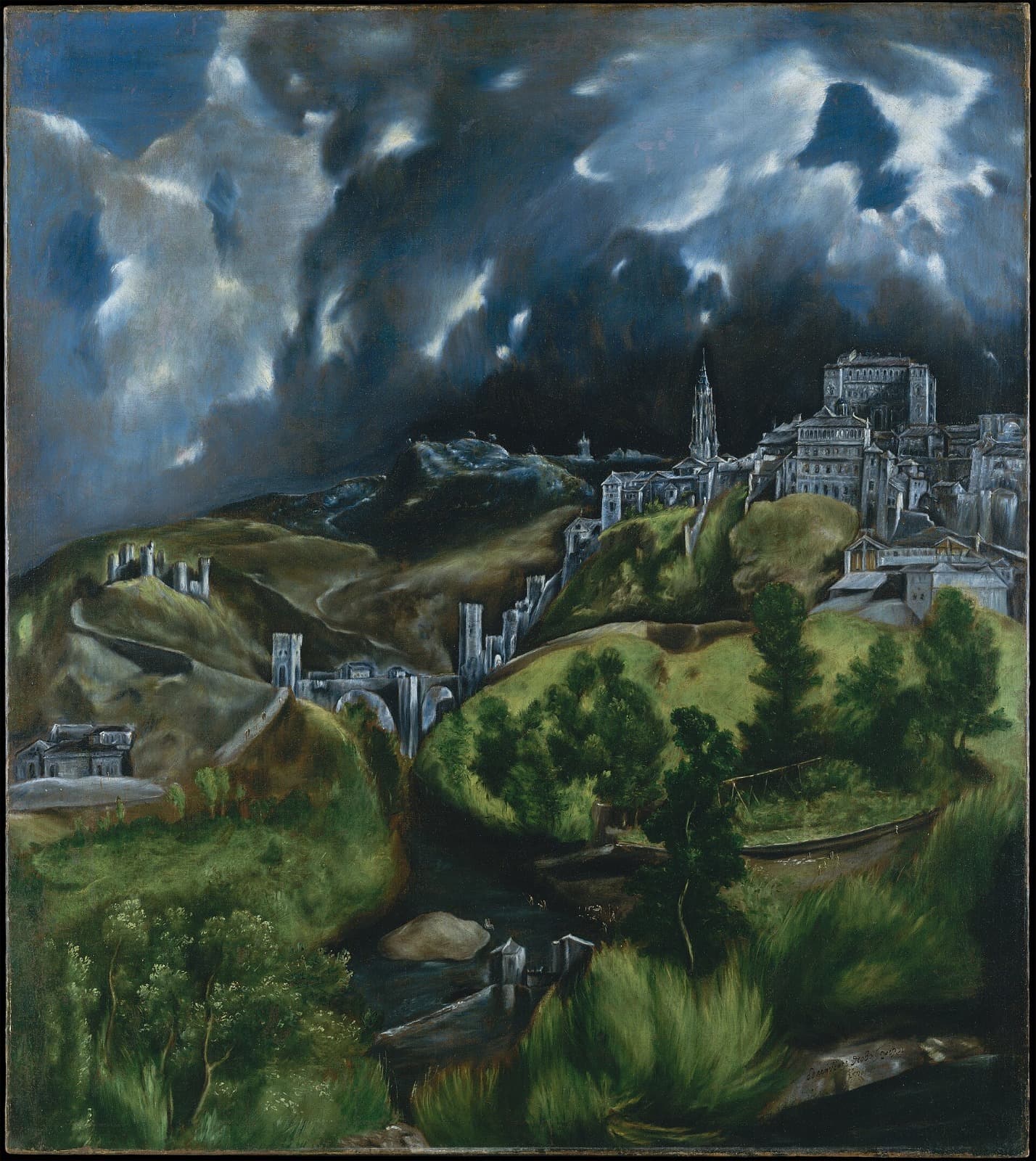
El Greco moved the cathedral tower off its real site for the sake of the composition and lit the whole city with a green storm.
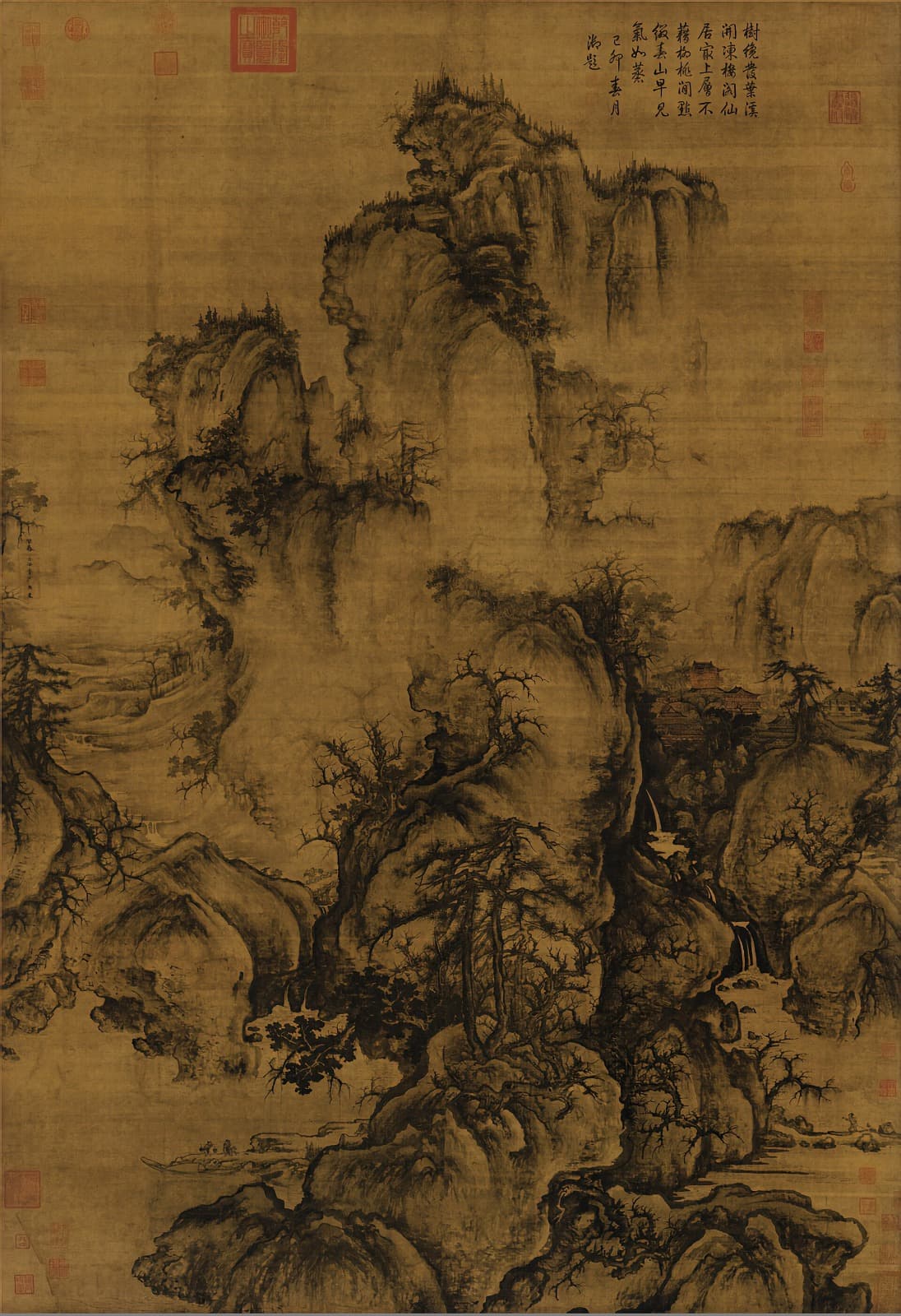
Guo Xi was court painter to the Song emperor and worked from a theory of three distances, shifting the eye between peak, valley and horizon.

Courbet gave an ordinary village funeral the scale reserved for kings and saints, and the critics were furious about it.

Nudes lounge and pipe and dance in a ring in a glade of colors nothing in nature has, a Fauve idyll from 1906.

Couples linger on the shore of Venus's island at dusk, unwilling to board. Watteau gave it to the Academy, which invented a genre to fit it.
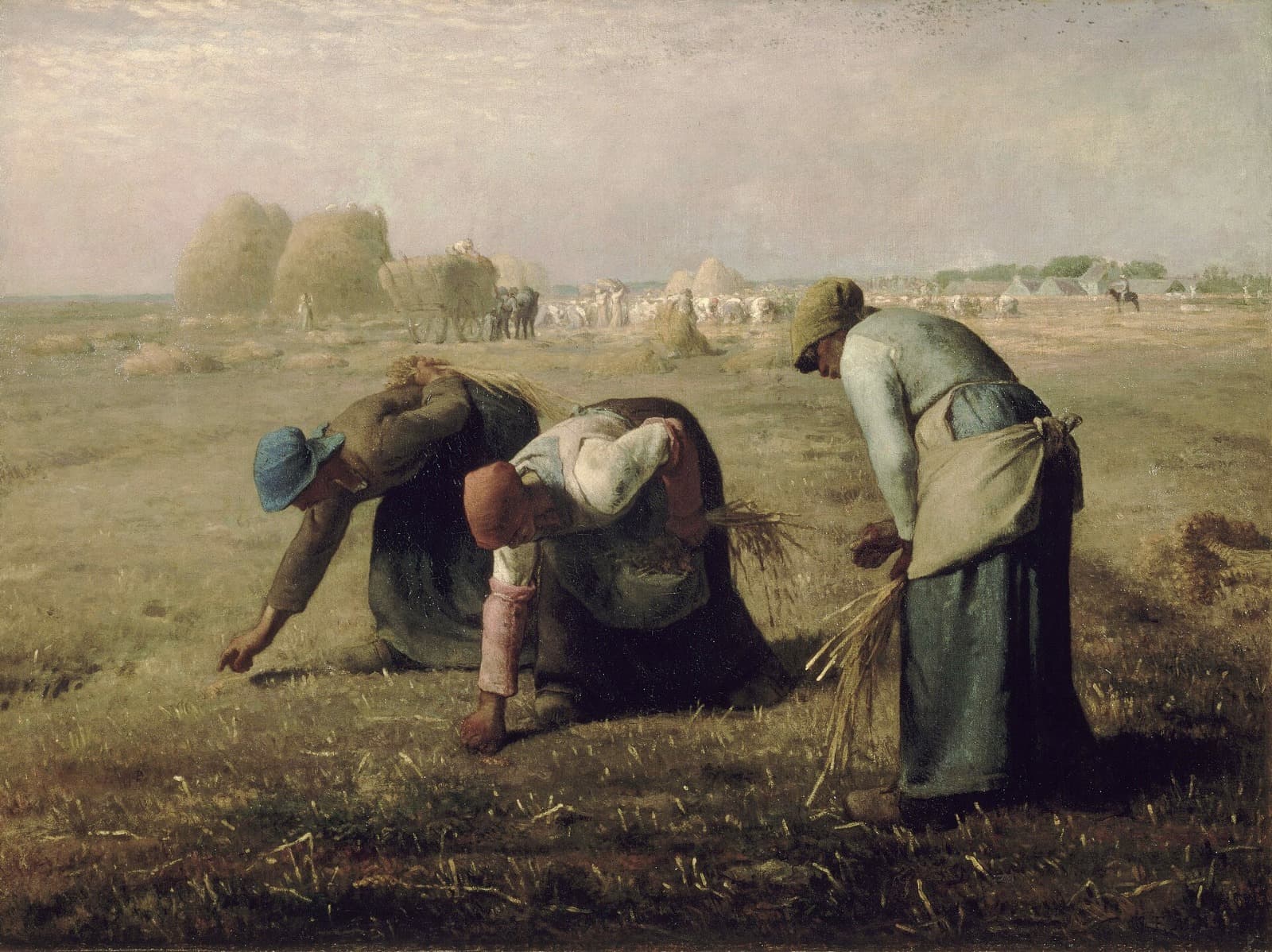
Three women bend for the stalks left after harvest while a full farm sits small in the distance, which unsettled the people buying paintings.

A mountain, a wineshop flag and a boatman conjured from a few wet blots. Sesshu made it as a parting gift for a departing pupil.
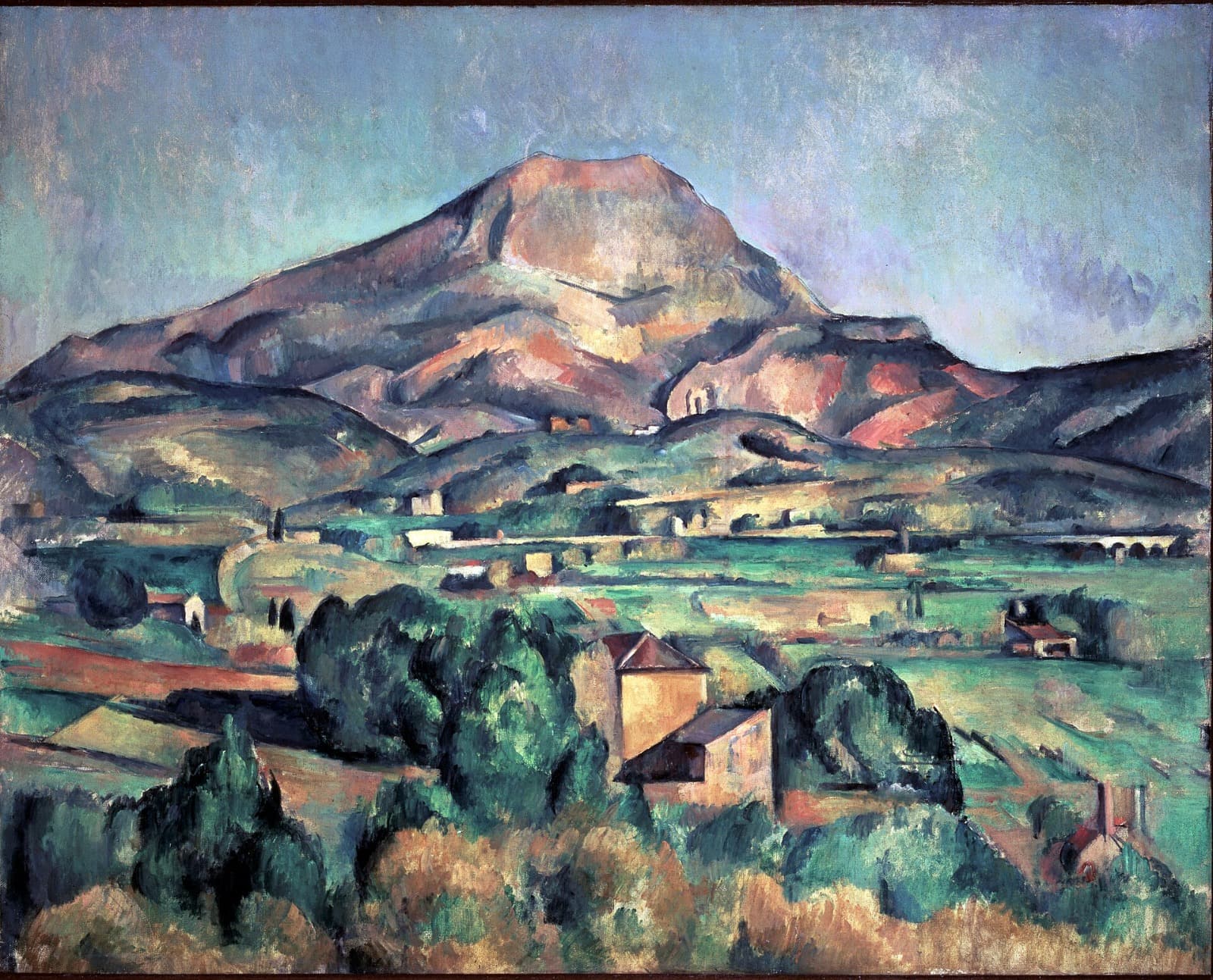
Cézanne painted his local mountain over and over, less to record it than to rebuild it out of flat patches of green, ochre and blue.

Tens of thousands of tiny soldiers fight under a sky that curves like the whole earth. Painted while the Ottomans were pressing on Vienna.

A collector loved the scroll so much he tried to have it burned with him at death. It was pulled from the fire in two pieces.
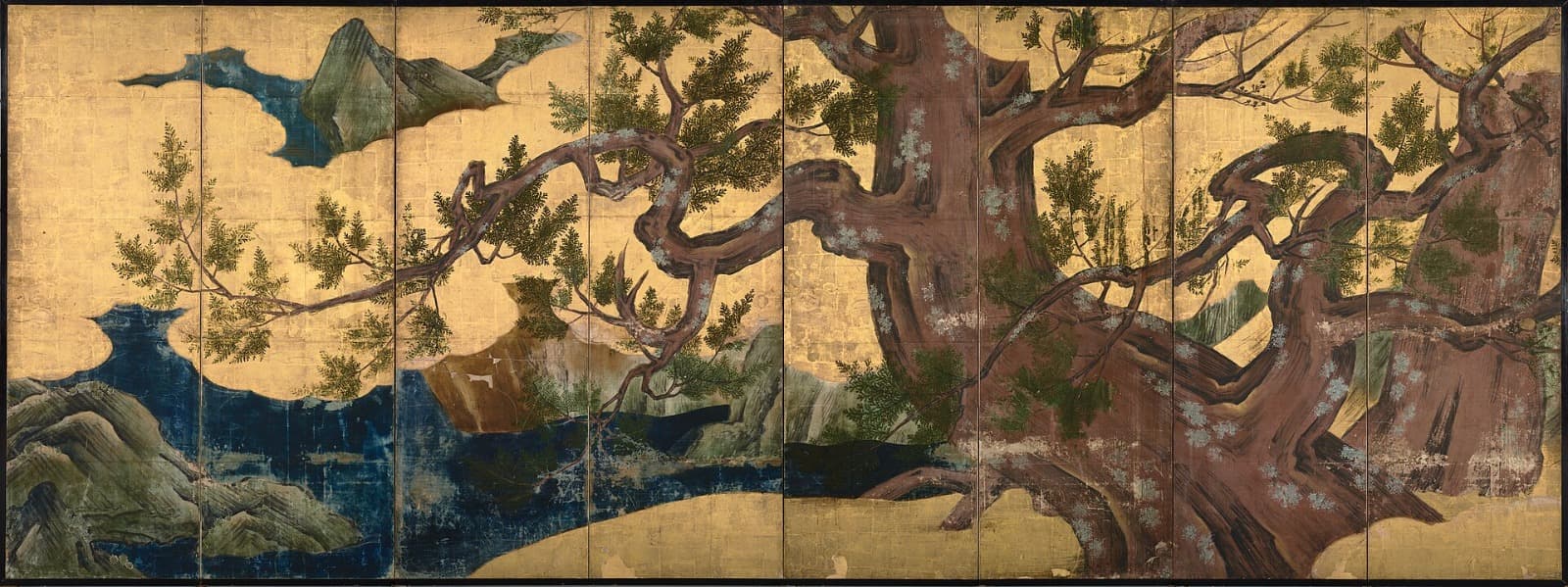
One ancient cypress sprawls across the screen against solid gold, painted by the man who decorated the castles of Nobunaga and Hideyoshi.

They called him One-Corner Ma. A scholar and a willow occupy one corner and the rest of the silk is left as air.
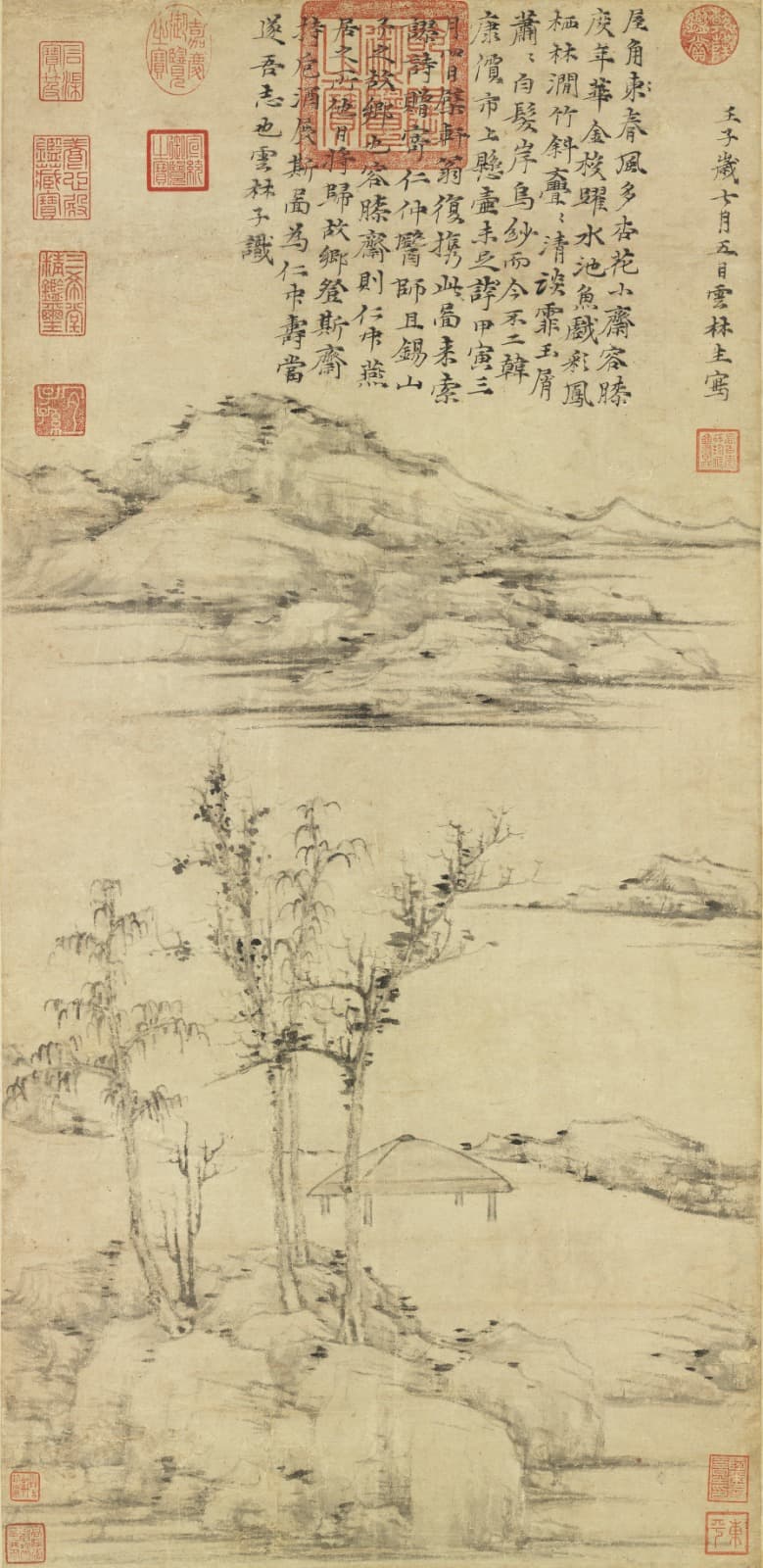
An empty pavilion, a few dry trees, no people at all. Ni Zan gave away his estate and spent his last years on a houseboat.

The tower is already leaning as it goes up, and Bruegel drew the cranes and ramps in enough detail that you could nearly build it.

Van Gogh loved the cypress and compared it to an Egyptian obelisk, then set one flaming up the right side of a Provençal field.

Monet dug the pond himself at Giverny, built the Japanese bridge over it, and then painted the place for the rest of his life.

Instead of copying idealized Chinese scenery, Jeong Seon walked out and painted a real hill above Seoul with the rain just lifting off it.
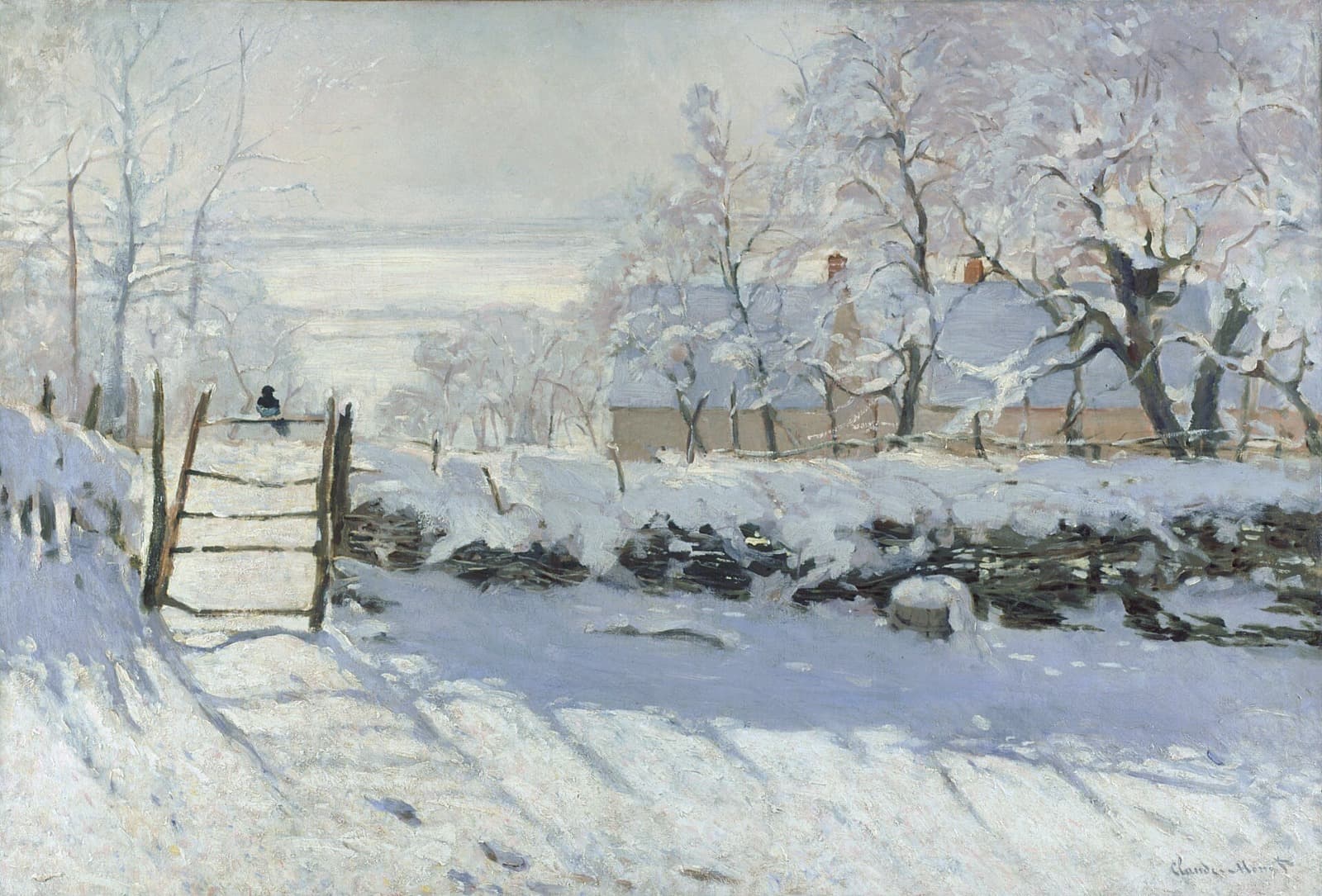
A single magpie on a gate in deep snow, the shadows tinged blue and violet rather than grey. The Salon turned it down.

Monet painted the same stacks near his house at every hour and season, so that what changes from canvas to canvas is only the light.

Flying fish, reading toads and a burning village, and in the middle of it Anthony kneels and blesses a small Christ, entirely undistracted.
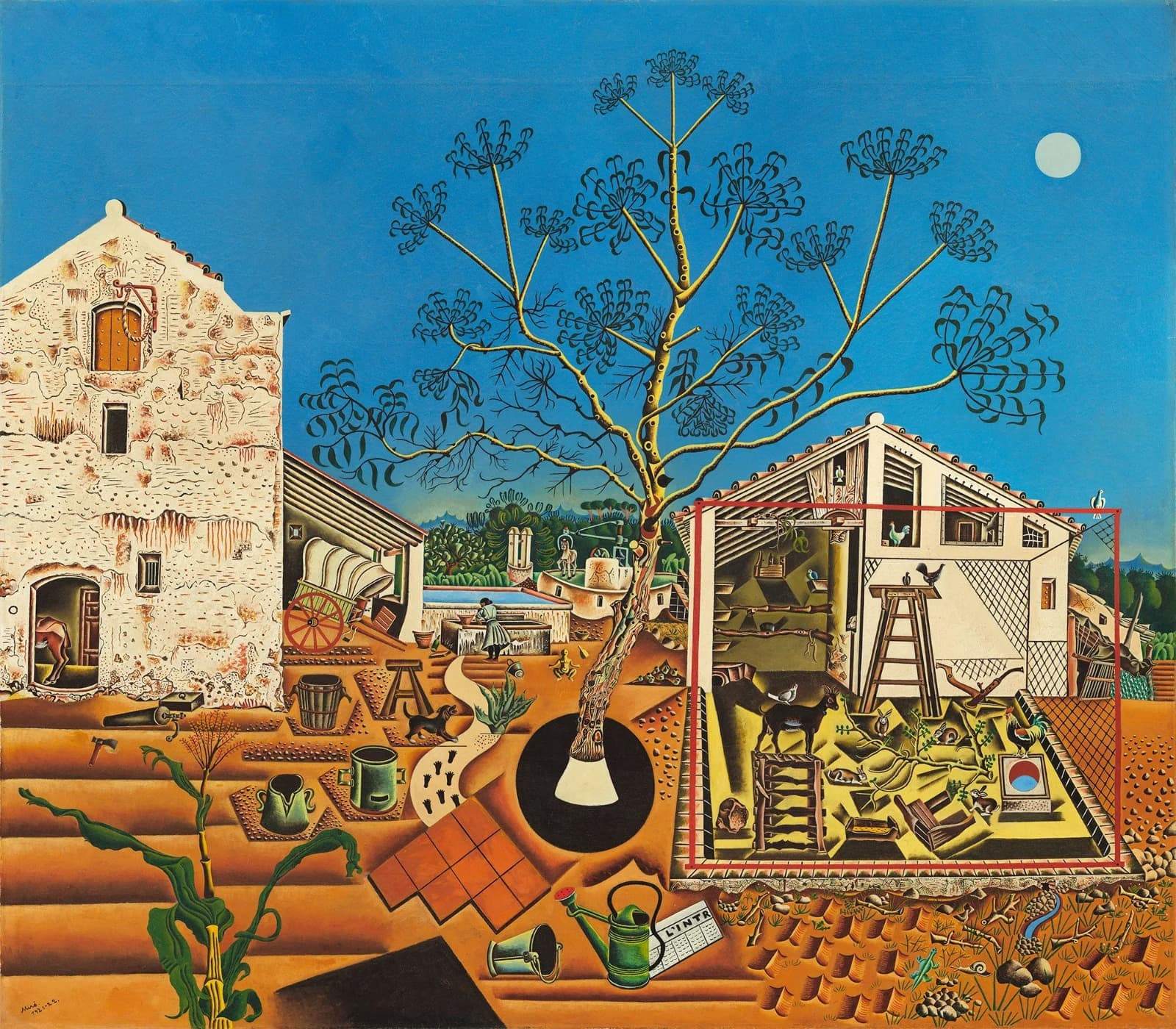

O'Keeffe collected sun-bleached bones off the desert and hung this one in the sky over the hills, with a single white hollyhock beside it.
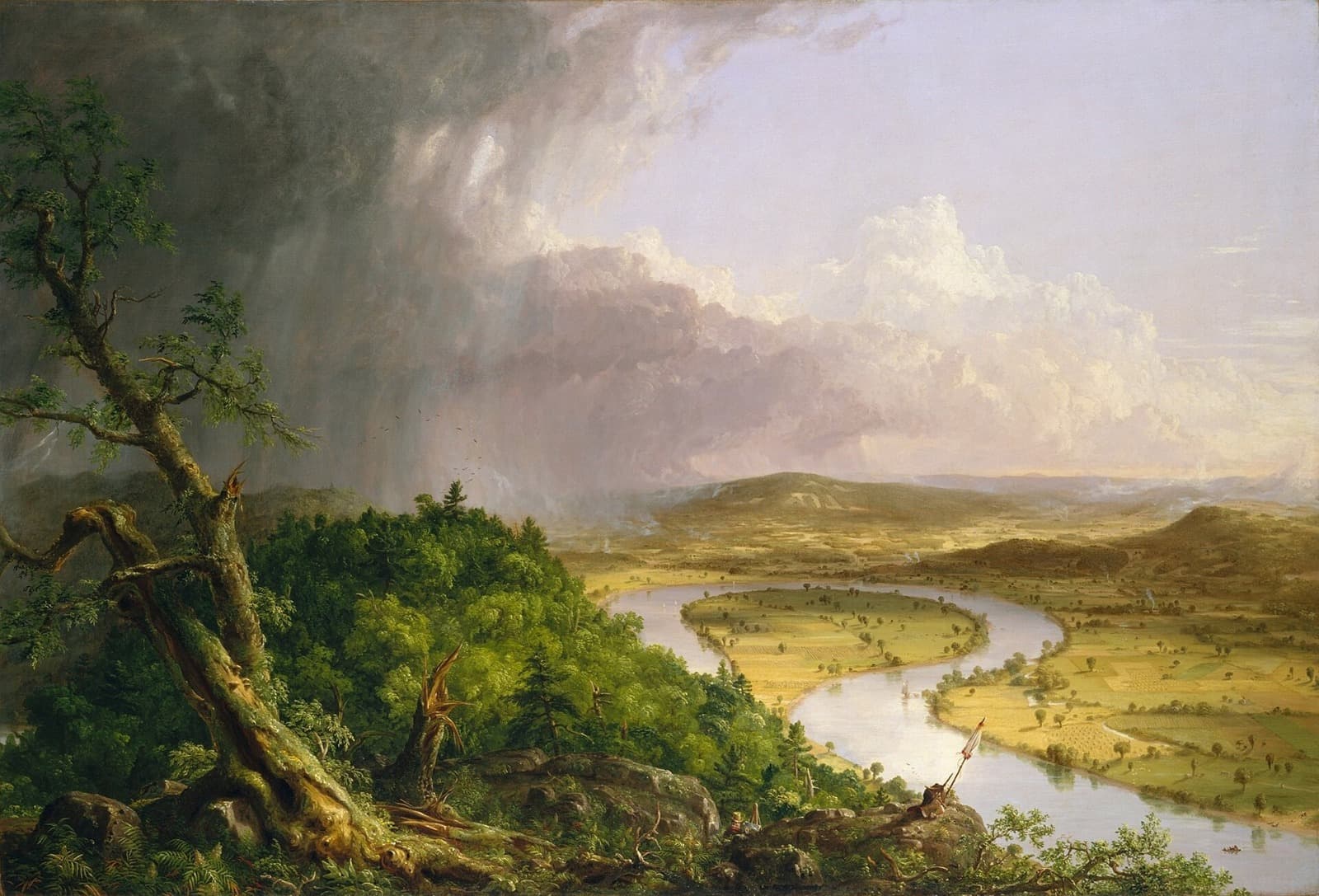
Wilderness under storm on the left, farmland in sunshine on the right, and Cole himself down in the middle, tiny, looking up from his easel.

The holy family is tiny and the landscape does everything, which is the arrangement Poussin and Claude would build whole careers on.

Two pale legs disappear into the sea in the corner while the ploughman keeps ploughing. Auden wrote a poem about exactly that indifference.
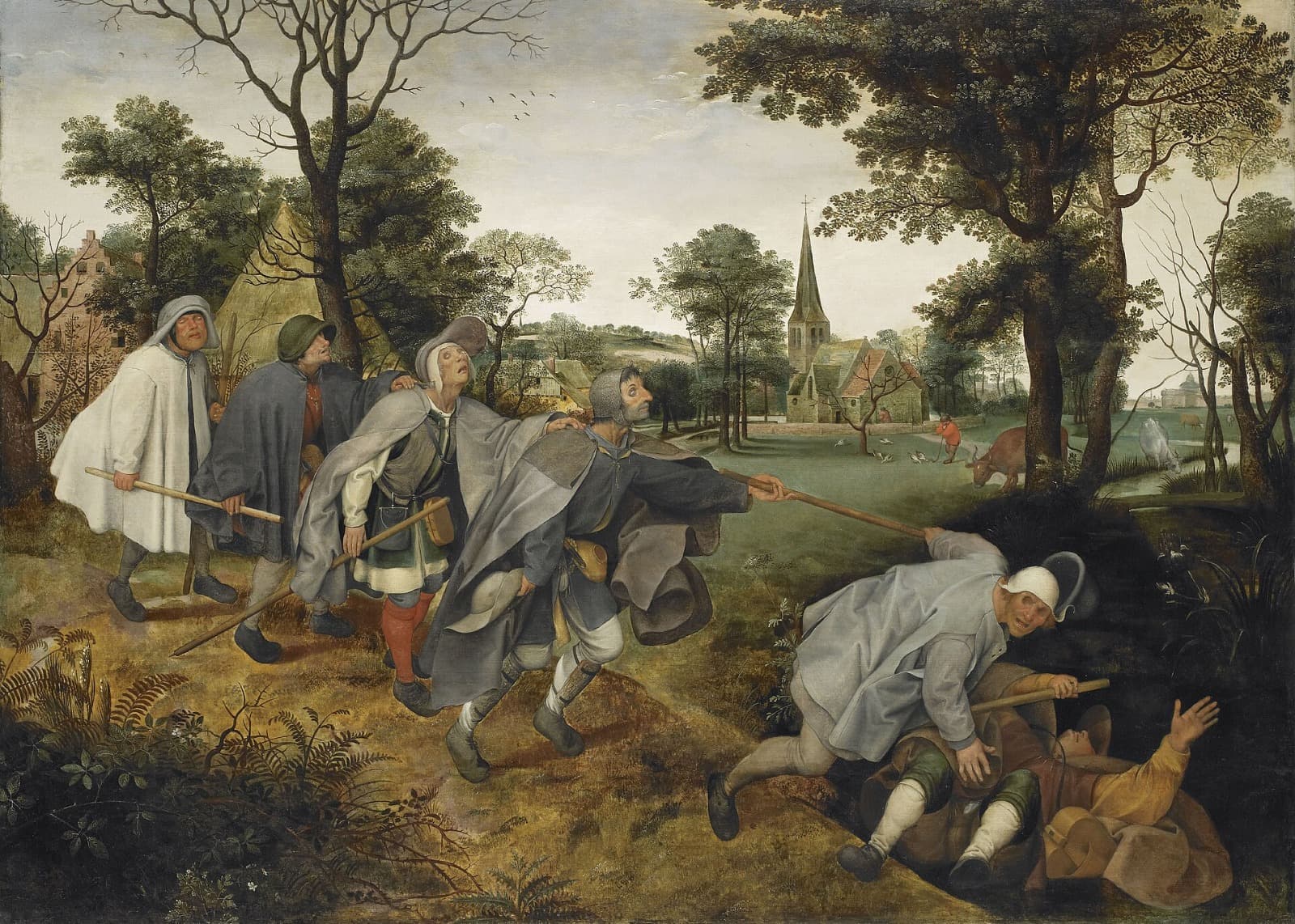
Six blind men go down one after another, and Bruegel painted their clouded eyes accurately enough for doctors to diagnose the conditions.
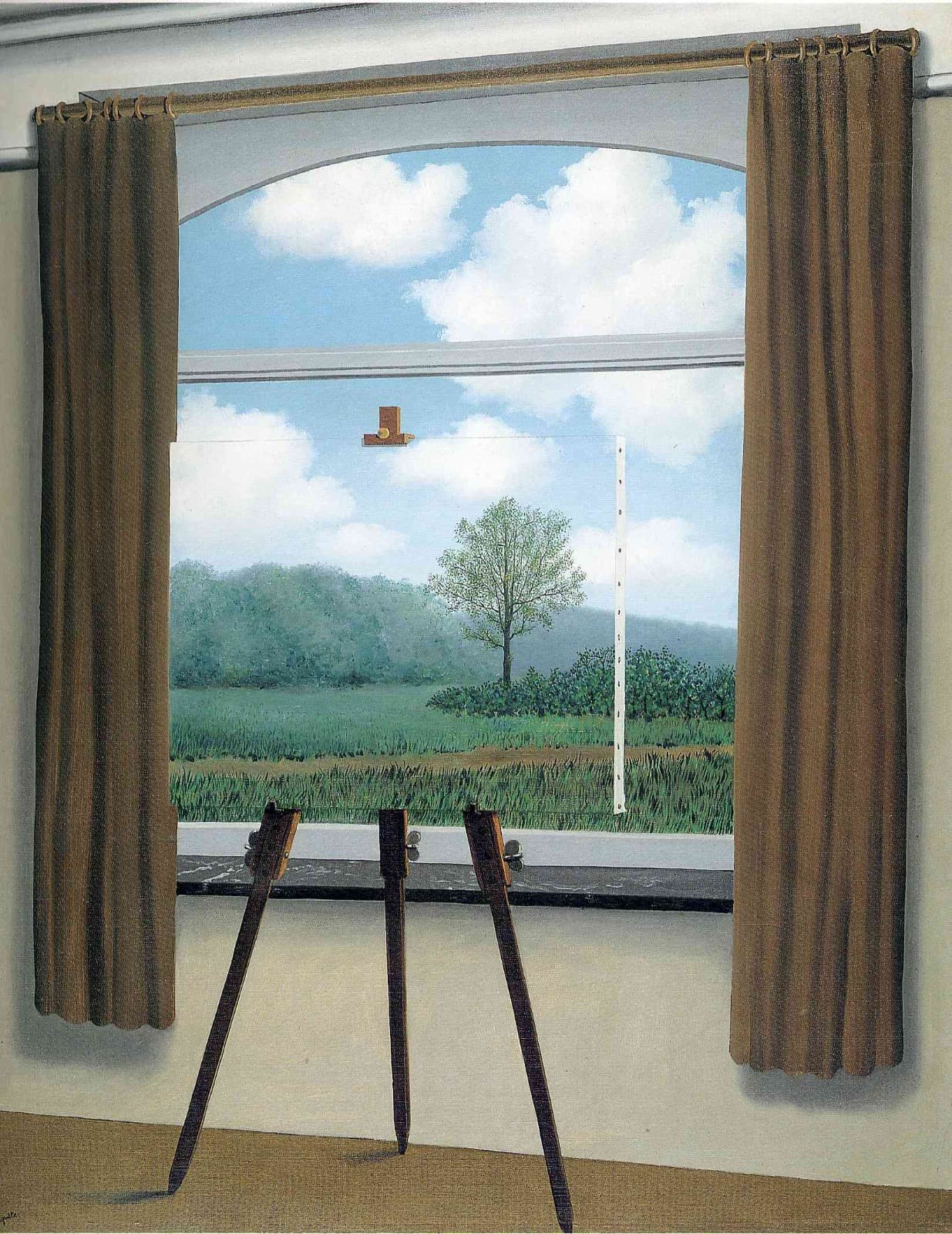
A canvas on an easel shows exactly the landscape it is standing in front of, and therefore hides it completely.
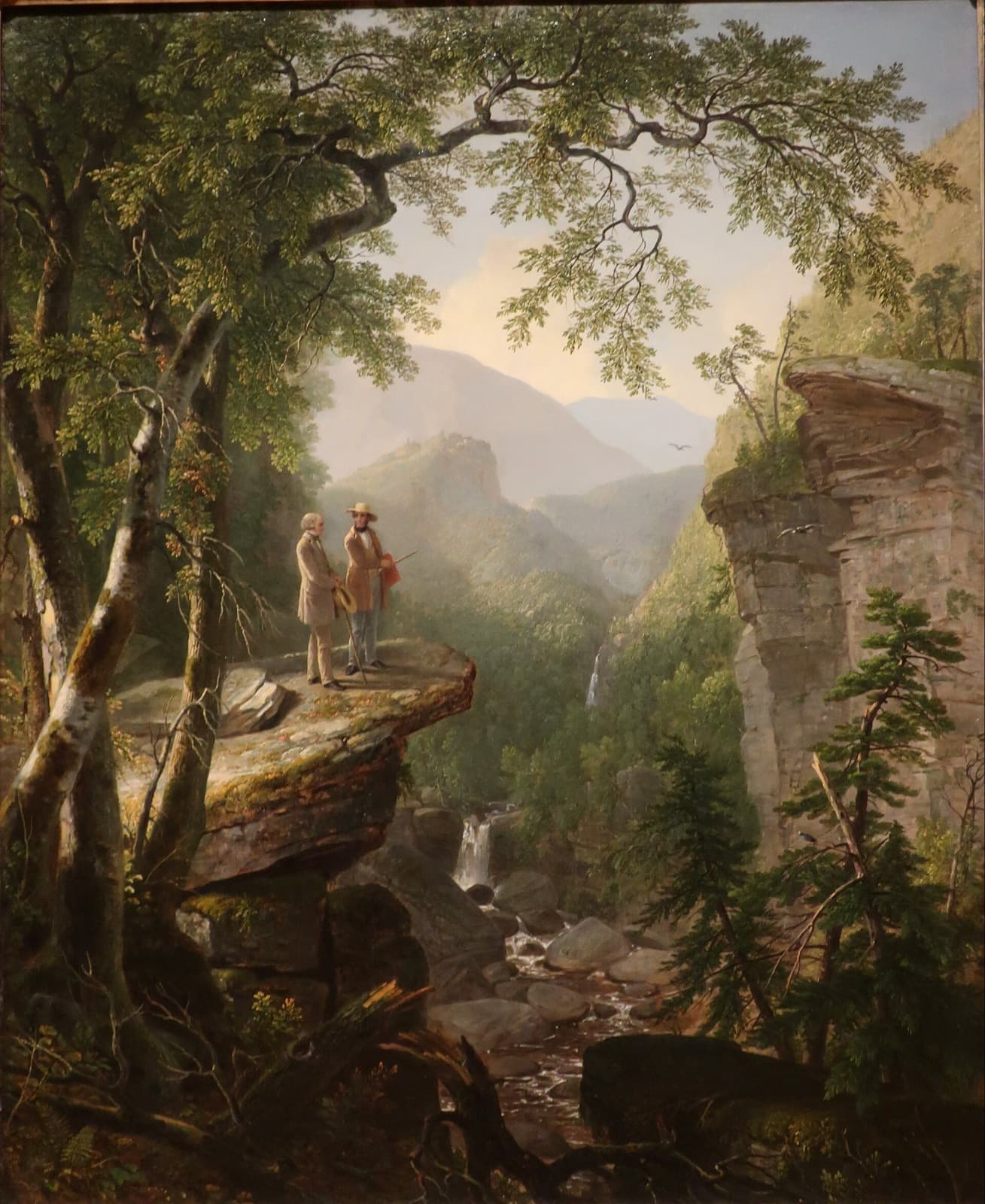
Thomas Cole and the poet Bryant stand on a ledge in the Catskills. Durand painted it as a memorial after Cole died young.

Bierstadt went west with a survey expedition and came home with peaks lit like an opera set, which is what the country wanted.
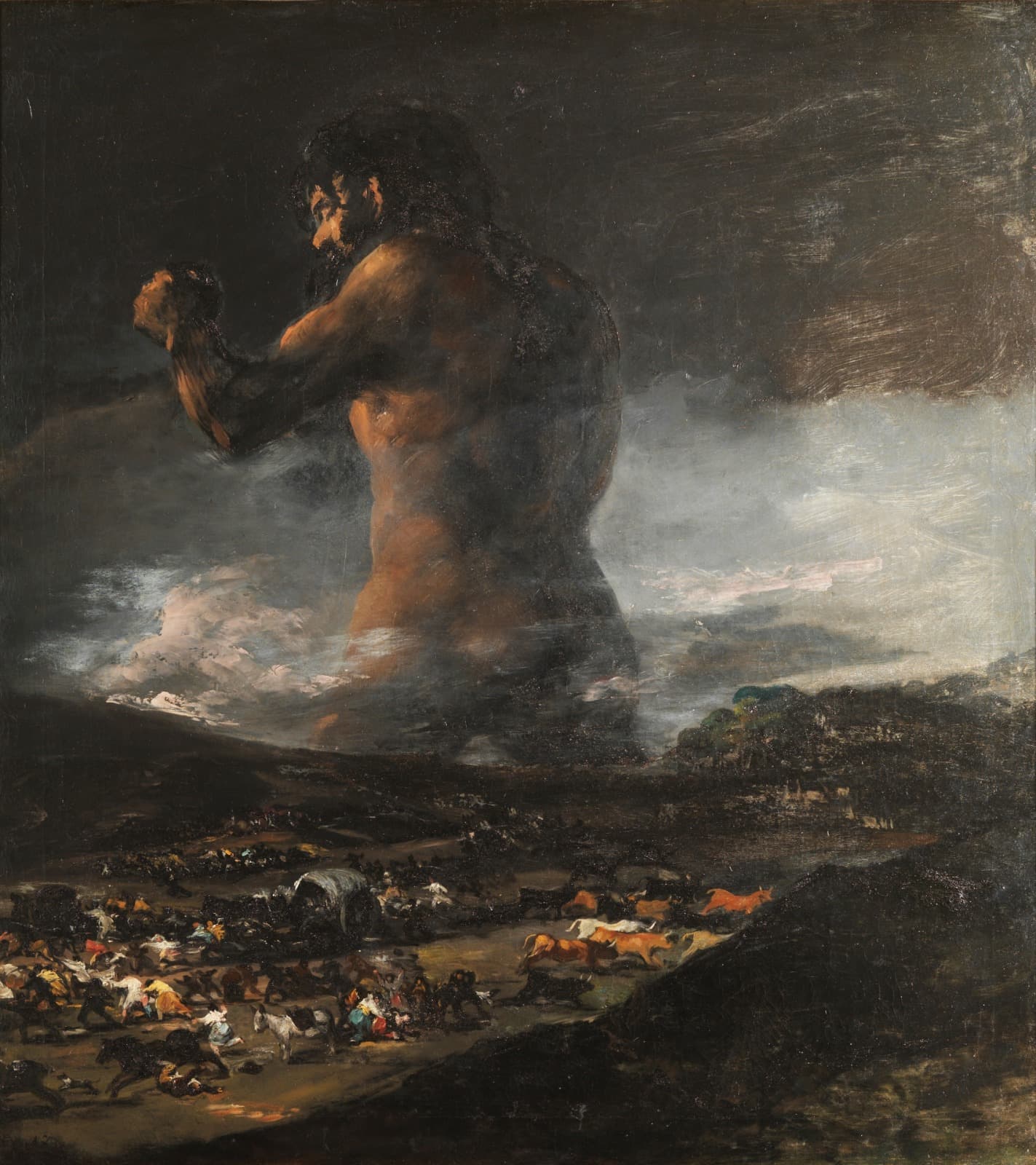
A giant stands with his head in the clouds while everything below scatters. Whether Goya actually painted it is now disputed.

Not a single figure anywhere in it. Church painted this burning sky in 1860, and people have read the Civil War into it since.

Poussin laid the crowd out like a relief so each gesture reads separately, one woman so hungry she nurses her own mother.
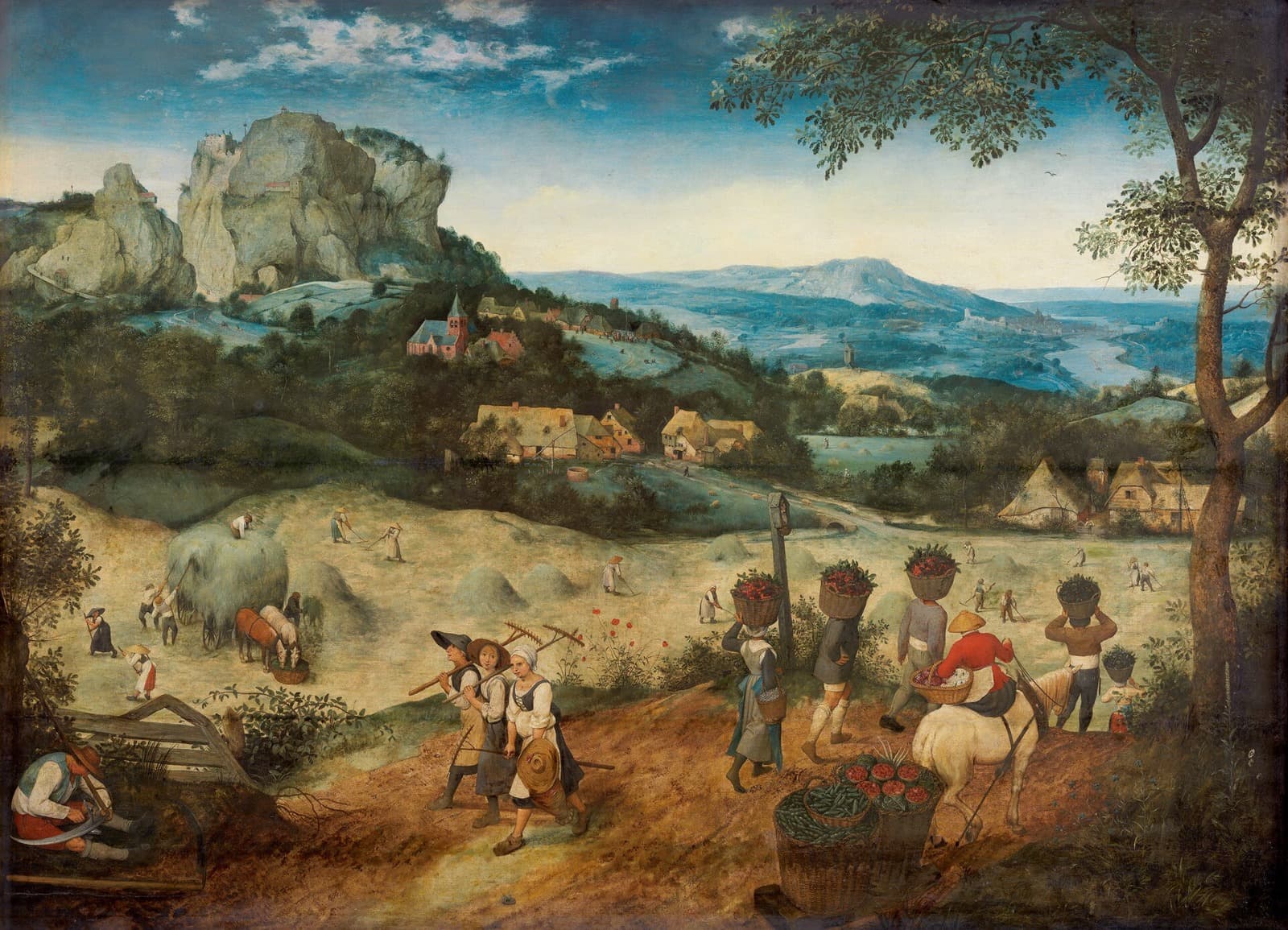
June or July from the same series of months, with rakes over shoulders and a girl carrying baskets of cherries toward us.
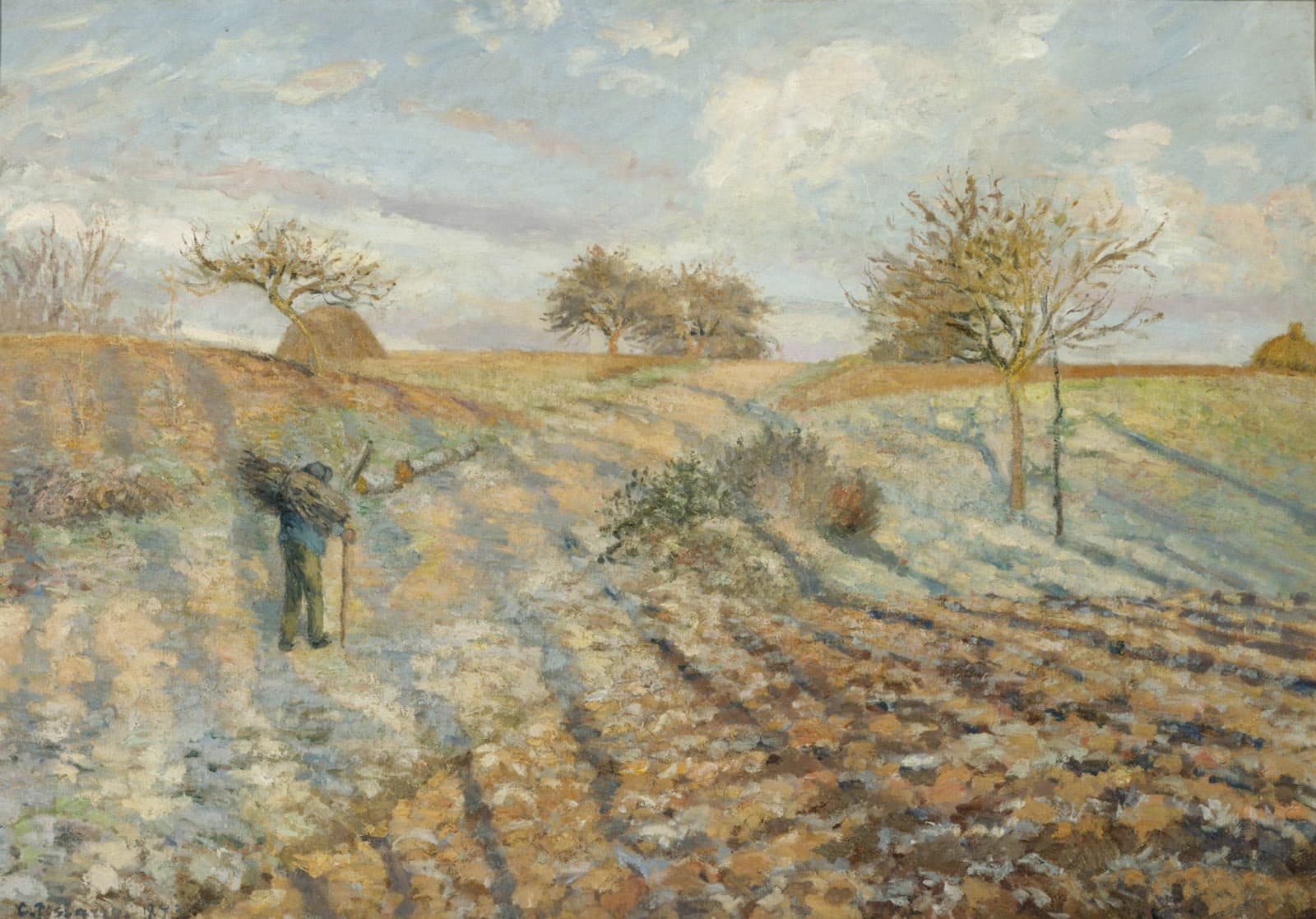
Critics at the first Impressionist show in 1874 said it looked like palette scrapings. The furrows are streaked with blue, violet and gold.

Ernst made the eaten-away textures by pressing and lifting paint, working on it while fleeing occupied Europe for America.

Splintered stumps and shell craters under a cold sun, and Nash gave it that title on purpose, as an official British war artist.

The Roman Forum was a cattle pasture when Turner painted it, and he let the columns of empire evaporate into gold air.

The hills buckle and heave in the same thick strokes he gave his skies, so that the rock ends up moving too.

Hundreds of tiny figures skating, sledging and falling over on one frozen river. Avercamp was deaf and mute and known as the mute of Kampen.
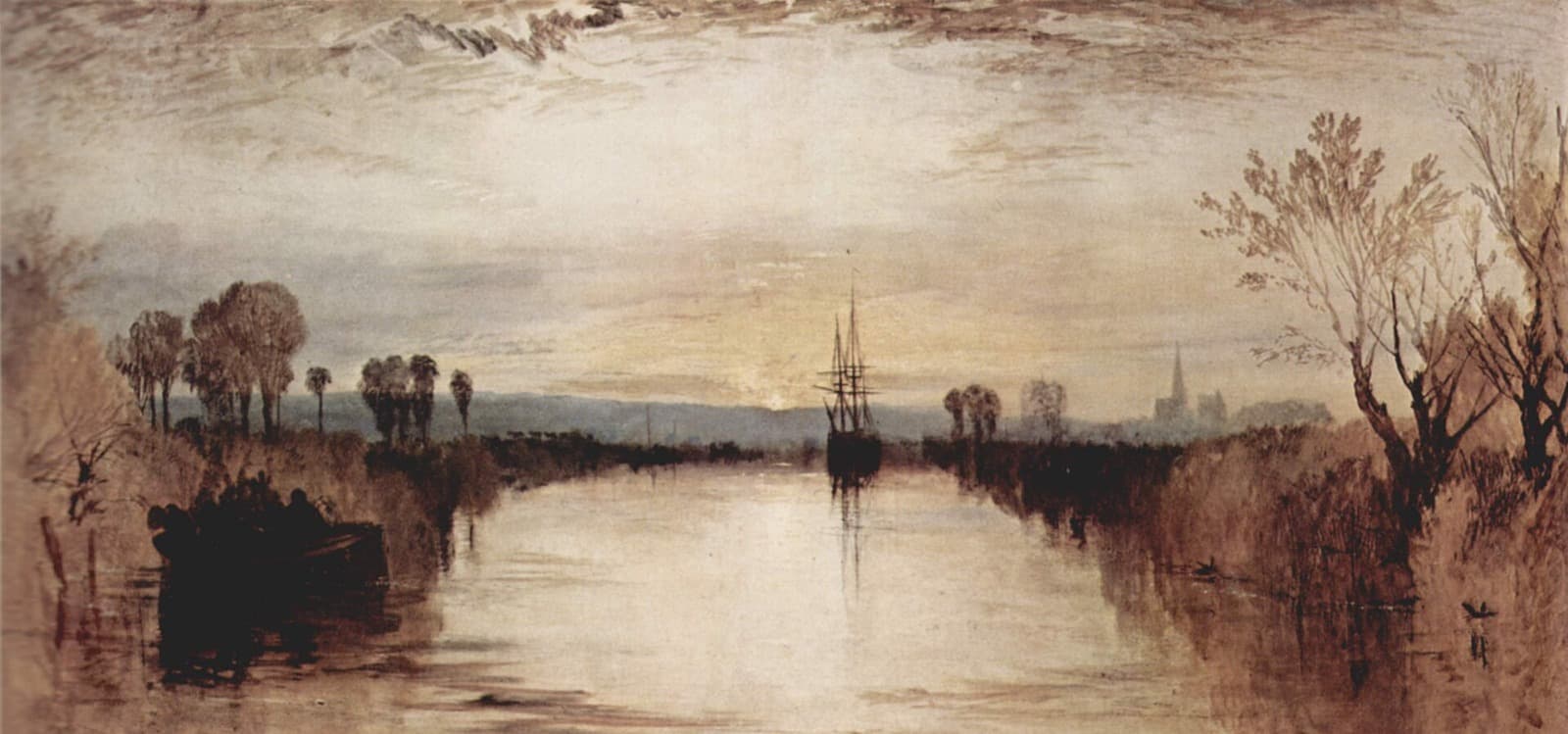
Masts stand black against a sky going from gold to soft blue, and almost nothing else in the picture is solid.

Peasants and houses rendered as polished metal cylinders. Malevich was three years away from painting a black square and stopping.
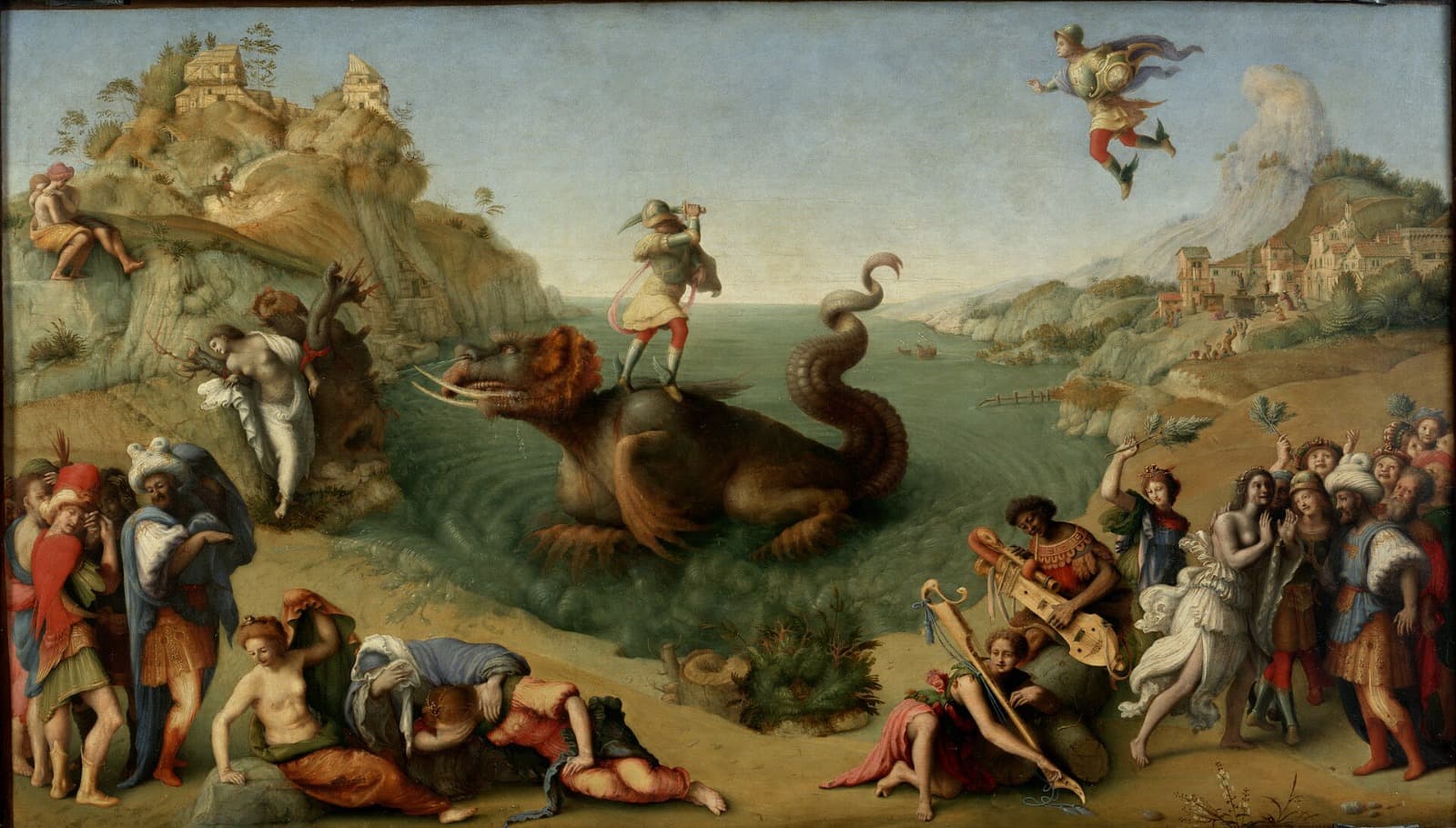
The sea-monster is part fish and part beast and thoroughly invented, and some of the onlookers on the shore have started playing music.

A shepherd twists onto his back and throws up a hand against the glare. One of the first real night scenes in Western art.
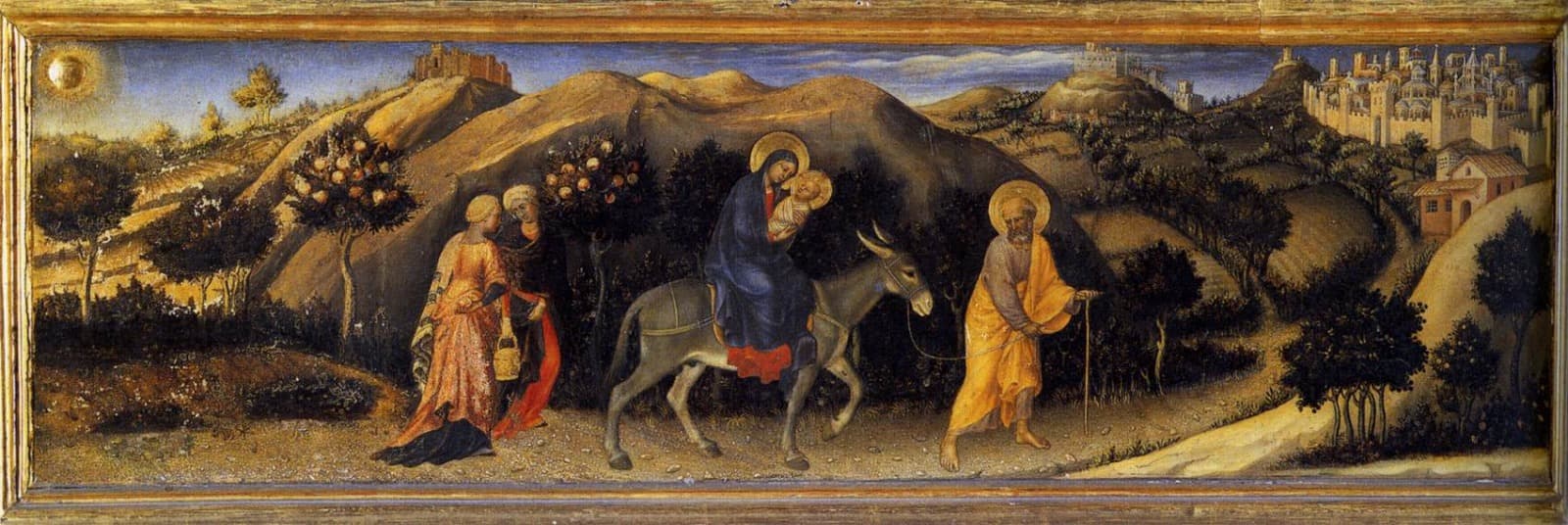
A gilded low sun hangs over the road and the orange trees are heavy with fruit, an early attempt at real morning light across a landscape.
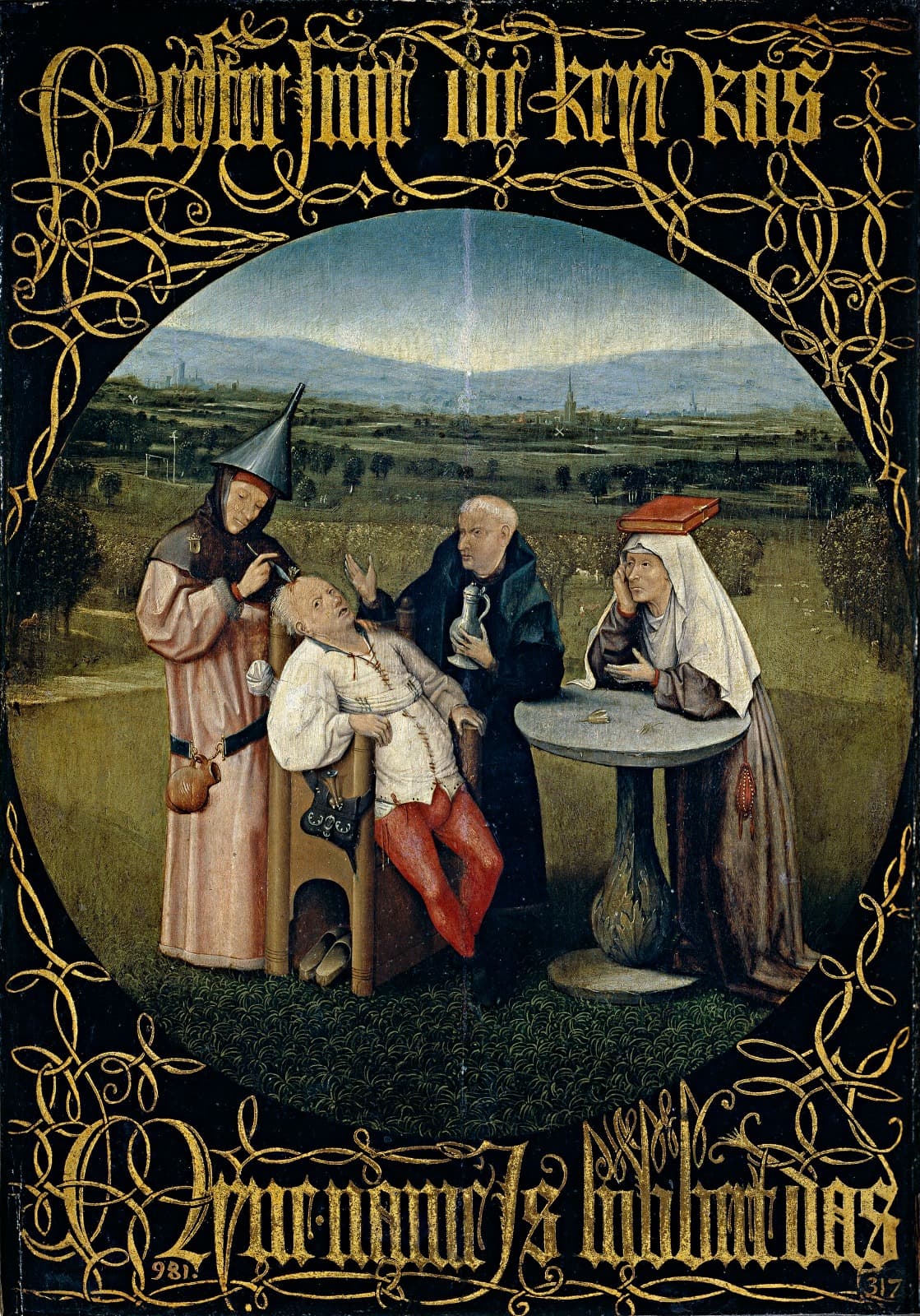
A quack in a funnel hat cuts the stone of madness out of a man's head, and what comes out is a flower.
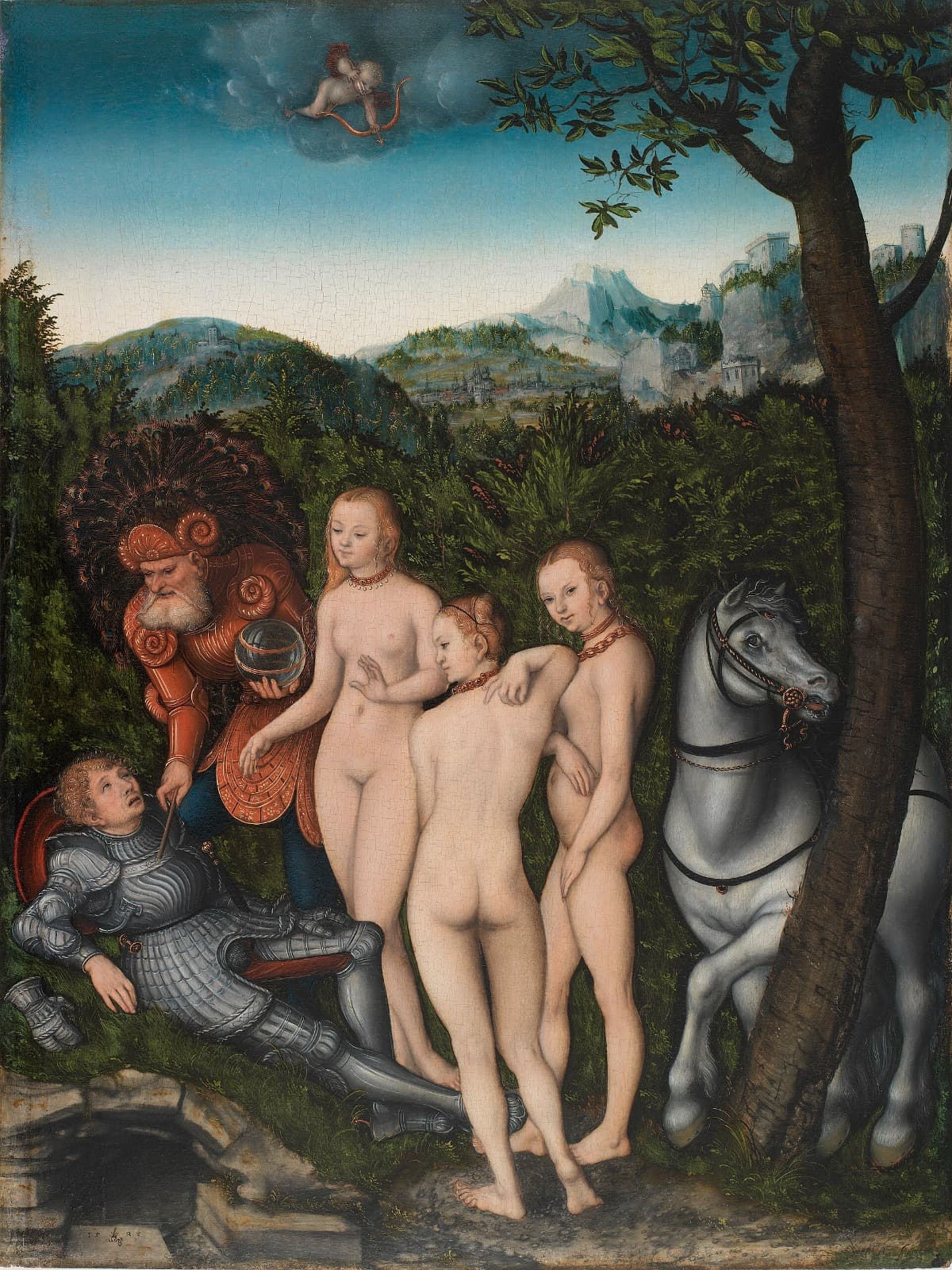
Paris turns up as a German knight in plate armor and the three goddesses wear nothing but jewels and improbable hats.

A Union officer faces three captured Confederates and the two halves of the country study each other. Homer had covered the war as an illustrator.

Bierstadt painted this vast hunt as the herds were nearing extinction, with skulls and bones already lying across the foreground.

Plain village houses on a hillside, built in solid earthy blocks. Pissarro refused to prettify the countryside and gave it structural weight instead.

Eden on one side of the rock arch, blasted wilderness on the other, and Cole lets the landscape carry the entire moral argument.

You take in the whole river valley before you notice the sower at the bottom corner, or Christ preaching from a boat behind him.

Christ preaches from a hilltop and is almost too small to find. Claude was really painting the hills, the water and the distance.