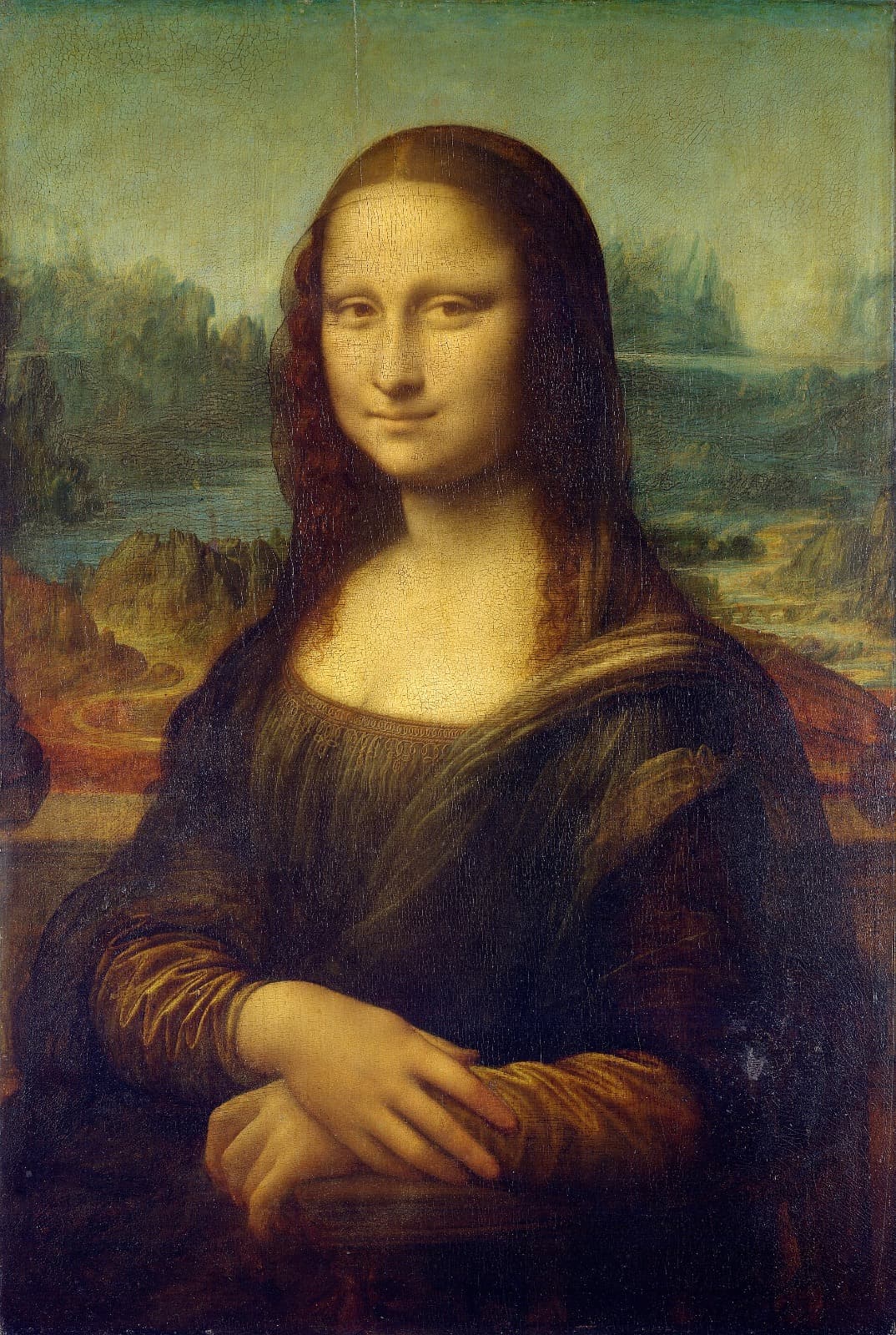
Mona Lisa
1504 · Louvre, Paris
She was probably Lisa Gherardini, a merchant's wife, and Leonardo kept reworking her for years and never handed the portrait over.
★ 9.9
 skopia
She was probably Lisa Gherardini, a merchant's wife, and Leonardo kept reworking her for years and never handed the portrait over.
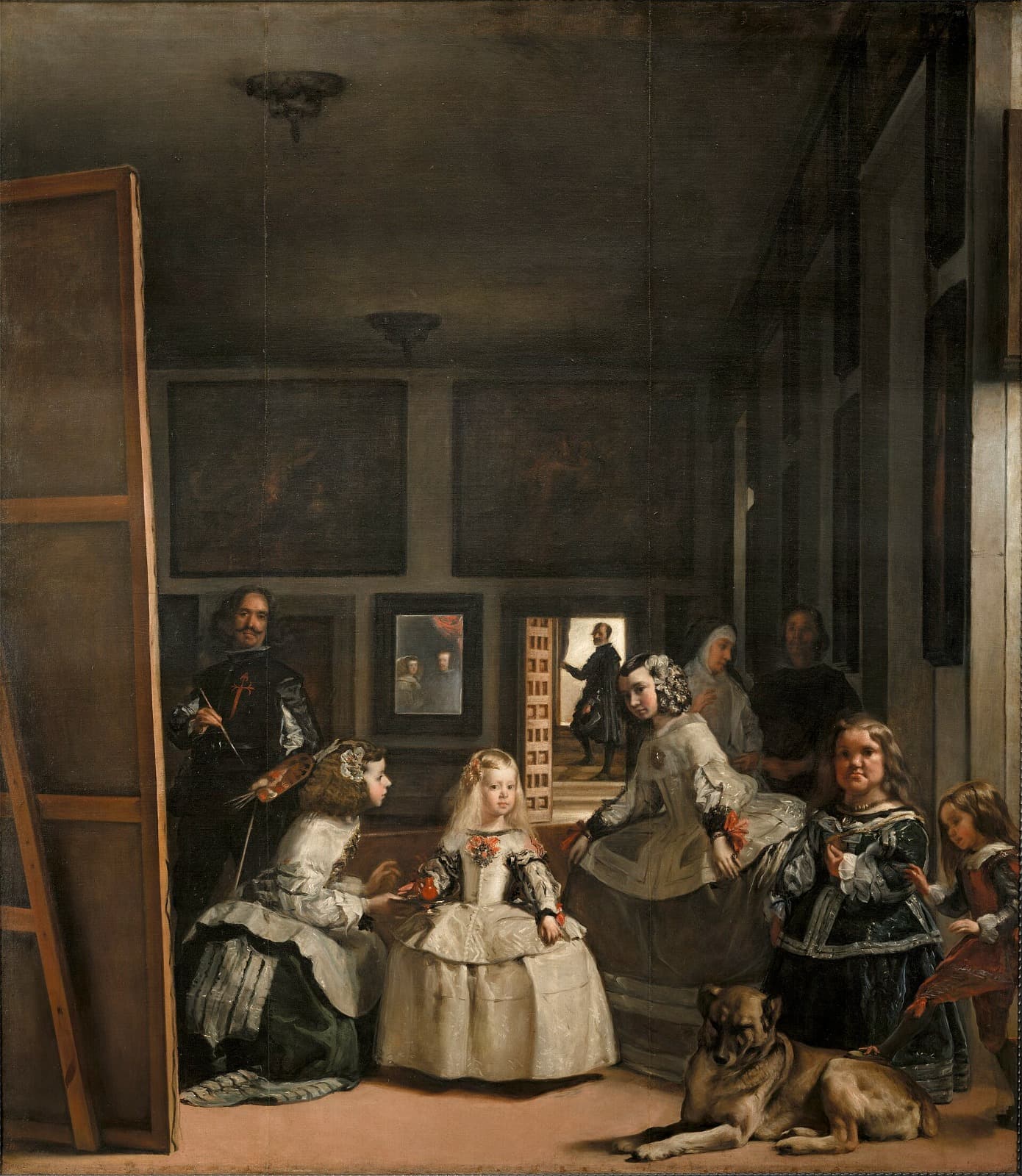
The Infanta and her maids fill the room, but Velázquez has put himself at his easel and the king and queen in a mirror behind.
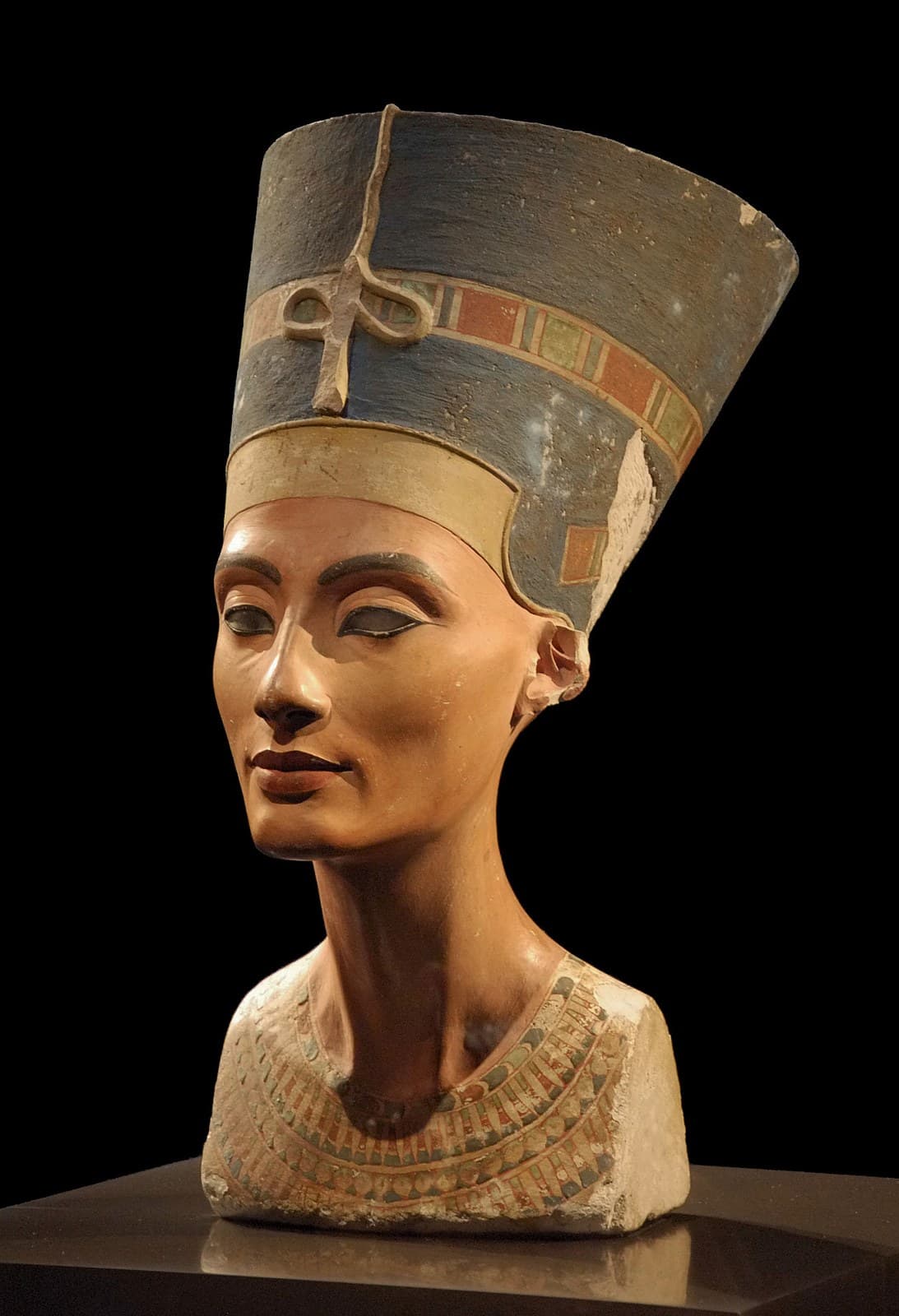
One eye is inlaid and the other left blank, which suggests the bust was a master model kept in the sculptor's workshop at Amarna.
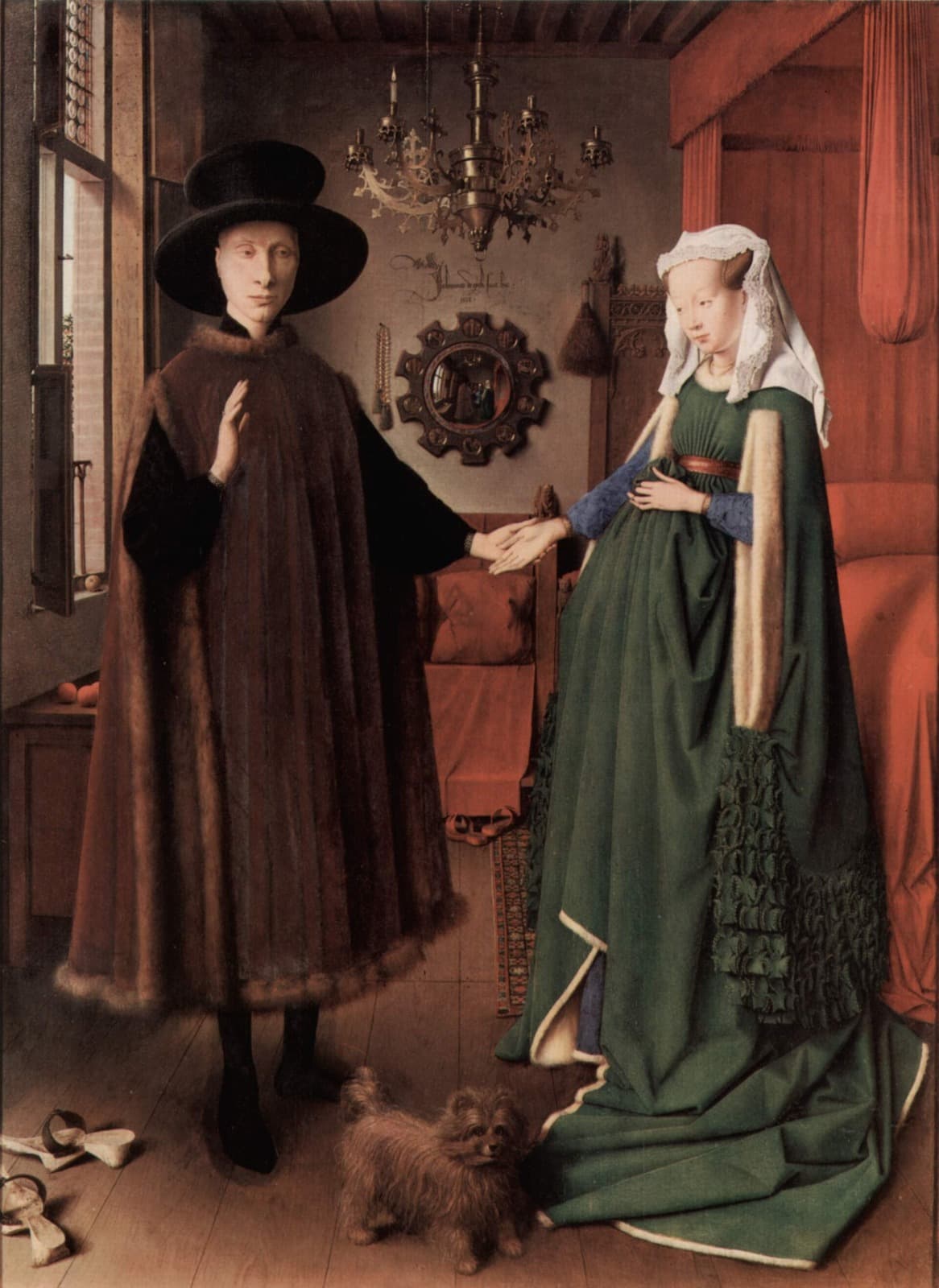
A couple joins hands in a Bruges bedroom, and the mirror behind them catches two visitors at the door. Van Eyck signed the wall above it.

Velázquez caught every wary line in the pope's face, and Innocent reportedly said it was troppo vero, too true. Francis Bacon reworked it for years.

Not a portrait of anyone in particular but a tronie, a study of a type, which somehow made her the most looked-at girl in art.

Two men pose with globes, sundials and a lute with a broken string, and a smear on the floor turns into a skull from the side.

Cecilia Gallerani turns as if someone has come in, and the ermine turns with her. It was her patron's emblem and a pun on her name.
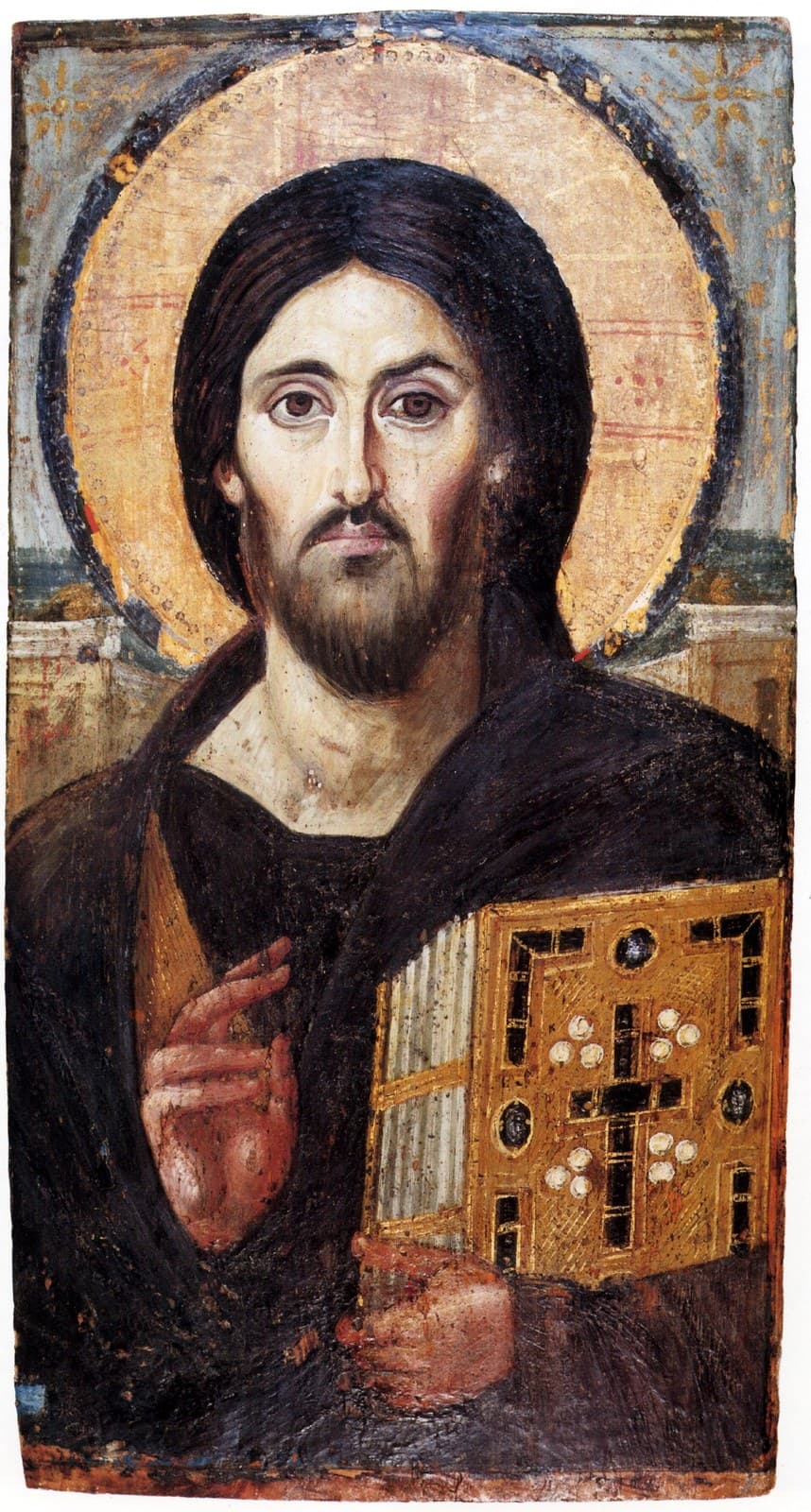
Cover one half of the face, then the other, and two expressions emerge, merciful and severe. Sinai was too remote for the iconoclasts to reach.
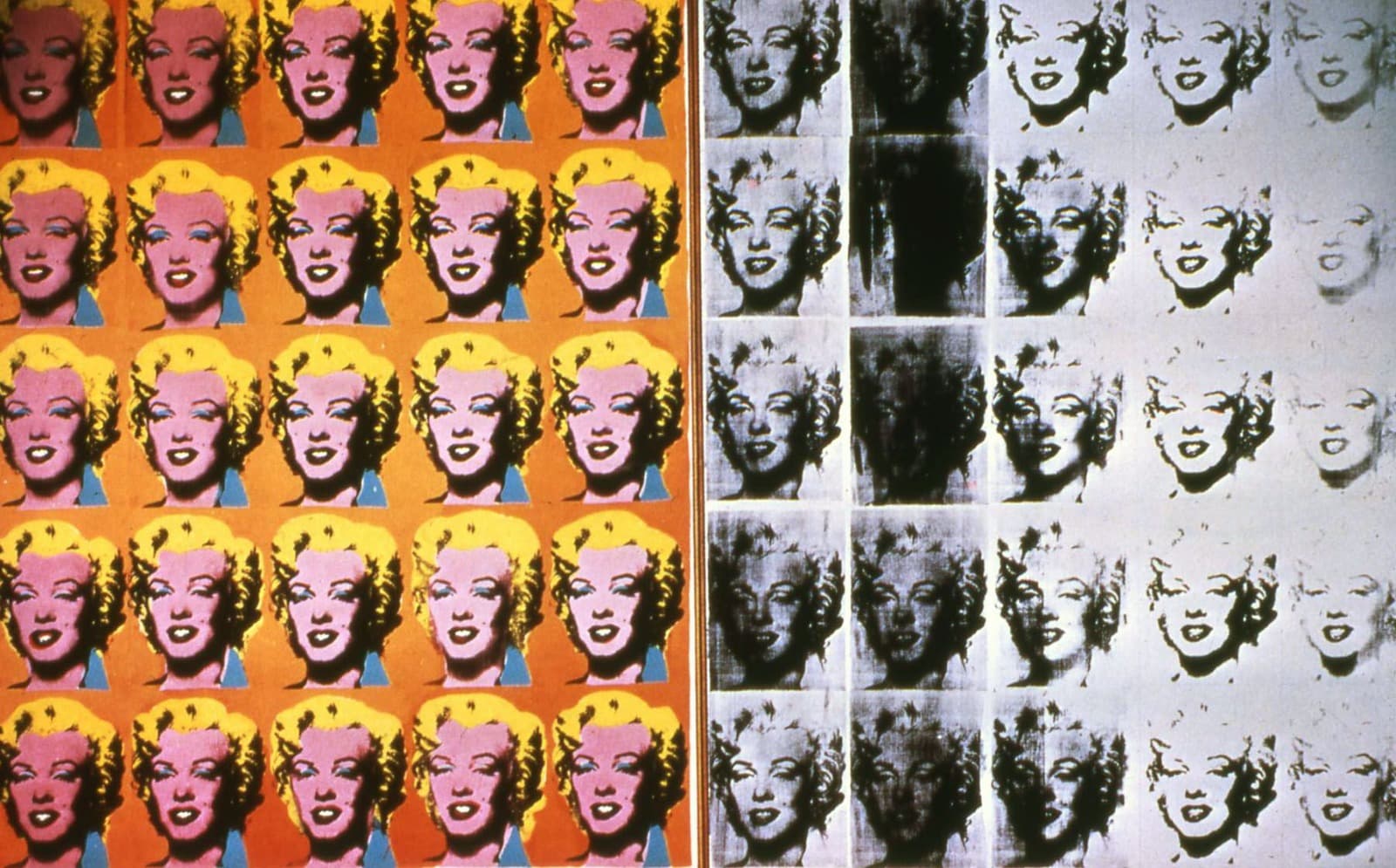
Warhol silkscreened a publicity photo fifty times just after Monroe died, bright on one half and smudging away to nothing on the other.

Whistler called it Arrangement in Grey and Black and insisted it was about tone, not feeling. The sitter was his mother, and nobody was fooled.

Only the face and hands are painted naturally and the rest is gold. The Nazis seized it, and a long restitution case eventually got it back.
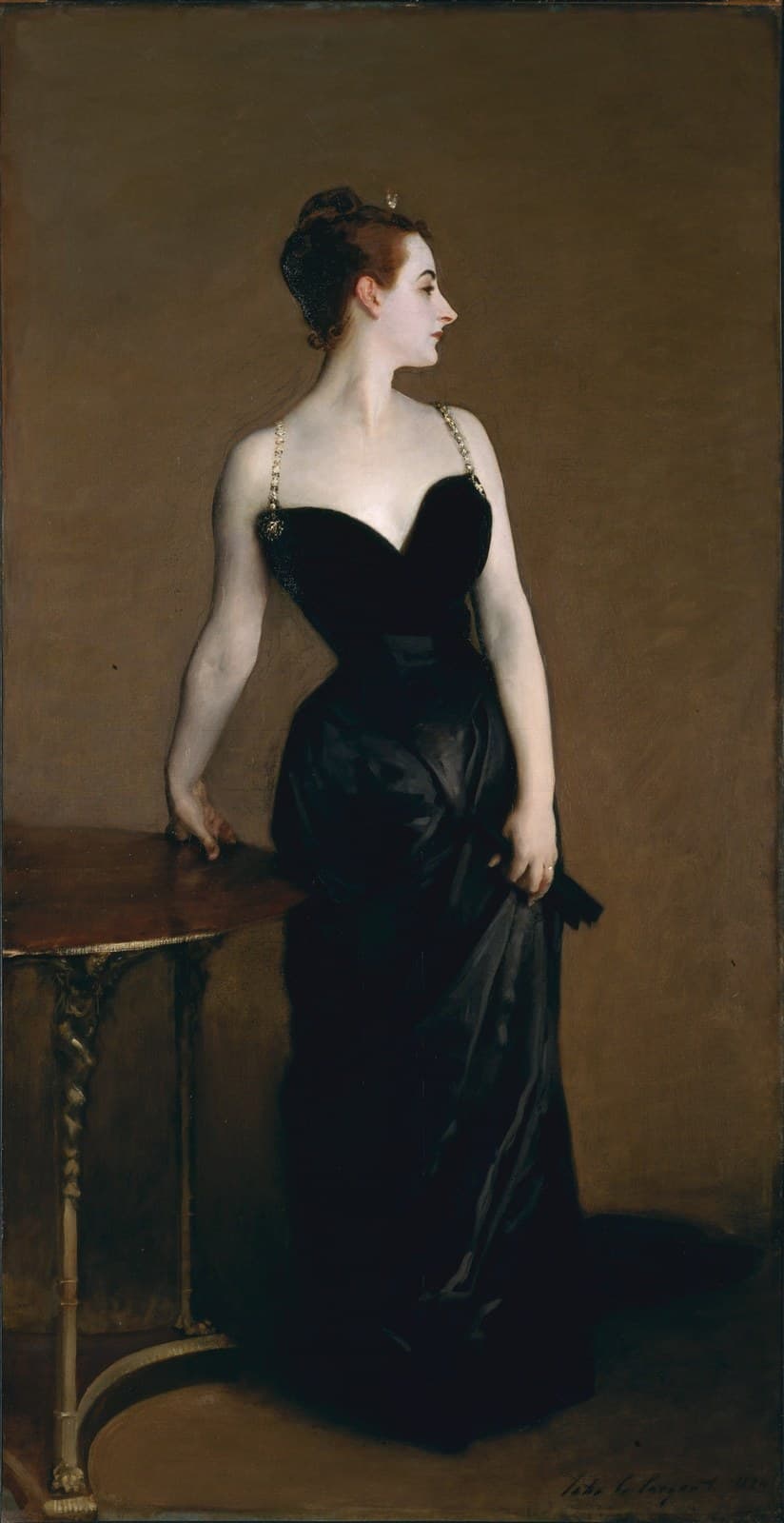
The strap fell off her shoulder in the 1884 version, Paris was scandalized, her family demanded it come down, and Sargent repainted the strap.

Sharaku made about 140 actor prints in ten months and then vanished so completely that people still argue about who he was.

The emperor hands a book to a Sufi and ignores the kings waiting below, one of them James I, copied from an English portrait.

Pareja was Velázquez's enslaved assistant, freed soon after this was painted in Rome as a warm-up before the pope sat for him.

Bacon took Velázquez's composed pope and set him screaming behind a curtain of falling paint. He never saw the original in person.

Three famous women of 1790s Edo on mica ground, their faces nearly identical, so you have to read them from the tilt of an eye.

A critic looked at this and called Matisse and his friends fauves, wild beasts, which is how the movement got its name.
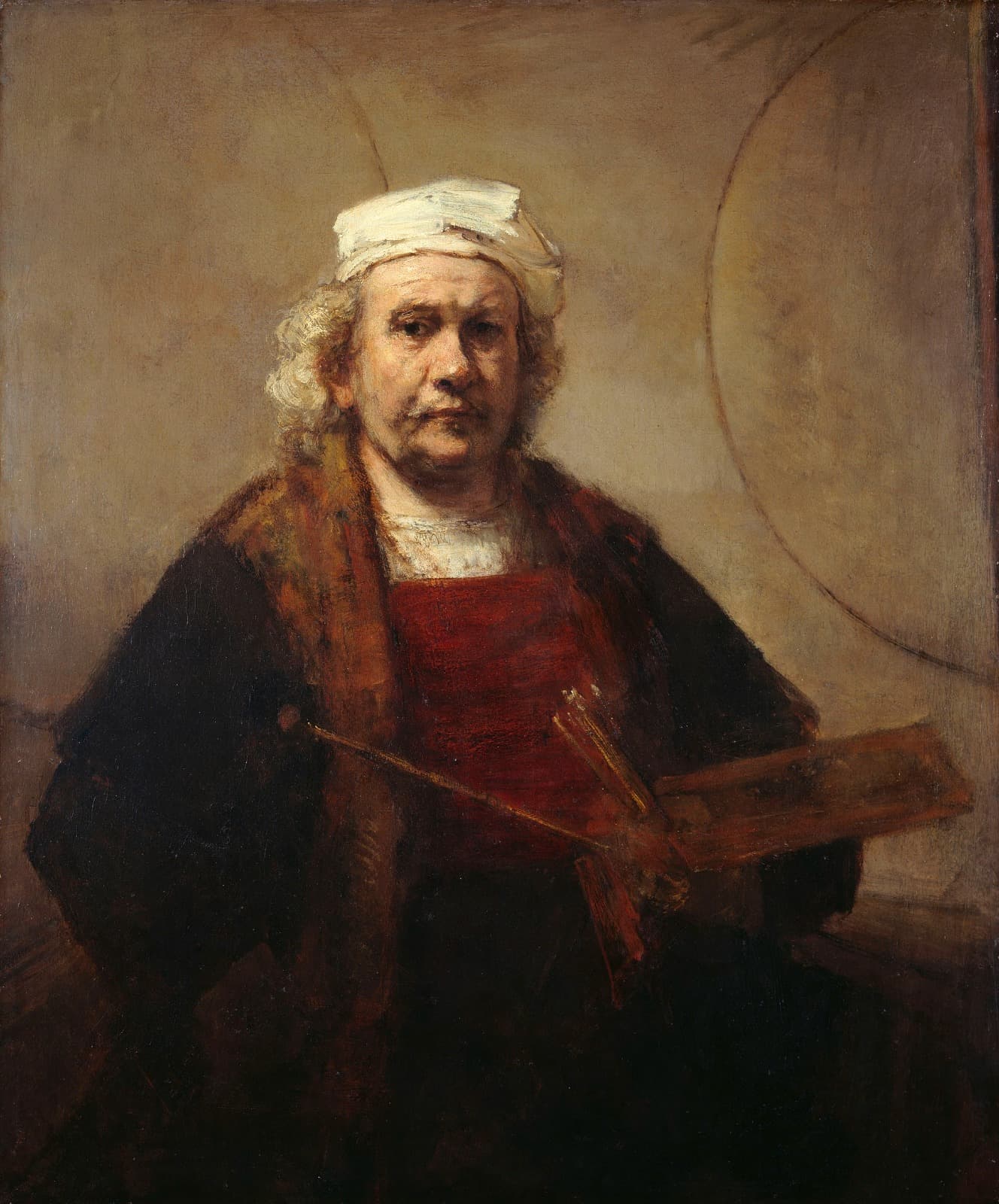
The old painter holds his brushes and palette, and behind him two large arcs are drawn on the wall that nobody has explained.

The background ripples around his head like a current in the same blue-green as his suit, and his beard burns red against it.

Circus people stand together in an empty landscape without looking at each other. The Rose Period at its largest and most wistful.
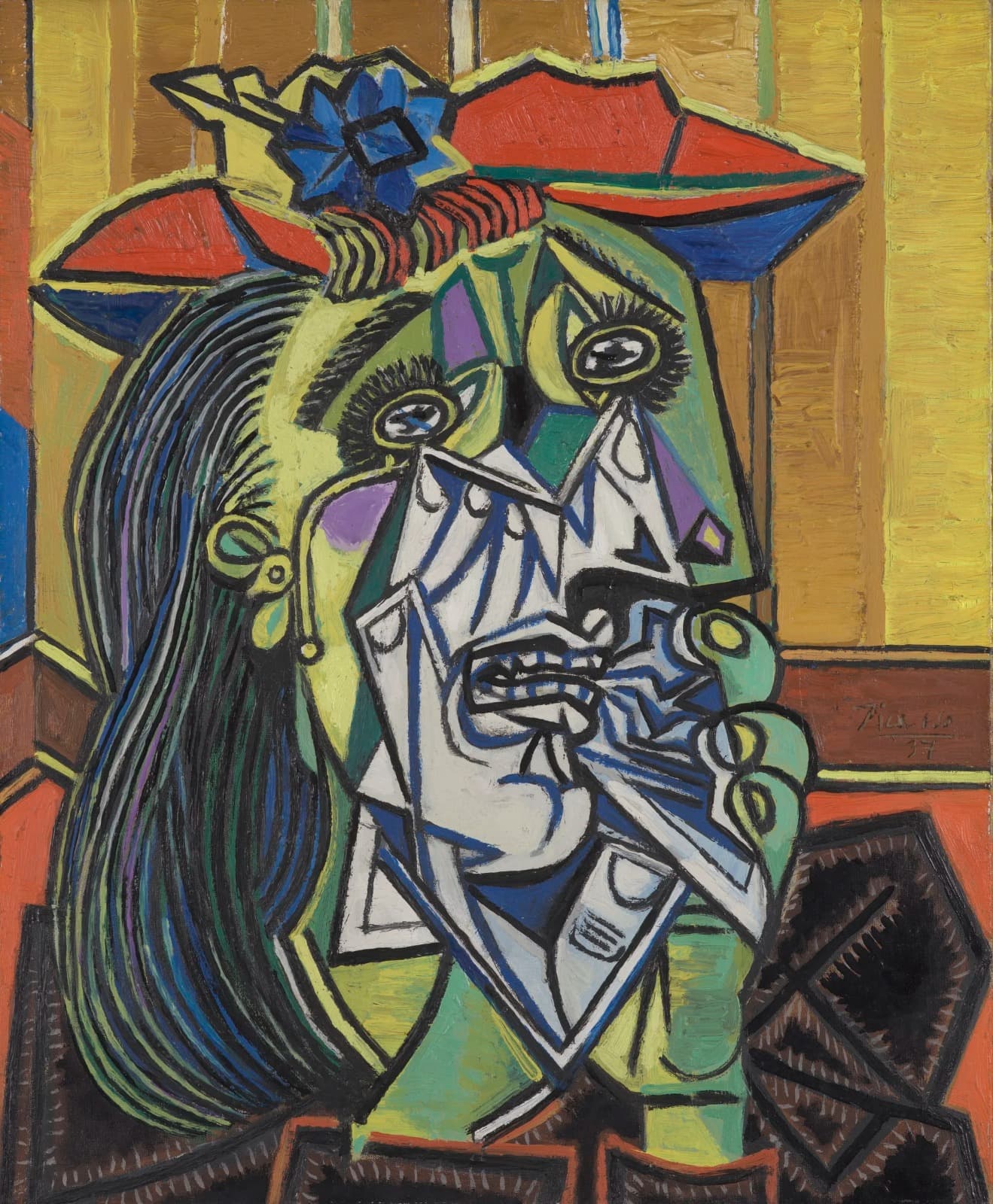
Picasso pulled her out of the screaming mother in Guernica and gave her the face of Dora Maar, his lover and a photographer.
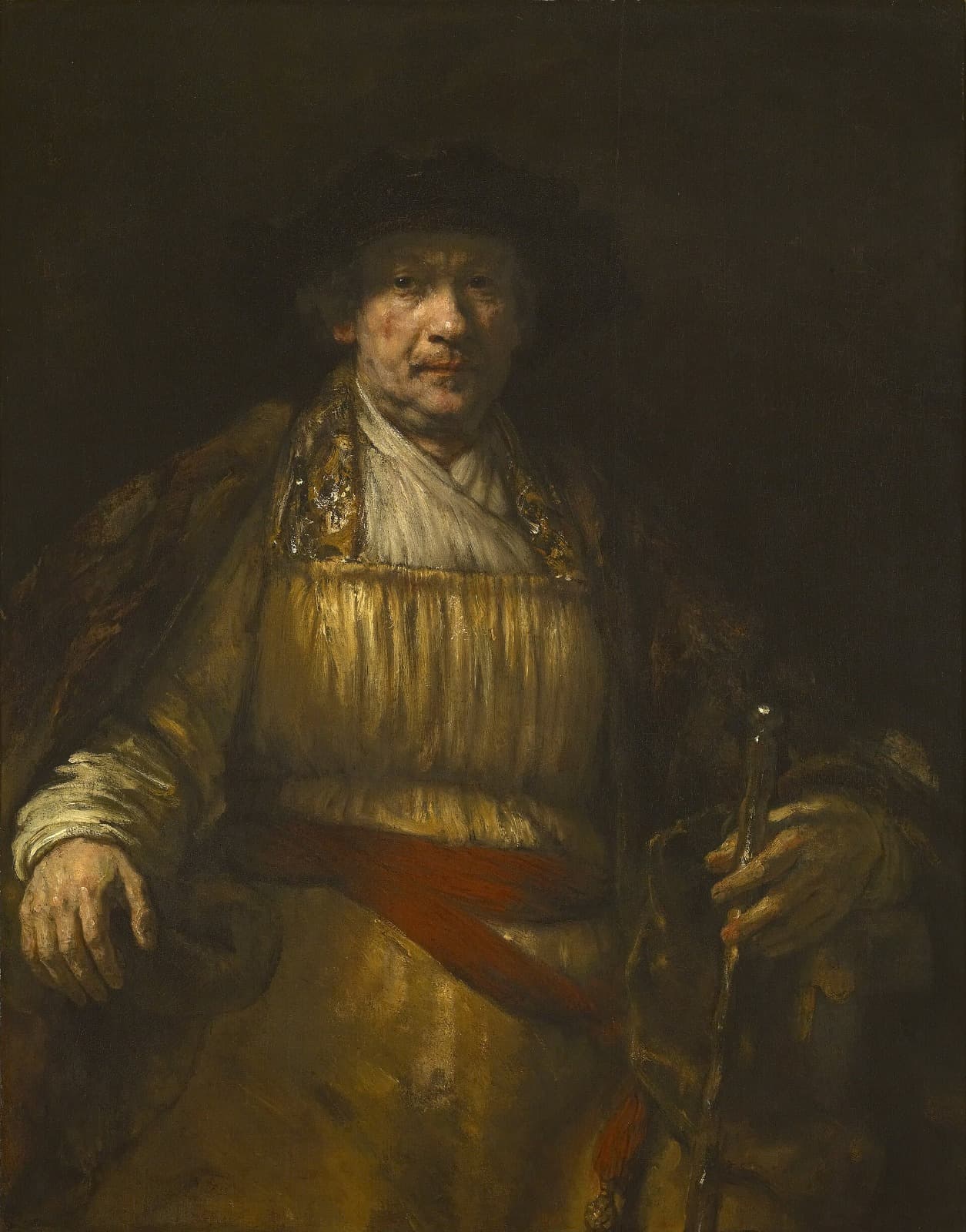
Rembrandt painted himself enthroned like a monarch, staff across his lap, in the same year bankruptcy took his house and everything in it.

A young horseman rides into the dusk armed and alert, and nobody has ever agreed who he is or where he is going.

The doctor who was caring for him leans his head on one hand, a sprig of foxglove on the table, the background rippling blue.

Bellini painted the brocade thread by thread and turned the official portrait from a profile on a coin into a man met face to face.
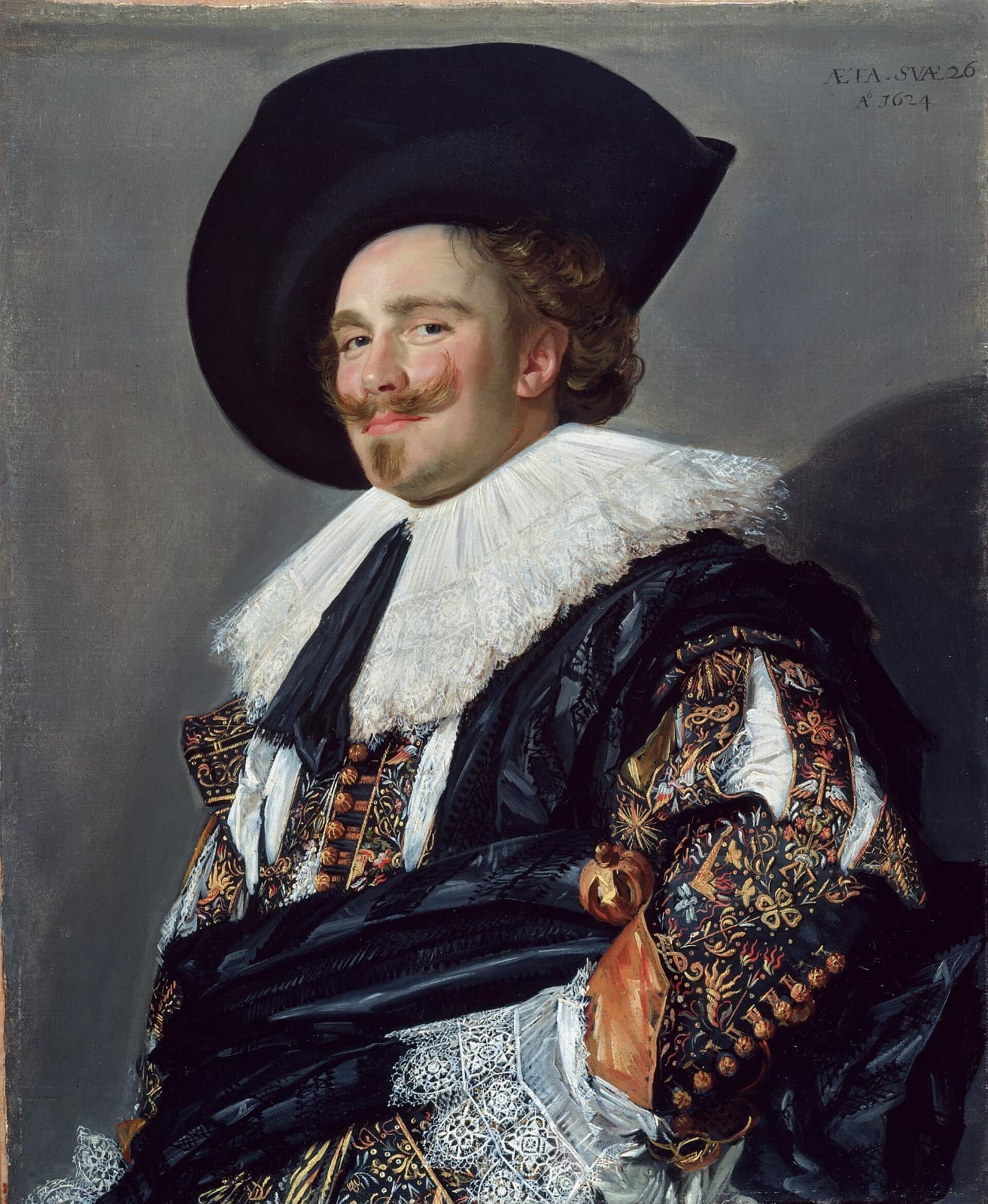
He is neither laughing nor a cavalier. The lace and gold thread on that sleeve were flicked on in a few confident strokes.

Matisse ran a green stripe down his wife's face to divide warm from cool, and used color to do the work of light.

The newspaper magnate leans forward gripping both knees, and the picture became the face of the commercial class that ran nineteenth-century France.
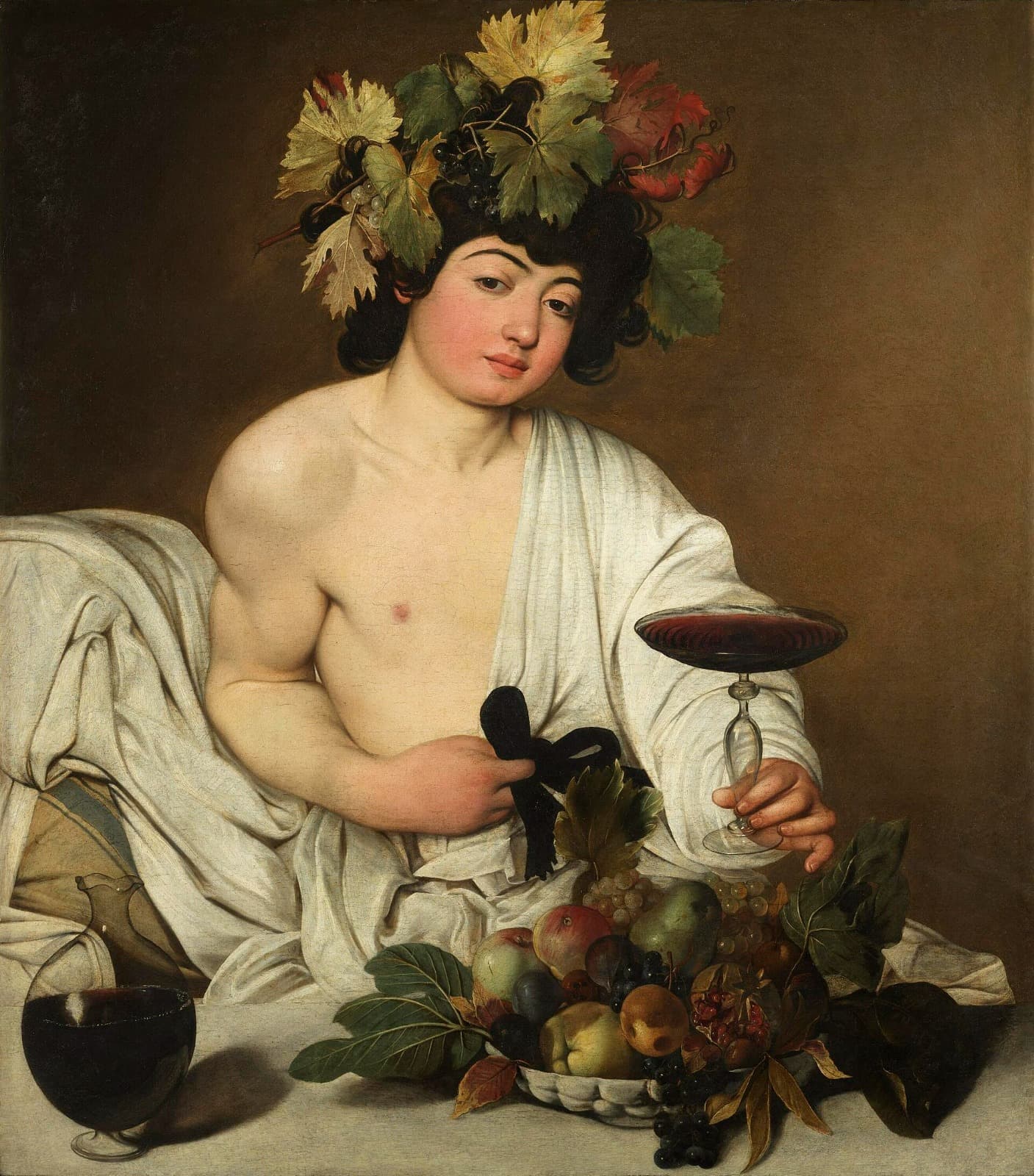
A real Roman boy dressed up as the wine god, heavy-lidded and slightly flushed, holding out a glass while the fruit beside him bruises.
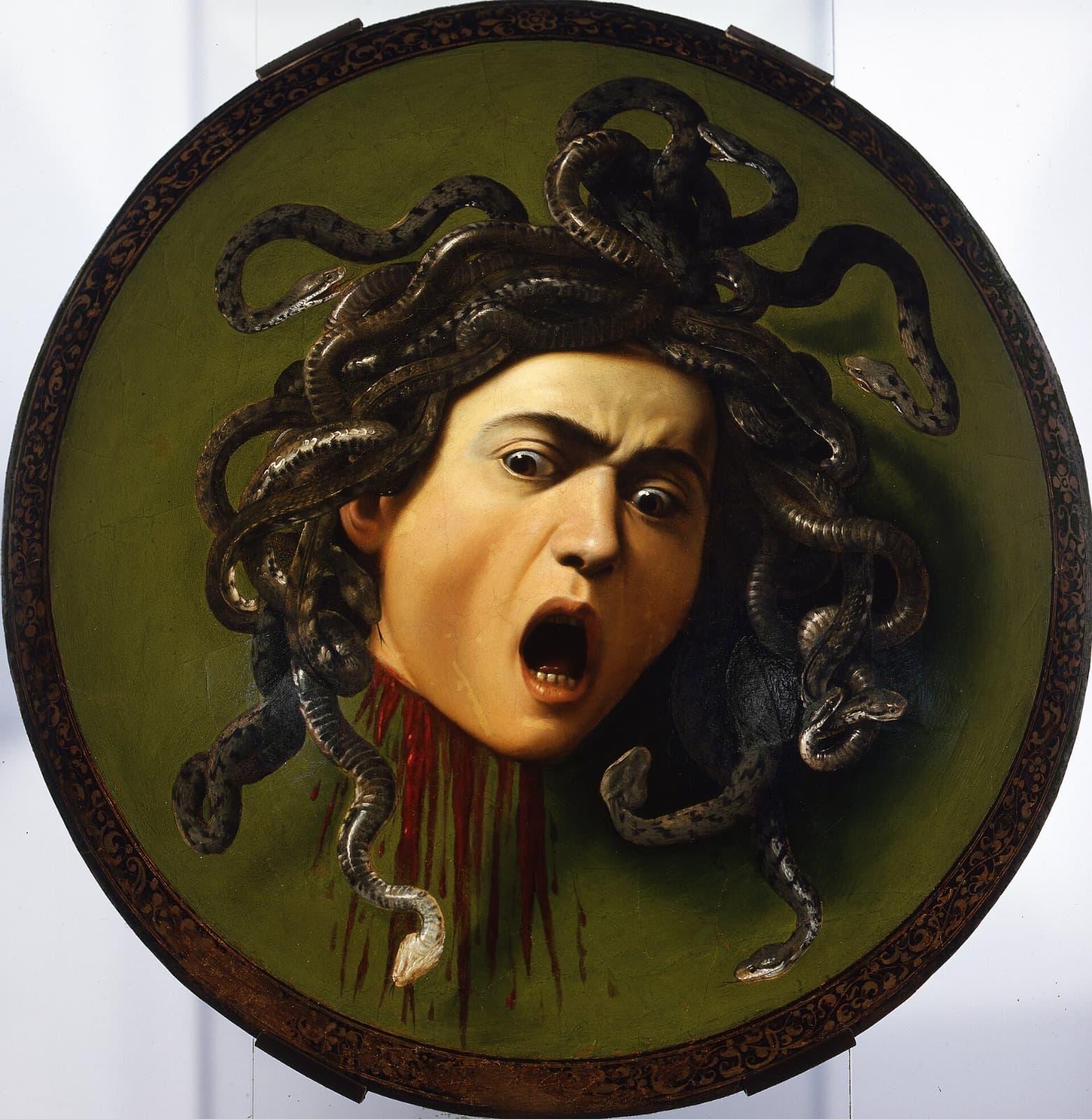
Painted on a convex parade shield, so the head bulges toward you at the exact instant of the scream. A showpiece gift for the Medici.

The old man's nose is swollen and ruined by disease, and the boy looks up at him without noticing it at all.
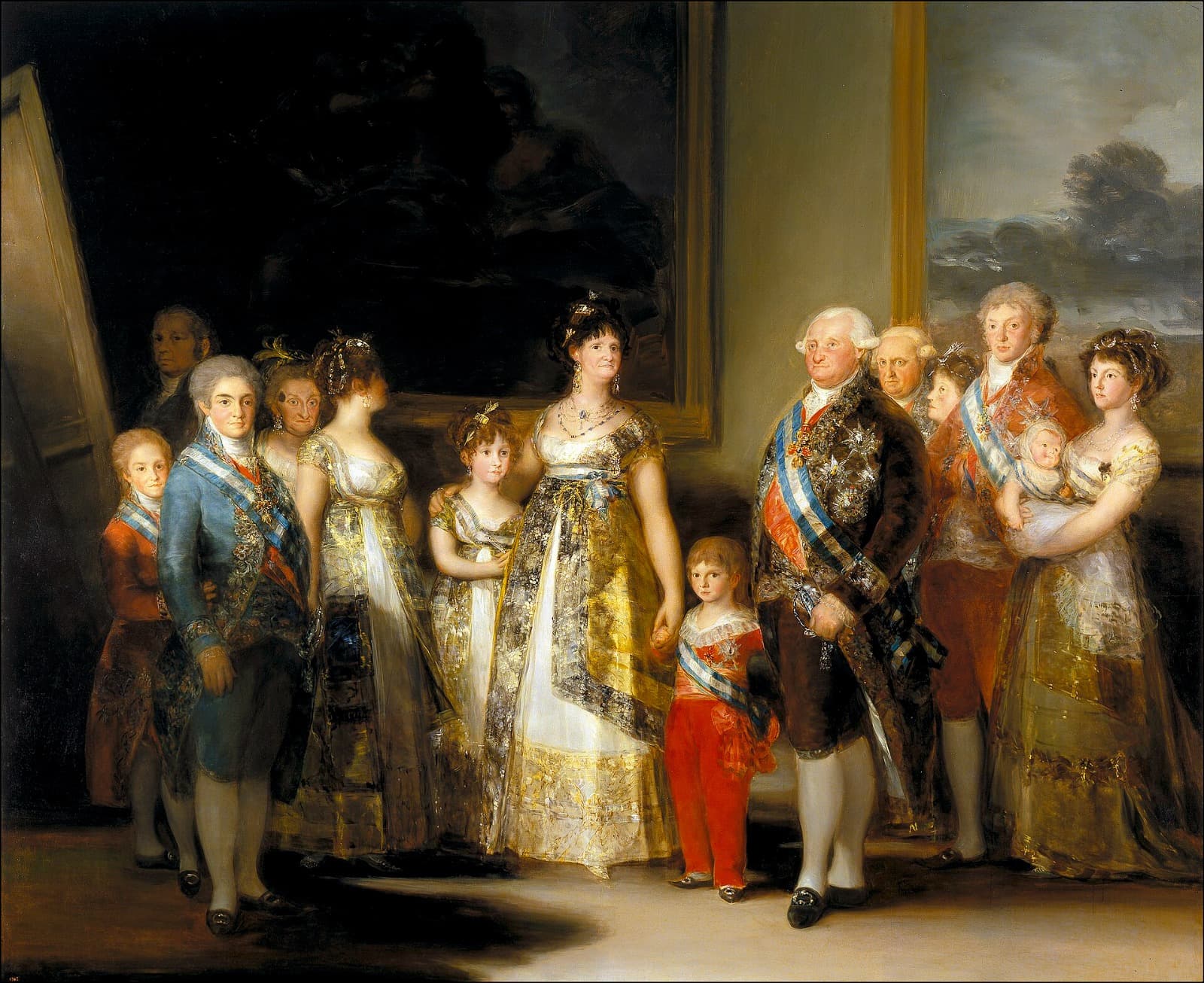
Goya put himself at an easel in the shadows, as Velázquez had, and painted the royal family looking vacant, pompous or merely plain.

A juniper bush stands behind her as a pun on her name. The panel was later cut down at the bottom, taking her hands with it.
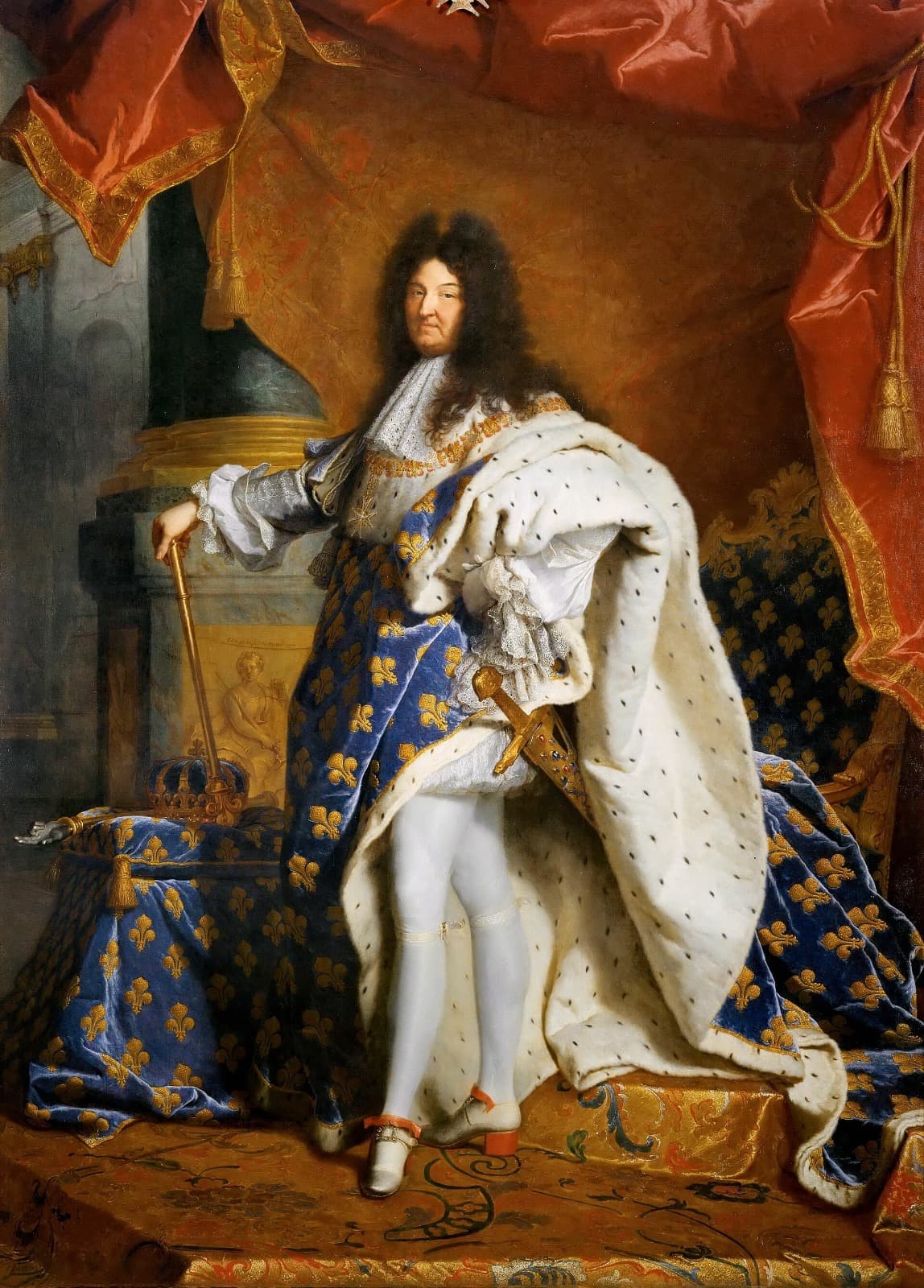
At sixty-three the king still turns out one leg to show the dancer's calf he was proud of, under a cascade of ermine and fleurs-de-lis.

A thorn necklace draws blood at her throat, a dead hummingbird hangs from it, and a monkey and a black cat watch from behind.
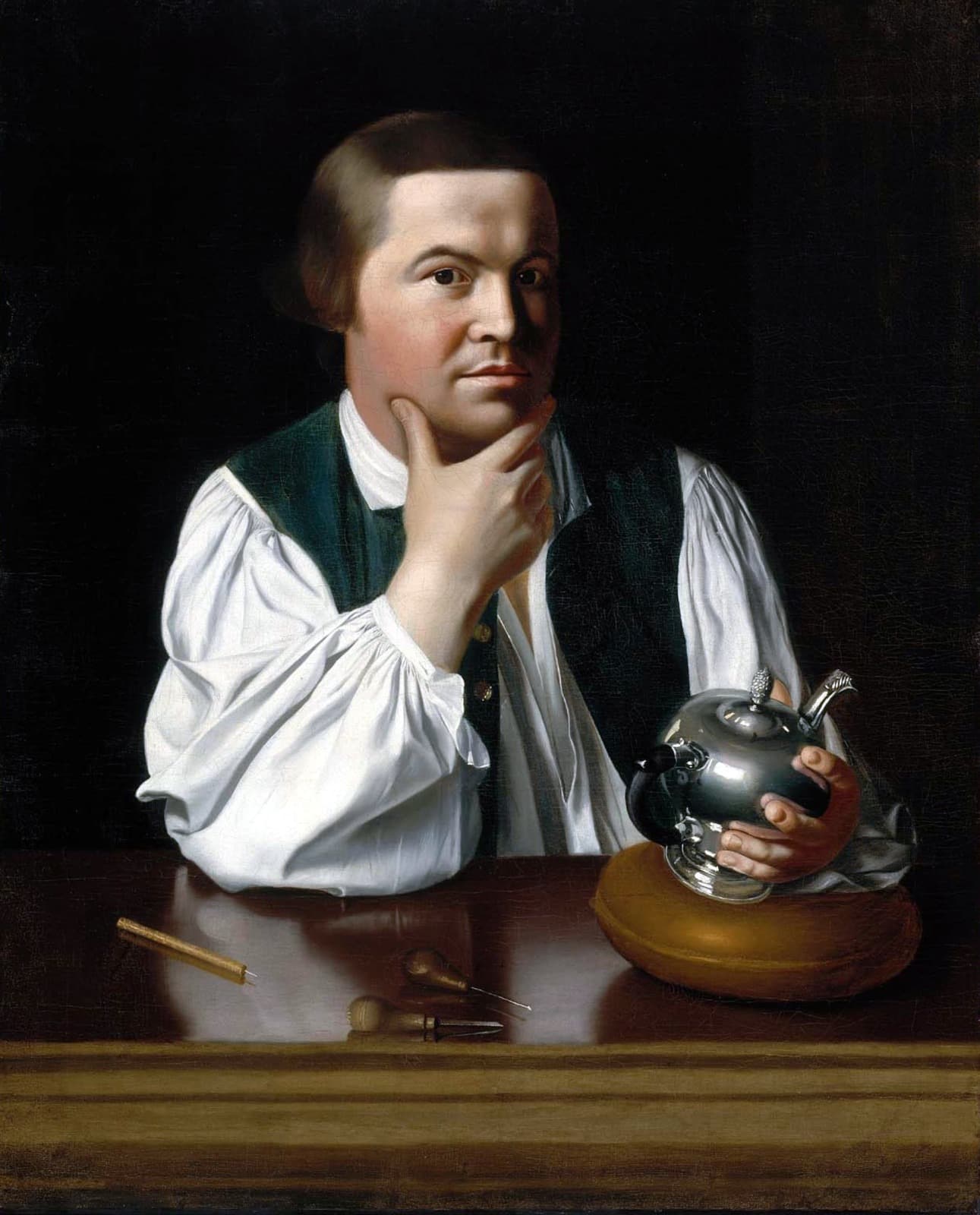
Copley painted the silversmith in his shirtsleeves at the bench with a teapot in his hand, which was not how gentlemen were usually shown.
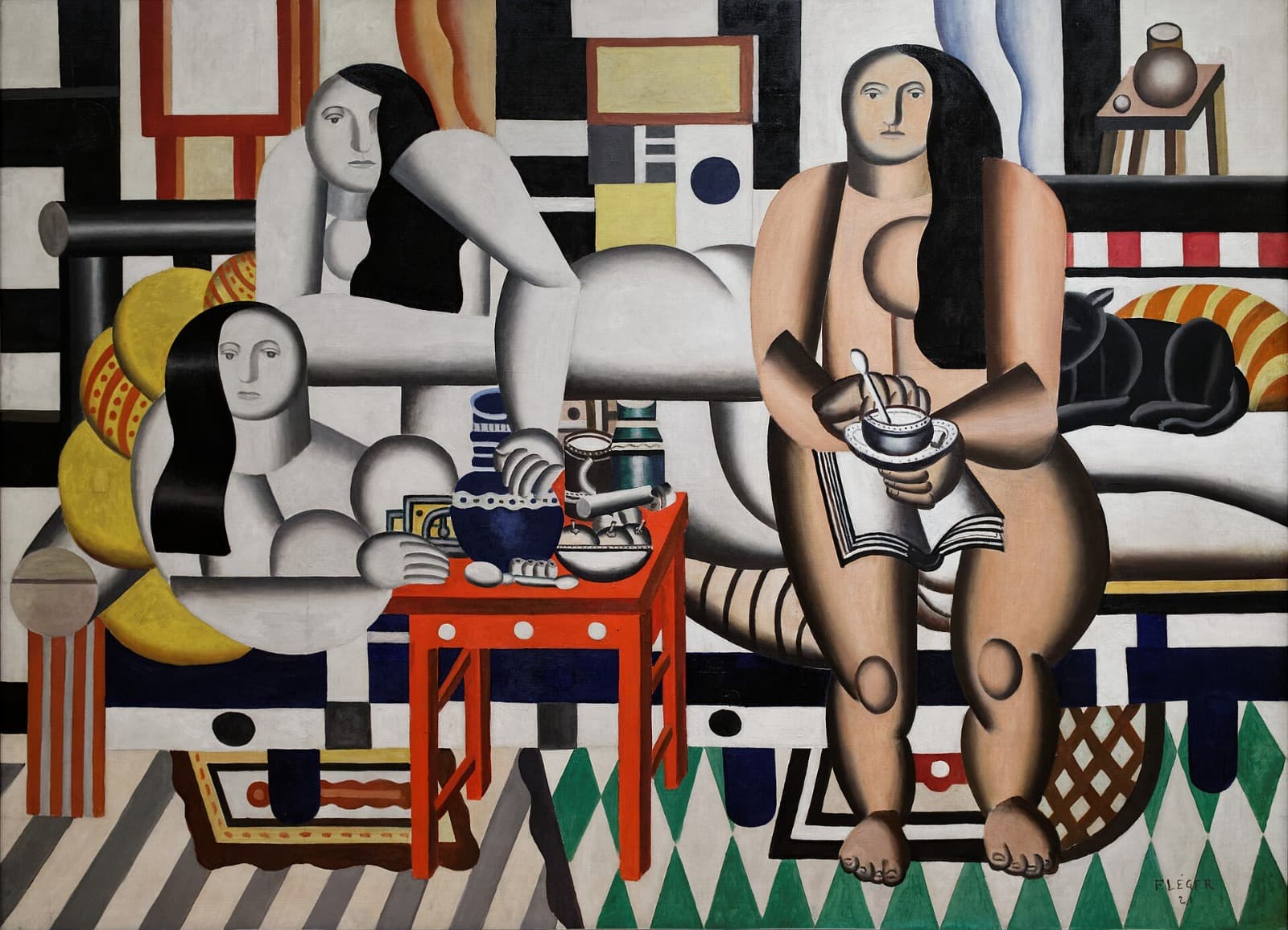
Three nudes turned on a lathe, smooth and tubular, laid out among furniture built to match. The odalisque redone for the age of the factory.
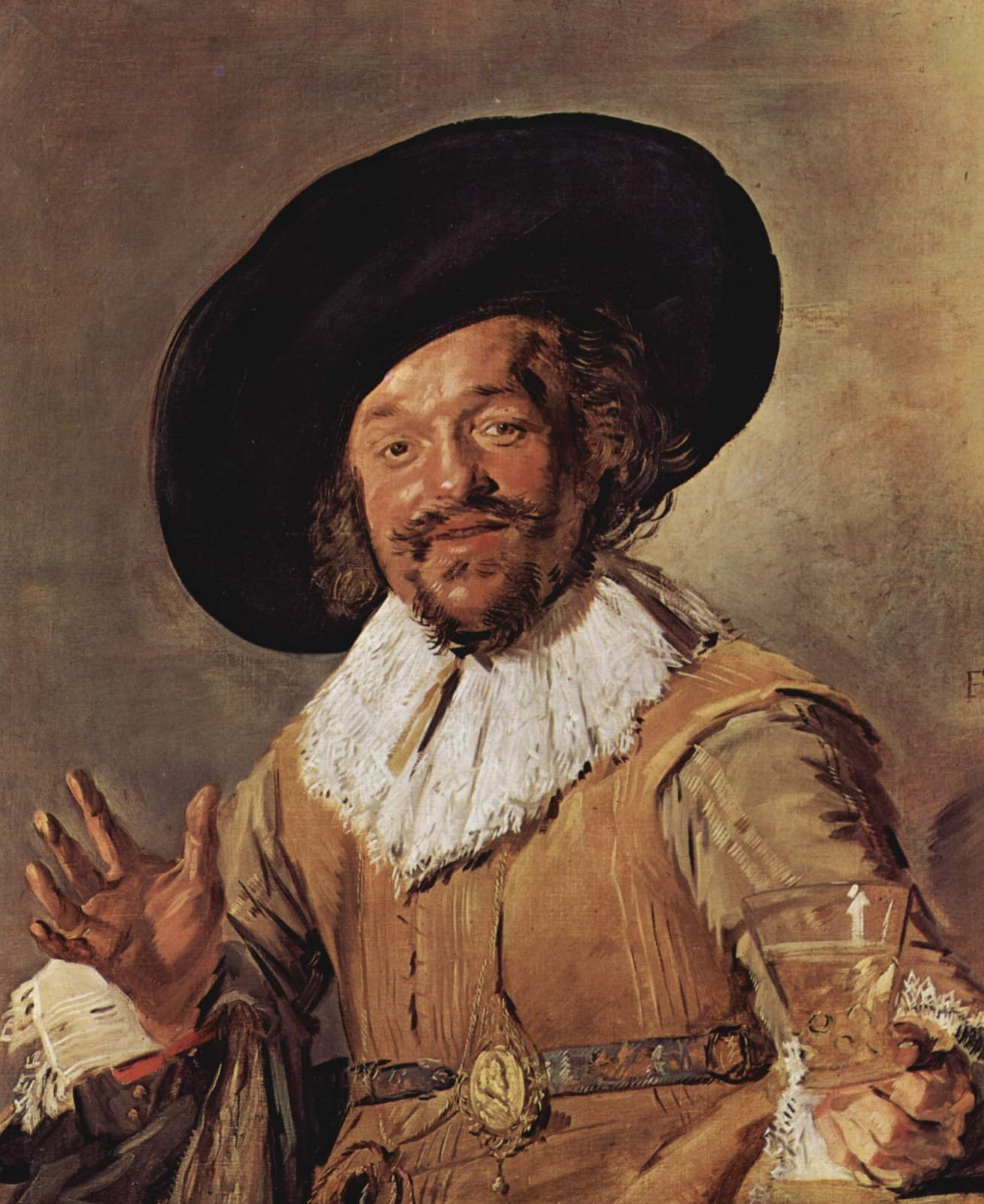
He raises his glass and talks straight at you, painted in slashing strokes laid down about as fast as the moment they catch.
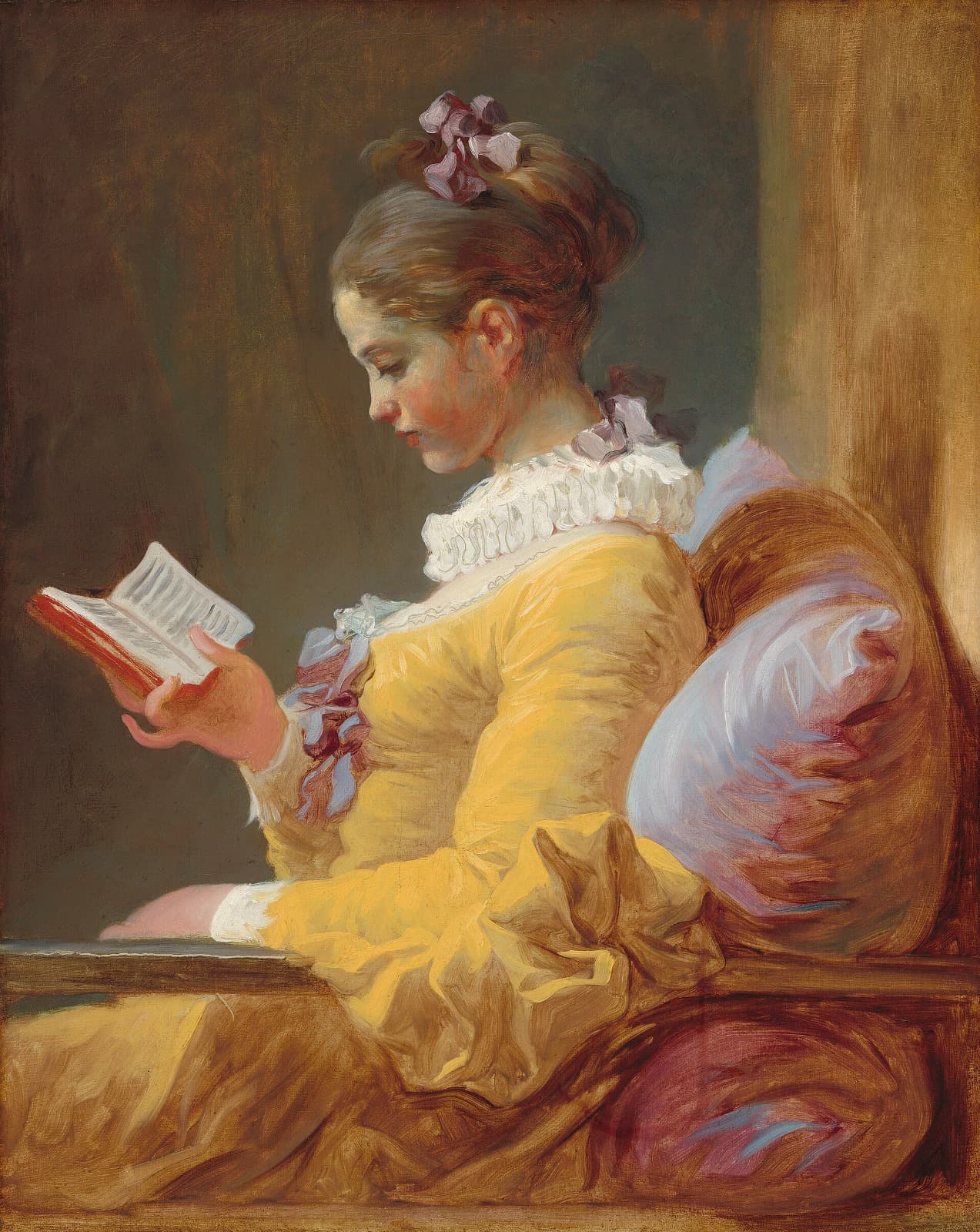
For once Fragonard is not being naughty. A girl in yellow reads, and the ruff at her wrist is a few flicks of impasto.

The same woman, same cushions, same pose, now dressed. It is thought to have hung in front of the nude and slid aside.
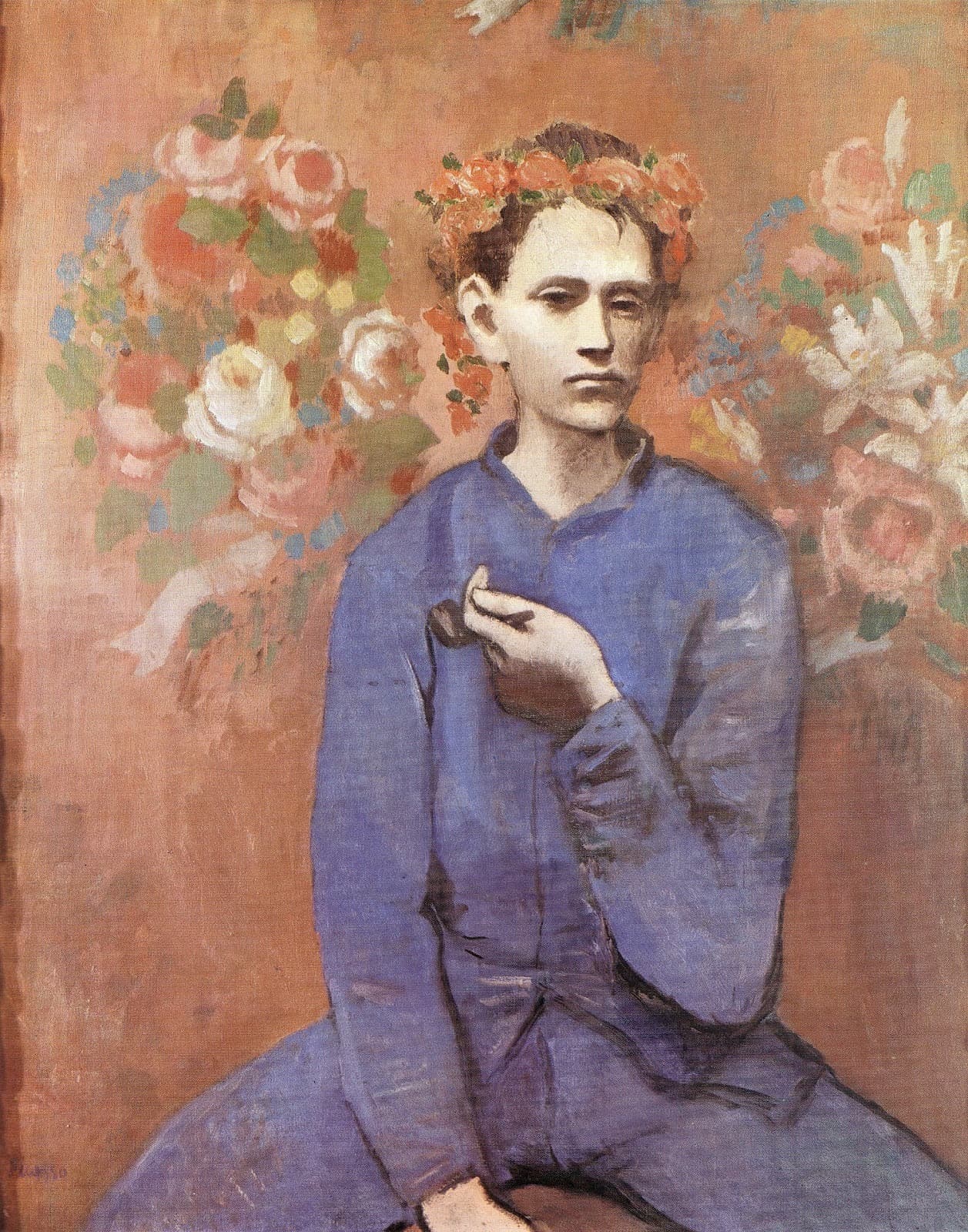
A boy from the street in a crown of roses, painted the year Picasso's blue gloom warmed into rose.

A red cap, a parapet, and a gaze that meets yours. Antonello brought the Netherlandish portrait into Italy and killed off the profile.
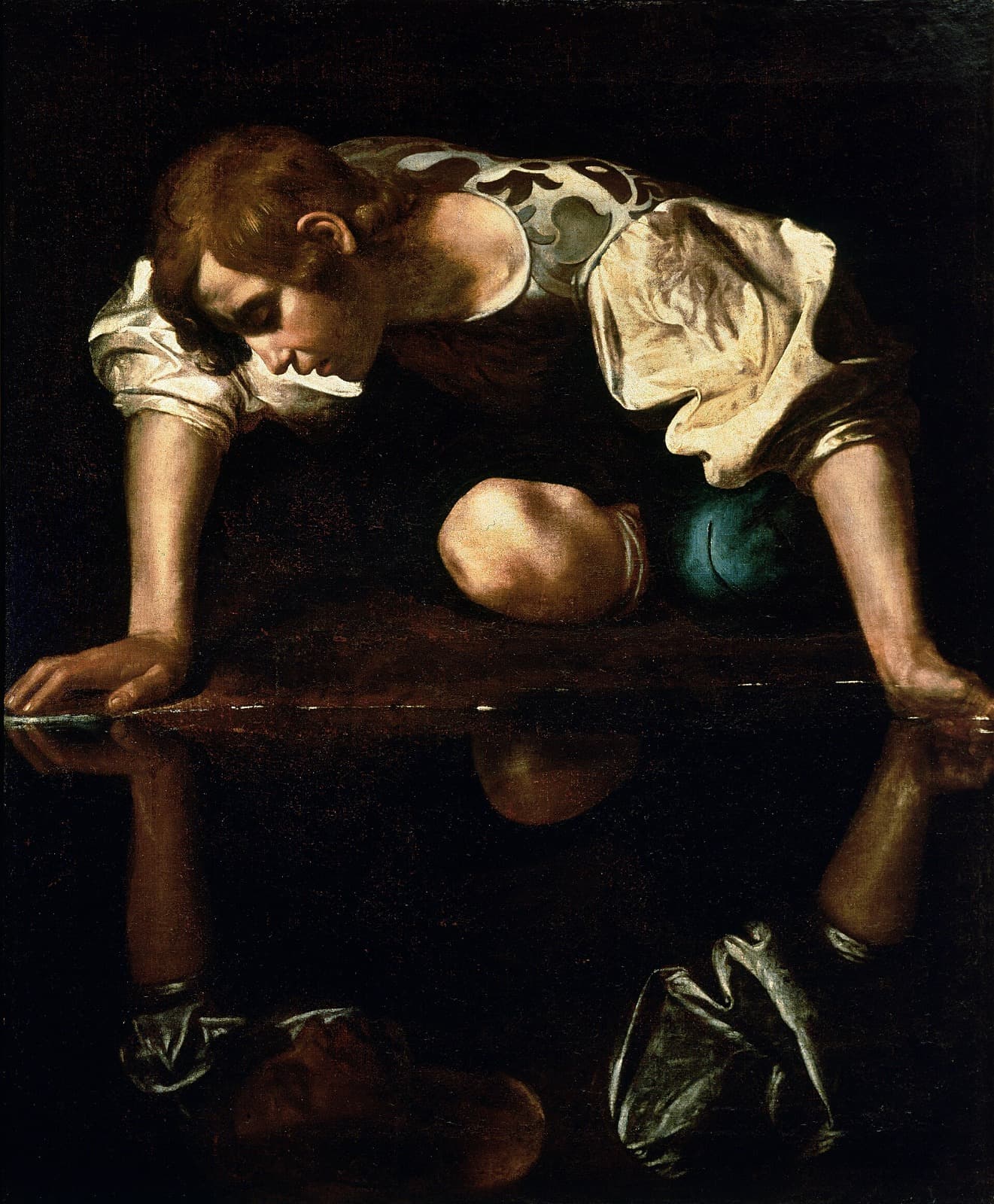
Narcissus and his reflection close into a circle around a band of black water, and nothing else exists in the picture.
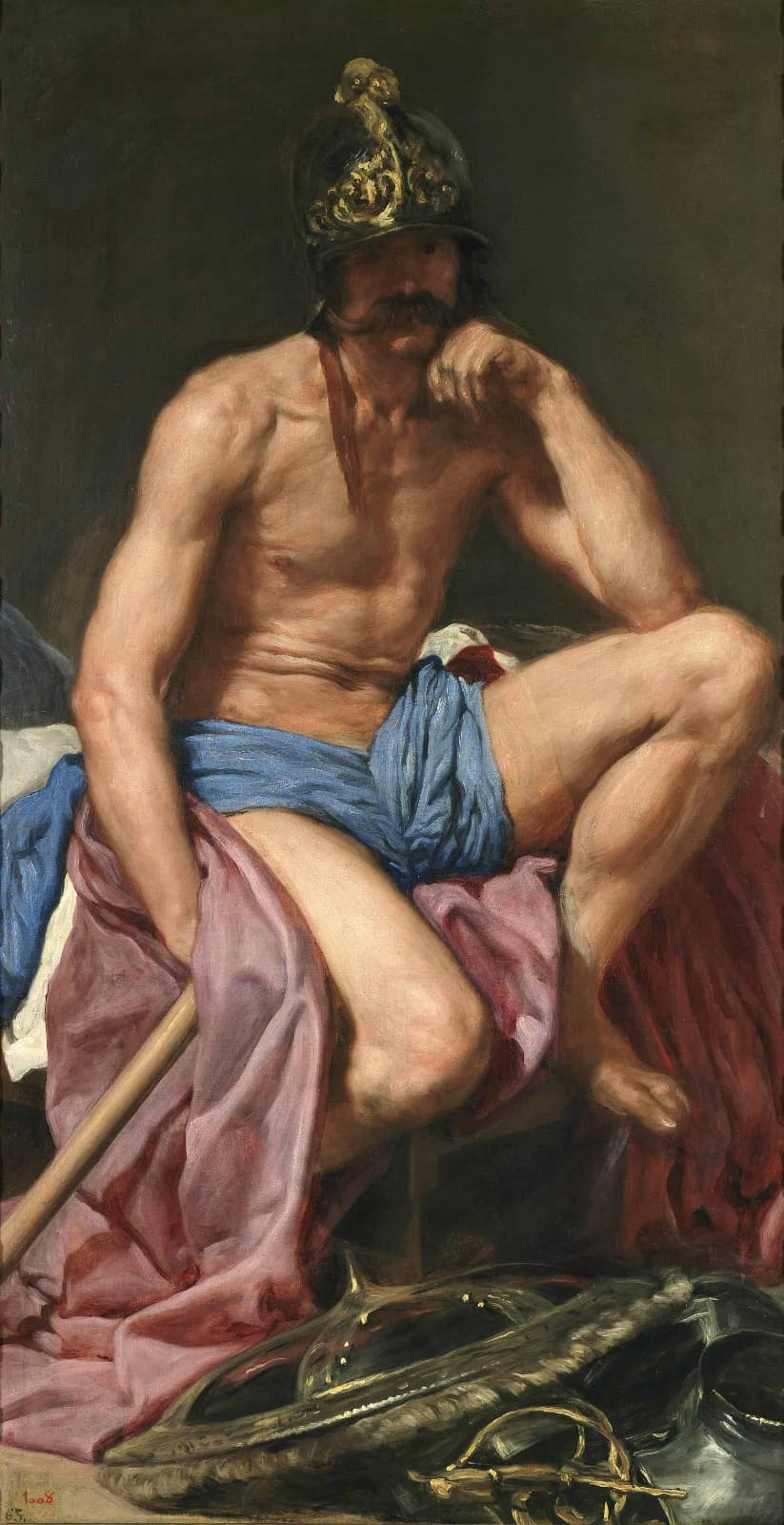
Mars sits naked and deflated in a plumed helmet with his armor on the floor, looking more like a tired old soldier.
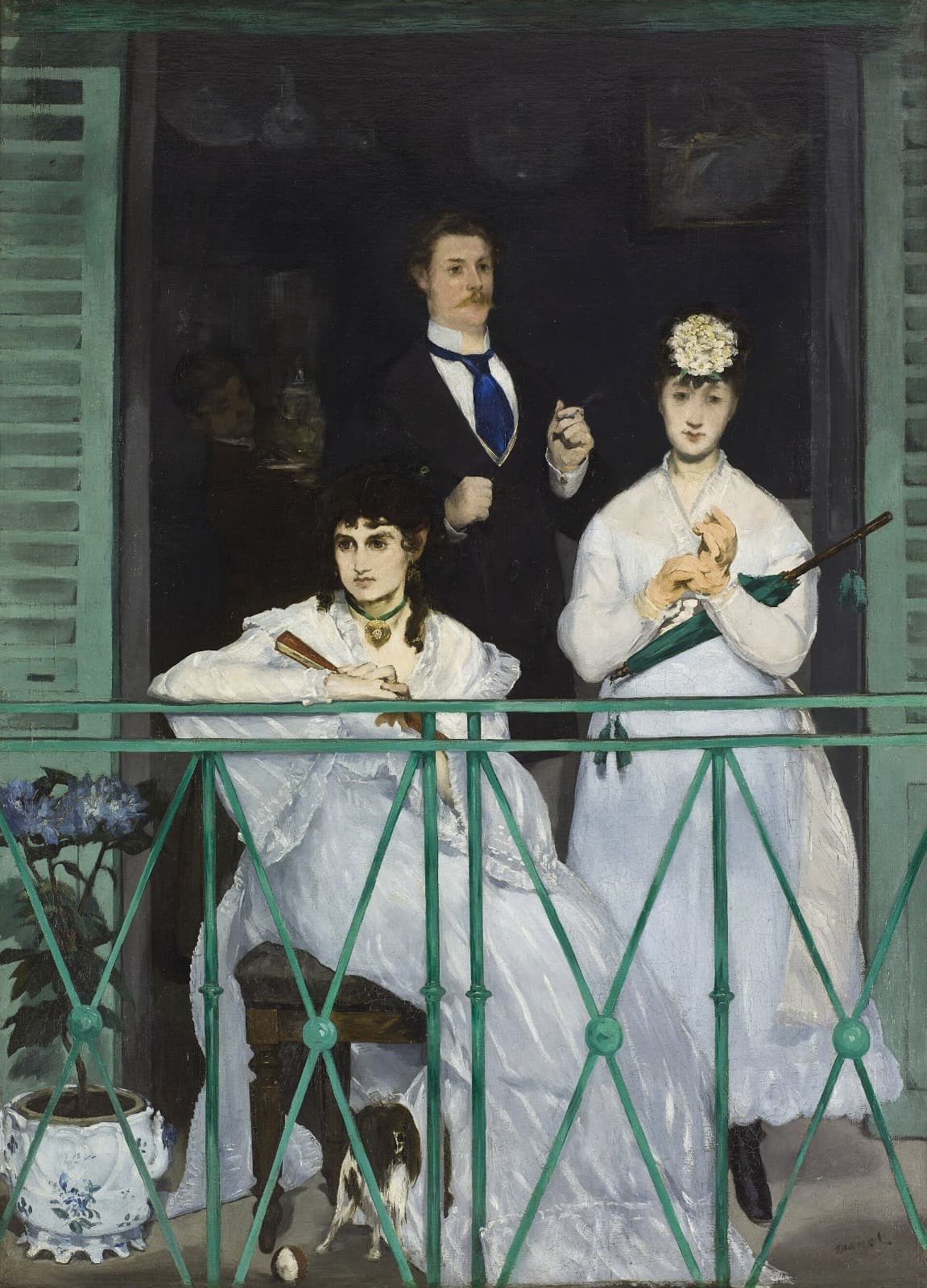
Three people at a green railing all looking different ways and none at each other. Berthe Morisot is the one seated and dreaming.
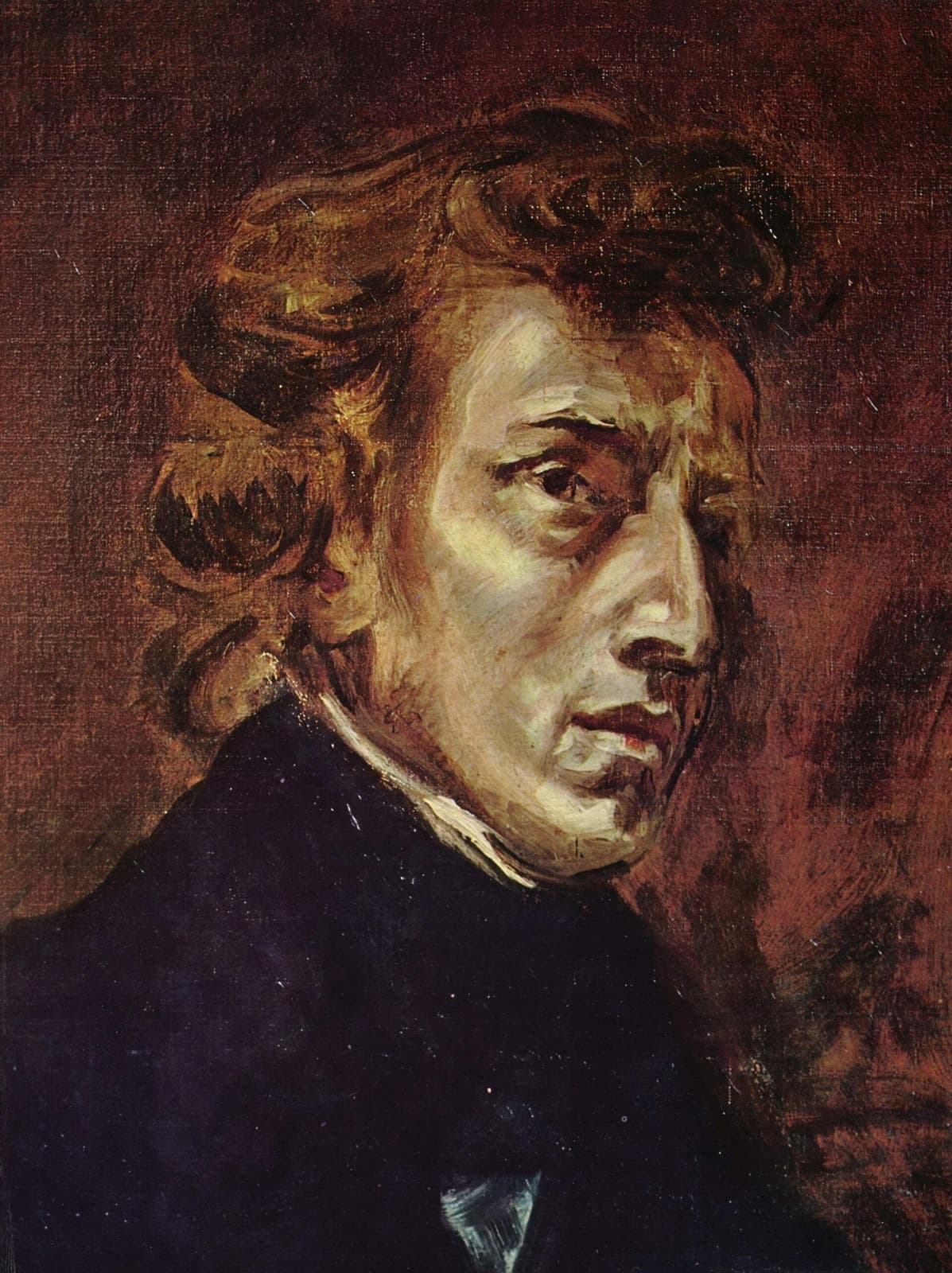
It was half of a double portrait with George Sand listening at the piano, until somebody cut the canvas in two.

A married couple sitting on the grass, leaning into each other and visibly amused, which is not how marriage portraits were done.
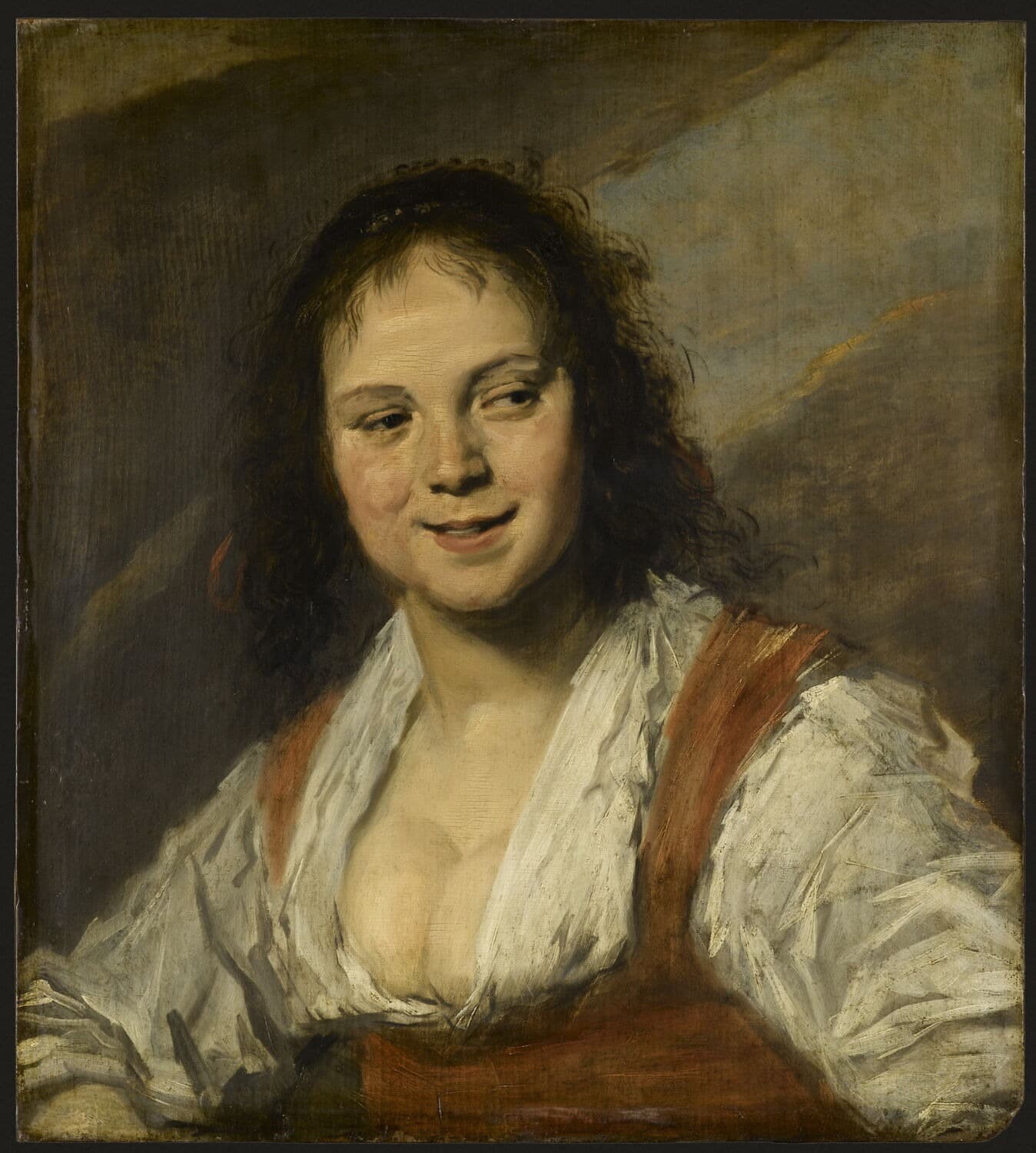
Not a commission but a tronie, a character study made to show off. Hals catches her half-laugh before it has finished.
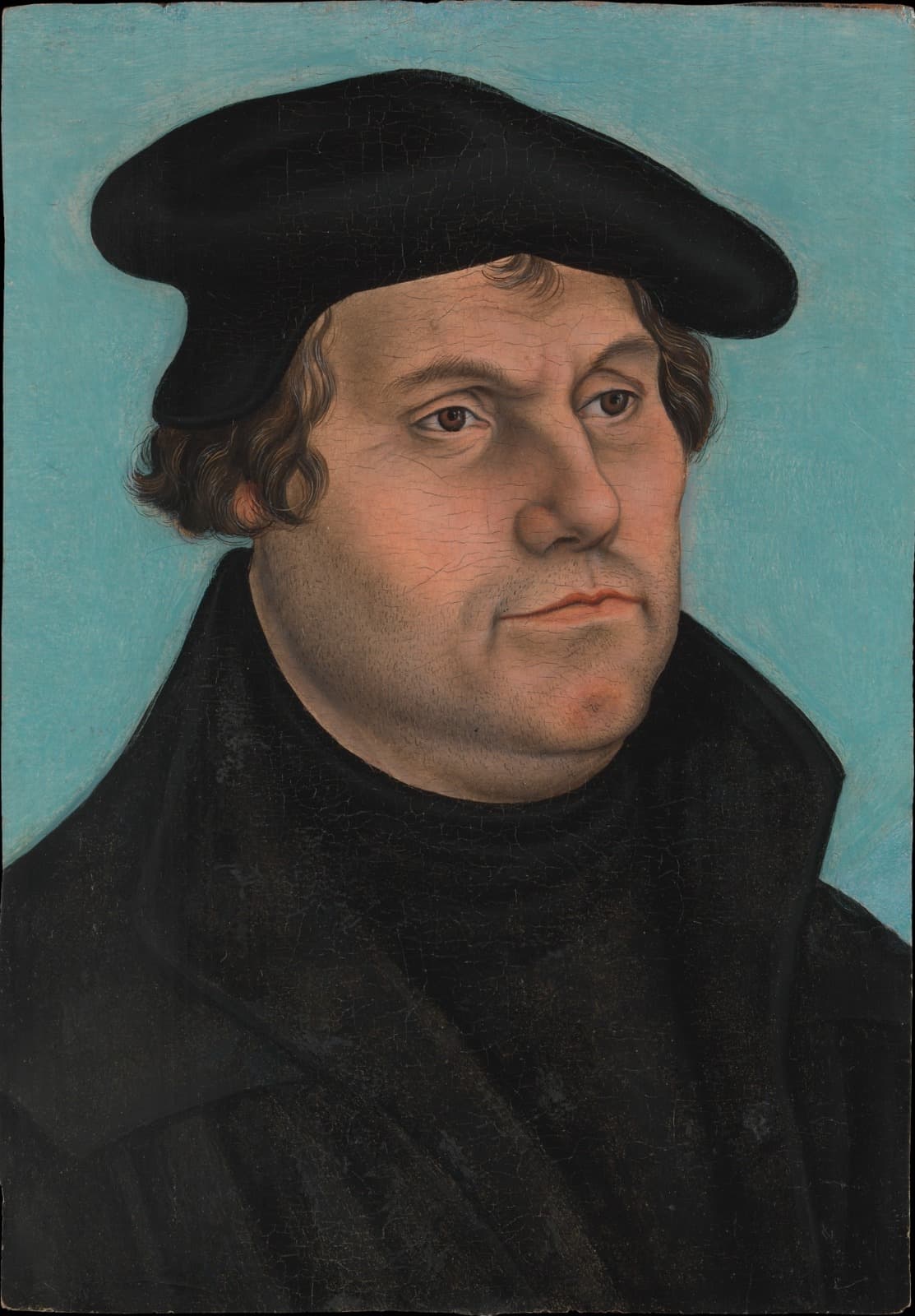
Cranach was Luther's friend and godfather to his children, and his workshop turned out this face by the score for Protestant Germany.
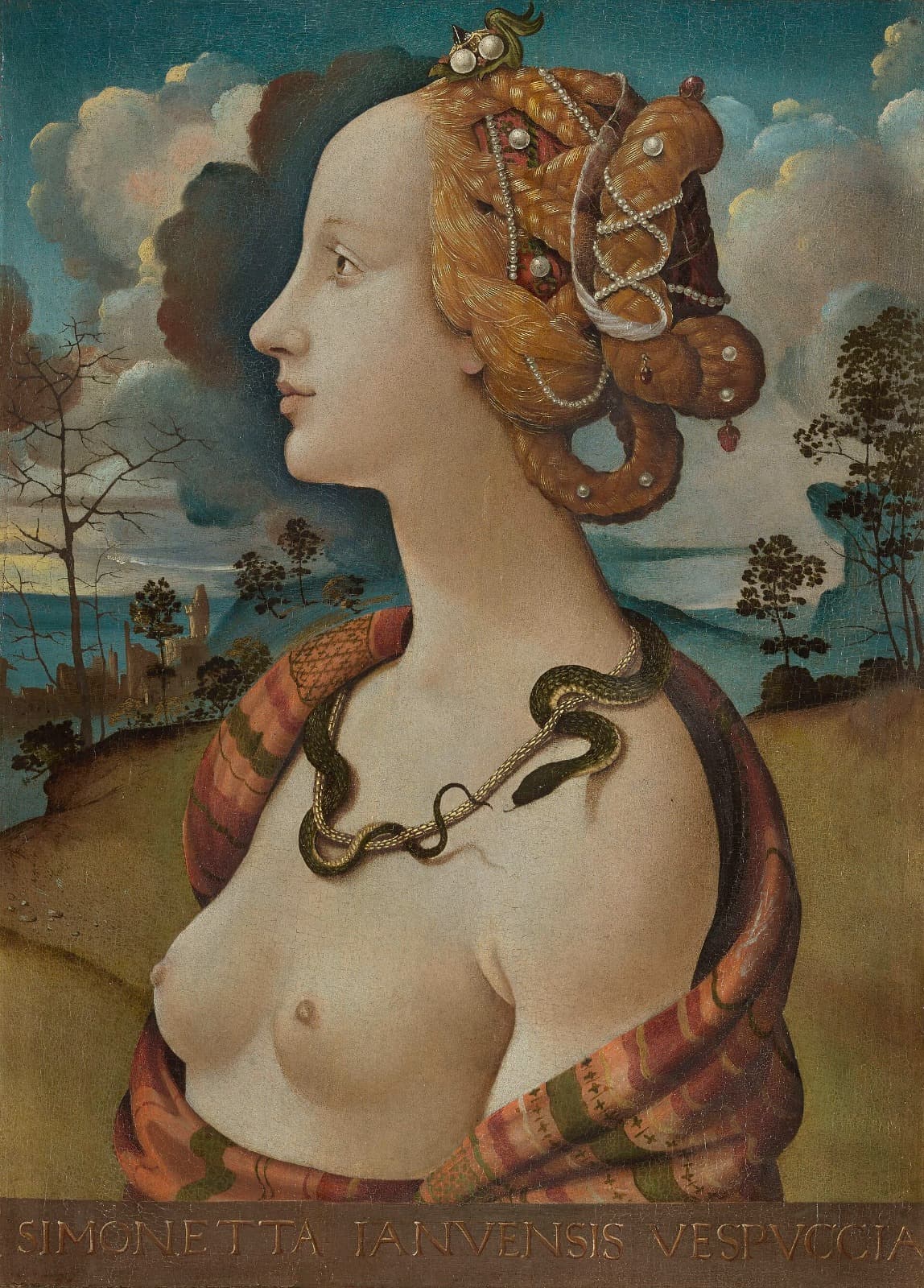
She had been dead for years when this was painted, and the asp at her throat turns her into Cleopatra.
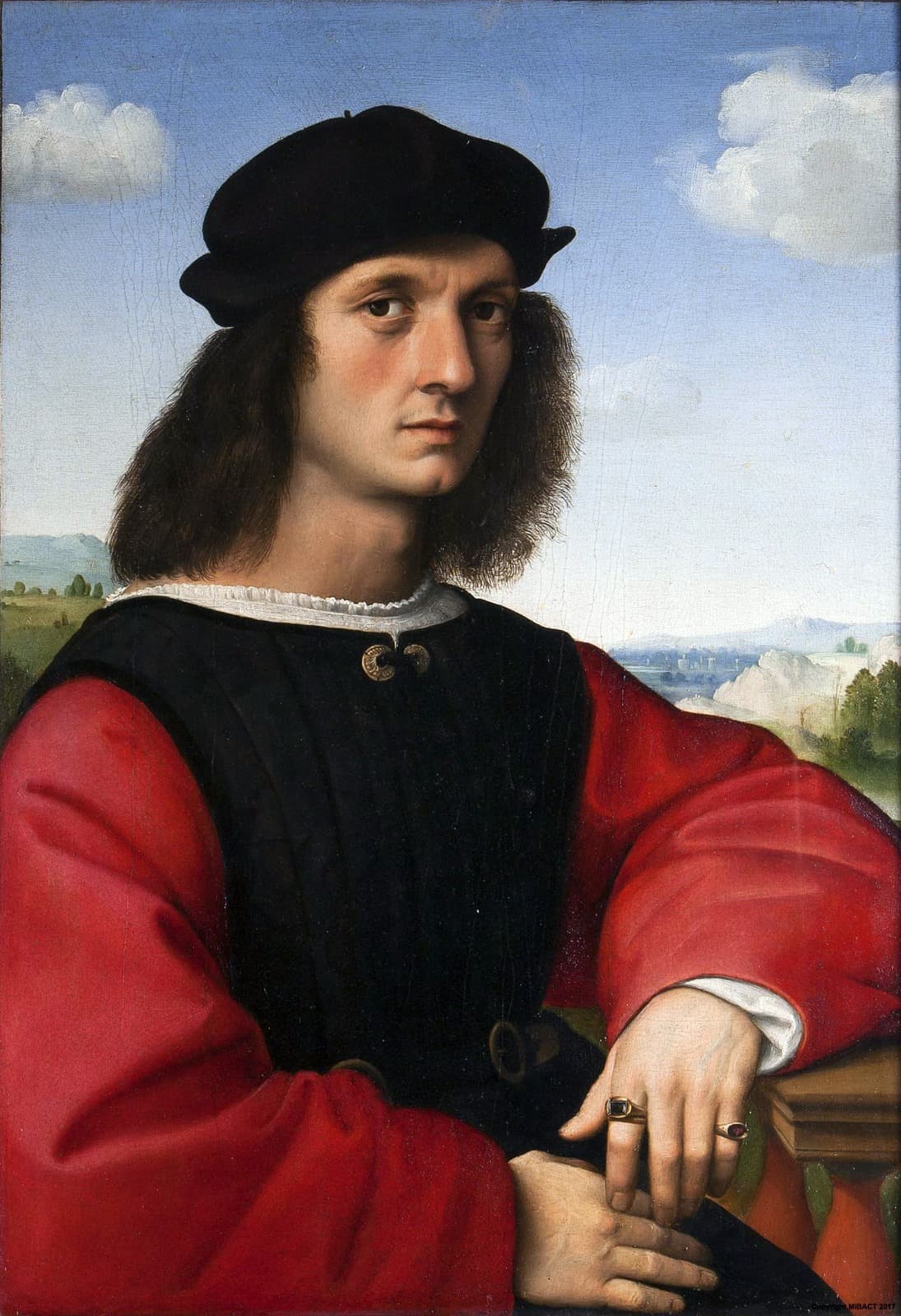
Raphael had just arrived in Florence and studied the Mona Lisa hard, then did the same pose in clear light instead of smoke.

She painted herself at the wheel in leather helmet and gloves for a German fashion magazine, and invented the look of the Jazz Age.
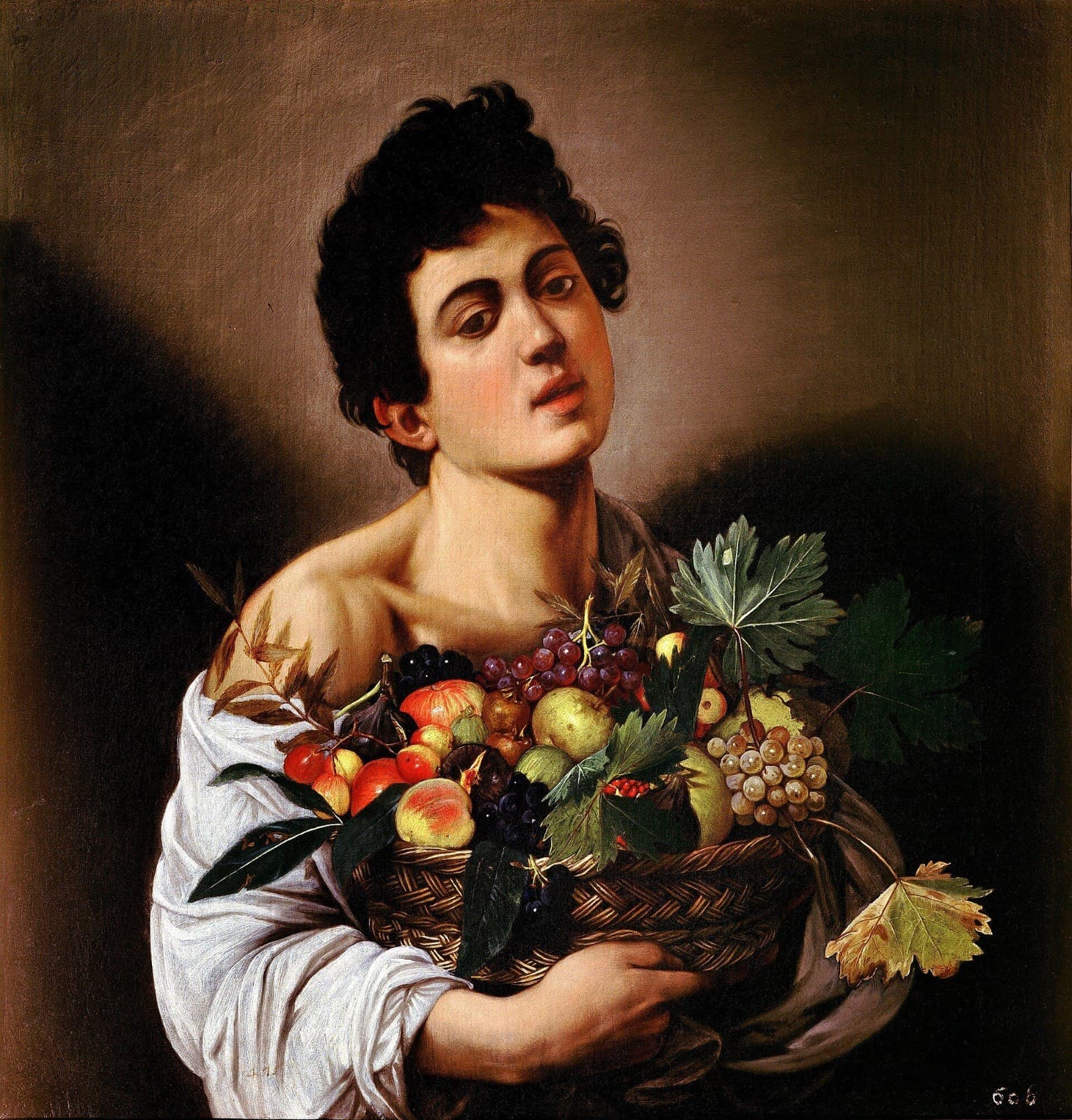
Fruit already spotting toward rot, painted with the same attention as the boy holding it. An early statement of what Caravaggio intended.

Her face is finished and breathing while the hair around it stays loose scribble, and nobody knows whether Leonardo considered it done.
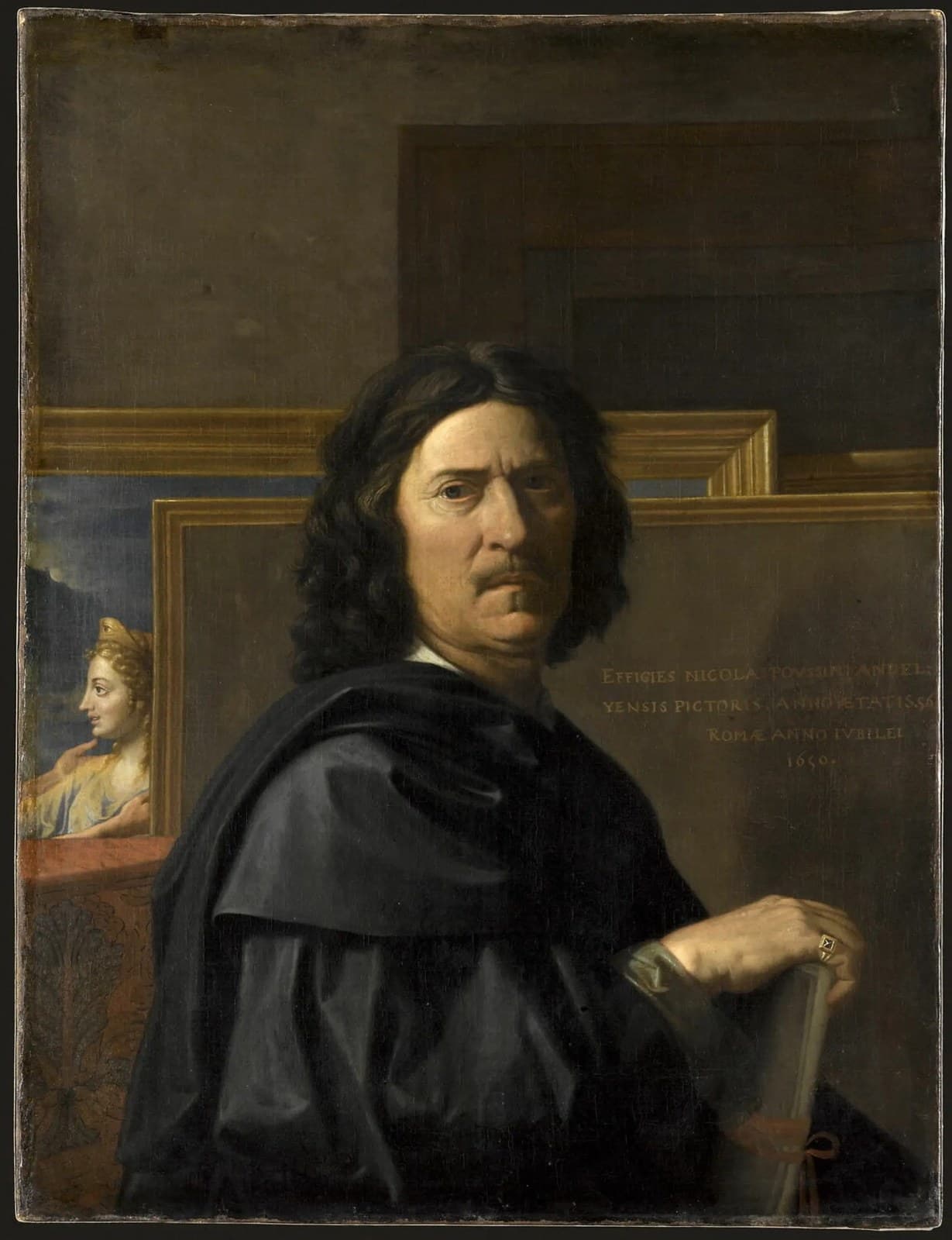
Poussin stands in front of his own blank stretched canvases with a portfolio under his arm, presenting himself as a thinker rather than a craftsman.
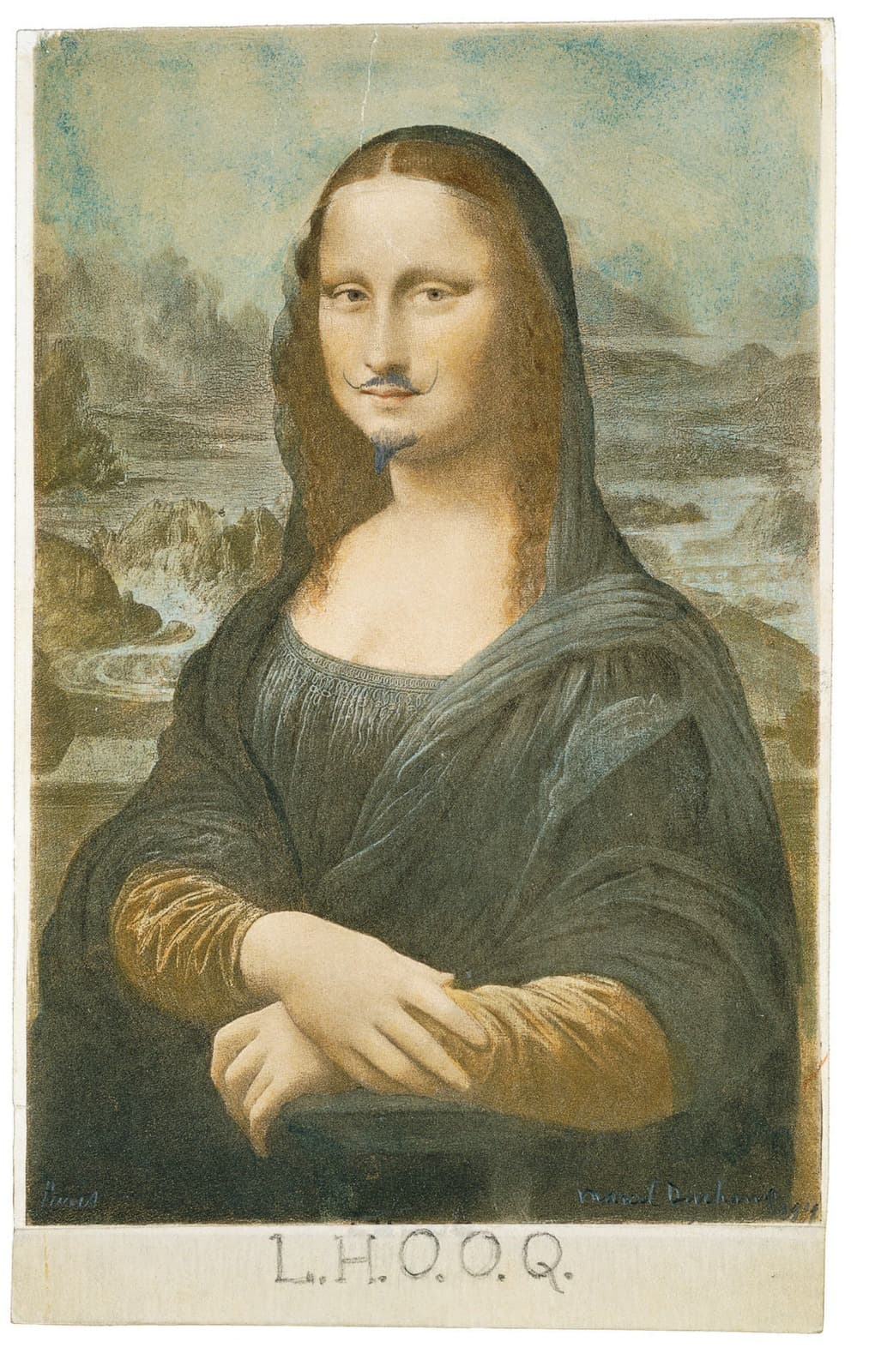
Duchamp bought a postcard of the Mona Lisa, drew a moustache on it, and added five letters that make a crude joke in French.

She sits in profile against a hedge of carnations with butterflies going past, a sprig of juniper on her sleeve punning on her name.
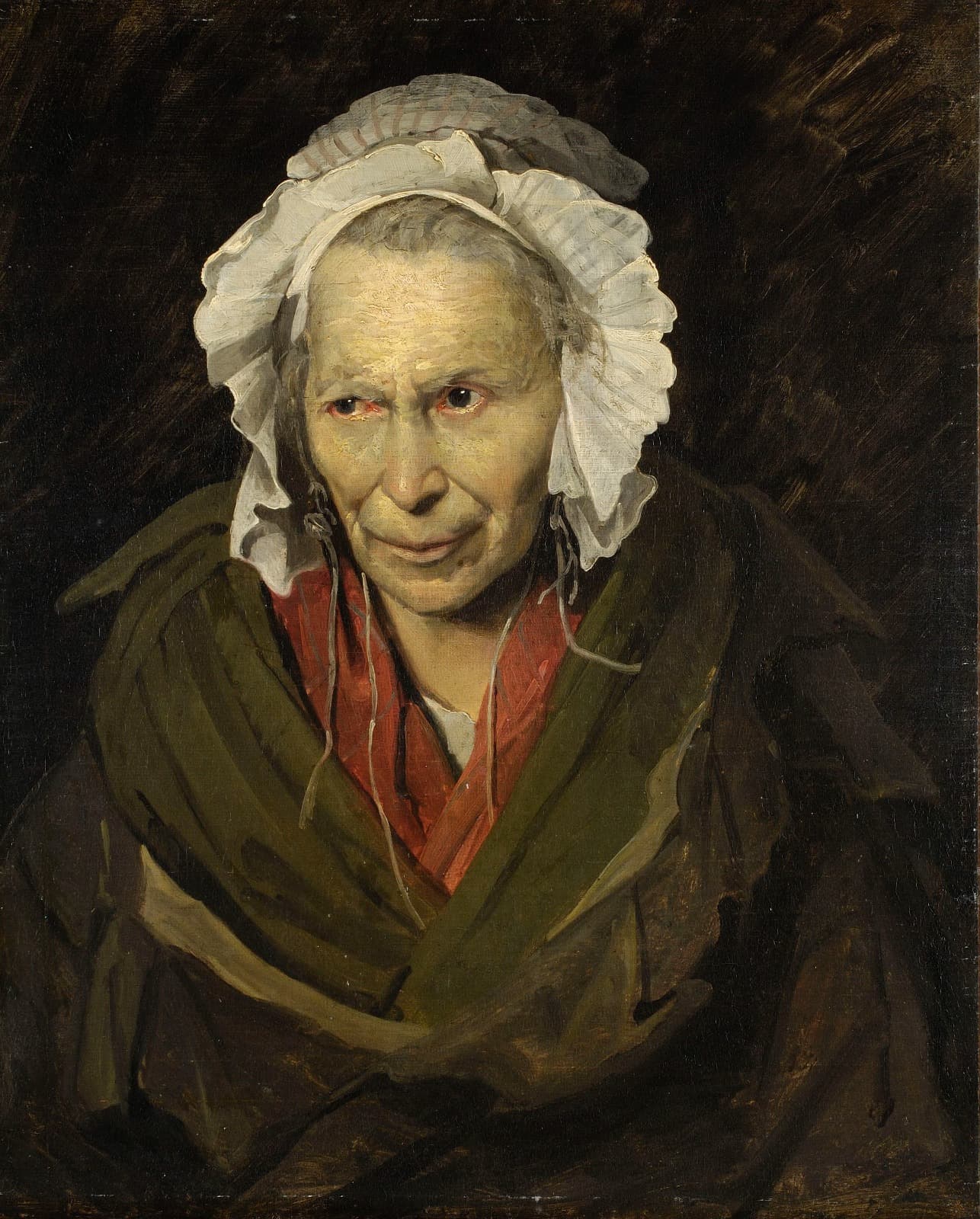
One of a series Géricault painted of asylum patients for a doctor studying obsession, and he gave her the seriousness of a commissioned portrait.