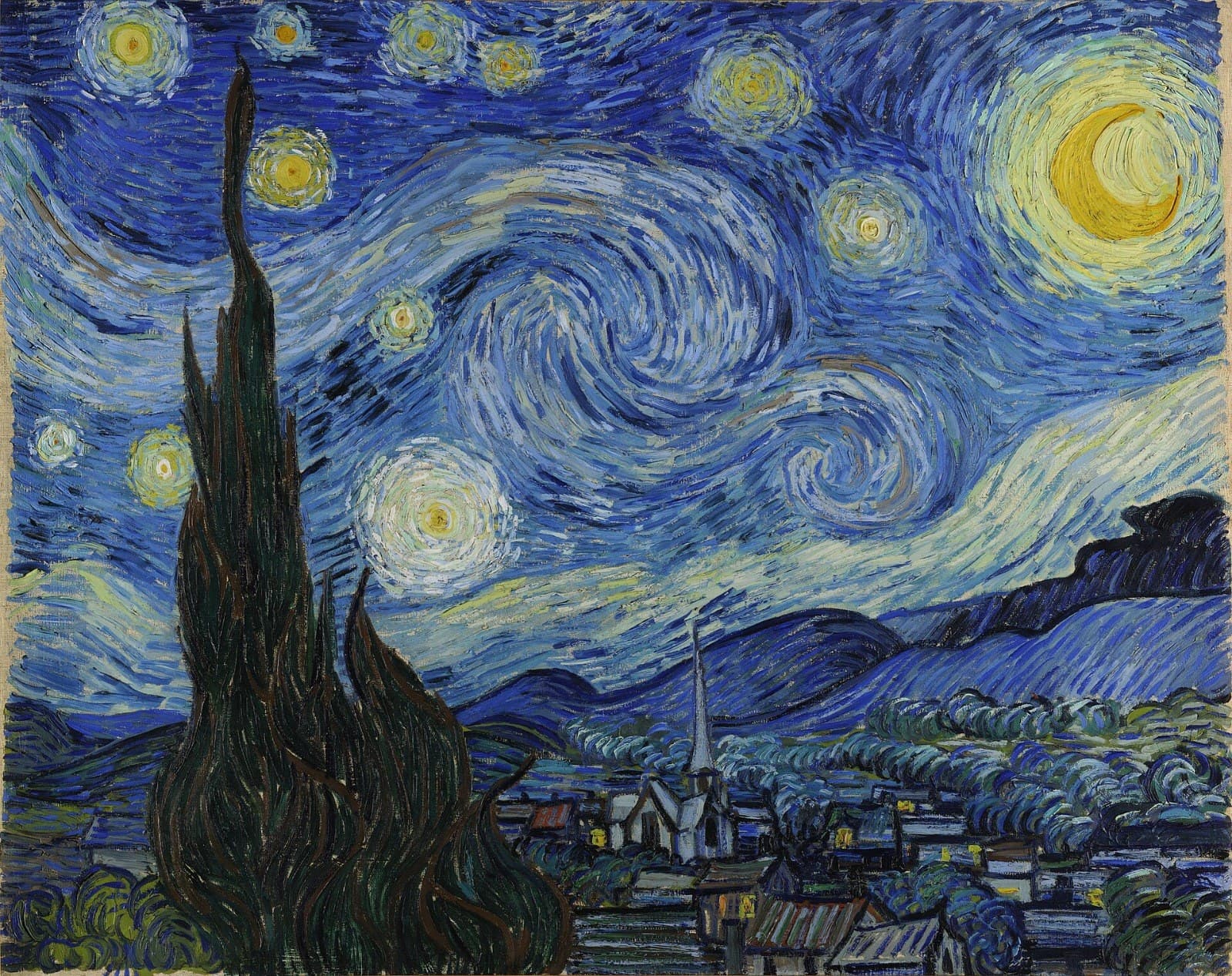
Starry Night
1889 · Museum of Modern Art, New York City
Van Gogh painted the churning sky and its eleven stars from a window of the asylum at Saint-Rémy, partly from memory.
★ 9.6
 skopia
Van Gogh painted the churning sky and its eleven stars from a window of the asylum at Saint-Rémy, partly from memory.

Five nude women stare out with their faces turned into masks, and Picasso kept the canvas rolled up in his studio for years.
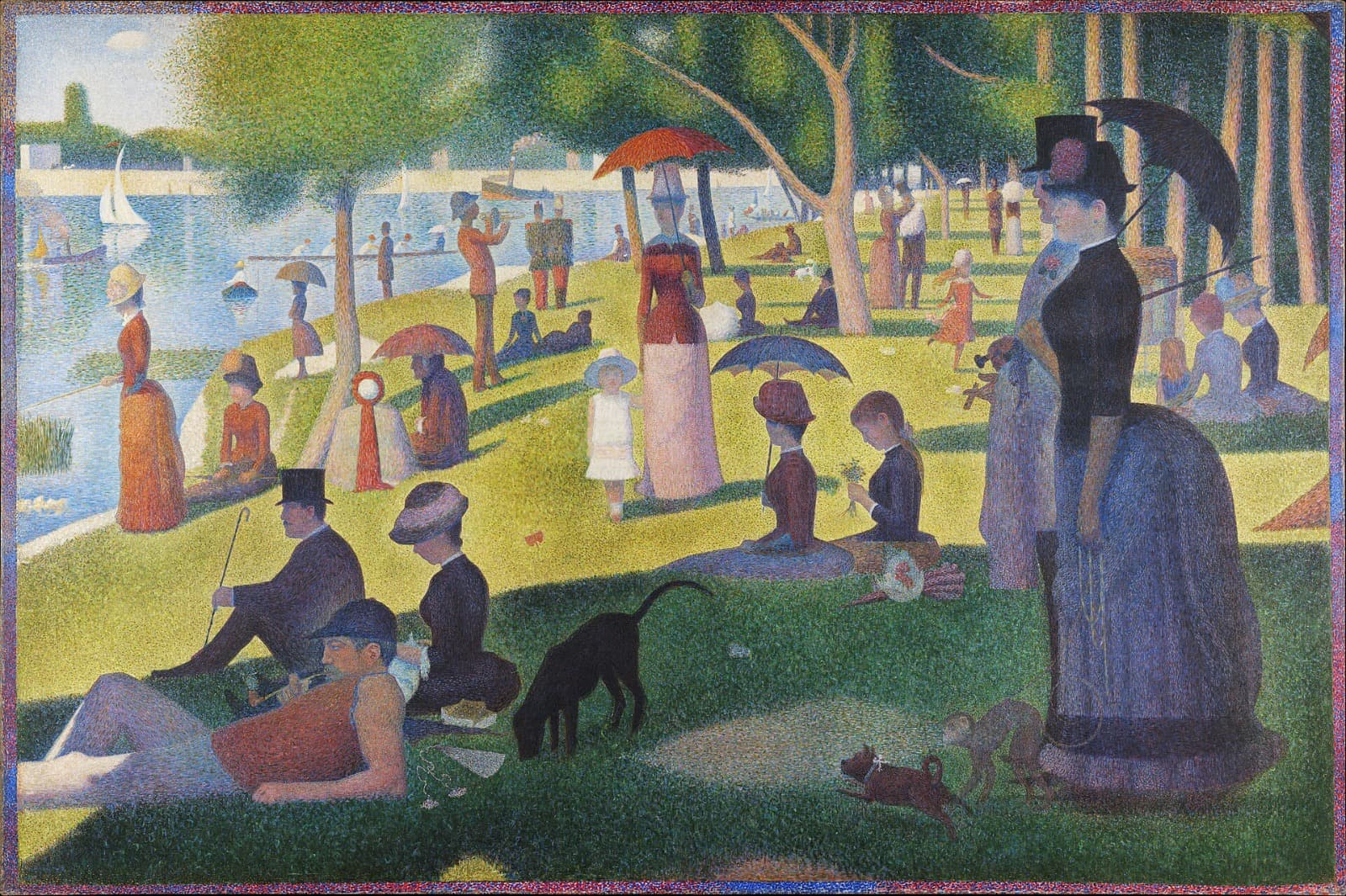
Seurat spent two years building this riverbank out of tiny dots of unmixed color, applying optical theory to a crowd standing oddly still.
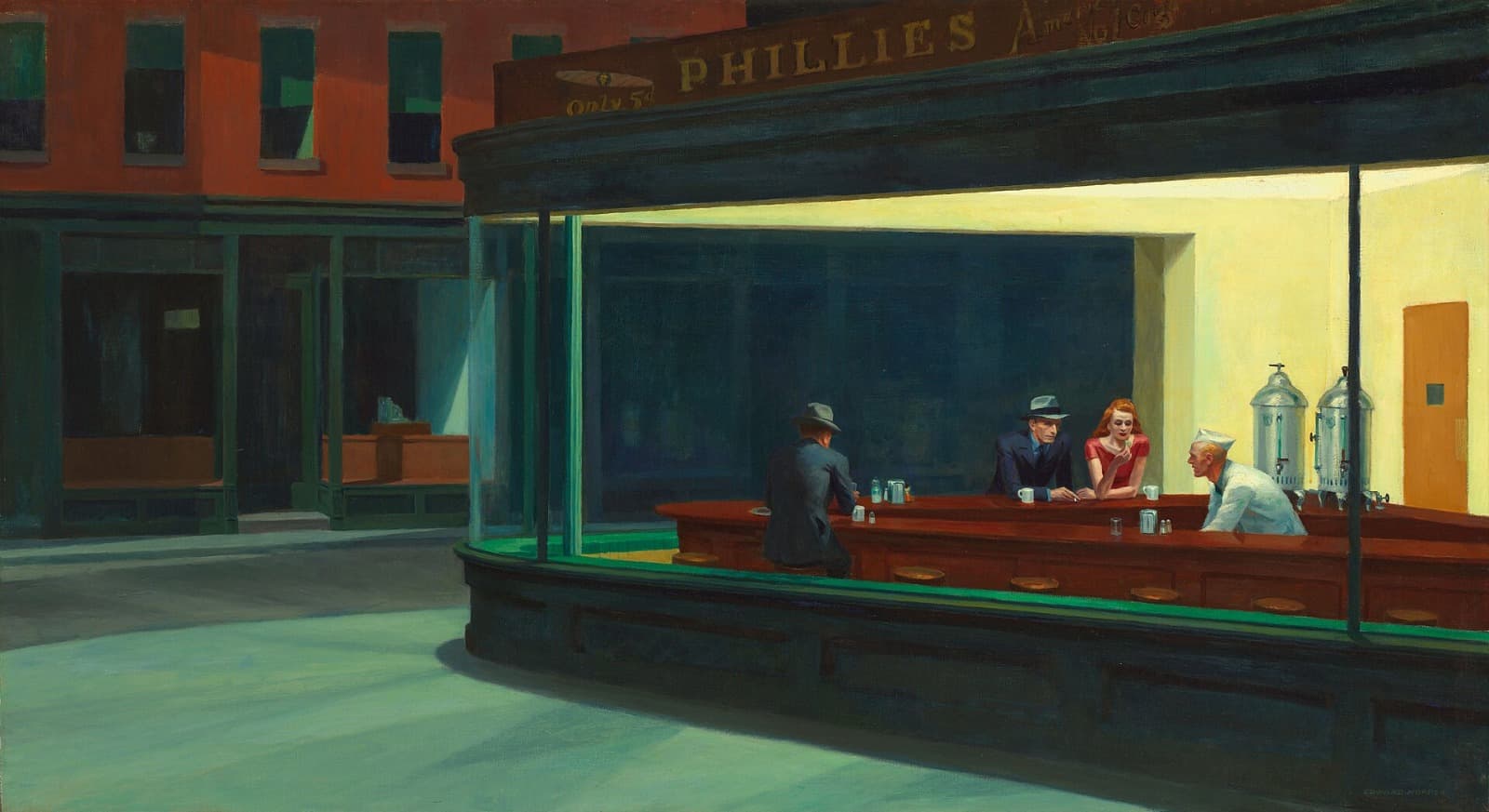
Four people sit under fluorescent light behind a curved sheet of glass, and Hopper gave the diner no door in or out.

Fourteen of Renoir's friends linger over the wreckage of lunch above the Seine, his future wife among them, cooing at a dog on the table.

Thirty-two canvases, one for every variety Campbell's then sold, hung in a row like stock on a supermarket shelf.

Two saints lower a nobleman into his grave while his soul slips through a tear in the sky. The mourners are El Greco's own neighbors.
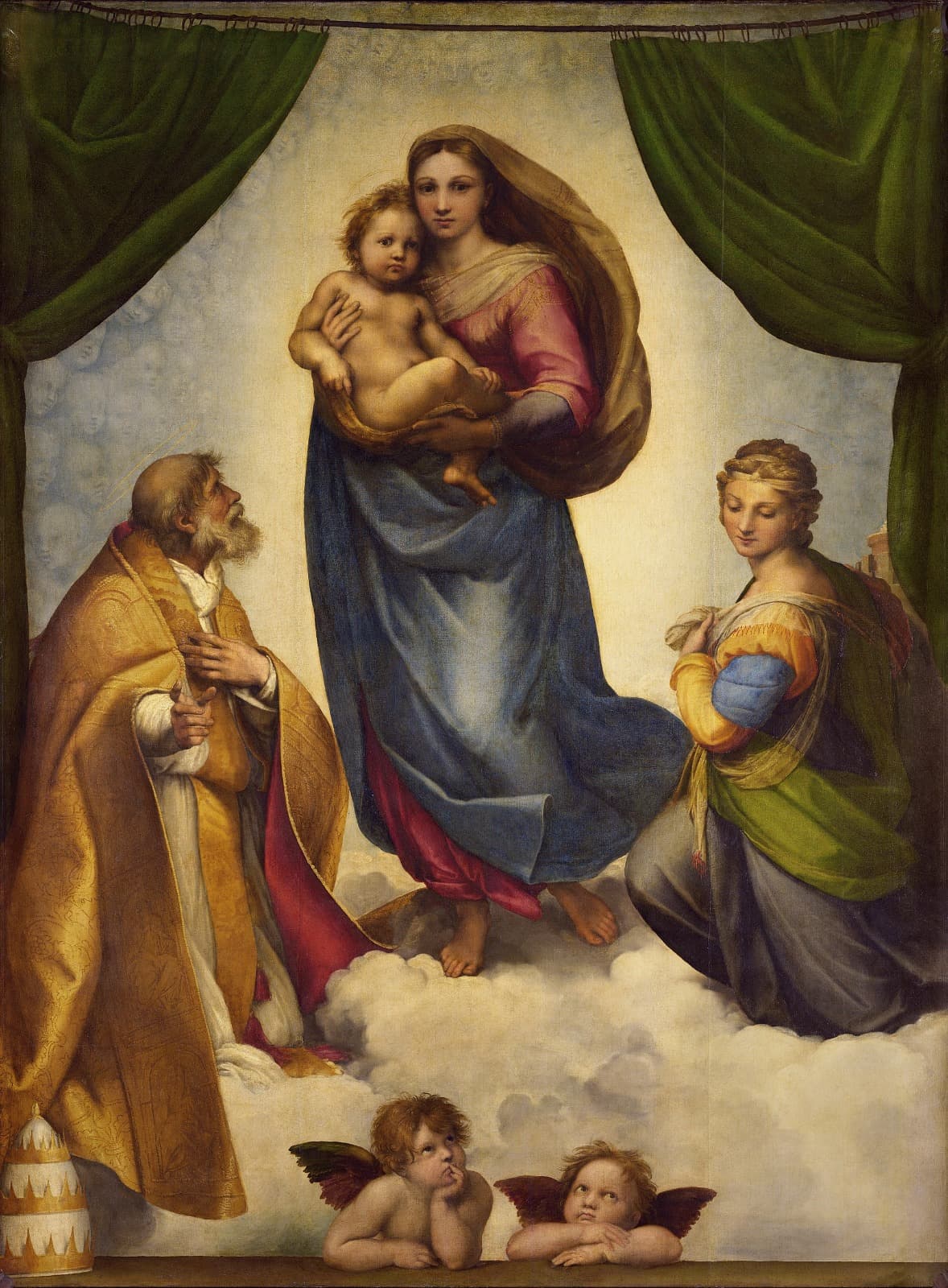
Two bored cherubs lean on the frame at the bottom, and they floated free of the altarpiece long ago onto everything else.

Dalí said the soft watches came to him from a camembert melting in the sun, and he painted them with hallucinatory precision.
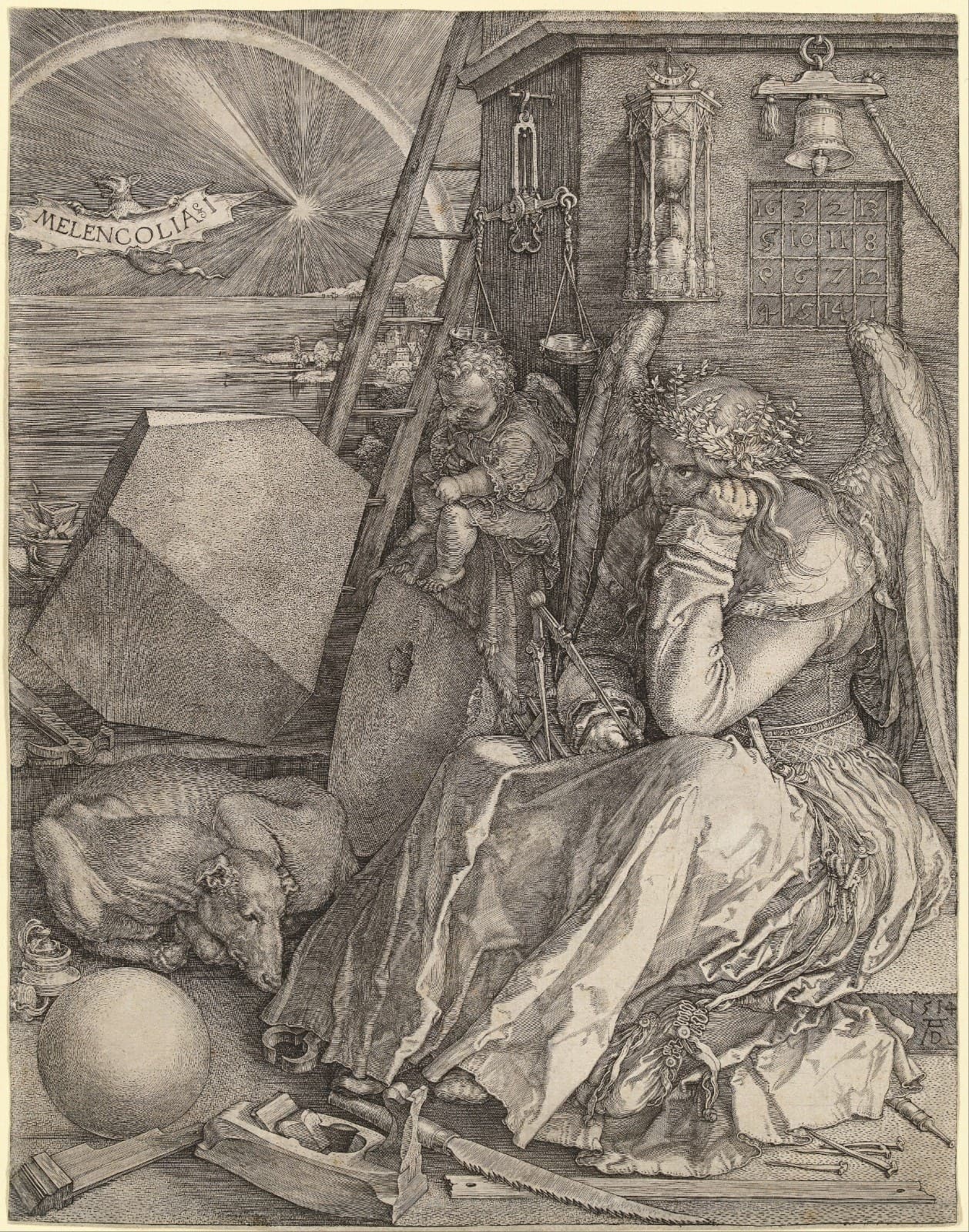
A winged figure sits with her compass idle among abandoned tools, and no print in history has drawn more scholarly argument.
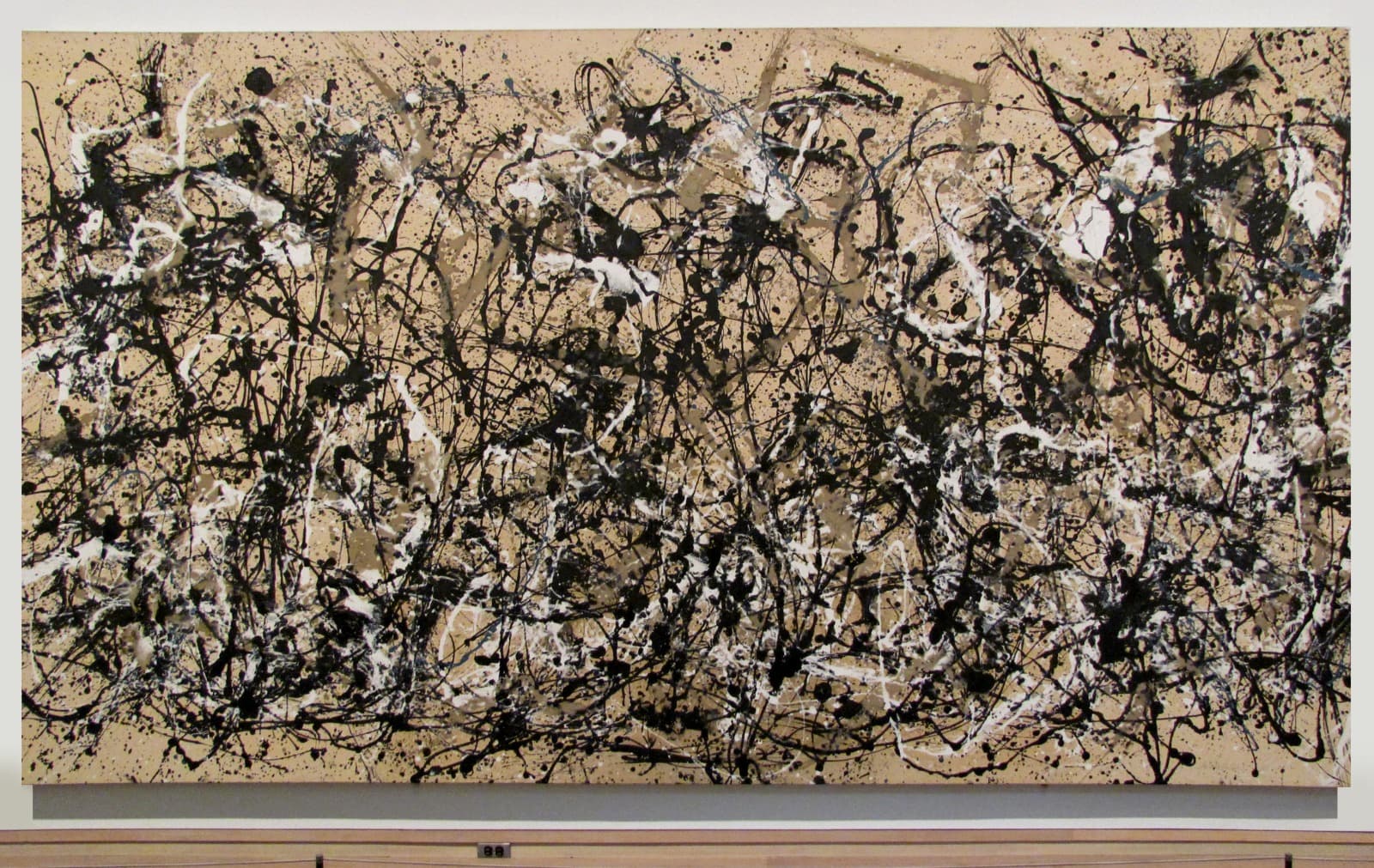
Pollock worked on the floor and moved around the canvas instead of standing at an easel, laying black enamel across raw cotton in 1950.
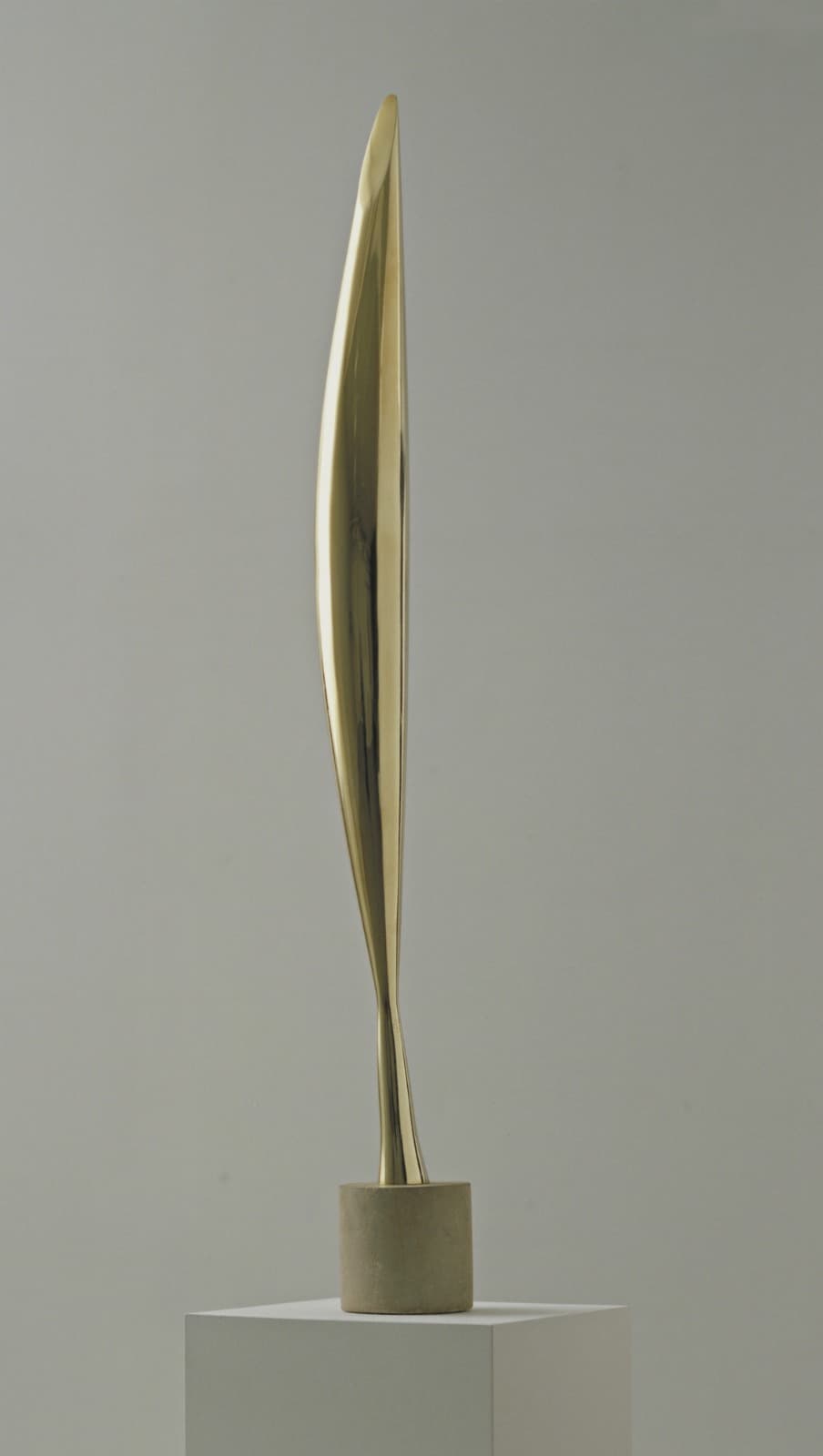
American customs taxed it as industrial metal until Brancusi v. United States in 1928 forced the law to recognize abstract sculpture as art.
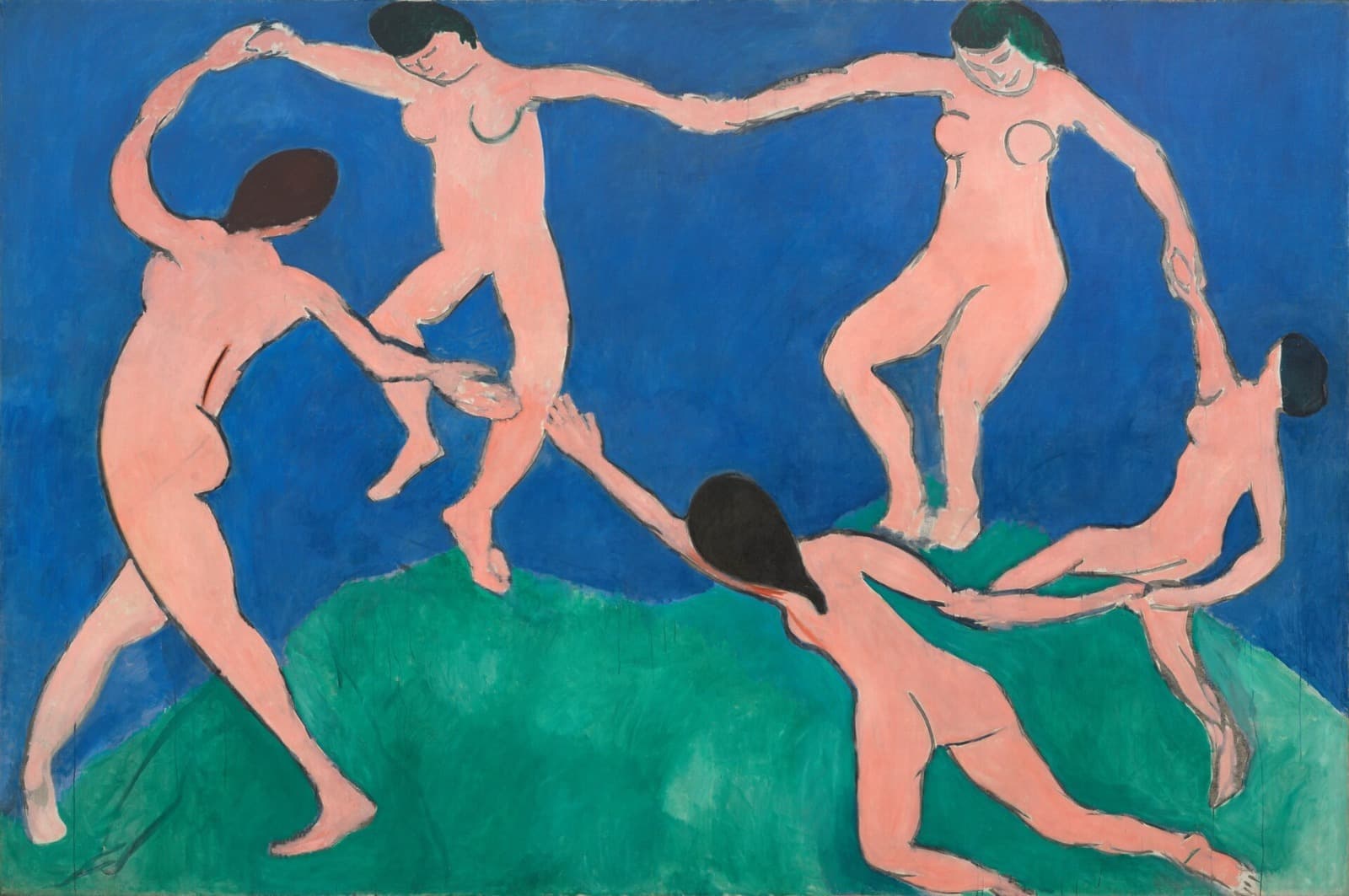
Five figures wheel in a ring against blue and green, reduced to three colors and the strain of holding hands at speed.

Gauguin thought he was dying and meant this to be his last work, reading right to left from a sleeping infant to an old woman.
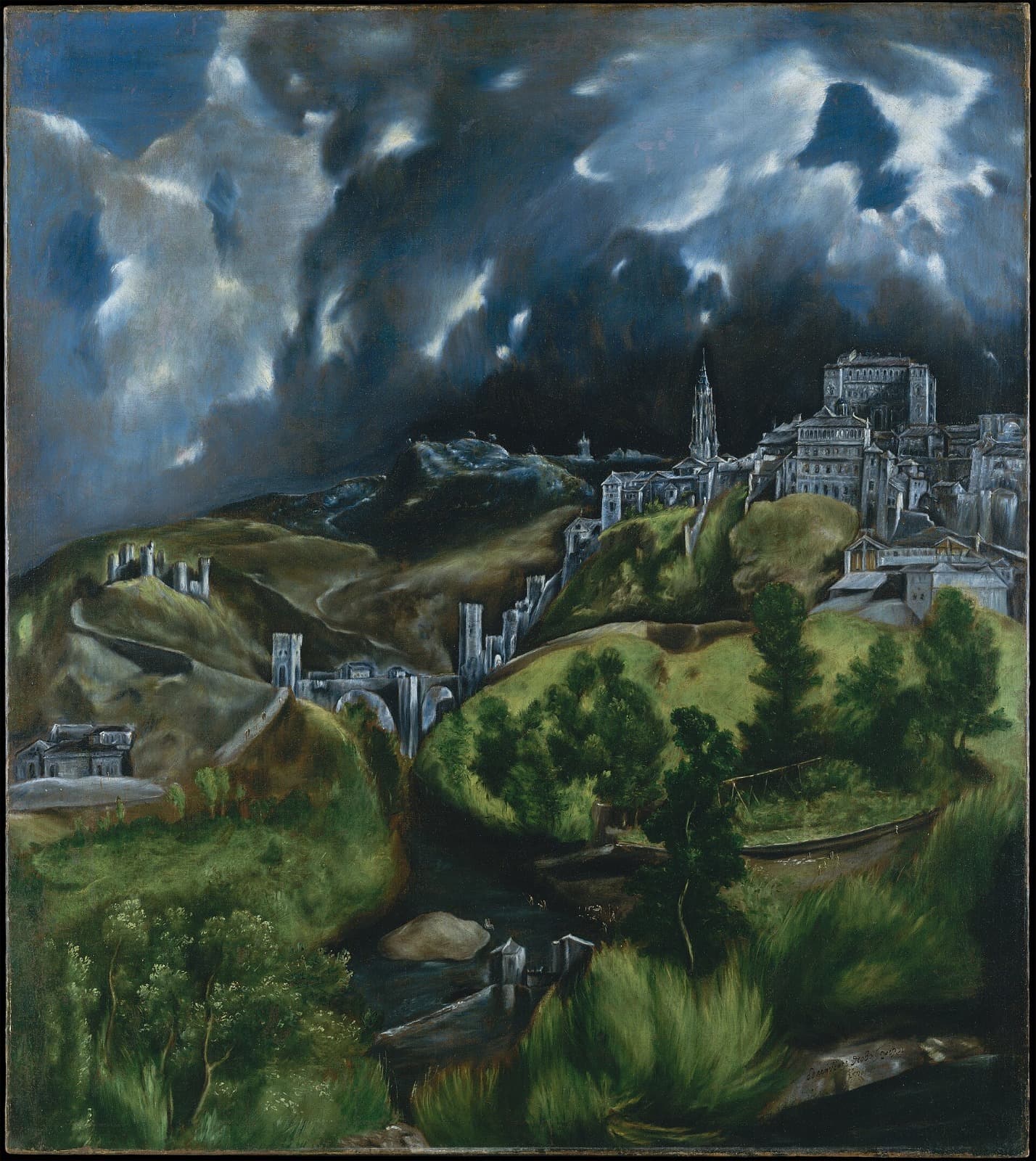
El Greco moved the cathedral tower off its real site for the sake of the composition and lit the whole city with a green storm.
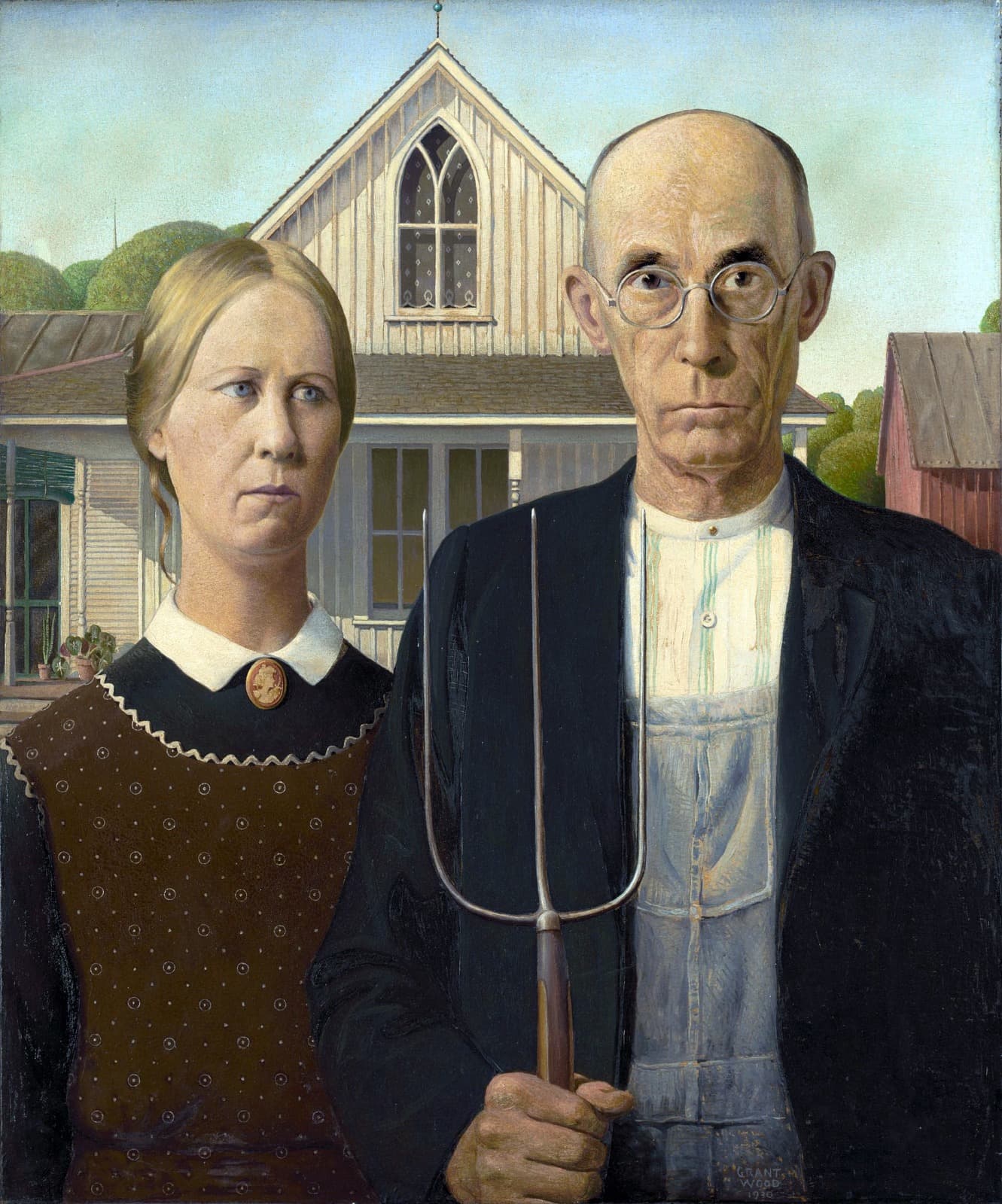
Wood posed his sister and his dentist in front of a farmhouse window, and people have argued ever since whether he meant tribute or mockery.

Nudes lounge and pipe and dance in a ring in a glade of colors nothing in nature has, a Fauve idyll from 1906.
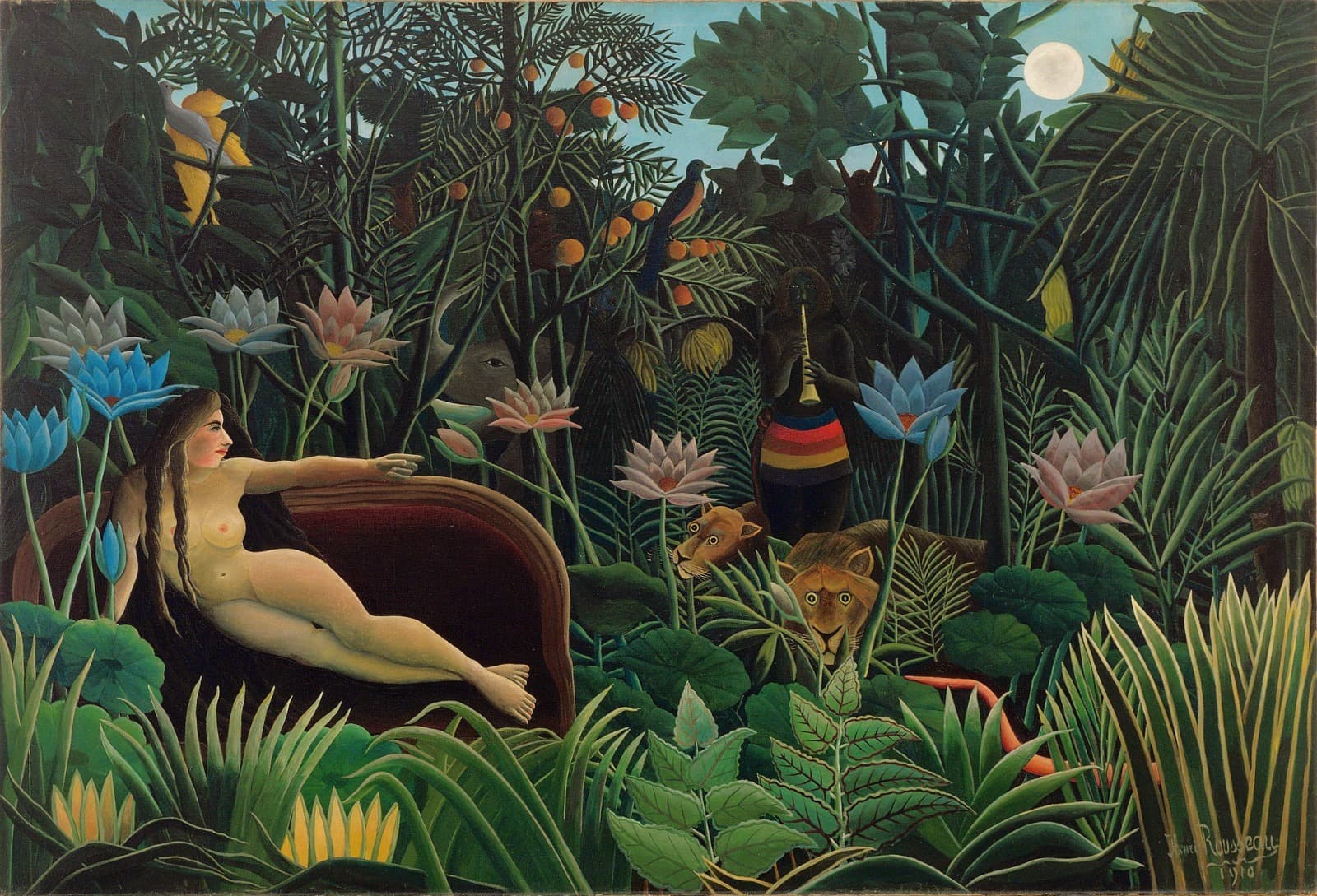
Rousseau painted this in the last year of his life and explained that the woman on the sofa is dreaming herself into the jungle.
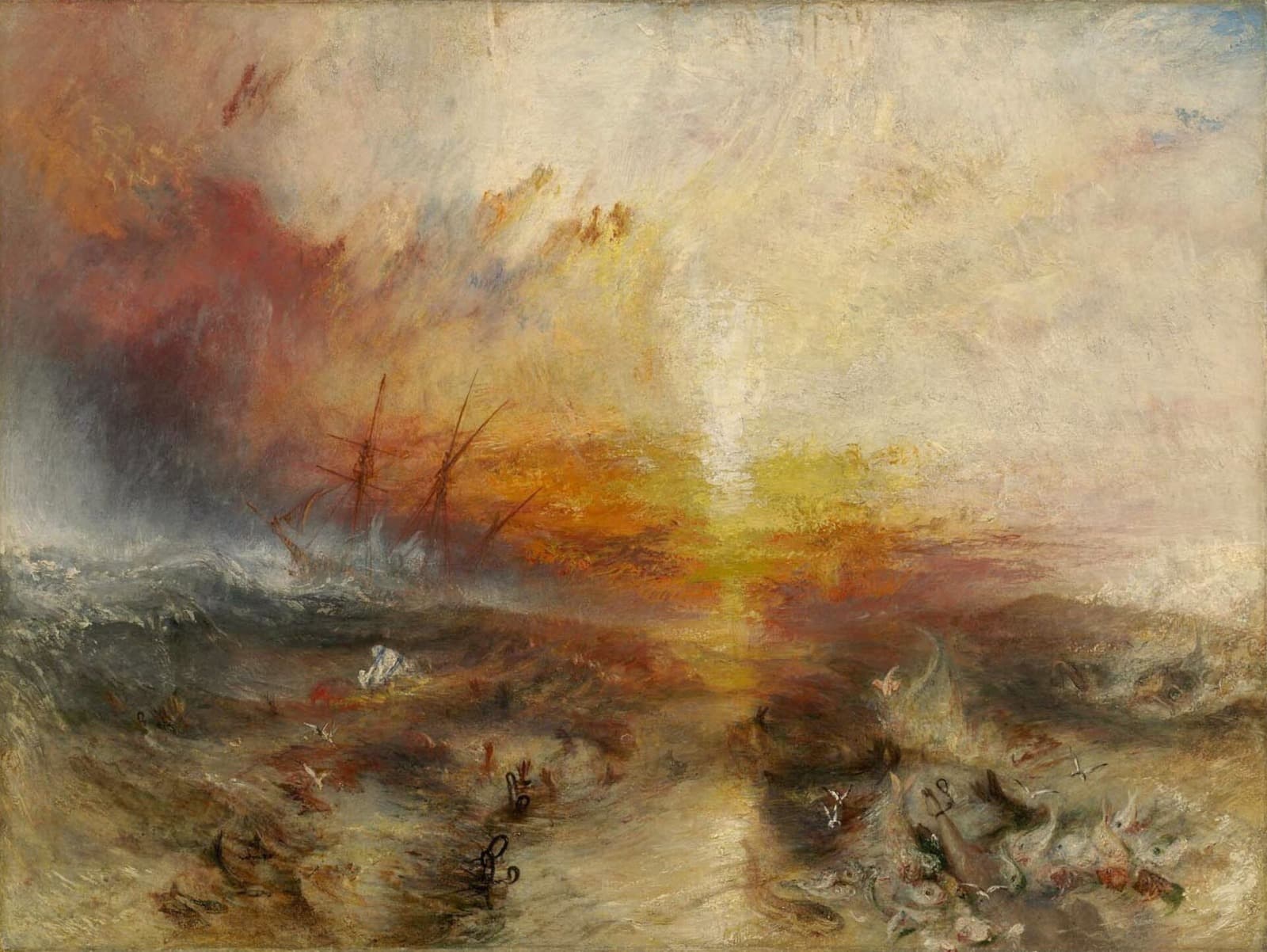
Turner took the Zong case, where a slaver threw its human cargo overboard for the insurance money, and set it under his most beautiful sunset.
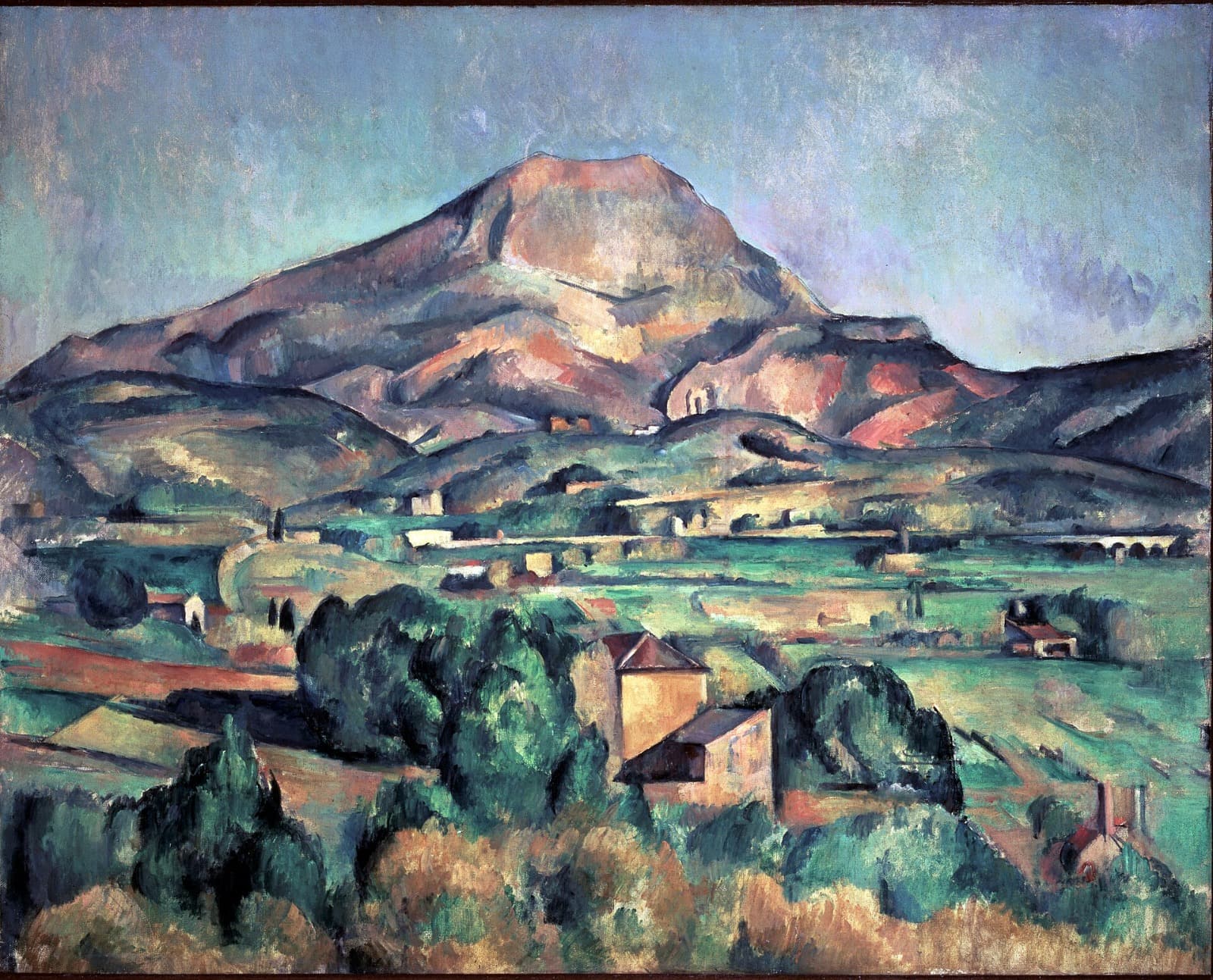
Cézanne painted his local mountain over and over, less to record it than to rebuild it out of flat patches of green, ochre and blue.
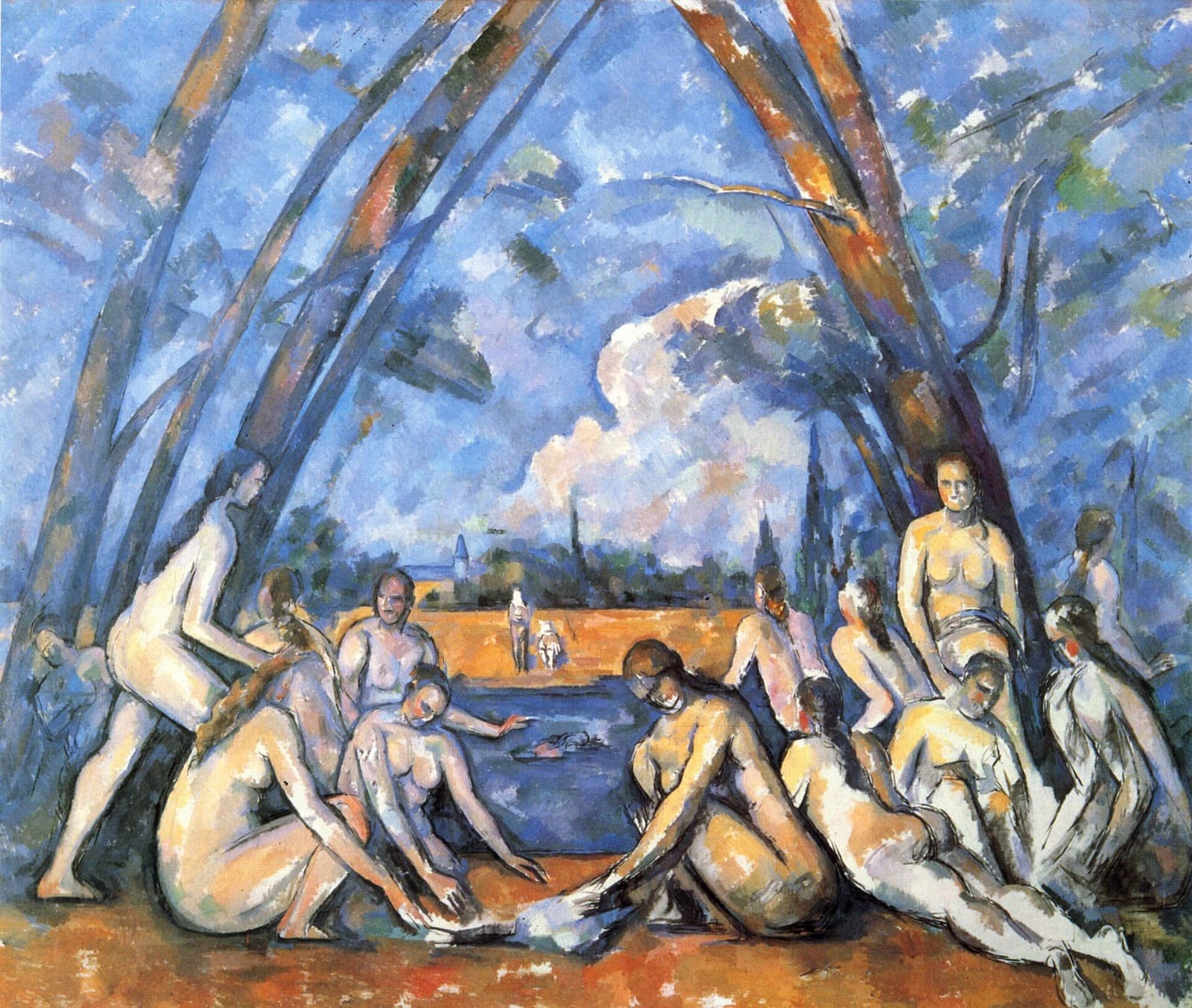
Cézanne worked on it for years and died before he finished, bending the trees inward so they rhyme with the bodies underneath.

Rain falls as fine diagonal scratches over the bridge, a trick Van Gogh admired enough to copy the whole print in oil.

Francis steps barefoot from his hermitage into a light coming from the left, and Bellini gives him no seraph and barely any wounds.

Only the face and hands are painted naturally and the rest is gold. The Nazis seized it, and a long restitution case eventually got it back.
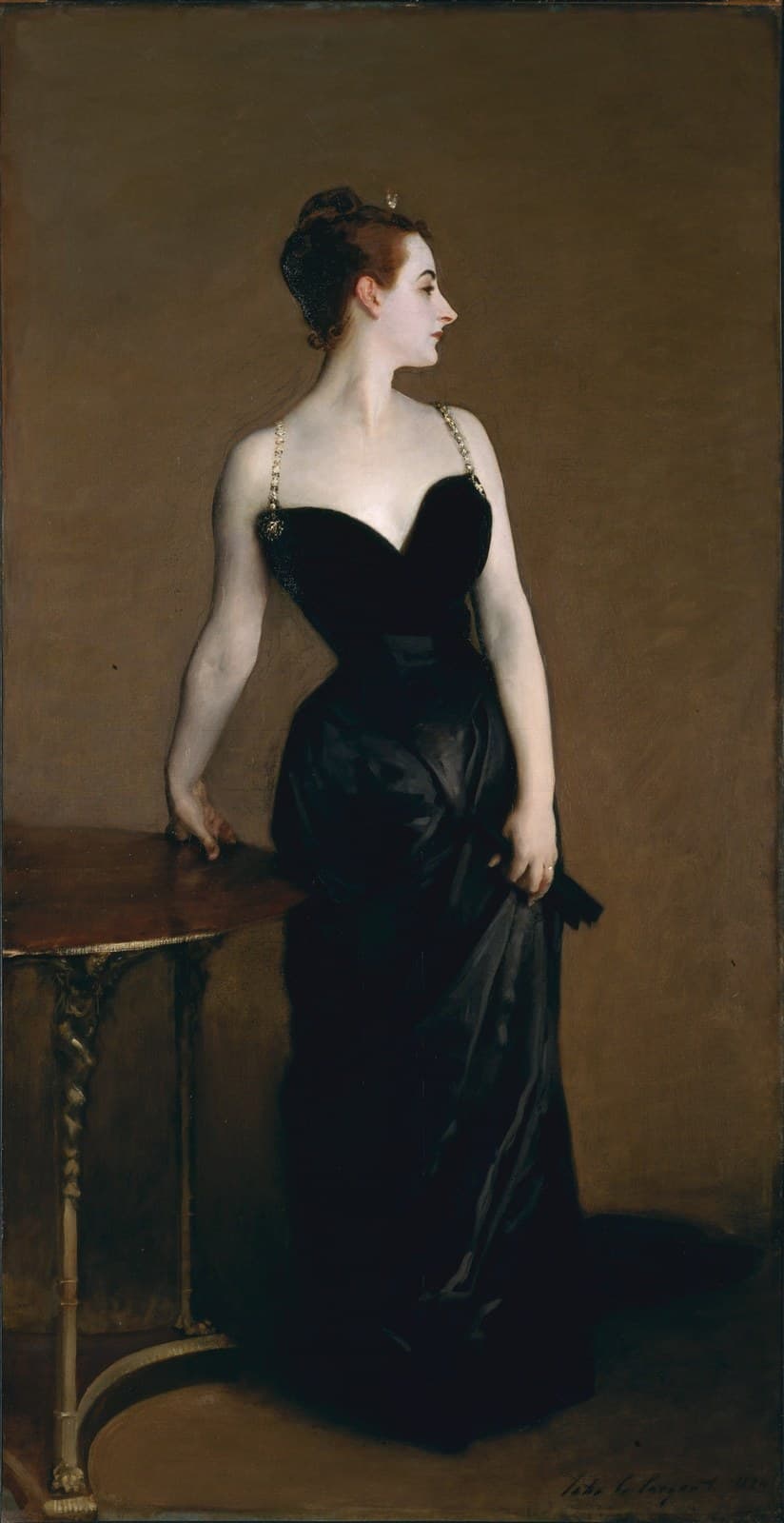
The strap fell off her shoulder in the 1884 version, Paris was scandalized, her family demanded it come down, and Sargent repainted the strap.

A critic at the 1913 Armory Show called it an explosion in a shingle factory, and the insult followed the painting around America.

The words under the pipe are correct, since a painting of a pipe is not a pipe, which is the whole and entire joke.

Sharaku made about 140 actor prints in ten months and then vanished so completely that people still argue about who he was.
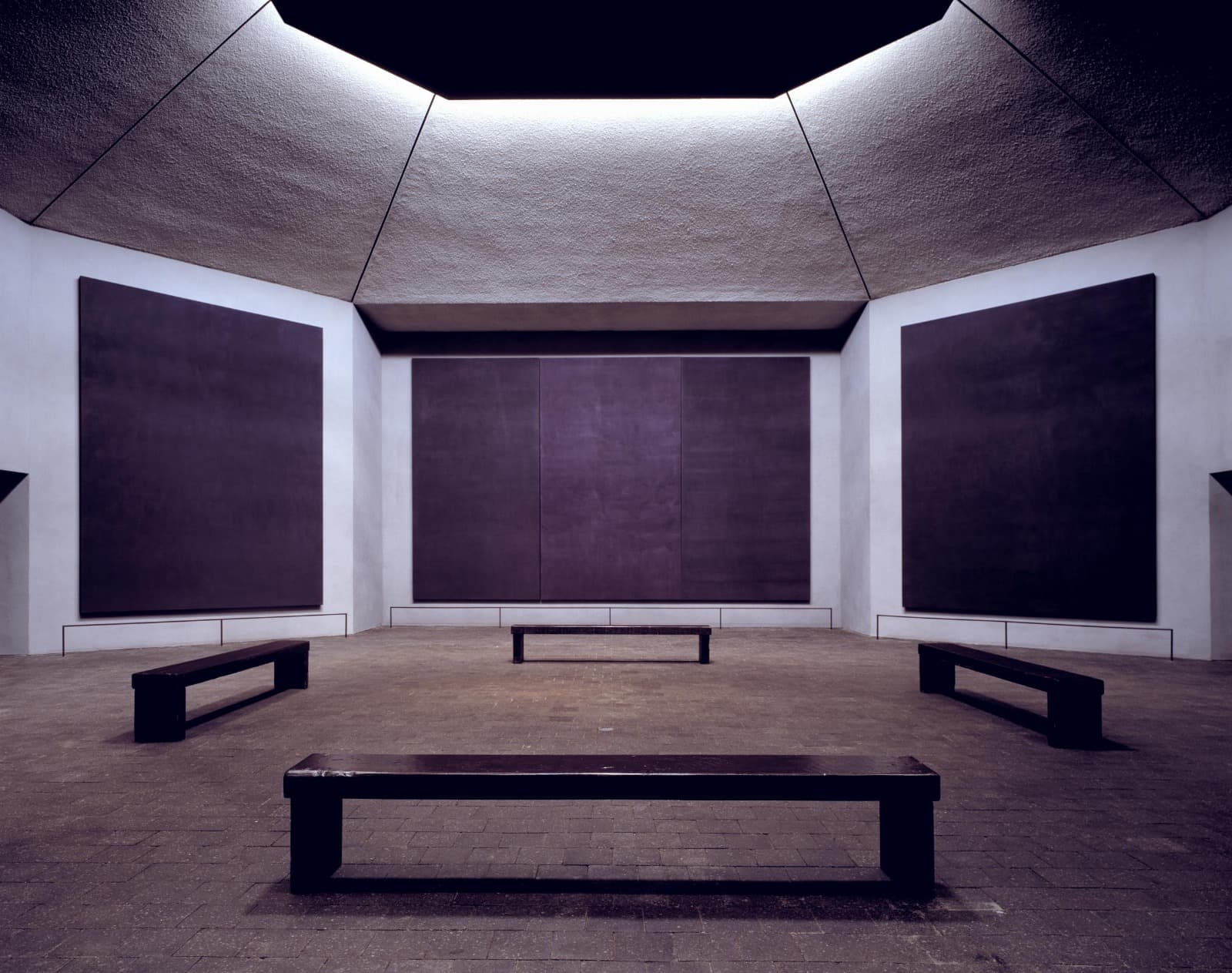
Fourteen near-black panels in an octagonal room, where your eyes adjusting to the dark is the point. Rothko died before it opened.

The emperor hands a book to a Sufi and ignores the kings waiting below, one of them James I, copied from an English portrait.

Pareja was Velázquez's enslaved assistant, freed soon after this was painted in Rome as a warm-up before the pope sat for him.

Bacon took Velázquez's composed pope and set him screaming behind a curtain of falling paint. He never saw the original in person.
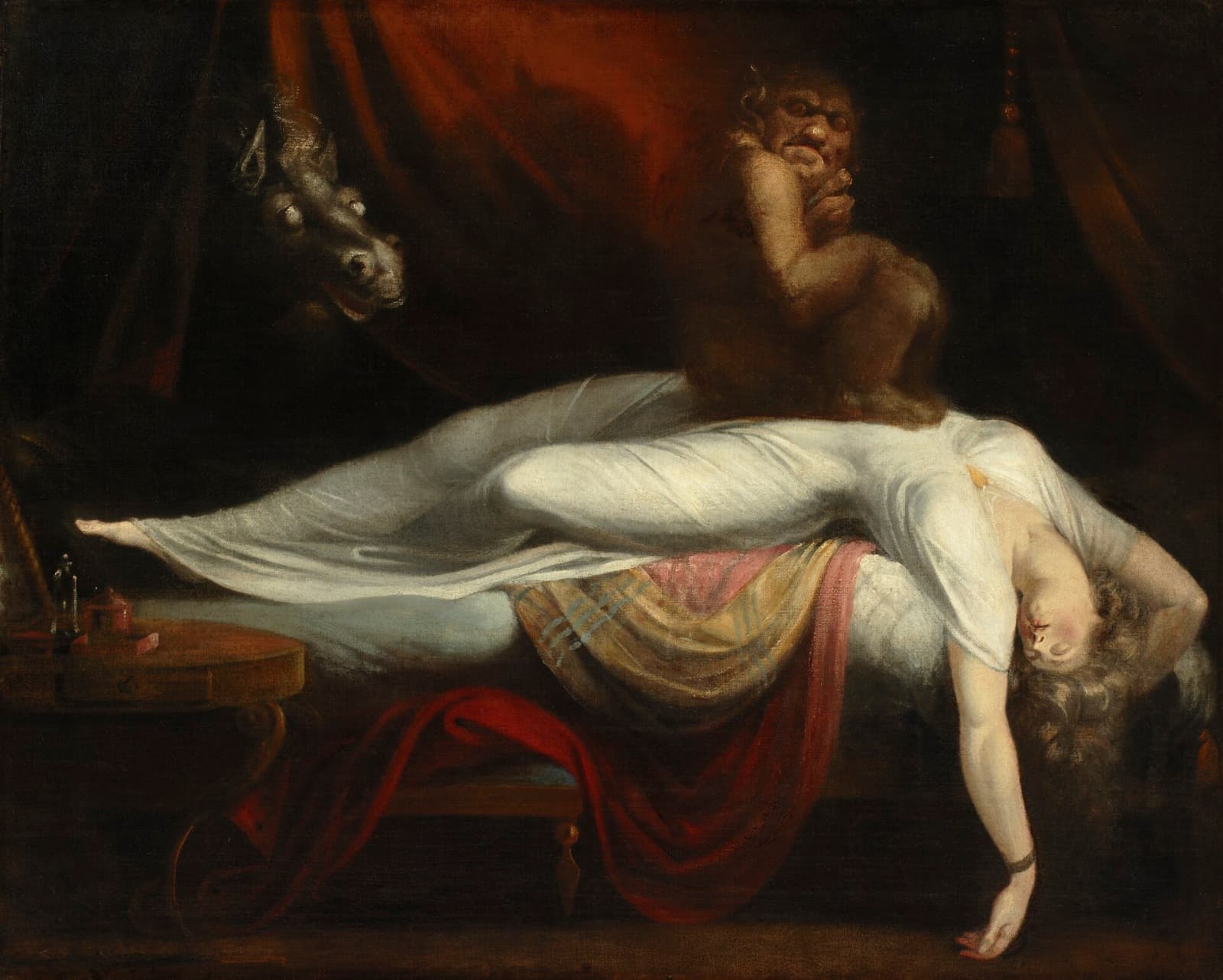
An incubus squats on a sleeping woman's chest while a wild-eyed horse pushes through the curtains. It made Fuseli famous immediately.

Three famous women of 1790s Edo on mica ground, their faces nearly identical, so you have to read them from the tilt of an eye.

A critic looked at this and called Matisse and his friends fauves, wild beasts, which is how the movement got its name.

A marble head, a red rubber glove and a green ball hang together on a wall, and a train goes by in the distance.
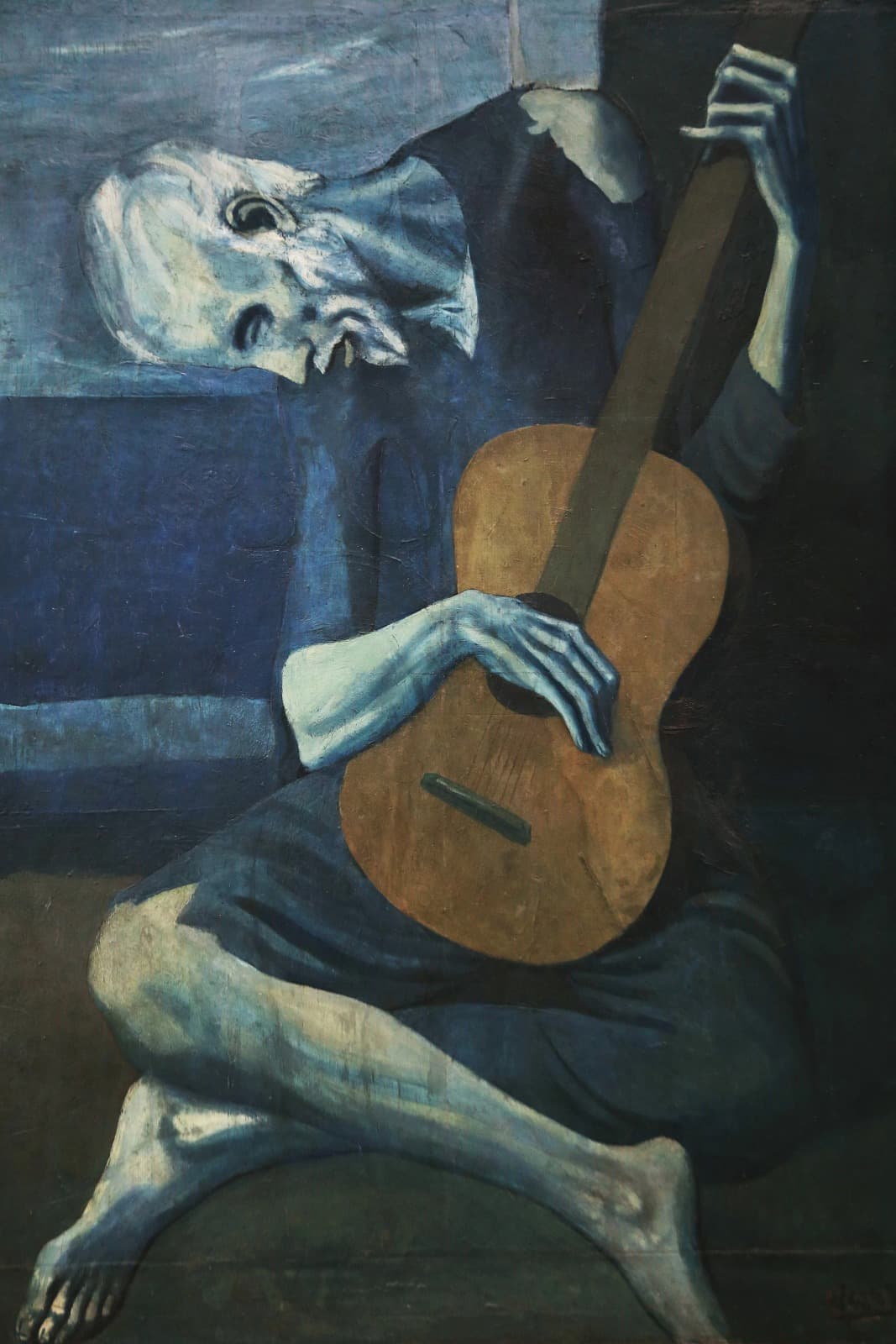
The guitar is the only warm note in the picture. Picasso painted it in his Blue Period, poor himself and living on very little.
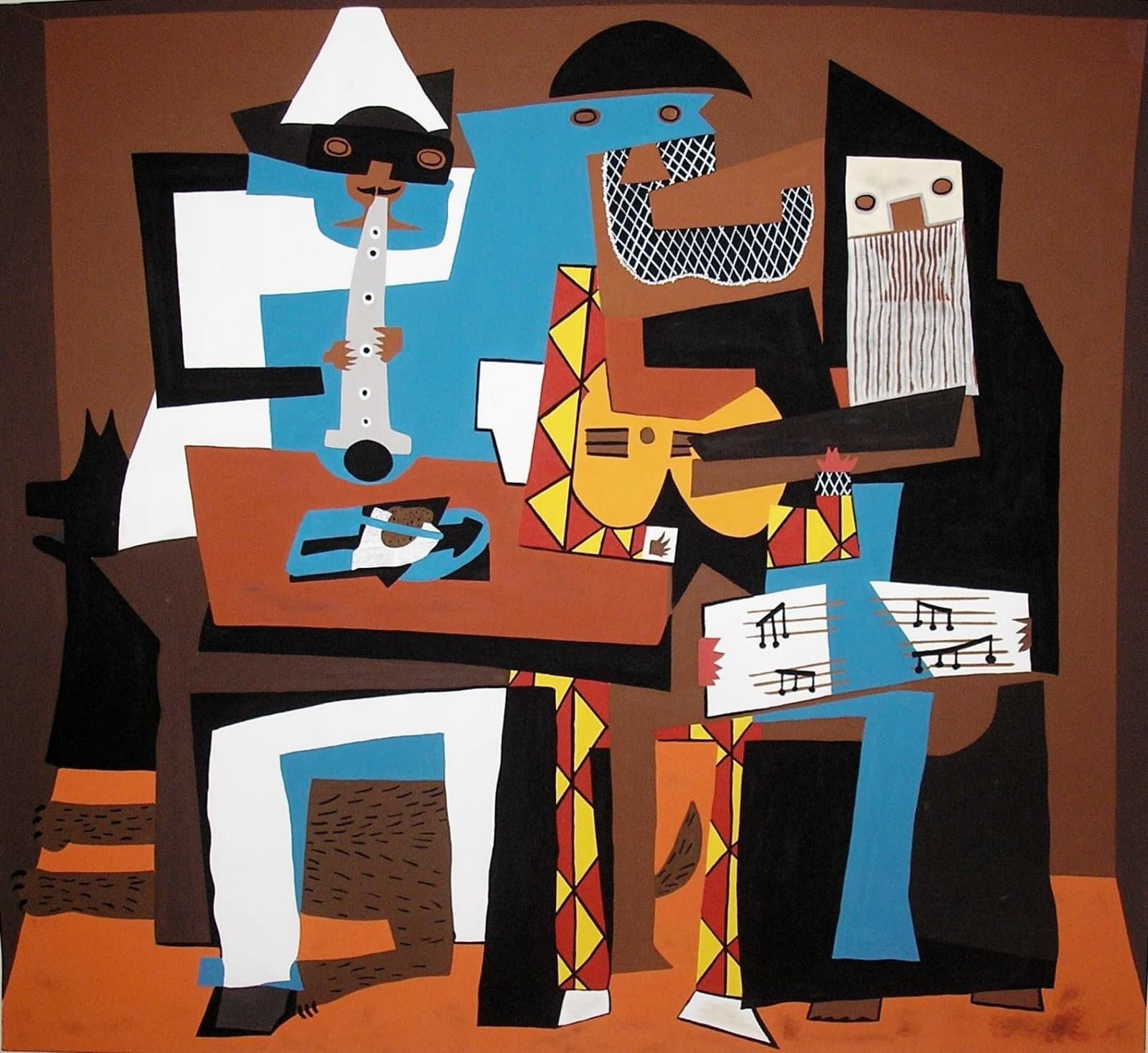
A harlequin, a Pierrot and a monk in flat interlocking shapes that look cut from paper. Synthetic Cubism at its grandest and most deadpan.
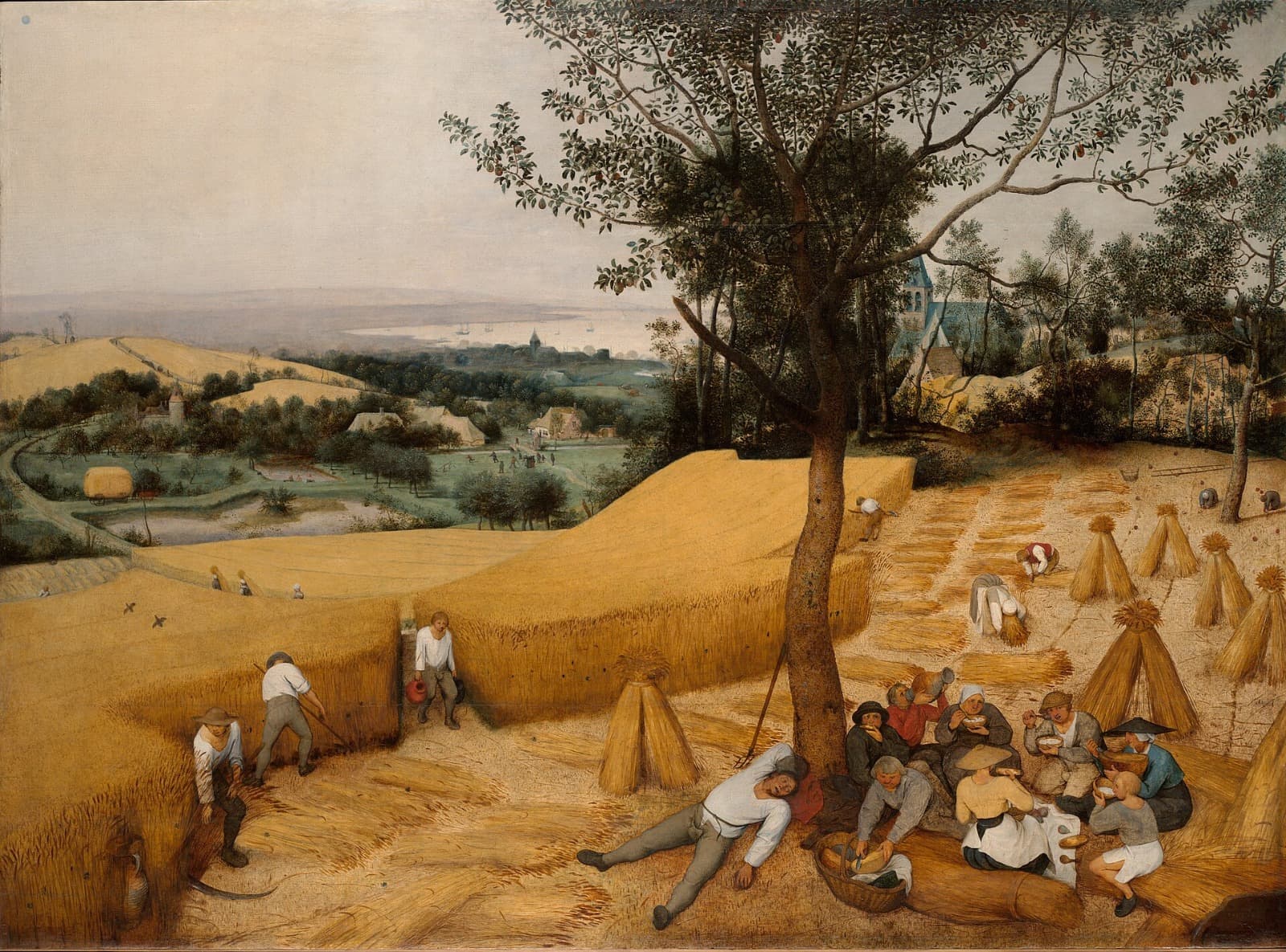
One man lies flat on his back with his mouth open while the others cut wheat. Late summer, from the same series of months.

Mondrian broke his own grid into blinking squares after moving to New York, where he loved the traffic and the jazz.