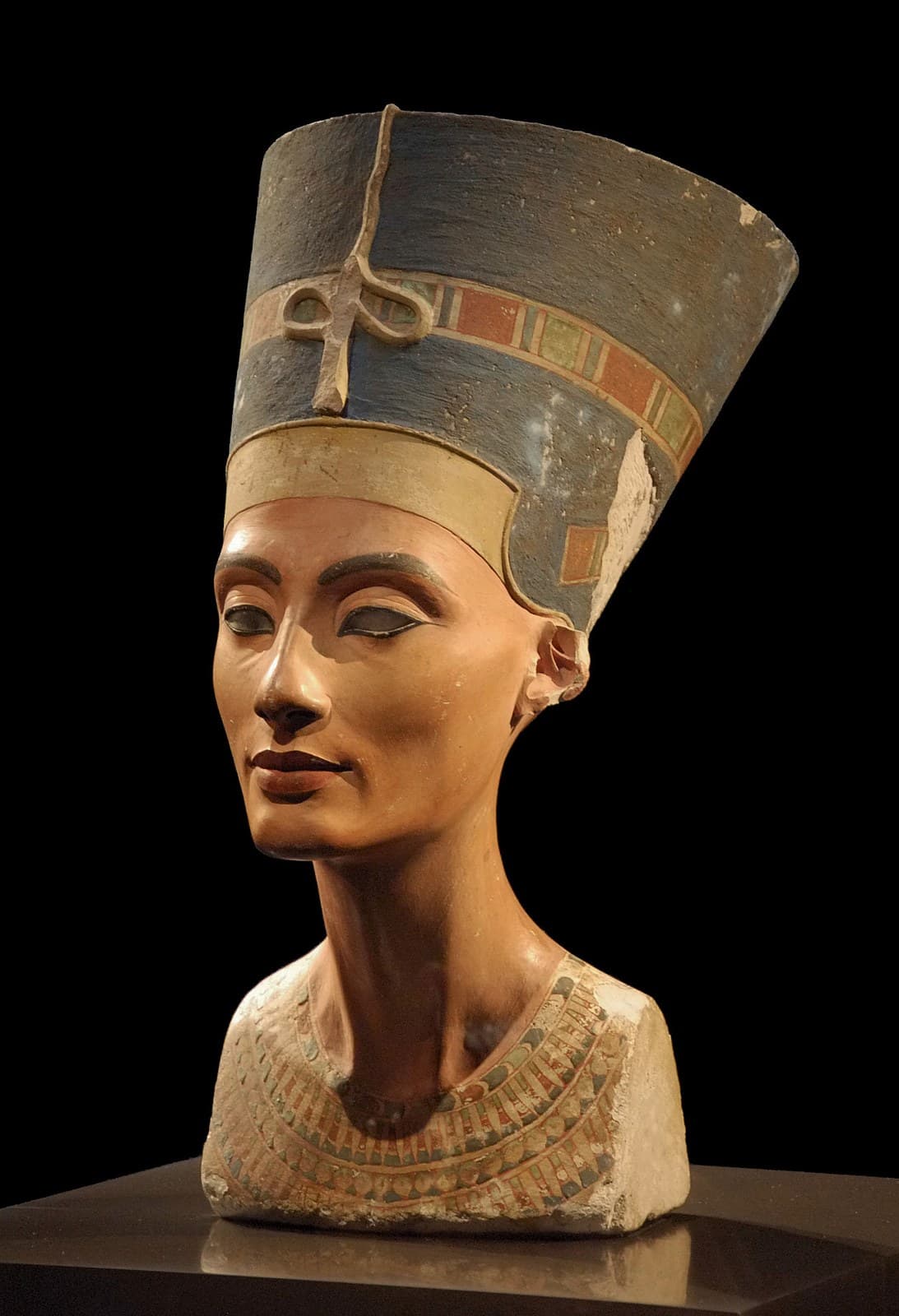
Bust of Nefertiti
1345 BC · Neues Museum, Berlin
One eye is inlaid and the other left blank, which suggests the bust was a master model kept in the sculptor's workshop at Amarna.
★ 9.4
 skopia
One eye is inlaid and the other left blank, which suggests the bust was a master model kept in the sculptor's workshop at Amarna.
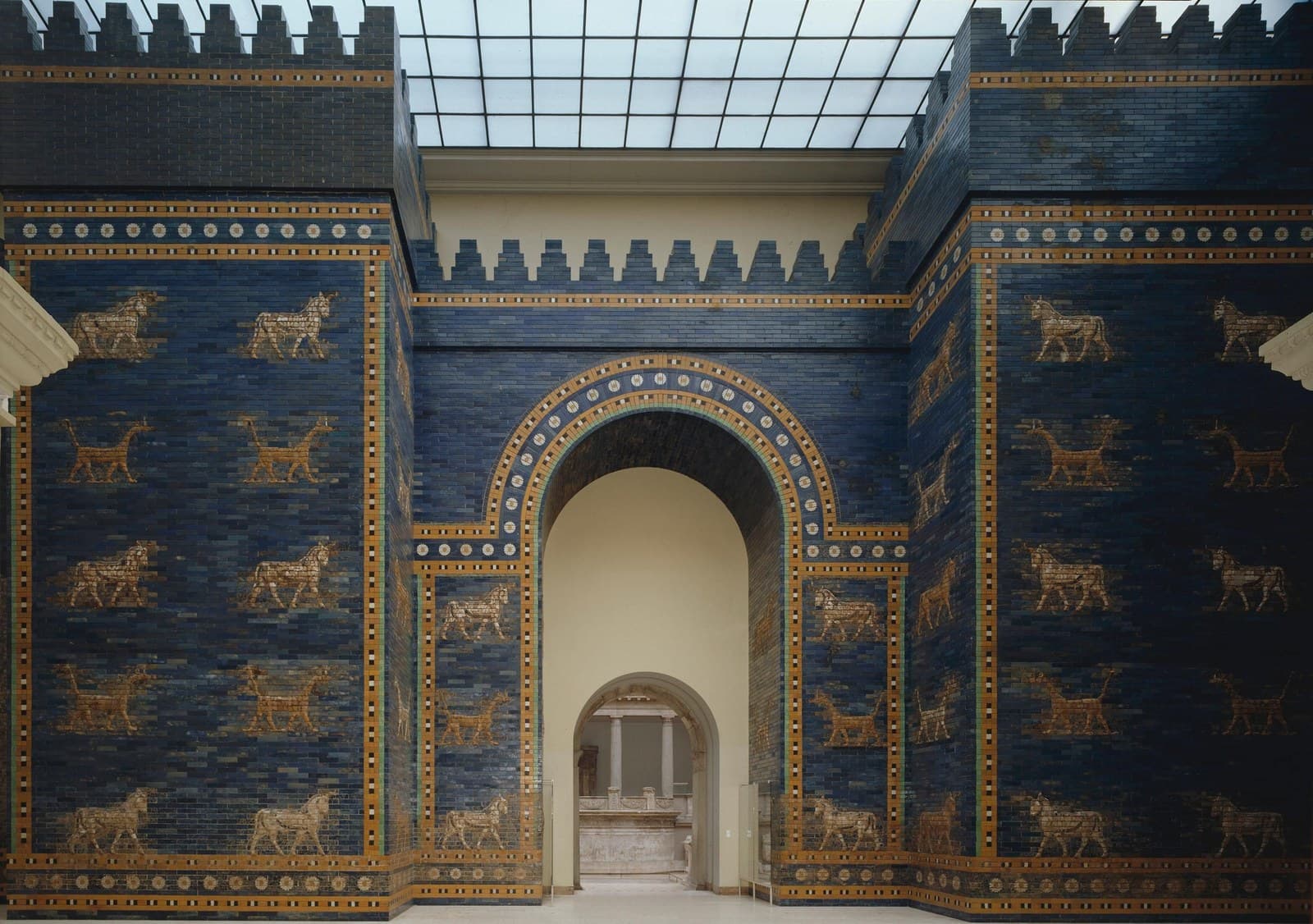
Bulls and dragons stride across glazed brick in deep blue, raised for Nebuchadnezzar around 575 BC and rebuilt from the original bricks in Berlin.

A man stands on a summit with his back to us, looking out over fog, so that we end up looking at what he sees.
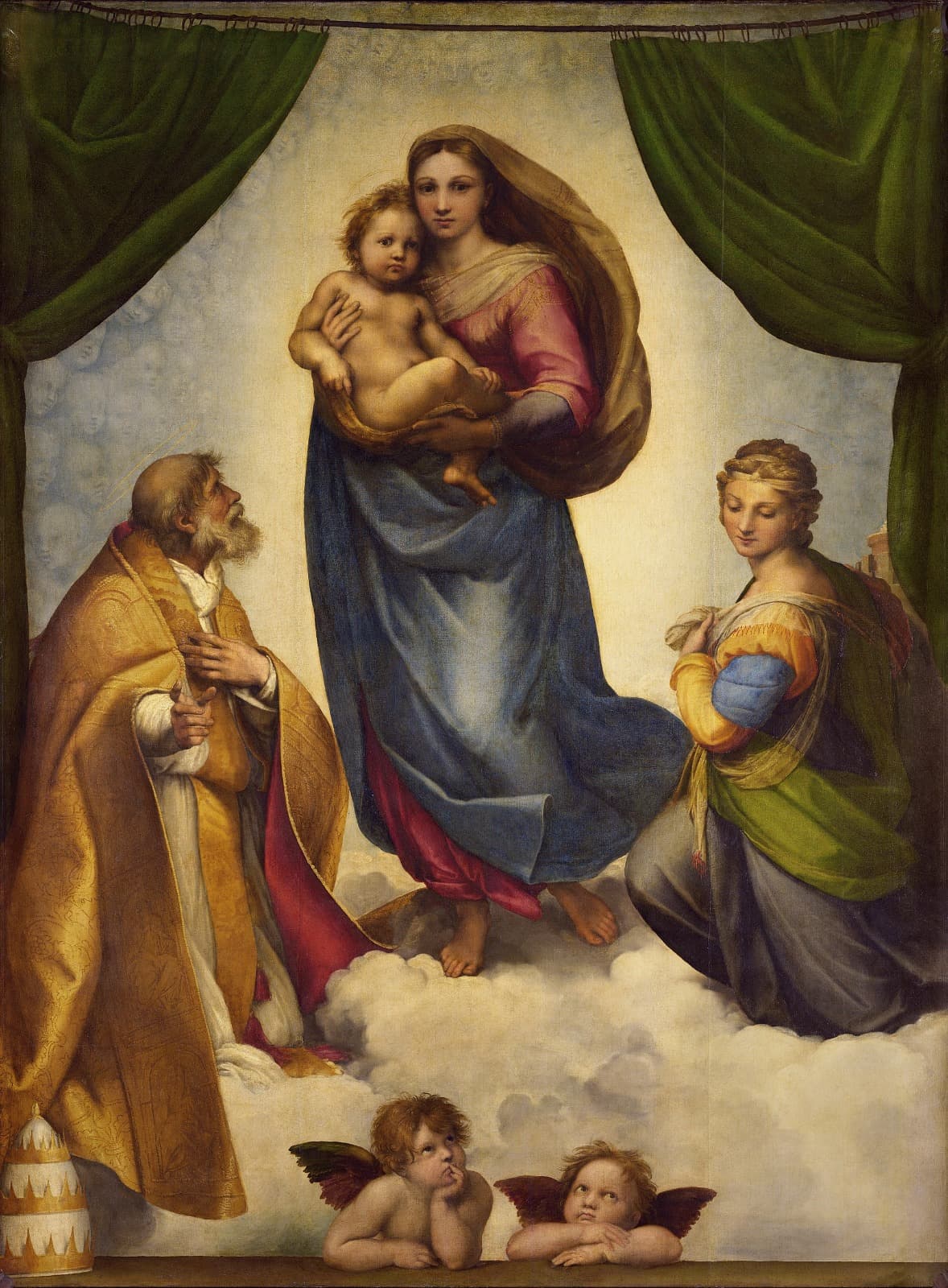
Two bored cherubs lean on the frame at the bottom, and they floated free of the altarpiece long ago onto everything else.
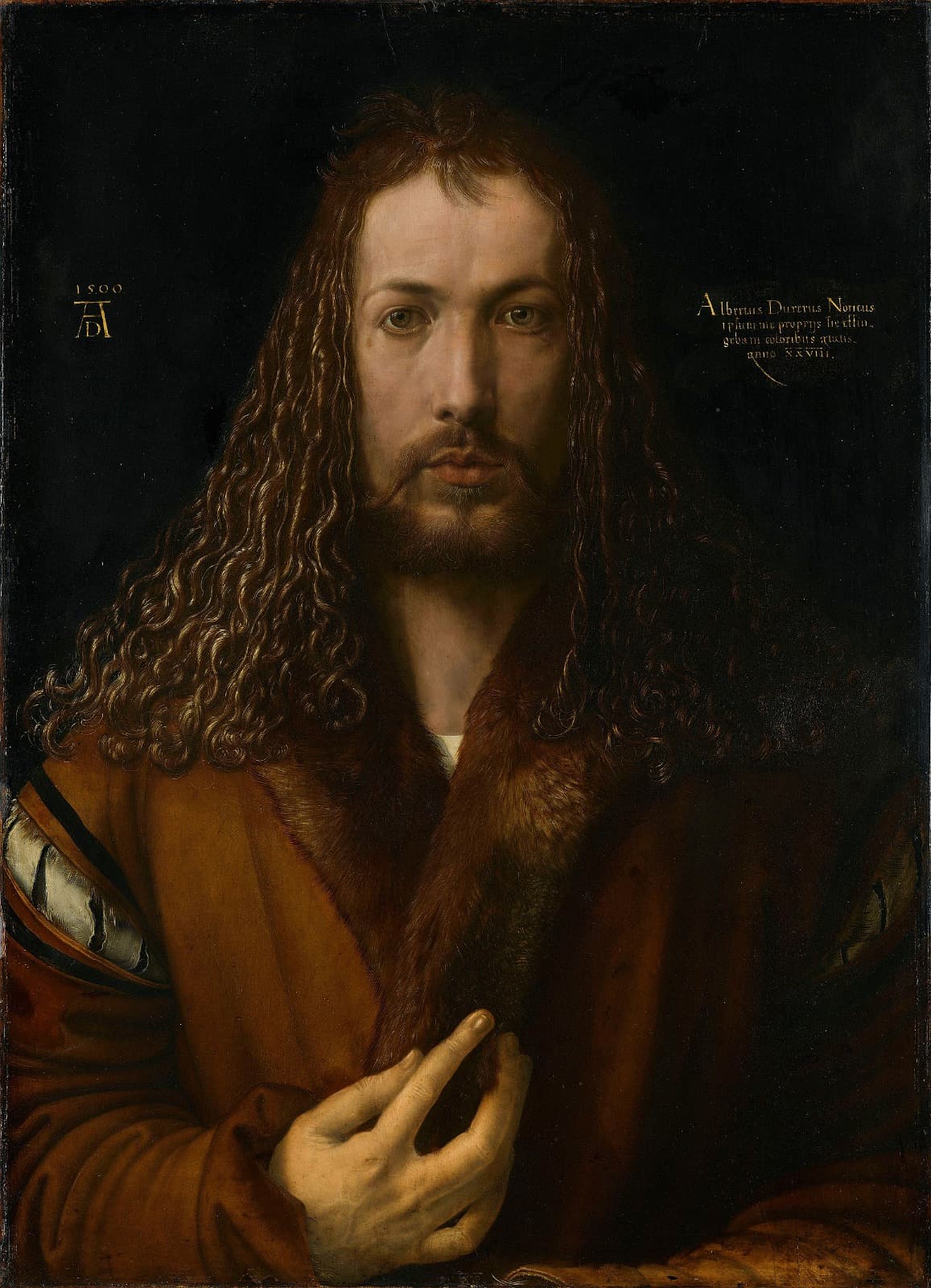
Dürer faced himself head-on in a pose reserved for images of Christ, and wrote across the panel that he had painted it at twenty-eight.

Tens of thousands of tiny soldiers fight under a sky that curves like the whole earth. Painted while the Ottomans were pressing on Vienna.

Thomas pushes his finger into the wound and two apostles lean in to watch, brows knotted, close enough to crowd the frame.

Two horsemen haul two women up onto rearing horses, and the whole canvas spins into one great X of limbs and hooves.
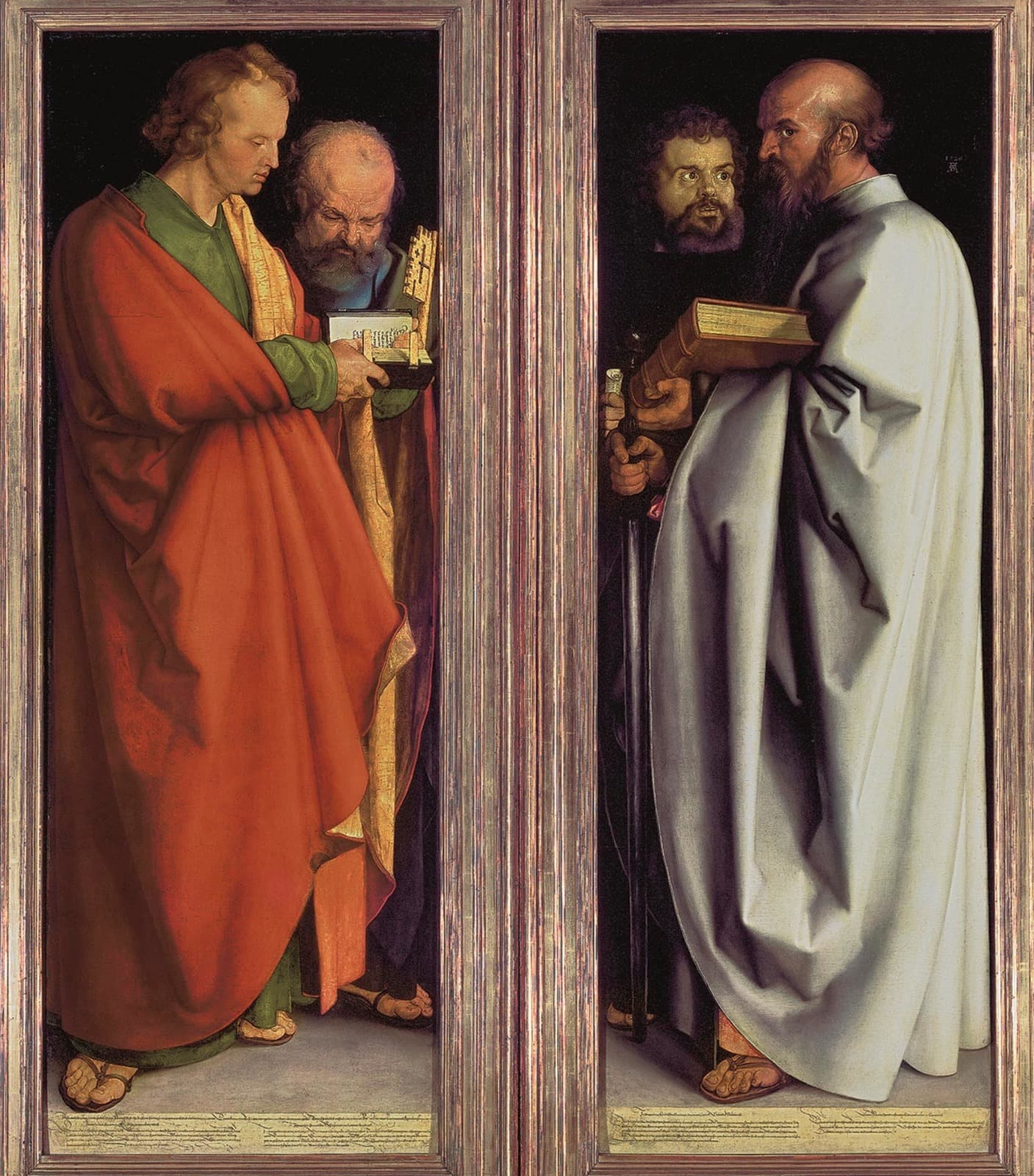
Dürer gave the panels to the Nuremberg council with Luther's words inscribed below, warning the city's rulers against false prophets. His last great work.

The Virgin is far too big for the cathedral because she stands for the Church itself, and real sunlight falls in patches across the floor.
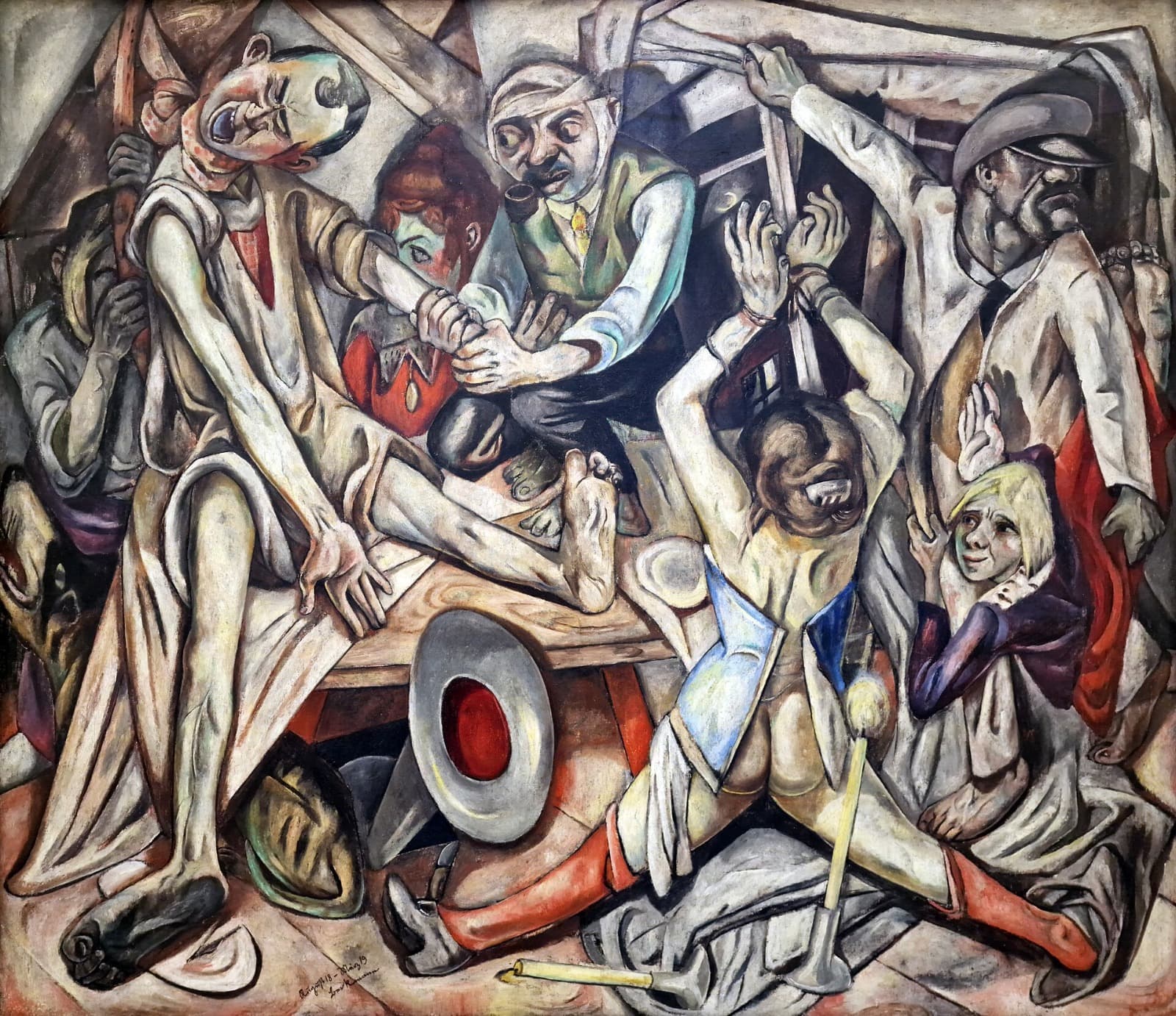
A family is tortured in a room too small for it, painted in Germany in 1919 with the war and the revolution just finished.
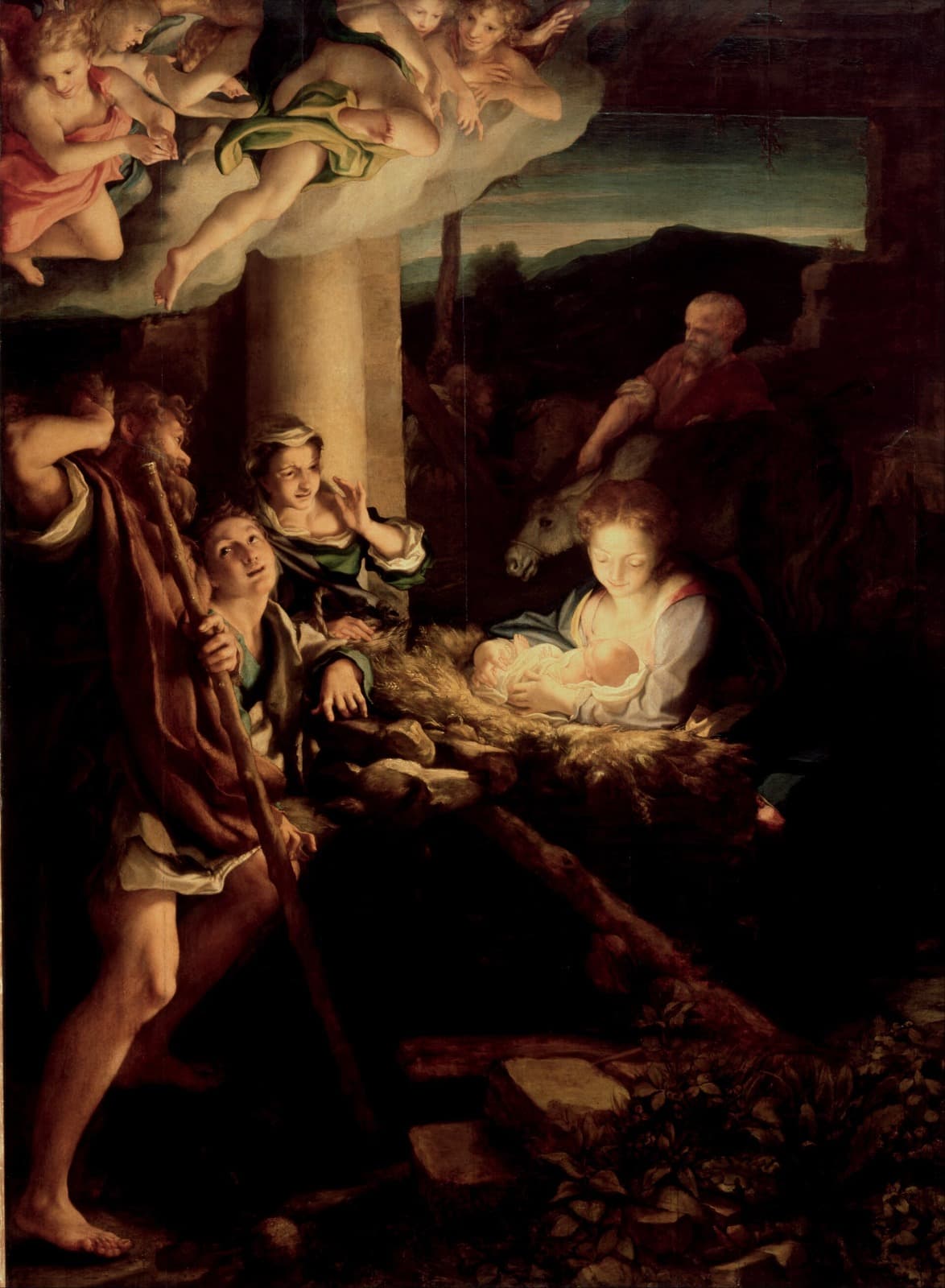
All the light in the picture comes off the newborn child, and one shepherd throws up a hand against the glare.
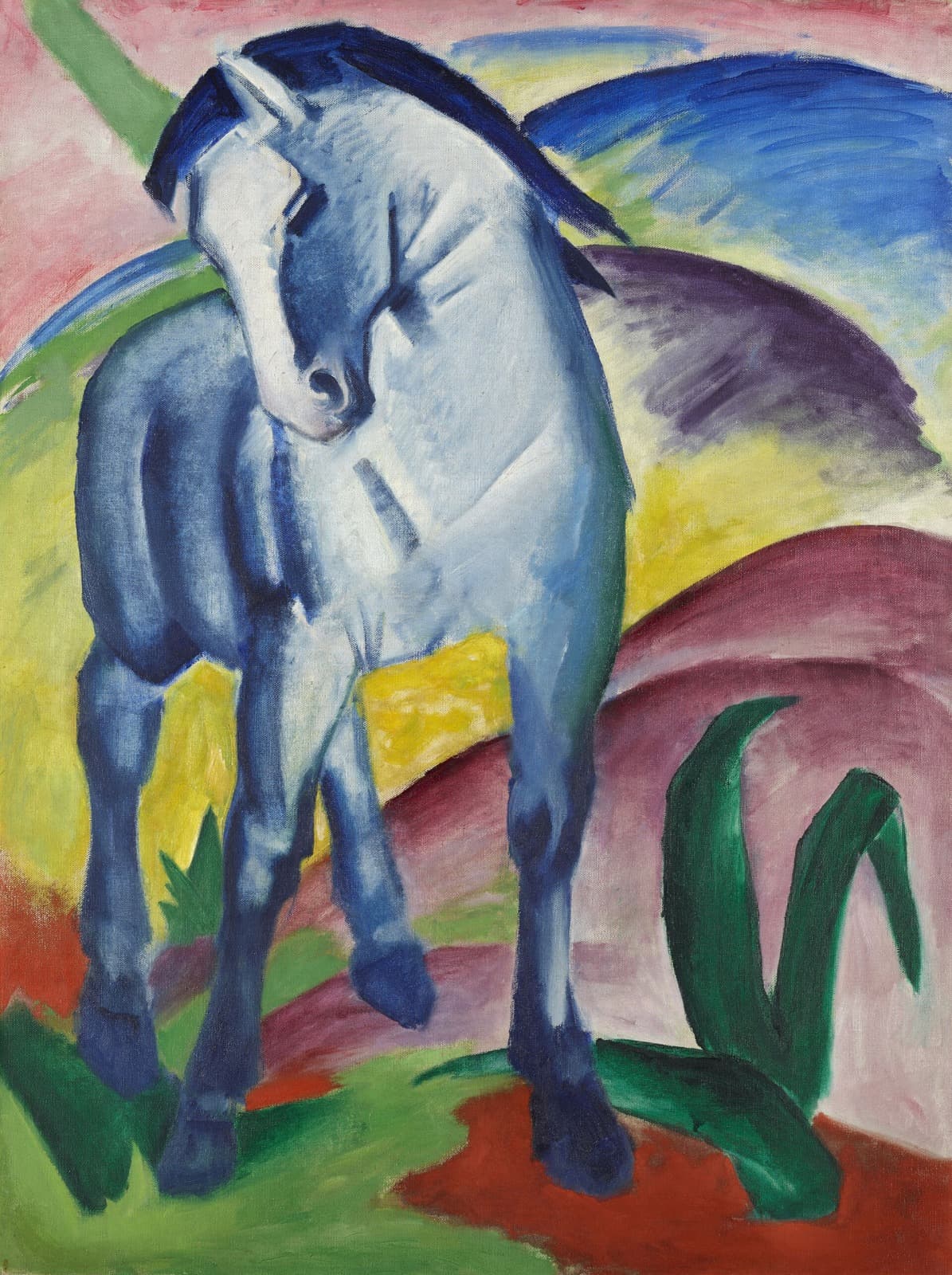
Marc gave his animals symbolic colors, blue for the spiritual, and looked to them for an innocence he thought people had lost.

A man bangs his head on a brick wall, another casts roses before swine, and over a hundred proverbs are acted out literally in one village.

A single unbroken avalanche of bodies falls from a bright heaven at the top into the dark, with demons pulling them down.
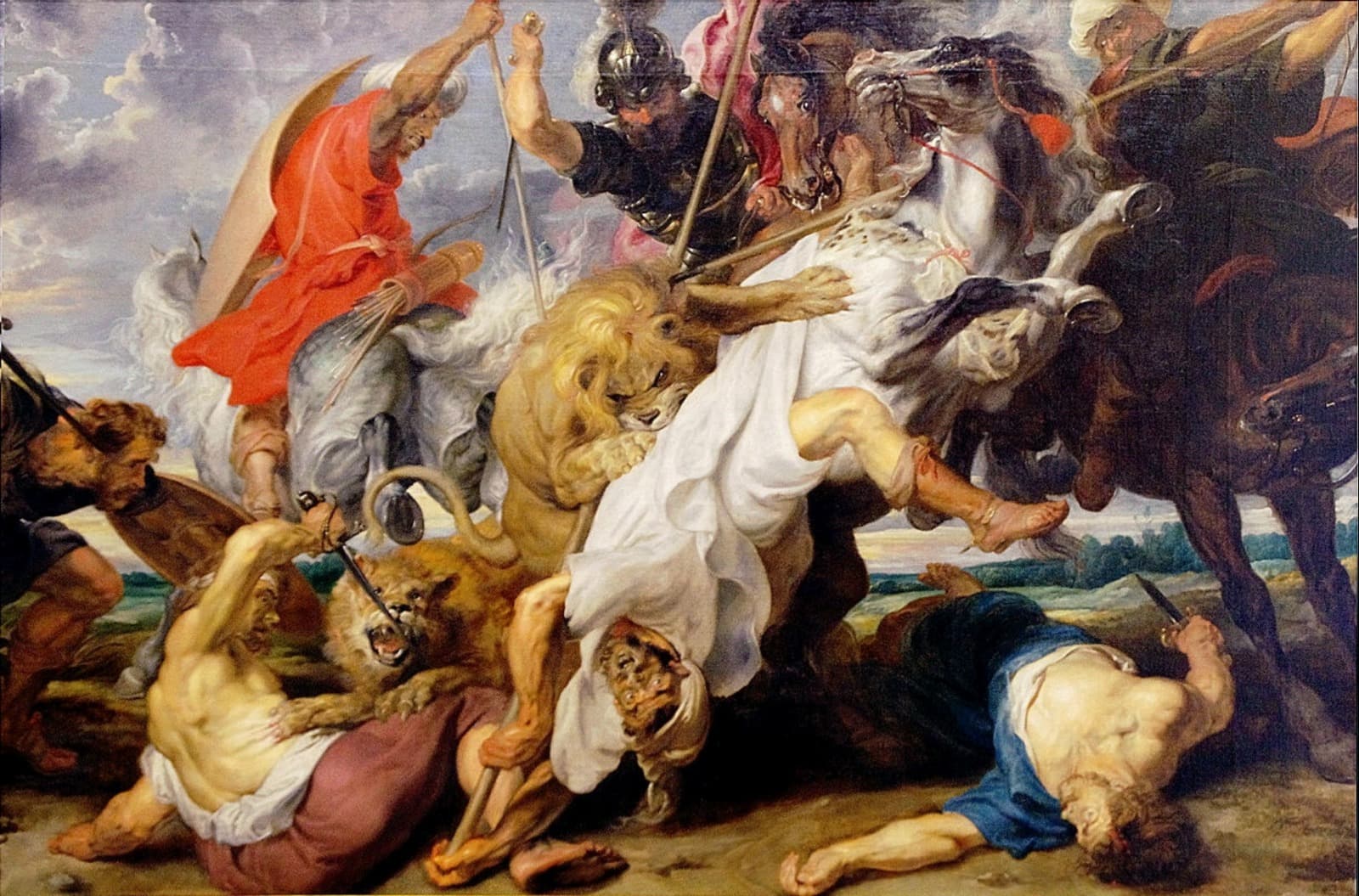
Horses, lions, spears and men knotted into one turning mass, with a rider already thrown and about to be mauled.

Louise O'Murphy was a teenage favorite of Louis XV, and Boucher painted her face-down across the cushions for private consumption.
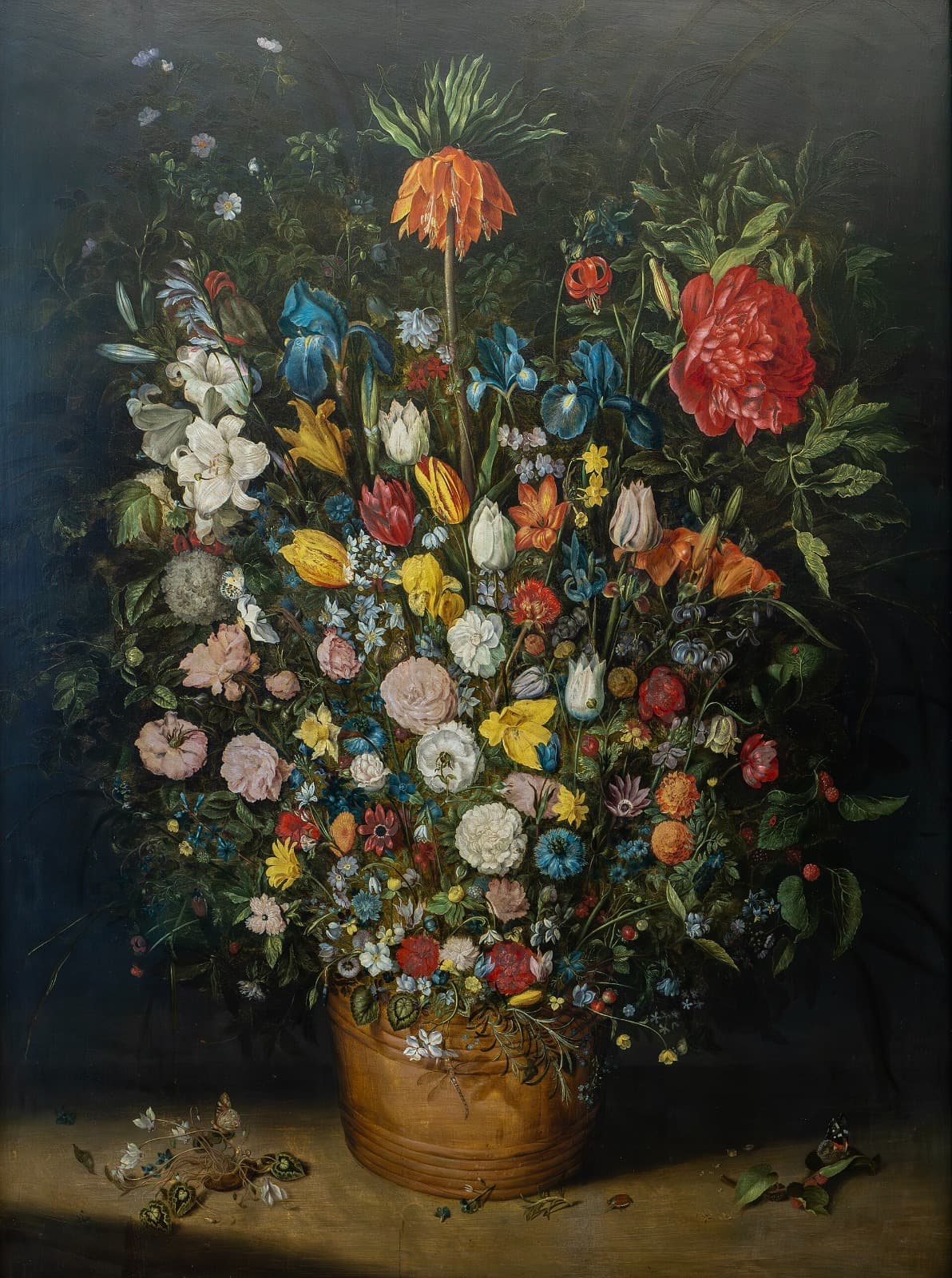
None of these flowers bloom in the same season. Bruegel assembled the bouquet from studies made across the whole year, and let petals droop.

Blindfolded and beaten while pipers play to make a show of it. Everything Italy was perfecting at that moment, Grünewald wanted none of.

Rubens came back to the subject nearly thirty years later with the same fury and a much broader, more fluent hand.

The story runs across the canvas in stages, arrival to departure. A later owner cut Leda's head out in disgust and it was repainted.

One woman flings both arms over her head, others press their faces to the body. Simone drops all restraint against a sky streaked red.

The lyrical Bosch, all calm light and wide landscape, except for the small insect-demon with a human face tending a fire in the corner.

Gilded hems, fluttering wings, a walled garden behind. Lippi was a friar with a worldly streak and it shows in the ornament.
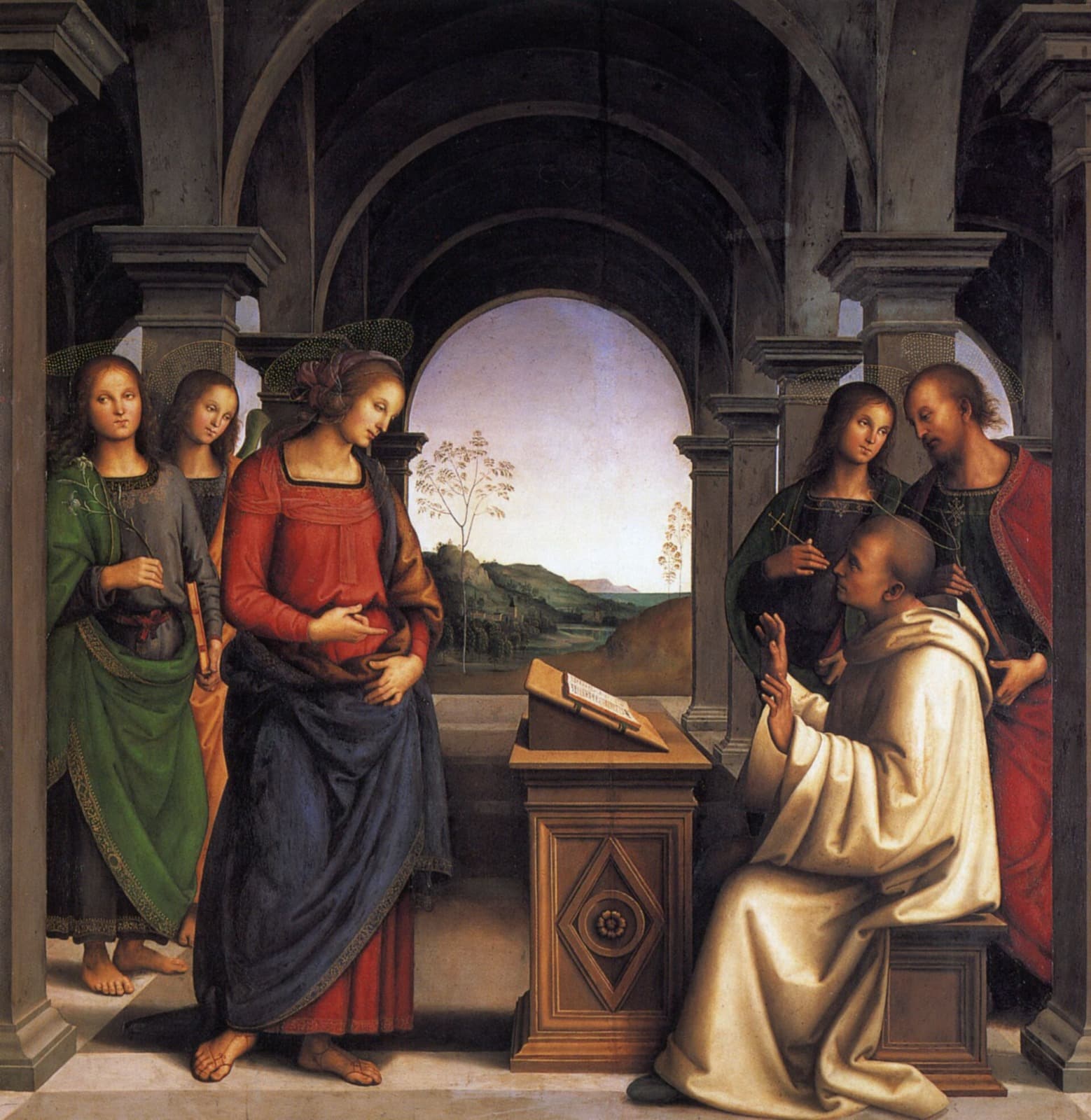
Perugino taught Raphael, and the poise, the airy arcade and the soft Umbrian valley here pass almost unchanged into the pupil's work.
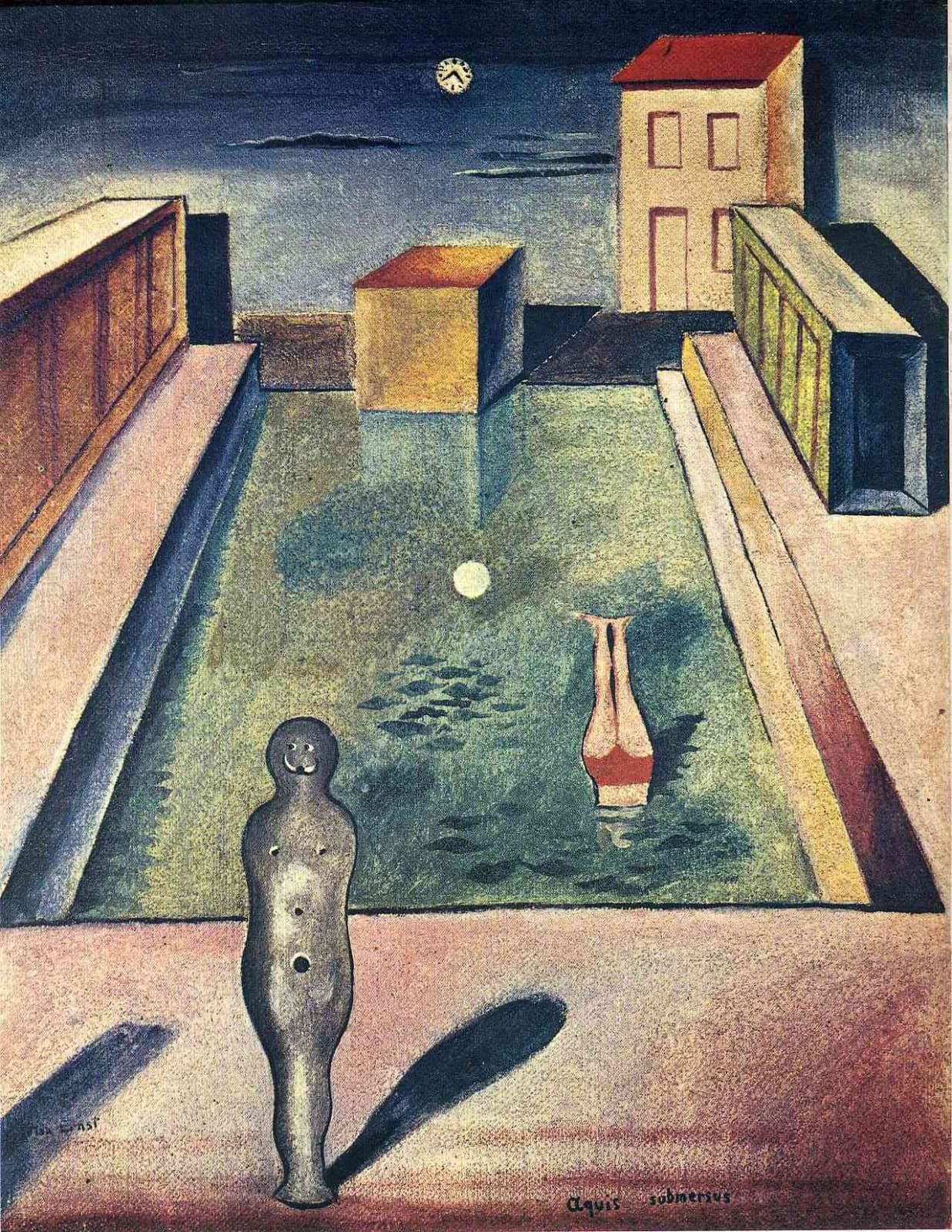
A doll-like figure by a still pool under a tower with a clock face. Ernst had been looking hard at de Chirico's empty squares.

The tiny kneeling figures in the corners are the Nuremberg family who paid for it, inserted so they could share in the grief.

Hundreds of minutely painted fish, baskets and hagglers. They called him Velvet Bruegel for exactly this kind of finish.

Overbeck and the Nazarenes lived almost as monks in Rome and painted deliberately like the Italians before Raphael. This is the program.