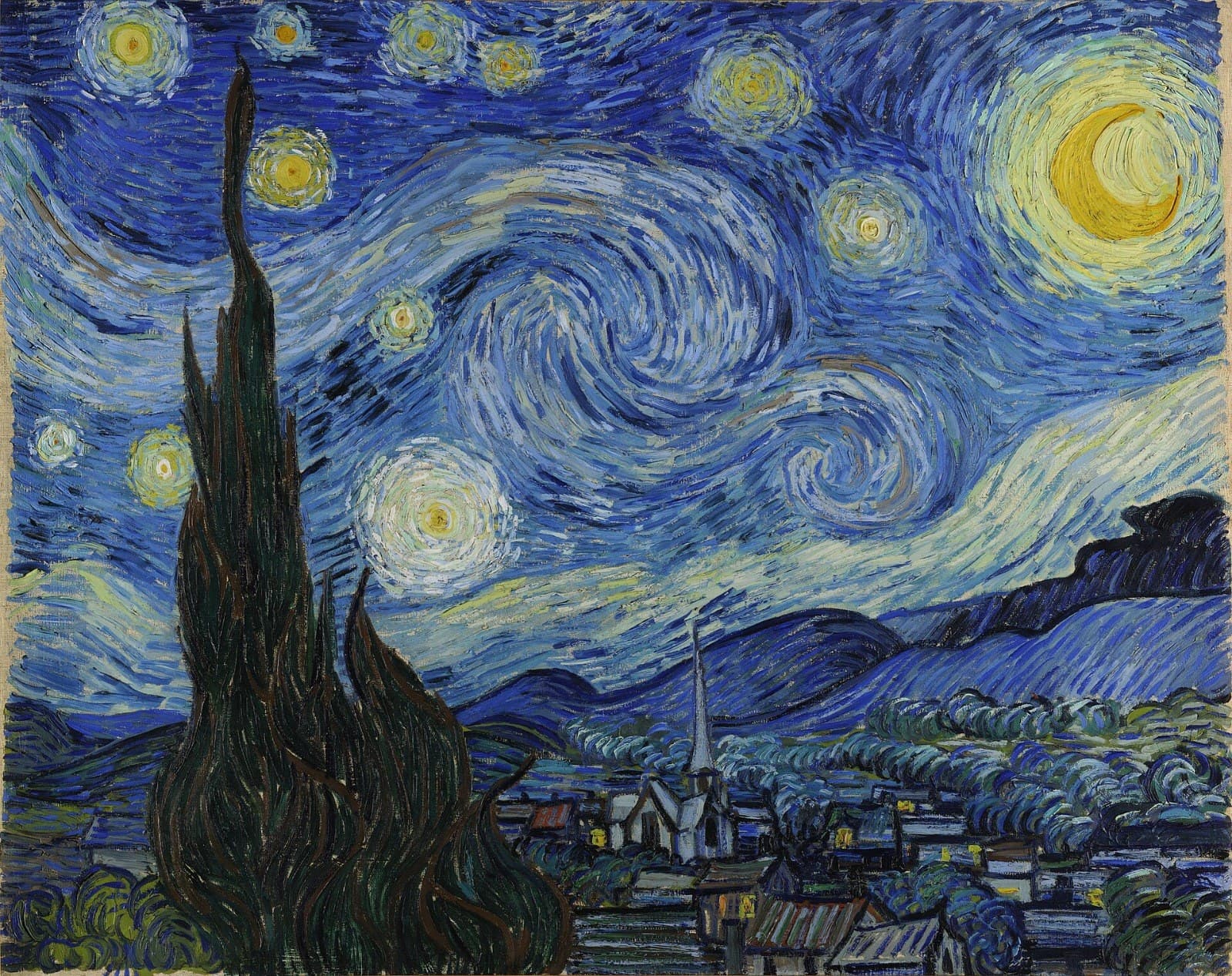
Starry Night
1889 · Museum of Modern Art, New York City
Van Gogh painted the churning sky and its eleven stars from a window of the asylum at Saint-Rémy, partly from memory.
★ 9.6
 skopia
Van Gogh painted the churning sky and its eleven stars from a window of the asylum at Saint-Rémy, partly from memory.

Monet painted these eight murals of his pond for two oval rooms in Paris while his eyesight failed. They opened months after he died.

Three hunters come home over the hill with one thin catch while villagers skate below. Bruegel painted it for a series on the months.

Twelve meters of blue and green mountains, ground from azurite and malachite by a court prodigy said to have died before he was twenty.

A few pines loom and dissolve on two screens where the bare paper does the work of mist. Japan's finest ink painting, by most accounts.
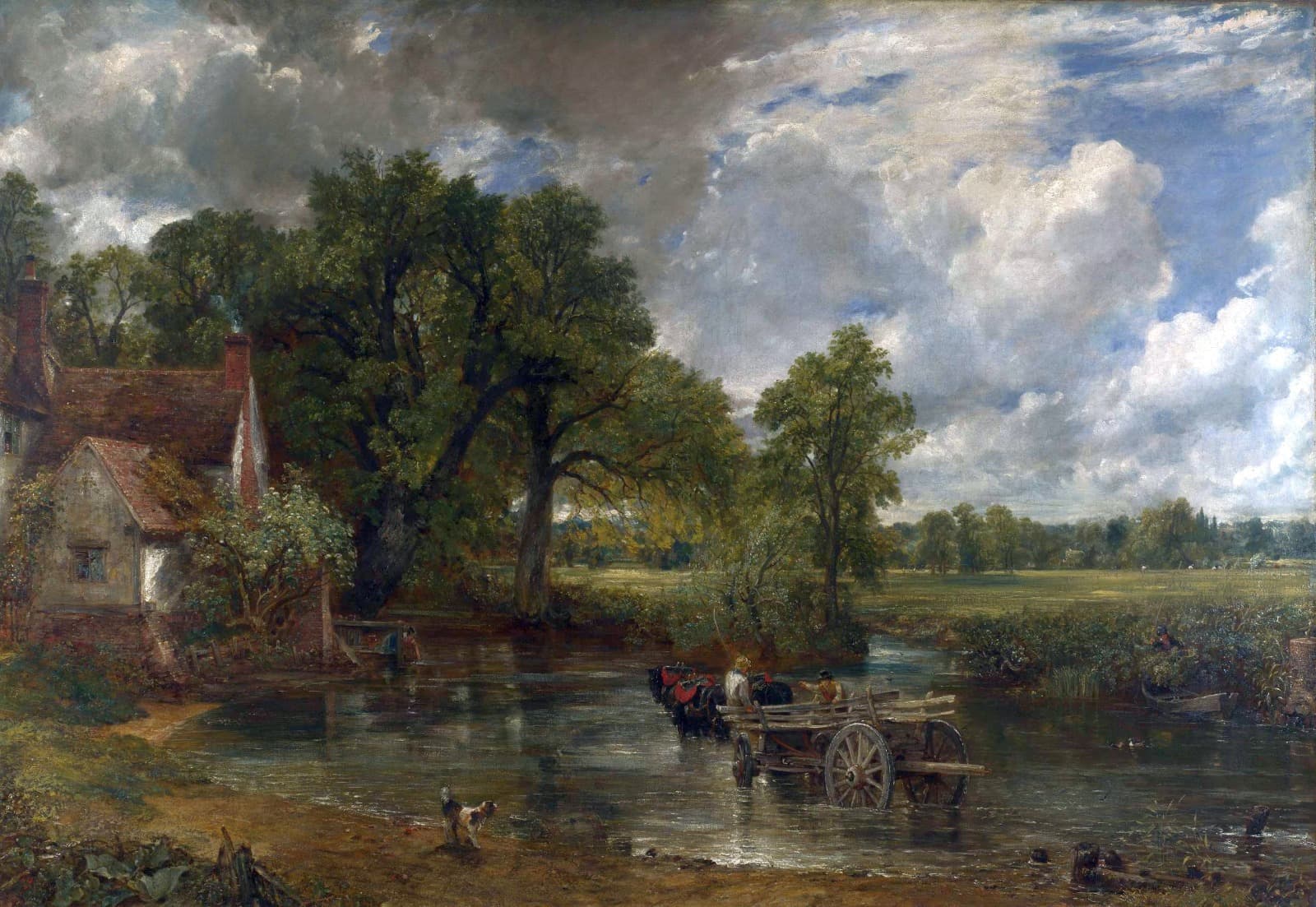
England ignored it, but the Paris Salon awarded it a gold medal in 1824 and sent Delacroix back to rework his own canvases.

A wall of rock fills two-thirds of the picture and shrinks the mule train below to nothing. Fan Kuan hid his signature in the leaves.

Dalí said the soft watches came to him from a camembert melting in the sun, and he painted them with hallucinatory precision.
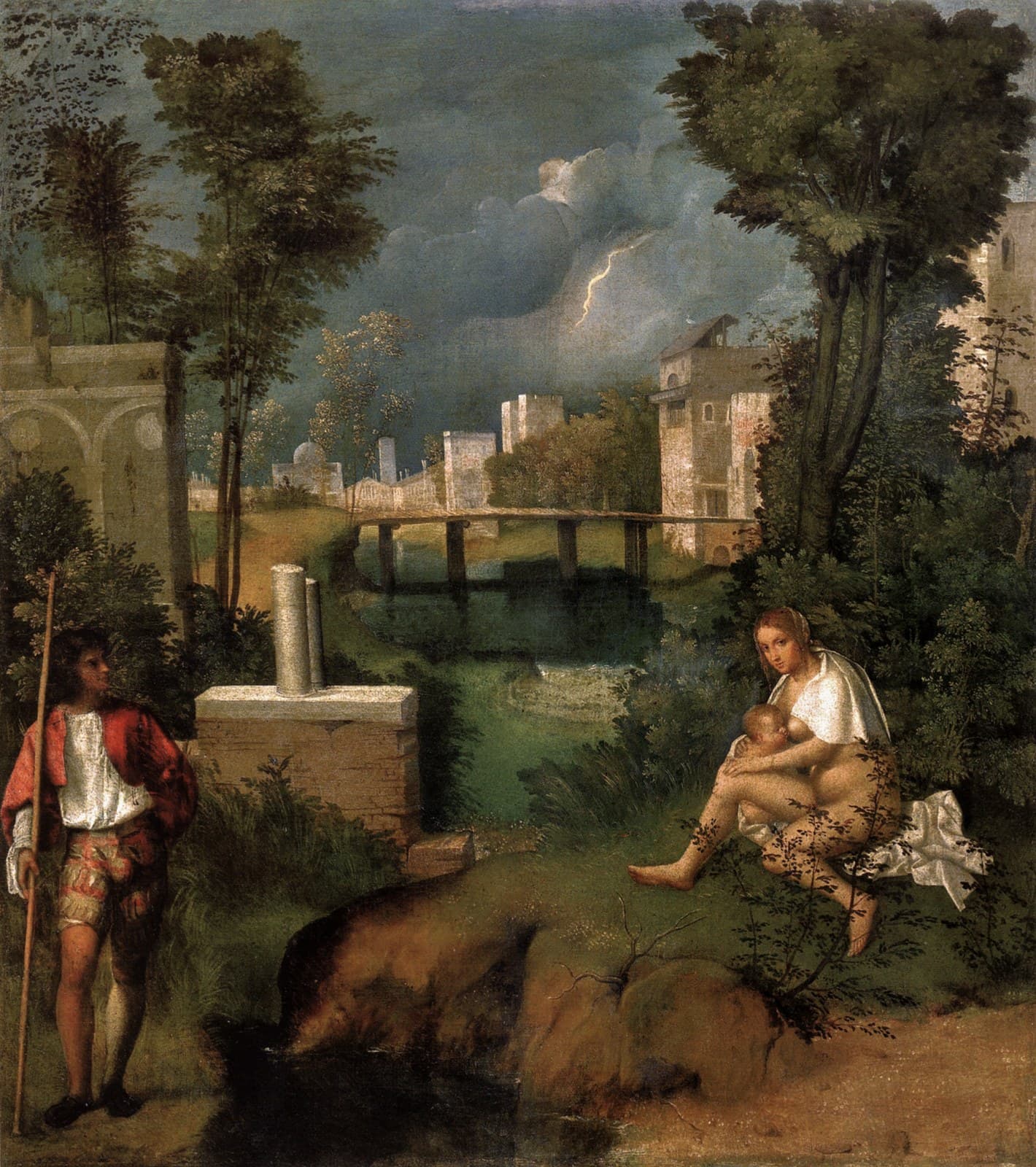
A soldier, a nursing woman, and lightning over the town beyond. Nobody has explained what connects them, and Giorgione died young leaving few certain works.
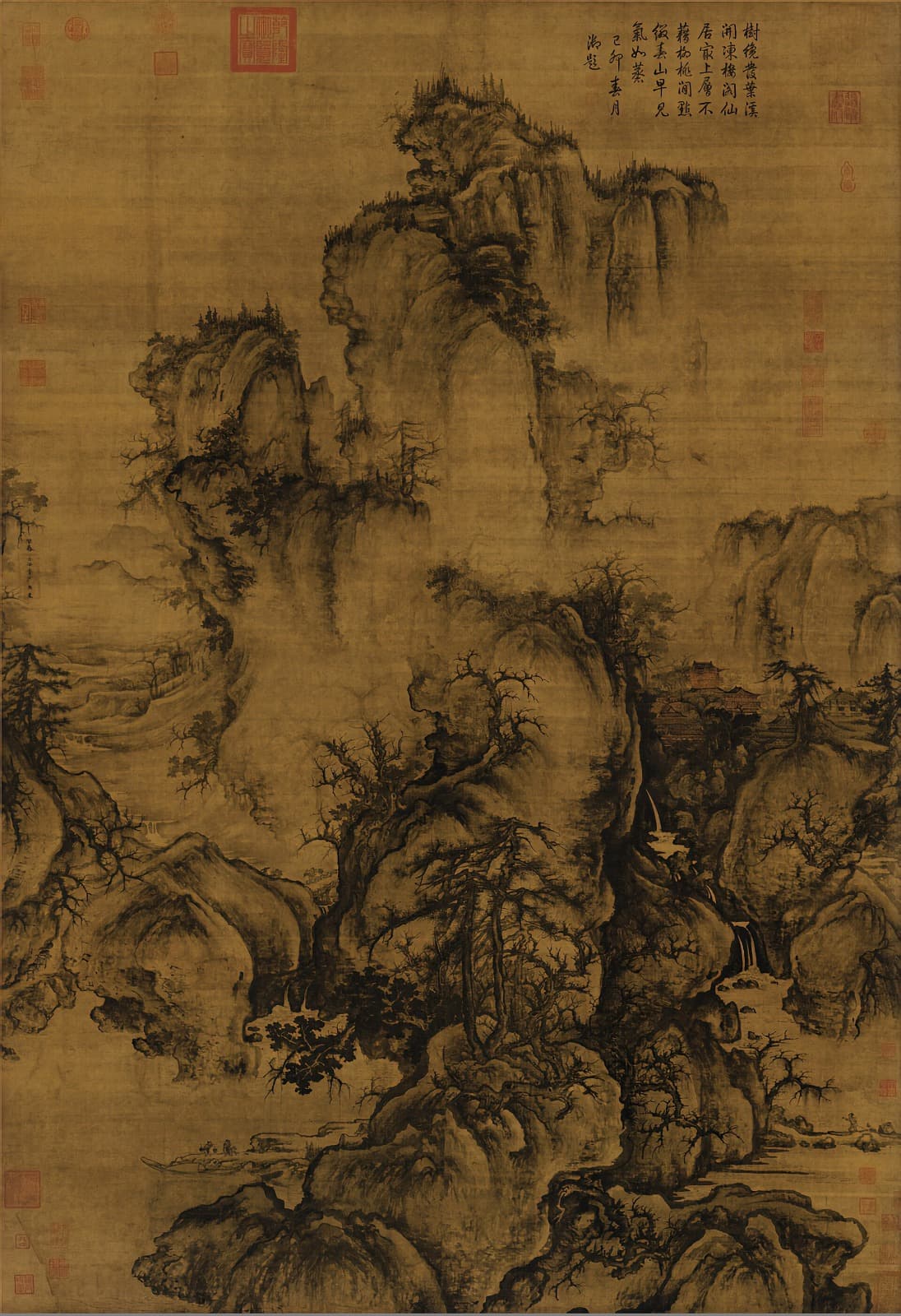
Guo Xi was court painter to the Song emperor and worked from a theory of three distances, shifting the eye between peak, valley and horizon.

Couples linger on the shore of Venus's island at dusk, unwilling to board. Watteau gave it to the Academy, which invented a genre to fit it.

A mountain, a wineshop flag and a boatman conjured from a few wet blots. Sesshu made it as a parting gift for a departing pupil.
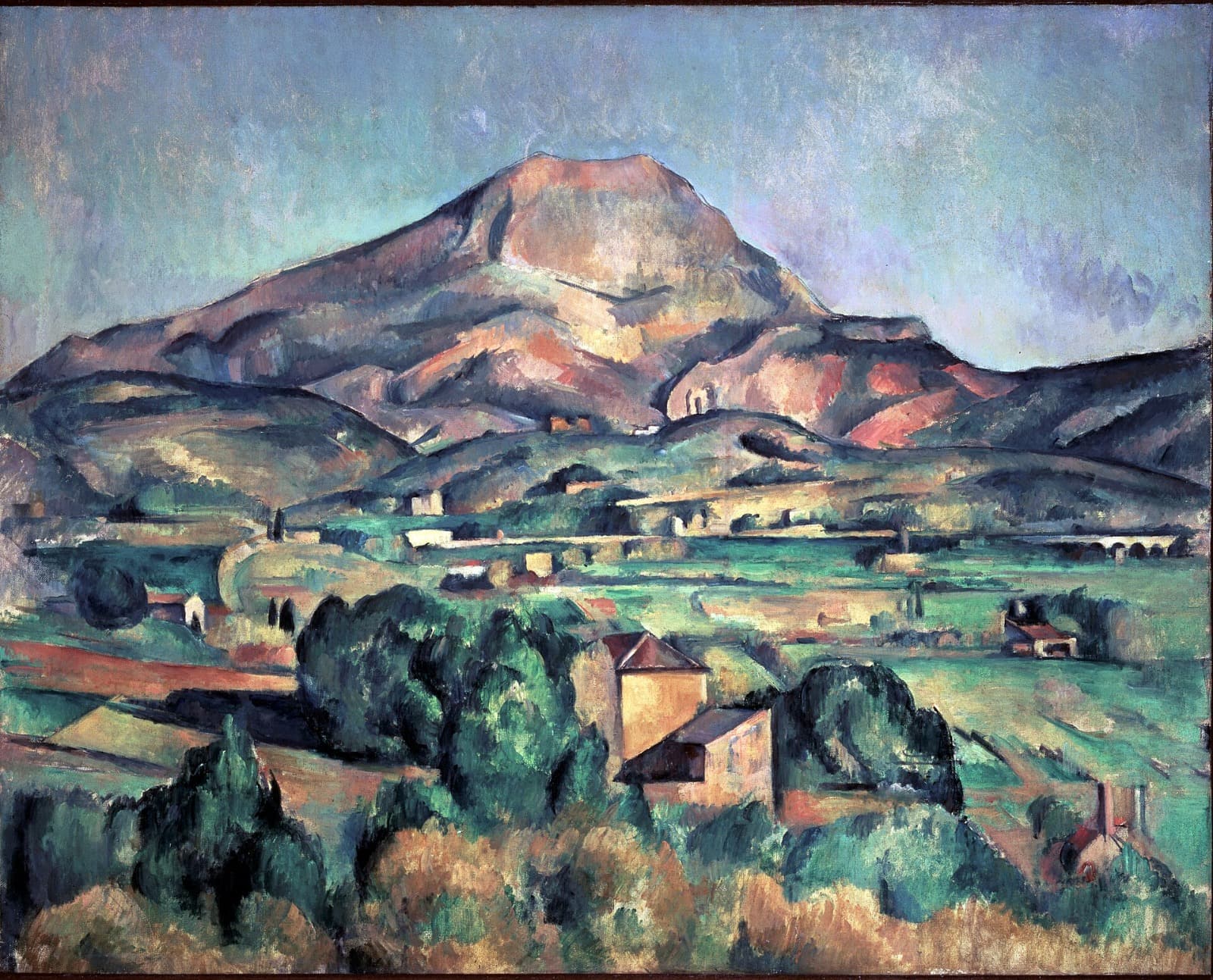
Cézanne painted his local mountain over and over, less to record it than to rebuild it out of flat patches of green, ochre and blue.

A collector loved the scroll so much he tried to have it burned with him at death. It was pulled from the fire in two pieces.
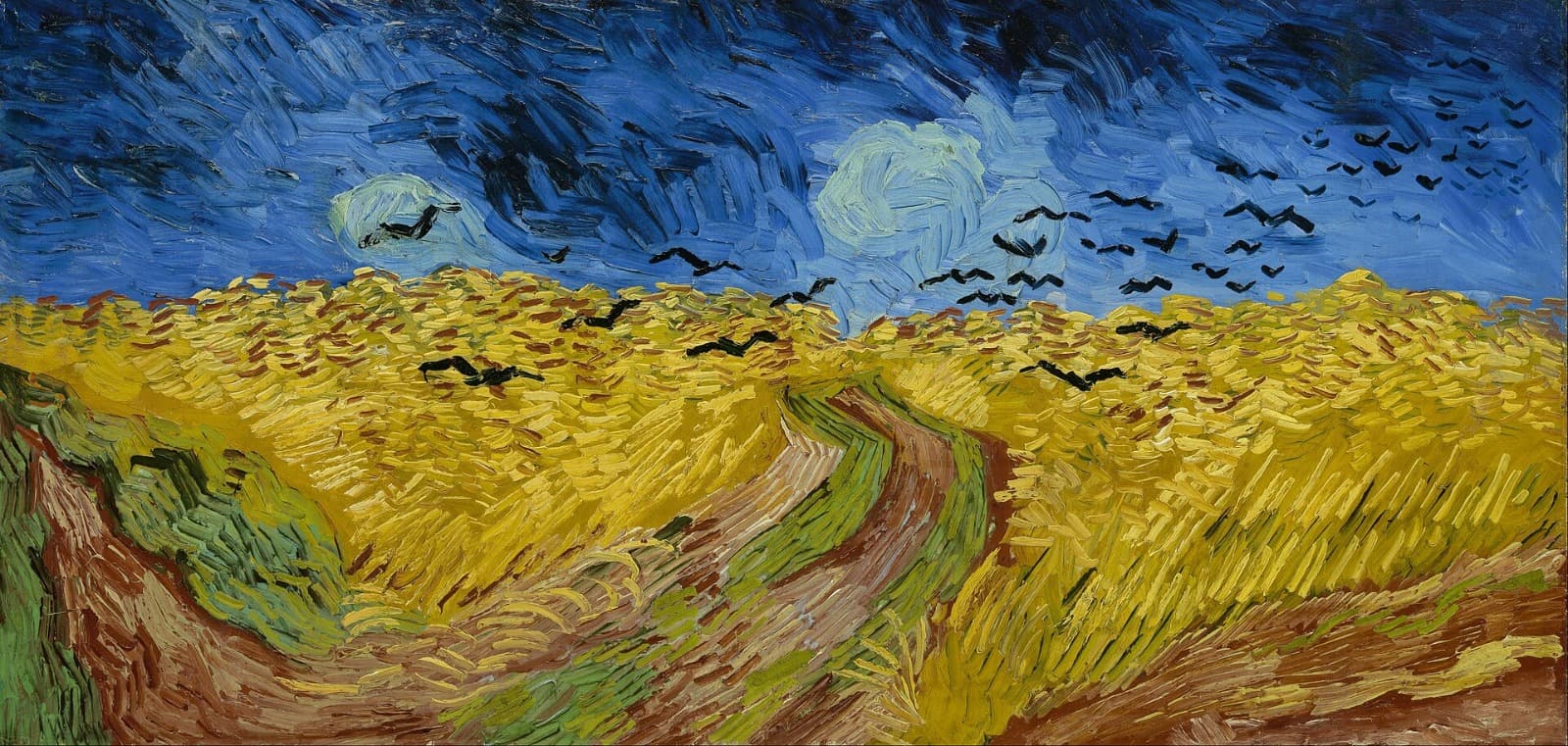
Three paths run into the wheat and none of them go anywhere. Painted at Auvers in his last weeks, and read too neatly ever since.

They called him One-Corner Ma. A scholar and a willow occupy one corner and the rest of the silk is left as air.
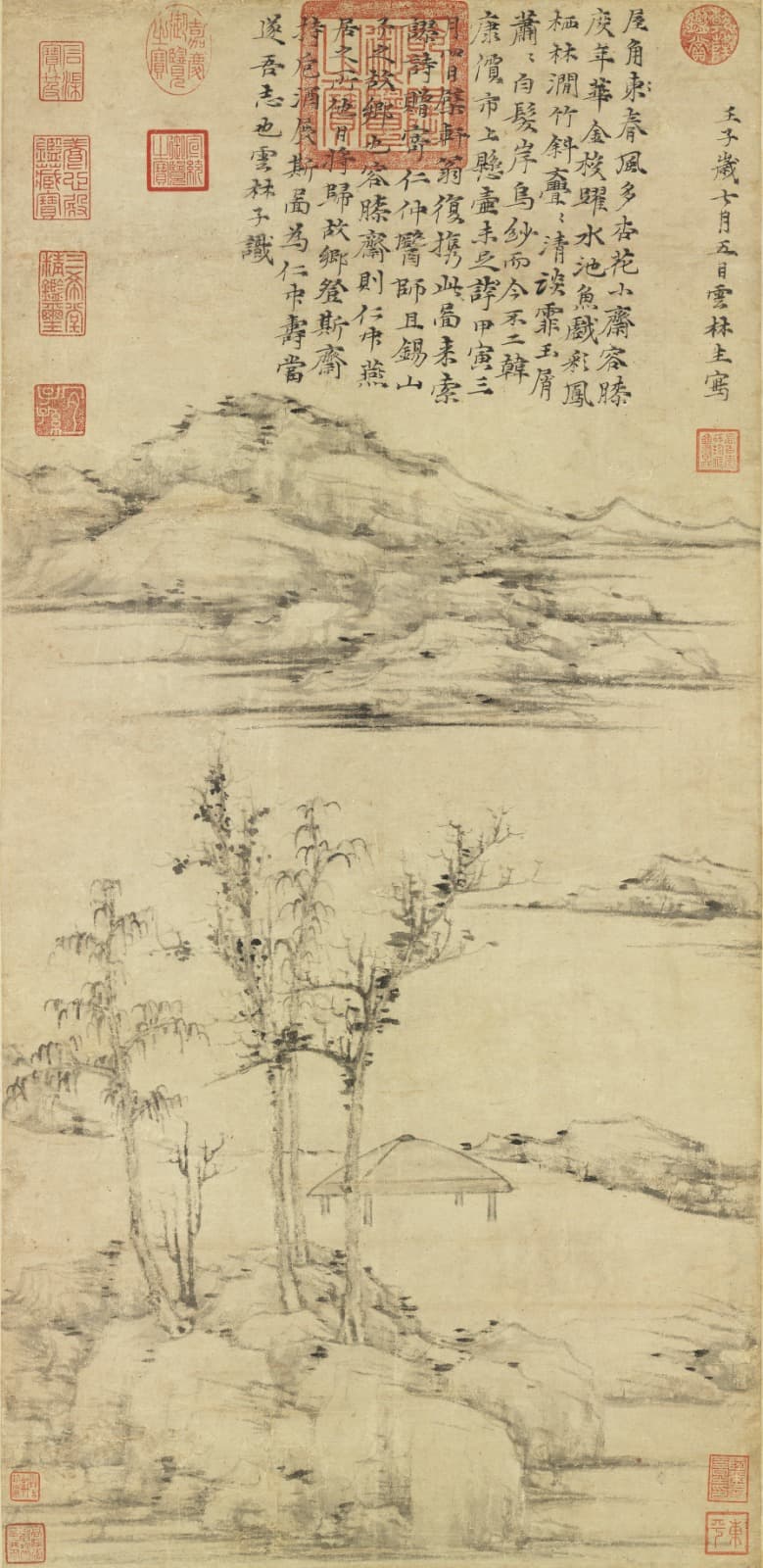
An empty pavilion, a few dry trees, no people at all. Ni Zan gave away his estate and spent his last years on a houseboat.

Van Gogh loved the cypress and compared it to an Egyptian obelisk, then set one flaming up the right side of a Provençal field.

Monet dug the pond himself at Giverny, built the Japanese bridge over it, and then painted the place for the rest of his life.

Instead of copying idealized Chinese scenery, Jeong Seon walked out and painted a real hill above Seoul with the rain just lifting off it.