
Woman Before a Mirror
1876 · Guggenheim, New York City
A woman in a white corset seen from behind, painted so loosely the picture seems to stop just before the image settles.
★ 5.2
 skopia
A woman in a white corset seen from behind, painted so loosely the picture seems to stop just before the image settles.

A woman sits on the bank and puts her bare feet in the water, the whole stream broken into flickering touches of color.
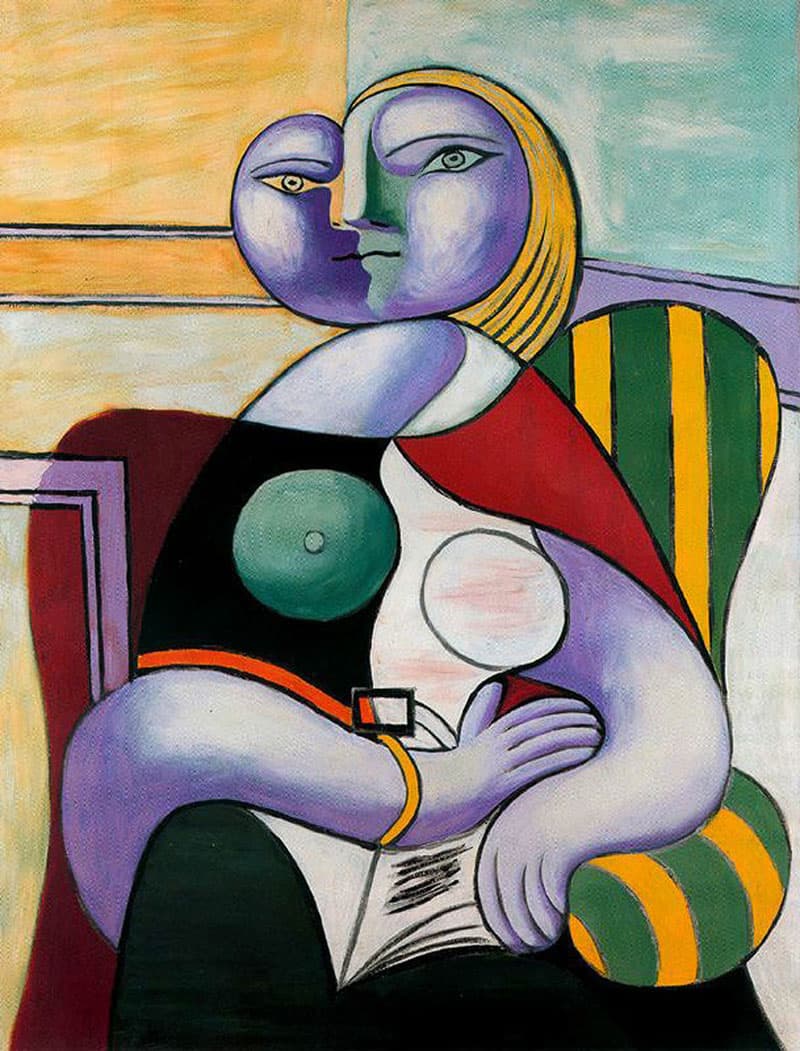
Marie-Thérèse has fallen asleep over her book with her head on her arms, from the year Picasso painted her over and over.
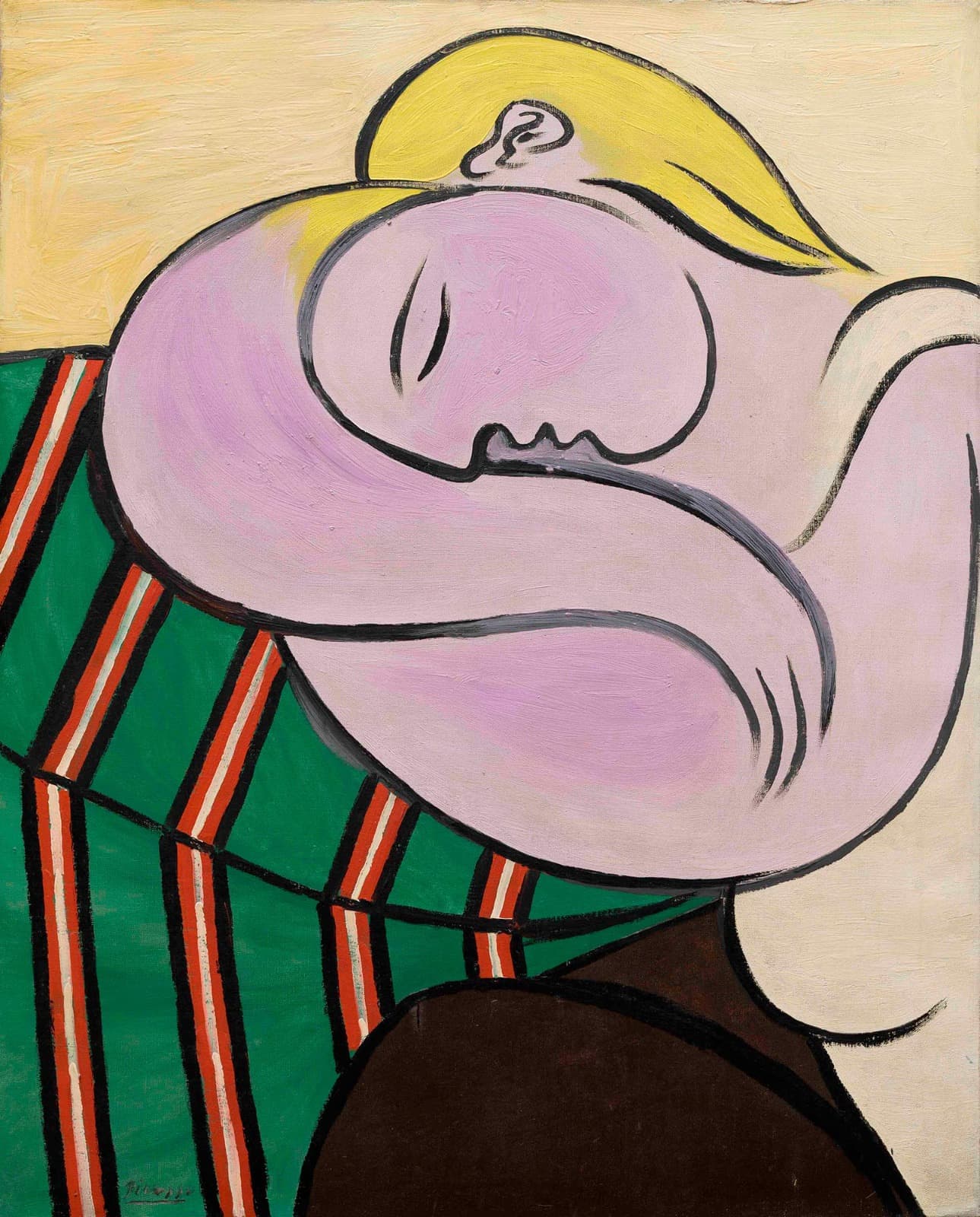
Marie-Thérèse asleep with her head on her arms, the angular violence of Cubism gone soft and curved for a few years.

A bride in red floats through the blue night with a goat playing a cello beside her. Many people know it from a film.
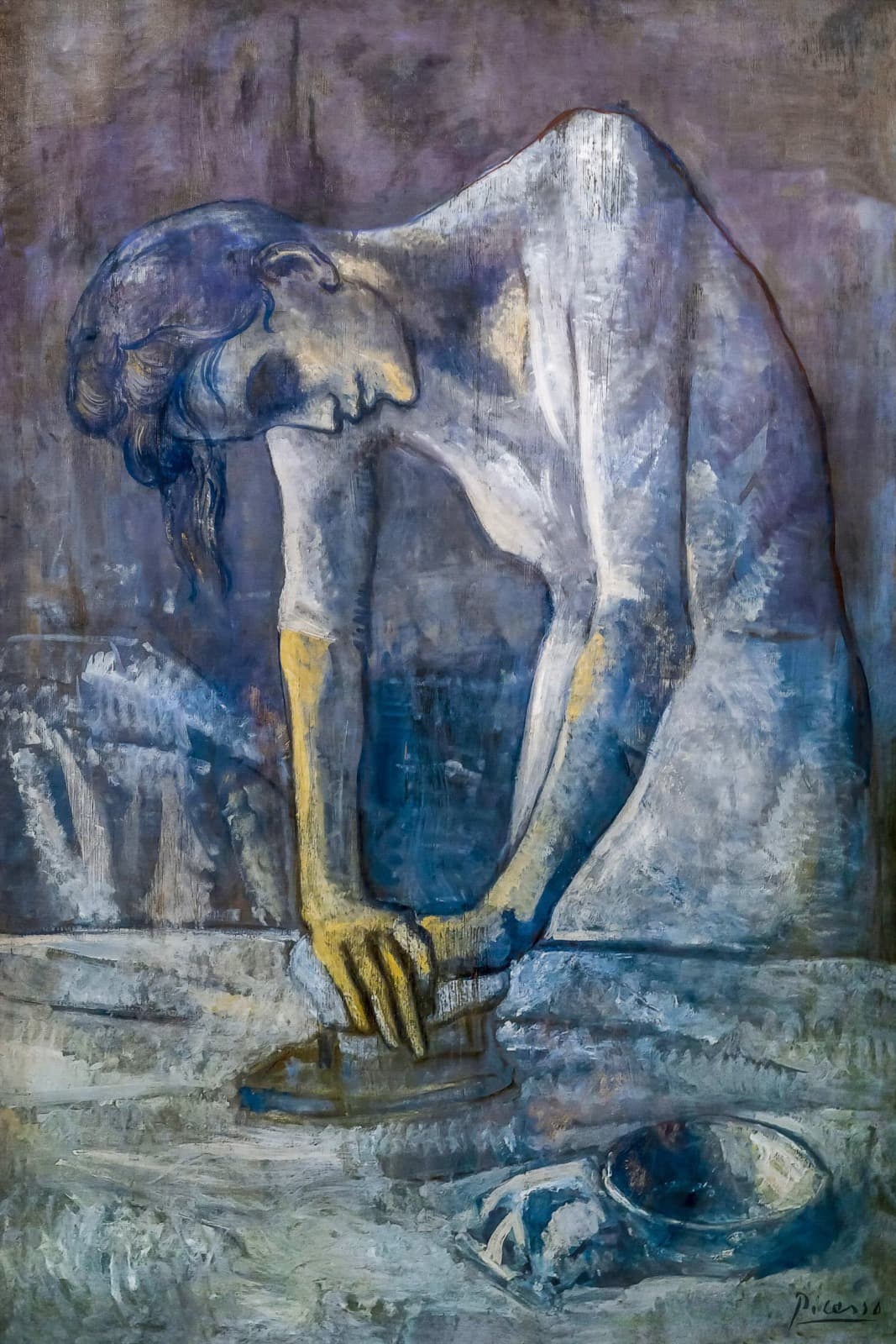
The laundress bears down on her iron with her shoulders up and her head sunk, all in the cold blue of Picasso's poorest years.
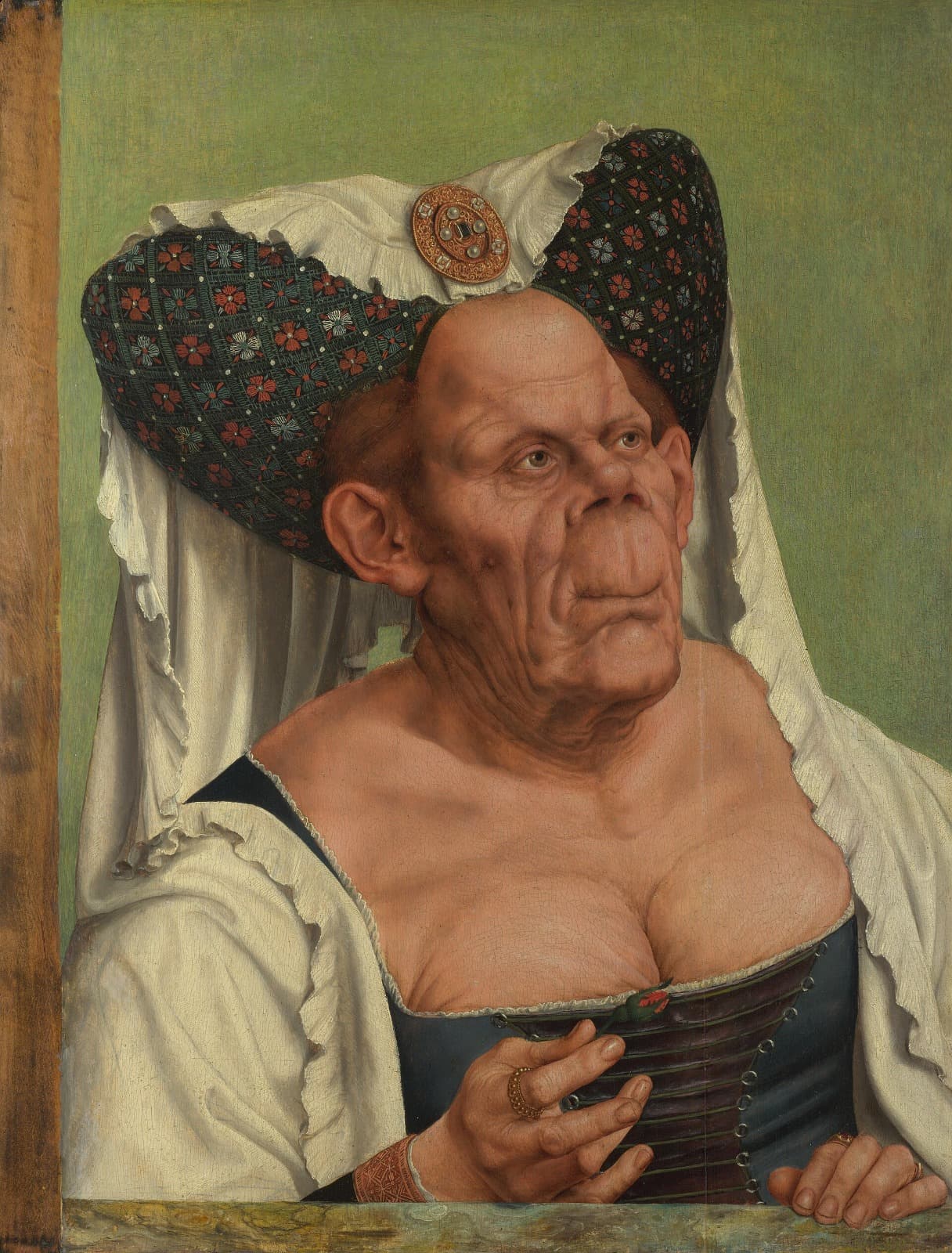
Satire on old age aping youth, in a headdress two generations out of date. Tenniel used her for the Duchess in Alice in Wonderland.

Goyo oversaw every stage of his prints himself and finished only a handful before dying young. This is the one everyone knows.

The officer's hat and back loom enormous in the foreground while the girl sits small and bright beyond, which is exactly how the eye works.
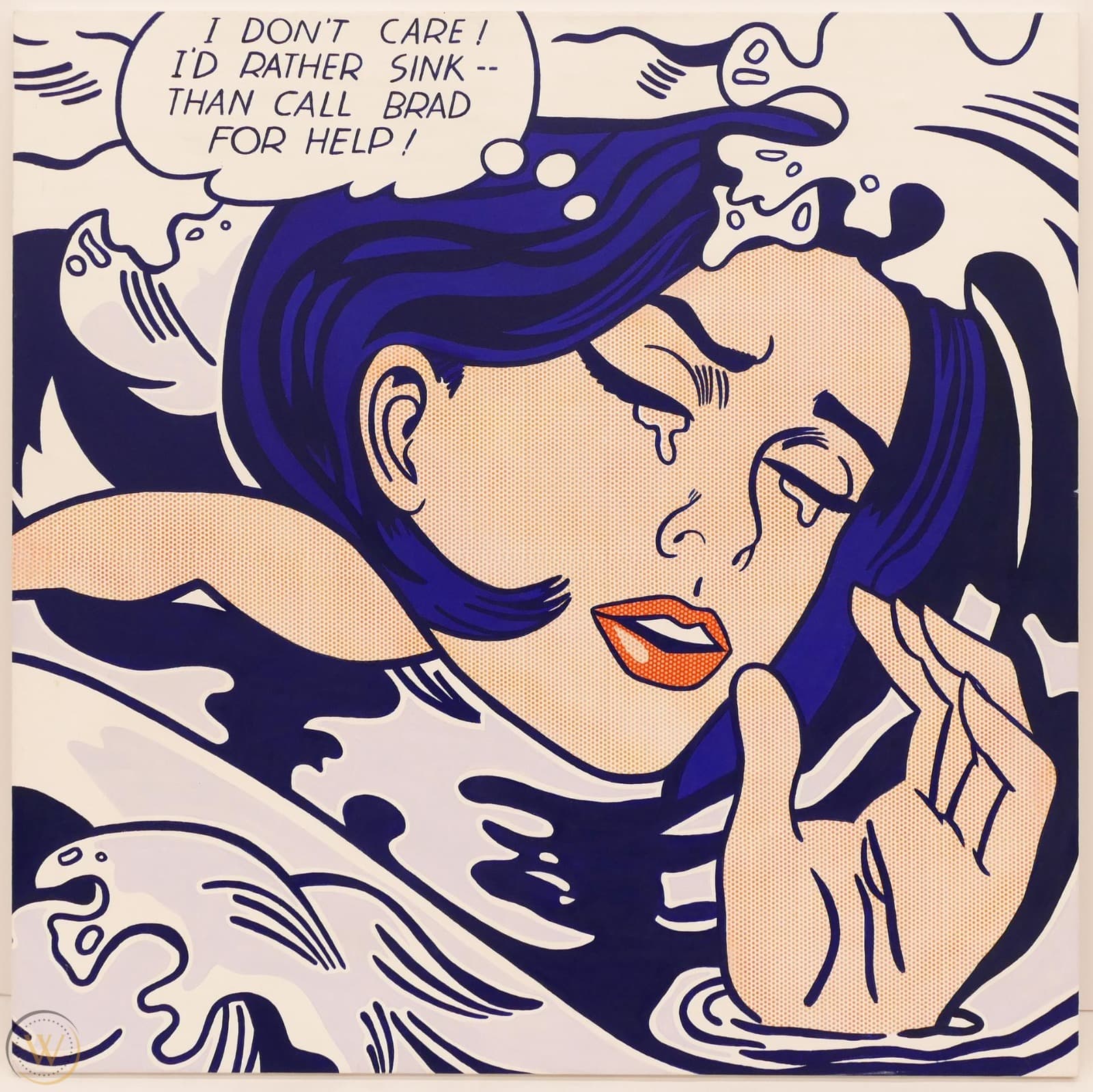
She would rather sink than call Brad. Lichtenstein took one panel of a romance comic and blew it up to the size of a serious painting.

Delacroix saw a room like this once, on a trip to North Africa, and painted it from memory. Picasso later made fifteen variations on it.

No angel, no dove, no lily. Mary looks up from her book straight at us, because we are standing where Gabriel ought to be.

The scales in her hand are empty and perfectly level, and the painting on the wall behind her is a Last Judgment.
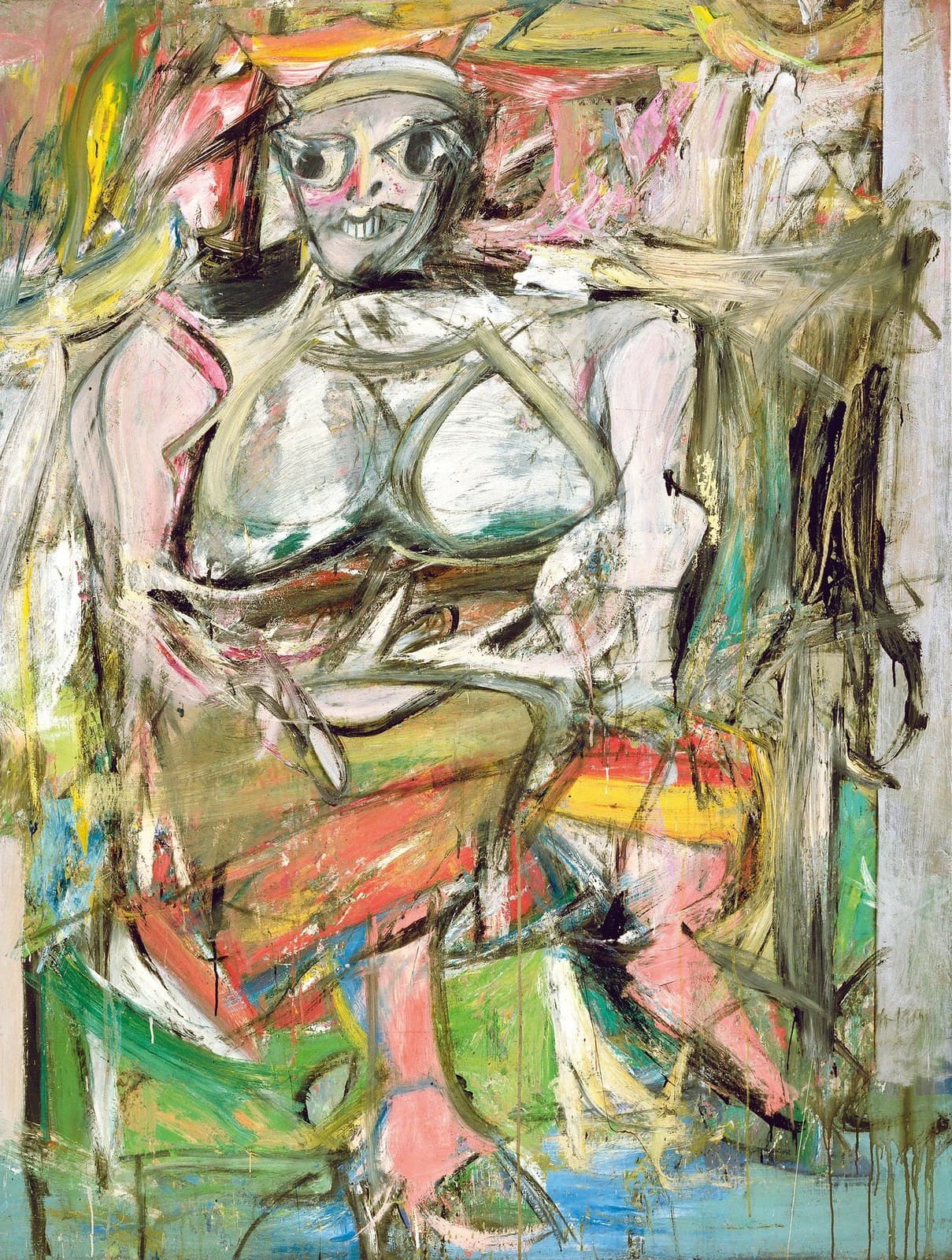
De Kooning dragged the figure back into abstract painting at the moment that was least acceptable, and worked this canvas over for two years.

Only the face and hands are painted naturally and the rest is gold. The Nazis seized it, and a long restitution case eventually got it back.

Zulaykha shuts the last door behind Yusuf, and Bihzad turns the palace into a honeycomb of tile and stairs as taut as the story.
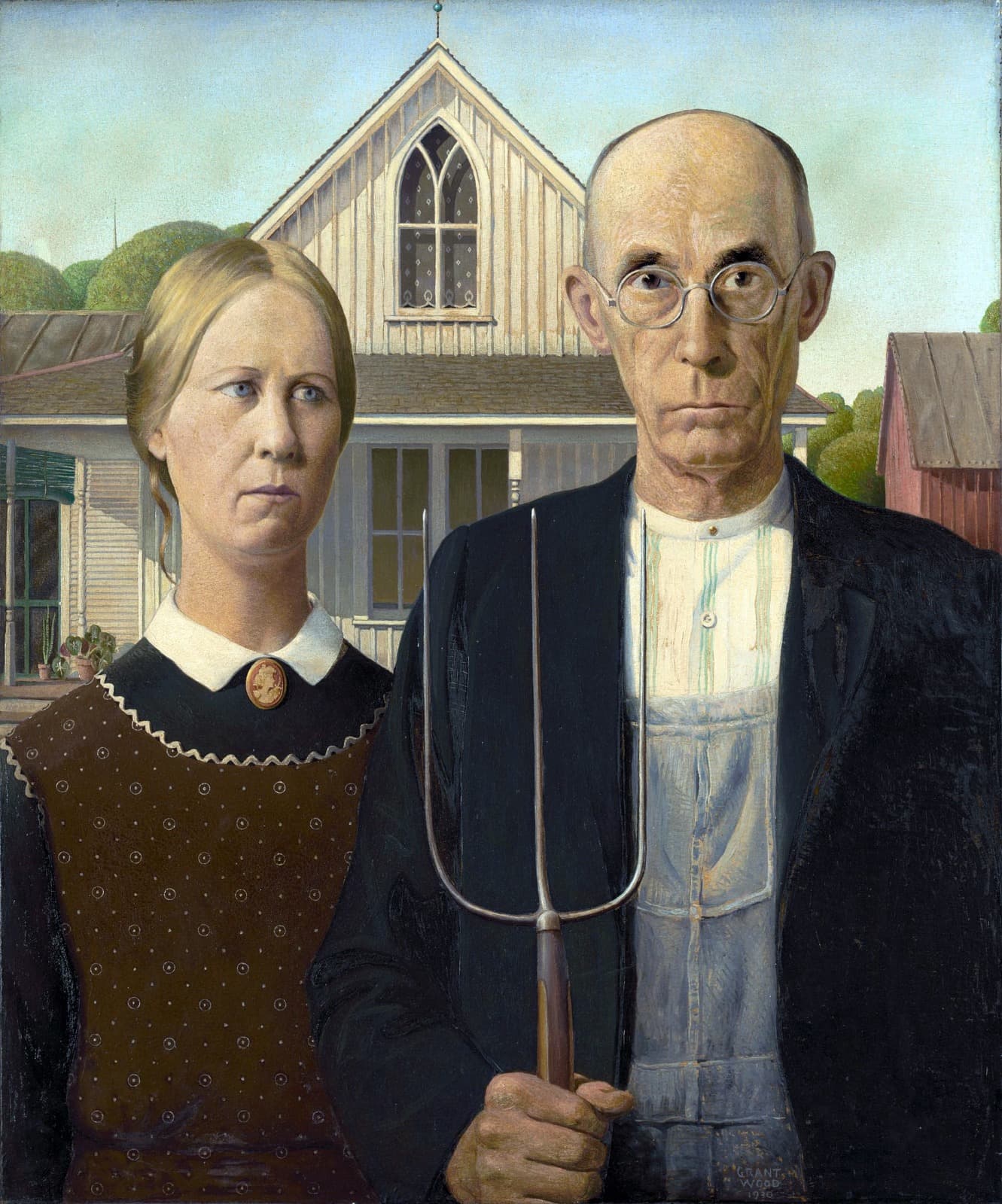
Wood posed his sister and his dentist in front of a farmhouse window, and people have argued ever since whether he meant tribute or mockery.