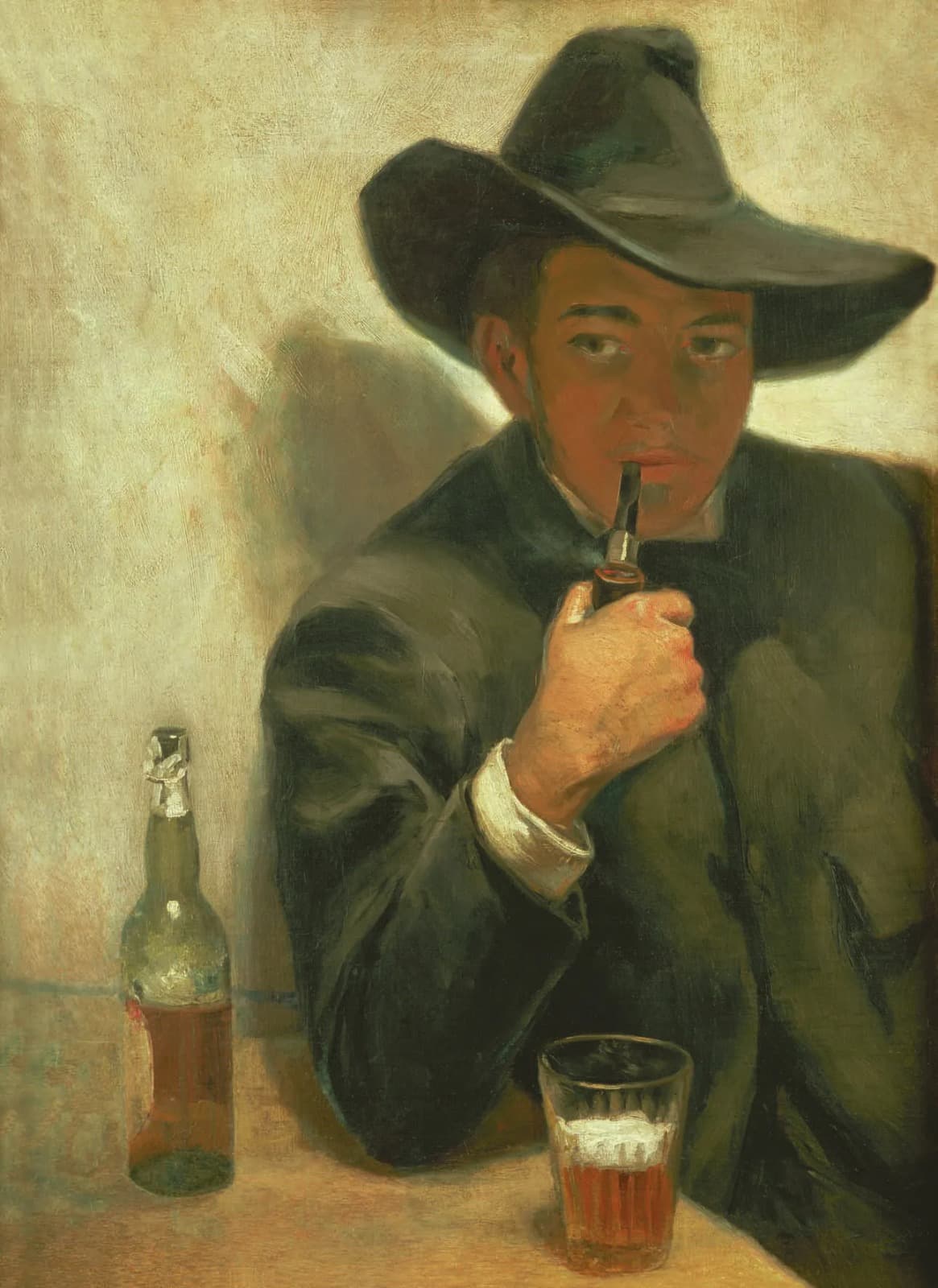
Self-Portrait (Rivera)
1907 · Museo Dolores Olmedo Patino, Mexico City
Rivera as a student in Europe, years before the murals, still working inside the academic tradition he would later blow up.
★ 4.2
 skopia
Rivera as a student in Europe, years before the murals, still working inside the academic tradition he would later blow up.

One of the Impressionist canvases he owned hangs on the wall behind him. Caillebotte's money and his bequest kept the movement alive.

Beckmann had spent the war as a medical orderly, and he looks out of the shadows here like a man finished being surprised.
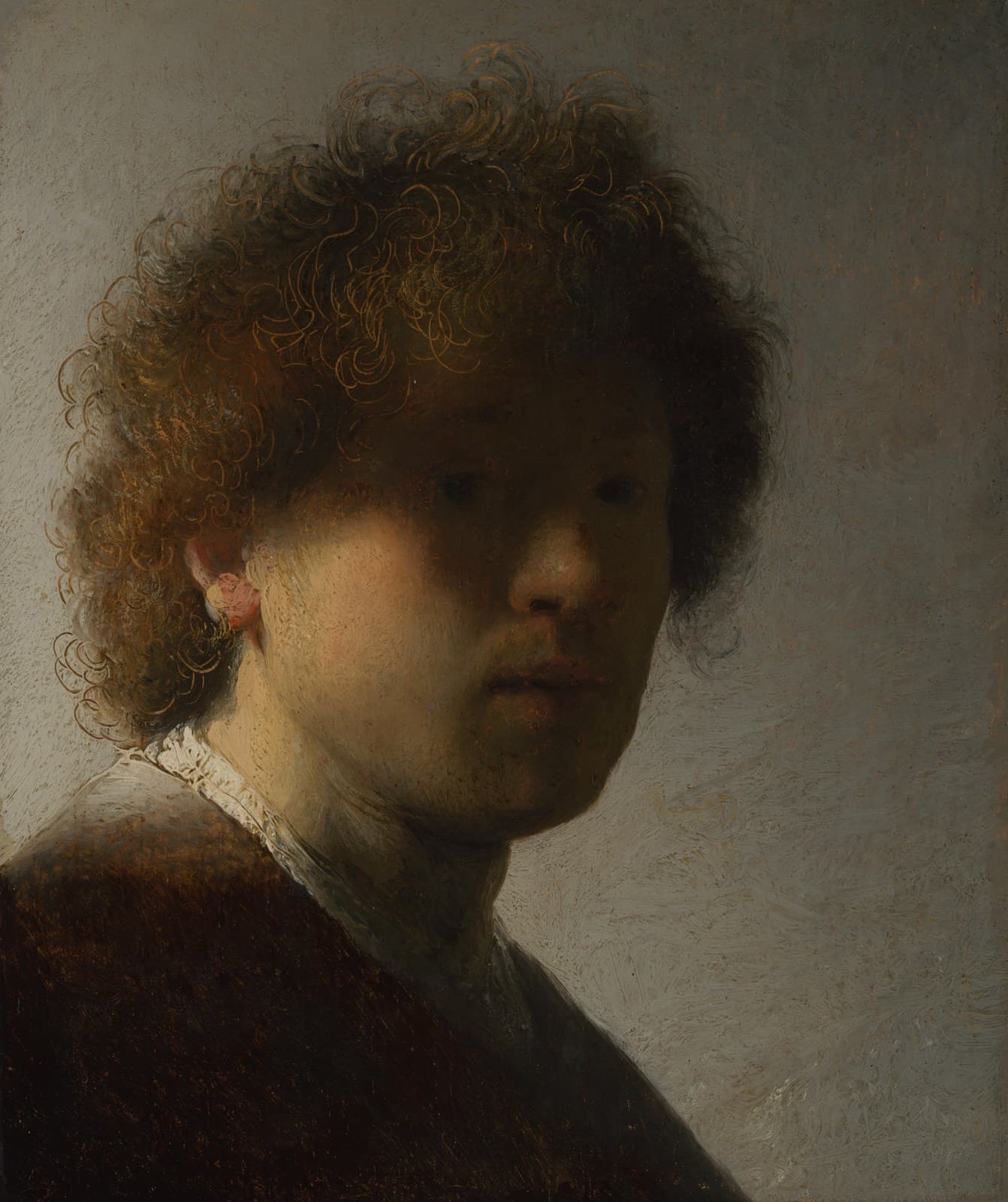
Rembrandt was barely in his twenties and using his own face as a laboratory for light. Dozens more would follow over forty years.
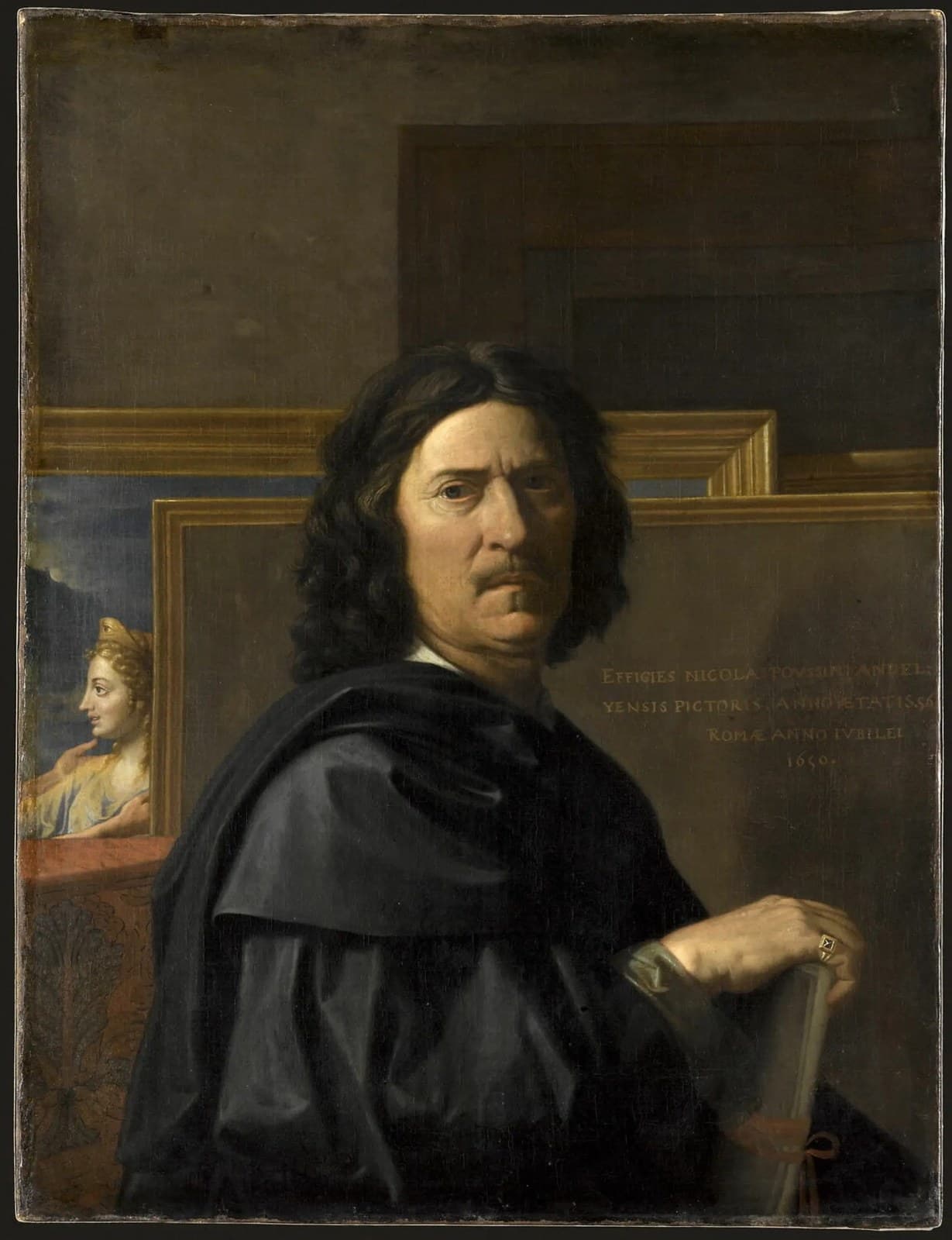
Poussin stands in front of his own blank stretched canvases with a portfolio under his arm, presenting himself as a thinker rather than a craftsman.

Courbet at twenty-six, lunging at the viewer with both hands in his hair and his eyes wide. Half self-portrait, half performance.

She painted herself at the wheel in leather helmet and gloves for a German fashion magazine, and invented the look of the Jazz Age.

A thorn necklace draws blood at her throat, a dead hummingbird hangs from it, and a monkey and a black cat watch from behind.
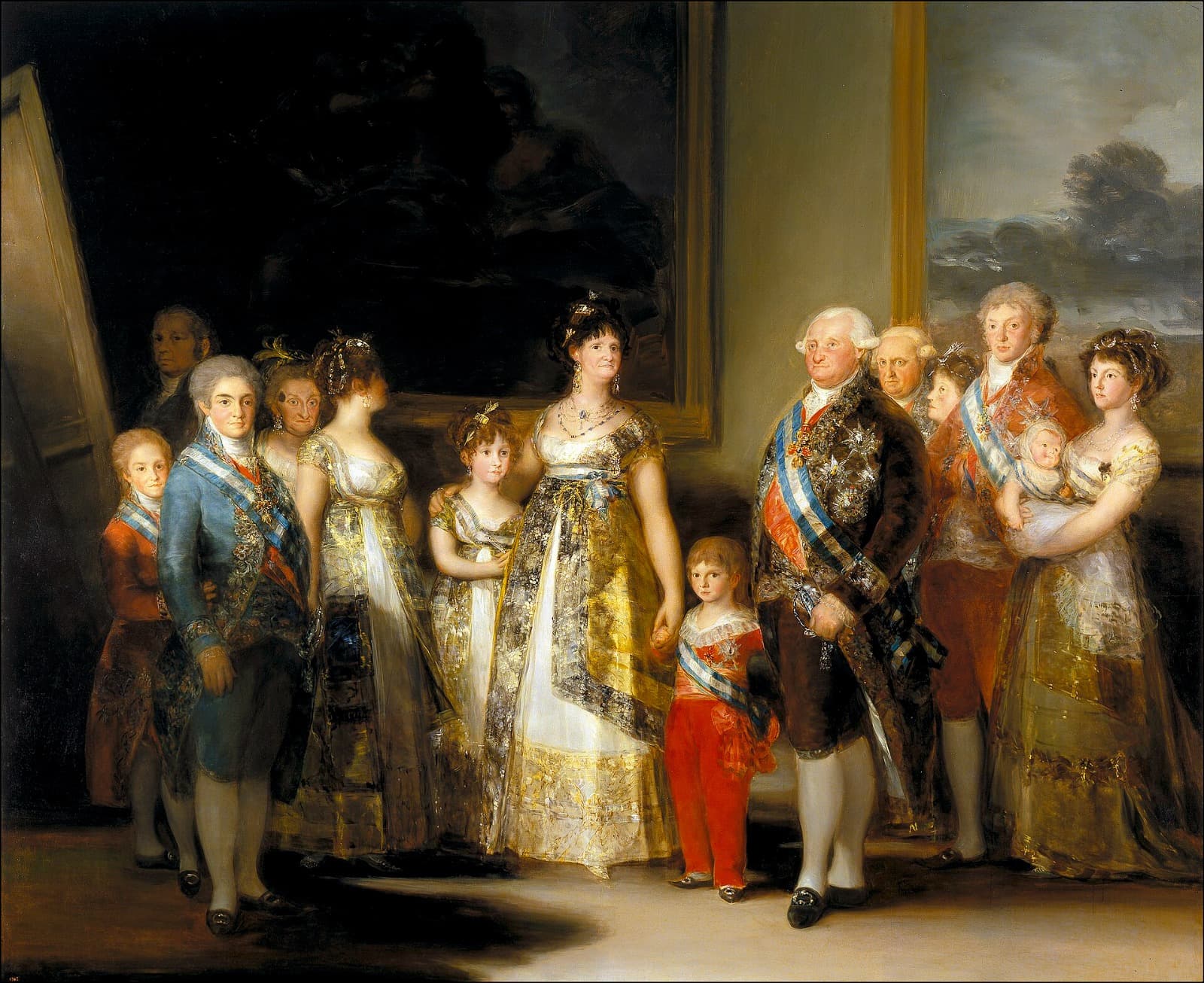
Goya put himself at an easel in the shadows, as Velázquez had, and painted the royal family looking vacant, pompous or merely plain.
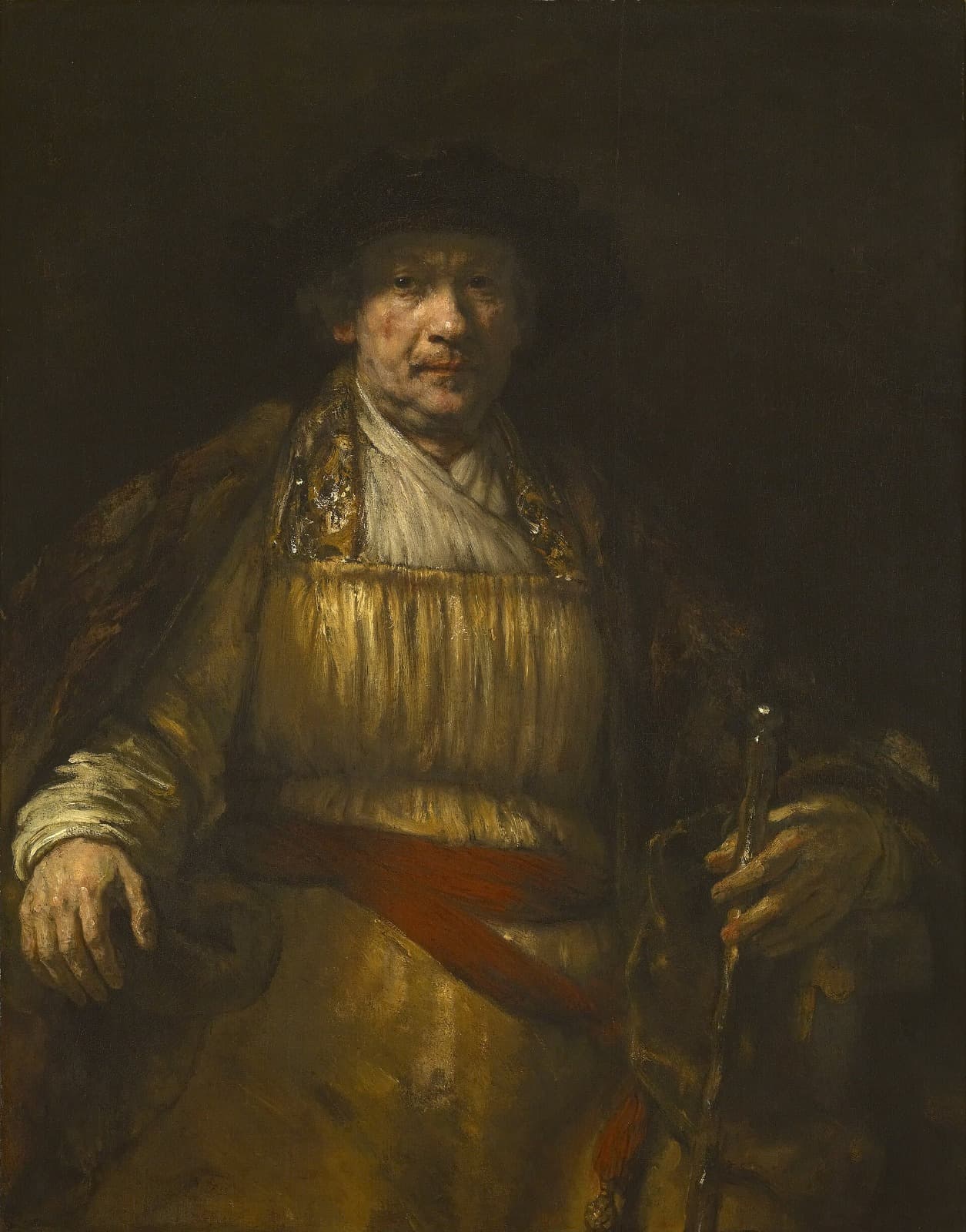
Rembrandt painted himself enthroned like a monarch, staff across his lap, in the same year bankruptcy took his house and everything in it.

The wary, straight-on gaze is what a painter sees in a mirror, which is why this is probably van Eyck looking at himself.
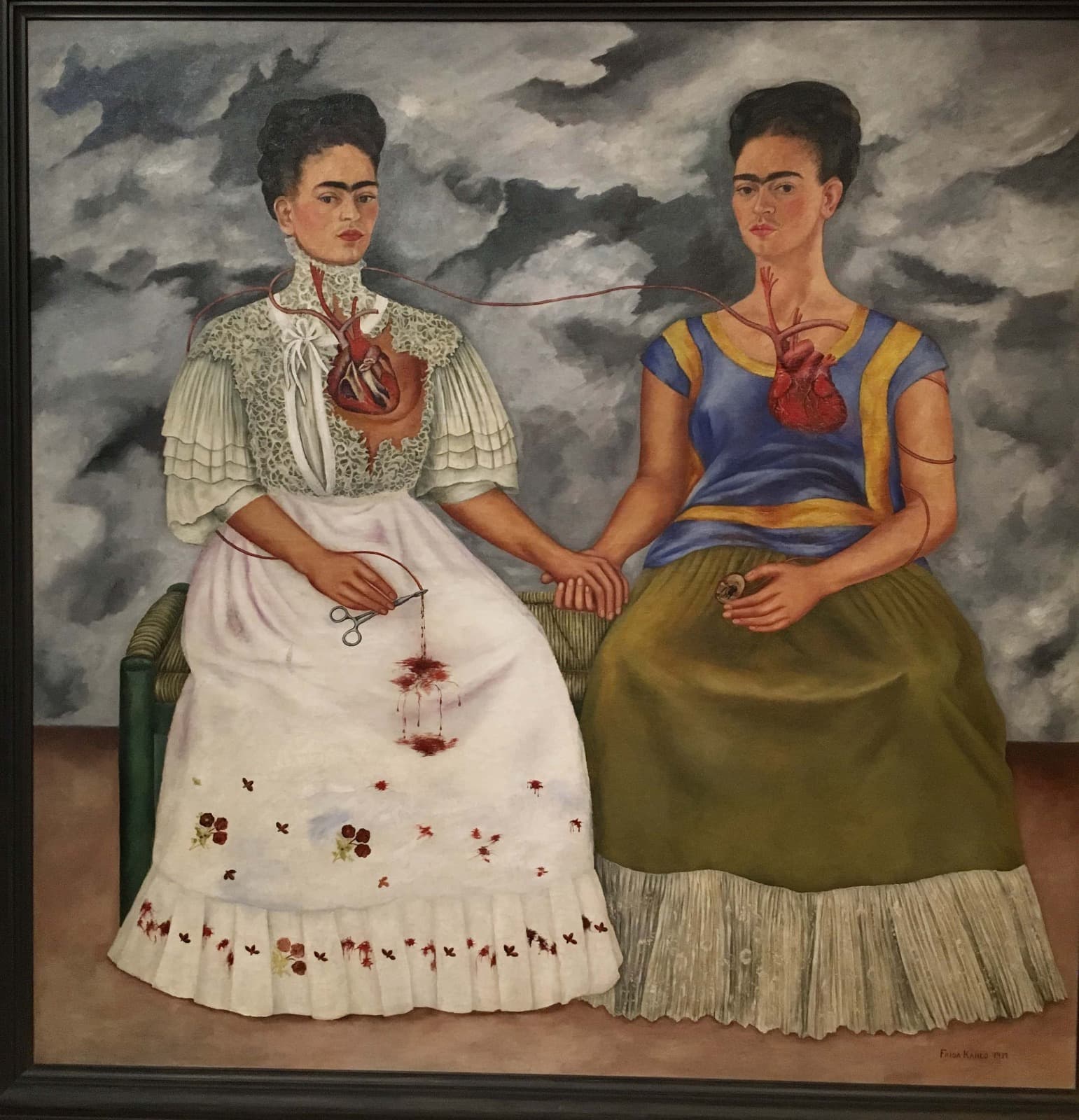
Two versions of herself hold hands with one artery running between them, clamped shut. She painted it as her marriage to Rivera fell apart.

The background ripples around his head like a current in the same blue-green as his suit, and his beard burns red against it.
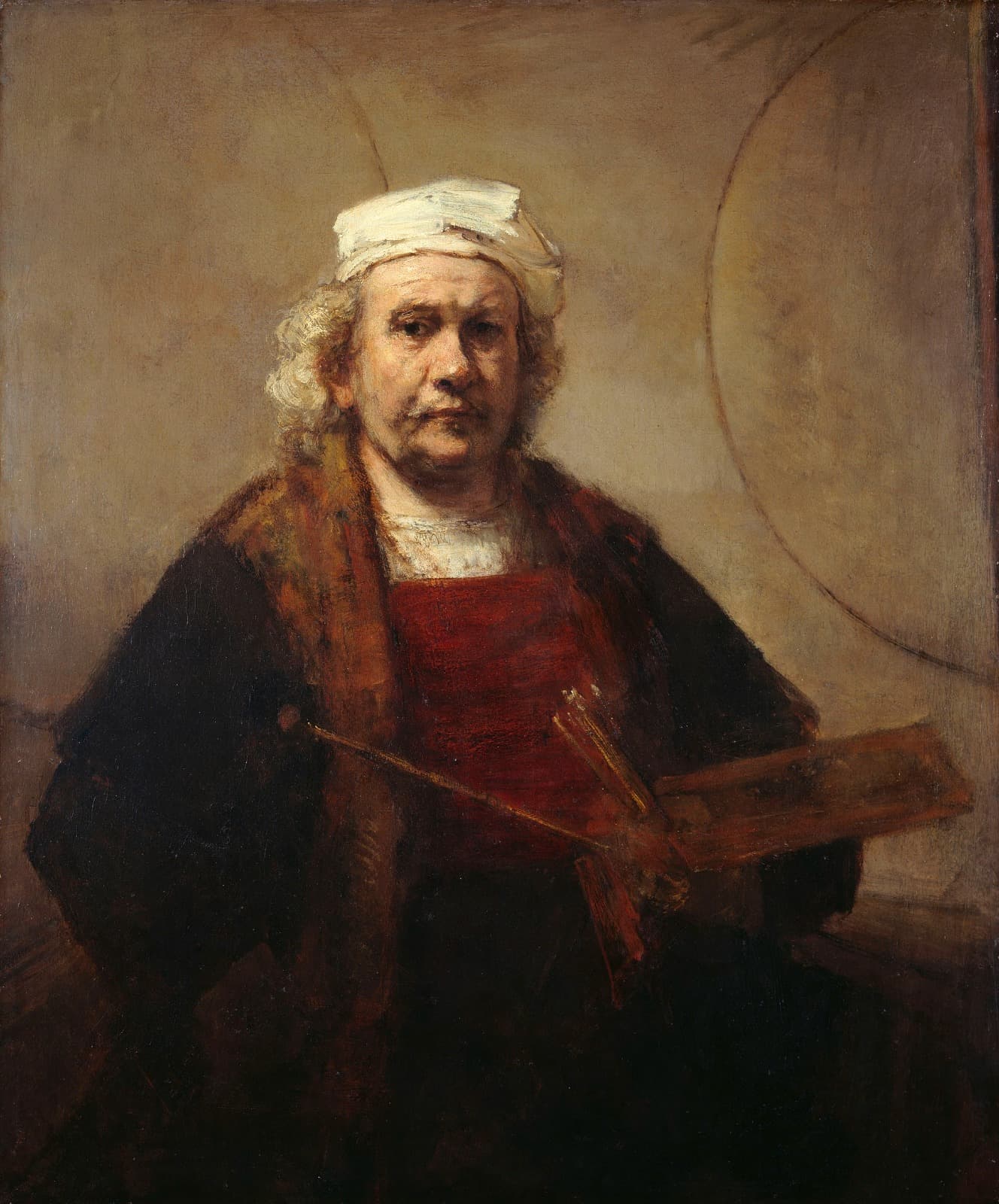
The old painter holds his brushes and palette, and behind him two large arcs are drawn on the wall that nobody has explained.
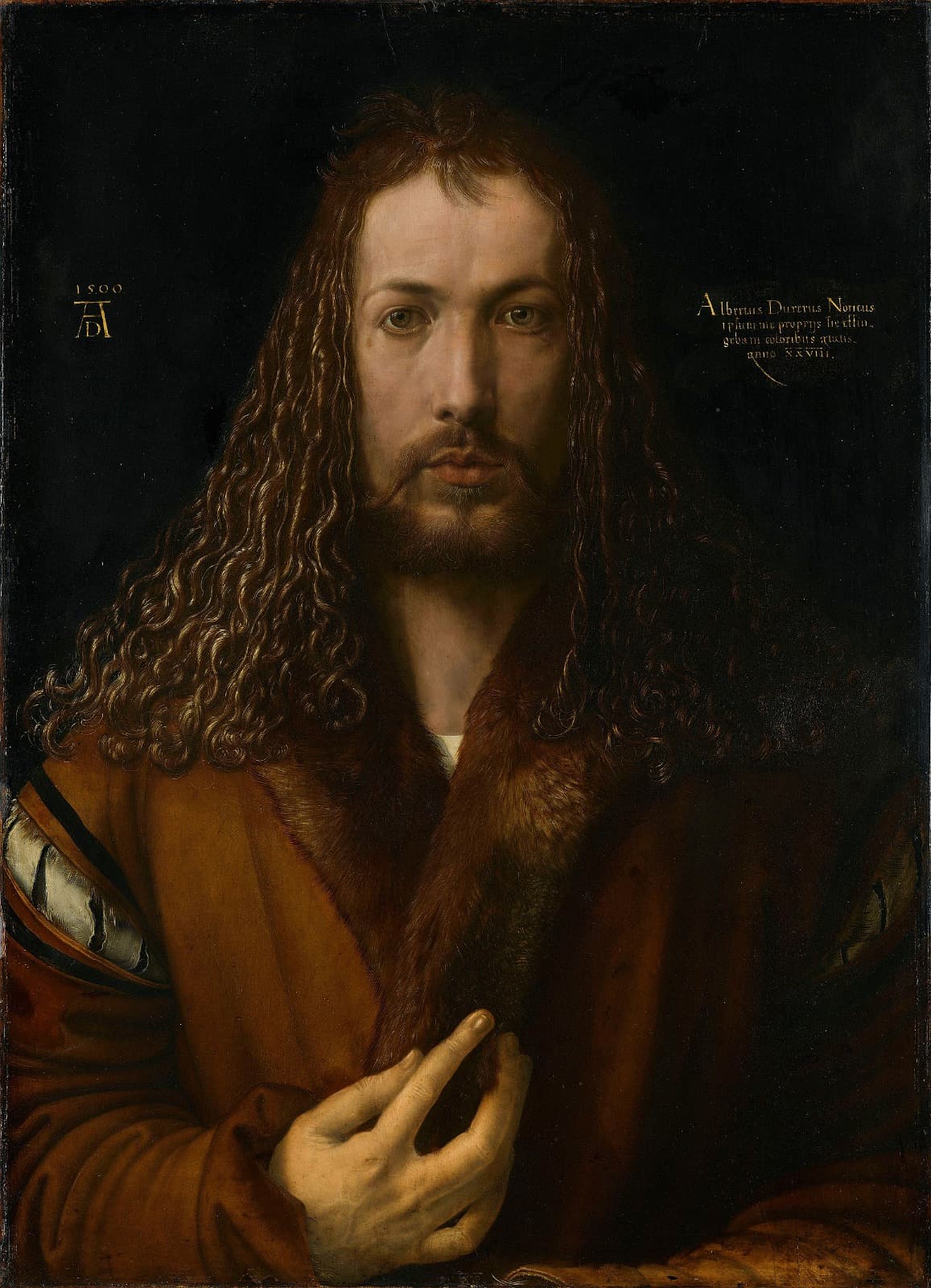
Dürer faced himself head-on in a pose reserved for images of Christ, and wrote across the panel that he had painted it at twenty-eight.
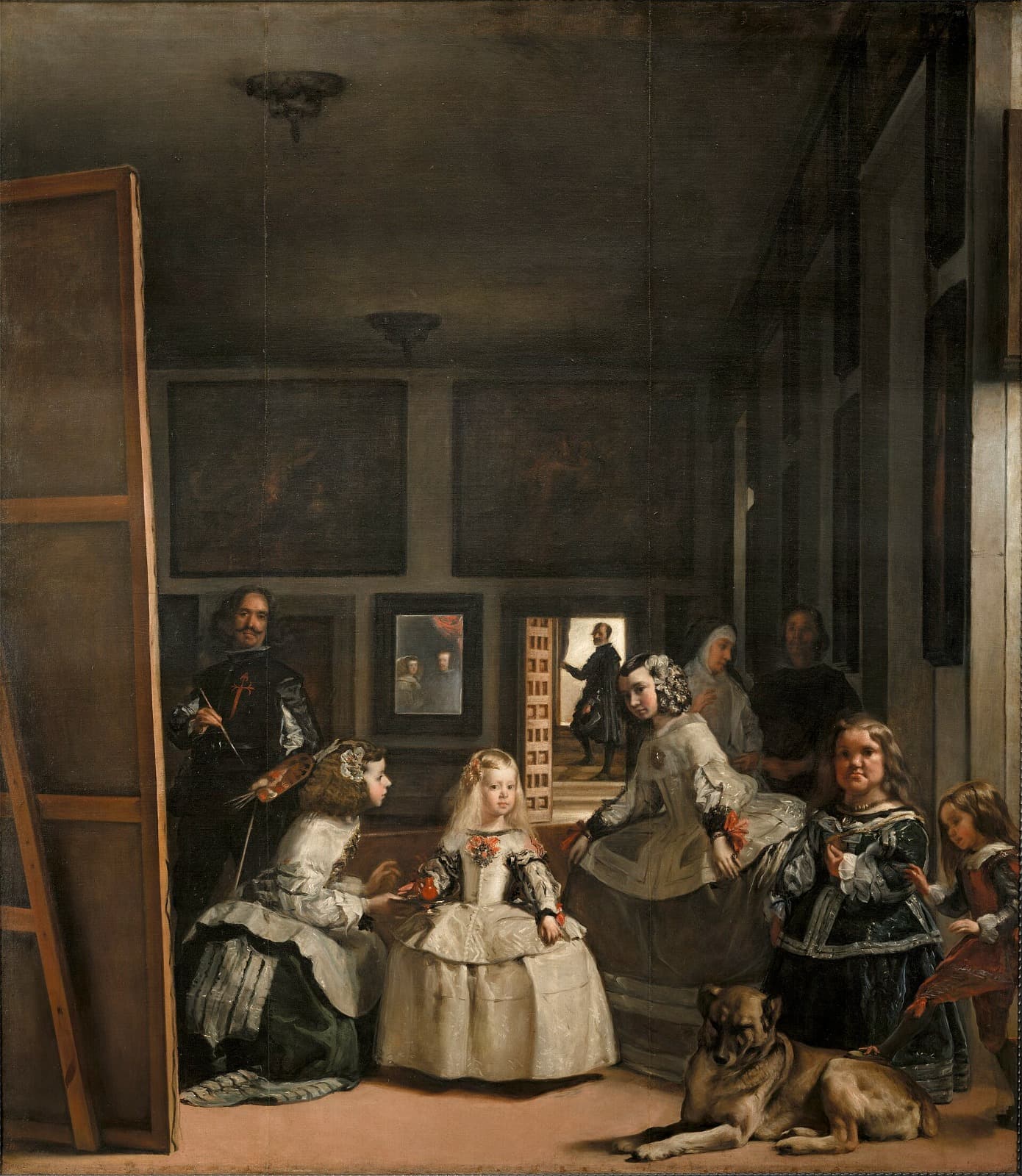
The Infanta and her maids fill the room, but Velázquez has put himself at his easel and the king and queen in a mirror behind.