
Landscape at La Ciotat
1907 · Museum of Modern Art, New York City
Hot pinks and oranges laid on freely, a year before Cézanne and Picasso's Demoiselles sent Braque off toward Cubism instead.
★ 4.8
 skopia
Hot pinks and oranges laid on freely, a year before Cézanne and Picasso's Demoiselles sent Braque off toward Cubism instead.

Beckmann came out of the war traumatized and painted a Christ so emaciated and angular that no consolation survives the picture.
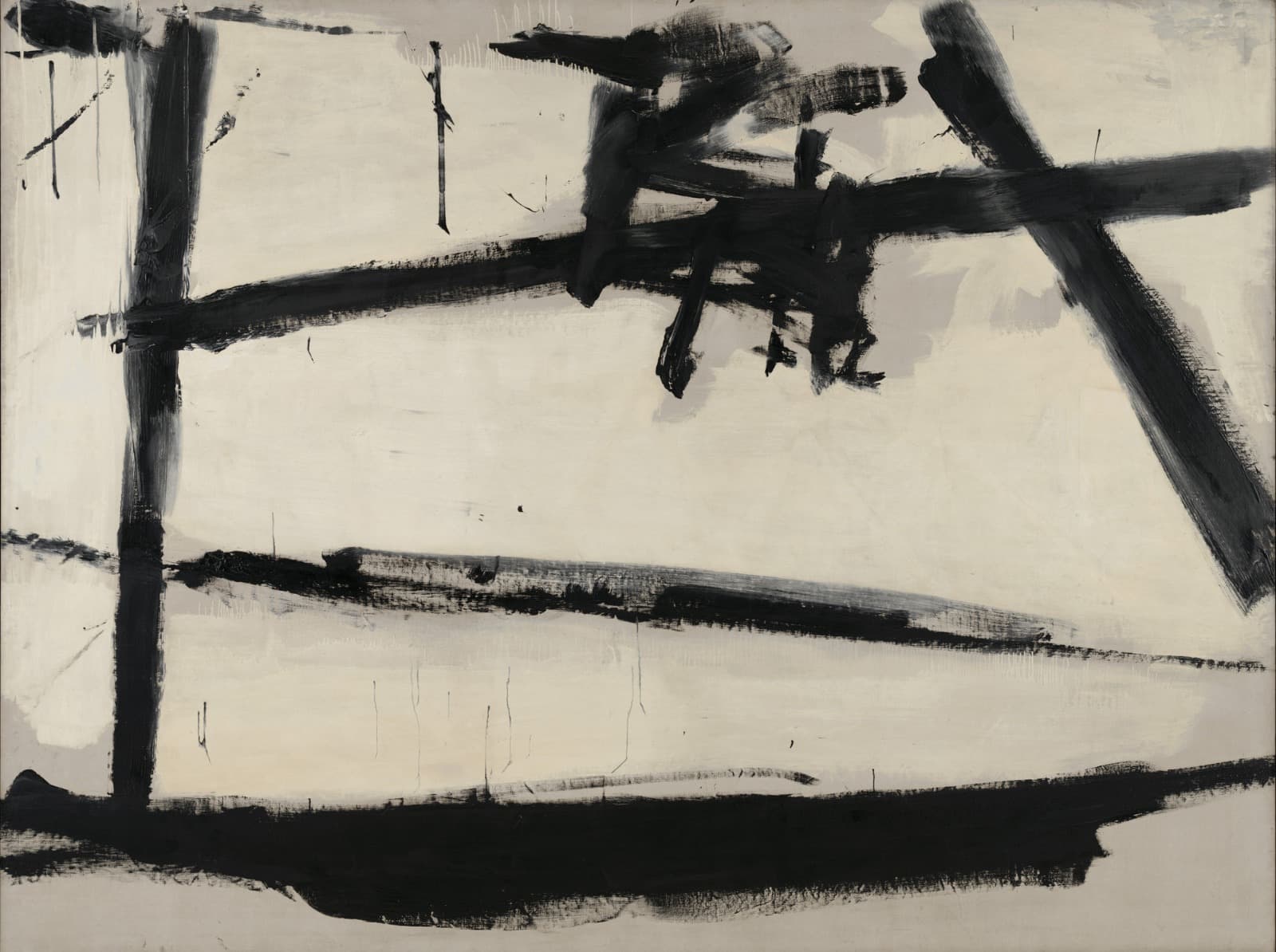
Black bars crossing a white ground, enlarged from small ink sketches so the speed and weight of the arm survive the scaling up.
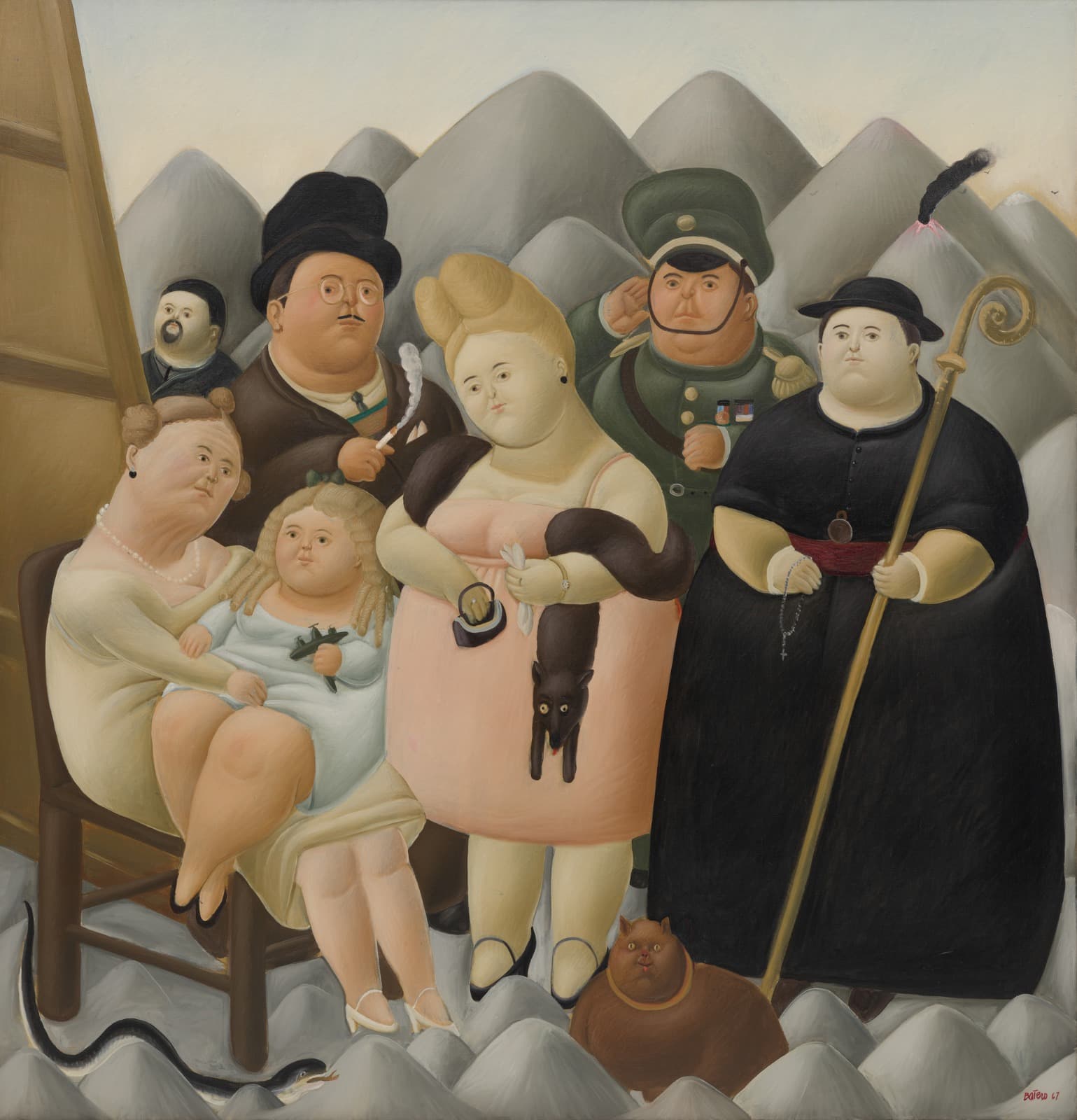
President, wife, child, bishop and general, all inflated into balloons and posed with great solemnity in front of a volcano.

Beckmann had spent the war as a medical orderly, and he looks out of the shadows here like a man finished being surprised.
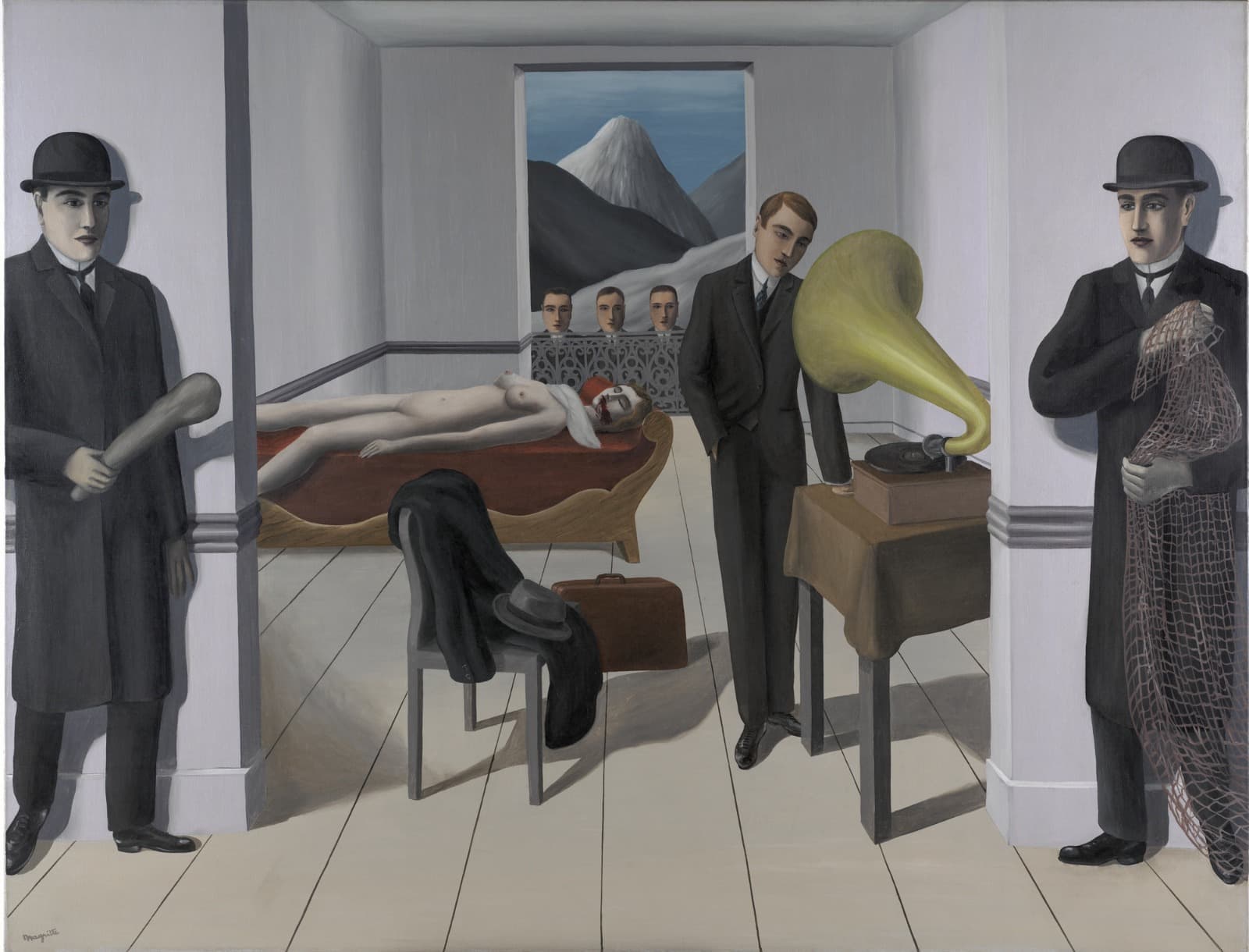
A murdered woman on a divan, a calm man listening to a gramophone, and two men with a club and a net waiting outside the door.
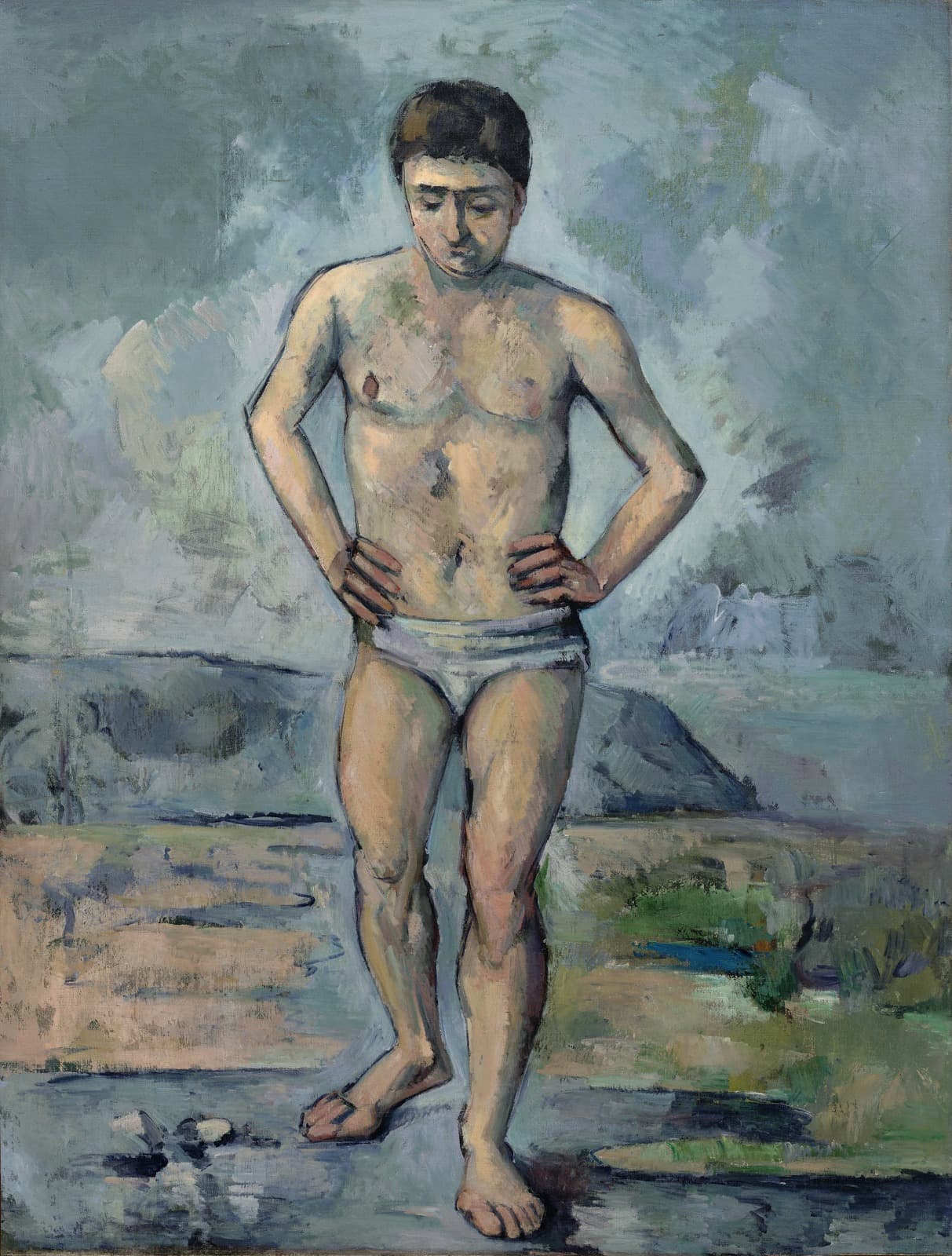
He stands in bathing trunks with his hands on his hips, built out of planes and given the same weight as a mountain.
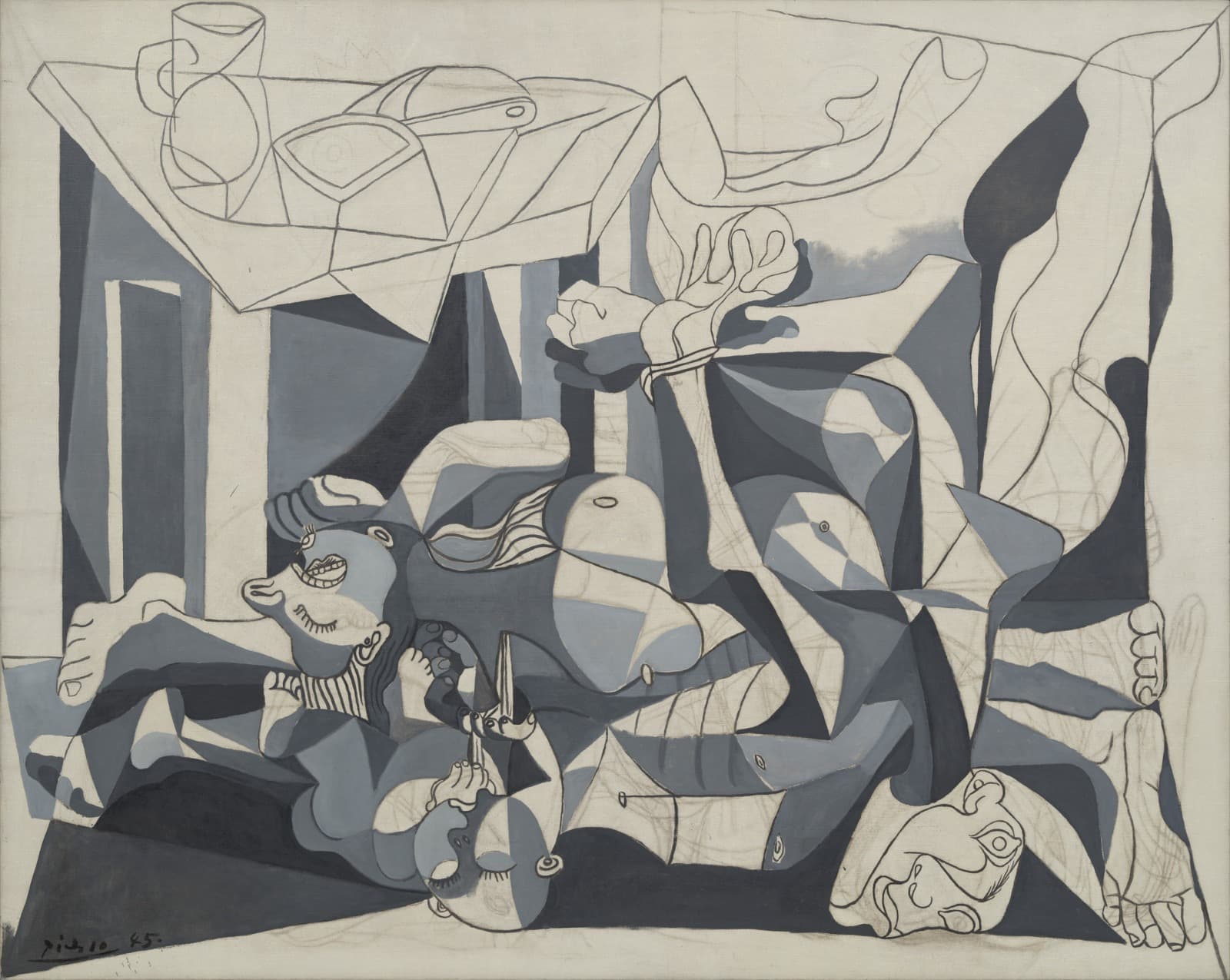
Bodies lie heaped and bound under a kitchen table, in grey. Picasso left it unfinished, painted after the camps were opened.
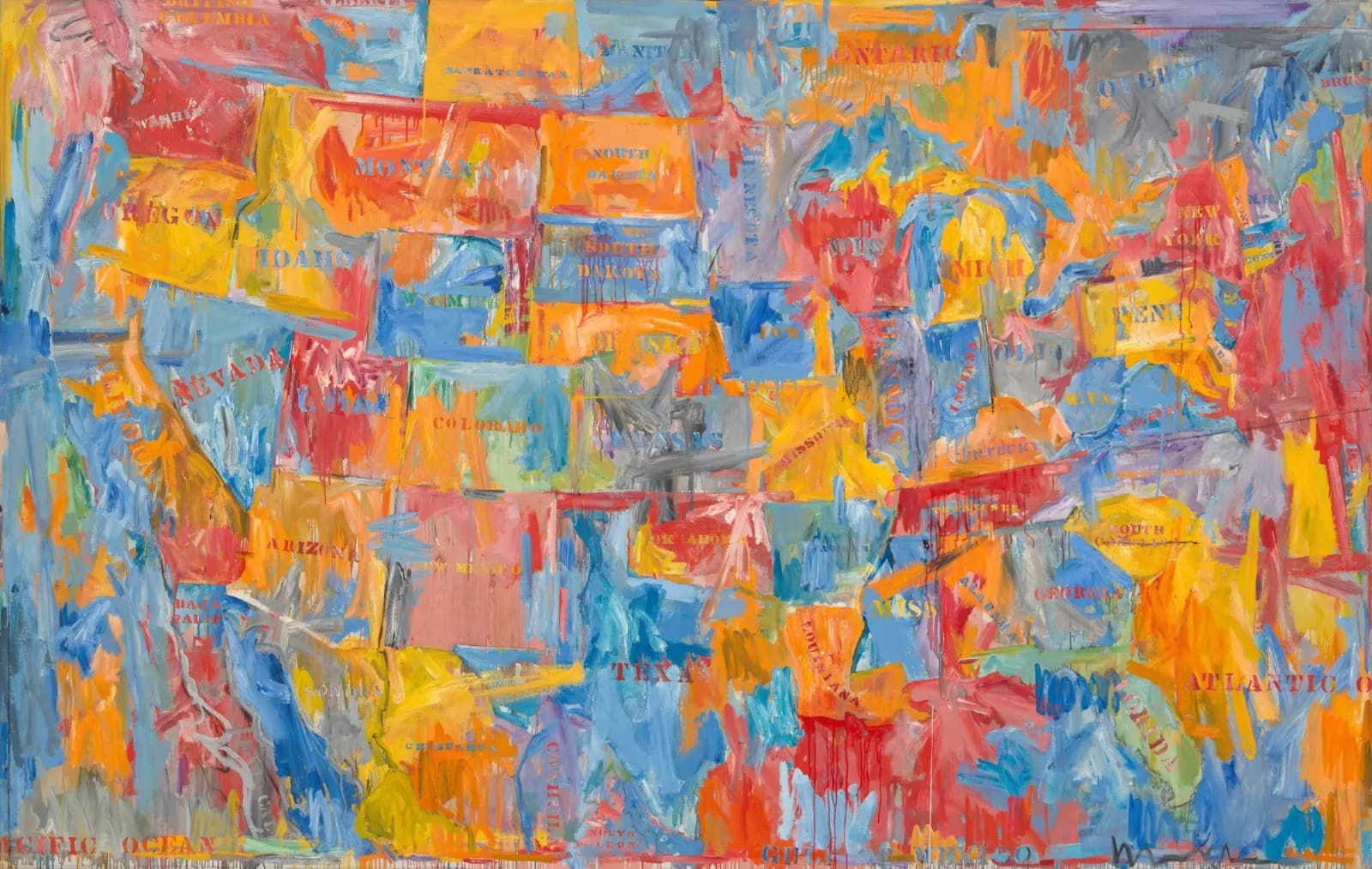
Johns stenciled the state names and then let red, yellow and blue run right over the borders. Another sign everybody already knows.

A curve of the guitar, some stenciled letters, and otherwise a lattice of brown and grey. Braque and Picasso developed this together, canvas by canvas.

The Rose Period cooling off into something graver and more archaic, the boy and horse built like figures off a Greek relief.
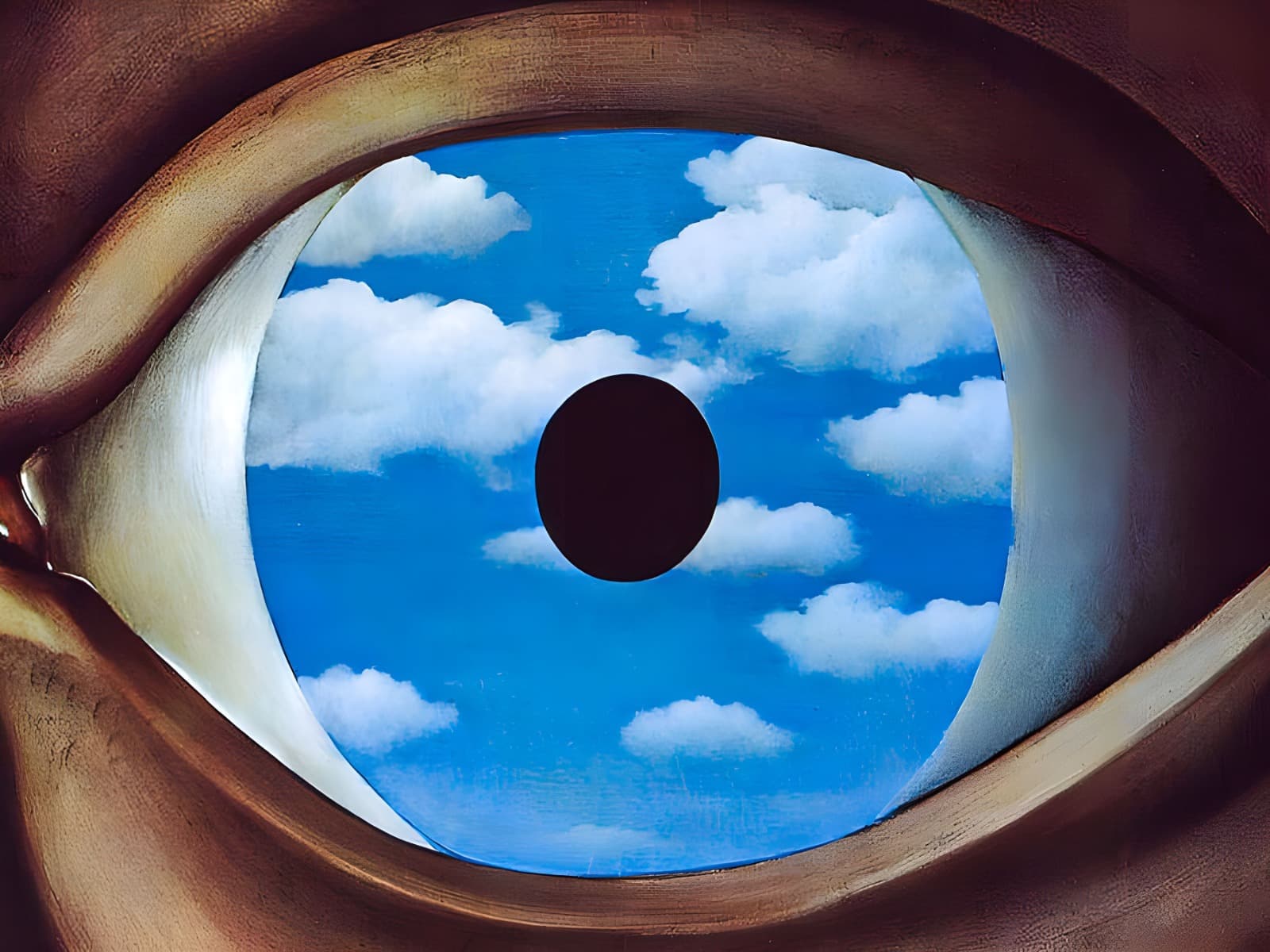
One enormous eye with a cloudy sky for an iris. Whether it is looking out or reflecting back is the question.
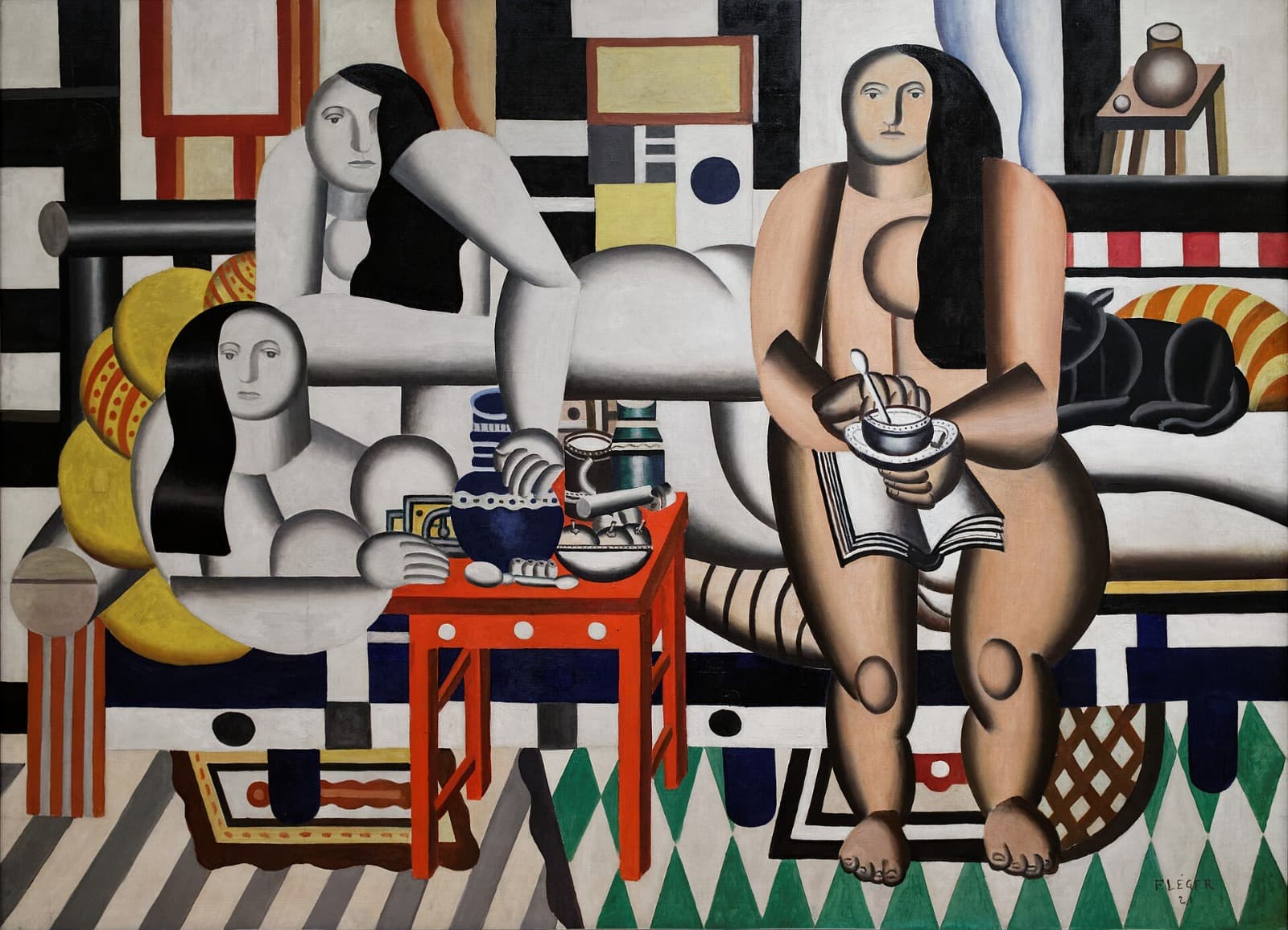
Three nudes turned on a lathe, smooth and tubular, laid out among furniture built to match. The odalisque redone for the age of the factory.
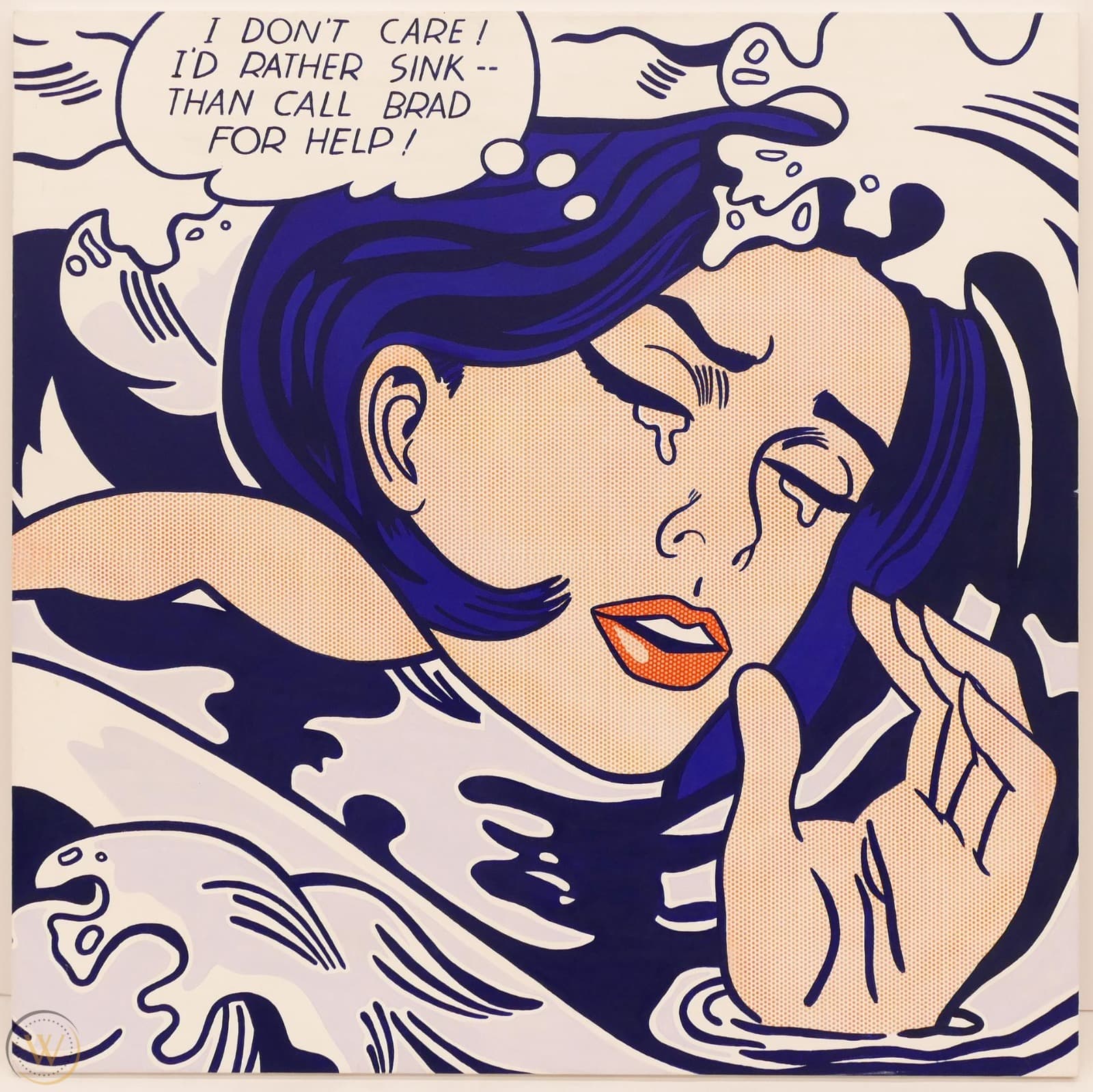
She would rather sink than call Brad. Lichtenstein took one panel of a romance comic and blew it up to the size of a serious painting.

A green-faced peasant and a cow look at each other, and the houses behind them are upside down. Chagall grew up in Vitebsk.

Monet dug the pond himself at Giverny, built the Japanese bridge over it, and then painted the place for the rest of his life.
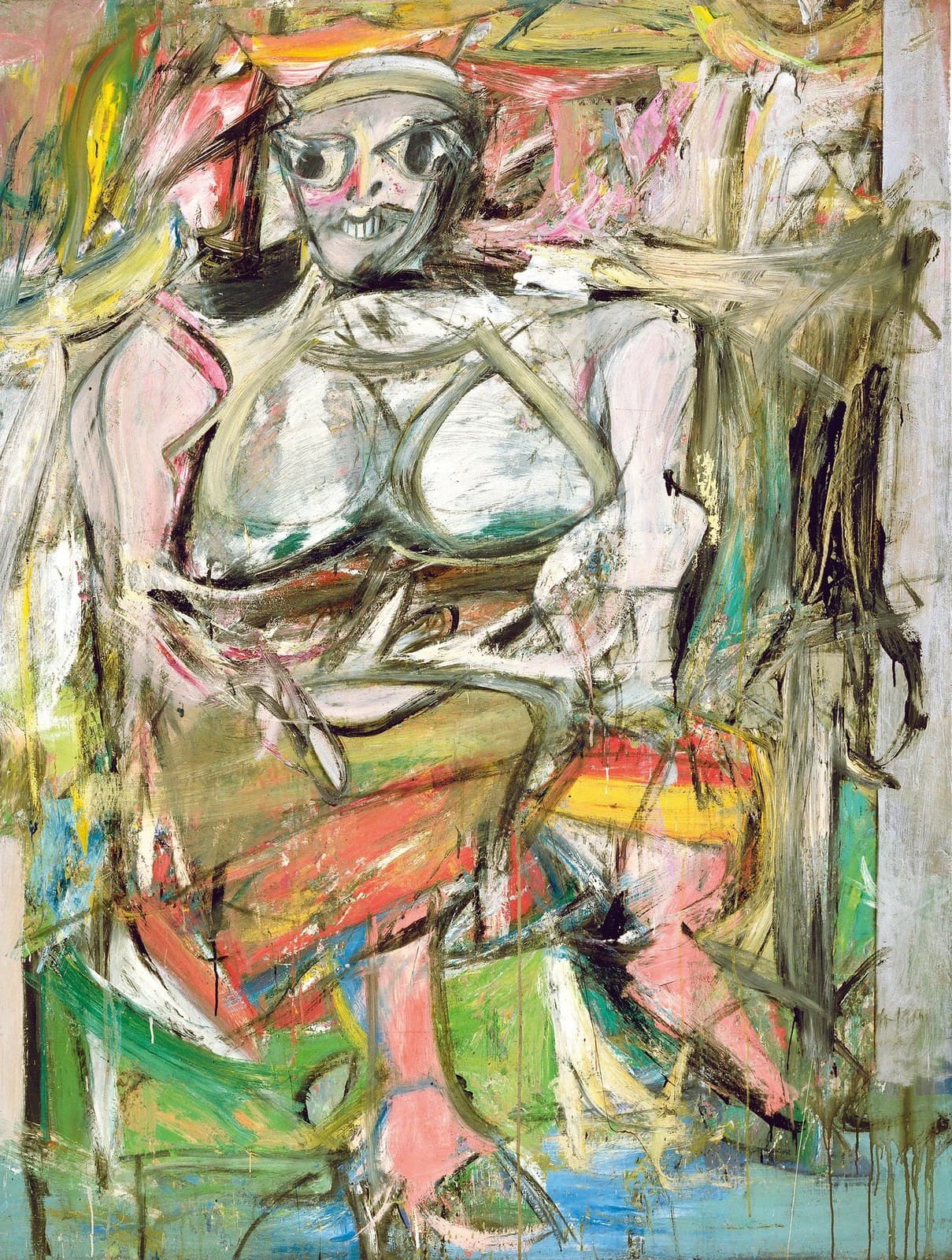
De Kooning dragged the figure back into abstract painting at the moment that was least acceptable, and worked this canvas over for two years.

Mondrian broke his own grid into blinking squares after moving to New York, where he loved the traffic and the jazz.
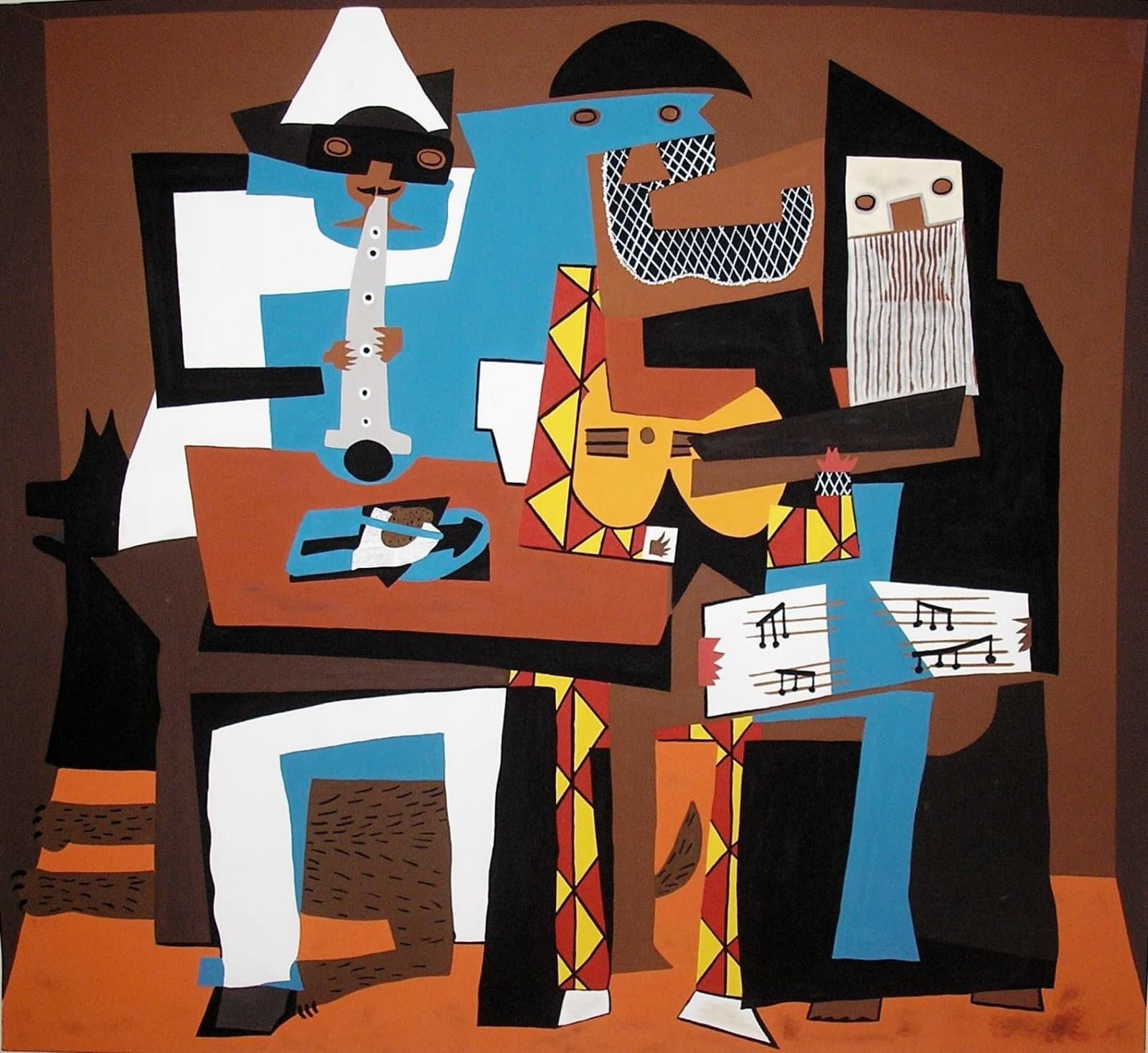
A harlequin, a Pierrot and a monk in flat interlocking shapes that look cut from paper. Synthetic Cubism at its grandest and most deadpan.

A marble head, a red rubber glove and a green ball hang together on a wall, and a train goes by in the distance.