
The Virgin and Child (Ugolino)
1312 · Louvre, Paris
The Child reaches up to grasp the edge of his mother's veil. Ugolino followed Duccio more closely than anyone else did.
★ 3.6
 skopia
The Child reaches up to grasp the edge of his mother's veil. Ugolino followed Duccio more closely than anyone else did.
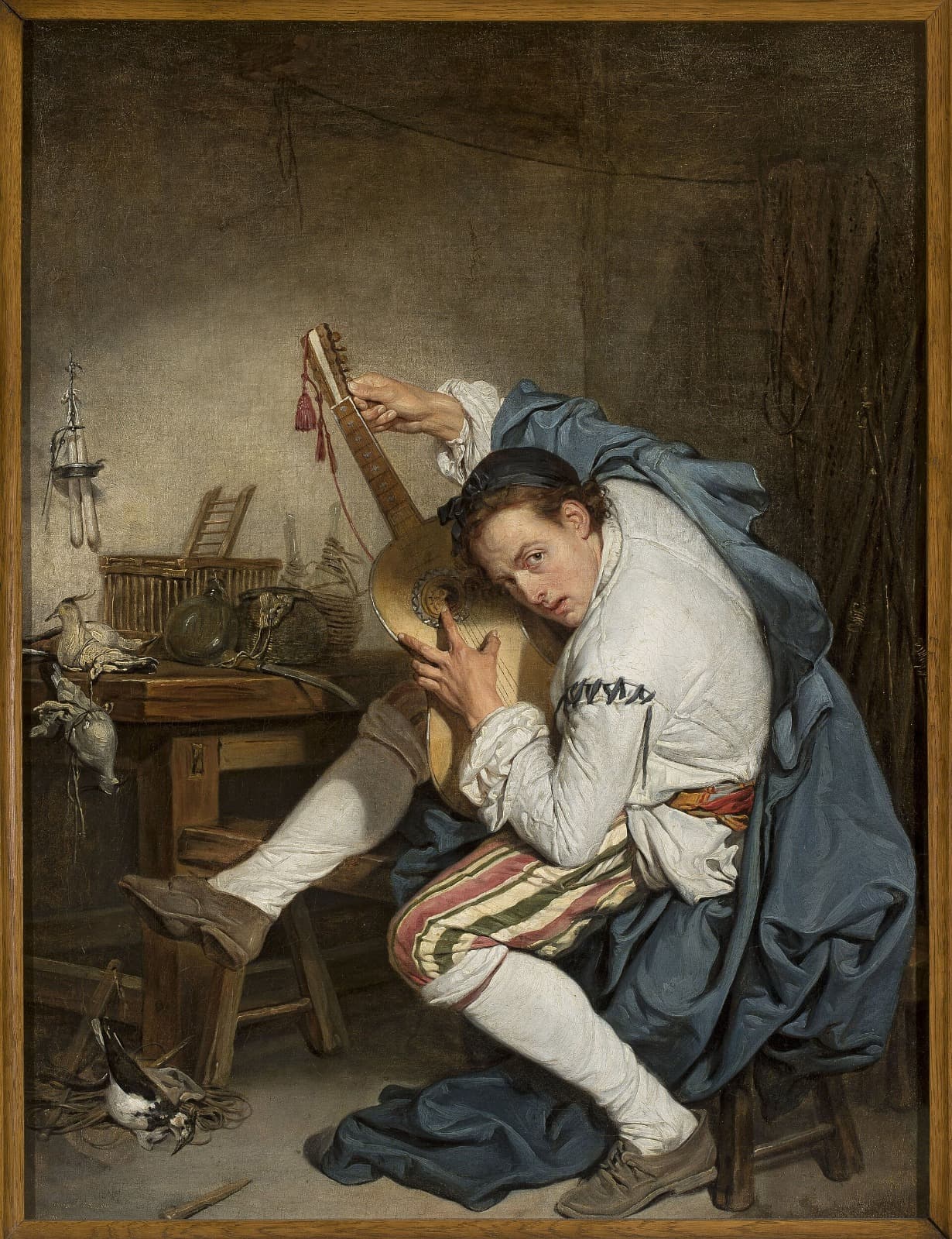
A young man glances up from his guitar mid-song. Greuze usually painted tearful moral lessons, and here he simply does not.

One of the Impressionist canvases he owned hangs on the wall behind him. Caillebotte's money and his bequest kept the movement alive.
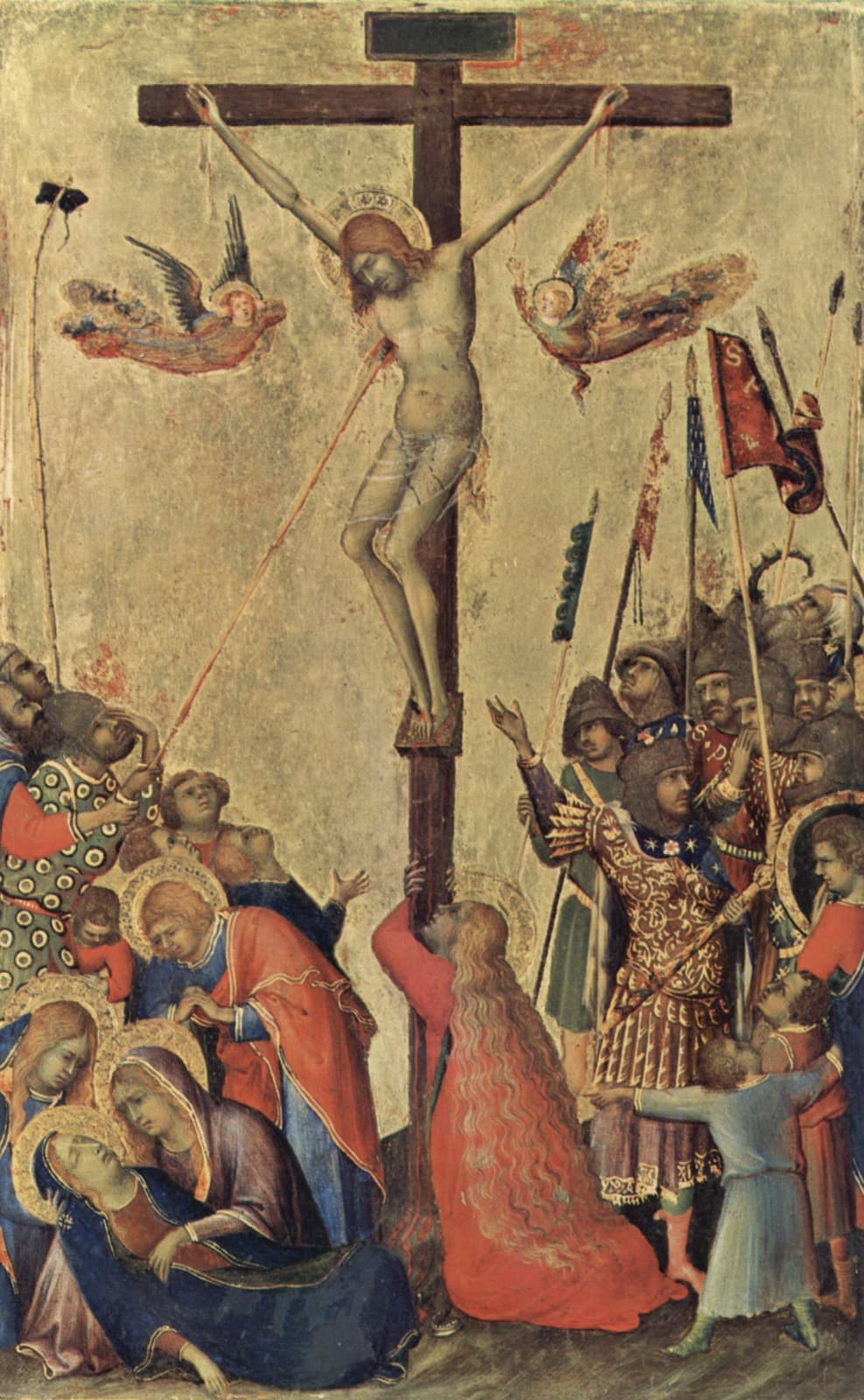
Angels dart and grieve around the cross while the Magdalene, hair loose, kneels to embrace its foot. A leaf from a travelling altarpiece.

Elizabeth sinks down and clasps the pregnant Mary. Ghirlandaio ran the busiest workshop in Florence, and a boy named Michelangelo apprenticed there.

Coins and cards on the table and a great deal of sidelong glancing. Somebody is being cheated, and the intrigue may not be financial.

Every apostle is named in gold and Judas sits apart with a darkened halo, which makes the panel a teaching aid as much as a picture.

The shepherd carries the twins home to his wife with the she-wolf still nearby. Rome's founding myth as a foundling story.

Bacon used the shape of the cross as an armature for meat rather than religion, with a snarling animal fixed on top.

The angel comes down to stop the knife, in the deep reds and blues Chagall used for his late cycle of biblical paintings.

Christ in vivid red is hauled by a rope through the gate of a white, many-towered Jerusalem while children scamper at the edge.
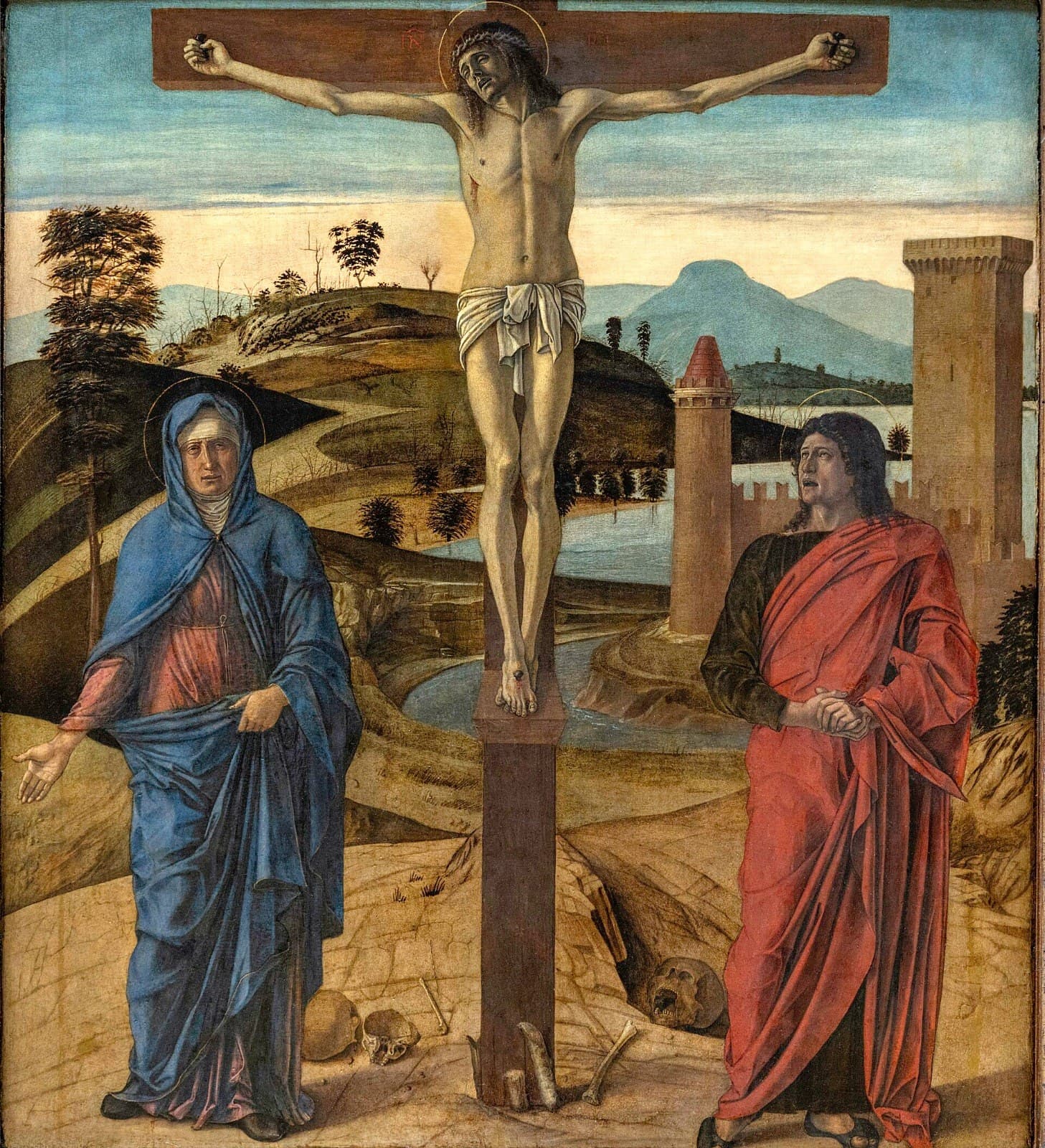
Only the Virgin and Saint John below the cross, and a river winding past a walled town. Early Bellini, carrying feeling in the light.
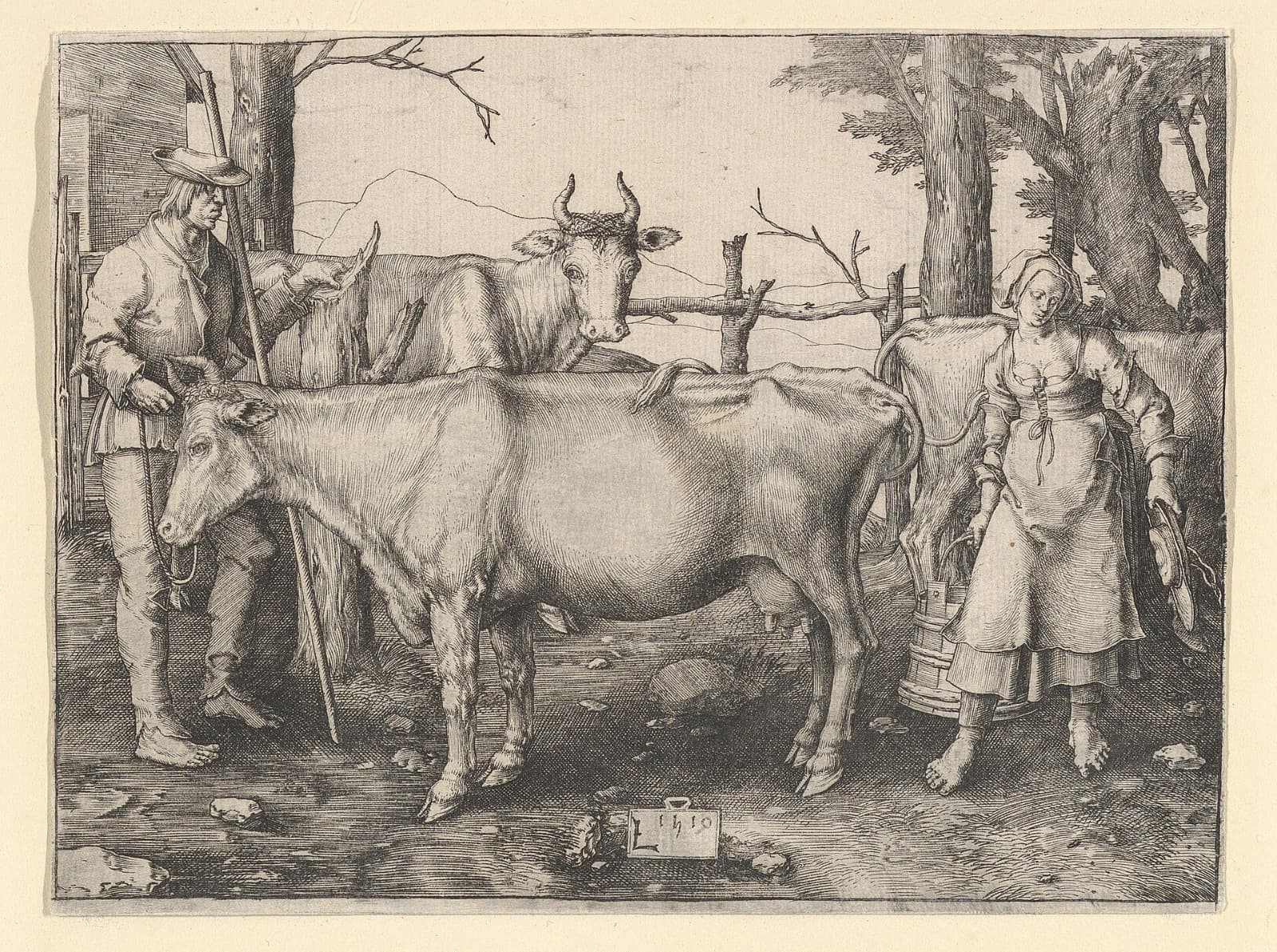
A milkmaid, a herdsman and two cows, and almost nothing happening. One of the first prints to take peasants as a subject worth the burin.
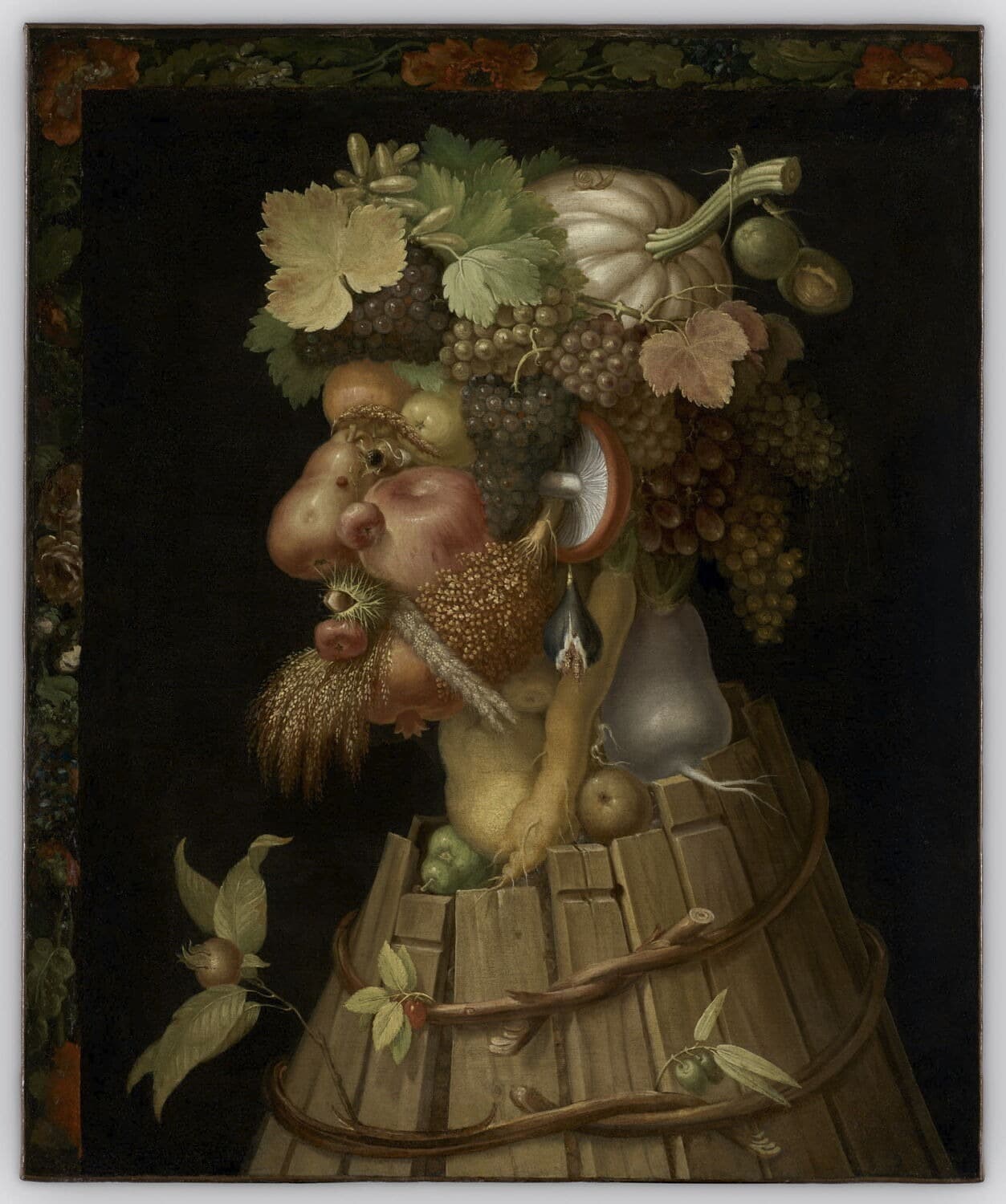
A head of pears and pomegranates crowned with grapes, sitting in a split wooden barrel bound with willow hoops. The season of the wine harvest.
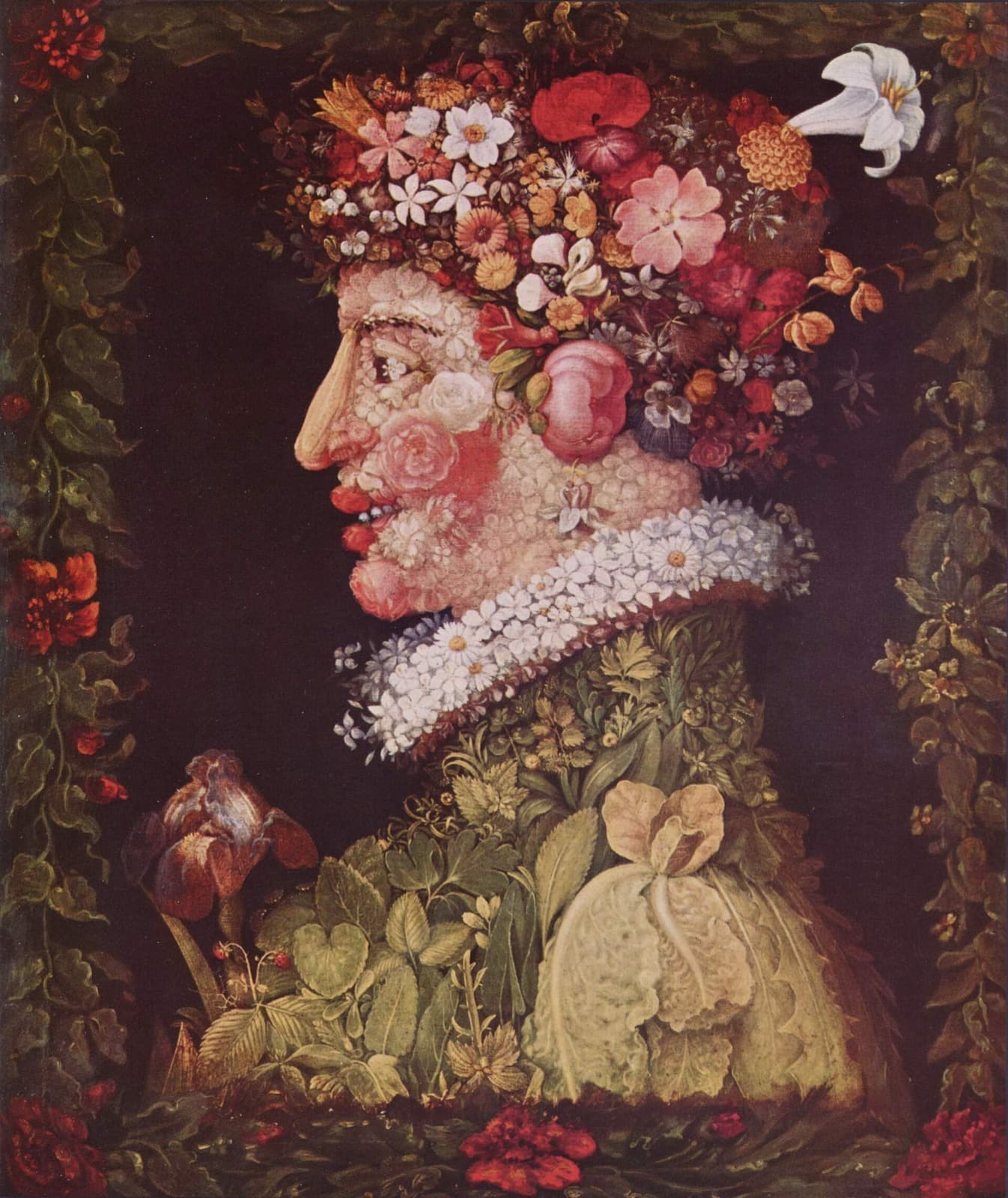
Rosebud lips, a lily for a nose, and hair made of tulips and peonies. The freshest and most delicate of the four seasons.
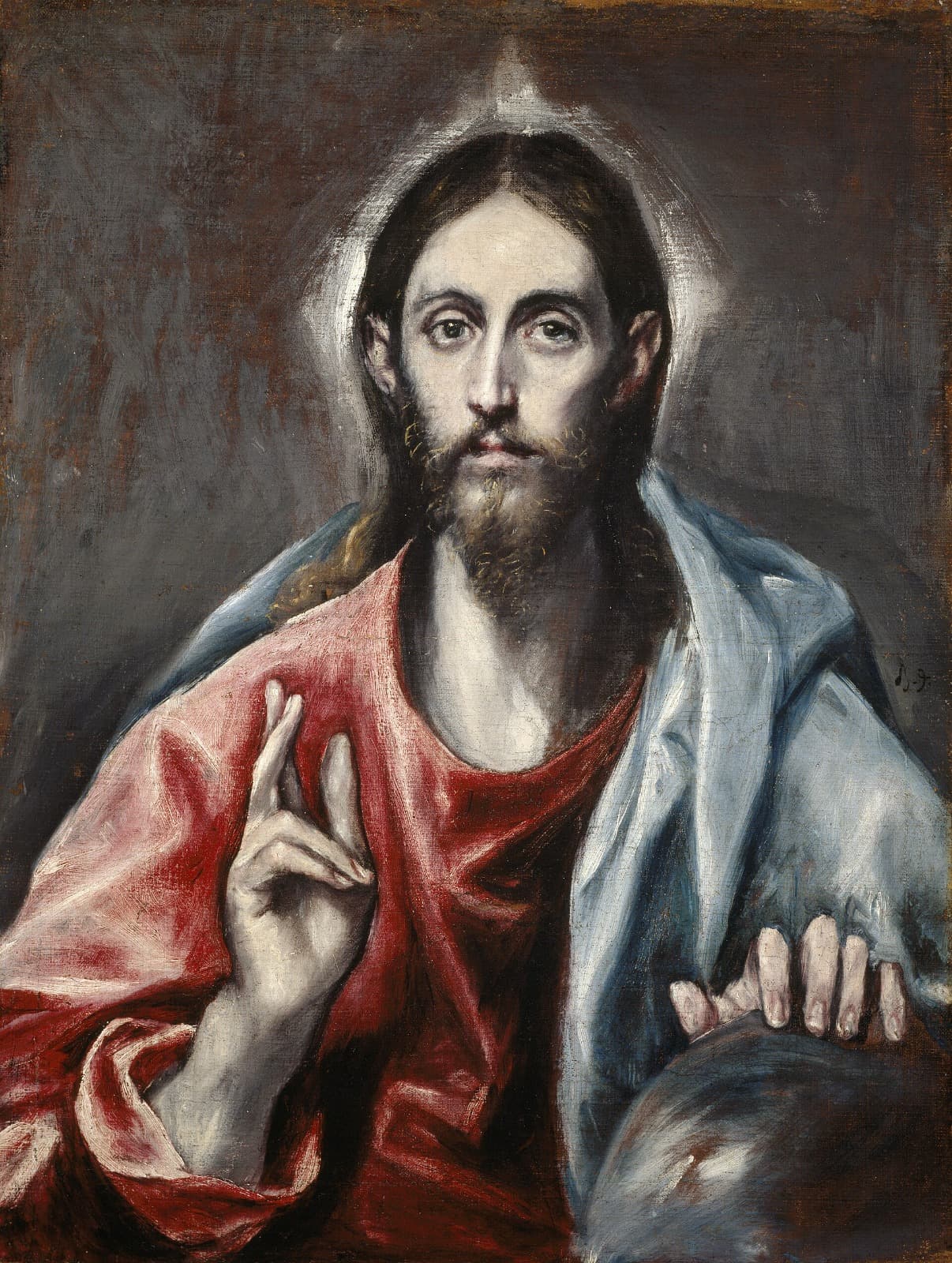
Two fingers raised in a gesture reaching back to Byzantium, one hand on a crystal orb, the face long and sorrowful and unmistakably his.

A few sweeps of brush and brown ink, most of the paper left bare, and the whole weight of a sleeping head is there.

An old man on two sticks, with Aun aprendo written underneath. Goya drew it in exile and failing health, near the end.

Degas turned from dancers to financiers, catching heads bent close over documents in the crush of the Paris exchange.
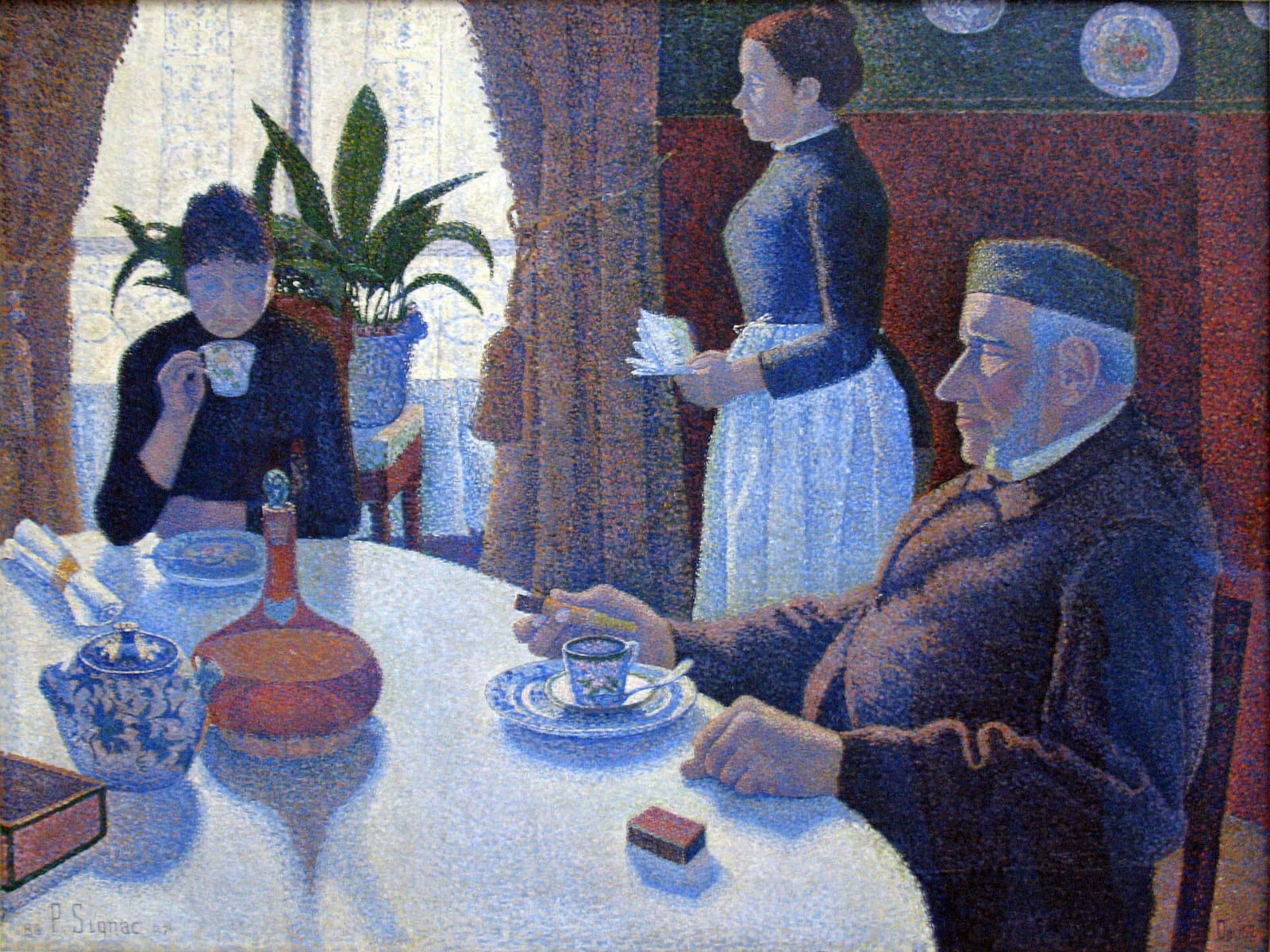
A family at breakfast, posed so stiffly in the glare that the comfortable room turns faintly airless. Every surface is built from dots.