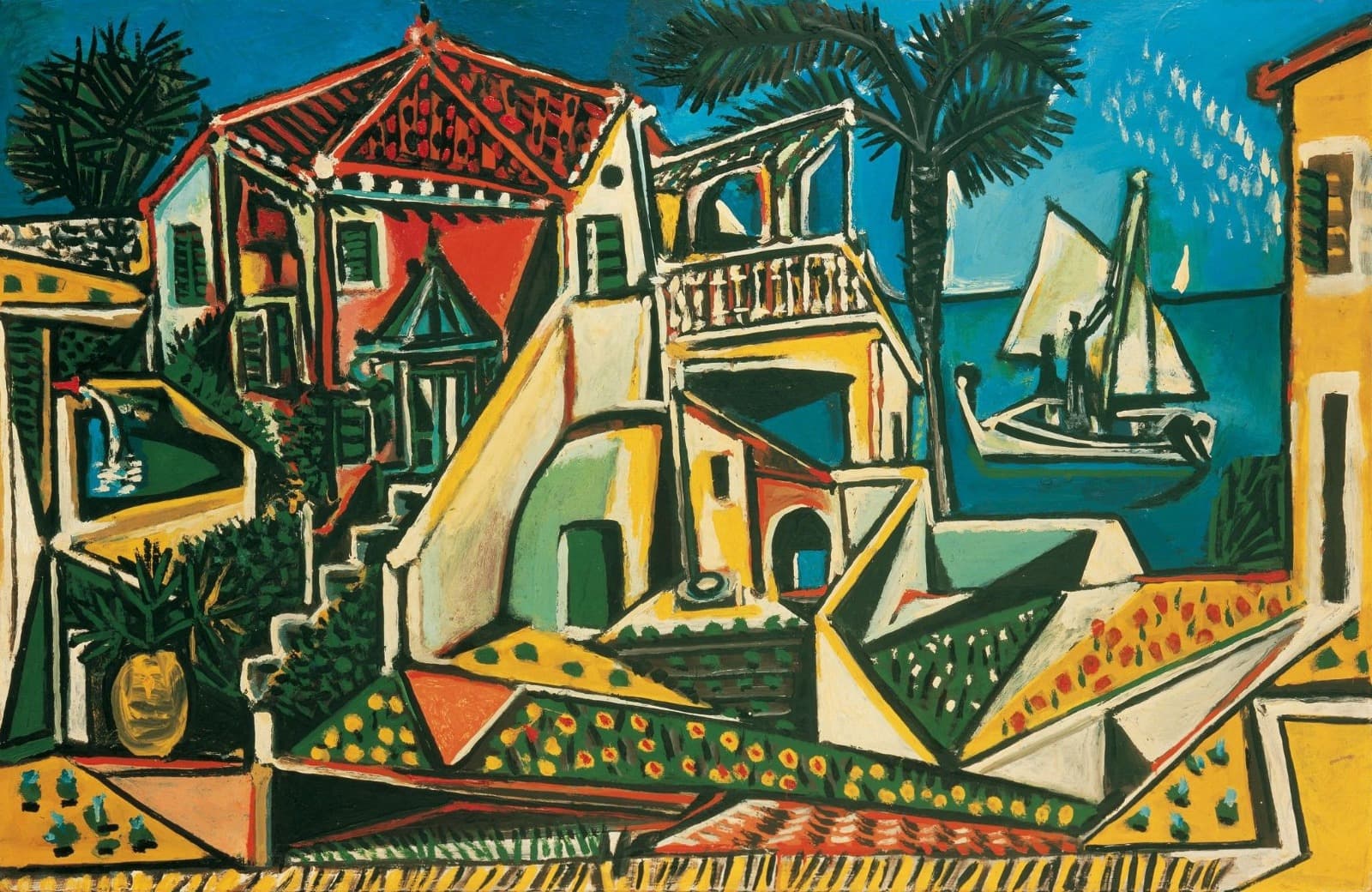
Mediterranean Landscape
1952 · Albertina, Vienna
The whole coast reduced to a few flat zones of color and some quick line. Picasso old, settled in the south, and enjoying himself.
★ 4.4
 skopia
The whole coast reduced to a few flat zones of color and some quick line. Picasso old, settled in the south, and enjoying himself.
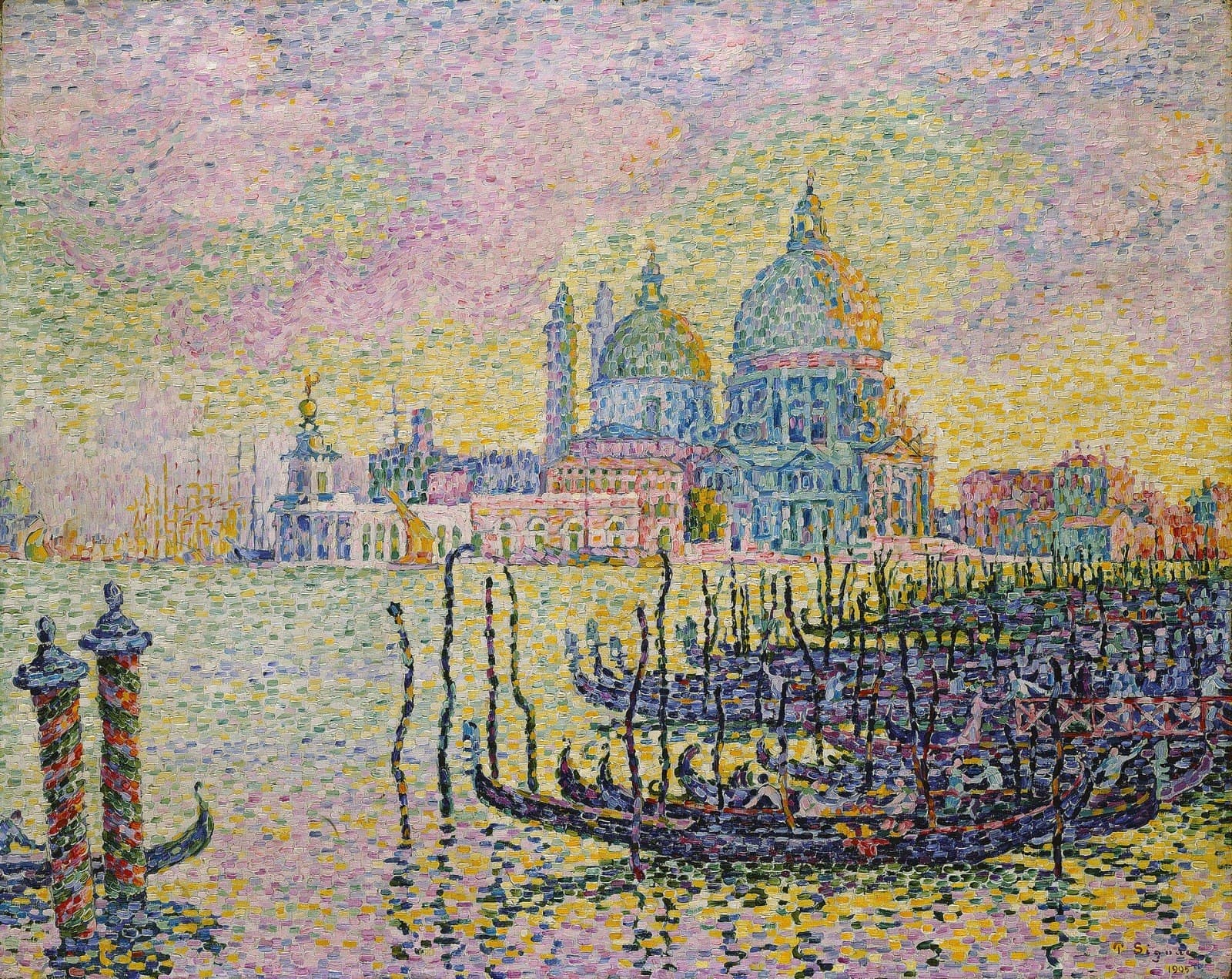
Gondolas on water that has shattered into pink, blue and gold. Signac took the divisionist dot to the most painted view in Europe.

Hot pinks and oranges laid on freely, a year before Cézanne and Picasso's Demoiselles sent Braque off toward Cubism instead.
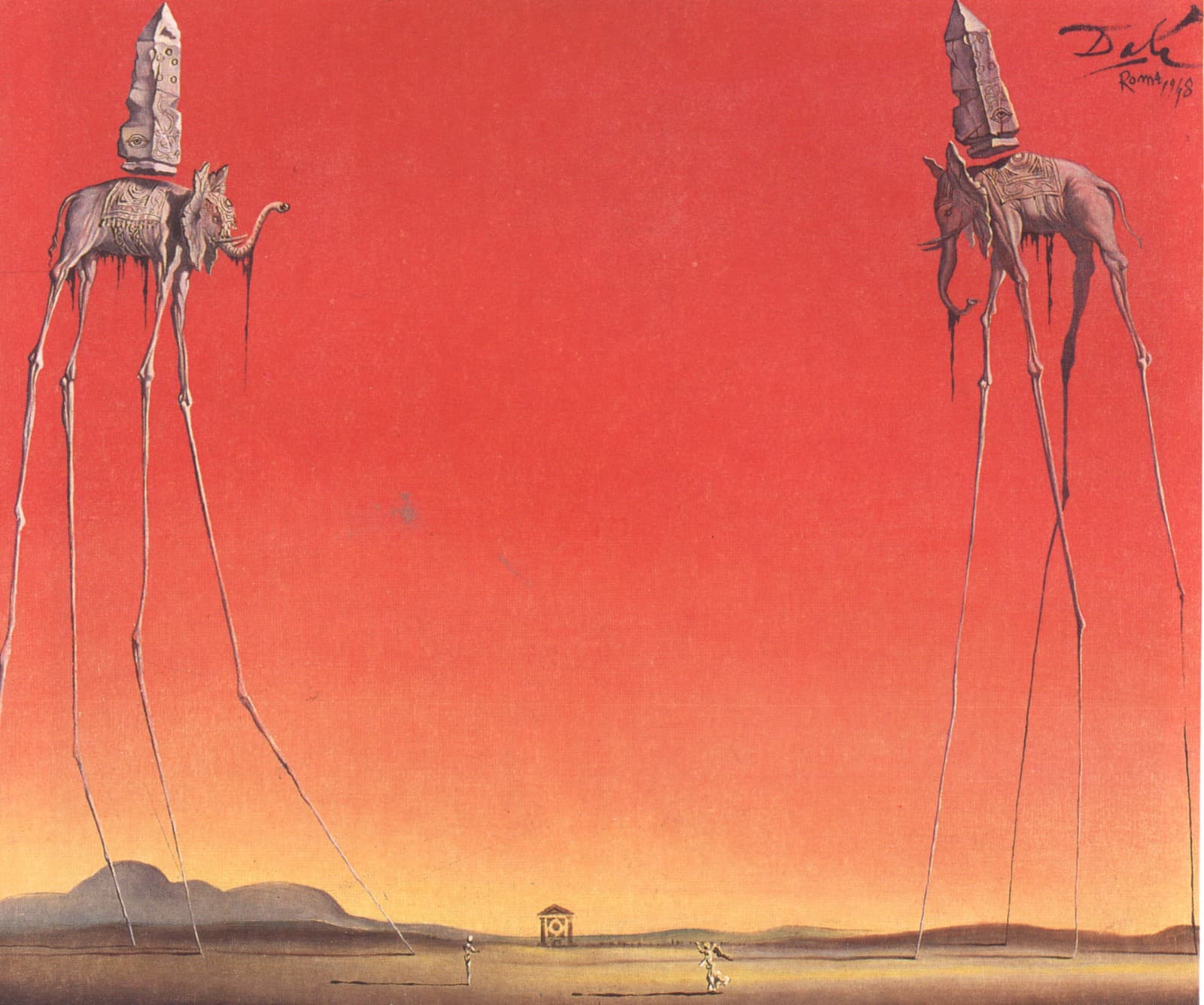
Two elephants carrying obelisks on legs far too spindly to hold them, which is the entire effect and it works.
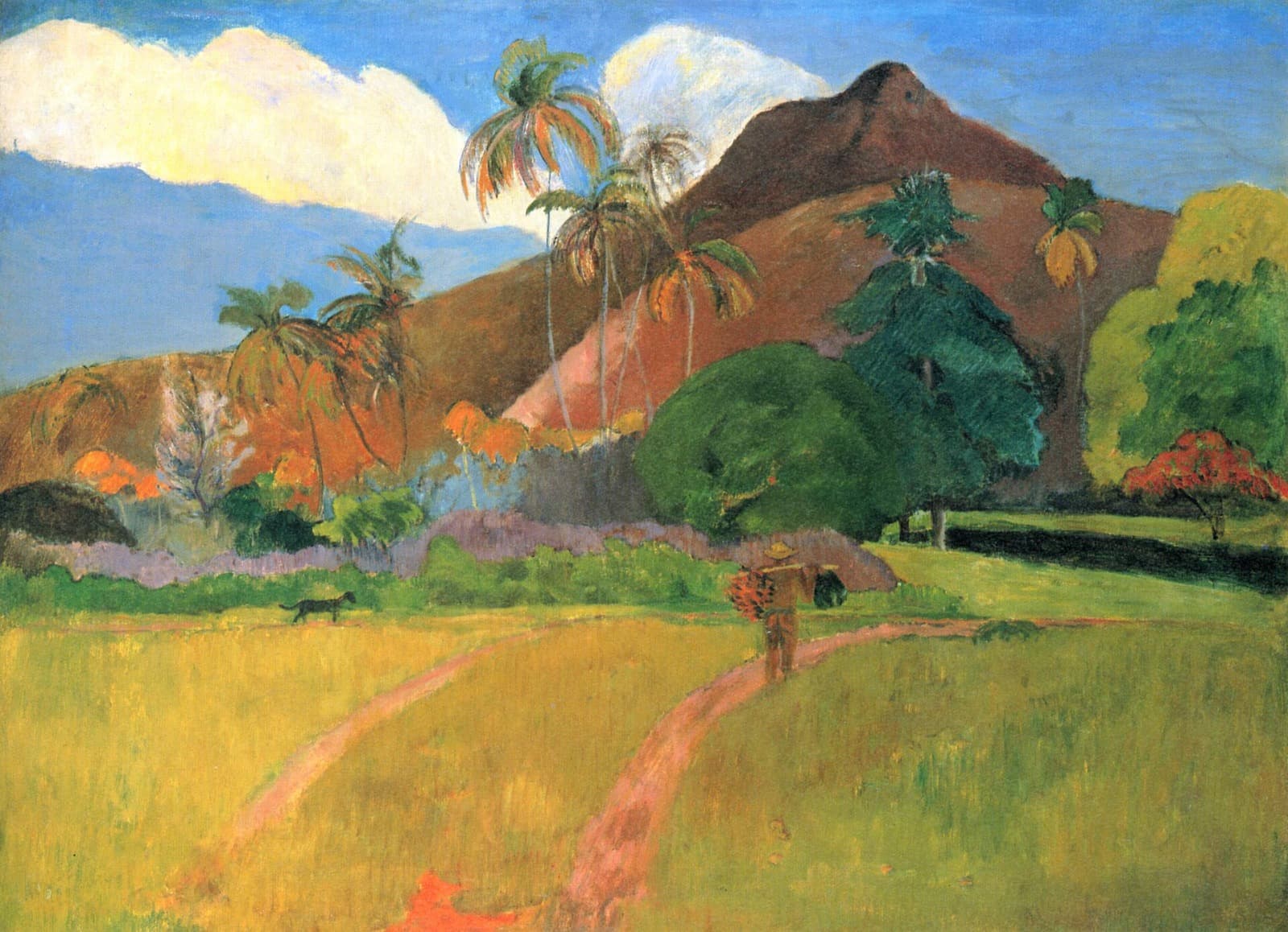
Green and rose slopes flattened into bold shapes, with rather less interest in what the island actually looked like than in the color.
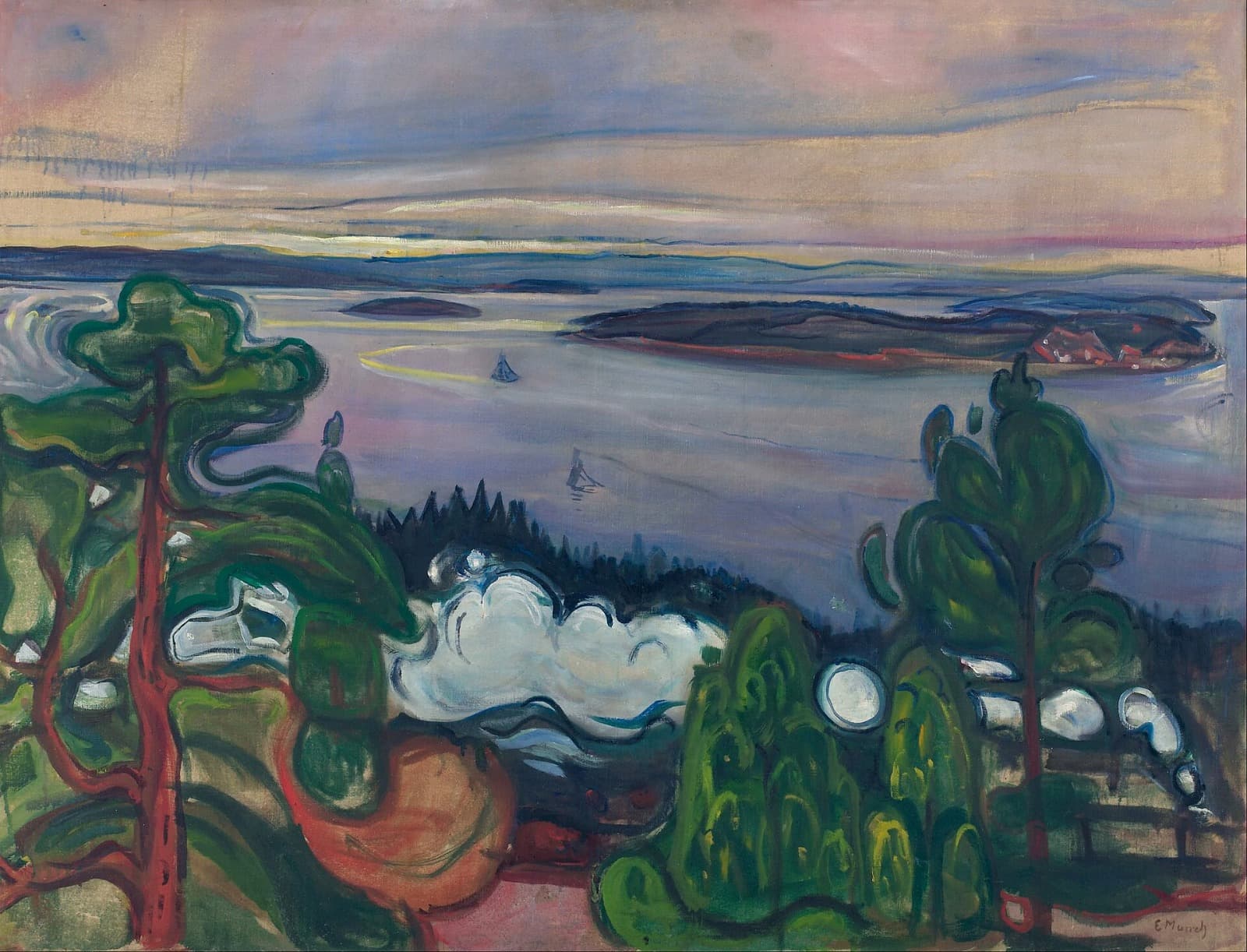
One puff of steam drifts across a curving shoreline, the modern world putting a small mark on a landscape that had none.

Boats and masts broken into tilting green and brown planes, painted while Braque and Picasso were building Cubism out of Cézanne.

Dalí went back to his own melting watches and broke the ground beneath them into floating bricks, for the atomic age.

Plain village houses on a hillside, built in solid earthy blocks. Pissarro refused to prettify the countryside and gave it structural weight instead.

Travelers go about their day along the road and Fuji sits pale behind them, near and far balanced with Hiroshige's usual quiet.

Three swans on a lake, and in the reflection the necks have become trunks and the trees have become legs.
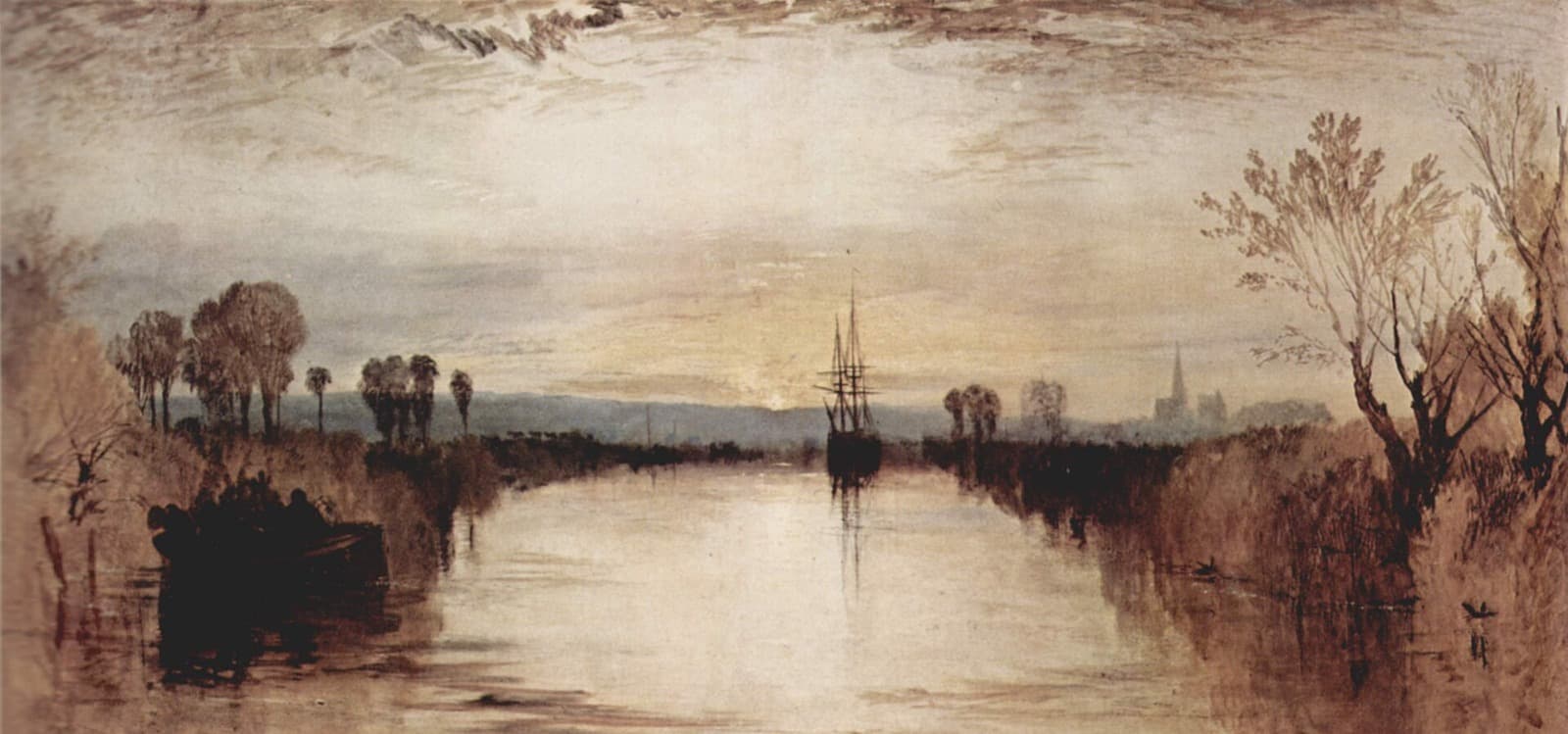
Masts stand black against a sky going from gold to soft blue, and almost nothing else in the picture is solid.

Peasants and houses rendered as polished metal cylinders. Malevich was three years away from painting a black square and stopping.

Hundreds of tiny figures skating, sledging and falling over on one frozen river. Avercamp was deaf and mute and known as the mute of Kampen.

The hills buckle and heave in the same thick strokes he gave his skies, so that the rock ends up moving too.

Splintered stumps and shell craters under a cold sun, and Nash gave it that title on purpose, as an official British war artist.

Ernst made the eaten-away textures by pressing and lifting paint, working on it while fleeing occupied Europe for America.

The eye sweeps from pines on the cliff across Suruga Bay to Fuji, a whole vista folded into a few flat planes of color.
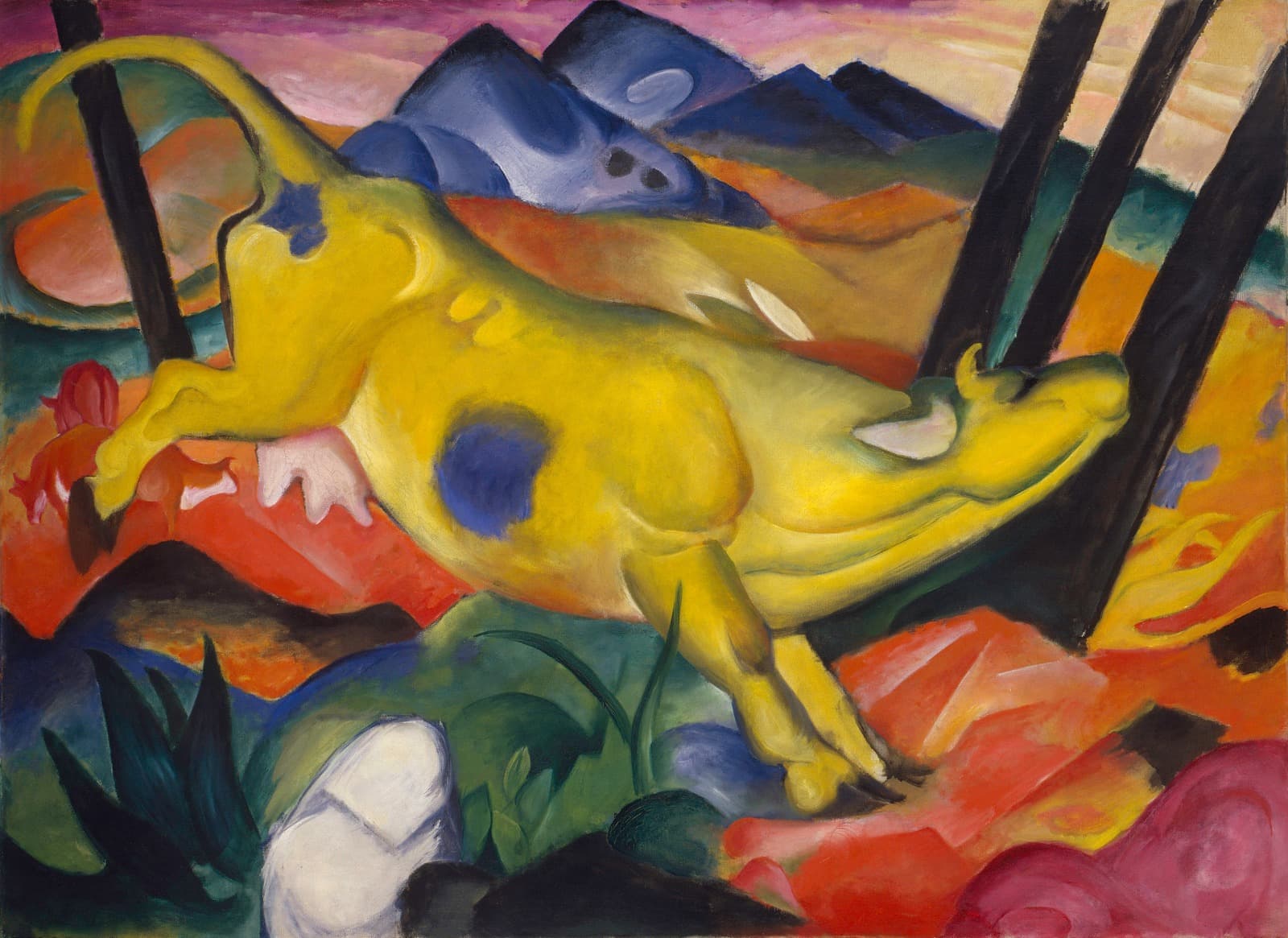
Marc used yellow for whatever was gentle and joyful, and this cow is kicking its legs out across the hills for the pleasure of it.
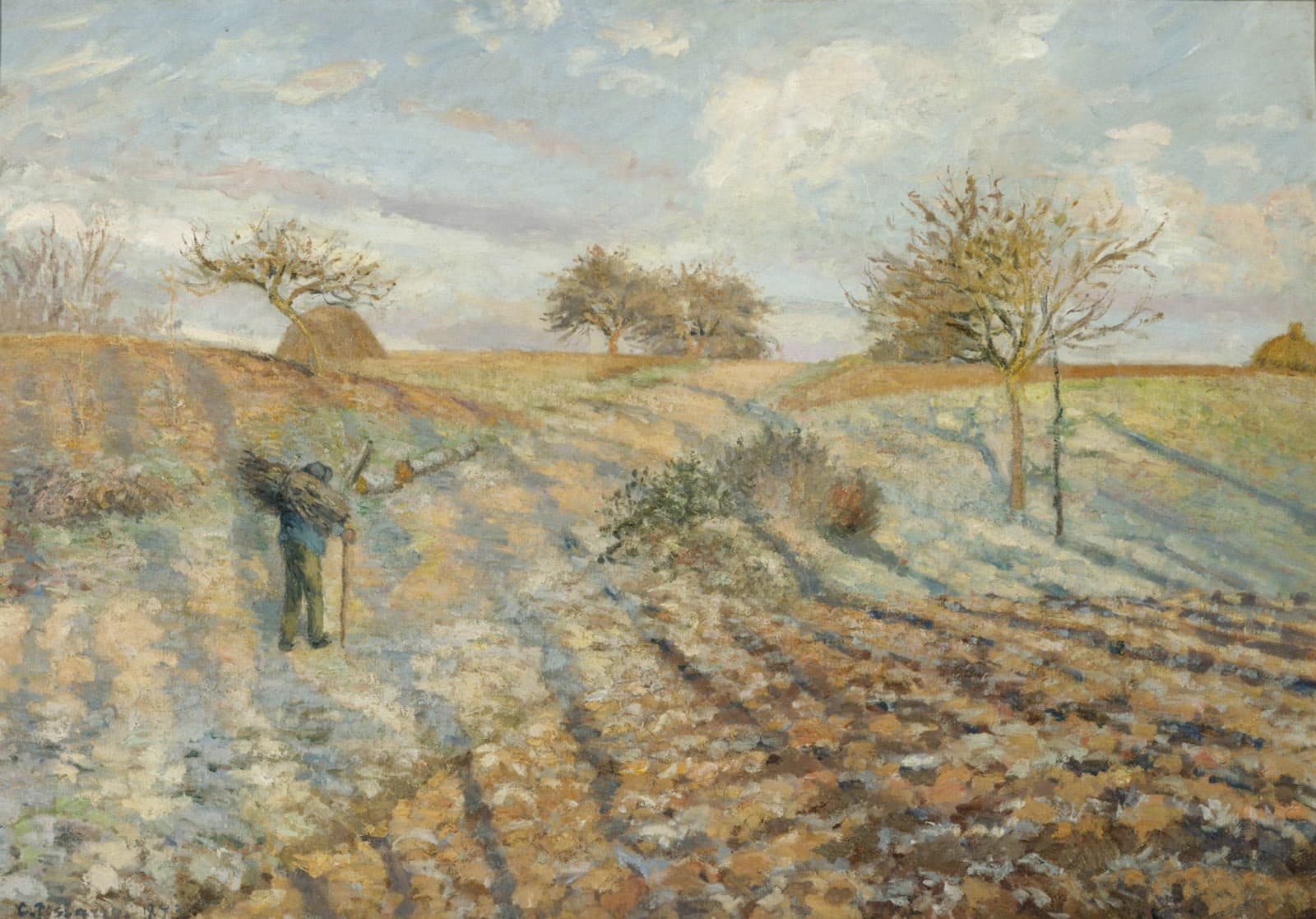
Critics at the first Impressionist show in 1874 said it looked like palette scrapings. The furrows are streaked with blue, violet and gold.