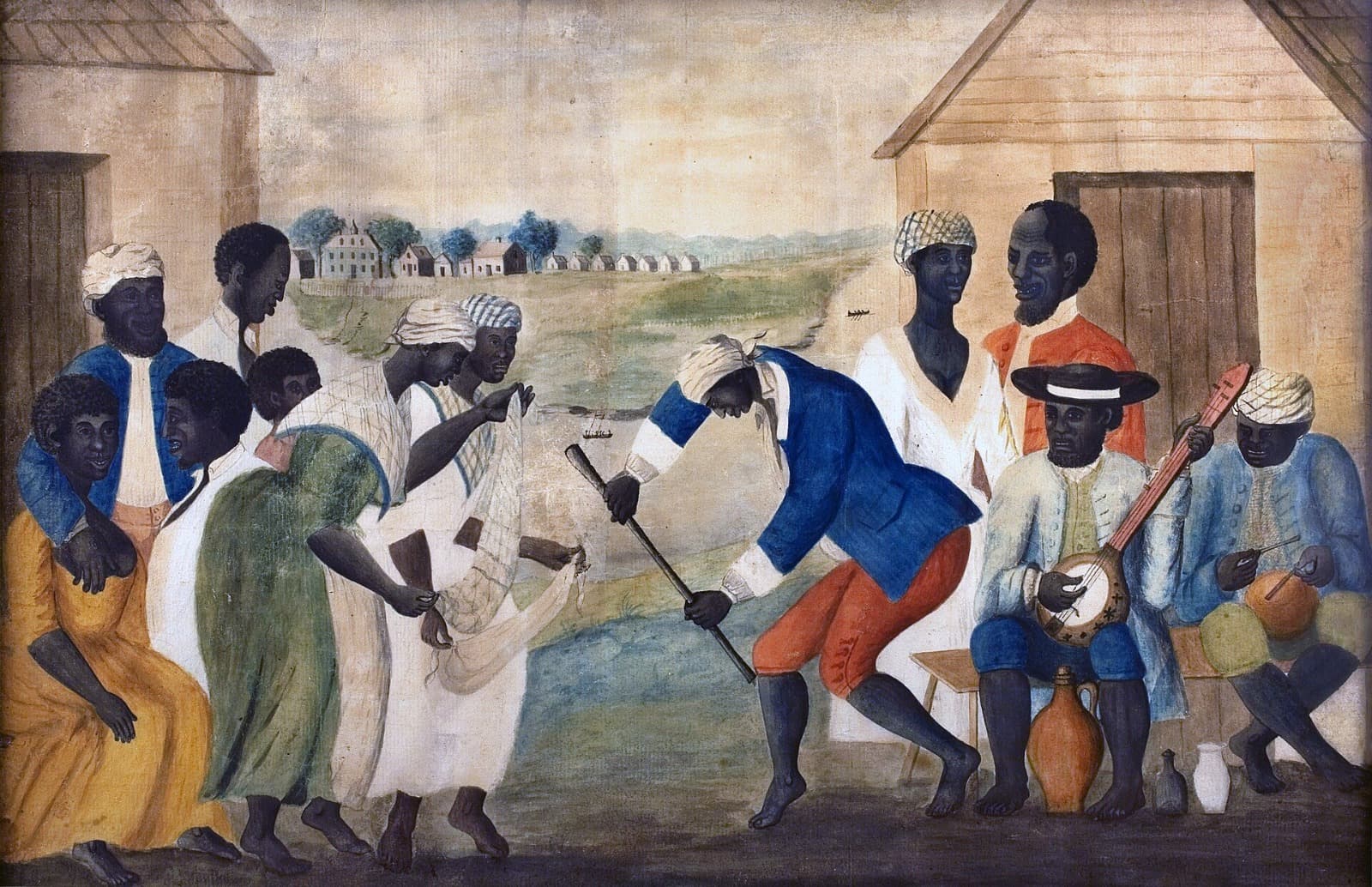
The Old Plantation
1795 · Abby Aldrich Rockefeller Folk Art Museum, Williamsburg
Enslaved people dancing and making music beside their cabins, with African instruments and dress. Attributed to a South Carolina slaveholder.
★ 4.3
 skopia
Enslaved people dancing and making music beside their cabins, with African instruments and dress. Attributed to a South Carolina slaveholder.

Coins and cards on the table and a great deal of sidelong glancing. Somebody is being cheated, and the intrigue may not be financial.
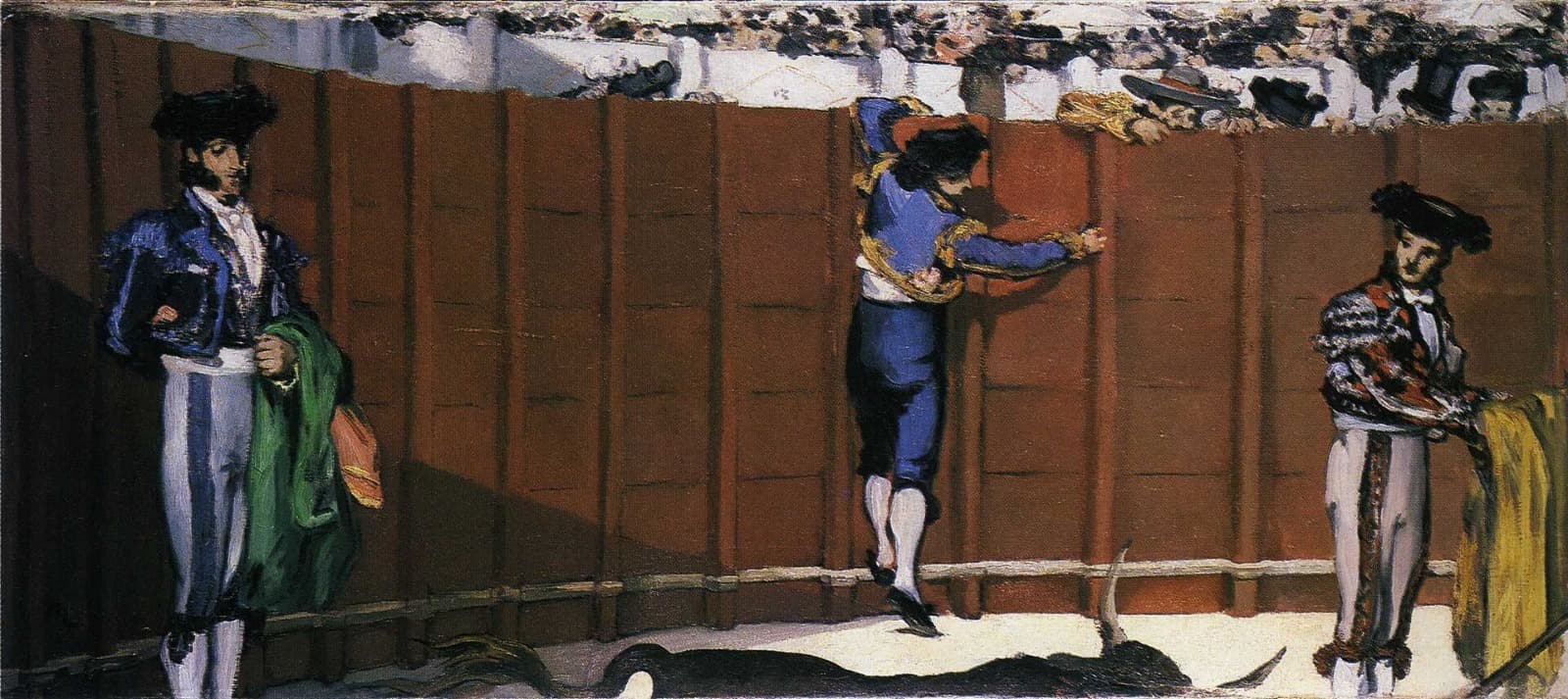
Manet cut up the original canvas because he was unhappy with it, and this is one of the surviving pieces.
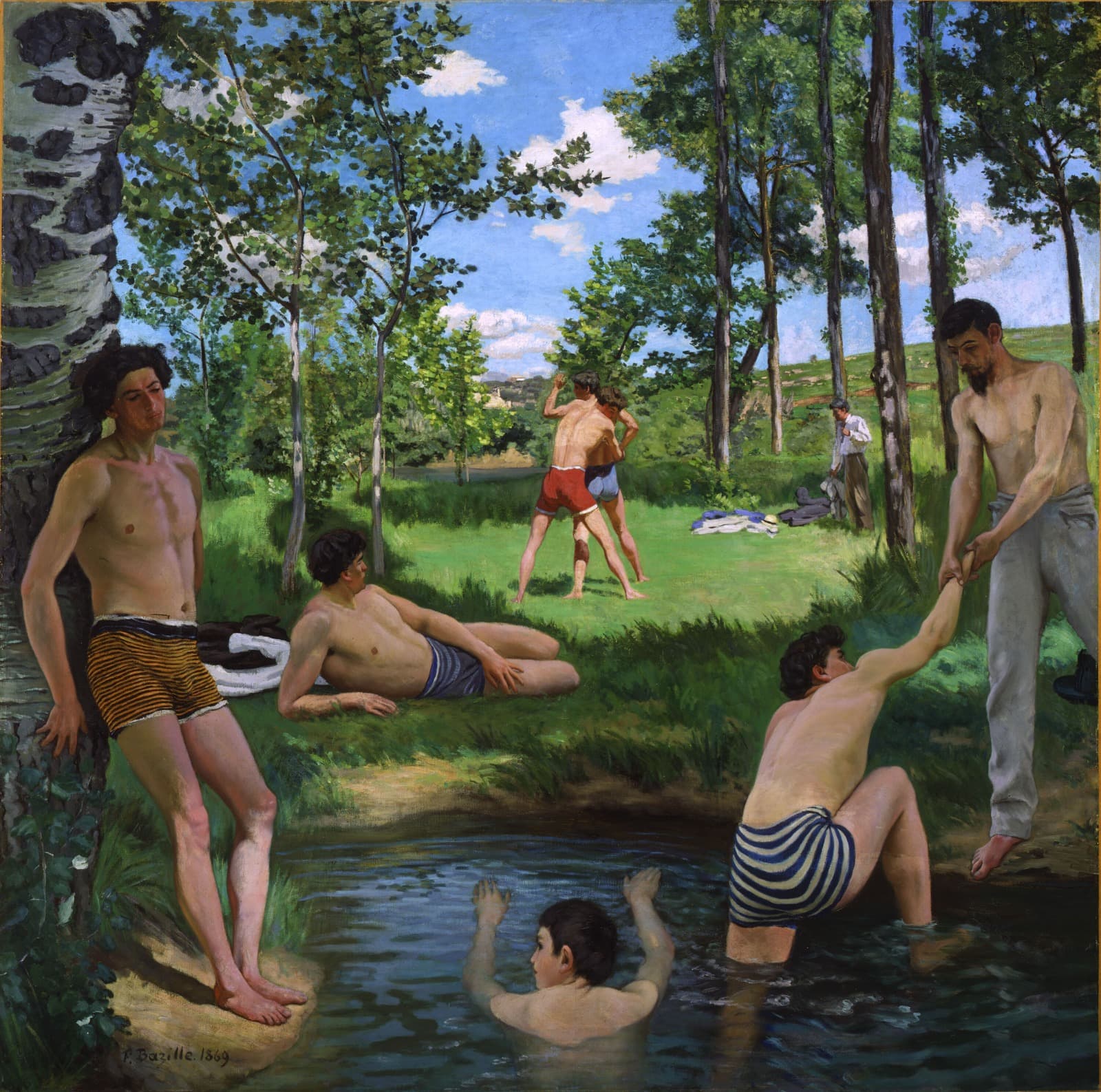
Young men lounging on a riverbank in dappled light, the oldest subject in painting given ordinary modern bodies and modern poses.
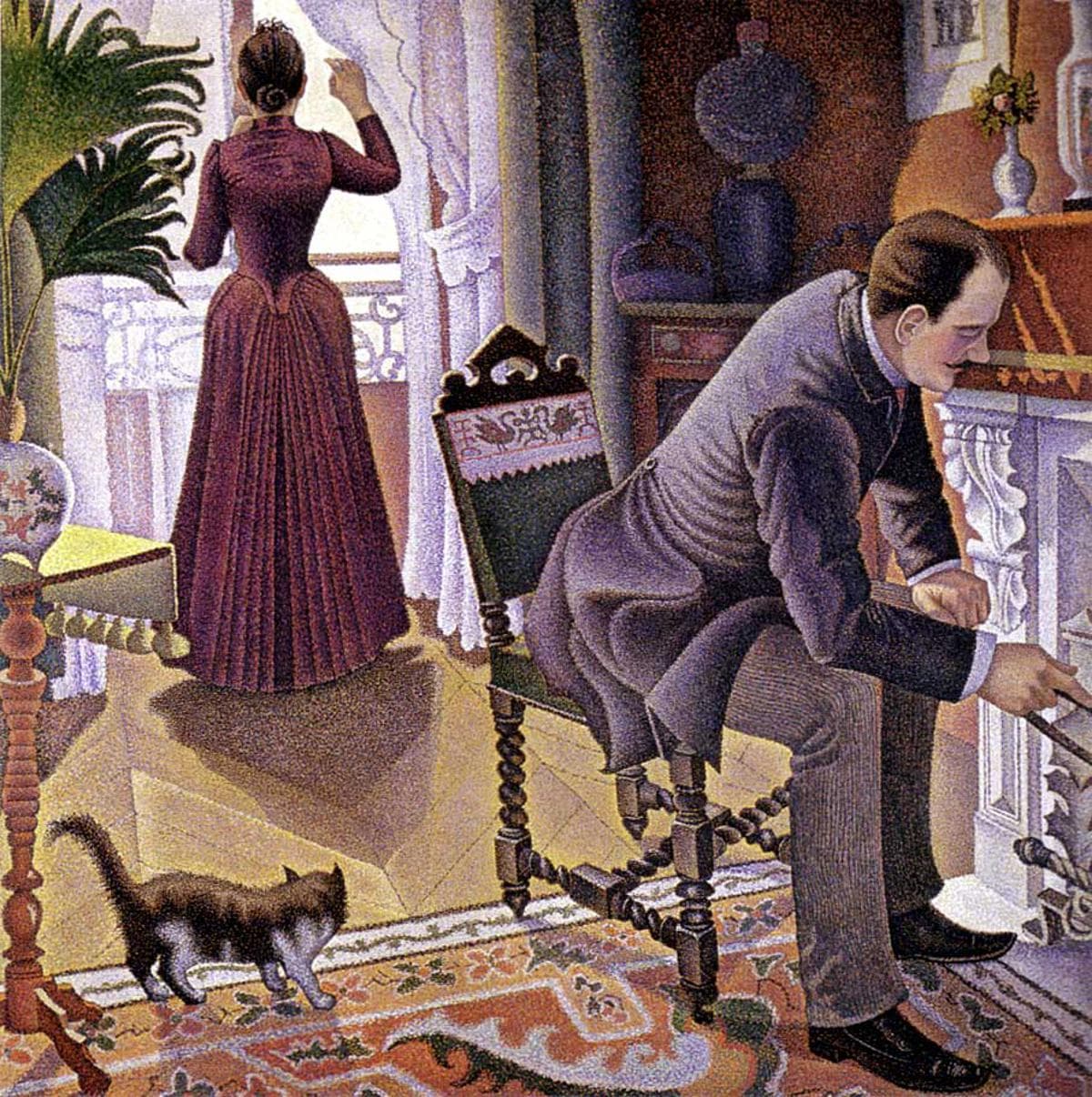
He stares out the window, she pokes the fire, and the dots are used here for boredom rather than sunlight.

Thousands are clubbed and thrown off cliffs, and Dürer paints himself walking calmly through the middle of it holding a banner with his name.
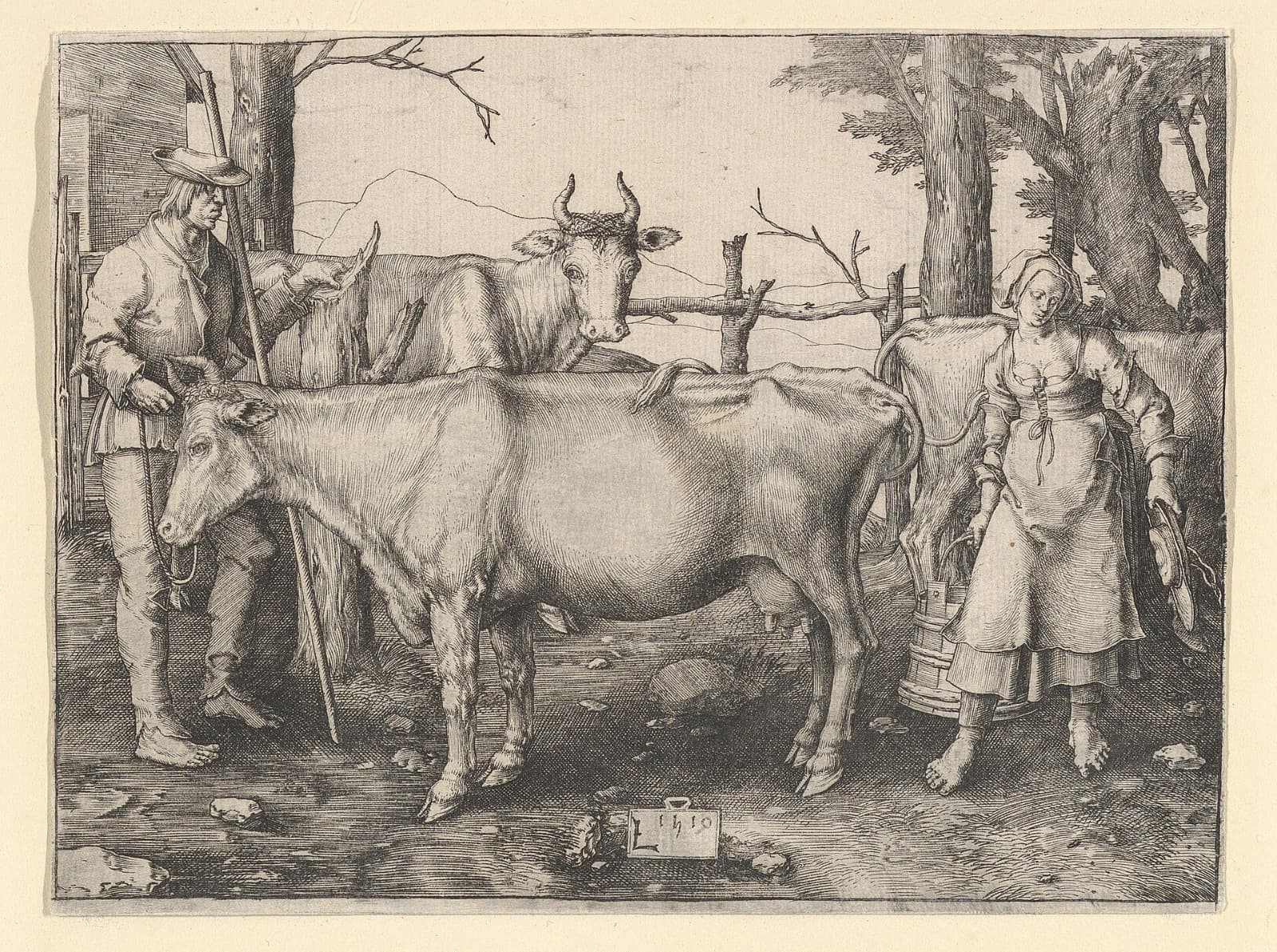
A milkmaid, a herdsman and two cows, and almost nothing happening. One of the first prints to take peasants as a subject worth the burin.

A woman in a white corset seen from behind, painted so loosely the picture seems to stop just before the image settles.
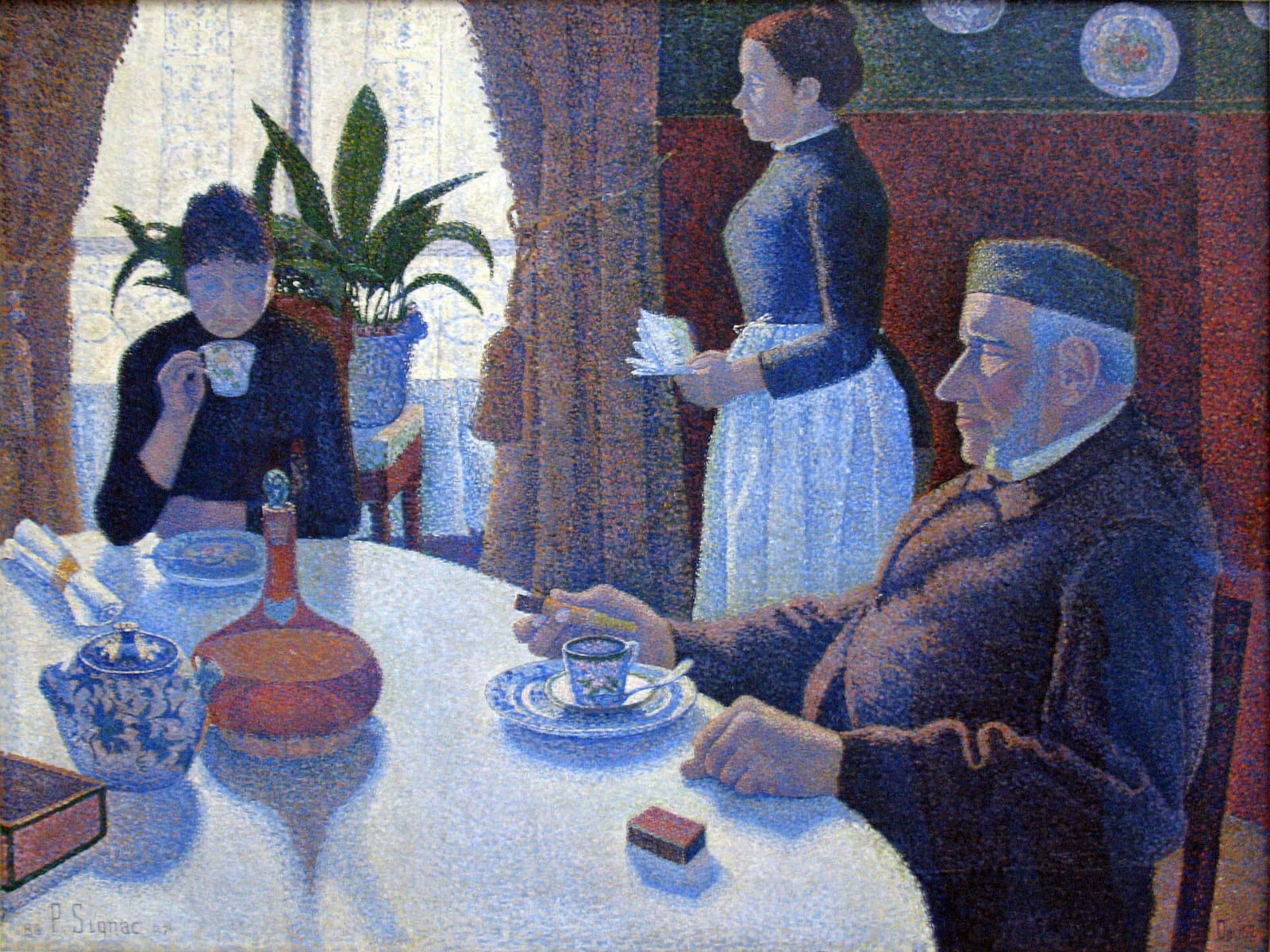
A family at breakfast, posed so stiffly in the glare that the comfortable room turns faintly airless. Every surface is built from dots.

A man and a white horse in a Tahitian grove, painted on Gauguin's first stay, flat and warm and looking for a paradise.

Provençal women at a hilltop well above a blue bay, the dots loosening into curves and the science giving way to pleasure.

A woman sits on the bank and puts her bare feet in the water, the whole stream broken into flickering touches of color.

A child holding a white dove with a colored ball at its feet, painted just as Picasso's palette was cooling toward blue.
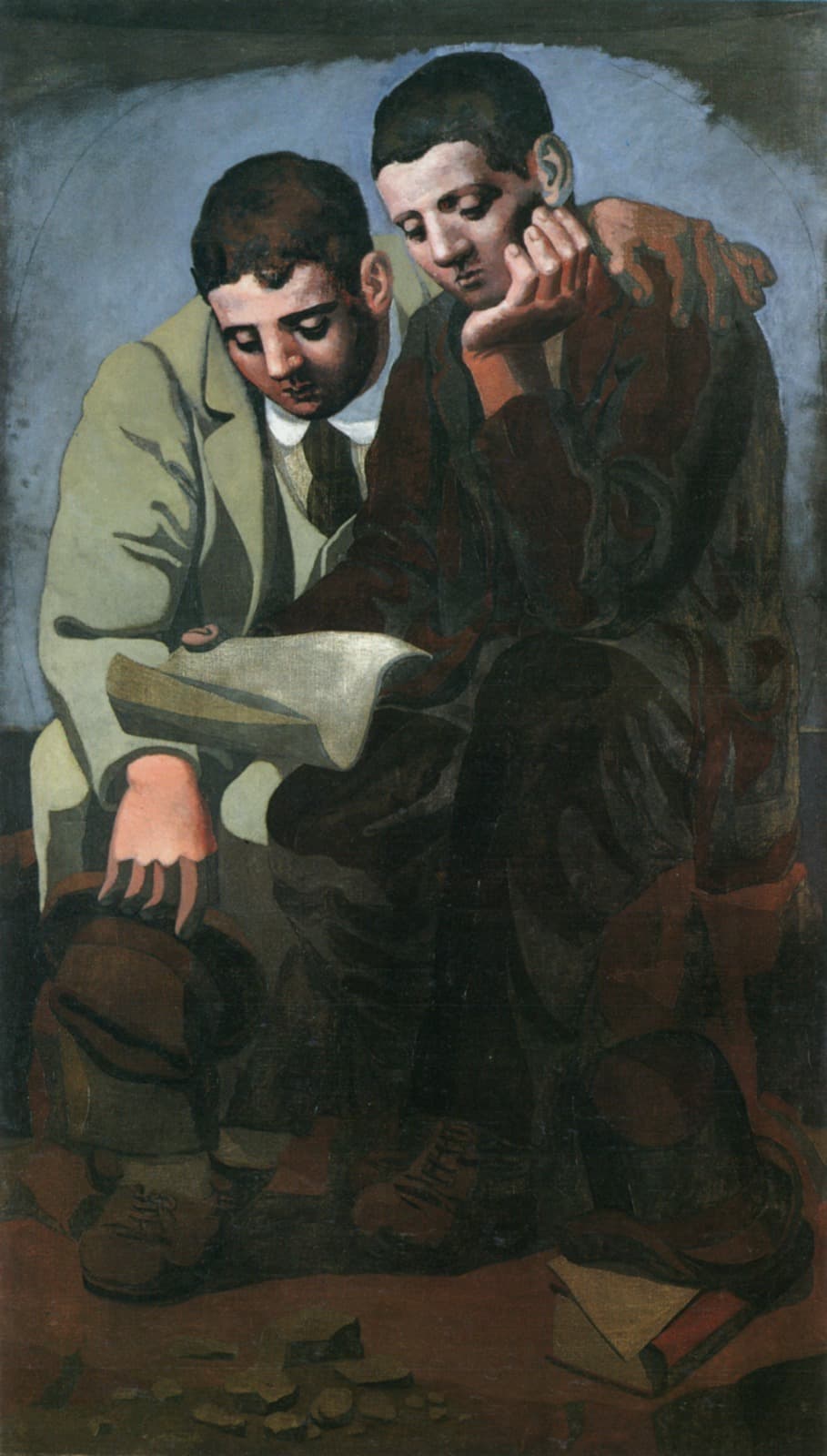
Two heavy young men press close together over a letter, and the intimacy is usually read as a memorial to Apollinaire.
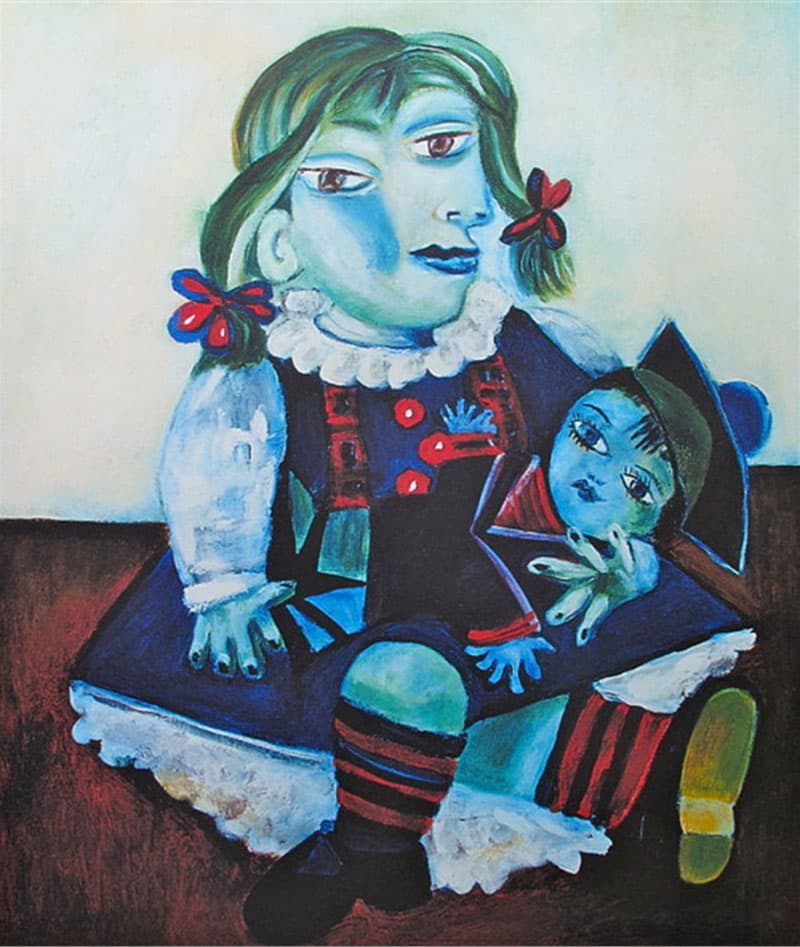
His daughter Maya holding her doll, her face split front and profile at once, the Cubist trick turned warm for once.

Bacon started from a snapshot of a friend dozing in a park and then removed the head, the identity and the ease.
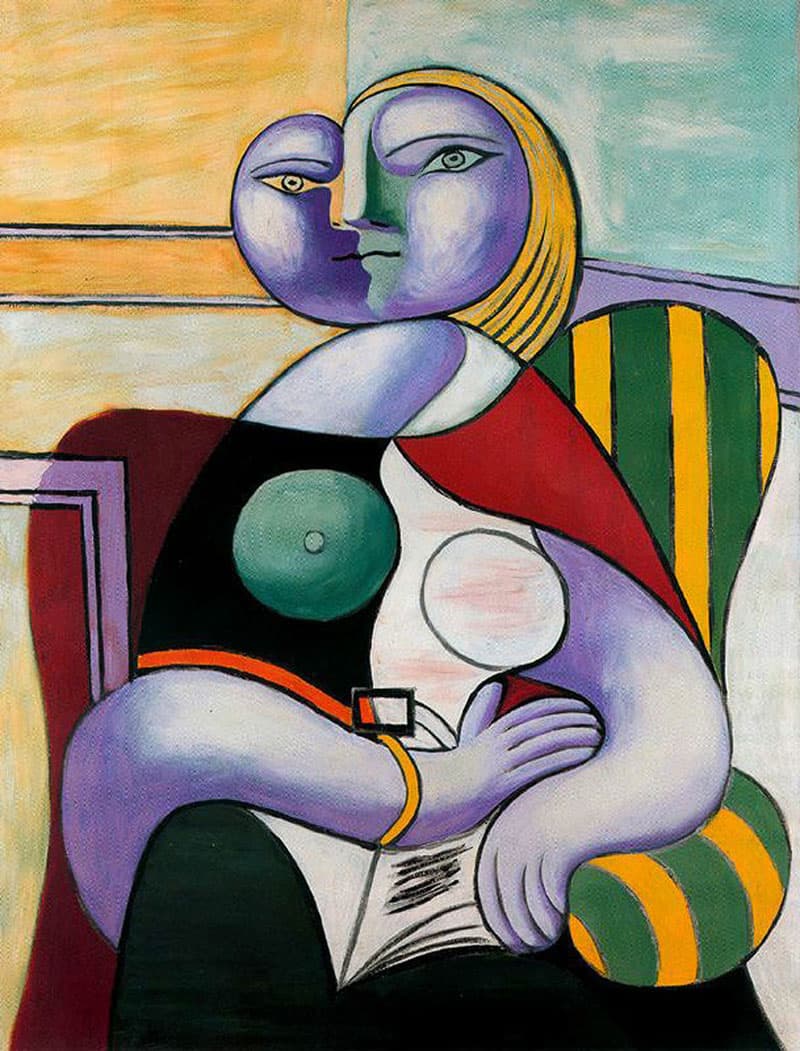
Marie-Thérèse has fallen asleep over her book with her head on her arms, from the year Picasso painted her over and over.

Rivermen break off work for a card game on a flatboat, arranged with a stillness that lifts the scene toward history painting.
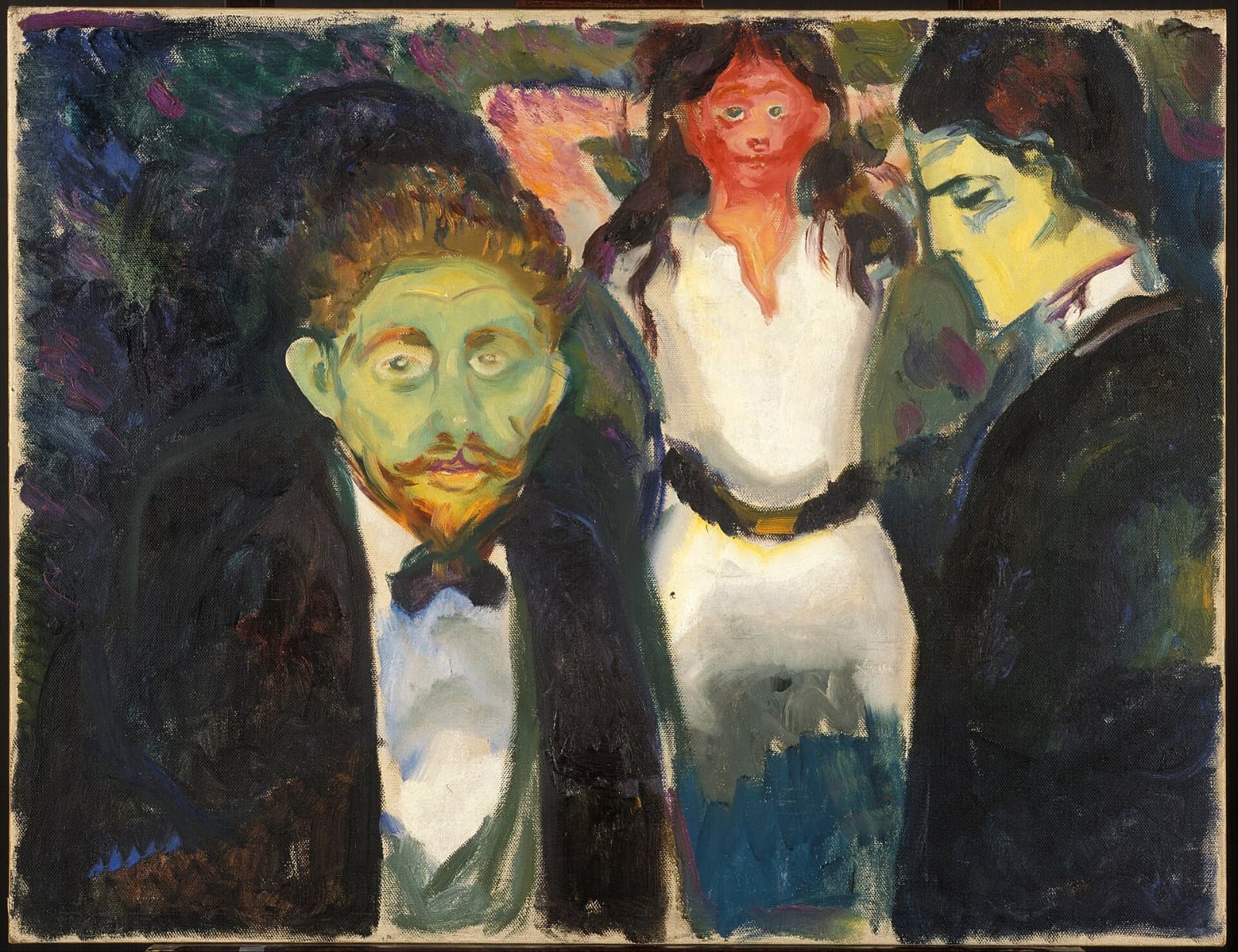
A sallow green face fills the front of the picture while behind him a woman in red picks fruit beside another man. He is imagining it.

Bierstadt painted this vast hunt as the herds were nearing extinction, with skulls and bones already lying across the foreground.

A Union officer faces three captured Confederates and the two halves of the country study each other. Homer had covered the war as an illustrator.
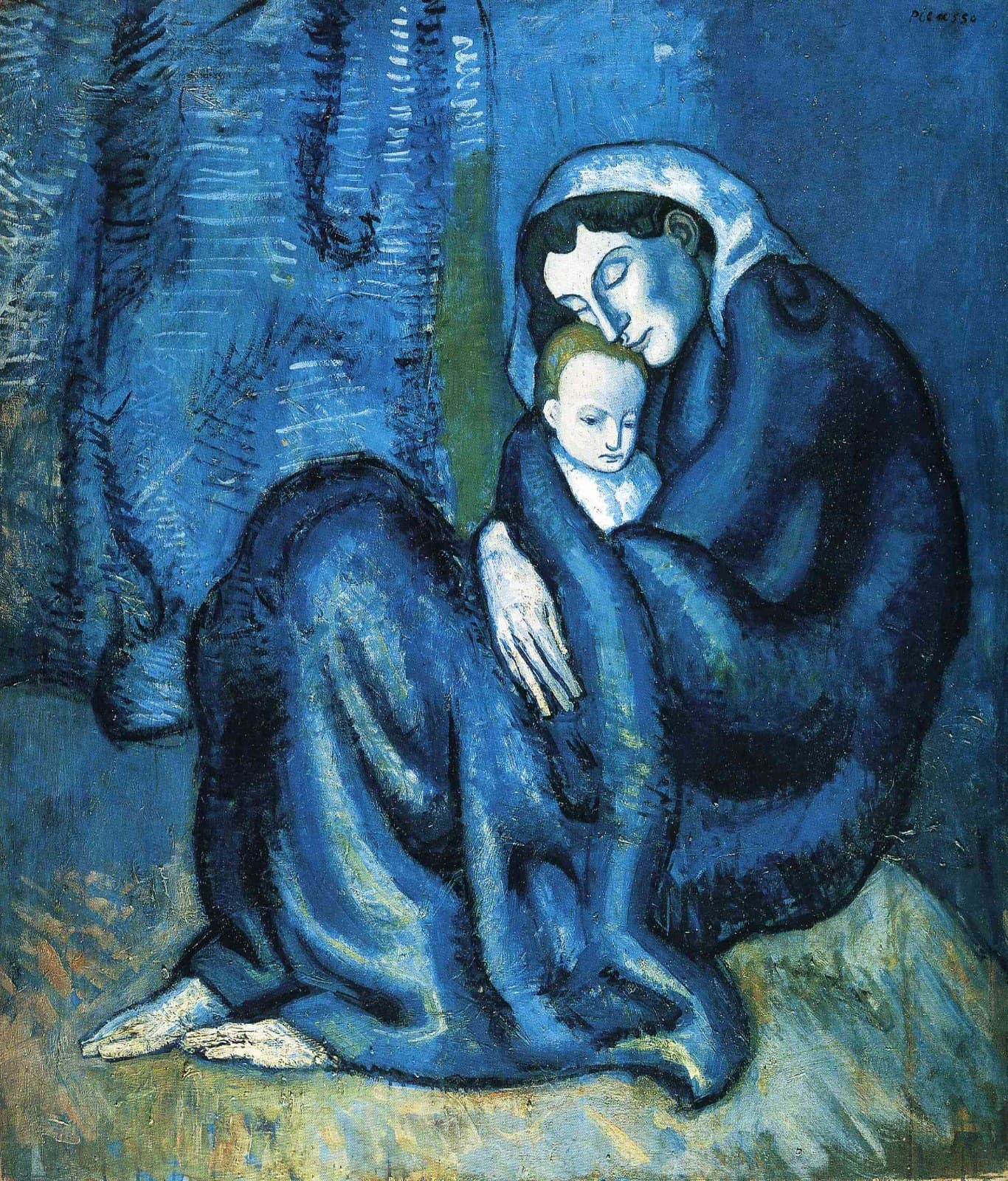
A mother holding her child, in the blue Picasso used for everything during the years he was poor in Paris and Barcelona.
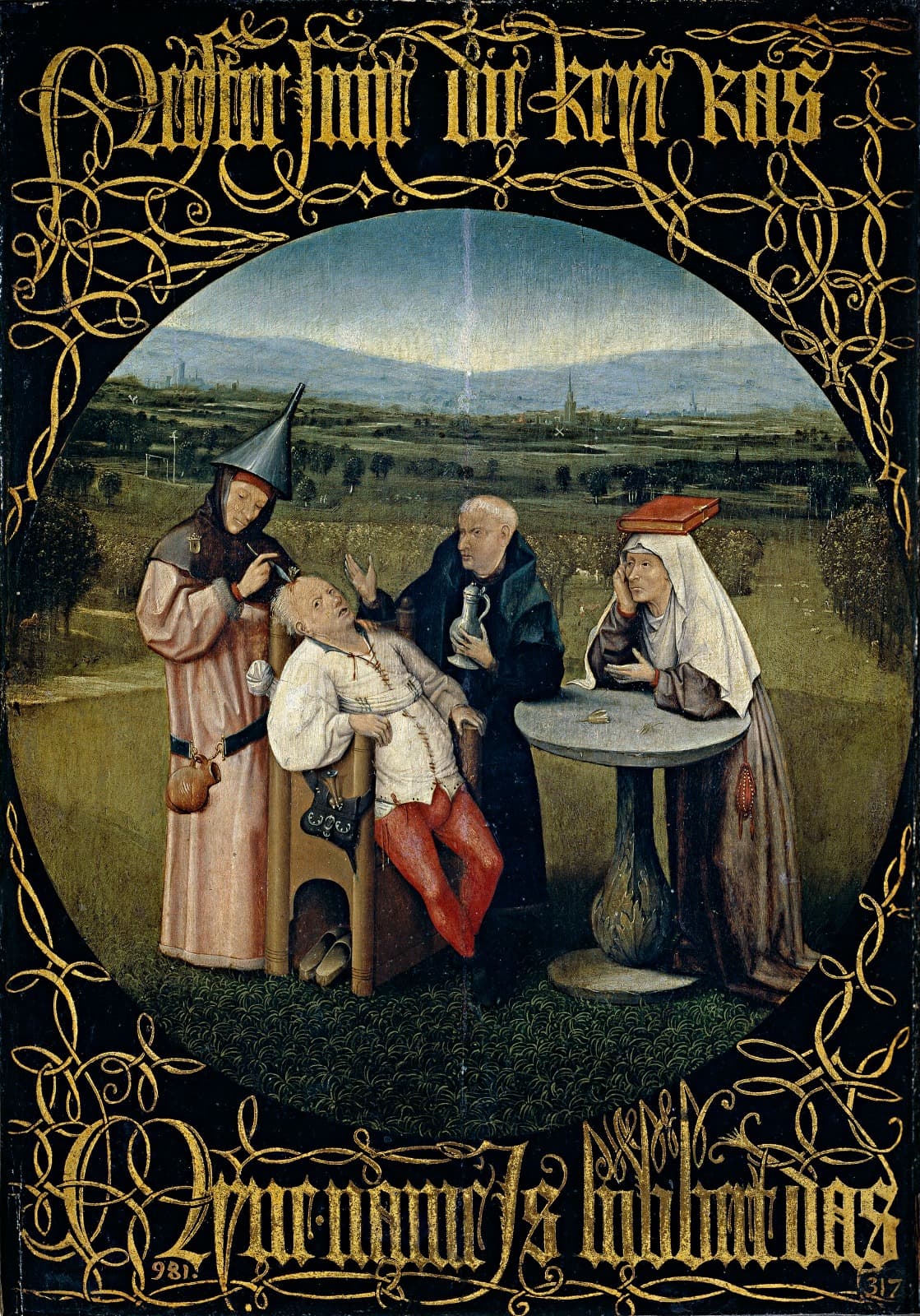
A quack in a funnel hat cuts the stone of madness out of a man's head, and what comes out is a flower.

Oi was Hokusai's daughter and studio collaborator, and her handling of lantern light against darkness beats anything else in the ukiyo-e of her time.
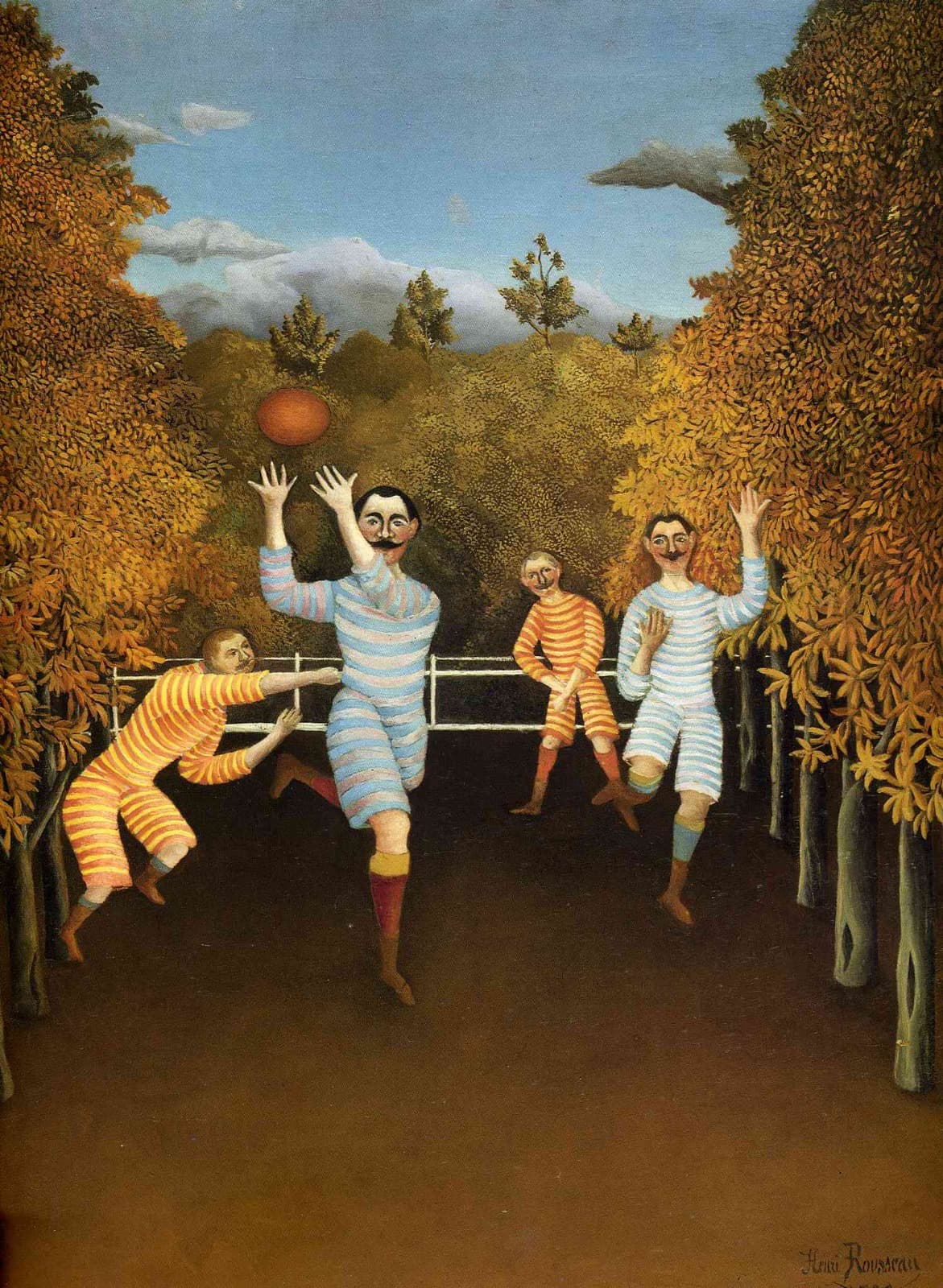
Moustached men in striped jerseys leap for a ball among autumn trees, playing the new game of rugby as though it were slow ritual.
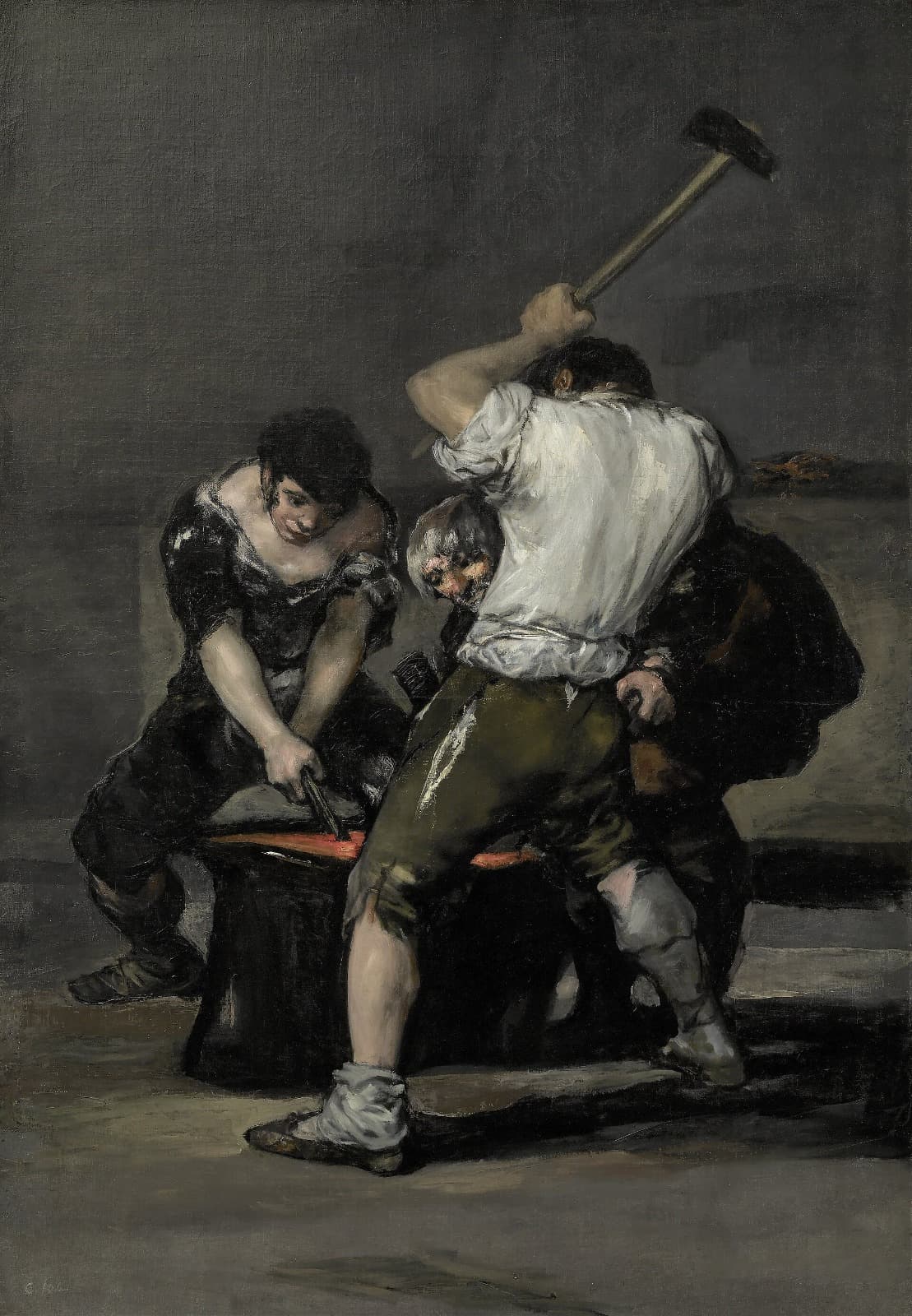
Three smiths at a forge, one hammer at the top of its swing. Goya gave laboring men the scale usually kept for gods and kings.
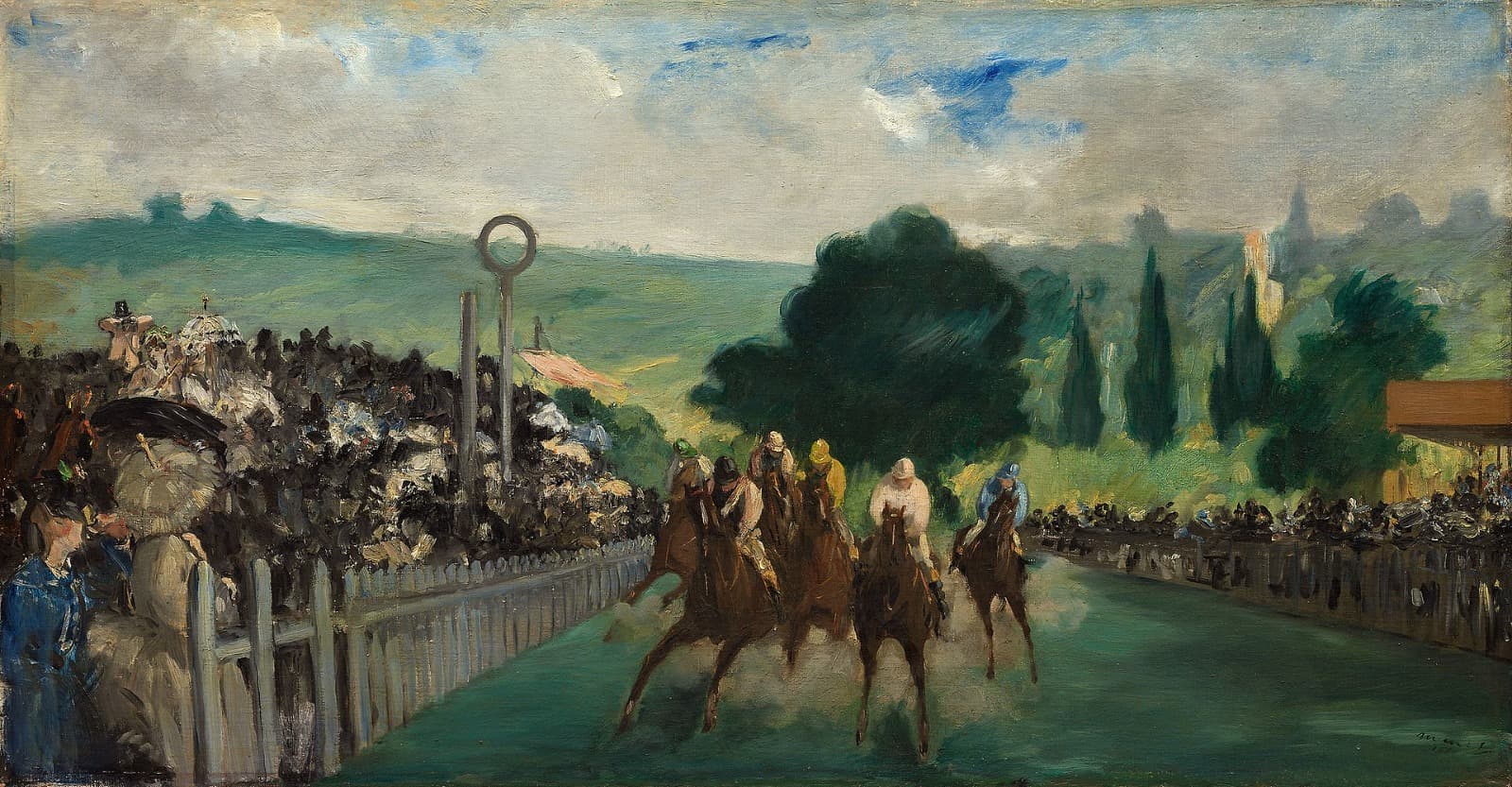
The horses come straight at you instead of across the frame, which nobody painting racehorses had bothered to try.
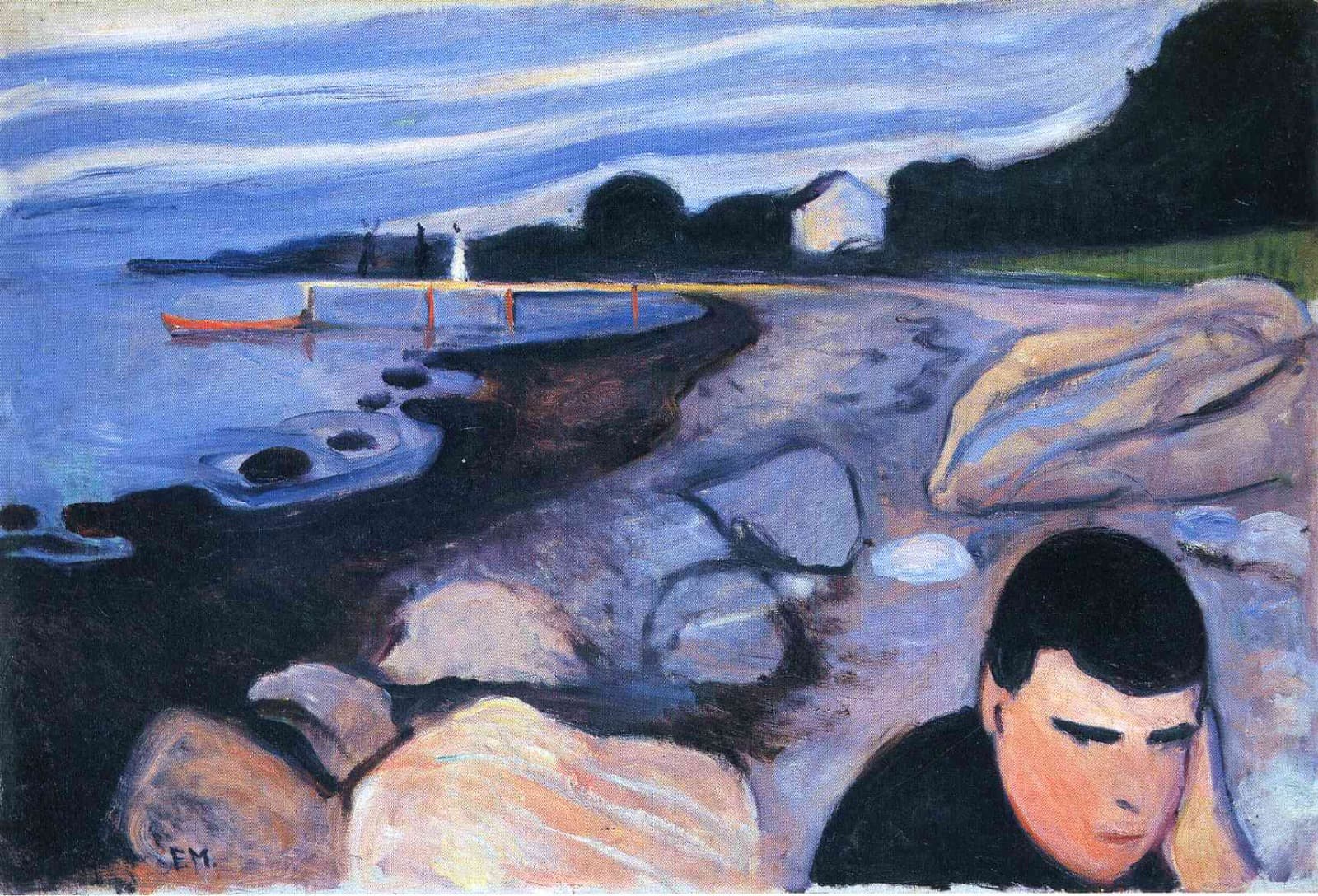
A man broods on the shore while a couple boards a boat far off, and the curving coastline carries the whole mood by itself.

Naked conscripts showering in a barracks under a mounted officer, painted after the army service that broke Kirchner down.
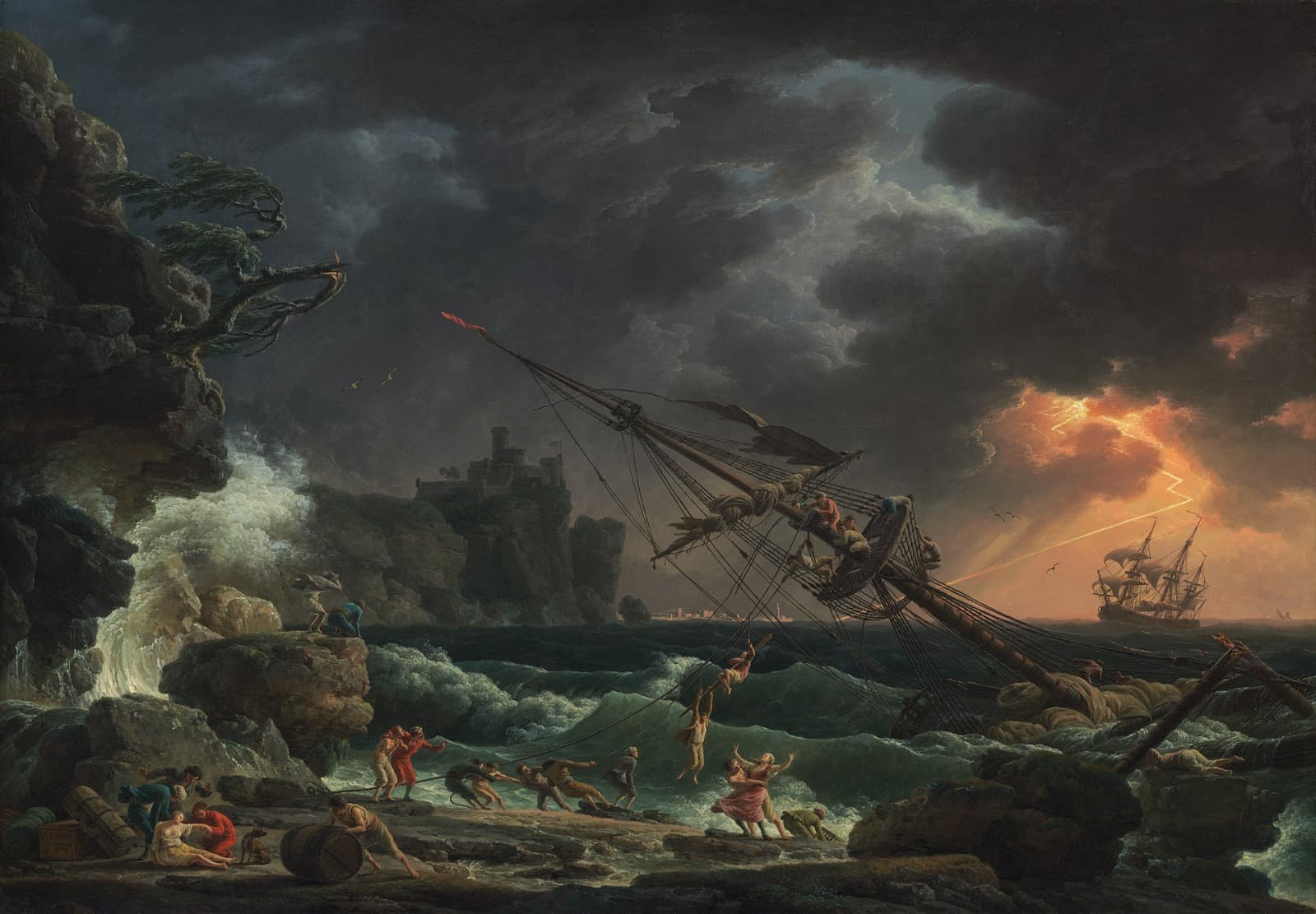
Masts splintering, survivors in the surf, and the whole thing arranged for people who wanted to feel terror from a safe distance.

Bodhidharma meditates before a broken lattice with the moon behind it. Yoshitoshi is reckoned the last great master of the woodblock print.
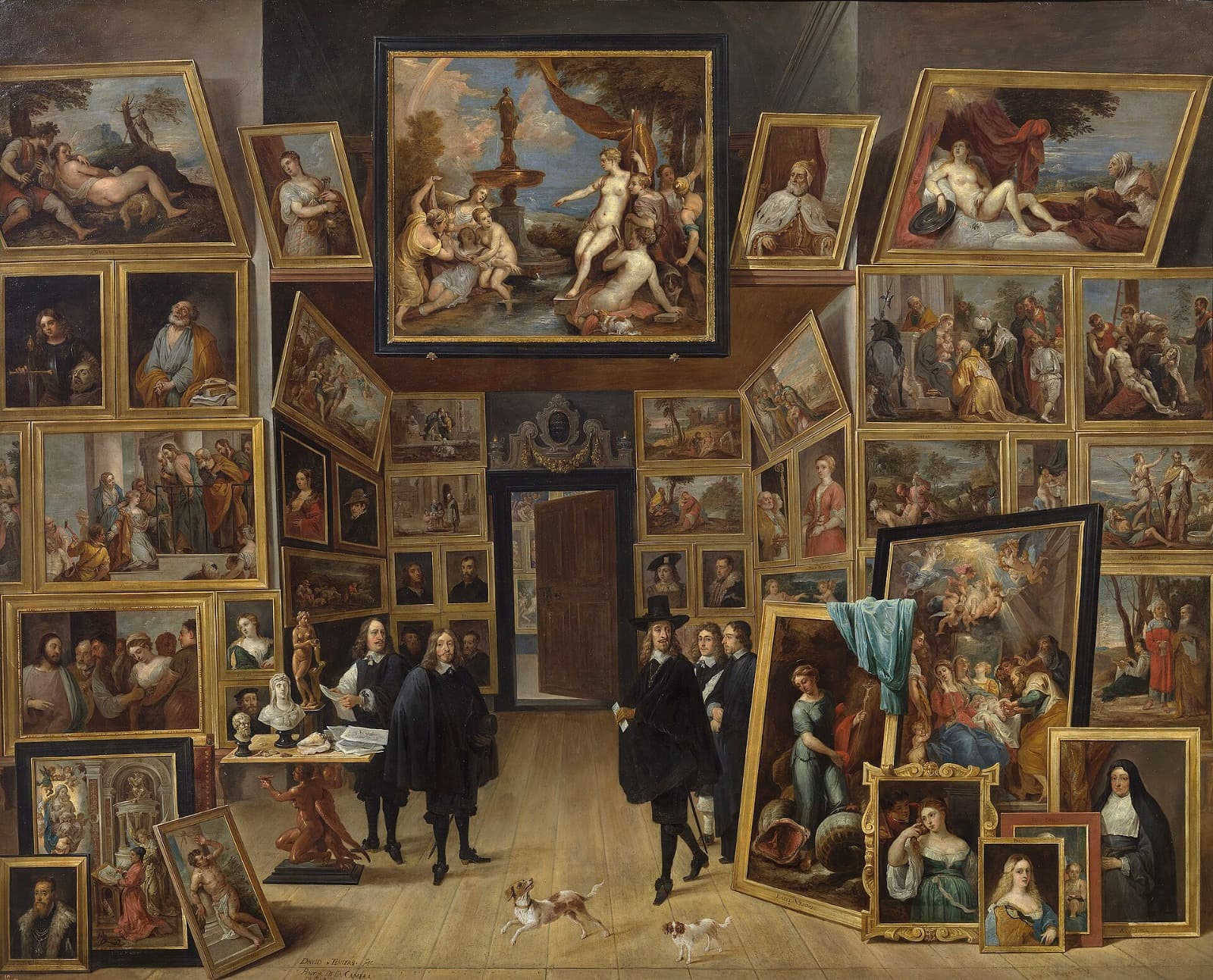
Teniers was the archduke's curator, and he painted the walls tiled with identifiable Titians and Giorgiones as a kind of catalogue.

She stands in a garden in a blue dress holding a watering can, and Renoir spends the rest of the canvas on light.
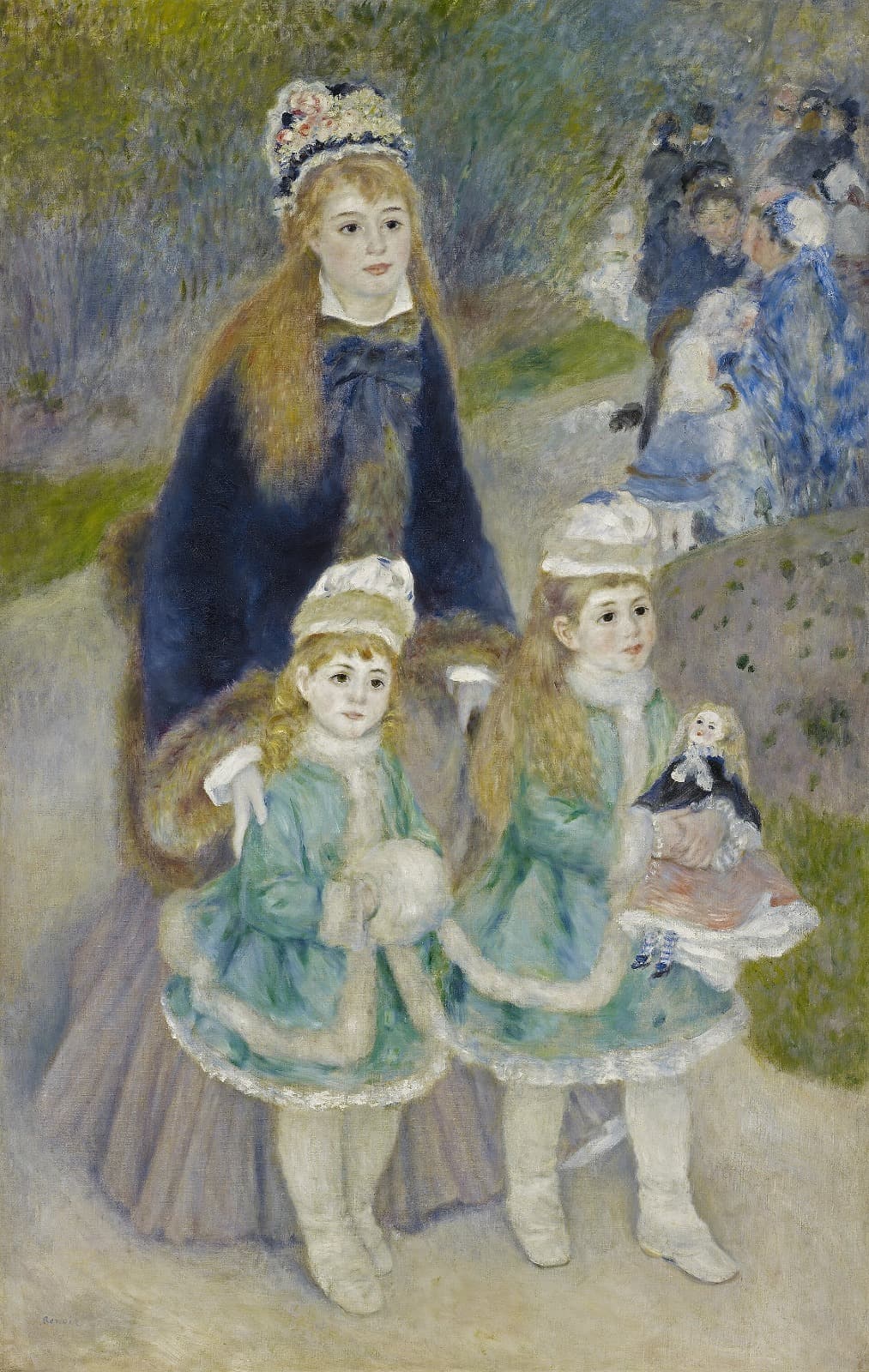
Two girls walking under trees, the elder leading the younger, everything blurred into one shimmer of dappled light and pale dress.
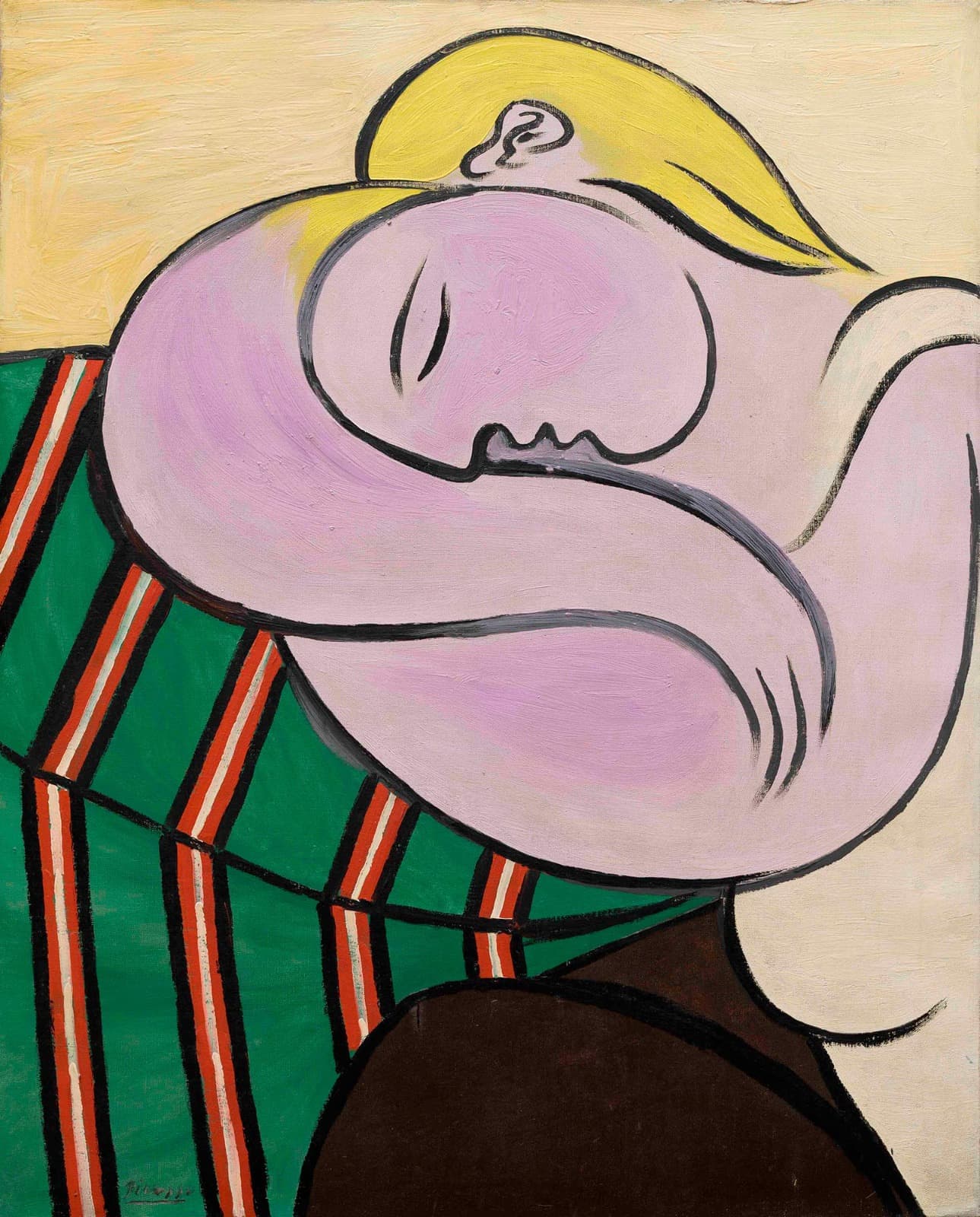
Marie-Thérèse asleep with her head on her arms, the angular violence of Cubism gone soft and curved for a few years.
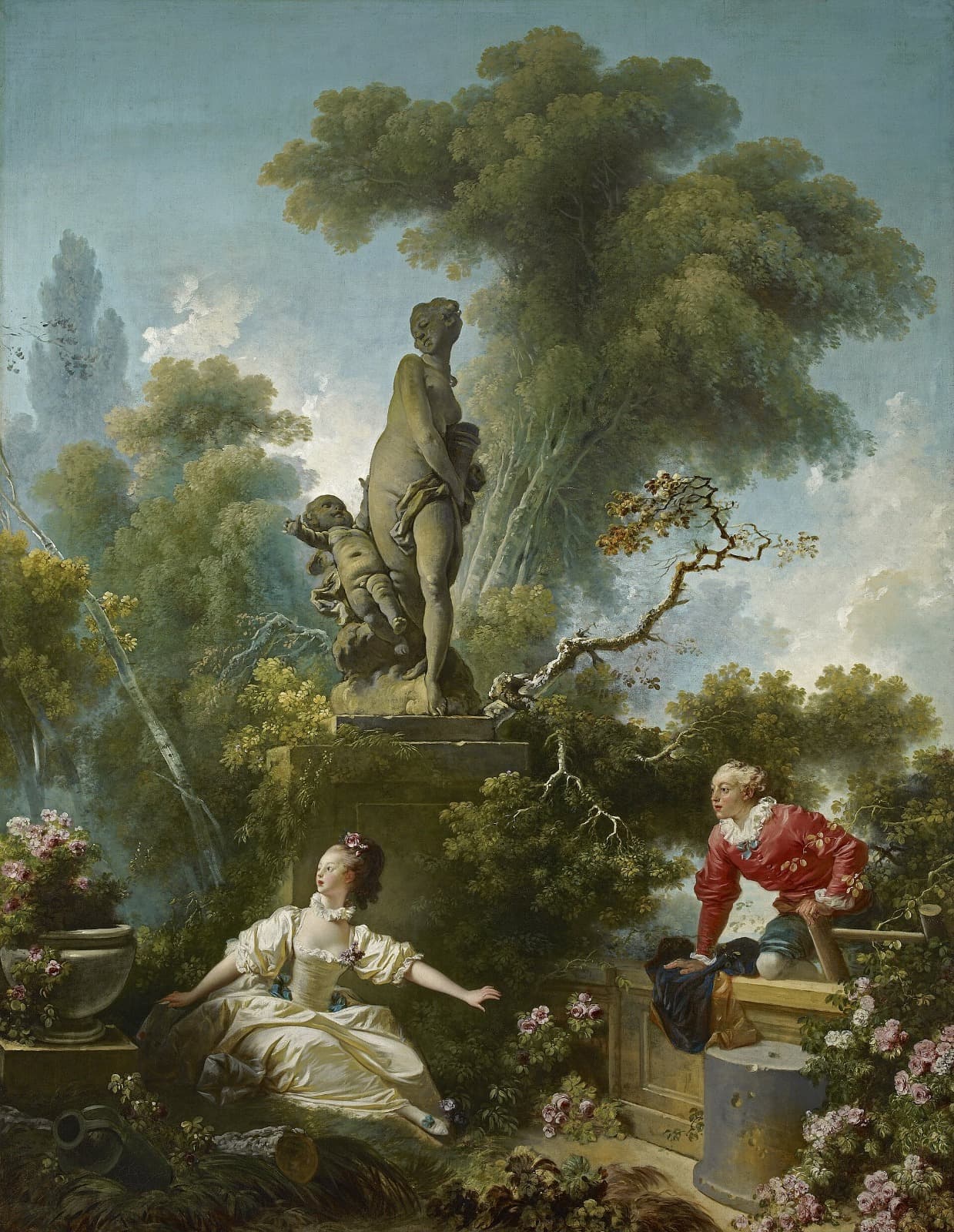
He is coming over the garden wall and she has just seen him, with a statue of Venus watching from above. Painted for Madame du Barry.

Voting on the courthouse steps with electioneering, arguing and one man too drunk to stand. Bingham had run for office himself.

She reads his palm and takes the ring off his finger while she does it, and he is too busy looking at her to notice.
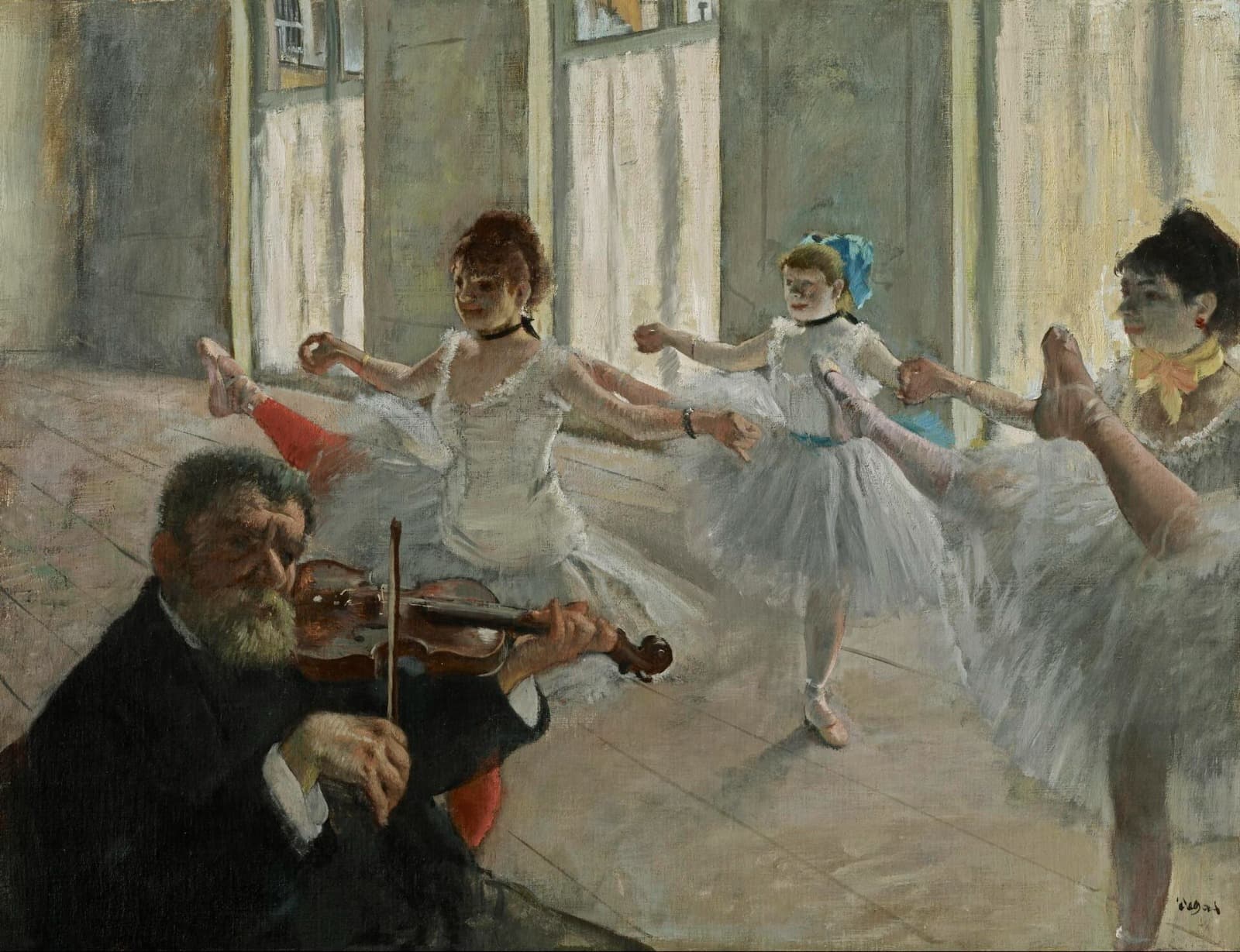
Dancers stretch while a spiral staircase cuts the corner and the frame slices figures off. Degas cared about the practice, not the performance.
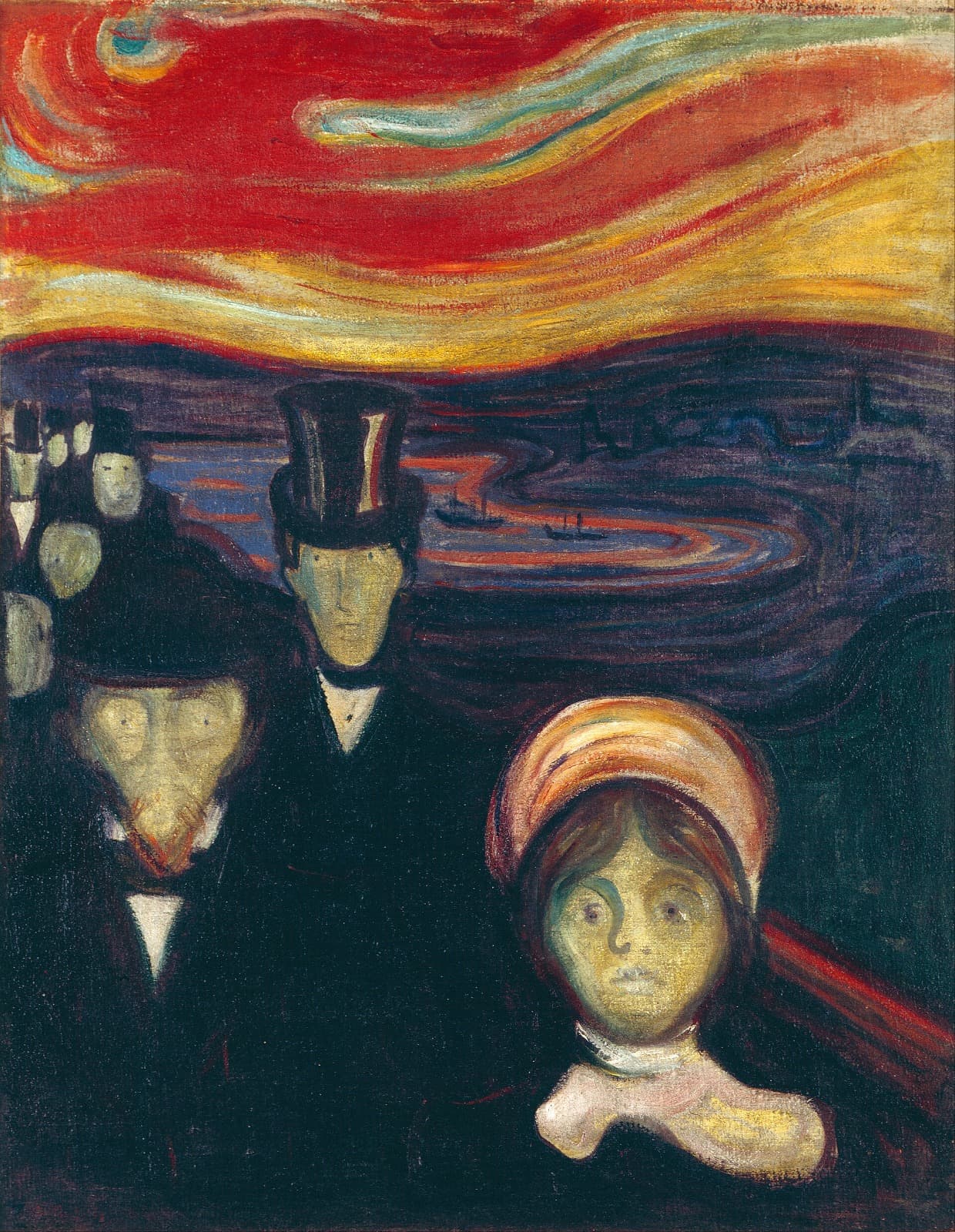
The same bridge and the same burning sky as the Scream, but with a whole crowd coming toward you instead of one figure.