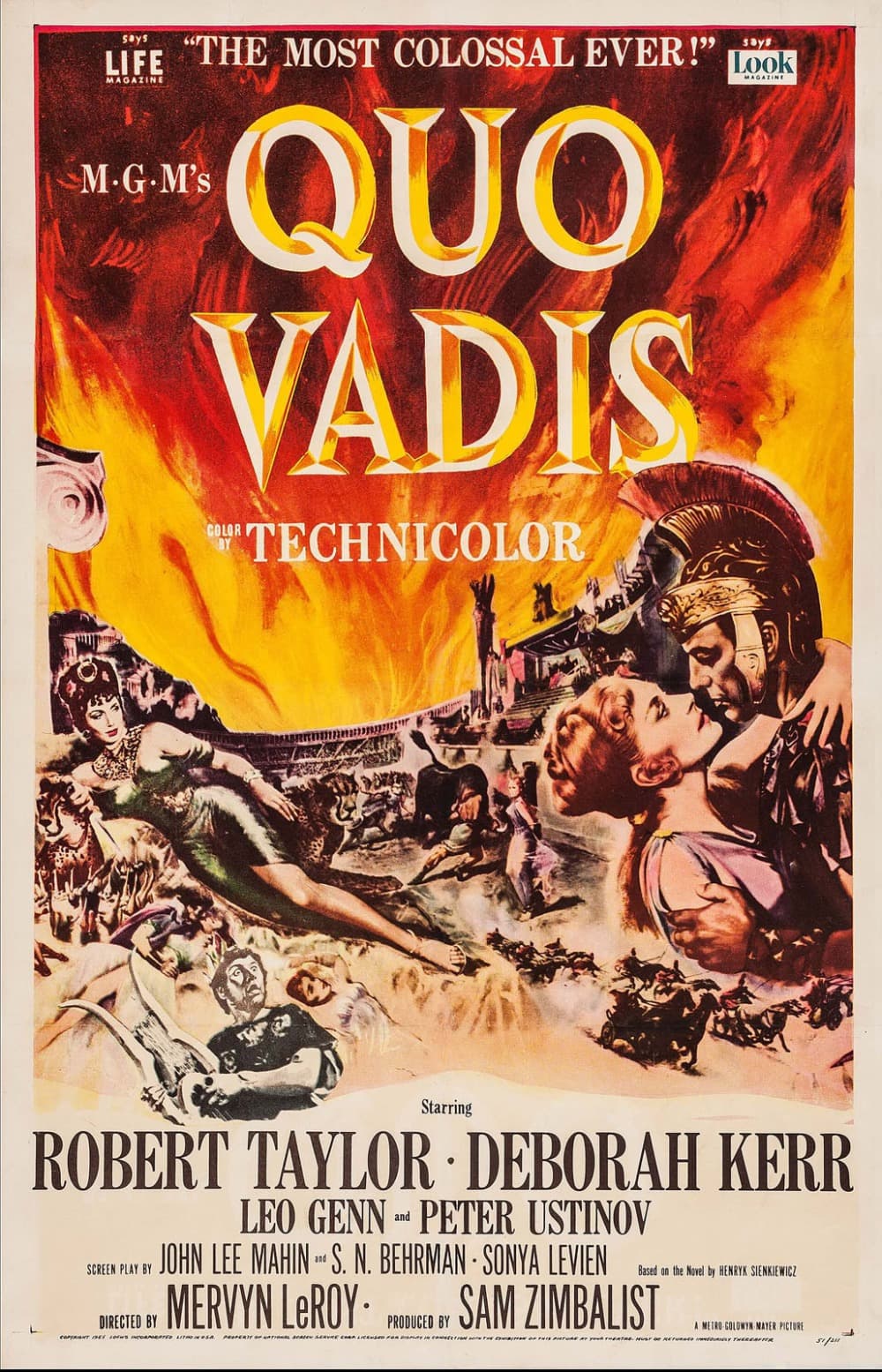
Quo Vadis
Directed by Mervyn LeRoy
1951
Peter Ustinov plays Nero as a needy child with an empire, and steals the entire picture: MGM built ancient Rome at Cinecitta and the film rescued the studio's finances.
★ 1.7
 skopia
Peter Ustinov plays Nero as a needy child with an empire, and steals the entire picture: MGM built ancient Rome at Cinecitta and the film rescued the studio's finances.
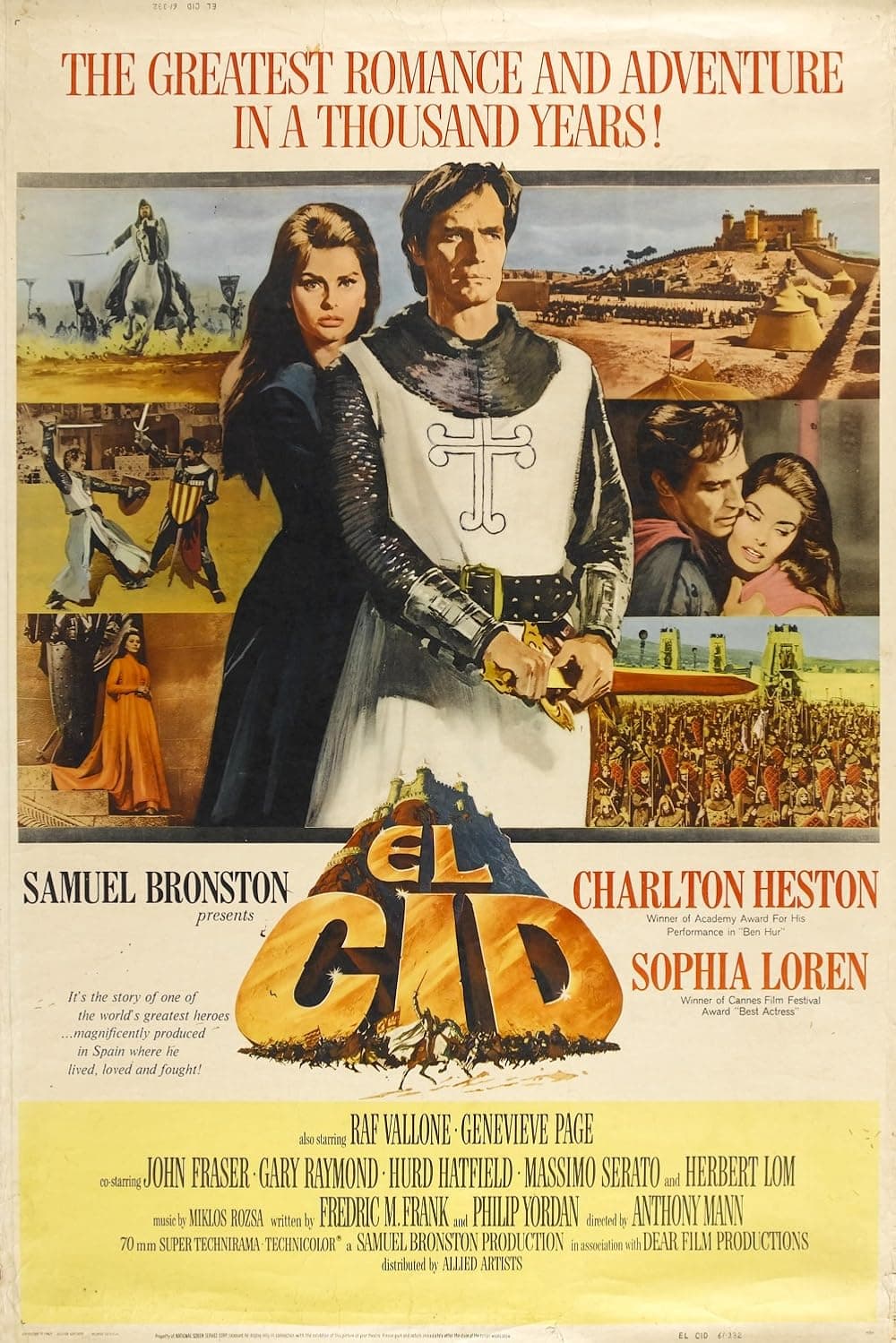
Charlton Heston and Sophia Loren in the last great historical epic before the genre collapsed: real castles in Spain, thousands of extras on horseback, and Miklos Rozsa's score doing the heavy lifting.
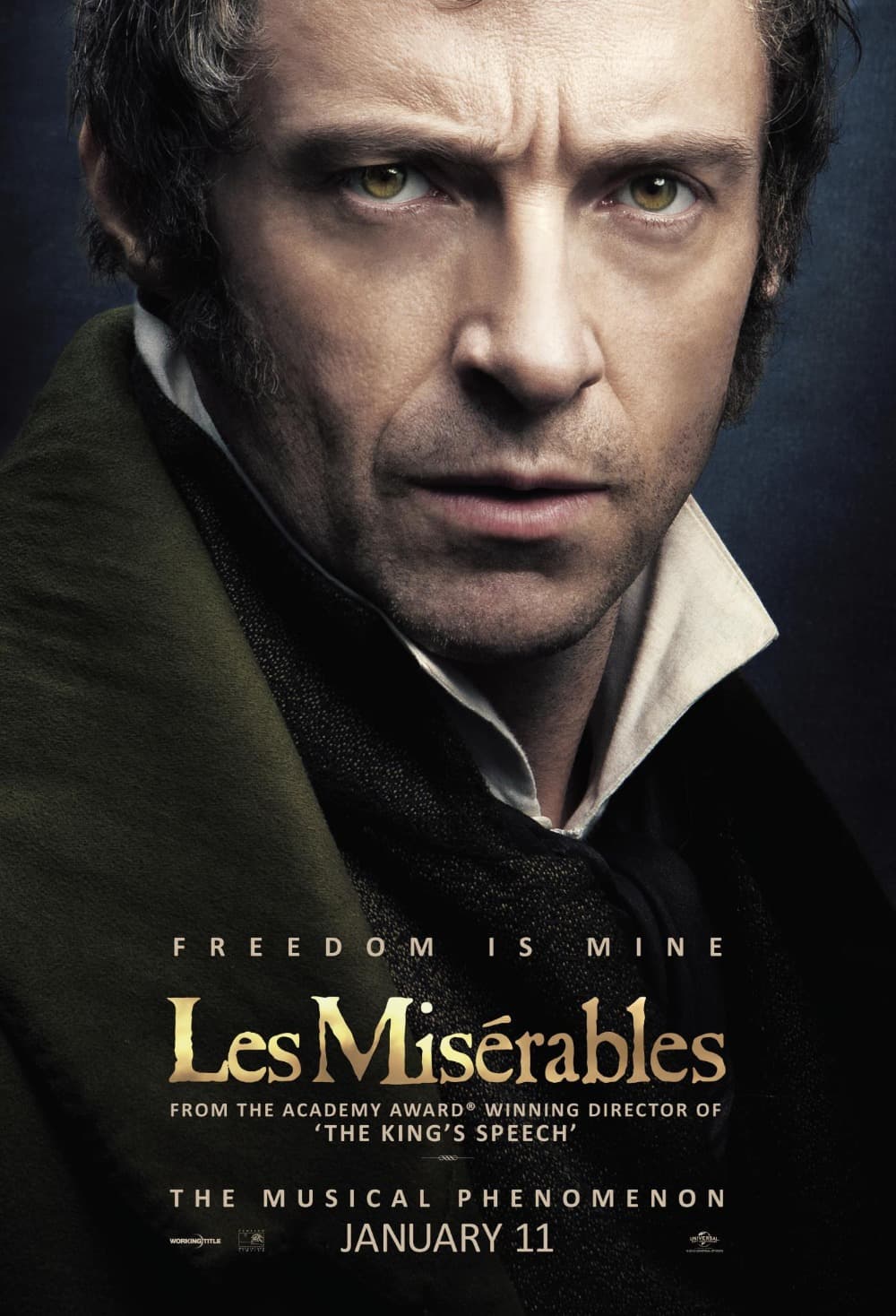
Every note was sung live on set instead of lip-synced to a recording, which nobody had attempted at this scale: the camera sits inches from faces the entire time.
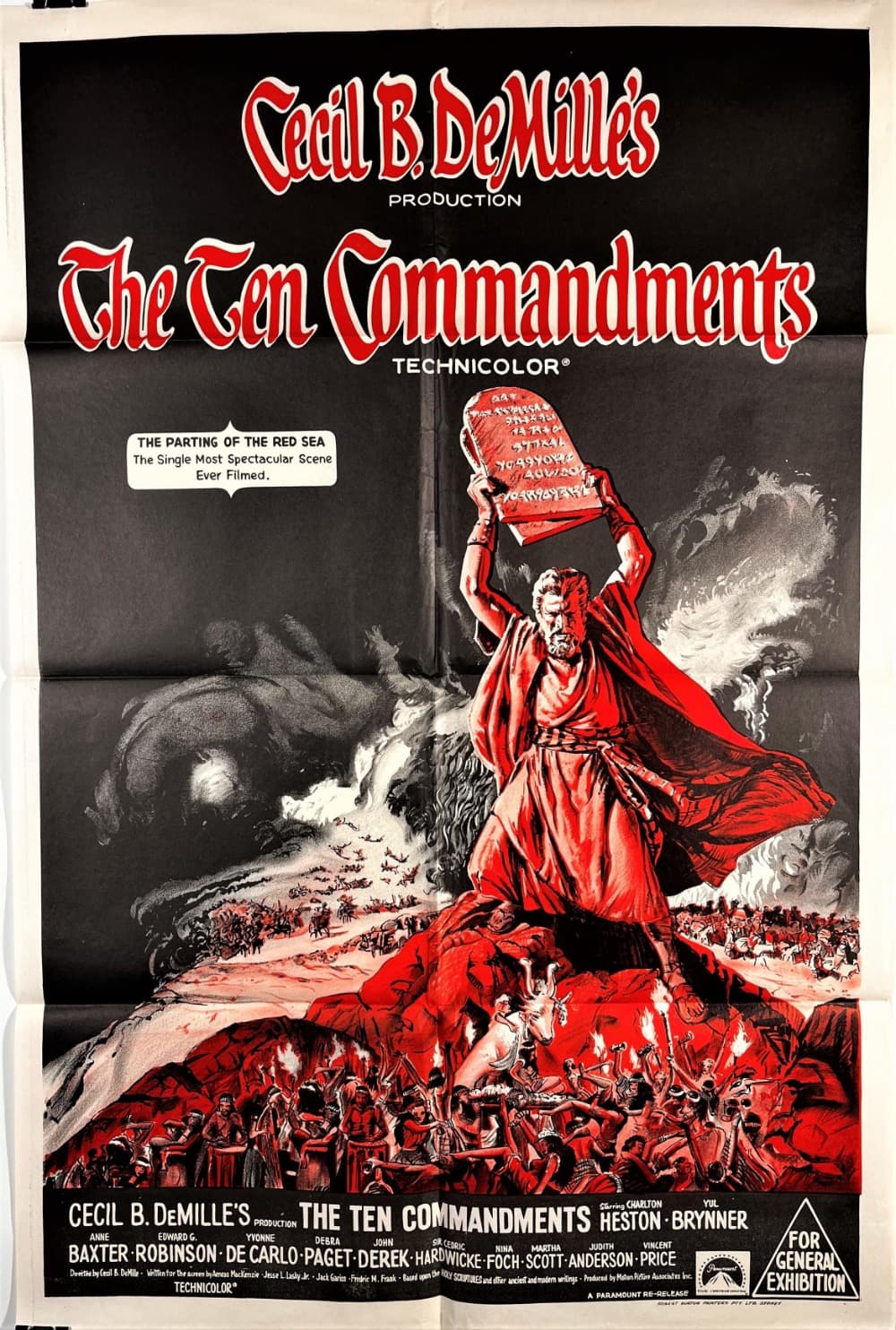
American television has run it every Easter for over fifty years: DeMille parted the Red Sea with gelatin, dumped water and a reversed film, and nobody has topped the sheer nerve of it.
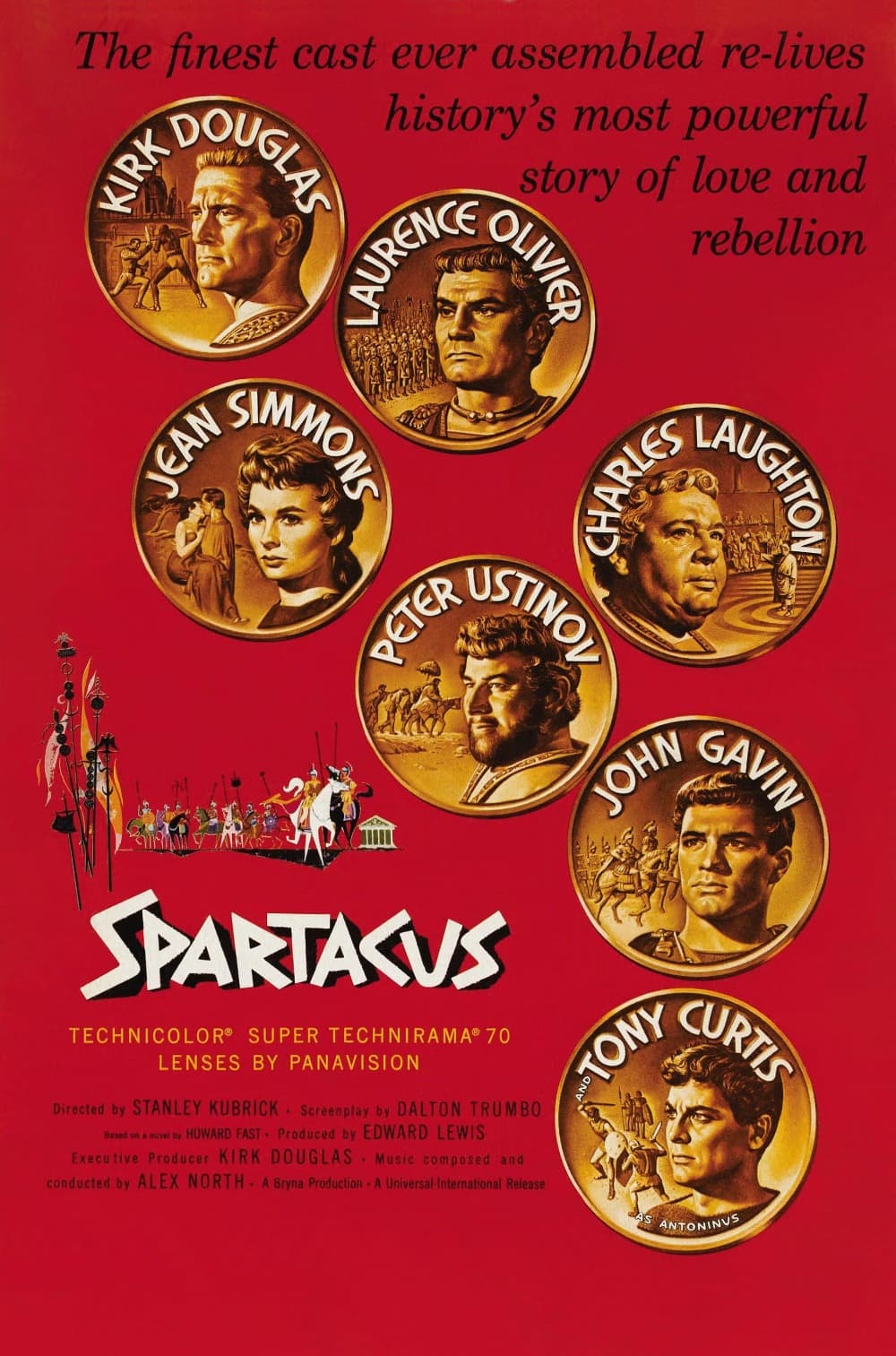
Kirk Douglas helped break the blacklist by putting Dalton Trumbo's real name on this film: a slave revolt against Rome staged at enormous scale, with Laurence Olivier and Charles Laughton circling the politics.
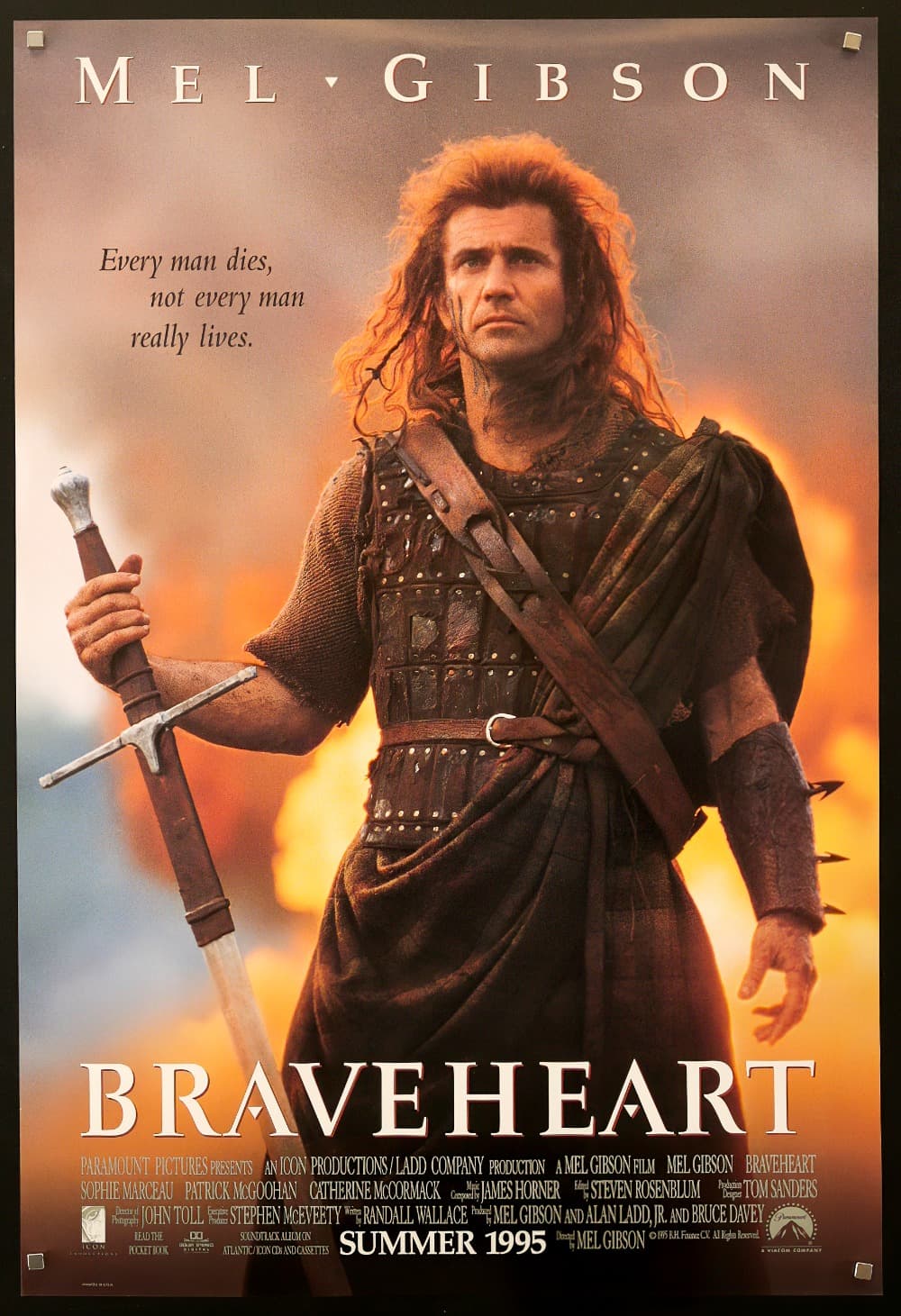
Historians have been correcting it for thirty years and nobody cares: Gibson staged medieval battle with a physical brutality nothing before it had, and the speeches still work on an audience.
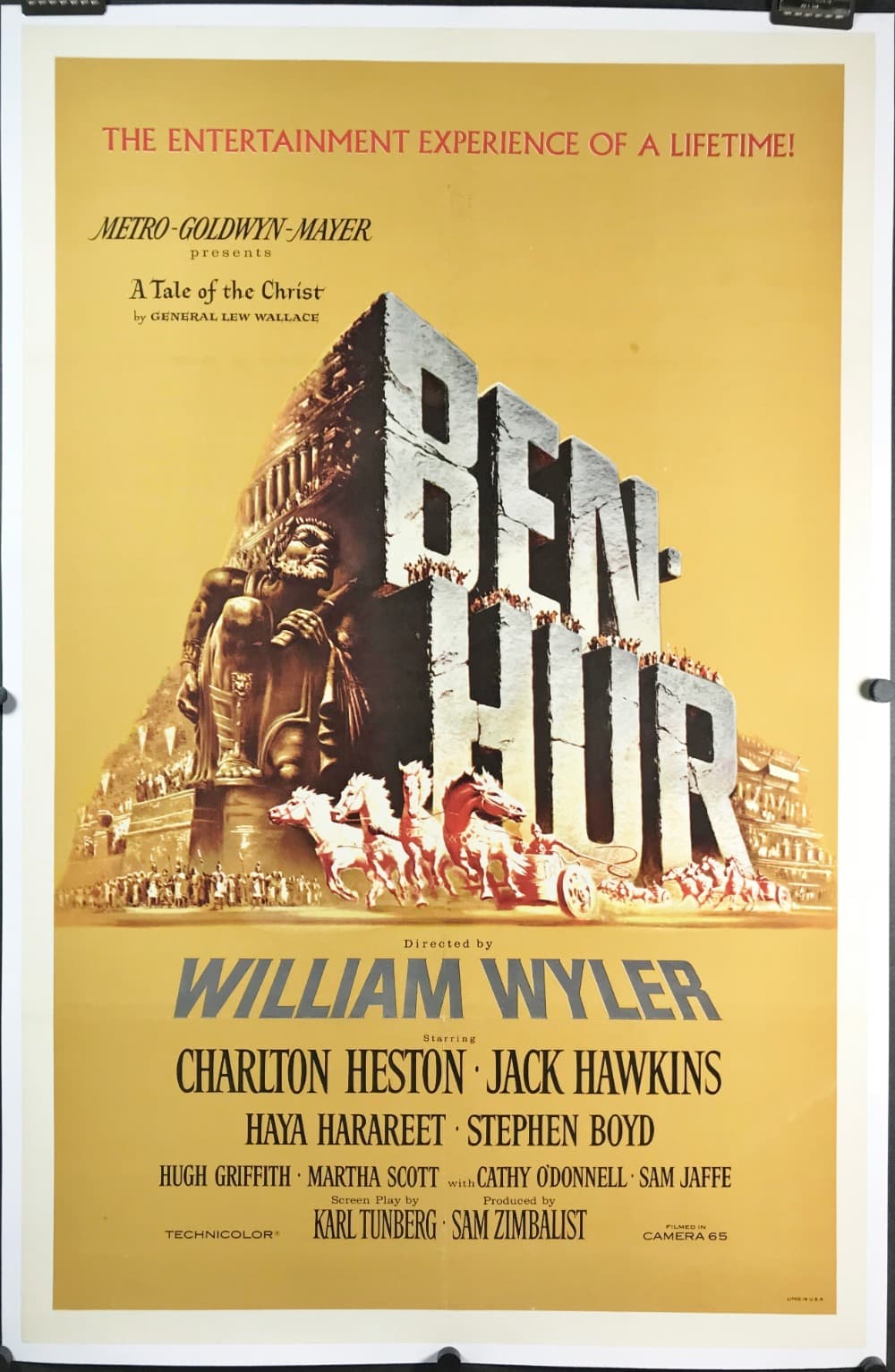
The chariot race took months to shoot and has never been bettered: Wyler's epic runs almost four hours and earns every minute of the nine it spends inside that arena.
Michael Mann's most romantic film ends with twelve near-wordless minutes carried entirely by the score: Daniel Day-Lewis learned to live off the land for it, and the frontier looks genuinely unmapped.
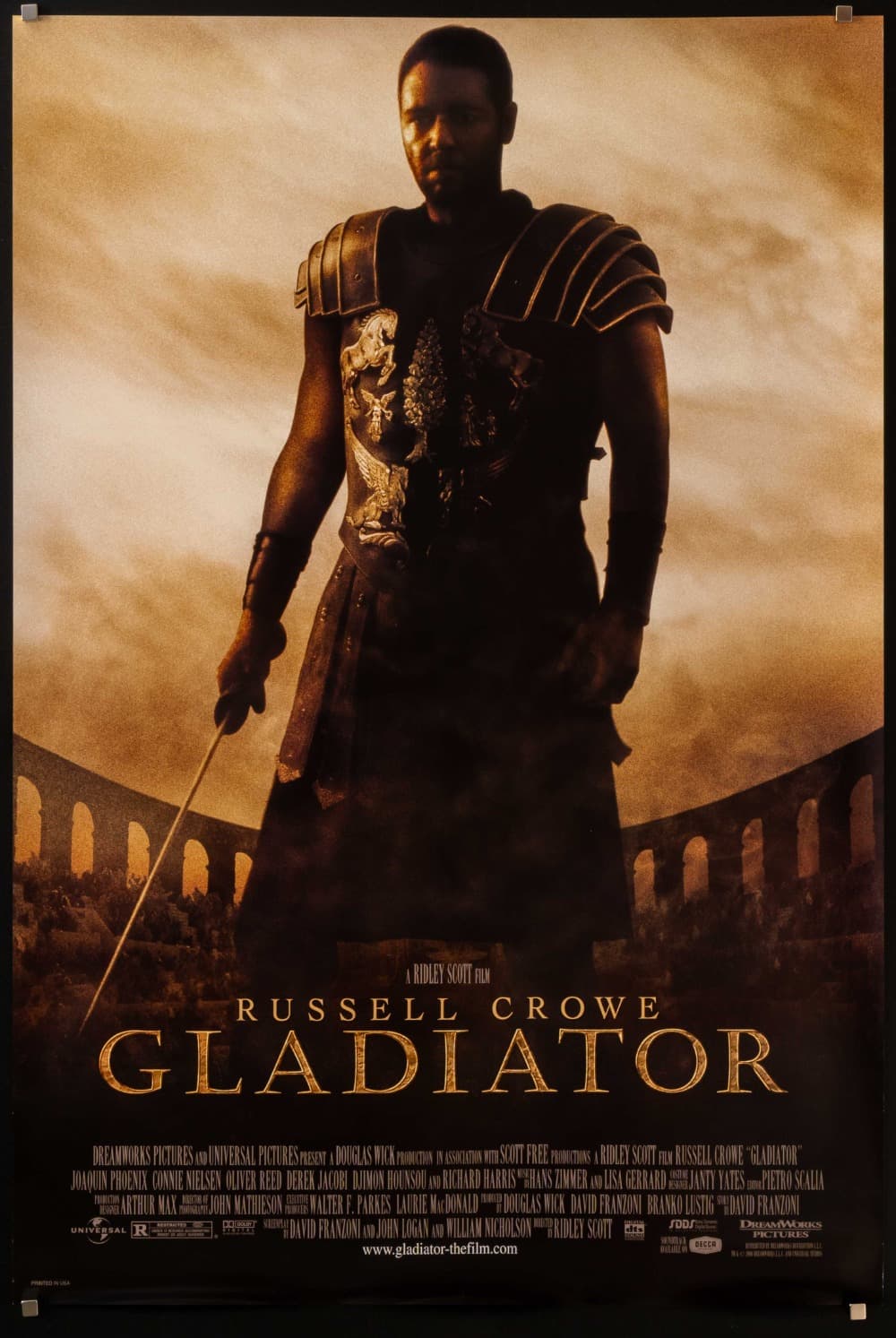
It dragged the Roman epic back after thirty-five years of dormancy: Russell Crowe's fury is the whole engine, and the arena sequences still deliver everything they promise.
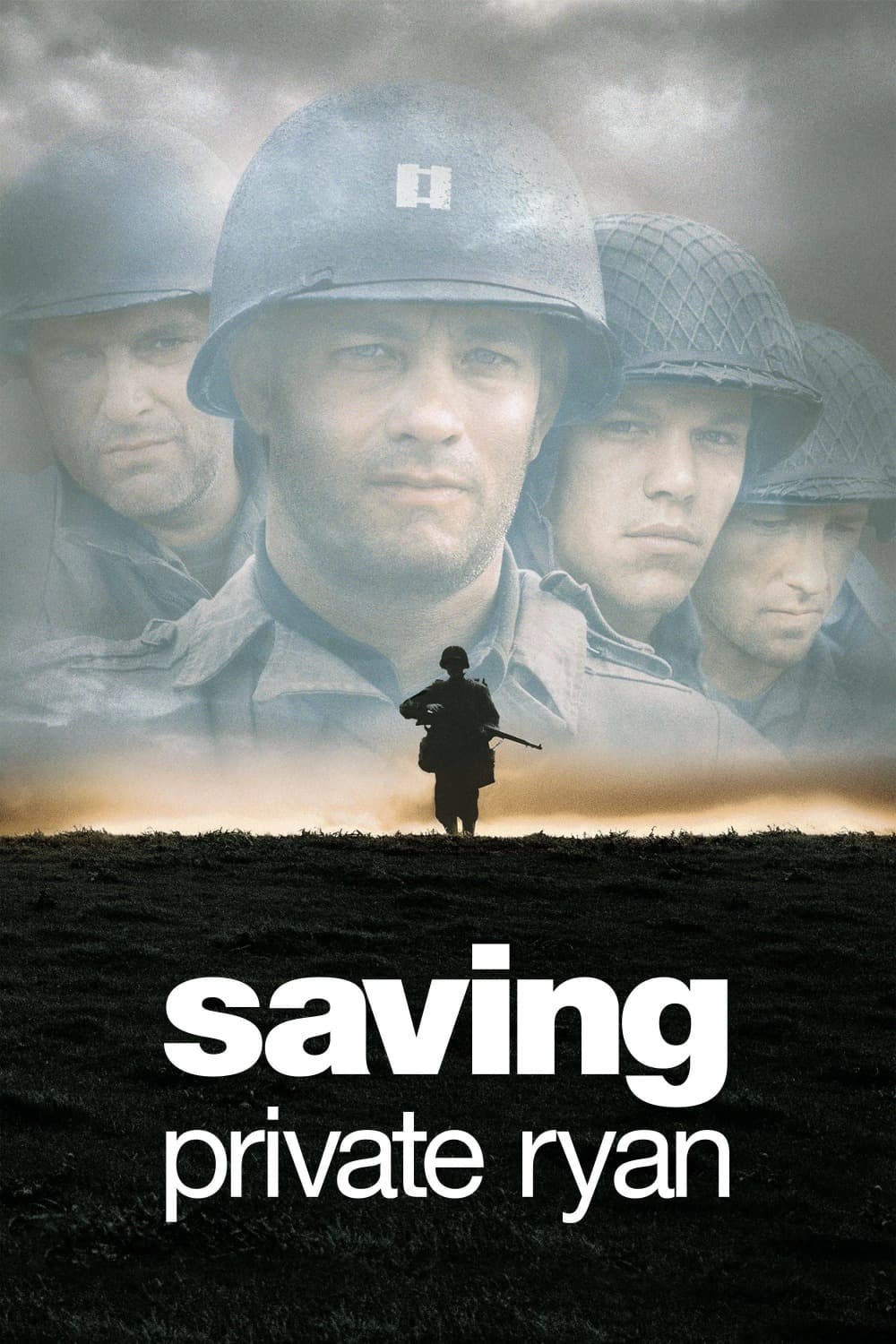
War films look different since the first twenty minutes of this one: Spielberg put the camera in the surf at Omaha Beach and veterans left cinemas unable to speak.