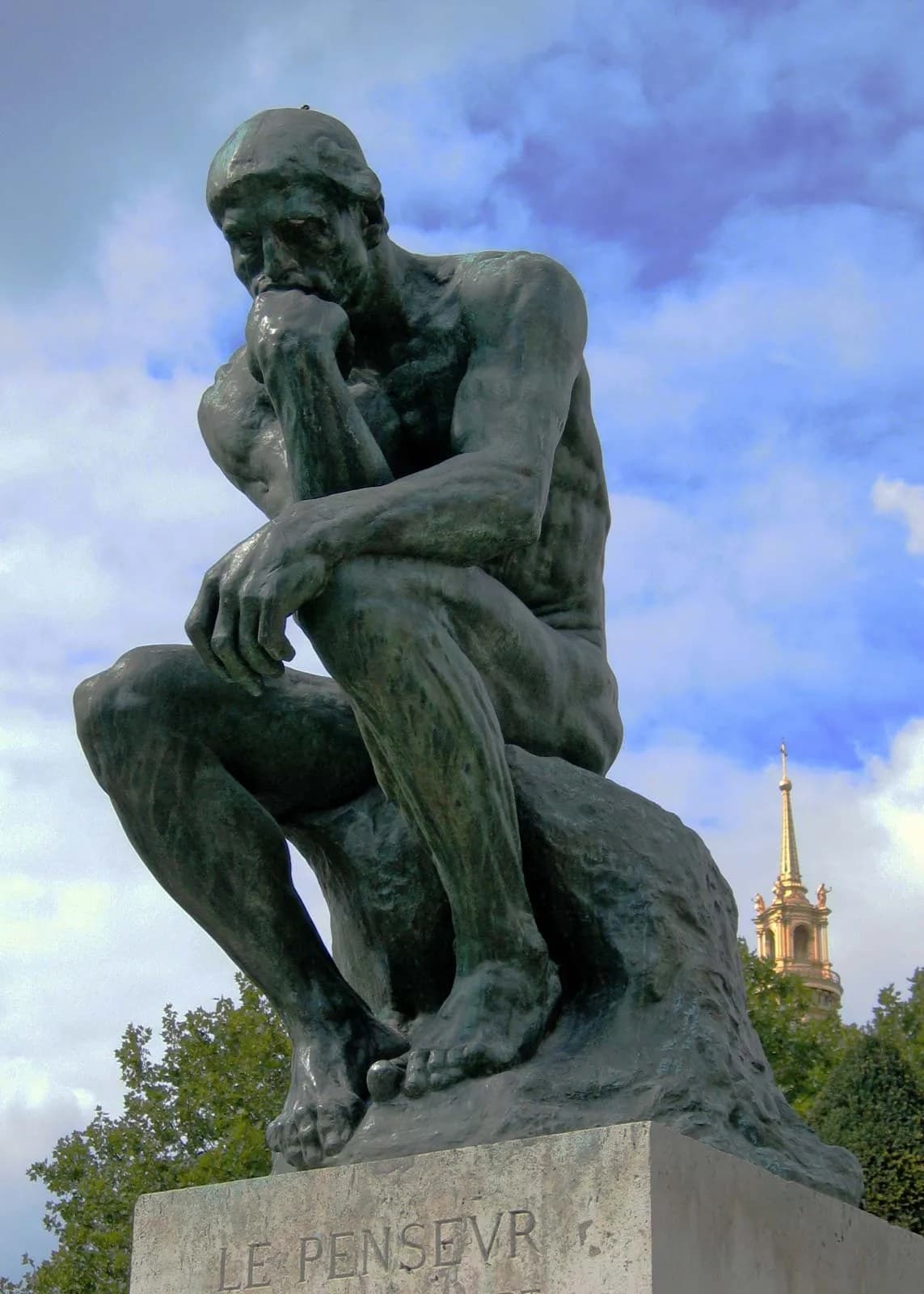
The Thinker
1904 · Musee Rodin, Paris
Rodin first made this figure as Dante brooding over the Gates of Hell, then enlarged him and set him thinking alone on a rock.
★ 9.3
 skopia
Rodin first made this figure as Dante brooding over the Gates of Hell, then enlarged him and set him thinking alone on a rock.

Five nude women stare out with their faces turned into masks, and Picasso kept the canvas rolled up in his studio for years.
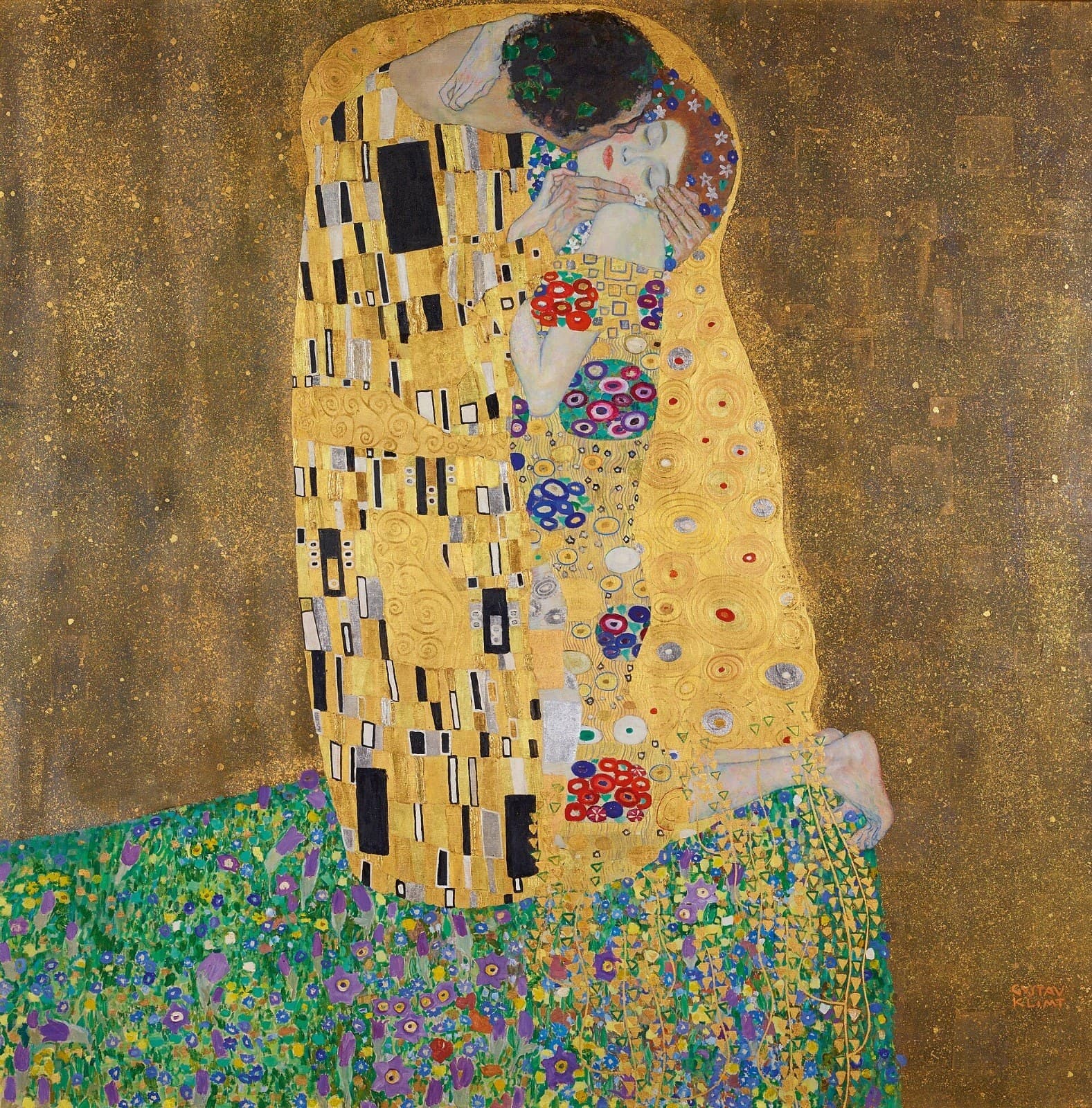
Two lovers kneel wrapped in a single gold robe, rectangles patterning his side of it and circles hers, on a meadow of flowers.
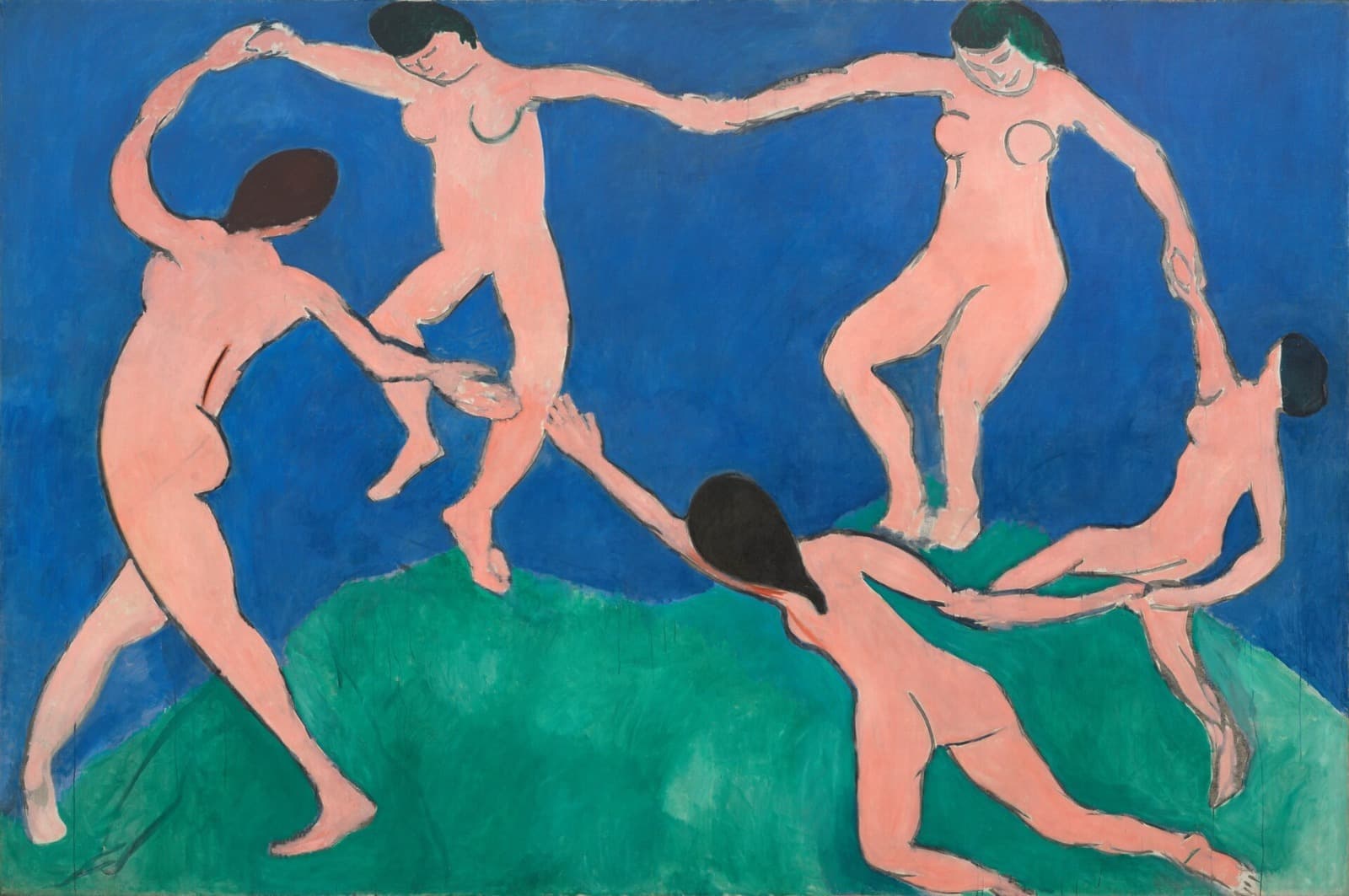
Five figures wheel in a ring against blue and green, reduced to three colors and the strain of holding hands at speed.

Nudes lounge and pipe and dance in a ring in a glade of colors nothing in nature has, a Fauve idyll from 1906.
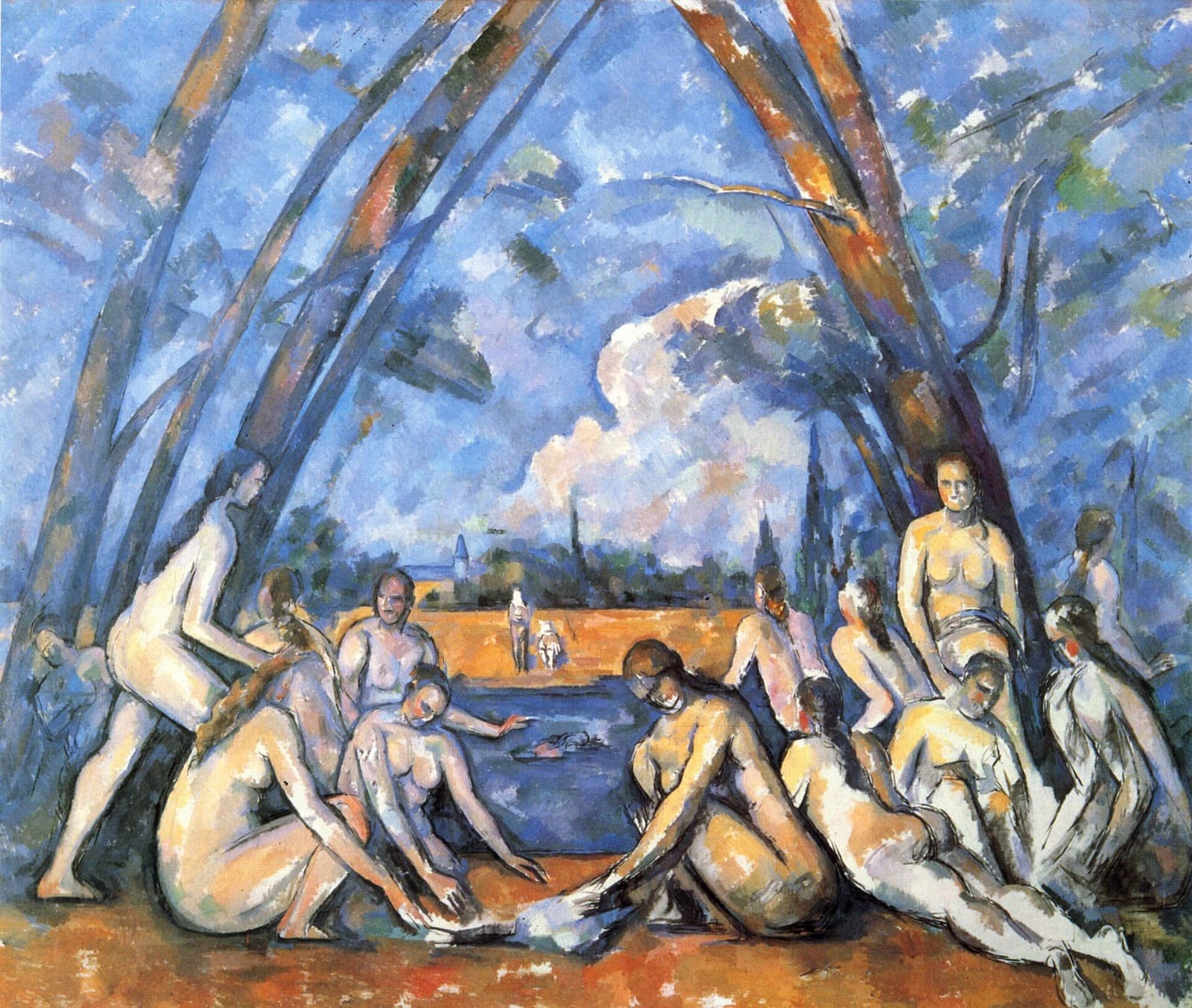
Cézanne worked on it for years and died before he finished, bending the trees inward so they rhyme with the bodies underneath.

Only the face and hands are painted naturally and the rest is gold. The Nazis seized it, and a long restitution case eventually got it back.

A critic looked at this and called Matisse and his friends fauves, wild beasts, which is how the movement got its name.
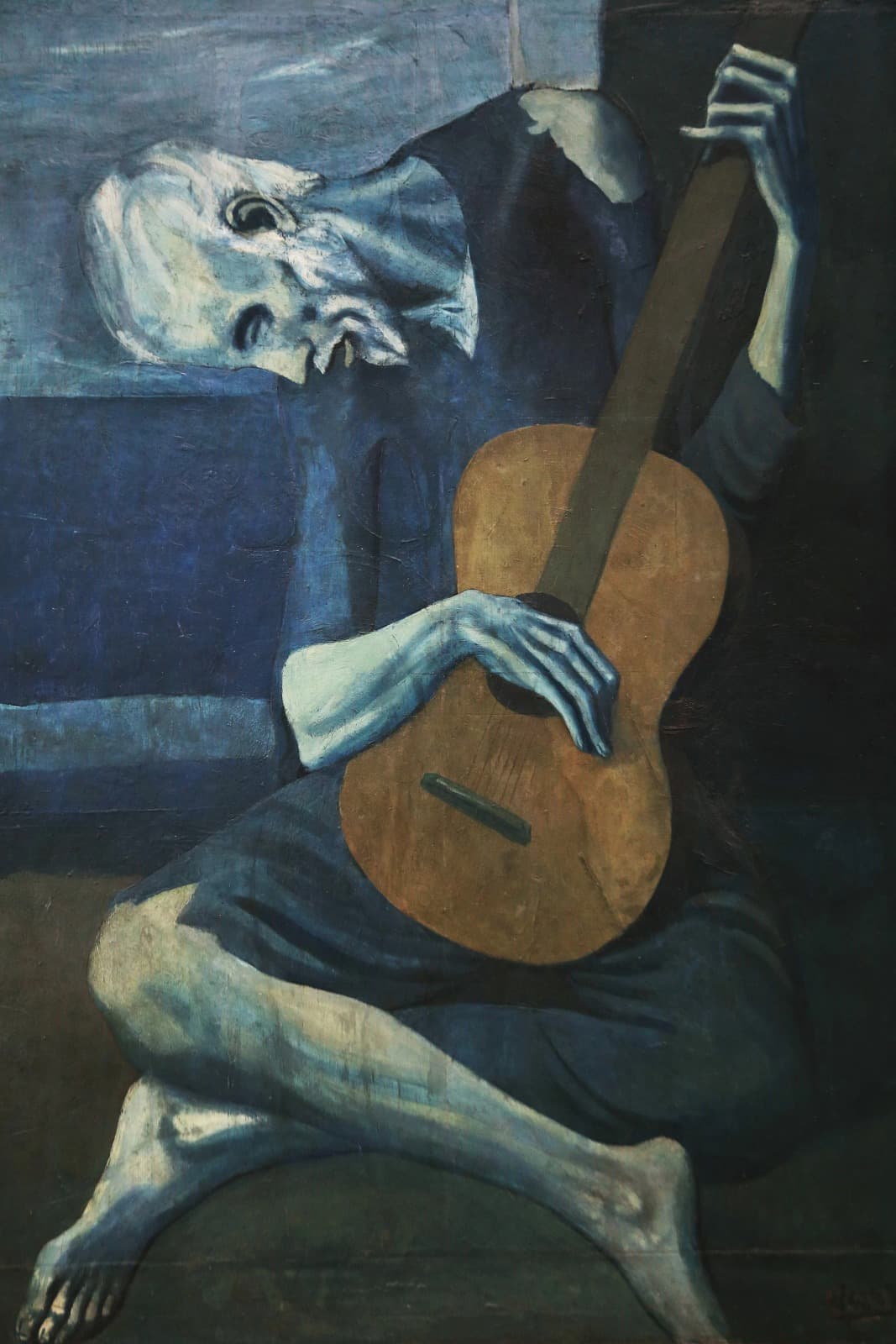
The guitar is the only warm note in the picture. Picasso painted it in his Blue Period, poor himself and living on very little.
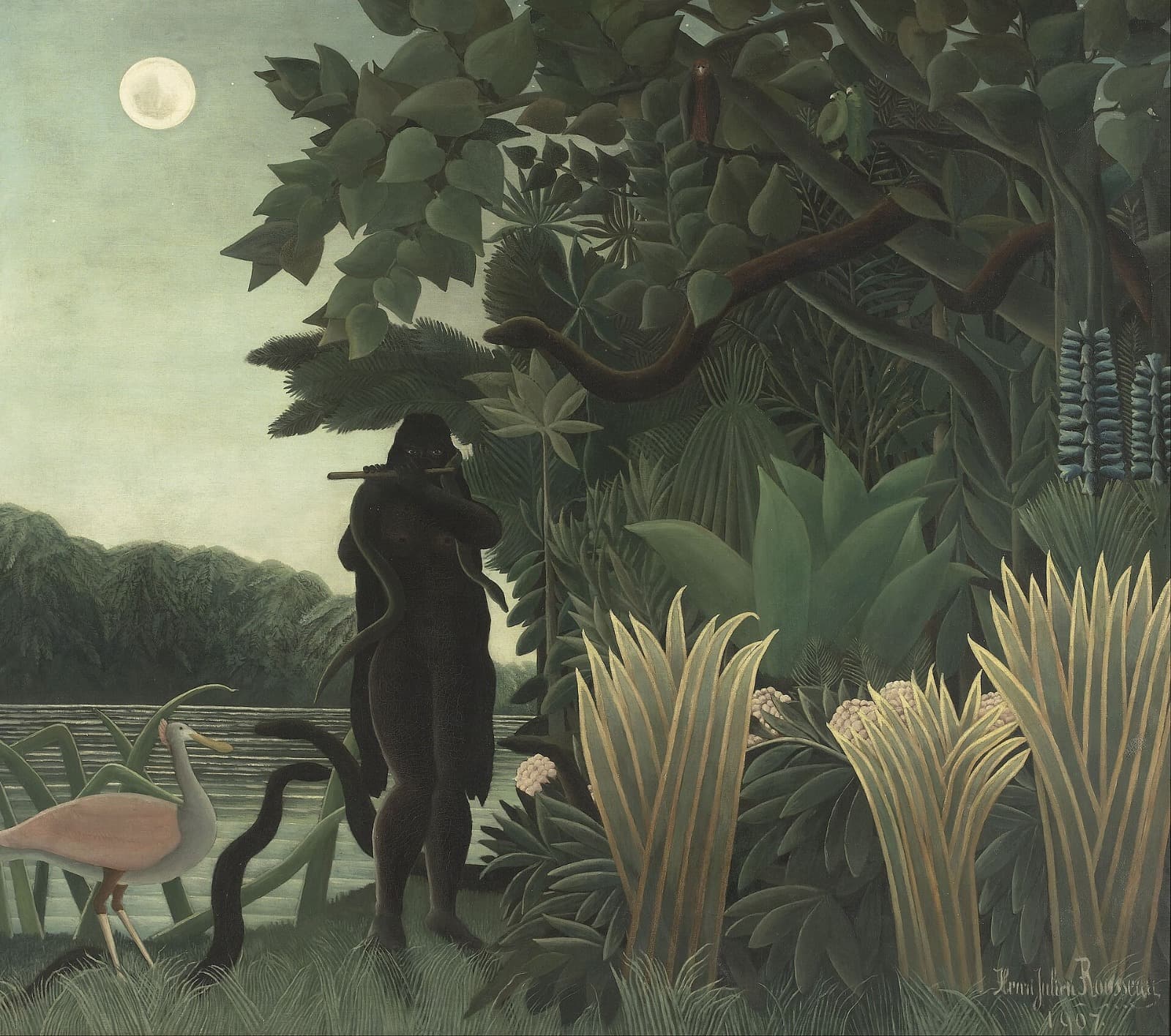
A black silhouette plays a flute and the snakes come out of the leaves toward the music, in moonlight Rousseau invented entirely.

Circus people stand together in an empty landscape without looking at each other. The Rose Period at its largest and most wistful.

Matisse ran a green stripe down his wife's face to divide warm from cool, and used color to do the work of light.

A woman in white waits, a woman in red dances, a woman in black stands apart. Three ages of love on a midsummer shore.

The title comes from Baudelaire and the technique from Seurat, but the color is already heading somewhere neither of them went.

Rousseau never left France and built his jungles from botanical gardens and prints. This one hung in the room that named the Fauves.
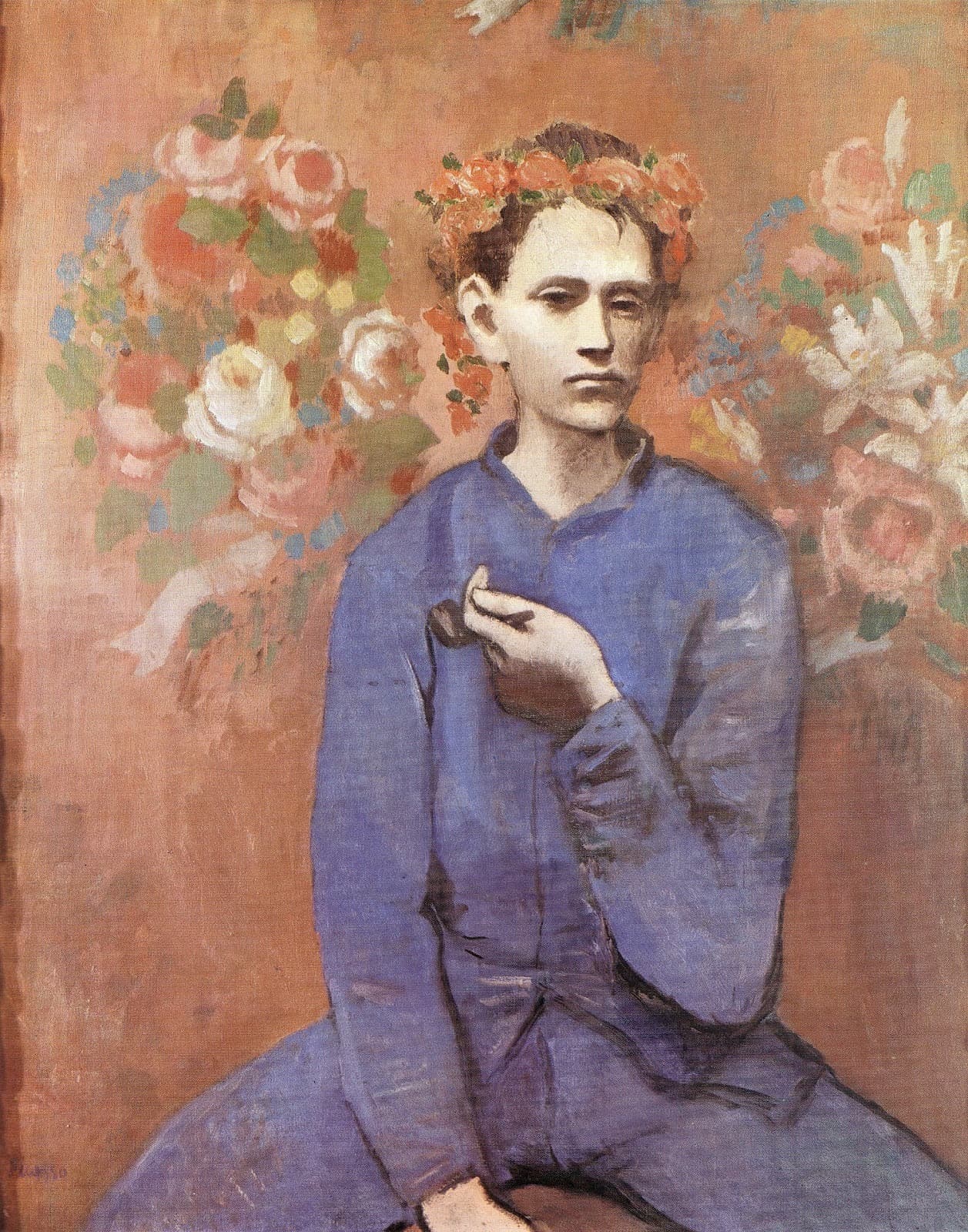
A boy from the street in a crown of roses, painted the year Picasso's blue gloom warmed into rose.

The Rose Period cooling off into something graver and more archaic, the boy and horse built like figures off a Greek relief.

Monet painted Westminster across the river again and again because what he actually wanted was the fog, not the building.
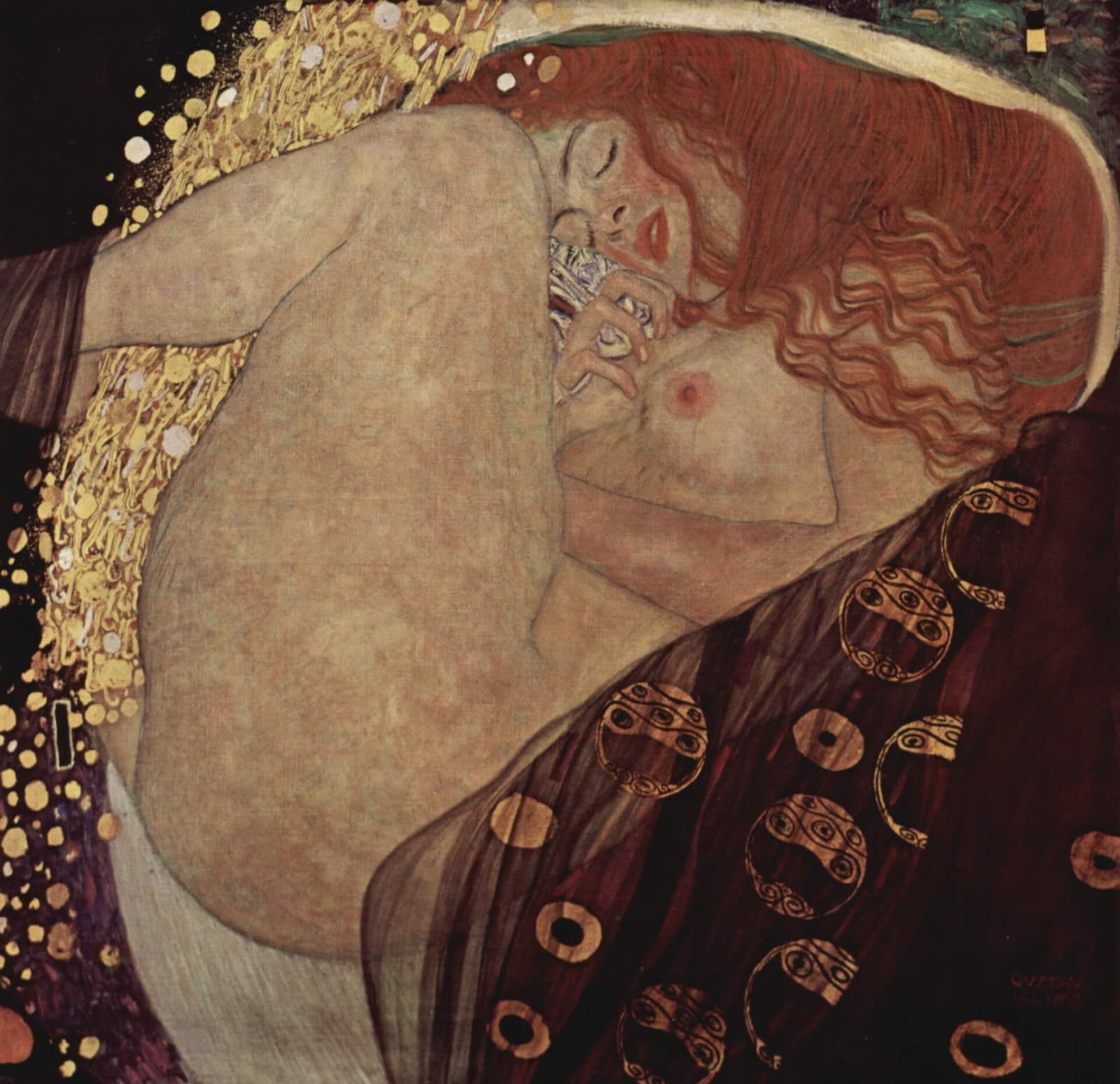
Zeus arrives as a stream of gold coins and ornament between her thighs, and Klimt makes no attempt to be subtle about it.
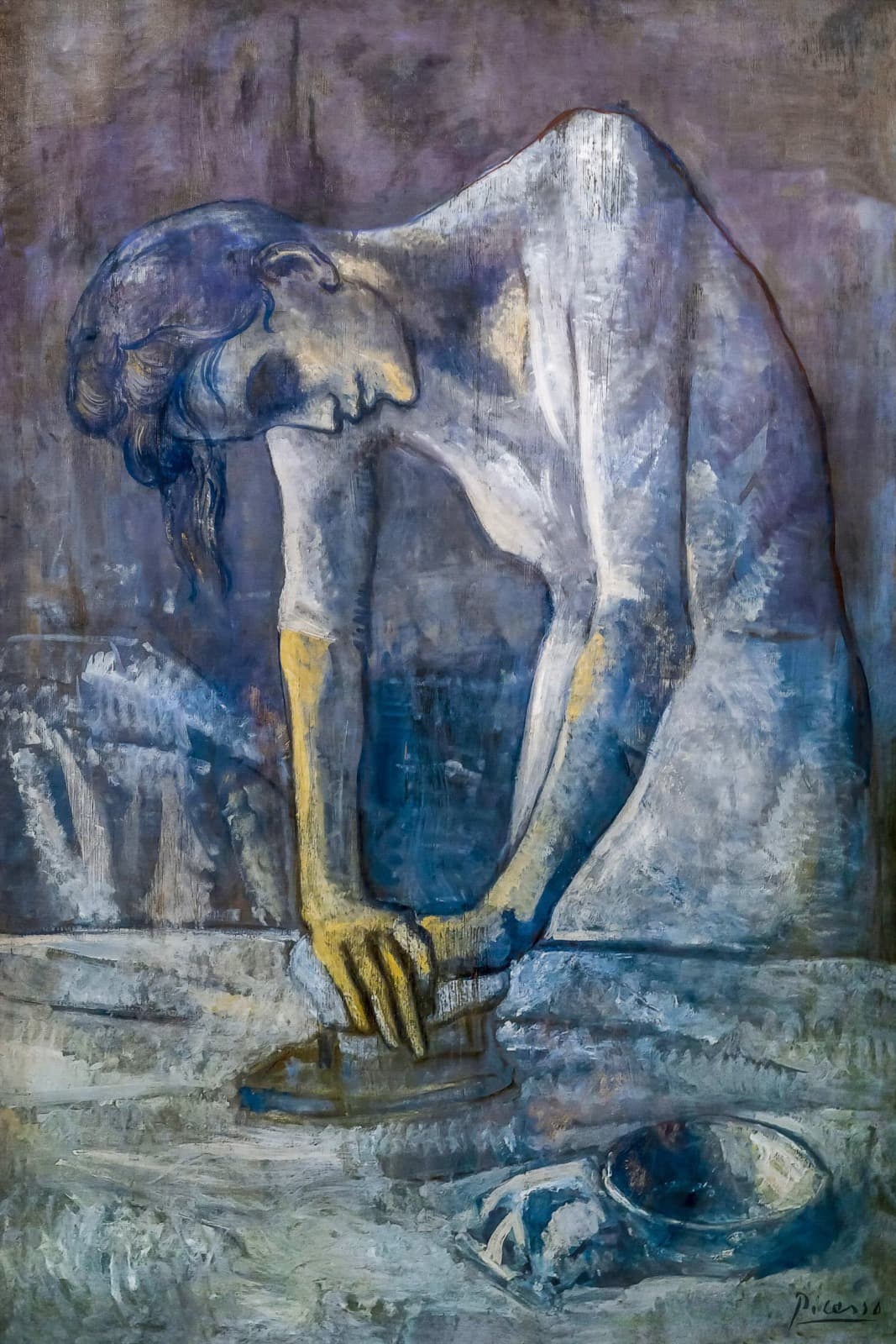
The laundress bears down on her iron with her shoulders up and her head sunk, all in the cold blue of Picasso's poorest years.

Cézanne cared less who the man was than whether the head would hold together as structure, and the slight asymmetries keep it alive.
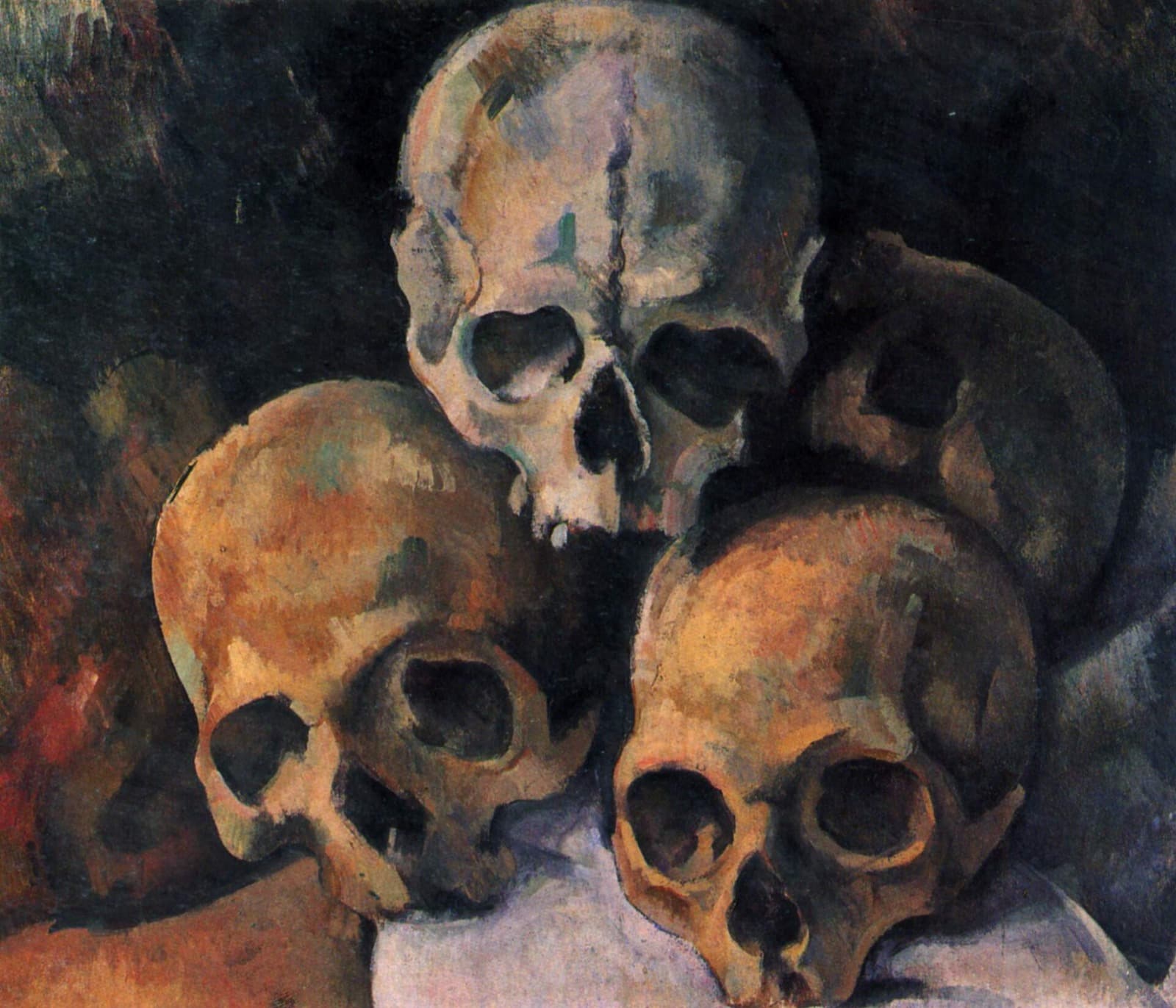
Four skulls stacked on a tabletop and lit straight on. Cézanne kept coming back to the skull in his last years, never this frontally.

Notre-Dame across the Seine in a few dark summary strokes, painted before Matisse's color went off and Fauvism happened.
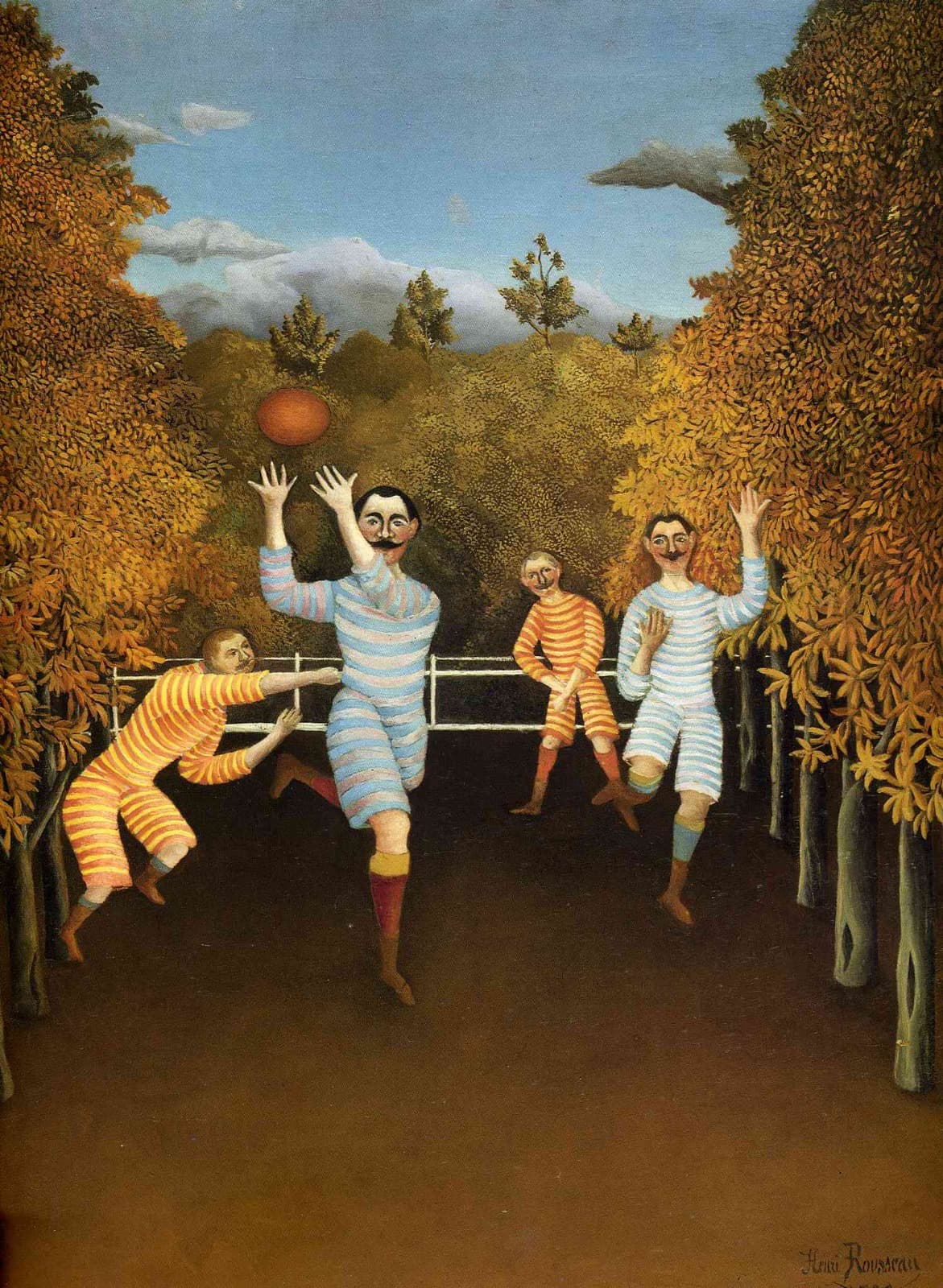
Moustached men in striped jerseys leap for a ball among autumn trees, playing the new game of rugby as though it were slow ritual.
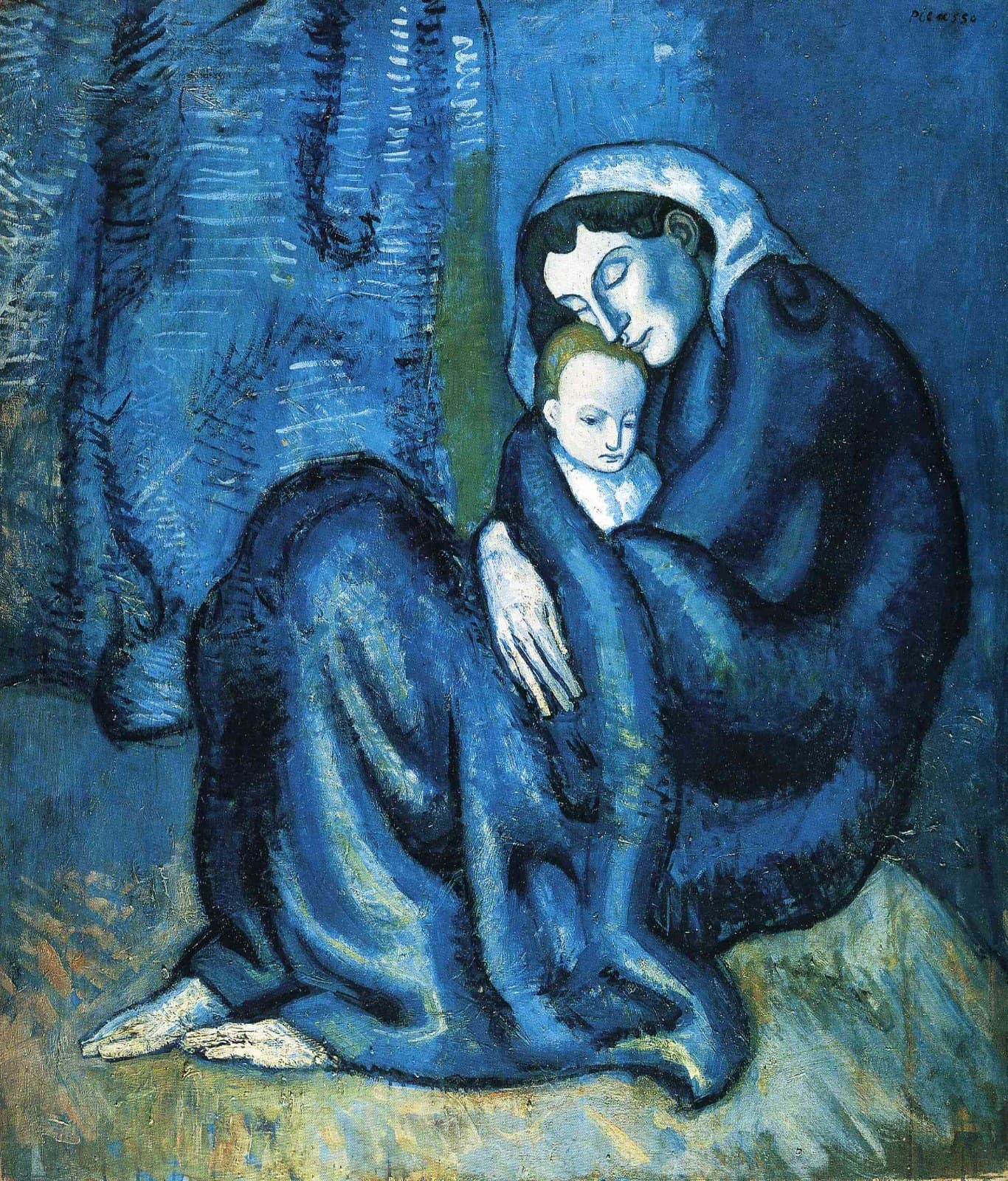
A mother holding her child, in the blue Picasso used for everything during the years he was poor in Paris and Barcelona.
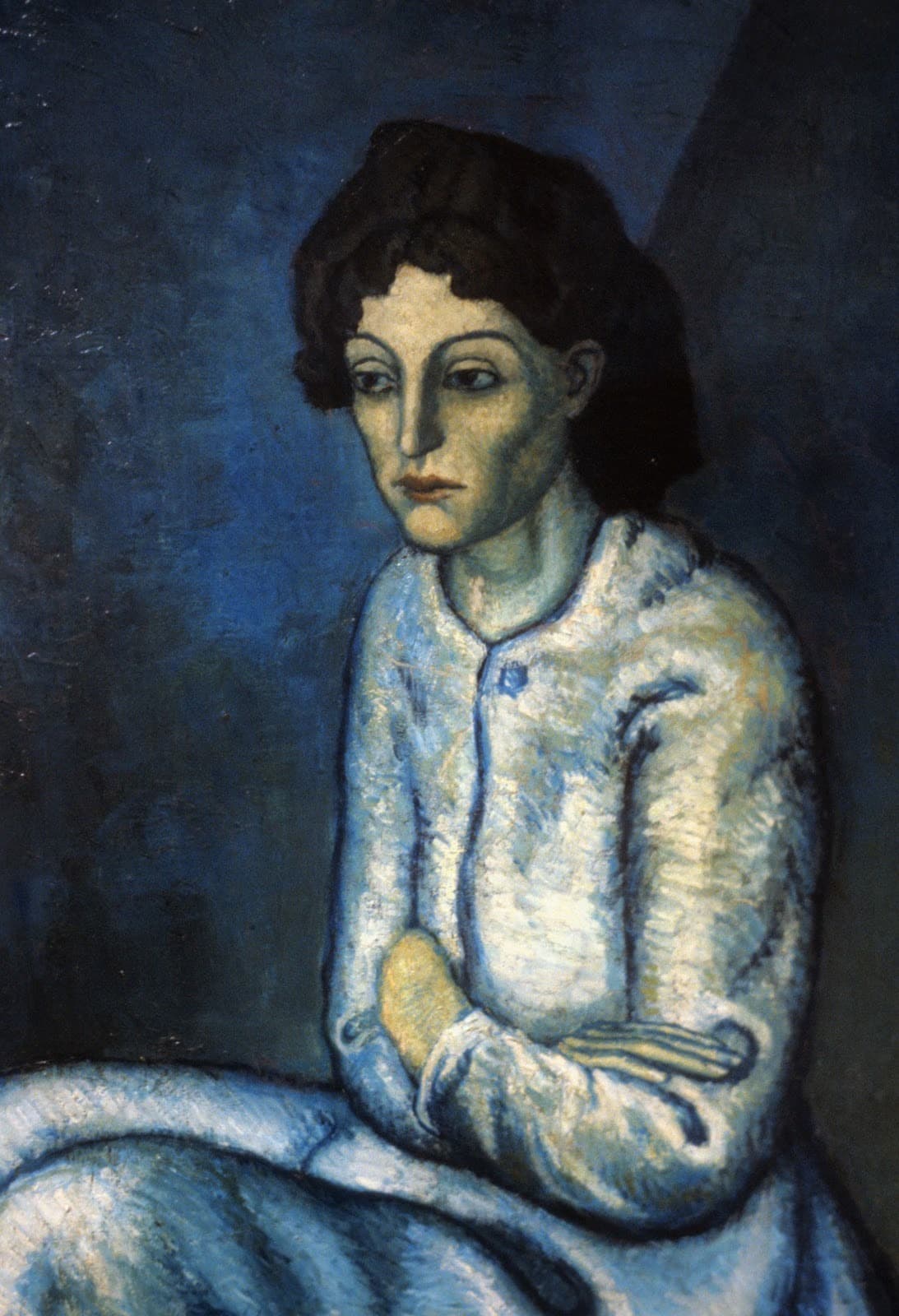
Her crossed arms are a wall against the world, and the blue does the rest. Picasso was painting the outcast and the destitute.

Signac moved to Saint-Tropez and pulled the rest of the Neo-Impressionists south. Seurat's tight dots have loosened into bigger, brighter tiles.
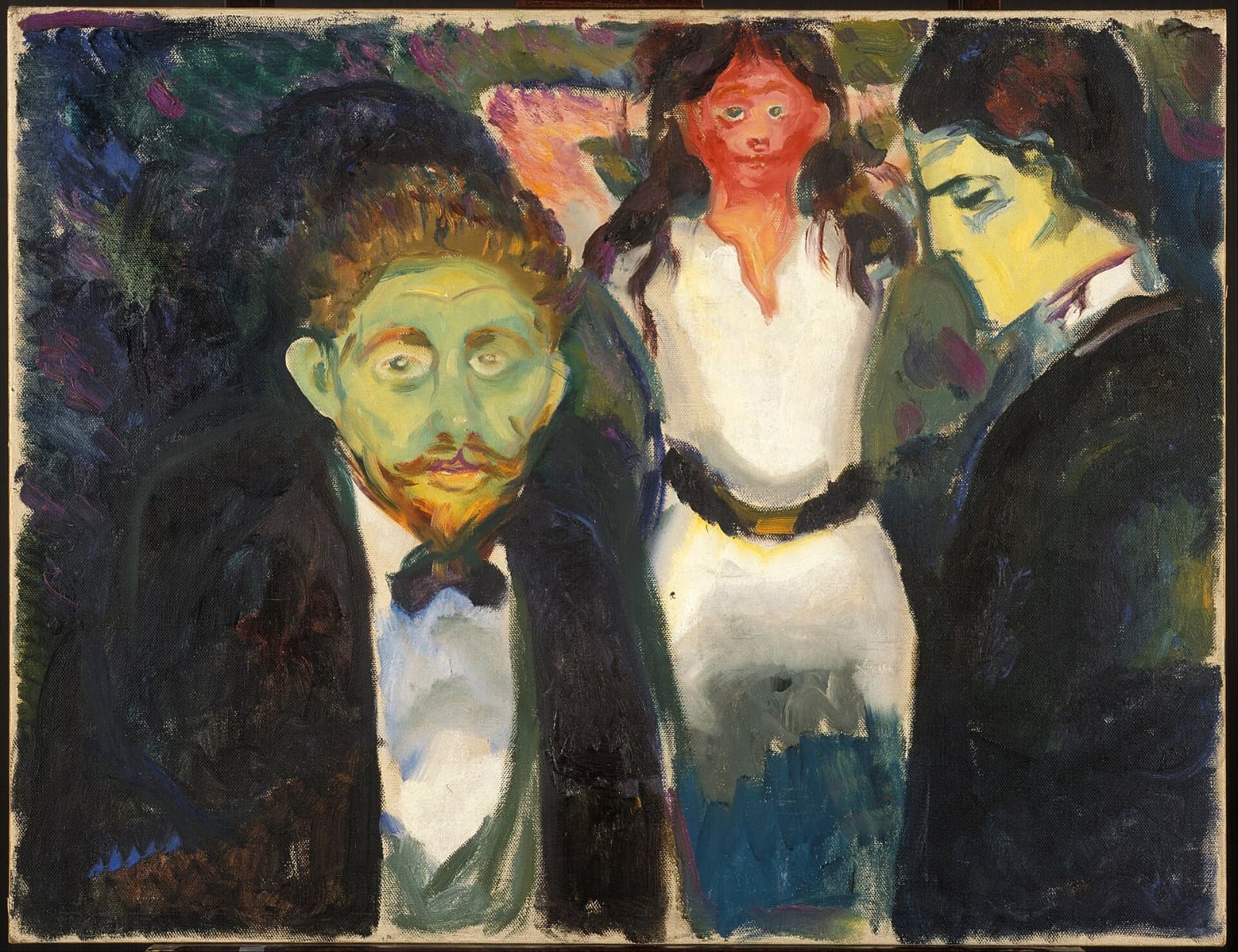
A sallow green face fills the front of the picture while behind him a woman in red picks fruit beside another man. He is imagining it.
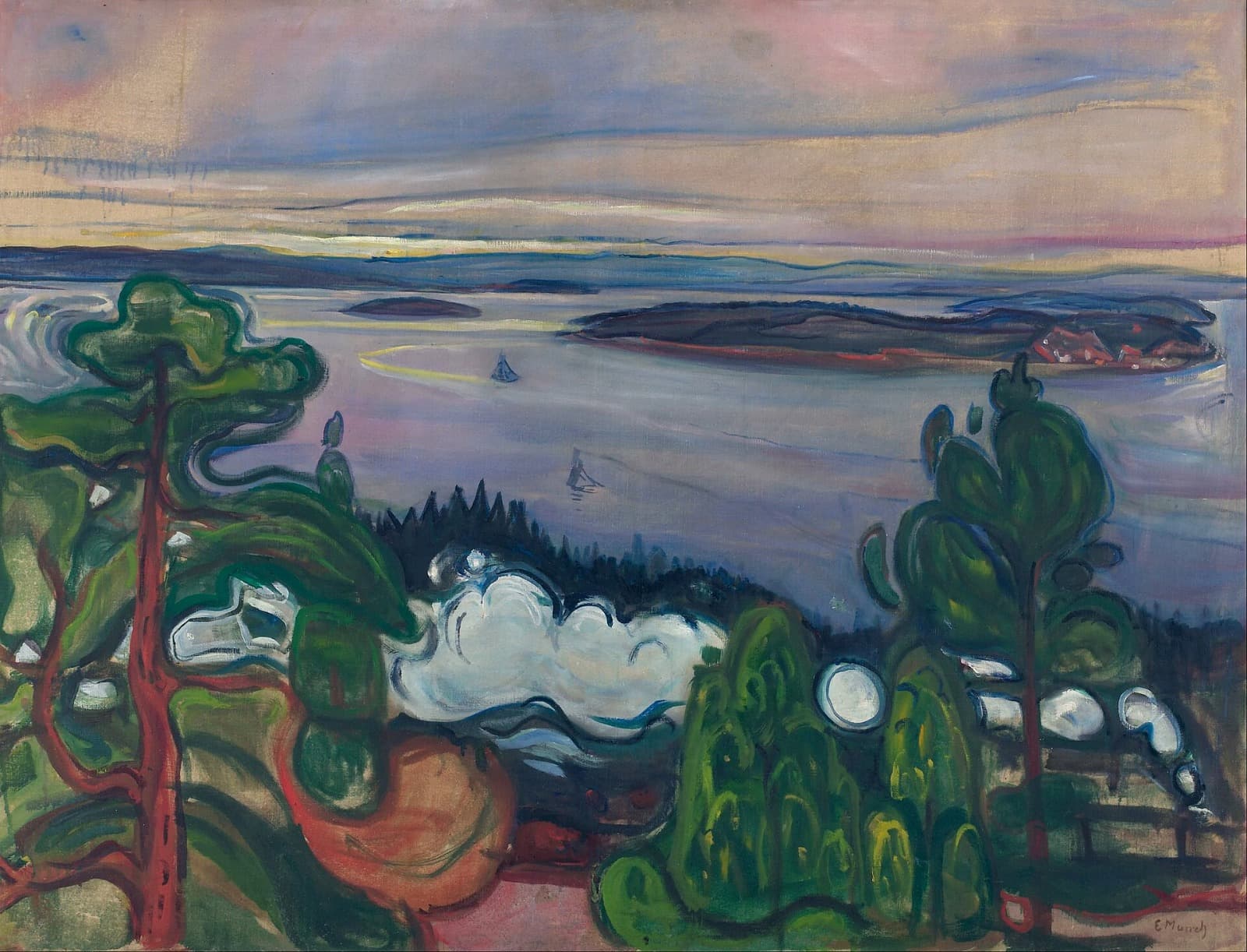
One puff of steam drifts across a curving shoreline, the modern world putting a small mark on a landscape that had none.

A child holding a white dove with a colored ball at its feet, painted just as Picasso's palette was cooling toward blue.

They shared a Barcelona studio, and Soto was known as a hard drinker, but Picasso painted him sober and sad in blue.

Boats and masts broken into tilting green and brown planes, painted while Braque and Picasso were building Cubism out of Cézanne.
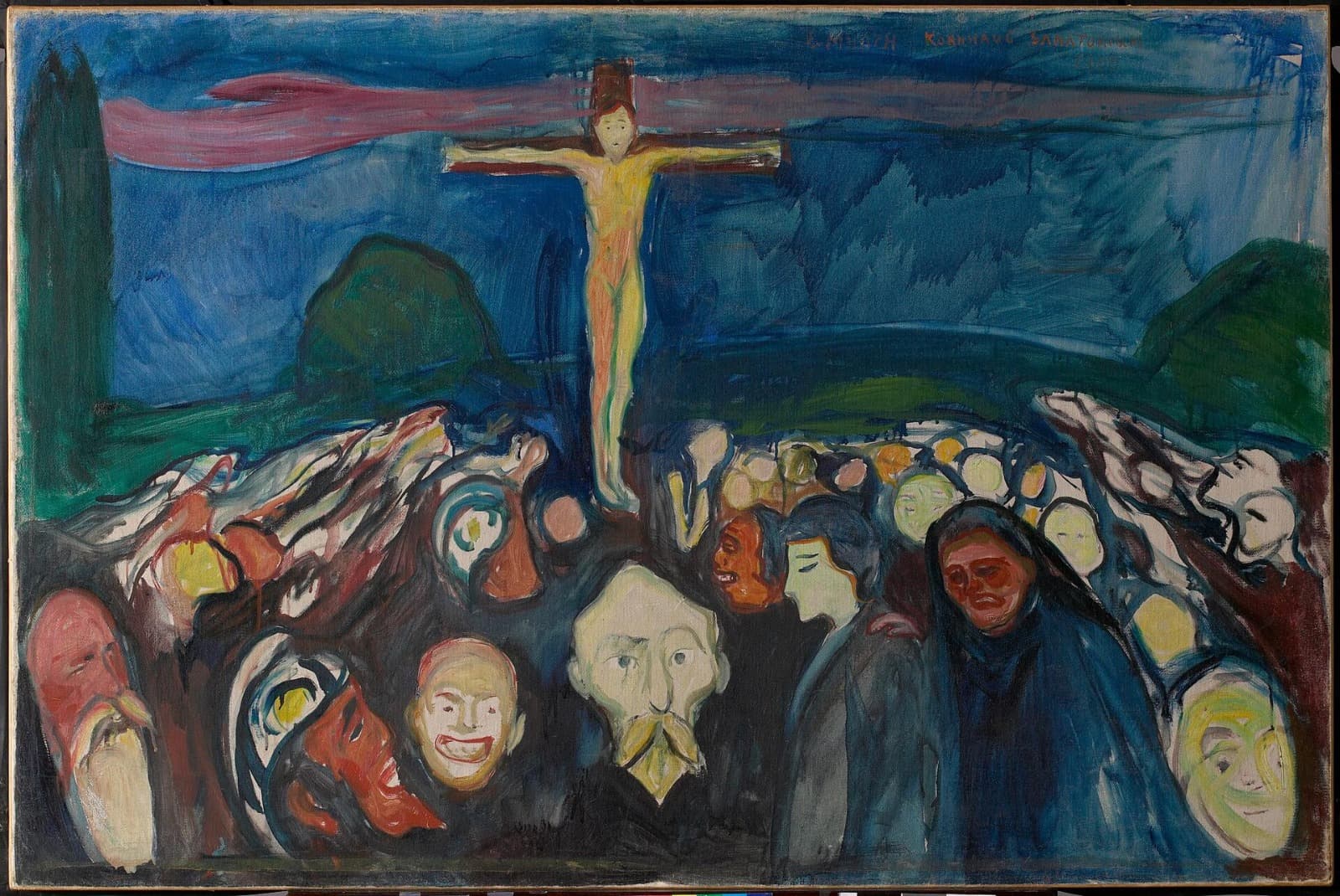
Munch painted this while under treatment in a clinic, and the crucified figure hemmed in by leering faces is not hard to read.
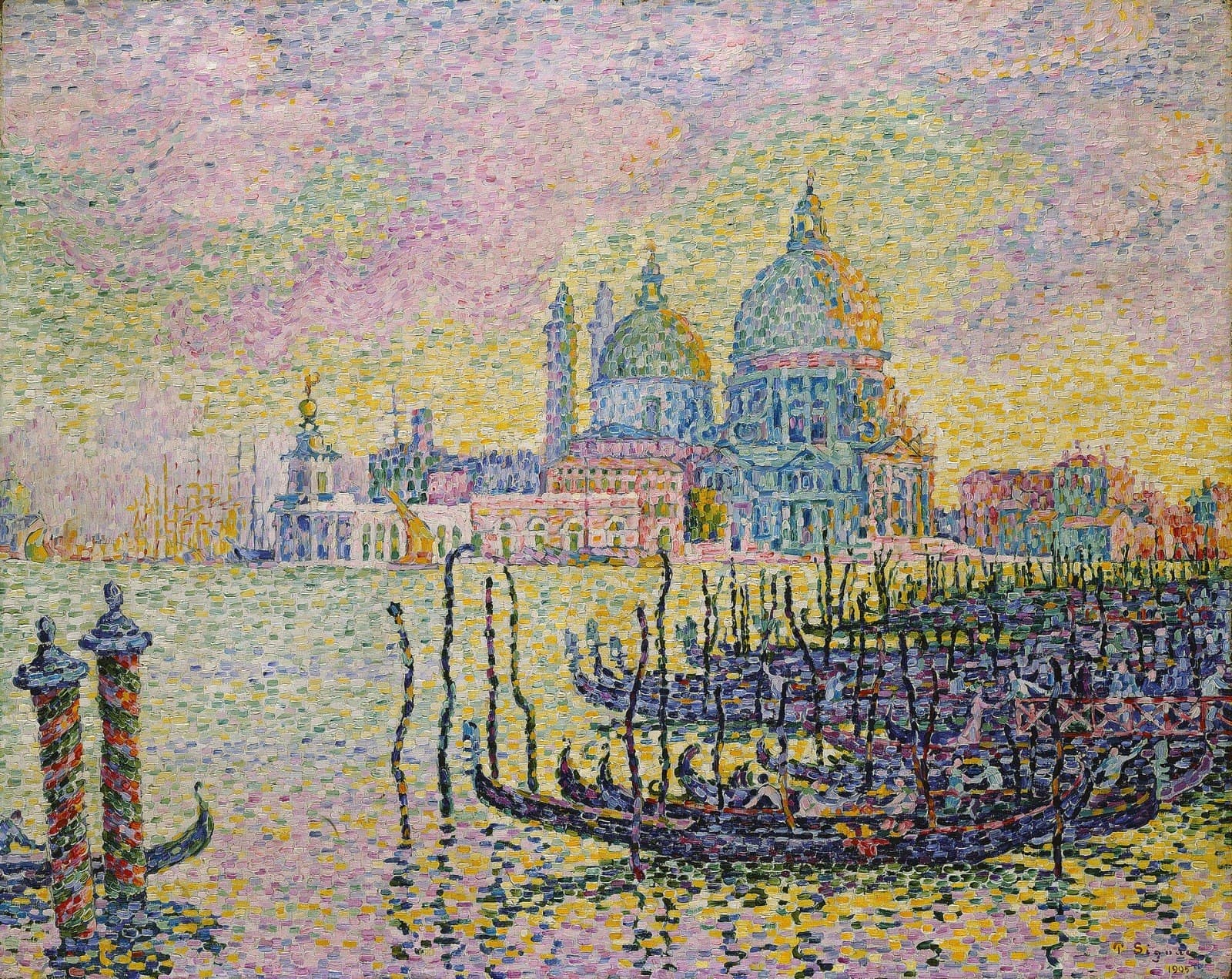
Gondolas on water that has shattered into pink, blue and gold. Signac took the divisionist dot to the most painted view in Europe.

Hot pinks and oranges laid on freely, a year before Cézanne and Picasso's Demoiselles sent Braque off toward Cubism instead.
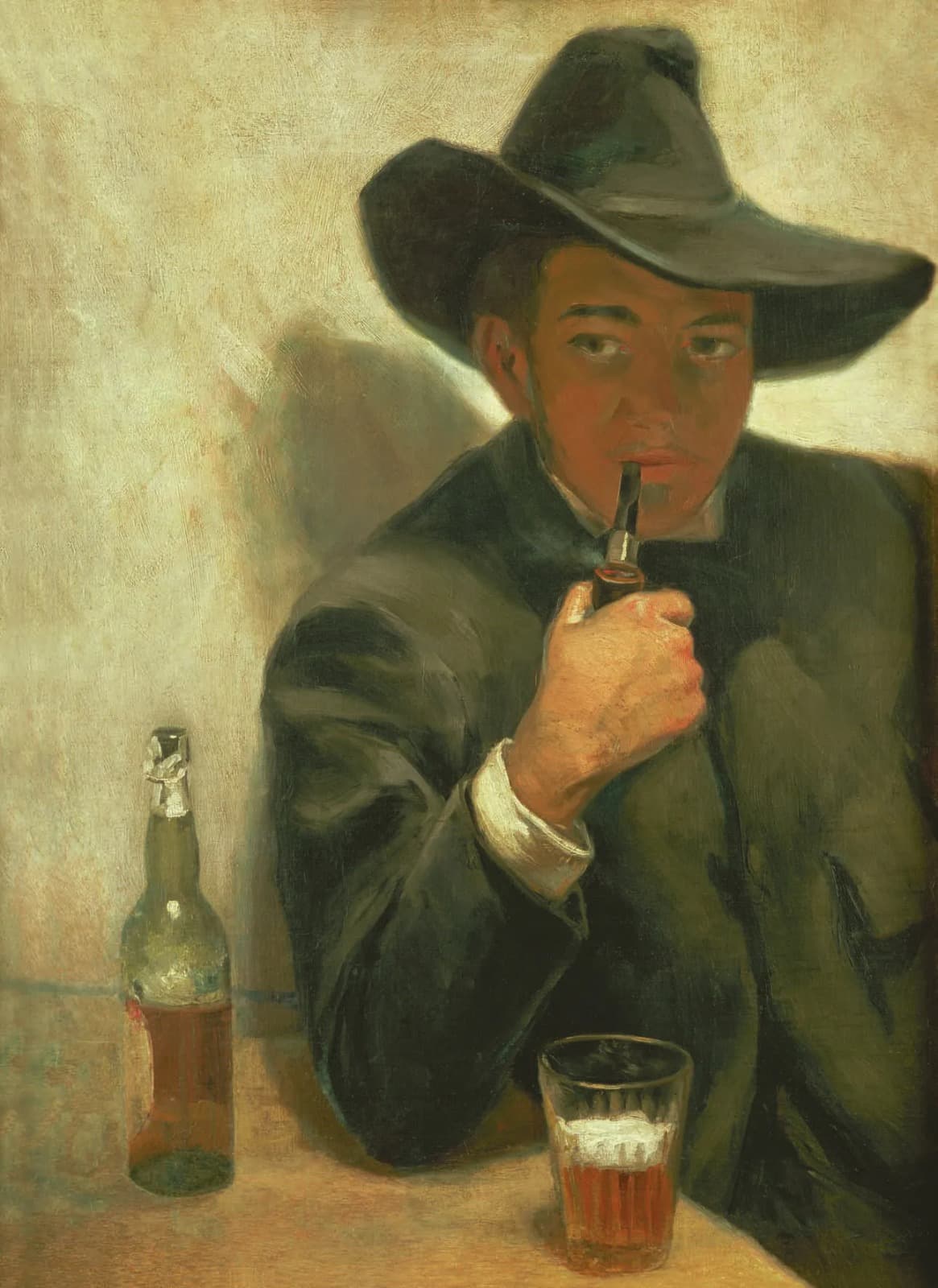
Rivera as a student in Europe, years before the murals, still working inside the academic tradition he would later blow up.