
The Ghent Altarpiece (Adoration of the Mystic Lamb)
1432 · St. Bavo Cathedral, Ghent
Saints and pilgrims stream toward a bleeding Lamb across a dozen hinged panels. One of them was stolen in 1934 and has never been found.
★ 9.8
 skopia
Saints and pilgrims stream toward a bleeding Lamb across a dozen hinged panels. One of them was stolen in 1934 and has never been found.
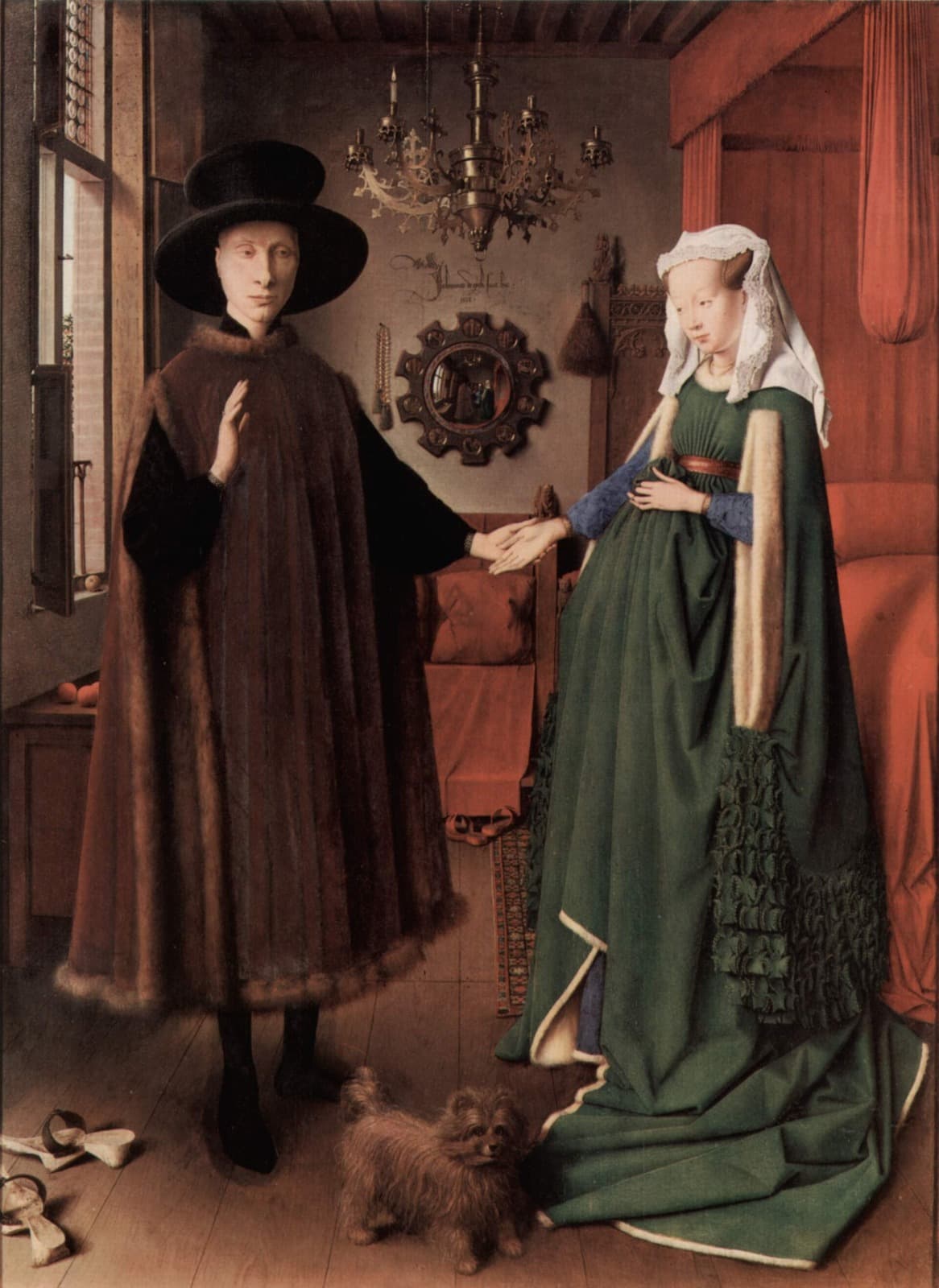
A couple joins hands in a Bruges bedroom, and the mirror behind them catches two visitors at the door. Van Eyck signed the wall above it.

The fainting Virgin curves in an exact echo of her dead son, the stroke that made van der Weyden the most copied painter in the north.

Van Eyck spared the old canon nothing: the stubble, the swollen hands, the spectacles. His armored saint mirrors the whole room in miniature.

The wary, straight-on gaze is what a painter sees in a mirror, which is why this is probably van Eyck looking at himself.

Broken lances lie along the receding lines of a perspective grid. Vasari said Uccello sat up all night muttering about how sweet it was.

Christ crowns his mother at the top of a flight of steps that recede convincingly into depth, which is the new thing here.

She sits in profile against a hedge of carnations with butterflies going past, a sprig of juniper on her sleeve punning on her name.
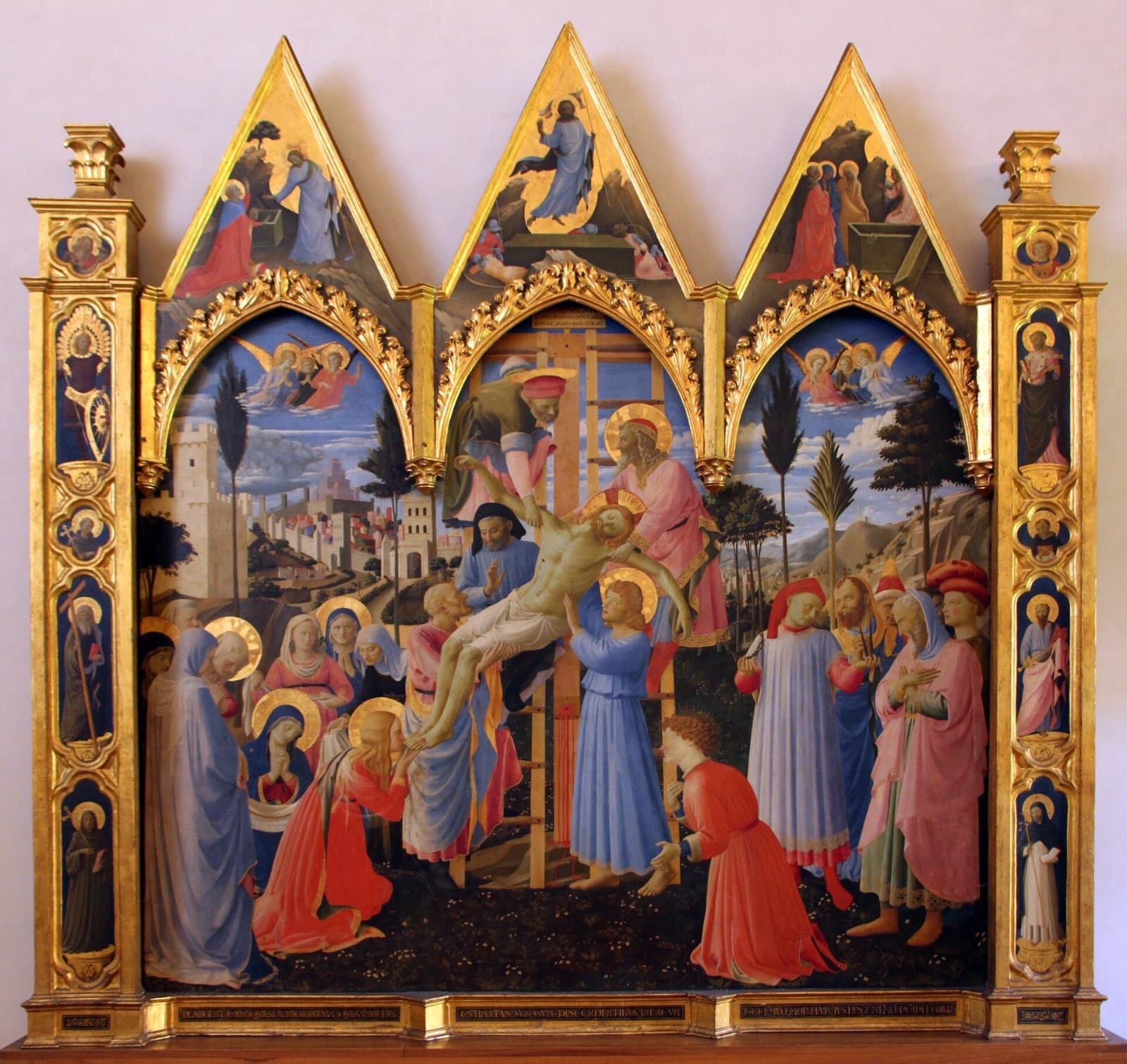
Fra Angelico inherited a Gothic frame begun years earlier and filled it with deep sunlit space instead of gold, which is the whole story.

The angels crowd in like inquisitive children. One of the first paintings to put the Virgin and saints in a single shared space.

A white Gothic city, a horse shown daringly from behind, and two hanged men on a gallows in the corner of the fairy tale.

A corridor of opened graves runs down the middle, the saved dancing into a garden on the left, the damned driven into fire on the right.
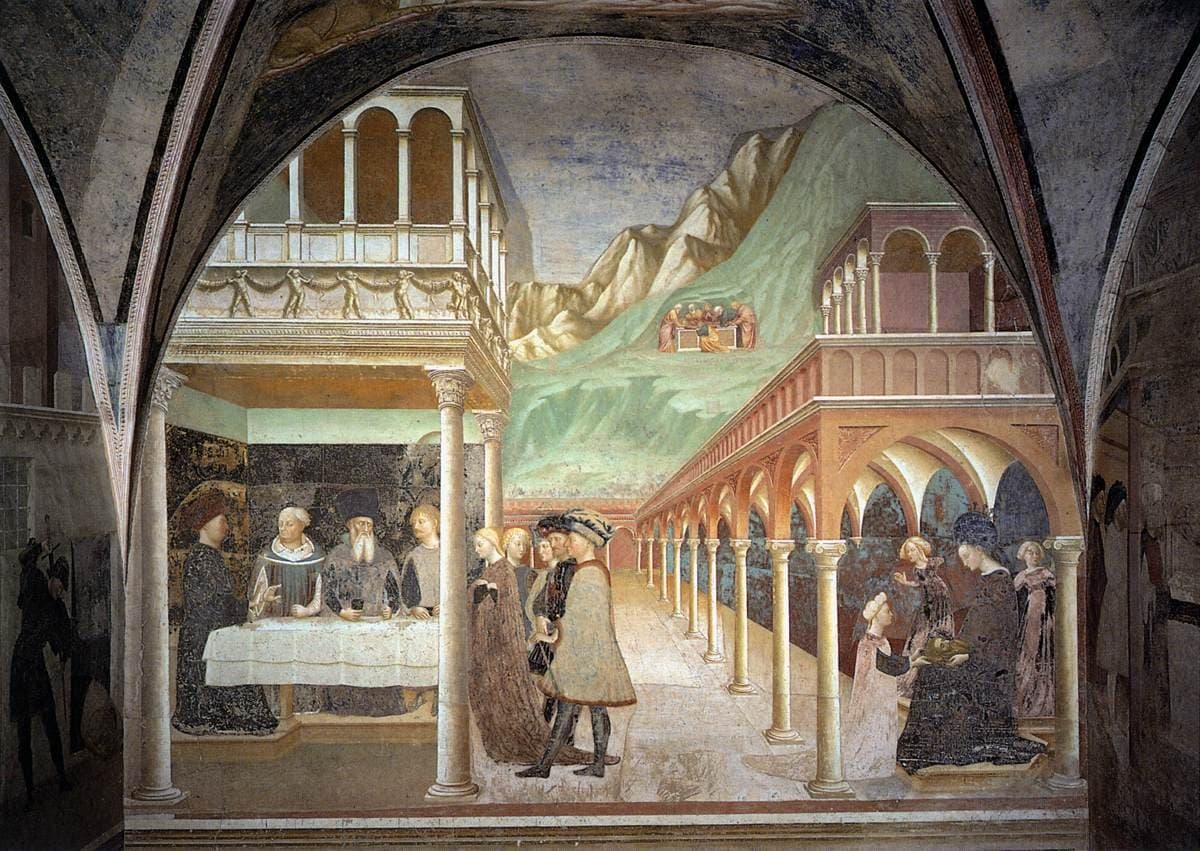
The feast on the left, the severed head delivered on the right, both staged in a colonnade built with Masaccio's new perspective.