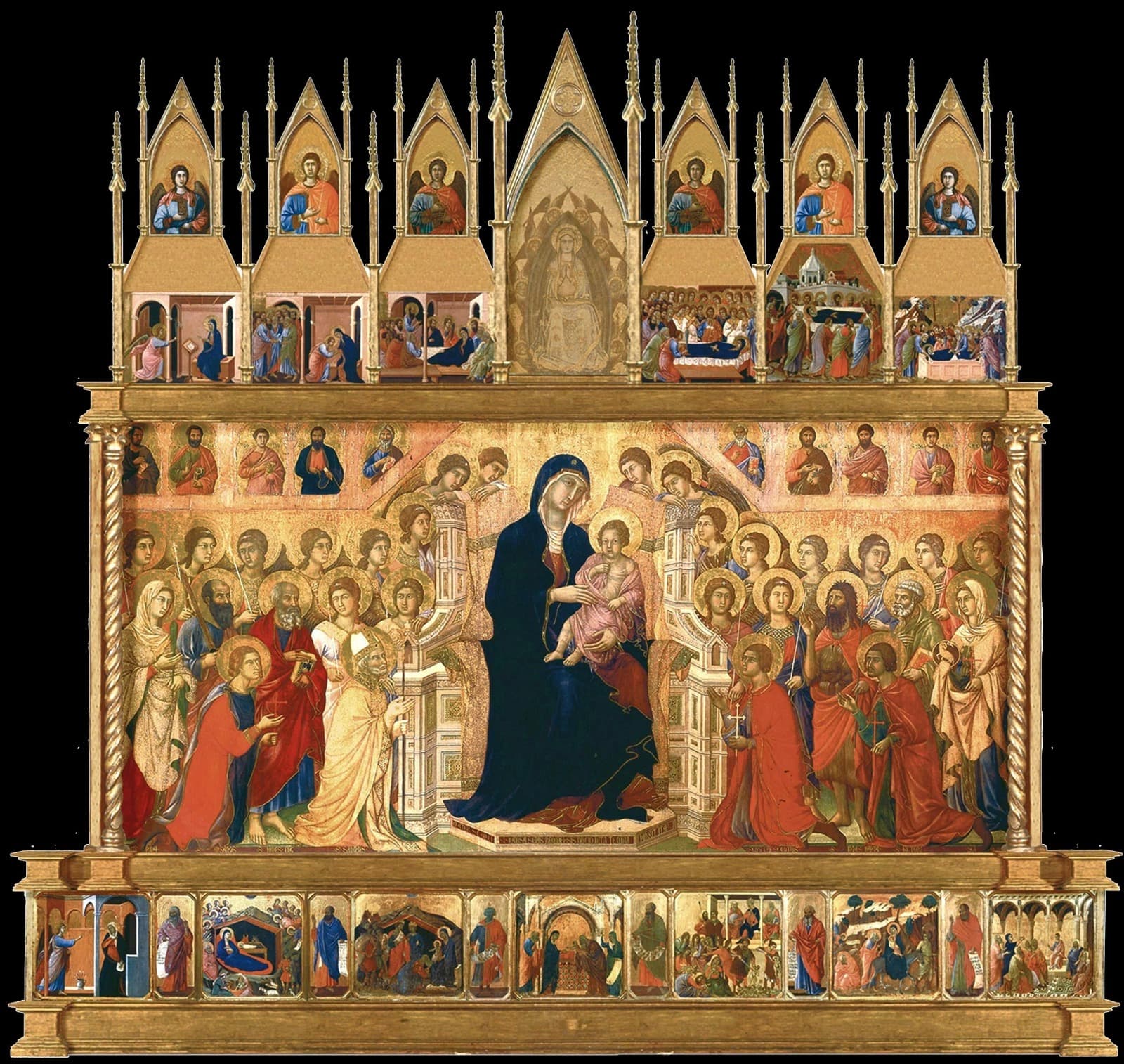
Maesta (Duccio)
1311 · Museo dell'Opera del Duomo (Siena), Siena
When Duccio finished it in 1311 the whole of Siena walked it to the cathedral in procession, with the bells going the entire way.
★ 8.8
 skopia
When Duccio finished it in 1311 the whole of Siena walked it to the cathedral in procession, with the bells going the entire way.
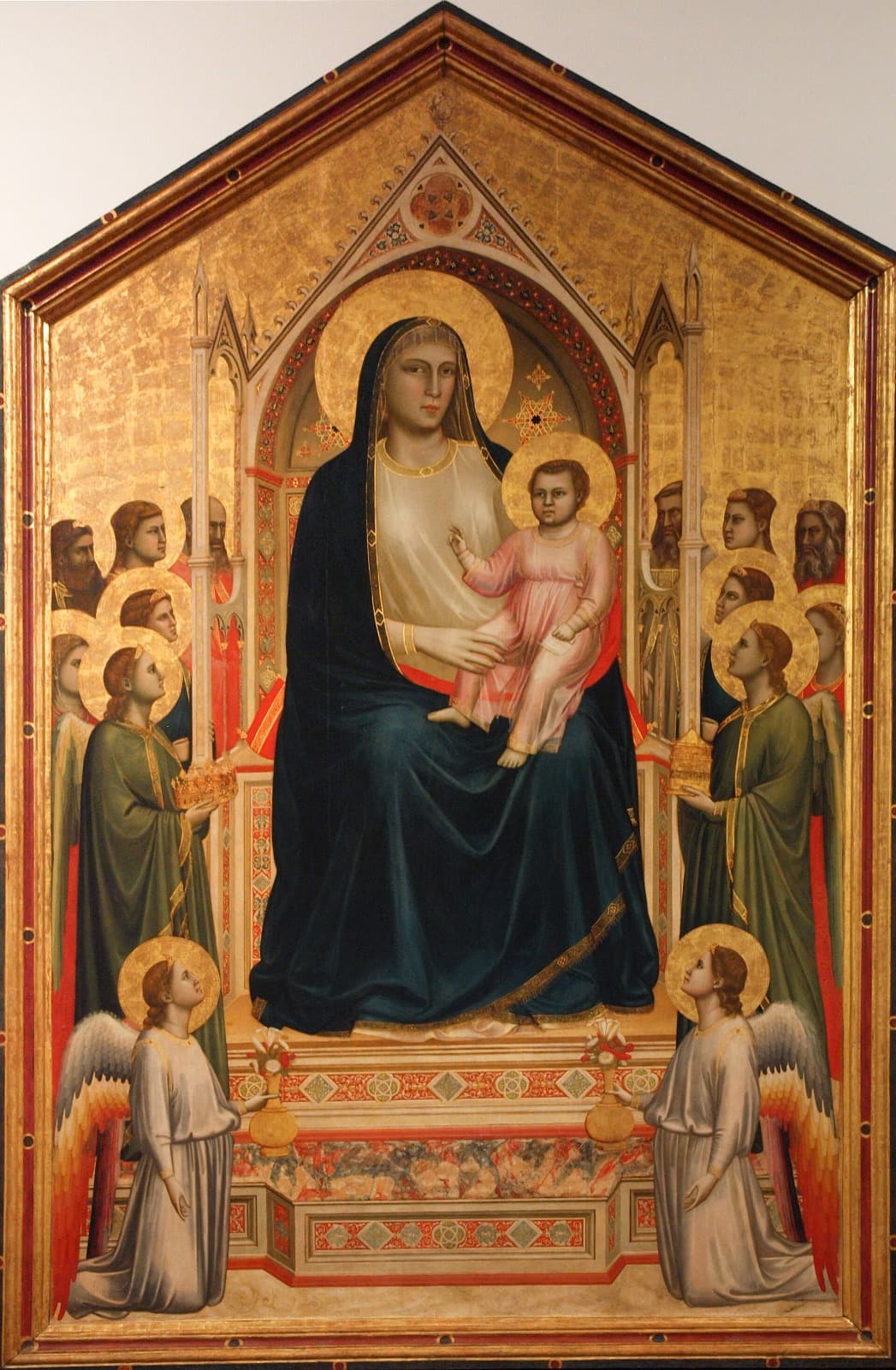
Where Cimabue and Duccio floated their Madonnas on gold, Giotto gave his weight, a real throne, and a body that presses through the cloth.
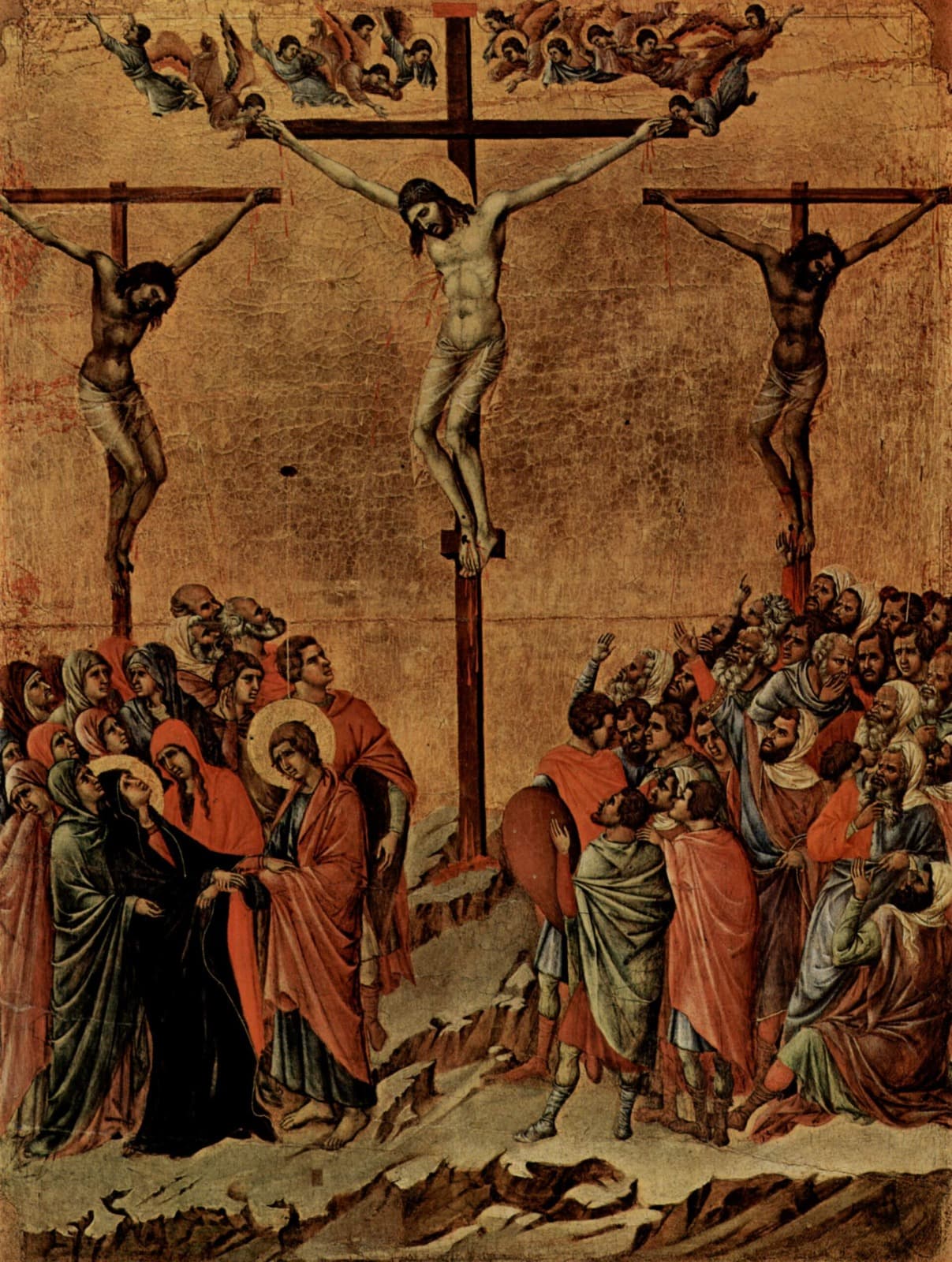
This is the largest scene on the back of the Maesta, the Virgin fainting on one side and the crowd arguing on the other.

Duccio and Giotto painted this same entry within a year of each other. Duccio's is the crowded one, full of towers, incident and color.
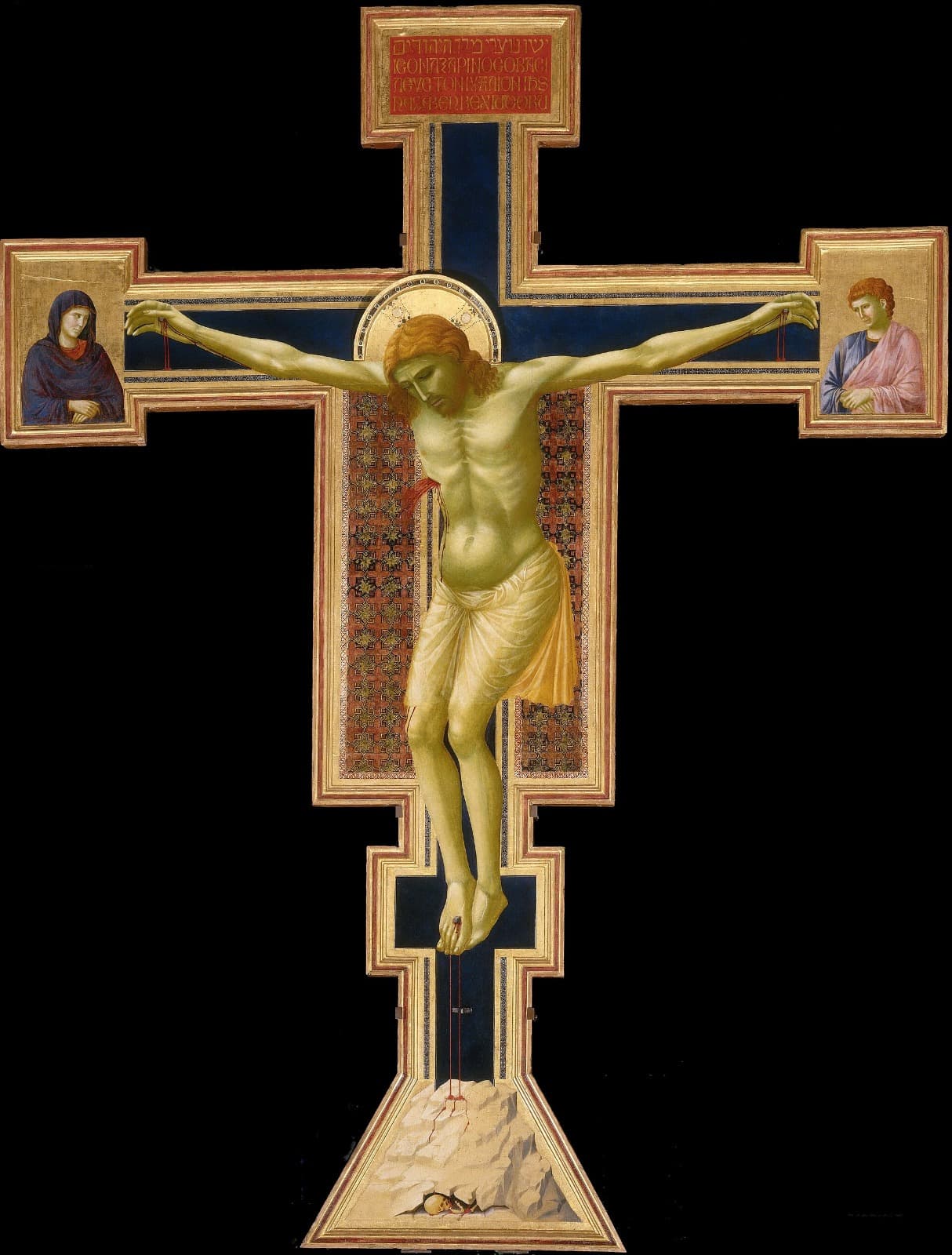
Where Cimabue's Christ swings in an elegant curve, Giotto's hangs straight down under his own weight, belly sagging, head on his chest.

The Devil offers all the kingdoms of the world, rendered as tiny gold-edged walled towns scattered down the slopes, and is refused.

A soldier drags Christ out through the city gate by his robe, the diagonal of the cross cutting against a bristling line of lances.

Servants stoop over the great stone jars in the foreground to draw out wine that was water a moment ago.

The brothers pause with the net still trailing fish through green water, caught between the work and the man on the shore.
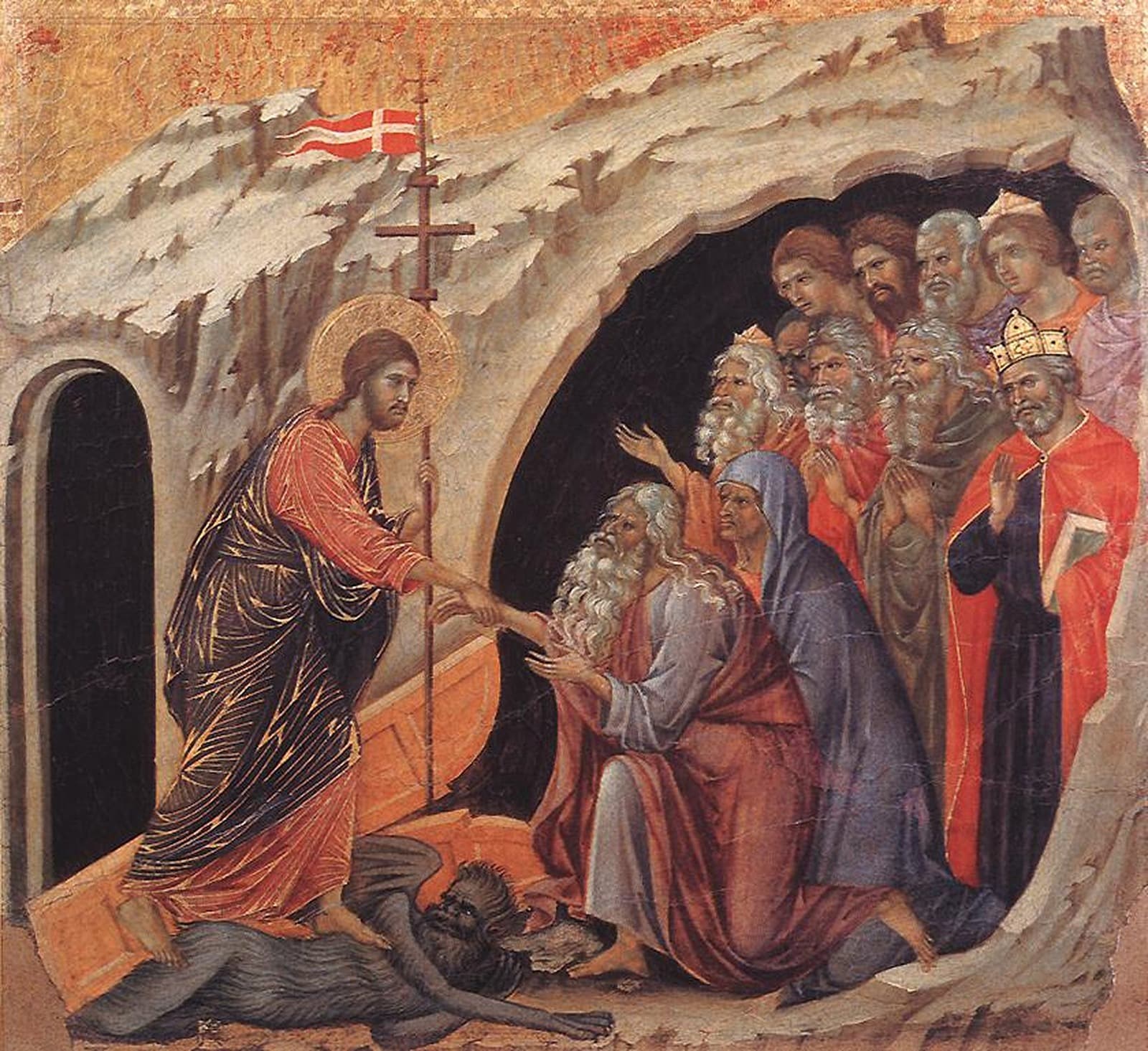
Christ strides into the cave to pull Adam out by the hand, treading on a chained Satan as he goes.
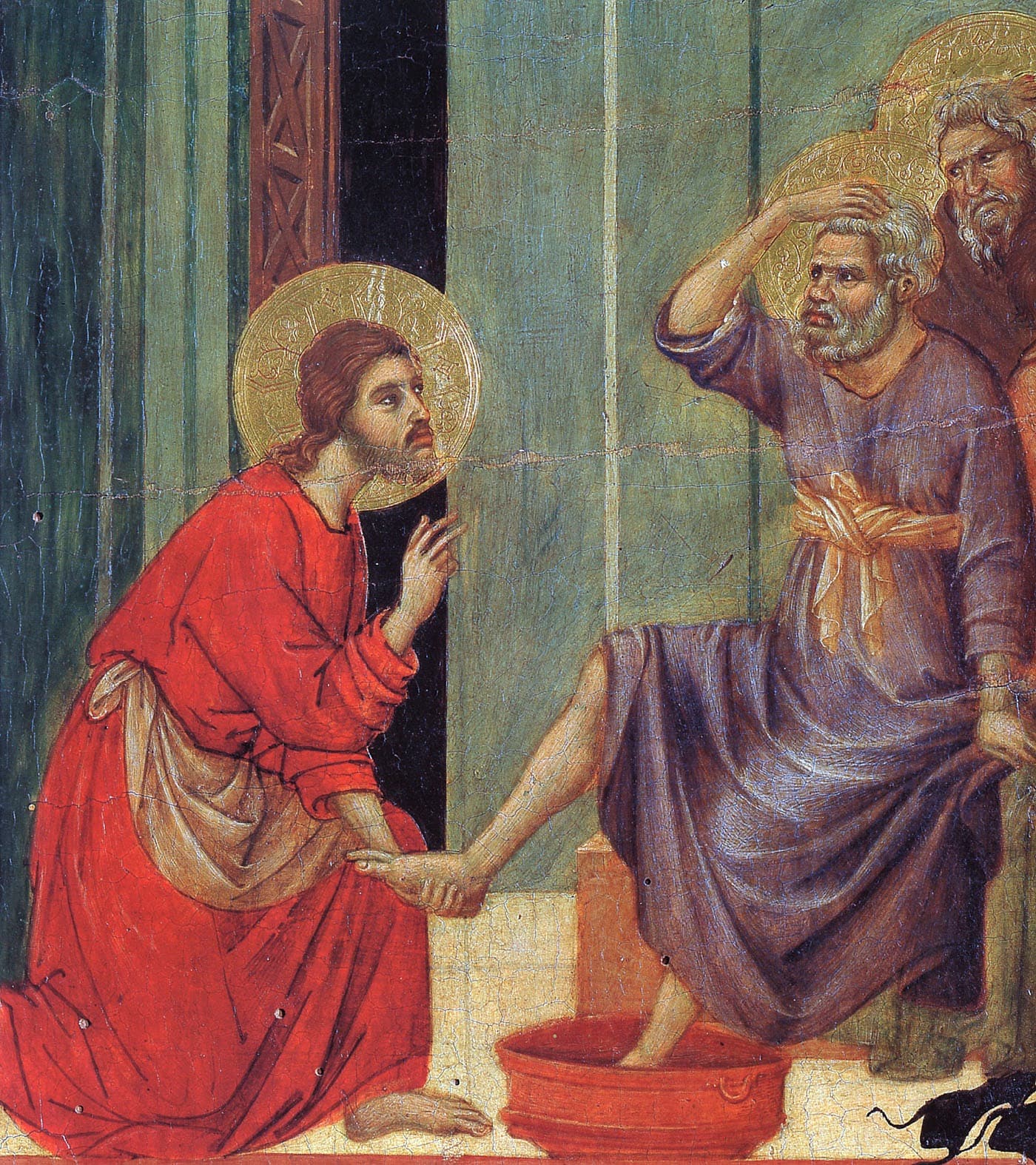
Christ kneels with the basin and Peter, flustered, raises a hand to his own head. Some of the others are already loosening their sandals.

Christ turns up dressed as a pilgrim with a staff and a traveler's pouch, and the two disciples still have no idea who he is.

The Child reaches up to grasp the edge of his mother's veil. Ugolino followed Duccio more closely than anyone else did.