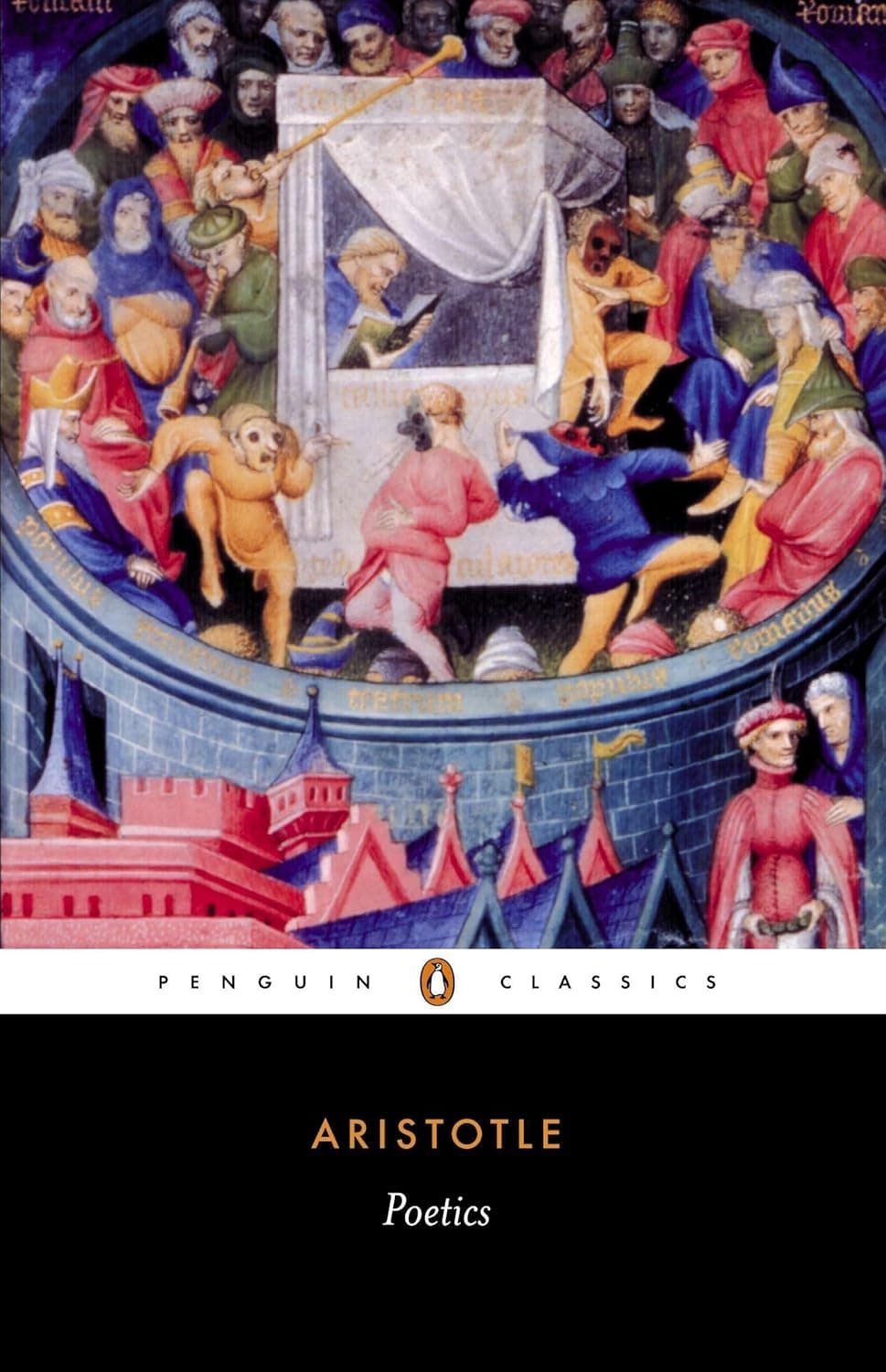
Poetics
335 BC · 144 pages
Tragedy earns pity and fear through the mistake of a decent man, Aristotle argues, and plot matters more than character. Every screenwriting manual since has been repeating him.
★ 7.2
 skopia
Tragedy earns pity and fear through the mistake of a decent man, Aristotle argues, and plot matters more than character. Every screenwriting manual since has been repeating him.

Sontag's charge against criticism: pulling meaning out of a work is a way of not experiencing it. She wants attention paid to surface and speed, and asks for an erotics of art instead.

Borges wrote criticism the way he wrote fiction, in short pieces with trapdoors, on subjects from Dante to King Kong. Every writer creates his own precursors, he argues, and literary history rearranges itself.

The trenches taught the century to speak in irony, Fussell argues, reading Sassoon, Graves, and Owen against the language they inherited. Historians have argued with him for fifty years inside his frame.

Wonder was never innocent, Greenblatt argues. Reading Columbus's landfall and the travel writers around him, he catches the moment when amazement at a new world hardens into a claim to own it.