Tally's Corner
Twelve months on a Washington corner with Black men without steady work. They fail as husbands and fathers, Liebow shows, not from any inherited culture but because the jobs cannot support a family.

Twelve months on a Washington corner with Black men without steady work. They fail as husbands and fathers, Liebow shows, not from any inherited culture but because the jobs cannot support a family.

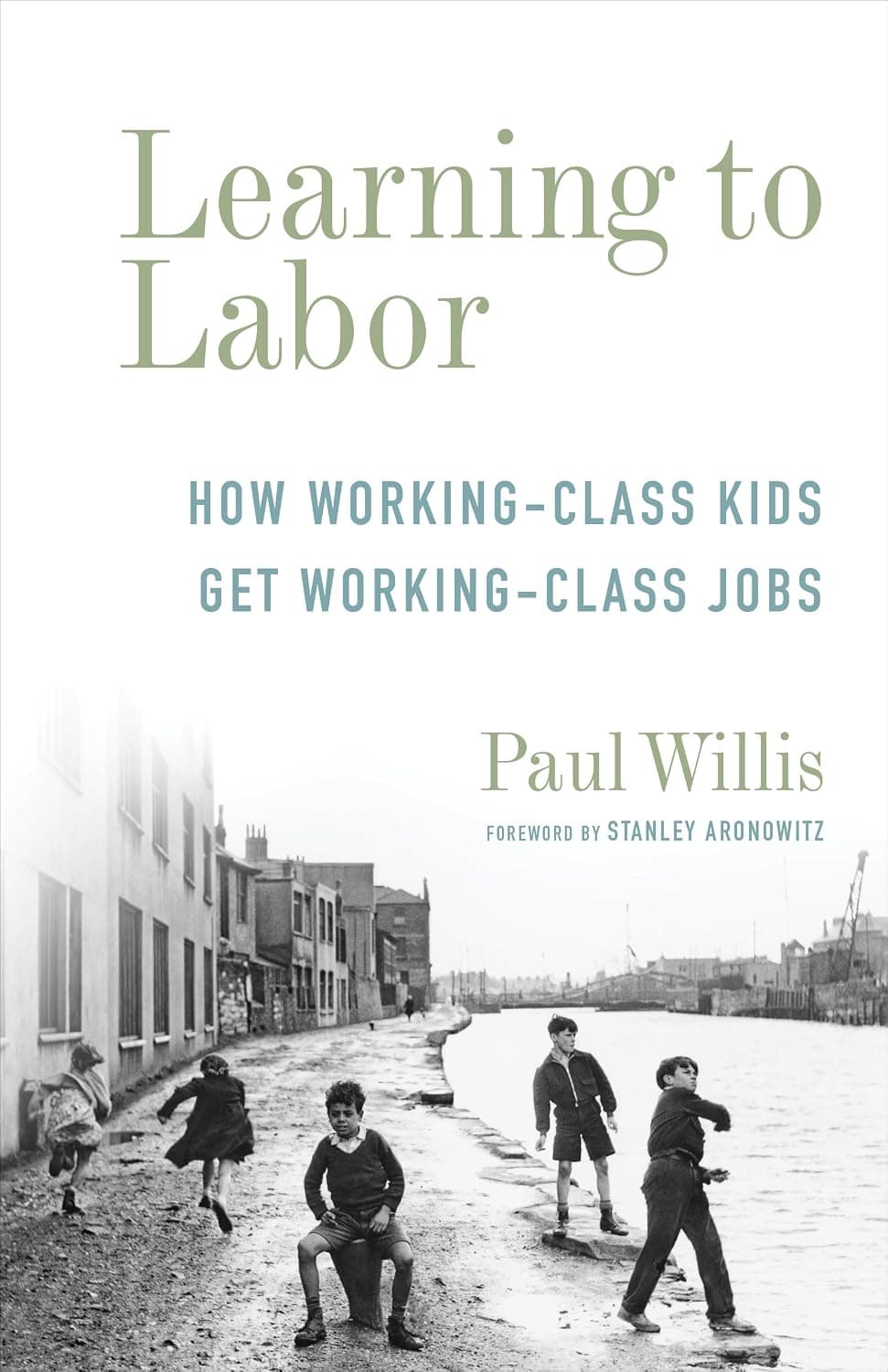
Working-class boys are not pushed into working-class jobs, Willis found: they choose them. Twelve lads at a Midlands comprehensive laugh their way through school and hand themselves to the factory floor.

Ernaux's father ran a café and grocery in Normandy, terrified all his life of using the wrong word. Educated out of his class, she writes him in flat sentences that never condescend.

Genius does not explain art, Bourdieu argues. Value is manufactured by the whole apparatus around the work: critics, dealers, publishers, rival artists. In this economy refusing money is precisely what buys prestige.

Packer follows a Youngstown factory worker, a North Carolina biodiesel man and a Washington lobbyist from 1978 to 2012, and shows the institutions that once held Americans in place giving way to money.

There is little dignity in how we die, the surgeon Nuland writes, and he shows why: what heart failure, stroke, cancer, and Alzheimer's do to a body. Dignity belongs to the life before.

Television censors without a censor, Bourdieu argues: the clock and the ratings guarantee that only fast thinkers trading in received ideas can speak, and journalism drags politics and scholarship down with it.

Evicted tenants, migrant pickers, stockbrokers, and a man who ran for president tell Terkel what the Depression did to them. What comes through hardest is how many took the collapse as personal failure.

Capitalism's real conquest is not the factory but the ordinary day, Lefebvre argues: the commute, the meal, the weekend. He sent a generation of radicals looking for revolution in daily routine.

Whyte went into corporations and the new suburb of Park Forest and found Americans trading the old ethic of individual striving for belonging. The organization wanted the whole man, and got him.

Population multiplies faster than food supply, Malthus argued, so misery and restraint are permanent conditions of human life, not problems reform can fix. Darwin read him and found natural selection.

Taste is class in disguise, Bourdieu argues, and his survey of French preferences in music, food, and interiors proves it. The pure aesthetic judgment Kant called universal is a privilege of the comfortable.

Intelligence solves problems and Americans admire it. Intellect questions them, and Hofstadter's Pulitzer-winning history tracks the resentment it draws through frontier revival preaching, business self-help, and a century of fights over the schools.

Mexicans wear masks, Paz argues, because the Conquest left them sons of a violated mother, heirs to two pasts they refuse to join. Mexico has quarreled with these essays for seventy years.

Victorian society did not silence sex, Foucault argues. It talked endlessly, until sodomy stopped being an act and the homosexual became a species. Queer theory has worked inside that claim for fifty years.

Hoggart set down working-class Leeds as he had lived it, then indicted the slick magazines displacing it. Seven years later he founded the Birmingham center that made popular culture an academic discipline.

A white child points and cries, Look, a Negro. Fanon takes that instant apart to show racism lodged in the skin itself, and half a century of Black thought has worked from it.

Levi-Strauss opens by declaring he hates traveling and explorers, then takes you into Brazil's interior among the Bororo and Nambikwara. Science, memoir, and philosophy run together in mourning for what contact destroyed.

Ibn Khaldun found history's engine in group solidarity, which carries a tribe from desert to throne, then dissolves in city luxury within three generations. Europe produced nothing comparable for centuries.

Weber told students in a collapsing Germany what science and politics demand: science can give you clarity but never choose your values, and politics is the slow boring of hard boards.