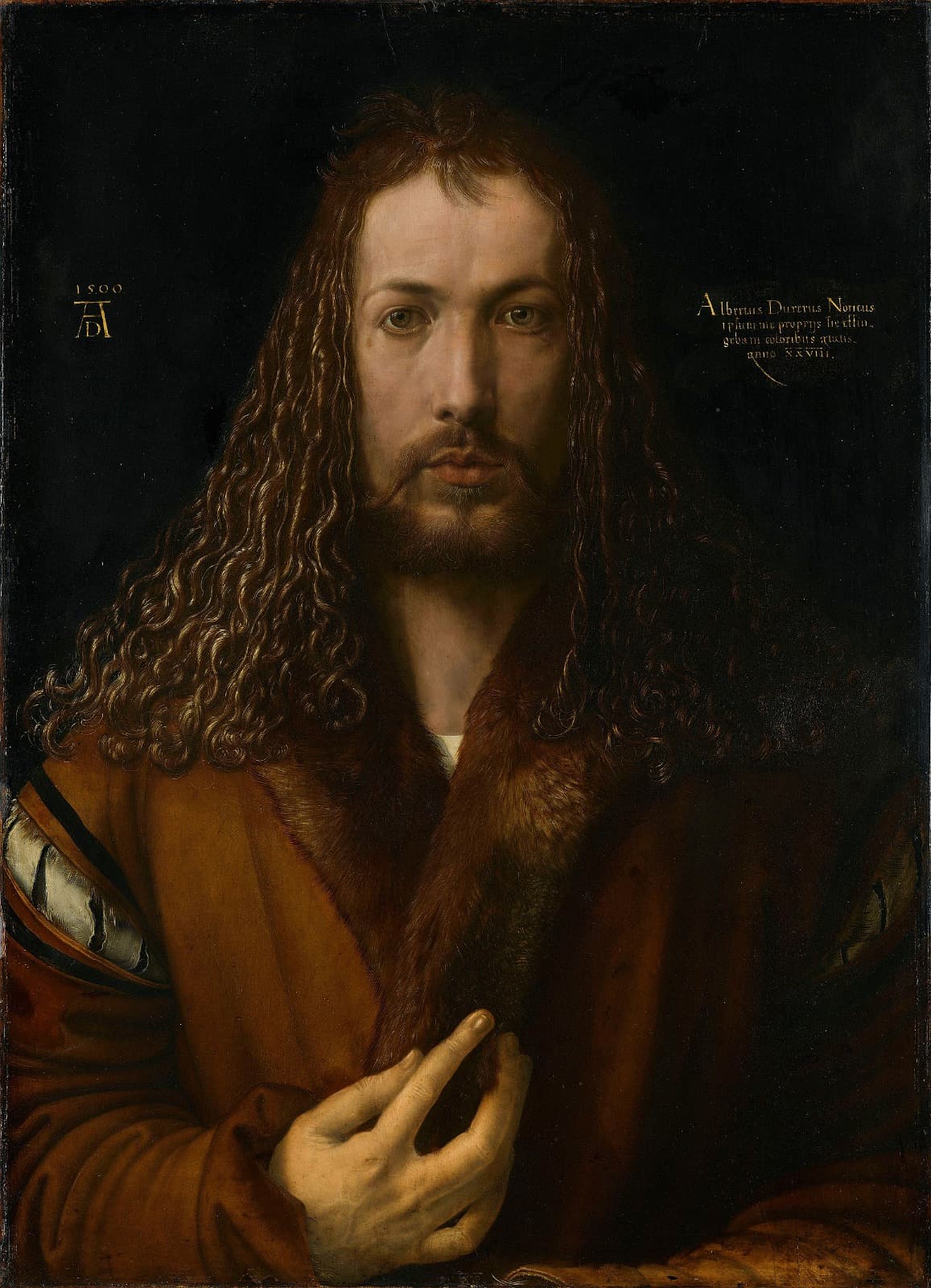
Self-Portrait (Durer)
1500 · Alte Pinakothek, Munich
Dürer faced himself head-on in a pose reserved for images of Christ, and wrote across the panel that he had painted it at twenty-eight.
★ 8.1
 skopia
Dürer faced himself head-on in a pose reserved for images of Christ, and wrote across the panel that he had painted it at twenty-eight.

Tens of thousands of tiny soldiers fight under a sky that curves like the whole earth. Painted while the Ottomans were pressing on Vienna.

Two horsemen haul two women up onto rearing horses, and the whole canvas spins into one great X of limbs and hooves.
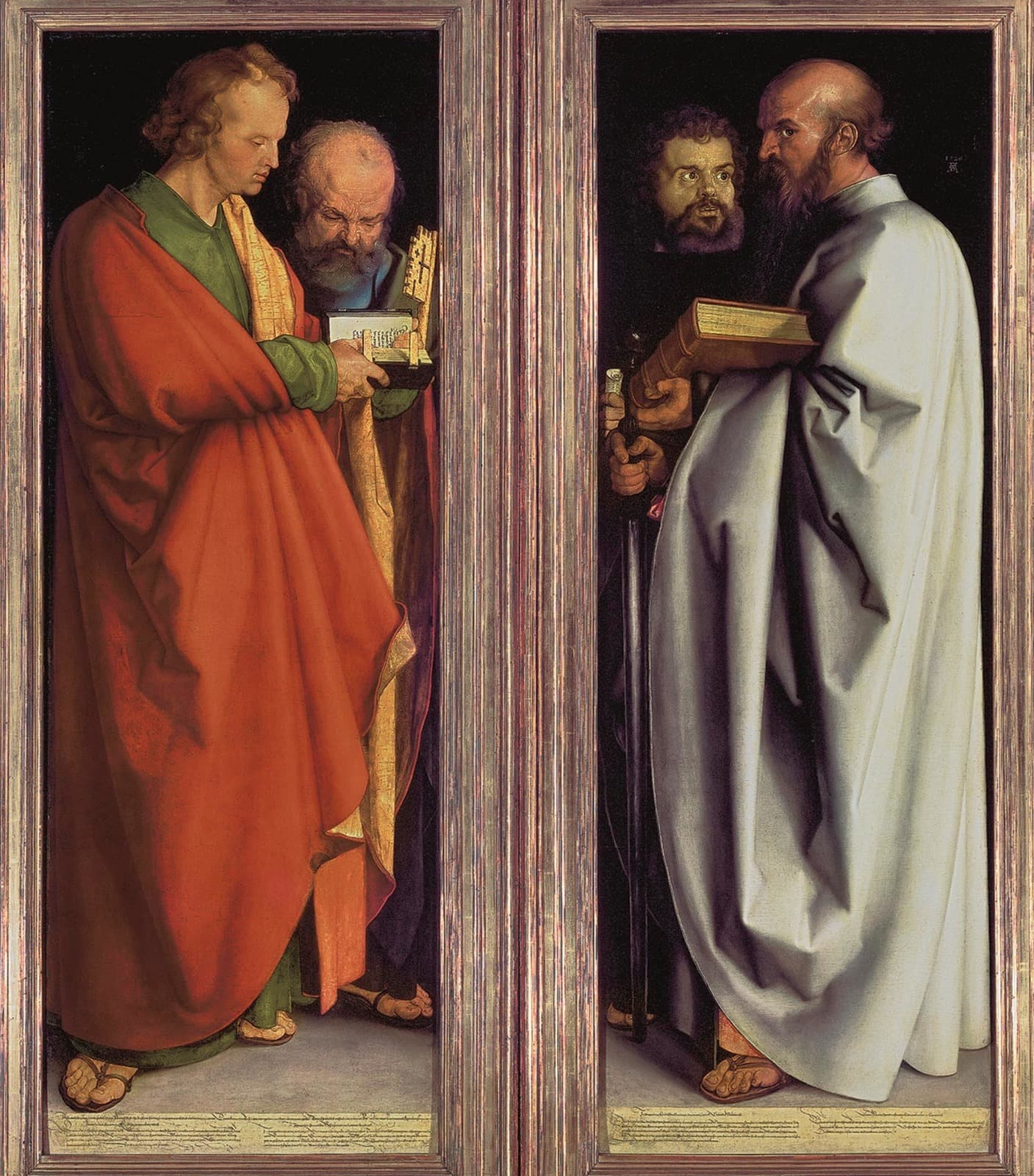
Dürer gave the panels to the Nuremberg council with Luther's words inscribed below, warning the city's rulers against false prophets. His last great work.

A single unbroken avalanche of bodies falls from a bright heaven at the top into the dark, with demons pulling them down.
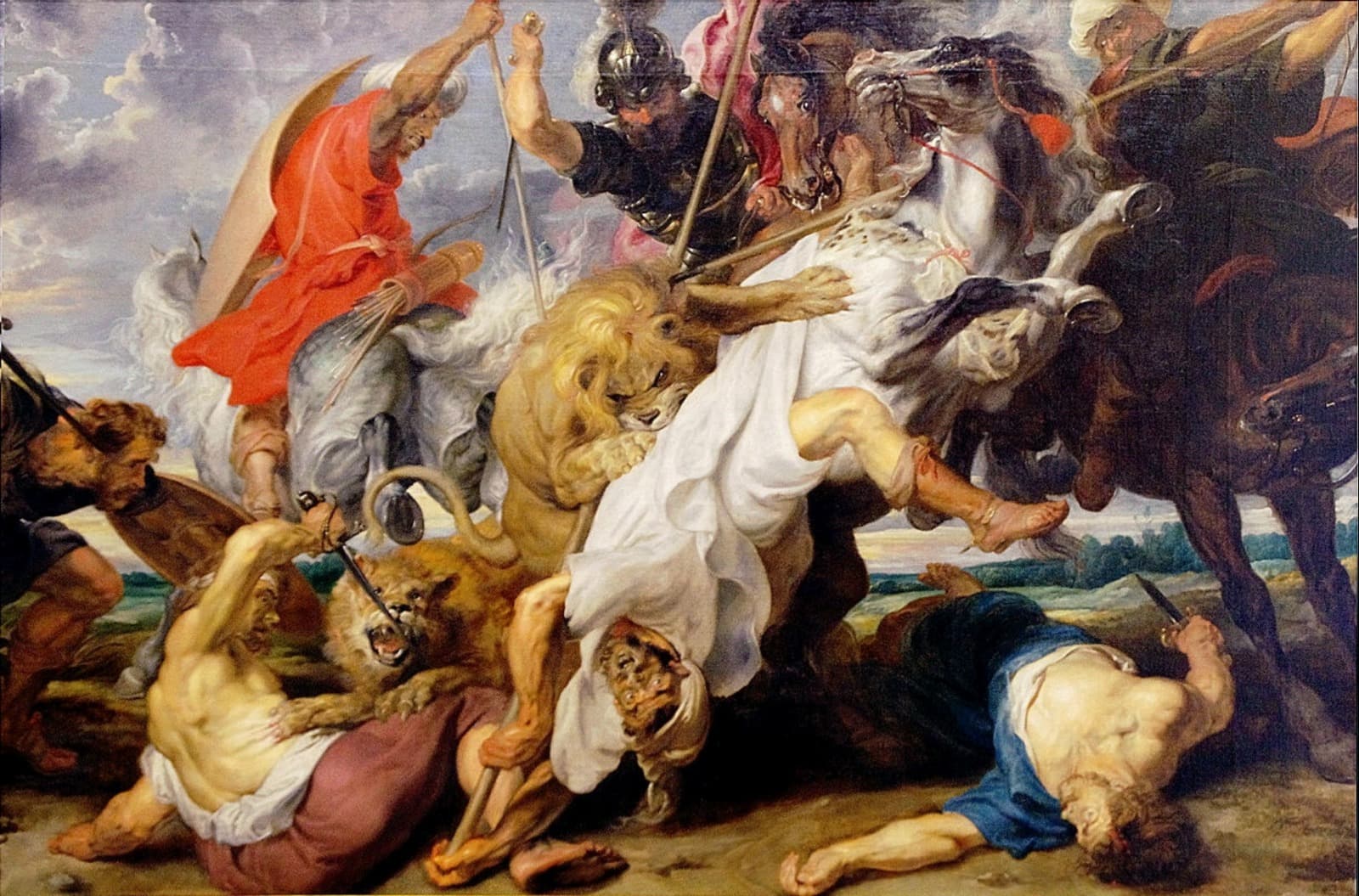
Horses, lions, spears and men knotted into one turning mass, with a rider already thrown and about to be mauled.
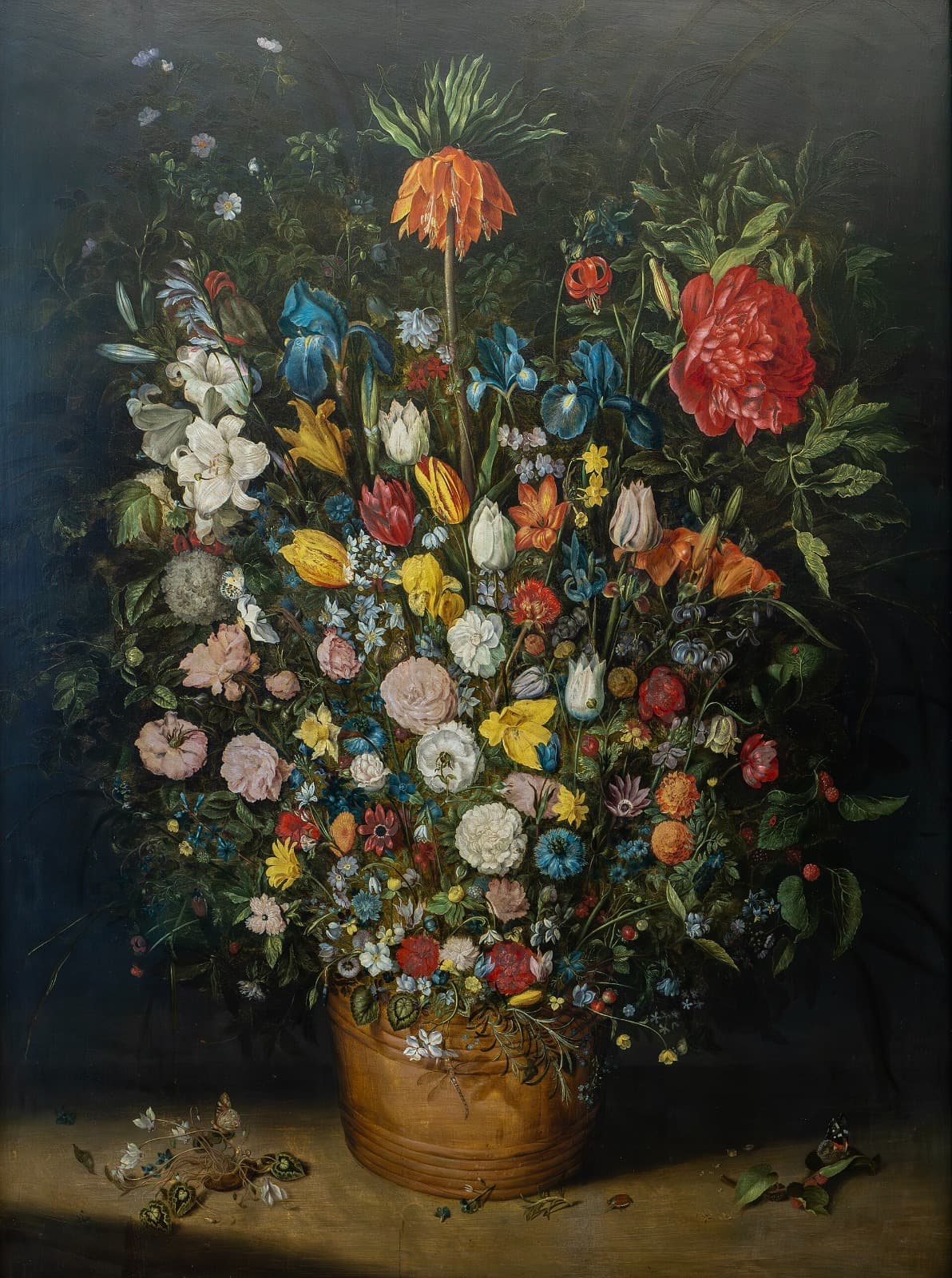
None of these flowers bloom in the same season. Bruegel assembled the bouquet from studies made across the whole year, and let petals droop.

Blindfolded and beaten while pipers play to make a show of it. Everything Italy was perfecting at that moment, Grünewald wanted none of.

Rubens came back to the subject nearly thirty years later with the same fury and a much broader, more fluent hand.

Gilded hems, fluttering wings, a walled garden behind. Lippi was a friar with a worldly streak and it shows in the ornament.
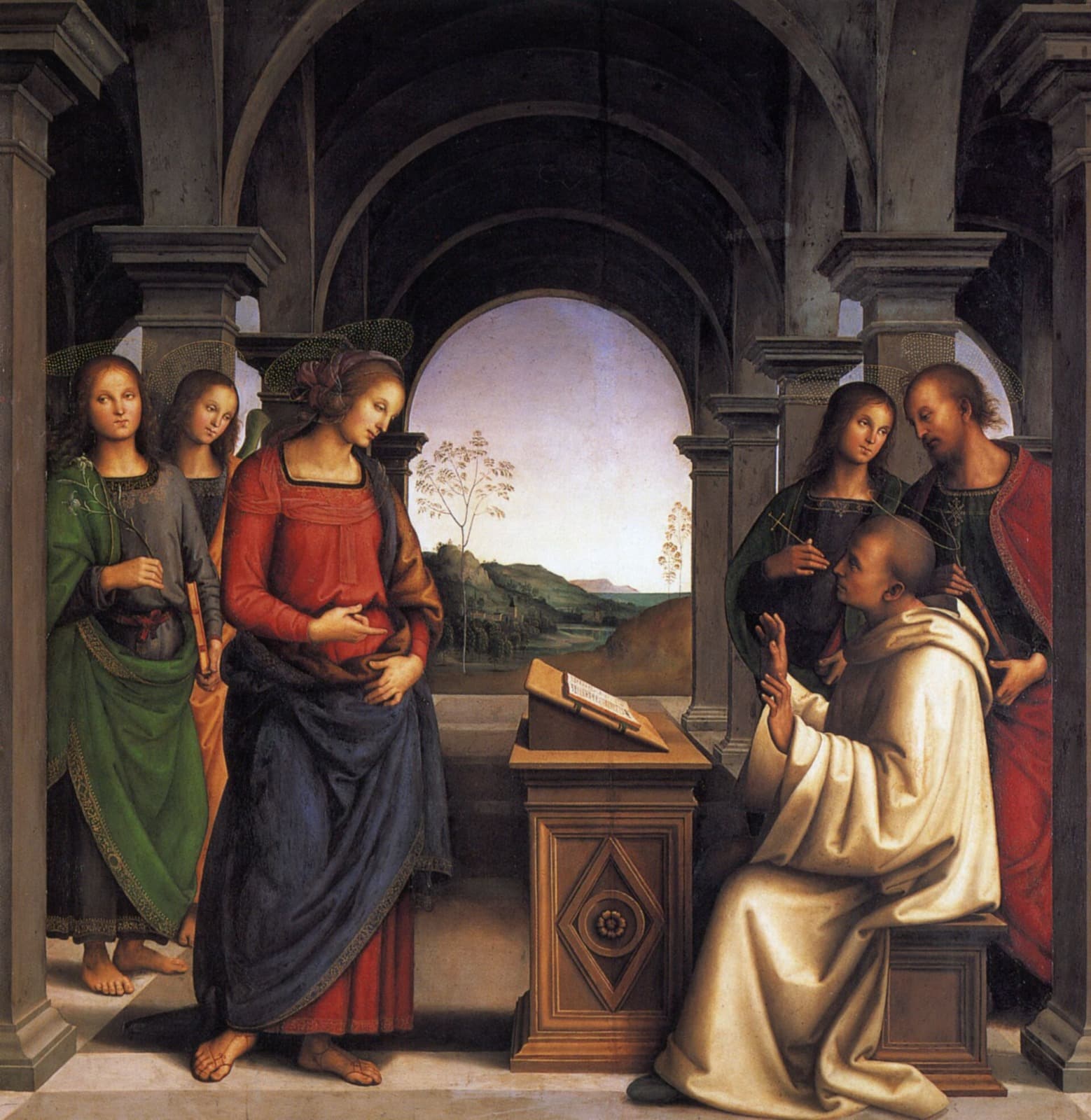
Perugino taught Raphael, and the poise, the airy arcade and the soft Umbrian valley here pass almost unchanged into the pupil's work.

The tiny kneeling figures in the corners are the Nuremberg family who paid for it, inserted so they could share in the grief.

Hundreds of minutely painted fish, baskets and hagglers. They called him Velvet Bruegel for exactly this kind of finish.