
The Descent from the Cross (Rubens at Antwerp)
1614 · Cathedral of Our Lady, Antwerp
Christ's body slides down one long diagonal onto a white shroud. It still stands on the altar in Antwerp Cathedral that Rubens painted it for.
★ 8.5
 skopia
Christ's body slides down one long diagonal onto a white shroud. It still stands on the altar in Antwerp Cathedral that Rubens painted it for.

Two horsemen haul two women up onto rearing horses, and the whole canvas spins into one great X of limbs and hooves.

Rubens had just come back from Italy with Caravaggio's light and Michelangelo's anatomy, and announced himself with this straining diagonal.

Herod's soldiers and the mothers of Bethlehem lock into one knot of muscle. Overlooked for centuries, it sold in 2002 for a record price.

A single unbroken avalanche of bodies falls from a bright heaven at the top into the dark, with demons pulling them down.
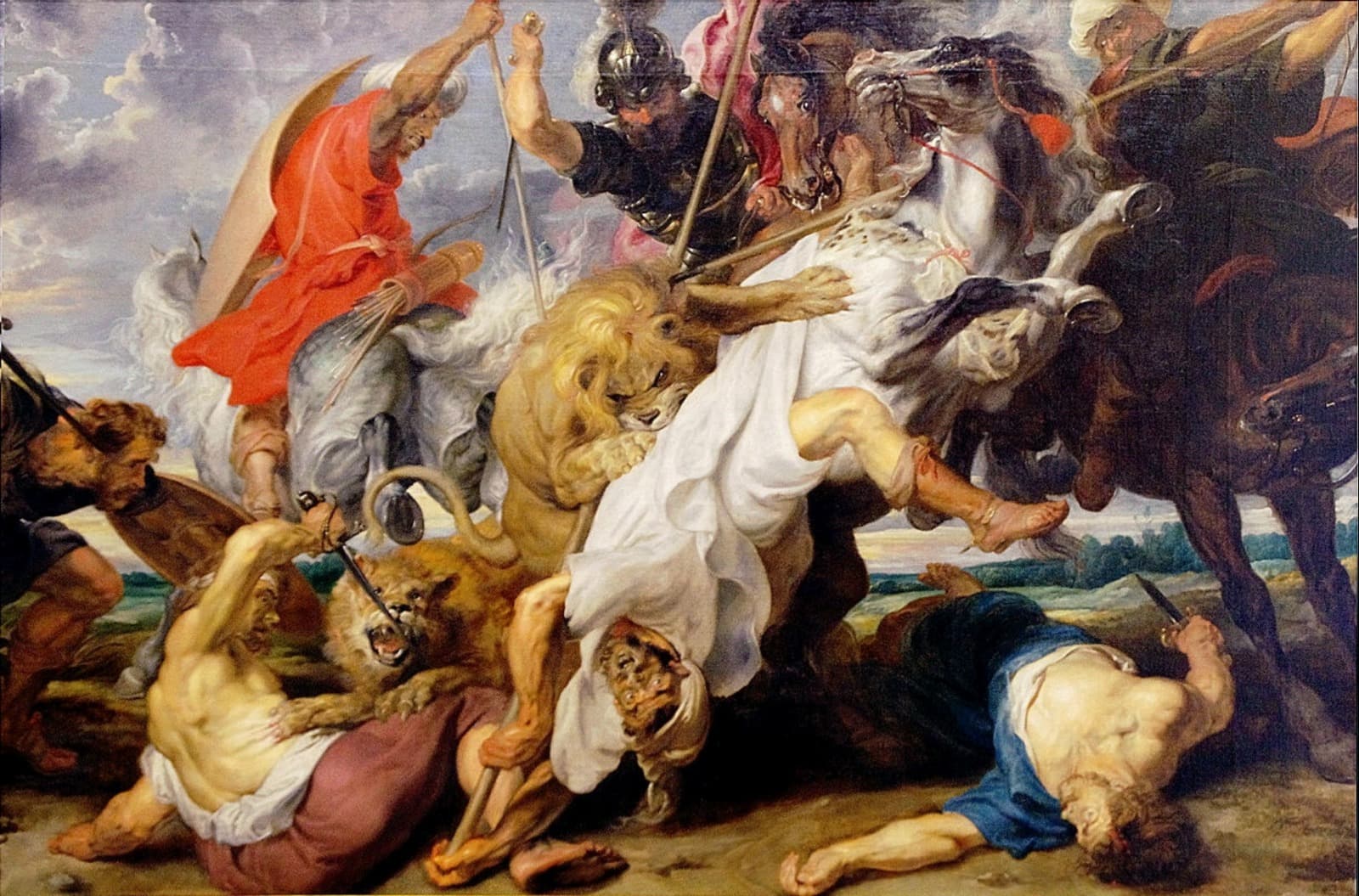
Horses, lions, spears and men knotted into one turning mass, with a rider already thrown and about to be mauled.

Saturn bites into his own infant to stop the prophecy, the star of Saturn overhead. Goya would take the same subject somewhere much worse.

Rubens came back to the subject nearly thirty years later with the same fury and a much broader, more fluent hand.

Rubens painted this descent years after the Antwerp one, and the two together show him reworking the same falling body across a career.
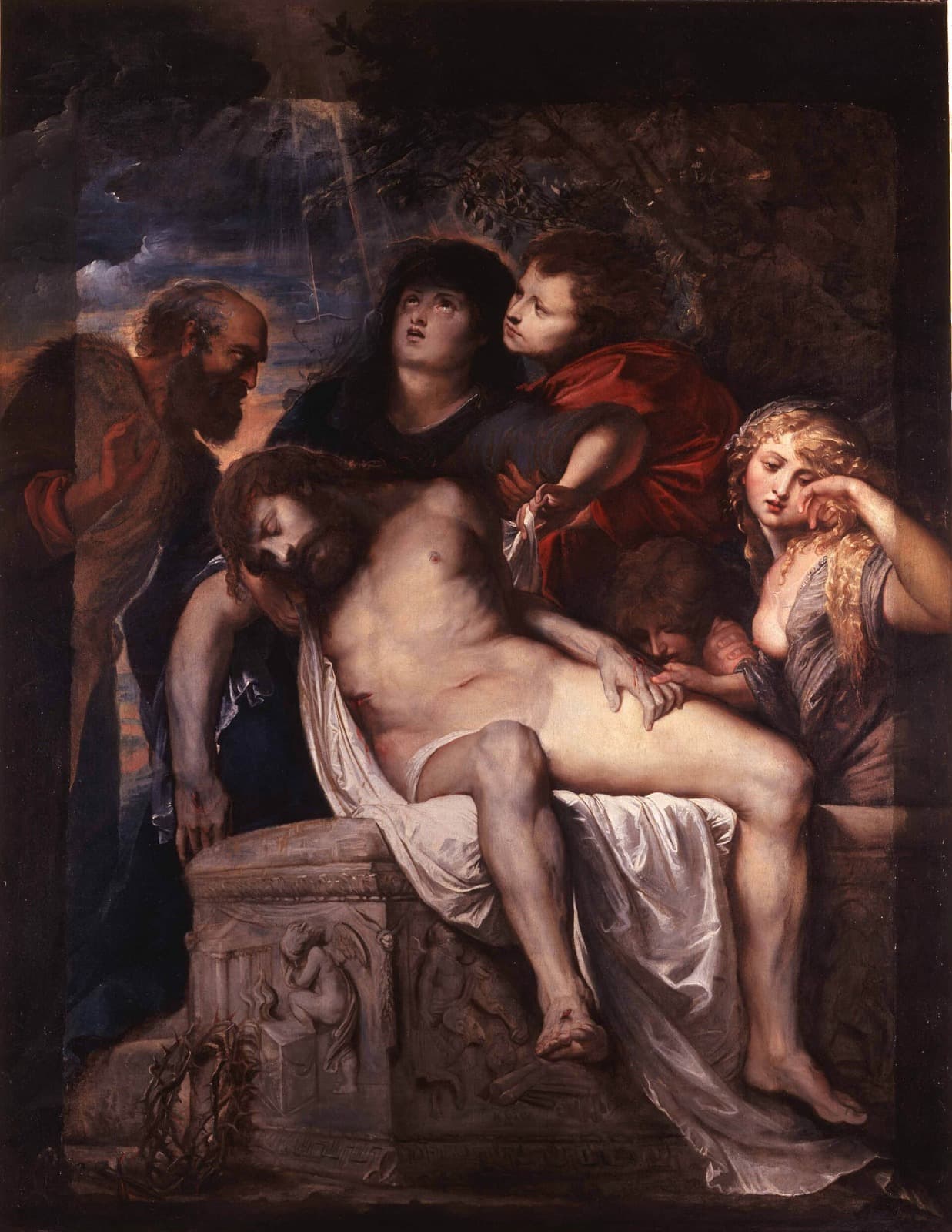
Rubens worked this out in Rome while studying Caravaggio, a rehearsal for the great Descent he would paint back home in Antwerp.