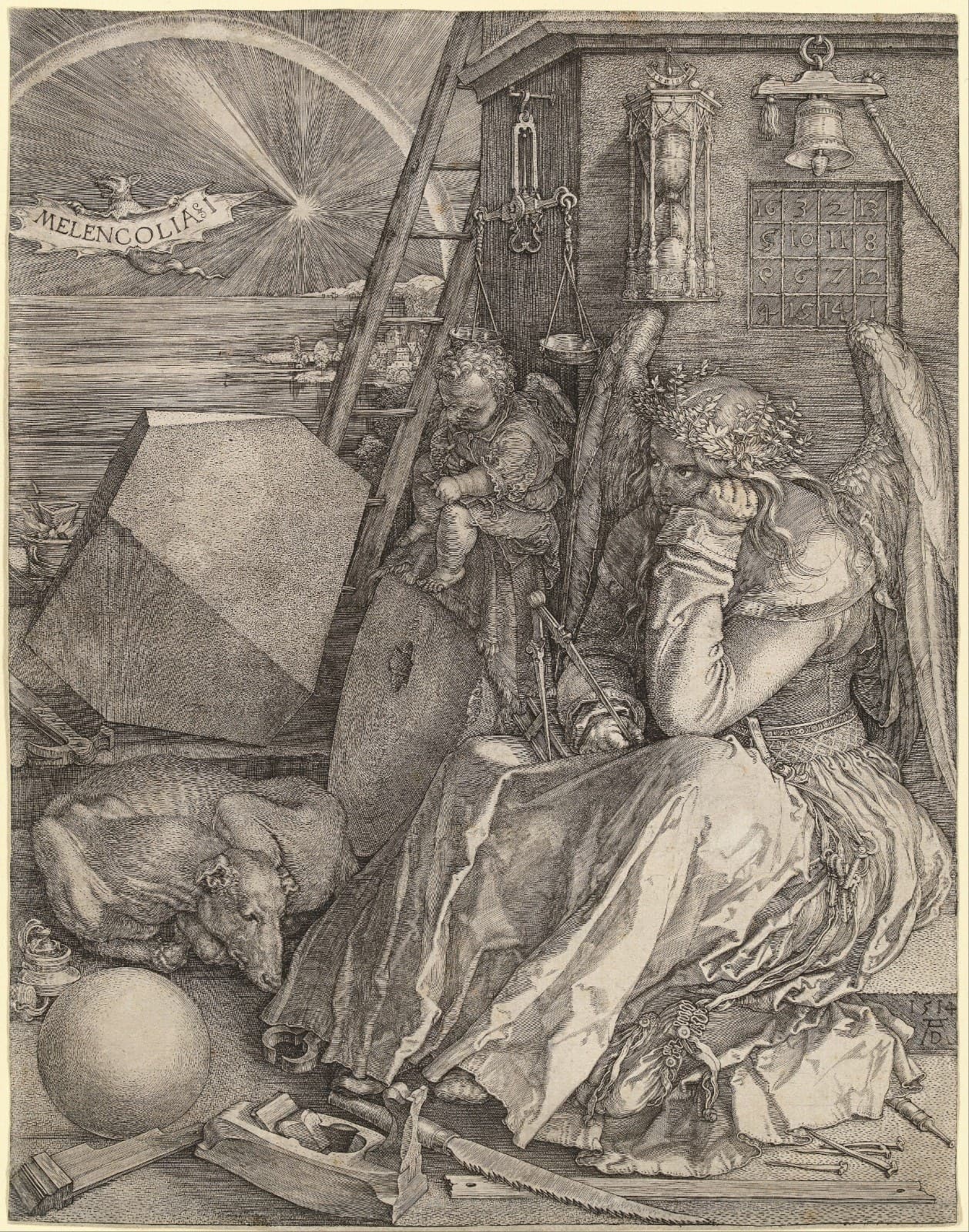
Melencolia I
1514 · Metropolitan Museum of Art, New York
A winged figure sits with her compass idle among abandoned tools, and no print in history has drawn more scholarly argument.
★ 8.6
 skopia
A winged figure sits with her compass idle among abandoned tools, and no print in history has drawn more scholarly argument.
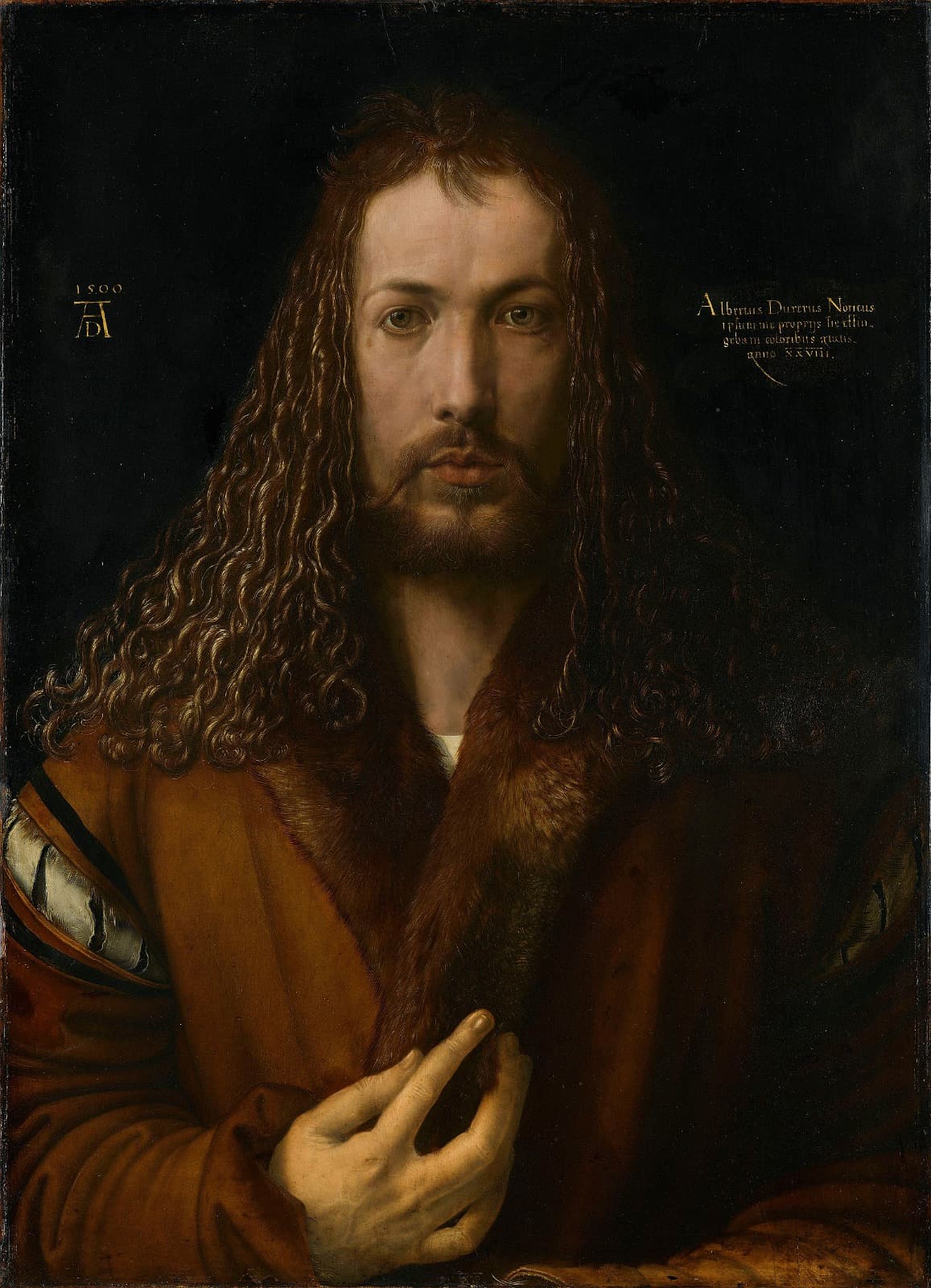
Dürer faced himself head-on in a pose reserved for images of Christ, and wrote across the panel that he had painted it at twenty-eight.
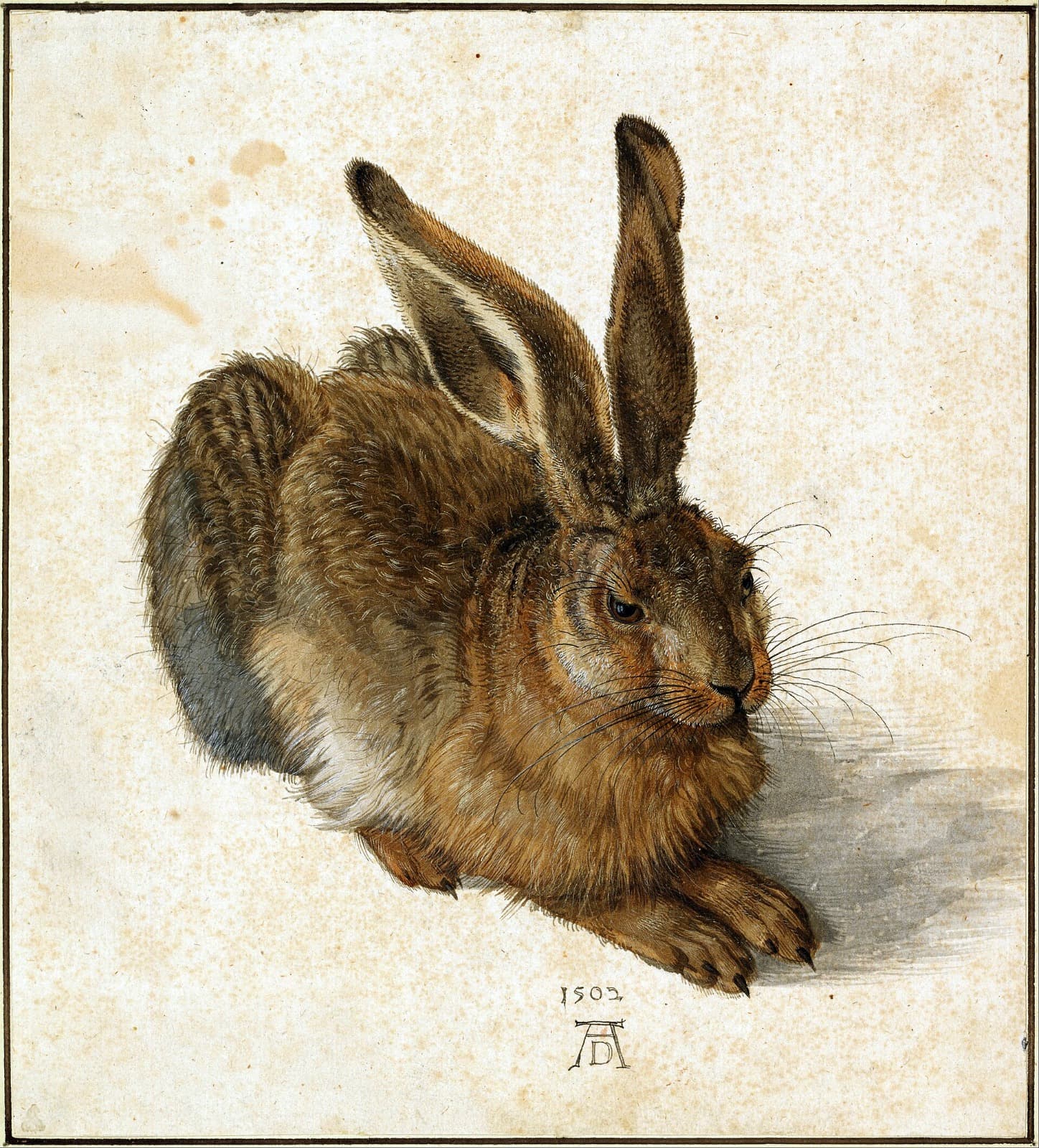
Every whisker set down separately, and in the dark eye a studio window is reflected. Dürer signed an animal study as a finished work.
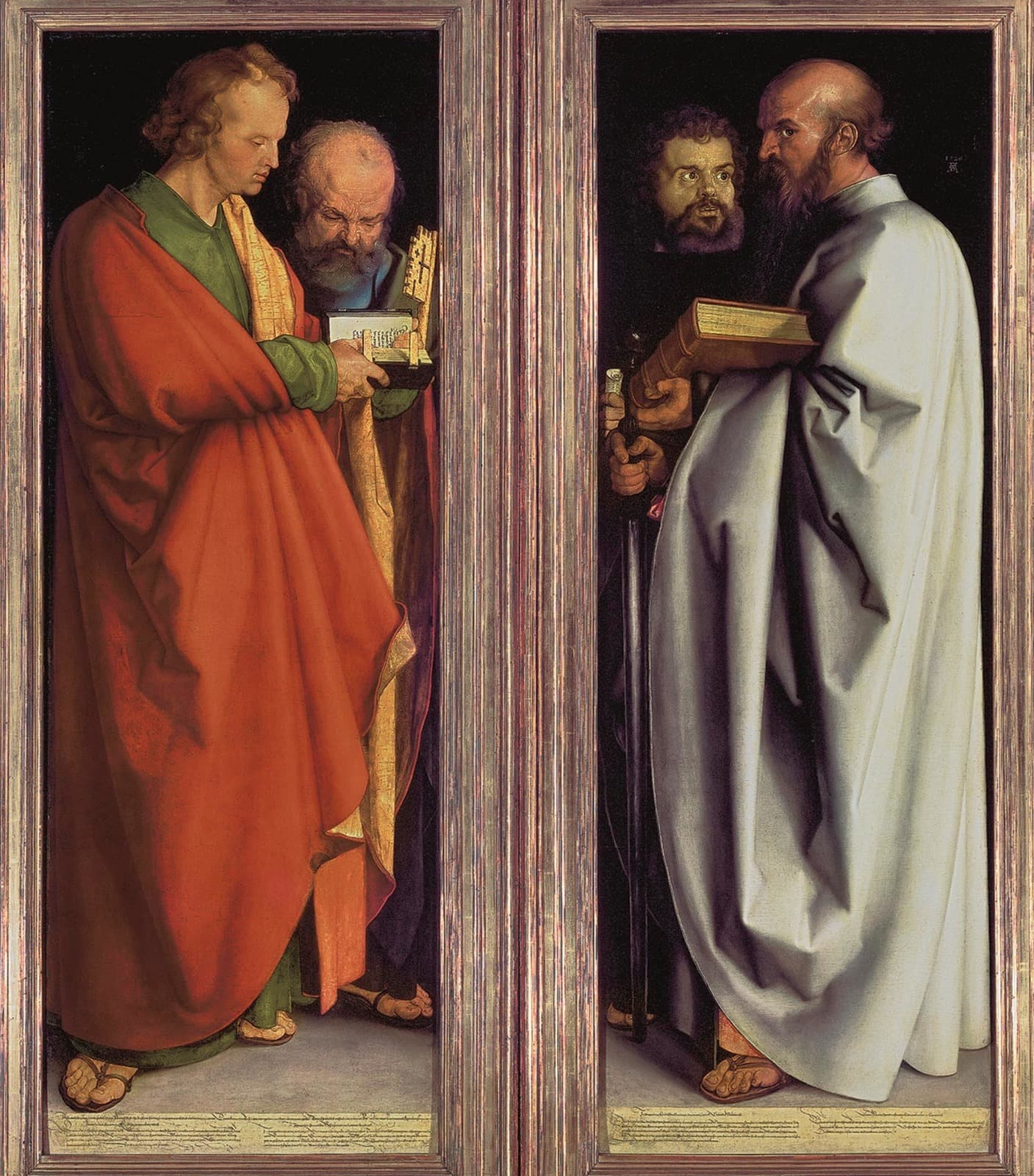
Dürer gave the panels to the Nuremberg council with Luther's words inscribed below, warning the city's rulers against false prophets. His last great work.

Cat, mouse, rabbit, ox and elk stand for the temperaments held in balance, and the cat is about to pounce.
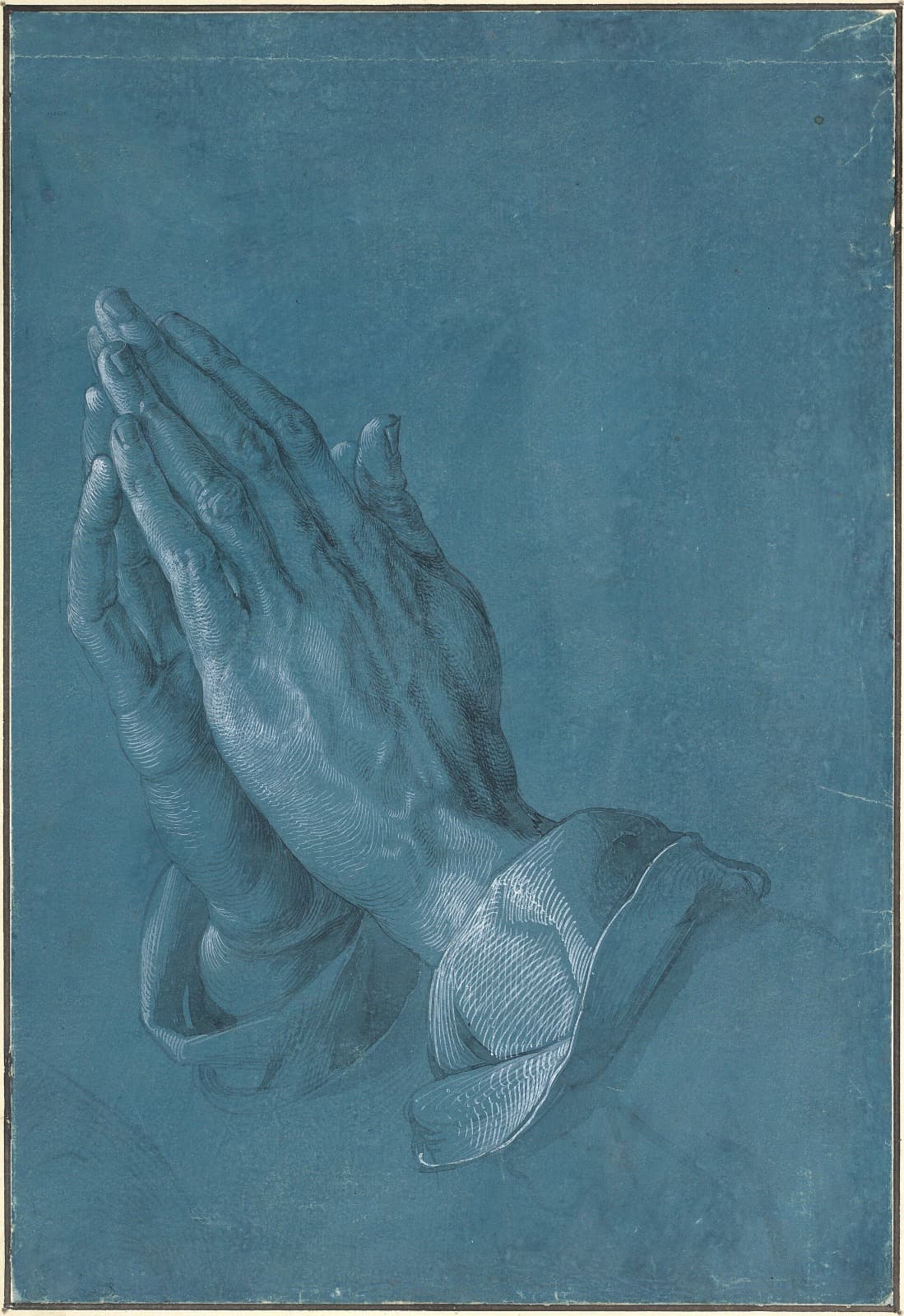
A study for an altarpiece that later burned, so the drawing has outlived the painting it was made to serve.

Dürer painted it in Venice to prove a German could beat the Venetians at color, and wrote on it that it took five months.
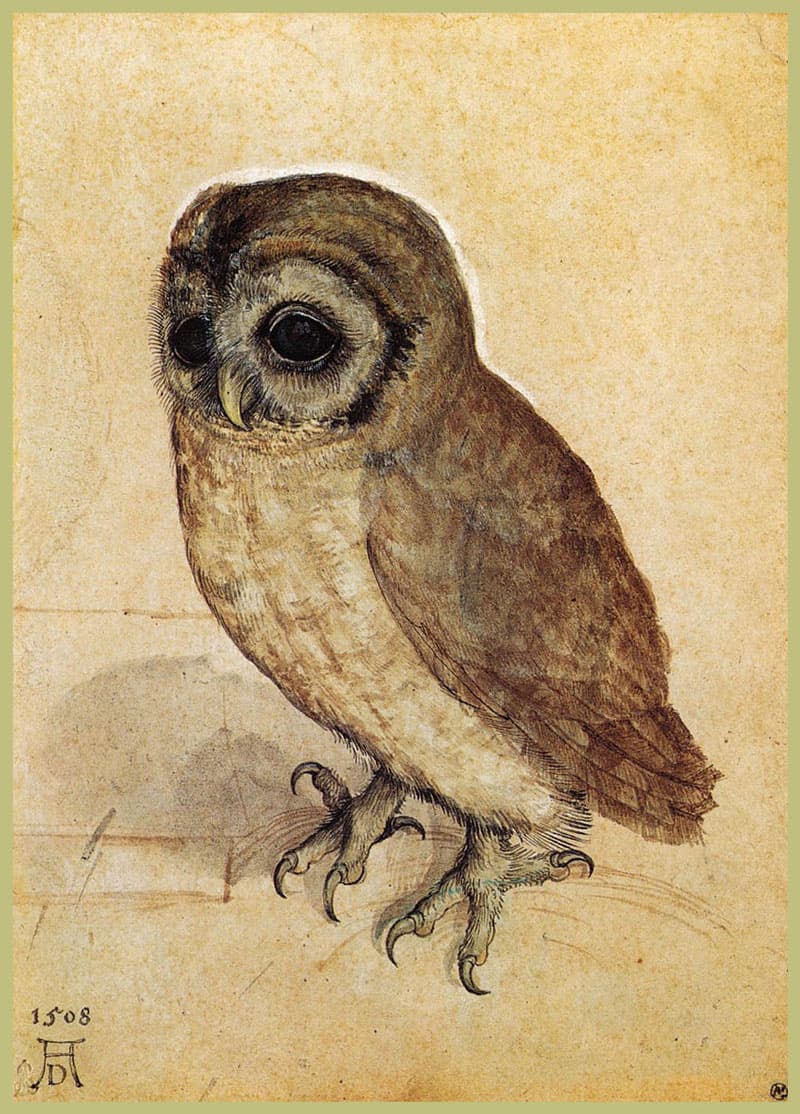
Owls carried centuries of symbolism in the north, but Dürer's is mostly just an owl, looking back at you with its talons over a ledge.

Thousands are clubbed and thrown off cliffs, and Dürer paints himself walking calmly through the middle of it holding a banner with his name.

The tiny kneeling figures in the corners are the Nuremberg family who paid for it, inserted so they could share in the grief.

An inscription gives his age as ninety-three. Dürer drew him in Antwerp and used the head soon after for a Saint Jerome.