
The Garden of Earthly Delights
1505 · El Prado, Madrid
Three panels run from Eden to hell, with a whole naked humanity climbing into giant fruit in between. Nobody has settled what it means.
★ 10.0
 skopia
Three panels run from Eden to hell, with a whole naked humanity climbing into giant fruit in between. Nobody has settled what it means.

Saints and pilgrims stream toward a bleeding Lamb across a dozen hinged panels. One of them was stolen in 1934 and has never been found.

Christ has just said one of them will betray him, and the shock rolls down the table. Leonardo's experimental paint began flaking in his lifetime.
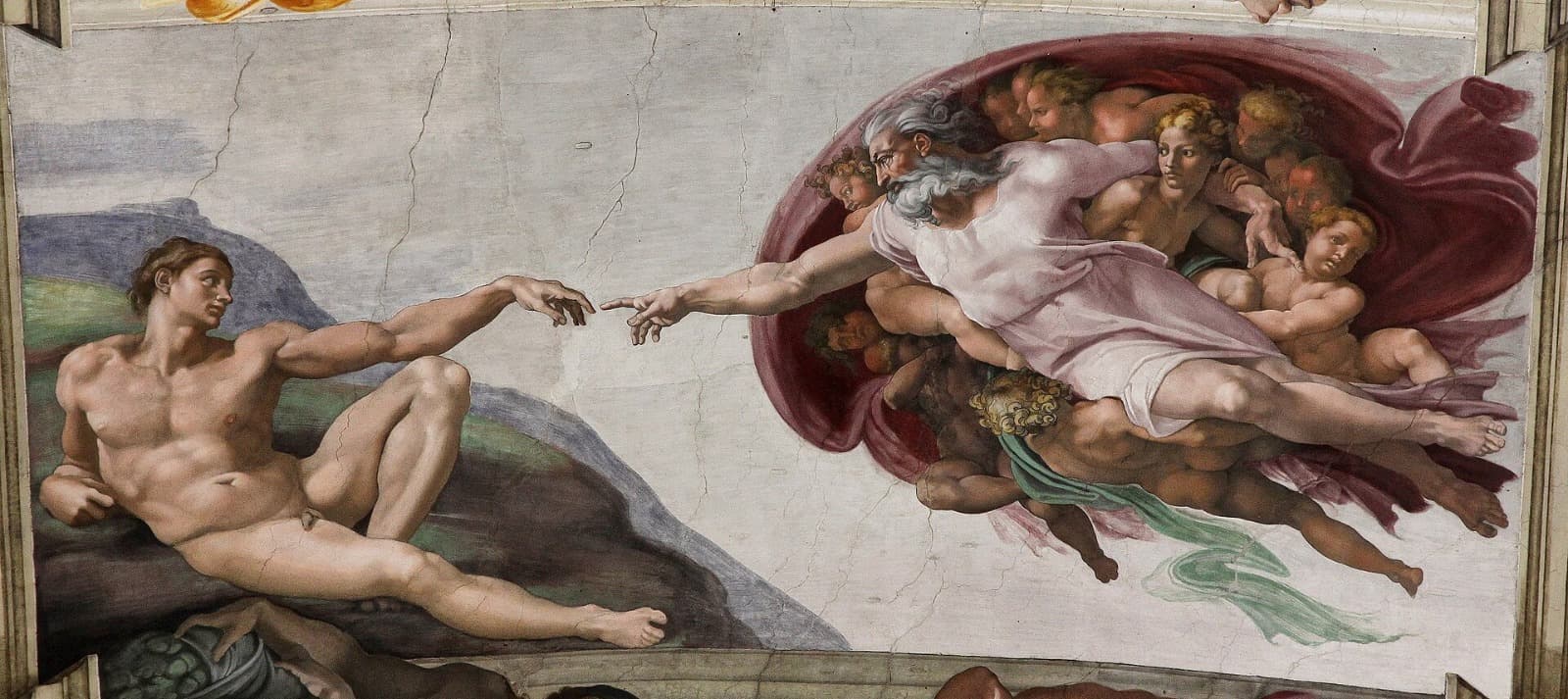
God surges out of a red cloak full of angels, and Michelangelo leaves the fingers not quite touching. The gap does the work.
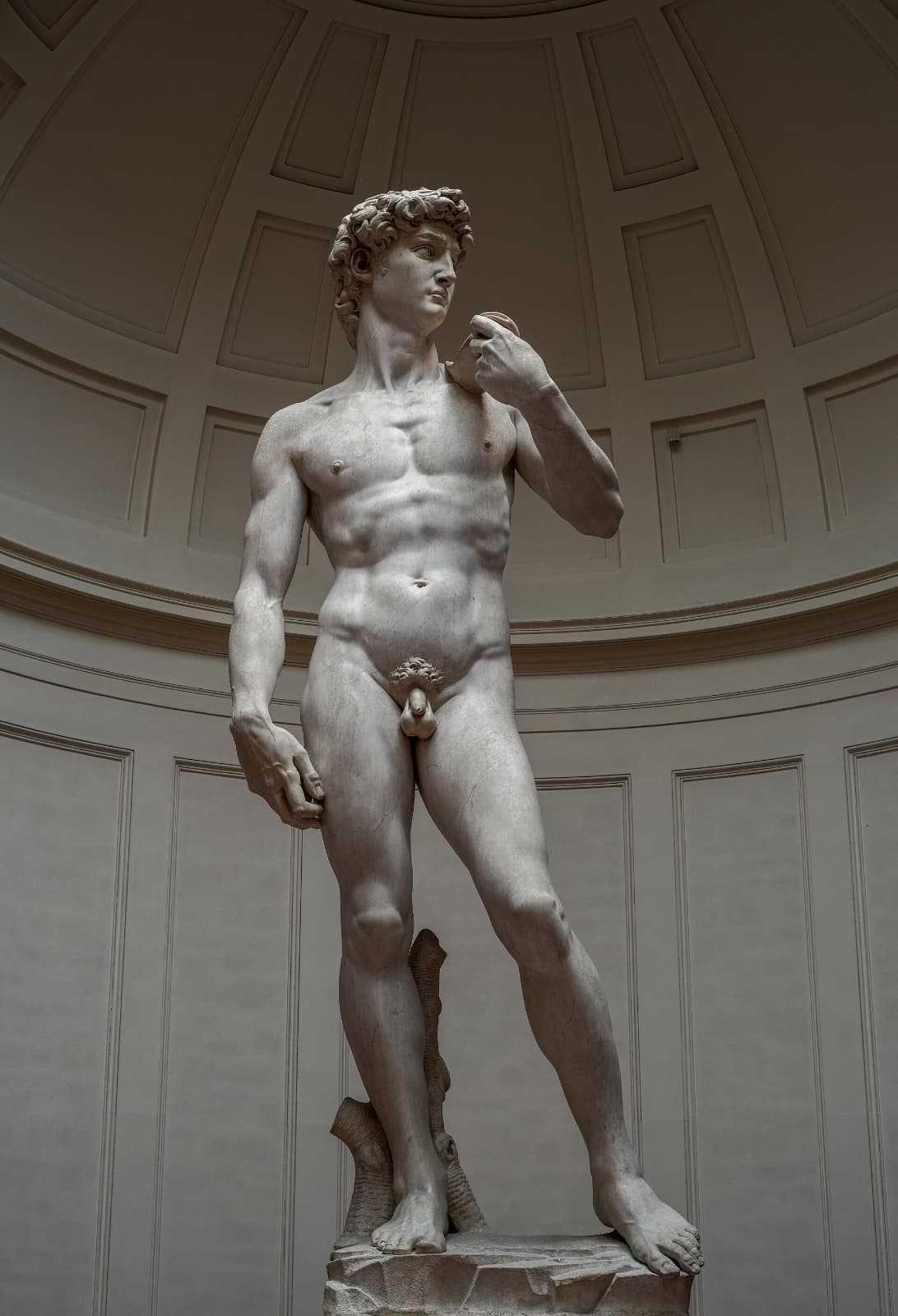
The marble block had been abandoned as flawed before Michelangelo took it, and he carved a boy who is watching Goliath, not beating him.

Christ's body hangs green and pocked with sores, painted for a hospital whose patients saw their own ravaged flesh.

The fainting Virgin curves in an exact echo of her dead son, the stroke that made van der Weyden the most copied painter in the north.

Light follows Christ's pointing hand across a dim counting-room to Matthew, who gestures at himself in disbelief. The picture made Caravaggio famous overnight.
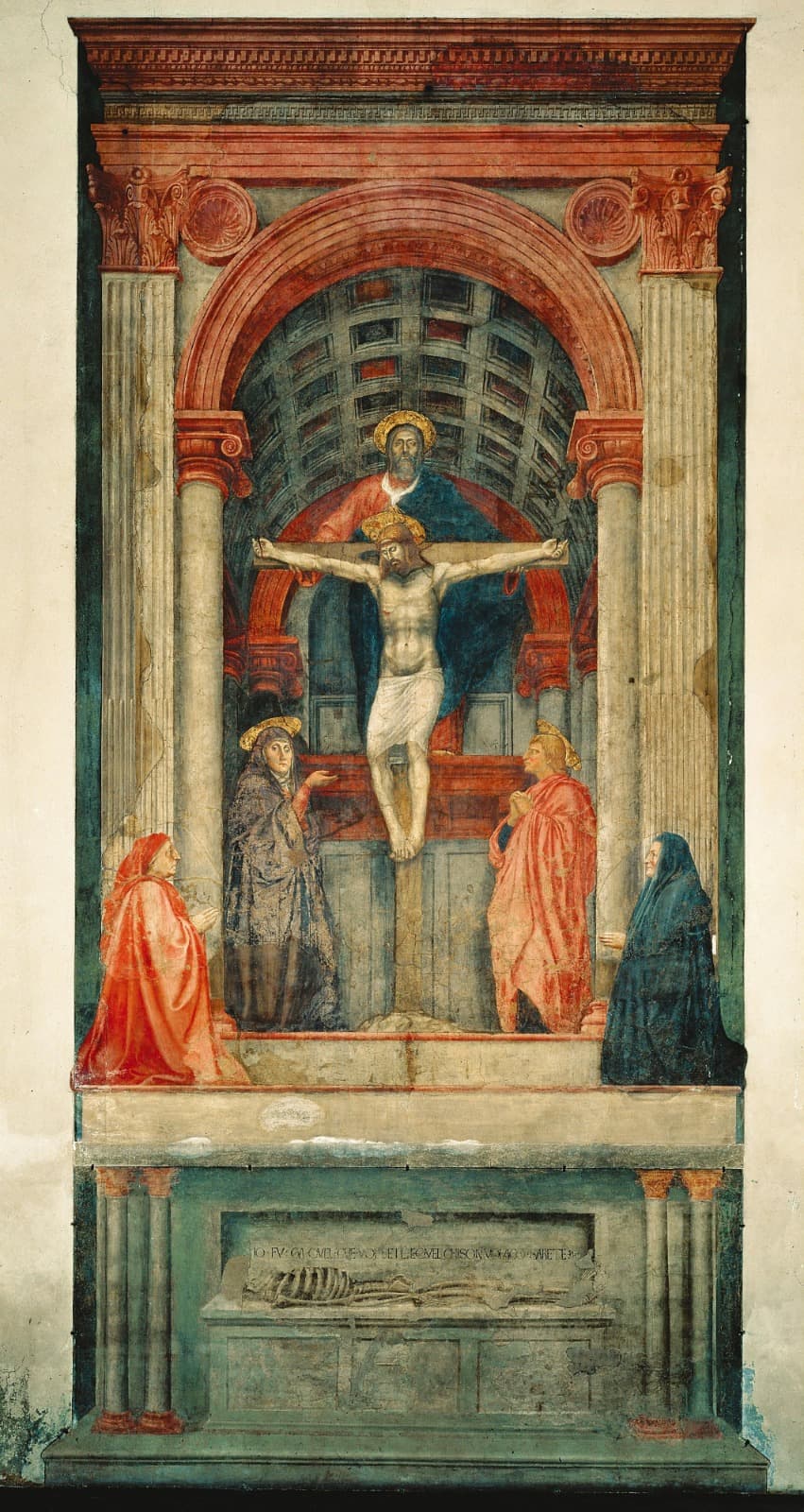
The earliest surviving painting built on a single vanishing point, worked out on a wall of Santa Maria Novella with Brunelleschi's help.
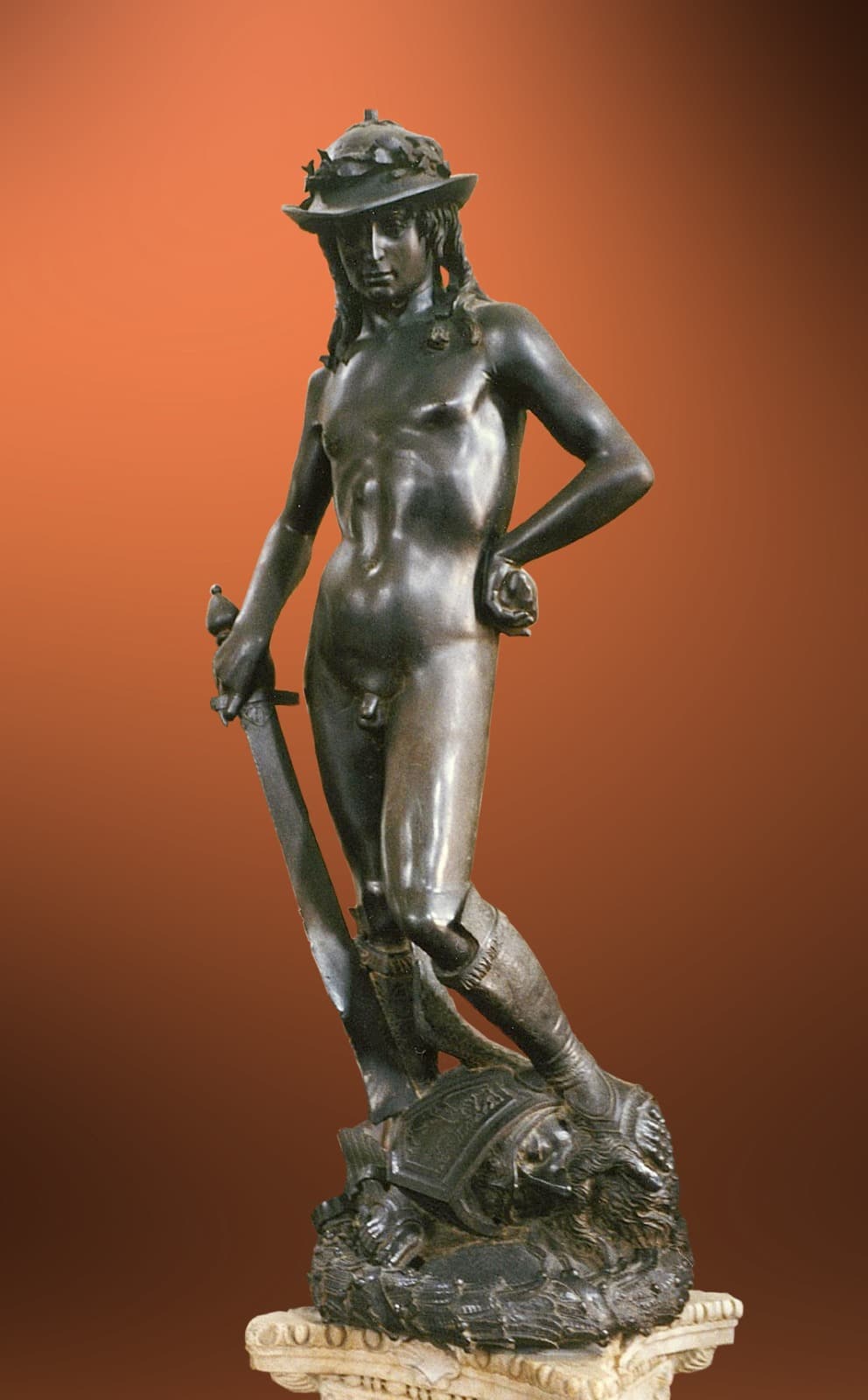
A naked boy in boots and a laurel hat rests one foot on Goliath's head, the first freestanding bronze nude since antiquity.
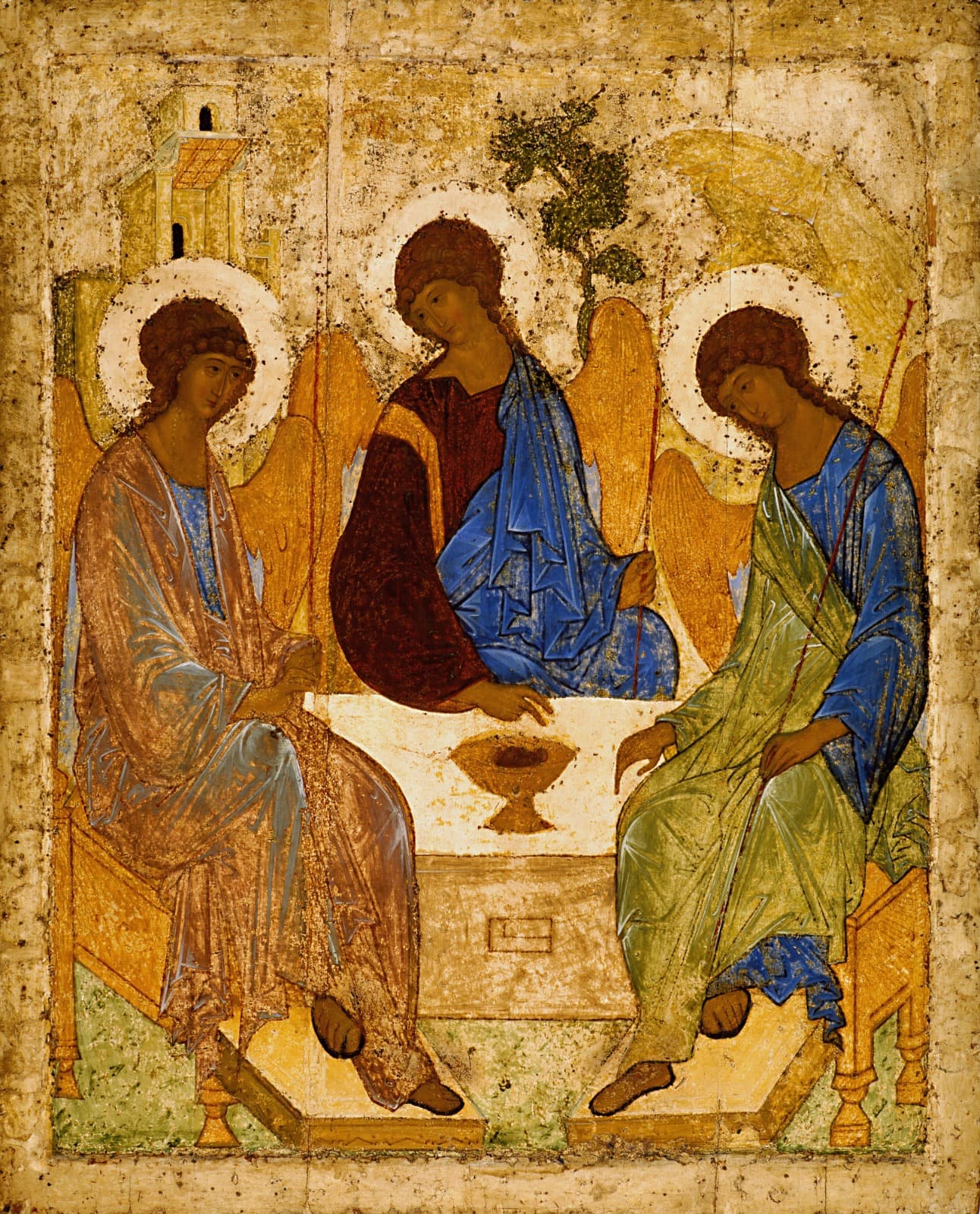
Three angels bend into a closed circle around a single cup. In 2024 the icon left the Tretyakov for a monastery, over conservators' objections.

Bartholomew holds his own flayed skin, and the sagging face on it is Michelangelo's. The nudes offended enough critics that drapery was added later.
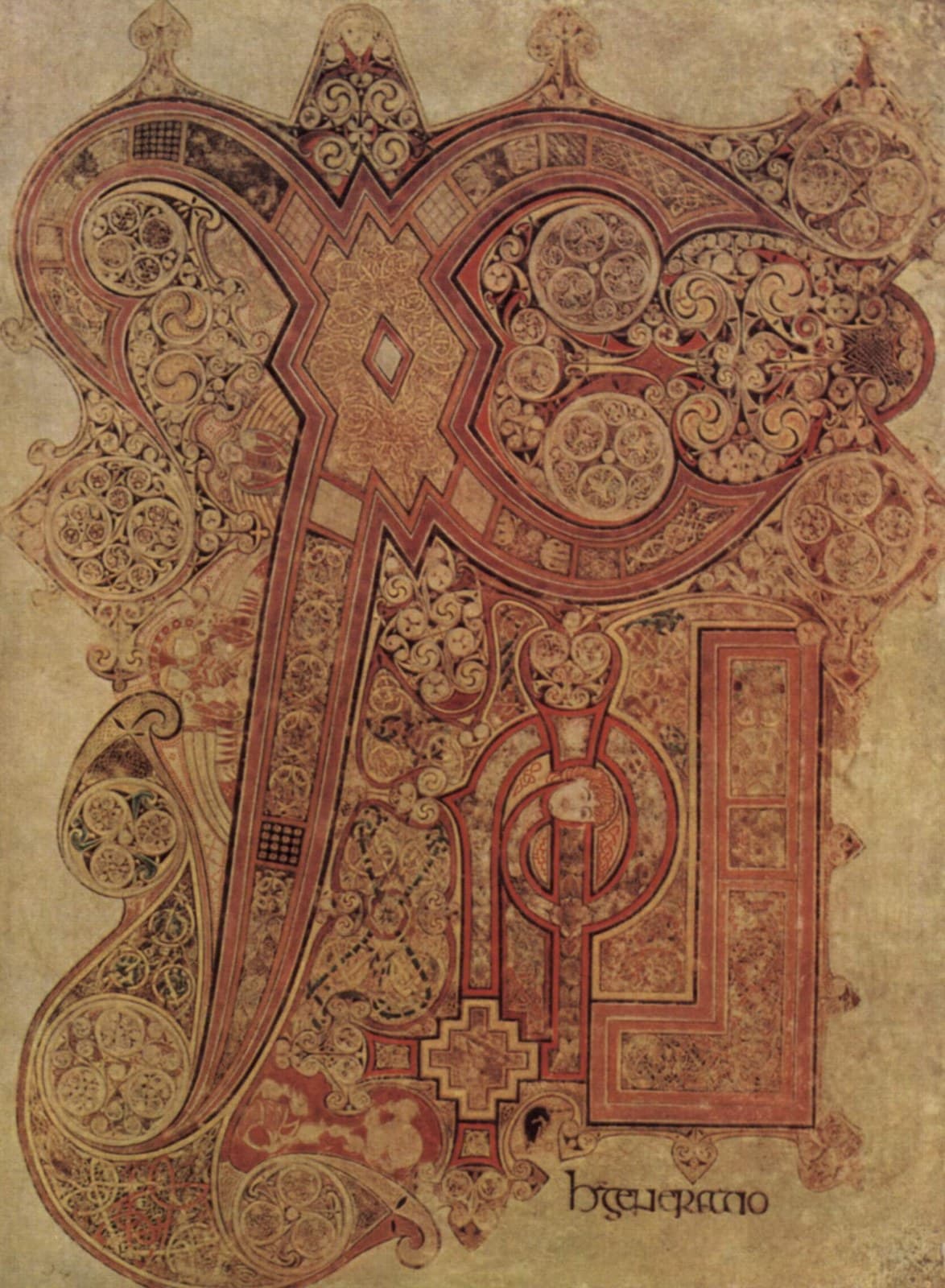
The monogram of Christ swells until it fills the page, and among the spirals hide cats, mice, an otter with a fish, and a moth.

Judith and her maid hold Holofernes down together and work the blade through his throat. Artemisia painted it a decade after her rape trial.
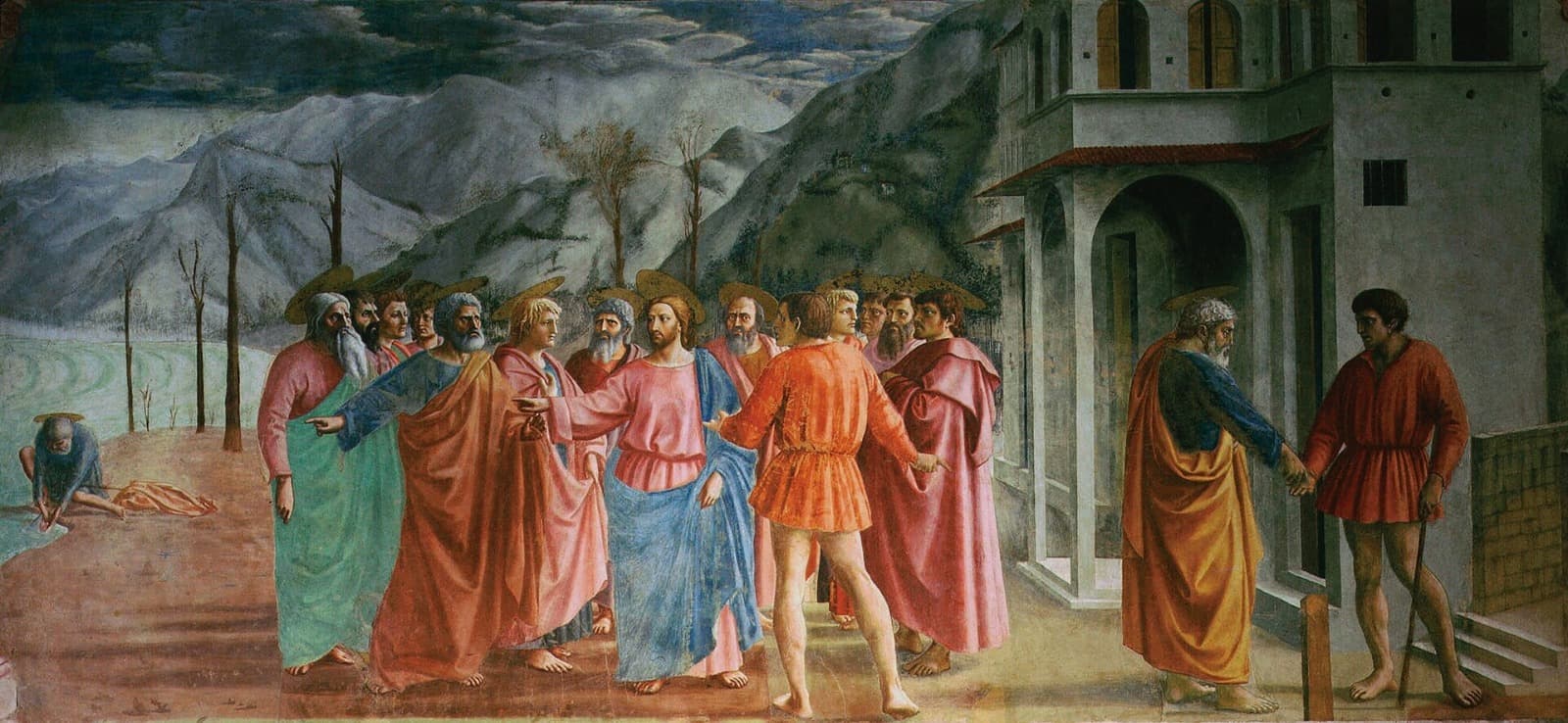
Three moments run in a single frame: the tax demanded, Peter pulling the coin from a fish, and Peter paying up at the right.

The son kneels with his shorn head against his father's chest and the old man's hands come down on his back. Rembrandt painted it near death.
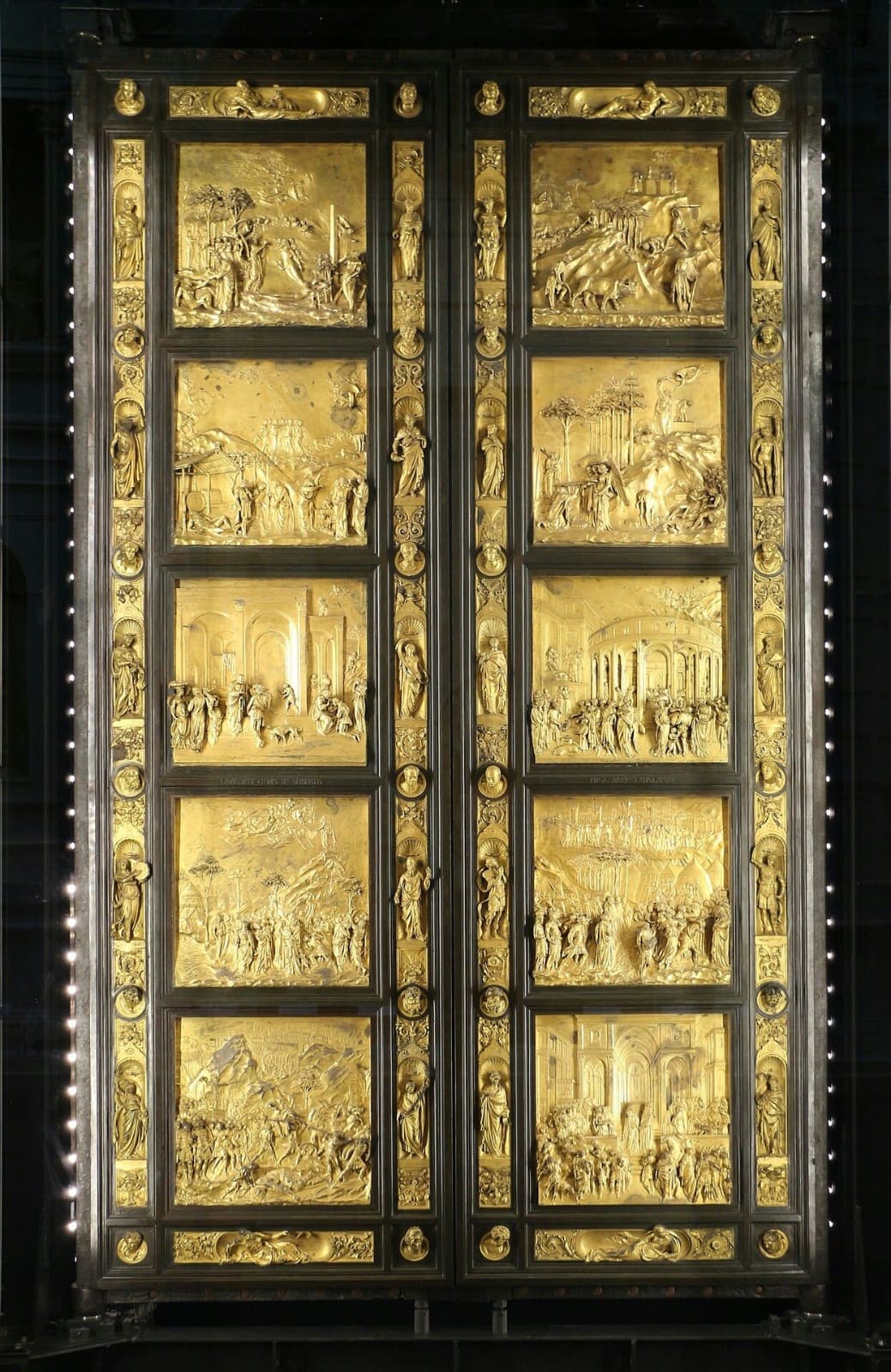
Ghiberti gave twenty-seven years to these doors, and the name comes from Michelangelo, who is supposed to have said they were fit for paradise.

Eve throws back her head and howls while Adam hides his face, the bodies heavy and casting real shadows. Michelangelo came to study it.

Christ's body slides down one long diagonal onto a white shroud. It still stands on the altar in Antwerp Cathedral that Rubens painted it for.
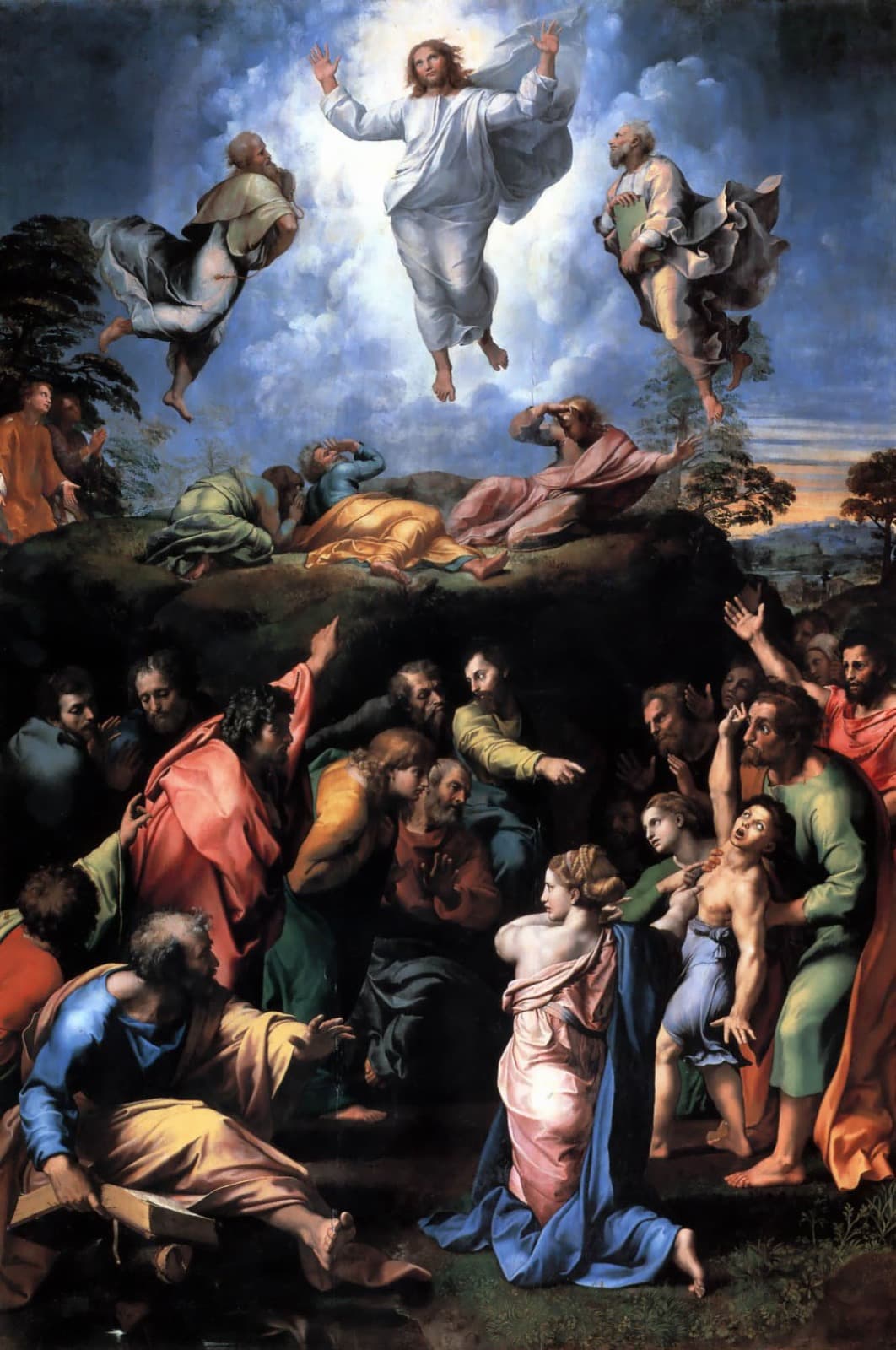
Raphael left it unfinished when he died in 1520, and it was hung above his body while he lay in state.

The only canvas Caravaggio ever signed, and he signed it in the blood running from the saint's throat, for the knights of Malta.

Caravaggio's first attempt at the subject, turned down by the patron, before he threw out the angels and left one man, one horse and the light.
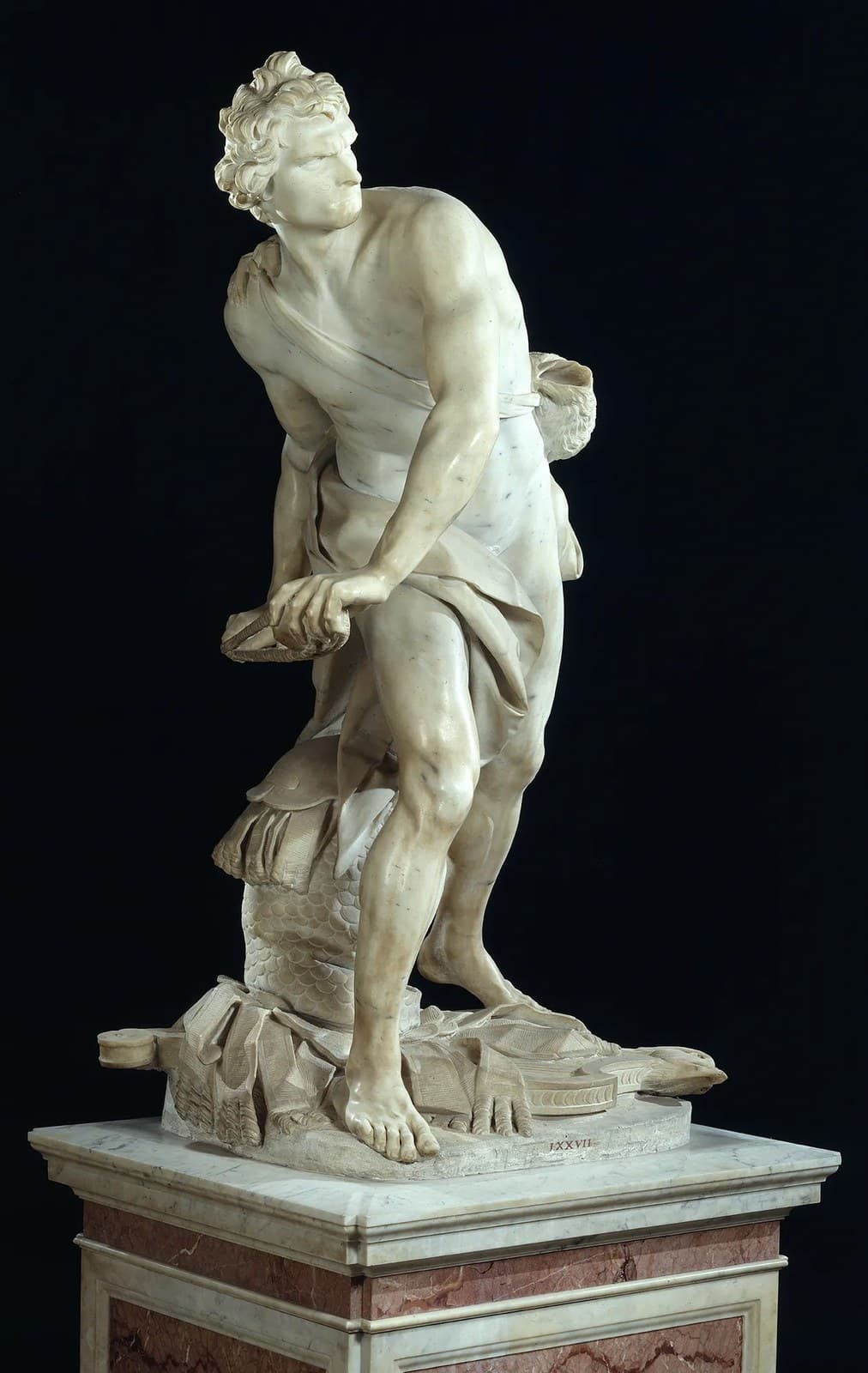
Bernini put the viewer where Goliath must be standing, so the sling is being wound up to throw straight past your head.
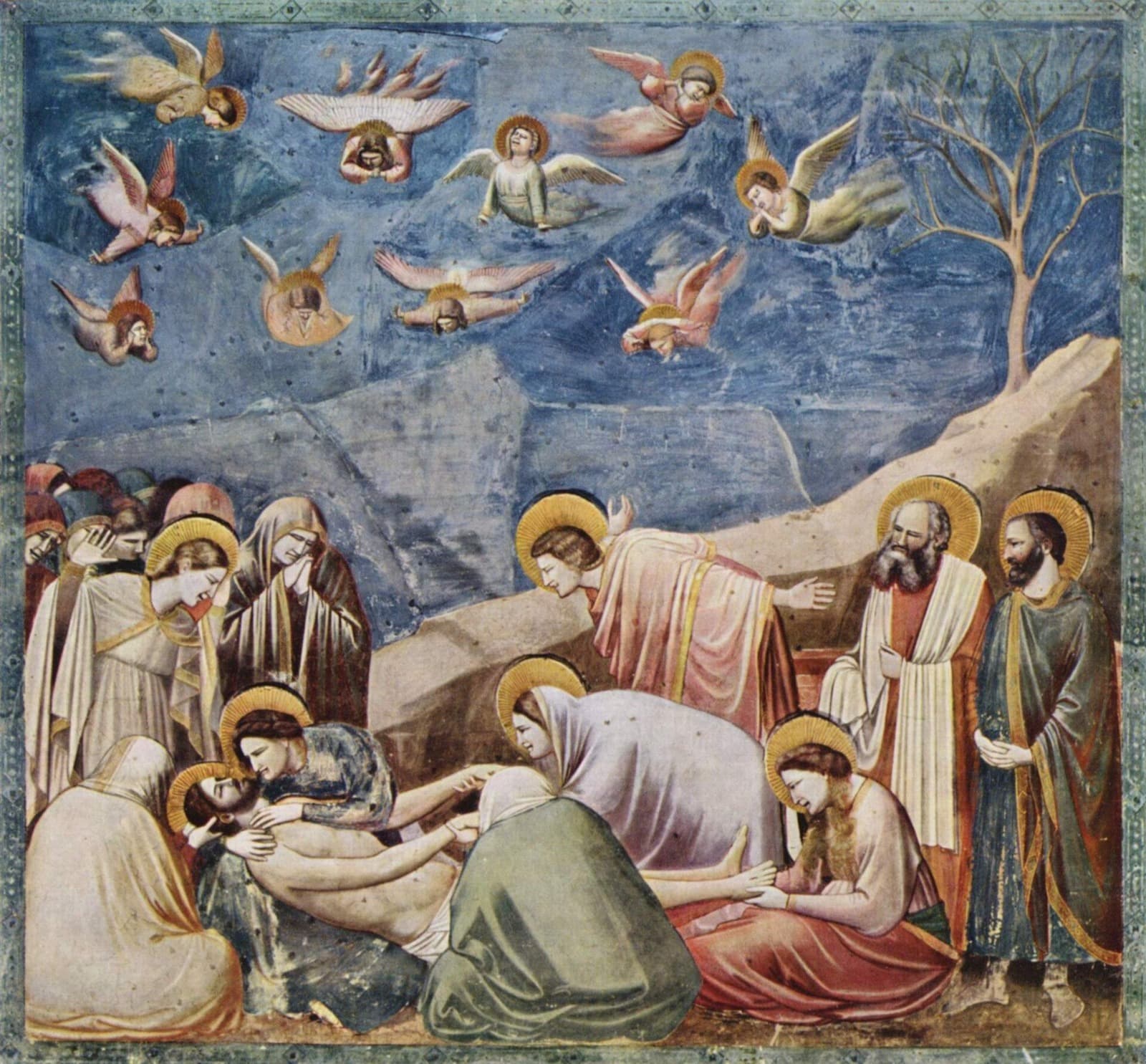
Two mourners sit with their backs turned to pull us in, and the angels overhead double over. Giotto frescoed it in the Arena Chapel at Padua.
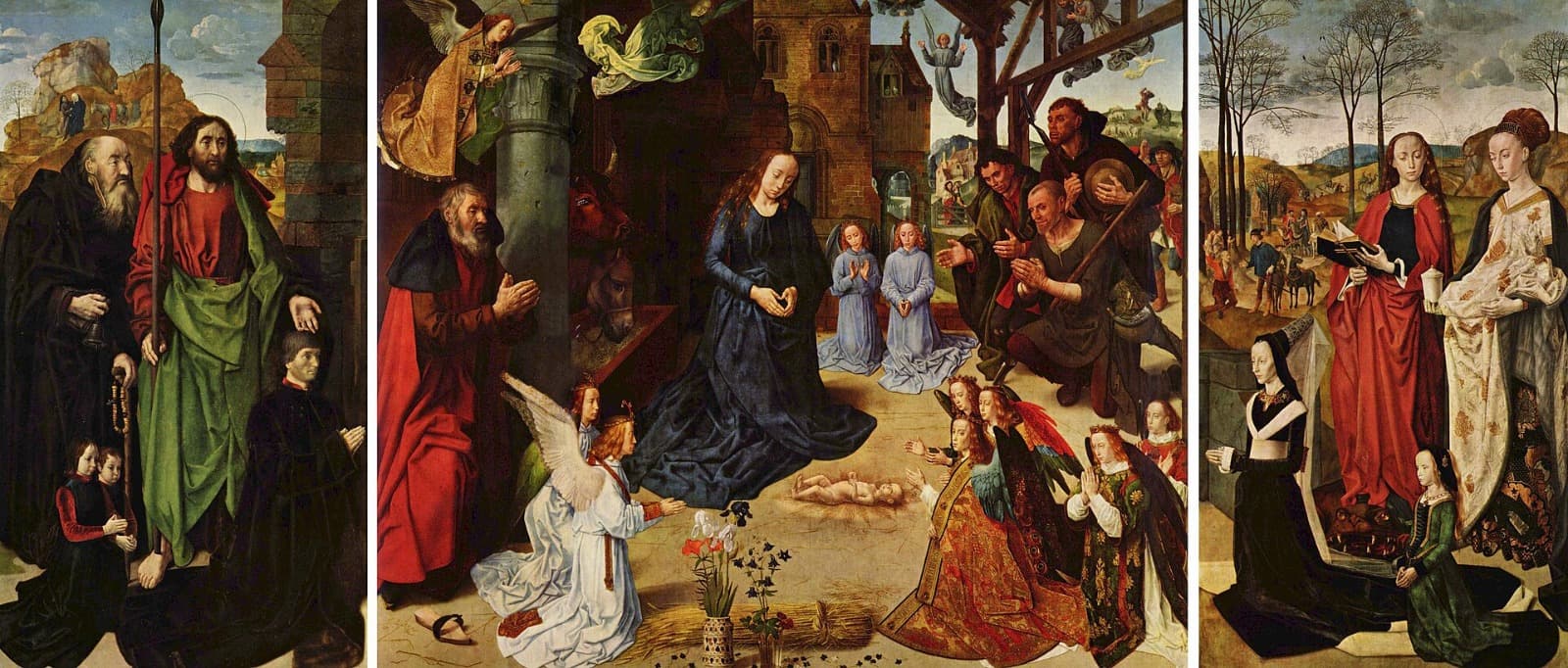
Three weathered shepherds crowd in to look at the newborn, and when the triptych reached Florence from Bruges the local painters took note.

Christ is scourged in the middle distance while three men talk in the foreground, indifferent. Nobody has settled who they are or why.

The trees behind Christ turn from bare to leafing across the panel. In 1944 a British officer held his guns rather than shell the town.

A hundred and thirty guests feast while Christ works his first miracle almost unnoticed at the table. Napoleon's troops took it to Paris in 1797.
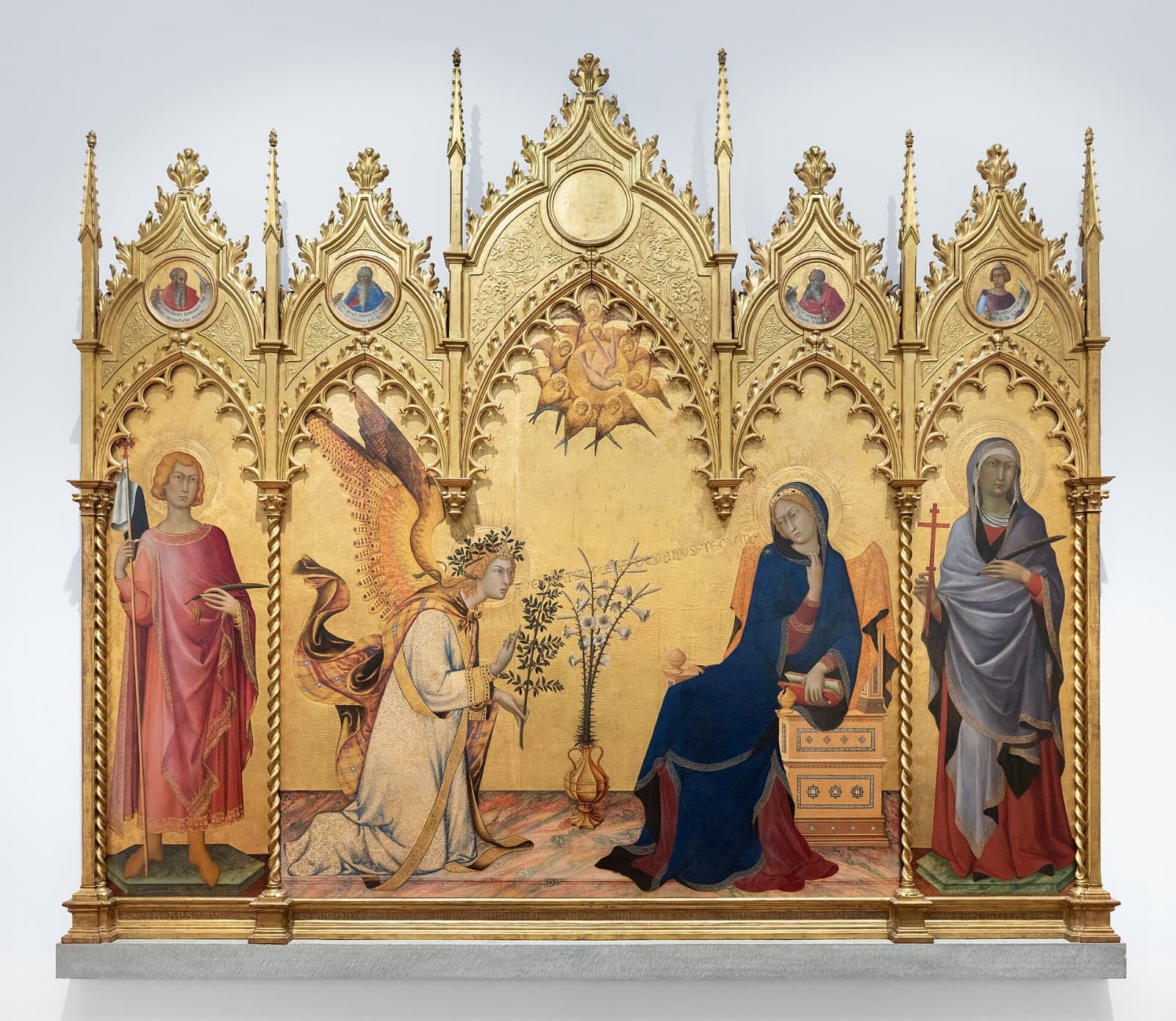
Gabriel's greeting runs toward Mary in raised gold letters and she twists away from it, her thumb still caught in her book.

Fra Angelico frescoed it at the top of the dormitory stairs, so the friars met it every time they climbed to their cells.
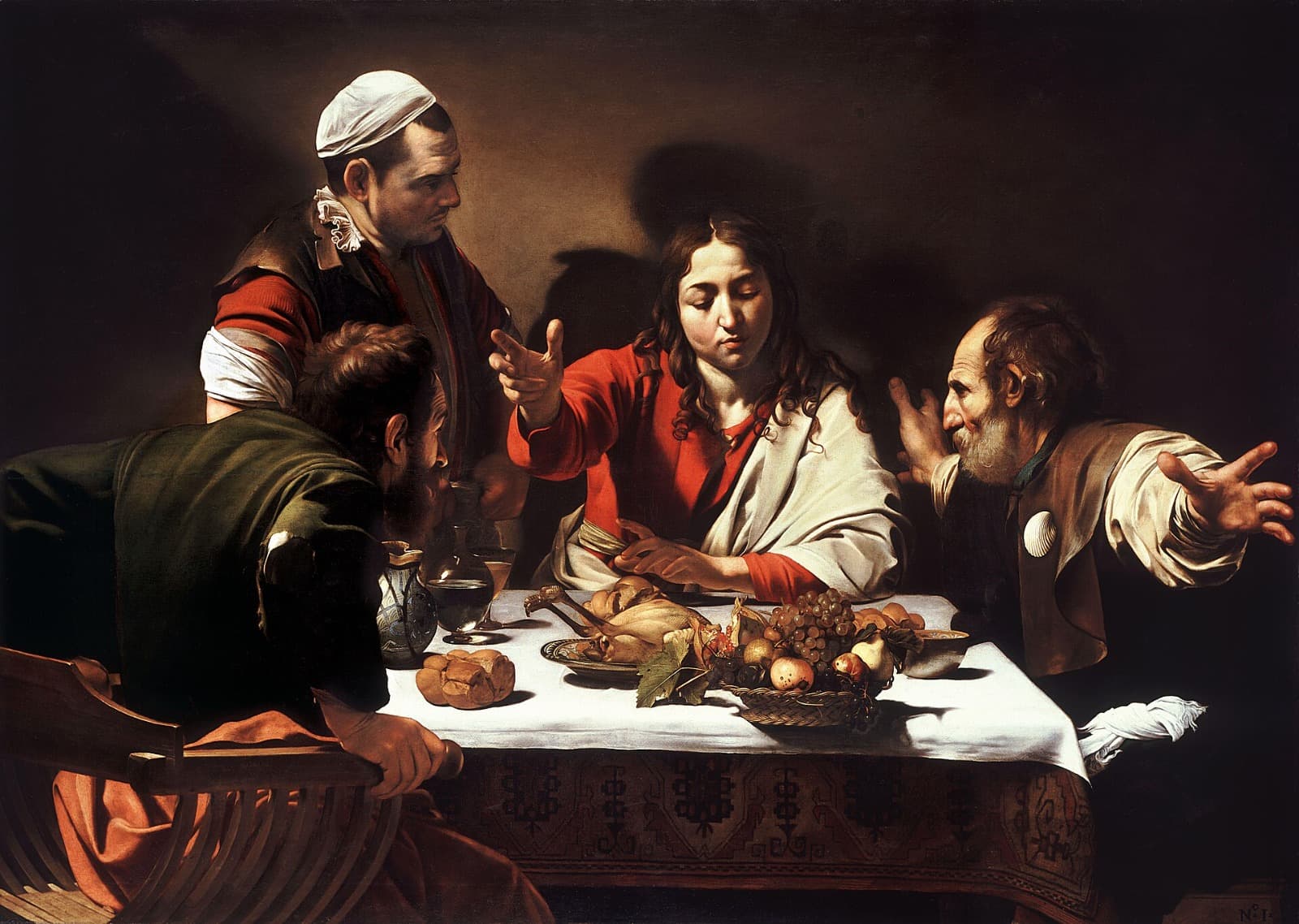
One disciple grips his chair to stand and the other throws his arms wide, while a fruit basket teeters off the edge toward us.

The kings arrive with a retinue of horses, hounds and a leopard, every surface tooled in gold for one of Florence's richest families.
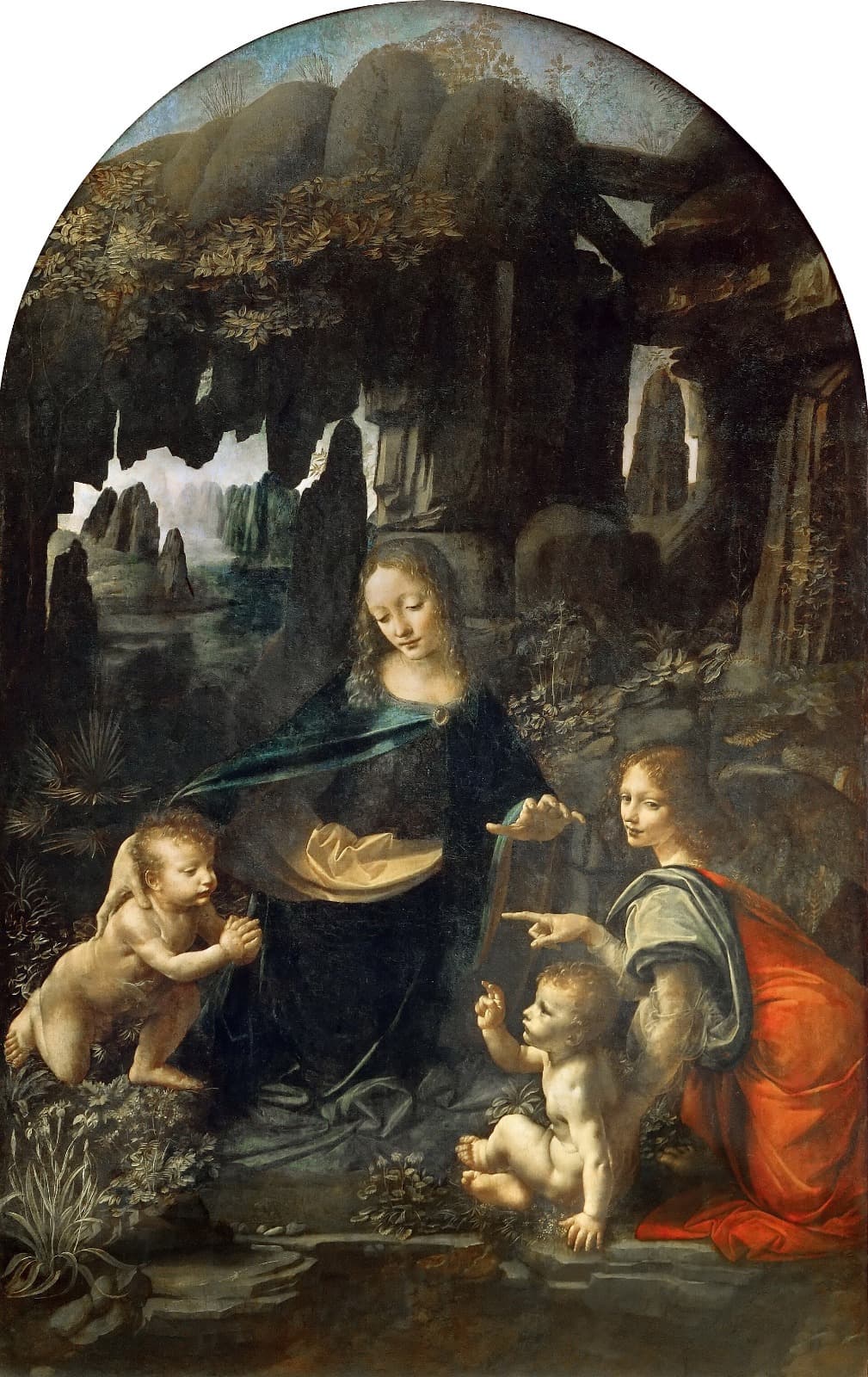
Leonardo painted this cave twice after falling out with the patrons. This is the earlier version, the one that stayed in France.

No cross, no ground, no sky, just a spiral of mourners in acid pink and sea-green. Florentine Mannerism starts here.

The corner of the stone slab juts out of the picture so the body looks about to be laid down in the room with you.

Twelve meters of wall where the whole business of execution goes on at once, one thief still being hauled upright at the side.
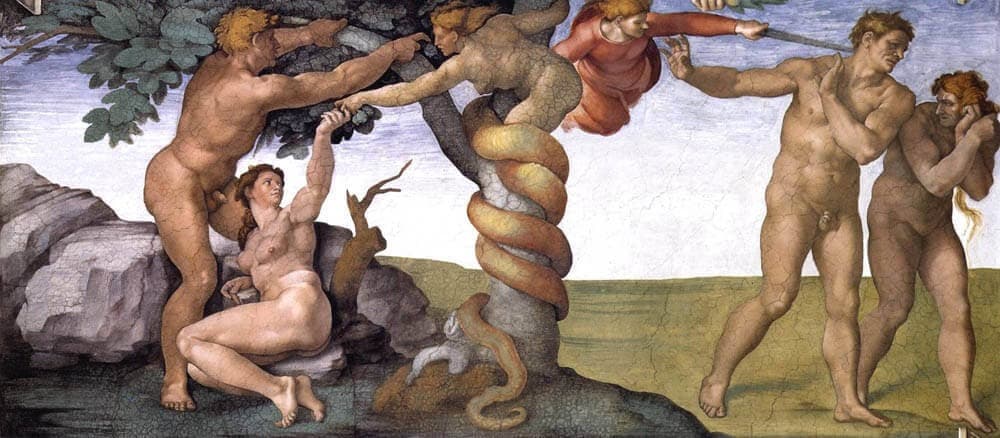
Two moments in one field: Adam and Eve reaching for the fruit, then driven out, suddenly old. The serpent has a woman's torso.

Gabriel bows to Mary under the loggia while Adam and Eve are driven out of the garden at the left, the sin this undoes.

Thomas pushes his finger into the wound and two apostles lean in to watch, brows knotted, close enough to crowd the frame.

Torches and spears bristle against the sky, and at the still center Judas wraps Christ in his yellow cloak and meets his eye.
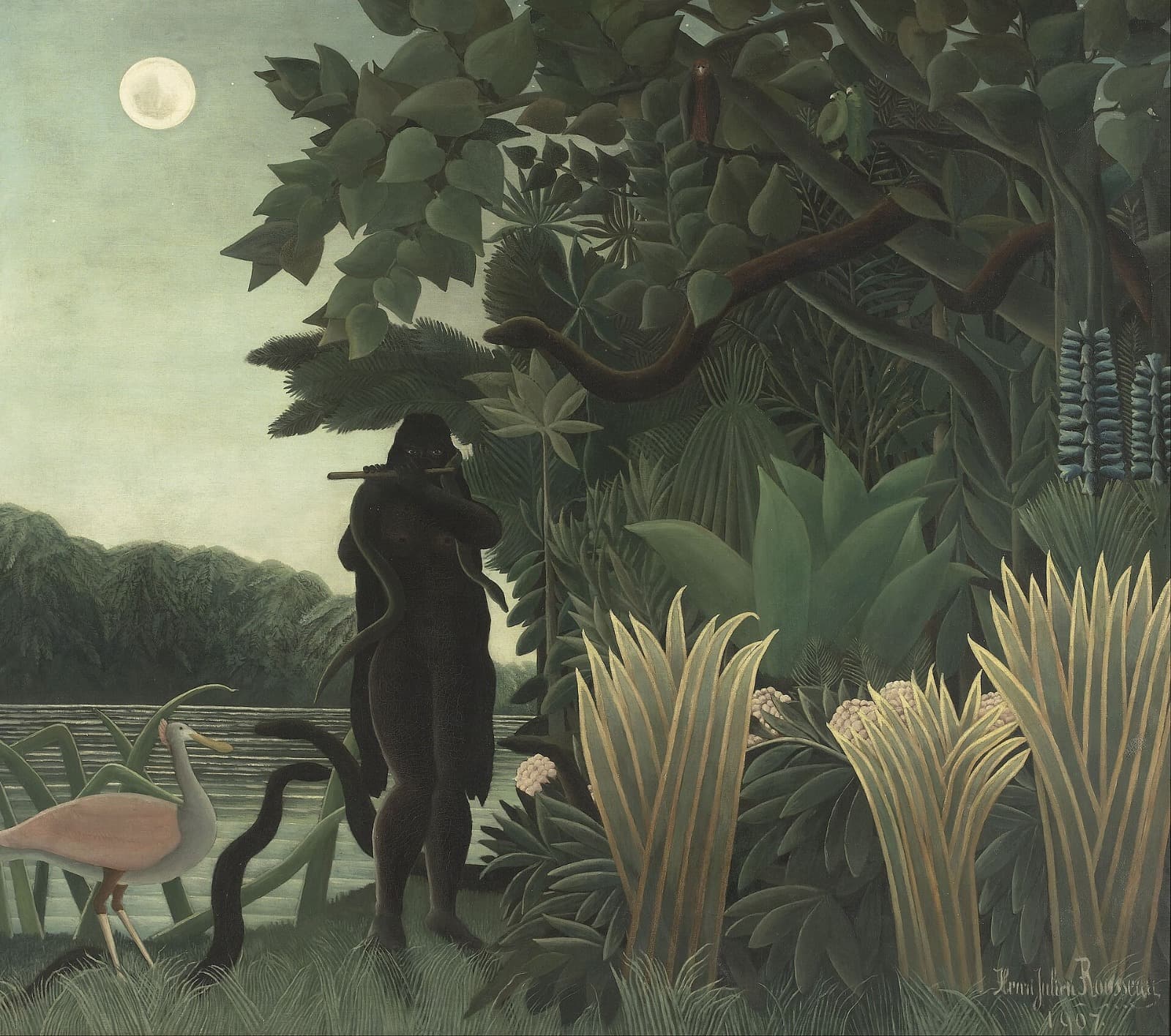
A black silhouette plays a flute and the snakes come out of the leaves toward the music, in moonlight Rousseau invented entirely.

The table runs off on a steep diagonal into a smoky hall where servants clear plates and the lamp smoke thickens into angels.

The tower is already leaning as it goes up, and Bruegel drew the cranes and ramps in enough detail that you could nearly build it.

No halo, no manger, just a candle shielded by a hand and a swaddled baby, and it still reads as a nativity.
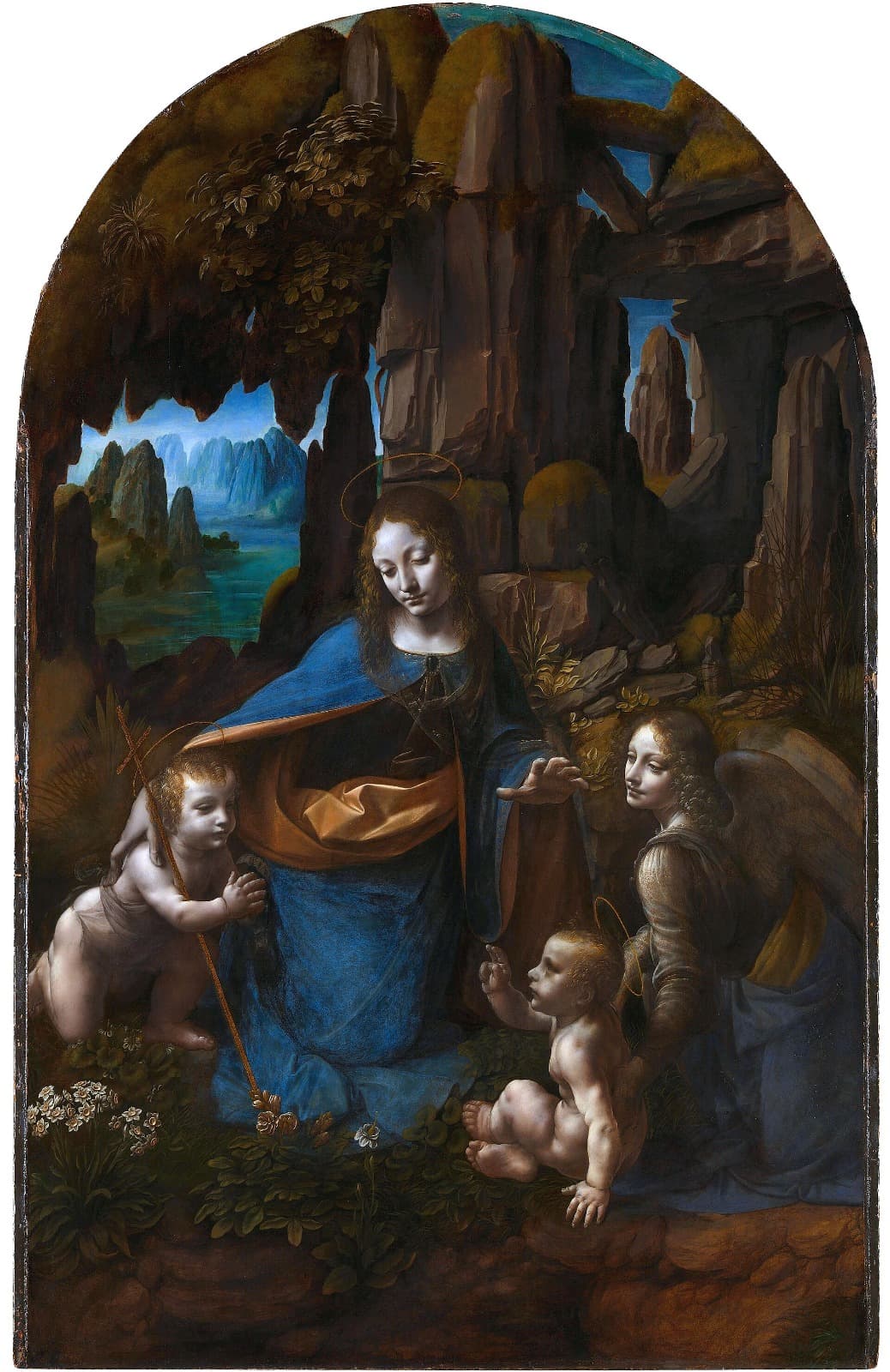
The second version, painted to settle a long quarrel with the confraternity. Everyone now has a halo and the angel has stopped pointing.

No angel, no dove, no lily. Mary looks up from her book straight at us, because we are standing where Gabriel ought to be.

Not the betrayal but the blessing of the bread, staged in a Flemish hall on one of the earliest correct vanishing points in the north.
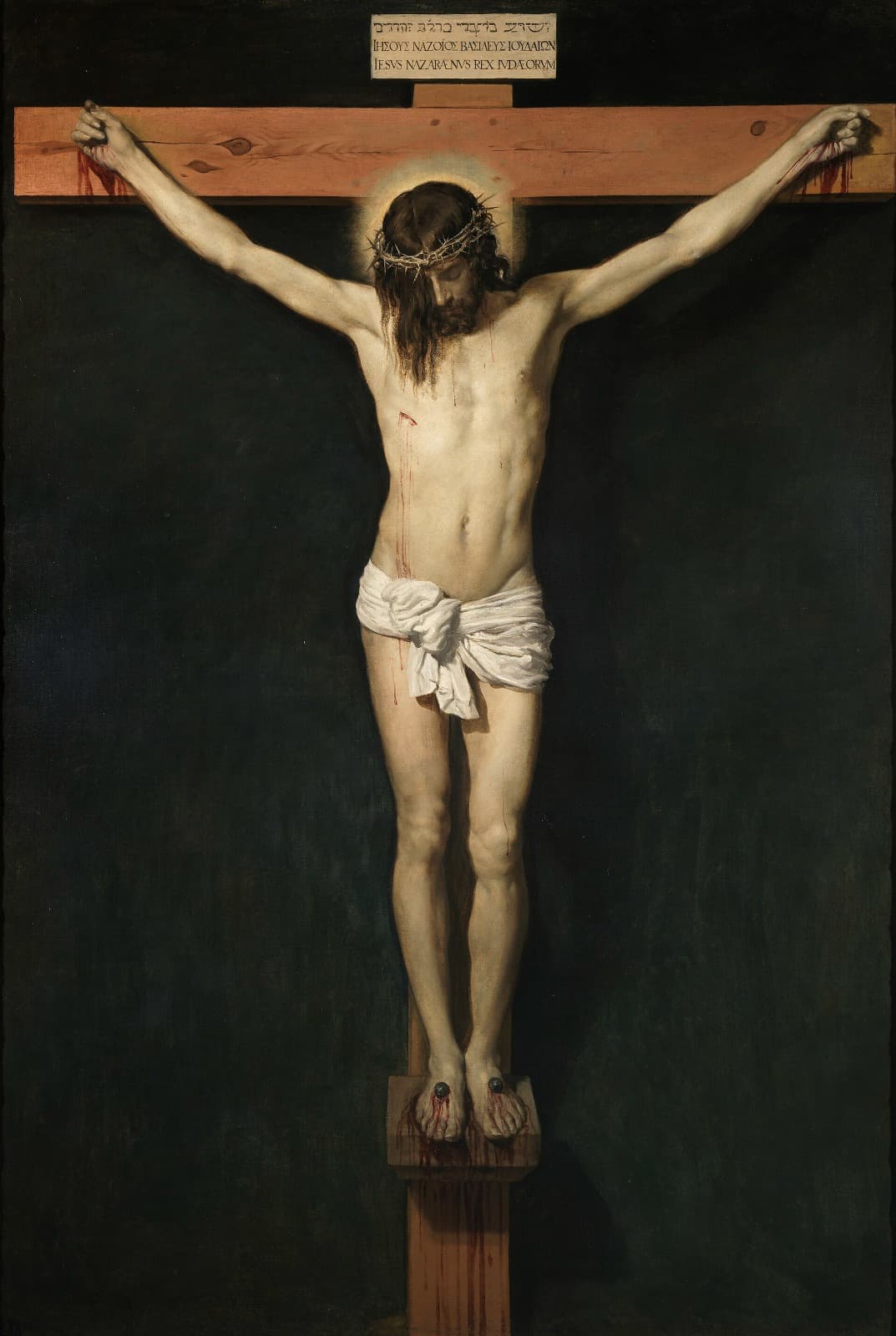
No crowd, no landscape, nothing but the body against black, with the hair fallen forward to half-cover the face. Made for private prayer.
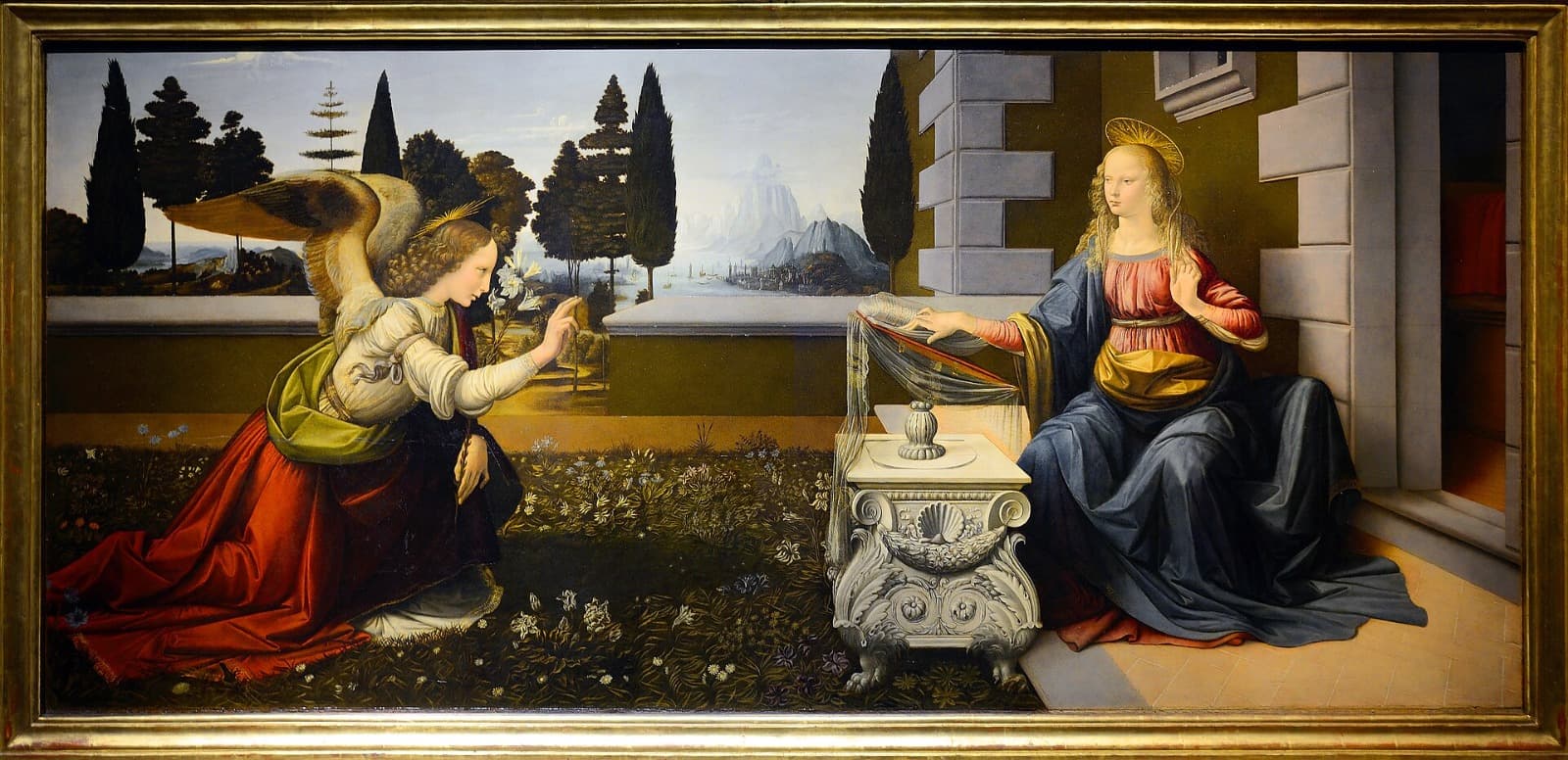
An early work, and Mary's right arm reaches further than an arm can. Gabriel's wings were studied from a real bird.
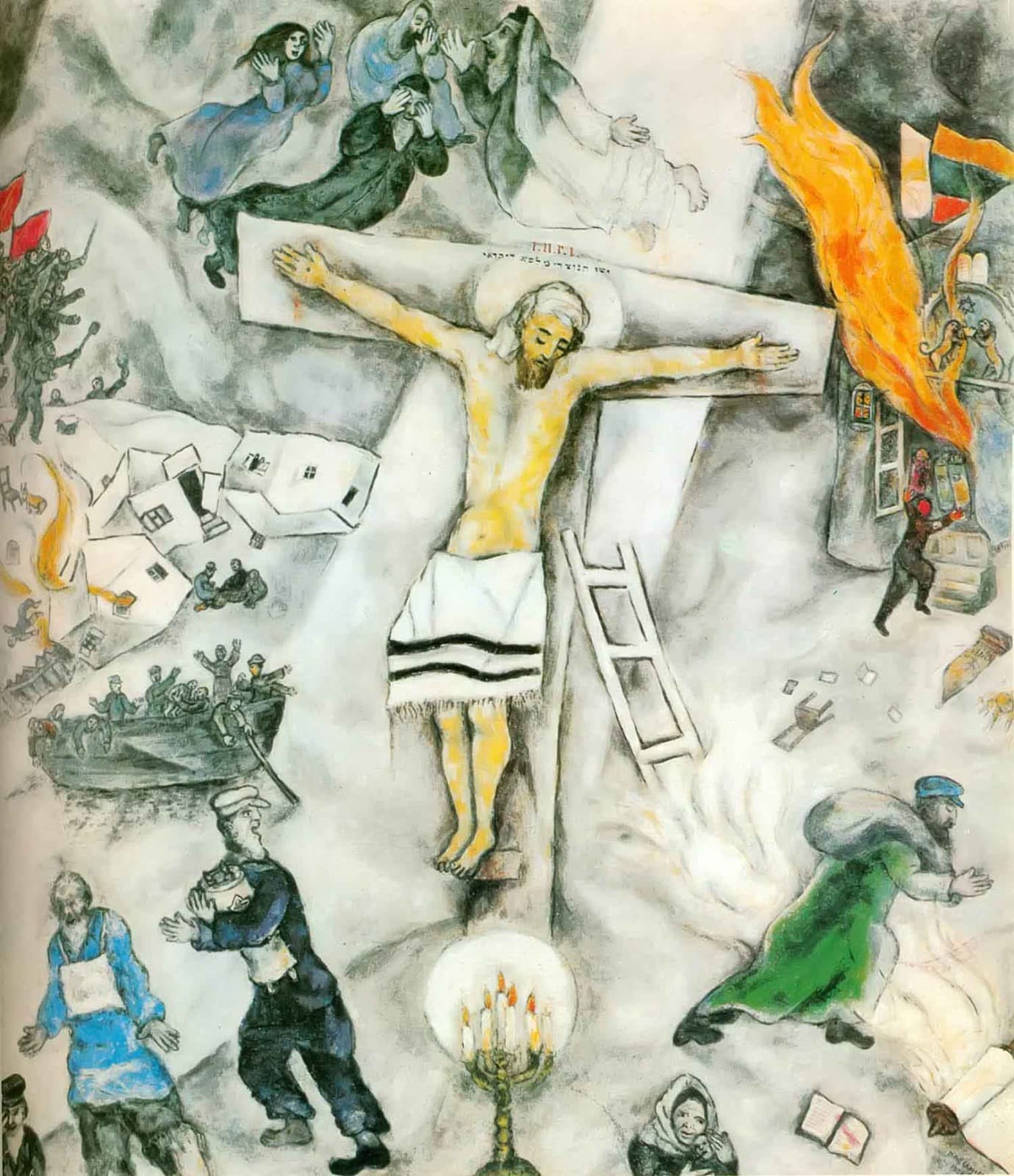
Christ wears a Jewish prayer shawl while a synagogue burns and refugees flee by boat. Chagall painted it in 1938, watching what was coming.

Herod's soldiers and the mothers of Bethlehem lock into one knot of muscle. Overlooked for centuries, it sold in 2002 for a record price.

Rembrandt's only seascape, and one disciple is being sick over the side. Stolen from the Gardner Museum in 1990 and never recovered.
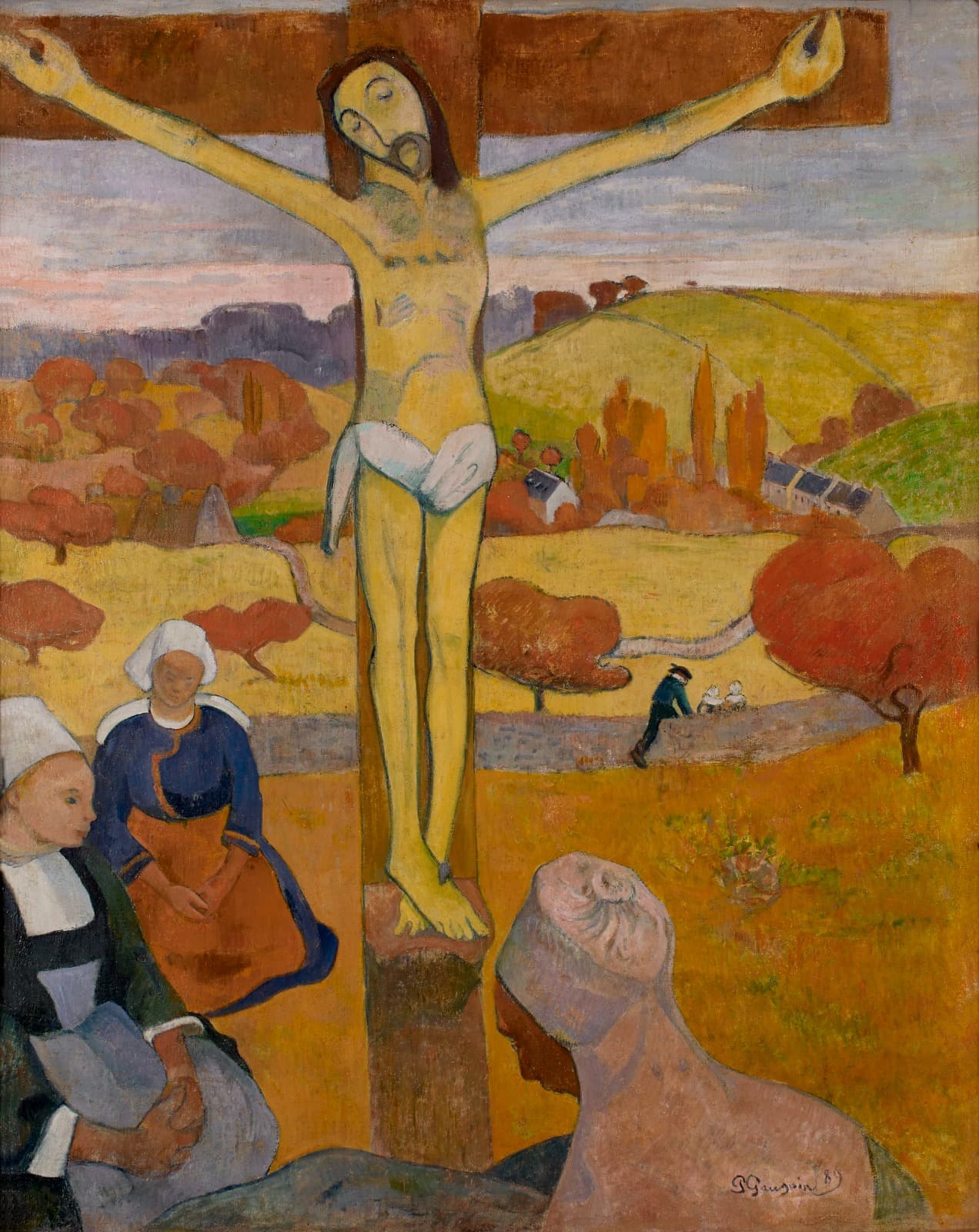
Three Breton women in white caps kneel at a wooden cross in an autumn field, everything flattened into blocks of color like stained glass.
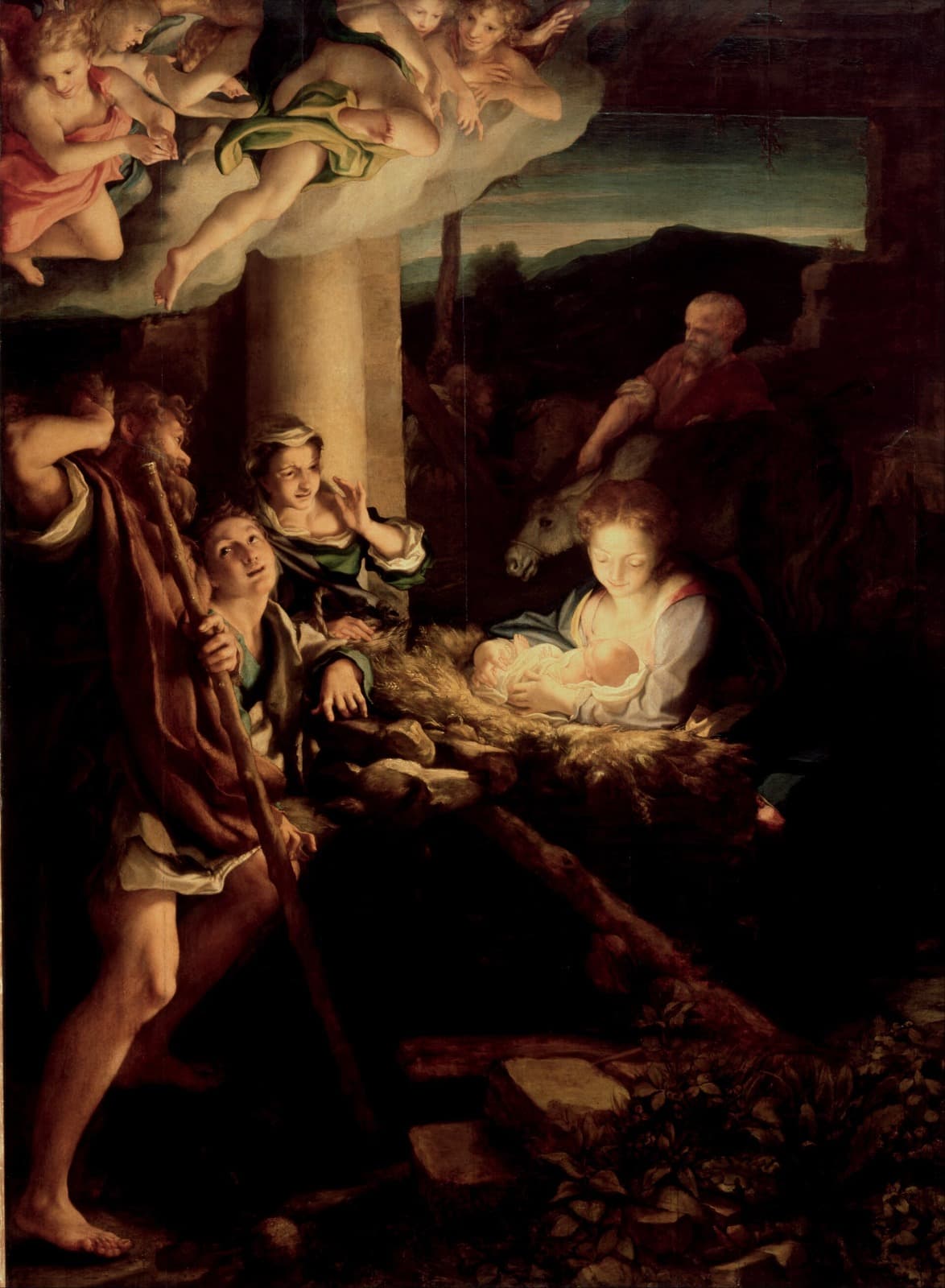
All the light in the picture comes off the newborn child, and one shepherd throws up a hand against the glare.

The holy family is tiny and the landscape does everything, which is the arrangement Poussin and Claude would build whole careers on.

All seven sacraments happen at once inside one Gothic church, with the Crucifixion looming over the nave to show where they get their power.

The three kings are Medici, and the young man in the saffron cloak at the right, looking straight out at us, is Botticelli.

Lazarus heaves upright still wrapped in his shroud while the crowd recoils from the smell. Michelangelo supplied drawings to help beat Raphael.

Michelangelo carved it for his own tomb, gave Nicodemus his own face, then took a hammer to it and broke off Christ's leg.
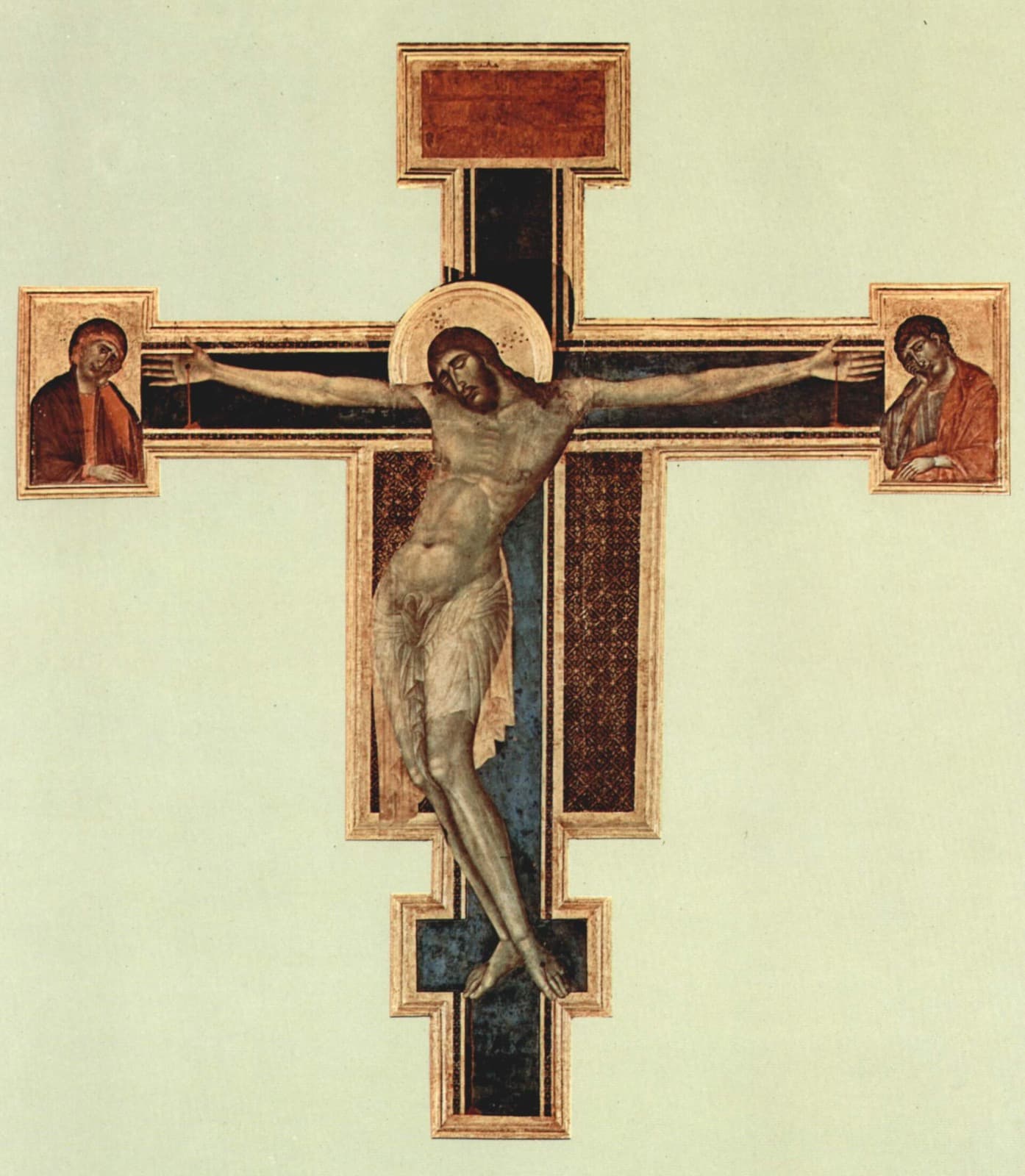
The Arno flood of 1966 stripped most of the paint off it, and the ruined cross became the emblem of the whole disaster.

Mantegna carved the rock like an engraver while Judas already leads the soldiers down the road. His brother-in-law Bellini painted the same scene, softer.

A crush of leering faces fills every inch, and Christ moves through the middle of it with his eyes shut.

Poussin laid the crowd out like a relief so each gesture reads separately, one woman so hungry she nurses her own mother.

An angel grabs Abraham's wrist and the knife is still falling through the air, his hand clamped over the boy's face.
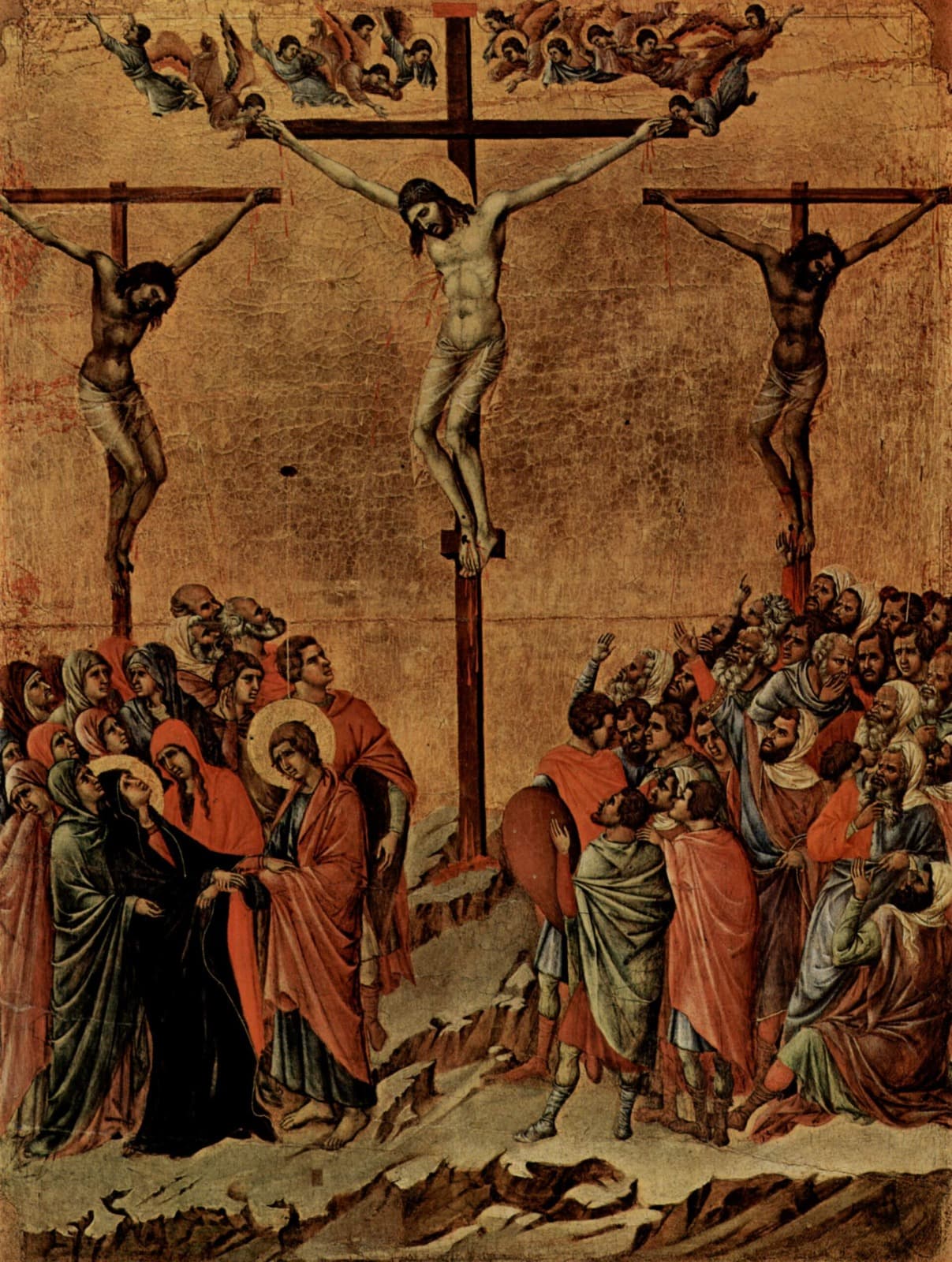
This is the largest scene on the back of the Maesta, the Virgin fainting on one side and the crowd arguing on the other.

The serpent stands upright against the tree with a near-human face, and every leaf in the garden is catalogued one by one.

The room is a twelve-sided glass chamber and a torso hovers over the table. Dalí called this sort of thing nuclear mysticism.
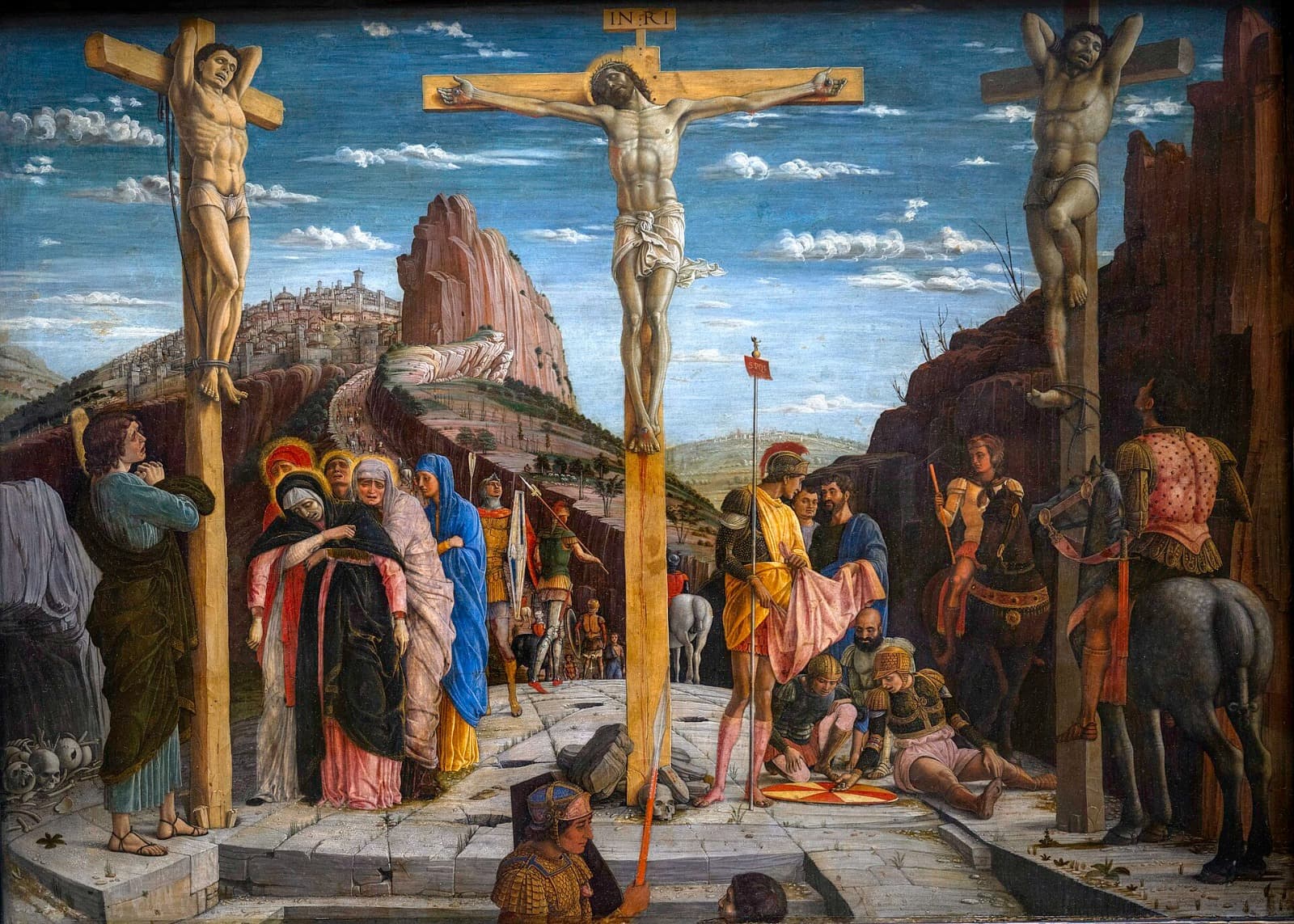
Soldiers throw dice for Christ's robe on a paved Golgotha. This panel was sawn off an altarpiece by Napoleon's looters and never returned.
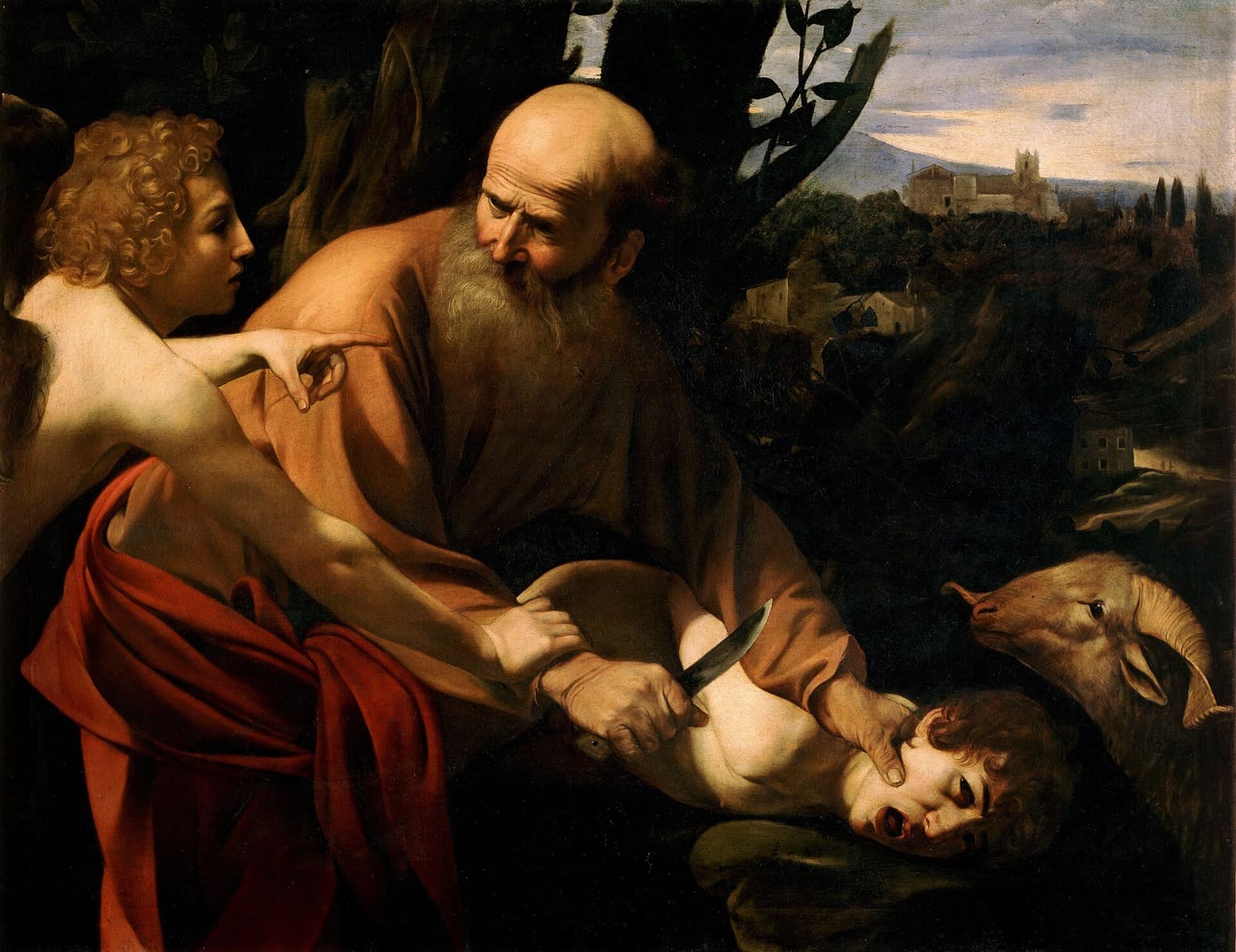
Isaac is shouting under his father's hand and the ram has already arrived at the right. Caravaggio gives the scene no ceremony whatsoever.
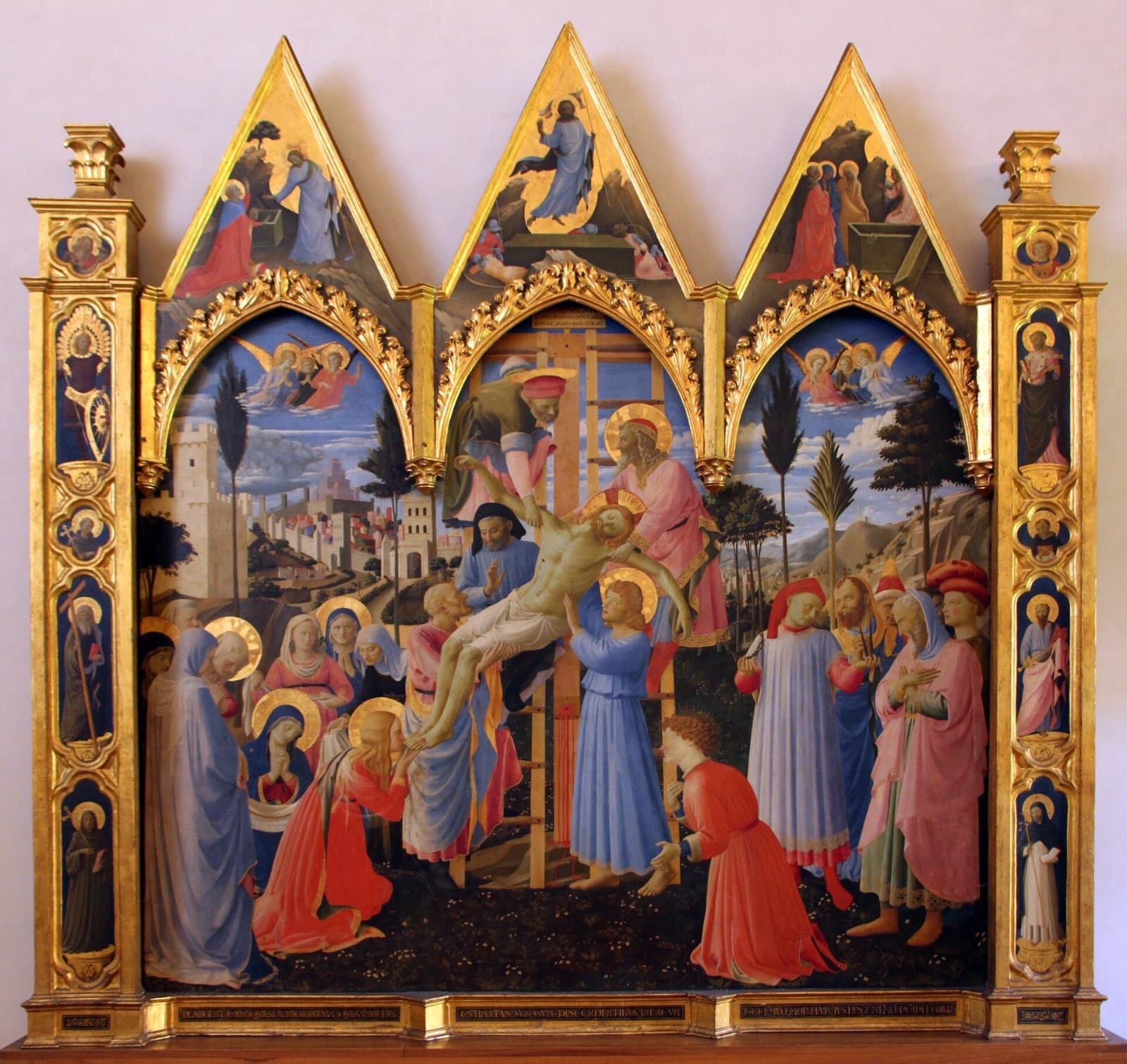
Fra Angelico inherited a Gothic frame begun years earlier and filled it with deep sunlit space instead of gold, which is the whole story.

The sleeping apostles are sealed inside a bubble of rock while soldiers wind toward Christ in the distance, all lit by cold moonlight.

Giotto had watched Halley's Comet in 1301 and painted the Star of Bethlehem as a comet, apparently the first artist to do it.

Christ turns back toward his mother as she swoons, and legend has it the painting was nearly lost in a shipwreck on its way to Palermo.
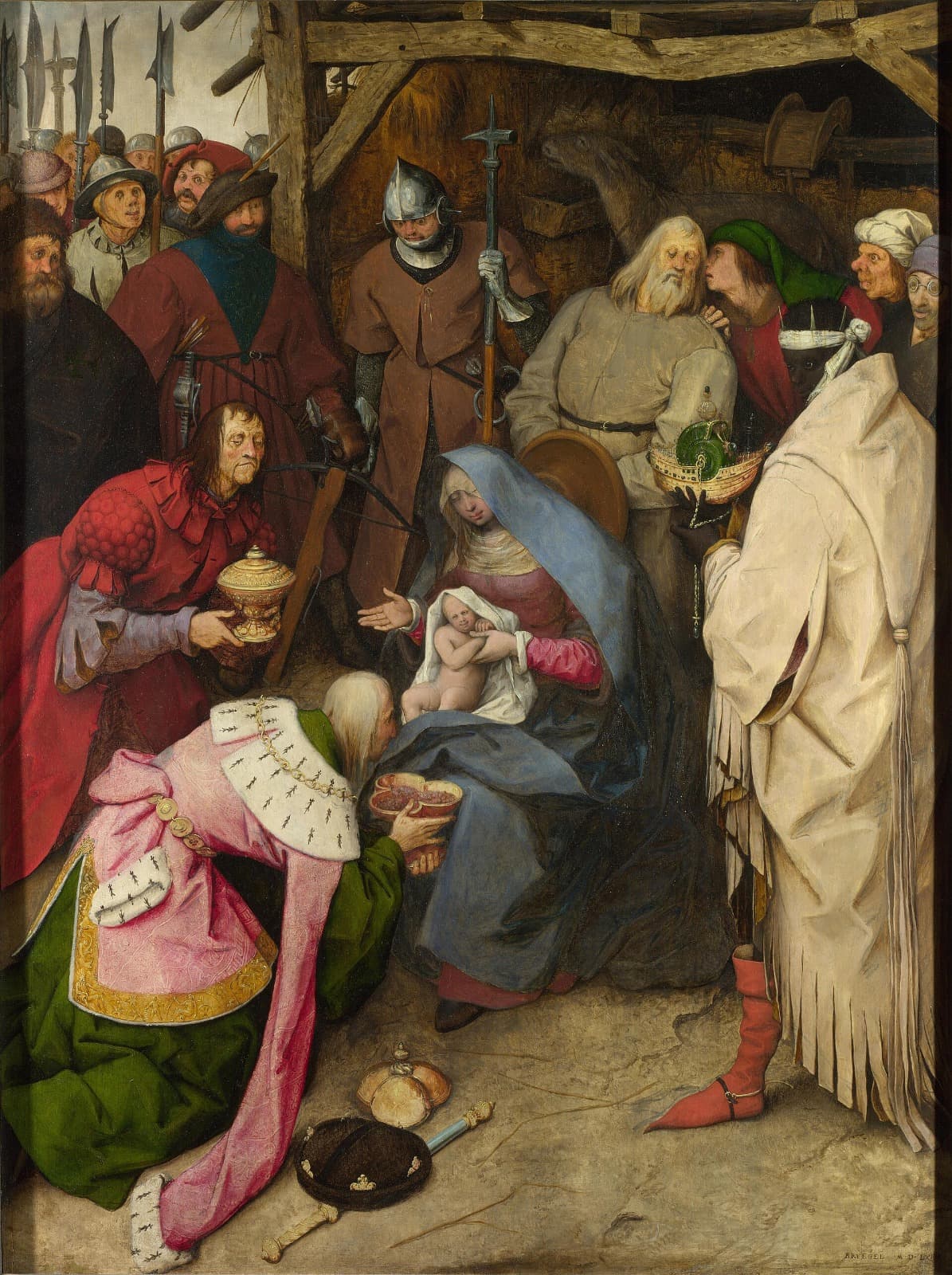
Bruegel gives the holy figures plain faces and surrounds them with gawkers and whisperers, which makes reverence hard to come by.

El Greco stripped out the crowd and the road and left the face and the embraced wood, a formula he repeated many times for Toledo.

The Virgin offers the Child a bunch of grapes, which stand for the wine of his death, in an exactly observed Flemish wood.
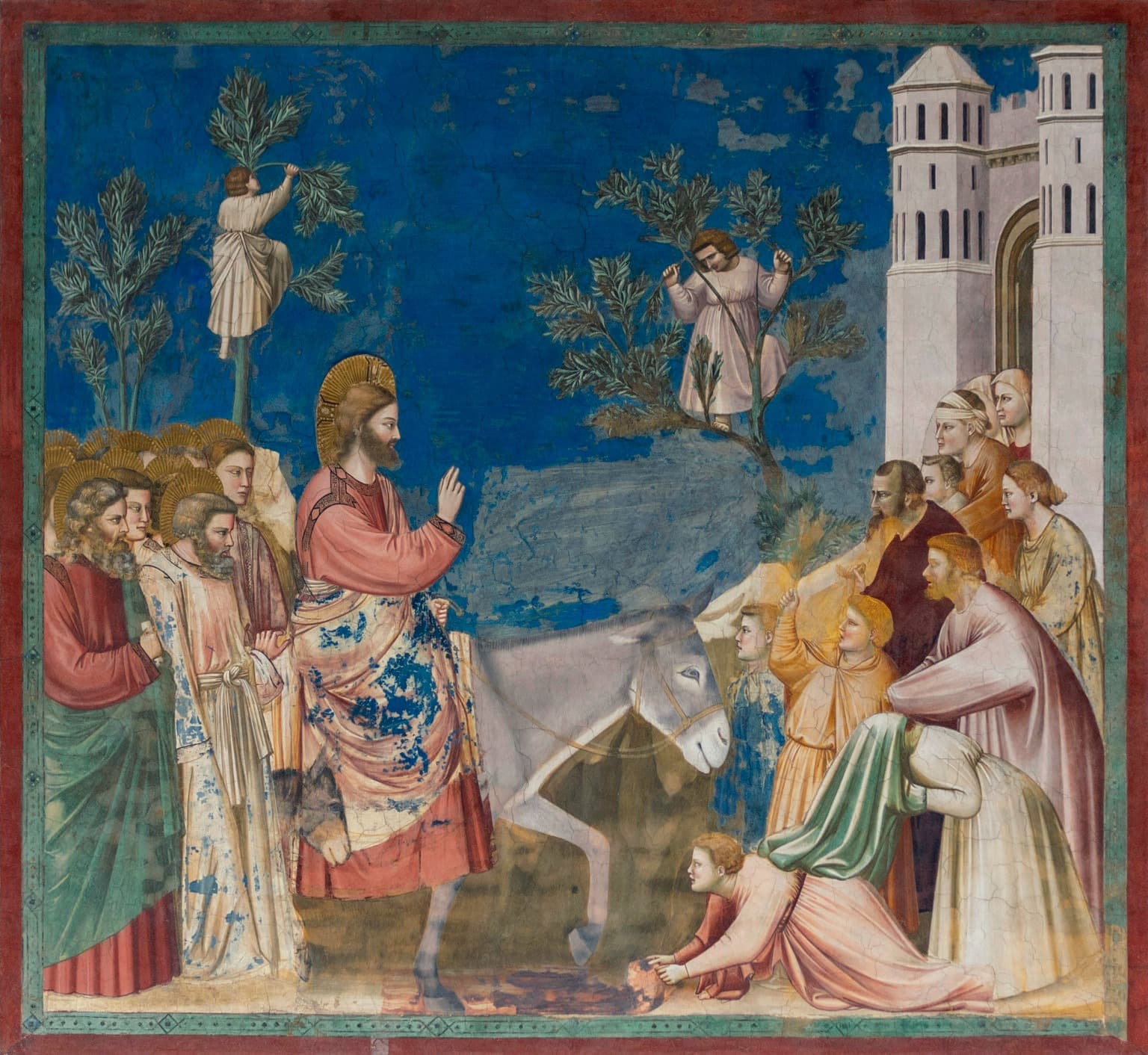
Boys climb the trees to break off palm branches while the procession moves along a stage-like ledge under deep blue. Padua, around 1305.
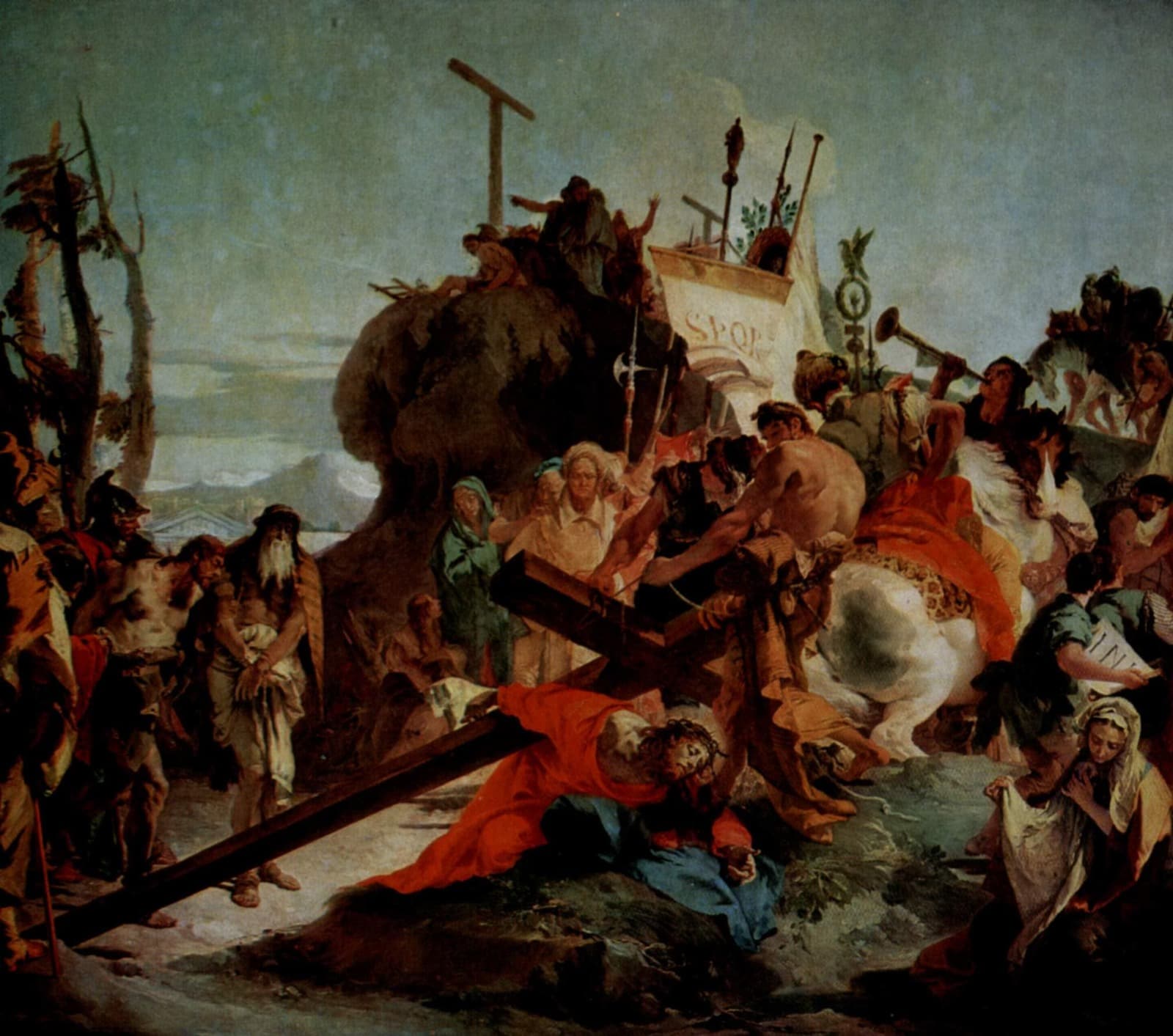
Even the Passion gets Tiepolo's airy color and snapping banners, the whole shoving procession swept upward toward Golgotha as theater.

Blindfolded and beaten while pipers play to make a show of it. Everything Italy was perfecting at that moment, Grünewald wanted none of.

Rubens came back to the subject nearly thirty years later with the same fury and a much broader, more fluent hand.