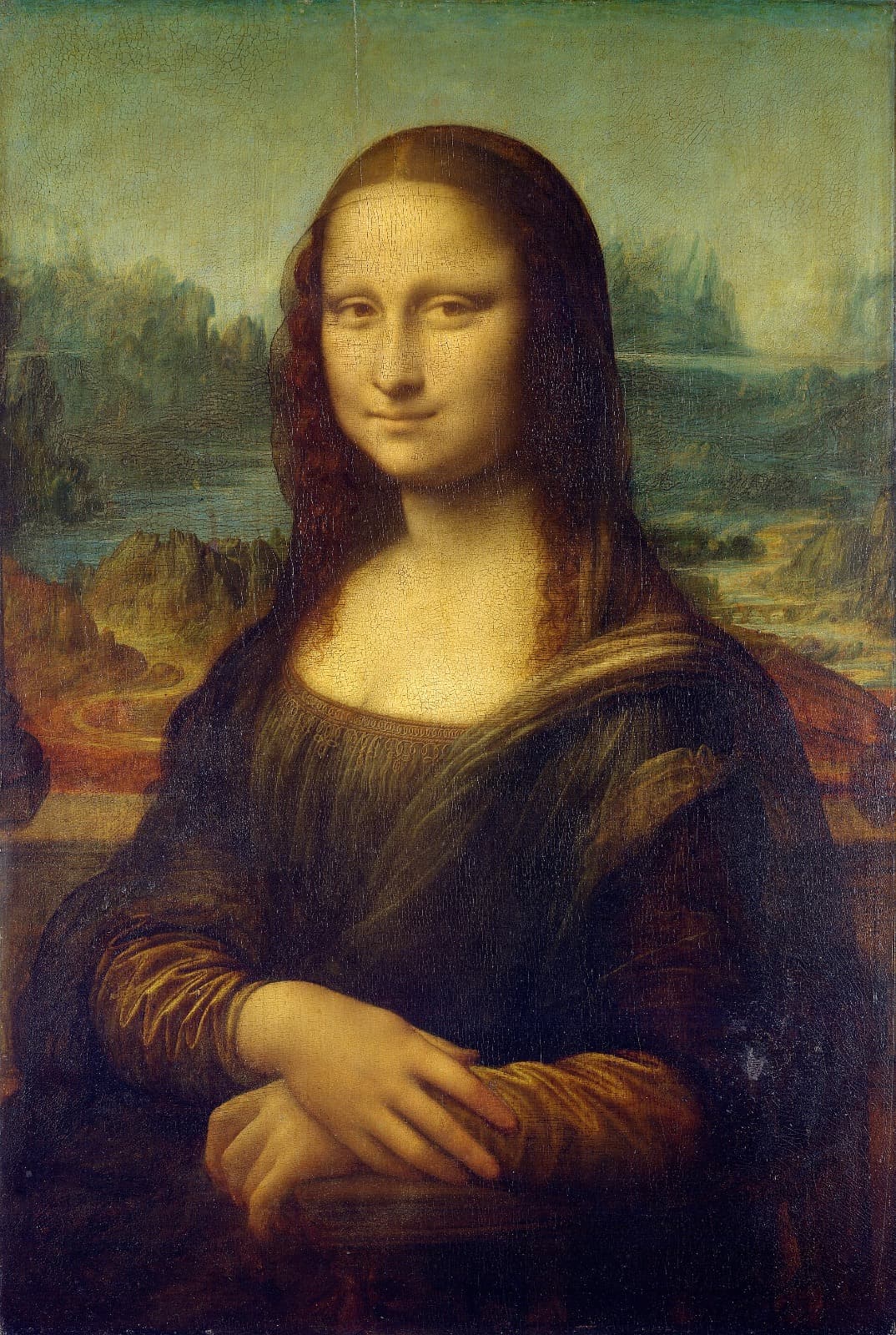
Mona Lisa
1504 · Louvre, Paris
She was probably Lisa Gherardini, a merchant's wife, and Leonardo kept reworking her for years and never handed the portrait over.
★ 9.9
 skopia
She was probably Lisa Gherardini, a merchant's wife, and Leonardo kept reworking her for years and never handed the portrait over.
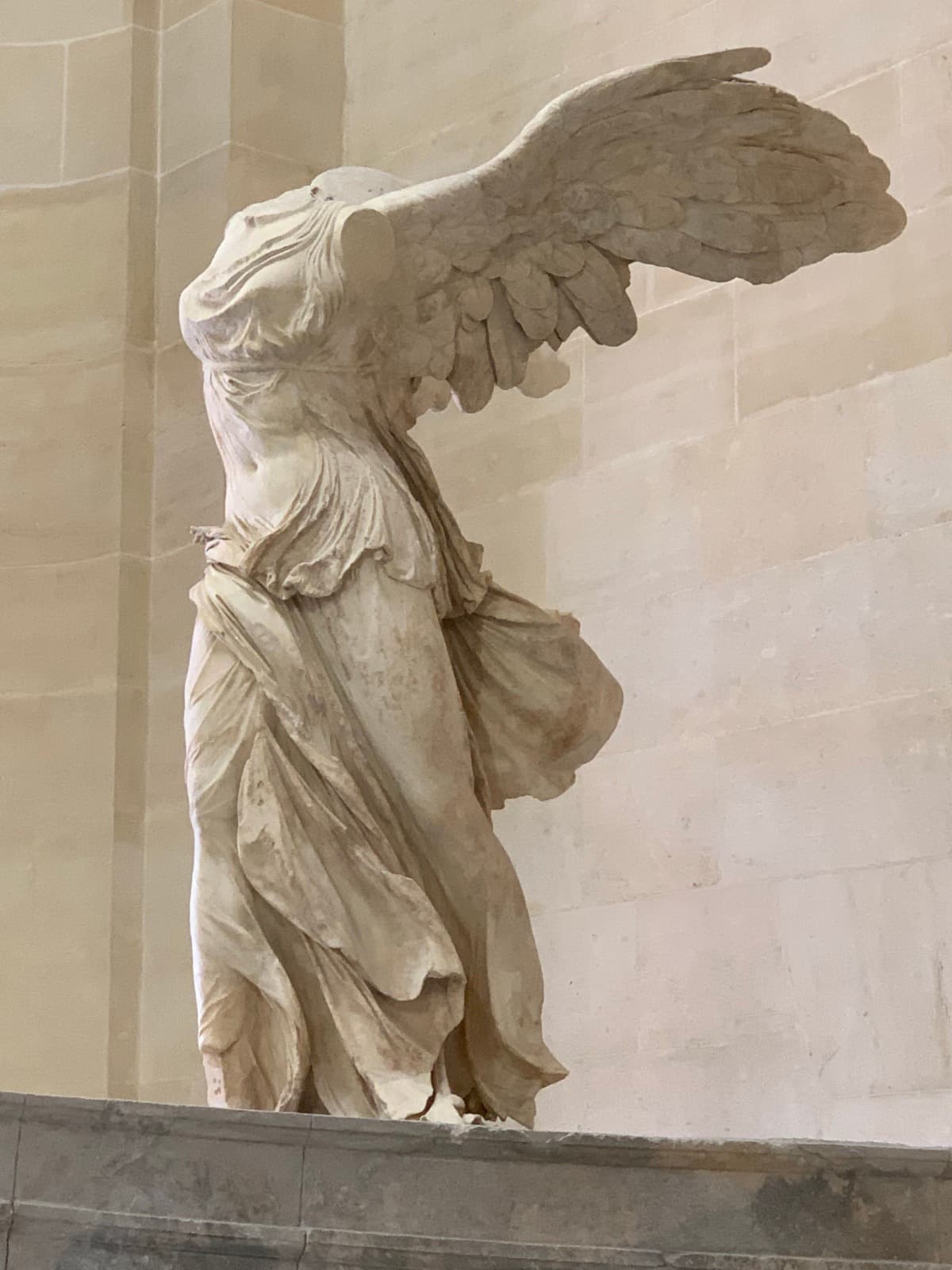
Nike lands on a warship's prow, wings still open, sea wind pressing the marble drapery flat against her striding body.

Monet painted these eight murals of his pond for two oval rooms in Paris while his eyesight failed. They opened months after he died.
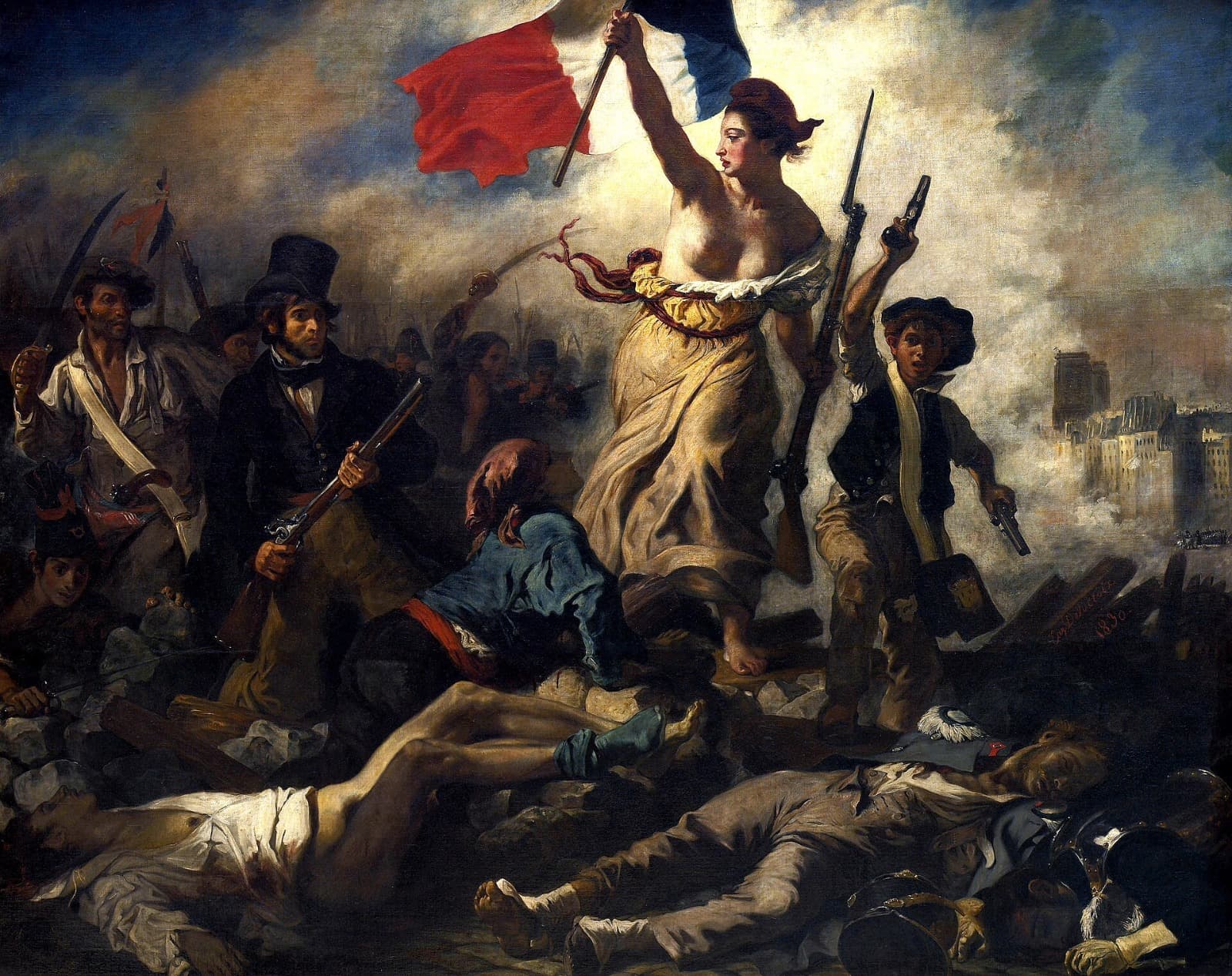
Liberty carries the tricolor over the barricade with a boy waving pistols beside her, painted within months of the revolution it shows.
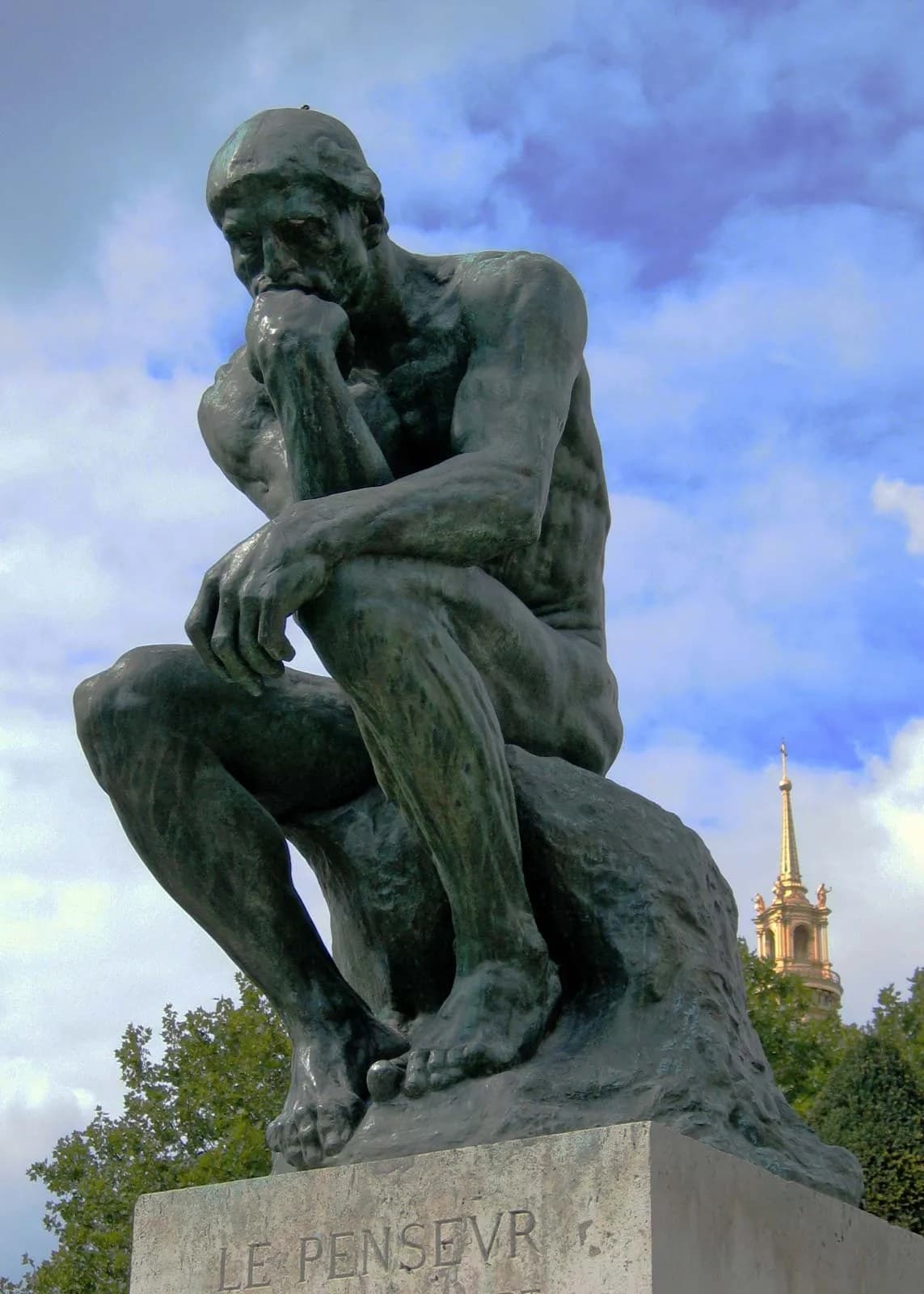
Rodin first made this figure as Dante brooding over the Gates of Hell, then enlarged him and set him thinking alone on a rock.

Survivors of a real shipwreck pile toward a speck of sail on the horizon. Géricault studied corpses and asylum patients before he began.
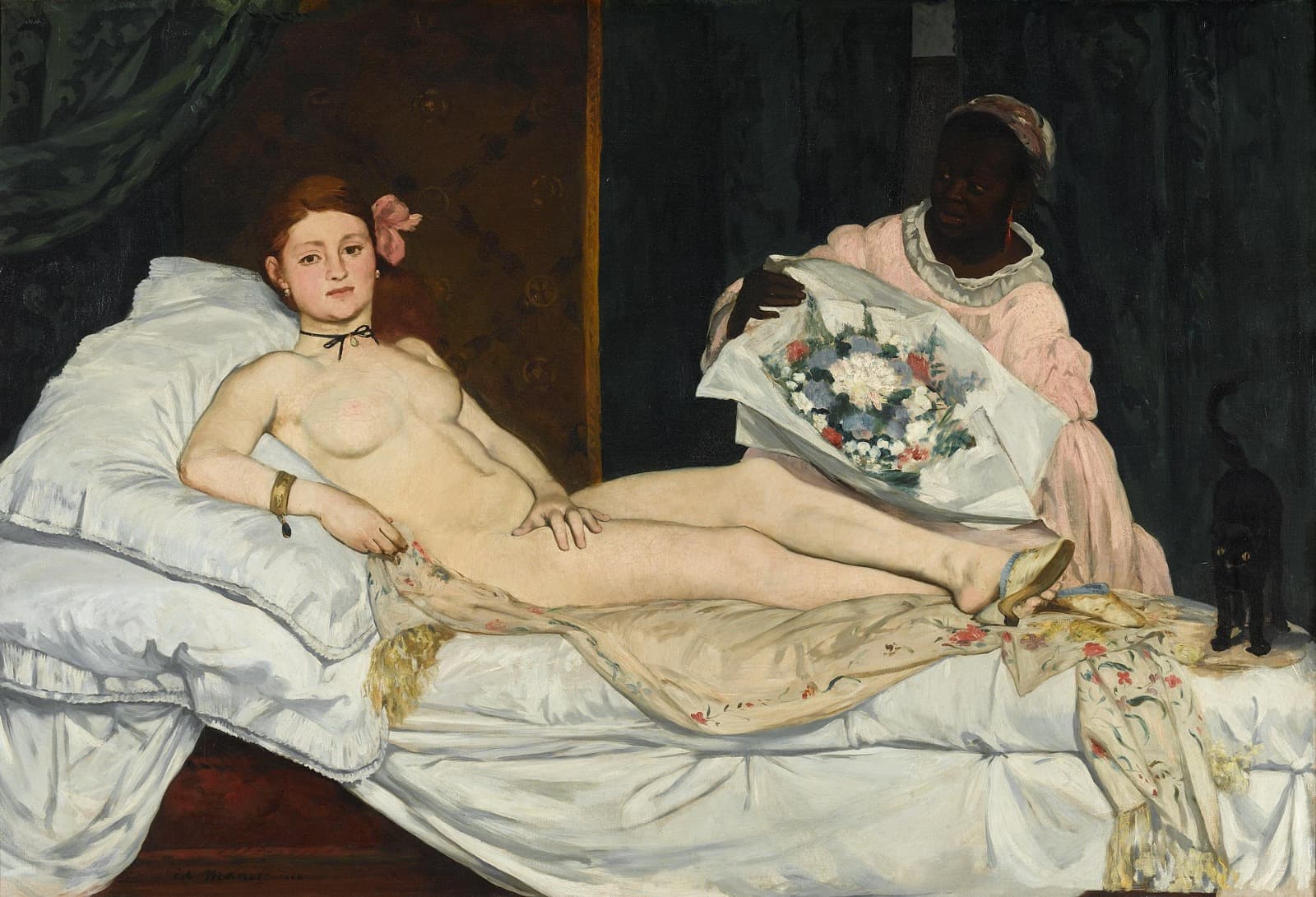
Manet took the pose from Titian's Venus of Urbino and gave it to a prostitute who looks straight back. The 1865 Salon was scandalized.

A naked woman picnics with two clothed men and looks calmly out at us. The Salon refused it, so it hung with the rejects.

Three brothers salute the swords their father holds up while the women of the house collapse at the right, four years before the Revolution.
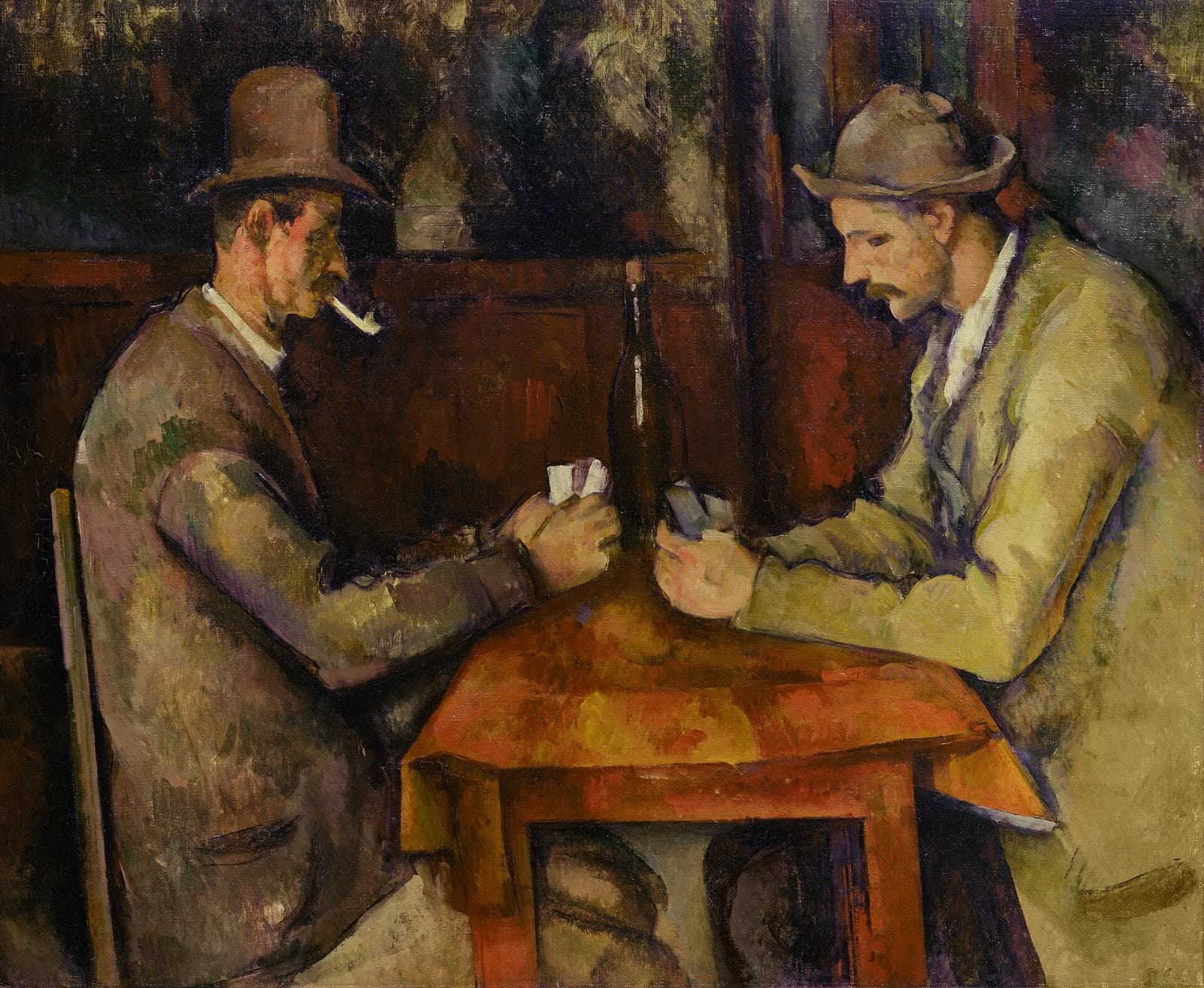
Cézanne used local farmhands as models and painted several versions, stripping the old tavern subject down until only two men and a bottle remain.
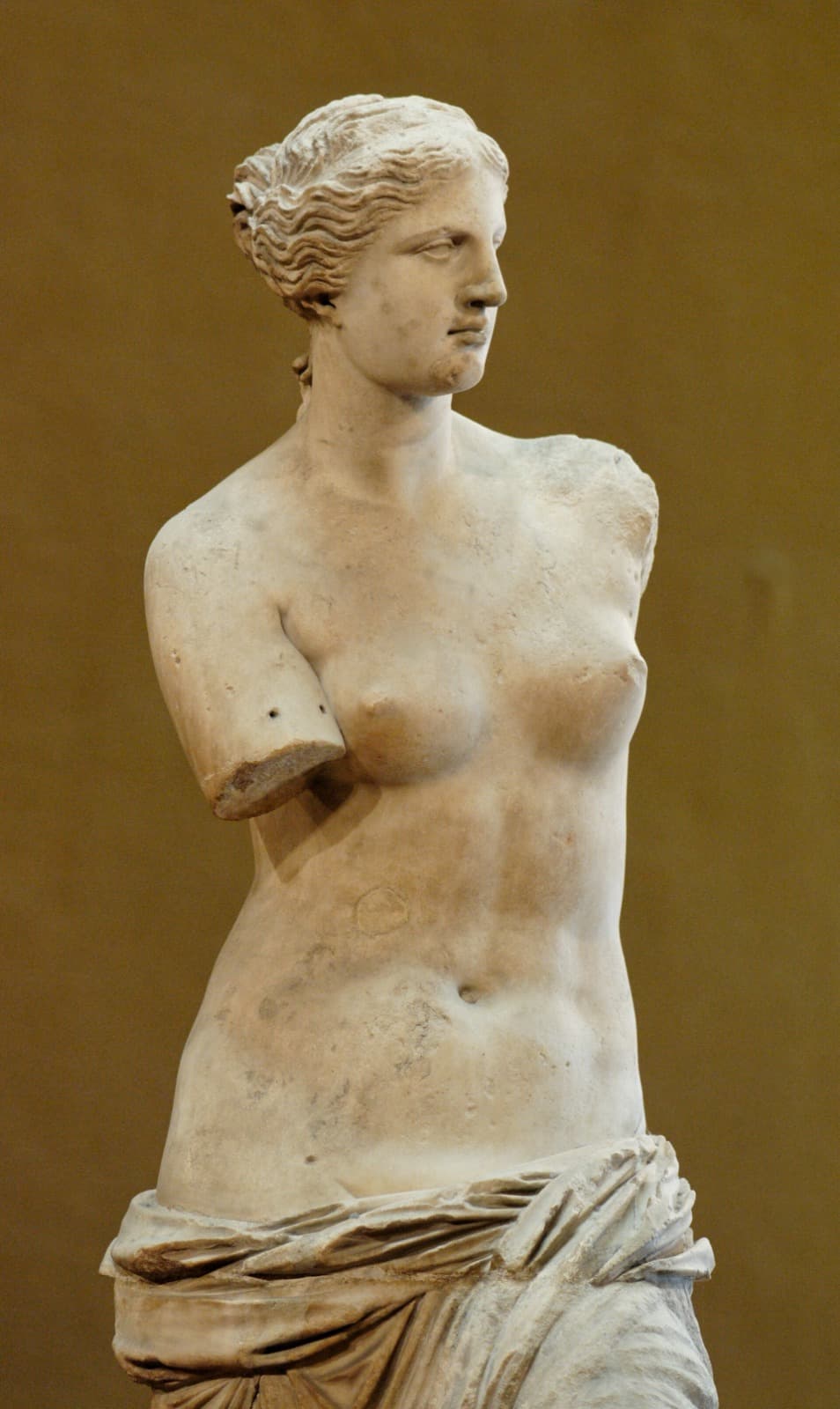
A farmer on Melos dug her up in 1820, already armless, and scholars still argue over whether she held an apple, a mirror, or her drapery.
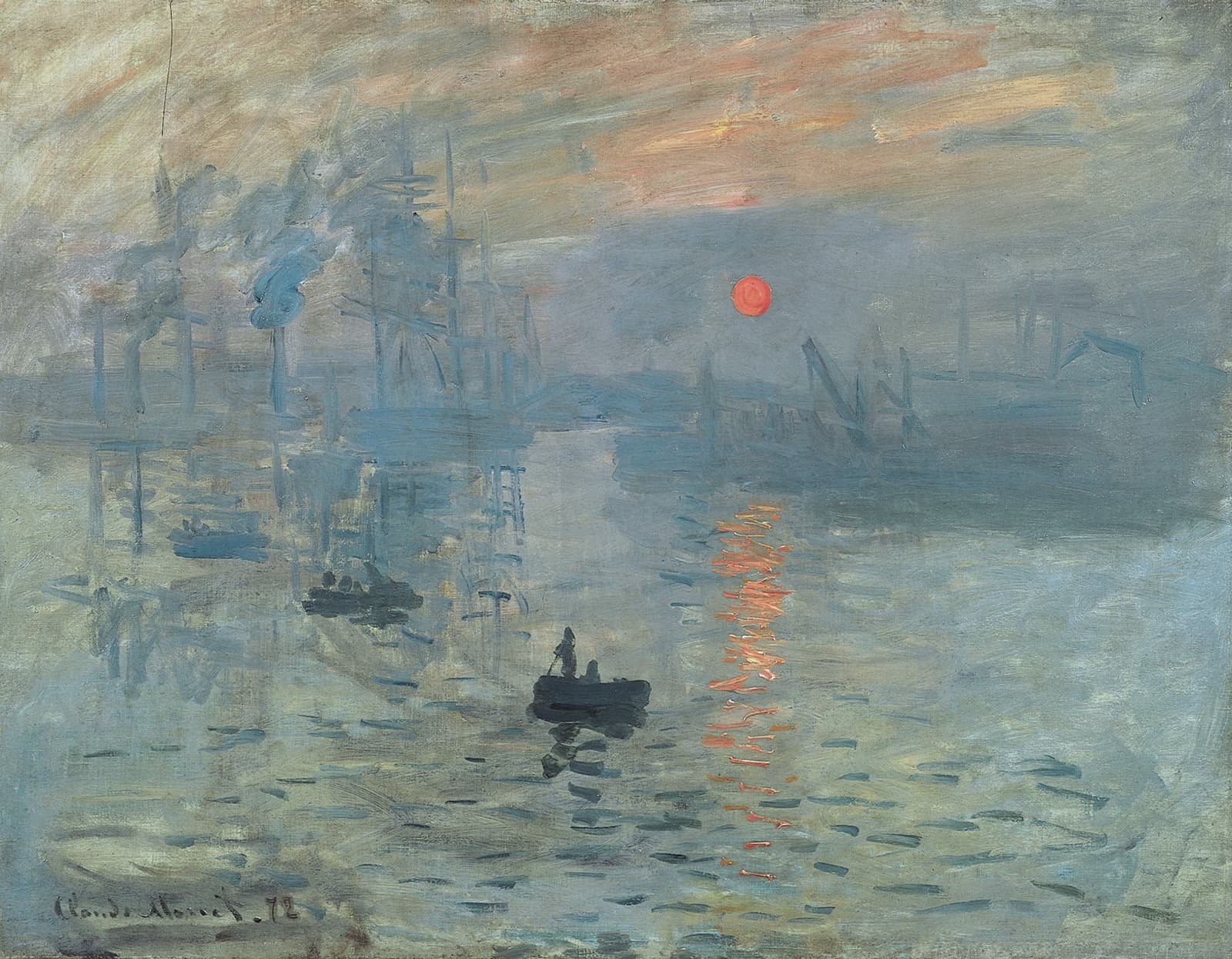
A critic seized on the word in the title to mock the whole group, and the insult ended up naming the movement.

Sunlight comes through the trees in patches over a Montmartre dance floor, a big ambitious canvas given over entirely to a Sunday afternoon.
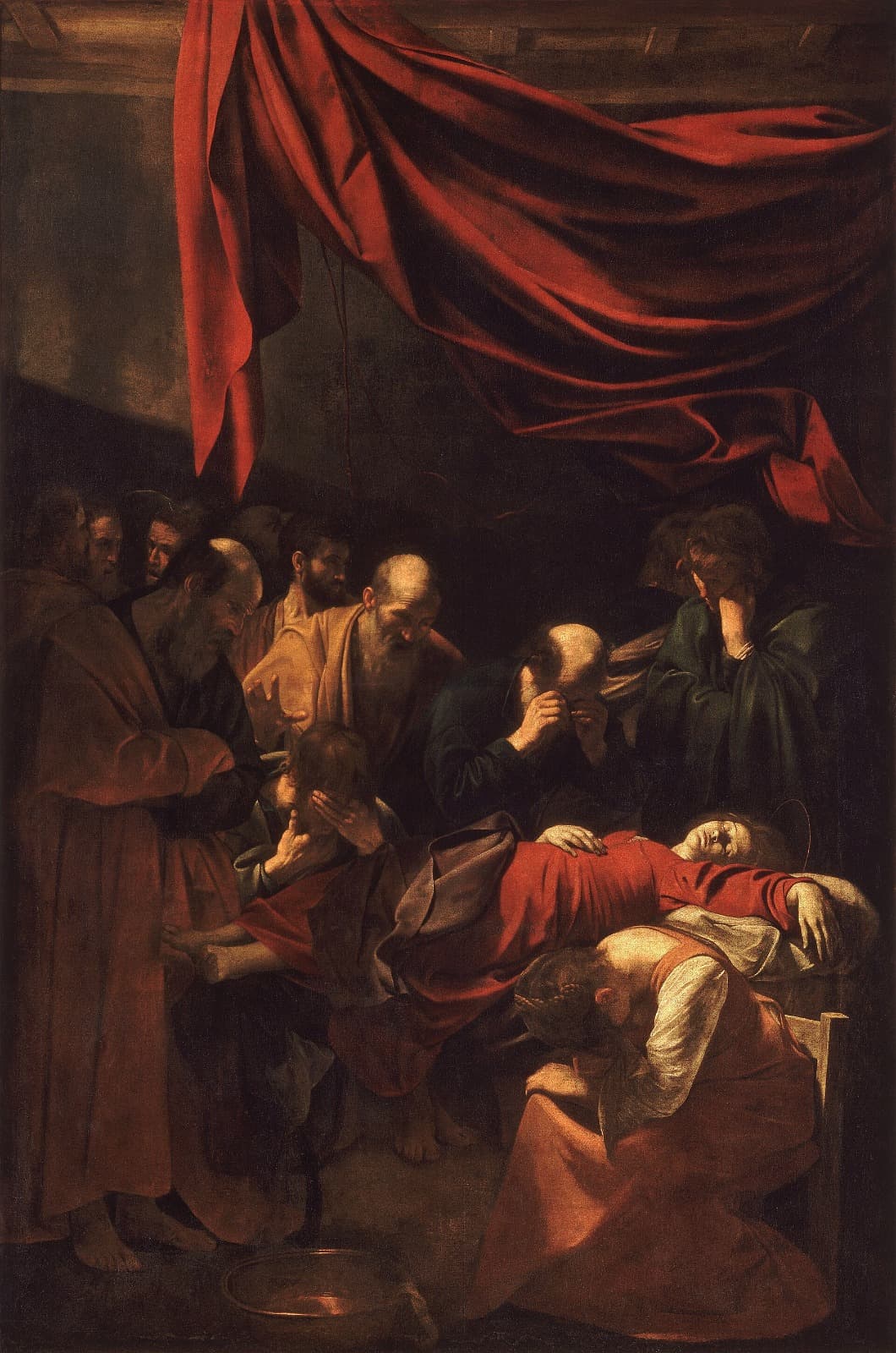
The Virgin lies barefoot and swollen like any corpse. The church that ordered it refused delivery, and Rubens told his duke to buy it.

Courbet gave an ordinary village funeral the scale reserved for kings and saints, and the critics were furious about it.

Couples linger on the shore of Venus's island at dusk, unwilling to board. Watteau gave it to the Academy, which invented a genre to fit it.
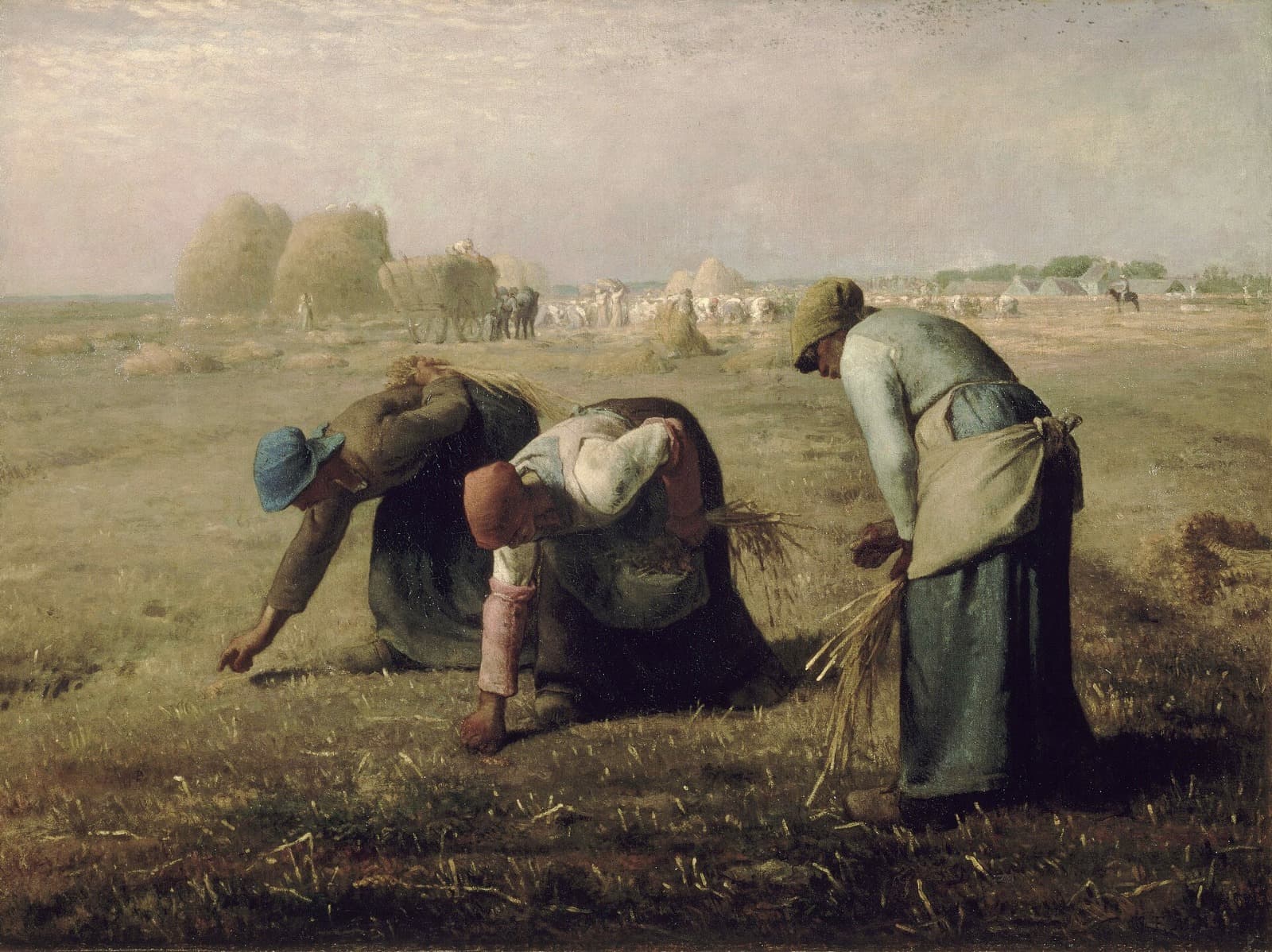
Three women bend for the stalks left after harvest while a full farm sits small in the distance, which unsettled the people buying paintings.

A hundred and thirty guests feast while Christ works his first miracle almost unnoticed at the table. Napoleon's troops took it to Paris in 1797.
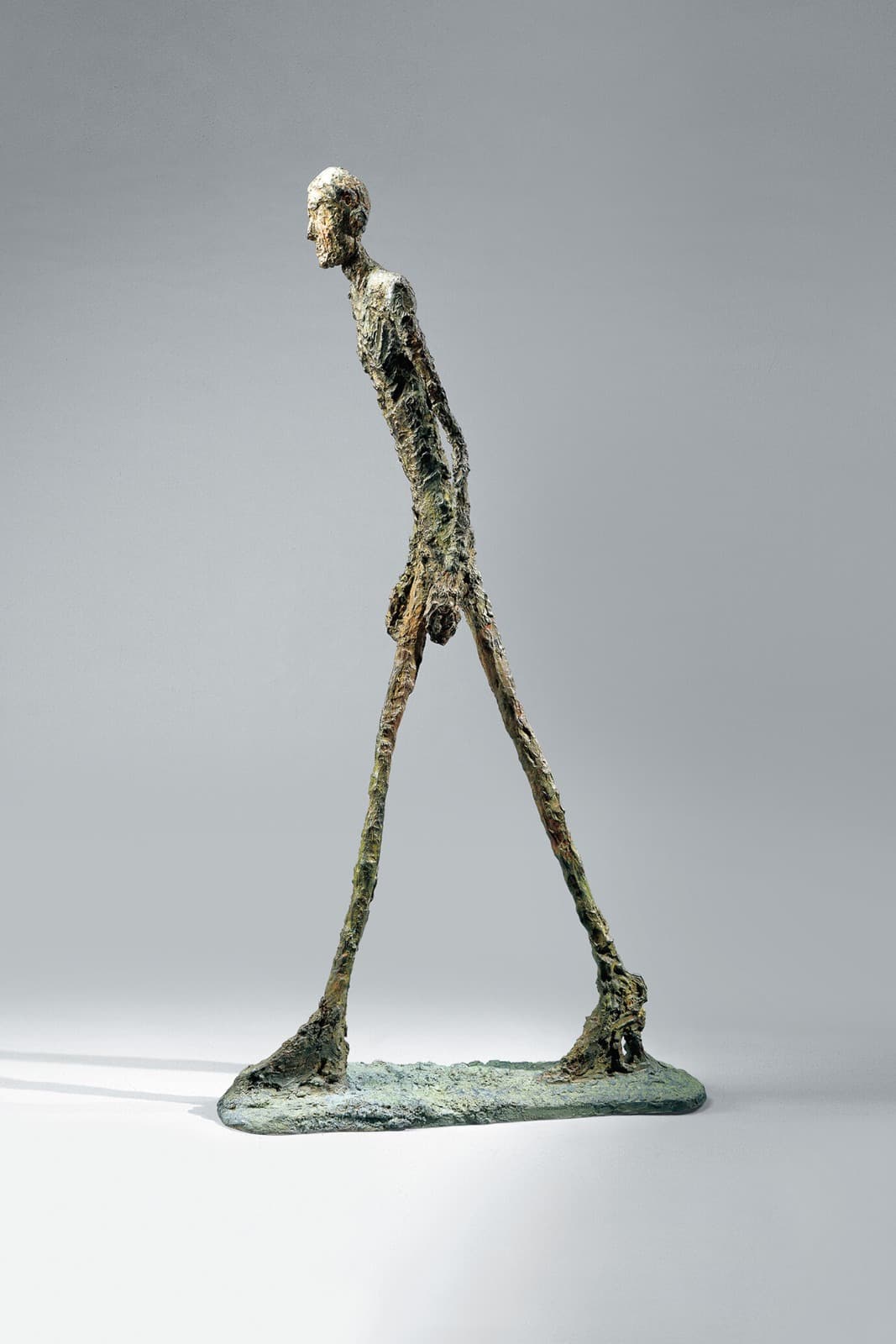
Everything is scraped off the bronze except forward motion. One cast briefly held the record for the most expensive sculpture ever sold.
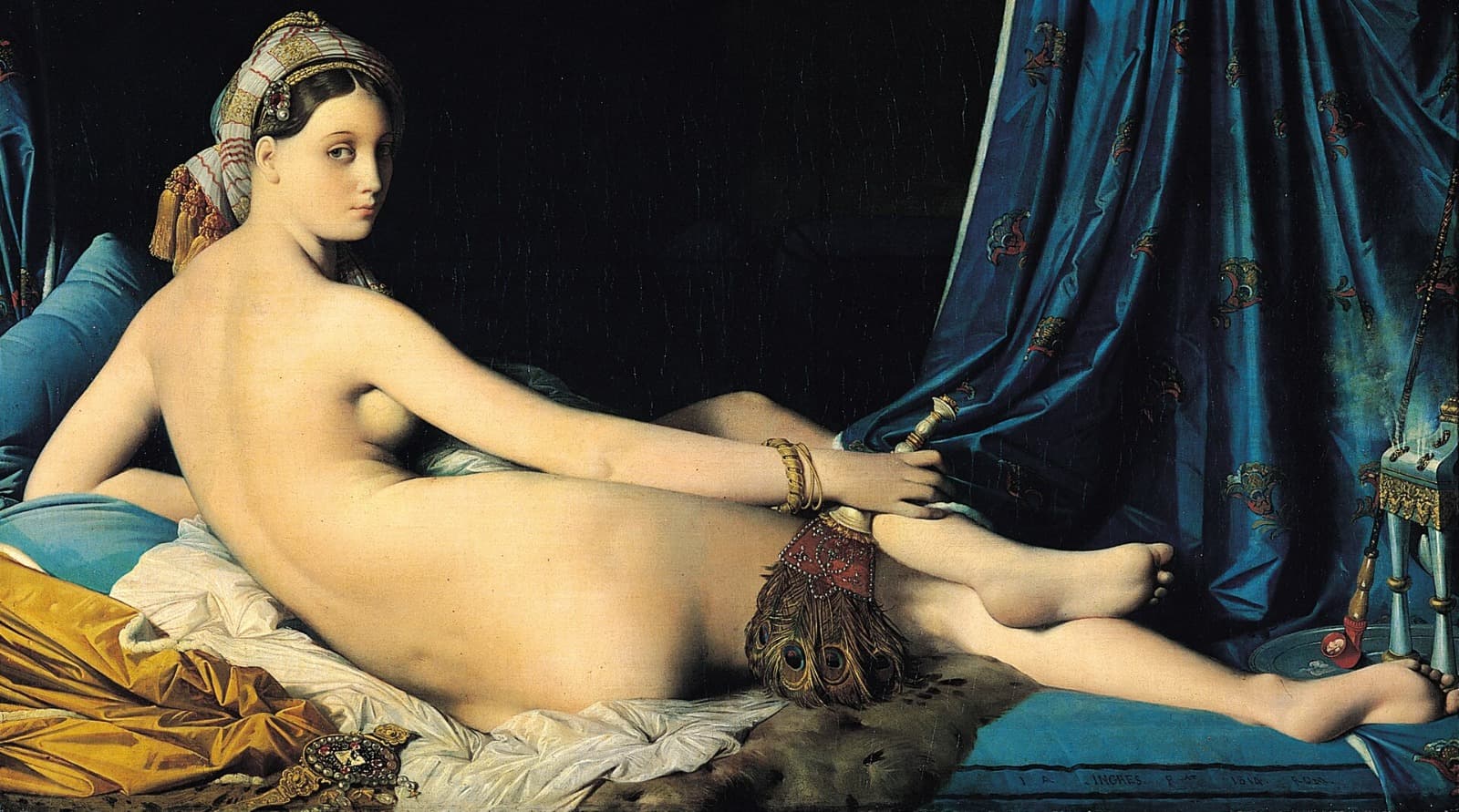
Ingres stretched her spine past anything anatomy allows, and critics joked she had three vertebrae too many. He was chasing line, not truth.

Whistler called it Arrangement in Grey and Black and insisted it was about tone, not feeling. The sitter was his mother, and nobody was fooled.
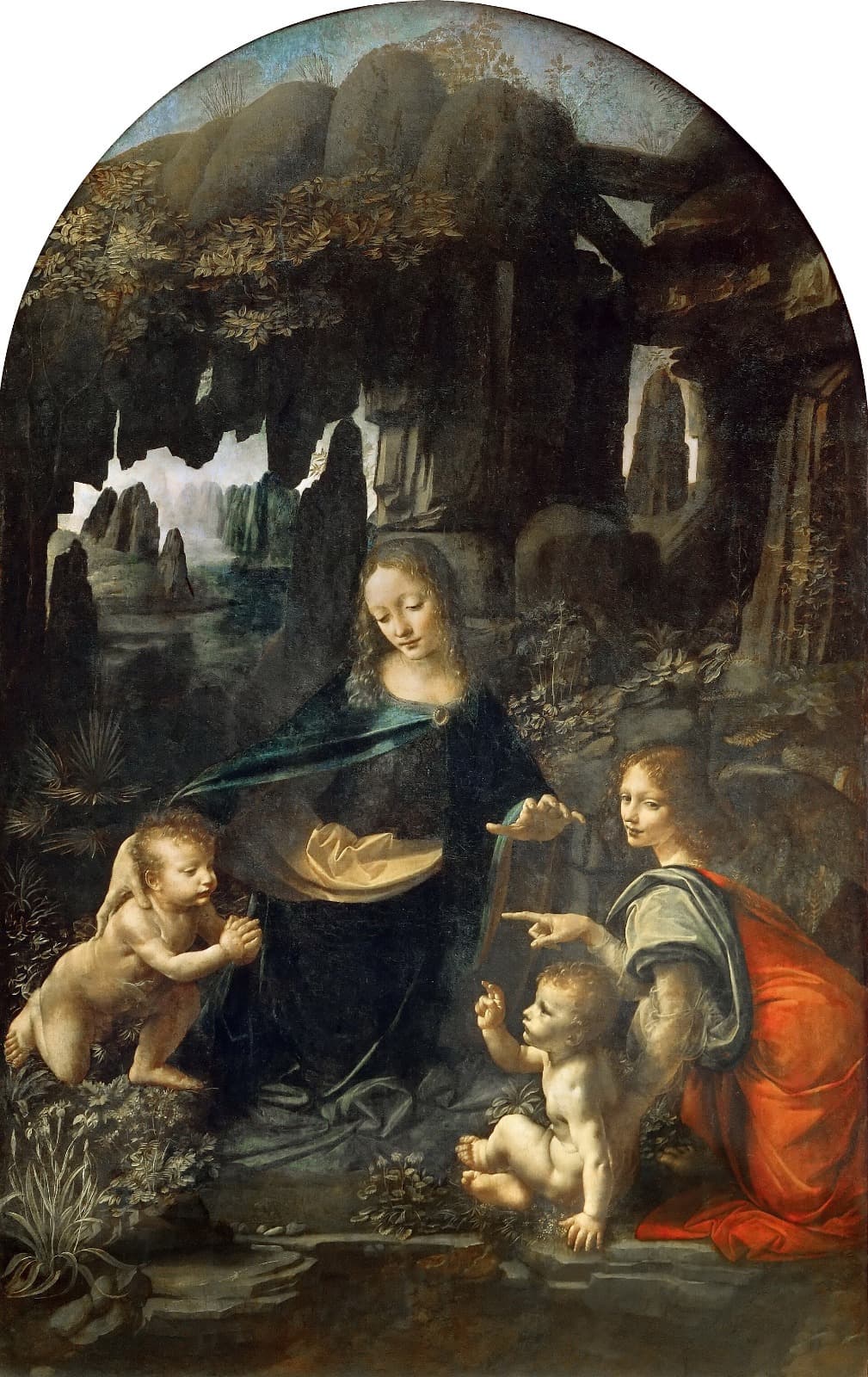
Leonardo painted this cave twice after falling out with the patrons. This is the earlier version, the one that stayed in France.

Cupid's wings stay up as the two bodies cross in a weightless X, cut so smooth the marble stops reading as stone.

The king watches from his red bed while everything he owns is killed in front of him, on his own orders, before the pyre.
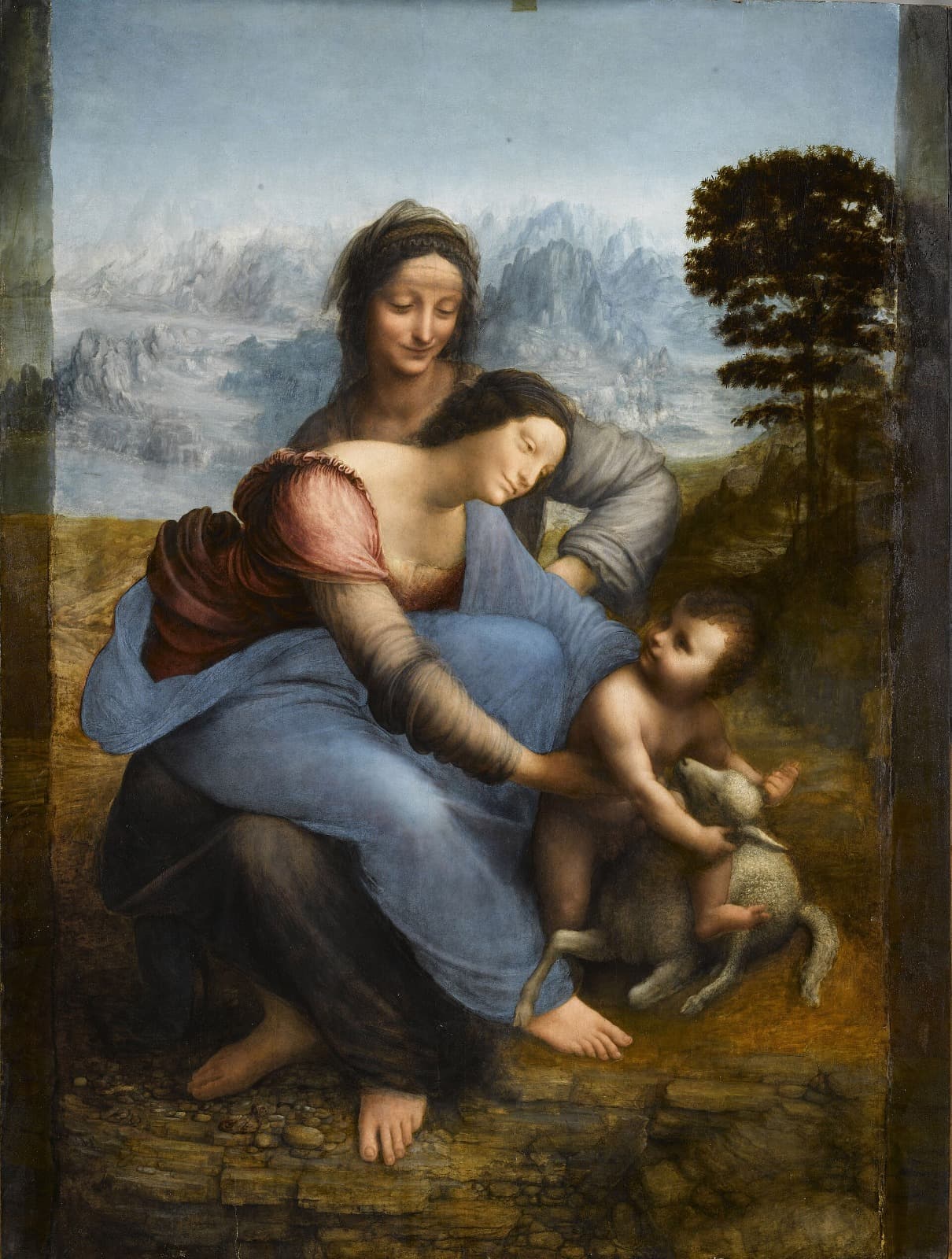
Three generations nest into one shifting pyramid, and Leonardo kept reworking it for years without ever calling it finished.
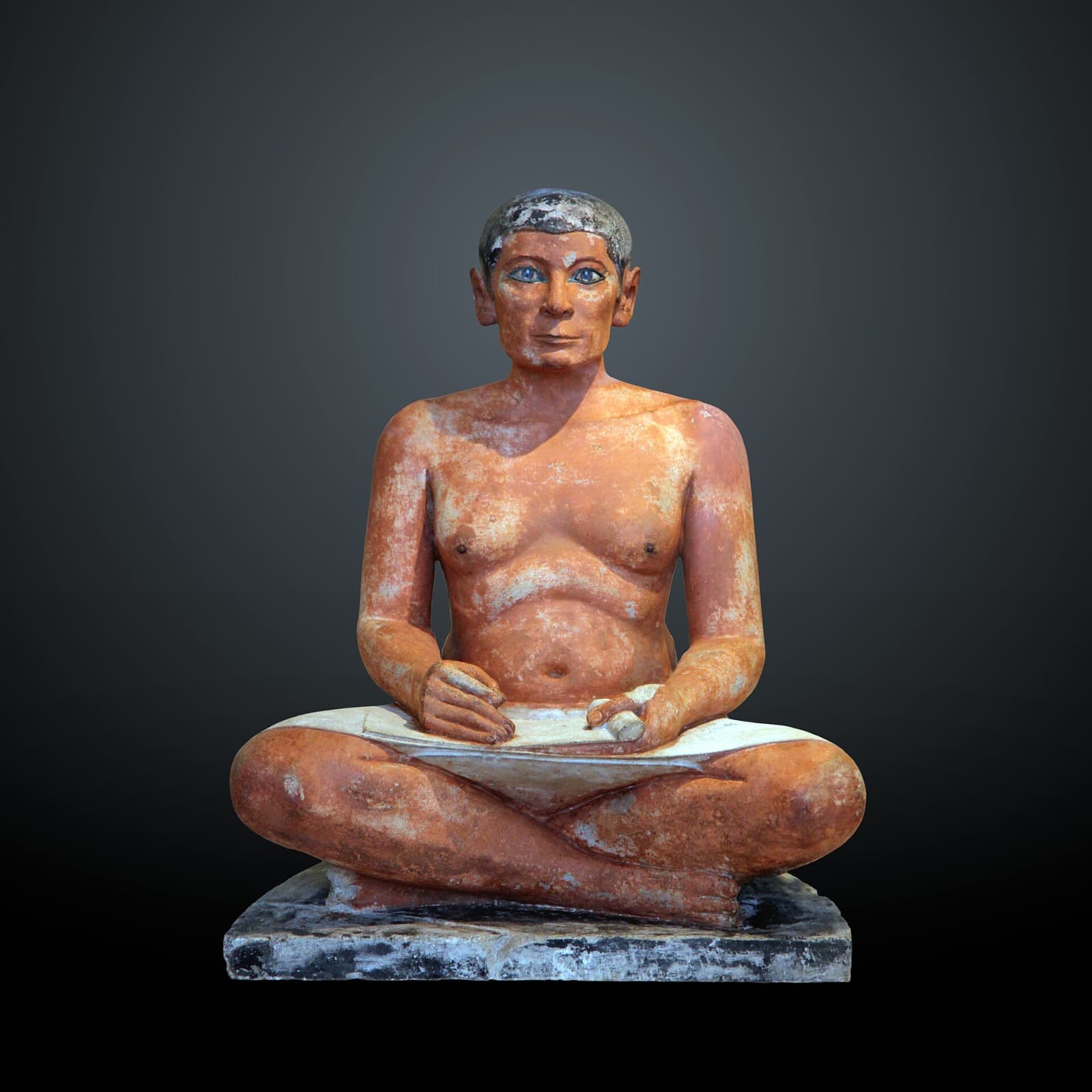
His eyes are inlaid with rock crystal and copper, and unlike a pharaoh he was given a soft chest and a desk worker's belly.

The background ripples around his head like a current in the same blue-green as his suit, and his beard burns red against it.
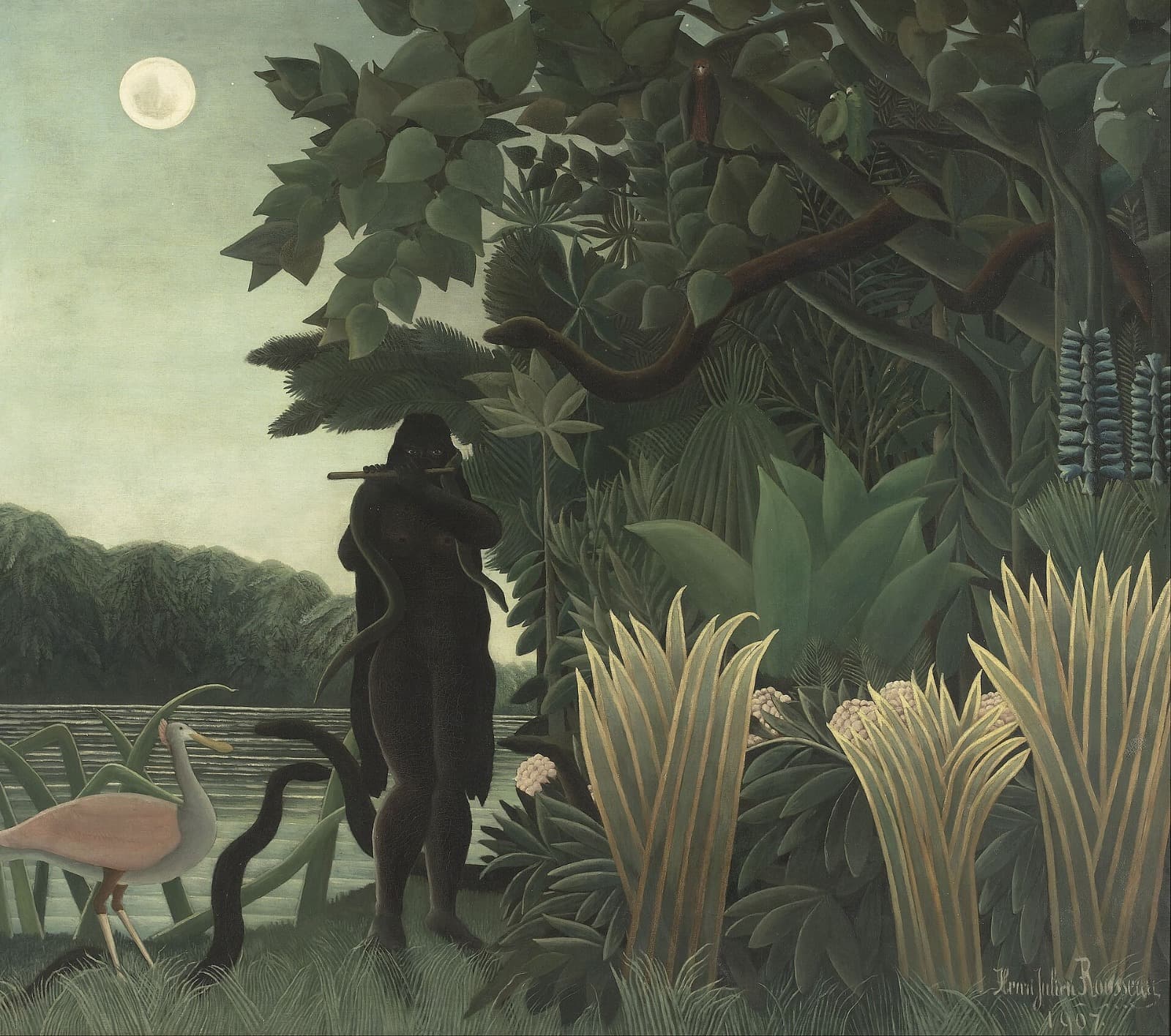
A black silhouette plays a flute and the snakes come out of the leaves toward the music, in moonlight Rousseau invented entirely.

A clown in white satin stands alone at full length with his arms hanging useless, given the scale of a grand portrait.

Shepherds trace the carved words on a tomb, Even in Arcadia I am here, and Poussin lets death speak without raising its voice.

The newspaper magnate leans forward gripping both knees, and the picture became the face of the commercial class that ran nineteenth-century France.
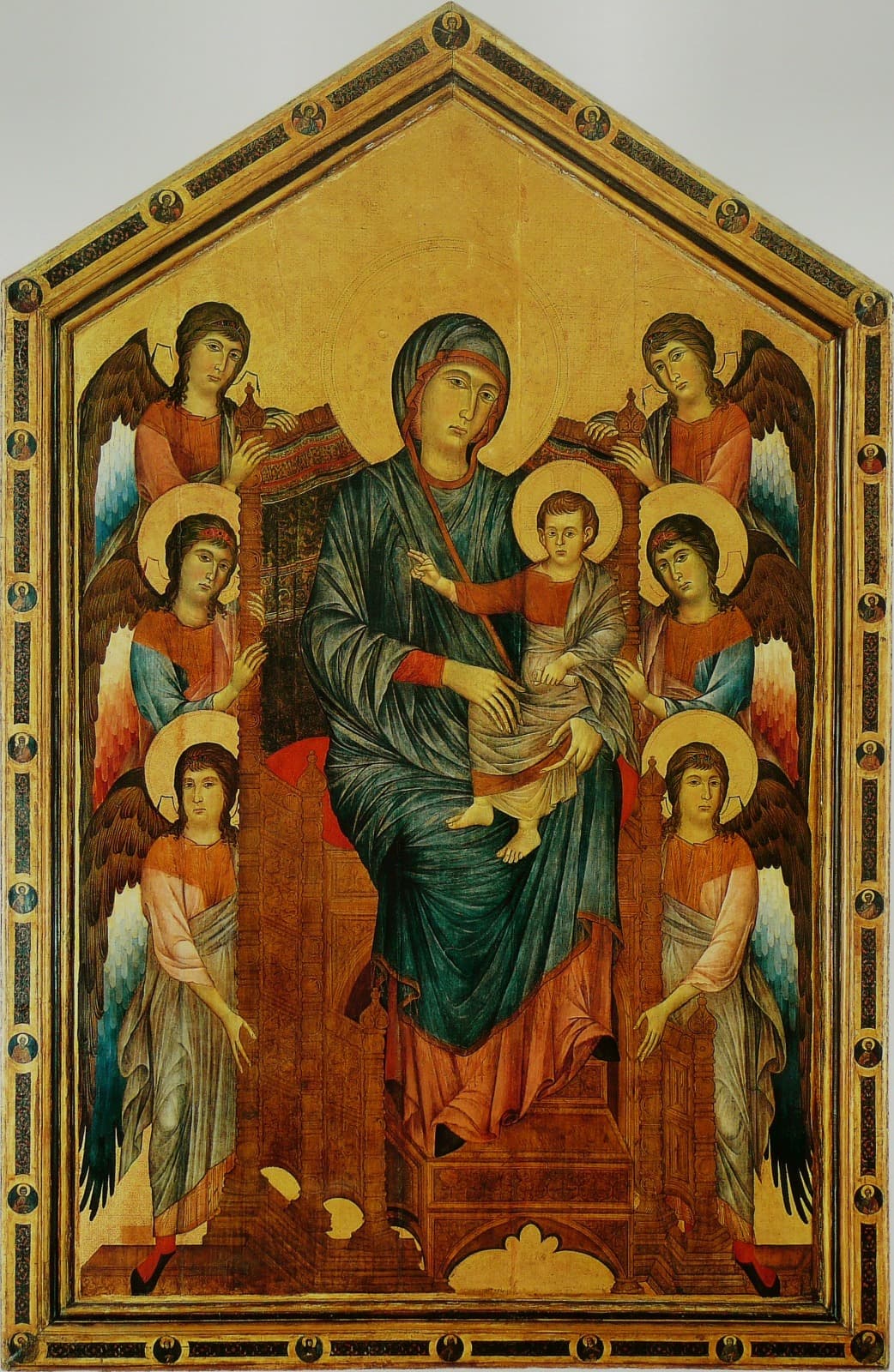
Six angels stack up the sides of the throne against gold. Cimabue taught Giotto, and the throne here is just beginning to recede into space.
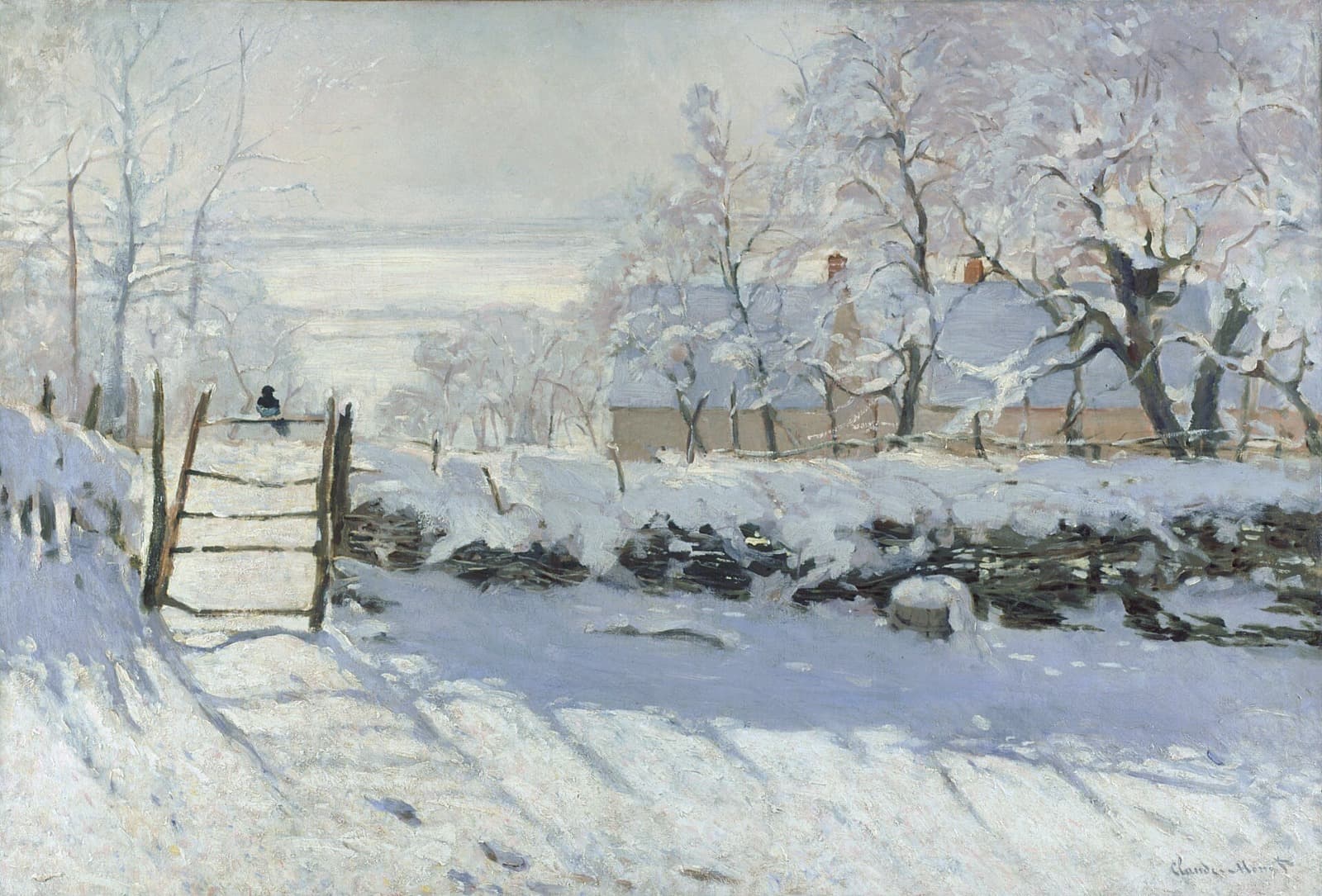
A single magpie on a gate in deep snow, the shadows tinged blue and violet rather than grey. The Salon turned it down.

The old man's nose is swollen and ruined by disease, and the boy looks up at him without noticing it at all.
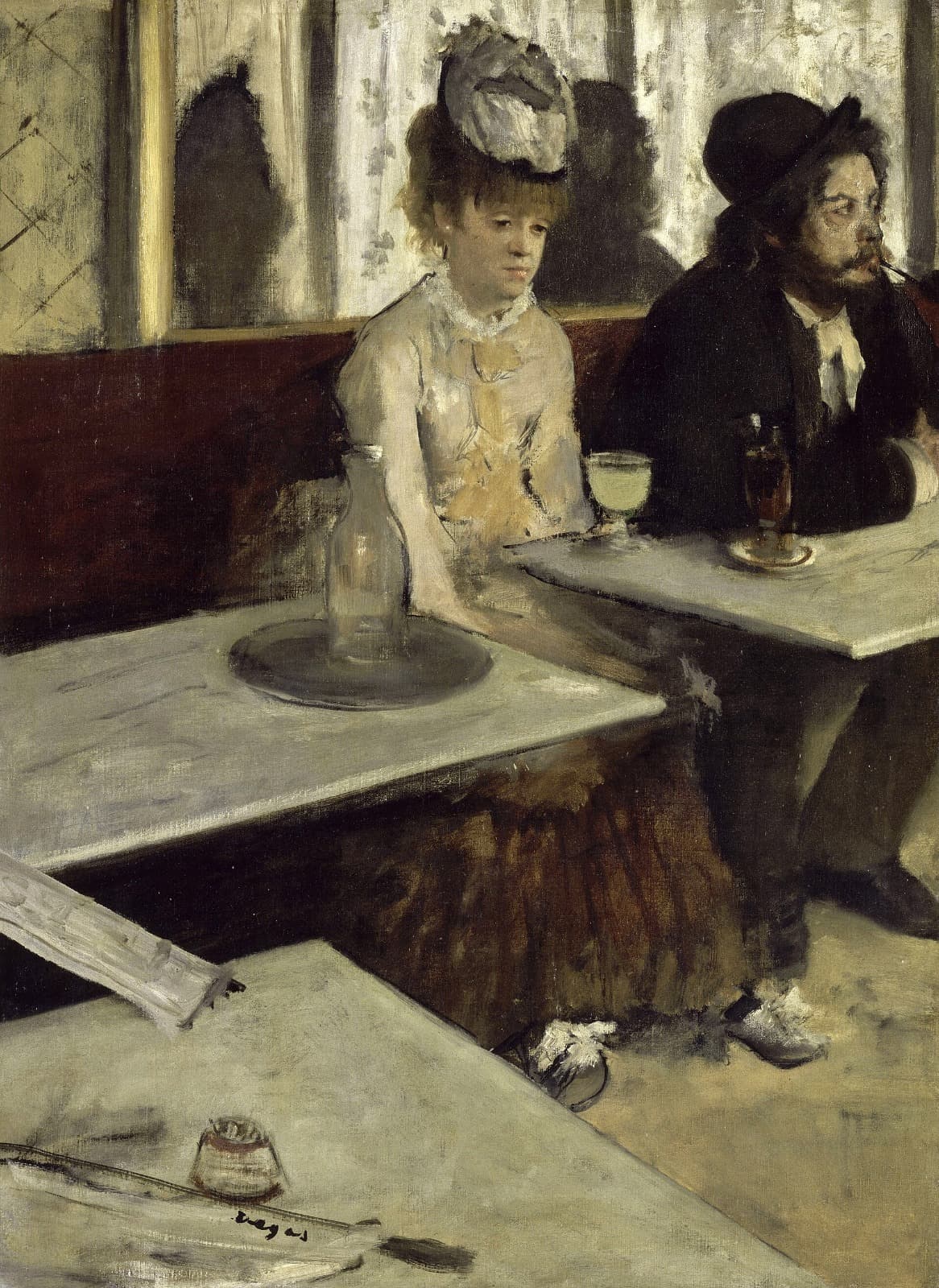
Two people sit shoulder to shoulder at a cafe table staring at nothing, pushed off to one side behind a run of empty tables.

Delacroix saw a room like this once, on a trip to North Africa, and painted it from memory. Picasso later made fifteen variations on it.

Erasmus is caught mid-sentence with the pen still moving. He sent portraits like this across Europe as a kind of intellectual calling card.
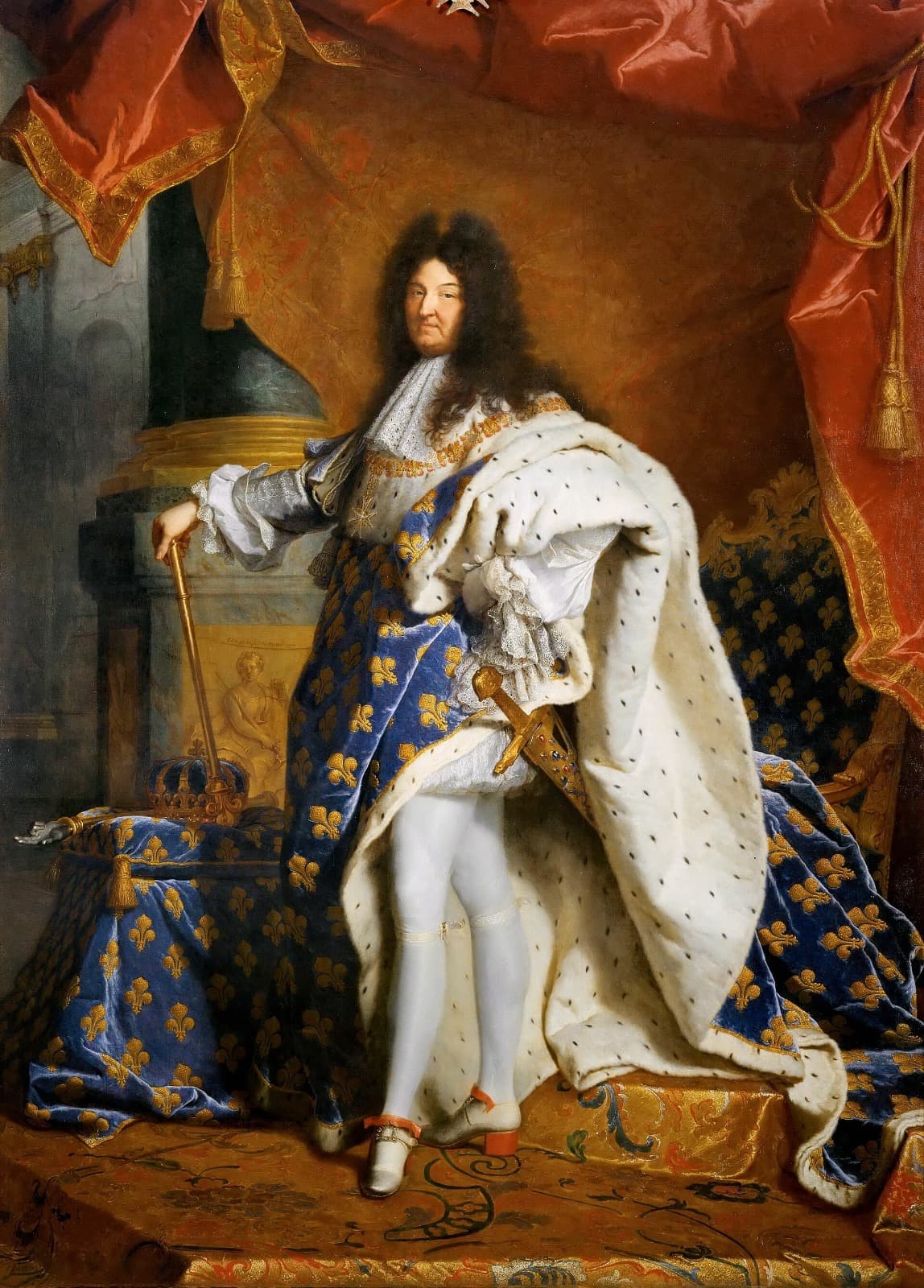
At sixty-three the king still turns out one leg to show the dancer's calf he was proud of, under a cascade of ermine and fleurs-de-lis.

Napoleon has already crowned himself and is now crowning Josephine, with the pope seated behind him and reduced to a spectator.

A bare back seen from behind under even light, with a striped turban wound round the head. Ingres returned to this view all his life.

Broken lances lie along the receding lines of a perspective grid. Vasari said Uccello sat up all night muttering about how sweet it was.

Gaslights along the Arles quay drop long quivering reflections into the water, the Great Bear overhead, a couple walking arm in arm below.

One oil lamp, one skull in her lap, and a flame she does not take her eyes off. Everything else is dark.

Hersilia throws herself between the two armies with her arms out. David painted it after the Terror, arguing for reconciliation instead of oaths.
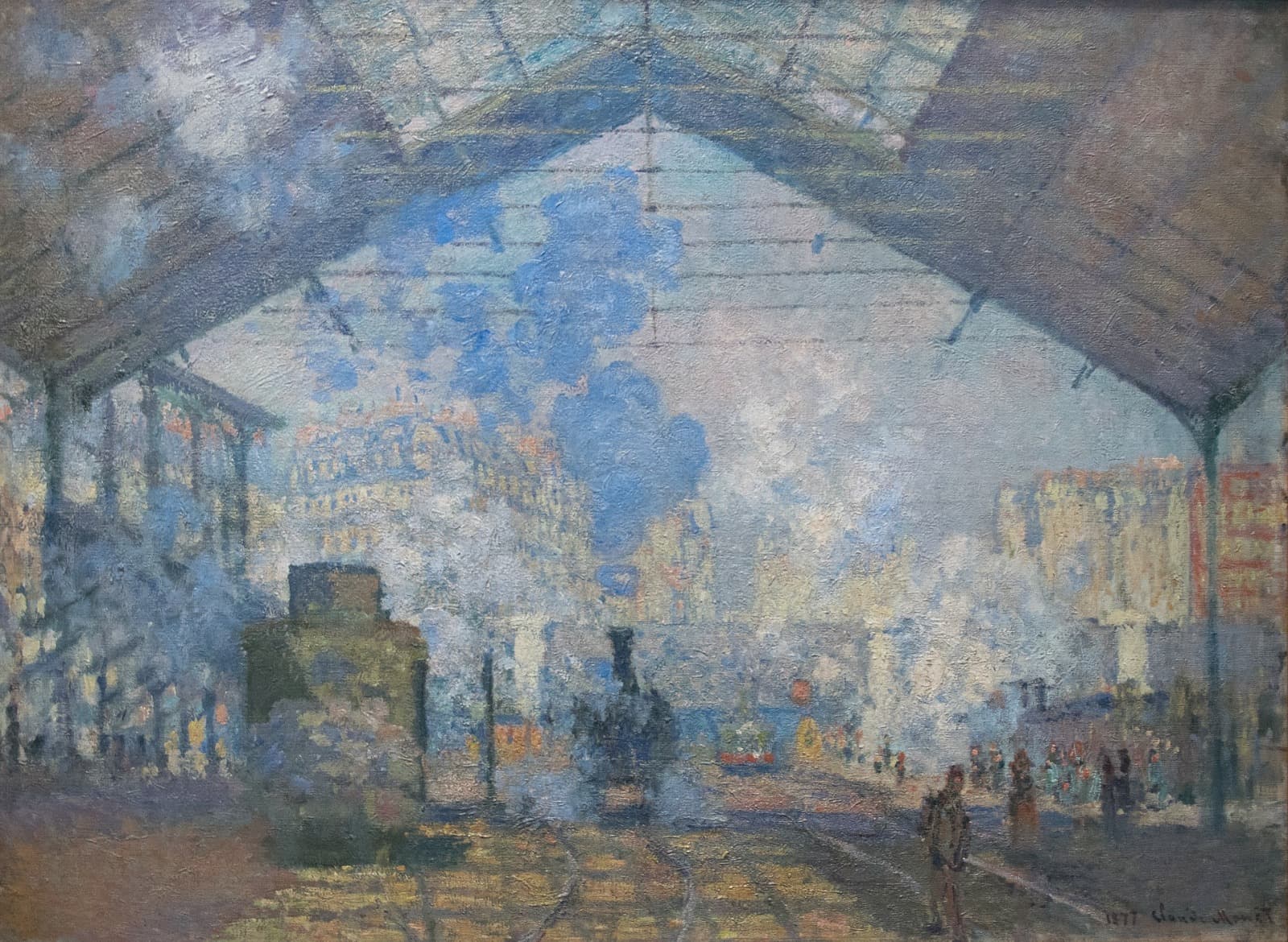
Monet set his easel up inside the station and painted the steam until the roof and the city beyond it had dissolved into it.

The title comes from Baudelaire and the technique from Seurat, but the color is already heading somewhere neither of them went.
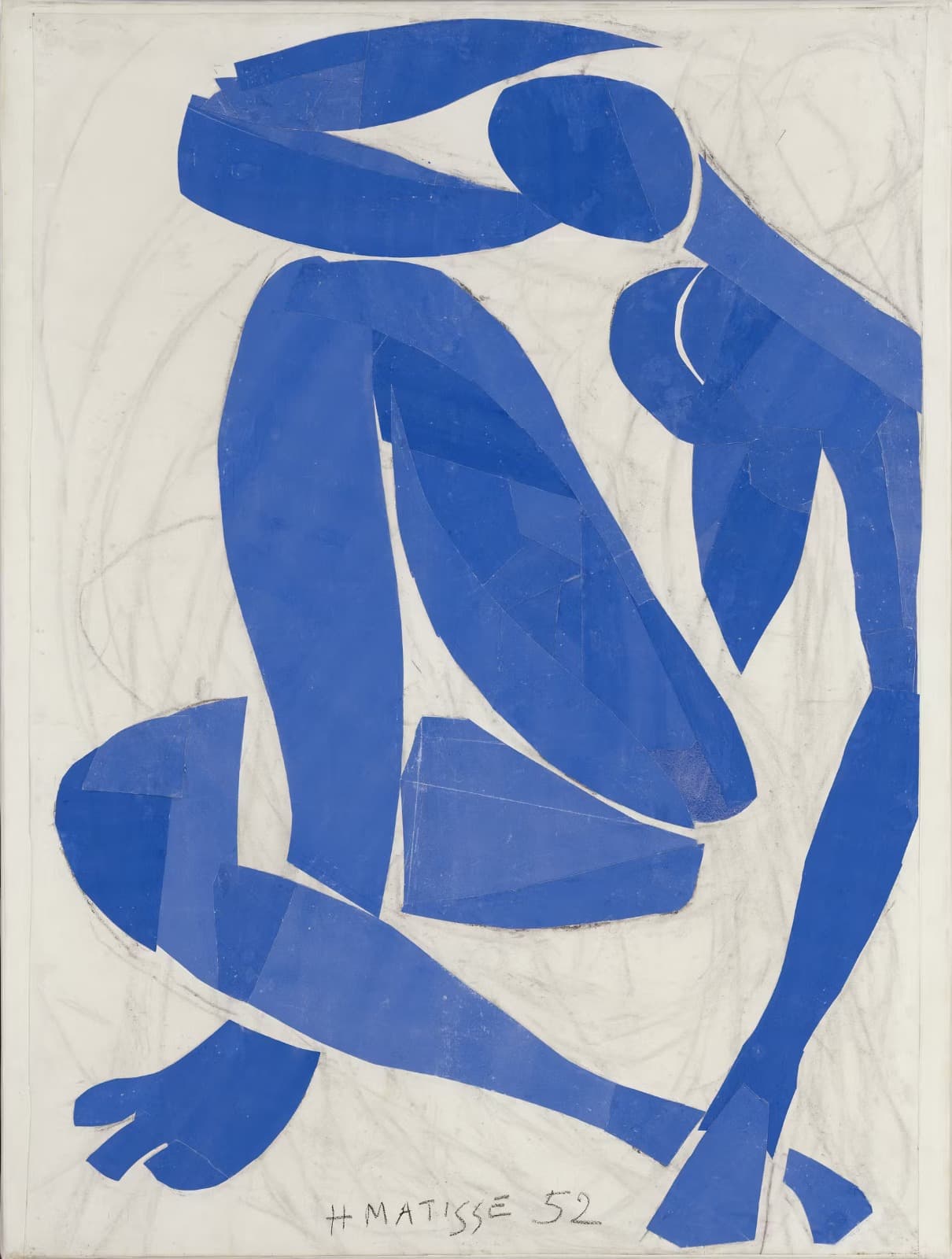
Matisse was too ill to stand at an easel, so he cut the figure out of painted paper and called it drawing with scissors.

Too explicit to exhibit for over a century, it stayed in private hands behind curtains and screens. No myth, no excuse, just the body.

Daylight from a window, firelight from a hearth, and a great spiral staircase winding up into the dark between them.
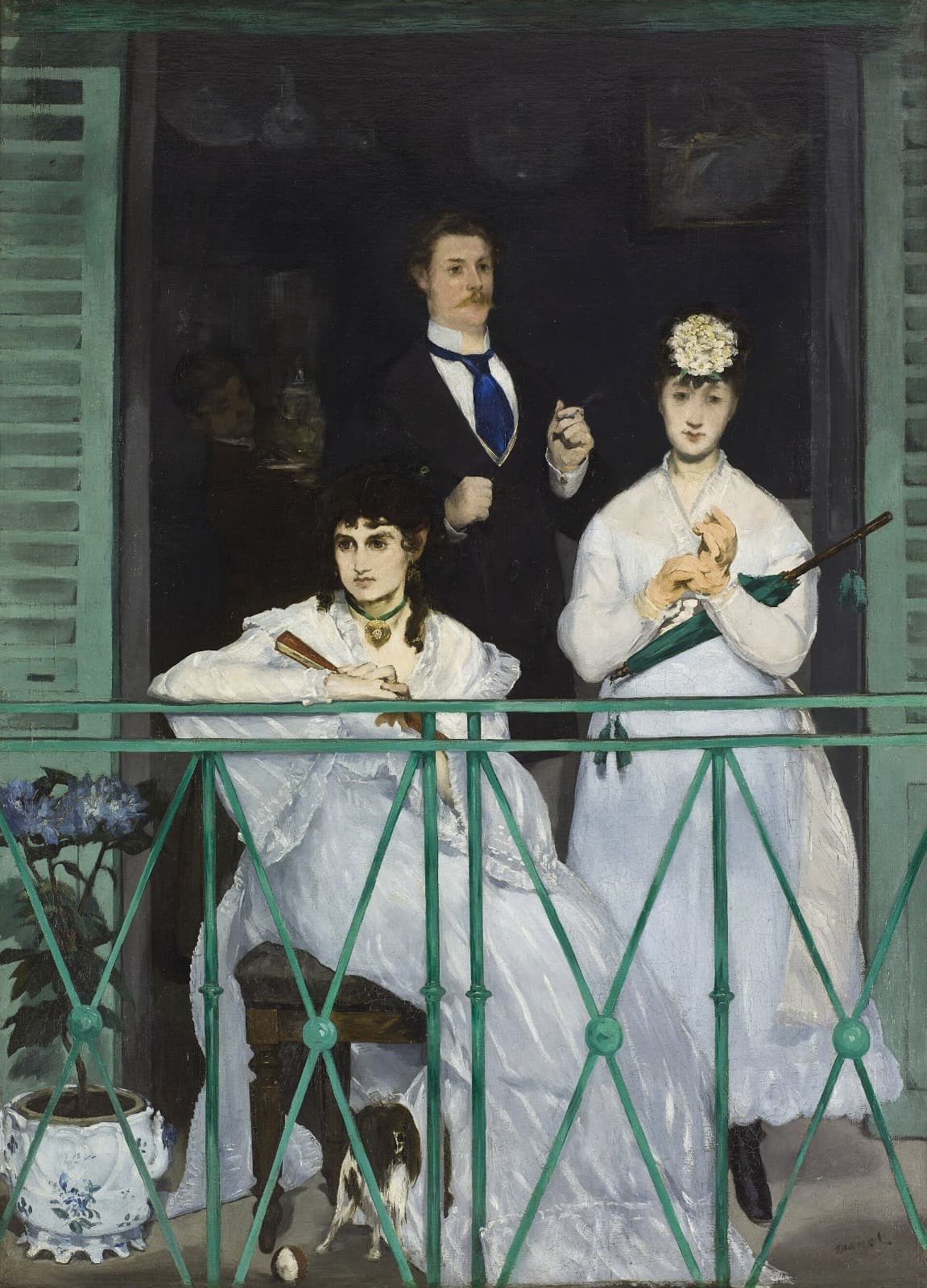
Three people at a green railing all looking different ways and none at each other. Berthe Morisot is the one seated and dreaming.
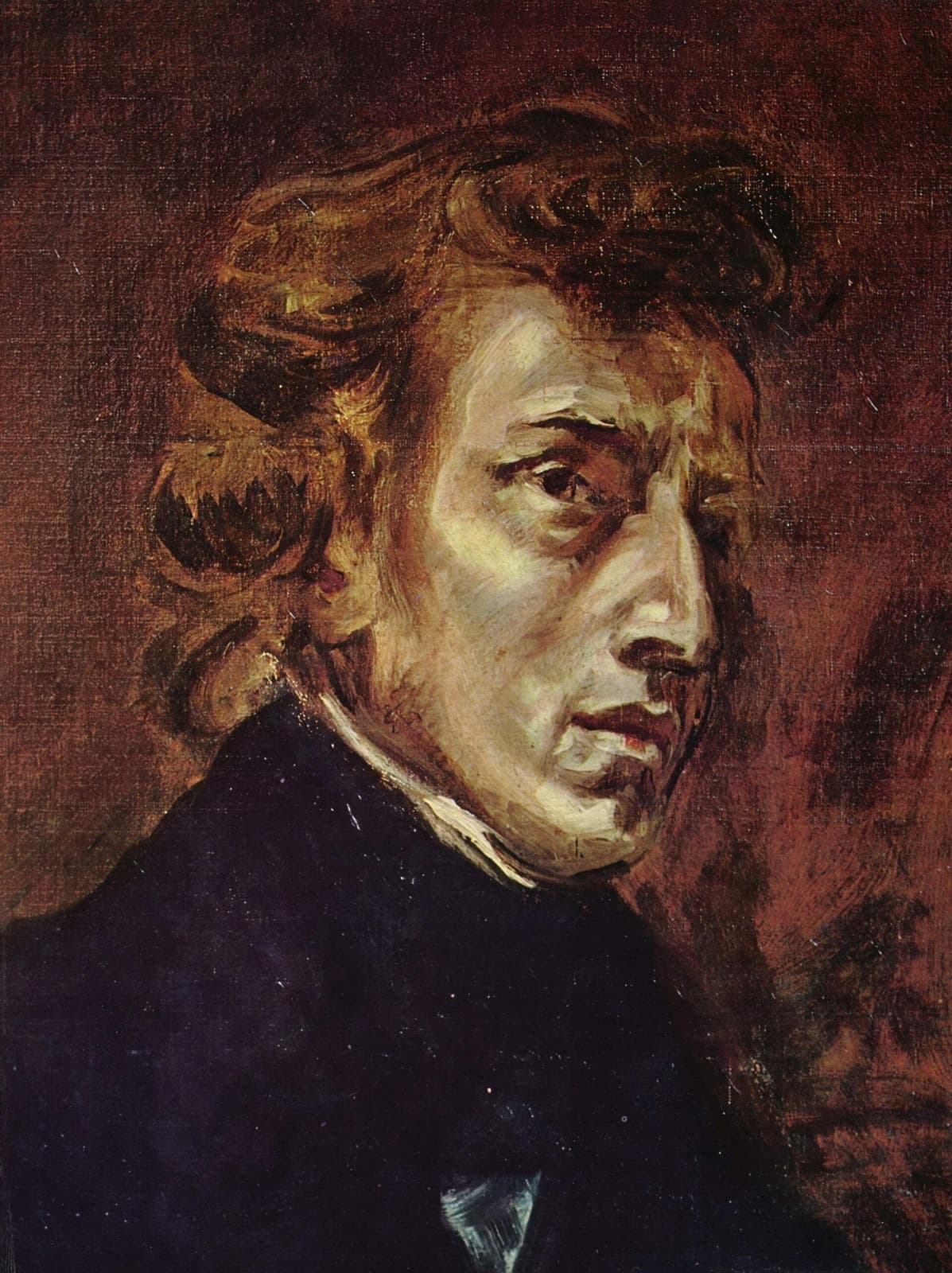
It was half of a double portrait with George Sand listening at the piano, until somebody cut the canvas in two.
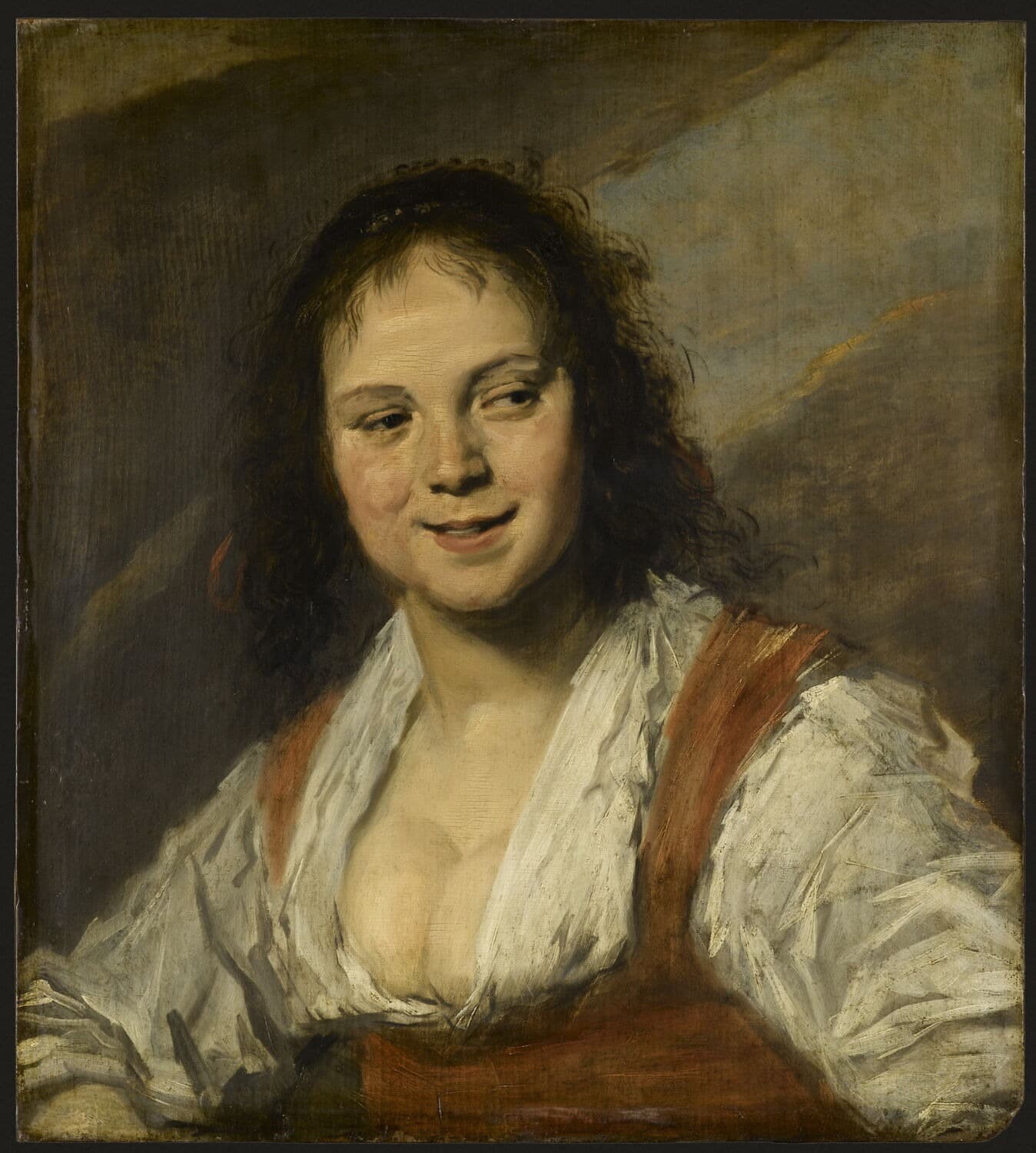
Not a commission but a tronie, a character study made to show off. Hals catches her half-laugh before it has finished.

Delacroix's debut, and the damned are biting the hull. Romanticism announced itself with churning water and bodies learned from Rubens.
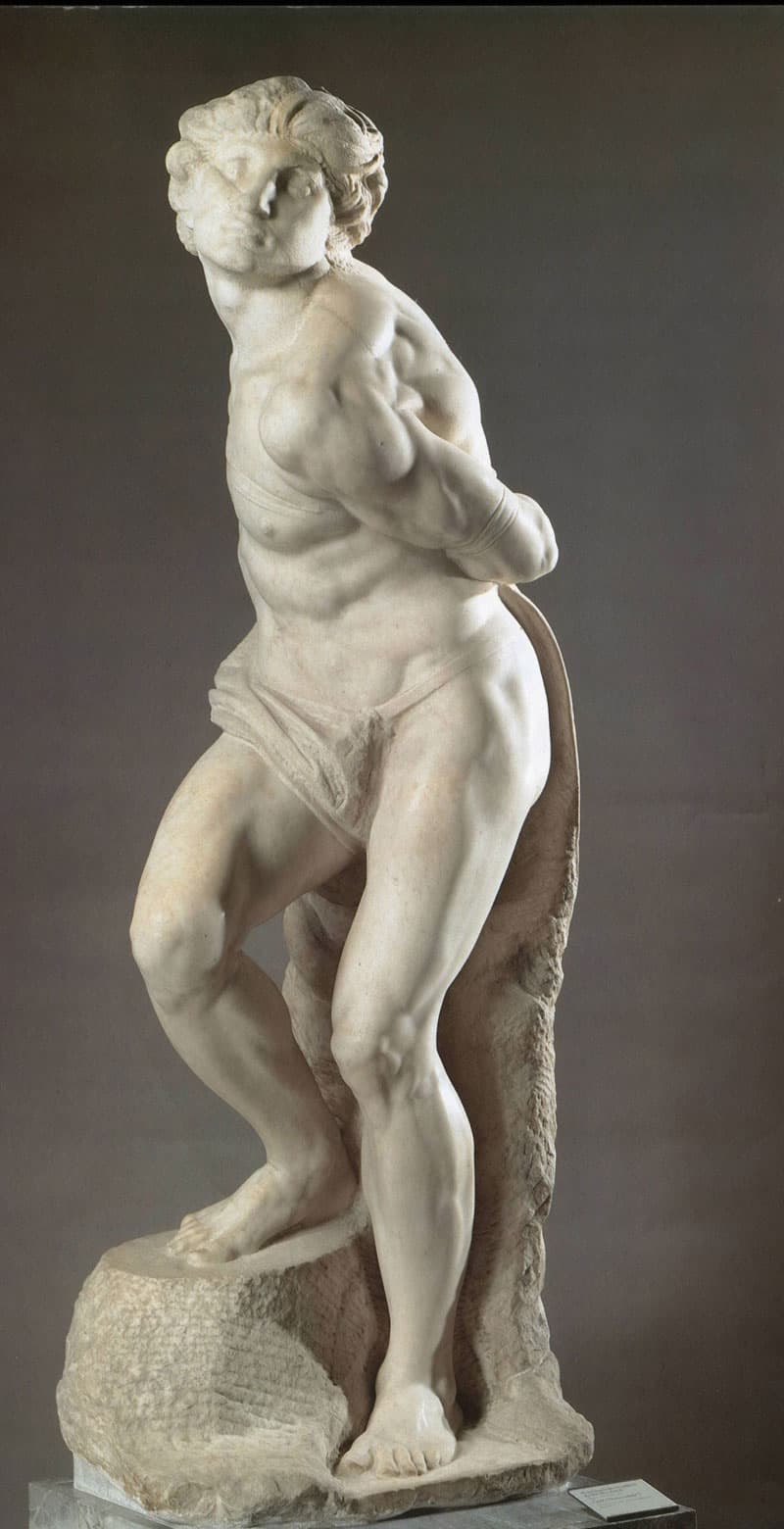
Carved for a papal tomb that kept shrinking until it was abandoned. What the bonds mean is still argued, but the strain is unmistakable.

Poussin laid the crowd out like a relief so each gesture reads separately, one woman so hungry she nurses her own mother.

He weighs gold on a fine balance and her eyes drift off the prayer book toward the coins. A small mirror catches the room.
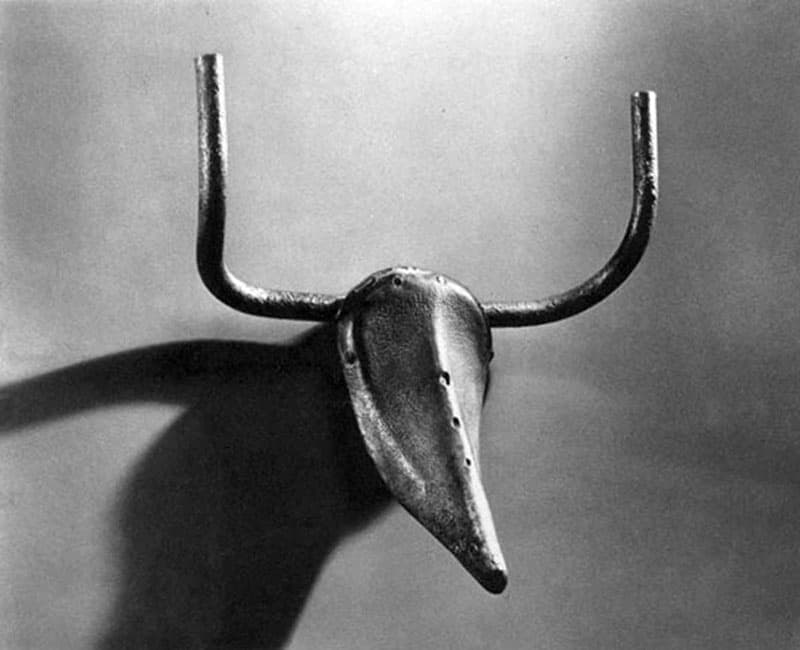
A bicycle saddle and a set of handlebars, joined. Picasso joked that someone might one day turn it back into a bicycle.
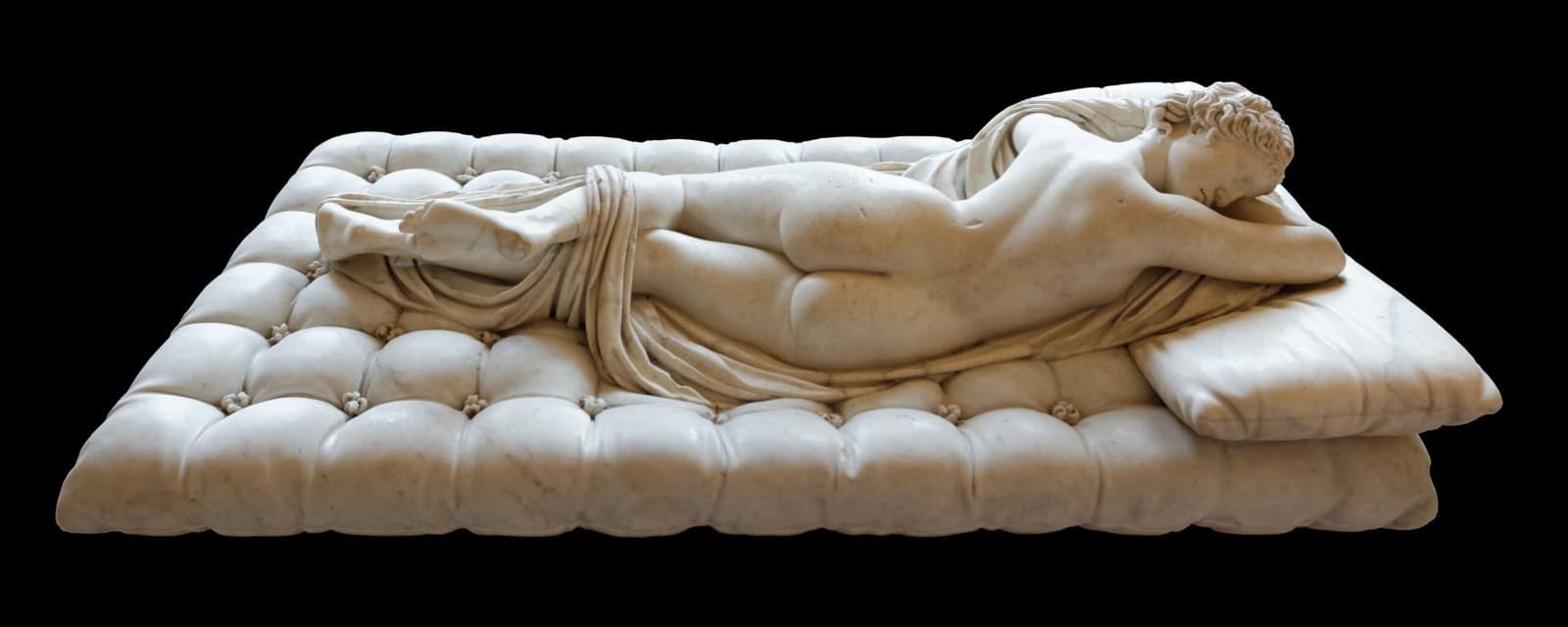
You see a sleeping woman until you walk around to the other side. Bernini added the mattress, folds and all, in 1620.
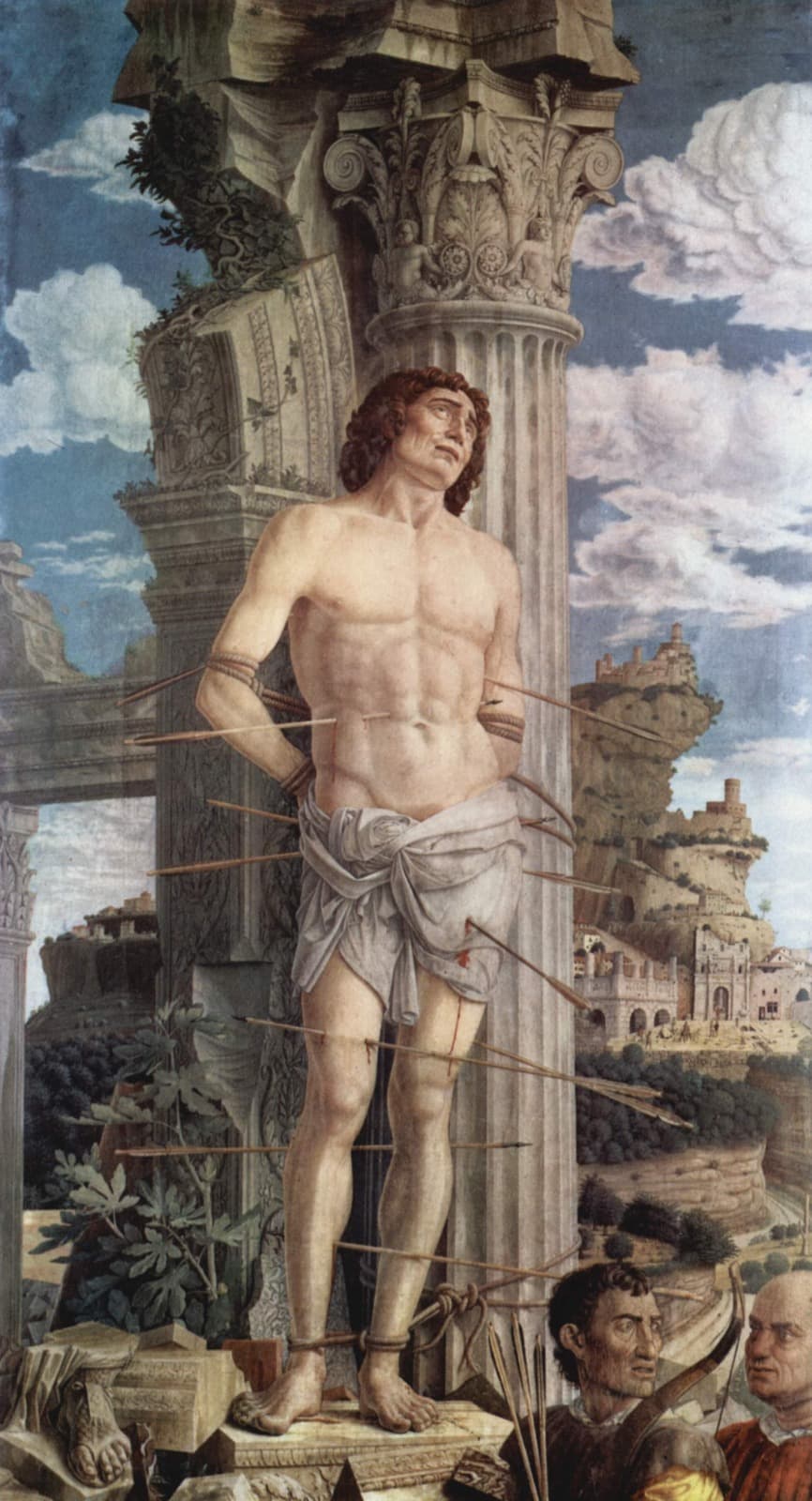
Sebastian takes his arrows with the composure of a statue, tied to a Roman column in a field of accurately ruined antiquity.
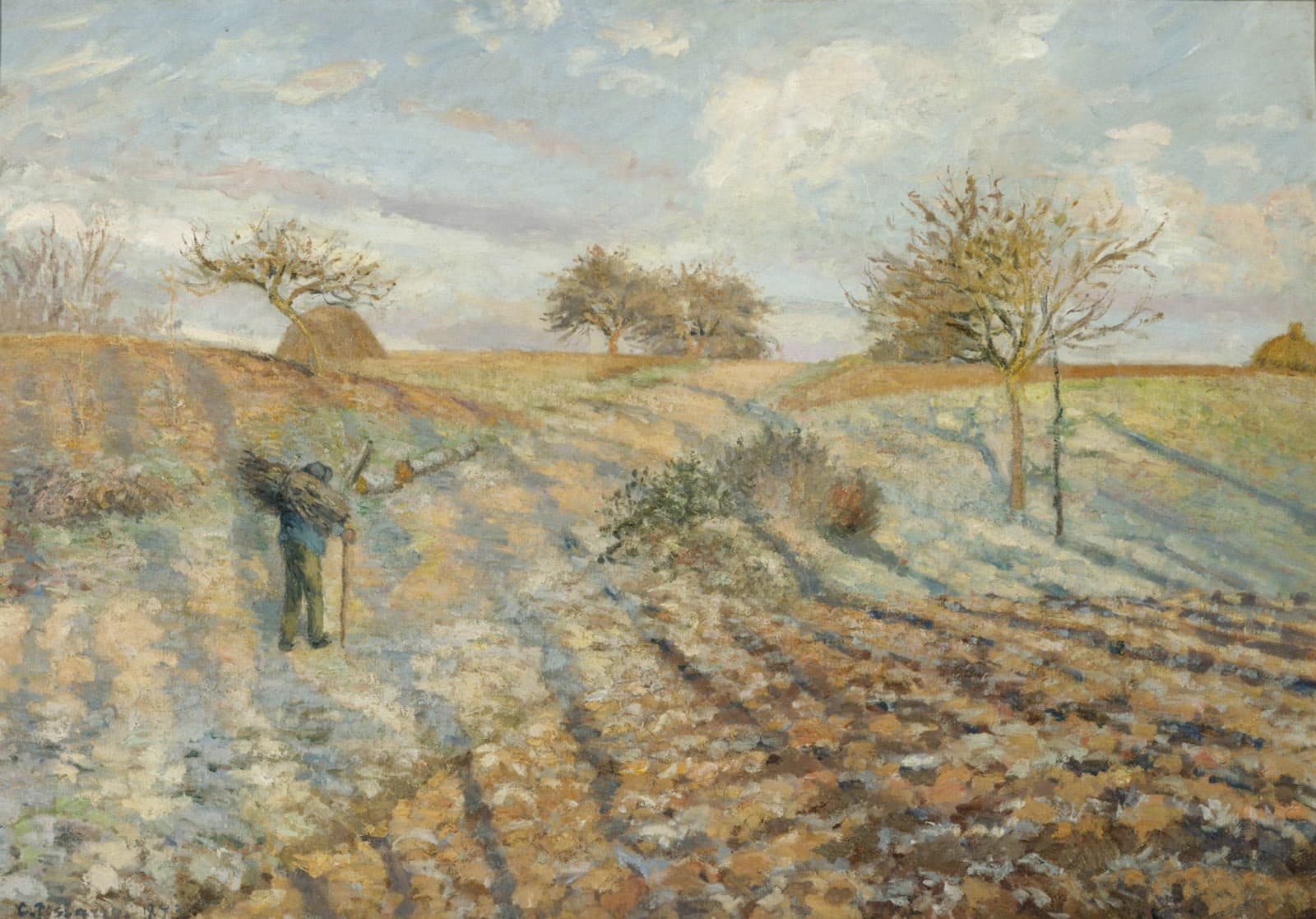
Critics at the first Impressionist show in 1874 said it looked like palette scrapings. The furrows are streaked with blue, violet and gold.