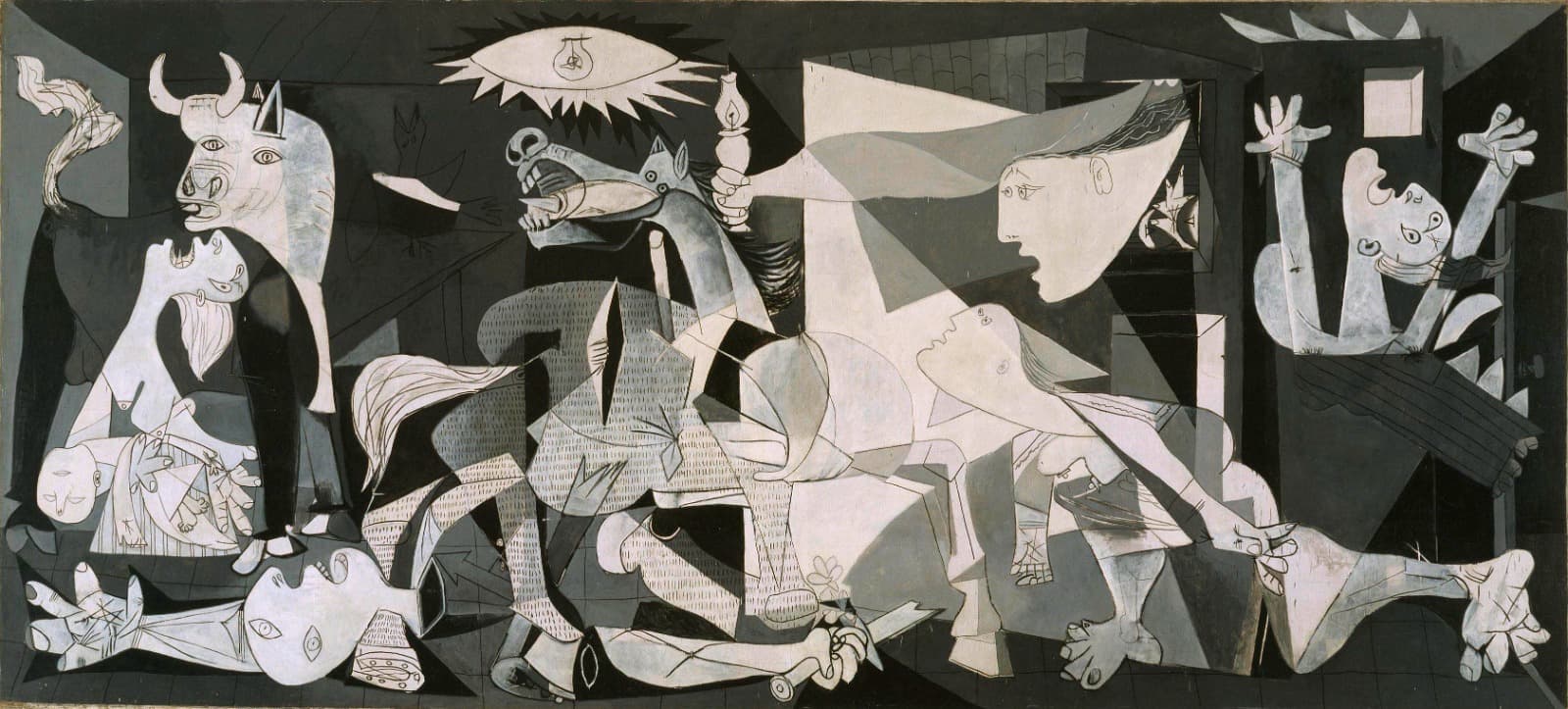
Guernica
1937 · Museo Reina Sofia, Madrid
A screaming horse, a mother with her dead child, all in grey. Picasso painted it in weeks after German bombers leveled a Basque town.
★ 9.9
 skopia
A screaming horse, a mother with her dead child, all in grey. Picasso painted it in weeks after German bombers leveled a Basque town.

Dalí said the soft watches came to him from a camembert melting in the sun, and he painted them with hallucinatory precision.
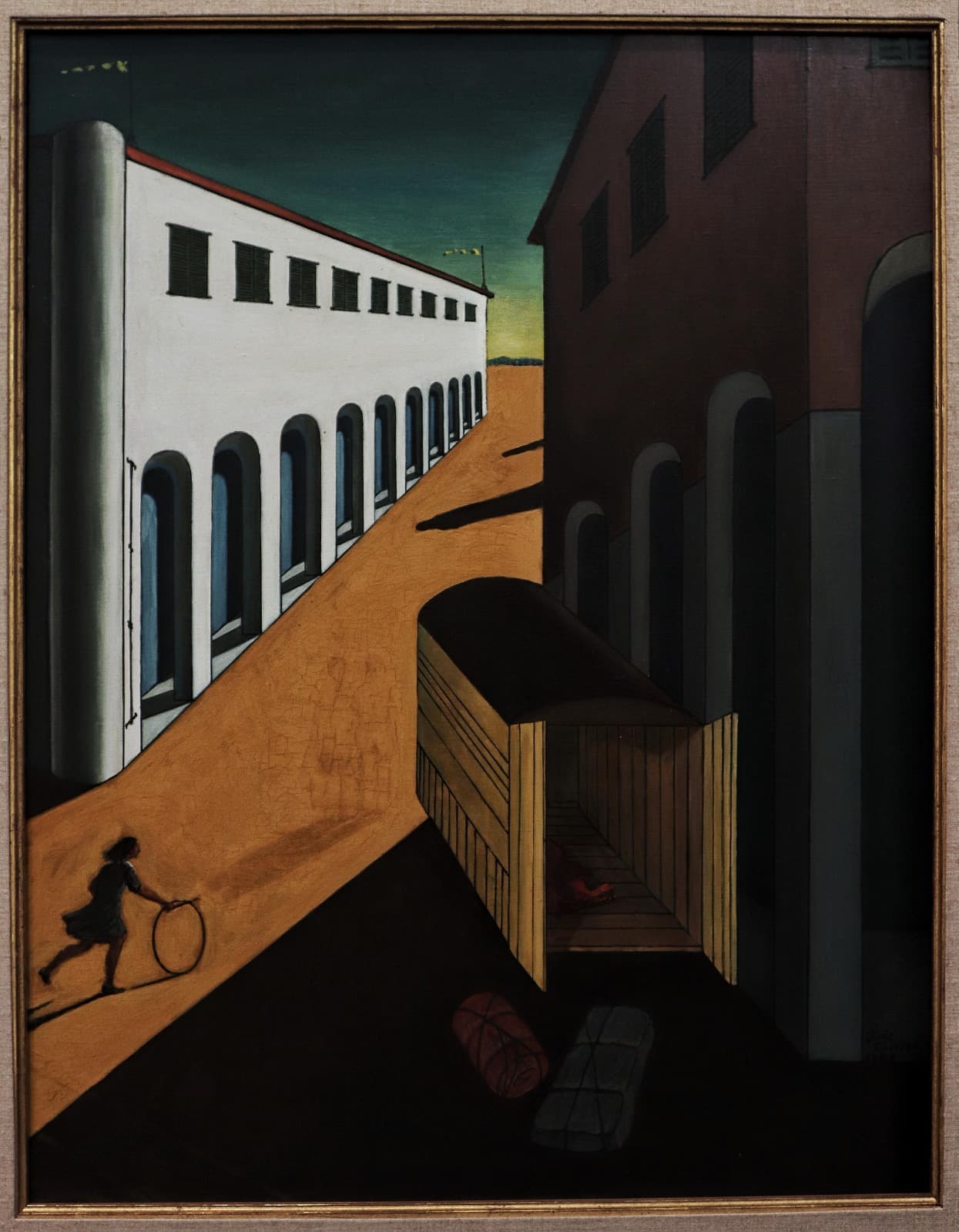
A girl rolls a hoop down an arcaded street toward a shadow coming around the corner, in light that belongs to no hour.

Three flayed creatures crane and scream on orange grounds. Shown as the war ended in 1945, they made Bacon's reputation overnight.

The words under the pipe are correct, since a painting of a pipe is not a pipe, which is the whole and entire joke.

Bacon took Velázquez's composed pope and set him screaming behind a curtain of falling paint. He never saw the original in person.

A marble head, a red rubber glove and a green ball hang together on a wall, and a train goes by in the distance.
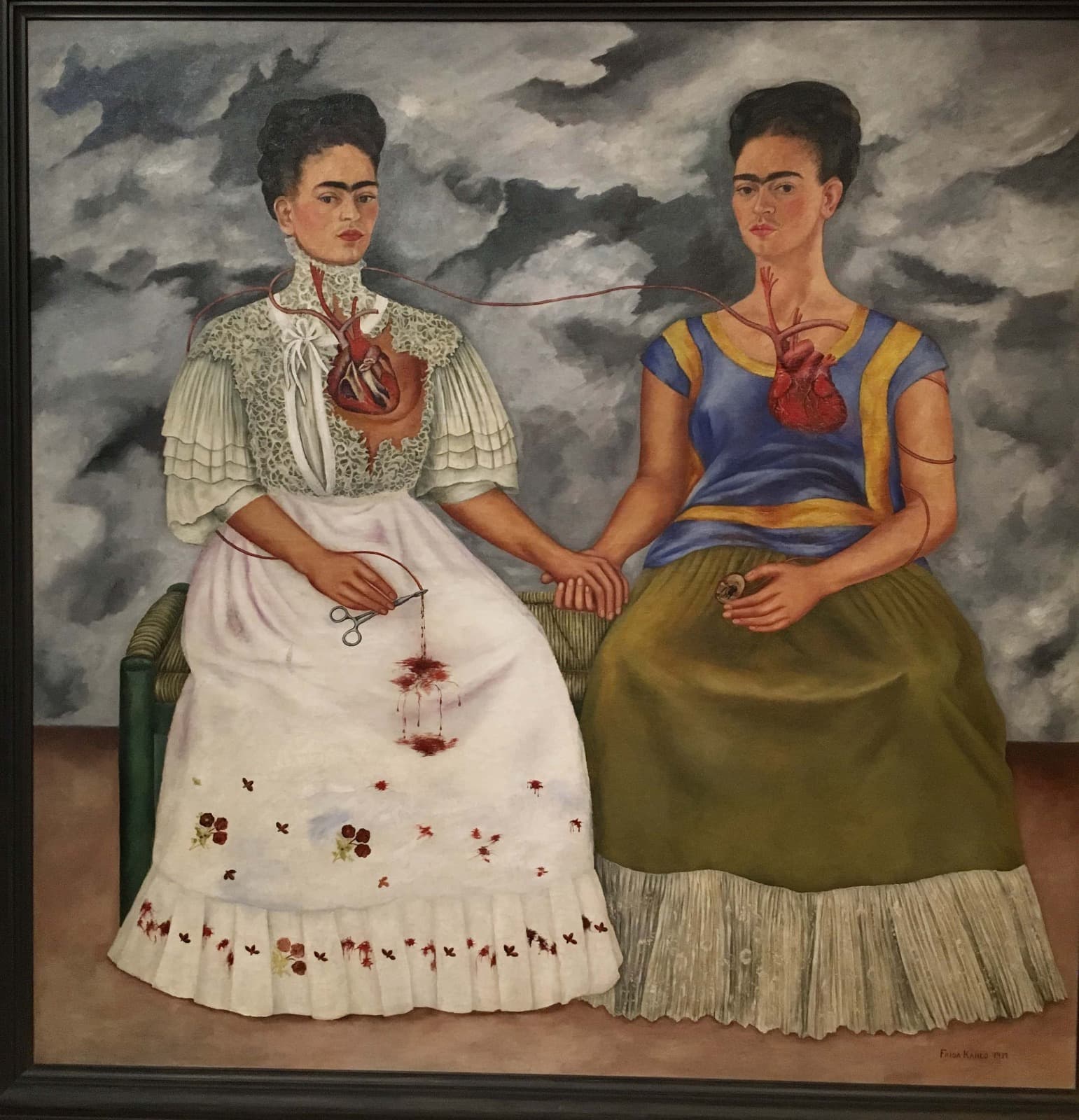
Two versions of herself hold hands with one artery running between them, clamped shut. She painted it as her marriage to Rivera fell apart.
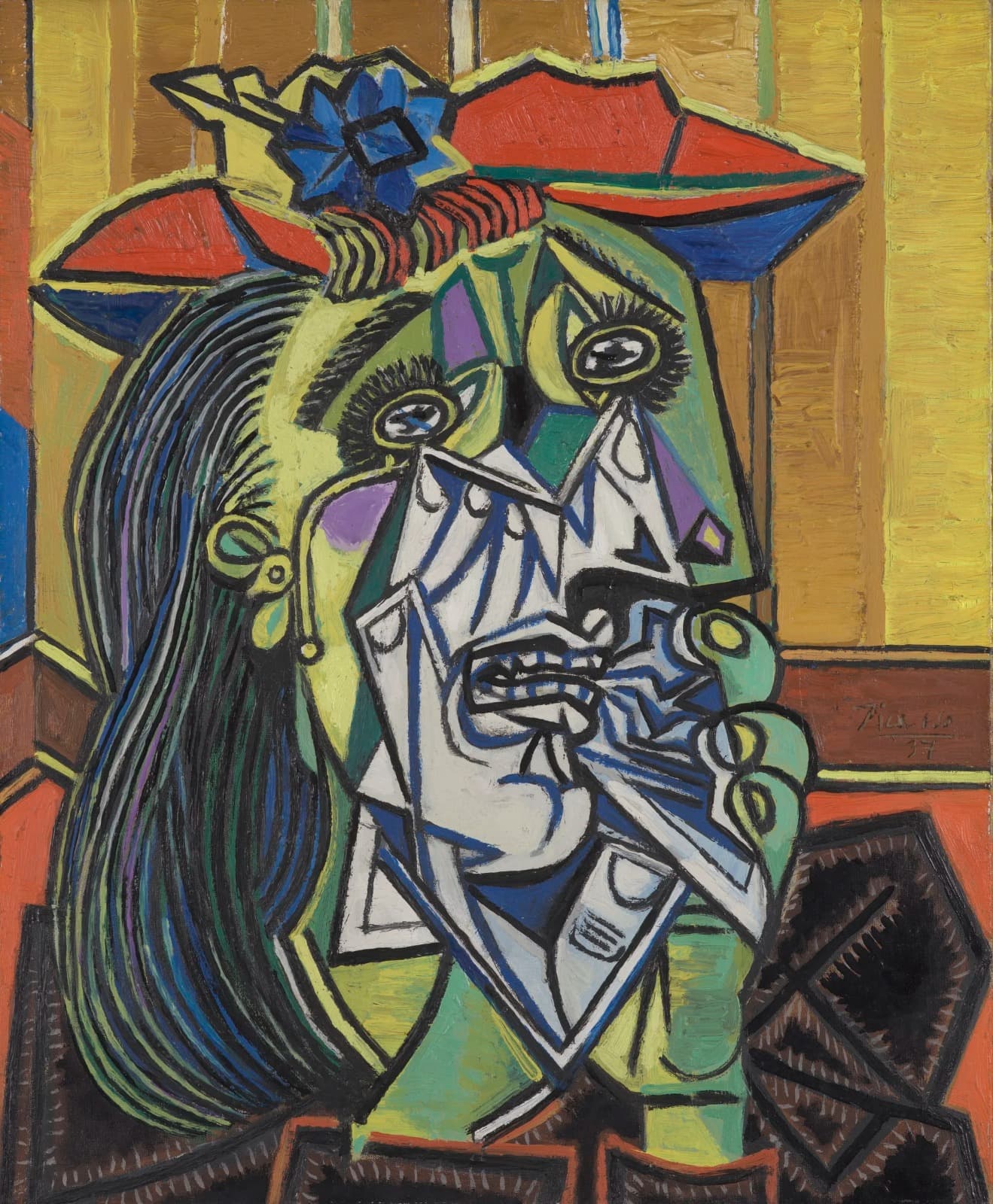
Picasso pulled her out of the screaming mother in Guernica and gave her the face of Dora Maar, his lover and a photographer.

Magritte called the floating apple a kind of self-portrait, about how much we want to see the thing that is being hidden.
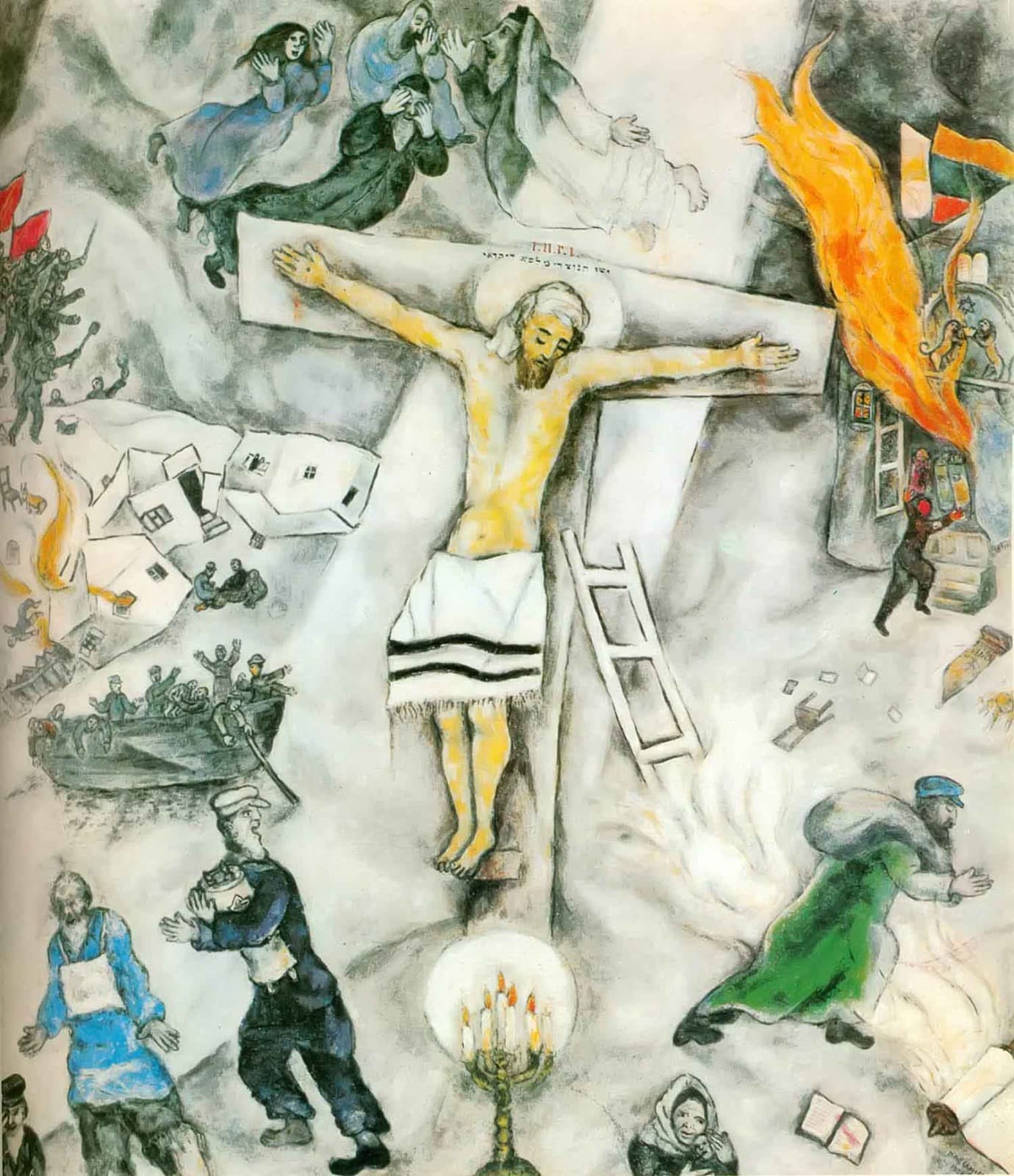
Christ wears a Jewish prayer shawl while a synagogue burns and refugees flee by boat. Chagall painted it in 1938, watching what was coming.

A thorn necklace draws blood at her throat, a dead hummingbird hangs from it, and a monkey and a black cat watch from behind.
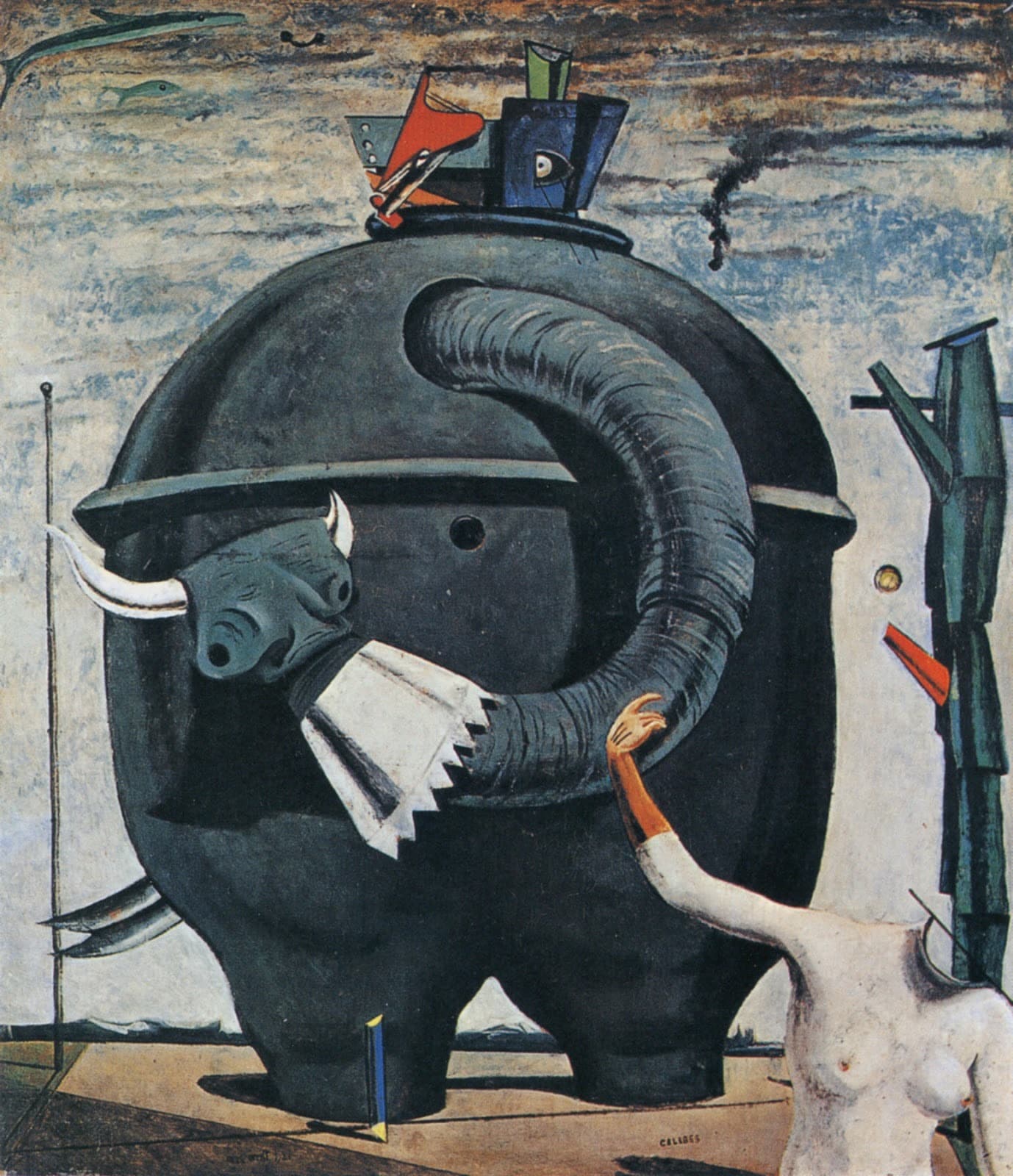
Part boiler, part elephant, with a tusked hose coming out of its head. Ernst took the shape from a photograph of an African grain bin.
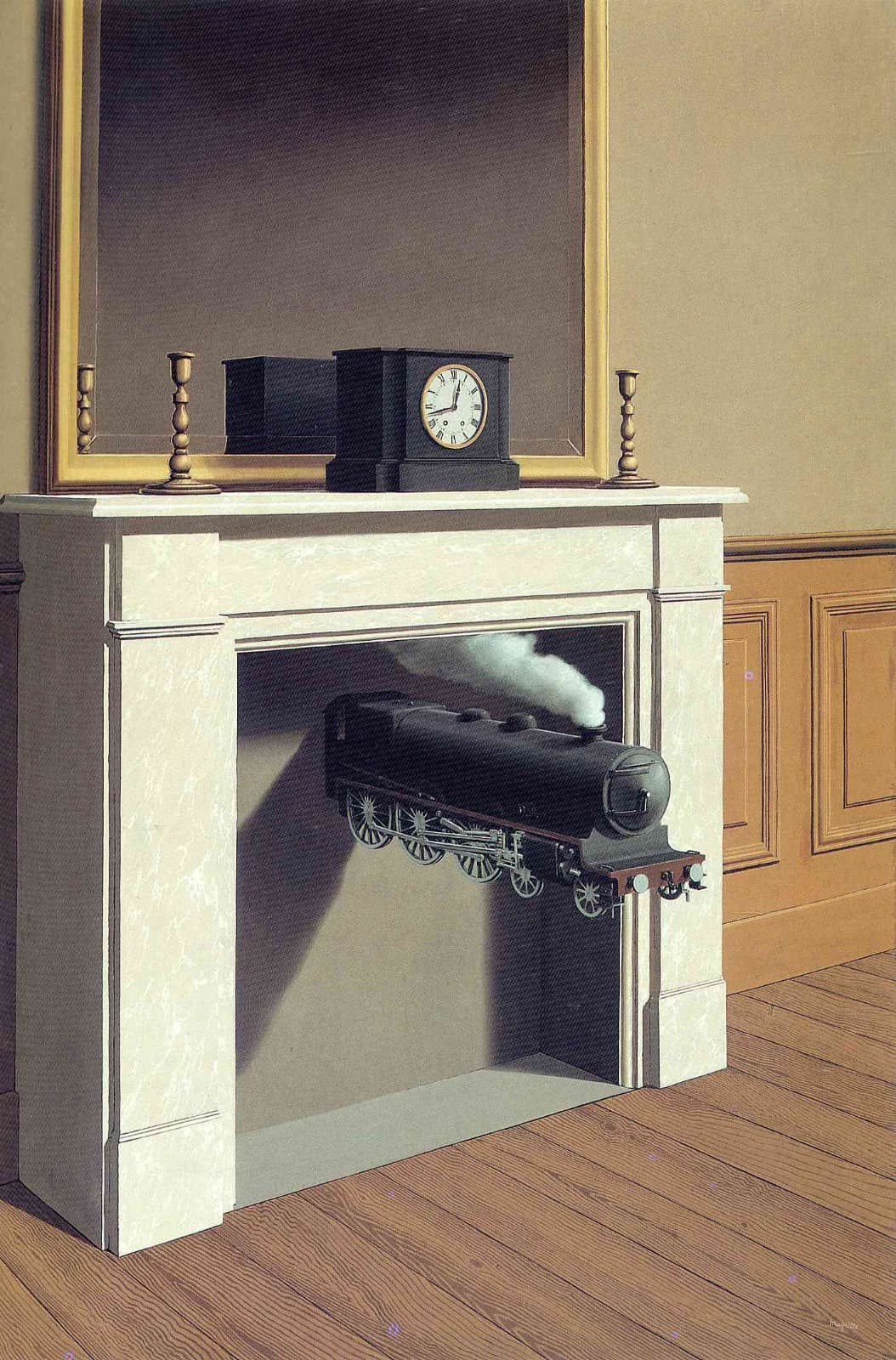
A small steam locomotive comes out of a fireplace under the mantel clock, and the room around it is otherwise entirely ordinary.
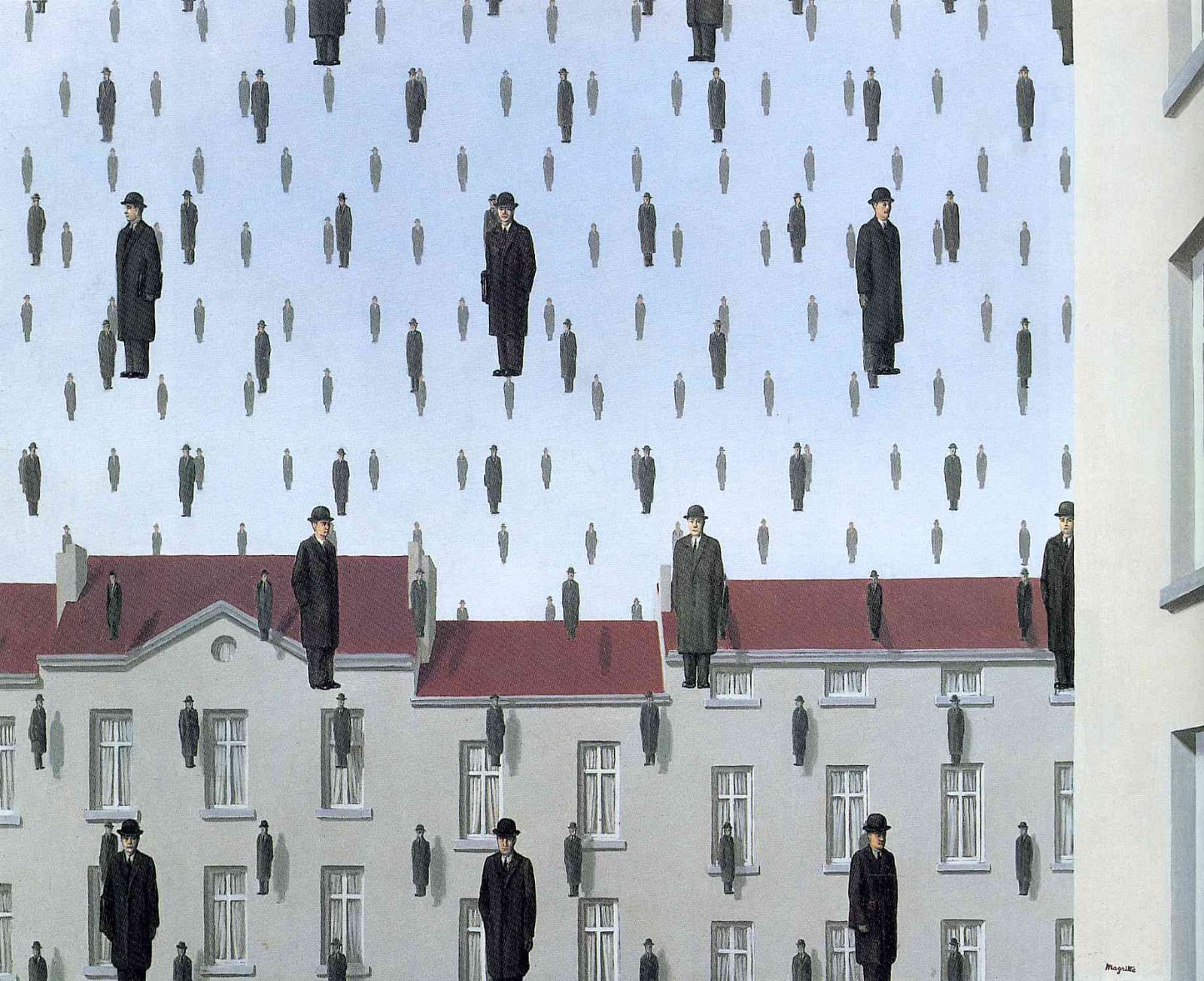
Men in bowler hats hang in the sky over the rooftops at even intervals, neither falling nor floating, which is somehow the unsettling part.
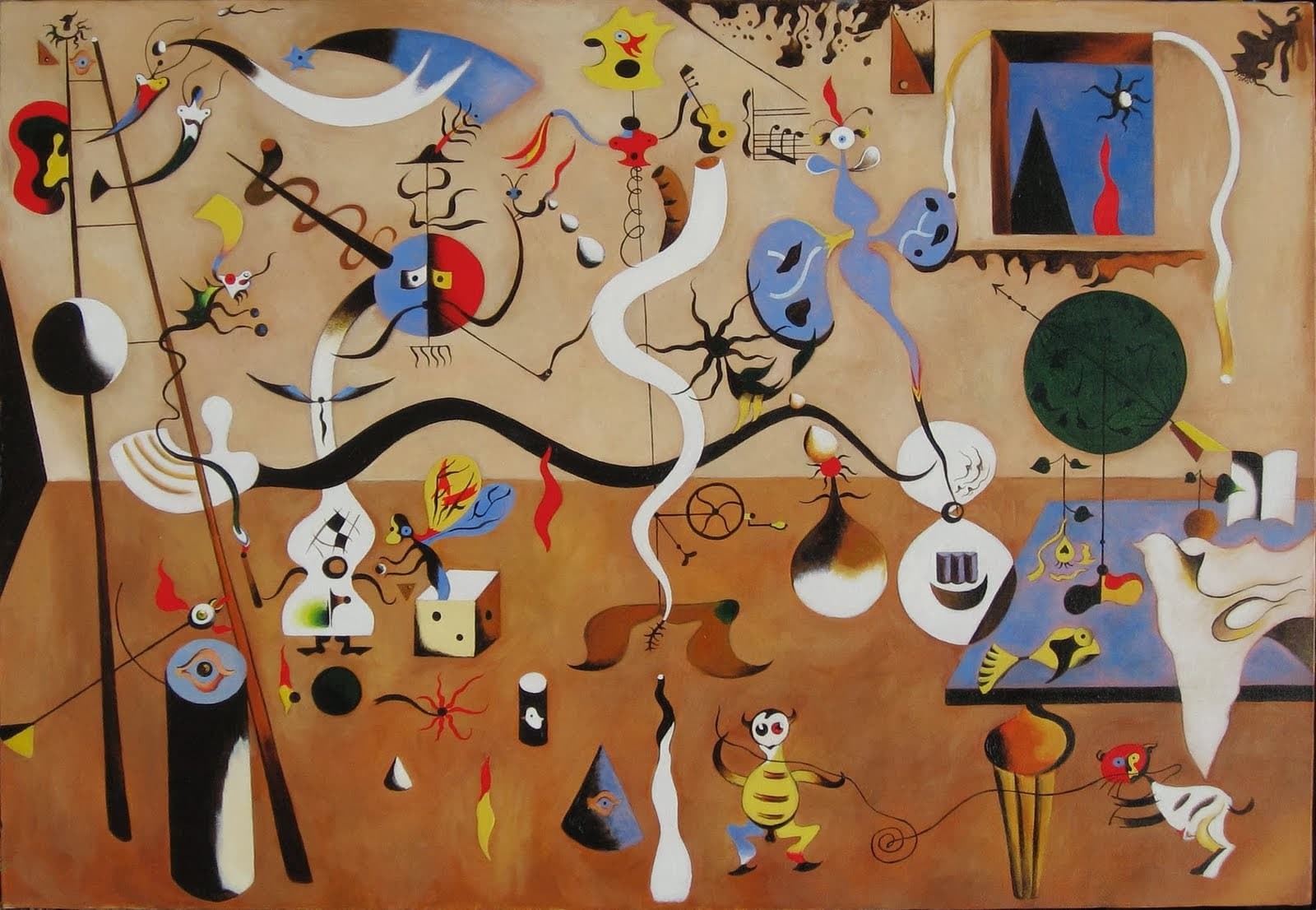
A cat plays a guitar and an eye drifts past on a stalk. Miró said the hallucinations of hunger in his Paris studio fed the picture.
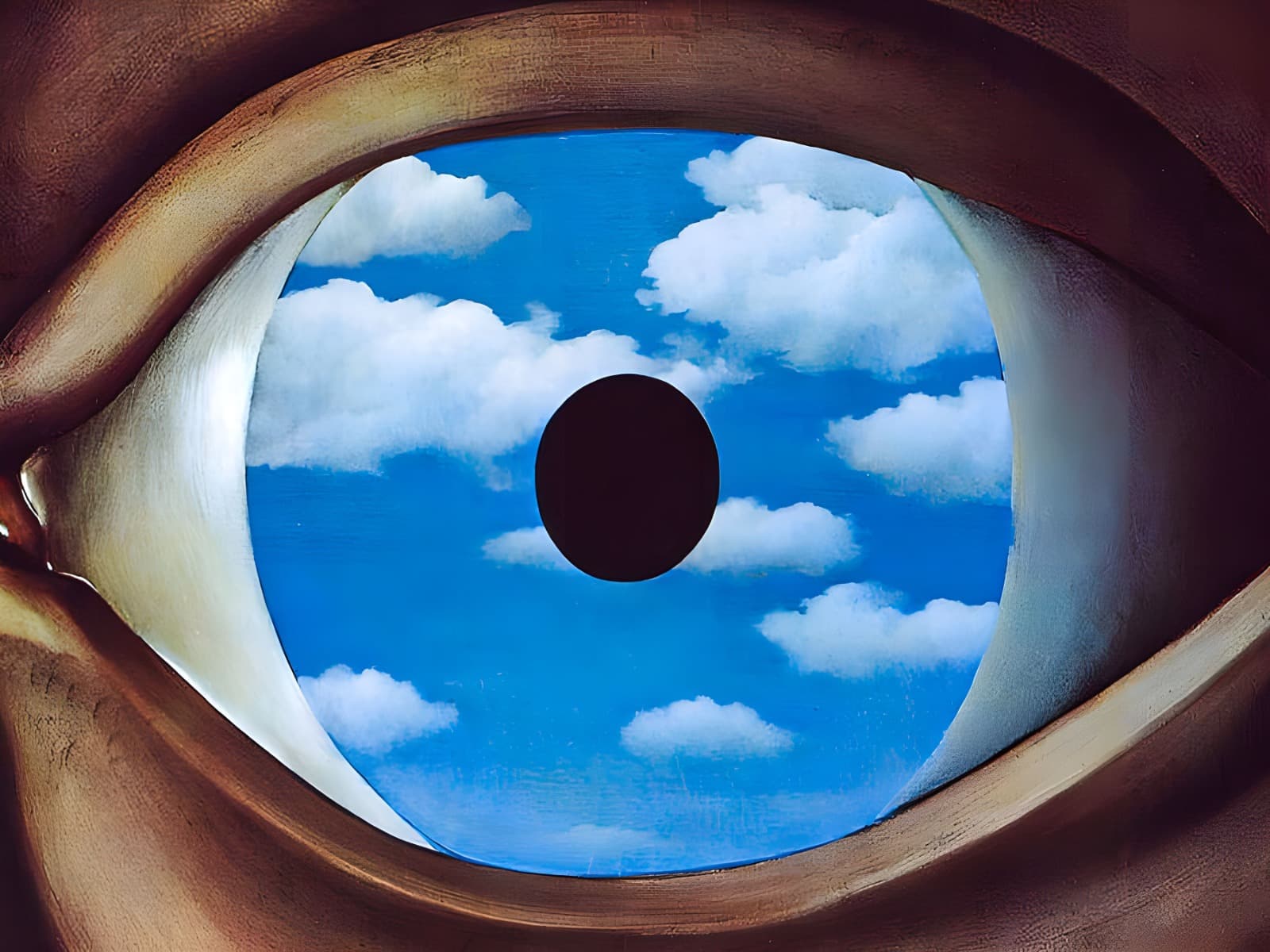
One enormous eye with a cloudy sky for an iris. Whether it is looking out or reflecting back is the question.

Marie-Thérèse asleep beside a sculpture of her own head and a philodendron, from the year Picasso could seemingly do nothing wrong.
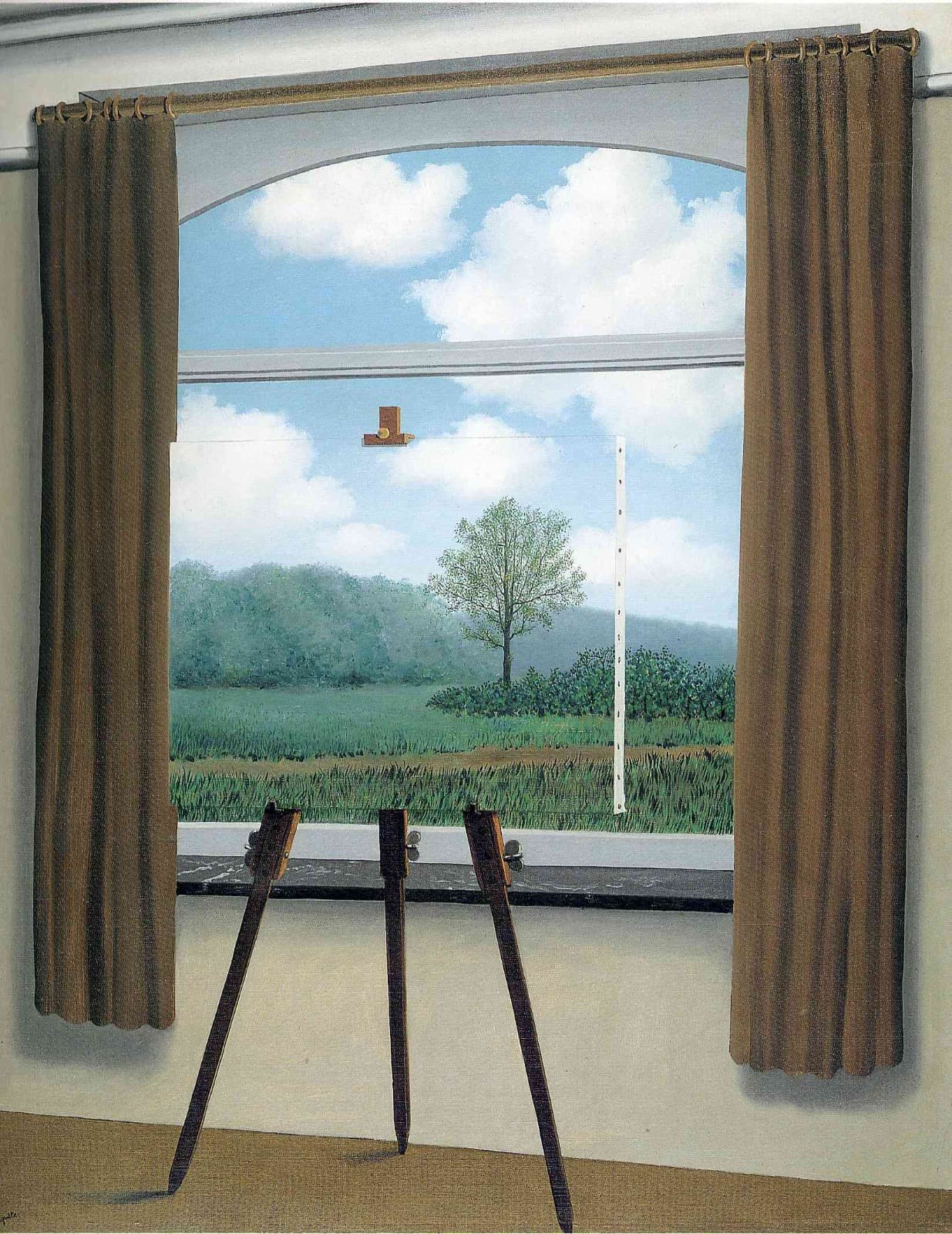
A canvas on an easel shows exactly the landscape it is standing in front of, and therefore hides it completely.
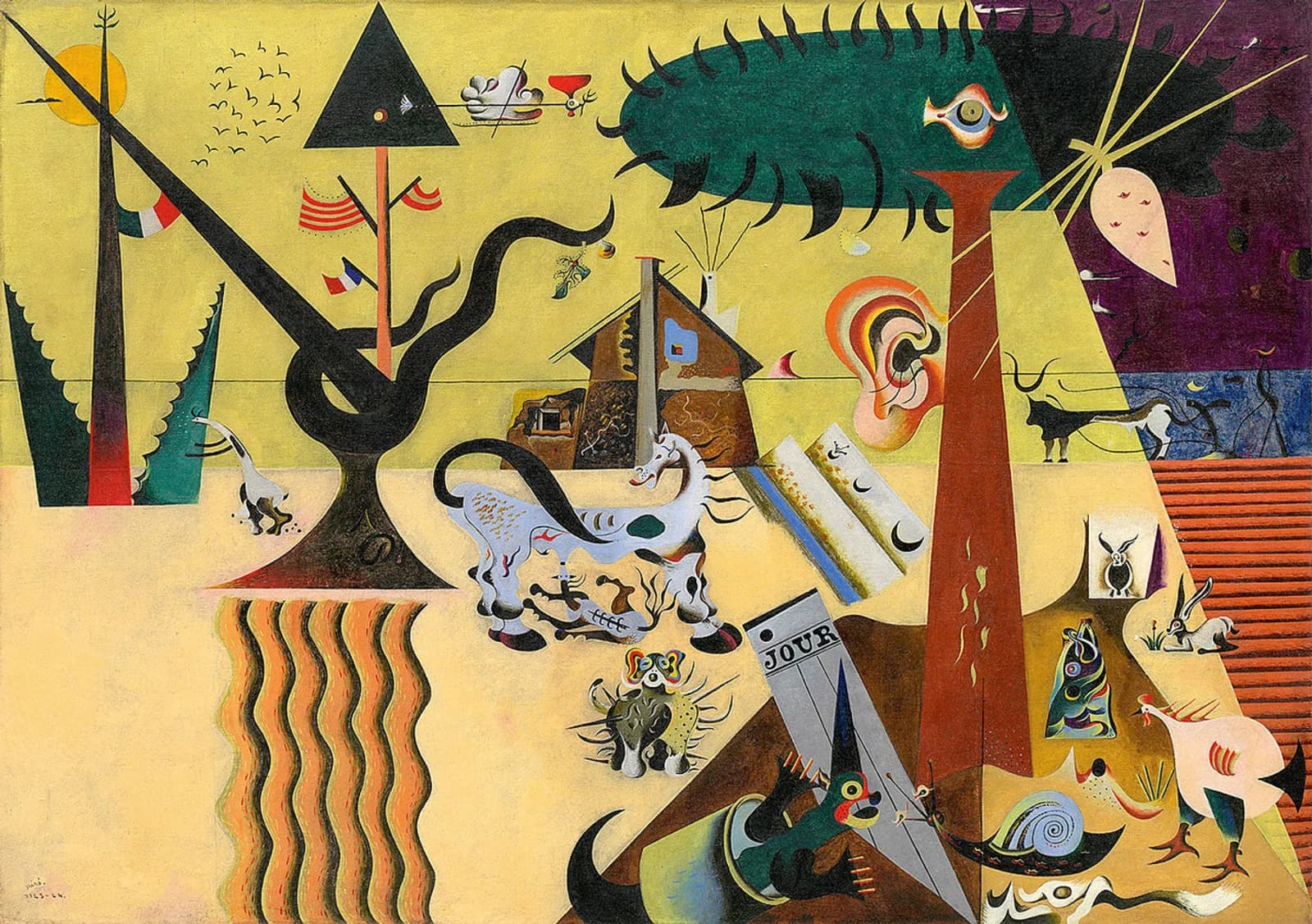
An eye and an ear sprout from a tree and a lizard wears a cap. Miró's Catalan farm has come apart into Surrealism.

Marie-Thérèse asleep in a red armchair, her face split into curves. Picasso is said to have done it in a single afternoon.

The kneeling figure on the left is the same shape as the stone hand on the right, holding an egg with a flower coming out.

A bee circles a pomegranate, and in the second before waking it has become two tigers and a bayonet coming at Gala's arm.

Ernst made the eaten-away textures by pressing and lifting paint, working on it while fleeing occupied Europe for America.

Splintered stumps and shell craters under a cold sun, and Nash gave it that title on purpose, as an official British war artist.

The room is a twelve-sided glass chamber and a torso hovers over the table. Dalí called this sort of thing nuclear mysticism.
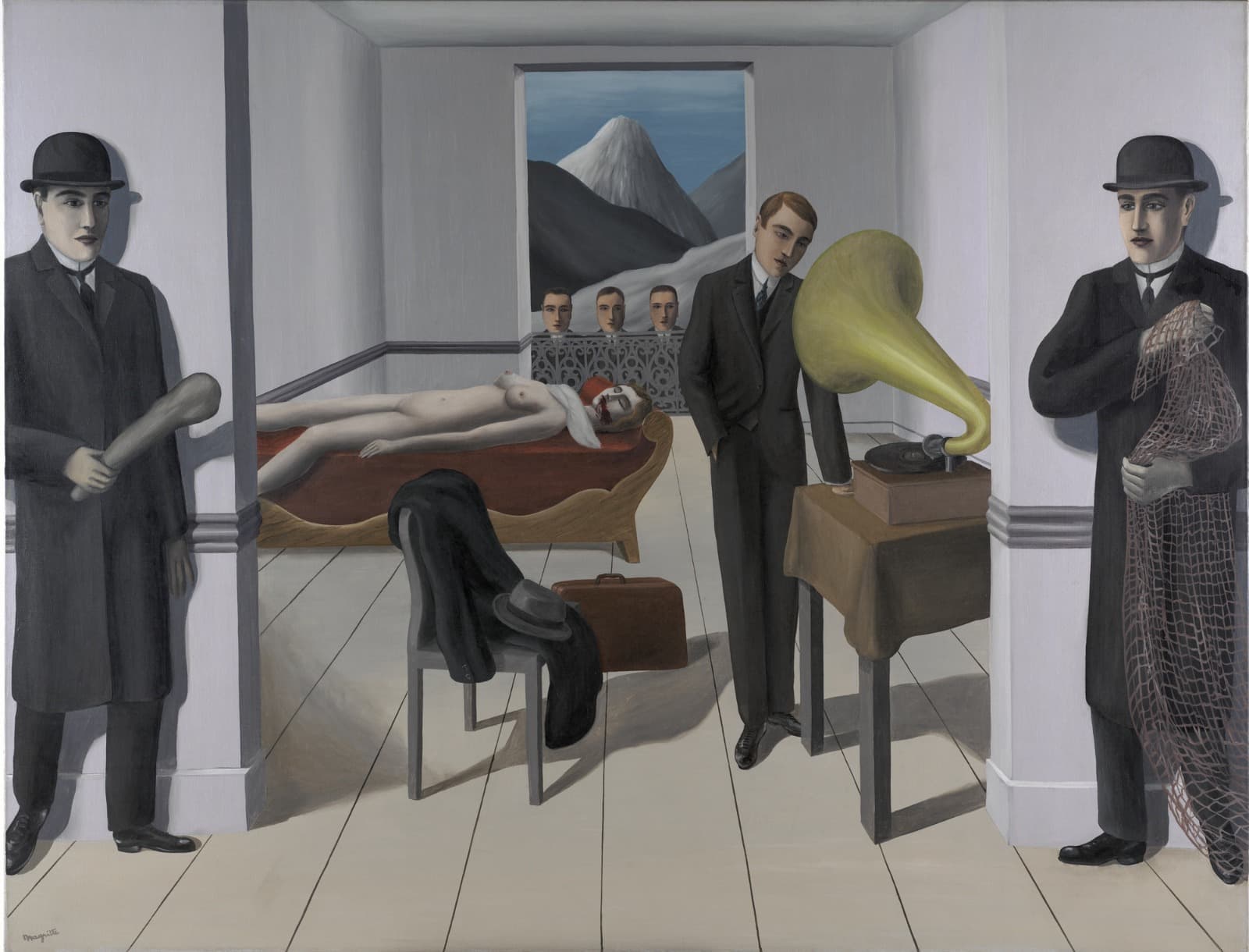
A murdered woman on a divan, a calm man listening to a gramophone, and two men with a club and a net waiting outside the door.

Elephants on impossibly long insect legs carry obelisks and naked women across the plain while the saint holds up a makeshift cross.
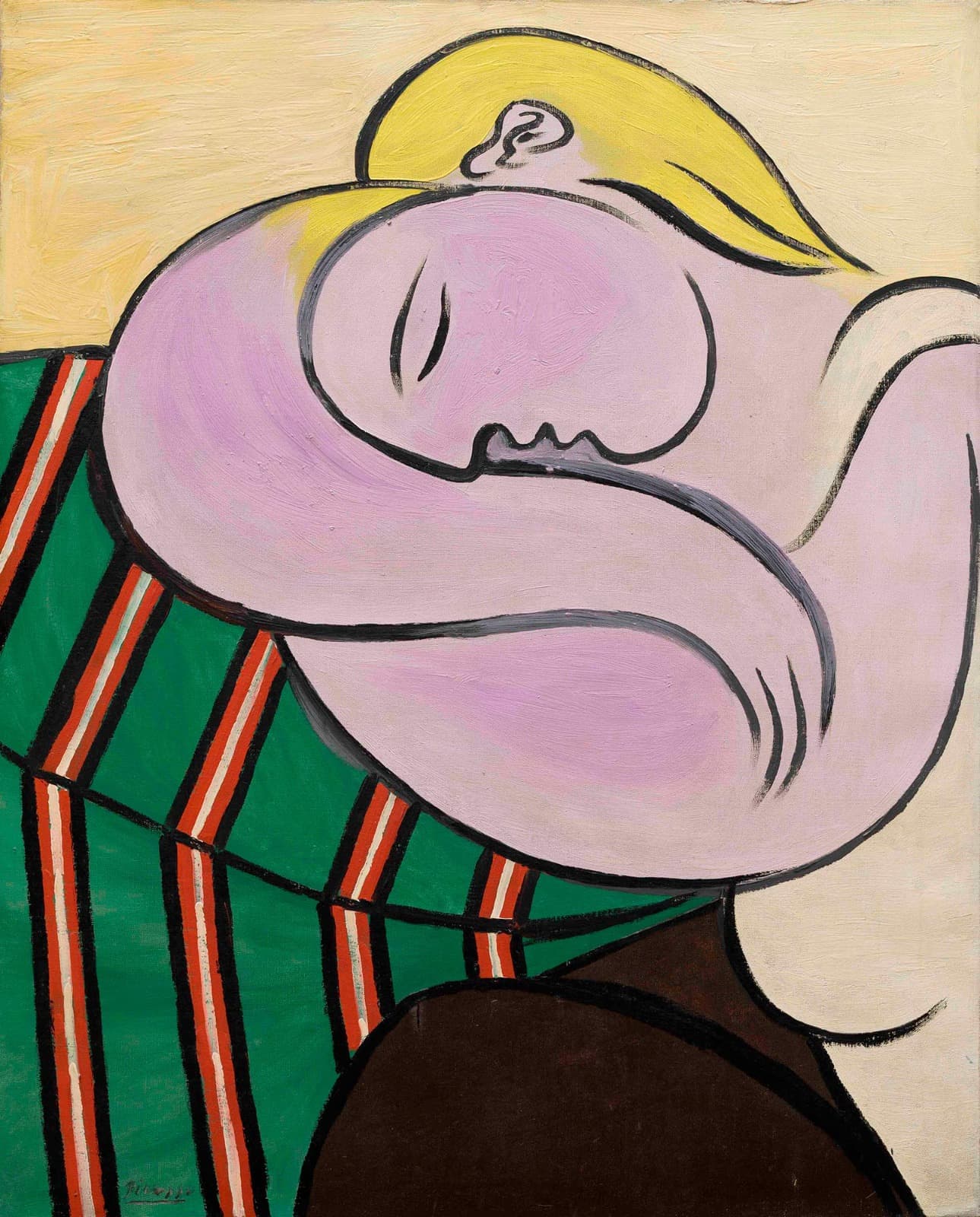
Marie-Thérèse asleep with her head on her arms, the angular violence of Cubism gone soft and curved for a few years.

A bride in red floats through the blue night with a goat playing a cello beside her. Many people know it from a film.
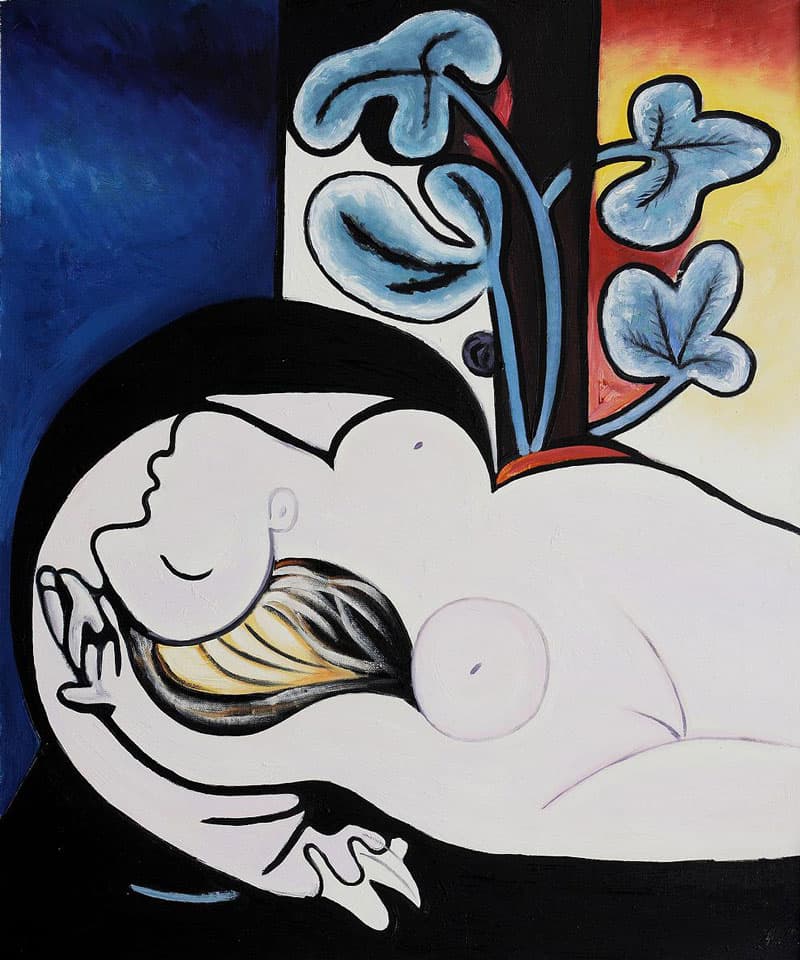
The dark chair throws the body forward, all lilac and rose curves, a plant arching over the sleeper from behind.

Three swans on a lake, and in the reflection the necks have become trunks and the trees have become legs.

A cannon points across a room whose walls are panelled with samples of the world: sky, wood grain, fire, bells, a woman's torso.
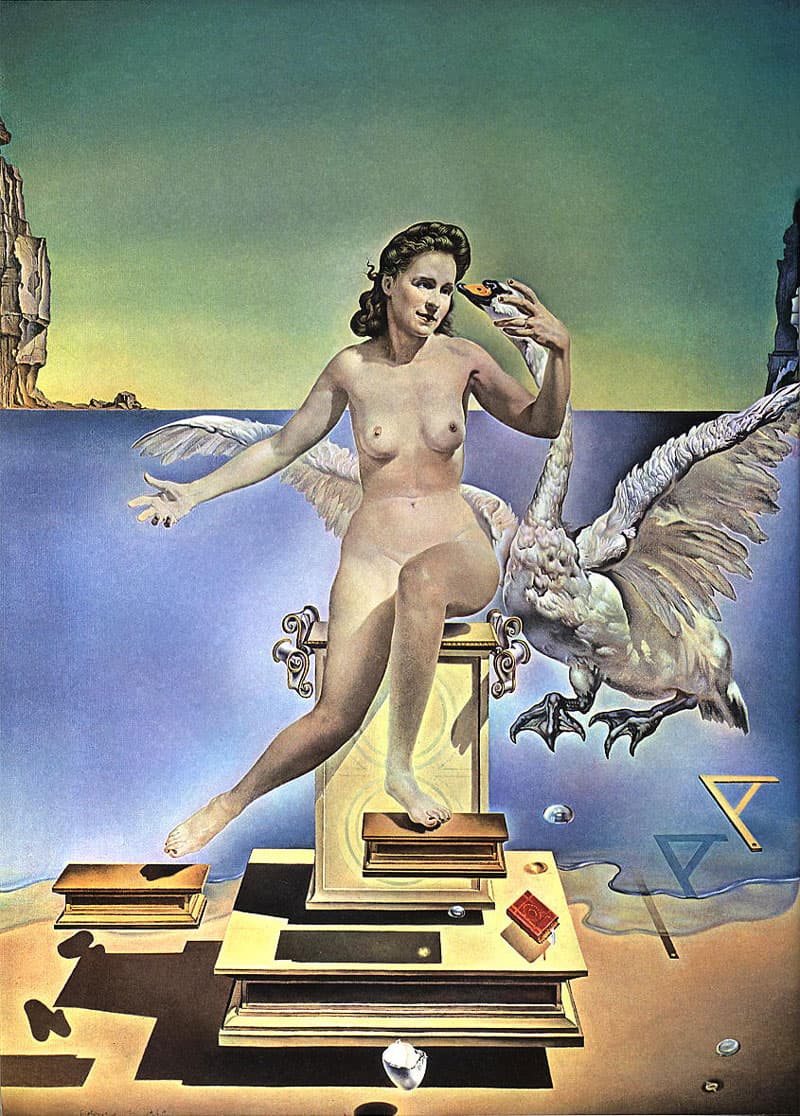
Nothing in the picture touches anything else. Dalí built it on the physics of the atom, where matter is mostly empty space.
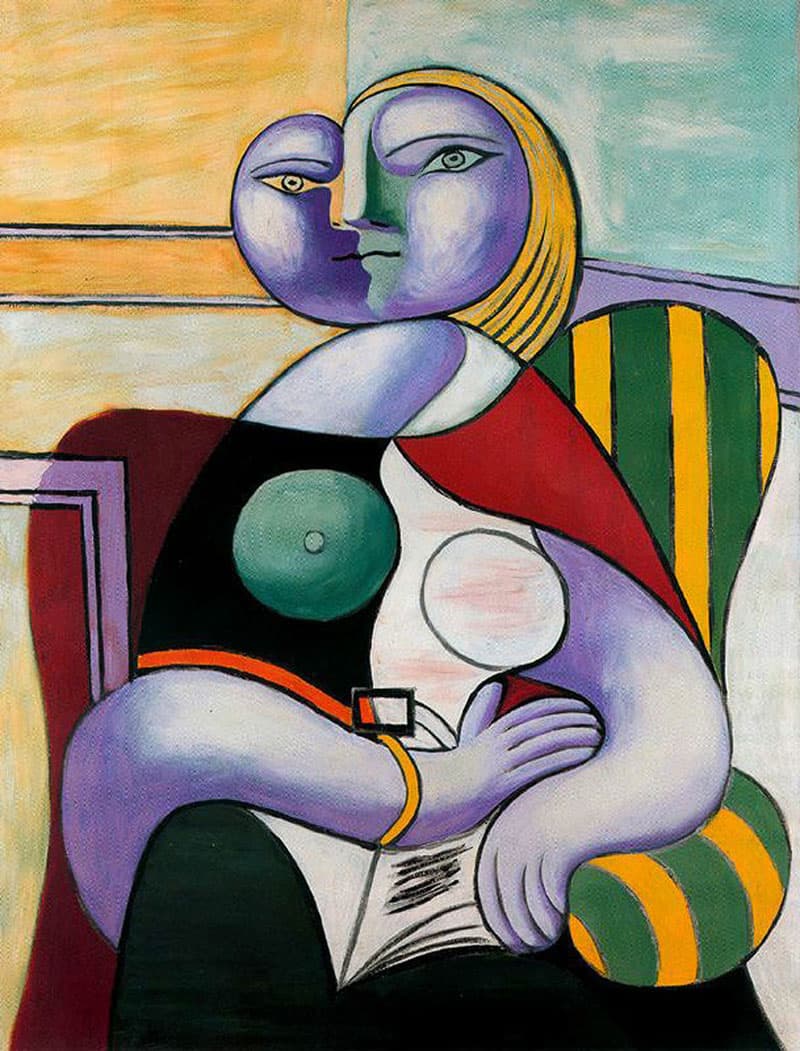
Marie-Thérèse has fallen asleep over her book with her head on her arms, from the year Picasso painted her over and over.
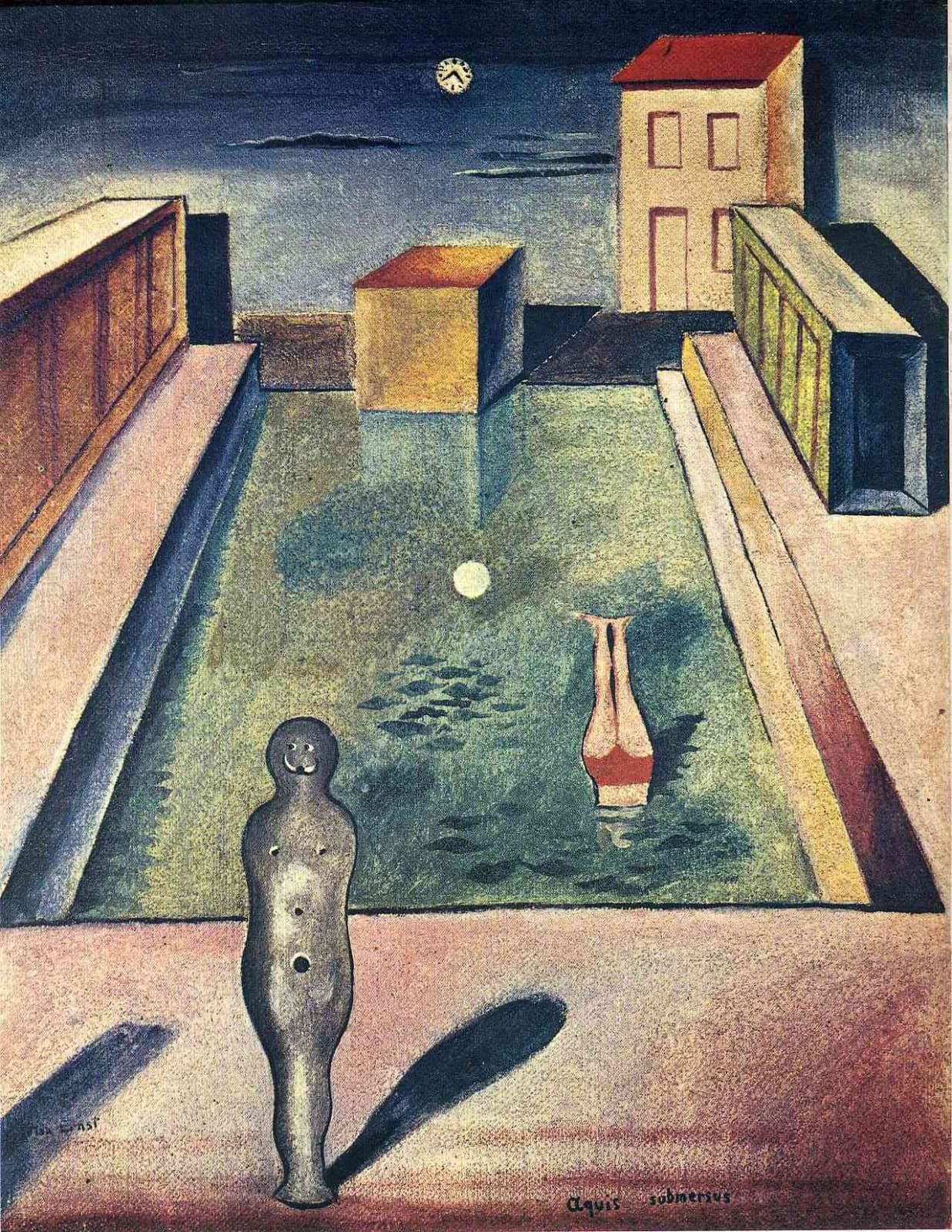
A doll-like figure by a still pool under a tower with a clock face. Ernst had been looking hard at de Chirico's empty squares.
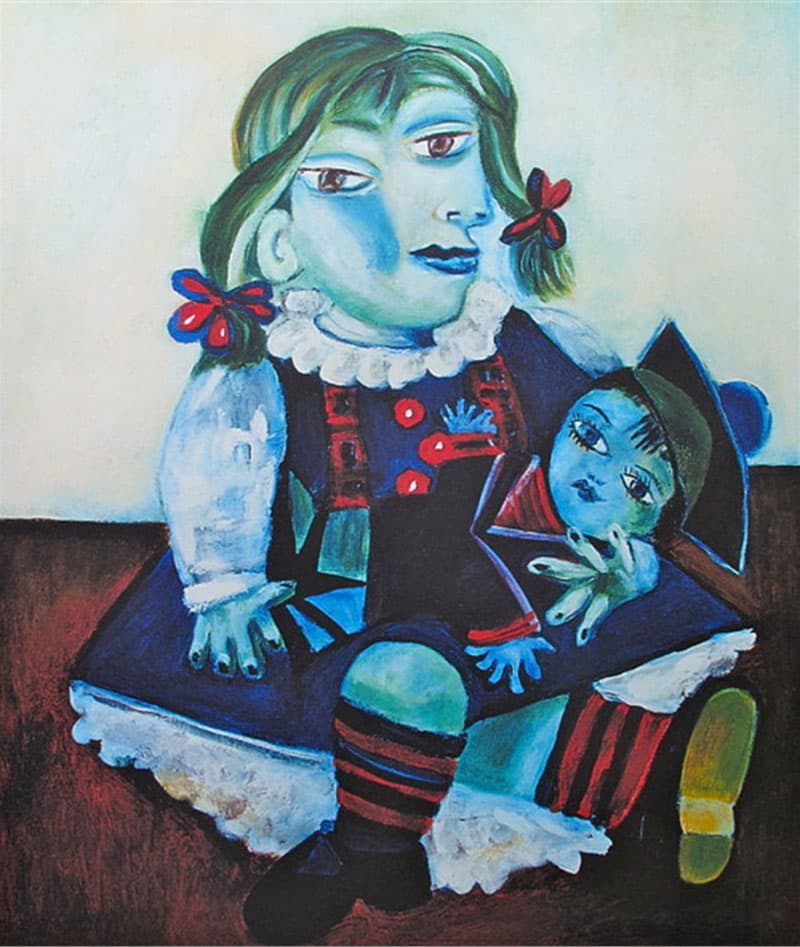
His daughter Maya holding her doll, her face split front and profile at once, the Cubist trick turned warm for once.

Bacon started from a snapshot of a friend dozing in a park and then removed the head, the identity and the ease.

Dalí went back to his own melting watches and broke the ground beneath them into floating bricks, for the atomic age.
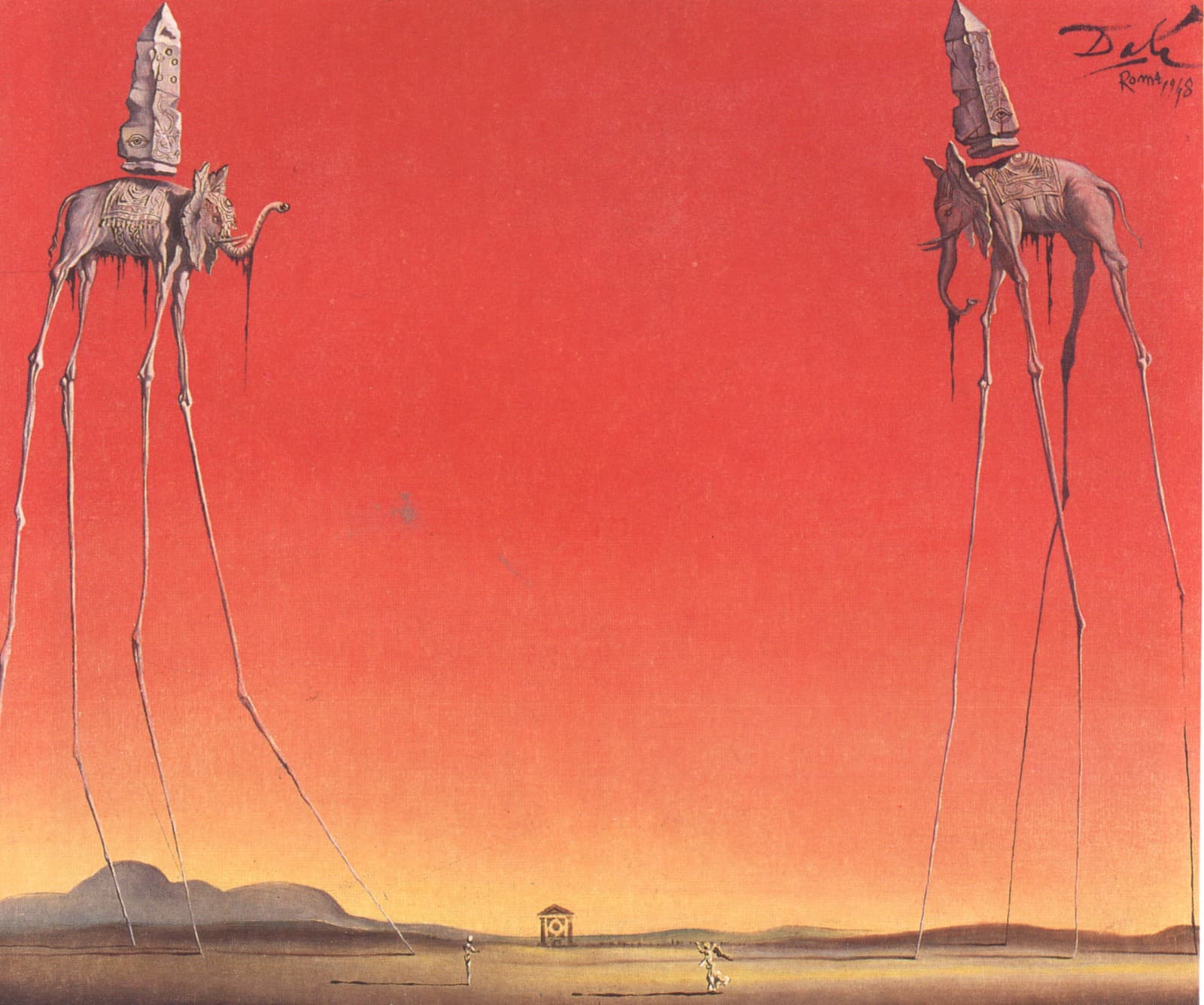
Two elephants carrying obelisks on legs far too spindly to hold them, which is the entire effect and it works.